Day: October 12, 2020

  • Environmental Racism in Literature and Film

    Environmental Racism in Literature and Film

    Everyday it seems that there are heartbreaking instances in the news of disasters that are driven by climate change. Disasters that claim millions of dollars in infrastructure damages and the loss of animal and human life. The environment is succumbing to the man-made turmoil that has been wailing on the earth for quite some time. However, dangers in the environment do not affect us all the same. According to Robert Bullard (also referred to as the ‘Father of environmental justice’) environmental racism is “the term used to describe environmental injustice that occurs in practice and in policy within a racialized context”. Indigenous communities across Canada suffer from instances of environmental racism, racism that is structurally embedded into policy and enforced by local and federal politicians. These acts of racialized environmental violence are often hidden, so how do we learn about them and what can we do? Here are some accessible resources that can help you learn more about environmental racism and the true scope of the problem:
    There’s Something in the Water: Environmental Racism in Indigenous and Black Communities by Ingrid R.G. Waldron outlines instances of environmental racism in an analysis of racist policy, particularly in Atlantic provinces. Waldron discusses neo-liberalism’s role in what she refers to as the “slow death” of Indigenous folks. The “slow deaths” that she mentions are referencing the systemically unjust and racialized policies in criminal justice, loan and borrowing procedures, as well as the education system. Waldron also challenges the popular philosophy “a rising tide lifts all boats”, citing the importance of acknowledging the intersections that occur in environmental racism. She suggests that in order to remedy the problem, specific policies that clearly target specific groups need to be analyzed and overhauled.

    The book discusses the communities of Pictou Landing First Nation, Sipekne’katik Band of the Mi’kmaw First Nation, Eskasoni First Nation, Acadia First Nation, and Millbrook First Nation, as well as Indigenous communities in other Canadian provinces. These communities suffered from contaminated drinking water, polluted air, dumping site on their land, and much more. These environmental hazards are dangerous and have negative health risks and complications, including cancer. There are many other examples of environmental racism affecting Indigenous communities across the country and in other parts of the world.

    The Global Atlas of Environmental Justice (https://ejatlas.org/) is an excellent resource for investigating the many instances of environmental racism that affects Indigenous populations around the world. The Atlas is an interactive map that details 3039 examples of global environmental injustice, with a legend that classifies examples into 10 categories including nuclear, waste management, water management, industrial and utilities conflicts, and fossil fuels/energy. For those who may struggle with grappling the scope of the issue, The Global Atlas of Environmental Justice is an impactful visual method that clearly illustrates the severity of the problem.

    Another example of a visual medium that depicts a Canadian example of environmental racism against Indigenous peoples is a short documentary called “Canada’s Toxic Chemical Valley” (https://www.youtube.com/watch?v=UnHWZE0M_-k). This documentary focuses on the Aamjiwnaang First Nation community in Sarnia, Ontario. There are more than 60 refineries and chemical plants in Sarnia and 40% of Canada’s entire chemical industry can be found there.  Sarnia is also home to Canada’s most polluted air. In January of 2013, there was a hydrogen sulfide leak from a Shell refinery in Sarnia. Workers at the local daycare noticed a “rotten-egg” smell in the air and called and reported the leak. Children were hospitalized, but Shell did not adequately alert the community, as a result the children were diagnosed with simply having colds or flus. Having experienced the air pollution firsthand, the local children made up the rhyme “the more clouds in the sky, the more people will die”.

    Environmental racism clearly affects Indigenous populations in Canada and globally. The effects of environmental racism are documented across different media platforms. There’s Something in the Water by Ingrid Waldon, The Global Atlas of Environmental Justice, and the short documentary “Canada’s Toxic Chemical Valley” only begin to scrape the surface of instances of environmental racism against Indigenous folks. I encourage everyone to check out those resources as a starting point, and to continue to research environmental racism and educate the people around them.

    Note: This article was produced for our Black and Indigenous print edition from March 2020. The edition was postponed due to COVID-19 and is just being released now.

  • Psychology is weirder than you thought

    Psychology is weirder than you thought

    When many people think of psychology, there is an immediate mental image of a client on a couch and a therapist with a hovering speech bubble asking, “and how do you feel about that?” Numerous studies over the years, have examined misconceptions of psychology. One such misconception is that psychology is not a science. After all, as humans, we tend to gain confidence in our abilities to understand and predict the behaviour and mental states of others – simply based on our lived experience. And fair enough, but there must be more to it…where does the science come in?

    Whether you want to understand treatment effectiveness, why people develop certain fears, or simply why people persist in actions that cause themselves or others pain, there is an experiment, a study, or most likely an entire academic journal, providing insight based on, well, science.

    Most definitions of “science” will include the word systematic. That is, it is an ordered system under which researchers operate to formulate scientific laws and theories. Given that science requires evidence and critical exposure to scrutiny, it can be tempting to assume it is unbiased. It would be nice if that were true!

    In the case of psychology, some have argued that the discipline has inadvertently presented a skewed view of the human mind. A popular University of British Columbia paper asserted that although a significant portion of the discipline’s trusted research is drawn from Western, Industrialized, Educated, Rich, and Democratic (WEIRD) societies, this population represents a “thin, and rather unusual, slice of humanity.”

    That is, people who grew up in so-called “WEIRD” societies often act, think, and process quite differently than people who grew up in other areas of the world. If you step back from the science lens for a moment and think instead about your personal experience, this is an obvious point.  Whether by watching the news or by engaging with people from different backgrounds, it is apparent that despite our shared humanity, there is significant diversity in behaviour, thinking, and perception.

    In fact, some studies have demonstrated how “WEIRD” subjects tend to be outliers on domains such as visual perception, fairness, and cooperation when compared to subjects from other societies. For example, certain optical illusions that tend to fool people from industrialized contexts do not have the same effect on those who grew up in rural, nonindustrialized contexts.

    This is not to suggest that the aim should be to pit certain groups against one another. A pertinent word of caution, given a bleak history of some scientists seeking to bolster racist, xenophobic sentiments by positing differences between groups that were not backed by evidence. Rather, it is an assertion that research should account for nationality, class, gender, sexuality, race and other identities so that the bulk of psychological insight is not purely derived from a narrow dominant cultural lens.

    A 2018 study examined the geographical diversity of samples in research published in three 2017 issues of Psychological Science, a leading academic journal – and the results were staggering. Not a single study sampled people from Africa, the Middle East, or Latin America, and less than 7% sampled people from Asia, leaving the vast majority of those studied from “WEIRD” societies. So, almost 85% of the world’s population comprised less than 7% of the samples in this leading journal. Researchers tend to acknowledge the extent to which their research can be generalized, but the issue is that when the majority of research shares the same lack of generalizability, at some point, those findings when replicated enough, generally become accepted as the norm.

    The bottom line is that yes – despite misconceptions, Psychology is a science. But perhaps the greatest misconception of all, is one that is taken for granted, even among many at the top of the field. Psychology is the study of mind and behaviour, but until deliberate steps are taken by the field as a whole, the picture that the discipline paints of the human experience is limited at best and flawed at worst.

    Note: This article was produced for our Black and Indigenous print edition from March 2020. The edition was postponed due to COVID-19 and is just being released now.

  • Indefinite Closure of the Acadia Indoor Swimming Pool Affects Students

    Indefinite Closure of the Acadia Indoor Swimming Pool Affects Students

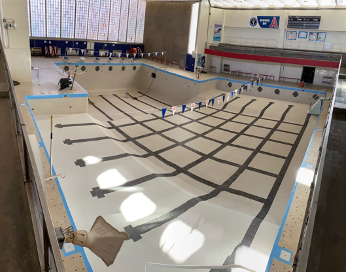
    Acadia University announced on October 1st, 2020 that the indoor swimming pool, located in the Acadia Athletics Complex, will be closed indefinitely. The closure of the pool was declared for two main reasons; the first is to ensure the safety of Acadia students as well as the safety and well-being of the community, and the second is to respond to financial needs. Not only has the current pandemic impacted the university, but the indoor swimming pool has been operating at an annual deficit for years, said Chris Callbeck, Vice President, Finance and Administration.

    Acadia University’s swimming pool was built in 1967, and since then it has been home to many organizations that not only include the student body but the residents of Wolfville and the Annapolis Valley region, who make up more than 85% of the facility’s users. Among them are the Acadia varsity swim team and Acadia’s S.M.I.L.E. Program. VP Chris Callbeck stated that the pool’s access and the changeroom design, make cross-over between Acadia students and members of the community inevitable. Although, it seems like a simple solution would be to compose a schedule that allows community members and students to use the pool separately, with time for cleaning and sanitizing in between.

    Not only has the closure of the swimming pool directly affected the students who are involved in the programs that use the pool frequently, but it has also affected students who do not regularly use the pool for many reasons.

    For example, mental health and physical health go hand in hand, people need to move their body so limiting options to do so will deplete not only the students’ motivation to exercise but how people exercise and how often. Secondly, a person’s mental health is also greatly impacted by social habits, and Acadia’s swimming pool is the heart of the athletic center and the main source of community, so shutting down the pool has slowed the constant flow of people in the center to a near standstill. This can cause anxiety and depression in students, while also bringing down the overall morale of the athletic center. Lastly, whether or not students use the pool, it is common knowledge that a fraction of tuition is dedicated to the maintenance of facilities for student use, so the closure of the swimming pool unfortunately raises the uncomfortable question of where exactly that money is going now. This can cause more confusion and mixed emotions amongst a student body which is already faced with adapting to a global pandemic, a full course load that is almost completely online, and an excess of other everyday stressors.

    The closure of the pool affects everyone in a negative way, while there are other options for exercise, the weight room can only allow a maximum of 20 people at 45-minute intervals, so the options for alternative activity are extremely limited.

    While Callbeck says that the university is continuing a dialogue with government partners in hopes of developing a solution, the Acadia University swimming pool remains closed, another consequence of these unprecedented times and an example of some of the limitations that students are facing due to COVID-19. Acadia students trust that our leaders are working diligently to find a solution and reopen the pool for the benefit of the students’ physical and mental health.

Betzillo positions itself as a versatile gaming hub where structured bonuses and adaptive gameplay mechanics support both short sessions and extended play.

Built with a focus on innovation, Spinbit integrates modern casino architecture with rapid transactions, appealing to players who value speed and digital efficiency.

Ripper Casino emphasizes bold entertainment through high-impact slot titles and competitive promotions crafted for risk-oriented players.

A friendly interface and stable performance define Ricky Casino, offering a casual yet reliable environment for a wide spectrum of gaming preferences.

King Billy Casino channels classic casino spirit into a modern platform, delivering recognizable themes supported by contemporary reward systems.

Immersive visuals and layered slot mechanics are at the core of Dragonslots, creating a narrative-driven casino experience.

Lukki Casino appeals to players seeking direct access and minimal friction, focusing on fast loading times and intuitive controls.

Casinonic provides a structured and dependable gaming framework, blending modern slots with transparent operational standards.