
Category: Science

  • Memory is Cheap

    Memory is Cheap

    The way that people remember has changed dramatically over the last 100 years. With the rise of digital technology, photographs are now more important than ever. In the early 1900s, people used to hold memories in poetry, painting, or in other kept items. Transitioning into the early 21st century, there are now many more ways that memories can be kept. Using photographs, videos, and live blogs, many are now experiencing a very different problem: the quantification of memory. Since there are many ways in which people make and keep memories, does the advent of technology mean that the sentimentality of each picture has now been reduced? Throughout history, having greater quantities of something has led to depreciation of its value. Furthermore, memory in the world of computer science has become less expensive over time and is expected to continue to do so (according to Moore’s Law). With this newfound accessibility to photography, has memory become broken into a series of visible moments? How do pictures reinforce a new way of remembering? Has there been a psychological shift that causes us to view the value of an experience by our photos of it? How has the digital age affected us emotionally? We are now able to reduce our experiences down to extremely quantified things. Where does this trend take us? Media is allowing us to not only capture our own memories, but also to view the memories of others. Perhaps this change is a parallel of previous changes that have happened throughout history. When the printing press was first designed, humanity made a switch from spoken stories to written ones. This lead to a smarter working force, as people were better able to share their ideas with each other. The same can be said of picture and video oriented media use. This transition is allowing people to post information for anybody to see. It changes the way that people tell stories. Through this change, people are also changing the way that they remember things. Perhaps there are things that people miss, such as small cracks in the road, which would have been noticed by somebody who wasn’t anticipating what that they would like to remember.

  • Have you heard of Elon Musk?

    Have you heard of Elon Musk?

    Have you? What about SpaceX? Tesla Motors, SolarCity? Or maybe PayPal? That last one has to be familiar. Elon Musk was key to its inception, and PayPal itself was a building block leading to the inception and success of the other three companies.
    In 1995, Elon Musk enrolled in a PhD program at Stanford University, studying high density capacitors as an energy storage solution potentially more efficient than batteries. Originally from South Africa, he saw Silicon Valley as the Promised Land and transferred to a US university after immigrating to Canada. How did he make the decision to enter such a program? Quite differently from most of us in university, as it turns out.
    Instead of determining what it was that would make you happy, or fulfill you, or even make you financially stable in the future, what if you narrowed down your goals based on what you thought would most affect the future of the human race? What about the potential reprogramming of the human genetic code, artificial intelligence, space exploration and settling, the internet, and sustainable energy?
    That was his list, and the last one had lead him to the PhD program. Two days in, he ditched it. It was 1995, after all, and with the internet blowing up the way it was, he couldn’t be left behind. He wasn’t.

    After starting Zip2 with his brother, an early company taking a shot at replacing the Yellow Pages, and selling it for $307 million, he took some of his share and tried to start an online bank. This was an insane notion in 1999, but their money transfer service was in demand. They teamed up with another money transfer company in the same building and formed PayPal. Despite turmoil within company management, he walked away with $180 million when it was sold to eBay in 2002.
    Even before the sale, he had been thinking about rockets. After it, he started SpaceX, with the intention of reducing the cost of space travel to the point where humans could become a multi-planetary species. Two years later he started Tesla, despite the fact that SpaceX had yet to successfully launch a rocket. Today these two projects are his major claim to fame, and his major contributions to humanity.
    Tesla is an electric car company, intending to accelerate our collective progression to a sustainable future. He personally funded both of these companies.
    He also eventually funded a start-up with his cousins, SolarCity, which aims to install solar panels on the homes of millions, reducing their draw from the mostly fossil-fuel powered grid, and ultimately increasing the adoption of sustainable energy.
    Things weren’t awesome right away, however. SpaceX had built three rockets by 2008, but they had all exploded prior to reaching orbit. They had the money for a fourth and final, with the entire company depending on its success.
    Slightly more than a month ago, SpaceX launched a rocket delivering 11 satellites into orbit, which then returned through Earth’s atmosphere to Cape Canaveral where it successfully landed – a historic first.
    Every launch since those first 3 has been successful, and this landing, doubly so. This is a major step towards making space travel affordable. Though the rockets can’t be directly reused, all of their components are returned to earth intact, and can be recycled for the next build. It is estimated to reduce the cost of space travel by a factor of 100.
    Alongside this, despite the predictions of failure by just about everyone following the stock market downturn, the Tesla Roadster was a resounding success, and received the highest ever safety rating from the NHSA- a 5.4/5.
    Tesla is currently building a lithium-ion battery factory in Nevada that should double the total annual GLOBAL production.
    SolarCity is the largest solar panel installer in the US.
    The Tesla Model 3 is slated to appear at the Geneva Motor Show in March this year.
    But despite his astounding successes in every venture he’s attempted, Elon Musk doesn’t like it when people talk about Elon Musk. His big concerns are the future of our planet and humanity, and he’s trying to encourage discussion of sustainable technologies and energy; as well as space travel and colonization.
    Have you ever heard of the Fermi Paradox? It’s a little bit terrifying if you sit back and contemplate it a few drinks in.
    On the clearest nights out on the dykes, when the lights of Wolfvegas are dim in the distance, you can look up and see just about 1% of our Milky Way galaxy, with your eyes unaided.
    Beyond what you can see, there are stars upon stars and galaxies upon galaxies. An unfathomable number. Somewhere between 1022 and 1024 stars. Are 5% sun-like, capable of supporting life similar to ours? And, maybe say, 22% of those are orbited by an earth-like planet? That leaves us with a potential 100 earth-like planets for each and every grain of sand on our Earth.
    The Fermi Paradox is this – where is everyone?
    If 1% of 1% of those planets develop life that evolves to our level of intelligence, we share the universe with 10 million billion intelligently inhabited planets. In the Milky Way, we should have 100 000 neighbors.
    The Search for Extra-Terrestrial Life (SETI) has yet to find any evidence of life beyond the blue dot we have inhabited for the past million years.
    So which is scarier – are we surrounded by life we cannot or have not detected, or we are absolutely alone in a universe that is absolutely unfathomably enormous?
    If life is that rare, then it is more precious than we have ever realized, and colonizing other planets is a necessity to ensure the continuation of our species. I bet that was never a daily worry of yours!
    The intention of SpaceX’s foray into affordable space travel is to lead to the colonization of Mars with a million people in the next 100 years. This rocket has been step one.

  • Keep Yourself From Getting Sick: How to Stay on Top of Your Game

    Keep Yourself From Getting Sick: How to Stay on Top of Your Game

     Illness is a setback that most people embrace when they start to live in residence. Common colds spread like wildfire, and people are at risk when they live in such closed environments. Everything from shared bathrooms to meal hall utensil dispensers make it hard for students to avoid getting sick. The following are some ways to prevent the common cold:
    1. Take vitamin supplements. Not only does this boost your overall health, it will also help you to maintain a good amount of vitamin C. It is often hard to eat healthy at University, especially if
    you go to meal hall. According to University City, multi-vitamins are essential for fighting sickness. These vitamins will help to supplement your body with nutrients that you might not be getting from meal hall food. One a day is great for your health. They can be found at Shoppers Drug Mart on Main Street and also EOS Whole Foods. For just a small amount of effort, it is definitely a great alternative to heavy exercise.
    2. Drink tea. In addition the vitamin and mineral benefits of tea, green tea contains many different beneficial properties for improved health. One of t he main compounds of bioflavonoid catechin.
    Green tea can be found at our campus meal hall as well as in the BAC food court. A small amount of tea is helpful for staying healthy and can be fun to have as well.
    3. Don’t share drinks, especially at parties. While it can be tempting to take a sip to see what something tastes like, it’s not a good idea to do this during December, January, or February.
    Winter months are known for bringing illness and this sort of interaction is especially bad for spreading sickness.
    4. Avoid junk foods. Since the winter months are so grueling, it is especially important that you don’t eat as much food from the pizza and fast food sections of meal hall. While it’s fine to
    include these things in your diet, it’s also important to remember that sometimes those choices may lead to an increased vulnerability to wintertime sickness.
  • Don’t do it like the Discovery Channel

    Don’t do it like the Discovery Channel

    … I think it broke.

    This goes through the minds of more species than you may think, but not because they’ve been responsible and brought condoms. No, some animals have some fairly disturbing mating rituals by our standards. Take for instance, certain species of orb spiders. The male copulates with little leg-like structures near its mouth. The female has a knob outside her genitalia shaped kind of like a bicycle seat- this is for the male to grab with his mouth, and give him some purchase to do the deed. After scientists carefully froze some spiders mid-coitus with liquid nitrogen, they were able to examine them under a microscope and determine that males occasionally rip these knobs off, to prevent other males from being able to mate with that female.

    Everyone has a first time.

    And for some animals, the first time is the only time. Semelparous species die after one reproductive episode, which could be a mating season or a single event. Biologists are still trying to find out why. Take for example, the Australian antechinus. The males of this little marsupial mammal species have sex until they die- after fur loss, internal bleeding, and getting gangrene because their immune system gives up. Why all the fuss? Researchers now believe it may be due to a spike in their food source, insects, which occurs once yearly. The females need a regular food source while raising their babies in their pouches, and so all the mating must happen in a very short window prior to bug season. Other semelparous animals include octopuses, eels, squid, salmon and mayflies!

    Imma stay for cuddles.

    Said every male angler fish, ever. Deep-sea angler fish experience sexual dimorphism, where the two sexes differ significantly in size. In this case, the female is up to ten times larger than the male, which is born without a digestive system. Mating consists of the recently-born male latching onto the first female he can find with his mouth, and then slowly fusing on, losing all of its organs except the testes, which remain and pump sperm into the female’s system when necessary. Female angler fish can have up to six of these parasitic mates for life.

    My place?

    Some animals’ mating habits are fairly straightforward, but some are complicated rituals involving lots of work and planning- usually by the males. Some creatures build structures to attract a mate. Take the bower bird for example. It builds a bower, shaped like a small hut and built of twigs, and decorates it with flowers, stones, feathers and even plastic and glass fragments. If the female likes it, the male wins a mate!

    The red velvet mite builds a ‘love garden’ of sperm dispersed on twigs and leaves, with a silk trail leading to it. If a female finds it and likes what she sees, she’ll use the sperm. If a male finds it, he’ll wreak it to better his own chances.

  • Recently – in SCIENCE!

    Recently – in SCIENCE!

    New Compound Removes Mercury from the Environment
    A newly synthesized compound, sulphur-limonene polysulphide, containing a substance found in orange peels, has been shown to remove dangerous, bioaccumulating mercury from the ocean, even changing colour as it does so. The red polymer is produced from industrial waste – using sulphur waste from the petroleum industry and limonene from the citrus fruit industry. This is a fantastic discovery, as high mercury concentrations are responsible for birth defects and numerous other serious health problems in humans and other animals.

    Aliens?!
    Scientists working to discover planets orbiting distant stars, searching for evidence of habitable planets and extraterrestrial life, may have found something fairly significant. “Swarms of megastructures” have been observed to be orbiting star KIC 8462852, between the constellations Lira and Cygnus. The masses orbiting the star wouldn’t be peculiar if the star were young, but as a middle-aged star, a disk of debris should have agglomerated into a planet, or been swallowed by the star. A concrete explanation is lacking, but some hypothesize that it could be evidence of an alien civilization using solar panels to harvest energy from their star.

    Liquor Comet
    Think you went through a lot of alcohol on homecoming? Think again! Comet Lovejoy, at its peak activity level, was releasing as much as 500 bottles of wine worth of ethyl alcohol into space per second, as it made its approach toward the sun. Along with this, scientists found 20 other organic compounds in the gas released by the comet, including the simple sugar glycolaldehyde. This is a fascinating discovery particularly because the panspermia hypothesis suggests that comet impacts could have supplied an ancient earth with organic compounds, contributing to the origin of life as we know it.

  • Bloody Science

    Bloody Science

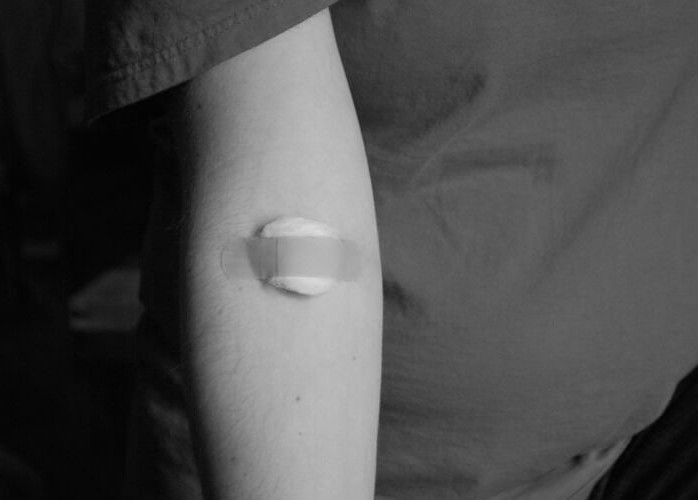
    It is not very often that someone is asked about their blood type. Many people don’t even know what their blood type is. Although it is not vital information for day-to-day life, a person’s blood type is very important in determining what donated blood they can receive. Many advertisements for blood collection by the Canadian Blood Services has contained a message directed at people of a specific blood type, O-, the universal donor. Through a simple test done by doctors and Canadian Blood Services personnel, your blood type can be determined. But what does your blood type mean? Why is it important? You may think that blood is blood, right? While all blood is composed of the same four basic constituents: plasma, red blood cells, white blood cells, and platelets, not all blood is alike. There are, in fact, eight different blood types. They’re differentiated by the presence or absence of antigens, substances that “trigger an immune response if they are foreign to the body” (American Red Cross, 2015). The four type categories, based on the presence or absence of these antigens on the surface of the red blood cell are:
    Group A – has the A antigen on the red blood cells with the B antibody in the plasma.
    Group B – has the B antigen on the red blood cells with the A antibody in the plasma.
    Group AB – has both A and B antigens on red blood cells, with neither A nor B antibodies in the plasma.
    Group O – has neither A nor B antigens on red cells with both A and B antibodies in the plasma.
    There is a third antigen, called the Rh factor, which also plays a role in determining your blood type. If the Rh antigen exists in your blood, your blood type is positive (i.e. B+), whereas if the Rh antigen was absent, you would be type negative (i.e. AB-). Some blood types are more common than others. Type O+ is the most common, accounting for around 38% of the American population, while type AB- accounts for only 1% of the American population (livescience.com, 2012). Blood type O is the universal donor blood type, meaning that type O blood can be administered to anyone, regardless of blood type. Someone with an AB blood typeis a universal plasma donor, because the plasma does not contain either A or B antibodies. Blood type is hereditary, just like eye colour, and is therefore determined by the blood types of your parents. If you are unsure of your parents’ blood types, or of your own, a simple test can be conducted by your family doctor or by the Canadian Blood Services to identify your specific blood type, and evaluate the current need for your type. If you are unsure of whether you are eligible to donate blood, Canadian Blood Services conducts a simple questionnaire either online or in person. Saving you the trouble of going to the clinic and finding out you are not eligible, the eligibility requirements will be outlined here. For further information, consult the Canadian Blood Services website, or go to the on campus clinic October 7th or 8th for a consultation. In general, if you are in good health, feeling well and able to perform your normal activities, you are older than 23, or are between 17 and 23 and meet the height and weight requirements, you can become a blood donor. A calculator can be found on the Canadian Blood Services website to determine whether or not you meet the height and weight requirements. However, you may still be ineligible for donation if ‘your own health or the safety of the blood supply would be at risk by having you do so,’ (Canadian Blood Services, 2015). Some common reasons why people are deemed in eligible for donation include recent body piercings, Chronic Fatigue Syndrome, possible exposure to HIV/AIDS, tattoos, and vaccinations.If you have gotten a body piercing or a tattoo done within the last 6 months, you are ineligible to donate blood because of the increased risk of Hepatitis C. Acupuncture and electrolysis fall under the piercing category. Donors with a medical history of Chronic Fatigue Syndrome (CFS) are ineligible – even if their condition is not active. If you have recently been vaccinated, depending on which vaccination you received, you may be temporarily deferred from giving blood. There is a full list of deferral periods for various vaccinations on the Canadian Blood Services website. If you have ever had a positive HIV test, or if you have done something that puts you at risk for becoming infected with HIV, you may be ineligible as well (Canadian Blood Services, 2015). For example, anyone who has taken money or drugs for sex since 1977 cannot give blood; nor can anyone who has ever used intravenous street drugs. In the past, gay men were restricted from donating blood, but for the first time in thirty years changes to the regulations have made it easier for gay men to donate blood. “Men who have had sex with another man more than 5 years ago, and who meet other screening criteria, now may be eligible to give blood,” (Canadian Blood Services, 2015). Numerous groups are rallying for the removal of this ban, deemed archaic and homophobic, but the Canadian Blood Services organization is still reeling from the aftershocks of a tainted blood scandal. As many as 800 people died, 20 000 are now living with Hepatitis C, 400 with HIV. Despite more accurate tests, a false negative to an HIV screening would still have devastating consequences, and so a group ban on sexually active gay men still stands.
    If you are interested in donating blood, or want more information, visit the Canadian Blood Services website. Alternatively, go to the blood donor clinic on the Acadia campus between October 7th and 8th, 2015.
  • The Newest Addition to our Family Tree

    The Newest Addition to our Family Tree

    Beginning with adventurous spelunkers and culminating with the discovery of a distant ancestor, the Homo naledi story is one of luck, skill, and perseverance. When Steven Tucker and Rick Hunter entered the Rising Star cave in South Africa two years ago, they were looking to explore new paths and maybe go where none had gone before. Instead, they found a path that likely hadn’t been trodden by human feet in hundreds of thousands of years. While moving out of shot for a photo to be taken, Steven happened across a fissure that extended downwards into the yet unknown. Following this thin chute, a times narrower than eight inches, the two discovered a chamber with an astonishing surprise. Fossils, numbering in the thousands, littered the floor. The two were aware of a scientist in Johannesburg wanting people to keep an eye open for fossils in this “Cradle of Humankind.” The rush was on to secure the site before it could be disturbed. The next step was an excavation. But a site this difficult to access required a peculiar set of attributes: slim individuals with scientific credentials, caving experience, who had no fear of tight quarters. Six young women were recruited, becoming palaeontologist Lee Berger’s “underground astronauts.” Working in teams of three pulling two-hour shifts, they collected 400 bones off the surface before beginning the careful excavation of the cave floor. Fifteen individuals have been excavated so far. With 1200 bones removed from the chamber and many more remaining to be uncovered, the discovery has been made and the interpretation can begin. Familiar yet alien, these fossils are a peculiar combination of modern and archaic characters. Tooth traits and skull qualities varied from modern to very primitive, but the rest of the body was more divided. From the pelvis up, primitive characteristics win out. Present were apish shoulders geared for trees, flared hipbones harking back to before Australopithecus, and curved fingers for a life among trees. From the modern pelvic base down to feet nearly identical to our own, Homo naledi seems to have evolved beyond its time. The remains were described as “weird as hell,” by paleoanthropologist Fred Grine of the State University of New York at Stony Brook. Two things in particular stand out about Homo naledi – the complete lack of other animal bones and plant debris within the chamber where it was found, and the possibility of dozens of individuals within layers upon layers of cave sediment. The huge number of bones in the cave were likely not from a single placement event. Purposeful, repeated placement suggests intentional burial – suggesting Homo naledi were an intelligent, capable, habitual species, despite their brain cases roughly half the size of ours. For more information on the Homo naledi discovery, check the National Geographic website, numerous scientific websites, or talk to your history professor.
    Another interesting skeletal story right on the tail of the Homo naledi discovery comes from beneath the roots of a 215-year-old tree that recently fell victim to a violent storm near the town of Collooney, in the northwestern part of Ireland. The 17-20 year old man found within the root system of the tumbled tree is believed to have suffered a violent fate. Though given a proper Christian burial, his 1000 year old body had suffered knife wounds on his hands and ribs during the early medieval period (1030-1200CE).
  • Gluten-Free?

    Gluten-Free?

    Contrary to popular belief, gluten-free diets are not necessarily a healthier diet for people who are not gluten sensitive or who have not been diagnosed with Celiac disease. A study published in the American Journal of Clinical Nutrition in 2004 concluded that adverse effects of gluten in celiac patients can be resolved with a gluten-free diet, but, there are no health benefits to avoiding gluten as a regular, healthy individual (Murray, Watson, Clearman). The theory of a gluten-free diet being healthy relies heavily on the fact that bread is very high on the Glycemic Index- meaning it causes a high insulin response due to an increase in blood glucose (Jenkins, Wolever, Taylor, Barker, Fielden, Baldwin, Bowling, Newman, Jenkins, Goff, 1981, American Journal of Clinical Nutrition). A study done in the European Journal of Clinical Nutrition in 2009 showed that the insulin response, after consuming hydrolysate gluten, was no higher then the other tested proteins (Claessens, Calame, Siemensma, Baak, Saris). The consumption of bread does cause high insulin, but there is no concrete proof that the insulin response is due to gluten content. Instead, the starches in wheat are the most likely suspect. In addition to this, healthy grains such as rye and barley are low on the Glycemic Index, but still contain gluten. Rather than going gluten-free, a better choice for the health of the average person would be to avoid wheat, particularly processed wheat. The issue with the starches in wheat, such as amylopectin, is thought to be more of a concern because the of the modifications and choice breeding that occurred during the Green Revolution. In the 1960’s, many crops were manipulated to increase production in harsher conditions and smaller areas. This created what is referred to as Dwarf Wheat, which is less nutrient dense then its ancestors (Farmer, Green Revolution?, 1978). However, one positive outcome of this health fad is an increasing interest in alternative grains and legumes, such as quinoa and lentils, as a substitute for white bread and pastas. Unfortunately, a large percentage of people following the gluten-free diet forgo these healthier and protein-rich options for products marketed as ‘gluten-free’ versions of their regular food choices. As many individuals who have attempted to bake gluten-free products can attest, baked goods with identical recipes but a gluten-free flour replacement are often not appetizing in flavor or texture. For a more pleasing product, manufacturing companies often manipulate their recipes, creating a less healthy alternative containing higher concentrations of sugars and fats. A study done by the journal of Alimentary Pharmacology and Therapeutics has shown a correlation between gluten-free diets and a ‘high sugar intake, and low fiber and mineral intake’ in women. If done properly, a gluten-free diet and some experimentation can expand meal variety and increase in overall health. In making this diet decision without proper meal planning, or with a lack of background knowledge, however, could leave someone lacking vital nutrients and eating less healthy than they might expect.

  • Opening Letter from the Science Editor

    Opening Letter from the Science Editor

    Welcome and welcome back new and returning Acadia students! It is my sincere hope that everyone is settling comfortably into Wolfville and enjoying our beautiful campus before the snow sets in. As classes have gotten up and running, so too have many clubs and organizations, one of them being The Athenaeum student newspaper. Here, the Science Section is your go-to place for information on exciting new discoveries in science, what your professors have been up to with their research, and events of interest on campus. This year, we will be running a series of articles on tidal energy in the Bay of Fundy. An incredible amount of planning and new technology is going into this attempt to harness the immense power of the world’s highest tides. Sea trials are just beginning to get underway, and there are several Acadia professors involved in this arduous project, many with varying viewpoints and opinions on the topic. Our task will be to showcase Acadia’s involvement and talk about the possible risks and rewards of this undertaking. The impact of this project cannot be estimated by a single person, no matter how skilled they are in their respective discipline, and as such, one person could not have designed and executed a project such as this. Many people, from economists and policy specialists, to numerous scientists have had to work together to get this project this far. Environmental scientists, biologists, engineers, computer scientists, mathematicians, maybe even chemists and physicists. Interdisciplinary work is what is most often encountered in real-world projects such as this. At Acadia, the departments within the Faculty of Science consist of Biology, Chemistry, Computer Science, Engineering, Earth and Environmental Science, Mathematics and Statistics, Nutrition and Dietetics, Physics, and Psychology. Science is an incredibly broad umbrella term that covers rigorous study of all physical and natural phenomena, observable or otherwise. An interest in any area of the sciences can cross departmental boundaries, and this is a wonderful thing. Don’t be afraid to dabble in things outside of your area of study; you may be surprised at how many of the sciences interrelate. In reading articles here and talking to your peers, you may be exposed to interesting things that you don’t know much about. I wholeheartedly encourage you to pursue those interests- ask friends, ask professors, get on your computer and search it! Extracurricular discussions contribute so much to your education, and can be enjoyable to boot.

    “Being a nerd is not about what you love but about how you love.” – Wil Wheaton

    New writers are enthusiastically welcomed to the Athenaeum staff- if you have an article of interest, an idea for a column, or are working on a project you’d like to share, please feel free to contact myself or any other staff member. We’d love your input.

Betzillo positions itself as a versatile gaming hub where structured bonuses and adaptive gameplay mechanics support both short sessions and extended play.

Built with a focus on innovation, Spinbit integrates modern casino architecture with rapid transactions, appealing to players who value speed and digital efficiency.

Ripper Casino emphasizes bold entertainment through high-impact slot titles and competitive promotions crafted for risk-oriented players.

A friendly interface and stable performance define Ricky Casino, offering a casual yet reliable environment for a wide spectrum of gaming preferences.

King Billy Casino channels classic casino spirit into a modern platform, delivering recognizable themes supported by contemporary reward systems.

Immersive visuals and layered slot mechanics are at the core of Dragonslots, creating a narrative-driven casino experience.

Lukki Casino appeals to players seeking direct access and minimal friction, focusing on fast loading times and intuitive controls.

Casinonic provides a structured and dependable gaming framework, blending modern slots with transparent operational standards.