
Tag: law

  • Rape is Not Fornication

    A shocking decision arose at an Idaho court in early February in the sentencing of a 19-year-old man with the rape of a 14-year-old girl. After pleading guilty to charges of statutory rape, Cody Duane Scott Herrera has been sentenced to celibacy until marriage, in addition to an intensive year-long therapy program.


    After the initial sentencing of five to fifteen years of prison time, Judge Randy Stoker suspended his decision in favour of a one-year “rider” program instead. A “rider” program refers to the immersion of an inmate into a therapeutic program with the intention of reform. Herrera will be subjected to this therapeutic treatment, and, upon successful completion of the program, is faced with the probationary condition that he will not have sex with anybody until he is married.


    The judge’s final decision was made in light of Herrera’s admission to pre-sentence investigators that he had had sex with over 34 partners so far at only the age of 19. The judge reported to “have never seen that level of sexual activity by a 19-year-old,” according to Times-News.


    While this decision may come as shocking to many, fornication laws have been institutionalized in Idaho, in section 18-6603 of their state laws, which state that “any unmarried person who shall have sexual intercourse with an unmarried person of the opposite sex shall be deemed guilty of fornication, and, upon conviction thereof, shall be punished by a fine of not more than $300 or imprisonment for not more than six months or by both such fine and imprisonment; provided, that the sentence imposed or any part thereof may be suspended with or without probation in the discretion of the court.”


    This rarely enforced fornication law, added to Idaho’s Statutes in 1972, enabled Judge Randy Stoker’s restriction of Herrera, as individuals on probation cannot break any laws — fornication laws included. In Stoker’s own words: ”if you’re ever on probation with this court, a condition of that will be you will not have sexual relations with anyone except who you’re married to, if you’re married.”


    The judge’s controversial sentencing has been under scrutiny for its constitutional legitimacy, as it could be interpreted as infringing upon the constitutional right to procreation. As such, it is speculated that if Judge Stoker’s decision were to be appealed, it would likely not stand up in higher courts.


    Another concern with Stoker’s sentencing is its lack of enforceability — while probation officers are vigilant in the monitoring of their offenders’ behaviors, keeping track of their sexual activity takes that scrutiny to the next level, and will likely be very difficult to enforce.


    Additionally, many have criticized the judge’s decision as yet another example of the policing of sexuality in our society and as largely reflective of dominant ideas of what is normal for sex (and by extension, sexuality) and what is not. Fornication laws indicate the extent to which sexuality has been and continues to be cemented within institutionalized judicial systems, often serving to marginalize and exclude certain sexualities and sexual practices by reinforcing outdated conceptions of an “appropriate” sexuality.


    Critics have additionally taken Stoker’s judgment as just that: judgmental. In his decision, Stoker serves to judge Herrera based on how many sexual partners he has had and not on what he’s really on trial for: the rape of a 14-year-old girl. In his focus on how many sexual partners Herrera has had, Stoker serves to treat Herrera as the victim (of a sex problem requiring therapy) and is ultimately failing to recognize who the legitimate victim in this scenario is. Many argue that while it can be agreed that Herrera has issues with sex (as highlighted by his rape of a minor), and should seek treatment for that, that treatment should be in addition to his charges, not supplemented by them.


    Decisions such as Judge Randy Stoker’s highlight the myriad of ways in which sexual assault cases are built to favour the perpetrators of sexual violence over the victims. The sentencing of Herrera via fornication laws is additionally problematic as it attempts to parallel the concept of fornication with that of rape — which are not even closely comparable.

  • Mysogynist Judge To Be a Judge No More?

    Hot topics in today’s society, perhaps the hottest topics, are feminism and rape culture. Traces of these subjects can be found almost anywhere we look. From controversy over frosh week chants, to alleged double standards in the Trump vs. Clinton election, to potentially overly-lenient sentencing in sexual assault cases. It can be stated with certainty that debates revolving around the above subjects seem to be taking over our population.


    Evidently, each debate or discussion must be viewed on a case-by-case basis. Whether you believe rape culture is a prevalent problem, you don’t believe it exists, or you lie somewhere in between, there are always two sides to an argument. For this reason, I will refrain from classifying this current event as a “victory” for feminism, although that’s how it is being viewed by many.


    Controversial Judge Robin Camp of the Federal Court may be removed from the bench after his mistreatment of a sexual assault case in 2014. For those unfamiliar with the story, Camp made headlines when he asked the 19-year-old alleged rape victim why she “couldn’t just keep [her] knees together” during the sexual assault trial. He went even further to ask “Why didn’t you just sink your bottom down into the basin so he couldn’t penetrate you?” (as the alleged rape occurred over a bathroom sink).


    Camp was a provincial court judge at the time, but was promoted to the Federal Court in June of 2015.


    He also referred to the complainant as “the accused” several times during the 2014 trial, a mistake he made again during the 2016 Canadian Judicial Council inquiry. The inquiry ran from Sept. 6 to 14, and we are now awaiting a recommendation from the Council’s three Superior Court judges and two senior lawyers.


    The complainant testified during the inquiry that Justice Camp “made me hate myself,” also adding that “he made me feel like I should have done something… That I was some kind of slut.” A new trial as been ordered for the sexual assault case in light of Camp’s apparent bias in acquitting the accused, Alexander Wagar.


    According to Karen Busby, a law professor at the University of Manitoba, inquiries like this one are “fairly rare.”


    The Canadian Judicial Council was founded in 1971, with the mandate to “promote efficiency, uniformity, and accountability, and to improve the quality of judicial service in the superior courts of Canada.” This includes reviewing all complaints and allegations against federal court judges.


    Busby said that although upwards of 200 complaints are made to the Council each year, only 11 public inquiries have been held since it’s formation, and only two of those inquiries have resulted in judges being recommended for removal. In both cases, the judges resigned from the bench before Parliament was asked to decide their fates.


    Camp has not heard a case since November of 2015, and since that time has undergone gender-sensitivity training, which he arranged and paid for himself. This training involved working with a Superior Court judge, an expert in the law of sexual assault, and a psychologist. He feels that as a result of his training, he is now “better equipped to judge cases with the empathy, wisdom, and sensitivity to social context to which all judges aspire.”


    Having been educated in South Africa and focusing his experience as a lawyer in Canada on bankruptcy and trust law as well as oil and gas litigation, Camp’s knowledge of Canadian criminal law was minimal prior to becoming a provincial judge in 2012. One of his mentors, Justice Deborah McCawley, feels that Camp is not a misogynist. Testifying at the inquiry, she stated that he was unfamiliar with the history of Canadian sex assault laws and did not understand how rape myths are detrimental to complainants.


    Camp’s lawyer, Frank Addario, told the inquiry in his closing submission that Camp should be allowed to remain on the bench because his misconduct was limited to one case, and that it was “the result of a knowledge deficit and a failure of education, not animus or bad character.”


    Addario further stated that “[Camp’s] counselling has given him insight into the impropriety of these statements and the connotation they carry in the light of the discriminatory history of sexual assault law.”


    Will this judge be a judge no more?


  • Italy Cracks Down on Vegan Parents

    Italy Cracks Down on Vegan Parents

    An undeniable food trend that has had a massive global impact in the last decade is veganism: the efforts by individuals to avoid the consumption of any meat, dairy, or egg products. Changing the face of food as we have come to know it in our standard North American diet, veganism is also on the rise in many other areas of the world. Italy is no exception. With an estimated 2.9% of the Italian population now identifying as either vegan (diet consisting of no meat, egg, or dairy products) or vegetarian (a diet consisting of no meat), this latest food trend has gotten the Italian government concerned for the health of future generations.


    In response to a string of hospitalizations involving vegan children in Italy, the centre-right political party, Forza Italia, is proposing a legislation making raising children on a vegan diet a crime. What has been coined as the Savino Law, after Forza Italia MP Elvira Savino, would give a one-year prison sentence to all parents raising their children as vegans, with more severe sentences to those with children under the age of 3. Savino claims not to have anything against vegans or veganism, “as long as it is a free choice by adults,” and she therefore seeks to “stigmatize the reckless and dangerous eating behavior imposed by parents” on their children through this new legislation.


    The growing controversy over the vegan diet in Italy follows the numerous high-publicity cases in Italy of vegan malnutrition and nutrient deficiency in young children, including an 11 year old who was recently hospitalized— this being the fourth reported incident of this nature in the past 18 months.


    While a vegan diet may be suitable for adults, The American Journal of Clinical Nutrition argues that there is a high risk of nutrient deficiency in veganism for children, with micronutrients such as vitamins B-12, D, calcium, omega-3, and fatty acids especially crucial to early development and growth. However, according to Claire Williamson, member of the British Nutrition Foundation, “the risks of inadvertently malnourishing a child aren’t restricted to veganism.” She argues that a common mistake made by parents lies in the assumption that what is healthy for an adult is also healthy for children, who have unique nutritional needs for their growth and health.


    The Academy of Nutrition and Dietetics advocates for vegan diets for infants and toddlers, though strongly urges special attention to be paid by parents to vitamins present in a standard diet that are more difficult to obtain in a vegan diet. A major concern of the vegan diet, according to the Academy is getting too little protein and too few calories— both of which are fundamental to support growth in early childhood. If the nutrients needed to support growth are not replaced, veganism can be harmful, if not fatal to children— as seen in the cases highlighted by Forza Italia.


    The American Journal of Clinical Nutrition, however, cites many health benefits associated with living a meat- and animal product-free lifestyle — including lower levels of saturated fat and cholesterol, and more dietary fiber. Veganism is attributed to thinner individuals who have lower serum cholesterol, and lower blood pressure— factors such as these reducing greatly the risk of heart disease. Whether or not veganism is suitable for children, though, is a concern that rests entirely in the hands of the parents, who are urged to consult paediatricians and early-childhood development experts if choosing to pursue a vegan lifestyle for their children.


    As of August, 2016, this bill has been presented in the lower house Chamber of Deputies, and awaits discussion by parliamentary committees before it is able to be put forward for further debate in chamber.


  • They’ve Got the Lawyers, They Need the Access

    They’ve Got the Lawyers, They Need the Access

    Women in the province of Prince Edward Island have been fighting for their reproductive rights for years. It is the only Canadian province that does not offer surgical abortions. Women’s groups have tried a number of unsuccessful political channels, but most recently realized that nothing short of a court ordered solution will cause the government to change its position on the issue.

    Kelly McMillan of Nijhawan McMillan Barristers litigation boutique in Halifax shares the ins and outs of the Abortion Access Now PEI challenge against the PEI government. McMillan, along with partner Nasha Nijhawan, are the lead counsel representing the Women’s group.

    Currently, island women must travel to Moncton, New Brunswick to receive the procedure. A recent change from the previous policy of having to travel to Halifax for treatment after having received a referral from a physician. Although the procedure itself is covered by the province, the cost of travel and accommodations are the responsibility of the women.

    Some of the issues that the government is ignoring with these arrangements are these:

    1. Travel across the Maritimes is pricey, especially considering that hefty $46 toll to cross the Confederation Bridge.
    2. Women are unable to drive after having completed the procedure and most procedures are performed in the mornings, requiring women to stay over night out of province.
    3. Many women will have to arrange a support person to accompany them, booking time off from work and even childcare services. This is imposing on the access of young women or women in abusive relationships or lower income situations.
    4. Women’s access had up until recently been conditional upon the “approval” of their doctor by requiring a referral by a physician. Visit thesovereignuterus.wordpress.com if you wish to read stories of island women sharing their experiences, which range from being denied health care post procedure to stories of doctors requesting sums of money in exchange for a referral.

    And that’s just the tip of the iceberg.

    Let’s keep in mind that this is a simple 10 minute procedure that is able to be performed by any primary care physician. It is not classified as a complex or specialized procedure in the provincial health plan that would have justification to be regionalized and require travel off island. Essentially the same procedure is being offered to women with incomplete miscarriage who must access a D&C.

    Doctors have come forward with a cost effective business plan in hopes to offer the service to island women but were halted by the former Minister of Health, Doug Currie, as their proposals are not consistent with the provinces policy to not offer abortions. This policy was written in 1988.

    So what is Abortion Access Now PEI doing about it? Along with the Nijhawan & McMillan they have challenged the government on the following:

    1. Administered Law – The former Minister of Health, Doug Currie, was acting outside the scope of his authority. He was upholding the anti-abortion policy when his duty was to uphold the PEI Health Care system. He failed to uphold his duty under the statue to administer health care in accordance with the government health plan which outlined services that will be provided in island hospitals, including gynecological surgery.
    2. The Charter Arguments – The group is arguing that the government is violating women’s rights to equal access of health care services as they are singling out a medical procedures only required by women. The courts have recognized that pregnancy discrimination is sex discrimination; therefore, singling out a procedure that is only required by pregnant women with differential treatment can result in discrimination. They are also addressing that this policy infringes on women’s rights to choose and their autonomy over important decisions about their body and family life.

    The current abortion policy perpetuates the stigma associated with the procedure. The Prince Edward Island government is sending a strong signal to island women that they do not approve of their freedom of choice. They are reinforcing the historical disadvantage that women have faced trying to exercise control over reproduction. Overall, once a government decides it’s going to offer a health care system, it must do so in a manner that does not discriminate. They must provide services equally.

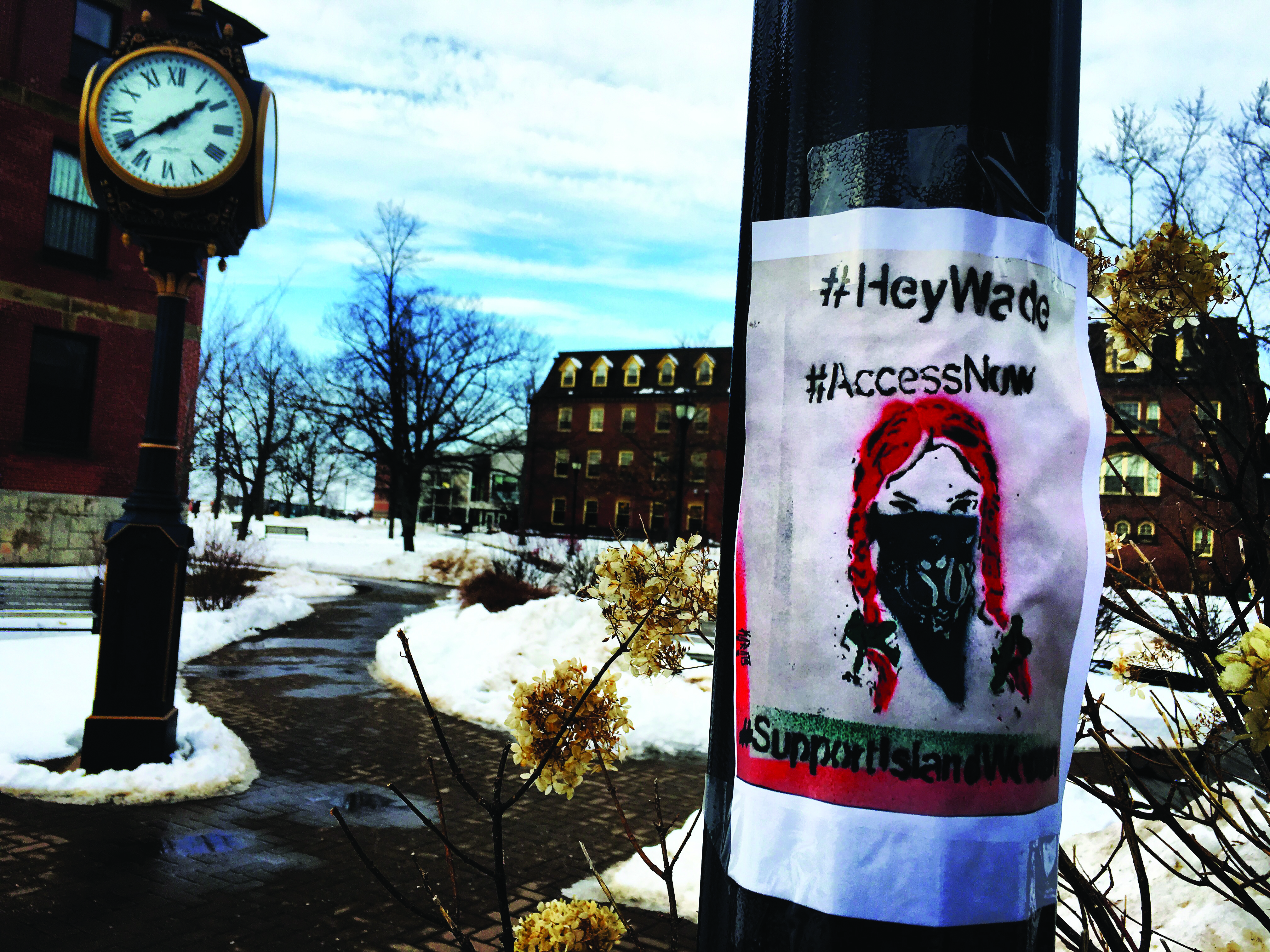
    So far, many islanders have voiced their support on this issue. In fact, posters displaying the beloved Anne of Green Gables have begun to appear across the province. The posters, created by @iamkarats, are addressed to the Premier in support of island women and are requesting access now. Hopefully this message is received before the court rulings for this case on April 4th.

    Have an opinion or want the government to concede? Voice it to Prince Edward Island’s Premier, Wade MacLauchlan. The office telephone number is: 902-368-4400.

    A huge thank you to my cousin, Kelly McMillan, for sharing her knowledge and translating legal jargon for my understanding.

Betzillo positions itself as a versatile gaming hub where structured bonuses and adaptive gameplay mechanics support both short sessions and extended play.

Built with a focus on innovation, Spinbit integrates modern casino architecture with rapid transactions, appealing to players who value speed and digital efficiency.

Ripper Casino emphasizes bold entertainment through high-impact slot titles and competitive promotions crafted for risk-oriented players.

A friendly interface and stable performance define Ricky Casino, offering a casual yet reliable environment for a wide spectrum of gaming preferences.

King Billy Casino channels classic casino spirit into a modern platform, delivering recognizable themes supported by contemporary reward systems.

Immersive visuals and layered slot mechanics are at the core of Dragonslots, creating a narrative-driven casino experience.

Lukki Casino appeals to players seeking direct access and minimal friction, focusing on fast loading times and intuitive controls.

Casinonic provides a structured and dependable gaming framework, blending modern slots with transparent operational standards.