
Tag: Liberal

  • Canada 2020: New Government, New Year

    Canada 2020: New Government, New Year

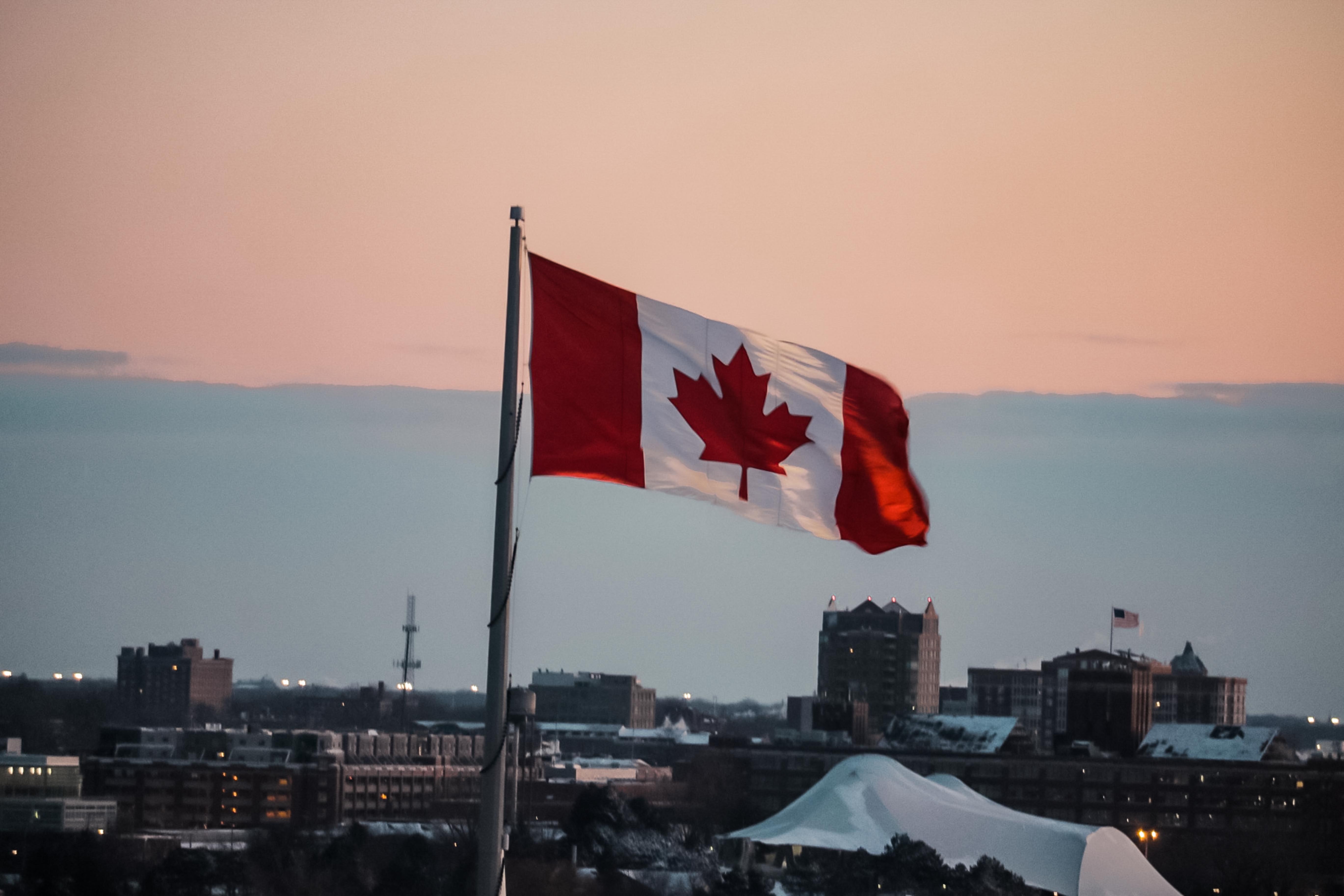
    It has been almost three months since the Liberal Party, led by Justin Trudeau, was voted in for a second term, this time as a minority government. Although it has only been a few months, Prime Minister (PM) Justin Trudeau and his party have already been making many decisions and changes. So, what exactly can you expect from the liberals in 2020? 

    Treading Carefully

    Justin Trudeau and his party may have won the 2019 Federal Election, but they did so by a slim margin. The Conservatives won the popular vote and many other parties gained support that was previously directed towards the liberals. This outcome means that Trudeau will spend 2020 and the next four years thinking more carefully about his future decisions. 

    If Trudeau wants the liberals to continue to be in power, his choices must be managed with care. Already we have seen Trudeau take almost a month to form his government compared to the fourteen days he took in 2015. The extra time demonstrates Trudeau’s recognition that he must make smart choices that benefit all of Canada and not simply a select few.

    The Western Divide

    The liberal’s victory drove a wedge between Canada’s west and east. The western provinces, primarily Saskatchewan and Alberta, expressed concern that their problems were not going to be addressed by the liberal party. Justin Trudeau has promised to do what he can to understand the frustrations of the people in the west and respond in the best ways possible.

    Based on his promises, in 2020 Justin Trudeau will work towards making Canada united again from coast to coast to coast. The first step made towards this unification took place when Trudeau unveiled his cabinet, which consisted of Jonathan Wilkinson as Environment Minister and Chrystia Freeland as Intergovernmental Affairs Minister and Deputy Prime Minister. While neither Wilkinson or Freeland represent ridings in Alberta or Saskatchewan, both ministers were raised in the west and Trudeau hopes that they will be able to respond effectively to some of the west’s major concerns.

    Jason Kenney, Alberta’s Premier in a statement said, “With no ministers from Alberta, I hope that ministers with portfolios of especially urgent interest to our province will listen to Albertans, take our concerns seriously, and work constructively with the Alberta government to address them”.

    Although Trudeau made the first step regarding recognizing the west, 2020 will be the year that determines whether the gap between the west and east closes or continues to grow.

    Climate Change

    One of the factors that played heavily into the 2019 Federal Election and many parties’ platforms was the crisis of climate change at hand. Back in June, the Liberal government proposed a ban on single-use plastics to come into widespread effect in early 2021. If the ban is to take place officially, much of 2020 will be dedicated to finding alternatives to single-use plastics and slowly initiating the changes.

    A number of municipalities have already put this ban in effect. In Devon, Alberta stores in the community are no longer allowed to distribute single-use plastic retail bags as of January 1st, 2020. Many cities in British Columbia have jumped on this initiative such as Surrey, Kamloops, Nanaimo, Salmon Arm, Saanich, Tofino and Victoria. 

    Trudeau has made progress in the past towards reducing the countries carbon emissions and it can be expected that in 2020 he will continue his efforts to make Canada greener.

    Wireless Price Cuts

    Part of the Liberal’s re-election platform was the promise to reduce wireless bills by 25%. Wireless bills are an issue that concerns the majority of Canadian’s and this promise seems to be taking precedence in 2020.

    Minister of Innovation, Science and Industry Navdeep Bains announced to The Canadian Press that these price cuts will take place within two years starting in December 2019. Already prices have dropped between 27-28% from 2016 to 2018 and the liberals plan on furthering that reduction even more. Bains reported that the liberals made a commitment and plan to uphold it in the coming year.

    Many details surrounding how the liberals will achieve this 25% decrease have not been released yet but with the new initiative in place, Canadians should expect details to arrive soon.

    Campaign Promises

    There are many promises made by parties during the campaign period and it is hard to predict which ones will be tackled in the upcoming year. With budgets being decided, the liberals should begin to work on a number of promises in the upcoming year but since we are still unsure, these are merely some important matters the party will be predicted to deal with within 2020.

    With the west, climate change and wireless price cuts in mind, it will be interesting to see what the Liberal Party accomplishes or what mistakes they make this year.

  • Justin Trudeau’s Liberal Party is Here to Stay

    Justin Trudeau’s Liberal Party is Here to Stay

    On Monday, October 21st citizens across the country flocked to the polls casting ballots that would determine Canada’s government for the next four years. This federal election campaign included many controversies and the impending results of the election were something very much up in the air.

    With all votes counted, it was determined early Tuesday morning that Justin Trudeau and the Liberal Party would remain in power, however, this time as a minority government. The Conservative Party managed to take a significant number of seats back from the Liberals changing them from the majority government that they have been for the past four years and will continue to be the official opposition.

    Additionally, the Bloc Québécois made significant gains in seats and may potentially hold some power within the House of Commons this upcoming term. The Green Party also managed to score more seats than they have had previously.

    The New Democratic Party (NDP) is not to be discredited. Although they lost many seats in the House of Commons, NDP leader Jasmeet Singh is prepared to hold the balance of power in a Liberal Minority.

    Although the Liberal Party won the most seats and will be forming the government for the next four years, the Conservative Party managed to win the popular vote. The Conservatives managed to take 6,139,185 of the votes in this election, claiming 34.4% of the popular vote. The Liberals only managed to claim 33.1%, a difference of about 243,000 votes.

    Andrew Scheer announced that although his party may have lost the election, “More Canadians wanted us to win this election than any other party.”; In Alberta, the Conservatives took 33 of the 34 seats the province holds.

    You can visit CBC to compare both the seat count and popular vote from 2015 to 2019.

    With a Liberal minority government, leaders of all parties are interested to see how the next four years pan out and how that will play into the future of Canada.

    Gains and Losses

    Liberals went from having 177 seats to 157 for a total difference of -20.

    Conservatives went from 95 to 121 seats, a gain of +26.

    The Bloc triples its seats from 10 in 2015 to 32 in 2019 for a difference of +22.

    The NDP went from 39 seats to 24, a difference of -15.

    The Green Party gained an additional seat from 2015 now having 3 total seats.

    People’s Party lost their only seat in this election and will not be represented in the House of Commons.

    Other parties and Independents went from having 9 seats to 1, a loss of -8.

  • The Value of the Liberal Arts

    The Value of the Liberal Arts

    Constantly given tailwind is the notion that the liberal arts are breeding a generation of radical college students. It is an idea that has old roots, taking its modern form when Bill Buckley wrote God and Man at Yale in 1951.

    To be clear, I am not lobbying that there are equal-parts progressive and conservative in the academy or even that the asymmetry is not growing. In fact, it is an almost-innate observation that our professors lean predominantly left. But since Buckley penned that piece, conservatives are still outnumbered and yet the world did not come to the doomsday forecast of their crisis thinking. Regardless of your political orientation, to discover if these criticisms have merit you must ground your views in what the arts actually provide.

    Arts does not teach you what to think, it teaches you how. In ten years’, time, you are wrong to think that I will remember anything other than how to misuse the term ‘actor’ and some scattered lines from Rene Descartes. But what I will remember is the how question. Whether you are critiquing Adam Smith or Karl Marx, reading Shakespeare or Rushdie, using realist or postcolonial theories, the content to which you’re exposed tells you the world is more complicated than you once saw. The arts are showing you this mess and telling you to embrace it.

    It is true that part of that mess are areas like gender, race, class, and violence, and more often than not, your readings will point you in that direction. But very rarely are these ever shown to be the be-all and end-all of politics. Rather they are shown to offer knowledge just like the state, war, or the international market offers knowledge. There is nothing inherently progressive about this, and if you care about intellectual honesty like so many of these critics purportedly do, your work needs to value these areas.

    I am not arguing that change is not needed. Debates can and should be had to ensure that an arts degree engages with a plurality of content that maximally exposes nuance in the world. There are also legitimate grievances if students find it more dependable to write according to a professor’s politics. That being said, this is a far cry from a mass indoctrination brought by the arts, if it were even possible.


    Aodhan Murphy is graduating with a BA in Politics

Betzillo positions itself as a versatile gaming hub where structured bonuses and adaptive gameplay mechanics support both short sessions and extended play.

Built with a focus on innovation, Spinbit integrates modern casino architecture with rapid transactions, appealing to players who value speed and digital efficiency.

Ripper Casino emphasizes bold entertainment through high-impact slot titles and competitive promotions crafted for risk-oriented players.

A friendly interface and stable performance define Ricky Casino, offering a casual yet reliable environment for a wide spectrum of gaming preferences.

King Billy Casino channels classic casino spirit into a modern platform, delivering recognizable themes supported by contemporary reward systems.

Immersive visuals and layered slot mechanics are at the core of Dragonslots, creating a narrative-driven casino experience.

Lukki Casino appeals to players seeking direct access and minimal friction, focusing on fast loading times and intuitive controls.

Casinonic provides a structured and dependable gaming framework, blending modern slots with transparent operational standards.