Tag: physics

  • Water traced on Moon: Another Achievement by NASA

    Water traced on Moon: Another Achievement by NASA

    For a long time, the moon has been thought of as waterless, though recently, numerous researchers have discovered water in some parts of the moon. New observations by the SOFIA telescope and Lunar Reconnaissance Orbiter by NASA reveal traces of water in some small dark craters as well as sun-baked lunar soil. Earlier large shadowed craters were thought to be a significant source of water storage.

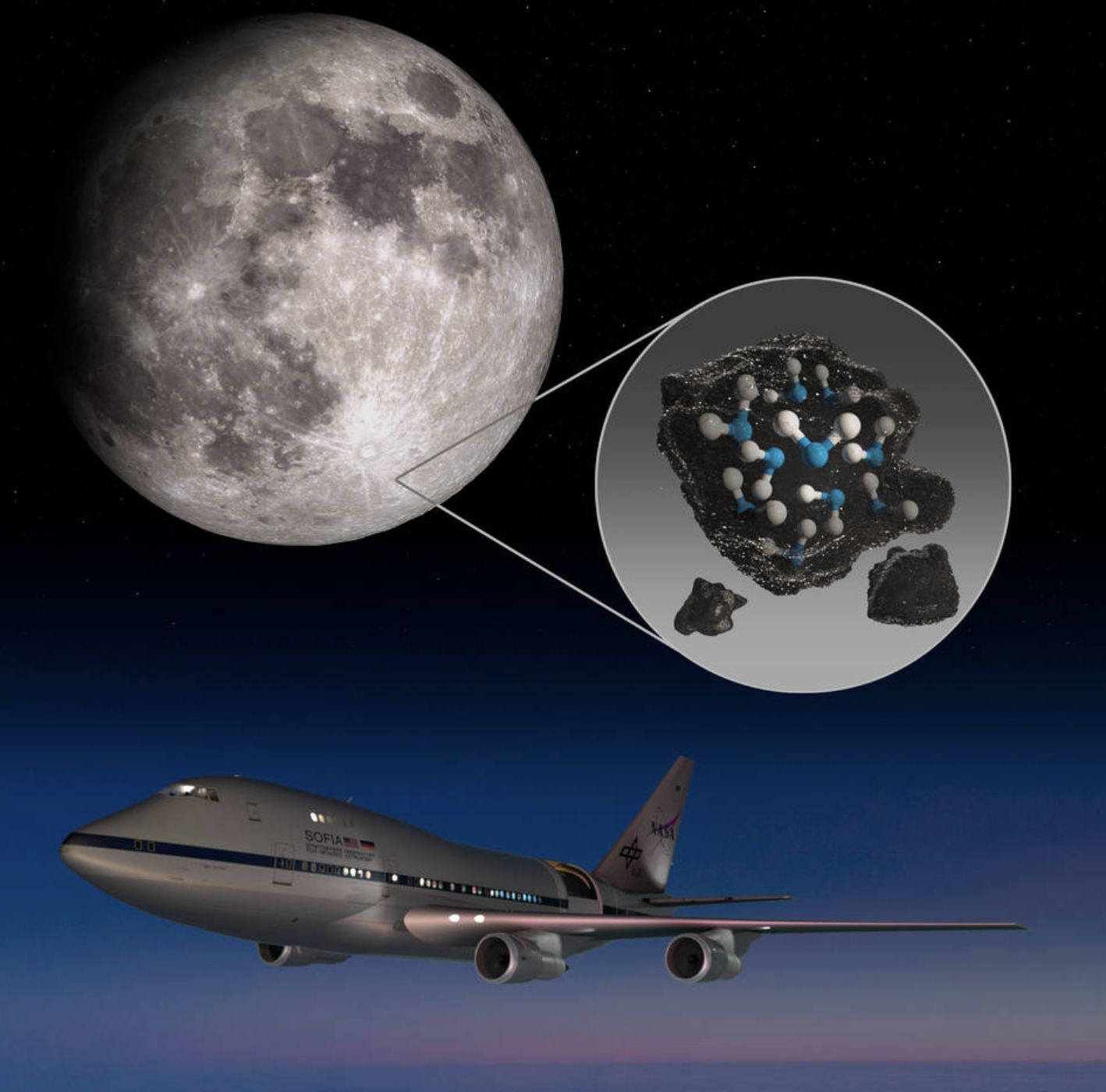
     This discovery has proved itself to be a milestone in the mission to discover possible life on the Moon. SOFIA is a very innovative and unique approach by NASA in the field of lunar science. SOFIA- Stratospheric Observatory for Infrared Astronomy, is a modified Boeing 747SP jet which gives its telescope, which is 2.7 meter, a view above 99% of the atmosphere’s obstructive water vapor which helps in more precise observations.
    NASA’s SOFIA confirmed the presence of water on the sunlit surface of the Moon.
    Water molecules were detected on the Clavius Crater located on the southern hemisphere of the Moon, which is one of the largest craters visible from the Earth. Previous research and missions towards the Moon have revealed hydrogen molecules but some were not able to spot the difference between water (H 2 O) and hydroxyl (OH) since hydroxyl is a close chemical relative of water. The data from the location (Clavius Crater) has revealed the presence of a water concentration equivalent to 12-ounces of water trapped in a cubic meter of lunar soil which is
    spread throughout the lunar surface.

    The observations on the 10-minute span focused merely on the region in the southern hemisphere of the moon since it is the largest crater (Clavius) which revealed a very strong emission of infrared rays with a wavelength of six microns. The area warmed by the Sun was reemitting the absorbed radiation exactly how water (H 2 O) would.

    The researchers who led the project at NASA, also said that they aren’t familiar with any other material on the Moon that can emit single feature rays at 6 microns other than water. It is thought that the water might be stored in either the naturally occurring volcanic glass or is that it is between microscopic grains of rock dusk, in which case it suggests that it is getting shielded from the extreme conditions on the Moon’s surface, that is, high temperature and vacuum conditions. This would allow water to persistently exist, though there are no further answers to how water came to be there in the first place. The assumption is that water could have formed by the free oxygen and hydrogen which are liberated from the lunar rocks by the impact of the micrometeorites.
    Earlier in 1969, observations by astronomers G.R. Hunt and J.W. Salisbury, show how much they focused on the characterization of minerals on the lunar surface instead of water, despite noticing the spectral emission, not realizing their huge discovery.

    Now the Astronomers and scientists are planning to map the vast lunar surface in order to get some answers to questions concerning the characterization of the behavior of water, a variation of water behavior across the lunar surface in accordance with specific days, latitude, etc., source of water, etc. There are also some doubts within this discovery that this might also be just weak bonding of solar wind hydrogen with oxygen at the surface of grains of silicate glasses and minerals in the regolith as per Jack Schmitt who is a geologist and member of Apollo 17’s crew
    who are the last astronauts to have walked on the moon.

  • Mystery of Black hole and Milky Way: Nobel Prize in Physics in 2020

    Mystery of Black hole and Milky Way: Nobel Prize in Physics in 2020

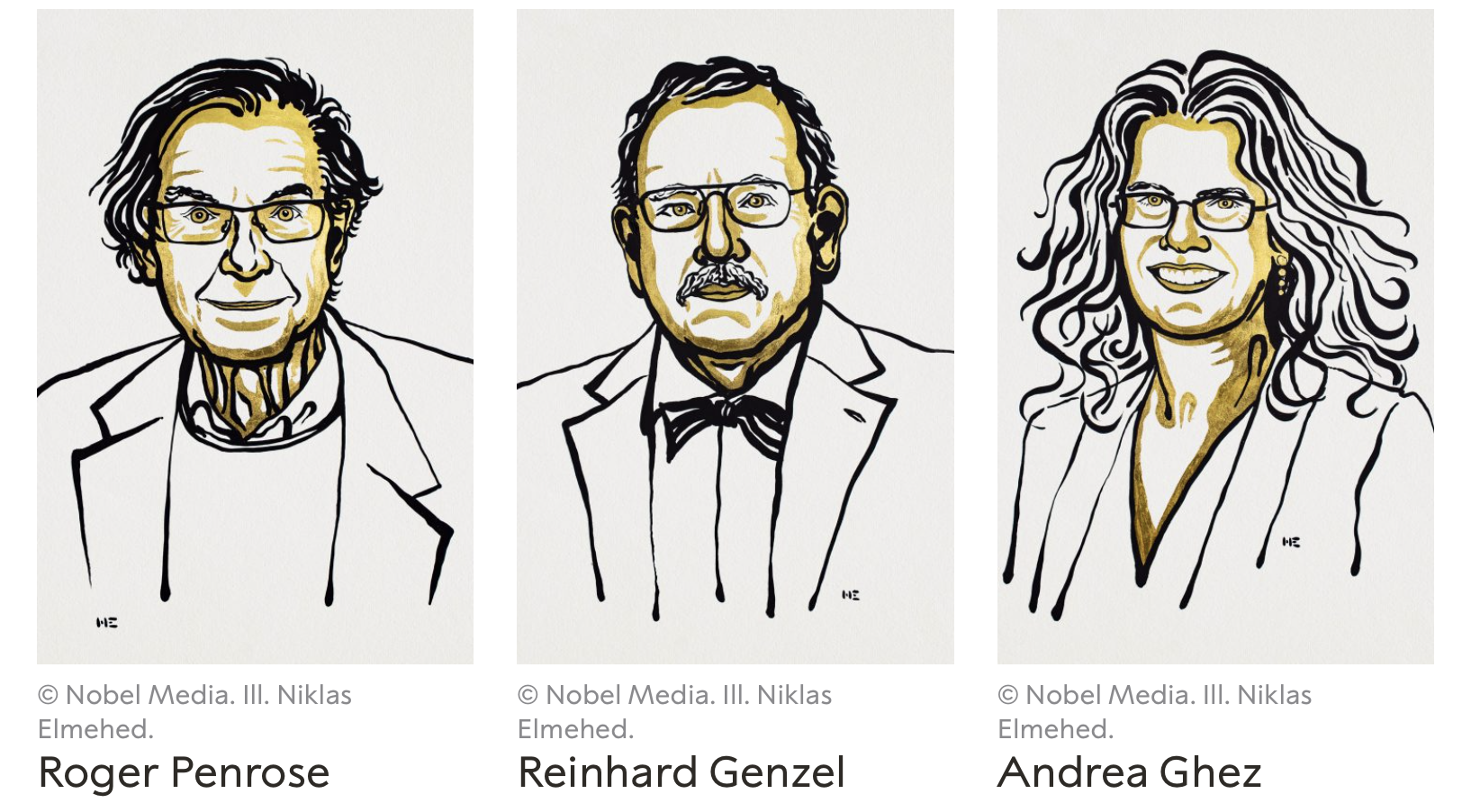
    The Nobel Prize in Physics this year was shared amongst three laureates for their discoveries concerning one of the most searched mysteries in the Universe, the black hole and the Milky Way. Roger Penrose, one of the three Nobel prize Winners proposed the general theory of relativity leads to the formation of black holes. The other two winners, Reinhard Genzel and Andrea Ghez found out that there is an invisible and extremely heavy object governing the orbits of stars right in the centre of our galaxy, The Milky Way. The only known explanation currently is that it is a black hole.

    Roger Penrose was born in 1931in Colchester, UK. He received his PhD. In 1957 from the University of Cambridge and is now a Professor at the University of Oxford.

    Reinhard Genzel was born in 1952 in Bad Homburg vor der Höhe, Germany. He got his Ph.D. in 1978 from the University of Bonn in Germany. Director at Max Planck Institute for Extraterrestrial Physics, in Garching, Germany, He is currently Professor at the University of California, Berkeley.

    Andrea Ghez was born in 1965 in the city of New York, USA. She received her PhD in 1992 from the California Institute of Technology, Pasadena, USA. She is currently a professor at the University of California, Los Angeles, USA.

    The total prize amount was 10 million out of which one half was given to Roger Penrose and the other half was subsequently split between Reinhard Genzel and Andrea Ghez.

    Roger Penrose proved that black holes are a direct consequence of Albert Einstein’s general theory of relativity using mathematical methods, which is pretty fascinating since Einstein himself did not believe in the existence of black holes. Black holes are thought to be heavyweight monstrosities that engulf everything which enters them, not even light can escape a black hole. Dr Penrose proved that black holes can form in reality and he described them in detail in his ground-breaking article which is considered as one of the most essential contributions to the theory of relativity, post-Einstein.

    Reinhard Genzel and Andrea Ghez each had a group of astronomers that they were leading since the early 1990s which focused on a region called Sagittarius A* at the centre of our galaxy. The orbits of the brightest stars which are closest to the middle of the milky way were mapped with increased precision. Both the group’s measurements match in terms of findings, both of the groups found an extremely heavy, invisible object that pulls on the jumble of stars which causes them to run around at dizzy speeds. There are around four million solar masses which are packed together in a region which is as big as our Solar System.

    Using the World’s largest Telescopes, Reinhard and Andrea came up with methods to see through the huge clouds made of interstellar gases and dust which come between the centre of the milky way and hinder our vision of it. The refined new techniques to compensate for distortions caused by the Earth’s atmosphere. They built unique instruments to carry out this process which has given the world one of the most convincing evidence of a supermassive black hole at the centre of the Milky Way.

    This year’s discoveries have decidedly broken new ground in the field of compact and supermassive objects. These new discoveries have created more questions to be answered and have generated the future potential for further research. It is very impressive to see how Laureates have pushed the concept forward and how they have gotten closer to deciphering of one the greatest scientific mysteries of all time.

  • Canadian Female Physicist Donna Strickland Awarded Nobel Prize

    Canadian Female Physicist Donna Strickland Awarded Nobel Prize

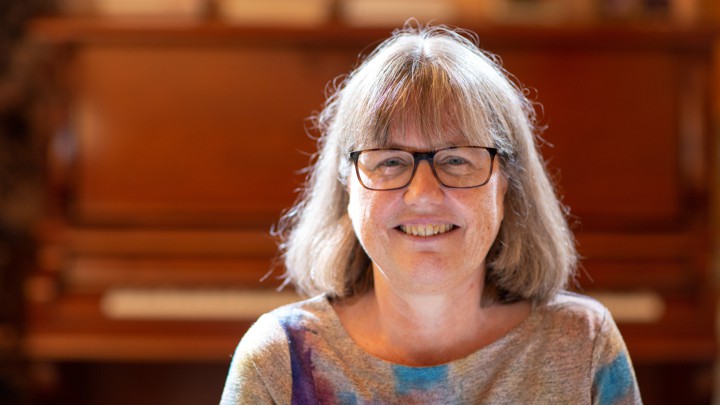
    Donna Strickland, a Canadian laser physicist, has become the first woman in 55 years to receive the Nobel Prize for physics. She is also the first Canadian woman honoured with this prize, and the third woman in history to ever receive said award.

    Although she believed the call from Sweden notifying her of her award at 5am was a prank, Dr. Donna Strickland, along with her colleagues, Arthur Ashkin and Gerard Mourou, were in fact awarded the Nobel Prize in physics for their contribution to the field of laser physics: their development of a new technique called Chirped Pulse Amplification (CPA). Prior to Strickland and her team’s research in the 1980s, there was a peak intensity limitation for lasers due to the inability of an amplifier to accommodate a high-power intensity as a short pulse, as this would create an explosion. This meant that you could either have a short pulse laser or a powerful laser, but Strickland’s team aimed to create a laser that could be both short pulse and powerful, without blowing anything up.

    By initially chirping and stretching the pulse, it can be amplified to saturation without increasing the peak power to the point of overwhelming the amplifier, this is followed by the restoration of the original pulse width by an optical compressor to create a short, but still powerful, energy pulse. CPA allowed scientists to produce shorter and more intense laser pulses than ever before, and has found applications in industries such as medicine, including use in cancer therapy and corrective eye surgery.

    Strickland acknowledged that her award marks an important milestone of the progress for women in science, since the last female winner of Nobel Prize in physics, Maria Goeppert-Mayer, was awarded in 1963. Maria was not paid for most of her work as a scientist and was not given the same opportunities male scientists were provided at the time. Marie Curie was the only other woman to receive this award in 1903 for her work in radiation, who was only nominated for the award due to her husband’s insistence to the French Academy of Sciences that she be included in his nomination.

    Strickland commented that women had come a long way since then, as she had always felt that she had been treated and paid the same as her male counterparts in the field. Despite this progress, negative comments are still being made about women’s role in the scientific community. Just prior to Strickland’s award, Professor Alessandro Strumia claimed that “physics was invented and built by men […]” during his presentation on gender and high energy physics.

    Strickland was surprised that she was only the third woman to receive said prize, but the reality is that between 1901 to 2017, only forty-eight women, compared to 892 men had been awarded a Nobel Prize. A disparity remains, but with more and more women entering STEM fields in recent years, hopefully this gap will close.

    Strickland, a Guelph native, now oversees the ultra-fast laser lab at the University of Waterloo, with research interests in ultrashort pulse generation through multi-frequency Raman generation, a two-colour fiber laser system for mid-infrared generation, and self-focusing in crystalline lenses. Strickland has taught as an associate professor at the university since 1997 and passes on her passion for physics to her students.

    Laura Porter-Muntz is a fourth-year Biology (Co-op) student and the Science Editor of The Athenaeum

  • Opening Letter from the Science Editor

    Welcome to new and returning Acadia students! The school year is already in full swing and as your semesters get busy, we hope that you will look out for online and print issues of The Athenaeum as your student-run source of news about what is happening on campus and in the greater Wolfville community. It is bound to be an especially exciting year for the sciences at Acadia as the $22.25 million investment in renovations for Huggins Science Hall and Elliot Hall comes to fruition. This funding, provided by the Government of Canada, Province of Nova Scotia and private donors, will serve to modernize our science facilities for research and teaching use alike while improving their environmental sustainability. 

    Despite the construction in some of our science buildings, research at Acadia is still going strong as Acadia researchers begin the year with $1.8 million in NSERC (Natural Sciences and Engineering Research Council of Canada) funding. This funding will go towards research in the Physics, Mathematics and Statistics, Earth and Environmental Science, Computer Science, Biology and Geology departments. Of particular interest, will be the development of the Acadia Quarantine Behavioural Bioassay Facility to expand Dr. Kirk Hillier’s work on insect responses to odorants. 

    This year, we are hoping to have wide-ranging articles from all of the scientific departments at Acadia, particularly showcasing the research that happens right here on our campus. We hope to have articles about the work Acadia scientific clubs and societies, graduate students and professors do to enrich our campus and greater scientific community. We also hope to have contributions from students about their own experiences doing research abroad, through co-op or other external opportunities so as to help other students gain perspective about the opportunities they may wish to pursue. New submissions and ideas are always welcomed and can be emailed to [email protected]. We hope to hear from you and to be your source of news about the vibrant scientific community here at Acadia! 

    Sources:  

    http://www2.acadiau.ca/home/news-reader-page/canada-and-nova-scotia-invest-in-infrastructure-at-acadia-university-5806.html 

    https://www2.acadiau.ca/home/news-reader-page/acadia-researchers-receive-1-8-million-in-nserc-funding.html 

    https://www2.acadiau.ca/home/news-reader-page/acadia-researchers-receive-cfis-john-r-evans-leader-funds.html 

  • Acadia Physics and Mathematics Student Researchers Stand Out

    Long hours at the library and countless lectures pay off when you can produce a piece of work that’s exciting. Sometimes it can be helpful to learn about what other students are working on in order to not only understand what it means to be doing research while in your undergraduate degree, but also to gain inspiration from their triumphs. Take a look at some notable current students and the topics they studied.


    Physics Beyond the Standard Model: X plus and X minus

    Miriam Hewlett

    At present the Standard Model (SM) of particle physics is our best description of what occurs at the subatomic level, but it is known that this description is incomplete. Experiments investigating the possibility of new particles and interactions are some of the most prominent in modern physics. For this research the effects of additional vector bosons beyond the SM, X plus and X minus, on electron-positron collisions were examined at the tree level. Such collisions are outlined for Belle-II, an upcoming experiment at KEK. The X plus/minus model introduces direct CP violating phases in the coupling of X plus to anti-fermions and X minus to fermions. Results were calculated in Mathematica with the use of the Feyncalc package, and are in the form of exclusion plots displaying allowed ranges of physical parameters associated with the additional particles.


    Interval Estimation for Risk Analysis with Nonquantal Data

    Dewi Tanasia Saputra

    In the literature of low-dose risk assessment, Piegorsch et al. (2005) proposed five approaches to construct simultaneous confidence bounds with nonquantal data and they recommended Akahira’s Cornish-Fisher expansion method. In this thesis, a generalized confidence interval method proposed by Weerahandi (1995) is used to construct simultaneous confidence bounds for low-dose risk assessment when sample sizes are large. We apply small sample asymptotic methods to obtain interval inference for risk assessment. Simulation studies are conducted to compare their performances based on the coverage probability. The application of the proposed methods is demonstrated by a real data example.


    Bay of Fundy Tidal Power: Analysis of Tidal Velocity Data

    Dillon Burgess

    Models have indicated that 2500 MW of energy could be extracted from the tidal currents of the Bay of Fundy. Harnessing this energy has proved to be a difficult task, with the characteristics of the tidal currents needing to be analyzed and understood before a turbine can enter the water. Using a cabled Acoustic Doppler Current Profilers (ADCP), a year long data set of the tidal velocity at a location in Grand Passage was gathered. Unfortunately, the data sets have several data gaps, when the instrument malfunctioned. The ADCP data can be analysed by performing a harmonic analysis, which produces amplitudes and phases of the tidal constituents. Each tidal constituent represents how an aspect of the periodic change in the relative positions of the Earth, Moon and Sun contributes to the time series data. Tidal velocities can then be reconstructed with the results from the harmonic analysis to generate a continuous time series for a full year. The difference between the ADCP data and reconstructed data is used to analyse the component of the velocity that is not related to the tidal harmonics, as is likely turbulence.


    Design and Construction of an Excitation Spectrometer

    Ms. Alejandra Maria Fuentes

    One method to study the optical properties of materials is by optical excitation spectroscopy.  In excitation spectroscopy, a nearly monochromatic light source is used to irradiate the sample at different wavelengths, and a spectrometer is used to record the spectrum of the emitted light at each incident wavelength. Hence, both emission and excitation spectra are recorded at the same time.  An emission spectrum consists of the wavelength distribution of the light emitted by the sample, measured at a fixed excitation wavelength. On the other hand, an excitation spectrum is the light intensity emitted at a fixed emission wavelength, over a range of excitation wavelengths. Both spectroscopic methods are useful in studying optical transitions occurring in a material.  My project involved the design, construction, and calibration of an excitation spectrometer.  LABVIEW programs were written to automate the experimental apparatus (monochromator, beam blanker, spectrometer), as well as perform the data analysis.  The data could then be investigated in three dimensions: excitation wavelength, emission wavelength and intensity.  This excitation spectrometer was then used to study the luminescent properties of geological rock and powder specimens, and a liquid chlorophyll sample.


    Biomarker Identification for Dementia and Brain Tumour Tissue Characterization with Magnetic Resonance Imaging

    Thalia Magyar

    Magnetic resonance imaging (MRI) is useful for diagnosing brain disorders. For instance, it can be used for stroke, Alzheimer’s disease, multiple sclerosis (MS), and a host of other debilitating neurodegenerative disorders. Yet, the correlation between quantitative MRI metrics and tissue pathology is not yet fully developed. My research focusses on progress toward strengthening correlations through several analysis techniques I have developed. Images from different types of quantitative MR methods are distorted in different ways and image contrast can be different which makes voxel-by-voxel quantitative comparisons difficult. Multimodality images, for instance, position emission tomography images and MR images, are collected with different resolutions and the contrast within the images varies due to different tissue properties. I am developing robust image registration, that is, image aligning techniques, so that comparisons can be done. The Magnetic Resonance Microscopy Centre in Winnipeg now has the capability to perform simultaneous PET and MR imaging. Direct comparisons between cerebral flood flow maps and PET measurements can be done when the images are correctly registered. Direct comparison between MR image findings and histology are best done when the two types of images are co-registered. In my research I work toward these registrations and quantifying image comparisons on a voxel-by-voxel basis. I will demonstrate these methods on control samples as well as disease samples such as brain cancer and Parkinson’s disease.


    An Angular Analysis of the Rare B ! K*µ + µ- Decay Using AdS/QCD

    Ryan MacGibbon

    Using something called Anti de-sitter/Quantum Chromodynamics (AdS/QCD), you can predict the complete set of angular observables in the rare B ! K*µ + µ- decay using light-front holographic B ! K* transition form factors, just as you can with the traditional method of Lattice QCD. Light front holographic AdS/QCD is a relatively new and amazing technique that maps 4-dimensional non-perturbative QCD field theory to a dual gravity curved space string theory! This works because when fields under the quantum field theory are strong interacting, the ones using gravitational theory are weak interacting, and vice-versa. This means that we can use perturbation theory in this 5-dimensional dual gravity theory, then map it back to QCD field theory, where comparisons and further calculations can be made. Since perturbation theory is a more accurate method than nonperturbative methods, this will hopefully allow for better approximations for our particle interactions, resulting in greater precision in our decay models. We are applying this adapted AdS/QCD technique to B-Meson Physics, and more specifically in my case, to the angular observables of B Mesons! Angular observables are a neat tool for measuring the decay angles in different particle decay, and are a useful means of discovering New Physics and hopefully in the future, changing the Standard Model of Particle Physics and our understand on how the physical world works!!!

  • Atlantic Universities Physics & Astronomy Conference (AUPAC)

    On February 3rd 2017, members of the Acadia Physics Society departed Wolfville, Nova Scotia, to attend the Atlantic Universities Physics & Astronomy Conference (AUPAC). Every year AUPAC is hosted by a different Atlantic university, this year the conference took place at the University of Prince Edward Island from February 3rd to February 5th. The conference offers undergraduate students an opportunity to present their research in front of a panel of judges. Acadia University’s very own Dillon Burgess, Alejandra Fuentes, Miriam Hewlett, Ryan MacGibbon, and Thalia Magyar presented their research at the conference. This event also offered opportunities to meet with professors from universities across Canada, allowing students to make connections with potential supervisors for graduate school. Research conducted by professors from the Atlantic universities was also presented, providing insight to students interested in those fields.

  • Annual Physics Holiday Gathering

    On November 28th 2016, Acadia Physics students and faculty came together for the annual Physics Holiday Gathering at the University Club. The evening of holiday fun included a wonderful feast where the professors served the students. Prior to the gathering, every participant bought a gift under $15, wrapped the gift, and brought it to the supper. After the supper was finished, each ‘Yankee-Swap’ participant picked a number from a hat. This continued until all gifts had been unwrapped and/or traded. Gifts included fun things such as Acadia University apparel, candy, and a Schrodinger’s Cat thought experiment flask.

Betzillo positions itself as a versatile gaming hub where structured bonuses and adaptive gameplay mechanics support both short sessions and extended play.

Built with a focus on innovation, Spinbit integrates modern casino architecture with rapid transactions, appealing to players who value speed and digital efficiency.

Ripper Casino emphasizes bold entertainment through high-impact slot titles and competitive promotions crafted for risk-oriented players.

A friendly interface and stable performance define Ricky Casino, offering a casual yet reliable environment for a wide spectrum of gaming preferences.

King Billy Casino channels classic casino spirit into a modern platform, delivering recognizable themes supported by contemporary reward systems.

Immersive visuals and layered slot mechanics are at the core of Dragonslots, creating a narrative-driven casino experience.

Lukki Casino appeals to players seeking direct access and minimal friction, focusing on fast loading times and intuitive controls.

Casinonic provides a structured and dependable gaming framework, blending modern slots with transparent operational standards.