Tag: RA

  • Letters to a Young RA: Why I’m Leaving Residence Life, and Why You Shouldn’t

    Letters to a Young RA: Why I’m Leaving Residence Life, and Why You Shouldn’t

    It was March of 2014 when I first received the email from Residence Life. I remember having to irritably scroll halfway down the page before I found out if I got the job or not. To my surprise, I did – I was to be an RA in Cutten House for the 2014/2015 year. I didn’t know how to react to the news. The mixed feeling of excitement, pride, and doubt was the same feeling that I am sure every new RA has felt before me. Needless to say, I accepted the position. The excitement eventually waned, but the doubts prevailed. How was I to know if I would be a good RA or not? What if I failed or froze in a situation? These thoughts returned to me often.

    My first year as an RA came and went quickly. I received yet another email from Residence Life informing me that my time in Cutten was to end and that I was to be placed in my first year residence home, Seminary House. This time, I felt more excitement than I did doubt. Seminary was a wholly different residence from Cutten, with its own unique culture. One former RA dubbed it an “RA retirement home”. This is a bit of a lazy generalization – each residence has its own problems, and the social skills needed to handle situations is no less important than in other buildings. Nevertheless, I felt entirely ready. My confidence and self-awareness had increased substantially. My judgement was decisive. My trust in others was expanding, and most importantly, I was becoming more compassionate. These were the traits I had honed in my second year, and they could only improve during my time in Seminary. It felt like my experiences should have prepared me for any issue I should encounter. They didn’t.

    My problem lied in the assumption that any trouble would come from my residents. I never once suspected that the cause of my turmoil (and the turmoil of many other RAs) would come from the institution that employs me. My frustration stems from the lack of professionalism and accountability within the hierarchy, how the concerns of RAs and SRAs are ultimately dismissed as attacks on the administration’s methods, and how the residents themselves, if ever they are upset by a decision made by Res Life, are labelled troubled or cranky. There exists an unstable framework for leadership, demonstrated by a lack of support, mistrust, and arrogance. I have never seen so many RAs and SRAs feel so neglected and underappreciated by the current administration as they do now. Perhaps this isn’t surprising. Bureaucratic ineptitude exists everywhere. Sometimes it’s tolerable. Other times, like now – not so much. This is why I’m leaving Residence Life.

    With all that said, I don’t think these reasons are enough for you, the new RA, to leave. The RA job can be both exciting and humbling if you let it. Maybe I’m an idealist, but I am hopeful of the future. The idea of seeing good work continuing is inspiring. However, there are a few pieces of non-specific advice that I wish to pass forward along with some things to look out for in your first year as an RA. Eleven points compiled from my own experiences and from those of other RAs. This is by no means an exhaustive list – you will encounter things that these rules will not prepare you for. However, should you find yourself in need of some sort of “guiding principles”, you might be able to extract a few from these words.

    1. Don’t take yourself too seriously.

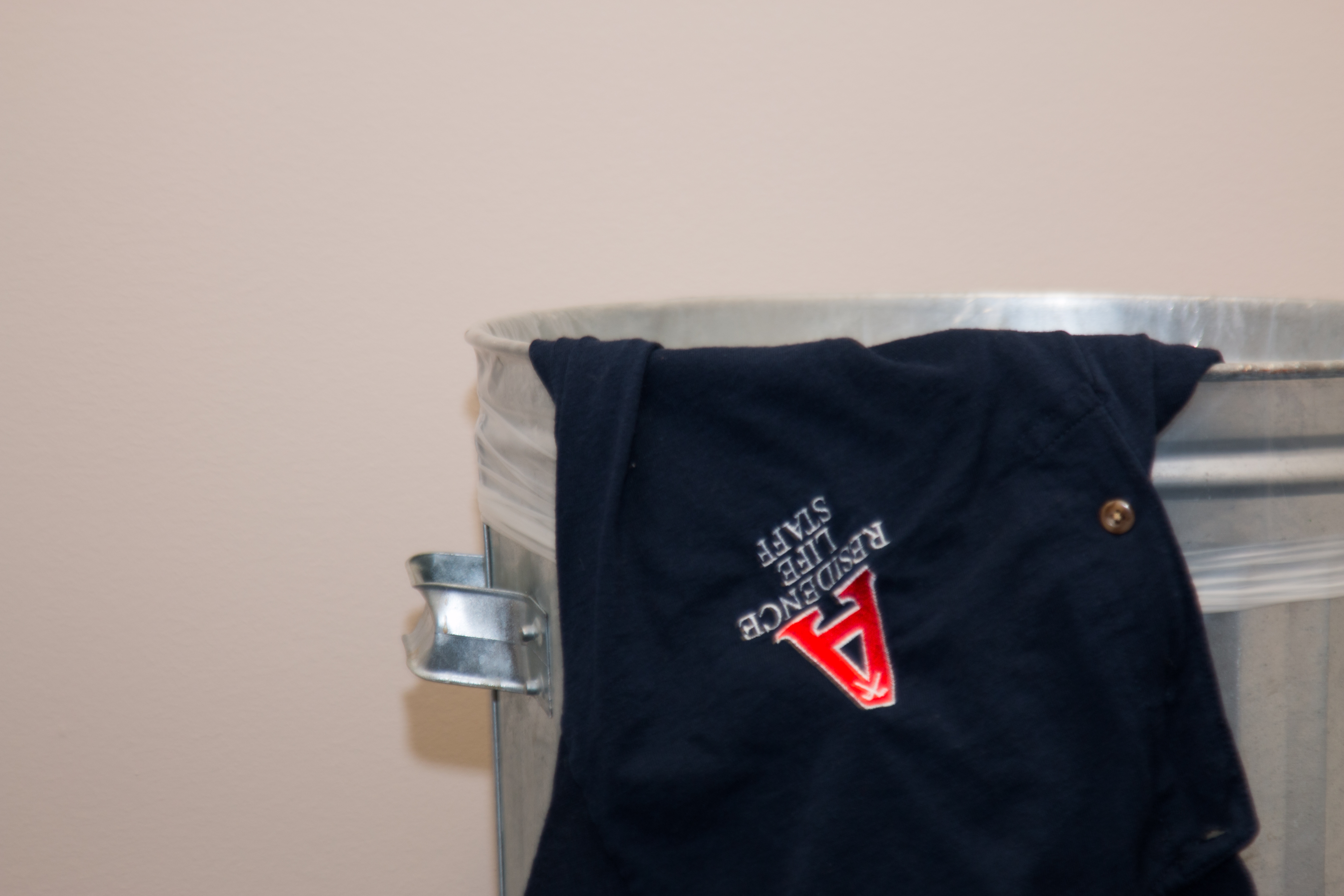
    You’re nobody’s boss. You didn’t just get this role because you’re better than all the other candidates (more on this later). Never accept that you are superior to any other student. You put on a polo once in a while and tour a building. You have a one-week training course under your belt. Don’t think that makes you anything special. Some residents will have more relevant life experience than you will ever have as an RA. In short, level with your residents. I say this piece of advice often, and I have tried to follow it ever since I started out as an RA. Do what the administration fails at doing: practice self-awareness. You’re a student, first and foremost, and so are your residents. Understanding this will accomplish much more for your residents, and will ultimately prevent the power from getting to your head.

    2. Your residents should be a high priority.

    You have to balance school work and personal health. Those always come first. However, you still have a job to do. Never slide on your commitments to you residents. I don’t just mean those living in your section or on your floor, I mean any student who depends on you, even if they live in a completely different building. There is a popular maxim that you have likely heard that is passed around Res Life: “Fake it ’till you make it.” Don’t listen to that piece of advice. While it is arguably useful in some circumstances, in general, you should never fake your interactions as an RA. Your team doesn’t deserve that. Your residents don’t deserve that. You don’t deserve that. Don’t ever fake it. Just make it.

    3. Be sympathetic.

    Try not to judge your residents. I know it’s hard; we all judge people. But as the saying goes: if you stare at a tree for too long, you’ll miss the forest. Everyone has a story, everyone has a struggle. Everyone has skeletons in the closet. We’ve all had our shining moments of triumph and crippling moments of failure. It’s not your place to criticise someone based on what they’ve been through. Remember Rule 1 – you’re a student too. You were likely in a similarly vulnerable position once.

    4. Avoid the gossip groups.

    This one might be unfair, but it’s also very true. Resident assistants, being in a position of power, love to gossip. I will admit that I am guilty of having done it, and I think everyone who works for Res Life has been at one point (with or without knowing it). Regardless, try your best not to talk about the secret lives of your residents, even in RA meetings. If sensitive information was shared to you by a resident, it is best to ask them permission first before talking to someone else (provided it’s not critical and/or life-threatening). You will be told that information should always go up. Well sometimes, information should stay right where it is. If you can solve the problem alone, clean and simple, then do it. Too many bad decisions are made by people in authority when they have too little information, and think it enough to act upon.

    5. Don’t be passive aggressive.

    Issues should be tackled head on. This means talking openly and freely. This is the nature of being professional. Residents will appreciate the honesty and straightforward attitude. If you can’t do this for any given message, then perhaps you should consider an alternative to what you have to say.

    6. Keep your door open often.

    This can be written more succinctly as: be present. I have talked to too many students who have said of their RA, “Oh, ______? I hardly ever see them!” These students are by no means introverted. Keeping your door propped open when you’re home – even deadbolted open – sends a far more powerful message of approachability than a closed door with a sign that says “busy”. You don’t need to be bubbly or outgoing. You just have to be there when your residents need it.

    7. Be lenient (but not too lenient).

    Some employees of Res Life seem to take a great joy in documenting as many people as possible. This is unnecessary – things can often be worked out with discussion and mediation. It ultimately boils down to sympathy (See Rule 4). Rather than staring at the “what” of the problem, open your eyes and search for the “why”. It took me a long time to learn this. This doesn’t imply that you should never enforce policy or discipline students who are particularly rebellious. If keeping order means asserting yourself, by all means do so. Just remember that respect is something that is earned, not given.

    8. It’s okay to be critical of policy and policy changes.

    All humans err. Even those in positions of authority (even you!). I don’t believe that RAs are leaders. RAs are put in place to protect and support their residents. Failing that is much worse than failing Residence Life. You don’t have to agree with all the rules you enforce. And sometimes you don’t have to enforce all the rules. It’s all about proper judgement regarding what is best for your residents. The armchair generals may deploy the troops and lay out the strategies, but they don’t always see every corner of the battlefield. The real-time tactics are up to you and your team to decide.

    9. Not all RAs are respectable.

    Many people will have no trouble accepting this one. There is such thing as a bad RA. You may have one on your team. It will be hard to befriend this person. They will break one or more of the above rules constantly. They might be in favour with the administration, thus protected from criticism. That’s okay. You can successfully do your job by ignoring them. However, they might even make this difficult for you. They might undermine your decisions, or leech off of your programs while contributing nothing. Residents might throw complaints like “but ______ does ______.” Just say: “I don’t care how ______ does it, we’re doing it this way.”

    I was once told by the administration that there is no such thing as a bad RA, only RAs with strengths and weaknesses. Unfortunately, some RAs possess the weakness that they are RAs. I don’t think that Res Life is entirely to blame for this. The interview process is greatly flawed. You can’t expect university students to become experts on selecting qualified candidates after giving a few questions. From a list of applicants, some great and some not, poor decisions are made. Even poorer decisions are made when that list of applicants is further windowed, making it difficult to construct effective teams. To those of you reading this that did not get the job: don’t worry. It’s no reflection on your character. In many ways, it’s more of a reflection on theirs.

    10. You can’t be everyone’s RA.

    Not everyone will like you. This is true in life. You won’t be that pillar of support for everyone. People might be drawn to you for one reason, and drawn to someone else for another reason. They might even seek help from RAs outside your building. Don’t take it personally. “Your residents” are not just your residents.

    11. Seek support from sources outside Res Life.

    This is the most important point. It’s good to talk to your teammates about things. They lead similar lives to you, and have shared many experiences with you. It’s also good to talk to your SRA, especially if the information is sensitive. Beyond that, I would strongly advise you to find someone you can talk to who is out of the loop. Maybe it’s your mother, who lives three time zones away, or maybe it’s a recently graduated peer (again, be careful with the personal details). Finding someone to be an RA for you will prevent you from burning out in the long run. You will be able to forget the petty office dramas and return to the only reality that needs attention: your residents.

    ***

    So with any luck, these rules will help you make the transition into your first year as an RA. Hopefully you will go in with a better understanding of what to expect. Hopefully it will make you a better person. I myself did not become an RA until after my first semester in Cutten; that was the real training period. These thoughts were only just beginning to form in my mind then. I don’t mean for this article to sound jaded or cynical, but the truth is far greater than silence. Many RAs and SRAs I have talked to have been through far worse then I. But this article is not for them. It is for you. You will be the ones who wear the polo and carry the responsibility. I hope that you will be better off than I was, and I hope that you don’t end up with the same misgivings and anxieties. If you do, then you need to start asking yourself the tough questions.

    I eventually came to a point this year where I found myself filled with the same doubt that I possessed going into the job. I realised that I didn’t want to be an RA anymore. That was a sad thought. But as one SRA put it: once you’re out, you’re free. I realised that I wanted to experience university as a student again, like I did in first year, only with less of my fears, and more of my strength and wisdom. I hope that you will come to a similar resolve of purpose during your tenure at Acadia, even if in your next year you happen to hold the title of SRA (though that is a different experience altogether, one that I initially believed I wanted. I didn’t get the position, and in many ways I’m glad – it’s a hard job, and sorely underappreciated).

    If I had a hammer, I would nail these 12 points to the front door of Res Life like Martin Luther did with his 95 Theses. Remember that the problems that Res Life faces are not unique. You will find them in almost any institutional organisation. It’s a product of everyone’s action and inaction, and it’s irreparable. You can’t fix the system (at least, not alone). But you can fix yourself.

Betzillo positions itself as a versatile gaming hub where structured bonuses and adaptive gameplay mechanics support both short sessions and extended play.

Built with a focus on innovation, Spinbit integrates modern casino architecture with rapid transactions, appealing to players who value speed and digital efficiency.

Ripper Casino emphasizes bold entertainment through high-impact slot titles and competitive promotions crafted for risk-oriented players.

A friendly interface and stable performance define Ricky Casino, offering a casual yet reliable environment for a wide spectrum of gaming preferences.

King Billy Casino channels classic casino spirit into a modern platform, delivering recognizable themes supported by contemporary reward systems.

Immersive visuals and layered slot mechanics are at the core of Dragonslots, creating a narrative-driven casino experience.

Lukki Casino appeals to players seeking direct access and minimal friction, focusing on fast loading times and intuitive controls.

Casinonic provides a structured and dependable gaming framework, blending modern slots with transparent operational standards.