Tag: research edition

  • Research Feature: Aimee Rideout

    Research Feature: Aimee Rideout

    Plastic pollution is a major environmental stressor for marine life and is both long-lasting and near-ubiquitous in ocean ecosystems due to anthropogenic activity.  Since the 1950s, when mass production of plastic products began, plastic debris has accumulated significantly in coastal, open ocean, and terrestrial environments. The effects of macroplastic (> 5 mm diameter) debris on marine life are well known as they cause entanglement and choking. Large plastic debris, however, degrades into smaller pieces known as microplastics (<1 mm diameter), small enough for ingestion by a wide range of marine organisms.The effects of microplastic ingestion on marine life remains poorly understood.  Overall the objective of my Honours research, with co-supervisors, Dr. Laura Ferguson and Dr. Glenys Gibson (Biology Department), is to explore how microplastics affect marine life and specifically, to determine if ingested microplastics change the structure of exposed tissues.

    We used Carcinus maenas (Green Crabs) as a model organism to investigate the effects of microplastics on the tissues of the hepatopancreas, a digestive organ at risk of exposure to pollution associated with food. Green crabs are scavengers, which exposes them to microplastic debris, and also contributes to their being a very aggressive, invasive species on Nova Scotia shores. We used histochemistry to visualize potential tissue-level effects of microplastic ingestion. Crabs were exposed to polystyrene microbeads (5 μm diameter) in aquaria water and in food at low concentrations that are typical of water samples of the mid-Atlantic Ocean (1-2 particles/ m3) and at higher concentrations typical of coastal areas (approx. 100 particles/ m3). Controls included field-sampled crabs and crabs cultured in the lab without polystyrene exposure.

    This study is part of a larger project that also looked for effects of microplastics on the bivalve mollusc, Mytilus ediulis (Blue Mussels). Blue Mussels (yes- the same species that are so tasty steamed with a little butter and lemon) are filter feeders and thus are at high risk of microplastic exposure. We also sampled haemolymph, a tissue that like your blood, contains immune cells, and took DNA samples to look for how microplastic uptake potentially changes the microbiome (i.e. the community of microbes in a particular environment such as those that live on and in our bodies).

    We exposed crabs to microplastics for six-weeks, compared the tissue structure of microplastic exposed crabs to controls, and used different stains (Periodic-acid Schiff-Alcian Blue, Giemsa, Hematoxylin & Eosin, and Nile Blue A) to analyse changes in the exposed tissues. We found several cell types in the hepatopancreas including R cells that function as absorptive and storage of glycogen and calcium, B cells that secrete digestive enzymes, and F cells that are darkly-staining precusors to B cells.

    Statistical analysis indicated that the abundance of R cells increased in response to the high exposure to microplastics, but that gut structure was not affected by growing the crabs in the lab. These data suggest that levels of microplastics found in some coastal areas do affect structure of exposed tissues (R cells) in these wide-spread scavengers.

    Additional research is required to investigate the uptake, transfer, and accumulation of microplastics on tissues, the immune system, and the microbiome of marine organisms exposed to many types of microplastics in order to better understand the effects of microplastic pollution, a growing global problem. Overall, whether or not you enjoy eating seafood, the influx of plastics in the marine ecosystems and their impacts on animal health is something for us all to chew on.

  • Research Feature: Micheal Light

    Research Feature: Micheal Light

    Honey bees (Apis mellifera L.) are the most agriculturally beneficial eusocial insects for crop pollination. Chemical communication is critical in maintaining colony structure and activity, which may be exploited by some parasites. Varroa destructor (Anderson and Trueman) (hereafter Varroa) is regarded as one of the biggest threats to apiculture, blamed for annual colony mortalities of over 30%. My research tests whether previously identified odourants affect Varroa behaviour and investigating those that elicit minimal response in honey bees. Volatile collection involving in- and ex-situ techniques is being used to identify individual compounds and sensitivity of live Varroa through gas chromatography-mass spectrometry and gas chromatography-electrotarsal detection, respectively. Furthermore, volatile components confirmed as Varroa-active will be investigated for behavioral valence through behavioural assays and electro-tarsograms. In addition, this study will compare methods for in-situ capture of hive odours. Results from this research can then be applied to colony-wide testing of active odourants in developing effective alternative methods for Varroa control as well as developing methods for future research exploring chemical ecology of social insects.

  • Research Feature: Chaiti Seth

    Research Feature: Chaiti Seth

    My research aims to identify key leverage points for shifting towards more healthy, just, and sustainable institutional food systems, using Acadia University as a case study, and examining findings in the broader provincial context. This research builds on my prior work and relationships at Acadia investigating food system issues and university food culture.

    Food is fundamental to all human life, and food systems – the ways that our food is produced, processed, distributed and consumed – have significant social, cultural, health, ecological and economic implications. The shift towards industrial food production has resulted in massive loss of knowledge and biodiversity, soil erosion, deforestation and habitat destruction, pollution, animal welfare concerns, waste production, as well as significant greenhouse gas emissions. The health crisis in relation to food is growing – societies are facing both over- and under-nutrition and diet-related diseases are prevalent amongst all populations. Most Canadians eat food that is neither healthy nor sustainably produced, and many face food insecurity or inequitable access to food.

    Just as current food systems have many detrimental impacts, their potential for improving quality of life is also immense.  Sustainable pasture and farmland management strategies can support biodiversity, conserve soil and water, and help sequester carbon. Combined with other lifestyle factors, nutritious food has enormous preventative and healing potential. The market for food represents a source of positive and sustainable economic activity and community-based food systems have the potential to contribute to local economic development and provide meaningful employment. Last, but not least, is the magic of food in bringing people together – for everyday gathering and special occasions, for nourishment and healing and celebration. Food is powerful, and the decisions we make about what we eat, and how we produce it, matter.

    Studies assessing individual behaviours identify the most effective food choices and habits for a shift to a healthy and sustainable food culture. At a societal level, national and regional organizations are currently advocating for a strong national food policy, and the federal government is engaging citizens in an ongoing consultation process. Bridging the space between individual and policy levels, institutions play a key role in food systems. They are large enough to have significant impact but do not typically have internal policies or a strong vision for food systems. In this gap, food services providers (FSPs) – multinational for-profit companies that typically run institutional food services – often unofficially dictate food policy. Due to the standardization and scale of institutional food systems, FSPs wield significant influence on food production, processing and consumption patterns. Research shows that institutions can strategically leverage their purchasing power to generate greater wealth and health in their communities. Despite a few individual success stories, there are significant barriers to broadly shifting institutional food practices.

    Universities can play an essential role in facilitating change in institutional food culture. They serve and can critically engage young adults as both eaters and future leaders in food systems, and invest in economic and community health through food procurement. There is a growing demand for healthy and sustainable food services at universities. Research shows a critical need for effective strategies that address systemic and cultural barriers to change.

    For this research, I use critical social science and transdisciplinary methodologies, incorporating mixed methods with four primary components: semi-structured stakeholder interviews, participant observation, document analysis of food services contracts, and numerical analysis of procurement data. I have conducted 14 interviews with internal stakeholders including students, faculty, staff and administration as well as external stakeholders such as change makers at other institutions, public policy-makers and non-profit advocates to gather rich data from a diversity of perspectives. I will integrate findings based on thematic coding and analysis of these interviews with information about strengths and gaps in existing contract language from other post-secondary institutions. Numerical analysis of procurement data will help determine relative impact and feasibility of specific interventions.

    My research aims to build knowledge for shifting towards healthy, sustainable and just university food systems and is intended to support institutions to find creative and innovative solutions that can contribute to building more sustainable and resilient local communities through food systems change.  

  • Reading Between the Wines: Studying the Impact of Caloric Values on Consumers’ Sensory Perceptions of Rosé Wines

    Reading Between the Wines: Studying the Impact of Caloric Values on Consumers’ Sensory Perceptions of Rosé Wines

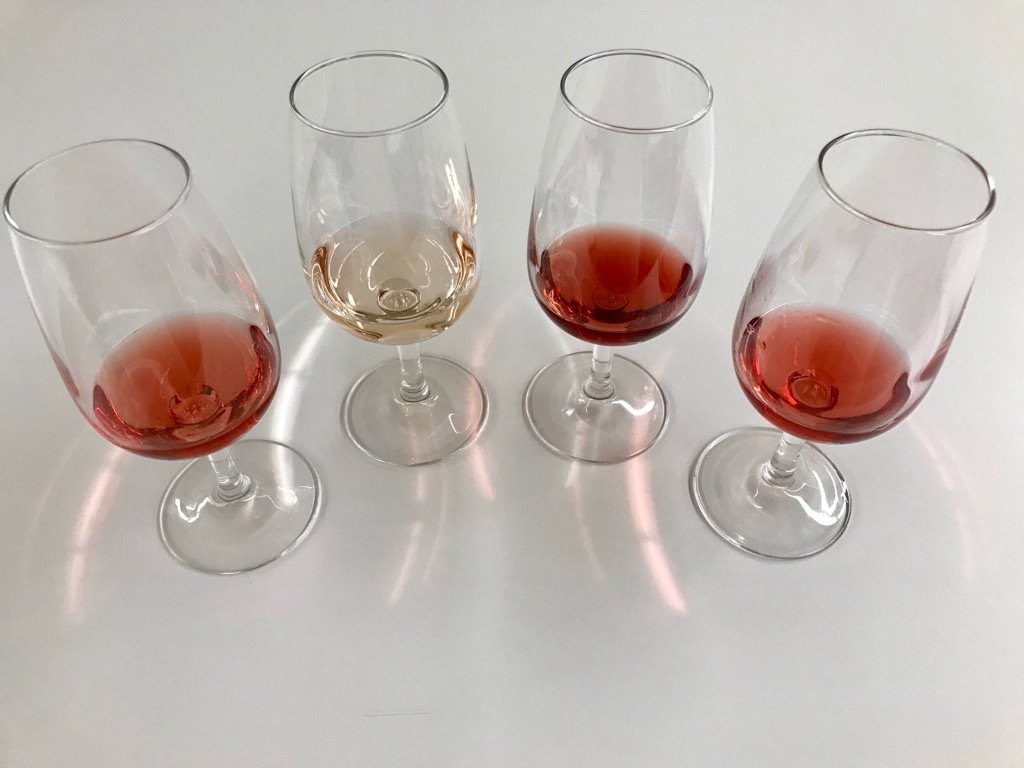
    With the production of local wine increasing in Nova Scotia, the government is investing a significant amount of money into wine research. As a recipient of funding from the Nova Scotia department of agriculture, Nutrition and Dietetics Honours student, Lydia Hayward, was able to investigate two areas of wine research that have yet to be studied. In an attempt to strengthen the growth of this industry, Hayward and supervisor, Dr. Matthew McSweeney, have begun research to develop a consumer lexicon to describe local wines in a way that resonates more effectively with consumers. This was the primary objective of the research, which used Projective Mapping and Ultra-Flash-Profiling to identify consumer descriptors. Participants also assessed their associated liking of these wines using a 9-point hedonic scale. This study is specific to rosé wines, as Hayward’s peers have already investigated reds and whites.

    Additionally, companies are hesitant to comply with the increased consumer demand for the disclosure of nutritional information. Although studies have shown that this disclosure will increase willingness to purchase, there is controversy surrounding how this will affect sales. Other studies show that consumers tend to prefer products with lower calories, a trend especially prevalent in women. However, these studies have not considered the influences of taste and pleasure on alcohol choices. This is why the secondary purpose of the study was to investigate the impacts of caloric values on the sensory perception and enjoyment of wine.

    In the first test, participants were asked to evaluate eight rosé wines and place them on a 2-dimensional plane on the computer screen, placing those more similar together and those differing apart. Also, they were asked to identify descriptors related to each wine.

    As for assessing the caloric values, this was done in two sessions. The first, without labels, acted as the baseline. Then, there was a session that implemented nutrition labels. In this second session, the four wines were assessed with four different nutrition labels; low, actual, high and highest in calories. They were asked to rate the wines on appearance, flavour, mouthfeel, and overall liking. Only four wines were assessed at a time, and the order was different for each participant.

    In both studies, consumer knowledge of wine was also assessed both subjectively and objectively, as they tend to differ.  The wine knowledge test, an objective evaluation of knowledge, found that the majority of participants, 90% were low to lowest in knowledge, accurately representing the consumer population.

    In the end, there were two clear categories found in the consumer descriptors, wines that had fruit flavours and those that lacked fruit flavours. It was also found that those attributes associated with fruit drove consumer liking of the rosé wines.

    The statistical analysis also demonstrated no significant difference in overall enjoyment of wines with varying caloric values. Although this contradicts the tendency to choose low calorie foods, prior studies have found pleasantness and taste to be the largest factors in wine choices. Thus, this supports that caloric transparency would have negligible effects on consumers wine choices.

    In order to more accurately predict the results of mandating nutrition labels in the future, labels must be similar to the label they plan to release and should be tested with a variety of alcoholic beverages, as opposed to wine alone.

    Pictured: Researcher Lydia Hayward

  • Research Feature: Julia Koppernaes

    Research Feature: Julia Koppernaes

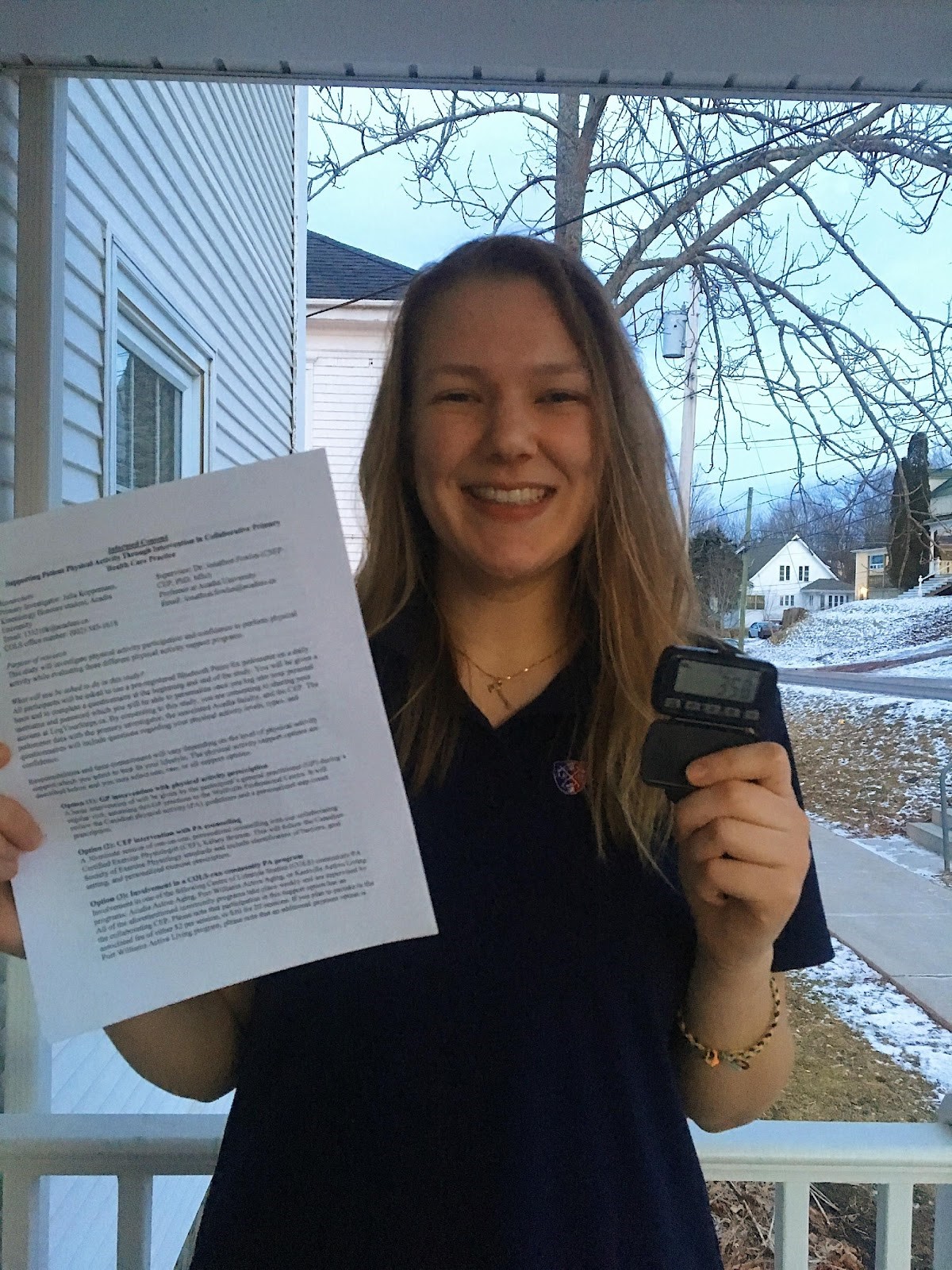
    Allied health networks that incorporate exercise professionals into primary care have been shown to be especially effective at improving physical activity levels in various populations. Nova Scotia is particularly inactive as compared to other regions of Canada, with few Nova Scotians meeting the daily physical activity guidelines. Access to physical activity supports such as tailored physical activity counselling and prescription, and physical activity monitoring devices (all shown to benefit physical activity levels and adherence) can be particularly challenging to access in Nova Scotia, where exercise participation is typically an out-of-pocket (i.e. outside of primary care) expense. To make these supports more readily accessible, and to develop practicable strategies, it is imperative that referral schemes be evaluated and explored in rural communities. My pilot study examined and described the physical activity referral programs of a collaborative health practice that incorporates a qualified exercise professional in the Annapolis Valley, Nova Scotia. Using accelerometers and questionnaires, physical activity and exercise levels were measured pre- and post- exercise/physical activity intervention. The effectiveness of physician-prescribed exercise was compared to exercise referral through an exercise physiologist and to participation in community exercise programs. In addition to physical activity levels pre- and post-, questionnaires assessed participants’ stage of change (readiness to change physical activity habits), task and regulatory self-efficacies (ability to execute and plan physical activity), and physical activity and exercise levels. Questionnaires also left room for open-ended responses to questions regarding which interventions were of most help to the individual in improving the aforementioned variables. By better understanding what people need in terms of support for increasing physical activity, better intervention can be provided in primary care. Ideally, this research will help to pave the way in solidifying the role of exercise professionals in an allied health care world. To incorporate exercise professionals as part of the standard in health care would be to take a step toward a more proactive and sustainable health care system.


    Doing my honours degree at Acadia has given me the opportunity to explore the research world, specifically in the field of kinesiology. Honours has challenged me in ways that I could not have expected, but has also pushed me to grow in my ability to think critically, organize, and prioritize. My little taste of research has provided me with a more wholesome appreciation for the scientific evidence that my degree is founded on. I am grateful to my supervisor, Dr. Jonathon Fowles, to the School of Kinesiology, and to Acadia University for granting me this experience; it truly has been an honour.


  • Research Feature: The Well Sibling Experience

    Research Feature: The Well Sibling Experience

    Siblings play a major role in our lives. For many people, they’re our first friends and our first enemies. They help to shape who we are as people for better or for worse, and often act as supporters during challenging times. However, when one of the siblings has a mental illness, the relationship between siblings can be drastically altered. Despite the impact that mental illness has on sibling relations and on other siblings in the household, there is little research or understanding of the unique experiences of these ‘well siblings’. It is for this reason that my honours research is focused on the narratives of the siblings of persons with mental illness.

    The research that does exist on the topic of ‘well siblings’ is rather limited and focused primarily on quantitative data. Although there is certainly value in knowing statistics around well siblings, they don’t quite capture the stories behind the numbers. So, to address this gap, this exploratory research was started, and data was gathered through a combination of one-on-one qualitative interviews and photo-narratives with five siblings of persons with mental illness. Through the stories shared by the siblings, it became clear that their experiences are incredibly unique and heavily influenced by their own lives, personalities, and circumstances. Therefore, telling their stories and building understanding is so vital.

    Nearly all of the participants expressed frustration and feelings of hurt because of the way their sibling interacts with them. This was challenging for them, as they had reported having a positive relationship with their sibling before the onset of their symptoms. When asked about their relationship, three of the siblings shared that they felt that they had, in a sense, lost their sibling because their current personality was so different from the person they knew before the onset of their symptoms. Despite any challenges the participants had with their siblings, they were still concerned about them and expressed fear for their well being.

    Although the participants do not currently identify as being a ‘well sibling’, their responses did indicate that they and their families tend to put them a well sibling role. For some, this meant having their mental health overlooked because they were perceived as being well in comparison to their sibling. For others, this meant trying to alleviate the challenges their parents were dealing with by withholding their own struggles and acting well or changing behavior to help accommodate their families’ needs.

    Although the research was not designed to focus on the challenges that the participants experienced, their hurt and frustration came out frequently in their responses. For the majority of the participants, anger and frustration played a significant role in their experience as a ‘well sibling’. In one participant’s case, this was anger directed towards the mental healthcare systems and the way that they had let her brother down. For most, the anger was directed towards the hurt their siblings had put them through and at their parents’ previous inattention to their emotional needs. Despite these challenges, each of the participants found various ways to cope with their experiences.

    Of course, the experiences of the siblings were not all negative. Every participant regularly showed empathy and understanding towards their sibling and towards others as well. They shared how they had learnt through their sibling not to judge others, in addition to strategies for helping to support those around them. Each of the participants noted various ways in which their mental health literacy had grown because of their experience and the value that this had brought them and others.

    While stories on their own are an incredibly valuable thing, it’s also important to consider what lessons can be learnt by centering these stories in research. By gaining better insight into the experiences of well siblings, those who work in the mental health field are better able to provide services that support the families of the person with mental illness, as well as the person themselves. These stories also highlight the importance of peer or family-based supports and the challenges that come with offering these types of informal supports. More importantly, research like this creates a space where the voices of siblings can be heard, something that is too uncommon in the mental health community.

    Sibling relationships are complicated at the best of times, and the experiences of well siblings are no exception. The stories heard through this research were ones of resilience, hope, fear, pain, and growth. They are stories that show the importance of siblings in shaping who we are and what we bring to those around us. With that, I would like to conclude by saying thank you to the participants of this study for sharing a part of yourselves with others.

  • Research Feature: Sarah Charnock

    Research Feature: Sarah Charnock

    Sarah Charnock is a 4th year kinesiology student from Newmarket, Ontario. She has spent her time at Acadia actively participating in various kinesiology programs as well as in the wider Acadia and Wolfville Community. She is a volunteer with the Cardiac Rehab and SMILE programs, the president of the Acadia Kinesiology Society, a varsity soccer athlete, and a Sport Injury Assessment and Management program (SIAM) student that works with the varsity volleyball and soccer teams. She is also a Fast and Female ambassador, a leader for Girls on Boards, and has volunteered time with Brigadoon Village and Camp Triumph, camps for children who suffer from or whose close family members suffer from chronic illness. A dean’s list scholar and 3x academic all-Canadian, Sarah was also named an All-Star this season and brought the AUS student athlete community service award home.

    As an avid multi-sport athlete growing up, Sarah has personally experienced various sport-related injuries and became interested in rehabilitation. She volunteered for four years at a spinal cord injury recovery center and has a particular interest in neurological rehab. With a growing interest in sport injury management and the newly enacted Rowan’s Law in Ontario, her interest was piqued, and she is now studying arguably one of the most complex injuries to manage in sport. She has had to manage many concussions and feels strongly that education around this injury has improved; however, there are still many in Nova Scotia who are unaware of how to identify a concussion, of the severity of this injury, and how they can be effectively managed. Upon graduation, Sarah plans to pursue the opportunity to continue to be an athlete abroad and hopes to one day become a physician.

    Sarah’s honours research focuses on uncovering barriers to effective (sports-related) concussion management in Nova Scotia. A significant number of concussions occur in sport at every level and awareness has begun to increase. That being said, many are still unsure what steps they should be taking while recovering from a concussion. The issues seem to range from lack of training in health care providers to various pressures faced by athletes that cause underreporting. This study will further explore what barriers athletes perceive in NS as well as the issues that health care providers see that might prevent athletes from having an ideal rehabilitation experience after a sport-related concussion. Sarah had numerous varsity and club level athletes complete her questionnaire and interviewed 10 athletes to find out more about their experiences with concussions. She wanted to look at this issue from multiple perspectives, so she also had various health care providers complete the questionnaire and did 10 more interviews with various therapists. Upon completion of the study, it is her hope to create a tool for health care providers to use to address the issues uncovered in the questionnaires and interviews. She has begun working on this project under the direction of Dr. Colin King and they will be recruiting the assistance of another undergraduate student, Erin Coughlan, as well as a marketing firm to create a tool that might make managing concussions simpler for those in this province.

Betzillo positions itself as a versatile gaming hub where structured bonuses and adaptive gameplay mechanics support both short sessions and extended play.

Built with a focus on innovation, Spinbit integrates modern casino architecture with rapid transactions, appealing to players who value speed and digital efficiency.

Ripper Casino emphasizes bold entertainment through high-impact slot titles and competitive promotions crafted for risk-oriented players.

A friendly interface and stable performance define Ricky Casino, offering a casual yet reliable environment for a wide spectrum of gaming preferences.

King Billy Casino channels classic casino spirit into a modern platform, delivering recognizable themes supported by contemporary reward systems.

Immersive visuals and layered slot mechanics are at the core of Dragonslots, creating a narrative-driven casino experience.

Lukki Casino appeals to players seeking direct access and minimal friction, focusing on fast loading times and intuitive controls.

Casinonic provides a structured and dependable gaming framework, blending modern slots with transparent operational standards.