
Tag: UK

  • New COVID-19 Strains: Deadlier and More Contagious

    New COVID-19 Strains: Deadlier and More Contagious

    Mutations, at times can be harmless and might go unseen, but they can also result in the production of a variant that might be deadlier than the original strain. As can be observed in the case of COVID-19. There now exists a mutant strain of the virus which, due to the nature of the mutations, makes it easier for the virus to bind to our cells. The new strain is more contagious since it is easier for the virus to bind to human cells making the disease spread more swiftly and faster.

    The first variant was the DG614G which was detected in Australia and India earlier in May 2020. By December 2020, another variant, B.1.1.7 was identified in the United Kingdom, followed by B.1.351 variant found in South Africa. New variants were also found in Los Angeles and Ohio.

    The new variants of the strain are much more transmissible than the original and after some research, scientists have found that the variant B.1.1.7 contains 17 genetic changes in total. It was originally found in the UK and is not only more contagious but also deadlier than the other strains. 

    Since the existing mRNA vaccines can be easily modified to target new variants, it is less challenging to develop a vaccine against new strains. Moderna recently announced the results of the recent testing which shows the vaccine’s efficiency on the variants, the researchers also working towards developing a booster shot to protect from B.1.351 strain.

    The reason why these variants are considered to be more transmissible is due to the mutations on the spike protein, which is the part that binds to the human cells. The B.1.1.7 variant is thought to be 50 percent more contagious and is expected to dominate Ontario and the United States by March 2021 since cases of this new variant have already been detected in those locations.

    However, the research on the B.1.1.7 includes only a small number of patients, making it limited from a research standpoint. Experts still need more evidence to confirm its link to higher mortality rate.

    The virus detected in South Africa, B.1.351 also has mutations in its spike protein. This variant however is less deadly than the one found in the U.K., but it is less susceptible to the existing vaccines. Pfizer announced on January 28th that their vaccine would be less effective on this variant while Moderna released a statement saying their vaccine will highly likely work against this variant however, it might be less effective against other variants of the virus.

    The vaccine however is somewhat efficient since the variant would diminish only a portion of the vaccine’s efficacy providing the patient with at least some degree of protection against the illness. Experts don’t expect the variants to evade the vaccine completely.

    More research is needed to understand the intensity of the virus mutations. The extent of transmissibility and virulence of these variants can only be commented upon once the scientists have more evidence after further research. On the brighter side, the existing vaccines provide a broad immune response and are expected to guard against the variants up to some extent until the modified vaccines are available once developed. 

    While the scientists work towards studying the virus and creating a stronger vaccine, we can help minimize the spread of the deadly virus by avoiding going to public places which are crowded, wearing masks, washing hands regularly and maintaining safe social distance as these actions continue to prove effective in preventing the spread of the virus regardless of what variant it is.


  • An Economist’s Look at Brexit

    An Economist’s Look at Brexit

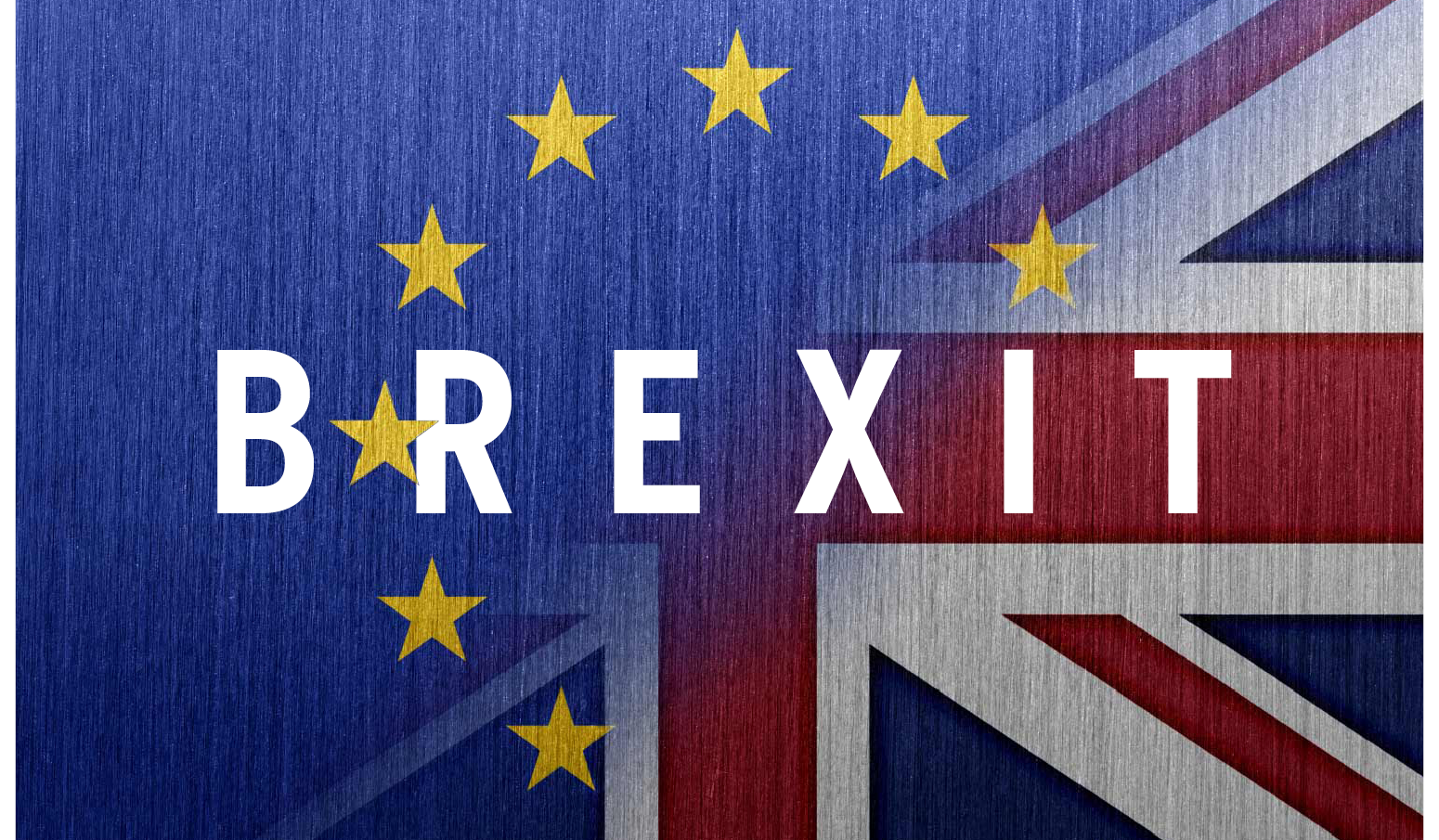
    If you don’t know what Brexit is at this point I really don’t know what to tell you, but I’ll explain anyway. On June 23rd, 2016, the British government held a referendum to decide the future of the country’s European Union (EU) membership. With a turnout of roughly 65%, citizens of the UK voted 51.9% in favour of withdrawing from the EU. The government has no legal obligation to act on the results, but Theresa May’s Conservatives have ruled out any chance of backing out now, as has Jeremy Corbyn, Leader of the Opposition. On March 29th, 2017, the British government triggered Article 50 of the Treaty of Lisbon, the mechanism by which states can officially declare their intent to leave the EU. The two-year negotiating period began then, leaving the UK and EU roughly eight months to figure out where to go from here.

    That’s all old news now, though. Since the Brexiteers have gotten what they want, they shouldn’t have a problem with a small voice like mine throwing stones at their faulty logic. Below, I’ll outline some common arguments made in support of leaving the EU, followed by an explanation of why they’re dead wrong.

    (Please note: there is a massive difference between the most popular arguments for leaving the EU, and the arguments with actual merit. I believe the two are almost mutually exclusive among British people, and will be writing from that perspective.)

    #1. Immigrants are stealing our jobs!!!!

    “I have a feeling in a few years people are going to be doing what they always do when the economy tanks. They will be blaming immigrants and poor people.” – The Big Short, 2015 (dir. Adam McKay).

    Such was the lament of Steve Carell’s character at the end of The Big Short, a movie chronicling the financial crisis of the mid-2000’s. The respective climates of post-recession America and pre-referendum Britain are very different, and the logic applies in different ways. However, it is the same xenophobic nationalism driving the belief that two of the most marginalized groups in nearly any modern Western economy could possibly be responsible for economic stagnation.

    The background to this argument is as follows: as a member of the EU, the UK is a part of the European Single Market. This guarantees the free movement of goods, services, capital, and labour (the “four freedoms”) between all member states. Thus, a citizen of any EU member state is free to reside and work in any other EU member state and does not need a visa to do so.

    British people claim that such a policy is causing a shortage of jobs available for British citizens, in favour of giving them to incoming migrants from EU countries. In reality, EU nationals, particularly those from Poland and Romania, take jobs that British people have decided they’re too good for, and face extensive discrimination for doing so. In fact, many British industries, such as hospitality, customer service, and health care would face massive staffing crises if Brexit legislation requires that EU nationals leave the country after the UK is no longer a member of the EU.

    If British people truly believe immigrants are hurting their employment prospects, I hope they’re ready to take on the jobs left behind by EU migrants and drop the nationalist vitriol constantly hurled at Polish window cleaners and Bulgarian baristas. Pick your poison Britain, you literally cannot have both.

    #2. The European Court of Human Rights is encroaching on the jurisdiction of British courts!!!!

    This one could almost sound like an intelligent argument to someone who doesn’t know much about the differences between the European Court of Human Rights (ECtHR) and the European Court of Justice (ECJ). The ECJ is the judicial body that ensures that EU law is applied equally across all member states. It is hard to say how much influence the court actually has on British law; the percentage of British laws that come from the ECJ depends on what you count as a law, and many simply codify already-existing British law at a European level. However, it is generally accepted that when it comes to the legislation that most impacts life on the ground for British people – public order, crime, health care, defense, etc. – the ECJ has very little sway.

    The ECtHR, on the other hand, has a very narrow mandate. It has jurisdiction to rule on complaints brought by individuals or states concerning violations of the European Convention on Human Rights (ECHR) by signatories to the Convention. ECtHR verdicts have angered British politicians in the past, particularly in 2014 with a controversial ruling declaring that the UK could not deport someone suspected of involvement with radical Islamic groups.

    But wait, what does any of that have to do with the EU?

    That’s exactly my point. The biggest difference between the two is that the ECtHR is completely separate from all EU bodies. No connection whatsoever. At face value, Brexit has absolutely no implications for the relationship between the UK and the ECtHR; the UK would have to withdraw from the ECHR for that to be possible. Furthermore, the EU’s Brexit negotiating team has stipulated a clause that would immediately end any security and information-sharing deal if the UK were to withdraw from the ECHR upon leaving the EU. If the UK is stuck within the jurisdiction of the ECtHR either way, they might as well get the benefits of EU membership while they’re at it.

    (Disclaimer: I am not trying to offer an opinion on whether the ECtHR made the right call in that specific case or others; nor am I endorsing the EU’s negotiating tactics. I am simply pointing out that the belief that the ECtHR will no longer have jurisdiction in the UK after Brexit is fundamentally incorrect.)

    #3. Brexit will be good for the British economy!!!

    I’d love to break this one down further, but I genuinely have no clue what the basis of this argument is. While the immediate aftermath of the referendum was not as catastrophic as originally expected, “not catastrophic” is not a synonym for “positive.” There is a pretty broad consensus among economists that in the long term, British GDP per capita will fall, and goods will become more expensive. Lower growth and higher prices creates a situation economists call “stagflation.” Without getting too technical, I’ll tell you that the last time Canada experienced real stagflation, Alberta practically threatened to secede when the government tried to respond (for those of you who remember the NEP, you know that this is only a slight exaggeration). There’s already enough regional disunity in Britain without the threat of economic instability exacerbating it.  

    To conclude, none of this should read as me telling you that the EU is beyond criticism. In fact, you’d have a hard time convincing me that any level of criticism and scrutiny is too high for the political institutions that govern our lives. Many believe the EU to be unaccountable, undemocratic, and overly bureaucratic. However, almost none of these criticisms seem to have had much influence in Brexit voting. As we have sadly seen happen in other countries, particularly the United States, populism, nationalism, protectionism, and flat-out hatred have taken hold in certain demographics. These -isms seem to stem from fear: fear of what is different from us, fear of change, fear of losing one’s place in society. Perhaps when Leave-voters realize that the average EU migrant wants the same thing as they do – to do the best they can for themselves and their families – some common ground will be found, and the UK will think about reversing its decision and preserving a system that provides far more benefits than drawbacks. To that point, I’ll leave you with this slightly less nuanced but probably more astute (and undeniably British) commentary:

    “In vs. out, it’s all very complicated. The other day, my flatmate was making me a cup of tea, and he asked me if I wanted the bag left in, or taken out. If you leave the bag in, the cup of tea as a whole will get stronger; it might appear like the bag is getting weaker, but it’s all part of a stronger cup of tea. Whereas, if you take the bag out, the tea is now quite weak, and the bag itself goes directly in the bin.”

    Mallory Kroll is a fifth year Economics student and the Managing Editor of The Athenaeum.

  • 10 Most Interesting Elections of 2017

    10 Most Interesting Elections of 2017

    Elections are a test to see if democracy works. This year, The Athenaeum has compiled the 10 most interesting elections of 2017 to remind ourselves of the importance of the democratic process. They are in descending order:

    1. Nova Scotia Provincial Election: May 2017

    This was definitely not a nail-biter, but it was fascinating to see how the political climate in Nova Scotia has changed. Stephen McNeil’s Liberals were the favourites going into the election, which was held on May 30. His majority was reduced to 27/51 seats for the Liberal Party, with the Progressive Conservatives gaining 7 seats for a total of 17 and the NDP gaining a total of 2 seats for a total of 7 in the legislature. Major issues surrounding the election included health care, Nova Scotian exports, primary and secondary education, and job creation. This election was notable because of the low university student turnout, due in part because of its timing after the academic year.

    1. United Kingdom General Election: June 2017

    Prime Minister Theresa May called this election to strengthen her hand for upcoming Brexit negotiations, which ultimately backfired spectacularly. It was, as our Features Editor would say, a “flaming dumpster fire” for the Conservative Party as they lost their majority and were forced into a minority government, only staying in power with the support of the DUP, a right-wing anti-abortion Northern Irish party. Major issues in the election included Brexit and the UK’s role in the European Union, university tuition, the recent Grenfell Tower fire, and social security.

    1. German Federal Election: September 2017

    This election, much like the one in France, was seen as a test against rising populism and nationalism in Europe. Chancellor Angela Merkel was successful in her run for a fourth term, one of the only in Germany history, and her Christian Democratic Union (CDU) was able to secure a plurality of seats in September of 2017. Major issues in this campaign included immigration and Germany’s place in the EU. Run using of Mixed Member Proportional Representation the CDU was unable to secure a majority, and recently talks between smaller parties and the CDU have collapsed, leaving Merkel’s fate as Chancellor of Germany uncertain.

    1. British Columbia Provincial Election: May 2017

    Notable for the election of the first Green caucus in North America, British Columbia’s election in May 2017 was a nail biter. The BC Liberal Party, a centre-right wing free enterprise party led by Christy Clark, was reduced to a minority by a surge from the NDP and Greens in metro Vancouver and Vancouver Island, respectively. Clark tried to maintain the confidence of the House but the government fell after she visited the Lieutenant Governor, who then called upon NDP leader John Horgan to become the next Premier of British Columbia. Major issues in this election included transit, the construction of the Site C Dam in Northern BC, and affordability of housing.

    1. French Presidential Election: May 2017

    Seen as a litmus test for the wave of xenophobia hitting North America and Europe, the French Presidential election was dramatic. Former Prime Minister of France Francois Fillion was embroiled in a scandal early on, and the introduction of the young former Minister of Economy Emmanuel Macron and his centrist En Marche! movement changed the French political landscape. Neither of the two strongest parties in French history, the Socialists and Republicans, made it into the run-off where Macron faced off against Front Nationale xenophobe Marine Le Pen. Macron won with 66% of the national vote in the run-off, with only two Départments in northern France (Aisne and Pas-de-Calais) voting for Le Pen.

    1. Japanese General Election: October 2017

    In the midst of the North Korean Missile Crisis, Japan held a general election that resulted in Prime Minister Shinzo Abe being the first Prime Minister to win three consecutive elections since 1953. One of the major issues in this election was the controversy surrounding Article 9 of the Japanese Constitution, which forever renounces war as a tool by the Japanese people. Abe is looking to revise the Constitution for Japan to properly defend itself and with the support of his Liberal Democratic Party and Komeito, a socially conservative Japanese nationalist party.

    1. Gambian Parliamentary Election: April 2017

    The Gambia’s parliamentary elections were the first held since the inauguration of Adama Barrow as President and seen as a test for democracy in Western Africa. Of the 58 available seats, the centre-left United Democratic Party took 31. The UDP were one of 7 coalition parties to back Barrow, who challenged former President/dictator Jammeh, who was forced from office after contesting the results of an election that Barrow won. This achieves the #4 spot because of its House of Cards-esque drama and its potential for positive change in West Africa.

    1. Iranian Presidential Election: May 2017

    Incumbent President Hassan Rouhani, who has been described as a political moderate compared to his predecessor, was re-elected with 57% of the vote. It is important to note that this is a country that Freedom House classifies as Not Free “due to the role of the hard-line Guardian Council, which disqualifies all candidates deemed insufficiently loyal to the clerical establishment”. This election was important because it reflected Iran’s desire to stay the course in a world where Donald Trump is part of international politics.  Iran makes it to #3 because under Rouhani’s leadership it will undoubtedly play a much larger role as a regional power, especially in Syria and Yemen.

    1. Venezuelan Constituent Assembly Election: July 2017

    Since the death of Hugo Chavez in Venezuela, his successor Nicolas Maduro has been in trouble. Massive inflation, a result of declining oil prices, has put massive pressure on the heavily socialist government to do something. In March 2017 the Supreme Court took over the powers of the opposition-led legislature, but quickly rescinded their decision after massive public backlash. This led for calls to create a Constituent Assembly to rewrite the Constitution in Maduro’s favour, which passed with flying colours. Now Maduro has the authority to eliminate all democratic institutions in Venezuela, to the condemnation of much of the international community. This reaches #2 because it will set Venezuela on a course that will draw much attention and have heavy ramifications on neighbouring countries in Latin America.

    1. Kenyan General Election: August/November 2017

    Our #1 spot goes to Kenya this year. In August 2017 the presidential election was contested between incumbent President Uhuru Kenyatta and challenger Raila Odinga. Kenyatta won in August with 54% of the vote, but Odinga contested the results in the Supreme Court. The Supreme Court annulled the results and called for fresh elections in October, but Odinga withdrew his candidacy citing the lack of preparation made by the electoral commission. This gains our #1 spot as it was a test for democracy in eastern Africa, and indicative of the strengthened institutions that Kenya has worked for many decades towards.

Betzillo positions itself as a versatile gaming hub where structured bonuses and adaptive gameplay mechanics support both short sessions and extended play.

Built with a focus on innovation, Spinbit integrates modern casino architecture with rapid transactions, appealing to players who value speed and digital efficiency.

Ripper Casino emphasizes bold entertainment through high-impact slot titles and competitive promotions crafted for risk-oriented players.

A friendly interface and stable performance define Ricky Casino, offering a casual yet reliable environment for a wide spectrum of gaming preferences.

King Billy Casino channels classic casino spirit into a modern platform, delivering recognizable themes supported by contemporary reward systems.

Immersive visuals and layered slot mechanics are at the core of Dragonslots, creating a narrative-driven casino experience.

Lukki Casino appeals to players seeking direct access and minimal friction, focusing on fast loading times and intuitive controls.

Casinonic provides a structured and dependable gaming framework, blending modern slots with transparent operational standards.