Tag: United Nations

  • Research Feature: Geopolitics with Chinese Characteristics

    Research Feature: Geopolitics with Chinese Characteristics

    In September 2018, President of the People’s Republic of China Xi Jinping announced $60 billion of funding at the Forum on China-Africa Cooperation for economic projects on the African continent with “no strings attached”. This move represented an increasing recognition of the African continent by China as an important player in international affairs. I read this in the summer of 2018, when I had the opportunity to work as a Junior Research Officer at the United Nations Broadband Commission in Geneva, Switzerland.

    However, I noticed an interesting dynamic at play in Geneva. The influence of the People’s Republic of China was noticeable, from the number of interns at the organization to the current the Secretary General of ITU, who was recently re-elected unopposed for a second term.

    This led me to my research question: how does China utilize international organizations to further their geopolitical interests in east Africa?

    I first examined the Belt and Road Initiative (BRI), China’s trillion-dollar economic strategy twelve times larger than the Marshall Plan. Announced by Chinese President Xi Jinping in 2013, the BRI consists of an overland belt and a maritime road to connect China to east Africa, southeast Asia, west Asia, and Europe.

    The BRI is about building influence with countries along the route, and a large part of this involves major infrastructure projects. As of 2018 numerous projects had been completed as part of the BRI, including a $62 billion economic corridor between Pakistan and China, a $1.1 billion port in Sri Lanka, and a high-speed rail link in Indonesia. China’s even created their own institutions like the Asian Infrastructure Investment Bank to push their development agenda around the world.

    In east Africa, the BRI has proven a huge boon for investment. Djibouti’s ports and Ethiopia’s manufacturing potential make the region appealing for investment, especially to connect via rail and road.

    A major project sponsored by the BRI is the Addis Ababa-Djibouti Railway, connecting Ethiopia’s capital to the port city of Djibouti. This line is the first transboundary and longest electric railway line on the entire continent, contracted to the China Rail Engineering Company and the China Civil Engineering Company. The construction of the line was financed by a loan from the Export Import Bank of China, which reports directly to the State Council- China’s cabinet. This railway is important because it links to Kenya’s Standard Gauge Railway, forming a longer link throughout the Djibouti Kenya corridor that can supply natural resources to ports (also the target of Chinese investment under the BRI) to supply mainland China.

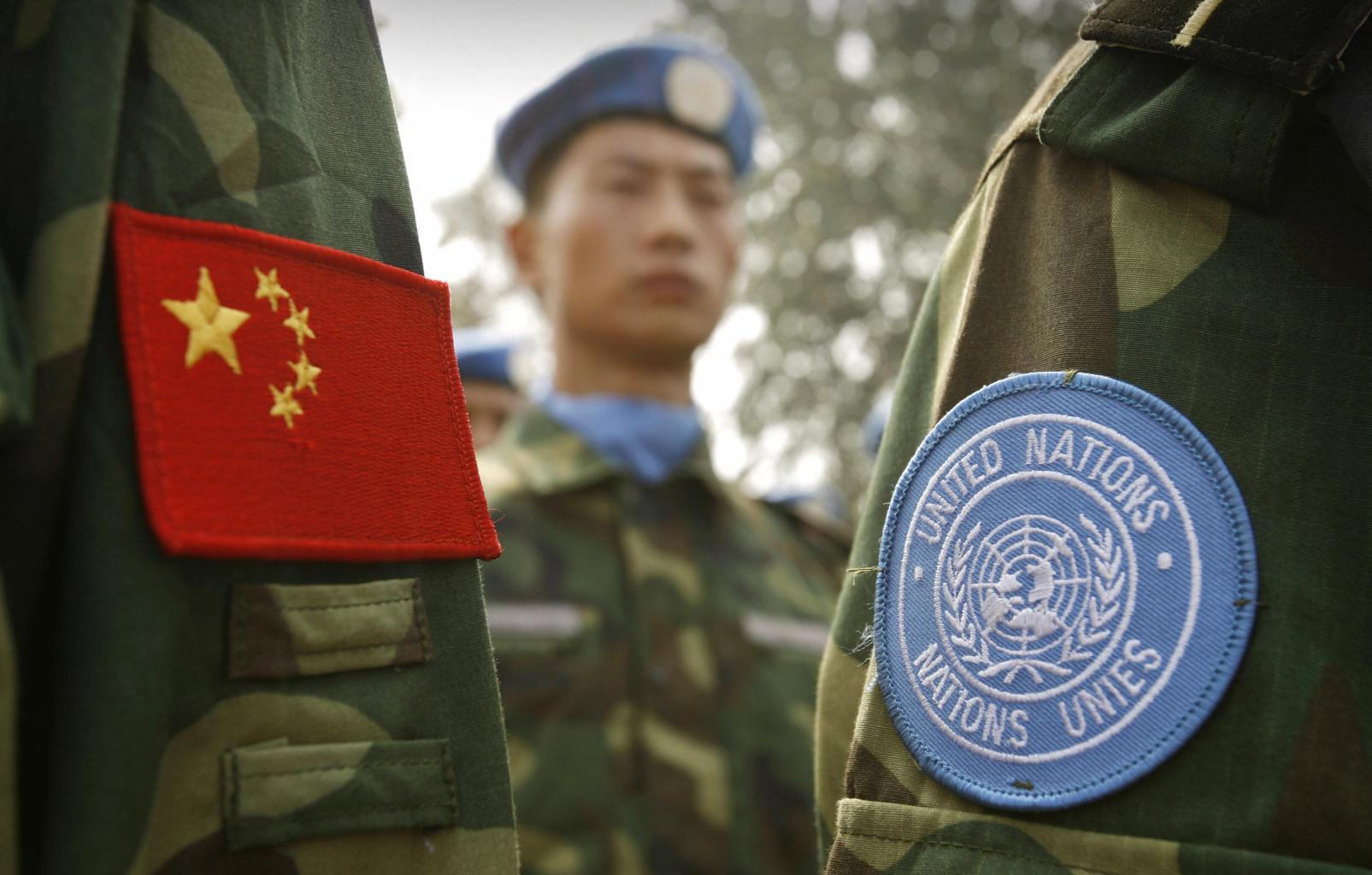
    UN peacekeeping operations have also been instrumental in this achieving geopolitical goals. China has deployed 200 soldiers in the Congo as part of the United Nations Mission in the Democratic Republic of the Congo (MONUSCO) because the country is home to significant cobalt and copper supplies that feed the Chinese economy.

    Cobalt is an essential element in lithium ion batteries you find in smartphones, laptops, electric car batteries. Lithium-ion batteries are supposed to be different from the dirty, toxic technologies of the past. Lighter and packing more energy than conventional lead-acid batteries, these cobalt-rich batteries are seen as ‘green.’

    China has a colossal stake in ensuring cobalt supplies remain steady, as the company that builds iPhones in China- Foxconn- requires a steady cobalt supply to ensure iPhones can make it to global markets at accessible prices. In early 2019 Apple noted that demand for iPhones was waning, causing a dramatic drop in Apple stock and a reduction in revenue from $91 billion USD to $84 billion USD.

    I also took a look at popular Chinese films, with a specific focus on the highest grossing film of 2017- Wolf Warrior 2. It was selected as China’s entry to the 2018 Oscars for Best Foreign Language film and is important because it’s indicative of a broad shift in Chinese foreign policy. The movie follows renegade soldier Leng Feng ass he assists the Chinese military in evacuating Chinese citizens from an unnamed African country. The symbolism within the film is meant to demonstrate that the UN is ineffective without Chinese support and that China, after decades of looking inward, is now ready to be an active participant in international affairs.

    Finally, I took a look at the relationship between Rwanda and China through international organizations. The ITU and Broadband Commission are two hugely important examples because of Rwanda’s willingness to embrace ICTs and China’s willingness to fund their construction. President Paul Kagame of Rwanda and Secretary Houlin Zhao, a Chinese telecom engineer, are the co-chairs of the United Nations Broadband Commission, the UN committee dedicated to the spread of internet.

    Kagame is determined to make Rwanda an ICT superpower, skipping over traditional stages of industrial development and transitioning straight to a heavily digitalized service economy. The use of ICTs is prevalent everywhere in the country- Rwanda is opening an airport for drones to deliver blood to rural hospitals that are inaccessible by road. This puts the small country of twelve million ahead of the US in the use of commercial drones. Chinese telecom giant Huawei recently announced that they’re building Rwanda’s national broadband infrastructure, data centres, and smart grids. Huawei has recently been banned from building Australia and New Zealand’s 5G networks and a similar ban is under consideration in Canada.

    Together this paints an interesting picture. China- a country that claims its intentions are peaceful and it has nothing but the good of humanity at heart- is clearly engaging in practices that often appear antithetical to those aims. Their use of UN peacekeeping forces for their own interests, predatory loans under the BRI umbrella, and support of undemocratic leaders makes China’s rise and use of international organizations especially relevant in our world today.

    Colin Mitchell is a fourth year (Honours) Politics student and Editor-in-Chief of The Athenaeum

  • What I Learned as a UN Intern

    What I Learned as a UN Intern

    This summer I had the opportunity of a lifetime: interning at the United Nations in Geneva. I initially didn’t believe it when I read the email, but I was quick to accept the opportunity. Thoughts of working in the world’s humanitarian capital excited me.

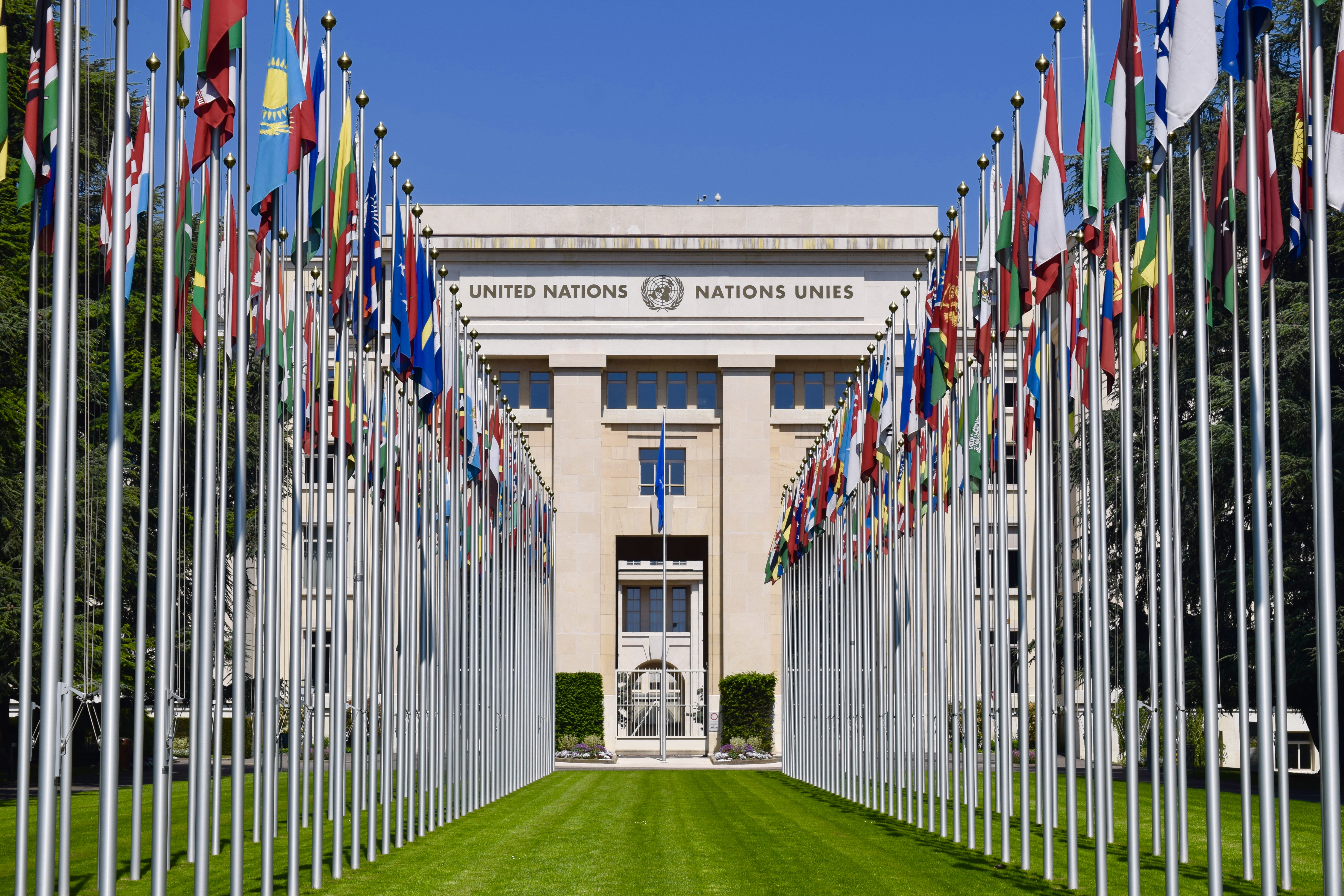
    My internship took place at the International Telecommunication Union (ITU), the UN specialized agency for information and communication technologies (ICTs). Housed across the street from the fabled Palais des Nations, the ITU fits a unique niche of the UN system. Since its creation in 1865, much of the ITU’s work has been concerned with telecommunications and radio spectrum allocation. However, as technologies have advanced the ITU has struggled to keep up.

    Interns play a unique role in the UN system. Because the UN doesn’t pay their interns, the financial onus is on the interns themselves to finance their stay of anywhere from two to six months. Working part time during the summer is impossible due to the strict nature of work visas and hours dedicated to the UN. A modest meal at a restaurant could cost anywhere from $24-37 CAD. These conditions have pushed young professionals desperate for the UN brand on their resume to extremes. One intern found the cost of living so extreme that he was forced to live in a tent. Another was found living in an office basement.

    My experience was overall positive. Living in Switzerland for three months was an incredible experience that I won’t forget. Having gone in with lofty idealism, I left with cautious optimism moulded by the reality of the international system. It was in no small part thanks to my outstanding supervisor, who kept me grounded and level-headed.

    Here are the biggest things I learned.

    The system rewards age, not always experience

    Those within the highest-level positions are significantly older than the rest of the workforce. Only those over 45 years old are able to be appointed to chief-level positions that lead various departments. This effectively traps whole departments in the past, with creative solutions to new problems not considered by senior management. Often those who are the best workers are passed over for political appointees who rise exponentially through the ranks after completing a long career in their respective country. This does two things: it keeps younger workers out of the organization, inhibiting change at its foundation, and creates a parallel system within the organization.  The two systems, one composed of political appointees and the other composed of hard-working and underpaid UN employees, often clash and result in stasis.

    States are at the centre

    This shouldn’t come as a surprise, but what I found fascinating was how the interests of states shape the entire process. For example, the UAE recently opened a renovated conference room at the Palais des Nations. During a conference on artificial intelligence where I was taking notes, the Kingdom of Saudi Arabia sponsored lavish receptions to win the favour of visiting officials and dignitaries. Prestige is critical to international relations and advancing the agendas of states. Seeing it firsthand was fascinating.

    Slow and bureaucratic

    However, it can get mind-numbing and frustrating. There were times when my colleagues and I ground our teeth as we went through five people to get approval for a PowerPoint. It was disheartening to see that there were many people doing the same job and some doing none at all. In France they are referred to as fonctionnaires– lazy civil servants. Ironically most ITU employees are given a badge on their first day with fonctionnaire splashed in bright white letters.

    Contempt towards youth

    It wasn’t always obvious. It would be small things like being called “boy” by older staff members in the cafeteria or not receiving a thank you after holding the door open for throngs of people. If those had happened once or twice they wouldn’t have registered, but the consistent lack of respect and professional courtesy afforded to interns and young professionals is noticeable. We were often the first ones in the office and the last ones out yet looked upon by some as exploitable free labour.

    The system can change if it tries

    The potential for change is and has always been there. I had the privilege of working with a colleague from Singapore who had spearheaded the successful movement to get interns at the World Health Organization a daily lunch voucher. Though it was only 10 francs a day ($13.20CAD) it’s a huge step towards the ultimate goal of paid internships, which will be realized in 2020. I’ve seen that same energy in the youth at ITU. This summer we started an Intern Board to legitimize our presence within the organization. Taking these small steps may seem inconsequential right now, but when we’re negotiating for a stipend or eventual pay down the road, their full force will be felt.

    Real diversity

    An American dancer. A Belgian lawyer. A Mauritian student. An Italian polyglot. A Chinese engineer. A New Zealander born in Italy and raised in France. A Polish PhD candidate. A Nigerian businessman. These are a handful of profiles of interns I had the privilege of working with. Each brought a unique take to problems, creative solutions, and a wealth of experience that made us stronger as a collective. My time in Geneva reinforced my belief that diversity in the workforce is crucial to making good decisions.

    Good things take time

    Much of the work done at the UN isn’t done in days or weeks, but months and years. The flashy headlines quickly disappear and leave the organization as a punching bag for skeptics of the international order. Yet the work done within the UN family remains increasing important. Things like spectrum allocation and monitoring the development of regulatory agencies may not be as sexy as saving the world from an Ebola outbreak, but they have major consequences regardless.

    Bringing people together for the common good has been the central goal of the UN. Should it continue to do so it must address issues endemic within its organizational culture, though I have faith that those committed to its principles, young and old, will bring that change.

    Eventually.

    Colin Mitchell is a fourth year (Honours) Politics student and Editor in Chief of The Athenaeum.

  • Middle East Peace: Why Jerusalem Matters

    Middle East Peace: Why Jerusalem Matters

    Since Israel’s independence, the status of Jerusalem has been contested. The international community maintains that Jerusalem is integral to the future of any settlement between Israel and Palestine, much to the displeasure of interested parties.

    What is Jerusalem?

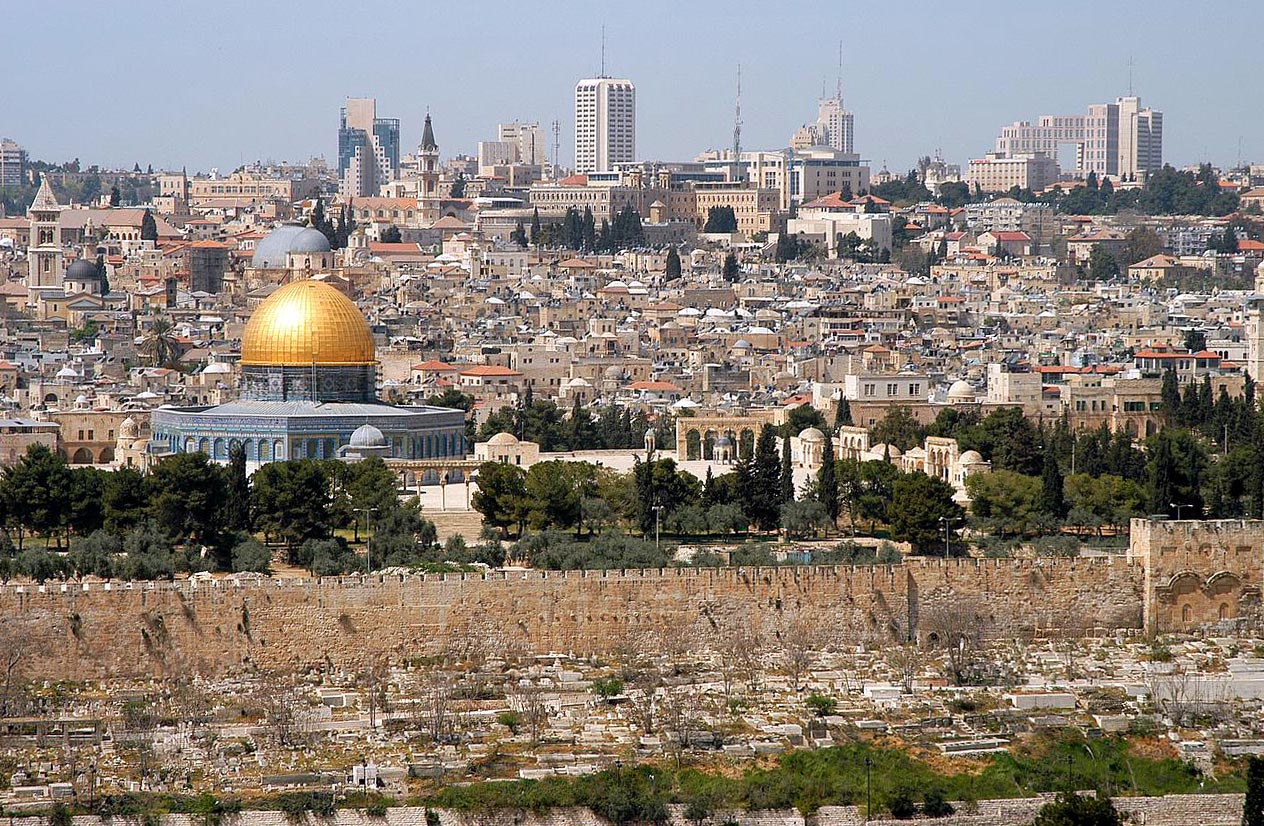
    Jerusalem is one of the oldest cities in the world. Known as the ‘Holy City’, it is the home of various holy sites to Christianity, Islam, and Judaism. Israel and Palestine both recognize it as their capital, though the United States is the one of the only foreign countries to formally recognize the city as Israel’s capital. Though the city holds various consulates, it does not hold official embassies, which are located in Tel Aviv.

    Why does the city matter?

    Israel and Palestine both claim the city of Jerusalem as their rightful capital. The United Nations, along with the European Union and various countries around the world, agree that the city should be co-administered by Israeli and Palestinian officials. This would adhere to the 1947 Partition Plan for Palestine, otherwise known as UN General Assembly Resolution 181 (II). The resolution would have split Israel into a separate Israeli and Palestinian state based upon mutually accepted borders, but soon after the adoption of the resolution war broke out and the plan was not implemented.

    Where is the American embassy now?

    The American embassy is currently in Tel Aviv, on the Mediterranean coast. This follows standard diplomatic practice with Israel, adhering to UN resolutions. Canada’s embassy is also in Tel Aviv. The last country to have an embassy in Jerusalem was Bolivia, which had their embassy (located on the outskirts of the city) closed in 2009 upon the cessation of diplomatic relations.

    Why move the American embassy to Jerusalem?

    The United States passed a law in 1995 mandating that the American embassy move to Jerusalem. Despite passage of the law, the American President can sign a waiver every six months that delays the move on ‘national security grounds’. This has been standard practice up until December 2017, when President Trump announced the move. Legally, the embassy can be moved at any time.  

    What happened after Trump announced the move?

    Responses from the international community have been mixed, though the overwhelming majority of countries voted in favour of a UN General Assembly resolution condemning the American decision to recognize Jerusalem as Israel’s capital. 128 countries voted for the resolution, 9 against, and 35 abstained. Canada was on the list of abstentions, likely because of upcoming NAFTA renegotiations.

    What’s the relationship between the USA and UN?

    Under the Trump administration the relationship between the US and UN has become increasingly confrontational. The US continues to accuse the UN of anti-Israeli bias, vetoing most anti-Israeli resolutions that make it to the UN Security Council. Senior diplomats have noted that the American approach to lobbying before the General Assembly vote was threatening and vindictive. The US continues to pay the most to the UN because of a formula that determines contributions based on the size each member state.


Betzillo positions itself as a versatile gaming hub where structured bonuses and adaptive gameplay mechanics support both short sessions and extended play.

Built with a focus on innovation, Spinbit integrates modern casino architecture with rapid transactions, appealing to players who value speed and digital efficiency.

Ripper Casino emphasizes bold entertainment through high-impact slot titles and competitive promotions crafted for risk-oriented players.

A friendly interface and stable performance define Ricky Casino, offering a casual yet reliable environment for a wide spectrum of gaming preferences.

King Billy Casino channels classic casino spirit into a modern platform, delivering recognizable themes supported by contemporary reward systems.

Immersive visuals and layered slot mechanics are at the core of Dragonslots, creating a narrative-driven casino experience.

Lukki Casino appeals to players seeking direct access and minimal friction, focusing on fast loading times and intuitive controls.

Casinonic provides a structured and dependable gaming framework, blending modern slots with transparent operational standards.