
Day: October 1, 2015

  • The Adjustment Not Only to Acadia but to the Hill

    The Adjustment Not Only to Acadia but to the Hill

    The personal adjustment to university and what we should expect from it has been pounded into our grade twelve brains again and again. We’ve all come to experience this new chapter of our lives from different variations of small towns and big cities, but none of us has known anything like Wolfville, or further, like Acadia University.

    Not long after you’ve moved in, the exploration of your new home with your new housemates begins. Main Street has so much to offer for not being very long in distance. There is everything you could ever need literally between the Clayground paint-your-own pottery and the Library Pub.

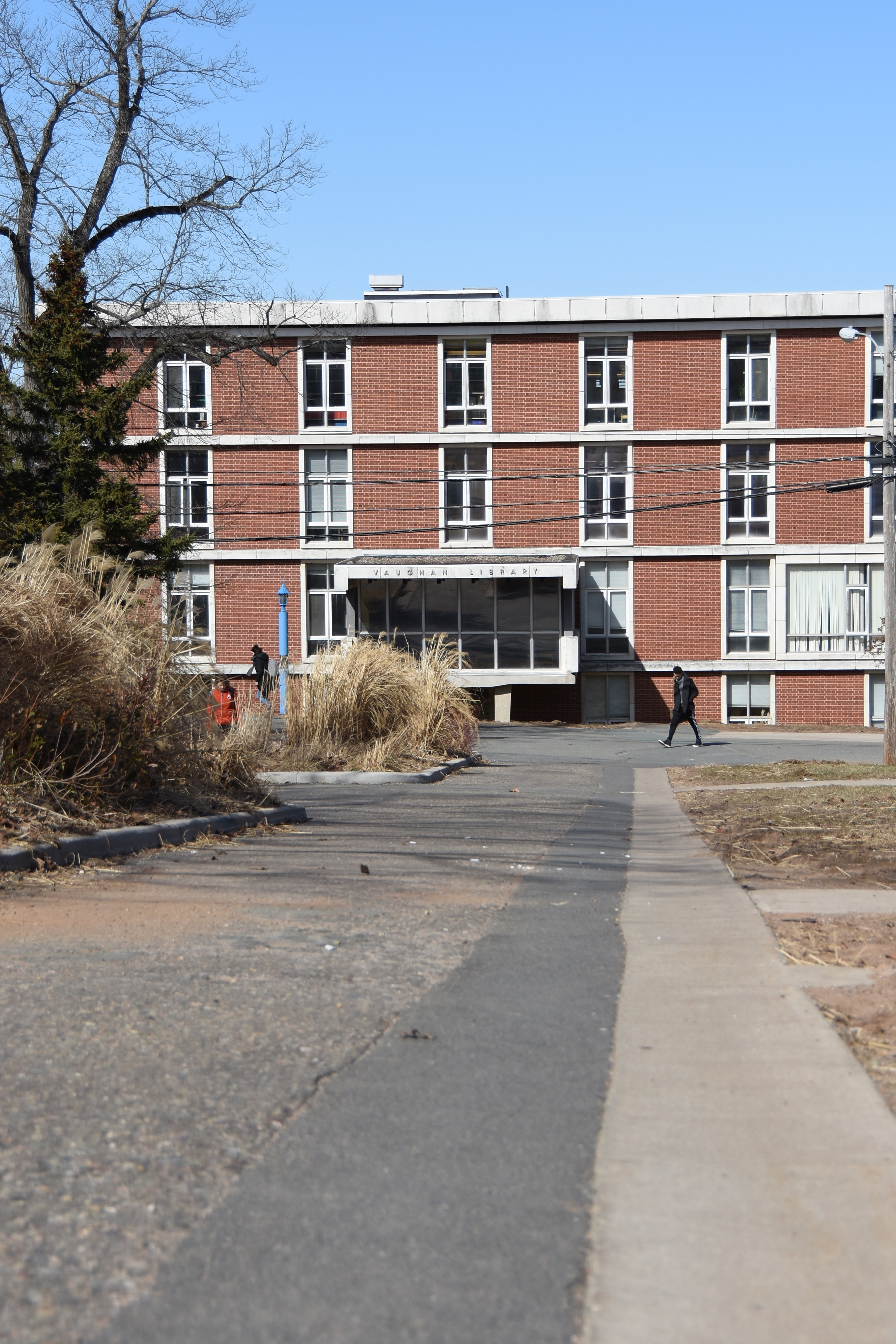
    On your way back to campus, it is impossible to ignore the charm of the home you’ve chosen for yourself for the next few years. Your senses are overwhelmed by the beauty of the lush, green grass stretching far ahead toward the carefully crafted stonework of University Hall. The huge, strong trees stand tall with the university. They look as though they’ve been there the entire 175 years; if only they could tell of the things they’ve seen.

    Taking those first few uphill steps back to residence seem harmless. Light, excited babble bounce around you and your fellow innocent first-year friends. Suddenly, seemingly out of nowhere, that Annapolis Valley sun feels ten times stronger than it just was. Heat mirages rise up from the pavement. You start sweating, quickly swiping at your beading hairline, hoping your friends don’t notice – but the secret is, they’re all feeling the struggle too. Your calves start burning in a way you didn’t imagine was possible this far away from a treadmill. It doesn’t take too long before that excited babble falls to a hush because now you’re all struggling to get air stealthily into your lungs without doing that embarrassing gasp.

    Remember how beautiful campus was from Main Street? Well, every Acadia student can testify that the campus is a first-hand experience of beauty disguised as evil.

    The top of the hill is so close now, and you can’t ignore the silence between the laboured breath of you and your friends alike. You don’t want to be the first one to admit this hill just might be the death of you. Inside though, you’re all thinking the same thing, I promise: How the hell am I going to manage to make my way up and down this thing for the next four years?!

    I hate to be the one to break it, but we think this hill is monstrous now? Wait until new elements are added to the equation. Winter is coming Axemen and Axewomen, and with it is coming layers of ice.

    When you and your buddies finally get to the top of the hill it’s all you can do not to double over and pant like a racing greyhound. Just when you’re wondering if you’re going to be the one to admit that you almost lost your life in that uphill battle, one of your friends nonchalantly pipes, “That’s a bit of a trek, eh?”

  • Making A Case For Yeezy

    Making A Case For Yeezy

    When talk of oft-hated mythical figures arises, people either think about the Loch Ness Monster or Kanye West. West receives undue hate from puritanical elitists as they dismiss him as irrelevant, painting him as an untalented peasant – an outsider violating the sanctity of a sterling industry. Why do these elitists despise him with such self-righteous fervor? What has he done that offends the general public? Well, at the risk of sounding condescending, let me repudiate the same old ranting tirade I hear about his lack of talent every time he is brought up in a discussion:

    He’s not a musically untalented peasant. The guy’s actually a very talented producer who has made highly innovative music. His sonic metamorphosis has been one of unrelenting undulation. Kanye started it off with a sound marked by Soul and R&B inspired beats, drizzled with a lush and silky string accompaniment i.e. his first two albums: The College Dropout (2004) and Late Registration (2005).

    The sound subsequently rocketed to the other end of the spectrum – ending up somewhere between pop superstar and chauvinist rapper. His next album, Graduation (2007) – the sonic equivalent of him coming to terms with the newfound fame, was characterized by an increased amount of electronic and synthesizer influenced backing.

    Perhaps his most introspective album came next. 808s and Heartbreak (2008) was an attempt to reconcile his musical career with the death of his mother. The sound was something ineffable – not quite pop, not quite melancholia, and not quite rap. It was an experiment, and it worked. It bares soul; it has a unique depressive stripped down aesthetic marked by a heavy use of auto-tune to convey unusually solemn lyrical content.

    We arrive then at his magnum opus, My Beautiful Dark Twisted Fantasy (2010). The album is a castle built on foundations of musical maximalism and hip-hop. It’s a constant outcry against modern day capitalistic culture, while at the same time it celebrates it. The dichotomy is at first is hard to understand, but Kanye has always had a polarizing relationship with late-stage capitalism. He sees the worth in the ability of the every-man to achieve something great, while hating the ability of the system to mold you into something that you despise. In a nutshell, it’s an album about capitalism saving him and killing him at the same time. It was critically acclaimed by nearly every musical publication, and also lauded to be one of the best albums of the decade.

    His most recent release was perhaps his most abrasive, reductionist, and minimalist work. The album Yeezus (2013) favored a grungier, acid house, and industrial influenced tonality. I see it as the natural succession of 808s and Heartbreak, but this time, Kanye is happy. He has a beautiful girlfriend, a burgeoning musical career, and boatloads of money. The lyrical content focuses around this, and also eschewing modern day racism (he sees it as a byproduct of the capitalist structure, still having a salient presence in his life). The album is probably his happiest album since Graduation, and yet it sounds corrosive. But it did win its due accolades, placing itself on many “Best of The Year” lists.

    If by this point the sonic experimentation fails to impress you, then you should know that he’s garnered over 350 nominations for different musical awards shows, won twenty-one Grammies, and every one of his album’s has been critically lauded in various different publications spanning every platform possible. Blind luck for six albums in a row spanning over eleven years? If people have to resort to such paradoxical conspiracies to defend the vestigial view that he is an untalented imbecile, then we might just have to admit that his music does hold merit and relevance.

  • Amy

    Amy

    A few years back, I had never heard of Amy Winehouse before. Yet I distinctly remember the day of her death, as if I had been a fan my whole life. Although I didn’t feel the sadness or importance of her passing at the time, I can honestly say that I now understand completely the devastation around the world that came with that tragic day.

    This year, from the award winning team behind last year’s hit documentary Senna, comes the critically acclaimed documentary detailing the life of Amy Winehouse told through her eyes. Directed by Asif Kapadia, Amy is not a typical bio-documentary; instead of the typical mirage of interview footage with various family members, friends, and record producers, the focus is on Winehouse herself. A massive amount of research went into finding archive footage, homemade videos, unseen concert footage, and even recordings of previously unheard/unreleased tracks. In this way, Kapadia has produced a unique experience in that we get an unparalleled glimpse into the raw emotions and hardships of Winehouse’s life.

    The documentary is an emotional rollercoaster of joy and grief, an exploration of pop-culture, fame, and drug abuse. One might even argue that the media and her rise to fame killed her. As tragic a point of view as that is, Winehouse is shown saying she does not want to be famous many times, almost too many. For her, obscurity would keep her sane, as she would go crazy from fame. Consumers didn’t listen, and the result may have been her death.

    In addition to the powerful story of media frenzy surrounding her rise to fame, and the emotional story of her romantic relationships, there is the drug and alcohol narrative. In some ways, one could say this documentary is an anti-drug film. Alcohol and drug abuse played a monumental part in Winehouse’s life, and this is not lightly skimmed over by Kapadia. A juvenile detention centre in Thailand has recently taken to showing Amy as an anti-drug film to inmates in the hopes that it might dissuade them from a life of addiction (The Guardian, 2015).

    Kapadia’s film, which became the second-biggest documentary ever in UK cinemas this past summer, has been critically acclaimed around the world after its screening at the prestigious 2015 Cannes Film Festival. Surprisingly, negative comments from Amy Winehouse’s father Mitch Winehouse came forth after the release. There was tension between him and the crew during production due to disputes over his negative portrayal in the film. According to the director, who was dedicated to a truthful telling of the jazz legend’s life, nobody did anything about Amy’s addictions and problems which ultimately resulted in her untimely death.

    Asif Kapadia’s Amy is unique in the documentary genre for its intimate and unusual style of editing. No interview footage is ever shown; interviews are instead heard as background to home video shot either by Winehouse or her friends and family. In terms of music, this documentary is almost a musical. Through the clever placement of songs (previously released, and new), a deeper understanding of the story behind each song is possible, and therefore a must deeper and emotional connection to the subject is established. By the end of the roughly two-hour film, I cannot help feel deeply moved and saddened by this masterpiece of filmmaking and music. This is the story of an incredibly talented woman who was vulnerable and humble. Her talent gave her the attention she never desired, and as a result of the fame and ensuing media frenzy she took to alcohol and drugs (with heavy influence from romantic partners).

    As a recent fan of Amy Winehouse, this film has shed light on her life and her incredible talent for me that I had no knowledge of, and gave me a newfound reverence for her and her music. Asif Kapadia has created a film and music story that is passionate, intimate, and honest. It is a beautiful and heartbreaking tribute to the great Amy Winehouse.


    Director: Asif Kapadia

    Starring: Amy Winehouse, Yasiin Bey, Mark Ronson, Tony Bennett, Mitch Winehouse

    Runtime: 128 minutes

    Release Date: July 3, 2015

    MPAA Rating: R (for language and drug material)

    My rating: 4.5/5 stars

  • Tidal Series: An Interview with Dr. Paul Stephenson

    Tidal Series: An Interview with Dr. Paul Stephenson

    Dr. Paul Stephenson is a professor in the department of Mathematics and Statistics at Acadia University and the president of the Striped Bass Association. He is in his second year as president, having served on the executive for around five years. As an angler, he has fished striped bass recreationally all over the province, from the Bay of Fundy to Cape Breton. Recently, the Striped Bass Association has released a document to the press highlighting their concerns and opinions on the development of tidal energy in the Bay of Fundy, published in response to the planned installation of the two 2-MW turbines in the Minas Passage by Cape Sharp Tidal. Dr. Stephenson encourages anyone who is interested or would like to voice their concerns to visit the Striped Bass Association’s website, where they can join as a member completely free of charge. The press release can also be found at the organization’s website: http://stripedbassassociation.ca/home.html.

    Kody Crowell: So starting off, you would say that tidal energy and angling are issues you care very much about?

    Paul Stephenson: Yes, very much so, and I think that it’s an issue that crosses international boundaries. Right now, there are about seven thousand striped bass anglers in Nova Scotia, and it’s about a nine million dollar industry in terms of gear, bait and so on. This number pales to the North-Eastern United States where there’s about four million fishermen, all contributing to a multi-billion dollar industry. Trust me, right now this isn’t an issue with our American neighbours, but it will be if it ever went commercial and put hundreds of turbines out there.

    KC: Why do you think others, including students in Nova Scotia should care about this as well?

    PS: Well, there are a lot of students I have seen out there, and I have even given some of them bait when they ran out of their own [laughs]. I think there is a whole generation of students who come out here and fish for striped bass, and I think that it’s certainly of interest to local students from Nova Scotia and New Brunswick. I was actually talking to a student the other day who has come here to specifically study striped bass because he does striped bass fishing in his home in New Brunswick. So as the fishing has caught on, it’s become a lot more popular, and that’s why this issue is so important. And not just for striped bass enthusiasts. I mean, from a conservation standpoint, it would be a shame to lose any of these fish. To trade that resource for another resource would be a real shame.

    KC: So the press release. It’s quite detailed. How many people worked on it?

    PS: Eleven. It was the Striped Bass Executive that actually put it together, and we went through many iterations trying to figure out what exactly we wanted to stress and things like that. The individuals range from academics like myself, and Dr. Trevor Avery [an ichthyologist of Acadia’s Bio Dept], of course. A number of masters students at Acadia who do striped bass research, and some commercial and recreational fisherman are on our executive as well, some of which are self-employed. We wanted to cover a lot of bases. There have been a lot of press releases and statements on tidal energy, and we wanted to highlight the shortcomings of those reports, in particular, the threats posed to striped bass.

    KC: Do you think the press release captures the message you were trying to get across?

    PS: I think so, yes. The message here being that more research has to be done on striped bass before we could possibly think of commercial development of tidal energy. It would have to be proven to be safe. We would have to be comfortable with the monitoring at the site and know that these results were reliable, and that we could be confident that striped bass wouldn’t be at risk from this development.

    KC: Speaking of monitoring, your report mentions that you believe that F.A.S.T., the Fundy Advanced Sensory Technology, to be inadequate.

    PS: Yeah, it’s completely untested. If you recall the previous time one of these devices was installed it lasted for a very short period of time. The monitoring equipment failed almost immediately. So what we would have preferred was that this equipment was tested much earlier – years even – before the turbines were deployed, so that we could be confident that the monitoring devices could stand up to the punishment they get out there. In particular in the winter, where it’s just been proven by research from Dr. Anna Redden and her group from Acadia that striped bass are out there all year round.

    KC: Yes, you mentioned that you would like to see more winter monitoring.

    PS: In the winter when the water is close to freezing, it’s been shown that the fish are going to be in a reduced metabolic state and are probably passively moving with the tides. So models that are being proposed where striped bass are able to detect and avoid – we just simply don’t buy that. What we’re really worried about is that those fish will, in fact, not be able to avoid the turbines and will just be passively passing through them without monitoring. I mean before, nobody even knew that the striped bass were out there in the winter. The thought was that they didn’t have those anti-freeze proteins that other fish have that allow them to stay in the Bay for the whole year and that they had to move into fresh water to avoid freezing to death. Well now, it turns out that there’s a resident population that is out there all year round. We also have a problem with the monitoring in that it’s the developers themselves doing all the near-field monitoring.

    KC: So do you think that in some ways the project is being rushed?

    PS: Well, I think we would definitely like more consultation with citizens and groups like our own. A lot of commercial and other types of fishermen are very skeptical of the whole consultation process in general, and believe that their interests are not really being heard. Under no circumstances do they see the Fundy Ocean Research Centre for Energy or Nova Scotia Power ever pulling the turbines out of there if it was working and producing power. There doesn’t seem to be any regulations in place to limit deployment or pull the turbines out if, say, the monitoring fails.

    KC: In some ways, the only way to test the turbines is to actually put them in the water.

    PS: True. And in an ideal scenario, we would want the monitoring equipment to be proven first by sitting out there for a few years, and only then deploy the turbines. Right now, striped bass are actually assessed as endangered by COSEWIC (Committee on the Status of Endangered Wildlife in Canada). Why they are endangered is a result of spawning habitat loss. Currently, there is only one river system where they spawn – the Shubenacadie river system. The reason that they have been reduced to one spawning river is because they can no longer spawn at the Annapolis River, which became the case following the construction of the causeway and the turbine down there. So currently, there has not been any detectable spawning going on. What has certainly been going on down there, and is well-documented by Acadia researchers, are instances of fish mortality, in particular but certainly not limited to striped bass. There is no question that the turbine there kills striped bass, and this is part of the problem we have. Striped bass are endangered primarily because of the development of tidal energy in Nova Scotia. This is why tidal energy has such a bad reputation with the angling community – that was a world class fishing destination on the Annapolis river, and now it no longer exists. What we would like to see is that thing removed, so that the river could be restored to its natural state.

    KC: So if a turbine is placed down in the Minas Passage or wherever, I suppose in some ways there would have to be a compromise. I mean, if one turbine is placed down there and one or two fish are killed a year as a result, compared to if ten were put down there….

    PS: Exactly. You could scale it up as high as you want in terms of fish mortality. I don’t think there’s any biologist who thinks that putting hundreds of these things out there isn’t going to affect the ecosystem in a drastic way as far as fish are concerned. I mean, we don’t even know what the population actually is. So how can we know whether we’re doing any harm to the population? What we would really like, and we understand that this is a difficult problem, is some way of determining whether or not a turbine-fish interaction resulted in mortality. I just received a message moments ago about an open house they are holding on the turbines. The very first line mentions the word “safe” and “reliable.” Safety has not been demonstrated, neither has reliability. The last one of these things, which was smaller, lasted only a matter of days. How can you categorize that as reliable? I think that there’s a lot of propoganda around this, on both sides of the issue, and personally, I don’t know if I would ever support the project, but I think that I would be less adamant about it as I am now.

    KC: So you would say that you do not support tidal energy?

    PS: Until such time that it is proven to be effective and safe, and that they can prove that fish can detect and avoid the turbines. I have a friend who is a commercial fisherman who seriously doubts the argument claiming these fish would avoid the turbines. I mean, fish don’t do a very good job of avoiding weirs or nets. I once had it described to me that the striped bass would ride around the turbines much like some insect caught in the wind passing over your vehicle. Well, maybe, but there’s still an awful lot of them that hit your windshield.


  • Tidal Series: Welcome

    Tidal Series: Welcome

    “Tide goes in, tide goes out.” Thus spoke the brilliant Bill O’Reilly on an interview segment of his show in January, 2011 on Fox TV. Although the original context was surrounding the existence of God, the quote aptly describes one of the many allures of tidal energy – the constancy, the certainty. We can predict the motion of the tides tomorrow, and we can predict them for the next 100 years (assuming humanity doesn’t blow up the moon before then). Why, then, has it not been accomplished yet? The answer to this question rests on several factors. The effects on fish and other marine life in the Bay of Fundy are of particular interest, as are the economic and social outcomes. There is also the question of efficiency and reliability, not to mention any unforeseen consequences we may encounter.

    The problems surrounding tidal energy are numerous, and it is the purpose of this tidal series to illuminate some of those problems. Faculty members across campus have pledged to share their opinions on Nova Scotia’s role in harnessing the tides. These opinions will be featured each issue, and will be backed by their knowledge and/or any research they have accomplished with the goal of answering the basic question: should Nova Scotia pursue tidal energy? Again, this is not a trivial question. It is the hope of this editor that by the end of the year, the students of Acadia University will be able to come to a rounded decision, by means of their own assessment, using the evidence provided within these pages. I urge you to read on and educate yourself on this topic, balancing the benefits and drawbacks with a fair, critical, and honest mind.

  • #kNOwMore

    #kNOwMore

    The recent reports of sexual assault on our campus are a topic that cannot be swept under the rug. The #kNOwMore campaign would like to make themselves a visible entity on campus that promotes discussion and awareness in regards to these issues. We would like to acknowledge and support those who have spoken out about their sexual assaults and stand in solidarity with those who have been made to feel as though they cannot come forward.

    An email that was recently circulated by administration claimed the university is committed to a zero tolerance when it comes to sexual assault. Yet, there is no written zero tolerance policy on sexual assault. Words need to be translated into action. In addition to this, Acadia’s policy against harassment and discrimination has not been updated since 2007. Zero tolerance should be a commitment and a practice, not just reactionary emails sent to the student body only when the media has become involved. This is not an adequate response to the problem of rape culture on campus. There is a need for ongoing conversation that involves students, faculty, and administration.

    We plan on hosting a group discussion that will be open to all who wish to help build a safe climate on campus. As students we encourage everyone in the Acadia community to speak out against sexual violence and be proactive in addressing these issues. Please stay posted for the date of our open dialogue.

    Sincerely,

    The Faculty of #kNOwMore;

    ————-

    Nora Allen

    Vicki Archer

    Kira Awrey

    Stephanie Bethune

    Kate Dalrymple

    Christine Moreau

    Reed Power-Grimm

    Marianne Warren

Betzillo positions itself as a versatile gaming hub where structured bonuses and adaptive gameplay mechanics support both short sessions and extended play.

Built with a focus on innovation, Spinbit integrates modern casino architecture with rapid transactions, appealing to players who value speed and digital efficiency.

Ripper Casino emphasizes bold entertainment through high-impact slot titles and competitive promotions crafted for risk-oriented players.

A friendly interface and stable performance define Ricky Casino, offering a casual yet reliable environment for a wide spectrum of gaming preferences.

King Billy Casino channels classic casino spirit into a modern platform, delivering recognizable themes supported by contemporary reward systems.

Immersive visuals and layered slot mechanics are at the core of Dragonslots, creating a narrative-driven casino experience.

Lukki Casino appeals to players seeking direct access and minimal friction, focusing on fast loading times and intuitive controls.

Casinonic provides a structured and dependable gaming framework, blending modern slots with transparent operational standards.