
Photographer: Bloom Media & Lily Nottage
MUA: Irene Amba
Anyone is welcome to submit their photos to [email protected].


Photographer: Bloom Media & Lily Nottage
MUA: Irene Amba
Anyone is welcome to submit their photos to [email protected].

Junior hockey is a staple for so many Canadian households. Players are treated like NHL stars in many of these communities and junior hockey unites small towns across the country. Canada is home to the best junior hockey league in the world: the Canadian Hockey League (CHL). The CHL is an umbrella organization representing three amateur leagues in the country: the Western Hockey League (WHL), the Ontario Hockey League (OHL), and the Quebec Major Junior Hockey League (QMJHL). These leagues serve as developmental leagues for young hockey players that want to improve their skills and hopefully pursue a career in the NHL (commonly referred to as the “Show”). These are the best junior hockey leagues in the world, and year after year they graduate some of the best players in the world. NHL Super Stars like Sidney Crosby, Connor McDavid, Mitch Marner, and many others began to hone their skills in these very leagues.
So, what is it like? What is it like to be playing in one of the best three junior hockey leagues in the world? What is it like to face off against future legends of the game? Carter Czaikowski is a former defenseman for the Portland Winterhawks of the WHL. Carter was born and raised in Calgary, Alberta, where he began playing hockey for the Crowchild Blackhawks of NW Calgary before moving on to play for the Northwest Calgary Athletic Association (NWCAA) at the bantam AAA and midget AAA levels. Carter was drafted in the sixth round of the 2013 WHL Bantam Draft to the Portland Winterhawks. He was the Winterhawks’ first pick in the draft and went on to play three seasons for the team.
I sat down with Carter to find out his experience in the WHL.
To begin, how did you get into hockey in the first place?
It’s a funny story. My mom put me in figure skating when I was four years old, and I loved it, until we started doing twirls and whatnot. When that started, I tossed my figure skates and grabbed a hockey stick because that’s what I wanted to play. With that being said, I believe that figure skating during my youth was paramount to building a strong skating base and moving forward with my hockey career.
At what point did you realize that you were just a little bit better than everyone else, and had a chance of playing at a high level?
I don’t know if I was better than everyone else as much as I simply loved the competitive aspect of the sport, and always pushed myself to become the best player I could. As far as playing at a high level, that was never my main goal. All I wanted was to grow into the best player I possibly could: if I did that, the level I played at was bound to take care of itself.
I want to take you back to the day you were drafted by the Portland Winterhawks. It’s funny because I don’t know if you remember where you were when you got the call, but I was sitting beside you in the computer lab at St. Vincent and I just remember how happy and excited I was for you. What was that day like for you?
It was a special day for sure. The bantam draft is one of those days where anything can happen, and it is hard to predict what team will pick you, or if you will even be picked for that matter. I was very thankful that Portland saw potential in me and gave me the opportunity to try and take my game to the next level.
You chose to take the WHL route instead of the college route by playing in the AJHL (Alberta Junior Hockey League), why?
My biggest reason for taking the WHL route was the amazing scholarship program the league offers its players. My family and I hold Canadian universities in high regard, and I wanted to complete my post-secondary education in Canada. In addition, the WHL gives its players the opportunity to play against some of the top talent in the world, all while balancing a schedule that is modelled after a professional schedule (72 regular season games). I believed it was the best place to develop as a young hockey player with lofty aspirations.
Can you describe to us what it was like to be living on your own at such a young age? Additionally, can you tell us what a billet is like, and describe life in Portland?
Moving away from home at a young age was an adjustment. To do it at 16 years old, just entering grade 11 of high school, posed some difficulties. But I genuinely believe it allowed me to mature quickly by learning important life skills. I was very fortunate to have amazing billets throughout my junior hockey career. These families take you in at a young age and treat you as one of their own. It is a very special bond and I still keep in touch with each family that I lived with over the years. Before moving to Portland, I did not know much about the city. Upon moving there, I learnt that it is a beautiful place with endless things to do. The people there are very kind, and I was able to make many meaningful relationships in Portland.
Is there something that you think many people do not know about junior hockey?
One thing that most would not know is the difficulty that one faces while playing junior hockey away from home during high school. It was a significant adjustment and I believe over time it allowed me to become a better student because I became diligent with my habits, especially in terms of understanding the value of completing things ahead of time. For example, in the month of October in my grade 11 season, I attended only seven or eight days of class, as our team was on a long Eastern road trip at the time. I was lucky to work with fantastic people who scheduled our schooling, and ensured we were accommodated to write tests from abroad, etc. Sue Johnson, our academic advisor played a big role in my academic career and I am forever grateful for all that she did for me.
During your time in Portland you had some injuries, and were in and out of the lineup – can you describe what that was like and the challenges it posed?
Injuries are extremely difficult to handle in sport as they put you on the sidelines for a substantial amount of time. I remember not being able to do anything for a prolonged period of time, and being the type A personality that I am, this was extremely difficult. However, one thing I learned from these experiences and believe has helped me since, is the importance of patience. There are times when the best thing you can do for yourself is nothing. This is something I initially found extremely uncomfortable, and I still battle with the notion today; however, learning to be patient has helped me grow as a person. Equally, another difficulty is getting back to game speed as your timing and instincts are off after returning from injury. Things that have always been second nature suddenly become foreign, and this can be immensely frustrating as it takes time to regain those instinctual tendencies that are often taken for granted. Through hard work and a relentless mindset, those habits are regained, and game speed feels natural again.
You played with some special players during your time in Portland (Oliver Bjorkstrand, Cody Glass, Paul Bittner, Nic Petan, etc.), what teammate taught you a few things?
One of my teammates that I learned a lot from was Cody Glass, who happened to be one of my closest friends on the team. Cody and I spent a lot of time together and one thing that I always admired about him was his genuine love for the sport and his “never quit” attitude. He is a special player, and an even greater person, who I know will have great success as a professional.
Mike Johnston was your coach in Portland: can you describe what it was like to have him as a coach? Especially, as he coached in the NHL for the Pittsburgh Penguins, and had the opportunity to coach Crosby, Malkin, Letang, Fleury, and other high-level athletes during his tenure.
Mike Johnston is a coach that expects a lot from his players but is fair in his expectations. I was lucky to have him as a coach as he taught me a lot about the game, but also in terms of how individuals should carry themselves on and off the ice. Through and through, Mike is a professional, who portrays a level of decorum that you don’t see everyday.
I have to ask about Cale Makar. Obviously, growing up you got to know him pretty well as you two were the star defensemen at what was formerly called Crowchild Hockey Association in NW Calgary. How does it feel that you had the chance to share the ice with Cale, and got to know him personally while growing up? Did you ever think he was going to be this successful playing the game?
Cale is a class act. To this day, he is still the same person he was when we were young. I was fortunate enough to be really good friends with him when we were younger, and we were able to push each other to become better players both in practice and on game days. I am not surprised by the amount of success he has already achieved in his young career due to his absolute passion for the game. Cale, like Cody, is a special person who loves hockey in a way that few do. I am excited to continue watching him grow and achieve great success in the future.
Did you ever think you could make the NHL? If so, was that always your dream?
When I was a boy, like any Canadian growing up, I thought I had a chance of playing in the NHL. Once upon a time, that was indeed my dream. I believe that having that goal enabled me to become a better hockey player each day. The life lessons I gained from striving towards this goal are unparalleled, and I am thankful that I was a boy with big dreams.
If you had to do things over, would you do it again? After having time to reflect, would you still have taken the WHL route?
Absolutely. I am not one to live with regrets and I believe the lessons I learned both on and off the ice, are not learned in many other environments. The WHL is a tough league to play in, and it is something that I was fortunate enough to do.
What has it been like to be away from the game for some time now? Did you ever consider playing U Sport Hockey or college hockey in the US?
Being away from the competitive atmosphere of junior hockey has been a change of pace. Although, I believe my competitiveness in hockey has translated into forming my approach towards my education. I did consider playing U Sport hockey, but I have thoroughly enjoyed playing a different pace of hockey in my intramural league at school and at various other skates I participate in.
Finally, describe to us what you have been doing since leaving the game? And what is the new goal for Carter going forward now that hockey is behind you?
Since leaving the game, I have been working towards a degree in Supply Chain Management at the Haskayne School of Business here at the University of Calgary. I am in my second year of studies and have enjoyed my time here considerably. As for new goals, I am focused on getting into law school in Canada and working towards becoming a corporate lawyer. I have applied many of the lessons I learnt in hockey to my schooling, and I love the competitive nature of my business program. With that being said, I am taking it one day at a time, as I am still focused on becoming the best version of myself each day.
I want to thank Carter for taking the time to sit down with me and tell his story about being a player in the WHL. I look forward to watching him succeed in the future, wherever he decides to take his life next.
Sebastian Farkas is a third year Politics student and Sports and Wellness Editor of The Athenaeum

Most of you reading this are likely familiar with the concept of tipping, but in case you’re from a region where it’s not customary (or you’ve genuinely never had to pay for a meal in a restaurant in your life), I’ll define it. Simply put, a tip is an amount of money given (usually) voluntarily by the recipient of a service to the provider in addition to the base cost and taxes. The most common example by far here in North America is tipping servers and bartenders, but it’s also considered polite to tip hairstylists, tattoo artists, and other providers of similar services. In this article, I will focus specifically on servers in restaurants as they receive 70% of tips given. For a voluntary financial transaction, tipping makes up an astounding amount of the money exchanged in the service industry; in 2013, roughly $40 billion USD was given to workers in the form of tips. There are many moral, ethical, and political arguments against tipping (it promotes discrimination, it negatively impacts restaurant functioning, it doesn’t improve service quality), and many in favour of it (particularly in the US, where the federal minimum wage for servers is frighteningly low and tips are therefore necessary for meeting basic needs). Even from an economic perspective, tipping can be construed as a positive or negative behaviour.
An argument in favour of tipping from an economist’s perspective is that it solves something called the principal-agent problem. The principal-agent problem can occur in any situation where an individual is hired to do something on behalf of someone else. You hire a realtor to sell your home, you hire a lawyer to represent you in legal proceedings, and you hire a server to wait on your restaurant’s customers. The principal-agent problem develops when the person you hire has different incentives than you. For example, when you sell your home, you want to get the highest price possible. Your realtor, however, wants to close a deal as fast as possible. Selling your home for an extra $10,000 makes a big difference to you, but not to the realtor who only makes a small commission on the sale.
How does tipping solve the principal-agent problem? Well, restaurant owners aren’t always able to directly observe servers’ performance, but customers are. In a world without tipping, it would be much easier for a server to justify doing the bare minimum at work. This is obviously not in the best interest of the restaurant owner, but it may be to the server. As some like to say, “minimum wage, minimum effort.” The presence of tipping, though, gives the server an incentive to do their best work, as doing a good job will directly reward them. It also aligns their incentives with those of the owner, since happy customers will result in repeat business and higher profits.
That’s what the theory says. However, the discipline of economics is famous for the sometimes-yawning chasm between theory and practice, and that continues here. In reality, only 1-5% of the variation in the tip amount left can be explained by the quality of service received. To put things in perspective, service quality explains less of the variation than the weather conditions during the meal, the race and gender of the server, and the quality of the food itself. None of these factors are within the control of servers.
Tipping also only solves the principal-agent problem between owners and servers, not all restaurant staff. As mentioned in the previous paragraph, food quality is a much bigger determinant of how much someone will tip than service quality, but the staff responsible for food quality aren’t tipped. Furthermore, tipping supposedly causes restaurants to struggle with keeping kitchens staffed. Cooking is a more specialized skill set than serving, so logic would dictate that the rate of pay for a cook would be higher. Though many restaurants do have “tip-out” policies, where servers are required to share a portion of their tips with cooks and other staff, some studies indicate that servers still make nearly double what kitchen staff make. In order to raise wages to attract more cooks, restaurants need to raise prices, as profit margins in the restaurant industry are notoriously slim. Because of tipping, price increases cost customers 15-20% more than originally intended and cost restaurants business at a commensurate rate. This completely removes the incentive to raise kitchen staff’s wages. Ironically, servers end up being the only real beneficiary of the price increase, as their tips increase in amount without any increase in effort (i.e. serving a meal takes the same amount of effort when it costs $30 as it does when it costs $25). Tipping is often looked at as a free market exchange between server and customer, but in the market for kitchen staff, it serves as a negative externality.
For all its problems, there is a reason tipping has become so ingrained in our culture. Though I mentioned that servers’ take-home pay is disproportionately high in relation to the skill required, that is not to imply that servers do not work hard for their money. They often serve as de facto therapists and babysitters and receive little in the way of benefits. If you ask anyone you know that’s ever worked as a server, they likely have more than a few horror stories regarding the level of ignorance and entitlement that exists in some people. So yes, on an economic level, tipping is a flawed practice. On a human level… tip your server.
Mallory Kroll is a fifth year Economics student and Managing Editor of The Athenaeum

Dear Members of the Acadia Community,
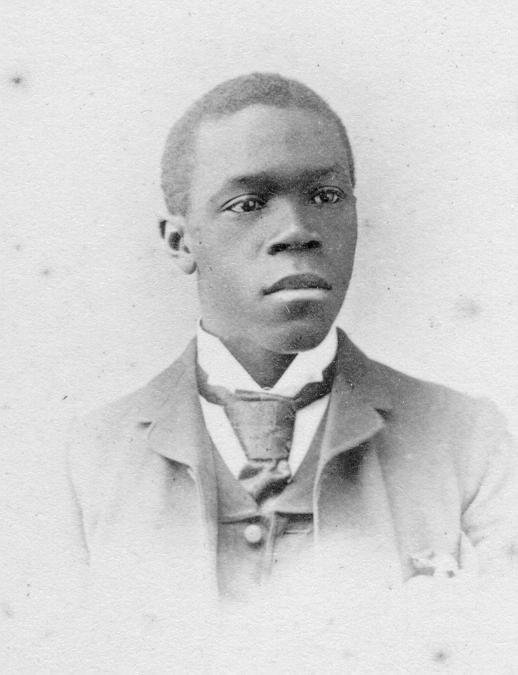
Today we mark the first day of African Heritage Month in Nova Scotia. Acadia University has a long tradition of educating people from all backgrounds, including those of African descent. The Rev. Dr. Edwin Howard Borden from Truro, NS who was the first person of African descent to graduate from Acadia with his Bachelor of Arts in 1892 and then his Master of Arts in 1896, is believed to be one of the earliest persons of African descent to graduate from any college or university in Canada. Since then, Acadia’s alumni of African descent have turned exceptional student careers into successful careers in every aspect of business, politics, public service, and spiritual leadership in almost every country on the planet for more than 125 years. The role Acadia played in educating some of Nova Scotia’s most influential civil rights leaders of the 20th Century is described in the large outdoor exhibit near University Hall that is dedicated to W.P. Oliver (’34) and forms part of the Mathieu DaCosta African Heritage Trail located in Southwestern Nova Scotia. Despite this proud Acadia tradition that is rooted in the Baptist heritage of our university, we know that for the majority of Nova Scotians of African descent, the opportunity to attend university simply did not exist. Today, we are seeking ways to remove those barriers but we have much more to do.
The 2019 provincial theme for African Heritage Month is “Our History is Your History” and, to quote from the provincial website, “.…… recognizes the unique story of African Nova Scotians and how this story is interwoven throughout the past, present and future of all Nova Scotians. The theme reminds us that when we all acknowledge and understand the truths of our shared history through awareness, cooperation, dialogue and learning, we will be able to facilitate positive change in Nova Scotia”. In order to ensure that Acadia steps up and does its part, I will be issuing an announcement later today that will outline some new initiatives to increase support for all students of African descent at Acadia.
These initiatives include the establishment of a Black Students Advisor and a Black Students Working Group, both of which have long been recommendations of the Black Students Association at Acadia. Recognizing the needs of students of African descent as distinct from the needs of other students is a well-established practice in post-secondary education and we are, frankly, behind the curve at Acadia when it comes to supporting our students of African descent. Acadia’s history in attracting students of African descent from here in Nova Scotia as well as from nations around the world provides us with the imperative to do a better job of not only supporting students of African heritage, but promoting and celebrating their achievements internally and externally. We also need to find the means to make our campus more diverse and to attract faculty and staff who reflect our community at large. It is a big task, but it won’t be completed if we don’t take concrete action right now.
Acadia’s Black Students’ Association has a number of events planned throughout African Heritage Month and I encourage all members of the Acadia community to take in one or more of those events. I want to thank our students of African descent for being so active and persuasive in making their arguments, and for making such amazing contributions to the life and voices of Acadia. Also, on February 9th in War Memorial Gymnasium between the men’s and women’s basketball games, Acadia and the Valley African Nova Scotian Development Association will hold their 10th annual event honouring Acadia’s past and present student-athletes of African descent.
During African Heritage Month the African Heritage flag will fly above University Hall, as we join together to celebrate our students and colleagues of African descent, and pledge to make Acadia a more inclusive and supportive community.
Thank you for taking the time to read this message, and I look forward to the great work that will be done by the Black Student Advisor and the new Working Group.
With very best wishes,
Peter

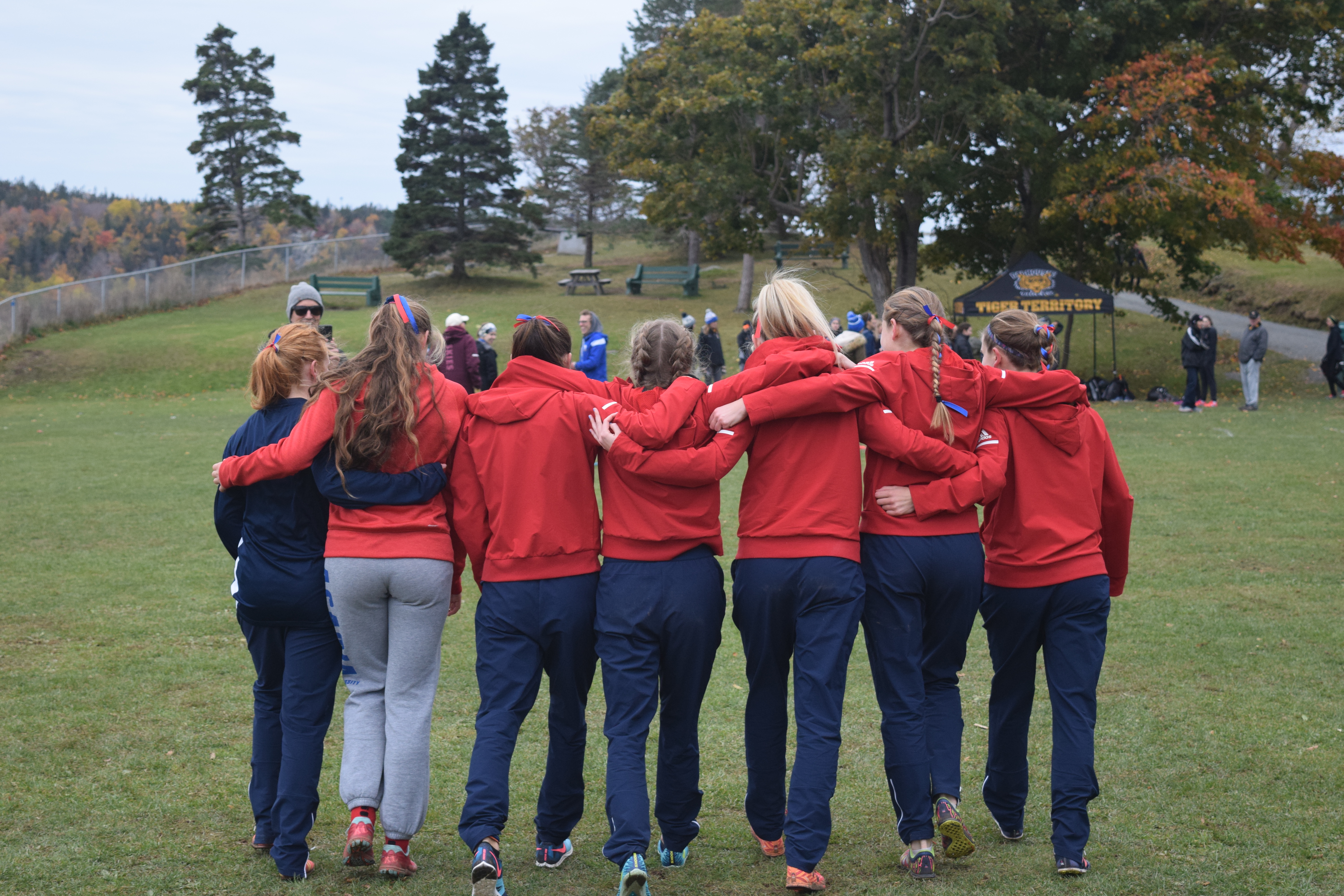
As a student-athlete on the women’s Varsity Cross Country Team, it’s often very challenging to keep up with not only academic pressure but also athletic pressure and expectations. Being part of a team means that there are conflicts, but I feel exceptionally proud to be part of a varsity team.
Right now, mental health supports at Acadia are limited to the Peer Support Centre and counselling in the Old Students’ Union Building. I don’t believe that these supports are enough. Acadia University needs to hire counsellors specifically allocated to varsity teams that understand the pressures of academic responsibilities on top of athletic pressures. Training eight times a week takes its toll on the body and mind so these specific supports are essential.
While Acadia University has many athletic therapists to provide attention to the physiological aspect of one’s well-being, the mental health of athletes is not addressed effectively. Hiring counsellors who understand academic pressures and athletic pressures is necessary. Counsellors would be just as much of a part of the staff just as athletic therapists.
Varsity athletes are expected to be strong not only physically but mentally. Having mental health challenges doesn’t make you weak, it makes you human. Addressing these challenges within a team environment where student-athletes have support before and after practice and during competition days would be hugely beneficial. Varsity team counsellors should be just as much of a part of the team staff as athletic therapists. Mental health is just as important as physical health, if not more.
While the #BellLetsTalk hashtag is aimed to support to ‘mental health initiatives’ across the country, we have to wonder what mental health initiatives are being supported. This vague umbrella statement leaves a lot of questions up in the air. One of mine questions is simple: where is the money is going and how much of it is going directly to ‘mental health initiatives’?
One of the aims of #BellLetsTalk is to create an open discussion about mental health and mental illness, yet this requires that students talk about their own mental health challenges. Many people don’t feel comfortable doing so. The vulnerability of students should not be feeding a campaign that is based on a capitalist model.
An alternative strategy would be for money raised from #BellLetsTalk to support different branches of therapy, through counselling, music therapy programs, art therapy programs and others based on student voices and a student need.
I believe that there has to be a far more effective strategy to address mental health challenges within post-secondary institutions across Canada. The restructuring of this campaign may be effective if students knew where this money was going, what this money was being used for, and how much of the money is going to towards external costs.
Being in my last semester at Acadia University, I hope that students who address mental health challenges in the future are heard so they have all the supports they need to thrive.
Jennah Lay is a fourth year Sociology student and member of the Women’s Varsity Cross Country team

Some valley thoughts on Black History month.
Black History Month in Canada has had some recent powerful successes. There’s a growing, greater understanding and appreciation of the intrinsic value of Black contributions, in science, business, education, music, sports, and public policy throughout our nation.
These advances in heightening the awareness in our country to the contributions of African Canadians is perhaps best understood by our secondary school children who, during Black History Month, are now reading, writing essays, and immersing themselves in research and history about our Black heroes. Interestingly, their parents are being educated and sensitized at the same time by osmosis. This new awakening and enlightenment stretches right across the country.
But, happiness will be the day when we no longer need “Black History Month,” a period in the annual calendar, to highlight and celebrate the contributions of African Canadians to building this Nation.
But, unhappily, we still need it in 2019 because in virtually every branch of the corridors of power in Canada, Blacks are expressly excluded and often completely absent. This is because some of our coveted principles of equality, fair play and inclusion have been supplanted by the white majority and often substituted by overt racism wherein the principle of the equal worth of human beings is sacrificed.
The result is that the ugly sting of racism still keeps the driving forces of most Canadian enterprises virtually white. I invite you to look at the lack of Diversity and colour in the upper echelons and powerful ranks of institutions like our Armed Forces, our superior Courts, our largest financial institutions; our universities, (ie. Chancellors, Presidents, vice-Presidents, Deans), our senior bureaucracies in Ottawa and the provinces, etc.
All of this denial of the mosaic of Canada in the face of thousands of eminently qualified African Canadians who have the advanced education, multiple language skills, managerial experience and training, and possess a strong desire to do the job. But, sadly, they cannot get through the glass ceiling. They can only dream and aspire to what they know they are capable of, and they must live with the knowledge that their contributions would make for a stronger and better Canada.
So we still need a “Black History Month” in 2019, more than 186 years after the British Parliament abolished Slavery In the Empire.
When I was summoned to and arrived at the Senate of Canada in Ottawa in 1990, I was astounded to learn that Diversity was like a foreign, unknown concept in parliamentary institutions such as the Senate, the House of Commons and the Library of Parliament. There was no inclusion, Diversity or fairness in the workplace. In the early 1980’s I had been an advisor to the President of the Treasury Board on the employment of visible minorities in the public service and there were other groups promoting employment justice for the other three groups, the Disabled, Aboriginals and Women.
So, on arrival in Ottawa, I immediately set about meeting with the leaders of all the parliamentary institutions strongly encouraging them to adopt the business case for Diversity. That means inclusive workplaces that respect differences and value the diverse qualities that their employees bring to their work such as gender, religion, age, sex, language, ethnicity, social status, etc. These institutions and companies know this is good for successful business. My efforts had some modest success because in the annual report of 2008, the Clerk of the Senate, Paul Bélisle reported on the results of his efforts with the Senate Administration showing 11% representation of visible minorities. There was previously a period of four years where not one visible minority was either hired or promoted.
And what about my home town, Wolfville, where Acadia University is king? Do we need Black History Month here? Sadly, yes. Acadia has changed since I enrolled in the Fall of 1956. Notwithstanding its strong Baptist traditions, students, faculty and friends in Wolfville have told me that Acadia University has not been spared the ignominy of racism that has existed in the past, and, unless checked immediately by the introduction of the Business Case for Diversity, it will spread throughout many departments.
So now is the time to promote inclusion and advocate respect for difference, before the problem worsens.
It works. It really works. Trust me.
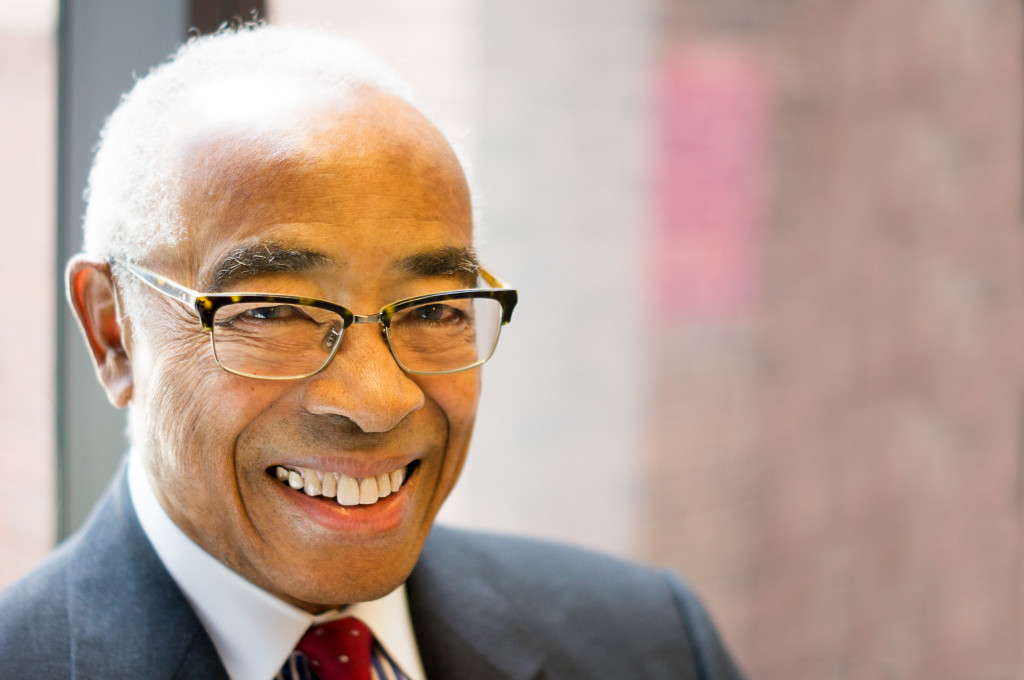
By Honorable Dr. Donald H. Oliver QC, Acadia BA (Hons History) 1960, LLB, DCL.
Betzillo positions itself as a versatile gaming hub where structured bonuses and adaptive gameplay mechanics support both short sessions and extended play.
Built with a focus on innovation, Spinbit integrates modern casino architecture with rapid transactions, appealing to players who value speed and digital efficiency.
Ripper Casino emphasizes bold entertainment through high-impact slot titles and competitive promotions crafted for risk-oriented players.
A friendly interface and stable performance define Ricky Casino, offering a casual yet reliable environment for a wide spectrum of gaming preferences.
King Billy Casino channels classic casino spirit into a modern platform, delivering recognizable themes supported by contemporary reward systems.
Immersive visuals and layered slot mechanics are at the core of Dragonslots, creating a narrative-driven casino experience.
Lukki Casino appeals to players seeking direct access and minimal friction, focusing on fast loading times and intuitive controls.
Casinonic provides a structured and dependable gaming framework, blending modern slots with transparent operational standards.