
Year: 2024

  • Another Universe 

    Another Universe 

    Image by Adina Voicu from Pixabay


    Open a book and a new world awaits. 

    Between these pages adventure is there. 

    A nice little slice of comfort creates. 

    Romance, crime, fantasy and more to bear. 


    Meeting characters, getting to know them. 

    Hours of joy simply feel like a second. 

    Look up from the pages, this was a gem. 

    Your love comes as if they had been beckoned. 


    You tell them of tales big ones and small. 

    Each tale is from another universe. 

    Sitting they quietly listen to all. 

    As you speak your love takes in every verse. 


    You are worlds away but somehow still near. 

    Connected back in the world with you here. 


  • Wolfville Essentials – Muddy’s Convenience Store

    Wolfville Essentials – Muddy’s Convenience Store

    It’s hard to imagine Wolfville’s main street without Muddy’s Convenience Store, the sharp light blue bordering the window and door impossible to miss. Stepping through the door brings you to aisles of snacks, some utilities, and regularly friendly workers. On some days one of these workers may be one Purvi Patel. The story of Muddy’s is not entirely her story however, the store has been here long before her, with the previous owner running it from November 1993 until August 2024 when Patel acquired it after looking to run her own business in a “cosey small town.” Her brother happened upon the listing and while the two of them saw their application as a joke they got the store. Of course the owner that gave it to them himself acquired ownership of Muddy’s from somewhere else.

    While Patel was not sure of when exactly Muddy’s was first established, she did provide an interesting detail pointing in that direction. Ever wonder where the name “Muddy’s” comes from? It’s a reference to Mud Creek, an old name for the town we know today as Wolfville, which become the name for the town in the 1830’s, which would make a generous estimate of the age of Muddies older than Acadia by several decades. For those who’ve spent their lives in this town the store naturally holds a lot of nostalgia, Patel describes senior citizens coming in and reminiscing about how they came to the store when they were children to buy “penny candy.”

    Unfortunately for our wallets, noting in Muddy’s today is quite that cheap anymore, but part of Patel’s vision for the store is to provides products and services at prices that students can afford. Patel’s main priority is to build up Muddy’s inventory to appeal to both the student population of Acadia and Wolfville’s senior citizens who’ve been going to Muddy’s for decades. If you’re a regular customer of Muddy’s you can recall what it sells with direct appeal to students, there is no shortage of chip bags, canned drinks, instant ramen and pizza pockets, and as an old white board used to advertise and entire wall of bulk candies. But there is also a shelf dedicated to office supplies, selling notebooks and pens. There’s a table of dried candies that you might recognize if you’ve ever made it to the farmer’s market.

    Muddy’s is in many ways a quintessentially small town, quintessentially Wolfville establishment. It’s a convenience store, something I as someone who grew up in a more urban environment associate with chains of functionally identical stores. Muddy’s itself is directly across the street from a Shoppers Drug Mart, a store that I enter and instantly recall functionally identical stores from my home on the other coast of this country. There is only a single Muddy’s by contrast. It is somewhere you can only go in Wolfville, someplace anyone who’s lived in Wolfville is likely able to name. It would be impossible to do a column series on the “Wolfville Essentials” and not talk about Muddy’s


    You can find Muddy’s on 446 Main Street, Wolfville, and online on their Facebook and Instagram profiles.

  • December – A Poem

    December – A Poem

    Photo: Acadia University on Facebook

    December
    A wonderful time
    The snow is falling
    Where it lays
    With some mitts
    And a nice cozy hat
    Feels like home
    There I shall be

    December
    A wonderful time
    The snow is falling
    Staying inside
    By the pine tree.
    Smells like home
    And baking gingerbread men all alone.
    There I shall be

    December
    The snow is falling
    With a large mug
    Full of Hot coco
    Maybe a marshmallow
    And a chocolate chip cookie
    Tastes likes home
    There I shall be

    December
    The Snow is falling
    And Children laughing
    Or singing songs.
    Huddled by the
    Crackling Fire
    Sounds like home
    There I shall be

    December
    The snow is falling
    The flakes
    Big and small.
    Icicles hanging,
    Lights are glittering.
    Looks like home
    There I shall be

    December
    What a wonderful time
    The snow has fallen
    There I shall be
    Here at home
    Nice and warm
    It’s December
    Have a wonderful time

  • Revolution 

    Revolution 

    What can I do?

    A question we hear so often when an injustice reverberates through the fabric of our collective consciousness.

    I want you to start by doing nothing.

    I want you to start by feeling everything.

    I am a young, inexperienced white woman. I don’t pretend to know much. I only know my truth and how I came to be where I am. I went from “What can I do?” to “I can’t help but do anything I can”. I hope my words will help you do the same. 

    Start by feeling. 

    So many of us have been ripped away from our emotional bodies. This is not our fault. We did not ask to be born into a world that encourages self-sacrifice, punishes slowing down, and worships at the feet of productivity. We did not ask to be born to mothers and fathers who were born to mothers and fathers who never learned how to feel anything.

    I want you to learn how to feel things. Not just easy things. I want you to learn how to feel the hard things. Invite them inside yourself, and give them a seat at your table. Make them tea. Let them stay a while. 

    You are safe.

    It’s not your fault that you have been born into a world where this is not allowed. Where emotions are dangerous playthings to be abandoned in childhood and never touched again. Our bodies are made to be battlegrounds and war leaves no time for sentiment. 

    Once you can feel again, then you will know what to do.

    It is our guilt that stops us from moving, our shame that stops us from knowing our strength, our despair that keeps us hopeless, our anger that shuts us down, our fear that makes us cowardly. 

    No – It is our inability to let these feelings show us the way that keeps us stuck.


    I want you to feel guilt so that when you see a broken Palestinian child on your phone screen, you are more afraid for their safety than for your own. When we deny guilt a place in our hearts, we become afraid of it. We become afraid of the broken child. We look away from the broken child. We do nothing to help the broken child. When guilt speaks, it tells us what we’ve done wrong and helps us know what to do next.

    I want you to feel guilt because on the other side of guilt is action.

    I want you to feel shame. Shame is a wound. Shame hurts. Buried shame hurts more. It must be uprooted and spoken aloud. It tells us we are bad, we are wrong, we are unworthy. Let shame reveal your wounds so they can be healed. Do not allow shame to keep you afraid of knowing who you are and what you can become.

    I want you to feel shame because on the other side of shame is inner power.

    I want you to feel sadness so you do not lose your softness to the hardness of the world. Listen to sadness and it will tell you of loss. Sadness whispers empathy. It helps us seek comfort and refuge. Cry. It means your soul is alive.

    I want you to feel sadness because on the other side of sadness is hope.

    I want you to feel anger. Anger is sacred. Anger is powerful. Stay close to your anger and it will show you your values. Feel anger, but let it move through your body like fire. It will transform you. When anger speaks, it tells us we have been wronged. Let anger show you what is wrong with the world.

    I want you to feel anger because on the other side of anger is truth.

    I want you to feel scared. Fear is a trickster. A shapeshifter. A helicopter parent in our brain telling us to be careful. Fear wants to protect us, and it will do almost anything to keep us safe. Safe but small. Safe but confined. Safe, but in a danger more perilous than it will ever let us see. Fear can be selfish. It can tell us to save our pride when another human’s life depends on our humility. Feel scared so you can expose fear in its lies and face the real danger before you.  

    I want you to feel scared because on the other side of fear is bravery.

    I want you to feel everything so that when you are faced with injustice, you do not confuse discomfort with danger. Shame is only paralyzing when we are afraid of it. Sadness is only despairing when we can’t confront it. When you see a Palestinian woman burned half to death, and you want to look away and never think about it again, I want you to feel. Feel the guilt, then peel it back and reveal the shame, then peel it back and reveal the sadness, then the anger, then the fear. Then you will know what to do. Then you will not blame the woman for your distress. You will blame the bomb and the one who sent it.

    This too is rebellion. 

    The emotional revolution precedes the physical one.


    About the Author

    Elizabeth Cox (She/Her) is an Acadia student studying nutrition and dietetics. She is originally from Clinton, Ontario, which is located on the land of the Anishinaabe, Haudenosaunee, and Neutral peoples. She now lives in Mtaban(Wolfville), located in Mi’kma’ki, the land of the Mi’kmaq people. Elizabeth is a pro-Palestinian activist who is heavily involved in organizing with the Acadia Collective for the Liberation of Palestine (ACLP). Information about the group can be found on Instagram @acadia4liberatedpalestine, where you can add your name to a letter demanding that Acadia divests from Israel’s genocide of Palestinians in Gaza. The group can be reached by email at [email protected]

  • The Wolfville Essentials: Rainbow’s End

    The Wolfville Essentials: Rainbow’s End

    Rainbow’s End is a family-owned business founded by Jim & Susan Johnson back in 2009 originally where the Annapolis Cider Company is before changing locations to where they currently are situated, almost directly across the street. The reason they changed locations was that at the time the building was smaller, and they needed more space. Inspired by His’s [Jim’s] love for Comics and not wanting to work for someone else while they both [Jim & Susan] worked at a call center.

    When asked about the biggest challenge they’ve faced, it was said to be the Pandemic and trying to keep up with what consumers may want. As each year new people arrive in Wolfville for higher education or to just travel; while also alot of people leave each year due to graduating university or the school located in Wolfville. However when asked about what they wanted Wolfville or Acadia students to know about Rainbow’s End, it is to just check it out as you are bound to find something that you’d like in the store.

    They sell a wide range of items for collectors or just people who want to get a gift for someone or get a book to read. Some items they carry include but are not limited to; Books, Comics, DVDs, CDs, Records, Cards, Toys, Board Games, Video Games, Action Figures, & Sports Jerseys. With Prices’ ranging anywhere from .50 cents which are usually toys, to 500 dollars usually being game systems or Hockey card boxes and sports cards in general.
    When asked about if they offer discounts for Acadia students she [Susan] said, “We haven’t done that, I’m not even sure how’d we go about that one.” However, they do hold “discounts” during holidays like Christmas, and Black Friday. While they also had one during the music festival that happened over Remembrance Day weekend. According to Susan: “When we do a sale it’s usually just tax free, because we’ve tried other things and just doesn’t work.”

    The first couple weeks at Acadia, I didn’t do much besides going to classes and meal hall, as I didn’t know anything about Wolfville or the business around. Which made things very lonely and isolating until I ran into someone who I knew who a year was ahead of me from Highschool. They showed me the Harriet Irving Botanical Gardens and then after took me down to Rainbow’s End. It was honestly slightly overwhelming with all the stuff the first time. As all the shelves are always completely filled to the top and how big the store is in general; however, it got me out of my dorm and visiting other places downtown. So, when one Polaris came up with the idea of ‘Wolfville’s Essentials’ and brought it to the table I thought it was an amazing idea, for new students to learn about the community better and possibly explore the wonders that Wolfville has.


    If you ever want to go to Rainbow’s End Books & Discs; and are interesting in any other cool nick-knacks you could find, they can be found on 395 Main St, Wolfville, NS.

  • The Ath 150th celebration reminded me why I write here

    The Ath 150th celebration reminded me why I write here

    The KCIC is really the best building on Campus for a social event. Fountain commons may have been built for such occasions, but it has nothing on the opulence of the KCIC hall, entrance on one side, fire place on the other, windows showing the magnificent gardens outside and lined with artisanal chairs and tables inside. Try as I might I don’t think my skills as a writer are enough to capture it.
    It was the perfect venue to celebrate 150 years of the Athenaeum, and the capstone of the evening was Acadia alumni and former Ath contributor Colin Mitchel starting a series of speeches from himself, our own editor in chief, and a panel discussion of people with experience in professional journalism. A pair of ideas that came up in the panel is how the internet has affected the legacy journalism industry, but also how student journalist projects like the Ath have been falling away importance. What came to me that I don/t remember any of the panelists saying explicitly is that those two are likely directly connected.
    I have no doubt that all across campus are plenty of talented writers, creatives, all the people needed to make the Ath a titan again, but they aren’t coming to our office. Why would they? No one in the 2020’s is attending a post-secondary institution without a computer, or at the very least a smart phone, something that can access the internet. If you have the passion to write and tell stories, either about current events or your personal fictions, why would you take them to us when you can keep them and post them up on the internet and reap all the rewards yourself?

    So, why should you come and write for the Ath?

    I have an answer to that actually, because you won’t be doing it alone. One of the best parts of working for the Ath since fall 2021 is being able to bounce my ideas off other people in meeting or in our discord is great because it makes those ideas better. As an English Major who also draws cartoons for the Ath (sometimes) and also writes articles (when moons of Jupiter align) this can be a very lonely pursuit if you let it. But working with the Ath team gives you a community.
    I pitched the idea of interviewing and doing short articles on local Wolfville businesses, the inspiration came from discussions with the team about trying to get more stuff on the site with a local interest, and when I pitched the idea I got a lot of feedback from the team that ended up making it more focused and resulted in a whole list of places for the series. And of all the possible material incentives I could give you to join the Ath (resume booster, experience, etc.) learning the benefits of working with the community of both our team and the overall Acadia community is perhaps the most valuable thing we can give you.


    So please, come by with some ideas. Love to hear all of them.

  • Reflection: ReconciliACTION 2024 Mawio’mi and our role in reconciliation.

    Reflection: ReconciliACTION 2024 Mawio’mi and our role in reconciliation.

    In the not-too-distant past, a professor advised me against researching Indigenous studies because I am not Indigenous myself. I am very grateful that I chose not to follow this advice and pursued my research with a genuine willingness to listen to and learn from Indigenous peoples in Canada. It makes me question: How could I take an active role in sharing the responsibility for reconciliation?
    I want to share my experience of 2024 Mawio’mi (which means gathering in Mi’kmaw) from September 30 – October 4, called Kesalul! ReconciliACTION, a week on campus and in Wolfville that brought significant personal and professional transformations in my life. During this time, I learned from the wisdom of the Elders and gained a deeper understanding of the necessity of kinship in the pursuit of reconciliation. Kinship emphasizes the importance of living harmoniously with one another and respecting our relationships—both among people and with the more than human world. I have come to realize that recognizing and honouring kinship is fundamental to achieving genuine reconciliation.

    Some classmates and I began the National Day for Truth and Reconciliation by helping Elder Dr. Joe Michael build a tipi in Clock Park. He taught us how tipis provide shelter and warmth, promote connection to family and community, and symbolize a firm connection to the earth. As students who pass by the Clock Park in Wolfville’s downtown or at Rhodes Hall every day and see the tipi in the heart of campus, we have an opportunity to reflect on our values and remember our responsibility in the pursuit of reconciliation.

    I was fortunate to be introduced to Dr. Piita (Peter) Irniq, an Inuk Elder, former Nunavut Commissioner, a former elected legislator in the Northwest Territories Legislative Assembly and a survivor of the residential “school” system. He has an impressive background in advocating for Inuit culture, language, and way of life. In his keynote talk, titled “Beyond Colonialism”, Dr. Irniq made a powerful reflection on his life and the impact of colonialism on Inuit and Indigenous peoples’ individual lives and communities’ well-being. He highlighted the policies and practices necessary to heal the damage caused by these colonial experiences. Listening to Dr. Irniq’s insights sparked a desire in me to learn more from his teachings, and I looked forward to following his work on campus in the days ahead.

    The next day Dr. Irniq began constructing an Inuksuk at the entrance of the Acadia BAC. During this process, as he laboured, he shared insights about the deep connection Inuit have to the land. He explained that Inuit see land, water, and ice as essential components of their culture and way of life. Dr. Irniq emphasized the importance of selecting stones for the Inuksuk with care and attention, ensuring that the final structure would be perfect. He shared that Inuksuit are not only markers for reaching a destination, but they also symbolize the journey itself. This structure, recognized in many places around the world, holds deeply significant cultural meaning for Inuit, serving as a directional guide that represents security, hope, and friendship. Its meaning goes beyond simply indicating “you are on the right path”. It also embodies sacred intentions related to respect, physical and spiritual guidance.

    Dr. Irniq explained to us that the knowledge of building an inuksuk is traditionally passed down through generations. Each stone structure serves a specific purpose. Here at Acadia, the aim is to honour the survivors of residential schools, remember those who never returned home, and acknowledge the pain endured by their parents and siblings, who suffered when they were forcibly taken from their homes. The inuksuk on our campus provides an opportunity for us as students to reflect on our role in reconciliation every day.

    During the process of building the inuksuk, I was deeply impressed by Dr. Irniq’s patience, skill, and delicacy. Throughout the entire experience, he devoted himself to teaching those around him. We explored many locations in the Annapolis Valley in search of “perfect rocks” striving to deliver his best work once again, given that he is invited to build Inuksuit around the world. Observing how he interacted with the land, trees, and nature led me to reflect on my own relationship with this significant part of us that we often overlook in our daily lives.

    Through this experience, I learned about “Avatittinnik Kamatsiarniq,” an Inuit value that emphasizes respect and care for the land, animals, and environment. Inuit have a deep and enduring connection with nature and teach us that honouring our surroundings, not only respects the environment but also acknowledges the importance of preserving it for future generations.
    I finished the Mawio’mi week transformed in many ways, particularly how I see life and relationships. Most importantly, I gained a deeper understanding of my role in seeking reconciliation. Dr. Lianne C. Leddy, an Indigenous professor at Wilfrid Laurier University, explains “As an Indigenous person and a professor of Indigenous Studies, I am often asked about reconciliation. Students, colleagues and acquaintances alike want to know what it means, how to engage with it and what Indigenous peoples are doing about it. I always respond with the same answer: reconciliation is for everyone. Reconciliation is not a process only for Indigenous peoples to undertake. Rather, it is rooted in relationship, healing and sharing”. Therefore, this role is not just mine—it’s also yours, dear reader and Acadia’s student body. We each are responsible for ensuring that everyone in Canada understands what reconciliation truly means. We are fortunate to have Indigenous experts at Acadia who can guide us on this journey.

    Never believe this commitment isn’t for you, even if someone suggests otherwise. Everyone must comprehend how the atrocities of the past persist today. We must take action to address the ongoing impacts of decades of systemic racism, colonialism, and the erasure faced by Indigenous peoples.
    Perhaps the advice I received to avoid Indigenous studies came from someone in her comfort zone, but I don’t want to be comfortable; I want the truth. I want to embrace the uncomfortable truths because they can be transformative. I want to have the practice of listening to the truth. I want to be thirsty for learning when I listen to the Elders. I want to recognize opportunities and obligations to work towards the pursuit of real truth and reconciliation every day.

    *Daniel Saunite Filho is a Master’s student in the Department of Politics.

  • The Killer Kept Out of The New Brunswick Election

    The Killer Kept Out of The New Brunswick Election

    HIST 2223

    NB Op-Ed

    October 7th, 2024

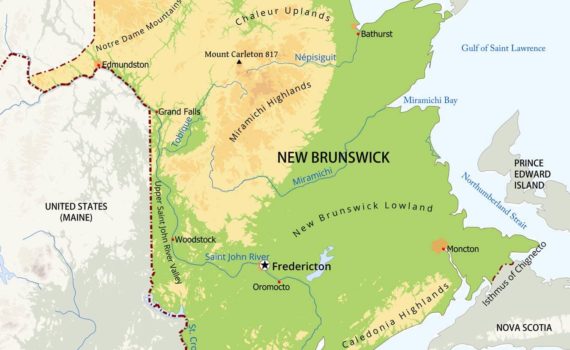
    The province of New Brunswick is currently on the heels of its 2024 General Election and while many issues in the public life and government are being brought to light during this time, one crucial piece of information is missing. For the past two years, citizens of New Brunswick have been facing a public health crisis that few are aware of. A serious, degenerative brain disease, initially reported in a cluster of 40 people, with symptoms consisting of muscle spasms, atrophy, and progressive dementia is slowing and surely spreading throughout the Moncton and Acadian Peninsula areas of the province. Although this issue had not been widely reported and barely touched on by politicians in the months leading up to the Election, I argue this is extremely important to New Brunswick politics. Scientists have collected enough evidence to confirm this neurodegenerative disease is due, or at least partly due, to environmental factors/risks, and therefore, it is the duty of our public representatives, our politicians, to make sure that the public is aware of this health risk and is kept informed on this public safety concern. Personally, I do not agree with how the New Brunswick government has handled it thus far. The government has an obligation to be fully disclosed on health issues that could affect the public in such a grave way, whereas they are currently hiding it.

    In the past few months, as the election grows closer, “there’s been a renewed call for public inquiry into why so many New Brunswickers have become sick with neurodegenerative symptoms and illnesses” (Brown). When the clusters of illnesses began two years ago, it was initially thought to be Creutzfeldt-Jakob Disease. That was until all the symptomatic patients tested negative. It was shortly after this that a neurologist of Moncton reported that those coming in sick could be suffering from an unknown brain disease, one that was intricately linked to their environment, potentially through the use of pesticides, although the exact cause has yet to be determined or disclosed. At this same time, the province of New Brunswick ordered a stop to further investigation into the disease by the federal neurologists, claiming that there was an explanation to this mystery illness. Currently, Dr. Alier Marrero reports that over 400 people in New Brunswick are now seeking health care for the symptoms reported by the initial 40 patients with the unknown brain disease. This fact, “sparked Green Party MLA Megan Mitton to call for a public inquiry into what happened internally between the province and Ottawa, as well as further testing, including environmental, to try and find patients some answer” (Brown). Mitton is the first, and only Politician to speak on the topic. Concerningly, another “leading, Federal scientist in Canada has alleged he was barred from investigating the mystery brain illness in New Brunswick” (Cecco). The needs and personal rights of patients are being neglected because the government is either not ready, or not willing, to own up to potentially their own mistakes, or fund research into this new, deadly disease.

    The solution I propose to combat this issue in the New Brunswick General Election is for more political transparency. At this point, the New Brunswick government needs to disclose why they ended the research being done on this disease. Additionally, the government has a duty to inform their citizens on any updates in this case. A hot topic in this election has been health care and if money is being promised to the health care industry, some should be budgeted to research this serious disease, as evidence shows that cases are increasing, and are a major threat to the lives and health of people of any demographic. If anything, honesty, transparency, and support on such an uncontrolled and frightening health threat, from the government could only strengthen party support by the public. The secrecy and “sweeping under the carpet” mentality of this case is cause for concern and suspicion, not the attitudes any party needs nor wants when heading to an election. Additionally, should pesticides be confirmed as cause for this disease, then the government should work to instate laws that have greater control over the use of these pesticides and restrict the use of glyphosate in areas where public consumption and contamination is a risk.

    Ultimately, this case is important. It is detrimental to public health and safety and the government has a responsibility to its citizens to research this disease and to fund that research. Political transparency is not just desired, but required, and the government must do more to protect the New Brunswickers against a potentially preventable disease. Thus far, the New Brunswick election has ignored this issue, whether because politicians have fears it would slow the election down, damage their own reputation, or simply do not care, we can conclude that the issue has been neglected and therefore, the health and safety of their constituents has been as well.

    Works Cited
    – Brown, Laura. “N.B. Health Aware of 263 Possible Neurological Illnesses, but Says Most Haven’t Been Submitted Yet.” CTV News, August 16, 2024. N.B. politician calls for inquiry into brain illness after New York Times article | CTV News
    – Cecco, Leyland. “Top Canadian scientists allege in leaked emails; he was barred from studying mystery brain illness.” The Guardian, June 30, 2024. Top Canadian scientist alleges in leaked emails he was barred from studying mystery brain illness | Canada | The Guardian
    – Schmunk, Rhianna. “Scientist working on mystery N.B. brain condition, claimed he was ‘cut off’ for ‘political reasons.’” CBC News, June 7, 2024. Scientist working on mystery N.B. brain condition claimed he was ‘cut off’ for ‘political’ reasons | CBC News

  • The Wolfville Essentials: Pronto’s Pizza

    The Wolfville Essentials: Pronto’s Pizza

    Photo by DP Steyn from Google Photos

    The starting concept behind this column series was to give a spotlight to notable places in Wolfville and get them some attention, places we at the Ath thought deserved some words on and maybe we’d learn somethings about them in the process. Though when I asked Wally Pronto of Pronto’s Pizza if there was anything he thought our readers should know about his business his answer was: “I think they already know everything,” and the thing is he’s probably right about that.

    Founded on May 5th, 2000, Pronto’s Pizza has been a staple of Wolfville’s main street for coming up on 25 years now. Prior to opening this location Wally Pronto had already been working in the food service industry for eleven years before that. He ran pizza shops in Greenwood and Newfoundland before focusing entirely on Wolfville because that’s where his kids were growing up and there was a market in the students Acadia university brings in every year. The start of the academic year always brings a spike in new customers, though Pronto says that throughout the year business is steady.

    “Steady” is very much the theme that permeated the interview, when asked if there were any dream additions or changes to the outfit he’d like to make Pronto said no, other than that the place could use a general cleaning up. He’s not in any rush to change anything about his store, aside from it not being his for much longer. After just about a quarter-century Pronto is looking forward towards retirement and handing the reigns of Proto’s Pizza to a new owner to keep operation’s going. It’s this impending change of guard that motivates Pronto’s current aversion to major change: “because in case the new owner wants to change things to his liking, so, I [Pronto] don’t want to good money after bad money…”

    I remember Pronto’s Pizza as one of the first places I visited in Wolfville, it was the winter of 2021 and I was on a tour of campus with my dad, and we needed something quick for lunch so we stepped into to get a quick slice of pizza and a can of iced tea. I don’t think our experience of with the business differs from many other people who come to Wolfville, as Pronto recalls recognizing the same people coming in for pizza 2 to 4 times a week. Considering that Pronto’s is one of the first places you’ll run into on your way into town from campus it’s no surprise that it become such a fixture of Acadia students. The idea of a Pronto’s not run by Pronto himself is strange to think about, but he seems ready for the change and I won’t deny that I’m curious to see what it could mean for future Acadia students and Wolfville. Hey, as long as the Pizza is still good, I won’t be complaining.

    If you’ve somehow never heard of Pronto’s before reading this and are now curious, it can be found on 467 Main Street, Wolfville.

  • Understanding Cybersecurity: Beyond the Hollywood Hype

    Understanding Cybersecurity: Beyond the Hollywood Hype

    Image by kacerv21 via Pinterest 

    When most people think of cybersecurity, they often envision an image shaped by Hollywood movies. You might picture a genius typing furiously on their keyboard, trying to breach highly encrypted systems in mere seconds. Alternatively, you might imagine shadowy figures behind anonymous masks or scenes where characters work in dimly lit rooms, their screens aglow with cascading green code that appears to be nothing more than 1’s and 0’s running across the screen. Movies and TV shows tend to turn cybersecurity into a thrilling, action-packed spectacle featuring high-tech individuals and heroic hackers, known in the real world as Ethical Hackers saving the day. While these portrayals capture a certain dramatic flair, they often misrepresent the true nature of cybersecurity and its vital role in our lives.

    In reality, cybersecurity is an integral part of our daily existence, though its presence may not always be obvious. It is a complex and multifaceted field that extends beyond the flashy hacking scenes depicted in movies. It requires cybersecurity professionals to work together and continuously study due to the many new and evolving threats that arise every day. Think of it as akin to a doctor’s constant need for ongoing education. Individuals in the cybersecurity field must engage in similar continuous learning. Threats come in various forms, such as phishing attacks, ransomware, and malware, each requiring specialized tools and techniques to detect and mitigate. Cybersecurity experts do not rely on quick, on-the-fly code to save the day; instead, they utilize sophisticated technologies like firewalls, intrusion detection and prevention systems, encryption protocols, policies, and even artificial intelligence, among others, to prevent breaches. Unlike the Hollywood myth of hacking occurring within seconds, real-world cyberattacks involve extensive planning and research because this field is ever-changing. This means that events can unfold rapidly, even overnight while you are sleeping.

    Hollywood has popularized many misconceptions about cybersecurity, which can distort people’s understanding of the field. A common myth perpetuated by Hollywood is that hacking happens instantaneously. However, that is not the case. Cyberattacks are often slow and methodical. Hackers may spend weeks or even months examining systems, gathering information, and exploiting vulnerabilities before launching an attack. Another myth is the lone genius hacker, whereas in reality, many hackers work together in organized groups. They use collaborative strategies to target multiple systems simultaneously. Hollywood’s portrayal might also lead people to assume that cyberattacks always involve stealing government secrets. While such scenarios add thrill to movie plots, most cyberattacks target everyday businesses, individuals, and small businesses, aiming to steal data, disrupt operations, or demand ransom.

    Cybersecurity plays a crucial role in our everyday lives. For individuals, personal cybersecurity involves basic yet essential practices such as creating strong passwords, enabling two-factor authentication (2FA), and regularly updating software to patch vulnerabilities. Simple actions like being cautious of suspicious emails or avoiding unsecured public Wi-Fi networks can significantly reduce the risk of falling victim to a cyberattack. The importance of a holistic approach to cybersecurity was starkly illustrated by the global IT outage experienced by CrowdStrike on July 19, 2024. This incident was caused by a malfunction in a software update, which led to a system failure known in IT circles as the “Blue Screen of Death.” This failure highlighted the critical need for thorough testing before deploying updates. Proper testing ensures that software updates do not introduce new vulnerabilities or cause unexpected issues, thereby preventing widespread disruptions.

    In the case of the CrowdStrike outage, the lack of sufficient pre-deployment testing led to significant consequences: hospitals were unable to perform surgeries, flights were canceled, and many employees were unable to work. Such incidents underscore why cybersecurity is a critical concern for everyone. Protecting both digital and physical assets from unauthorized access, whether malicious or accidental, is essential for maintaining operational integrity and safeguarding sensitive information. As technology continues to evolve, staying informed and vigilant is key to navigating the complexities of modern cybersecurity and ensuring robust protection in an increasingly interconnected world.

    As we advance in the technology age, the challenges in cybersecurity evolve as well. Emerging threats such as artificial intelligence, quantum computing, and vulnerabilities in the Internet of Things (IoT) are creating new challenges for cybersecurity experts. We play a crucial role in safeguarding data and infrastructure, and nowadays, our work is increasingly intertwined with artificial intelligence, machine learning and automation to help identify and mitigate threats faster. As the digital world grows, the need to be more innovative and forward-thinking in our approach becomes even more critical.

    In conclusion, cybersecurity is far more complex than Hollywood portrays. It involves ongoing efforts to protect both personal and organizational assets from evolving threats. By understanding the real-world importance of cybersecurity, we can take simple yet effective actions, such as using strong passwords or passphrases and enabling two-factor authentication, to protect ourselves from hackers. Everyone has a role to play in creating a safer digital environment. Let’s start today by being proactive about your own cybersecurity and encouraging others to do the same.

    ~(Cyber Girl)

  • Harvey Milk: The Trailblazing Icon Who Shattered Barriers and Inspired Change

    Harvey Milk: The Trailblazing Icon Who Shattered Barriers and Inspired Change

    In the annals of history, there are few figures who shine as brightly as Harvey Milk, a visionary leader whose legacy continues to reverberate through the corridors of progress. As we commemorate his indelible mark on the world, it’s imperative to delve into the extraordinary life of a man who fearlessly fought for equality, justice, and the empowerment of marginalized communities. Join us as we embark on a journey through the life and times of Harvey Milk, a true champion of human rights and a beacon of hope for generations to come. 


    The Rise of an Icon:

    Harvey Milk’s journey from humble beginnings to becoming the first openly gay elected official in California is a testament to the power of perseverance and resilience. Breaking barriers and defying conventions, Milk’s ascent to prominence signaled a seismic shift in societal attitudes towards LGBTQ+ rights. With unwavering determination, he blazed a trail for countless others, proving that courage knows no bounds. 


    A Voice for the Voiceless:

    At the heart of Harvey Milk’s activism was a fervent belief in the power of representation. He understood that true progress could only be achieved when every voice was heard and every perspective valued. Through his impassioned advocacy, Milk amplified the voices of the marginalized, tirelessly championing causes ranging from LGBTQ+ rights to affordable housing and workers’ rights. His unwavering commitment to inclusivity and social justice continues to inspire activists around the globe. 


    The Legacy Lives On:

    Although Harvey Milk’s life was tragically cut short, his legacy endures as a guiding light for those who dare to dream of a more equitable world. His legacy lives on in the hearts and minds of those who continue to fight for equality, justice, and human dignity. From the halls of government to the streets of every city, Milk’s spirit emboldens us to stand up, speak out, and strive for a better tomorrow.


    As we reflect on the life and legacy of Harvey Milk, let us remember that his story is not merely one of triumph over adversity, but a rallying cry for all who believe in the power of compassion, equality, and solidarity. In a world often fraught with division and discord, Milk’s message of hope and unity remains as relevant as ever. So let us honor his memory by carrying forward the torch of progress, knowing that as long as we stand together, the flame of justice will never be extinguished. 

  • The Consequences of Never being Heard but Always Being Seen for Indigenous Women

    The Consequences of Never being Heard but Always Being Seen for Indigenous Women

    The Consequences of Never being Heard but Always Being Seen for Indigenous Women

    Within Canada’s legal system, a startling truth becomes apparent: the simultaneous underrepresentation and overrepresentation of Indigenous women within the system has left them without champions. Although they make up less than 4% of all women in Canada, 50% of the Canadian female prison population are Indigenous women. In British Columbia, where the Indigenous population is notably high, a mere 359 out of 14,000 members of the Law Society identify as Indigenous. This alarming lack of representation not only echoes the boarder issue, but deepens the systemic challenges faced by Indigenous women in their pursuit of justice. It’s a crisis that demands our immediate attention and action. 


    The problem

    The underrepresentation of Indigenous individuals in the legal profession, coupled with their overrepresentation in prison and crime statistics, stems from a web of systemic barriers, with educational obstacles serving as the most pivotal challenge. The trickle-down effect of access to education to the being underrepresented and overrepresented of Indigenous women in the criminal justice system is significant. It starts with limited access to early education, evident in the alarming graduation rates. Less than 63% of Indigenous youth graduate high school, a stark contrast to their non-Indigenous counterparts, who boast a rate just over 91%.

    If one beats the high school barrier, the path to post-secondary education, particularly in fields like law, presents its own set of barriers. The University of Toronto’s law school identified a mere 7 Indigenous students of a total enrollment of just over 200 new students per a year. If one is able to beat the education barriers, they are met with their next obstacle, the cost of post-secondary and graduate school education. In Canada the average cost of law school is $20,700 per year. This financial burden becomes especially onerous considering that Indigenous peoples in Canada experience the highest levels of poverty, affecting 1 in 4 individuals.


    The consequences of underrepresentation and overrepresentation matter

    A diverse and inclusive legal system is crucial for ensuring fair representation and equitable justice. When Indigenous voices are absent from legal institutions, the legal landscape lacks the diverse perspectives and cultural understanding necessary for just and effective decision-making. Secondly, the educational barriers that contribute to this underrepresentation perpetuate a cycle of systemic injustice. Limited access to early education and the financial constraints that impede progress to post-secondary institutions, like law school, reinforce disparities, limiting opportunities for Indigenous individuals. Moreover, the overrepresentation of Indigenous individuals in the criminal justice system is a manifestation of these systemic inequities. Without representation in legal professions, there is a higher likelihood of misinterpretation, bias, and systemic failures that result in disproportionate incarceration rates.

    Addressing these issues is not just about rectifying statistical imbalances; it is about rectifying historical injustices and fostering a legal system that truly reflects the diversity and values of the Canadian population. It is an imperative step towards dismantling systemic barriers, promoting justice, and ultimately building a society where Indigenous peoples are empowered, heard, and treated equitably with in the legal framework. 


    A solution

    To address the underrepresentation of Indigenous individuals in the legal profession, a possible strategy involves the implementation of mentorship programs. These types of programs can establish crucial one-on-one connections between seasoned legal professionals and aspiring Indigenous lawyers, aiming to break down barriers and empower the next generation. Specifically addressing the systemic barriers, mentorship provides personalized guidance. This includes navigating financial hurdles and overcoming educational challenges, ensuring that Indigenous mentees receive practical advice to navigate complexities that might otherwise discourage them from pursuing legal careers. Mentorship programs extend beyond mere professional advice; they actively contribute to community building within the legal sphere. By connecting Indigenous students with mentors, these programs foster a supportive community, breaking the isolation that may deter some from entering the legal field. Additionally, mentorship serves as a source of inspiration and gaining role models, exposing mentees to successful Indigenous legal professionals. This type of exposure provides tangible examples of what can be achieved, fostering motivation, and instilling the confidence to pursue a legal career. In 1989, Nova Scotia launched a Black-Nova Scotian and Mi’kmaq mentorship initiative in hopes of achieving a diverse population of lawyers in Nova Scotia. Prior to this initiative zero Black-Nova Scotians and Mi’kmaq graduated from Dalhousie Law School, now there is over 180 Black and Indigenous lawyers. 

    A compelling example of the impact of representation is found in the journey of British Columbia (B.C.) Family law lawyer Kelly Russ. Inspired by meeting Judge Alfred Scow, the first Indigenous judge in B.C., Russ gained a sense of what was possible during elementary school. Despite spending 13 years in foster care, Russ went on to obtain a law degree and establish his family law firm in West Vancouver, highlighting the powerful influence of representation in breaking down barriers and inspiring success. 


    Steps forward

    It is evident that the underrepresentation of Indigenous women in Canada’s legal system is a multifaceted crisis with deep rooted systemic causes. From limited access to early education, to financial barriers in pursing legal education, these challenges perpetuate a disparity and contribute to the over representation of Indigenous women in the criminal justice system. A solution is urgent; the idea of mentorship could be that first step of change. 

    It should be everyone’s hope that collective efforts will lead to a legal system that not only rectifies statistical imbalances but also dismantles historical injustices, fostering a society where Indigenous voices are truly heard and empowered within the legal framework. The time for action is now.

  • The Story of One of The Greatest F1 Drivers of All TIme: Ayrton Senna

    The Story of One of The Greatest F1 Drivers of All TIme: Ayrton Senna

    Aryton Senna, or Ayrton Senna de Silva, was born March 21st of 1960 in São Paulo, State of São Paulo, Brazil. 


    Senna’s father, Milton da Silva, was an owner of an auto-parts company, he later switched to the metallurgy industry. Milton da Silva then branched out to construction & livestock. Milton introduced Senna to go-karting when he was 4 years of age.


    Senna got his first full sized go-kart at 10, and started racing at the age of 13, which was the age when racing became legal.. In 1977 and 1978, he won the Karting Championship in South America. Then, in 1981, he started living in England and raced for Formula Ford 1600 for the team Van Dieman.


    For a little bit afterwards, he went back home and worked for his fathers business. Later returning back to England to drive in Formula Ford 2000. In 1983, Senna raced in Formula Three for the team West Surrey. Senna managed to win the National championship during his time in F3. The next year, he would go off to Formula 1.


    Senna won 3 World Drivers’ Championships in Formula 1 as a motorsports racing driver. Senna started off his debut with Toleman in 1984, and then switched to Lotus in 1985. At the time, Senna was also partnered with Elio de Angelis.


     In 1988, Senna made a deal to sign with McLaren. Where he  became teammates with the four-time World Champion Alain Prost. While with McLaren, he won 8 races which broke the current record of races won at the time.


    Senna barely won his first title that same year with 90 points, followed by Prost with 87 points. Senna, then, took his second title in 1990, and his 3rd and final title in 1991. After he started to fall out, he moved to Williams in 1994.


    His last ever win was at McLaren, at the final race of the 1993 season. It happened to be his 41st victory, that was at the Australian Grand Prix.


    He later died at the age of 34 on May 1st 1994 in Bologna, Italy, at the San Marino Grand Prix Formula 1 race circuit. He crashed at the Tamburello corner in lap six, after leading the race for 5 laps and starting from pole position. 


    While trying to turn on the left-hand corner, Senna’s car instead went straight, rcashing into a concrete barrier at about 135mph (217 – 218 kmh) head on. His cause of death was during his crash, where, the suspension and the front right wheel from his FW16 hit Senna on the head, causing him to die on impact.


    Senna, however, didn’t want to race that day, as the day before in qualifying, Roland Ratzenberger, driver for Simtek, had died at 33. Ratzenberger was only 3 races into his Formula 1 career. David Coulthard would be the driver to replace Senna and make his Formula 1 debut at the 1994 Spanish Grand Prix. 


    According to the McLaren Cars Website, the McLaren Senna was dedicated to honour Ayrton Senna: 


    “Never before has a McLaren road or race car been inspired by one of our greatest drivers, but the McLaren Senna bears the name of legendary Formula 1™ driver Ayrton Senna, befitting its status as the ultimate McLaren track car”.


    The Official McLaren Website also mentions this on the fact of the McLaren Senna: 


    “Envisioned by Ayrton Senna before his untimely death, the charitable work of the Instituto Ayrton Senna (IAS) is a remarkable legacy for one of McLaren’s greatest racing drivers. Established in 1994 by his sister Viviane, six months after his fatal crash at the San Marino GP, the non-profit organisation now benefits up to 1.6 million children and young people in Brazil. On the racetrack he was one of the greatest drivers of all time, but his off-track achievements are arguably even greater. Thanks to the provision of comprehensive education, the IAS prepares the youth of Brazil to live in the 21st century and build a better future. McLaren is immensely proud to support the IAS, and to honour Ayrton Senna’s legacy at the highest level of motorsport with our most track-focused road car ever.”


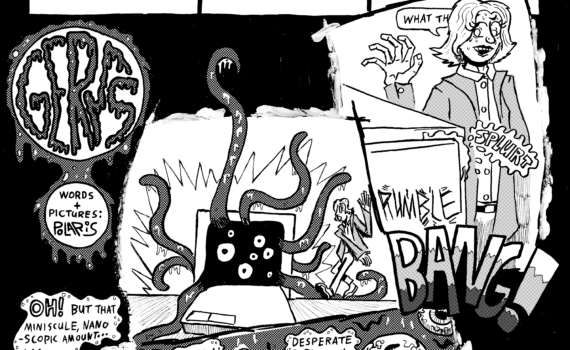
  • GERMS

  • The Canadians Who Fought in the Spanish Civil War

    The Canadians Who Fought in the Spanish Civil War

    The Spanish Civil War was waged between Republicans who looked to preserve the newly formed Spanish Republic and Nationalists who sought to transform Spain into a Fascist dictatorship.

    This war was an important prelude to the Second World War and was internationally recognized as a major conflict.

    In the war, both sides received support from important players in the looming Second World War. The nationalists were supported by Hitler’s Germany whereas the Republicans received support from the USSR. 

    The war began after a partially failed coup d’etat against the Republican government in 1936. 

    The coup left Spain divided in two which escalated to a civil war. 

    Most Western countries recognized the Republican government but decided to follow a policy of non-intervention. They did, however, allow volunteers in an International Brigade.

    The International Brigades were soldiers from across the world who went to Spain to join the popular front and preserve the Republic. It is estimated around 32 000 people from across the world came to Spain with 1500 Canadians joining the war between 1936 and 1938.

    This was amongst the backdrop of appeasement many countries such as the U.K and Canada were participating in, in hopes to keep fascist countries like Germany and Italy from further expanding. This would ultimately be a failure. This went so far that when Prime Minister Mackenzie-King visited Germany in 1937 he would write favorable words in his diary about Adolf Hitler. He compared him to Joan of Arc and commented on his “smooth skin”. 

    This strange appeasement policy was not common amongst Canadians who did not think of the Fascist leader in as favorable terms as their Prime Minister did.

    When the 1500 Canadians left Canada, it was still in the midst of an economic depression. Unemployment would climb to over 30 percent, and even in the midst of the worst economic times The Canadian Government would not address the issue in any substantial way. This is in contrast to United States New Deal programs, which aimed to put millions to work for good paying wages. 

    The oldest party in Canadian history, which still exists in 2024, is the Liberal Party in Canada as the Conservatives have been through too many deaths and rebirths to count. 

    The second oldest is the Communist Party of Canada which was extremely active in the 1930s. Founded in 1921, the CPC aimed to be a voice for an alternative economic system inspired by Socialist ideals. The CPC identified The Great Depression as a failure of Capitalism, and in return, were raided multiple times by the Royal Canadian Mounted Police. 

    The leader of the party, Tim Buck, was imprisoned in 1932 and was the target of an assassination attempt in his cell. Eight shots would be fired into his cell. In 1933, the Minister of Justice admitted that the shots had been deliberately fired into his cell to intimidate him. Norman Bethune, a famous Canadian surgeon and Physician, would become a member of the party. He was one of the earliest proponents of socialized medicine in Canada. He would join the fight in Madrid to help the Republicans in the Civil war. Later in his life, Bethune would aid the Chinese Communists during their civil war by performing emergency battlefield operations on war casualties. He would die in China due to malnourishment and septicaemia. He is recognized across Canada as a hero as well as in China where Mao Zedong authored a eulogy entitled In memory of Norman Bethune.

    The CPC would organize further efforts to help the people of Canada, such as the Relief Camp Workers Union, which appealed to Ottawa for work and wages, R.B Bennett would use the RCMP to brutally suppress them.

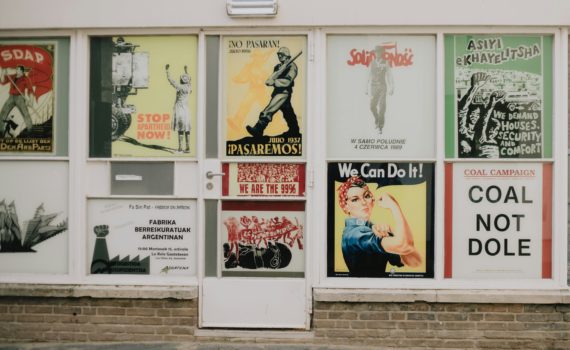
    Canadians were suffering during the depression and were afraid of the rise of fascism happening across the globe. When a group of Fascists attempted to overthrow the Popular Front government of Spain and install a dictatorship, Canadians traveled in secret to Spain to fight on behalf of the republican government.

    Similarly, in the United States, members traveled to Spain and created the Abraham Lincoln Battalion named after one of the most famous Presidents of the United States.

    The Canadian chose a like-minded name. The Mackenzie-Papineau Battalion was named after two people. 

    WIlliam Lyon Mackenzie leader of the Reformers and Louis Papineau leader of the Patriotes. These were the two main leaders of the 1837-38 rebellions in Upper and Lower Canada.

    Readers can find an article on that rebelion through this link. 

    https://theath.ca/editorials/the-often-forgotten-rebellions-of-1837-1838/


    Leaders chose this name not only because of the history of the rebellion but because the current Prime Minister WIlliam Lyon Mackenzie-King was the grandson of WIlliam Lyon Mackeznie. This was an attempt to persuade the government to officially recognize the battalion, which the government decided not to do. 

    Volunteers from the United States and U.K were mostly around university age. In Canada, volunteers were mainly older and working class.

    The Mackenzie-Papineau battalion fought in several battles through the Civil War. These included the Battle of Teruel and the Aragon Offensive. 

    Near the end of the war, on September 21st, 1938, the Spanish Prime Minister ordered the International Battalion to withdraw as defeat was imminent. Madrid would fall several months later on March 29, 1939. Within months of Madrid’s fall, the Germans would invade Poland kick-starting the Second World War.

    By the end of the war, 721 Canadians died in the defense of Spanish democracy. 

    In the return of veterans to Canada, many were investigated by the RCMP and some prosecuted. 

    Veterans of the Spanish Civil War have been repeatedly failed by the Canadian government. Their names were not included in the Books of Remembrance and not commemorated on Remembrance Day. 

    Despite this, there are several monuments dedicated to the sacrifice of Canadians enlisted in the Mackenzie-Papineau Battalion. The first was erected at Queens Park, Toronto as well as another in Victoria, BC. The final monument was unveiled in Ottawa and was funded by the Friends and Veterans of the Mackenzie-Papineau Battalion.

    Spain did not restore its democracy until the death of Fransico Franco in 1975. 

    This Remembrance Day please keep the sacrifices of the Mac Paps in mind and fight for the long awaited recognition of the battalions struggle for Spanish democracy and fight against fascism.

Betzillo positions itself as a versatile gaming hub where structured bonuses and adaptive gameplay mechanics support both short sessions and extended play.

Built with a focus on innovation, Spinbit integrates modern casino architecture with rapid transactions, appealing to players who value speed and digital efficiency.

Ripper Casino emphasizes bold entertainment through high-impact slot titles and competitive promotions crafted for risk-oriented players.

A friendly interface and stable performance define Ricky Casino, offering a casual yet reliable environment for a wide spectrum of gaming preferences.

King Billy Casino channels classic casino spirit into a modern platform, delivering recognizable themes supported by contemporary reward systems.

Immersive visuals and layered slot mechanics are at the core of Dragonslots, creating a narrative-driven casino experience.

Lukki Casino appeals to players seeking direct access and minimal friction, focusing on fast loading times and intuitive controls.

Casinonic provides a structured and dependable gaming framework, blending modern slots with transparent operational standards.