
Year: 2024

  • The Incredible Career of Michael Schumacher

    The Incredible Career of Michael Schumacher

    Photo by: AFP images


    Micheal Schumacher was born January 3rd of 1969, in Hurth Germany. Schumacher’s father was Rolf Schumacher, a man who worked with mountain bikes, later switching to renting go-karts to test them.


    His family had a food truck that was turned into a restaurant called Gaststatte.


    Schumacher started off racing with used and cheap equipment. He would fish out tires from the trash that most people would consider un-usable. However, the German made it work, and kept winning races on these tires.


    “I was always glad to have won with the worst and not the best equipment.” – Schumacher


    “After those years, I was convinced I would always be a go-kart driver. Because I could never have imagined making it into the Formula class for financial reasons alone.” – Schumacher


    During Schumacher’s go-karting career, Willi Weber saw potential in the young driver and offered to help financially on a contract. Willi Weber said to Rolf Schumacher “Come over to my place tonight. I’m giving him a five-year contract, a car and 2,000 marks a month salary.”


     However there was a slight problem. While being in Formula one, you get a lot of attention and pressure put on you. Micheal Schumacher was considered overly shy and didn’t like the press or the news, he just wanted to focus on the sport.


    As Schumacher said when he was first starting out- “Don’t make a star out of me. Don’t Push me too high up. I don’t want this…. I just want to be known as a very normal person and be treated as that and be able to walk down the street as like anyone else.” 


    Prior to Micheal Schumacher joining F1, Aryton Senna was the main figure of the sport. Shortly after though, Schumacher had started rising quickly in the ranks. 


    Most people claim that Schumacher was the best driver in F1 history and also the quickest. Which is partly accurate, Schumacher was the greatest driver in F1 during his time, however he wasn’t the fastest. The fastest to some people was Senna, with Schumacher setting the next fastest lap ever.


    Schumacher’s first F1 entry was the 1991 Belgian Grand Prix, while his first win was at the same circuit in 1992. He started to keep beating and challenging Senna in races.


    Mangu-Cours France July 5th 1992

    Murray Walker – “And I have no doubt, a very angry Ayrton Senna, who may well regard Micheal Schumacher’s tactics as being just a bit too rumbustious.”


    Ross Brawn – Former Technical Director Team Benetton

    “We are now championship challengers, and we weren’t used to it. We didn’t know how to deal with it. And when you’re beating a Ferrari, and you’re beating McLearn, and you’re beating Williams.. These are all established teams. And here was this, uh, you know, T-Shirt manufacturer coming in with this kid from Germany and suddenly beating everyone.”


    In 1994, Schumacher witnessed the tragic deaths of both Ayrton Senna and Roland Ratzenberger. During the San Marino Grand Prix,  he was right behind them during the race and qualifying. While also getting a cheating allegation that his Benetton broke the technical regulations.


    Schumacher originally retired in 2006 from being an F1 racer. Yet from 2007 – 2009 he acted as an adviser for Ferrari and helped test the tyres and electronics in the 2008 F1 season.


    His last race win was at the 2006 Chinese Grand Prix, while his last race entry was at the 2012 Brazilian Grand Prix. Schumacher competed and raced for  Jordan, Benetton, Ferrari, & Mercedes. 


    Schumacher’s active years were between 1991-2006 and 2010-2012, with 308 entries and 306 starts. Which puts Schumacher 6th in the most number of races entered, behind and tied with 5th most number  of races started with Jensen Button.


    During Schumacher’s time racing, his brother Ralf Schumacher joined F1 where they were competing against each other.


    Eventually,  Micheal Schumacher retired once again in 2012 and had the record  for most:

    • world championships won (Seven)
    • Most race wins 91
    • Pole positions 68
    • and Podium finishes 155
    • Number of total fastest laps 77
    • Most races with a single constructor (Ferrari) 181 race entries, and 179 race starts.

    As of right now, Hamilton has broken most of these records and is tied as a seven time world champion. 


    Schumacher’s championship years were: 1994, 1995, 2000, 2001, 2002, 2003, 2004.


    Later on in his life, Schumacher had two children, one who competed in Formula 1, and is currently a reserve driver for Mercedes and McLaren.


    Unfortunately, in December of 2013, Schumacher and his son went on a skiing trip at the Maribel ski resort. The trip ended up with Schumacher suffering a severe brain injury, and placed in a medically induced coma till around June of 2014. He was only 44 years old at the time.


    People continue to hope for a good recovery for  Schumacher, as he is still thankfully alive and is focusing on getting better.


    Schumacher at the start of his Formula 1 career also participated in the 24 Hours of  La Mans race. He drove for the team ‘Team Sauber Mercedes’ in 1991.


  • Université de Moncton students came alive in the summer of ‘68.

    Université de Moncton students came alive in the summer of ‘68.

     A wave of student-led protests swept through Moncton. The country was buzzing having come off Expo ’67. Canada was now 100 years old, had a new flag, and was about to change Prime Ministers from Lester Pearson to Pierre Trudeau. 


    Canada was ready for a change, and it was willing to give Pierre Trudeau’s Just Society a chance. Hope and optimism swept through the nation as momentous change occurred in a matter of months. In Quebec, René Lévesque left the Quebec Liberal Party to form the Parti Québécois. This spirit of change made its way to the Atlantic provinces as discussions over deep linguistic and cultural divisions occurred across New Brunswick.


    The francophone community in New Brunswick, largely made up of Acadians, dropped from 35% in 1960 to 32% in 1968. The Acadian community experienced a large amount of cultural change between from 1860- to 1960. This was kicked off by the Acadian Renaissance, which saw a revival of cultural awareness of Acadian culture. The Acadian Renaissance aimed to define Acadia as a unique culture with a distinct history that reaches back to the colonial history of the Maritime provinces.


    Simon d’Entremont and Frederick Robicheau would be the first Acadians elected to the Nova Scotia House of Assembly, taking their seats in 1838. Higher education facilities soon followed, including Saint Thomas Seminary and Saint Joeseph’s Seminary.


    Several Acadian newspapers were re-established to increase awareness of social and cultural issues within the community. The Common Schools Act of 1871 threatened to impose a non-denominational school system that banned religious instruction during school hours. Protests erupted over Acadie, which resulted in riots in the town of Caraquet. 


    The 1880s began the Acadian National Conventions, which continue to this day. The first few conventions saw the creation of the Acadian flag, Assumption Day becoming an Acadian holiday, and the adoption of the motto “L’union fait la force”or “Strength through unity.”


    As the Acadian Renaissance continued into the first half of the 20th century, multiple Acadians ascended to leadership positions throughout the provinces. This would include Aubin-Edmond Arsenault, who became the Premier of Prince Edward Island. Peter Veniot followed him as the first Acadian premier of New Brunswick.


    Acadians contributed to both world war efforts. In the Great War, they fought as a part of The 165th Battalion. In World War II, Canadian soldiers proved instrumental in the landings at Normandy. Acadians would push forward through the landings on D-Day to liberate the community of Saint-Aubin-sur-Mer, Calvados. 


    Between the wars, Acadians were focused on growing their religious influence. The Archdiocese of Moncton was granted in 1936 with the completion of the Our Lady of the Assumption Cathedral in Moncton.


    The Acadian community in the post-war years started to define themselves based on the large growth of culture over the past 100 years. Acadians started to be called Francophones, however, they should not be confused with Quebecois. Although both are French-Canadian, they developed completely differently and celebrate different cultures, languages, and cuisine.


    As the Canadian welfare state grew, the Acadian community grew alongside it. Western Liberalism would buzz through the Acadian community as Acadians supported the economic planning measures popular in the post-war years.

    In 1960, a significant breakthrough occurred when Louis Robichaud led his Liberal Party to oust the Conservative Premier, Hugh John Fleming.

    At the age of 34, Robichaud, who would be known as P’tit Louis, was swept into power as the first elected Acadian Premier. The previous Acadian Premiers had been appointed to the position. 

    The goal of Robichaud’s government was to ensure equality between English and French communities in New Brunswick. His efforts to do this included the modernization of New Brunswick hospitals and public schools. The Official Languages Act (1969) would guarantee New Brunswick as an officially bilingual province.  Robichaud said, “Language rights are more than legal rights. They are precious cultural rights, going deep into the revered past and touching the historic traditions of all our people.”


    A crucial part of Robichaud’s government’s approach was the Equal Opportunity Program. Previous to the program communities across New Brunswick regularly did not have enough tax revenue to pay for the social services. This program aimed at making some of those services provincial responsibilities instead of being the responsibility of individual municipalities.

    The province, as a consequence of the program, agreed to take responsibility for health, welfare, education, and justice.


    Robichaud’s fight for equality regularly resulted in death threats to him and his family, a police guard presence at his home, and riots at the New Brunswick legislature. Luckily, his plan for the cities of New Brunswick to share their wealth with the smaller, struggling rural communities was successful. 

    His reforms tapped into the deep cultural change that was already developing in the 1960s. 

    Before the Equal Opportunity Program, country councils which made up most local governments would tax just anything they considered property, including cars, cows, and chickens. 

    The communities which benefited most from the program were the poor in New Brunswick, especially those living among the North Shore. After a decade in power Robichaud was defeated in 1970 by Richard Hatfield and the Progressive Conservatives.


    The student movement could be seen as early as 1964-1967. This movement was based on the wider movement of liberalism reaching across universities. The discussion largely focused on the Vietnam War and civil rights. Students were still developing their idea of Acadian identity. Acadians faced the immense challenge of trying to restructure the traditions of their culture to fit into modern society. These movements mirrored other student movements at the time, such as Students for a Democratic Society (1962), Berkeley’s Free Speech Movement (1964), and Canada’s Student Union for Peace Action (SUPA, 1964).


    The year 1968 presented momentous changes in Acadian culture. Hope and optimism captured the country as Expo 67 roared in Montreal. Canada itself was a changing nation. No longer beholden to the Anglo-dominated- Dominion of Canada culture, Canada looked to change. An independent Supreme Court was the first nail in the Dominion of Canada, The next was the Canadian Bill of Rights, which outlined the rights of every Canadian. The Pearson administration broke through political barriers with the adoption of the maple leaf flag.

    The expansion of universal healthcare, and changing unjust laws such as the decision to decriminalize homosexuality. 

    The Pearson administration ended with the leadership of the Liberal Party being passed to Pearson’s Justice Minister, Pierre Trudeau. 

    Trudeau’s idea of a Just Society sturred Canadians’ imaginations and created a phenomenon around the leader which was dubbed “Trudeaumania.” Meanwhile, in Quebec, René Lévesque united three smaller groups to create the Parti Québécois to advocate for Quebec’s independence from Canada. 


    As the optimism of the postwar years washed away, so did people’s long-standing beliefs. The emergence of wider issues such as the African-American Civil Rights Movement, the War in Vietnam, and and the Cold War all inspired Acadian students of ‘68 to reimagine who they were. 


    By 1967, many were looking at the Robichaud government with the question “Is that all?” Although notable and visible progress had been made, there remained numerous important issues inside the province.


    Discussions about language and economic development created disillusionment among most Acadian university students, which led them to examine and rethink their worldviews. The first report from the Royal Commission on Bilingualism and Biculturalism confirmed and detailed the socio-economic weakness of Canada’s large Francophone community. Université de Moncton was created in 1963 as a Francophone university in Moncton, Edmundston, and Shippagan. By 1968, it had become a hub for Acadian youth.

    Unfortunately, the University president announced that in the autumn of 1968, tuition would rise once again, which was immediately criticized by the student union and the student newspaper. 


    The next incident that inflamed Acadian students was the Mayor of Moncton’s reaction to a diplomatic visit paid by four Acadian notables to France. The “Société nationale de l’Acadie” met with the French President Charles De Gaulle. They signed a formal accord that detailed the cultural cooperation between the French Republic and the Acadian People. 

    Mayor Leonard Jones denounced the visit, claiming it would “jeopardize the harmony” between Anglophone and Francophones in Moncton.


    The English-speaking administrators of Moncton’s bilingual school district proposed the creation of a common high school complex that would share a gym, cafeteria, and laboratories but have separate classes. 

    Many in the Acadian community reacted negatively, as most favored separate linguistically defined education structures that could protect the Acadian culture. A former professor at the university, Roger Savoie, explained differences in treatment between the two linguistic groups in a conference. He called on Acadians to push forward a new wave of national affirmation.


    Students were met with the burning face of injustice. How could ideas prevail if prejudice was so widespread?

    Students organized a march on City Hall. Between 1500 and 2000 students marched to City Hall, planning to give the mayor a copy of The Royal Commission On Bilingualism and Multiculturalism. 

    The Mayor refused to allow the students to address the assembly in French and were met with heckles from elected officials and onlookers in the public gallery. The Mayor forced students to give their addresses in English and then claimed bilingualism would cost too much and told the students to “leave the politics to the adults.”


    The events were broadcast on CBC and caused anxiety among the public. Attempts to blame Acadians for their position were responded to by students. Students identified that Acadians suffered from cultural bastardization due to the oppressive system they have had to live under for hundreds of years. If all the employment in a province is in English, of course Acadians will be forced to learn English to feed their families.


    The Students concluded that if they wanted to see a strong vibrant Acadian Culture in the Maritimes, they would have to get rid of the colonial chains they found themselves in. Students held a vote, in which 84.7 voted in favor of going on strike. The student union and professional association worked together to propose a demand to halt the rise in tuition. In response to their request to meet with the Minister of Education and the Premier. They were invited to a meeting with the cabinet of ministers. 


    The position was laid out in a brief submitted to the government. The document identifies bilingualism as New Brunswick’s primary feature. The students viewed New Brunswick as two fundamental communities, distinguishable by language, living together. Speakers laid out empirical evidence that shined a light on statistical disparities between countries with a majority Francophone population and those with majority Anglophone inhabitants. Demonstrators further pointed out the lower enrolment number present in Francophone schools as well as a lower average salary. There remained a high dropout percentage between the 9th and 12th grades. Families had to put their economic survivability ahead of their education. 


    The establishment of Université de Moncton played a vital role in establishing the importance of education in the Acadian community as well as the strength of Independent school boards. The aftermath of the protests hoped to accomplish some cultural and political change. Students argued that the university should receive additional funds to continue to grow the strength of education in Acadian communities. A major task was to change the university from being seen as a public institution to a community institution. An aftermathorn of these events was a collective Acadian political identity. These people argued for collective rights and wanted a policy that reflected their needs.


    This wave of protest can be connected to the wider wave of student protests that swept across the world in 1968. 

    These protests were inspired by perceived injustices in governments. Specifically, when referring to the United States, it is used in opposition to the Vietnam War and the Johnson Administration. 

    World tension was incredibly high. Events such as the New Left socialist movements in Europe, assassinations of MLK and RFK, and Anti-War movements had reached a peak. 


    The first student protest after the Acadian students’ efforts was at the Polish Theatre in Warsaw. This was over the performance of Dziady, which the Polish government had banned due to its anti-Soviet references. Demonstrations followed in Belgrade. The Soviet Union invaded Czechoslovakia due to Alexander Dubček’s Prague Spring reforms. 

    Brazil experienced a wave of anti-military dictatorship protests, and France was launched into a period of transformational civil unrest which lasted seven weeks and included a general strike. The United States experienced several movements. The civil rights movement moved away from the South and started tackling issues of open housing in cities in the northern and western states. 

    A protest following the Orangeburg massacre resulted in the death of three college students.

    In North Carolina, students organized a sit-in which spread to 15 cities. Students in Los Angeles walked out of their classes in protest of unequal conditions. 

    The assassination of Martin Luther King Jr. sparked protests in over 100 American cities. The Democratic National Convention became a platform for demonstrations against the Vietnam War. In Mexico City John Carlos and Tomie Smith raised their gloves at the award ceremony in solidarity with the suffering of the African-American community. 


    Students have the power to change the world. We just have to try. 

  • Partner or Perpetrator? 

    Partner or Perpetrator? 

    44% of women or 6.2 million women aged 15 and older in Canada have reported some kind of abuse in their intimate partner relationship. Intimate partner violence (IPV), also referred to as domestic violence is a prevailing form of gender-based violence that causes harm in many ways by all parties involved. It refers to many forms of harm caused by a current or former intimate partner or spouse. Intimate partner violence can take place in many relationships including within a marriage, common-law, or dating relationship. It can happen at any time during a relationship, even if it has ended. As well as whether or not the partners are sexually active or live with one another. IPV impacts people of all genders, racial, ethnic, ages, religious, and cultural backgrounds. However, women report for the better part of people who experience this form of gender-based violence, which is often most perpetrated by men.  IPV has serious impacts on children who are exposed to it. While the police-reported data shows that women are overrepresented in those who experience IPV, the real number is underreported because so many women don’t go to the police to report their experiences. Those who endure IPV feel fear of shame and stigma, believe IPV should be a private matter, fear of the court system, and lack of trust in the criminal justice system. Among those who have experienced intimate partner violence in their lifetime (since the age of 15), women are four times more likely than men to have ever been afraid of a partner . IPV can come in a variety of ways whether it is in a public, private, or online space. We need to realize IPV is not a new issue, it has been occurring for years. While yes, the government has taken steps to address the ongoing issue, much more still needs to be done.

    Something I found interesting is that young women aged 15 – 24, are five times more likely to experience sexual assault than women 25 and older. They are also three times more likely to be physically assaulted and emotionally, financially, or psychologically abused by an intimate partner . This shows that younger women are clearly at higher risk of enduring IPV. Younger women can feel vulnerable and be taken advantage of while being fearful of what their partner may do if they leave. It is difficult to pinpoint the main factors that contribute to intimate partner violence as it can range from many different circumstances. Individual risk factors of IPV include low self-esteem, heavy alcohol and drug use, mental health issues, experience of child abuse, economic stress, and strong belief in strict gender roles. Relationship factors include jealousy, possessiveness, tension, witnessing violence between parents as a child, and dominance or control over a partner. IPV is different for every relationship and can come in many forms. Over the years, the criminal code has made changes regarding IPV. The accused now must prove to the court why they should be released should they have a prior conviction. When sentencing the courts must also consider the increased vulnerability of female victims. I think this will allow more victims to come forward about their experiences with IPV because they will not be as fearful of their partner just paying bail and coming back to find them. With all this being said, there is only so much the courts can do, laws are going to be broken and IPV will not end. We need to do more. Women aren’t safe. 

    The two biggest issues I see regarding IPV are underreporting/stigmatization and criminal justice system challenges. Many IPV cases go unreported out of fear, shame, and stigma related to being a victim. This underreporting makes it more difficult for authorities to intervene and provide support. While I understand that it can be very difficult to come forward with these types of situations especially if there are children involved. We need to create an environment where victims feel safe and heard. Not judged and scared. This can include educating women more on IPV so they can know when to leave before it is too late. Especially for younger women who are still developing and don’t know what’s right or wrong. A big solution to end IPV includes educating women from an early age which will allow them to be more informed and not be as afraid to come forward. This could include introducing laws that make education on IPV mandatory in schools or universities. Looking at the challenges the criminal justice system faces, there are major delays in processing cases which leads to prolonged legal processes. It is already hard enough for victims to come forward. These delays can be detrimental to the well-being and safety of victims. While I realize they may also be bigger cases that need to be dealt with sooner, courts need to put these cases first and minimize delays. We need to think of the safety of victims. 

    Overall, IPV continues to be a prevalent issue in Canada. The government needs to work harder to increase the knowledge about intimate partner violence. With that being said, legal change doesn’t mean anything if the resources aren’t there to make sure they are enforced. Adolescence and early adulthood is a very important time in young lives in laying the foundation for healthy and stable relationships. Ensuring young women enjoy relationships free of IPV is an important investment in their future. Every six days a woman in Canada is murdered by her intimate partner. This could be your sister, mother, or even future daughter. Intimate partner violence is no joke. 

  • WhitFlix: The Smartphone Film Festival is Back for Another Year

    Al Whittle Theatre and Ross Creek Centre for the Arts are teaming up again to celebrate
    local talent and creativity. Anyone over the age of 8 is invited to participate by creating and
    submitting their own short film.
    Wolfville, NS – Al Whittle Theatre and Ross Creek Centre for the Arts have announced the
    return of WhitFlix: The Smartphone Film Festival. This competition challenges participants to
    create a short film that is under 5 minutes long and recorded on a smartphone or tablet.
    Submissions due on April 30th, 2024.
    There are three age categories in which participants can enter. Winning prizes for each
    category include a full overnight scholarship to a week at Ross Creek Centre for the Arts film
    camp (ages 8-12), the Al Whittle Scholarship to the Ross Creek Summer Film Academy
    (ages 14-18), and 10 tickets to the next available Whittle Film Series and a free rental of
    Studio Z (ages 19+).
    For participants interested in getting tips on preparing submissions, local filmmaker and
    previous WhitFlix winner Emily Ellis will be hosting workshops on the art of creating short
    films. Workshops will take place at 10:00 am on March 9th and April 6th in Studio Z and are
    free to attend. To pre-register, visit alwhittletheatre.ca.
    WhitFlix: The Smartphone Film Festival celebrates the memory of Al Whittle and his passion
    for film, by advancing and connecting talented filmmakers in our community and around the
    world. This opportunity encourages artists by providing educational workshops, a public
    platform, recognition, and scholarships for youth, with public screenings and celebration of
    participants’ work. After the jury’s results are in, the Gala Awards Night will be held on
    Saturday, May 25th at Al Whittle Theatre (450 Main Street, Wolfville) to celebrate this year’s
    WhitFlix winners.
    Full contest details and submission form can be found at
    www.alwhittletheatre.ca/whitflix2024

  • Parker V. Parker

  • Perfection

    Perfection

    Perfection

    I never wish for perfection

    Only that my mistakes seem small enough to fold into themselves

    If I can hold them in my palm

    Then I can trap them in a fist

    But I see myself, I know who I am,

    I hear the clock ticking in my eardrum.

    Keeping track of seconds, of steps, of time

    Do I wait 

    Hesitate, let my body seize up

    The mistakes wear me as I stand still,

    Pending

    I swear, I never wish to be perfect

    But how can I be satisfied when my flaws are all so clear?

  • In Defence of Netflix’s Avatar: The Last Airbender

    In Defence of Netflix’s Avatar: The Last Airbender


    Photo by Glenn Carstens-Peters Via Unsplash

    I’ve heard a very wide variety of reviews for Netflix’s live-action remake of Avatar: The Last Airbender. This, I expected. The original show is so well-loved by so many people, and when you touch any story that is as adored as this one, you will inevitably find yourself pushing through a pit of defensive fans. 


    That said, I think many fans of the original show expected so little of the remake that they have bound themselves in negativity. I think that this negativity is preventing them from seeing what the new show has accomplished. 


    I’m not going to argue that Netflix’s version of Avatar has surpassed the original, or even that it matches the original in its brilliance. It most certainly does not. But it does have its merits, and I think a lot of its biggest critics are coming at it from the wrong angle. 


    To start, the new Avatar is an eight-part series with 45-to-55-minute episodes. The original is complete with 20 20-minute episodes. More importantly, the original series is, of course, animated, while the Netflix version is a live action. Changes had to be made for the story to translate across mediums. 


    “Translation” is actually a great way to describe the phenomenon. Think about it like languages. There are countless words and phrases that can’t be properly translated from one language to another. An example I often use is the many different Inuktitut words for the English word “snow.” Different languages have different strengths and can provide detail on their own unique topics. Mediums of storytelling are similar. 


    We see this translation of storytelling all the time when books are made into movies. Inner monologue, for example, does not translate well from text to motion-picture, so the plot often changes slightly to make up for information that the audience is not receiving from the protagonist’s inner monologue. The movie’s strength instead lies in its ability to tell stories through visuals. The scenes don’t have to be described because the audience experiences them along with the characters. 


    Similarly, many of the big expressions, reactions, and quirks of the characters in the animated Avatar do not translate well to live action. The new show’s creators understood this, and instead decided to lean into the realism that live-action shows do well to tell a different version of the story. 


    The creators of the new show have been very clear that their intention was not to redo the original series plot point by plot point. The showrunner, Albert Kim, cleverly used a music analogy to describe the changes they have made, saying that the new show is “a remix, not a cover.” It is supposed to be different. The changes that many people on the internet are complaining about have been made purposefully. The new show should not be judged by how it compares to the original, but how it tells its story in its own way. 


    I’m not trying to argue that the live-action show is perfect. It has many flaws, particularly in some of the writing. I do wish that Katara’s character retained more of her childlike wonder and motherly qualities. However, I don’t think the show’s flaws should stand in the way of its successes. The animals look fabulous. The bending is a delight to watch. Aang and Zuko have new attributes that add a different sort of charm to their characters than is in the original show.


    At the end of the day, the original series will always be a timeless masterpiece. It’s not going anywhere, and it will still exist even if you decide to let yourself enjoy the live action. Just give the new show a chance. 


  • #AUBLACKEXCELLENCE: University’s Debut Black Excellence Gala Shines Bright

    #AUBLACKEXCELLENCE: University’s Debut Black Excellence Gala Shines Bright

    Throughout February, universities across the Western world organize events and forums to raise awareness and celebrate students of African descent. At times, good intentions can be overshadowed as we strive to strike a healthy balance between the educational aspects of events and creating a safe space for Black students. It is sometimes difficult to decipher what would be the most beneficial to black college students, many of whom in Canada are immigrants from the Caribbean and Africa. However, on February 29, 2024, at Acadia University a historical event took place that not only celebrated students of African descent but united the diaspora for a single night. After a month of events, lunchtime chats, and chapel services, Acadia University, led by Dotun Olutoke and the Office of African Descent Student Opportunity and Success gifted the black students on this campus with a “Black Excellence Gala” that was a true testament to the provincial African Heritage Month’s theme: Our Smiles, Our Joys and Our Experiences.

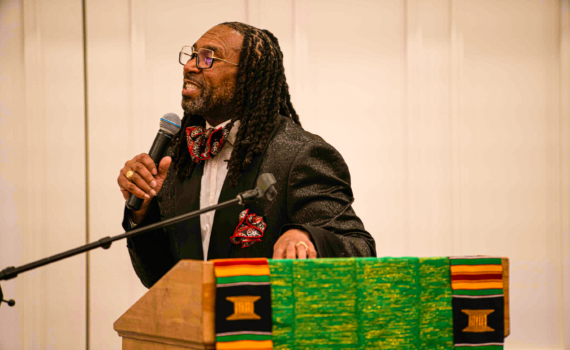
    Photo of Gala guests during remarks made by Rev. Dr. Lennett J. Anderson

    Upon entering the banquet, I was welcomed by a captivating presentation of African culture. Kente fabrics (Ghanaian fabric prints) adorned the tables, while the tabletop was embellished with various pieces of African paraphernalia. The walls were lined with tassels with the words “Black Excellence” which reminded me of the tassels black students are privileged to walk across the graduation stage with. As the guests arrived, the Caribbean students showed out in their Sunday best while the African students were adorned in their traditional clothing. This was the event that we anticipated with bated breath this entire month and we were not going to disappoint.

    The evening commenced as the Masters of Ceremonies, Rev. Dr. Lennett J. Anderson, lecturer at the Acadia Divinity College, greeted us with his innate energy and charisma. He reminded us that Nova Scotia was the birthplace of African presence in Canada as it became a refuge for Black Loyalists who fled the United States after the American War of Independence, as well as being the last stop on the Underground Railroad. He also highlighted that this gala marked a historic moment in Acadia University’s history as the first dedicated to celebrating Black students. These sentiments persisted in a post-event interview, where he remarked “This is such a defining moment of celebrating Black excellence in the Acadia community.” He also commented that he appreciated the Afro-centric space where we as members of the Black community were seen and heard.

    After the singing of the Black national anthem “Lift Every Voice and Sing “presented by two talented African students, Joyce Adeyi and Usman, Mr. Scott Duguay, Vice-President of Student Experience, and Dr. Késa Munroe-Anderson gave their remarks and congratulations to the students on this historic day.  Dr Munroe-Anderson commented “black students are critical to the Acadia community” as she thanked Dotun and the Office of African-Descent Student Opportunity and Success for a job well done. Following this was a musical display of African Drumming. The music of our ancestors filled the room, resonating deeply with the hearts of the listeners. Some individuals swayed in their chairs, while others clapped in tune. One student even mentioned that the music made her emotional. This wasn’t the sole performance of the night; rising artist Boy Rydaa, known as Ryder among friends, took the stage to deliver captivating Afrobeat songs. The crowds cheered him on during his performance, showing us what black excellence looks like in the arts.

    Photo of African Drum Performance 

    After the drum performance, we were able to taste the delicacies of the motherland as we tried native Nigerian dishes. Foods such as Pepper Stew, Jollof Rice, Egusi, and Pounded Yam filled our taste buds. As a Caribbean, this was my first time enjoying authentic Jollof rice and it reminded me a lot of a Caribbean dish “Peas and Rice” but without the peas. The food was catered for by a chef from the Halifax area, Sekinat Alagbe, and throughout the night guests sang her praises. After dinner, our Keynote speaker Joy Chiekwe, Clinical Exercise Physiologist, Acadia Alumni, and daughter of Nigerian immigrants encouraged us with her journey as she seeks to aid cancer survivors. She encouraged students to “write our own story” as they navigate university life.

    However, the highlight of the night’s events was the distribution of bursaries. Each Black Acadia student in attendance was entered into a raffle that placed them in the running for these bursaries. Every student in attendance hoped fervently for their number to be drawn in the raffle for the $500 bursary. It appeared that one table, in particular, had a special connection as they emerged as the recipients of the majority of the scholarships as if they had gained favor in God’s eyes. Originally, only six scholarships were to be given out, however, in a last-minute decision by the Vice President of Finance and Administration, Erin Beaudin, they allowed three more scholarships to be given out. Nine students won these bursaries from fields such as English, Engineering, Kinesiology, and Computer Science. 

    After this, Dotun Olutoke along with Mr. Scott Duguay presented Certificates of Appreciation to students who are committed to programs that support students of African descent at Acadia University. One of the awardees was Megan Glasgow, president of the Acadia Caribbean Union. Post-event, she commented in support of this gala becoming an annual event. Other honorees consisted of students who participated in the mentorship programs, led Black clubs on campus, and participated in making this event possible. 

    To conclude the night’s festivities, a cultural dance party unfolded, with the beats of Afrobeat, Soca, and Dancehall filling the room. It’s worth noting that the Caribbean students found themselves outdanced by the group of African students who dominated the dance floor with their lively performance. Yet, while the entire night celebrated Black culture one theme rang true in one student’s comment, “It felt like a home away from home.” At the gala, we were neither Canadian, Caribbean, or African, we were all Black. Our experiences make us a family and we are home in the company of each other. As a Caribbean student, I have never felt more connected to my African heritage than I was on the night of the gala as I was surrounded by my peers and faculty members alike.

    Although the event showcased the diversity of black students at Acadia, one individual truly stood out. Dotun Olutoke, African Descent Student Engagement Specialist at Acadia University. Both Megan Glasgow, Dr Munroe-Anderson, and many others throughout the night praised Dotun on a job well done not only for the gala but for the entirety of this month’s events. In an interview,  Dotun remarked that he is grateful for the Black students, faculty, and staff and looks forward to the gala becoming a tradition. He also wanted to encourage more Black alumni to come back and support the black students on campus so that spaces like this can continue.

    As we commemorate this historic event, I can confidently declare that this is how we celebrate Black History Month! This gala proves that we need to invest in our Black students by not only providing them with a safe space but also investing in their schooling and recognizing their hard work. Our Black students rightfully deserve a space on this campus, and this gala provided just that. It allowed us to authentically be ourselves and celebrate our diverse cultures and heritage. Or we can simply put it in the words of one student after the gala, “I feel blessed to be Black #blackexcellence.”

    Photo of Gala Attendees

  • The Nova Scotian Government Scraps the Coastal Protection Act

    The Nova Scotian Government Scraps the Coastal Protection Act

    Photo by Nataliia Kvitovska Via Unsplash

    The Nova Scotian Government has decided to scrap the Coastal Protection Act.

    This action by the Premier, Tim Houston, will have major environmental impacts. 

    The Minister of Environment and Climate Change Tim Halman has not correctly assessed the threat of climate change towards Nova Scotian coasts. This piece of legislation was vital in protecting Nova Scotian coastal zones, which will inevitably be affected by the process of climate change.

    The Minister has said the legislation is “in a silo” and wants to support Nova Scotians in making informed decision-making. The province plans to split responsibilities between property owners, municipalities, and the province. 

    They will encourage the public to use an online mapping tool to identify coastal hazards.

    What the province will do to prevent or midgate these hazards is still unknown. The province is pushing responsibility onto private property owners. Without the resources of the provincial government, property owners will likely be less effective in protecting Nova Scotia against the looming threat of climate change.

    The province is turning its back on one of the most important issues in Nova Scotia and is effectively waving a white flag.

    The province last summer budgeted $100 000 to a consulting firm that was tasked at reaching out to 40 000 people. This survey only had 1070 responses.

    Across the province, Nova Scotians are calling on the government to proclaim the act. In addition, on November 12th, municipalities in Nova Scotia called on the PC government to complete the process of proclaiming the Coastal Protection Act. 

    Sea levels are rising fast in the Maritime provinces. Coastal towns like Mahone Bay and Lunenburg are especially at risk as sea level continues to rise. The downtown sector of Halifax will also be deeply effective with most of the boardwalk at risk of being underwater. 

    The sea could rise between 1-2.5 meters by 2100. By 2050, there will be between 0.27-0.32 meters of raised sea levels.

    With this decision, the Nova Scotian government has turned its back on the people and environment of Nova Scotia.

    These actions by the Premier, the minister, and the current government are deeply pathetic and disturbing. Our government must be responsible to the people of Nova Scotia and listen to them as they demand the government to proclaim the Coastal Protection Act.

  • An Interview with Claudia Chender leader of the NSNDP

    An Interview with Claudia Chender leader of the NSNDP

    If elected as Premier, what would your government prioritize? 

    As Premier, I would prioritize Nova Scotians. I would make sure that people get the health care they need when they need it. I would focus on building housing, prioritizing truly affordable housing, and ensuring that people can afford a good life for themselves and their family. Nova Scotians are stronger when we work together and a New Democrat government would work with all Nova Scotians to build strong, affordable, communities across our province. 

    The Houston government announced the streamlining of teaching by reducing necessary requirements for prospective teachers. What are your thoughts on this; would you handle things differently?

    Our teachers and students need more support and ultimately we need more well trained teachers. I have heard from many educators and parents about this potential change already and they are concerned about what this means for students and staff in our schools. We need to work with teachers across Nova Scotia to build a system people want to work in. We have a teacher shortage, but graduating people faster into a system that doesn’t support them won’t lead to more retention. We need to keep the teachers we have and attract the new ones looking to do this important work. In the short terms we need to better compensate substitutes and create clear paths to permanent employment.

    The homelessness crisis continues to worsen in Nova Scotia, what is your opinion on the recent removal of 5 major encampments in Halifax?

    Those sleeping outside need permanent housing. The Houston government has refused to take meaningful action on creating truly affordable permanent housing. And so the housing crisis continues. Everyone needs a safe, affordable, permanent place to live. That is not the same as an emergency shelter. Without permanent options, we have serious concerns about where folks are supposed to go when temporary shelters close or spaces fill up again. 


    If there’s no focus on transitional and affordable housing, people will remain stuck in a cycle of precarious housing and homelessness. 


    The government must also help more people stay in their homes by closing loopholes that landlords are using to force renters to move. We need to ban winter evictions and create protections for low-income seniors from being evicted into homelessness. 

    Climate Change continues to affect our province. What steps or policies would your government implement to preserve Nova Scotia’s environment and ensure an eco-sustainable economy?

    This is a key question as we get closer and closer to 2030 and the IPCC’s deadline for limiting warming to 1.5 degrees. We need to work faster and more collaboratively to help people retrofit their homes, making them greener and more efficient. We need to be serious about  building a well-connected public transit network across the province to keep communities connected, and we need to enact the Coastal Protection Act to start getting serious about how we build and develop along Nova Scotia’s coastline.

    There are also so many opportunities to support sustainable resource development from forestry to aquaculture to farming, and we’re excited to support them.

    The Canadian government has reduced its quotas for international students, and anti-immigration rhetoric has become common. What is your message to international students and workers currently living in Nova Scotia?

    International students and newcomers are vital to Nova Scotia’s culture and economy. We need people to move and stay here and build their lives. The international student cap is creating a lot of concern and confusion for people who are here now attending school and who are looking to come to Nova Scotia. I’ve heard from many students and organizations supporting newcomers and international students that people are struggling and they need to know what to expect when they move to our province. We need to do better for long-time residents and newcomers alike. 

    Housing has become increasingly unaffordable to those in Nova Scotia. Most young people are facing a future where they will never be able to afford a house. Many working adults are also unable to keep up with the rising costs of rent. What is your thoughts on this issue, and what actions would your government take?

    Nova Scotians are struggling with the increasing cost of housing. Everyone from students to families, to seniors is feeling the pinch. The Houston government is out of touch with the reality that so many Nova Scotians face and has failed to make serious investments in housing people can afford. 


    Nova Scotia is facing a housing crisis and a shortage of tens of thousands of units in the next seven years. We need to build 70,000 more units to make up the shortfall by 2030, including tens of thousands of affordable units and we need stronger tenant protections to keep people housed. The NSNDP has an ambitious plan that will get us there. 


    To build thousands of new affordable units of housing we would reinvest in non-market housing, including publicly owned, cooperative, and non-profit housing. We need to work with municipalities to update zoning and speed up permitting to support and expedite construction. And we should be redeveloping underused real estate and investing in prefabricated green buildings.


    We also need to help people keep the affordable homes they have by ending unfair evictions and closing the fixed-term lease loophole, implementing a permanent rent control system and establishing a residential tenancies enforcement branch to ensure rules are being followed

  • The Often Forgotten Rebellions of 1837-1838

    The Often Forgotten Rebellions of 1837-1838

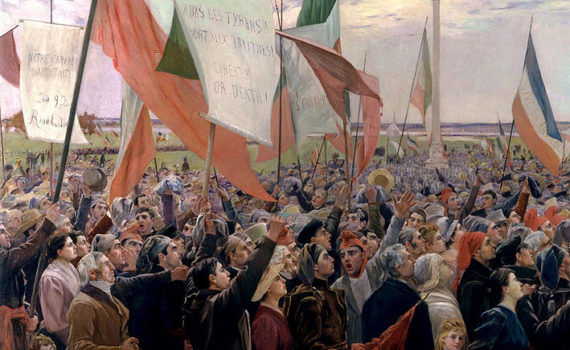
    Painting by Charles Alexander Smith

    Canada has been an ever-evolving project. Complete constitutional independence was not enacted until the Canada Act of 1982. Canada was only removed from the British Empire when the Westminster Statute of 1931 was passed. The Westminster statute helped dismantle the system of Dominos in favor of independent Commonwealth countries that shared the same Monarch. This was enacted in law and gave the Dominions right to an independent Foreign policy, which stated that the dominions were equal in status and not subordinate to each other. 

    Canadian democracy also evolved overtime. 

    1867 is not the first instance of Canada declaring political independence from the British Empire. The rebellions of 1837-1838 provided an essential political backdrop which ultimately led to the federation of the provinces into the country we call Canada.

    These armed uprisings took place in Upper, and Lower Canada which were the pre-confederation names of Ontario, and Quebec. Each led by different people with the same objective, whichn sought to establish a responsible government in Canada.

    Previous to the rebellions, the two colonies were controlled by a small group of wealthy individuals. In Upper Canada, it was called the Family Compact and in Lower Canada, the Château Clique. The population was fed up with the undemocratic rule and looked to the newly formed United States for inspiration. Canadians were inspired by Republican ideas and wanted to enact a Republic of their own. 

    William Lyon Mackenzie was an essential person in the conflict. His republicanism echoed through the colony of Upper Canada, and is the grandfather of future Prime minister William Lyon Mackenie-King. King was originally born in Scotland and emigrated to York in Upper Canada in 1820. Upon arriving in Canada, he published his first newspaper named the Colonial Advocate. Within time, he would be elected as a York Country representative to the Legislative Assembly in 1827, and eventually became the first Mayor of Toronto in 1834, when York transitioned to Toronto. He became convinced that reforms would only be possible if the citizens of Upper Canada engaged in an armed conflict with the Crown to assert their independence. 

    William Lyon Mackenzie was joined by another reformer Louis Joseph Papineau in Lower Canada. Papineau served as a militia officer in the War of 1812. He would later be chosen as the leader of the Parti Canadien, which aimed at radically reforming the colony. Papineau and his colleagues wrote the Ninety-Two Resolutions which were passed by the Legislative Assembly in 1834. The Ninety-Two Resolutions called for radical reforms such as an elected Legislative Council and for the Executive Council to be responsible before the house of common representatives. 

    The British government responded by rejecting all 92 of the resolutions. This prompted Papineau to lead a protest and form popular assemblies which would protest the resolutions’ rejections. 

    Papineau called a boycott on all British imports into Lower Canada. The British government rejected similar reforms in Upper Canada. This prompted Mackenzie to organize a meeting dubbed the Committee of Vigilance, which published a critique of Lieutenant-Governor Francis Bond Head that described him as an authoritarian tyrant.

    During the Summer of 1837, Mackenize went across the colony promoting self-government by the people of Upper Canada. During the fall of 1837, he would travel to Lower Canada to meet with Papineau and the Patriots. On October 9th, the patriots and Reformers organized an attack on the Upper Canadian government. At the meeting they decided that the rebellion would begin on December 7th, 1837. A declaration of independence was written by Mackenzie and printed at Hoggs Hollow. On December 1st, a supporter of the family pact reported Mackenzies actions to the authorities. An arrest warrant was Immediately issued for Mackenzie. In response, a number of Reformers started their march towards Toronto. 

    In Lower Canada, Patriots attempted to intimidate their colonial government by rioting near the homes of loyalists. Papnineau continued to organize protests; he maintained that it was not time to fight yet. His colleague and fellow leader Wolfred Nelson disagreed with Papineau and advocated for immediate armed rebellion. This split the Patriotes into two. 

    An association of loyalists named the Doric Club started fighting with the Patriots which promoted violence to break out across Montreal. 

    Edmun Bailey O’Callaghan joined Papineau in the creation of the Counseil des Patriotes on November 15th. Governor Lord Gosford immediately ordered their arrest which prompted most of the Patriot leaders to flee to southern Canada before crossing into the United States later in the month. 

    When three Patriots were arrested and sent to Saint-Jean, the officers were met with 150 Patriots who liberated the prisoners. This victory brought a much needed morale boost to the Patriot cause. 

    Led by Wolfred Nelson, the Patriots defeated a government force at the Battle of Saint-Denis. 

    Government forces managed to defeat the Patriotes at Saint-Charles and then again at Saint-Eustache burning a Patriote outpost.

    On December 5th, the government of Lower Canada declared martial law, however,by this time all three of the Patriot leaders had fled to the United States. 

    In Upper Canada, a Reformer group arrived at Montgomery’s Tavern. Mackenzie gathered the rebels at noon on December 5th and marched towards Toronto.

    The government offered amnesty to the rebels if they dispersed immediately. Mackenzie and co-leader Lount asked for the colony to organize a convention to discuss the policies which lead to the rebellion in the first place. In response, the government withdrew their offer. Mackenzie grew erratic burning houses of loyalists. When he did try marching, his troops went to the city, where they were fired at, which caused them to flee. Mackenzie at this time asked for troops from the United States by writing a letter to the newspaper, The Buffalo Whig and Journal.

    The government troops would arrive at Montgomery’s Tavern on December 7th and fire upon the Reformer groups. Mackenzie fled with the rebels, leaving his papers behind. Bond for the arrest of Mackenzie was issued which pushed Mackenize to flee south to the United States.

    When Mackenzie arrived in the United States he made speeches from Buffalo declaring his intention for Upper Canada to be liberated from British control. 

    While in the United States, the Reformers took a hold of Navy Island and declared the independent Republic of Canada. It was there that Mackenzie would ask Rensselaer Van Rensselaer to join him in leading an invasion of Upper Canada. Van Rensslear agreed to lead the Patriot forces 

    This was derailed when the ship they were using, the Caroline, was destroyed by British forces which forced Mackenzie to flee to Buffalo once again. He was arrested on the way for violating the Neutrality Act, which prohibited participating in an invasion of a country in which the U.S government had not declared war on. 

    He was released on bail and then returned to Navy Island in January. This would not last long as the British invaded the island on January 4th forcing the rebels to flee to the United States mainland. 

    Although the rebellion was quieting down, the Patriot War had just begun. A remaining number of rebels refused to give in and remained near the border. A rebel force was first raised in Detroit in which a war council was formed of like minded citizens. The Detroit jail was first raised when the Patriots seized 450 muskets and then stole another 200 weapons from the U.S marshals office. Fort Maiden in Upper Canada was attacked on January 9th, and as a result of reinforcements not arriving the rebels were imprisoned and jailed in the citadel in Quebec City.

    The Patriots, then, planned for a set of simultaneous attacks on February 22nd. The steamboat Erie set sail for Canada carrying 400 troops. British troops were able to cross the ice and disperse the patriots however they were unable to cross into American territory and further pursue them as U.S officials refused to allow them to cross the border line. 

    The remaining rebels sailed to Pelee Island in Lake Erie were they were attacked by British forces and 10 troops including Van Rensslear was killed with 5 British soldiers being killed. The retreating Patriots surrendered their arms to U.S authorities and then disbanded.

    William Lyon Mackenzie arrived in New York City in May, motivated to draw up more support for his independence cause. He launched Mackenzies Gazette, which supported Patriots and discussed Canadian topics. In August, the paper pivoted to American politics until he suspended the paper in Fall of 1838 to try to create a Canadian Association to rebuild the Patriot forces. 

    Meanwhile, the first Hunters Lodge was formed in North Vermont in early Spring. The Lodge spread rapidly within Quebec. At these lodges, the Secret Order of the Sons of Liberty, a secret society aiming to organize remaining rebels loyal to independence was assembled. 

    In September 1838, 160 delegates joined in a week-long conference named the Patriot Congress in Cleveland, Ohio where they appointed a provisional Canadian Republican Government.

    The Hunters Lodge united and declared that they would launch an invasion of the Canadas on November 1st. The Eastern decisions would attack Quebec on November 3rd, while the Western division planned an attack on Detroit.

    Major General John Ward Birge convinced the Eastern New York lodges to attack Prescott on the St Lawrence River instead. A standoff occurred on November 16, when artillery was brought from Kingston to capture the troops. 137 would be taken prisoner with 80 killed. The prisoners would be defended by future Prime Minister John A. Macdonald who was a lawyer in Kingston at the time.

    The final attack was a western assault on Windsor. 5-6 hundred people established a camp at Brest. The militia would soon seize the Champlin which was a streamboard. The troops arrived in Windsor at 2 am the following morning. 

    The Patriot militia encountered resistance from a citizens defense militia which used a store as the guardhouse. The Patriots set fire to the store to flush defenders out into the open. The Patriots continued to Windsor where they took positions at a farm which contained an orange orchard. 

    At 7 am, a 60-man company successfully repelled the invasion. They pushed the Patriots out of the orchard and towards the town. Further reinforcements arrived, however, the Patriots had made their escape by then. The United States government would step in and prevent a second planned attack. After this, the volunteer army dispersed,putting an end to the Patriot War. 

    The aftermath was felt widely through the Canadian colonies. Rebels who were imprisoned were put on trial and most found guilty of insurrection against the Crown. Many of the rebels were forcibly moved to Australian prison colonies, and others were hanged in Toronto, such as Samuel Lount and Peter Matthews. 

    Some of the moderate members of the rebellion gained prominence after the rebellion, such as Louis-Hippolyte Lafontaine, who would become the first Premier of the United Province of Canada.

    Lord Durham wrote a report of the rebellions where he recommended the British Empire establish Responsible government in the colonies and recommended merging Upper and Lower Canada into a single colony. Similarly, he recommended the assimilation of French Canadians into English language and culture. 

    Responsible government would not be granted until 1849. This period resulted in increased cooperation between the British Crown and the American government as both sought to quell similar rebellions from taking place. 

    Mckenzie’s trial began on June 19th 1839, and resulted in a sentence to serve 18 months in jail in Rochester. Although 300 000 people signed a petition to release Mackenzie, President Van Buren wanted to distance himself from the affair, however, Democrats in the United State Congress also called for his release resulting in Van Buren granting his release in 1840. 

    After his release, Mackenzie would continue to publish the Gazette. The Crown would eventually pardon participants in the rebellions which allowed Mackenzie to return to Canada in 1849. Hewas elected to the legislature the next year. Hewas eventually died in 1861.

    Papineau, on the other hand, stayed hidden in New York City until February 1839 when he left for Paris because he hoped to get France involved in the conflict. He would as well be granted amnesty, and would eventually become an elected official sitting as an independent in the legislature. He would die in 1871.

    The reformer and Patriot cause may have perished in the rebellions, however their legacy would continue in the form of political parties. 

    The 1st Parliament of the Province of Canada would be divided by Unionists (supporting the union of the provinces), anti-unionists, and Torys (Who supported the government of the former compacts which ruled the colonies before the union.) 

    The 2nd parliament traditional parties would emerge with Conservatives, Reformers, and Patriotes. The 3rd parliament would see an emergence of the Liberal, and Clear Grit groups. The 5th parliament, French Canadian progressives, would take on the name Rouge. This multi party system would continue with Conservatives being split between the Liberal-Conservative, Bleu, Tory, and Conservative labels until the British North America Act in 1867 established The Dominion of Canada. 

    Upon the Creation of the Dominion of Canada, federally the right wing of the legislature was split with Conservatives, and Liberal-Conservatives that formed a ruling coalition led by John A. Macdonald. The Reformers, Grits, and Rogues (who evolved from the Patriots) was united under the Liberal banner, when a united Liberal Party was formed. 

    A notable number of Maritime voters elected anti-confederation candidates which did not support the confederation of the colonies into one country. 

    Canadian political history was strongly affected by the 1837-1838 rebellions. The rebellions were the first major push for democracy in the Canadian colonies. It also laid the roots of the political parties that still exist to this day, like the Liberal party, which has remained unchanged since 1867 and the Conservative Party, which has undergone multiple name changes since 1867. It can be seen as the birth of Canadian democracy.

  • Magic Without Faith

    Magic Without Faith

    Photo by Sérgio Rola via Unsplash

    It was October 15th 2072, a nice calm day with barely any wind. The twins, Phonex and Ember were off school that day and were meant to be studying. Ember had convinced Phonex to stop for a bit and go outside. They both went into the forest about twenty minutes away from the study hall. 

    “What’s up with all these books everywhere?” Phonex said.

    “I thought you liked books,” Ember said jokingly.

    “Maybe we should start heading back now. All the books everywhere in the middle of the forest is kinda off, Phonex said.

    “Aww c’mon, just ten more minutes, then we can start heading back,” Ember said.

    “Fine, but ten minutes only. We’re meant to be studying,” Phonex said.

    A few minutes later, Phonex pointed out a tall dark brown library covered with moss and vines. The twins both decided to enter the building. Phonex wanted to, so that she could see all the books while Ember just wanted to get out of studying more. Before they entered, they realized a sign didn’t look overgrown anymore. Nothing was overgrown, now; you could clearly see the texture and pattern of the wood. The door knob looked slightly worn out, but not enough to have been consistently used. 

    Then, a girl with white hair that fell right below her chin walked by. The twins, confused and curious, followed behind. Phonex was half way through the doorway before she stopped in her tracks. She looked up to see thousands upon thousands of books. They were all lined perfectly in order, just like everyone needs. However, there weren’t any books that could help at school. 

    As they were exploring the building, they ran into the same girl. 

    “Ah, I’m incredibly sorry. I wasn’t paying attention,” the girl said genuinely. 

    “Hey, ya no worries, you’re all good,” Ember said.

    “I’ve never seen you guys here before. Are you new to town?” the girl said.

    “Actually, we live live near the convenience store about 30 minutes west from here,” Phonex said.

    “That’s weird, I should recognise you guys then,” the girl said.

    After a bit of silence, “I like your eyes. They’re so pretty,” Phonex piped up.

    “I agree, your eyes are unique. They’re Green like the grass and brown like the dirt to help the grass grow,” Ember said. 

    “Thank you, I have heterochromia. Also, if you don’t mind me asking, what are your names?” the girl said.

    “My name is Phonex and that’s my twin sibling Ember. What’s yours?” Phonex replied.

    “My name is Glass. I like your pronoun pin, Phonex, ” Glass said.

    “Thank you,” Phoenix replied as Ember looked up at the ceiling without responding.

    “Ember?” Phoenix nudged Ember, who was still not paying attention to the conversation on hand.

    “Ember goes by all pronouns but mainly She/They,” Phoenix said.

    “Hey, Glass, you’ve been here before. What’s up on the ceiling?” Ember finally speaks, glaring at their sister.

    “I’m going to be honest, I’ve never been up there before and I don’t really plan on it. However, I can take you to people who have,” Glass said.

    “Sure, why not, if it gets us a chance to go up there,” Ember replied.

    “I’d be down to go up there also,” Phoenix said.

    “Alright, the people who I am bringing you to are Sapphire, Axel, and Tegan, just so you both are aware,” Glass said, gesturing to follow her.

    The twins walked with Glass all around the library. It felt like forever before they got to Glass’ friends. Once they all got to that corner, Sapphire introduced everyone.  

    “Hey guys! This is Ember and Phonex.” Everyone waved.

    “That’s Tegan,” said Glass, pointing to the guy with red hair who was messing with a book about nature.

    “That’s Axel.” Glass pointed to a person with strawberry blonde hair, who smiled nervously at them.

    “Lastly, that’s Sapphire.” A girl with piercing blue eyes and black hair waved.

    “It’s nice to meet you all,” Ember said.

    “Glass said you would be able to take us to the ceiling?” Phonex said.

    “Ya, we are able to take you guys up there,” Tegan replied.

    “Thank you. Me and my sister appreciate it,” Phoenix said.

    The group took another massive walk that felt like forever up about nine flights of stairs to the ceiling, and with minimal pit stops. Halfway up the stairs, they met someone new again. He had short blue hair and red eyes, with a very different aesthetic and style than everyone else was used to. He introduced himself as Jem, and joined in on the journey. Once they got to the top of the stairs, there wasn’t anything there besides a single book on a pedestal. 

    When the twins touched the book, it started to glow. The cover was hard and didn’t have a title or an author. 

    “I don’t remember this being here last time, do you guys?” Axel asked.

    “No, I don’t, it’s strange,” Sapphire said.

    “I don’t remember it either,” Tegan said, as the twins opened the book to a spell:

    ——————————————————————————

    WHITE MAGICK REVENGE

    What was brought down upon me

    Be returned but times three

    Head to toe, skin and nerve

    May you get exactly what you deserve


    Mama Pagan

    ——————————————————————————

    “Whoa! This could be dangerous if it wasn’t white magic,” Phonex said.

    “Ya, but it’s not fun like that Phonex,” Ember said.

    “Ember no, we need to use it for good,” Phonex responded.

    “I don’t care. Revenge against everyone is better and more fun,” Ember said.

    “I’m going to say the spell, and everyone will watch so that it’s used for good. Ember!” Phonex said, trying to not get backlashed on how stupid her sibling sounded.

    “No, I’m not letting you do that. You just want to make this boring,” Ember said, not caring.

    There was a slight pause between the twins arguing.

    “Uhh guys? Someone appeared out of nowhere. I’m sorry, I said the spell and turned around and this guy was just standing there,” Jem said, shaking in fear.

    There was definitely a guy there, about 5’7, just standing. He had red crimped hair, brown eyes, and the utter most random clothes. 

    “Shouldn’t he be moving? Why isn’t he?” Axel whispered to Ember cautiously. 

    “You expect me to know? Go ask Phonex,” Ember said.

    “I asked you because you didn’t want to use the spell for the best. Shouldn’t you know what you’re dealing with?” Axel said, still whispering.

    “I should say yes, but I don’t know. Now I’m trying to figure out how to use this,” Ember said, disregarding what Axel had already said.

    “Rude,” Axel mumbled, walking over to Phonex and asking the same question.

    “I haven’t seen any spell that involves summoning someone, however, since I work with white magic, I could find and check out a book that deals with summoning humans,” Phonex said.

    “That sounds like a good idea, but be quick, we don’t know if this ‘Person’ is dangerous,” Tegan said, messing with his ponytail.

    Phonex asked if anyone wanted to join her, and the only person who decided to go was Sapphire. Little did they both know that Ember had actually studied the topic, but didn’t want anyone knowing what they had planned. As the two were nearing the bottom of the stairs, they ran into Glass again. They found a book relatively quickly called ‘Academic Magic: The Home Of Demons and Angels’ by Deertail.

    After checking out the book, Phonex and Sapphire scanned the pages while walking up the flights of steps. When they got to the top, everyone was freaking out because the person was now following Ember’s commands. Sapphire went through the book again to try and figure out what was going on. 

    “Hey, you would have had to have been saying the spell with Jem to command the person. You would have had to add a bit of extra wording, and have the intention of summoning someone!” Sapphire said, trying to hold back and control their anger. 

    “I’m well aware of what I did, and I am going to use Dakota to get what I need. They will be paid a lot more than minimum wage. My morals aren’t that bad,” Ember said.

    “You stated that you had no clue about the topic and told me to go ask your sister!” Axel said, furiously.

    “What can I say, when I want something, I’ll do anything in my power to get it.” Ember said.

    “It’s not right that you lied to us. You could have been putting everyone in harm’s way!” Phonex, also furious, wiped tears from her eyes.

    “And..?” Ember said with a blank expression.

    “They’re people!” Phonex said, screaming.

    “To make it worse, there’s no way to unsummon Dakota, or the spell. So I guess Ember won the argument.” Tegan said, flipping through the pages of both books.

    Ember just shrugged and stood there with an evil expression in their face.

  • Nova Scotia Government to Reduce Requirements for New Teachers.

    Nova Scotia Government to Reduce Requirements for New Teachers.

    The Nova Scotia Government has announced they will reduce the requirements to become a teacher in the province. 

    Prospective teachers will now be allowed to apply after only two years of undergraduate work. 

    Premier Tim Houston claims this will help streamline the profession, but many are worried that this will create less educated teachers and lower the standard of education in our province. It puts the quantity of teachers in front of the quality of our teachers.

    Currently, future teachers are required to complete an undergraduate degree before pursuing a Bachelor of Education, which is a two year professional degree including work terms. 

    The Premier hopes this change will be ready in time for fall enrolment at universities. He has said the policy is “Just Like Old Times.” 

    This is extremely worrying considering the steep decline in Nova Scotia education quality over the past 40 years. The Whole Language Program started in the early 1980’s infamously threw out phonics based education in favor of Whole Language Theory which had students memorize words instead of learning the structure of languages. This was a tremendous failure and has resulted in a drastic drop in literacy among young people.

    This culture of educational mediocrity will get worse if teachers no longer have to complete a full undergraduate degree. 

    There is a shortage of teachers in the province, however, the solution is to provide higher incentives for working as a teacher in Nova Scotia, not lowering the requirements. This will undoubtedly result in poorer quality teachers.

    Along with the recent announcement of a fast-track program at CBU, the Premier continues to make questionable decisions concerning education.

    Via X NSTU President Ryan Lutes spoke about the proposed changes. “The NS Teachers Union has not had meaningful consultation on these potential changes.” He added that the NSTU has advocated for a robust teacher recruitment program which will prioritize improving working and learning conditions in our schools. 

    Only time will tell if Premier Tim Houston will consider the concern coming from teachers and parents alike. 

  • The Life and Legacy of Mojo Nixon, Cult Psychobilly Icon

    The Life and Legacy of Mojo Nixon, Cult Psychobilly Icon

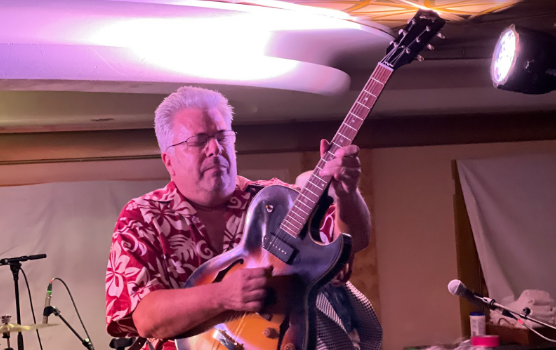
    While obscure to many, late musician DJ Mojo Nixon stood as an iconic part of fringe music movements and subcultures. His music blended elements of classic outlaw country, rockabilly, roots, and cowpunk with his quick wit, cynical and crude comedy, and political and cultural scrutiny. Born Neill Kirby McMillan Jr., he developed his musical persona, Mojo Nixon in the early 1980s as he began to play with Skid Roper. It was their 1987 album titled Bo-Day-Shus!!! that launched Nixon into subculture stardom. It featured the song “Elvis is Everywhere,” a novelty song exalting Elvis Presley with lyrics such as “Elvis is everywhere, Elvis is everything, Elvis is everybody, Elvis is still the king.” It was that song that garnered play on MTV and college radio stations around the country. Nixon went on to collaborate with Jello Biafra of Dead Kennedys, Dave Alvin, and Buddy “Blue” Seigal of the Beat Farmers. As his career progressed, Nixon moved further away from recording music and focused on his radio shows, of which in 2008 he had three of: The Loon in the Afternoon, Mojo Nixon’s Manifold Destiny, and Lyin’ Cocksuckers. These three shows covered the three bases of his interests, outlaw country music, NASCAR, and politics. In 2009, Nixon released Whiskey Rebellion, an album of tracks that he found in “an old shoe box full of cassette tapes.” Upon the release of this album, he temporarily allowed free downloads of all the tracks. An outspoken supporter of illegal media downloading sites, Nixon supported free media overall, both in the sense of money and speech. 

    The 1980s sparked a contentious debate that captured the music industry, the United States government, music consumers, and parents: censorship. While not a new issue by any means, the 1980s fostered a passionate resurgence of this debate on both sides as the culture around music undeniably changed. The desire to uphold moral standards in American music clashed with many artists and record labels of the time. The height of this debate came in 1985 when the US Senate held a hearing on the so-called “porn rock”. On one side, Tipper Gore, founder of the Parents Music Resource Center, claimed she was working to push against “the twisted tyranny of explicitness in the public domain.” Among the opposing artists was Frank Zappa, musician and composer, who stated, “It is my understanding that, in law, First Amendment issues are decided with a preference for the least restrictive alternative. In this context, the PMRC’s demands are the equivalent of treating dandruff by decapitation.” The hearing ultimately resulted in the requirement of the use of the Parental Advisory labels we know today. While providing some comfort for concerned parents, many artists remained dissatisfied as this “labeling” had consequences for them and their music. Walmart refused to sell these records, independent record stores were occasionally threatened with eviction if they sold them, and some cities including San Antonio banned artists that had been “labeled” from performing. This controversy continued to expand in the 1990s with the rise in popularity of rap containing explicit lyrics and subjects.

    It was this wave of censorship controversy that Mojo Nixon found himself advocating in. In 1990, he debated Pat Buchanan, Communications Director under the Reagan administration, and Missouri State Republican Representative Jean Dixon—who presented a bill that would limit the display of “labeled” records and ban children under the age of 18 from attending concerts of “labeled” artists—on CNN where he stated that, “I think we’re way off the mark here. I think parents have a responsibility, when they bring children into the world, to raise them to know right from wrong… Saying that we don’t want to talk about drugs and alcohol and caffeine and nicotine doesn’t mean it’s going to go away.” Continuing through to his death, Nixon remained an unabashed voice on many controversies regarding moral outcry in America, notably outspoken against the Westboro Baptist Church’s condemnation of queer people, all with the flaire of his irreverent and eccentric persona.

    Mojo Nixon passed away on February 7th after performing with his band, The Toadliquors, on the annual Outlaw Country Cruise of which Nixon was a regular performer and host. “How you live is how you should die” his family wrote in a statement on Facebook. “Mojo Nixon was full-tilt, wide-open rock hard, root hog, corner on two wheels + on fire… Passing after a blazing show, a raging night, closing the bar, taking no prisoners + a good breakfast with bandmates and friends. A cardiac event on the Outlaw Country Cruise is about right… & that’s just how he did it. Mojo has left the building. Since Elvis is everywhere, we know he was waiting for him in the alley out back”.

  • Parker V. Parker

Betzillo positions itself as a versatile gaming hub where structured bonuses and adaptive gameplay mechanics support both short sessions and extended play.

Built with a focus on innovation, Spinbit integrates modern casino architecture with rapid transactions, appealing to players who value speed and digital efficiency.

Ripper Casino emphasizes bold entertainment through high-impact slot titles and competitive promotions crafted for risk-oriented players.

A friendly interface and stable performance define Ricky Casino, offering a casual yet reliable environment for a wide spectrum of gaming preferences.

King Billy Casino channels classic casino spirit into a modern platform, delivering recognizable themes supported by contemporary reward systems.

Immersive visuals and layered slot mechanics are at the core of Dragonslots, creating a narrative-driven casino experience.

Lukki Casino appeals to players seeking direct access and minimal friction, focusing on fast loading times and intuitive controls.

Casinonic provides a structured and dependable gaming framework, blending modern slots with transparent operational standards.