The theater class of Fall 2025 walked into their first day of class with no play.
The Acadia Theater Company has not had an easy go of it the last few years. Losses to the group budget and limited access to facilities have meant that only one professor, Dr. Micheal Devine, is left on the performance side of the theater company, which is responsible for selecting what show the class will work on for the semester. So instead, the faculty reached out to the students over the summer to ask what they would like to do. This led to the November debut of When Does It Get Better?
Instead of the Theater company’s usual route of selecting an existing play and building a presentation from that, they instead opted to create a piece of devised theater. In devised theater the work of scriptwriter, production designer, and stage performer are spread across the whole cast. Everyone does a bit of everything, and at the start nothing was off the table. The earliest iteration of the play was a mass of sticky notes outlining thematic ideas and scripts the students brought in every week. Much of the early process was focused on the class learning about each other and what they wanted to do.
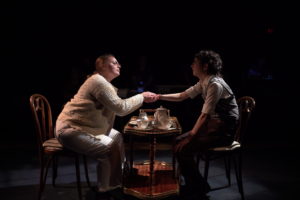
The original material started out much more light-hearted than the final performance. It was the first drafts of what would become the segments “Funeral” and “Conversation” that lead the shift in tone. Then one of the sticky notes, anonymously posted, gave the group the title When Does It Get Better? The team describes the motivating factor behind creating the performance as a “fuck it, let’s have fun” attitude. Devised theater was a structure some of the class had prior experience with, and the group embraced this new format as an opportunity to make more choices and creative decisions they had not been able to in previous years. The collaborative, iterative nature of the production led to a lot of friendly competition, with cast members being inspired by each other and trying to one up their peers.
The result is a series of vignettes that are linked together by visuals and tone. The play is composed of six self-contained scenes, each with their own writer, director, and characters. The scenes have casts of around three to four characters each, apart from the solo performance of Grayson Hudson in “Bunker.” This solo performance breaks up the segments around it and jumps through time as it’s protagonist slowly deteriorates in an isolated bunker. It’s easy to connect this scene to the anxieties and isolation many endured throughout the COVID-19 pandemic, and the rest of the segments focus on similarly dark material. “Hospital” is about a three people’s experiences with chronic health problems, “Choose” evokes the repeal of Roe vs. Wade, and “The Conversation” is about accepting the death of an elderly loved one.
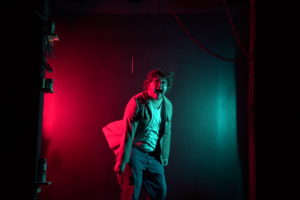
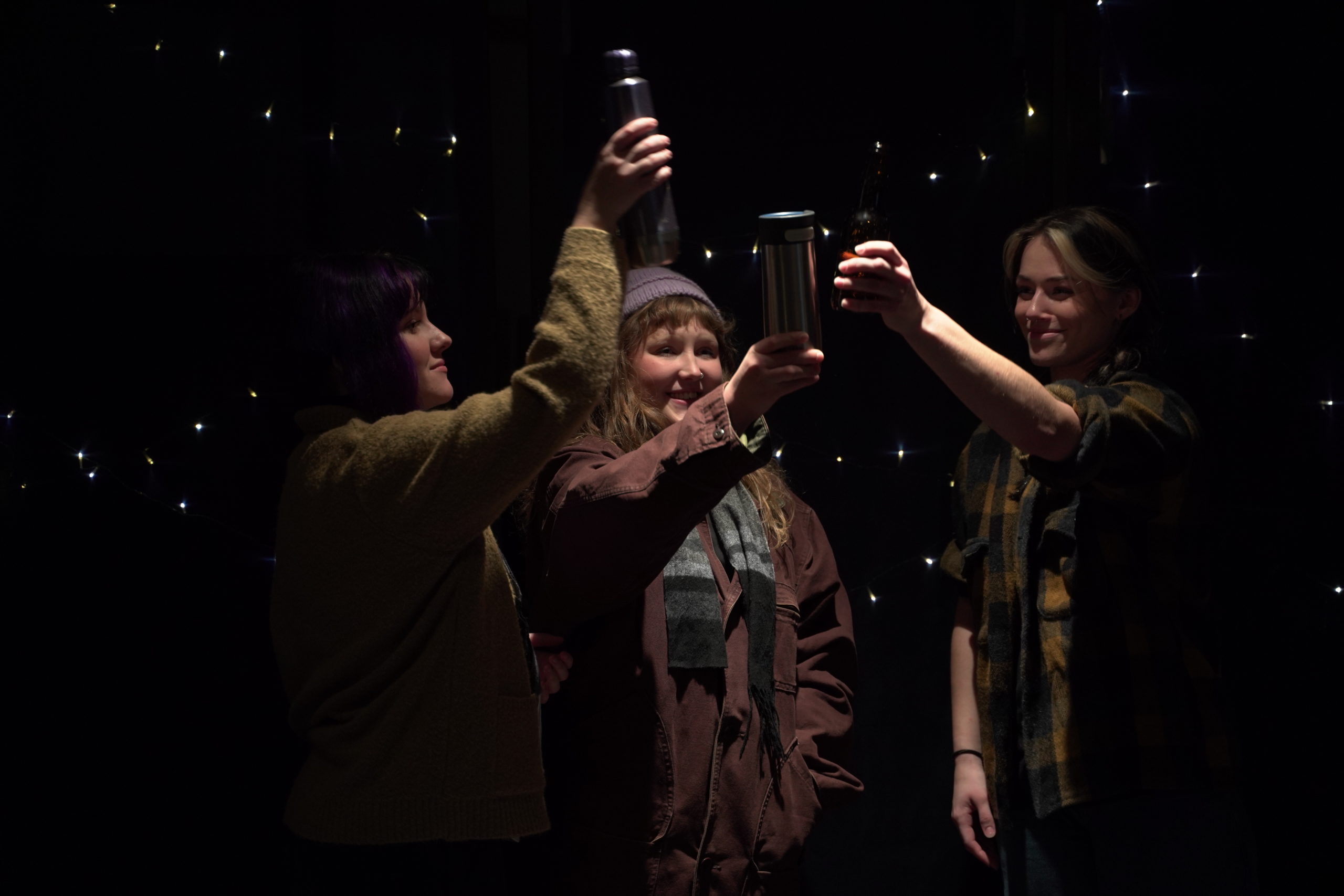
The production design adds to the experience. “Ritual,” the first segment of the production, starts in the Lobby of the Denton building and then moves down to the stage in the basement. The audience seating was in two rows on either side of an open space, as well as two small sets on the sides of the seats, one for the “Bunker” segments, and the other mainly used for “Hospital.” This set up ensures that you are always seeing your fellow audience members, and sometimes not seeing every aspect of a scene. For example, a conversation in “Choice” is framed so that one half of this audience sees the face of one participant but not the other. The scenes in the basement additionally make intentional use of light. This includes focused spotlights in “Choice,” handheld light sources in “Ritual,” and “Bunkers” harsh double lighting.
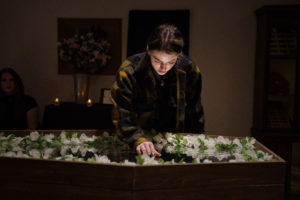 All these aspects of the production build to the finale of “Funeral.” The audience is led back upstairs to the lobby where the actors give eulogies to themselves before asking if the audience would like to share any words of their own. My audience didn’t take them up on this offer, but other shows have had members of the audience share either their own self eulogies or words for passed loved ones.
Getting to see When Does It Get Better was an experience I’m glad I was able to have, and one that I’m not sure if I’ll ever have again. The play is heavily built around people in this specific place and time. The production makes extensive use of the specific environment around it, such as the moving of the audience through Denton Hall, and the copyright for the material is spread amongst the creatives. The writer of each section owns the rights to that script, so a new performance would require bringing the entire team back together in some capacity. When I asked the team if they had any interest in returning to the material, Avery, the writer of “Ritual” responded with, “Yes, but you’d have to hold a gun to my head.” Others were more optimistic but overall, the team behind When Does It Get Better? are looking towards future projects.
Credit and thanks to Neil Silcox for all photos in this article