
Author: Adelaide Matheson

  • What has the 2022-2023 ASU Executive Team Been Up To?

    What has the 2022-2023 ASU Executive Team Been Up To?

    The Acadia Students’ Union is already back and busy. In September, as students once again flooded into the town of Wolfville, they were met with a lineup of welcome activities, a new pizza spot in the Student Union Building, and a Homecoming concert in the works. With the semester beginning, many students are getting their first glimpses of the new Acadia Students’ Union executive team in action.

    This week I had the chance to meet with Sadie McAlear and learn about the new team of student union executives. Her office is a welcoming space with an open door and upbeat music playing softly in the background. If you look closely you can see the names of past presidents of the Acadia Students’ Union on the wall. While the space is welcoming, it isn’t necessarily accessible. The Student Union Building, familiarly referred to as the SUB, does not have an elevator, and there’s a flight of stairs between the street and the student executive offices (as well as the Athenaeum office). 

    A lack of accessibility isn’t an issue that’s going to be addressed on its own; it’s something that needs active engagement. When it comes to issues like this, having a student union to voice the needs of students is essential. Sadie explained to me that this kind of advocacy is something that the executive team wants to center on in their approach to student governance.

    As Sadie told me: “on an institutional level, municipal, provincial, and federal, [advocacy is] so key, that’s what a union is supposed to do … we do that through advocating for [students’] experience here and making sure that it’s accessible for them and that it’s a good time too.”

    Mental health and financial need are two long-term issues that are at the top of the list of priorities according to Sadie. While neither of these issues will ever disappear, working to build a community with better supports and resources for students is an important step in addressing their impact. 

    Another priority is to address the housing crisis. Many students are feeling the impact of limited housing availability and high prices. It doesn’t help that many students are in vulnerable positions and don’t have the resources or power to address the situation on their own. This is where the union comes in. Finding ways to help students access affordable and safe housing as well as helping them know their rights when dealing with landlords is a goal for the student union. For Sadie, this goal isn’t just about improving the lives of current students, but also about developing a better student environment for years to come.

    Advocacy is a wide-reaching goal. There is no clear-cut path for how to best address the needs of the student body, so over the summer, Sadie and the rest of the team began the process of learning how to advocate for students. Part of this process involves making important connections with other student-focused organizations. Sadie specifically highlighted the Canadian Alliance of Student Associations and Students Nova Scotia as valuable networks. 

    Advocacy work is not something that can be wholly centered within the executive team, though. Part of their role is to provide students with tools to be able to advocate for themselves. Students know the issues that they’re facing better than anyone, so having the resources, knowledge, and support to address these problems is essential. When it comes to problems that students cannot address on their own, communication with the student government is key. This may be through emailing the relevant representatives, or by engaging with feedback from students. Members of the campus community should keep an eye out for opportunities to engage directly with the union and share their feedback. 

    While it is an essential function of the union, advocating for students is only one part of what they do. Over the summer, they also worked to establish a set of values that are designed to guide their plans for the year. Through collaboration, they arrived at six core values, each listed on the wall outside of the offices. Unsurprisingly, advocacy is listed among these values, along with building trust through integrity and transparency, equitable academic and personal support, excellence through innovation and sustainability, open communication and engagement, and creating a memorable experience for students. 

    The student experience seems to be at the heart of these goals. The actions of the student union play an important role in building a rewarding experience for Acadia students. In such a small, close-knit community, shared experiences and collaboration are what give a place meaning. 

    At the beginning of September, students had the opportunity to experience a taste of life in Wolfville at the street fair, an event that the ASU worked on with the town of Wolfville. It’s the kind of event that puts all the charm of Wolfville on display. For Sadie, the street fair was important because “small things usually are the things you realize you really love about Wolfville and what makes this such a homey place … [getting those hidden gems] out to students when they first come, and really making them feel like this is a home for them is a big goal in that kind of programming.”  

    The upcoming Homecoming concert is another part of the ASU programming that students might be looking forward to. Every student is entitled to one free ticket (which can be picked up at the Union Market) for the three-act lineup which will take the stage at President’s Field on October 15th. According to Sadie, the goal is to “give students something to be excited for at the end of the night.”

    The new team of student representatives has entered the scene at the heels of the COVID-19 pandemic, which has had undeniable implications in their approach to student governance. Students going into their fourth year at Acadia have had a turbulent experience, as they have not had a single academic year without the burden of COVID-19. From rushing home at the dawn of the pandemic to an endless stream of online classes, COVID-19 brought a dramatic shift to what it meant to attend university. Addressing the pandemic was unavoidable, as its impact on the student experience has been significant. Sadie acknowledged that “throughout our time at university [the pandemic has been] what student unions have had to advocate on.”

    While it’s still too early to rule out the dangers of COVID-19 and its impacts on the campus, this is the first year that it isn’t the number one issue that needs to be addressed. The new student government now has a unique opportunity to help rebuild a campus community that has been forced apart for two years by the pandemic. 

    Sadie is conscious of the way the world is opening up for students this year. In her own words: “this year we have a lot more opportunity and new experiences, we’re almost in a rebuilding phase, and hopefully setting the groundwork for next year for whoever does step into our roles.” 

    The team is entering into a new phase, with their core values in mind. They are currently working on finishing an annual plan that will be available on the ASU website in the coming months. The goals that they are working towards this year are a team effort, not just between the executive team and the staff of the ASU, but with the student body as a whole. 


    *Some quotes have been edited for clarity. 


  • Meet Sarah Walker — the Acadia Student that Stars in Queens of the Qing Dynasty

    Meet Sarah Walker — the Acadia Student that Stars in Queens of the Qing Dynasty

    Sarah Walker is in her fourth year of a Bachelor of Music Education at Acadia. She’s also one of two 2022 recipients of the Joan Orenstein & David Renton Award for Outstanding Performance in Acting at the Atlantic International Film Festival. Sarah was awarded for her performance as Star in Ashley McKenzie’s 2022 feature Queens of the Qing Dynasty, which received the The Gordon Parsons Award for Best Atlantic Feature at the same festival

    Queens of the Qing Dynasty premiered at Berlinale last February, and since then has been making its way through a series of film festivals. Although the film premiered only recently, it has taken several years to get it to this stage, and all while Sarah has been studying at Acadia. 

    I met with Sarah at Just Us in downtown Wolfville to hear about her experience with the film. Sarah was freshly returned from New York City after attending the premiere of the film at NYFF. Traveling to New York was a change of pace for Sarah, from the speed of Wolfville and from the small town in Cape Breton where she grew up. But at the same time, she said: “[the experience] was incredible. I loved New York, I’m not used to cities but the festival itself was great.”

    Queens of the Qing Dynasty orbits around two characters: Sarah’s Star, a neurodiverse teen who is aging out of foster care; and An, a student from Shanghai assigned to watch Star during a stay in a hospital. Taking on the role of Star was a change from what Sarah was used to. Prior to working on the project, Sarah had primarily done theater and was more experienced with comedic roles. Sarah was able to bring her background into her embodiment of Star in a unique way, as she explained to me: “I think Star does have some comedic undertones so I could play with that a little bit.”

    When explaining to me what taking on the role meant to her, Sarah said: “The film itself has forced me to grow as a person, it touches on a lot of interesting subjects I never really thought about before in as much depth as I had to to prepare during the shoot. The character of Star is based on a real person … we’re now good friends, I think that aspect of it changed my life the most.” 

    Back in Wolfville, Sarah is continuing her work as a vocal student, studying at Acadia’s School of Music. The two parts of her life fit together in interesting ways. As she told me: “performing arts kind of resonates with what I’m doing in a way.”

    For Sarah, the performance is all about storytelling. As she said: “as a singer you’re a storyteller and as an actor you’re a storyteller … They’re both very much about telling stories which is why I love them.” 

    That love for storytelling has only grown. “Having the film out in the world now is giving me a bit of a bug to want to do more and tell more stories,” she confessed. It’s a good idea to keep an eye on Sarah, because there will certainly be more stories for her to tell in the future. 


  • Wolfville’s Vibrant Music Community: A Conversation With Freya Milliken

    Wolfville’s Vibrant Music Community: A Conversation With Freya Milliken

    It’s no secret that the pandemic has been a challenge for the performing arts industry. The past two years have been washed in a sense of uncertainty, but despite this, music has always been a way for communities to come together. Unfortunately, living in a pandemic often meant stepping back from the places where we once gathered. With Nova Scotia reaching the end of their reopening plan, venues are able to reopen, and there seems to be excitement in the air about the return of live music. I recently had the opportunity to have a conversation with Freya Milliken, a singer-songwriter and third year music student at Acadia, about the world of music in Wolfville both in and out of the shadow of a pandemic.

    Nova Scotia is a province with a rich musical history, a history that certainly has a home in Wolfville as well. When asked about what makes the music scene here special, Freya described her love for “the vibrance and diversity in Nova Scotia, especially in Wolfville. There are so many singer-songwriters around here and really fabulous musicians within such a small community.” 

    Of course, part of the joy of music is in sharing it with others. Freya has been performing at Paddy’s open mic almost every monday since October, and when asked about her experience she replied: “What I love about performing in Wolfville is how keen everybody is about listening to the music and how interested they are in talking to the musician after the performance.”

    She described the joy of the community here in Wolfville, sharing that she is “always so grateful when people say thank you after a concert, I hadn’t really heard that very much before… They’re really getting something out of that performance and I really appreciate that.”

    The pandemic shut down many parts of community life, and that has had many implications for musical artists – when asked about how it has impacted the community here Freya explained how it has made it challenging to “find performance opportunities, which is difficult for independent artists who rely on these gigs… from a networking perspective it’s been hard to meet people and put yourself out there.” 

    It’s no secret that there’s something magical about live performance. For Freya, “there’s nothing like having a performance and showing people what you can do in a live and intimate setting… [the pandemic has] made people appreciate live music more.”

    Still, even as gathering became impossible, there were bright spots to be found. “Technology has really expanded over the pandemic… a lot of festivals created virtual spaces to perform. In terms of social media it seems people are really interested in videos, I think that’s become a big thing.”

    It seems that live music is finally ready to make a comeback as venues are able to open up. When asked about what she’s most excited for as the community is able to come together once again Freya said she’s excited “to perform more and to make more music spaces available on campus. I think it would be great to have more music spaces available on campus… creating more opportunities to play live music and meet people… getting together and being in the moment… you can grow so much on your own but sometimes you need a little push from people outside yourself.”

    For anyone that’s dreaming of getting more involved with the music community in Wolfville, Freya’s advice would be to “get involved, don’t be afraid to reach out to people. It’s better to ask than to never know. I feel like that resonates in any capacity in life… People around here are super sweet and kind and funny and great humans. If somebody wanted to try performing I’d say go to Paddy’s Open Mic, because it’s such a welcoming community there.”


    *Quotations have been edited for brevity and clarity.


  • Addressing Dietary Restrictions at Wheelock Dining Hall

    Addressing Dietary Restrictions at Wheelock Dining Hall

    Each day, Wheelock Dining Hall fills with students searching for food. Many students find the transition between eating at home to eating at meal hall to be a jarring experience. It can be challenging to go from having a great deal of control over or familiarity with what one eats to dealing with a preset menu. Accessing foods that meet their unique needs can be a challenge for students on meal plans, and this is especially true for students with dietary restrictions. 


    Having dietary restrictions, whether from a choice to eat plant based, an allergy or intolerance, or religious dietary practices, adds an extra set of limitations when finding the right food. Navigating meal hall and accessing food options that fit your needs can be a difficult task, with traditional menu options often dominating the boards. Students who can’t eat certain meals may feel a little left behind.


    Every student needs nourishment, and with one dining hall on campus they rely on Wheelock to meet those needs. I had the opportunity to speak with Laura Miller with dining services about the strategies Wheelock Dining Hall uses to meet the needs of students with dietary restrictions, how the pandemic impacted food service and how things are changing as the province moves out of that stage, and what advice she has for students that are still figuring out how to meet their dietary needs in dining hall. Below are some excerpts from our conversation. 


    Adelaide Matheson (AM): How common are dietary restrictions and things like that on campus?


    Laura Miller (LM): I mean that fluctuates a little bit, but generally there’s close to about 20 students who are on a special diet plan who require customized meals.


    AM: How common would you say it is for people to access the vegan menu options without being on a special plan? 


    LM: Vegan has increased significantly over the past several years. So our vegetarian station has actually changed a lot, especially in this past year, to now be more vegan. You see a lot more vegan entrees, vegan soups, things like that. Just because there’s so many more vegans who have come requesting those types of foods, we made the change. I wouldn’t be able to tell you how many, but it’s significant enough that we did do a menu change.


    AM: In terms of providing for different diets and different needs, how has the pandemic affected that? And now that we’re coming out of that period and shifting back into the way things were, how is meal hall going about that journey?


    LM: For students who are on special diets they would meet with the manager or the dietitian that we have here, and then we would assess what their requirements are and make their meals during COVID times. So we’re making the meals and all the snack items are available for them to pick up. When we were serving everything, it did make it harder because [students with dietary restrictions] couldn’t source anything themselves. They had to ask for everything. Where before when the My Pantry was opened, they might have felt comfortable going in because the special diet foods were available. Now everything had to be served, so it was just more of a process for them to find things. Often people eat with their eyes. You don’t know what you want until you see it. When you didn’t have access to [the fridge with special diet foods], you really had to figure it out ahead of time or ask. So I think it’s just a longer process. We always had the same items. I just don’t think they knew exactly everything they could have because we would always buy different things just to keep the variety changing. 


    AM: Are there any key strengths or challenges you want to identify or any comments on special diets?


    LM: [With] special diets it really comes down to communication. Make sure that they’re communicating with the management and the chefs. When you go on the special diet program because you do require a meal made separately, usually because you have severe allergies or intolerances that you’re not able to source from the general food stations, just keep communicating. If you don’t like something, or if you do like something. We wanna make sure people are taken care of, and coming to get food at Wheelock Hall should be the least amount of worry in your day. You’re on campus to study and concentrate on your classes, so coming in to get something to eat if you’re on a special diet program should be simple.


    AM: What’s one piece of advice you would like to give to students that are looking for food that suits them?


    LM: I think the big thing is to come and see us. Talk to a manager or email through the contact page or website and just ask questions. A lot of times we have the students come in and we give them a tour of where they can find things and how they can make the dining hall work for them. Students who might have been in meal hall for two years who are in their third year, they know all the tricks of the trade on how to find something and take it there and adapt it. So if you’re new coming in, it’s just communicating that. If you have questions, please ask. 


    AM: What is the process for a student who wants to get in touch with somebody, whether it’s about a special diet plan or accessing certain foods?


    LM: They can go through residence life first and then residence life will connect us with the student – alternatively, they can go through our website, there’s a Contact Us page, or they could come in in person and they can see us.


    AM: Where do you see the future of meal hall? You’ve mentioned that you’ve seen [the number of] people eating plant based options increasing a lot over the past three years. Do you think that’s going to continue to increase and where do you see the future heading?


    LM: On our side we follow trends a lot because there are trends in food services and in what’s happening in the world, so we do that. Alternate proteins for plant based options, that is a choice, but it has to be customizable and we always try to keep our stations so that you can customize it. We put up a plate, but you don’t have to take that plate. You can take a component of that plate and add it to something else. So making sure stations are customizable I think would be the number one in what’s happening in the future.


    AM: What would you say you’re most excited for coming back now that now that we’re moving out of that pandemic stage and into a more open stage?


    LM: It’s only been this past week that the pantry has opened up, and even with the other managers we’re noticing there’s so much more energy and you get the buzz in the dining room and the buzz in serving and people going around. It’s definitely a different feel to the stations and how people are getting their items. It reduces the lineups that people can serve themselves and not have to wait in line to get their food. That’s a great thing.


    *Quotations have been edited for brevity and clarity.


  • Navigating Sustainable Fashion in a Small Town

    Navigating Sustainable Fashion in a Small Town

    The term “fast fashion” was coined at the end of the 20th century, and the industry has been nothing if not true to its name. Over the past few decades fast fashion retailers have evolved from a growing business to a norm within the fashion industry, with the internet greatly expanding their reach and speed. The modern mix of technology, industrialization, and globalisation has laid the groundwork for an industry that is constantly reinventing it’s image and rarely improving it’s practices.   

    Lately trend cycles have felt as though they’re moving at a breakneck speed, styles going in and out of fashion on a seemingly monthly basis. For university students, especially in a small town like Wolfville, ordering from fast fashion retailers may seem like a simple and affordable option for keeping up with trends. It’s easy, affordable, and the packages are delivered right to your doorstep. While the veneer of simplicity that fast fashion presents is certainly appealing, the truth of the industry is far more complicated. 

    There are numerous issues hidden away in the back end of fast fashion. The industry is known for engaging in intellectual theft, exploitation, and environmental pollution. The human rights abuses within the industry were brought to mainstream attention after the Rana Plaza disaster claimed the lives of 1,134 people in 2013, but exploitation still lives on within the system of fast fashion. There is another aspect of the industry that is infringing on global wellbeing, its massive environmental impact. 

    Most North Americans have never seen the pollution and waste that is produced by the fast fashion industry first hand. Fashion has an incredibly large footprint to keep so quiet, given that “[t]he fashion industry is currently responsible for more annual carbon emissions than all international flights and maritime shipping combined.” There are several points in the life cycle of a fast fashion garment at which pollution is an issue. This toxic side of fashion includes the use of water, chemicals, and plastic based fabrics during production, the carbon footprint of shipping garments globally, and the large amounts of waste produced by excess consumption. 


    There are several reasons why someone may want to break away from fast fashion, but it’s hard to know where to begin. This is especially true for university students who often have limited budgets and lack access to transportation. Luckily, Wolfville is home to several shops that offer vintage and second hand clothes. Retro Runway Fashions, Jane’s Again Boutique, and Daisy Roots Vintage all offer unique second hand finds steps away from the Acadia campus.  

    Shopping second hand has become a trend in it’s own right over the past decade. From Macklemore’s 2012 hit “Thrift Shop” to the thrift haul videos that have populated YouTube for years, thrift shopping has continued to entice consumers looking to curate a certain style. High fashion brands and fashion brands have both capitalised on the imagery of second hand clothes (one example of this is a popular skirt from the Miu Miu SS22 collection that evokes the lowrise silhouette of the early 2000s and the styling of deconstructed menswear — a look that has already been picked up on by fast fashion retailer Fashion Nova). Ultimately, thrifting is about more than just a vintage or upcycled aesthetic. Sure, it’s a great way to find one of a kind items and resurrect old styles, but it’s also a path to break free of the endless cycle of fast fashion that has overtaken our culture. 

    Second hand shopping can help with a number of the prevalent issues within the fashion industry. Buying used garments allows for consumers to enjoy new styles without the need for new items to be mass produced. Giving an item new life can also help prevent it from being thrown away (which is especially significant considering that in 2015 Americans threw away 21 billion pounds of clothing and textiles). Shopping second hand also creates the opportunity to find high quality, unique pieces for accessible prices. 

    I had the opportunity to speak with Jani MacDonald, the owner of Jane’s Again Boutique, about the benefits of shopping second hand and the joys of the Wolfville community. Jane’s Again is a consignment shop located on Main St. in Wolfville that has been in business for 14 years. The shop offers trendy, modern styles for women of all ages. The shop offers second hand clothing from a number of brands, including pieces from major fast fashion retailers that have been given new life.

    For Jane’s Again, it’s all about coming together as a community of women to share in fashion. Jani emphasised the goal of the store to help all women access fashion, regardless of age or budget. According to Jani “the whole premise of Jane’s is for women to share with women. In conjunction with being more sustainable, it was also about women sharing with women because not everyone has the means to go out and drop a lot of money on clothing. We should all be able to feel good about ourselves.”

    When asked about the best part about running Jane’s Again in Wolfville, Jani highlighted the community of both employees and shoppers. Jani commented that “you’ve got young women in this town that are just getting started. They’re so optimistic about their education and about life. I can’t tell you how amazing it is to be in a town like Wolfville and see that and be a part of that every day.”

    Breaking away from large fast fashion corporations has larger impacts on the community as well. Shopping locally reduces transport emissions and helps to support the Wolfville community. Second hand shopping has a rich history within Nova Scotia, Jani highlighted that “Nova Scotia has been leading the way in second hand clothing.” Nova Scotians have long embraced buying used clothing, Frenchys being an early example of a second hand clothing shop that has grown to have locations across the province. 

    Making a clean break from fast fashion is a nearly impossible task in the modern landscape, but that doesn’t mean that there are no sustainable fashion options. Making conscious fashion choices doesn’t have to be an all or nothing endeavour, and it doesn’t have to be a difficult task either. Shopping second hand can be an exciting and budget friendly way to explore fashion and incorporating it into your life can make your wardrobe more sustainable. There are always ways to make your style a little bit more friendly to the planet — even in a small town. 


    *Some quotes have been edited for brevity and clarity


  • “Survivors are worthy of support”: How Does Acadia’s Sexualized Violence Policy Support Survivors?

    “Survivors are worthy of support”: How Does Acadia’s Sexualized Violence Policy Support Survivors?

    Sexualized violence is a prevalent issue on university campuses across Canada. Statistics Canada reported that 71% of students at post-secondary schools “witnessed or experienced unwanted sexualized behaviours in a postsecondary setting in 2019.” Strong systems of support for survivors, as well as active sexualized violence prevention, are critical parts of ensuring a safe and healthy campus for all students.

    It is the responsibility of the university to provide a safe and equitable learning environment, and supporting sexual violence survivors is an important part of that task. Acadia University’s Sexualized Violence Policy states that the school does not tolerate sexualized violence. The policy defines sexualized violence as such:

    Any sexual act, attempt to obtain a sexual act, or other act (touching, verbal, and physical intimidation) directed against a person’s sexuality, gender identity, or gender expression, including use of coercion or under circumstances in which consent cannot be given (e.g. alcohol or drug intoxication), by any person regardless of their relationship to the individual in any setting. Sexualized violence may include sexual assault, sexual harassment, sexual cyber-bullying, stalking, indecent exposure, threats, voyeurism, and sexual exploitation.

    The university has vocalized a clear stance against sexualized violence on campus, but it is the systems that are put in place to enforce that position that are essential to its function.

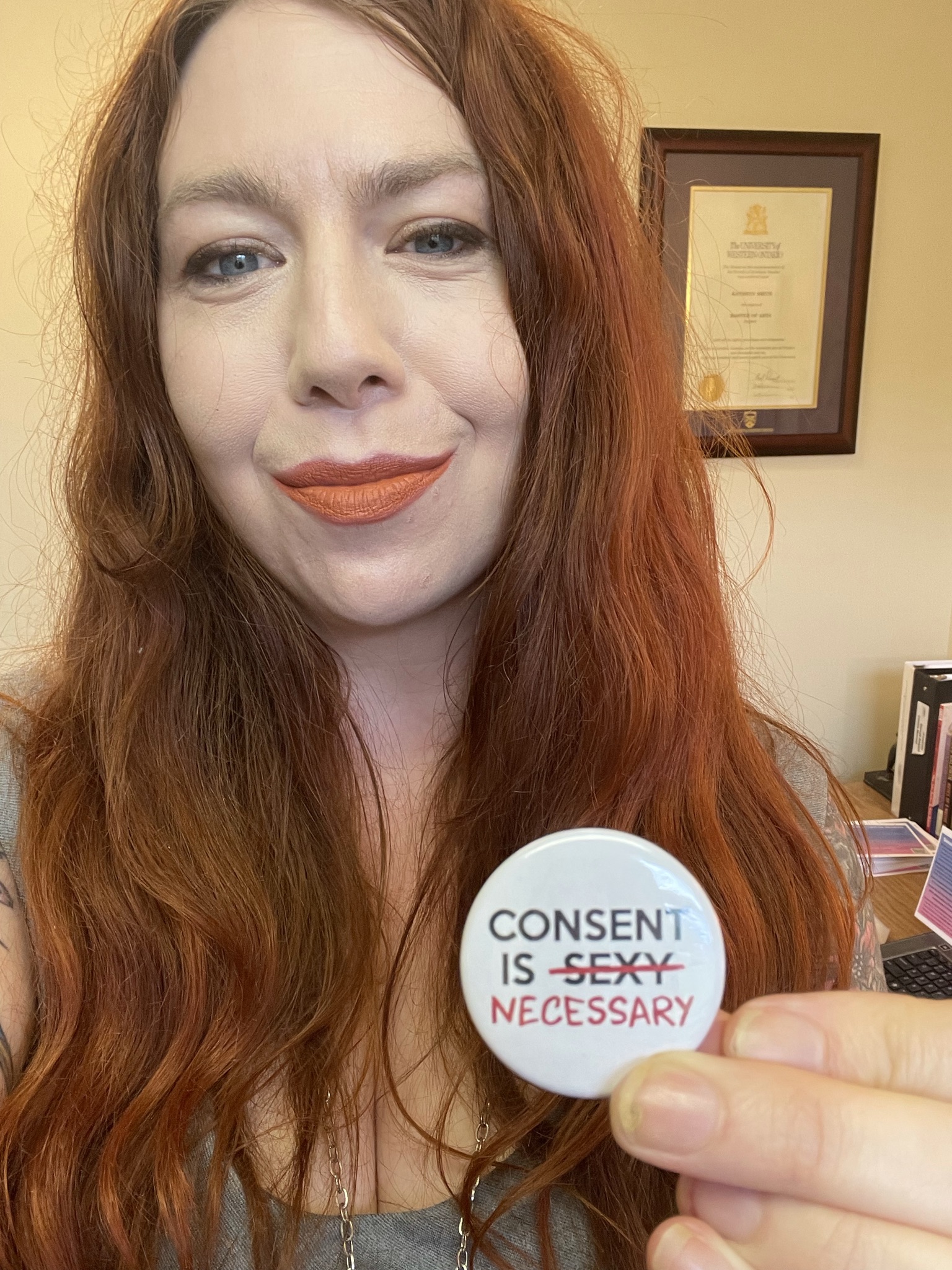
    Last fall, the Athenaeum’s Editor in Chief Axel Eschholz had the opportunity to discuss Acadia’s sexualized violence response with Allison Smith, Acadia’s Sexualized Violence Response and Education Coordinator. Smith’s role involves working one on one with survivors and other individuals impacted by sexualized violence. She also works to provide education and training regarding topics such as consent, bystander intervention, and best practices when responding to sexualized violence disclosures.

    Given that Smith is working directly with individuals on campus who have been directly impacted by sexualized violence she has valuable insight into the current climate at Acadia. When asked about the prevalence of sexualized violence within the Acadia community, Smith stated that “it is prevalent… we know statistically speaking that sexualized violence happens everywhere, and this of course includes the university context.”

    Smith also considered the growing awareness of sexualized violence, commenting that “universities collectively are beginning to recognize that this is a serious issue impacting our student community… over the last five years or so you see more and more universities developing positions such as mine and coming up with more robust and survivor-focused sexualized violence policies.”

    The past few years have marked a shift in how universities are discussing and addressing sexualized violence on campuses. There has been new attention given to providing support to survivors, but that does not mean that the systemic issues regarding sexual violence have disappeared. It remains important to consider whether or not Acadia’s sexualized violence policies are meeting community needs. When asked to comment on if the policy is sufficient Smith stated that “yes [the policy is sufficient]… Acadia ranked number one in sexualized violence prevention in the Maclean’s ranking this year, and I would say that a lot of that comes down to the work that was put into that policy by the students who advocated for it and the committee that brought it into being as the survivor-focused and trauma-informed policy that it is today.”

    Smith stated that the policy “does allow for a lot of options for survivors… it also allows for appropriate sanctions to be put in place for perpetrators. It gives a variety of options ranging from mandatory training and education for perpetrators to more serious penalties like suspension or expulsion if that is warranted.” While no contact orders are used in certain cases, Smith noted that they are sometimes used as an interim measure rather than being used in lieu of suspension or expulsion. Smith further noted that the survivor’s wishes are always prioritized in any formal or informal action that happens under the Sexualized Violence Policy.

    Smith does acknowledge that “in the past there has been a lot of frustration from students at Acadia and other universities about inaction on the part of the administration to address these issues in a meaningful way.”

    “That era is over. This stage of where we are collectively is that space of accountability. We know that sexualized violence impacts our student community, and we have the tools in place to address the behaviors,” said Smith.

    There is certainly work that remains from both the administration and the campus community as a whole to combat sexualized violence at Acadia. Smith encourages community members to call out problematic behaviour when they see it and to believe survivors when they share their experiences with you.

    When asked how the administration can improve its policies to mitigate sexual violence on campus and hold perpetrators accountable Smith commented that she feels very supported by the administration and the current push for accountability. Smith did note that “it would be wonderful to have more people working in this office, this is the kind of work that benefits from working as a collective. I find that a lot of the work I do is reactive rather than preventative… My dream scenario would be that there would be more people able to work under the mandate of this office so that more energy could be put into training and education across campus where I think it’s really needed”

    In terms of what community members can do Smith emphasized the “need [for] others to support [her work on campus]. What that can look like is creating opportunities for discussion… What it really comes down to is that we all have an obligation to examine our own beliefs about sexualized violence and ensure that we support our community members who experience this kind of harm.”

    Following are some of Smith’s answers to more questions about how to support survivors of sexualized violence on campus.

    What should students do if their friend experiences sexual violence? 

    “They can support that friend in terms of assuring that person that they are believed. They can also help them access resources, such as my office. I’m always thrilled when students direct their friends to come talk to me. I think that there’s a lot that students can do to provide ongoing support to their friends, but I think that oftentimes that’s a heavy burden to bear when you’re a student yourself. It’s important to recognize that sexualized violence is very common, and a student who experiences a disclosure may be somebody who has a past where they themselves have experienced sexual violence. I don’t want to see that much responsibility put on survivors to support other survivors. I think that the best thing for students to do to help a friend is to ask their friend what they need and provide what support they can, while also recognizing their own capacity and not taking on too much. My office is there to help student survivors. Students can also do a lot to support survivors by helping to dismantle rape culture, making it very clear that they are allies to survivors and that they don’t tolerate toxic behaviour and violence.”


    What are some resources on campus for victims of sexualized violence? 

    “There is my office, and the Counselling Center as well. Our counselors have training in trauma informed practice. Those would be the two primary resources that exist on our campus. There are other excellent on and off campus resources that you can find by googling ‘Acadia University – sexualized violence’ or visiting here.”


    What steps can be taken on campus to make survivors feel able to speak up about their experience?

    “I think that oftentimes people don’t know that the resources are there, so I think that it is helpful to broadcast that this is an office that exists on campus and that this is a policy that exists on campus and that believing survivors is its cornerstone principle. Getting the word out there is important because it validates how important this issue is… I find that in my work a lot of students who speak with me have feelings of self-doubt or shame that they carry with them. Sometimes there is a reluctance to name the perpetrator because they are afraid of harming that person’s life in some way. Sometimes there are feelings of internalized self-blame. Survivors go through very harmful experiences and often feel very vulnerable afterwards. It is at that time that those voices of self-doubt and self-blame are most likely to creep in. We all bear a responsibility to give loving and compassionate support to others so that they are less likely to carry those feelings [of guilt and shame]. I think that students and the community can do a lot to put forward that message of believing survivors and that survivors are worthy of support.”


    Information and resources regarding Acadia’s sexualized violence response can be found through the university’s website. The sexualized violence page, found under the student life section of the website, provides information for students who have been directly and indirectly affected by sexualized violence.


    *Some answers have been edited for brevity and clarity


  • Something Else

    I’ve met a girl that I think I can raise hell with

    And since I don’t feel this a lot

    I’m convinced that I can sell this —

    She’s got my words printed on her wall  

    But I’m working on making it down from up on her shelf

    Since I’m damned if I think about this girl as anything less   

    Than something else —

    Loving when she smiles is fun

    And so is letting all the jokes be nicknames and banter

    But there’s a difference between casual flirting

    And thinking you gotta have her —

    Im not sure where to try and start with her

    Because it is new for me to think this way

    But I’ve listened just enough to know

    That she doesn’t like coffee

    So I’ll have to come up with a better date —  

    The idea is that when you think someone’s not real

    You’re supposed to stop, take a breath and pinch yourself

    But thats a rule for dreaming

    So I’m playing it like she might just want me for being no one else —

    She can party with wine, but prefers chips and soda  

    I swear to god I have never been so crazy about a girl

    Who ends the night off with me sleeping on her sofa —

    It doesn’t matter that it’s not comfy

    Or that breakfast burns the house down

    It’s that her face is something to write about

    So I’ll keep on coming around —

    She is the cute little rarity that is blocked out by an ordinary crowd

    But it’s as if nobody else ever existed   

    When she blushes over the stupid things I’ve written down —

    Yet, until I can prove I’m not just playing around  

    She’ll let my lines keep stuck in her head

    But her eyes will stay put on the ground —

    She tells me to settle down

    When she catches me struggling to find the perfect thing to say

    And it is the best reminder

    That this girl couldn’t care about anything important ever anyway —

    So before I go on any more

    And try to convey the rest

    I’ll just say I’m excited

    To have met someone

    Who is so perfectly

    Something else.


  • Beyond Human Credibility: My Grandfather’s Journey through Auschwitz

    Beyond Human Credibility: My Grandfather’s Journey through Auschwitz

    Some people never meet their grandparents, yet still they remain a topic of discussion at family gatherings or during moments of fond reminiscence. Everyone has heard some stories about their grandparents. Where they came from, who they were, their careers and hobbies. But not me. At least not in any sort of meaningful way. When I was a child, I used to ask my mother questions about her father, my grandfather, to which she would often reply with either very few details or simply: “Your grandfather was not a very kind man.” This was often how these conversations remained. No further questions, no pressure for greater detail. It simply seemed as though my mother just did not wish to talk about it. I spoke to my grandmother plenty, but I never remember hearing my grandmother speak of him.

    As I grew older, I would hear parts of conversations or other information which I could piece together to paint a better picture of who my grandfather was. Over the years it became clear why nobody would talk about him. I had asked nearly everyone for details, my aunt, my mother, my father. Eventually I gathered that he was abusive. The family refers to him as Jim even though his full name was Zygmunt Chrominski. He immigrated to Canada from Poland after the Second World War and took residence in Stratford, Ontario.

    I knew all these things and yet there were missing details. One would assume that he was just abusive, but there was always something in the voices of those that spoke about him that made me think they felt bad for him.

    I was thirteen years old when I first heard that my grandfather had been captured by the Germans in the war. This was something I took pretty lightly- plenty of people were involved in the Second World War and plenty were captured. Sometime after this was the moment, I heard my father say “Auschwitz” when speaking about my grandfather. I had learned about the infamous Nazi death camp in school, I had seen the pictures of the corpses stacked ten feet high in train cars meant for livestock, I had heard about the liquidation of the ghettos. Indeed, it seemed my Grandfather was interned in Auschwitz concentration camp.

    Why was he there? When did he get there? What happened to him? How did he survive? I’ve never seriously undertaken an investigation into what happened to my grandfather. For the purpose of recording his story and to satisfy my own curiosity for lost family history I’ve endeavoured to find out exactly what happened to him. Hopefully by the time I’ve completed this journey I’ll know his story from his life in Poland to how he built a life in Canada. In recent years and months more, clues about my grandfather have become available to me. With those small clues and information from my relatives I’m hopeful that Zygmunt’s story will come together.

    I was first able to learn the exact date of his birth. He was born in Warsaw, Poland on September 26th, 1922. This meant that the combined forces of Germany and the Soviet Union completed their invasion of his country shortly after his seventeenth birthday. This is where the clues about my grandfather dry up.

    Many often ask if I’m Jewish after I tell them that my grandfather was interned in Auschwitz. To my knowledge, I’m not Jewish and it’s essential to our understanding of the Holocaust that we recognize it was not only Jews that were murdered by the Nazi regime. Prisoners of war, members of the LGBTQ community, or people of “undesirable” ethnic descent were also killed by the Nazis. This means that Russians, Ukrainians, and Polish people were also interned in Auschwitz. It is unclear what my grandfather’s wartime life was like. However, after speaking with family there are some conclusions I’ve been able to draw.

    My grandfather lived in Warsaw before the war, where he was born. He may have been involved in the Polish Resistance Army or he might have spoken out against the Nazis. The problem with compiling my grandfather’s story is that there are few remaining family sources. My grandmother passed away some years ago and only heard about my grandfather’s time in Auschwitz once. It is possible that the specifics of his camp life died with her.

    The details available about my grandfather increased only slightly after my grandmother’s passing. In a plastic bag buried in a shoebox in my grandmother’s closet was a tattered book the size of a passport. Although faded, one could still make out the imperial eagle perched on a swastika. Underneath it reads “Arbeitsbuch Fur Auslander” which translates roughly to “Workbook for immigrants.” Contained within this book are the pages which identify who he was, and it includes a picture of him likely taken at a work camp. Below is that picture.

    The book provides some information about his work during the war. This was something that most occupied people were issued. The particular papers I have list an ordinance of May 1943 as the wartime law under which it was issued. This led me to believe his was given to him at or after that time.

    Until four weeks ago these few details and this one document were all I had to go on. After asking family some questions I received a call from my mother. Inspired by my interest she had done some digging around in some of my grandmother’s old documents. What was uncovered makes for quite a tale. Contained in more than a dozen documents ranging from handwritten letters to government documents is something of an autobiography. Some of the details I had learned were correct, but the truly harrowing parts of his story were not available until recently. What follows is my grandfather’s story from his birth through the war until he reached Canada.

    Zygmunt Chrominski was born in Warsaw, Poland on September 26th, 1922. He successfully finished public school in 1935 shortly after Adolf Hitler had seized power of Germany. From 1935 until 1937 Zygmunt attended high school. This was followed by an apprenticeship from 1937 through 1941 during which Poland had been invaded and occupied by Nazi Germany. According to a brief autobiography, because he was a Polish student opposed to German occupation, he was arrested on Skaryszewska Street, Warsaw in May of 1941. From there he was transferred to Szucha Avenue.

    During the war Szucha Avenue was closed to Poles. It’s a place locals would have avoided given that it was home to the Gestapo and SS Political Crimes Division and where Polish patriots and resistance fighters were jailed.  Today the site is home to the Mausoleum of Struggle and Martyrdom. After this, Zygmunt was transferred to Pawiak Prison. During Nazi occupation Pawiak was part of the journey to various death camps for members of the Home Army or political prisoners. Unfortunately, this was not his final destination but the first of several.

    From Pawiak my grandfather was transferred to a coal mine in or around Leipzig, Germany. These were the types of destinations for many war prisoners deemed able to work. He was sent to the area on May 7th, 1941. After a short time near Leipzig he was transferred to another mine near Weisenfels where, according to him, he suffered serious injury to his back and knee. During this time, he was hospitalized the records of which were lost.

    On the 20th of February 1942 he managed to escape the work camp he was at in order to return to Poland. A few days after his escape he was captured in Warsaw and sent to Auschwitz.

    Auschwitz was where my grandfather was sent to be exterminated. Again, this was not the end of his journey. After a few months in Auschwitz he was transferred to a labour camp that was staffed for Allgemeine Elektricitäts-Gesellschaft (German for General Electric Company), a sub-camp of Auschwitz. After working at the AEG labour camp, he was sent to a place known as Haale, where warplane parts were produced. As a skilled labourer he was in particular demand for metalworking and industrial tasks. After producing parts for the German war machine for some time he was transferred yet again. However, this time he was not sent to a coal mine or an industrial compound.

    This is when he is sent to Torgau. During the war this area was home to a notorious Nazi prison. At this place according to his writing he was, “subjected to brutal interrogations and beatings beyond human credibility.”  The final camp my grandfather was sent to was yet another coal mine. From November 12th, 1942 my grandfather remained at this unknown coal mining camp. On the 12th of April 1945 after almost five years in various Nazi prisons and death camps he was liberated by American troops. He had survived. The details of the liberation would lead me to believe that his final camp was a subcamp of the Buchenwald concentration facility.

    With so much of his country having been destroyed by the war and no home to go back to, my grandfather had nowhere to go. One can only imagine the joy of freedom being tainted by the realization that there was nothing that remained of his previous life. Following his liberation, he was employed by the United States Army Service Company tasked with administering the newly freed areas of Eastern Europe. He worked with the US Army all while living in a displaced persons camp. It was at this refugee camp that he met my grandmother Eugenia. Presumably, they wanted to build a life together but circumstances at the time made it too difficult to continue in what was once their home countries.

    Travelling in third class on the S.S. Marine Shark my grandfather was the first of my mother’s family to make it to Canada. On July 16th, 1948 Zygmunt arrived in Halifax. The horrors of the war were over and thousands of miles away.

    He began again by establishing a life for himself and his new family in Stratford, Ontario. He worked hard over the years as a tool and die maker, fathered three girls and built a home. My grandparents fought almost continuously for reparations from the German government for what my grandfather experienced during the conflict. In letters written years later it is clear that the evils of the Holocaust haunted him forever.

    Dated March 17th, 1972 nearly three decades after the end of the war he wrote a letter to Willy Brandt, the Chancellor of Germany requesting assistance. In it he writes, “It seems that I am having to continually fill out new forms. Must I be forced to relive the whole nightmare again and again?” The letter also revealed family I never knew I had. Part of the letter reads: “Seven of my relatives were murdered by the Nazis, two of whose names are listed in the historical documentary ‘Warsaw Death Ring.’” I was able to find the book he had referenced all those years ago. Contained within it is the story of my two relatives. Czeslaw Chrominski was sent to a death camp and Jozef Chrominski was executed and buried in a mass grave outside Warsaw.

    Years ago, I travelled to Poland to see my grandfather’s death camp. What I saw there was only what remained of the camp after decades, but it was clear that the horrors that occurred there were something indescribable. One of the things I remember was a room filled to the ceiling with shoes. They were the shoes of those that the Nazi regime had murdered. The sheer number was incalculable.

    My grandfather’s story ends on October 14th, 1978. He died as a result of an accident in his home. He never saw the reparations promised to him by the German government. In a letter addressed to German government officials my grandmother wrote: “I intend to give the story of his struggle in Germany, during the Nazis and after, to our newspapers. Send his file to me… What is one more or less file on a dead man when you have killed millions”.

    Before I began writing this piece, I assumed that his story was like that of any other Holocaust survivor. What I’ve learned while writing and researching is that every story is never what it appears to be at face value. I became acquainted with someone that I’ve never known, which was quite a privilege.

    As someone studying politics, I wonder what my grandfather would think of the current state of affairs. I also find myself preoccupied by what he would think of my political beliefs.  What I have learned is that the suffering caused by violent conflict is something that positions itself forever in the minds of those that experience it. Zygmunt spent years reading about the war in an effort to identify those who perpetrated the crimes he witnessed, he never came to any conclusions. The permanent disability caused by the abuses he suffered resulted in Zygmunt never being able to enjoy his life or participate fully in work. Although he survived the war his life must have been an unimaginable nightmare. It’s my sincerest hope that I have done justice to a story that’s never been told.

    I would tell readers to investigate their family histories. Resigning stories like these to the past would be tragic. It’s always worth learning about the past especially a past that is so personal. We can never hope to understand the actual damage of the Holocaust but the least we can do is ensure stories like these are heard.

    Dedicated to:

    Zygmunt Chromiński (1922 – 1978)

    Czeslaw Chrominski (November 20th, 1919 – June 20th, 1940)

    Jozef Chrominski (May 30th, 1914 – September 17th, 1940)

    Christopher Vanderburgh is a fifth year (Honours) Politics student and Features Editor of The Athenaeum

  • Hire Students.

    Hire Students.

    I have one simple question: why does it seem that companies and their managers treat students and recent graduates like they have nothing to offer?

    Perhaps I’ve been out of the job market for too long. I’ve been self employed in the landscaping industry for five years, with plans to continue with this in the future. Because of my lack of involvement in the standard job market, I’ve had the opportunity to silently observe friends and colleagues work through being employed in a variety of fields. I’ve also worked with seasonal contractors who look at students as basic labourers who know nothing or add little value. Not all employers are the same and many do a very good job of managing young people, but I would say that there are some significant problems that need discussing.

    All of the problems discussed in this article are a retelling of experiences heard through speaking with dozens of young professionals. Not all the problems are present in every workplace, nor are any of them mutually exclusive, but they are worth a serious look. They are important because they are causing employers to miss out on incredibly valuable assets.

    First and foremost, the student employee is generally not provided with tasks that meet their ability. It appears that student employees are given tasks that management deems they can reasonably handle. This is usually an excellent management strategy, as it is incredibly frustrating to be set up for failure. However, it’s important to remember that most students can handle more than one might think. We handle complex tasks all the time at school, so why wouldn’t we be able to handle the complex tasks at a place of business?

    Another frustrating phenomenon that comes with being employed during or shortly after your studies is that companies don’t put students in leadership roles. This is a huge mistake. Those of us who list “leadership” as a skill on our CVs are very serious about it. We wouldn’t list it as a skill if we weren’t able to do it. Assigning a student a leadership role or making them the head of a team is something I would recommend to any business. You can guarantee that if someone has completed a degree, they have worked as a member of a group or managed a multi-faceted project. Give students and post-grad employees a team and see how they do. If their work isn’t up to standard, let them know. In many cases, there is a lot to lose with these types of projects; as long as they understand that, they won’t let you down.

    The next issue I’ll discuss is basic. Stop treating student employees like they’re there for no other purpose than to get coffee. Being treated as “less than” is one thing that I’ve heard often. To employers: a student is not a threat to your position. They are not just there to run errands. Most importantly, they deserve the same amount of respect that you would give to anyone in your workplace. A good example of this can be found in the article titled “What I Learned as a UN Intern,” where Colin Mitchell speaks of his experience this summer at the United Nations. He says, “the consistent lack of respect and professional courtesy afforded to interns and young professionals is noticeable.” With this type of treatment present even at the UN, it is clear that this is not just a problem, but is wholly inappropriate. In my personal experience, with work or with my own business, I’ve experienced similar treatment. Respect should be the baseline, regardless of title. If this isn’t standard operating procedure at your place of work, some drastic changes in corporate culture should be in order. Young professionals should not under any circumstances have to tolerate outright disrespect.

    Managing students is not hard. Regular performance evaluations and interviews with management that they do not directly report to can be a useful way of ensuring that progress is adequate. There is a very fine line between successful goal-oriented management and wasteful micromanaging, and understanding that line is essential to making use of young talent. There is a reason that I am so passionate about young professionals and it comes from running my own business.

    As the owner of a small landscaping business, I have only had positive experiences with students. When my two friends and I started the business, we made a commitment to remaining entirely student owned and operated. What I have found while employing and working with students is simply incredible. I’ve been able to learn what makes them tick and how they best succeed. Based on everything I’ve seen, there are some things that are constant.

    Students will work nine-to-five and they’ll also work five-to-nine with no complaints. A first-year business major created a two-page formula that my business still uses to calculate estimates. A sociology major designed the company logo which is used on everything from our website to our business cards.  My student employees have excelled in a variety of tasks resulting in thousands of dollars in sales for my company. I have even put students in leadership positions that involved supervising sites with several employees completing work on a provincial contract.

    I rely on employees’ ability to learn quickly. Hiring students has worked out for me because students have spent huge amounts of time learning quickly. Whatever degree a student is pursuing, you can be sure that they have an intricate understanding of how they learn best, and it regularly shows. It is an understatement to say that students have been integral to the success of my business.

    The things that employers should take away from this article are simple:

    • Stop offering students unpaid internships disguised as “valuable work experience.” If you employ unpaid interns, you’re ripping them off. I would advise business owners against taking advantage of students in this way primarily because it’s wrong and also because unpaid internships are illegal. There are significant subsidies and tax credits available for those that wish to hire students that can help recover the cost of their labour.
    • In a similar vein to my first point, pay your students what you know they’re worth. Speaking from experience, offering students a bonus is a huge motivator, but nothing beats paying them a few dollars more than the industry standard for their position. You’ll have an employee that knows they’re valued because they’ll see it in their wallet.
    • Consider money that you spend on a student or recent graduate as an investment. If businesses invest in training students, they will quickly see a substantial return on that investment as the capabilities of their student employees expand.
    • Give students roles that see them leading in some capacity. Students are young and they know things that senior employees probably don’t. I imagine companies could save at least some money by letting the young guns call a couple shots.
    • Most importantly, foster a work environment of mutual respect. Every time I hire a student, I tell them: “You don’t work for me, you work with me.” This attitude has taken me far. I hold them to a certain standard of quality, and they hold me to that same standard. This results in work that the entire company can be proud of. It makes students more comfortable coming to me with problems, and with solutions. Obviously there are some standard boundaries – they still report to me and I still manage them. However, when you show your student employees that they are valued, that they are capable of leading, and that their opinions are considered in decision making, they will represent a huge return on investment for your company.

    To conclude, for me, students are not a suggestion but a prescription for success. If students can generate thousands of dollars in revenue for a small business like mine, think about what they could do for a business like yours. I’m not suggesting anything unreasonable, and neither is any other student. Move forward in your employment practices with that in mind.

    Christopher Vanderburgh is a fifth-year (Honours) Politics student and the Features Editor of The Athenaeum

  • Fake It Till You Make It

    Fake It Till You Make It

    Think of someone you know that you regard as successful. The qualities that make someone “successful” are difficult to illustrate but a common quality that all people who reach success have is confidence. Confidence is often regarded as something that is impossible to obtain. Something which is possessed by only an elite few who can crack its code. It appears as an aura or a state of being that you can feel when you enter a room. The confident individual participates in every undertaking as though they’ve done it all before. They speak better than you, their mental faculties are swifter than yours, you might even want to be them. A confident individual is indeed a force to be reckoned.

    What if I told you that every confident person you’ve ever met was simply a very well-practiced liar? Or rather, what if I told you that confidence is a carefully manufactured mindset rather than something you’re born with? Technically both of these things are true. In order to be confident you must construct an idea in your mind.

    While these ideas are not true at the time they will contribute to a sense of self-confidence which you can then exhibit proudly to others. The whole process begins by faking confidence. This starts on the personal level. In order to construct an outward appearance of confidence you need to first construct inner self-confidence. This is easier than you might imagine. According to Forbes, confidence is not based on your actual ability to achieve something but your belief that achievement is within your reach. For example, your ability to write an article for The Ath is not dictated by your ability to do it, but by a belief that you can do it. This is actually rooted in solid science; psychologists agree that building self-confidence is a choice.

    How you choose to build it is very much up to you. For example, visualization is something that works well for a number of successful people, athletes in particular. Envision yourself speaking in front of a large crowd, or killing a debate, or any other thing you could want. The more you think about the details of the scenario the better off you’ll be. The feeling of applause, the lighting in the room, any small detail. Seeing yourself as a more confident person will help you become that person. For those of you that struggle with visualization, there is an easier way.

    Begin by pretending you have the confidence you want. I’m not suggesting that you run head-first into the riskiest thing possible but perhaps start with speaking in one of your larger lectures. Any small act that makes you uncomfortable will serve to broaden what you know you’re capable of. After that it becomes an “If I did that, what’s stopping me from doing this?” scenario.

    Forbes also suggests channeling your heroes. This is a personal favourite of mine. Think of the mannerisms of someone who really speaks to you and use that energy in your daily life. If you’re someone who enjoys film, there are a plethora of different actors in different roles that you can choose from. Don’t take that one too seriously – I have yet to see any scenario where channeling Al Pacino in Scarface has any type of positive results. However, a measured dose of Barry Pepper in Casino Jack does nicely. This particular technique is as malleable as you need it to be which makes it perfect for those of you who are less comfortable putting yourselves out there.

    We’ll conclude with a technique of my own invention. I’ve coined it the “fuck it” factor. This technique is entirely risk based and it will result in some very uncomfortable situations for you, but as we’ve learned, confidence expands at the same rate as your discomfort. This technique could not be simpler. If you see something even remotely risky that you’re not sure you can do just utter the phrase “fuck it” and have a go at it. This technique for me is confidence building and fun all at the same time. If you’ve ever wondered what it’s like to do anything, the best way to find out is to go do it.

    All of these techniques would not be complete without a discussion on what a confident person looks like. When we’re talking about confidence looking good is feeling good. Take care of yourself, and at a minimum, try not to look like you’re just rolled out of bed.

    If you implement one of these techniques I’m confident that you’ll see favourable results. In the words of Mark Twain, “All you need in this life is ignorance and confidence, and then success is sure.”

    Christopher Vanderburgh is a fifth-year (Honours) Politics major and the Features Editor of The Athenaeum.

  • Figure it Out Frosh

    Figure it Out Frosh

    I would like to begin this article by welcoming all of our incoming students to Acadia and Wolfville. Whether or not you’re planning on being here for four years (or more), your life as you know it will not be the same by the time you leave us. After spending nearly five years at this institution, I’ve rounded up some tips to share so that you incoming students can avoid some major gaffes while you’re here. I could say that this article is going to set you up for academic success or an unforgettable university experience, but it won’t. The beauty of Acadia is that from your first class to your very last exam, it’s your job to make university what you want it to be. But, whoever you are and wherever you’re from, there are some things that are helpful to know as you embark on this journey. I won’t say one point is more important than another, but as always, we should start with why you’re here: your education.

    Depending on the requirements of your degree, some of these suggestions will be more difficult to implement than others. In general, try to avoid classes beginning at 8:30 in the morning or ending at 10 at night. It seems that the rates of absences increase in these time slots. In other words, you probably won’t go, and if you do it will be an irregular occurrence. Your schedule will be occasionally hectic, especially if you have back to back lectures in different buildings. If I could recommend a classroom to avoid it would be Huggins 10 in the fall semester. It has a famous oven-like quality in early September, something those of you in introductory psychology have likely already experienced. Other than that, you’re safe to take a class in whatever time slot you like best. If you get particularly lucky, you may even wind up with a schedule that gives you a few days off.

    Another important aspect of your time here will be assigned readings, which can come in a number of formats, but none costlier than your textbooks. Much of this will again depend on your program, but you can be sure that you’ll spend a minimum of three hundred dollars on textbooks per semester if you buy them all from the bookstore. However, there are ways to avoid spending so much on books. It often helps to ask your professor if you’ll be using the assigned textbooks a lot. If the answer is anything but “yes,” it’s probably safe to say you can simply borrow it from someone else in your class or take it out at the library if its available. Buying used textbooks is a great way to save money as well – you can save anywhere from twenty to seventy percent if you buy them from a buy and sell group on Facebook and buying them on Amazon is sometimes cheaper as well. In select cases there may even be a free online PDF – you’ll have to search hard for free versions, but when you consider that some textbooks can cost hundreds it is definitely worth your precious time to find as many free versions as you can.

    When it comes to classes, you should also maintain a good relationship with your professors. They will dictate both your grade and your experience in their classroom, so ask upper year students which professors they recommend and which they avoid. I can tell you that after four years here you’ll know each one of your professors and their quirks. Speak with your professors during their office hours as often as you think is reasonable: seeing my professors in their offices has saved me hours of work and has usually resulted in improved grades. Acadia is particularly unique for the access that our students have to professors and you would be wise to use it often.

    After you finish all your course work, you will have to write one or more exam per semester, and the recipe for success on these finals is very simple. Start studying two weeks before your first exam, sleep, eat, study, write, repeat. Your health during exam season should be your first priority.

    I would love studying if it weren’t so tedious and time consuming, but it has to be done. The Ath has published articles in the recent past detailing how best to study and where the best study spots on campus are, but my advice would be to find out what works for you. Study in the library, study in Just Us! cafe, study in the KCIC, study wherever you find yourself most comfortable. Study when it’s convenient, and study often.

    Everything I can tell you about your classes, exams, professors and everything else about academics will never save you from the mandatory eight-thirty lecture or the three-hundred-dollar biology textbook, but it might make life a little easier. If you can manage to show up to class on time, take half decent notes, and perform well on your finals you’re most of the way there. But, with all that Acadia has to offer, it would be the greatest mistake of your life to come here to spend four years with your nose in the books.

    University is what could be categorized as a “challenge by choice” environment. This means that you as an incoming student are in a very unique position. If you want to take it easy over four years and do the bare minimum, more power to you – but I can’t imagine that’s the case. There are endless opportunities to challenge and enrich yourself through Acadia’s many clubs, societies, and other extracurricular happenings. If you like writing, there is a club for that; if you like debate, there is a club for that. There is a club for everything, and an exhaustive list of Acadia’s clubs can be found here (Link http://theasu.ca/campus-life/clubs/), but if you can’t find a club that you think fits with your interests, start one! There are also a number of excellent volunteer groups, for example S.M.I.L.E., which does incredible work for our community, or the Acadia Food Cupboard which opened just last year. Whatever it is that you like to do, you should seek out a club that you like. Two personal favourites of mine are the Acadia Model United Nations Association and the Acadia Rugby Football Club. Both are very good examples of clubs and communities that can open interesting doors for you.

    This article would be distinctly lacking if I didn’t mention the social aspect of your time here. Weekends are always fun at Acadia. Go out with your friends, whether it’s to a house party or the Vil – all work and no play makes Jack a dull boy. I should also remind you to “keep it social,” but that mantra is unlikely to save you from violent alcohol induced illness or the “Irish flu” that is likely to follow. I would say that I’ve been successful at moderating my intake but like any student there are mornings when I’ve worn sunglasses in class. The best practice for these moments is black coffee and Tylenol. Have responsible fun and enjoy the nightlife.

    Regardless of how closely you follow the above suggestions, there are two things that will take you far here. First, jump into all university has to offer with both feet. By that I mean you should do things all the way. Get as involved as you can. Run for a position on the Acadia Student’s Union, write for the Ath, start a club, go to as many sports events as you can, go out with friends, talk with your professors about things that aren’t class related. I can’t guarantee you that you’ll succeed in everything you do here, but I can guarantee you that if you jump into life you’ll never be unhappy, and you’ll certainly never be bored.

    My last piece of advice is that you should do your best to be kind to one another. Take ten seconds out of your day and ask that person from your class how they’re doing. Hold the door for your professors, they’re people too. Do a favour for someone without expecting anything in return. The challenge that you’ve undertaken by coming to university is significant, and the journey that you’ll be on over the next four years will be difficult. You will have moments when you wonder why you came here, you will have times when you’ve gone without sleep, you will miss deadlines or get grades that aren’t as high as you wanted them to be but if you walk into this place with kindness, you can’t lose. You can be sure that a small act of kindness will make somebody’s day.

    To conclude, congratulations on choosing this extraordinary place. You do belong here. You will get your degree. You will figure it out.

    Christopher Vanderburgh is a fifth-year (Honours) Politics student and Features Editor of The Athenaeum

Betzillo positions itself as a versatile gaming hub where structured bonuses and adaptive gameplay mechanics support both short sessions and extended play.

Built with a focus on innovation, Spinbit integrates modern casino architecture with rapid transactions, appealing to players who value speed and digital efficiency.

Ripper Casino emphasizes bold entertainment through high-impact slot titles and competitive promotions crafted for risk-oriented players.

A friendly interface and stable performance define Ricky Casino, offering a casual yet reliable environment for a wide spectrum of gaming preferences.

King Billy Casino channels classic casino spirit into a modern platform, delivering recognizable themes supported by contemporary reward systems.

Immersive visuals and layered slot mechanics are at the core of Dragonslots, creating a narrative-driven casino experience.

Lukki Casino appeals to players seeking direct access and minimal friction, focusing on fast loading times and intuitive controls.

Casinonic provides a structured and dependable gaming framework, blending modern slots with transparent operational standards.