
Tag: community

  • My Time at Acadia University

    My Time at Acadia University

    Acadia has been my home for the past 4 years. I’ve experienced many incredible moments and many terrible ones. I have been tested and pushed to my limits. I’ve learned so much and at the same time questioned what the point of living was. Looking back now, I don’t regret coming to Acadia, even though I almost did but my mother reminded me not to throw away the baby with the bath water. All universities have their short comings, what’s important is that the university makes an effort in resolving those challenges and addressing the affected students through continued communication until the issue has been resolved. If not, disappointment and a lack of trust in the university occurs. I have had many conversations within myself about what I wanted to write, and whether I am ready to share my story is still up for debate in my head but as the saying goes, “if not now then when and if not you then who?”

    My time at Acadia has shown me the power of the student voice however, not a lot of students understand this. Some students genuinely believe that their voices are not worth being heard. Other students end up believing that they are the problem. I was one of those students. There’s nothing wrong with feeling like that sometimes but understand that its not the truth. Human life is valuable and as long as you have breath, there will always be hope, even when you can’t see it or think you are undeserving of it. Being a student can be tough and I faced many challenges as a black international student.

    For one, I never thought being black would become a defining characteristic, I found myself getting labelled as the token black person due to my active involvement with on campus activities. This made me question whether I was truly deserving of awards and opportunities or was it a result of my skin tone. My observations on race relations and interest in student politics at Acadia began when I met Senewa Sena. She was the only black house council member I knew of at the time and we didn’t even live in the same residence. As an international student and campus leader, I felt comfortable asking her all my odd questions which she answered to her best capabilities. Senewa introduced me to other students I doubt I would have interacted with if left to my own devices at the time. She talked to me about the ASU elections and how each position had the potential to help students. Senewa was also the only other black student besides me and one of three (including myself) international students to run in the general elections that year. I was running for a councillor position and the feedback I received from students was that I looked unapproachable and intimidating. This made me laugh because people have told me I have a resting bitch face and I tend to wear earphones when I walk because I’m either trying to distract myself from my thoughts or overthinking to good background music. Overthinking tends to be one of my strong suits. I thought the reasons were justified and so I made an effort to smile more in public and not wear my earphones.

    Due to the exposure from campaigning on campus, more students knew my face and I had a lot of international students approach me with questions about Acadia and Canada. Questions I had no clue of how to answer but had an idea of where they might find answers. This was when I understood the importance and need for representation at Acadia. I did wonder what reasons some international and minority students had for not feeling comfortable talking to a professor, resident assistant or student government member. In my 1st and 2nd year, I didn’t think my professors would care, I didn’t really know my RA and didn’t know about the student government or what they did. I also wasn’t aware of the resources which were available to me.

    The second time I ran in the student by- elections was for Equity Officer (now Diversity and Inclusivity Officer), I questioned why I lost. I smiled more, interacted with more groups of people because I wanted domestic students to understand that, even though I’m from a different continent, I wanted to listen and help. The feedback from that election was mixed, with a few people apparently opting for the candidate with an easier name to pronounce. I genuinely considered that I was just unlikable. At this point I was balancing working at the Alumni Office, being an editor for the Ath and a course overload. The economic and political instability of Zimbabwe also started affecting my family severely. Money became very tight. My older brother (’13) stepped in to help my parents pay for my tuition with his savings. I couldn’t keep up with monthly tuition payments and would often get my access to ACORN taken away which left me feeling even more isolated and helpless. I didn’t know my classmates enough to ask for course material posted on ACORN and I wasn’t yet comfortable with talking to my professors about my personal struggles. The only times I really talked to my classmates was when I had to do a group project. I also didn’t want people to get comfortable enough with me to ask me personal questions about my family because I didn’t know if I could hold back my tears. I was feeling the effects of not seeing my family, it had been over 2 years since I had gone home. I was tired and homesick but had to push on. After these elections I noticed more students approaching me with questions and this time it wasn’t just international students, that made me happy, but it was also draining. I was also happy when the Diversity and Inclusivity Officer position was switched from being an elected to a hired position removing the barrier of popularity, which is usually a defining factor in student elections. You shouldn’t have to know most of the university population, to be able to make a difference.

    January 2019 came, and I received a call from my mum, telling me that I might have to come back home because she wasn’t confident in her ability to support me financially. Things had just steadily been getting harder. I knew my parents were doing their best and that I couldn’t be angry at anyone, but I was. I was angry at myself for not working harder, I felt like I was taking for granted the scarifies my family had made to support my studies. The first place I went to after talking to my mother, was the Alumni Office. It was my safe space and the closest thing to home I had here. I felt cared for. They never made me feel uncomfortable for being myself. They listened, allowed me to cry without fear of judgement and told me of people I could contact within the university who would be able to help me with my situation. I was made aware of more resources I could use. This made me understand how information and a good support system you can physically go to can drastically change an otherwise defeating situation.

    If it wasn’t for the Alumni Office, I would have packed my bags and gone home to Zimbabwe where political and economic instability seem to continue unabated. takeover was occurring. I think about that a lot, if another student was going through what I was going through and didn’t work at the Alumni Office, what would have been the outcome? What happens to other students who aren’t aware of the available recourses at Acadia? Do they give up? Switch to plan B or C? Suffer in silence? It’s a terrible feeling to feel as though you must struggle alone (or struggle at all). Around this time, it became harder to communicate with my family. Zimbabwe was experiencing 12 hours of no electricity daily and when it wasn’t, network service would be so bad I couldn’t comprehend a short sentence let alone attempt to have a video call. At these moments I truly thought my life was a sick joke due to the people I wanted to talk to the most, being slightly out of my reach. I would have high hopes each year that I would get to see them, and as each year passed, I lowered my expectations with each subsequent year to avoid disappointment. I distracted myself from my inability to help myself by helping others.

    Naturally increasing student engagement was a priority but I thought that would be impossible without tackling race relations on campus. An issue I found at Acadia was that most people (student, faculty and staff) were more focused on trying not to offend each other than understand each other. As a community, we will never be able to understand each other without communicating with each other, asking difficult and uncomfortable questions. As a perceptive person, I can tell when my differences make people uncomfortable and that naturally makes me uncomfortable. I wanted to help foster spaces where people could have engaging and informative discussions about race relations, equity vs equality, culture, sexual identities and orientations etc. Whilst I was genuinely interested in student politics and bringing about necessary changes from my perspective, I was also driven by an economic interest. I desired financial stability to reduce my anxiety levels and allow me to better focus on my studies. I ran for the president position in the general student elections. ASU executive members are paid well and have a portion of their tuition paid for by the university. I thought if I had that position, I would surely be able to afford the plane ticket home and finally see my family that summer will contributing to a better Acadia. It was a very terrible time for me, however. I would see a lot of news articles about the current state of Zimbabwe. The growing economic hardships were negatively impacting my life, thousands of miles away with the potential to ruin my academic pursuits. I would think about my last day in Zimbabwe. My father and I woke up extremely early and drove through back routes to get to the airport without getting caught in any politically charged demonstrations as tensions grew thick. I remember hugging my dad goodbye and him going straight to work as if violence wasn’t knocking on the door. For my dad, his only priority was to be able to provide for his family. My anxiety attacks were the worst during that semester.

    The feedback I received from those elections were that I was too cute and soft spoken for the role. I was dumbfounded, how did I go from being intimidating and unapproachable to being cute. A lot of people would also comment on how soothing my voice was which I think was to make me feel better. I found it all funny and a waste to be sad about losing because at the end of the day I tried. Things were already changing; I just wasn’t fully aware of it. I was also happy that another black international student ran for president and was interested in student government, giving students a wider pool of diversity to select a leader from and I didn’t feel so alone in the fight for change.

    I became the EIC and was awarded the 2019 Student of the Year Award that semester. I was so happy and honoured, but I couldn’t really express that. Many people congratulated me, and I felt guilty because I either wanted to cry or just lay in bed. All the emotions, I had bottled in were just oozing. I thought I would be fine in a few days, like I usually am but I didn’t get better. I became more depressed, more anxious. I was tired but I kept on going. I didn’t get to go home and see my family that summer as well.

    September 2019, I started the semester dead inside and I didn’t even realise it. My body was in survival mode, only having energy for activities my brain identified as necessary. I found myself unable to control my tears in public, being around students who had recently spent their summer with their families made me so jealous and sad. I didn’t know what I had done to deserve such punishment from life. I would cry myself to sleep most nights, craving a hug from my mum or food I grew up eating. I had taken on another job at the Wong International Centre to better support myself financially. It wasn’t a choice, but a must for me to survive. There were days where I would start my day with work at the Alumni Office from 8:30 until my first class at 10am. Finish at 11:30, go back to the Alumni Office and work until my next class at 1:30pm that ended at 3pm. I would then go back to the Alumni Office to work until 4:30pm. After this, I would have a quick break before going to work at the Wong Centre around 4:45pm which usually entailed accompanying international students to Kentville to get their SIN or Nova Scotian ID. I would be back home around 7:30, have a mental breakdown, cry and ask God why my life is like this, then attempt to do homework and work for the Ath.

    I started crying in the mornings as well probably because I realised that my situation had not changed from the previous day. I would feel guilty for not being able to help my family or my country. I wanted so badly to go home but would then feel miserable for being ungrateful and not happy with my circumstance because I knew I was better off than most people in Zimbabwe. I wouldn’t eat because I didn’t have the energy to chew or swallow, I felt unworthy of nutrition and these thoughts and behaviours were reinforced by my financial situation. In my mind, I had convinced myself that it was okay to not eat because I was saving money. I could see my ribcage. Some people didn’t notice my weight loss and some people did. I was asked a few times what my secret to losing weight was because being slimmer is a beauty standard here. I wondered what people would say if I answered stress and starvation?

    I wanted everything to stop. I fell physically sick a lot that semester and it become harder for me to be present both physically and mentally. I didn’t want to live the way I was living. There were a lot of people that confided in me and asked for help. I couldn’t say no because I know how having one person in your corner can change your perception of reality. What I didn’t understand was that I needed to take a step back. I needed to be patient with myself and understand that a lot of things were out of my control. I focused on being angry with myself for not coping with my situation better.

    My grandmother was experiencing serious medical issues during this time and a cousin of mine passed away (not because she couldn’t get access to a hospital but because she couldn’t afford the medication which I can easily get from Shoppers for less than $40). The unfairness of life got to me. All I did was cry. I cried because that was all I could do. I cried because I couldn’t be physically with my family. I cried because it felt as though life kept getting worse even though I couldn’t bear anymore. I tried to set up counselling sessions that semester, but my schedule was just too busy.

    At this point my academics were being affected and I knew I needed to reach out to my professors which I did. One professor didn’t bother responding to my emails whilst the other told me that “anxiety and depression are the easiest disorders to control” and “I should go back home and see if that helps”. In an email…. I didn’t like how she simplified my experience. If I could go home to visit, I would’ve already. I didn’t understand why one professor chose to ignore my cry for help and why the other prof (who had been my department head since I started in 2016) could be so dismissive of what I was going through. Why didn’t they believe me? Did they genuinely believe I made everything up? Why didn’t they look at my past work and ask why the quality of my work had dropped? I wasn’t lazy, I just wasn’t motivated. I felt like I had to prove that my mental health had declined so much. I was tired and homesick; I was drowning in a deep pit of depression. I was devasted because nobody could tell that I was so close to giving up and that I was reaching out for help because I did care about my academics. I lost faith in Acadia that day. I was tired of caring about a place, I felt didn’t care about me. I was tired

    January 2020, I was numb but so close to the finish line. I was receiving more support than the previous semester, but it felt as though some of the people who had been made aware of my situation were now waiting for me to get better immediately. My problems weren’t so simple, and I hated myself for not getting better quick enough. I was exhausted from constantly keeping myself together. The incident with my department left me weary of faculty and staff at Acadia even though I have had amazing professors who motivated me before. The reality of the pandemic set in when everything shut down and I wondered why I was even bothering. It had now been over 4 years since I had seen my family and I started to believe I would never see them again…. I was tired of being miserable all the time and tired of being tired. My mind often wondered to very dark places, but I was able to overcome them with the right support. I’m still healing even though its been a very slow recovery with many relapses of negative thoughts. I just remind myself how far I’ve come and how many people genuinely care about me. I understand now that I’m not weak but strong and just because I’m strong doesn’t mean I can’t be tired. I’ve also learned to be kinder to myself (which I find hard to consistently do) and appreciate my best, even when my best is being able to only make my bed.

    Acadia you can do better to support students. There are many wonderful employees, faculty and staff at Acadia who constantly strive to better the university community and engage students but there are also some who seem to not care for the community. I suggest that the university have more opportunities for cultural awareness training especially for professors because words truly can kill. Hold community discussions with students and senior management leaders about race relations. If you’re uncomfortable to talk about it, get a representative from the International Wong Centre (not just for international students), the Black Students Association (which is not just for black students), the cultural student advisor or the diversity and inclusivity officer to help facilitate such conversations. I ask that as a university we work at creating a racism policy. Currently, only a harassment and discrimination policy exists. Its important, it let students know that you are aware of what they might be experiencing and that there is an opportunity to get help. With regards to student leadership, it makes me happy knowing that many students, both domestic and international are rising to the occasion and working towards a more inclusive student experience. Don’t get me wrong, a lot still needs to change but from what I have seen so far, I have faith. Change is slow, but truly worth it.

    I also suggest that as a university, put equal effort in employing qualified people of colour whilst creating inclusive environments. You can attract the most educated POC to work at Acadia but if they don’t feel included in the environment, then they will just leave. Same goes for students. I always loved working at the alumni office because even though I was from another country, grew up in a different culture and looked so different, they always made me feel included and welcomed. They stepped up to become my family when life made it impossible to be with my biological family. They have contributed to me still being alive today and a lot of them probably don’t know that. I love Acadia even though it gave me many reasons not to. I know that everything I went through has and will shape me into the person I need to become. I look forward to watching you grow Acadia and become better because “By effort (literally: in dust), we will conquer”

  • Devastating Canning Fire

    Devastating Canning Fire

    On Sunday, October 6th Canning, a neighbouring community to Wolfville, suffered a horrific fire on Main Street. 75 firefighters were called in to help put out the fire which took around 4 hours to fully extinguish.

    The fire started at around 3 am, originating in a two-storey residential building located beside the local grocery store. The Canning fire chief, Jeffery Skaling noted to the press after the fire that the buildings in the area were quite old and the chance of a fire happening was always something that worried the firefighters.

    Luckily no serious injuries resulted from the fire.

    The following morning Police said in a news release that while they were currently unsure of the originating cause of the fire, they did believe there to be suspicious activity. They urged people to come forward if anybody had any tips regarding the fire.

    On Wednesday morning, the RCMP issued a news release announcing that Canning citizen Noah Norman is facing charges of arson relating to the Sunday fire.

    “On October 8, the RCMP searched his home and arrested him without incident.”

    Norman appeared in court the next day facing charges with four accounts of Arson along with one charge of Breaking, Entering and Committing an Indictable Offense. He was released from court with conditions and is scheduled to return on November 5th, 2019.

    The investigation is currently on-going but for the time being, it is causing concern for the local town members.

    In a discussion with an elderly town member who wishes to remain unnamed, she stated “Arson is not a joke and it is heartbreaking one of our own would stoop to that level.”

    She then went on to comment on the effects this fire will have on Canning’s economy and its citizens as the town slowly recovers.

  • The Puuerrfect Companion

    Wolfville, an idyllic university town located in the stunning Annapolis Valley. However, like most superficially perfect settings, it hides a dark secret. Every year, throughout our town, students are purchasing and neglecting domestic cats (Felis catus). Cat ownership can be something of a surprisingly touchy subject, with feline owners often not understanding the accountability they have taken on with their new furry companion. Throughout our society cats are viewed as surprisingly disposable, and yet at the same time we regard them with perhaps the same god-like status as did the ancient Egyptians. However, as research is swiftly showing, our perceptions need to change, for cats, human health, and wildlife.


    As the weather starts to turn colder with the onset of the crisp fall weather I’m sure many of you are starting to see the start of a yearly tradition here in Wolfville, the posting of lost-and-found cats on student Facebook groups. I have lived in Wolfville for many years, and am well aware, through discussions with locals and through postings on local student message boards, that many cats purchased by students are allowed unattended outside and are abandoned when students graduate. This is an ongoing and reported problem, which prompted the local shelter to update their adoption policies in response. These outdoor cats must survive recorded local winter temperatures as low as -20°C and often attempt to gain admittance to campus buildings and personal residences to survive these harsh conditions.


    Not only do unattended outdoor cats face risks from the elements, they have shorter average lifespans. Cats that are allowed to roam unattended outside often die prior to reaching five years of age. In comparison, indoor or fully attended cats can live for over 20 years! Unattended outdoor cats are also more prone to catching deadly diseases, which can result in a high vet bill for their (probably broke) student owners and potential liability if their cats pass these pathogens on to humans. Some common contagions cats frequently pass on include rabies and toxoplasmosis. Unattended outdoor cats are also at an increased risk of injury or death from altercations with traffic, dogs, and humans. This can once more result in swiftly mounting vet bills for caring owners, or heartbreak if your furry companion goes missing and dies.


    If you, or someone you know, owns a cat that is allowed to roam free now is the time to consider transitioning that animal to a safer, more loving, indoor life. As the days shorten and the weather cools start slowly keeping your pet inside for longer periods of time. Invest in toys and other stimulating indoor options to keep your kitty engaged. An indoor cat is not a sad cat if you provide adequately for it. If, for some reason, you feel that your feline companion needs to be outside there are a variety of safe and attentive methods you can provide for it. If you own your house consider investing in a catio, a sort of cat patio that will keep your cat safe, healthy and happy while letting it remain outside without your attendance. If you’re a student, the cheapest and likely easiest option is to invest in a cat leash and harness. With this simple addition you can ensure your cat remains supervised when outside, make sure that no harm befalls it, and guarantee that it does no harm while enjoying the great outdoors. As a cat owner you may previously have been unaware that free-ranging cats are the single greatest source of anthropogenic mortality for wildlife and have already contributed to the extinction of 33 species worldwide.


    If the thought of saving vulnerable wildlife, lowering potentially expensive vet bills, and ensuring a long and quality life for your cat is not enough, consider the potential fines you may face for letting your cat roam. Many bylaws, those of the Municipality of the County of Kings included, contain a provision governing stray and at-large cats. Much like municipal dog bylaws, cat bylaws ensure that if your cat roams off your property unattended it can be live-trapped and held until you pay a fine.


    So don’t be catty. Keep your kitty inside or supervised to ensure a long and happy life for it, the local wildlife, and your struggling finances.

  • Small Pond Syndrome

    Small Pond Syndrome

    Why did you come to Acadia? I’m sure for multiple little reasons: the beautiful campus, the regional reputation, athletics, location, scholarships, or you’re just a big fan of mud sliding. Whatever you’re into man.

    But it’s just that, it’s the little reason. I argue that being a small institution is one of our greatest assets not just inside the classroom but outside as well. Outside the classroom, meaning socially playing nice with the other kids on the playground, fosters an awareness for mutual respect.

    My interactions outside of the classroom have led me to collect this extremely sophisticated and completely scientifically based analysis of our small school population before attending Acadia. Broadly speaking students usually fit around three points on the continuum on the confidence scale regarding making friends going into this university.

    The first being you were a big deal in high school, came here with your buddies, and felt like you need to add one or two more people to the roster of your sick childhood squad. Acadia can offer you this convenient reality. Or, you may know people from playing local sports, or attended the same high school, but you are by no means close with anyone and are eager to meet lots of new faces. Finally, of course there is a population of students who don’t know a soul and making friends seems like a massive undertaking. This may be because you’re an international student, out of province, or you just like to keep to yourself.

    Whatever your perspective is, Acadia can be a fresh start for you, and can act as an equalizer. The first few weeks of your first year can be very hard and this shouldn’t be glossed over yet, you will find it’s much harder to isolate yourself then you may think. I am getting acquainted with new friends already this year and I am going into the second month of my third year. Due to the small size, students can become more intimate with more people because you are frequently being put into situations with the same population of people. It’s a wonderful attribute of Acadia no matter where you began on the social continuum.

    My roommate once chatted with someone at Shopper’s Drugmart standing in front of the chip aisle because she felt familiar enough with him. She always saw him at the library in the past and this was enough of a reason to critique chips together. They were both very perplexed at which chips make the best storm chips, which is the best PC brand chip flavor, and the classic conundrum of regular versus wavy cut chips etc. Classic chip struggles.  Just seeing the chip guy enough before said chip-run created a basis for a friendly conversation. I truly believe that Acadia/Wolfville are on the short-list of university towns where that is socially acceptable.

    What we should remember is that although a friendly place, Acadia is a small pond. No no.  More like one of those fancy infinity pools that look off onto the ocean that really only exist on MTV’s “Cribs”, Oprah’s house, and affordable resorts. It has this small, rigidly defined population. Yet, it has a full vista view which alludes to opportunity commonly known as “the real world” and referred to as “adulthood”.

    What about all the people I have successfully or unsuccessfully hit on? How often will I see them at this friendly, small school? You will see them what seems like everywhere (especially when you stink of Subway in the lib in between classes).

    Here is a fun and simple equation you can do in your head: think of all the people you have either professed your love to, made out with, danced with at the vil and/or axe, stared too long at the library at, directed their naked butt to your bathroom, had full blown your-mum-and-dad-know-what-I-look-like-in-real-life relationships with, gone to coffee with, had a deep heart to heart after class with, or had an inexplicable crush on. Whatever experience you have or have not had. Then divide that by 6.46 km2. After you divide those awkward times by space (the square kilometers of Wolfville) you have your very own unique and customized answer! You are now a certified love physicist! Congrats.

    Now, what do you do with that number? Be nice to each and everyone one of them no matter what the result of the situation is. You could be coworkers, neighbors, have all the same classes, or just like eating breakfast at the same time every day if you eat at Wheelock.

    Laugh at their jokes, always say hi, and give them that follow back on insta. I can’t say that I always live by my own advice but I try my best. Shit, right when I was writing this I just avoided eye contact with someone while sitting in the BAC café I KID YOU NOT. Do what I say not what I do! You never know what may come of the situation. Inclusion is always the answer.  This of course also includes other acquaintances or individuals who you have not made a fool yourself of on a romantic level with.  It means be nice and remember everyone’s name that you have learned.

    It may seem as though this town may seem suffocating at times. But what is really happening when you run into people is that you are reminded that each of them have feelings which you should respect.  No man is an island and everyone loves to be remembered. The small population is truly a good exercise in pushing yourself to treat others with respect. This lesson learned outside of class is one that is invaluable for the future and is served on a warm platter to us from yours truly, Acadia University. Right, so remember when you are heading to the swim-up bar in the infinity pool at Oprah’s house, give a polite hello and nod to all that are in there with you over these four+ years.

  • Selling a Sustainable Future: What Individuals Could Create

    Selling a Sustainable Future: What Individuals Could Create

    Fear, facts, and the seemingly uncontrollable big picture will not motivate individuals to make a change for sustainability. Climate change has positioned the global community at a turning point and there are only two ways to go: continue business as usual to crash and burn or make the challenging changes and sacrifices for a prosperous future of the generations to follow. Both options do not sound ideal. Business as usual may lead to wars, economic uncertainty or prosperity, but at what cost? Lifestyle sacrifices for the potential future of generations to follow also does not sound appealing. It is important for optimist activists to sell change with positive and beneficial lens.

    The average middle class North American family may not be the first to jump on board with the idea of replacing their home heating with solar power or redesigning suburbia to introduce more public transportation, in order to reduce environmental impact. The average middle-class family may be more attracted to the idea of lowering their heating bills and shorting their commute to work. Understanding the market you are trying to convince is key in selling sustainability.  Climate change facts no longer change the actions of individuals. In North America’s consumer culture, it is important to adjust the consumer world so that it benefits climate change action. Marketing the benefits of sustainable home design, public transportation, community design, trading currency and community collaboration will be key in moving towards a more sustainable future.

    Imagine a community where neighbours come together for meals regularly. Imagine a community where people from all walks of life don’t feel isolated because it a social norm to check-in and ask people how others are doing. Imagine a community where kids run from house to house playing with kids of all ages and there is trust that, as a community, all members will keep an key on the children. Imagine a community where food is grown locally and equally dispersed, where children don’t go to school hungry. Imagine a community where mothers don’t have to work three jobs to support their kids because their neighbours are willing to help provide for each other, as the community supports strength is in numbers. The foundation value of community is support. Working together allows communities to reach further than working apart.

    A sustainable future is attractive and aligns with core human values, such as connection, success, and stability. A community that has created meaning and appreciation of what they have, will natural also protect the environment that surrounds it. Sell the sustainable future individuals can imagine accomplishing, make it possible. Living sustainably together is the future each citizen can create, climate change action activist must sell it, promote it and live it, then others will follow. Show the generations to follow what sustainable communities can be, then watch as the value of sustainability transitions from an unrealistic ideal of “delusional activists” to a valued and supported mindset.

  • The Speed Date Debates

    On a cold winter’s night at the end of February, four grad students from different faculties sat in a restaurant enjoying drinks and snacks, discussing everything from climate change to emotional labour theory. These conversations became the inspiration for the Acadia Graduate Students (AGS) first annual Speed Date Debates. Our aim for these ‘debates’ are to get students and faculty alike to have a chance to discuss diverse issues with people from different departments. Collectively, Acadia students have a wide breadth knowledge on a variety of subjects; however, opportunities to create a dialogue between different fields of study can be challenging.

    For the majority of the student body, getting together with friends from different departments and faculties and having conversations around your studies may not be particularly difficult. Between on-campus residences, extra-curricular activities, parties, and diverse classroom settings (particularly in first and second year classes), there are many opportunities for undergrad students to meet a multitude of other students. However, for many grad students, particularly those who did not complete their undergrad here, the story is a little different. Many of us feel at times isolated, with social contact at the university limited primarily to other grad and honours students in our own faculties.

    The AGS has been working throughout the year to change this. From various social events to a campus-wide Acadia Student Research and Innovation Conference, the primary aims of the AGS are to offer support to grad students and to enhance the profile of student research and academic engagement. We believe that the Speed Date Debates will offer students an opportunity to meet students outside of their own departments, bring their expertise to the table, and, hopefully, learn from one another in a relaxed environment.

    The event is premised around a hybridization of speed dating and debating, with a few important modifications to both. Like speed dating, participants will be matched with a group of diverse people to have conversations with; unlike speed dating, the goal of this event is not to set up romantic liaisons (though we won’t mind if you walk out of this event with a date either). Like debating, we will provide a series of ideas, events, and concepts for participants to engage and speak on by using their research and knowledge. But unlike debating, there will be no winners nor losers. We want to encourage fun conversation and critical thinking, not competition.

    If you have interest in the event or would like to RSVP, please go to the event at: https://www.facebook.com/events/1464852550212626/. For any questions or concerns, please send me an email at [email protected]. Please contact myself or any of the other AGS Executive team if you would like to recommend a particular debate topic. We invite Grad students, upper year students and faculty alike to join us.

    The Speed Date Debates will be held on April 11th at 7:00 PM at La Torta Pizzeria on 117 Front Street.

  • Things That Should Have Been Curbed in 2016

    Things That Should Have Been Curbed in 2016


    1) The notion that “White Privilege” is offensive and racist towards White People.

    Racism, cultural appropriation, and discrimination have been a hot-button issue throughout history. With the rise of social media platforms, along with the recent election of Donald Trump, there is a plethora of conversation online (and in print) about the hateful rhetoric that seems to be plaguing today’s society. Unfortunately, when people feel that their privilege is being threatened, they enter an automatic defense mode. It is often presented in such a manner where the defendant makes claims of innocence, justifying their feelings of discomfort by exclaiming that they are not guilty of racism, and that if their race is being questioned, that they are automatically being discriminated against. White privilege is not racist; it is not offensive in any way. It is a method of explaining the favorable treatment that white people often receive. There are no systems of oppression designed against white people. Thinking that reverse racism exists is what perpetuates the notion of white privilege further into the foundations of our society. It is a mechanism that is used to validate the comfortable position white people hold in society. Validating your own comfortable position by attacking a marginalized group (by saying white privilege is offensive, racist etc.) is a subtle way of invalidating and shutting down any group who’s LIVED EXPERIENCE has ever been one of systemic oppression. In extension, these feelings can often be described as “white fragility,” a state in which minimum amounts of racial stress becomes intolerable, triggering outward displays of emotion, such as anger, and behaviours such as argumentation. Yeah, this definitely could have been left behind in 2016.

    2) That any Indigenous culture should just “get over” colonization.

    Really? This one amazes me every time I hear it. Let us take a brief moment to recall Canadian History because we are not innocent in the ways or racism and cultural oppression. Residential schools were opened in conjunction with the Catholic and Protestant Churches and the government. Their aim was to remove any form of Indigenous culture from Indigenous children by forcefully removing them from their homes, placing them in schools where they would be taught Western values. As such, a cultural genocide was committed. Often, when hearing the word “genocide,” events such as the Holocaust, Bosnian, and Rwandan genocides. That is because Canada has attempted to repress its history. The horrors of the Residential schools did not end until 1996. Yes, most of us were living when the last school shut its doors. During their time in the Residential schools, Indigenous children were beaten, sexually assaulted, and mentally abused by their instructors. Often, these traumas were difficult to cope with. A stigma surrounds Indigenous peoples in Canada. Many people chose to believe that status cards, funding, government aid, and the Truth and Reconciliation Committee should all be abolished. They question why we should continue to apologize, and why we should continue to work towards mending our relationship with Indigenous peoples. What does it take to get over something like this? How could you possibly put a numerical value on an apology, how can you, a white person, get to dictate the appropriate measures for reconciliation after a cultural genocide has been committed? When you say these things, you act as though you assume the role of the oppressed, you may think you understand their oppression, but you simply do not. I know I do not understand, I never could. However, it is important to listen, to engage in conversation, and to be respectful of what you cannot understand. Please read the above statement about white privilege and then rethink your questions and sweeping generalizations about Indigenous peoples and Indigenous culture.

    3) “She was asking for it”- REALLY?

    For God sakes. How is this type of conversation STILL taking place? Did we not learn after Jian Ghomeshi and Brock Allen-Turner? I simply do not understand. The legal process further victimizes rape victims. Belittlement and slut-shaming occur in the courtroom in order to find loopholes in the victim’s statement. By asking her, “did you say no?” you are questioning her pain and her experience. By asking her, “how much did you drink?” you are assuming that all drunk women are ‘asking for it’, by asking her “what were you wearing” or “how many men have you slept with in the past”, you are slut-shaming her. Although there are false reports of rape, the treatment of victims in the courtroom is inexcusable. This is the reason that rape and sexual assault are so underreported. This process favours the accused, often bringing into play irrelevant aspects of his character, his achievements, and what he strives for in life. However, this does not take into account aspects of the victim’s character, her (or his) achievements in life, and how what she/he had strived for may feel as though it has become so out of reach. It’s simple, folks. If you can’t say no, you can’t say yes. There is no in-between; there is no grey area. There is yes, and there is no. Stop blaming the victim. Stop validating your need for supremacy. Stop questioning the pain of others, instead, start regarding it.

    4) Feelings of self-doubt, as brought on by Instagram and other forms of Social Media.

    I am guilty of this. Most people are guilty of this. It is so easy to feel self-doubt, and it is so easy to think that your value decreases based on the perceived notion of “perfection” in the others who you see on social media. In the last 10 years, we have “networking” apps explode. The original purpose of these apps was to stay in touch with your friends, to be able to connect with people you haven’t seen in a long time and to keep others updated on what is going on in your own life. However, it feels as though there has been a shift in the dynamic, a change in the way we behave on the Internet. Often, all we see is the picture. We believe that everybody’s lives are perfect and full of happiness based on how they display themselves on social media. Getting the “perfect picture” and pairing it with a “fire” caption that will get you over 300 likes is often a goal of most people. I know I am not innocent. There have been multiple occasions where I have found myself thinking, “if I went to the gym more maybe I would look like her and then I would be as happy as she appears.” I know this is wrong. After a conversation with one of my roommates, I found out that she was feeling the same way. She talked to me about how miserable looking at Instagram makes her. It caused her to question her own happiness by constantly comparing it to other girls’ social media pages. So, she slowly began to stop looking as much. As did I. I’ll leave this point here: everybody has their issues, but we have been conditioned to try and keep our problems to yourself. A picture is just that: a picture. You see what the poster wants you to see, just remember that your self-worth should not be determined by a like or how the world views your Instagram page.

    5) Islamophobia.

    Islam is a religion of peace. Often, people do not believe this when it is brought up in conversation. The first time I heard this was in my 11th grade world religion class. Our teacher told us that Islam was the closest religion to Christianity. She was right. It is not Islam you are afraid of, it is the “otherness.” The sense that you see something different, and that you are uncomfortable within a realm of your own privilege is what sets you off. This rhetoric gained prominence after 9/11. We were scared of them. They were scared of us. Although I am not an expert in Islamic studies, I know many men and women from the Arab world who identify as Muslims, and I can honestly say that they are much nicer than many other people I know. If we remove the concept of the “other,” perhaps we will all be able to see each other as we are: human.

  • Cancer Can Kiss My Axe

    It is estimated that two in five Canadians will be told they have cancer in their lifetime. This is significant to us, and we are doing something about it, and you can help. Relay for Life has been a long-standing tradition here at Acadia University, as this year marks the fourteenth year students and community members will fill the athletic complex in an effort to fight back against cancer.

    Relay for Life is a time for the community to come together and support one another and is also the biggest fundraiser for the Canadian Cancer Society. In the past fourteen years Acadia University has raised over $800,000.00, which has helped the Canadian Cancer Society do four important things; lead cancer research across Canada, influence public policy to improve health the of Canadians, support cancer patients, survivors and caregivers through various programs such as the Lodge That Gives and Camp Goodtime, and engage more Canadians in the fight against cancer. This year we hope to add another $35,000.00 to that total.

    Each of us has been affected by cancer in our own way, which influences why we relay, and we want you to come out on April 1st to share why you relay! This year Relay for Life at Acadia will be a six-hour event, running from six o’clock to midnight. Throughout the evening there will be many activities and snacks to keep you going, such as the always-popular bouncy castle and a dodge ball competition.

    Whether you are cheering on survivors, walking the track, passing the baton to your teammate or joining in exciting trackside activities, Relay For Life is more than just a cancer walk – it’s a journey that will help many in our community and throughout Canada and we hope to see you there! If you haven’t already registered for the event, registration is still open for teams, individuals and survivors, we also encourage all cancer survivors on campus to register and join us for our survivor reception on the evening of Relay. Registration can be completed at relayforlife.ca.

    If you need any more of an incentive to fundraise for a great cause, this year we are excited to announce that for every 200 dollars you raise, you will earn a ballot with your name on it for a chance to win $500.00! So grab your friends, family and neighbours, tell your story, and get out there and do some fundraising!

    If you have any questions about Relay for Life here at Acadia University, the Committee will be happy to answer them and can be contacted at acadia.relayforlife.ca

    We look forward to seeing you all out supporting Relay for Life on April 1s!  Cancer affects us all in some way or another, let’s show our school spirit and fight back.

  • Upcoming Event: A Run to Dye For

    So, why a colour run?  In February, Exercise is Medicine Canada Acadia started an 8 week learn-to-run group that takes people from ‘couch to 5k’.  We felt it was really important to celebrate the accomplishment of completing the program with a 5k event.  Building on some success with a couple of fun walk/runs earlier in the year; we also wanted to end the year with a really fun event that is open and inclusive to absolutely everyone.  We don’t care if you run, walk, crawl, or skip across the finish line, we just want to give everyone an opportunity to get out and have fun.

    Let me just say we can appreciate and understand that not everyone enjoys running.  We are not promoting the message that everyone needs to be a runner to be healthy, because we don’t believe that.  But running events don’t always have to be about being fast and beating your personal best.  Sometimes it can just be about being active and having fun with family and friends.  We want to provide events that are inclusive to everyone regardless of age or physical abilities.  We welcome everyone, including children all the way up to older adults and everyone in between.  We are very proud to say our oldest participant so far this year was 85 years old.  Whether you are celebrating the end of another semester, the end of your last semester, the beginning of spring, or just an excuse to put off studying, a Run to Dye for is a chance to come together and do something memorable and fun while being active.

    So, grab some friends and come join the most colourful run in the Valley.  A Run to Dye for is a 5k event that is open to people of all ages and abilities.  There will be several ‘colour’ stations throughout the route where participants will be cheered on and showered in colour as they go by.  We encourage everyone to dress head to toe in white, and see how colourful they can be as they join the party at the finish line.  As we get closer to the event, there will be more details posted on the Exercise is Medicine Canada – Acadia University Facebook page and the Acadia Get Fit Facebook page.  All registrations are completed online through the website raceroster.com.  There are also registration links through the Facebook event page and the event listing on Valleyevents.ca.  The event is scheduled for Saturday, April 8th.  The start and finish line is planned for the bottom of the University Hall stairs.  Race kit pickups will begin at 1:00pm and the event will start at 2:00pm.  Race kit purchases are available for early registration only, which ends on March 20th.  Regular registration continues until April 7th.

  • Academic Dismissal

    I promised myself a few years ago that I would write this article before I left Acadia, and now I’m finally in my last semester ever (hopefully!), so here it goes. Dear student body of friends and strangers, I present to you my biggest and most embarrassing secret. It’s something so deeply and personally disturbing that I’ve told very few people – not even my parents. Are you ready? I flunked out. I know I’m not the first nor the last person to ever fail university, but for me, receiving that letter of academic dismissal in the mail was a gut-wrenching conclusion to a particularly dismal string of events. I’m writing this article partially to relieve some of the weight of this secret I’ve been carrying around for three years now, but mostly as a precautionary tale for any readers who might find themselves in a similar situation.

    In the spring of 2009, I was eagerly anticipating my high school graduation and less eagerly anticipating the next big life hurtle ahead of me: post-secondary education. I actually enjoyed school. I was a good student with good grades, and I participated in a wide breadth of extra-curricular activities. When it came time to make some big decisions about what to do next, like many of my peers, seventeen-year-old me applied to a variety of universities. I didn’t particularly have an end goal in mind career-wise, I just knew that I was smart and capable given my academic success to that point, and so going off to university seemed non-negotiable. I assumed I would just launch myself into school and figure things out on the way, because what seventeen-year-old knows exactly what they want to do for the rest of their lives anyway? As I had achieved well-rounded grades in both arts and sciences, my high school counselor strongly urged me to apply for science programs “to open windows to the future,” and I knew I liked people, so I chose psychology. I was accepted to all of the schools I applied to, so I chose Acadia based on reputation. Sound familiar so far?

    The slow crash-and-burn began upon arrival. I was thrust into introductory biology, statistics, research and design, and all the other fun necessities of a science degree in psych. Possibly due to my lack of end goal and mostly due to my complete disinterest in any of these things, I was strong out of the gate but quickly fell far behind. It seemed that my plan to jump right in and swim until I reached the finish line was flawed. A pivotal moment that I can remember from my second year of school is laying on the floor of my friend’s room in Chipman with a group of people talking about their life aspirations beyond university, and suddenly realizing my own impending identity crisis. Who am I and what do I want to do?! I hardly recognized myself, failing courses and wondering what the point of any of it was. In high school I was just forced to take everything, my life had a regimented structure, and I identified myself by my extra-curriculars. I was a band kid and that somehow summed up the rest. Now I was nobody, and I was going nowhere.

    Obviously the news that I was failing school didn’t exactly fly with my parents when I came home for Christmas that year. To be precise, they called me a “disappointment”… that was pretty difficult to hear. After many hours of talking and sobbing profusely with my mom, we decided that maybe I should switch majors. In retrospect, taking a step back from university to figure my life out would have been a prime choice at this point in the story, but that’s not what I did. I returned to school as an English major and began fast-tracking my way through the English program, cramming every vital course I’d missed into a 3 year plan in order to graduate by 2014. Switching to English was a breath of fresh air. I still didn’t know what I was going to do with it, but I had always enjoyed reading and writing as a kid, and I found the course content much more in line with my interests. The department and the class sizes were also way smaller than anything I had seen thus far. I made friends incredibly quickly, got to know everyone in all of my classes, and all of my profs knew me by name. It was like night and day.

    From then on my marks improved and I was generally happy to be working on something I was both good at and enjoyed, but then in the spring of 2013 I got some unexpected news. My uncle had received a sudden diagnosis of terminal cancer. Following this news, my grandmother was also diagnosed with cancer. My family spent that summer in a state of somber anticipation. We spent four months saying goodbye. That somebody who had a family and a career and all the things they had ever dreamed of and worked towards could suddenly cease to exist in the midst of it all was nearly impossible for me to comprehend. It made everything seem pointless. In the fall of 2013, as I was beginning what should have been my graduating year of university, not only did my long-term relationship fall apart, but I lost two people to cancer in little over a month. Not wanting to burden my aching family with the profound impact this experience was having on my outlook on life, I kept it to myself. I stopped going to class, not because I wanted to but because I simply couldn’t seem to summon the strength or will power. I laid in bed and I watched the seasons change from fall to winter. I ignored my phone and my friends. I just stayed in bed. Christmas was extremely sad that year and further strengthened my resolve not to tell my parents I was sinking, because I could tell that they were barely coping as well.

    That spring I got my letter of academic dismissal, as expected, and I put it in a drawer. I didn’t even open it for a long time because I couldn’t look at it without feeling sick to my stomach. I told my parents (and anyone else who inquired) that I was burnt out and that I wanted to take some time away from school. I didn’t tell them I got kicked out. I couldn’t bear to admit that I had failed them after everything they had been through already. I spent two long years working a minimum wage job in food service, hating the monotony of my days and contemplating my next move. Finally, last spring, I reached a boiling point in my stagnant life and reapplied to Acadia to finish what I had started … and here I am.

    I wanted to write this article for anyone who might be feeling as unsure about their future as I did. In the leap from high school to university it seemed like everyone around you knew exactly where they’d head in life, and if you’re like me, you probably followed the masses hoping you would figure it out too. You probably didn’t let on that you were feeling a little lost and overwhelmed. I also wanted to write this article for anyone who feels like they’re carrying an impossible weight on their shoulders. I need you to know that you’re not alone, and that school isn’t everything, even if it feels like it is. I need you to recognize when you’re sinking and yelling for a lifeline, regardless of the size of the burden you’re trying to shoulder alone. I wish more than anything that somebody had reassured me that it was okay to take a step back and reevaluate my goals. I might have been more successful, for instance, if I’d taken some time after high school to really think about what I wanted to do before diving aimlessly into university because I felt like I had to. I pounded away at this degree for the sole purpose of having a degree. I did it because I thought it was what I had to do to validate my life, but at the risk of sounding cliché, I forgot that life is about finding happiness.

    We’re taught that successful people just bite the bullet and go to university, get a good job, and live happily ever after. I’m sure that’s true for many, many people, but sometimes life gets in the way. Sometimes you don’t know why you’re doing something, and you need to figure out what you want before you proceed. So this is for all the people facing academic penalties at the end of this year. Your story isn’t over, your worth isn’t based on your degree, and your life isn’t a total loss. You got here because you’re smart and capable, and you’ll figure out what makes you happy eventually. Maybe it involves university, but maybe it doesn’t. Either way, there is absolutely no shame in taking time away to figure it out. I am now twenty five years old and finishing my bachelors degree, eight years after I first started here. We’re not all on the same time line, and it’s not a race to the finish line, because there is no finish line. Most importantly, none of us know how much time we have on this planet, so whatever you do, do it for you.

  • The Acadia Art Gallery: Interview

    The Acadia Art Gallery: Interview

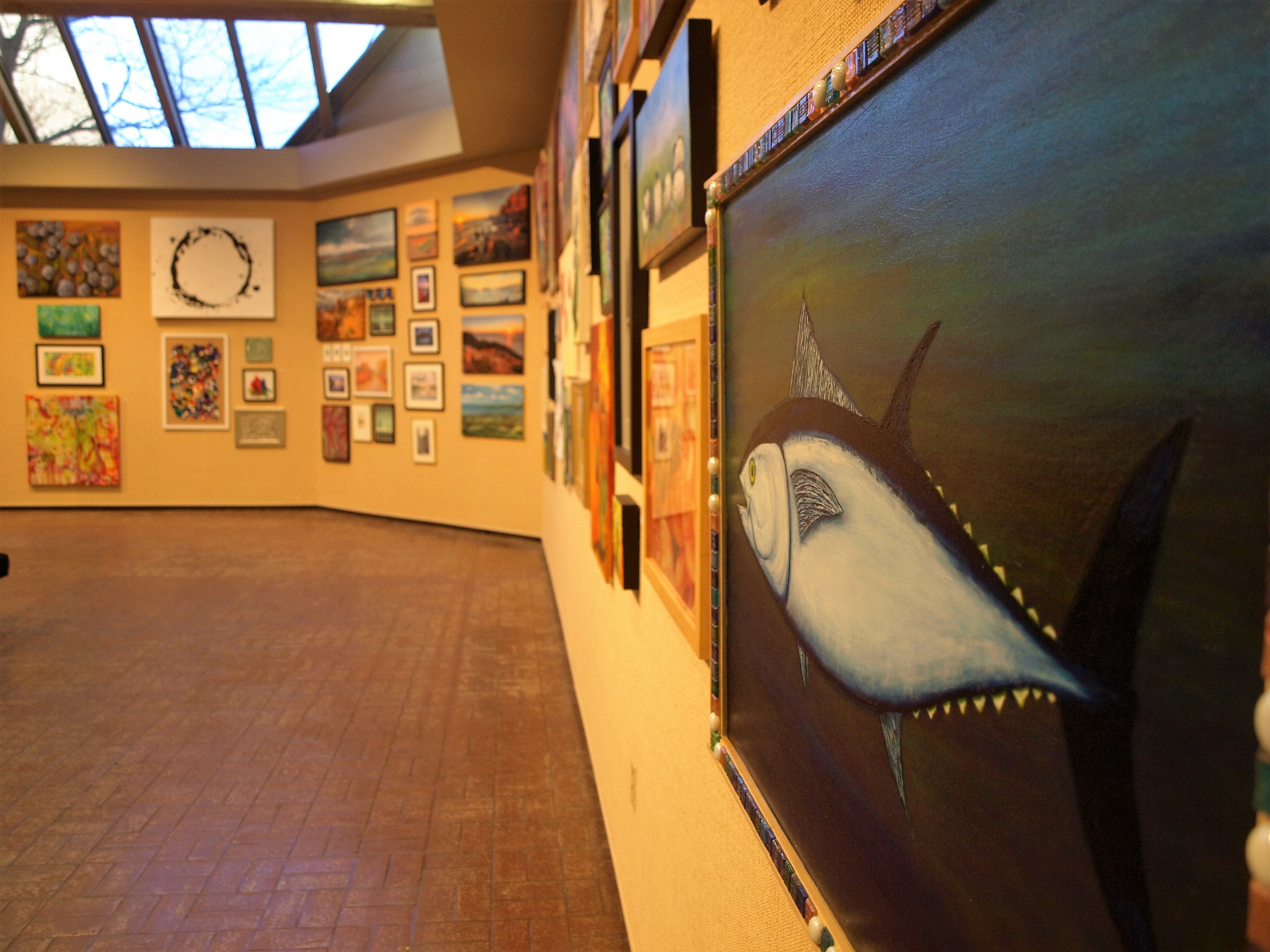
    The Acadia Art Gallery opened in 1978, providing both students and public alike the opportunity to indulge in their artistic side. I recently had the opportunity to interview Hunter Gillis, who works for the gallery, and asked him a few questions about his role, the new exhibit currently on display and more.

    Q: What can you tell us about the new exhibit?

    A: This is the 26th time that the Acadia University Art Gallery has opened itself to submissions from Acadia students, alumni, faculty and members of our community. The Annual Acadia Art Exhibition is an important event that celebrates creativity in our community. It provides a public forum to explore both the work of new and established artists. The exhibit contains a wide range of artwork that not only allows visitors to view works from the community, but also the creative talent and expression that the members of our community possess.

    Q: What is your role at the gallery?

    A: I typically have two main tasks. I act as a liaison between the gallery and the public. I answer any questions that people have on the exhibit and ensure that the gallery is well kept and that the essential tasks for the day to day operations are complete when I leave. I also focus on social media, which entails Twitter, Instagram and other social media accounts that the gallery has.

    Q: What is your favourite thing about working at the gallery?

    A: Getting a chance to meet members of the community. I would consider myself to be a people person and I enjoy hearing someone’s perspective of the work on display or their own personal stories.

    Q: Why do you think art is important?

    A: I think art is an important part of our development as humans and an essential element of empowering the hearts of people. Artists can strengthen the will of the people and inspire them to act through revolutionary ideas and powerful imagery. Artists have the unique power of being able to move people to action, thus signifying their cultural and political contribution and importance.

    Q: Do you wish more students would get more involved with the arts? How would you achieve this?

    A: Yes, but finding an answer on how to achieve this is a difficult task. I think part of the issue is how neoliberalism has affected the university. Universities as we know them today promote STEM fields over liberal arts, and encourages instructors to teach students for future employment, rather than toward broad and informed citizenship. I am not entirely sure exactly how we can rectify the situation we find ourselves in.

    Q: When is the gallery open?

    A: We are closed on Monday and Tuesday, open Wednesday: 12-7pm and Thursday to Sunday: 12-4pm.

    Q: What is your favourite piece/exhibit so far?

    A: It’s hard to pick just one piece, I have a few that I love, but my favourite is by the artist Gus Rhodes, titled “The Creative Impulse, for $35 an hour, Imitating the Idea of a Zen Master, to make a pretty picture, to try and make some money, to pay a couple of bills,” (and yes that’s the name of the piece). It is number 88 in the exhibit.

  • Fashion Forward: Mental Health Message Behind Clothes

    It all began with a hand stitched shirt that reads “keep me high, love.” Now, there are seven products to choose from all bearing the message that it is okay to put yourself first. What makes this company stand out from the rest? The founders use their platform to open engaging, encouraging, and supportive messages about mental health through their products.

    Me Before You Clothing Co. is new to the fashion scene of Nova Scotia, but co-founders Vanessa Hamkens (Dalhousie) and Rhiann MacDonald (Acadia) have big plans for their forward-thinking company. Their goal is to “raise awareness about mental health by spreading positivity and curbing the stigma around it,” as said on the Me Before You website. Themes of self-care and self-love are central to the clothing designs, but Hamkens and MacDonald are aiming even higher. The duo is giving back to the community, contributing a portion of sales to local charity initiatives.

    An embroidered yin-yang symbol hovers above the word “balance” on one of the products, a black crew neck sweatshirt. This product is a part of one of the commitments that Me Before You Clothing Co. has taken on with a portion of each sale going towards Feed Nova Scotia, an organization that strives to reduce the food insecurity that many Nova Scotians experience. According to Feed NS, food insecurity has resulted in a dramatic increase of food bank users all across Canada. Specifically, in Nova Scotia, the 2016 statistics show a surge of approximately 20% compared to the previous year. Compared to 2008, Nova Scotian food bank usage increase by upwards of 40%. While Feed NS isn’t a mental health initiative, it is certainly related.

    Most recently, Me Before You Clothing Co. made a special release on Bell Let’s Talk Day with a specific person in mind. Sold at the Halifax Forum during the Saint Mary’s versus Dalhousie Bell Let’s Talk hockey game, the limited-edition shirts sported a fox on the front and words that read “Fox 12” on the back. A portion of the sales were put towards the Cayley Fox Memorial Award of Saint Mary’s University, an award established to commemorate the SMU student and rugby player who struggled with mental health issues. After shirts were sold out, $1000 of the proceeds were raised for the award. Upon announcing this on their Facebook page, Me Before You encouraged to “keep the conversation going although Bell Let’s Talk has ended. Share stories of Cayley and others who are struggling even if they are smiling”.

    So, what is next for the new entrepreneurs? “Right now we currently only have the Feed NS and Cayley Fox Memorial Award donations happening and that’s where our focus is for the next few months,” Me Before You commented. But the future holds even more opportunities for the clothing line. “Moving forward we are planning on creating new clothing items to partner with a donation to specific organizations or funds that align with our goals.”

    Using creative outlets to combat mental health stigma has recently been more prominent in Canadian universities. An art project titled “Ventilation Movement” from Erin Chapman of the University of Ottawa made headlines in 2016 for the innovative way in which the project allows for people to vent about their struggles. Another Maritime clothing line, Wear Your Label, created by two UNB students sends the message that it isn’t selfish to practice self-care. Hamkens and MacDonald hope to contribute to this important discussion with their own clothing line by, as stated in their mission statement, “starting a conversation about self care and self love, with our name ‘Me Before You Clothing Co.’ prompting you to put yourself first and take care of your own needs.” Me Before You Clothing Co. is open to new ideas of community outreach, and encourage those with interest to contact them.


  • Have Hope for 2017

    Sitting down at the dinner table with my family I faced an awkward conversation. It started with griping about the state of the world: America, Europe, crisis after pandemic after crash. It was a depressing start to a conversation, to say the least. The picture that was painted was one resembling the worst of the first Mad Max film, or the beginnings of Roland Emmerich’s 2012: undesirable and unnecessary.

    After some thinking, I chimed into the conversation. Yes, I wasn’t going to lie, things did look bad. There were a lot of things that were beyond the scope of positivity. But after the dinner was over I stopped and asked my parents: why did they think things were so bad? Their answers were different in their wording but the general message was the same: things were changing and they were changing in a direction they didn’t like.

    It’s undeniable that the world is changing. Former reality TV star Donald Trump is now President of the United States, the UK is (trying to begin the process of) leaving the European Union, Syria is falling back under the control of Bashar Al-Assad, and the Islamic State is branching out around the world, with attacks occurring everywhere from Christmas markets in Berlin to bazaars in Turkey and malls in the United States. It’s a different world, and it’s one that doesn’t have the prettiest face. By a lot of metrics, the world is sliding back into a reality eerily reminiscent of the 1930s, with fascism, racism, and neo-Nazism on the rise and tensions erupting around the world. This all came to the boiling point in 2016, a year we’re all very glad is over.

    Denying that the world is facing a challenging new reality is arrogant and irresponsible. To say that everything is going to be fine and dandy is dangerously naïve. But it doesn’t warrant being pessimistic about the future.

    2016 will be a year that will be long analyzed by historians of the future. We lost countless stars, from David Bowie to Prince and Carrie Fisher, we saw the worst of humanity in Aleppo, and we saw hate take precedence over love through xenophobia and racism. Needless to say, it was a year that will live in infamy.

    But it doesn’t warrant despair. In the face of adversity, the worst thing one can do is curl up in a ball and refuse to believe that anything they do can change things. Even the littlest of things, from throwing your coffee cup in the recycling or telling somebody they look good today, makes a difference. It may be small and but it is not insignificant. Maya Angelou once said “people will forget what you did, but people will never forget how you made them feel”. In the face of an uncertain future it makes all the difference to be there for one another.

    As much as those around us may want to pessimistic about 2016, there were just as many reasons to be optimistic. The Colombian government signed an agreement with the FARC, ending a decades long conflict that had killed thousands. Tiger numbers around the world were on the rise for the first time in 100 years. A solar powered airplane flew across the Pacific Ocean. World hunger has reached its lowest point in 25 years. People pouring buckets of ice over their heads raised enough money to help isolate the gene that causes the disease. When you look back over the bigger events, last year wasn’t so bad.

    It’s impressive how far we’ve come in the past year. The Paris Agreement has been signed, and even though there are plenty of climate change skeptics and outright deniers in high office, the ball has begun rolling towards a greener future. We’ve seen compassion in Canada, with our own Prime Minister personally greeting refugees fleeing war and utter devastation. Love him or hate him, it takes someone with genuine character to take ownership of an issue and face the fruits of their labour head-on. Even here at Acadia, our first year population has grown by 25%. New blood and new minds are being welcomed into Wolfville, a stark contrast from the previous year’s intake.

    I have hope for 2017. There are elections coming up around the world where candidates are basing their campaigns on an ‘us vs. them’ message, fearmongering and hatemongering. But while there are those candidates, there are just as many promoting what makes democracy worth fighting for: peace, compassion, tolerance, justice, and love. The fight for a free and fair society isn’t an easy or bloodless one. Relationships are ruined, reputations are soured, and feelings are hurt. But if you truly believe in something worth fighting for, stand up for it.

    There will always be headlines that strike fear into our hearts. There will always be those who preach hate and practice malice. There will always be those who believe that the impossible is exactly that- impossible. And yet there will always be those tiny instances of human compassion that amount to something greater. There will always be those who preach love and practice tolerance. There will always be those who believe that the impossible is exactly the opposite- possible.

    Let’s not despair for 2017. Let’s go out and make it a good one.

  • Acadia Helping Refugees Association

    Acadia Helping Refugees Association started in the Spring of 2016, when the Syrian Refugee crisis was everywhere in the mass media. A group of individuals got together who were trying to make as much of a difference as they could. After watching a short BBC documentary on the horrific state of Syria, we grouped together and started to plan events around fundraising money for the refugee families in the Annapolis Valley. As well as providing awareness on Acadia campus, and around the community, about the current situation and the new families joining our community.

    Over the year we raised enough money to send the children of the refugee families to summer soccer camps. Allowing them to progress their English, as well social connections. Our goals this year are to raise money to either do the same thing or to get the family jobs within the community. One set back we have is finding jobs for the parents of the families since the government only gives them enough resources and money for the first year, in February they need to find work to support their household needs. One obstacle of finding jobs is the lack of English the parents know. Due to not being in school socializing and speaking English, the parents have a tougher time picking up the language. Although they can speak ok, they cook wonderfully and sometimes have a booth set up on Wednesday nights from 4:00-7:00 at the Wolfville Farmers market. We are looking to collaborate with other groups for fundraising events as well as reaching out into the community for more community support and awareness for the families. We have word that more families are coming to New Minas as well as the Annapolis Valley in the near future.

    We are also looking to raise more awareness and acceptance in our town of the issues surrounding the crisis. Awareness is one of the key elements we are going to focus on. The media portrays refugees in a certain light and we want to actively provide the factual information to make sure individuals do not get caught up in what is being falsely portrayed.We have a Facebook page called ‘Acadia Helping Refugee Association Events’ where we post the events we are doing weekly. Some of these events included are, selling popcorn at

    We have a Facebook page called ‘Acadia Helping Refugee Association Events’ where we post the events we are doing weekly. Some of these events included are, selling popcorn at JustUs! as well as doing movie nights at the KCIC located on the Acadia University campus. We are looking to host a dinner night, with the Syrian families cooking, and 100% of the proceeds go towards them in the New Year as well as many more community involved events.

  • Student Mental Health: Know Your Mind

    When a close friend of mine revealed to his parents that he was considering the idea of dropping out of university, he told them that he just wasn’t the academic type and didn’t want to waste more money on his post-secondary education. When that same friend revealed to me that he was thinking of leaving university, he told me it was because he had done nothing but think about suicide since he began his first year. Whether you think his decision was foolish or not, whether you are snickering while reading this or feeling empathetic, the fact remains that mental health issues are a huge area of concern for university students.

    Earlier this year, the Canadian Association of College and University Student Services conducted a survey of a little more than 43,000 students on campuses across this country from 41 different schools on a variety of topics. These topics ranged from alcohol use to the number of students who wore helmets while riding their bikes. What stuck out the most for me was the number of these students who reported experiencing struggles with mental health. Of the surveyed students, 32.5% reported anxiety as a main factor that affects performance at school. Likewise, 21% reported symptoms of depression played a part, 28.4% indicated sleeping difficulties as an issue, and 42.2% said that stress was an area of concern. 13% of students who completed the survey report seriously considering suicide within the last 12 months. The upsetting thing about these numbers is that they do not surprise me at all. But when will the numbers be enough?

    Wolfville is a wonderful town that is home to a fantastic university. The students here, for the most part, take care of one another and welcome the beautiful diversity that is our campus. Acadia has been proud of being one of the strongest communities of the East coast universities. But it is no longer enough to claim this title. We need to show it. Our community is lacking mental health resources, and it is time to provide struggling students with the support that they need.

    Don’t get me wrong. I am aware that mental health services do exist in our community. The counselling centre on campus and Annapolis Valley Health are excellent options. But there are some draw backs to only having two main professional centres for students to turn to. For one, the wait times are not ideal. It is disheartening to know that professionals can only take so many appointments on due to the ratio of students versus counsellors. This is not a fault of any person, but a fault of the system. Moreover, travelling to AVH is unfortunately not a realistic option for some people. In addition to the unreliability of the transit system, many students do not have the funds to routinely take a cab to the offices. Severe mental health issues such as suicidal thoughts, depression, and anxiety need to be worked on regularly. It is not enough to see a professional occasionally, and then hope for the best.

    I know that these things are not black and white. I know that it would take a lot of effort to make resources more accessible, and I know there are factors that I haven’t even considered in this article. All that I am asking is that we open the dialogue more and try to brain storm ways that we, as a community, can make mental health support more of a priority. Students should not have to choose between their education and their mental well-being. It is possible to have both.

Betzillo positions itself as a versatile gaming hub where structured bonuses and adaptive gameplay mechanics support both short sessions and extended play.

Built with a focus on innovation, Spinbit integrates modern casino architecture with rapid transactions, appealing to players who value speed and digital efficiency.

Ripper Casino emphasizes bold entertainment through high-impact slot titles and competitive promotions crafted for risk-oriented players.

A friendly interface and stable performance define Ricky Casino, offering a casual yet reliable environment for a wide spectrum of gaming preferences.

King Billy Casino channels classic casino spirit into a modern platform, delivering recognizable themes supported by contemporary reward systems.

Immersive visuals and layered slot mechanics are at the core of Dragonslots, creating a narrative-driven casino experience.

Lukki Casino appeals to players seeking direct access and minimal friction, focusing on fast loading times and intuitive controls.

Casinonic provides a structured and dependable gaming framework, blending modern slots with transparent operational standards.