Tag: do better

  • Clothing Companies are Destroying and Trashing Unsold Merchandise

    Clothing Companies are Destroying and Trashing Unsold Merchandise

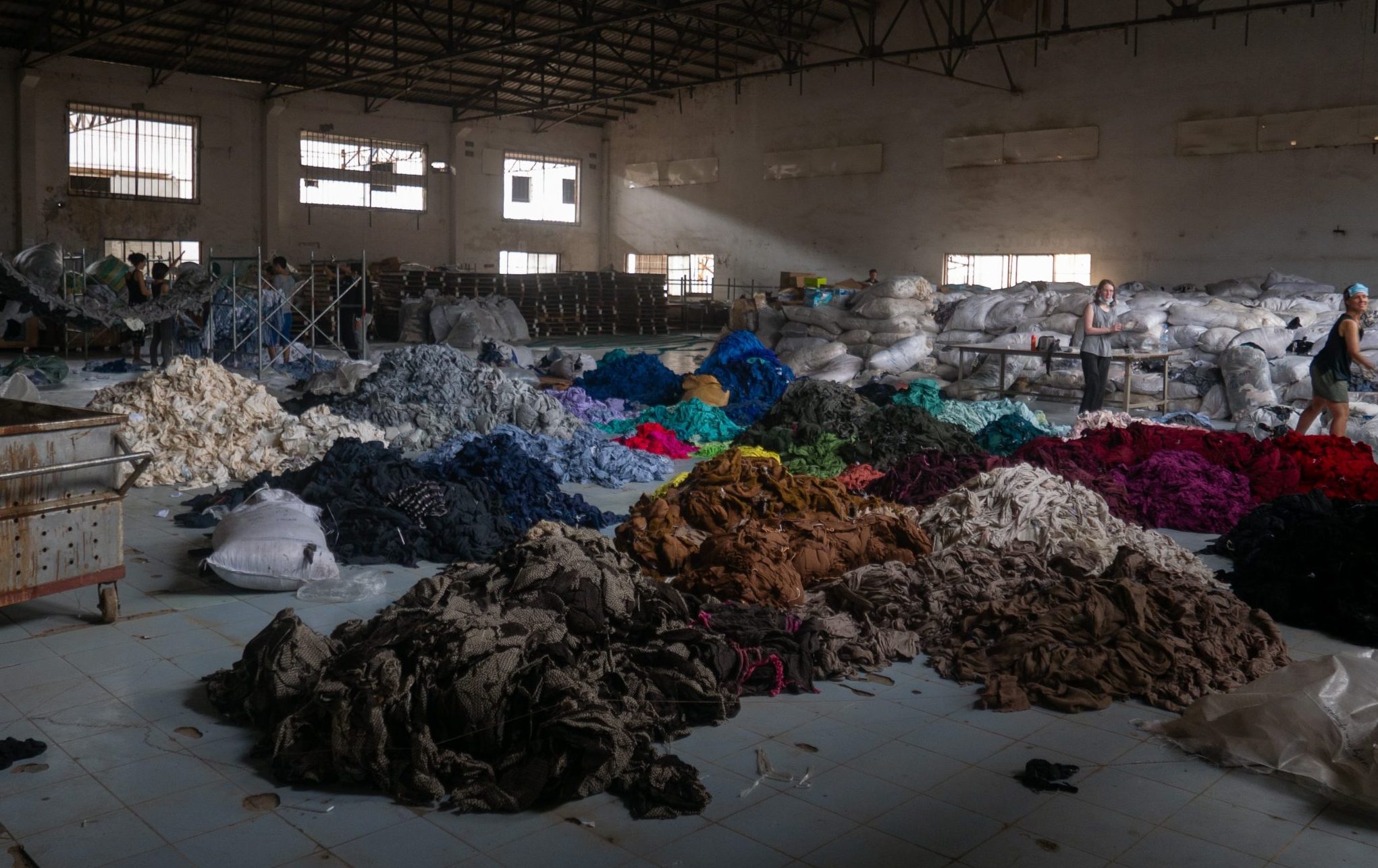
    Imagine a system where you destroy leftover goods instead of distributing them to those in need. Now, open your eyes and look around you; look at all your favourite stores, and probably the shoes on your feet right now. The majority of these companies contribute to wasteful and neglectful practices. 

    In August 2020, the Canadian Alliance to End Homelessness (CAEH) conducted a survey suggesting that 5 percent of Canadians have been homeless themselves, while another 31 percent know someone who has been homeless. Moreover, one in seven Canadians say they live in a place that does not meet their needs but cannot afford to move elsewhere. Additionally, one in six Canadians cannot afford to buy new clothes and good-quality groceries. 

    Canadians across the country are experiencing deprivation due to lack of funds, and while this is an entirely different social issue on its own, we cannot be destroying perfectly good quality clothing that would tremendously help those who are struggling financially. However, the problem continues, usually hidden by corporations and avoided by people who are unwilling to address the problem. 

    Unfortunately, burning or cutting unsold clothing is fashion’s best kept secret, and although luxury brands like British Burberry admitted to destroying $36.8 million worth of its own merchandise, many other brands participate. Even Canadian favourites, like Winners and Marshalls, refused to comment in an interview with Global News when asked if the company destroys their products before throwing them away. Louis Vuitton and Nike are also major contributors to the issue, and H&M burned 60 tons worth of new and unsold clothes between 2013 and 2018. Also, whistleblowers have addressed that these practices also take place at Urban Outfitters, Walmart, Eddie Bauer, Michael Kors and Victoria Secret. 

    In the same article from Global News, a former employee of Carter’s Inc. was interviewed about her horrifying discoveries as a retail manager in the clothing industry. Patricia said, “You have to make sure and it’s part of the policy to ensure the product cannot be used if someone were to find it in the garbage.” 

    If someone is looking in the garbage, they could probably benefit from clothing, and the cruelest part of this policy is that, in theory, if a person finds needed clothing in the garbage or in the streets, it is damaged beyond the point of use. The policies do not just apply to specific clothing items, they apply to all merchandise … including shoes and winter coats.

    The World Resources Institute says that it takes 2,700 liters of water to make one cotton shirt. 2,700 liters of water is approximately how much water one person will drink in the span of two and a half years. On the other hand, while polyester clothing uses less water, the HuffPost says polyester production released 1.5 trillion pounds of greenhouse gases in 2015. 

    If withholding new clothing from those in need isn’t enough, the fashion industry is one of the world’s worst polluters, so all this pollution is for nothing if a significant amount of the products being made are just being shredded, burned or ripped beyond repair. 

    Furthermore, forcing employees, most of them making minimum wage, to cut up and throw away perfectly good clothes, shoes and coats is cruel, especially when you consider the dismal statistics indicating that one in six Canadians struggle to afford new clothes and good-quality groceries. 

    While many companies in the last year or two have begun to develop more environmentally friendly ways of making their clothing and recycling their fabrics, the fashion industry was still one of the top contributors to pollution in 2020 and continues to be in 2021. While there are some companies who have changed their policy and stopped destroying unsold items, it was an action only sparked by customers boycotting and the threat of bankruptcy. Also, many companies have hidden these practices from the public for decades, so don’t be so quick to applaud businesses like H&M for advertising their updated policies.

    Note: This article is part of our Winter 2021 Print Edition that focuses on both issues and the good in the current state of the world. Look across campus for a paper copy of this edition!

  • Impact Over Intent: Issues with the ‘White Saviour’ Complex

    Impact Over Intent: Issues with the ‘White Saviour’ Complex

    While the ‘white saviour’ complex is a relatively new term, the behaviour has been around for decades. A ‘white saviour’ complex: when a white person attempts to help a non-white person in an attempt to fulfill their own needs. While the act of helping others alone is in no way harmful and rarely selfish, the belief that only we, as white people, can save others from their disastrous situations (and that they need saving in the first place) is extremely twisted. This complex is often seen in voluntourism, and is also common in the film industry, as it sneaks its way into popular movies like The Blind Side. It affects Indigenous lives in Canada as well, like when government officials go into Indigenous communities in an attempt to quickly fix problems without first understanding the issues. The white saviour complex has harmful effects and is rarely helpful for anyone, which is exactly why it’s important to talk about.

    One of the biggest problems with this behaviour is that it expects people to be unable to help themselves. By saying things like we’re ‘the voices for the voiceless’, we degrade BIPOC (black, indigenous, and people of colour) into powerless beings without autonomy. This also claims that white people are better than people of colour since it claims that white voices are so much more important and knowledgeable than BIPOC opinions. Not only does this way of thinking assume that very real human beings are incapable of helping themselves and that white people are so powerful that only they can save others, it also neglects to address the fact that white people have caused most of these issues for BIPOC in the first place. 

    There’s no doubt that helping others is not in and of itself bad. But causing something bad to happen to others, neglecting to take responsibility for it (or at the very least address it), and then asserting that you alone can fix what you’ve done and that those you’ve done these things to are weak is undeniably wrong. This is why the saying ‘impact over intent’ is so relevant to the idea of the white saviour – while someone’s intentions may be good, the impacts can still be detrimental, and that’s what truly matters. Twitter user Teju Cole wrote, “I deeply respect American sentimentality, the way one respects a wounded hippo. You must keep an eye on it, for you know it is deadly”. Studies have shown that racism by white people has consistently disadvantaged other races in a lot of areas, often leading to poverty, battles with mental health, unequal opportunities, and more. In this way, the racism that we, as white people, have caused, is directly correlated to the ‘saving’ that apparently only we can do, further discounting the abilities of those who were both disadvantaged and hurt by us in the first place. Without solving the deep-rooted racism that exists within our societies, our attempts to save those that we believe are in need will never be helpful, and will most definitely not ever be enough. 

    I’ll be the first to admit that I’ve seen aspects of the white saviour complex in my own life, and that I’ve at times subconsciously believed that my own power and privilege as a white person was what other BIPOC needed. I’ve seen people around me participate in poverty porn, the act of objectifying people in media in order to incentivize donations, insinuating that those people are victims unable of helping themselves. I have friends who’ve publicly exhibited their white saviour complex, posting pictures with non-white children in third-world countries in self-fulfilling attempts to seem benevolent and admirable. But while all of these people (myself included) were most likely well-intended, our actions fell short of being productive or useful in addressing the real issue. Systemic racism has led to inequality for centuries, and without first understanding that idea and admitting that we’ve contributed to the problem, the white saviour complex will always be present. But this demeaning way of thinking of white people as all-powerful is extremely problematic.

    So how can helping people who are less well-off than us who also happen to be BIPOC ever be truly helpful? Well, first of all, I think that openly admitting our own privilege and addressing the fact that it doesn’t make us in any way better than others, as well as working to fight against the systemic racism that white people have helped cause are both important steps as a basis for helping BIPOC. Recognizing, too, that they’re in many ways smarter, more capable, more skilled than us, and therefore not in need of our saving, is also important. Lately, more and more people have been travelling to third-world countries to help teach local leaders, help develop their pre-existing skills and learn new ideas in order to help their own communities. By looking at the history of communities and supporting them in their pre-existing skills, we can amplify their voices as we stand-in as secondary voices. In this way, white people are not attempting to fix anything, rather, they simply support others in their journeys to improving their own talents and careers, an act that has a ripple-effect on entire communities and towns. This is just one of the ways white people can stand behind BIPOC without attempting to speak or act for them.

    It can sometimes feel like there is no ‘right answer’ when it comes to helping BIPOC. But if the idea of walking into a random white person’s home, picking up their kids and taking pictures with them, reconstructing their house, and then leaving makes you uncomfortable, then it might be time to take a look into how you see yourself as a white person. Much of the work that white people do is good work. And this is not to say that white people can’t help BIPOC and make a difference in their lives. But if your intentions are good and the impact you’re having on the lives of people of colour is not, it’s never worth it. 

    Note: This article is part of our Winter 2021 Print Edition that focuses on both issues and the good in the current state of the world. Look across campus for a paper copy of this edition!

Betzillo positions itself as a versatile gaming hub where structured bonuses and adaptive gameplay mechanics support both short sessions and extended play.

Built with a focus on innovation, Spinbit integrates modern casino architecture with rapid transactions, appealing to players who value speed and digital efficiency.

Ripper Casino emphasizes bold entertainment through high-impact slot titles and competitive promotions crafted for risk-oriented players.

A friendly interface and stable performance define Ricky Casino, offering a casual yet reliable environment for a wide spectrum of gaming preferences.

King Billy Casino channels classic casino spirit into a modern platform, delivering recognizable themes supported by contemporary reward systems.

Immersive visuals and layered slot mechanics are at the core of Dragonslots, creating a narrative-driven casino experience.

Lukki Casino appeals to players seeking direct access and minimal friction, focusing on fast loading times and intuitive controls.

Casinonic provides a structured and dependable gaming framework, blending modern slots with transparent operational standards.