Tag: kinesiology

  • Research Feature: Sabrina Nunn

    Research Feature: Sabrina Nunn

    My name is Sabrina Nunn and I am a fourth year Kinesiology with Honours student.  My honours research, “Past Action, Current Challenges, and Future Initiatives – An Investigation into the Hurdles for Achieving Gender Equity in Nova Scotia Sport” has been written under the supervision of Professor Ann Dodge.  I cannot thank Ann enough for her unwavering support throughout the entire project.  I would also like to thank the organizers and attendees of the Shattering the Glass Conference for their enthusiasm and willingness to be a part of this study.

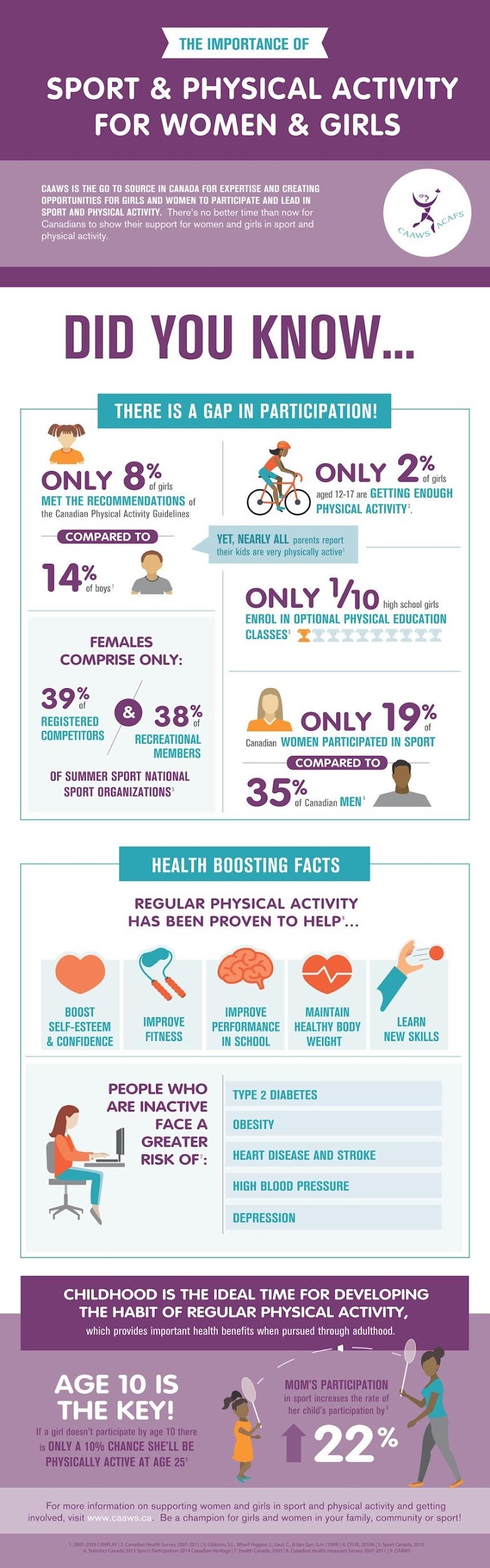
    My study is based on a November 2018 gender equity meeting in Nova Scotia reporting on the individual experiences of both organizers and participants. Barriers that keep women from fully engaging in sport were identified. By sharing conversations with women directly involved in the sport sector, this study aspires to give them a voice in relation to their experiences, and to profile specific areas where improvement can be made to effect positive change for female athletes, coaches and administrators in sport in Nova Scotia.  Despite the fact that gender gaps have narrowed in general, there are still inequitable differences prevalent in society – specifically in sport (Sherry, Osborne & Nicholson, 2015).

    When discussing equity, the word can sometimes be used incorrectly by being used interchangeably with equality.  Equity refers to the allocation of resources that reflects fairness or justice by taking into account the individual circumstances of everyone involved.  Equality refers to all people getting the same, regardless of any individual circumstances.  Equality is like creating the same starting line for everyone, whilst equity works towards creating the same finish line.  Equity is important because when given the chance, women have shown they are capable of succeeding in sport.

    The results of the study indicate that there are numerous barriers that can prevent or deter females from being involved in sport in Nova Scotia.  The barriers that were identified by the participants in this study were related to: confidence, stereotypes, lack of role models, systemic biases, external barriers, and low perceived significance.  With this knowledge, sporting organizations in Nova Scotia can continue, or in some instances begin to do their part in bridging gender gaps by creating opportunity and limiting barriers for females in sport.

    The perceived significance barrier is one of the most important findings as it can be identified as an overarching umbrella term that effects almost every other barrier noted in the study. This refers to the amount that an individual or organization cares about or recognizes gender equity issues or barriers for women in sport.  For any barrier to be dealt with, change must be seen as worthy of consideration, comprehension and support.  Perhaps this means that the first barrier that needs addressing is the perceived significance of gender equity in sport in Nova Scotia.  Sport has the potential to be a vehicle for change; therefore, making positive changes in the sporting world can be an integral step in profiling gender gaps in society.

    In conclusion, the current status of women in sport needs to be addressed as there is still much work to be done.  From my research, the first step to tackling the issue is evidently caring about it enough to inspire change.  My full thesis will be available in The Vaughn Memorial Library in the upcoming months.

    References:

    CAAWS Facts and Stats. (2019). Retrieved from https://www.caaws.ca/facts-and-stats/

    Sherry, E., Osborne, A., & Nicholson, M. (2015). Images of sports women: A review. Sex Roles74(7-8), 299-309. doi: 10.1007/s11199-015-0493-x

  • Thank you, Acadia

    Thank you, Acadia

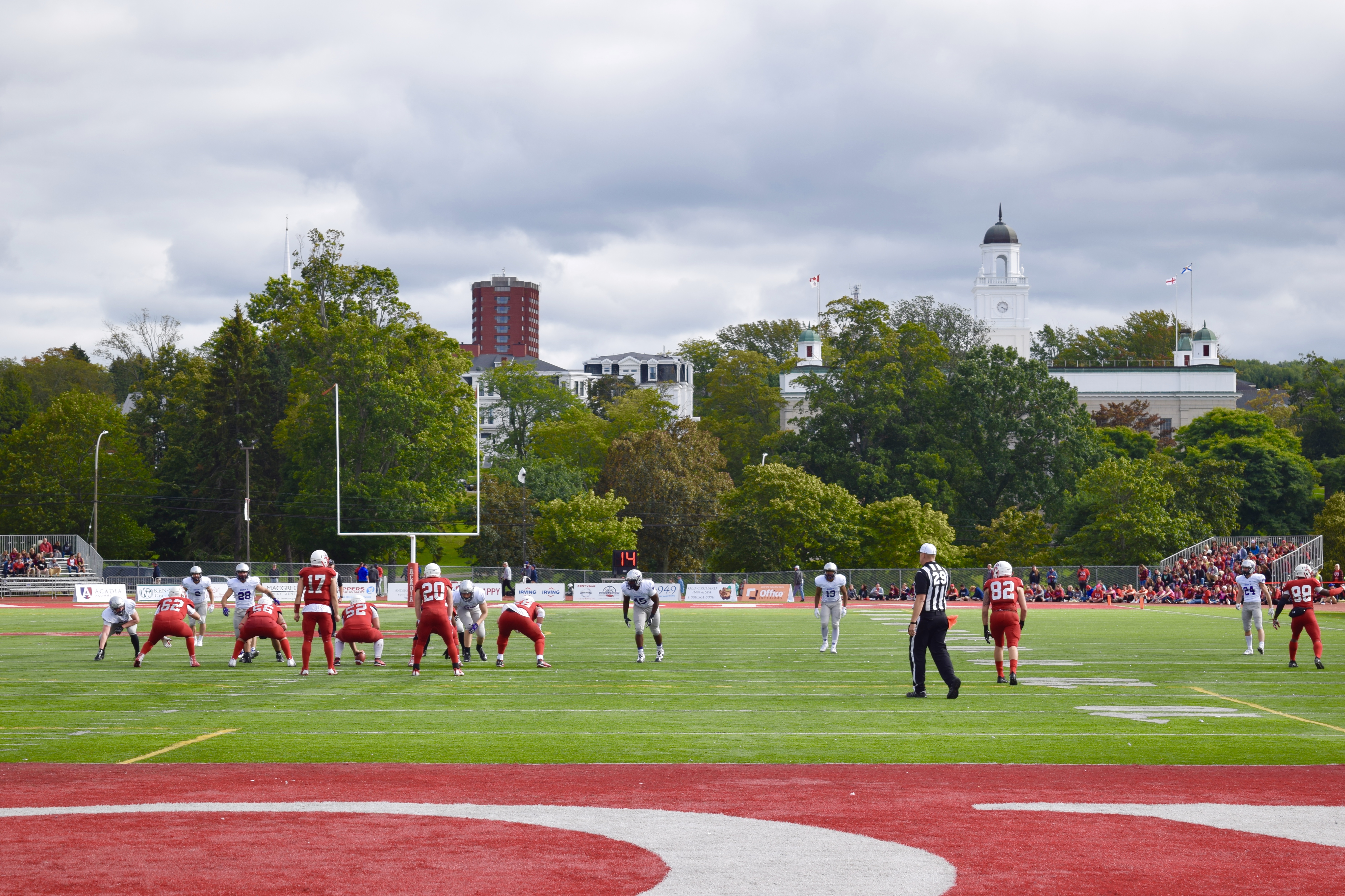
    I’m still struggling to wrap my head around how quickly 5 years can go by. I remember like yesterday my 18th birthday, and the first day of Axemen Football training camp. During my first meal hall experience, I was kindly instructed by a 5th year player to stand up on my chair, announce to the packed meal hall that it was my birthday, and sing happy birthday to myself. At the time (feeling slightly embarrassed), I had absolutely no idea that it would be the first of countless memories from Acadia that I would look back upon and grin ear to ear.

    I grew up watching the Acadia Axemen play football, and at every game since I started playing at age 9, a friend or family member in the crowd always said, “That could be you someday.” Becoming an Axemen football player became my dream; and I couldn’t be more thankful that for 5 years, it was me. Something they didn’t mention to me at age 9 was that Acadia would be much more than just football.

    It wasn’t an easy road. There were midterms I’d forgotten about, labs I submitted with just a title page, upwards of four shoulder separations, and even finding out how well Coach Cummins can project his voice a couple of times. Thankfully, I had the support of so many incredible people in this community, and to each and every one of you I could not have had this amazing experience without you.

    Choosing to study Kinesiology is something I haven’t regretted for a single second, with one potential exception being the biomechanics final. From the top-down the entire department is packed with wonderful individuals eager to help you succeed. Administratively, I could never have made it without Kim Vaughan and Peggy Weir’s help, the support of our tremendous professors, and all the classmates who supported my absurd procrastination and knew that if I asked you a question about the assignment, I was looking for an answer pretty quickly.

    During my time here, I had the opportunity to be a part of groups that easily prove how special the individuals we have at Acadia really are. From the SMILE program to Relay for Life, Cardiac Rehab to the Acadia Players Association, the amount of passion students bring towards giving back to the community is incomparable to any other university. The time, energy, effort and kindness displayed each day by so many students is what makes Acadia much more than a university and is what truly engrains us in the community.  

    Wolfville – don’t ever change. Well, maybe change the cover at the Vil, that’s getting out of hand.

    There’s just something special about this place, an energy that can so quickly turn heading out for one beer with a couple of friends into one of the best memories you’ll have. The support our community gives Acadia Athletics, and the entire Acadia community, each week is never overlooked. We played our AUS Championship game at 2:00 on a Tuesday, and that was the most electrifying moment I’d ever seen at Raymond Field. Thank you to all of our fans and supporters who came out each week to stand up and cheer whether we were winning or losing, whether it was hot or cold, or whatever the circumstance.

    Being a member of the Acadia Axemen football team will forever be one of my proudest accomplishments. Teammates quickly became brothers and those relationships built through the blood, sweat and tears will last forever. The 2017 AUS Championship is and will forever be amongst the best moments of my life. That moment is not possible without the dedication, hustle and commitment of each and every individual in the program, not just in 2017 but also in the years leading up. From our coaching staff to athletic therapists, strength and conditioning staff, and equipment managers, nutrition consultants and all support staff, I wish I could give you each the thank you that’s deserved. You showed up each day, gave your full effort and did it all with a smile on your face. I appreciate each and every one of you more than you’ll ever know.

    No matter how hard some days may have been, I always knew I had family within the Acadia community. I failed tests, took W’s, fumbled the ball, missed blocks, had too many tequila shots and questioned what in the world I was doing 95% of the time. At the same time though, I made lifelong friendships, grew up at least a little bit, and met some of the best people in the world.

    Thank you, Acadia. You gave me an opportunity I could never say thank you enough for. It wasn’t always perfect, but it was always my dream.

    Cam Davidson is a fifth year Kinesiology student and accomplished running back of Acadia’s Football Program. 

  • Research Feature: Julia Koppernaes

    Research Feature: Julia Koppernaes

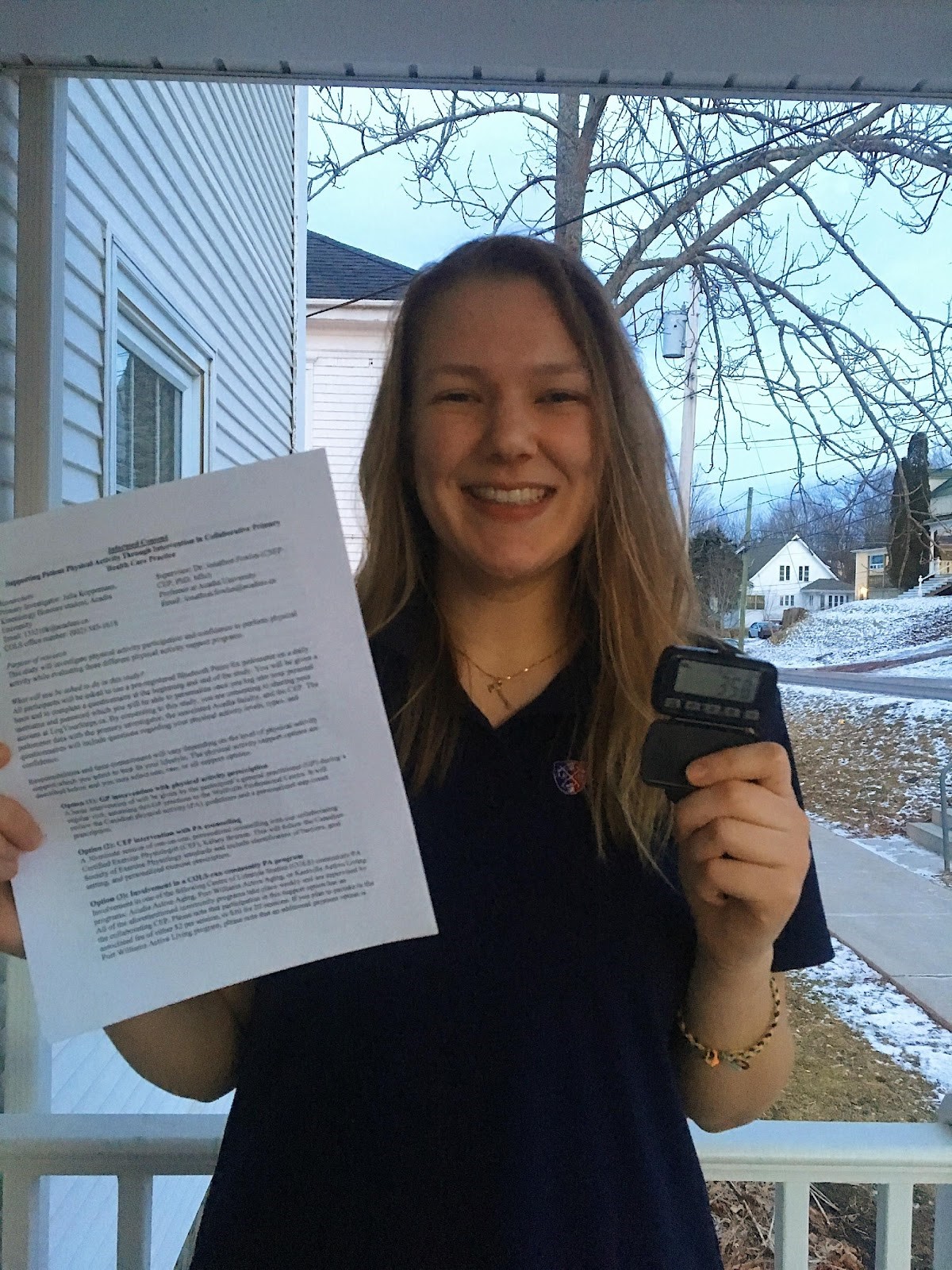
    Allied health networks that incorporate exercise professionals into primary care have been shown to be especially effective at improving physical activity levels in various populations. Nova Scotia is particularly inactive as compared to other regions of Canada, with few Nova Scotians meeting the daily physical activity guidelines. Access to physical activity supports such as tailored physical activity counselling and prescription, and physical activity monitoring devices (all shown to benefit physical activity levels and adherence) can be particularly challenging to access in Nova Scotia, where exercise participation is typically an out-of-pocket (i.e. outside of primary care) expense. To make these supports more readily accessible, and to develop practicable strategies, it is imperative that referral schemes be evaluated and explored in rural communities. My pilot study examined and described the physical activity referral programs of a collaborative health practice that incorporates a qualified exercise professional in the Annapolis Valley, Nova Scotia. Using accelerometers and questionnaires, physical activity and exercise levels were measured pre- and post- exercise/physical activity intervention. The effectiveness of physician-prescribed exercise was compared to exercise referral through an exercise physiologist and to participation in community exercise programs. In addition to physical activity levels pre- and post-, questionnaires assessed participants’ stage of change (readiness to change physical activity habits), task and regulatory self-efficacies (ability to execute and plan physical activity), and physical activity and exercise levels. Questionnaires also left room for open-ended responses to questions regarding which interventions were of most help to the individual in improving the aforementioned variables. By better understanding what people need in terms of support for increasing physical activity, better intervention can be provided in primary care. Ideally, this research will help to pave the way in solidifying the role of exercise professionals in an allied health care world. To incorporate exercise professionals as part of the standard in health care would be to take a step toward a more proactive and sustainable health care system.


    Doing my honours degree at Acadia has given me the opportunity to explore the research world, specifically in the field of kinesiology. Honours has challenged me in ways that I could not have expected, but has also pushed me to grow in my ability to think critically, organize, and prioritize. My little taste of research has provided me with a more wholesome appreciation for the scientific evidence that my degree is founded on. I am grateful to my supervisor, Dr. Jonathon Fowles, to the School of Kinesiology, and to Acadia University for granting me this experience; it truly has been an honour.


  • Research Feature: Sarah Charnock

    Research Feature: Sarah Charnock

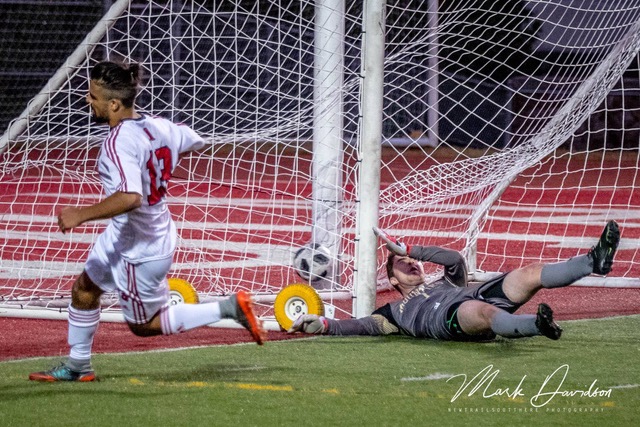
    Sarah Charnock is a 4th year kinesiology student from Newmarket, Ontario. She has spent her time at Acadia actively participating in various kinesiology programs as well as in the wider Acadia and Wolfville Community. She is a volunteer with the Cardiac Rehab and SMILE programs, the president of the Acadia Kinesiology Society, a varsity soccer athlete, and a Sport Injury Assessment and Management program (SIAM) student that works with the varsity volleyball and soccer teams. She is also a Fast and Female ambassador, a leader for Girls on Boards, and has volunteered time with Brigadoon Village and Camp Triumph, camps for children who suffer from or whose close family members suffer from chronic illness. A dean’s list scholar and 3x academic all-Canadian, Sarah was also named an All-Star this season and brought the AUS student athlete community service award home.

    As an avid multi-sport athlete growing up, Sarah has personally experienced various sport-related injuries and became interested in rehabilitation. She volunteered for four years at a spinal cord injury recovery center and has a particular interest in neurological rehab. With a growing interest in sport injury management and the newly enacted Rowan’s Law in Ontario, her interest was piqued, and she is now studying arguably one of the most complex injuries to manage in sport. She has had to manage many concussions and feels strongly that education around this injury has improved; however, there are still many in Nova Scotia who are unaware of how to identify a concussion, of the severity of this injury, and how they can be effectively managed. Upon graduation, Sarah plans to pursue the opportunity to continue to be an athlete abroad and hopes to one day become a physician.

    Sarah’s honours research focuses on uncovering barriers to effective (sports-related) concussion management in Nova Scotia. A significant number of concussions occur in sport at every level and awareness has begun to increase. That being said, many are still unsure what steps they should be taking while recovering from a concussion. The issues seem to range from lack of training in health care providers to various pressures faced by athletes that cause underreporting. This study will further explore what barriers athletes perceive in NS as well as the issues that health care providers see that might prevent athletes from having an ideal rehabilitation experience after a sport-related concussion. Sarah had numerous varsity and club level athletes complete her questionnaire and interviewed 10 athletes to find out more about their experiences with concussions. She wanted to look at this issue from multiple perspectives, so she also had various health care providers complete the questionnaire and did 10 more interviews with various therapists. Upon completion of the study, it is her hope to create a tool for health care providers to use to address the issues uncovered in the questionnaires and interviews. She has begun working on this project under the direction of Dr. Colin King and they will be recruiting the assistance of another undergraduate student, Erin Coughlan, as well as a marketing firm to create a tool that might make managing concussions simpler for those in this province.

Betzillo positions itself as a versatile gaming hub where structured bonuses and adaptive gameplay mechanics support both short sessions and extended play.

Built with a focus on innovation, Spinbit integrates modern casino architecture with rapid transactions, appealing to players who value speed and digital efficiency.

Ripper Casino emphasizes bold entertainment through high-impact slot titles and competitive promotions crafted for risk-oriented players.

A friendly interface and stable performance define Ricky Casino, offering a casual yet reliable environment for a wide spectrum of gaming preferences.

King Billy Casino channels classic casino spirit into a modern platform, delivering recognizable themes supported by contemporary reward systems.

Immersive visuals and layered slot mechanics are at the core of Dragonslots, creating a narrative-driven casino experience.

Lukki Casino appeals to players seeking direct access and minimal friction, focusing on fast loading times and intuitive controls.

Casinonic provides a structured and dependable gaming framework, blending modern slots with transparent operational standards.