Tag: politics

  • Is Trump finally gone?

    Is Trump finally gone?

    Although Joe Biden has been declared president-elect of the United States of America multiple times over the past few weeks, Donald Trump and his administration still continue to contest the results of the election. To be clear, there is no evidence whatsoever that any wide-spread voter fraud took place, with the Department of Homeland Security issuing a statement that this was perhaps “the most secure election in US history.” However, that doesn’t prevent a large portion of the US from insisting that Donald Trump is the rightful president. That said, is there really any way for Trump to still be sworn in? And if so, how likely is that possibility?

    As of right now, swing states such as Pennsylvania and Michigan are ratifying their results, and getting ready to send their electors to the electoral college. Trump has fought this effort at every turn, throwing the entire weight of his influence and legal team at these states in hopes of disrupting the process, but so far to little avail. Every legal challenge thrown at the states so far has been immediately dismissed by the courts due to an overwhelming lack of any real evidence of voter fraud. But even if Trump was winning recounts and legal battles, Biden’s lead is so large that the amount of votes that would have to be overturned to affect the result is insurmountable. So, what is Trump’s goal? What is the point of all this? His objective it seems is not to overturn votes so much as it is to create chaos and uncertainty to cast sufficient doubt on the election proceedings in order to send it to the state legislatures. There is a provision in American law that would enable Republican-controlled state legislatures to overturn election results in their state if there is no definitive choice made by the time the electoral college votes. However, since many key states have already ratified their results, there no longer seems to be much of a path to victory for Trump through this channel.

    After failing to overturn the results in individual states, Trump will no doubt attempt to affect things at a national level. Although there is speculation about possible ways to send the decision to the house of representatives, it is highly unlikely that this could be accomplished without significant legal uncertainty surrounding the decision of the electoral college. However, if the decision did somehow get to the house of representatives, that could bode poorly. Since each state would get a vote instead of each representative, the vote would lean very far to the right. This is currently the only remotely legal path to victory for Donald Trump, and an extremely unlikely one at that.

    The very last option for Trump, discussed more as an intangible fear than a real alternative, is a coup. This would involve Trump rallying his support with the heavily armed militias across the country to take the government by force. This would no doubt spark widespread panic and plunge the nation into civil war, but would depend largely on the military’s response. If they act quickly to shut down any insurgencies and remove Trump from power, then little harm will come of it. But if for some reason they continue to heed Trump as the commander-in-chief, then democracy in the United States will have come to an end. Altogether, this is an extremely unlikely scenario and should be taken with a grain of salt.

    To conclude, Trump is running out of options to overturn the election as doors continue to close for him. But even if he does manage to cast enough doubt upon the results of the election that a president is not named in time, his term ends on January 20th regardless of what he does. And as Joe Biden recently said, “…the United States government is perfectly capable of escorting trespassers out of the White House.” Be that as it may, Trump’s inability to accept the results of the election could have real and disastrous effects on the smooth transition of power. This could hinder Biden’s ability to hit the ground running, and cost the president-elect valuable time and money. Taking the state of the pandemic in America into consideration, Donald Trump’s petulance will ultimately end up costing many American citizens their lives.

  • The dead-end of politics and young voters

    The dead-end of politics and young voters

    I kept struggling to write this piece not simply because I don’t know what to say. It’s because this opinion piece unravels my version of the truth regarding the multiple factors as to why young people in Canada aren’t involved enough in politics. I would just like to briefly state it is not because young people are lazy or do not care. This opinion piece will consist of the ongoing frustrations many politics majors or even political ‘geeks’ commonly experiences regarding youth engagement in politics.

    First off, I guess this piece is a bit bias considering I am a fourth-year politics major here at Acadia. However, the frustrations I have noticed over time seems to be an ongoing occurrence of having to constantly explain what has been happening within mainstream media. In particular, issues revolving around climate action or student debt.

    Turning to the ongoing anxiety revolving around our climate crisis, most young people realize that this is a serious issue and we should act now. But what does this action look like? Multiple young people have shared, liked, retweeted Bill Nye’s comedic but alarming video about the climate crisis. As Bill Nye famously quotes: “the world is on fucking fire and we are not children anymore so that is why we should give a shit”.  This article may seem to have a tone of anger and frustration. And to a certain extent well I am angry and frustrated because seriously, why don’t young people care about Canadian politics? This has been getting significantly better, I will admit. Movements revolving around Climate Action and the active discussion towards our future is prevalent, just not enough.

    The active sharing on social media has filled our newsfeeds, with quotes from Greta Thunberg, Autumn Peltier and many other youth activists who have given us hope for our next generation.

    With the next Federal Elections creeping around the corner, efforts from our students union have been made. Putting campaigns such as GET OUT THE VOTE, and providing non-partisan information of party platforms, events that candidates of the riding have attended. The education and the effort is there to encourage young people to vote within Canada. If programs such as these are available why is the turn out, historically lower?

    Is it blatantly that people do not care or simply don’t have the time? These are the questions that I have been grappling with since the election had been called.  A factor could very well be that older generations specifically baby boomers, have had the assumption young people were never really involved in politics for the past decade. A possibility around this notion is that politics seem to be compartmentalized around what we perceived to be political. When we generally think of politics, we assume it is our parliamentary system, politicians kissing babies, or Donald Trump’s questionable tweets. Popular American shows such as, Scandal, House of Cards, among many others have projected a glorified perception of politics. In reality, politics is obviously not how you would see it on American television.

    The Politics department here at Acadia offers an intro course in politics.

    Throughout this course we are taught that pretty much everything we encounter is political. First-year students often scoff at this absurd idea (including myself). How can everything be political? Well, I am well into my fourth year and Dr Geoffrey Whitehall will be pleased to know that everything is in fact political. Whether we like it or not. The concept of politics can even revolve around the food we buy, online shopping, the decision to buy a new iPhone, laptop or even the small decision of whether you choose to buy Cannabis from our current government or your local supplier. The choice between paper and plastic straws, reusable bags the list goes on. The choices you make in your everyday life has an influence on society whether we realize it or not.

    The question then becomes: how do we get people more informed of Canadian politics? We have tried time and time again from changing school curriculums to providing better resources and not much seems to be working.  Education has a large factor on future generations and youth voters. Being informed about issues that matter to you personally is extremely important. Forming your own opinion based off credible, accurate sources is vital to enrich our democracy. Wherever you fall on the political spectrum, right or left your opinion matters.

    Most people I’ve talked to recently have stated that they just don’t know enough to give their opinion and that is a fair point. There is nothing worse than an Arts/ humanities major stating they know more about the powerhouse of the cell than a 4th-year bio major, sounds ridiculous right? Well by putting that example into context that is what politics majors and political geeks must endure throughout election season.

    So, my advice to you if you are a first-time voter is to ask the hard questions, discuss with your friends about issues that may matter to you, and if you’d like to reach out to your friends who are political geeks I’m sure they’d be happy to help. But please exercise your democratic right and vote.

  • Opinion: What Tim Houston’s PC Leadership win means for Nova Scotians

    Opinion: What Tim Houston’s PC Leadership win means for Nova Scotians

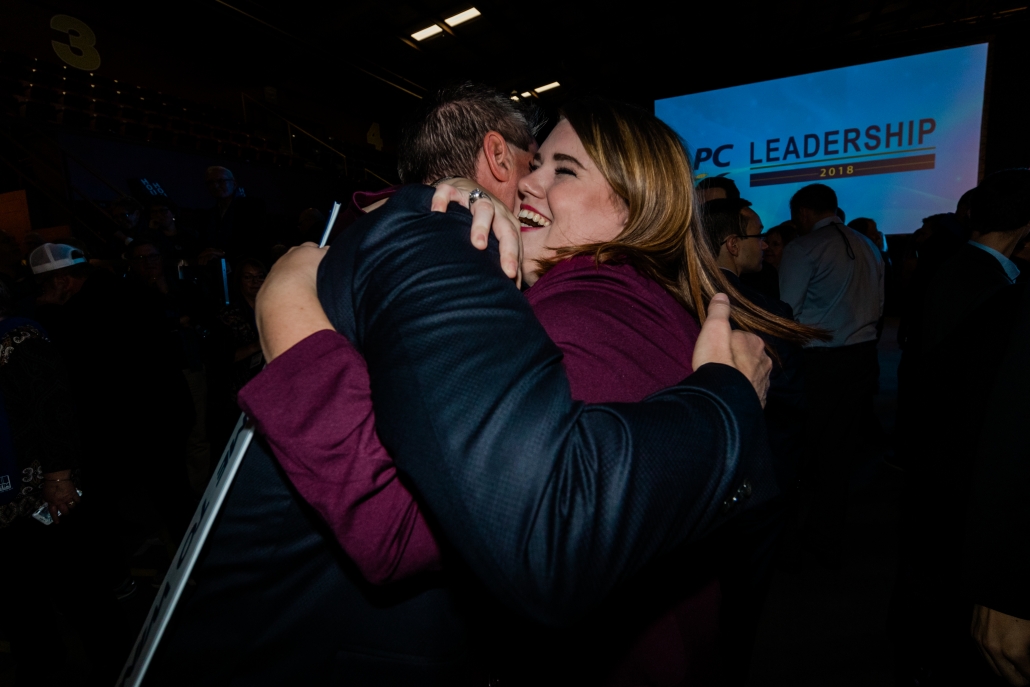
    Photo credit to Sam Foran of Foran Photography

    This weekend, history was made in Nova Scotia.

    Tim Houston, MLA for Pictou East, accountant and entrepreneur by trade, husband of the amazing Carol Houston and father of the down to earth Paget and Zachary, became the leader of the Progressive Conservative Party of Nova Scotia this weekend on the first ballot, something everyone thought was impossible.

    Now many Nova Scotians are asking “Who is Tim Houston?” and “What does this win mean for Nova Scotia?” And I’m here to answer these questions for you as someone who’s involved with the PC Party.

    Who is Tim Houston?

    Tim Houston is one of the hardest working people I’ve ever met. He’s relentless in a good way. He stands up for what’s right and works for the people in his constituency unlike any politician I’ve ever seen. He’s a businessman, a family-oriented person, he’s forward thinking, and he’s a true Nova Scotian. He listens to people, he listens to their ideas, and he works to form those ideas in a way that will benefit our province. He’s a true born leader and he’s approachable. If you haven’t had the pleasure of meeting him yet, I would strongly suggest you try to.

    What does this win mean for Nova Scotia?

    Tim Houston becoming the leader of the PC Party means one thing- in just two and a half years he’ll be the Premier of our beautiful province. People are noticing that the Nova Scotia Liberal Party is a sinking ship. They’ve made broken promise after broken promise, and just barely held on to their majority last election. Only time will tell just how much support they’ll lose in the next election, but one thing is for certain, they won’t be forming government next time.

    Tim put forward ideas during this leadership race that he has full intent of implementing once Premier, ideas that will attract voters on all sides of the political spectrum and that will ultimately win the election. Some of these ideas include:

    • No provincial taxes for ages 25 and under.
    • Establishing a new chronic illness treatment prevention program: Once Premier he’ll focus $100 million on an in-home treatment model for patients with chronic illnesses.
    • Spending smarter on healthcare: Tim focused on chronic conditions because five percent of Nova Scotians consume 70% of our health care dollars due to chronic conditions.
    • Creating a new Ministry of Mental Health and Addictions.
    • Designing a brand-new Economic Development Strategy.
    • Bringing back the film tax credit in Nova Scotia.
    • Fighting against the federal Liberal imposed carbon tax.
    • Investing in infrastructure by making smart decisions as opposed to political decisions.
    • Allow alcohol made in Atlantic Canada to cross borders freely.

    These are just a few of his many great ideas, if you’d like to learn more about Tim’s ideas, visit https://www.timhouston.ca/ideas

    What Tim’s win means for us is that in two years we’ll have a Premier that listens, who has forward thinking ideas, and who fights for what’s best for the people he represents. There’s often this invisible barrier between politicians and the general population, but with Tim that barrier doesn’t exist. He’s not just a politician. He’s a regular guy who ran for office and worked hard.

    My experience with the PC leadership race

    It’s no secret that I supported Elizabeth Smith-McCrossin for leadership. Her ideas, her energy, and her leadership experience attracted me to her highly qualified team, but me supporting her as my #1 choice not once changed my friendship with and support for Tim. Tim and I have been friends for quite some time now; he’s been a mentor, a role model, and has been supportive of me for years. I’m so proud of his hard work and dedication and I’ve always been proud to know him. Whenever he was in town, I was always there supporting him no matter what side I was on. After the first ballot results were announced, I knew what everyone else knew. Tim was about to become the leader of the PC Party. I respect the democratic process of this leadership race and believe fully in order to be successful we need to be a unified party. I support Tim 100%.

    I want to take a moment to recognize Tim’s team and family. They all worked so hard and this wouldn’t have been possible without them.

    This is an exciting time for the PC Party of Nova Scotia. If you’d like to get involved or learn more you can contact me or get involved with your local PC Association- you won’t regret joining our tory family.

    Hannah Dawson-Murphy is a fourth year Politics student and is now a Candidate for the Conservative Party of Canada nomination in West Nova.

  • Ontario Municipal Elections Explained

    Ontario Municipal Elections Explained

    Local governments across Ontario, including the City of Toronto, are currently undergoing municipal elections, in which voters will choose local candidates to serve during the next term.

    Every four years, Ontario voters go to the polls on the third Monday in October to choose their local representatives, who will defend their interests and values while in office. Every resident who is at least 18 years of age and a Canadian citizen is eligible to cast a ballot.

    Municipal governments focus on issues of local importance, including garbage and recycling collection, animal control, land use planning and development, public transit and recreation.

    The City of Toronto

    In the City of Toronto, the election is progressing much differently than anticipated when the nomination period opened in May. Toronto is a particularity in Ontario since it is not governed in the same way as the province’s other 443 municipalities. The City of Toronto has greater power and jurisdiction over local issues and covers a much larger area than a typical municipality.

    Existing City of Toronto Ward Boundaries Map
    Existing City of Toronto Ward Boundaries Map

    47-Ward City Council Map

    Over the last three years, Toronto City Council has conducted extensive public consultations and discussions on the size of Council as a body. It currently contains forty-four councillors and one mayor. The finalized ward map, approved by City Council on November 9th, 2016, changed ward boundaries for forty wards and created three new wards. Therefore, the map approved by City Council would have had forty-seven councillors and one mayor.

    The changes were then unsuccessfully appealed to the Ontario Municipal Board (OMB), the body that reviews municipal by-laws to ensure that they are in accordance with provincial policy. In the OMB decision, the majority of members agreed that “[…] there are no clear and compelling reasons to interfere with the decision of council.”

    The provincial government at the time, led by former Premier Kathleen Wynne, acknowledged that the decision was the prerogative of the City of Toronto and that they would not interfere.

    Proposed 47-Seat City of Toronto Ward Map
    Proposed 47-Seat City of Toronto Ward Map

    25-Ward City Council Map

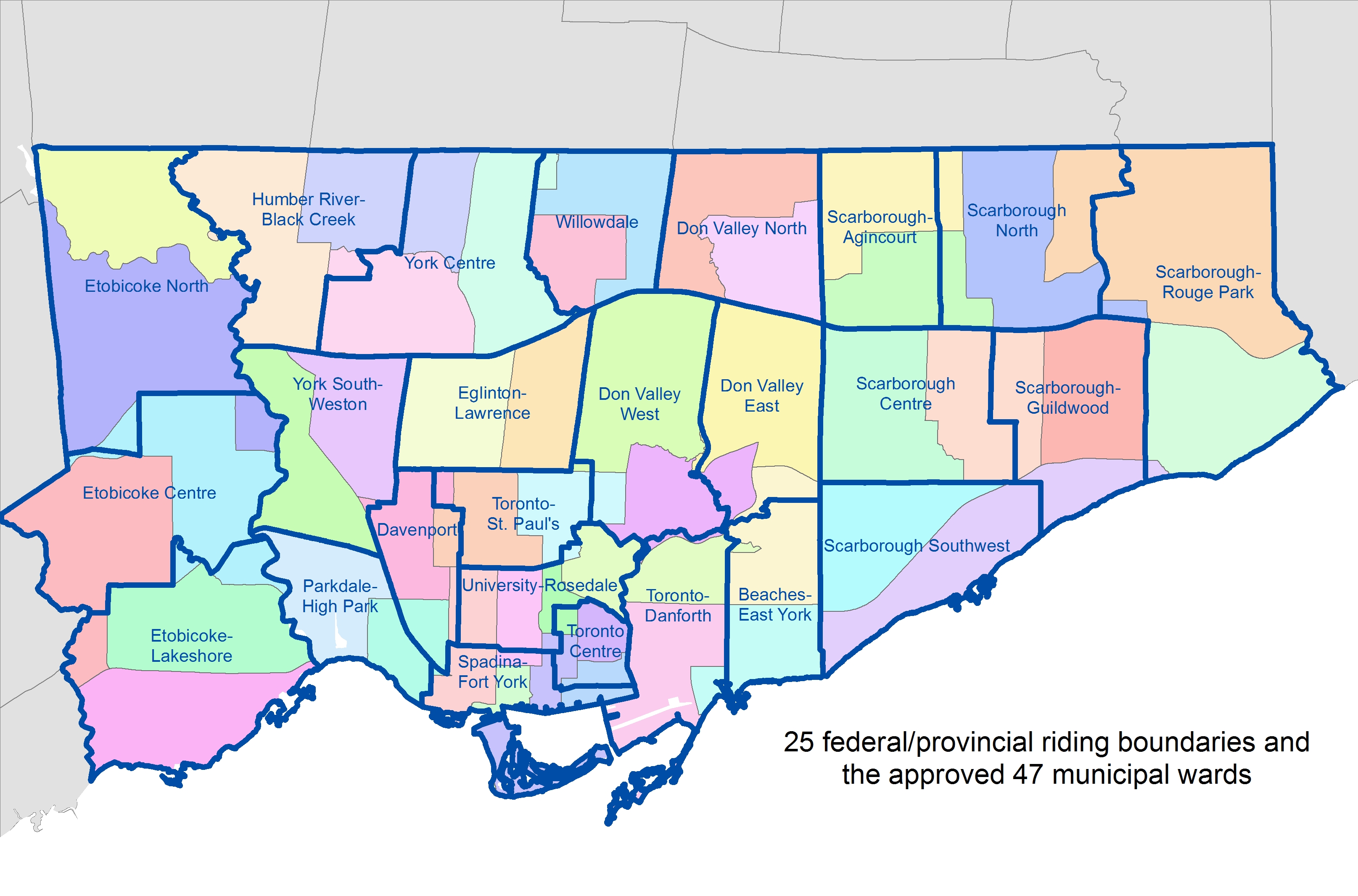
    Following the defeat of Wynne’s Liberal government on June 9th, 2018, newly elected Premier Doug Ford and his Progressive Conservative government announced that it would bring forward legislation to circumvent Toronto’s new ward changes and institute a new ward map aligning municipal ward boundaries with their federal and provincial counterparts, reducing the number of City Councillors to twenty-five, plus the mayor.

    “We ran on a commitment to restore accountability and trust, to reduce the size and cost of government, including an end to the culture of waste and mismanagement,” Ford said. “Because one thing every politician at every level and in every region needs to remember, is that we all share the same boss. We all work for the people.”

    Provincial Plan Map for 25-Seat City of Toronto Ward Map
    Provincial Plan Map for 25-Seat City of Toronto Ward Map (with underlying 47-seat map for reference)

    Public Outrage Intensifies

    Toronto Mayor John Tory, who is running for re-election this fall, took a hardline approach to the Province’s announcement and called a special meeting of City Council to respond. On August 23rd, 2018, City Council agreed to challenge the legality of Bill 5 (Better Local Government Act, 2018) before the courts by a 33-9 vote.

    Ontario Superior Court Justice Edward Belobaba ruled that the Bill 5 (Better Local Government Act, 2018) was unconstitutional on the basis that it contravened the freedom of expression rights of candidates and Toronto residents as guaranteed under the Canadian Charter of Rights and Freedoms. Justice Belobaba further directed the City of Toronto to proceed on the 47-ward map that City Council had approved.

    Premier Ford responded by appealing Justice Belobaba’s decision to the Ontario Court of Appeal and by pledging to invoke Section 33 (the “notwithstanding clause”) of the Canadian Charter of Rights and Freedoms should the appeal not be successful.

    Opposition politicians blasted Premier Ford for using the seldom-used notwithstanding clause, which allows federal and provincial governments to circumvent the Charter rights of Canadians.

    Andrea Horwath, Leader of the Official Opposition, questioned Ford’s intentions and concluded that “we have a power-hungry premier (Ford) who obviously doesn’t care about people’s Charter rights”.

    The independent Liberal members slammed Ford for focusing on upending Toronto’s municipal election rather than tackling the real issues affecting Ontarians.

    Like his opposition colleagues, Green Party Leader Mike Schneider expressed that “we are debating the premier’s personal grudge match against the City of Toronto” and many of its progressive Councillors.

    Final Decision for Torontonians

    Ultimately, the provincial government’s appeal to the Ontario Court of Appeal was successful with the Justices granting a stay to suspend Justice Belobaba’s ruling while it is appealed later this fall. As a result, the municipal election will proceed under the 25-ward map that was approved by the provincial government, the first big win for Ford since taking office in June.

    Student Eligibility to Vote in Ontario’s Municipal Election

    Students from Ontario are eligible to vote in the municipal and school board elections this October, provided that they intend to return following the completion of their education. Check your voter registration status online at www.voterlookup.ca or by contacting your local municipal clerk’s office.

    Oliver Jacob is a third year Politics and History major and News Editor of The Athenaeum

  • Drop the Gloves

    In most institutions that affect our daily lives, there are rules that guide us. These rules ensure accountability, decency, and integrity. The problem is that the people who often get ahead in life are those who circumnavigate those rules. It is time for those of us who try to live by the rules, by the ideas of common human decency and kindness, to drop the pretence, get into the muck and drag those who want to harm our common standard of respect under the spotlight.

    Surprisingly, politics is the easy problem to fix. It only requires those of us with the right to vote to use it, frequently and intelligently. We usually vote based on emotion, asking questions such as, “Who will cut my taxes?”, “Who will keep me safe?” or even as primal as, “Who do I hate less?”. Instead we need to vote upon “Who has the qualifications, who has a reasonable plan and what is that candidate’s record”? Instead of putting power into the hands of someone we like, we need to put into the hands of someone who is decent and knowledgeable, even if we don’t like them all that much.

    Our justice system is based upon the idea that everyone, no matter who they are or what they did or did not do, gets the opportunity to tell their side of things. It is messy, complicated, and at least one person always leaves unhappy, but it is the fairest and most practical way of judging our fellow members of society. The problem is individuals who have felt denied by the justice system and see that it has its limitations have soothed their disappointments by social media vigilante justice, instead of using the court system, where there are rules around evidence and testimony and where everything said and shown is cross-examined. Those who go outside of the justice system, make it nearly impossible for those whom they accuse to have an unbiased hearing, while potentially undermining the police work being done in such a case and other victim who have already come forward or may yet come forward. In many trials, whether it is a class action lawsuit, a mob prosecution, or in rape and murder trials, the prosecution has to do rigorous preparation as even a shadow of reasonable doubt can end a case. When someone goes outside of the justice system for their own satisfaction, any trial held will immediately be filled with reasonable doubt. This new wave of social media vigilantism undermines both defence and prosecution, tainting the principle of justice.

    Students, parents, and the rest of our society are dependent upon the principle that everyone has the opportunity to become educated, and therefore become highly employable. Education is the silver bullet for nearly all of the problems in our world that stem from a form of inequality. But that bullet is malformed when those who should receive the most benefit by education are instead crushed by the systems restrictions and its unprincipled managers, making the system more about profit margins for the institution than future opportunities. With rampant price gouging of students through high tuition, unaffordable living costs, low housing affordability, and a lack of job availability, those managing the system fail to respect and support those with whose futures they are entrusted.

    The major corporations of the world have shirked their responsibilities as community leaders. Average people make the success of these corporations possible by putting in a hard day’s works. It is more than fair for people to then expect to be compensated fairly by their employer. Instead, businesses have continually worked to undercut wages, move jobs away from the communities that relied upon those wages, and have done so while gambling with the global financial market and the health of the environment. People used to be able to place at least some faith in their employer, but now it is hard to trust them to even write a fair paycheque.

    Finally, the media. I don’t think the media puts out fake news, to be quite frank, I generally agree with what I read in the news, and therein lies the problem. Newscasters were given the airwaves for free upon the condition they provide a public service, bringing information to the masses. Now, unless people actively seek out differing opinions in media and the world, they find themselves within their own political echo chamber, where everyone and everything agrees with their view of the world. Media outlets, whether on social media, T.V., radio or in a newspaper have shirked their responsibility to make people uncomfortable so that we can make our fellow citizens see a variety of opinions and life stories. By demanding a variety within our information input, we become more informed and more active citizens.

    People have a responsibility to one another. In everyday life, most of us are able to live up to those responsibilities. It is time that those entrusted with the most important of those responsibilities live up to their end of the bargain.

    Jonah Van Driesum is a 3rd year Politics student

  • The Annapolis Valley Also Has a Cornwallis problem

    On January 31, 2018, Halifax removed the statue of its controversial founder and Nova Scotia Governor Edward Cornwallis. The Halifax Regional Council had voted the day before to immediately remove the statue and place it in storage until the Council can decide what to do with it. Other locations in Halifax have also recently changed names: Cornwallis Junior High became Halifax Central Junior High, and the Cornwallis Street Baptist Church voted to change their name and hopes the street name will also be changed.

    While Halifax is the most publicized example where people are sorting through the legacy of Cornwallis, it is not the only place with things named after Cornwallis. The name Cornwallis is all over the Annapolis Valley: the Cornwallis River, a community called Cornwallis Park near Annapolis Royal, Cornwallis Inn and Cornwallis Street in Kentville, Cornwallis Avenue in New Minas, First Cornwallis Baptist Church in Upper Canard, and several businesses with the name Cornwallis.

    So why is that a problem? Edward Cornwallis was the Governor of Nova Scotia between 1749-52 and founded the city of Halifax in 1749. Cornwallis is most infamously known for a proclamation he issued in October 1749, known as the Scalping Proclamation (you can see a copy of the original proclamation here). The proclamation states that the government leaders “authorize and command all Officers Civil and Military, and all His Majesty’s Subjects or others to annoy, distress, take or destroy the Savage commonly called Micmac, wherever they are found, and [… we] promise a reward of ten Guineas [a currency about equivalent to one pound] for every Indian Micmac taken or killed, to be paid upon producing such Savage taken or his scalp.” Essentially, the proclamation says that anyone who brings the scalp of a Mi’kmaw man, woman or child to the colonial authorities will receive cash. In June of 1750, they increased the bounty to 50 pounds per scalp. Many people, including Mi’kmaw Elder Daniel Paul in his 1993 book We Were Not the Savages, called this action “genocide” against the Mi’kmaq, especially since Cornwallis also declared his intentions to permanently exterminate the Mi’kmaq people in mainland Nova Scotia so that the British could take all the land. Because of this history, Daniel Paul has campaigned for 30 years to remove the statue and the name of Cornwallis on streets, schools and more.

    In addition to killing Mi’kmaq people, Cornwallis helped lead brutal mass killings of Scottish men, women and children as part of the suppression of the Jacobite rebellion in the Scottish Highlands. Whether or not you agree that Cornwallis’ actions were genocide, it is definitely concerning that we honour him by naming streets and communities and rivers after him. As one Kings County Councillor suggested back in 2010, it would be unimaginable for Germany to have a Hitler Street or Hitler River, so why is Cornwallis Street and Cornwallis River okay here in the Annapolis Valley?

    The Annapolis Valley First Nation, whose members have to drive over the Cornwallis River to get into their community, submitted a request to change the name of the River back to the Mi’kmaw name Jijuktu’kwejk, which means narrow river. The Jijuktu’kwejk Project Facebook page continues to provide updates on the efforts to change the name of the river. The Jijuktu’kwejk Watershed Alliance, a group of citizens and communities along the river, started in 2016. They advocate changing the name of the river, but ultimately their goal is to achieve a “swimmable, drinkable and fishable” river. One petition to change the name of the river has 362 signatures, and a petition to give the new bridge in Kentville a Mi’kmaw name instead of calling it “Cornwallis Bridge” has 725 signatures.

    Although changing the name of a river can be a long and complex process, changing the name of a street or building is typically quite straightforward as the town or municipality can do it. It would be quite easy to change, for example, the names of Cornwallis Street in Kentville, Cornwallis Avenue in New Minas, and the Cornwallis Inn in Kentville.

    Some people argue that changing names erases history. Personally, I think that as Mi’kmaq people and other concerned citizens advocate for name changes, we are finally having an honest conversation about Nova Scotian history. Changing the name of something named after Cornwallis publicly acknowledges our history and recognizes that what Cornwallis did was wrong. Changing names also has the potential to recognize the Mi’kmaq history of the area, and possibly the Acadian history as well, by restoring traditional names like the Jijuktu’kwejk River. In addition to Jijuktu’kwejk River, the River has also been called Horton River, Rivière St. Antoine in the 1600s, and Rivière des Habitants in the 1700s. The Cornwallis Inn in Kentville was once called the Aberdeen Hotel. Changing the name of the river or any other Valley landmark named after Cornwallis will not erase history, instead the name Cornwallis River already erases all the previous history of the River.

    It’s high time we have an honest conversation about history in the Annapolis Valley, not just a conversation that acknowledges the actions of British governors like Cornwallis, but also a conversation that includes thousands of years of Mi’kmaq presence on this land, and the history of other groups here like the Acadians and African Nova Scotians. Part of that conversation will likely involve renaming things, but it goes much deeper to trying to figure out how we can all live together in the spirit of the Peace and Friendship Treaties, in a way that celebrates all of our cultures and the land we call home. Mi’kmaw activist Rebecca Moore responded to the removal of the statue by saying “we’re in a time now of truth and reconciliation, and peace and friendship.” Talking about history and renaming can be a time of working together and learning from each other. While we are talking about history, maybe we can find some wonderful Nova Scotian people who deserve to have things named after them.

  • Why I Resigned: Former CRO Speaks Out

    Why I Resigned: Former CRO Speaks Out

    The Honest Truth Behind the 2018 ASU General Election

    We live in a world where election corruption and lying are a way of life in politics. But who would have ever thought that this same lying and the corruption would be seen within the ASU. I’m here to share the truth about how the ASU operates and how it actively destroys those who are truly committed to making it better.

    Let me first say who I am. My name is Harrison Paul and I am an Indigenous Person of Canada. I am a 4th year Politics student who is heavily engaged in politics from the local all the way to the international scale. I have worked on many provincial and federal campaigns. I was the Chief Returning Officer for the ASU. Basically, I know my election shit.

    The Chief Returning Officer is an appointed position for the Students’ Representative Council to make sure that Union Elections are running smoothly and effectively. They are hired to handle everything to do with elections. This also means that Council should not get involved in any form or way with Union Elections. This is explicitly described in By-Law Three (Union Elections Act).

    However, Council failed to maintain this separation in the 2018 ASU General Election, unlike every other Council in recent memory. Members of the current Council acted on their own to influence election officials and the electoral process, calling into question the validity of the election itself.

    The problem with the election started in October 2017 when the ASU Governance Committee began reviewing the Election By-law. They proposed  changes to make the By-Law more fair and equitable for candidates. They passed the changes and sent them to Council with 100% support of the committee membership, including the President of the ASU. The President sits on this Committee and was given a lengthy briefing on the proposed changes before the committee met, as she would be away. She asked a few questions and said that she was happy with the proposed changes when everything was clarified, stating that “everything looks great, I like it”. But this all changed when the proposed changes came to Council in November 2017.

    This is where things began to go south. There were teams that formed during the discussions. There was what I would call “Team Them”, which was comprised of the President, VP Academic and External, VP Events and Promotions, VP Student Life, Sustainability Officer and one Councillor. The other side, which I will call “Team Us”, was composed of the rest of the Governance Committee, the Student Board of Governors Representative, the Chairperson of Council, at least one regular student member and myself, both as Chief Returning Officer and a regular student.

    The Team Us versus Team Them began when the President completely flip-flopped on the proposed changes and claimed that she did not know about the changes and that she was not happy with what was being put in place. She basically caved to the loudest Members and turned against the committee itself. This caused an uproar at Council. Some Members around the table saw this as an attack on Council, acting as if to say we don’t trust them or that we don’t think that things are fair. Consideration of the proposed changes took almost three and a half Council meetings. Near the end of the first meeting, Council started attacking Team Us by saying that Governance Committee had no idea what they were doing, specifically targeting me.

    I thought that the Winter Break would allow for the tensions to die down. Things actually got worse when we returned in January 2018. Council was not asking any questions about the General Election until it was too late. The By-law cannot be changed once the campaign period began after the All Candidates Meeting. Once the campaign period began, Council started to talk about how I was making decisions that went against their ideas even though the rules that I was putting in place were in the spirit of fairness for all candidates.

    The VP Academic and External openly stated that my “Authority needs to be checked” referring to the idea that Council should look at taking away power from the CRO. This would prevent me from being able to ensure a free and fair election. Some Members of Council wanted to squash the very rules that made Union elections fair and equal for everyone, rather than just certain “preferred” candidates.

    Council started as a democratic group of bright-eyed student leaders full of optimism and enthusiasm. This quickly turned into an Executive Dictatorship, where the President and certain VPs acted as though their perspectives were far superior to those of everyone else and the student body at large.

    In the coming days, things got worse. We saw several members of the Executive and a couple of Non-Executive Members who actively sought to break the Constitution and its By-Laws. This brought in the ASU lawyer to explain the repercussions of their unconstitutional proposals. Unfortunately, this did not change their minds and they continued to advocate against the election rules and regulations.

    I saw candidates trying to impeach me because I was making them follow the rules. The then-Deputy Chief Returning Officer, who is now Acting CRO, was going against his obligation to be impartial and objective by telling candidates that they should and need to appeal all of my decisions. This is particularly striking as he had agreed with all of the decisions that I had made when candidates were found to have broken the established rules.

    Some Members of the then-Elections Sub-Committee of the Review Board and other Members of Council started to favour the Executive “Slate” that had formed, even though slates are not allowed. Some candidates felt I was being unfair, although the rules were all laid out and every candidate had access to the election rules and regulations. They were given to them by email and I was always open to questions for clarification.

    By this point, the Teams that I referred to had grown to include almost every Member of Council. Team Us started to include the candidates not being favoured as part of the “slate” by the then-Elections Sub-Committee of the Review Board, the Chairperson, a couple Members of Council and me.

    The end of January was the time I realized that I needed to resign.

    I had lost the ability to confidently serve as CRO. I knew that I could fairly enforce the election rules but I could not handle an ASU leadership that tried to disrupt and interfere with my work at every turn.

    Now we are in February 2018. I am no longer Chief Returning Officer and things have continued to descend into darkness. The Acting CRO has been making decisions that are going against the By-laws and the then-Elections Sub-Committee of the Review Board had begun to uphold all of the Acting CRO’s unconstitutional decisions. At a Special Meeting of Council on Tuesday, February 6th, 2018, Council created a new Elections Committee which sought to remove people who had a perceived bias from the committee. However, from what I have seen, Council has decided to retain the most biased member of the old committee: the President. Clear cut complaints are being deemed invalid by the Acting CRO and are going to the Elections Committee which has upheld these decisions.

    All I was trying to do as CRO was to make this election more accountable and fair for everyone. Several people, including both candidates and Members of Council (and those who are both), did not like this idea so they decided to go against the By-law. They even sought to remove me and the few other people who were the last remaining people trying to enforce the rules and ensure a fair and free election.  It got to the point where I could not handle doing this job anymore.

    I was losing my mind. I kept pushing myself harder when people were not satisfied with my work but it still wasn’t enough for them. I was being attacked constantly by Executive Members, Non-Executive Members and candidates at every corner. I had to do the right thing for me. I didn’t want to keep having my decisions overturned every time someone was unhappy with the fair enforcement of the rules, especially those on the “slate”. I didn’t want to have people going around talking about how I was being ‘unfair’.

    My role as CRO was to make sure that the election rules and regulations were fairly enforced and understood by candidates, Council and the regular student body. I believe that I did my job well until I could not handle it anymore. It’s a shame that the negativity and personal attacks that were directed at me while I was CRO have now altered into downright corrupt decision-making body that may indeed call the very result of this election into question.

  • The alt-nah

    A silent political fringe so low-key they’ve never actually been classified. Enter, the alt-nah…

    Typically, nobody would actually identify as being part of the alt-nah because politics is just…nah. Hillary being crooked? Nah. Trump being… I don’t have enough words to finish that description? Nah. Having a voice in a country full of voices? Nah.
    Leaders within this hidden movement come in many forms. Perhaps one of the most wiry of the bunch is MMA fighter, Conor McGregor. In perfect alt-nah fashion, he leads this movement with pointed tweets like “Fuck politics and fuck religion. I just want to swing a few lefts and a few rights for a couple of hundred mil in peace”. Essentially his followers interpret this as live your life and don’t give a fuck about anything that affects your surroundings.
    Common phrases found within the movement include everything from a laissez-faire attitude that “politicians can’t do anything for me anyway” or “the system is entirely corrupt”. Typically, all these quotes can be chalked down to “not like it makes a difference anyway”.
    Surprisingly, the alt-nah does act consistently within the political system regardless. The most common example of this is in voting. This is perhaps the most exciting point throughout the year that the alt-nah gets to tout the fact that “their vote doesn’t matter anyway”. Not like any votes counted in the last US election or anything or the PC leadership race…
    You may be asking yourself, how does one join the alt-nah? Well, if you’re tired of the system not working for you, if you don’t really give a sh*t whether its Tommy Tea party taking your money and spending it on blow or Tammy the nanny giving your hard earned dollars to everyone else, you’re in luck. All it takes is a lack of shits to give and a few baseless quotes and you too can help!

  • Opinion: Diversity in the Workplace

    Opinion: Diversity in the Workplace

    I get it. There is injustice in the Canada, sure. Is it wrong? It definitely sucks and obviously we should try and curb it, however, what we are doing is not working. Kyle, what are you talking about we help thousands of people every day to escape famine, poverty, and inequality.

    Well, gone are the days of the hippy movement that advocated for peace and unity. Gone are the days where we tried to work together as a collective to make all citizens lives better. Black Lives Matter (BLM), Free speech advocates and feminist movements all represent noble causes seeking to promote meaningful change within North America. Before I dive into my argument I want to make it very clear that I acknowledge there exist inequality and discrimination and I by no means condone it. That being said, are we taking the correct approach when trying to eliminate inequality? In my opinion, absolutely not.

    The trend nowadays in politics is that of division. The left vs the right, those pro-abortion vs. pro-life, wage gap sympathizers vs economists, socialist’s vs capitalists and the list goes on. If you haven’t picked up on it already people can’t seem to get along when it comes to making decisions to fight issues of inequality, or topics that are subject to ethical dilemmas.

    To further explain my argument of why our current approach to solving inequality isn’t working I’m going to examine Canada’s response to issues regarding inequality of women, visible minorities, and first nations within the Canadian workforce. Governments have been scratching their heads trying to figure out how to encourage employers to hire a proportional amount of women and minorities within the workforce. I can certainly concede there exists a large disparity of representation within the Canadian workforce. While I won’t be discussing statistics on the matter I will be scrutinizing the approach taken by the government.  It seems like nowadays on every piece of paper you fill out at school, in the workplace, or for political surveys they all have this stupid little section that makes you more qualified than someone else of equal standing.

    No, I’m not talking about that stellar academic reference or your ten years of relevant work experience in the field. I’m talking about that entirely divisive section that asks you whether you’re a visible minority, female or you identify as xyz. While I understand the attempt here is to allow employers to hire a diverse workforce I think it’s actually counter-intuitive for promoting equality. Since many employers currently do consider ethnicity and gender for potential candidates to hire employers end up discriminating potential employees based on how they were born rather than how well suited they are for the position. Is this not the exact thing we are trying to prevent?

    All things considered equal while negating sex or ethnicity the person with the greatest qualifications should be the one to get the job, scholarship ect.. Why is it that we blatantly force employers, government officials and universities to consider things like race and gender?  Why are not making meaningful steps toward truly reaching for equality? In my opinion, this is not a solution and like I stated its just not working. There still exists inequality in the workforce.

    Well, Kyle, you’ve been telling me what’s wrong without providing any counter to how it should be done? It’s easy. Blind interviews, resumes with contact info but nothing stating race, or gender. Hiring laws that mandate only qualifications are what determine those who are hired, get the scholarship etc. Making meaningful steps towards a system that doesn’t discriminate in any sense of the word. But wait, Kyle, if there isn’t equality now how would this encourage equality?

    The answer to this question is quite simple; it would allow employers greater freedom from scrutiny and more transparency with their practices. It would force those applicants to further their skill sets so it’s undeniable they are the right person for the job. People will no longer be able to make claims of discrimination when applying for jobs since all things considered employers don’t care whether your name is Tommy or Tammy, or whether you complexion works better burgundy or teal. Why is it, that instead of working to create a system completely transparent, fair and competitive we consider those who are born in a certain body?

    It’s no surprise that lifestyles and jobs are often intermingled. Why are we not asking questions like, as a society is it expected that certain people don’t want to work certain jobs instead of simply looking at raw numbers and drawing unfounded conclusions based solely on discrimination? Look, I’m not saying that saying we don’t have a problem here. We do, it’s really terrible and frankly unfair to all citizens. Let’s stand together for true equality and not forced equality.

    Allow competition and merit to drive diversity instead of regulation mandating you need a banana, a fish and 3 soccer balls in your workforce.


  • ASU Calls for Diversity on Board of Governors

    ASU Calls for Diversity on Board of Governors

    The ASU is calling for increased diversity on the Board of Governors (BOG), Acadia’s non-academic governing body. The Students’ Representative Council (SRC) passed a motion in principle on Tuesday January 30th supporting the ASU President to present a proposal to the Board regarding diversity at their latest meeting on Friday February 2nd.

    President Grace H-B said in a statement to The Athenaeum that “Diversity among the Board of Governors structure is vital to serving students to the best of its ability. The Board makes decisions that affect all students around campus. Acadia is stronger for it’s diversity and the Board of Governors will be too. Diversity and equity needs to be reflected at the Board of Governors and in all governance structures at Acadia.”

    The statement noted how the BOG is composed of 37 voting members, only 21.6% of whom are women with votes despite the fact that the campus is 58% female. Ethnic diversity around the table is described as “almost non-existent”.

    Lack of diversity is not due to a lack of unqualified women or minorities, the statement reads, but is “due to selection processes and underlying systemic process to determine who sits on the Board”.

    The motion proposed that the Governance & Executive Committees of the BOG prepare a report and recommendation on increasing equity and diversity. The ASU asked five commitments, including:

    1. Adoption of a diversity management policy by April 6th 2018
    2. Land acknowledgement of Mi’kma’ki at the beginning of every Board meeting
    3. Amending the composition of the BOG to include two indigenous voting members
    4. Ensuring a minimum of 50% of Governors identify as female by 2020/2021
    5. Ensuring a minimum of 60% of Governors identify as female, people with disabilities, indigenous peoples, or visible minorities by 2024/2025

    President H-B noted that although the province isn’t known for its diversity, “Nova Scotia does have a history with many groups that are not being represented at the Board of Governors. It would be hard to say that we’re ever going to be absolutely perfect in fair representation, but that doesn’t mean shouldn’t work as hard as possible to try to do better.

    Working towards a diverse Board is going to take work but it’s work that is so important in ensuring that we’re doing the best we can for students.”

    The ASU is looking to increase diversity within its own ranks, as the composition of the Students’ Representative Council is “lacking in people with disabilities, aboriginal peoples and visible minorities” according to President H-B. The Union is looking to incorporate more students-at-large on committees, spurring students into action within the Union itself.

    EDIT: An earlier version of this article stated the number of students identifying on campus as female was 69%. The correct number is 58%.

    Colin Mitchell is a 3rd year Politics (Honours) student from Vancouver, BC. He is also the News Editor of The Athenaeum and the ASU Student Board of Governors Representative. 

  • ASU General Election: What You Need to Know

    ASU General Election: What You Need to Know

    The 2018 ASU General Election has begun, promising two weeks of exciting campaigning. The entire Students’ Representative Council is up for election for the 2018-19 academic year, with changes in the dynamic of our student government expected.

    What is the Students’ Representative Council? 

    The Students’ Representative Council (SRC) is the governing body of the Acadia Students’ Union, responsible for representing students across campus. All students are automatically members of the Union by virtue of paying student fees. SRC is responsible for determining major policy initiatives, such as referenda, the appointment of certain officials like the VP Finance & Operations, hosting programs, and sending recommendations to larger forums like the University Senate or the Board of Governors.

    Which positions are up for election? 

    The Executive Board, consisting of:

    • President
    • Vice President Student Life
    • Vice President Events & Promotions
    • Vice President Academic & External

    The VP Finance & Operations position is not elected but appointed by the ASU Hiring Board. 

    Non-executive positions include:

    • Student Board of Governors Representative
    • Community Relations Officer
    • Sustainability Officer
    • Equity Officer
    • Arts Senator
    • Science Senator
    • Professional Studies Senator
    • Councillor x4

    First Year Officer is elected in a by-election in the fall, along with any other unfilled positions. 

    Are there debates? 

    Executive candidates will debate on the Main Level of the SUB at 5:30 on Monday February 5th. Non-executive candidates will debate at 5:30 on Tuesday February 6th. The Athenaeum and Axe Radio are co-sponsoring a debate held on Axe Radio on Friday February 9th from 5:30-8:30. The schedule is as follows:

    • 5:30-6:15 VP Student Life
    • 6:15-7:00 VP Events & Promotions
    • 7:00-7:45 VP Academic & External
    • 7:45-8:30 President

    When can I vote? 

    Every student will receive an email on the morning of February 13th. Voting will commence at 8AM and continue until 4PM on February 14th, with the official results announced at 4:30PM by the Chief Returning Officer.

  • Opinion: It’s Time for a New SUB

    Opinion: It’s Time for a New SUB

    Our Student Union Building has failed.

    In its heyday it was the central non-academic social space on campus. It brought together students from all residences, programs, and years. It had a games room, a TV lounge, an art gallery, and services used by all. The first form of the Wolfville Children’s Centre made its home in the New SUB.

    The Old and New SUB, opened in 1949 and 1972 respectively, were the product of student activism. It was students who banded together and demanded a dedicated space on campus. In 1939, an editorial in The Athenaeum wrote of the possibilities of a co-educational student space. A week later the idea of a student union building was pitched.

    The original Old SUB was opened in 1949, after the Board of Governors and Students’ Union approved the $40,000 plan. Harrison McCain, of McCain frozen food glory, was the chair of the building committee when it opened on November 10th, 1949. Services like an older version of the Student Resource Centre and Residence Life made it their home soon after.

    The building was expanded in 1962 following an increase in postwar Acadia students. This cost approximately $100,000 funded by a referendum, with an increase from a $5 yearly fee to $10. Adjusted for inflation it would be $85.23 in 2017. This was based on a plebiscite where 529 of 711 eligible voters (74.5%) cast their ballots and voted in favour of a larger SUB. A committee was then formed to determine exactly what was needed, with their final recommendation becoming the floorplan for the expansion of the Old SUB.

    Originally the Old SUB was to be torn down after the New SUB was finished, but money ran out before the entirety of the plan was realized. Funding for the project operated on “10 cent dollars”- for every 10 cents put forward by students, 90 would be put forward by the university and government. The New SUB as we know it opened in 1972, promising a new age for Acadia students.

    46 years later things have changed. Our SUB no longer serves our needs. It’s too hot or too cold. Vital services like Safety and Security or Pregnancy Support are inaccessible. Few students know where our student government meets weekly. Concerts are difficult to host. We spend incredible amounts of money each year on paying for wasted heat and deferred maintenance. Our campus no longer has a spot where students from all walks of life can converge and relax away from the constant furor of academic work.

    Our SUB has failed us.

    It’s time to build a new one.

    As the Student Board of Governors Representative and an elected member on the Students’ Representative Council, I believe that we should make the lives of our students better. That means those past and present who will make Acadia a great place long after we’ve graduated. We owe it not just to ourselves, but to our peers, to think big. We owe it to them to think of the future.

    Weeks ago, I introduced a motion in the ASU Students’ Representative Council to create a SUB Renewal Committee. I’ve based the process off a similar one conducted at UBC when they transformed their old student union building into the brand new AMS Nest. We are not UBC, nor do we aspire to be, but we are dreamers. We are visionaries. We are, above all else, Acadia students.

    This is a monumental task that will undoubtedly spur hundreds of questions. What do we do with this space? What works in the building? Can we pay off The Axe? What’s the future of The Ath? Axe Radio? How would we design a building? Who would design the building? Do we even want a building? What would the building be for?

    Thinking about these questions is the first step. To move boldly into the future of our student union we must start thinking about our needs as students in the 21st century. The days are gone where brutalist pragmatism was aesthetically pleasing. The days of sustainability, accessibility, and equity are upon us.

    This will not be cheap. Expanding, renovating, or rebuilding the SUB will costs tens of millions of dollars and take many years. This will suck, but it will be necessary. Either we invest now and reap the rewards or wait until it’s too late and pay the consequences.

    Our future must have room for all of us.

    Redesigning our home must be democratic. Every student must have a say. This SUB Renewal Committee would be held in the hands of students, with our elected representatives deciding how we go forward. There will be representatives from the Board of Governors, faculty, and Town Council on the committee, but only students must have a vote. We must write the future of our home together.

    Reimagining our home must be sustainable. Each member of the Acadia community has a part to play in this grand exercise of collective action. By working together to explore environmentally and financially sustainable solutions we can create something great.

    Rebuilding our home must be visionary. We need to create a SUB that lasts the next 100 years. We must create a building that centralizes our services, from the clinic to the print shop, and reinforces the values of our student union. Integrity, excellence, respect, fun, community spirit, and tradition have a place in determining our collective future.

    Let this be a call to arms for all students. It’s time to come together and demand better. Demand better from the university and from the ASU. Each of you must put pressure on your elected representatives, like me, to start building our future. Show up to SRC meetings, send emails, make your voices heard. Each of these may seem inconsequential, but starting the process now will be invaluable.

    Students have the power to make change. Together we can build a new SUB and build a new future.

    I believe in Acadia students.

    You should too.

    Colin Mitchell is a 3rd year Politics (Honours) student from Vancouver, BC. He is also the News Editor of The Athenaeum and the ASU Student Board of Governors Representative. 

  • In Defense of a Centrist

    In Defense of a Centrist

    I am a centrist. For many in the world of politics that means I am apparently an unprincipled flip flopper who will go wherever the political winds take me. For them, my want to find a reasonable compromise is something dirty. I am writing this to call ‘bullshit’. Being centrist, the want to find a desirable outcome for all involved, is how empires are built. The world, including Canada, seeks the common ground, where we can work together, rather than tear each other apart. The strength of centrism can be proven in the three pillars: public policy, economic issues, international issues and social issues in both the proven success of the middle ground and the failure of extremes. 


    To spend or not to spend. That is the argument of the left and the right. That you either need to throw money at every problem or turn off the tap and let everything die. With Centrists, the plan is to invest. If we can improve something we put time, effort and resources into it and if it is a boondoggle we get rid of it. You see this in the success in thoughtful, moderate leaders. Internationally, Barack Obama brought the United States out of the worst economic crisis since the great depression, nationally, Justin Trudeau’s investments have produced the strongest economic growth in Canada in 20 years and locally, Stephen McNeil has put Nova Scotia into a solid financial standing over more than a decade of mismanagement under the Conservatives and NDP. Centrist policies and principles work, producing stability and confidence. 


    In the last 60 years, the global state has dramatically changed. Nuclear states have emerged, the borders of the world have been thrown into flux and the invention of the internet has made the world more connected than ever. The reactionaries on both side of the political spectrum would have you fear every twitch that changed the global balance but centrists have found the formula to lasting peace. Non-interventionists would have you believe that we need to cut ourselves off from the world, make sure no one can come into our borders, or in other words: making sure that you stay on your side of the wall. If we went with their way we would fall into chaos and the rest of the world would continue. On the flip side, there are those who want to cut nations off from one another and over exert their control, creating foes rather than friends. As a moderate, I have seen the success of seeking change through dialogue, finding accommodations that promote cooperation, prosperity, and peace. We find the proof in the Iran Nuclear Deal, the NAFTA agreement and the Paris Climate Accord. Ending conflict with words rather than bricks that would be thrown or used to build walls. 


    Finally, we come the numerous problems that plague the fabric of our social infrastructure and our mortality. We on both sides of the political spectrum hurl insults at each other rather than offer solutions. The societal wrongs that we faced are viewed as a weapon in the political blame game rather than challenges to overcome. Centrists have been able to largely duck the mud being thrown. We work hard for the necessary changes, building a foundation to grow rather than trying to fix everything in one big swing of a sledgehammer. It is probably the thing that makes centrist so unloved sometimes, because we offer reality and hard work rather than the quick fix. In the battle for civil rights, marriage equality and more we see that the ultimate victory was not won over night but in hard, incremental steps because society is often unready for a big leap. It can be the harder and the more frustrating route but is the right one. 


    Left, right, tradition or change there always seems to be a balance somewhere that moves us forward but also closer together. We must respect each other, but be bold enough to make new strides. It is the imperfect perfection of moderation, the only proven method of progress and stability and it is why, despite the naysayers, I am sticking by it. 


  • Ontario: The New Minimum Wage is Killing Your Jobs

    Ontario: The New Minimum Wage is Killing Your Jobs


    “These new policies will be a genocide on minimum wage jobs”

    “A living wage” is what you hear from its supporters, “A genocide on employment” is what you hear from its critics. If you’re from Ontario then you know what I’m talking about. The Wynne Liberal government recently announced that the minimum wage would “gradually” increase to fifteen dollars an hour from eleven dollars and forty cents an hour. This has most people, even those not earning minimum wage, expecting an increase soon. The government of Ontario plans to increase the minimum wage to fourteen dollars an hour by January 1, 2018, then to 15$ an hour by January 1, 2019. That means that on January 1, 2018 Ontario will have a 22.8 percent increase in its minimum wage. As the Globe and Mail states it: “The largest one-year increase in the minimum wage rate of any province over the past two decades”. The implications of the new minimum wage, at least in my opinion, have been underestimated by nearly everyone. The results of this massive increase are going to be catastrophic. “Ontario’s Financial Accountability Office — an independent and impartial agency — published a report predicting 50,000 job losses due to the increase to $15 per hour”. This alone should be enough to persuade you that this increase is not only unnecessary but will be detrimental to the job market provincially. These job losses will not be construction labourers’ or landscapers’, they will be people like you. The issue when discussing minimum wage seems to be that those who earn minimum wage believe that their labour is somehow worth more. While that is a fair opinion to have, I can tell you that it simply is not true. I’ve worked several minimum wage jobs in my life, from floral delivery to pushing shopping carts at a grocery store, all when minimum wage was far less, and those jobs were barely worth what I was paid. There has also been a clear indication that the supporters of this policy think it will alleviate poverty, a premise that is also incorrect, the Financial Accountability Office has said that increasing the minimum wage is not an effective way to eliminate poverty.  


    Let me tell you something, you will not see a proportionate wage increase if you already work a job at a rate at or greater than fifteen dollars an hour. It’s just not going to happen. The best illustration of that is found when considering how many people will now be working for minimum wage. The number of Ontarians paid the minimum wage would balloon from about 500,000 to 1.6 million. You did read that correctly, the number of people earning minimum wage is estimated to increase by more than a million, that means one of two things: either more than a million people won’t be seeing a raise, or there are that many people currently not earning the new minimum, which would have profound results. On this issue, the deeper you dig, the more abysmal things look. The Fraser Institute, an independent and non-partisan research institute, has this to say about the new wage: “the relationship between the minimum wage and median wage is often expressed as a ratio between 0 and 1. The higher the minimum wage increases relative to the median wage, the closer the ratio gets to 1, and the more likely there will be ‘severe adverse employment effects’ from further increases”. After the minimum wage increase, Ontario will have “one of the highest minimum wages in the world relative to the median wage a local economy can support”. This will be particularly hard for those in the grocery industry, an industry with notoriously small margins. Metro Incorporated is bracing for fifty million dollars in additional costs as a result, Loblaw Incorporated, another large grocer in Ontario, is preparing itself for 190 million in additional costs due to increases in both Ontario and Alberta. These bread and butter industries, no pun intended, are where plenty of people are employed and where plenty will soon be losing their jobs. On a more personal note, this wage hike has affected my own business. After five years of running a small landscaping business that is entirely student-operated, I’ve had to put a freeze on hiring and wages. After combatting some of the latest Liberal changes on the federal and provincial level this policy choice has been the final nail in my coffin. The Canadian Federation for Independent Business has stated rather furiously that they cannot support this minimum wage increase, especially without consulting business owners or considering the ripple effect this will have on small businesses. What once was a fight for a “living wage” has become something that will decimate jobs and increase the cost of living for everyone. There are clear and adverse effects to this new minimum wage. The Ontario Chamber of Commerce is yet another institution that has strong objections to this policy “These sweeping changes will tip our economic balance in a profoundly negative way”. I don’t possess the time or the words to describe exactly how angered the private sector is by these proposed changes. However, I do have an official prediction, these new policies will be a genocide on minimum wage jobs.  

    Disagree with me? Write for The Ath. 


  • Football as Symbolism of Today’s “Elections” 


    Football as Symbolism of Today’s “Elections” 


    Oh, the coin toss. One team get’s a choice. Do they kick the ball to the other team, or opt to have it kicked to them? While this may seem like a mundane choice, it’s actually quite critical to how teams attack or rather approach their opponents to start off the game. Much like football, elections often force candidates to adapt a strategy to outsmart, out smut, and out play their opponents. In football, the choice really comes down to personal preference. If you receive the kickoff you get the first crack at offence with the potential of getting a touchdown. However, if you’re brave, you can opt to kick the ball away to the other team, in hopes that your defense has the skill to stop them in their tracks before they reach the end zone, in turn scoring a touchdown.  


    In an election, the early days can often set a campaign off on the right foot. Sadly, rather than meaningful strategy, most politicians opt for the safer bet to hit the ground running on the offensive. In it’s simplest form, this equates generally to statements about how the current leader in power is failing, and how the moment they get into power, they will replace, repeal, or annihilate their predecessors’ policies.  


    It’s now halfway through the first quarter and things are starting to get interesting. Each team has had its exciting rushes, passes, and tackles. No one team has a huge lead over the other and things are starting to become interesting. But then it happens, out of nowhere and in an impressive feat, the team on the offensive completes an impressive play that brings them to the goal line. The defensive team now has an option, do they play it safe and hope their team can force an incomplete pass, or do they rush the quarter back with a blitz?  Obviously, a blitz is more of a risk but it often results in bad decisions from a rushed quarterback, and is most definitely the most exciting of the two choices to watch as a fan. Much like football, elections generally heat up when one candidate starts gaining popularity, which can be compared to taking a lead in a football game. The opposing candidates now have some choices to be made. Do they sit back and trust their team’s ability to perform, or do they try and force the candidate who’s gaining popularity to make a mistake? For anyone who follows elections in the Western world it comes at no great surprise that most candidates opt to go on the offensive and blitz their opponents, rather than relying on their platform and their competency.  


    Halfway through the second quarter and the game is becoming intense. Fans representing both teams are starting to become heavily engaged in the game, and disputes start arising over whether the ref was paid off by the other team, or whether that pass was, in fact, completed inbounds. It’s heated, and there exist those who take things to extreme levels, but things are still for the most part civil. In elections, this scenario plays out often. A small group of leaders amongst the election becomes clear and many supporters begin heavily weighing in on the elections outcomes. In this case, the referees of the election are in the form of media. In today’s age they play an increasingly big role in a supporters understanding of the debates, policies, and news of the election. Sadly, unlike football, where it is prohibited to pay off a ref to rig a game so that one team will surely win, the same is not true for the media throughout elections. Just look at the past US election. News companies like Politico, CNN and Mother Jones posted hundreds upon hundreds of articles slandering President Donald J. Trump. However, other news agencies also campaigned to make Trump look good, and make Hillary Clinton look like a criminal (she is I might add).  


    We now find ourselves in the third quarter. Things are getting tense. There have been a couple of dirty hits, missed calls, and amazing plays. It’s really anyone’s game and all it’s going to take at this point is for one team to make a mistake. Everything was civil until this point, but now, with so much on the line, and so much emotion driving players to win, stuff can start to become dirty. Blindside hits, low blows, a cleat to the ankle. These things all culminate to a high-tension match where things could blow up at moments notice. Either team is waiting for the other to slip up for an excuse to join in the fun. At this point in elections things are getting tense. A few candidates have been in it since the start and are heavily invested emotionally in the election’s outcome. The media has been providing the kind of dirty plays found in football, and candidates from both sides fuel the fire knowing that all it takes is one wrong move from their opponents to create an entirely new ball game. At this point, fans and political supporters alike are fighting each other over the progression of the game, which may or may not be satisfactory for either side. It’s heated, crushing blows are being delivered and the spectators are left both shocked and enthralled. It’s still anyone’s game but things are tense and both sides are starting to tire and make mistakes.  


    Enter the fourth quarter… at this point anything that’s not caught by the refs goes. Purposeful knee’s to the stomach in a pile after the play, an exceptionally stealthy late hit, or in extreme cases a funny looking boxing match. Elections are no different. In the late stages, candidates are so invested they can easily let things escalate beyond control. Anything goes, from starting unsupported rumors, to landing smear campaigns suggesting that the other candidate is a lunatic who will never be competent in office or even digging up some out of context quote from their opponent from 2 decades ago. This may seem far fetch but it happens all the time, and it’s an almost expected outcome of every election in the past 20 years.  


    The outcome of this game or election as I’ve been comparing it to is insignificant. Throughout the game, things went from a friendly match, to an all out cesspool of emotion, controversy and unfounded claims. Both sides are too heavily invested in the final outcome, and not the game itself. When things became tense they chose the low road, rather than the high road. They could have kept things clean, kept a cool demeaned and a level head, respected their opponents efforts and still overcame them with skill and finesse, but they most often do not. It becomes a match where anything goes, the worse their opponent looks in the eyes of the public the better. Is this really how our elections are supposed to run, or as a society have we been mistaken, mislead and fooled by the media and political candidates who will do whatever it takes to win? I think so, and I’m sure tired of all the attack ads, the lies and the clever ad campaigns that take away from the election itself, and turn it into a he said she said battle comparable in significance to that of a child blaming something they did on their older sibling. 
The game is won, the trophy goes to the winning team, and their fans are delighted beyond belief…. until the next season. 

Betzillo positions itself as a versatile gaming hub where structured bonuses and adaptive gameplay mechanics support both short sessions and extended play.

Built with a focus on innovation, Spinbit integrates modern casino architecture with rapid transactions, appealing to players who value speed and digital efficiency.

Ripper Casino emphasizes bold entertainment through high-impact slot titles and competitive promotions crafted for risk-oriented players.

A friendly interface and stable performance define Ricky Casino, offering a casual yet reliable environment for a wide spectrum of gaming preferences.

King Billy Casino channels classic casino spirit into a modern platform, delivering recognizable themes supported by contemporary reward systems.

Immersive visuals and layered slot mechanics are at the core of Dragonslots, creating a narrative-driven casino experience.

Lukki Casino appeals to players seeking direct access and minimal friction, focusing on fast loading times and intuitive controls.

Casinonic provides a structured and dependable gaming framework, blending modern slots with transparent operational standards.