Tag: research

  • Finding Fiander: Sociology Students Uncover Details of Student’s expulsion in 1959

    Finding Fiander: Sociology Students Uncover Details of Student’s expulsion in 1959

    It is difficult to imagine being expelled today for an act as innocuous as writing a feather-ruffling poem, but that is exactly what happened to former Acadia student Robert Fiander in 1959.

    On the afternoon of March 14th, students, faculty, and community members alike gathered in the Fountain Commons to learn about the “Fiander Fiasco.” The presentation was lead by a group of sociology students in a Graduate Research methods class, detailing the expulsion of Acadia student Robert “Bob” Fiander nearly sixty years ago. Fiander’s expulsion was based on the grounds of “foul blasphemy” regarding the controversial poem that he had penned and published in the Athenaeum. On February 3rd, 1959, Fiander received a letter from the then president, Dr. Watson Kirconnel, informing him of not only his suspension but demanding he leave the town of Wolfville. The grounds of suspension? Foul blasphemy, regarding a poem he had written for the student newspaper, the Athenaeum, titled “Paradoxically Speaking.”

    Click here to read Fiander’s Paradoxically Speaking

    Sociology students involved in the project were in their fourth year or doing a graduate degree. There were six students who presented their findings and the story of Fiander, as follows: Kate Dalrymple, Nora Allen, Sulemain Semalulu, Elise Snow-Kropla, Jessica Bundy, and Vicki Archer. The student researchers noted that putting the pieces of Fiander’s story together was not an easy task. The researchers had little information regarding Fiander to work from, and had to refer to archival sources, interviews with students at the time of Fiander’s Acadia career, and interviews with his relatives. Through months of work and dedication to the project, the students uncovered events leading up to Fiander’s expulsion, deliberations regarding the poem and his dismissal from Acadia, as well as those involved in and opposed to the process.

    Dr. Zelda Abramson, a sociology professor who aided the students in the project, introduced the project, emphasizing that Robert “Bob” Fiander’s situation had sparked interest in not only his expulsion, but his life, his personality, and the wider Acadia culture at that time. The crowd listened as Dr. Jessica Slights of the English department performed the poem that Fiander penned. Slights asked that the audience imagine that they were being transported back to 1959 as she delivered the poem in the satirical and conversational style Fiander had intended.

    Stressed was the importance to understand historical and cultural context at this time. Researchers spoke to the cultural context of Acadia in 1959, highlighting the community standards and social pressures, sharp gender roles, taboos that continued to surround alcohol and the “slight religious undertone” of Acadia’s Baptist roots. Acadia at the time housed less than 1000 students, of whom most lived in residence. The town of Wolfville, still largely dominated by conservative values, was very separate from the school, often at odds with Acadia’s more liberal body of students. Also characteristic of the time were strict rules, regulation, and punishment deemed “moralistic,” but the lack of formal documents and communication of these students presented another intervening factor. Especially relevant was the existence of a demerit system, one that Fiander seemed to have encountered before the poem.

    The students also delved deeper in to Fiander’s situation, regarding who made the decision to have him expelled from Acadia. Although on the surface it appeared that it had been the singular motion of President Kirconnel, further research proved otherwise. The importance of the student judicial committee and students’ input in the event as well as the minutes of the Board of Governor’s presented a story that showed both support for and disdain for Fiander.

    The presentation finished with an analysis of the poem from Dr. William Brackney of the Divinity College. Dr. Brackney provided insight on to the content of the poem, and the contempt of god and sacred people, such as alluding to the Virgin Mary and the death of Christ in a very untraditional manner. Ultimately, he expressed that although “blasphemy” was a harsh assertion, the piece certainly did contain many elements that could certainly bring about a negative reaction from the Baptist Community that Acadia housed at the time.

    Blasphemous or not, the poem is certainly communicative of Fiander’s intelligence, wit, and willingness to bring dominant and traditional modes of thinking in to authority. The group of student researchers did a phenomenal job not only uncovering details of Fiander’s time at Acadia, but of portraying the climate of Acadia in the late 1950s, and of humanizing Fiander so that he is not to be forgotten.
  • How to Start Doing Independent Research In Your Undergrad

    Doing independent research in your undergraduate is a great idea. It helps you to develop strong ties to the things you will be studying and will better prepare you for the industry you are entering. Here are some tips for making the process easier:

    1. Talk to professors. Tell them about what you are passionate about and let them know ahead of time if there is something you’d like to pursue as a specific career development. The summer is a great time to do some independent studying on a topic that interests you. Most professors would love the chance to help a student learn more about their field. Take advantage of the resources that are available. Do some research on what each professor has studied, and ask them for recommendations based on their fields of specialization. This will get the conversation going and will show you how many wonderful opportunities there are to discover new things.
    2. Decide on a topic. This can happen through conversations with your professors, or through research online. Look at things that are particularly interesting in your field of study at the moment, and make a note to take more time out of your day to learn about those things. It’ll be good information to know, and will get you ahead in the industry you are preparing to enter.
    3. Ask the professor to allow you to do a not-for-credit project. This will allow you the chance to learn about format while not directly working on something that affects your grade. Professors love the chance to pass on information, and so showing this sort of interest will be good for building a relationship with your professors. Doing a defined project gives your research purpose, as well as a definite end. It will help to organize your information in a way that will be easier to access in later years, and it gives you a definite goal to reach. Organizing your information in this way will give you valuable skills for further research later on in your academic career.

    Ask your friends to keep you accountable and talk about your research with fellow classmates. Getting more people involved will motivate you to the end of your goals. Doing research can be a lot of work, but in the end it’ll be something that you won’t regret.

  • Agriculture and Computer Science

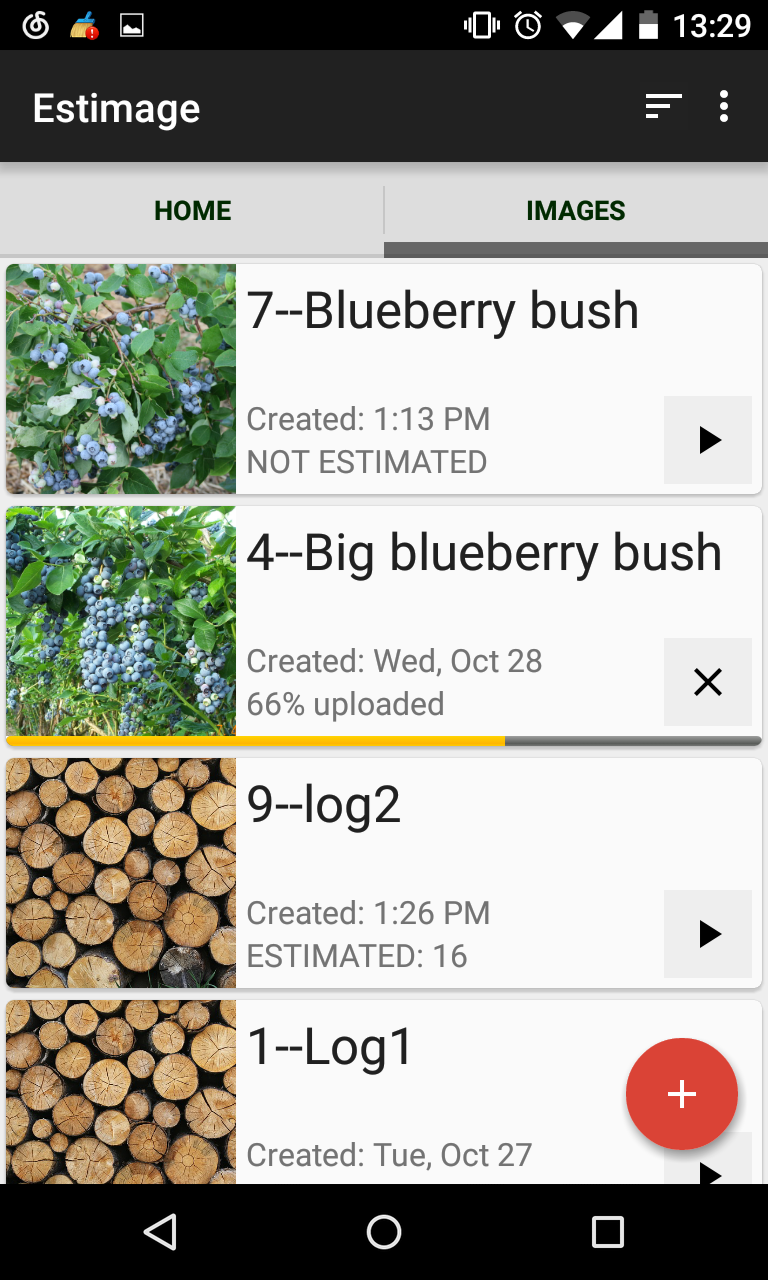
    Computer Science Honours student Yonghong Chen developed an app that can be used to predict the amount of crop yield that an agricultural field will produce using only a picture. This startlingly accurate system is inexpensive and meets a huge demand within the farm industry. Since farmers often have to wait to measure their crops after they have been harvested, this technology will help them make important decisions sooner. A key component of the app is that it allows a user to take a picture of a section of produce, and gives the user the number of crops in the section based on that picture. The development is known as the “Estimage” system. Interestingly, it was developed by first placing coins on a table and asking the app to count the number of coins. This system was also used to count the number of logs stacked in a pile. Eventually it was able to count the number of blueberries on a bush, as well as other agricultural applications. The system is very effective and saves a lot of time and money in the amount of effort it takes to count objects. This clever app combines counting and agriculture in a new and ground breaking way. The surprisingly simple, yet previously underdeveloped idea, has many other features as well. The Estimage system consists of an Android client app for interacting with users, a PHP server app for handling requests, and an Octave program for image normalization. It also consists of an open-source ML software package ilastik that is used to apply a predictive model to an image. The Estimage system is very good at detecting shape, color, and size, and is also good at distinguishing between backgrounds and objects, provided that the background is similar to that which was used to train the model.


  • Likeable Lichens!: Focusing on Mercury in Nova Scotia Lichens

    Likeable Lichens!: Focusing on Mercury in Nova Scotia Lichens

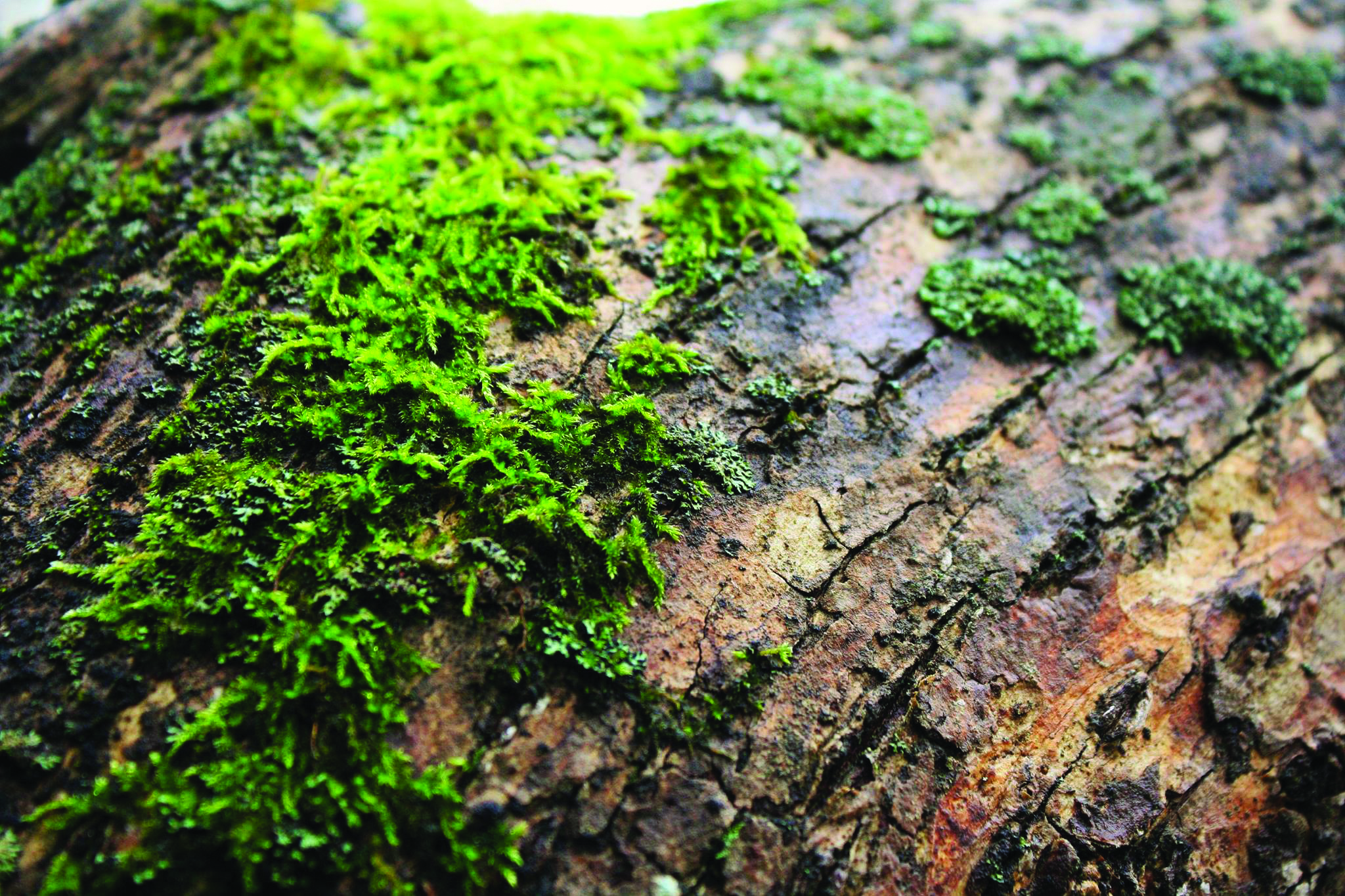
    The next time you’re outside, take a close look at a few different trees. You will likely see several varieties of small structures on the bark that don’t seem to be part of the tree itself. Odds are, these are lichens. Lichens grow on more substrates than just trees. Some grow directly on soil, and others grow on bare rock. Lichens are often-overlooked organisms that are something special. Although they were thought for centuries to be plants, they are not. They are in fact a relationship between a fungus and a green alga or a cyanobacterium. Lichens are comprised of a fungal thallus (body), with algal cells (primitive, microscopic plants) interspersed within it. This kind of interaction involving different kinds of organisms living together is called symbiosis.

    Why would these two organisms live together when they are so different? Being plants, the algal cells photosynthesize. The fungus can use some of the algae’s products for its own growth, and in return, the algal cells have a safe place in which to live, as they would rapidly dry out and die without their fungal partner. As both organisms here benefit from the presence of the other, it is called a mutualistic symbiosis.
    Now that you know a bit about lichens, why would a biologist be so interested in them? Partly because they are awesome, but mostly because they have more uses that meet the eye.

    Lichens are epiphytes, growing on other organisms and substrates without harming or damaging them. As such, they must get all their nutriment from the air around them, by absorbing airborne chemicals and water into their body. This is key to my research. Since they absorb substances from the surrounding air, and are fairly indiscriminate about what they absorb, they can inadvertently bioaccumulate things that they do not need. Thus, lichens can sequester all sorts of things, including toxic heavy metals like lead, cadmium, and mercury, to name a few. While heavy metals are present naturally in minute concentrations in the environment, human activity can cause these concentrations to reach dangerous levels.

    My research, funded by the Trustees of the Arthur Irving Academy of the Environment, focuses on mercury in Nova Scotia lichens. Mercury is highly toxic and capable of transitioning into methylmercury, a dangerous chemical known to cause damage to the mammalian immune system, and to alter genetic and enzymatic systems. This is important, as mercury can consequently have negative effects on humans and other organisms in food webs. One way of measuring the concentrations of this dangerous contaminant in the environment is through mercury analysis of lichens. My research aims to establish base-line data and to visualize mercury “hot spots” that may need remediation in the province.

    To measure the mercury content of lichens, the first thing to do is to collect lichen samples and their GPS coordinates. Lichens do not have an especially complex internal structure, lacking even a vascular system, so removing a part of them usually does no harm to the whole organism.

    Once the lichen sample is acquired, it needs to be reduced to a fine powder for analysis. For this we use a technique known as cryo-grinding. You could just grind the lichen as-is, at room temperature (21°C) but due to the lichen being flexible and tough, it would take too much time, and the results would be non-uniform. However, if you make the sample very cold, by pouring liquid nitrogen (-196°C) on it, the lichen becomes as brittle as glass, and shatters instantly when you grind it. For some context, the coldest temperature ever recorded on Earth was a comparatively balmy -94.7°C in Antarctica in 2010.
    Once the samples are in powdered form, they can be analyzed for mercury content. This requires a complex machine called a Mercury Analyzer that does exactly what the name suggests. Long story short, it incinerates the powdered sample at a very high temperature, passes the resultant gases of combustion through chemical solutions, and eventually through a special device that can detect exactly how much mercury the sample contained. By knowing the amount of sample analyzed, we can extrapolate the percent concentration of mercury.

    As of the end of February, the first round of lichen samples have been reduced to powder, and will be put through the Mercury Analyzer in early March. Further sample collecting will start in May, and continue throughout the summer.

    Lichens are a natural, viable alternative to deployable electronic mercury monitoring devices, which are cumbersome and expensive. Lichens grow slowly over decades, making for long-term monitoring solutions that can be re-visited over many years, costing nothing to maintain or install. It’s no wonder we lichenologists are lichen’ it!

  • Acadia Archives: Acadia and the War

    Acadia Archives: Acadia and the War

    I currently work as a Research Assistant in the Acadia Archives, working on Wendy Robicheau’s sabbatical project entitled “Acadia and the War.” The goal of this project is to investigate how Acadia students and faculty responded to the First World War, and to share their stories. Acadia has a very rich history, and the wartime spirit on campus becomes abundantly clear through sources like the Athenaeum issues during the conflict. Dr. Cutten, to whom Cutten House owes its name, was Acadia’s President at the time as well as a Recruitment Officer. His efforts to encourage students to enlist, and to document their stories following the war, provide the archives with many lists of students, and in several cases, descriptions of their service. From these war records, our search began.

    Initially, I began investigating the 14 Nursing Sisters to leave Acadia for Casualty Clearing Stations, and Stationary Hospitals. Although the list was short, the search for women in the archival record is always strained at best. Of the 14 who served, two died
    during the war. Jessie B. Jaggard, a matron at Lemnos in Gallipoli who died during service in 1916, and Adruenna, or “Addie” Allen Tupper, a Nursing Sister who had succumbed to illness. For those on our list who served as VADs, little more than their names are known to us. Although we now know that many of Acadia’s Nursing Sisters were recognized for their deeds, as some were lauded by fellow nurses in their records and others were mentioned in dispatches for bravery. Cora Peters Archibald, for example, had served as a Dietician for the 3rd Canadian General Hospital in Etaples, France. She is mentioned in the hospital’s ‘War Diary’ for her knowledge of nutrition, and her task to maximize the calories afforded all patients and staff given the hospital’s limited food supply. She would later return to Acadia to found the Department of Home Economics.

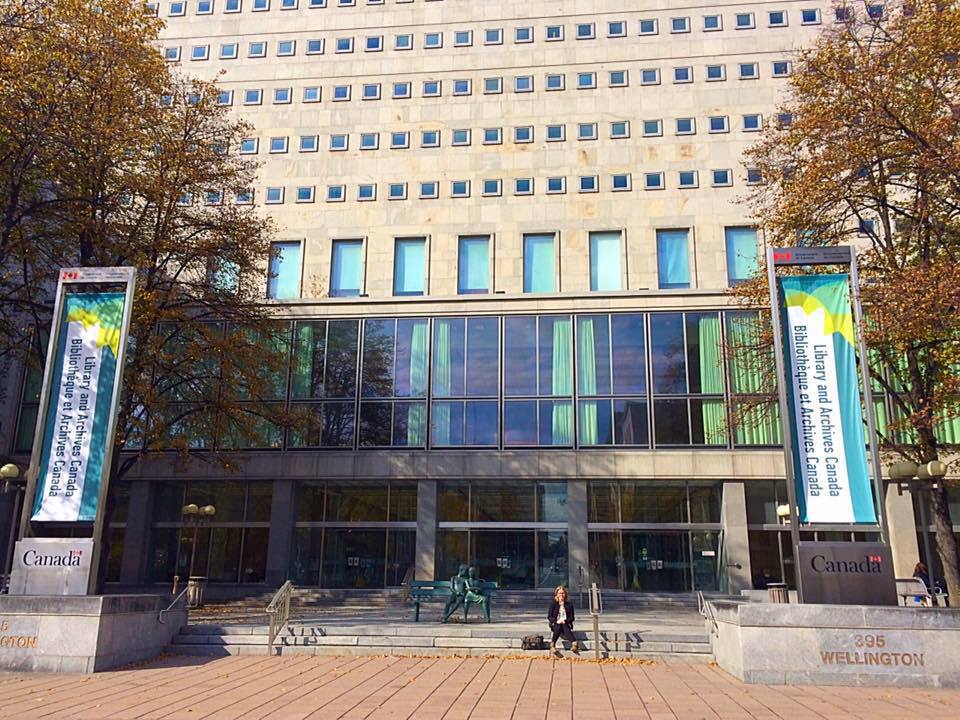
    After a few months of searching for their stories, we travelled to Ottawa to consult files on our Acadia men and women at Library and Archives Canada. For my part, the trip involved photographing medical and war records for our nurses, as well as hospital administrative documents. Everything was photographed from the 1917 Christmas dinner menu, to hospital blueprints. The variety of sources available to us made their stories even more vivid, and oddly present. We also attended museums and museum archives to aid our search, and the reality of the project began to feel much more tangible. Using archival sources we were able to investigate the lives of individuals whose names would otherwise be lost to the tragedy of the Great War.

    Our project has certainly developed since then, and in November we were given the opportunity to give an Open Acadia talk to students and community members. We presented our research as if we were a Recruitment Officer and a Matron seeking volunteers for the ongoing war effort, before returning to 2015 to discuss the nature of our study. Since then, we have continued our research, and are currently developing an online database whereby Acadia students who served during the war may be identified, alongside all service information available to us. Our goal is to bring Acadia’s wartime legacy to the present day, in a format that is widely available. Working in the Archives has certainly changed the way I view local history, and I consider it a privilege to have studied the many stories of Acadia’s own soldiers and medical staff. The more researchdone, the more you begin to feel the gap of a hundred years begin to close, with more questions revealing themselves along the way.

  • Food Insecurity at Acadia University

    Dr. Lesley Frank is a professor in Acadia’s Sociology Department. Frank, alongside a graduate student in the department, has been conducting a study investigating the prevalence food insecurity at Acadia. The research was spurred in part by Meal Exchange, a Canadian student-run organization. The research seeks to address the lack of measures of food insecurity on Canadian campuses, as no such studies had been conducted prior to the current research. The research conducted was done in part with the University of Saskatchewan.

    The research, conducted last winter, indicates that food insecurity is a significant issue for many university students. Frank’s research measured food insecurity through a ten-question scale and asked about a variety of topics relating to financial stability, accessing sufficient quantities, and qualities of food, all adapted to a student population and a one-person household. The survey was administered 1030 students, nearly one third of the student body, Frank found that 38.1% of students, or 392, classify as food insecure. When looking at just off-campus students (who do not live at home with their parents), who are even more pressured to find their own food because of lack of a meal plan, the percentage became 49.5%.

    The data showed many trends in regards to grouping of food insecure students. A prominent trend indicated that as students move through university, their level of food security decreases. There was a higher rate of food insecurity for working students than for non-working students. Students who paid for their schooling through their own employment had the highest rate of food insecurity, at 56%, followed by students who used loans to pay for school. Results such as these highlight the deep connection between financial means and food security.  Additionally, students were asked about how food insecurity impacted their university experience, including health, academic and social outcomes. Half of food insecure students said that their experience was affected by being food insecure. The data produced statistically significant findings surrounding the connection between stress levels, self-reports of physical and mental health, and grades with food insecurity. The more food insecure a student is, the higher the stress, and the poorer the health outcomes and grades.

    Food charity resources such as the food bank are not resources that many students know about or use. The research shows that less than 1% of students use food charity resources. Students cope with food security in a variety of ways.  Strategies that food insecure students reported using included borrowing money from family or friends, as well as a heavy reliance on credit cards to purchase food. Just under half of these students reported delaying buying text books or avoiding all together, as well as obtaining part time jobs to earn money to provide for food costs.

    This research is very revealing and highlights a prominent issue. Student food insecurity is not an issue that is exclusive to Acadia University. As a result of the research Frank is working on, 13 other universities across the country have used the survey and are in process of measuring food insecurity at other Canadian campuses.

  • Duck, Duck, Goose: Detrimental Dietary Debris

    Duck, Duck, Goose: Detrimental Dietary Debris

    Many of you may remember playing duck, duck, goose as a child. Today, many seabirds unwittingly play this game, but with one deadly variation. Instead of being “it,” birds tagged by human contact will likely die. This sad outcome is due to the increasing occurrence of plastic ingestion among marine birds. As of 2015, 56% of seabird species were recorded to have consumed plastic. This fate is hard to avoid due to the high prevalence of aquatic plastics. From surface waters to deep-sea beds, there is no safe zone.

    Humans have been releasing plastic into the environment since the early 1900s, and we now know that plastics are a serious environmental hazard. In 2010 alone an estimated 12.7 million metric tons of plastic were released worldwide. By 2025 this value is predicted to skyrocket to 155 metric tons annually. If this trend continues, 99% of all seabird species will be consuming plastic debris by 2050. Once consumed, plastics can remain in these birds for anywhere from 2-3 months to an entire year. In severe cases, plastic ingestion is fatal because plastic waste mimics natural food without providing nutrition proportional to its mass or volume. This leads to weakness, false feelings of satiation, irritation of the stomach lining, digestive tract blockage, internal bleeding, and death through starvation.

    Despite a wealth of research and literature focusing on this problem in marine birds, little work has been done on plastic ingestion in freshwater birds. Data from freshwater ecosystems suggest that plastic levels are comparable to those in marine ecosystems. Likewise, research on freshwater organisms has found similar rates of debris ingestion to those reported in their marine counterparts. However, to date only one publication on freshwater avian plastic ingestion exists. My research aims to fill this gap.

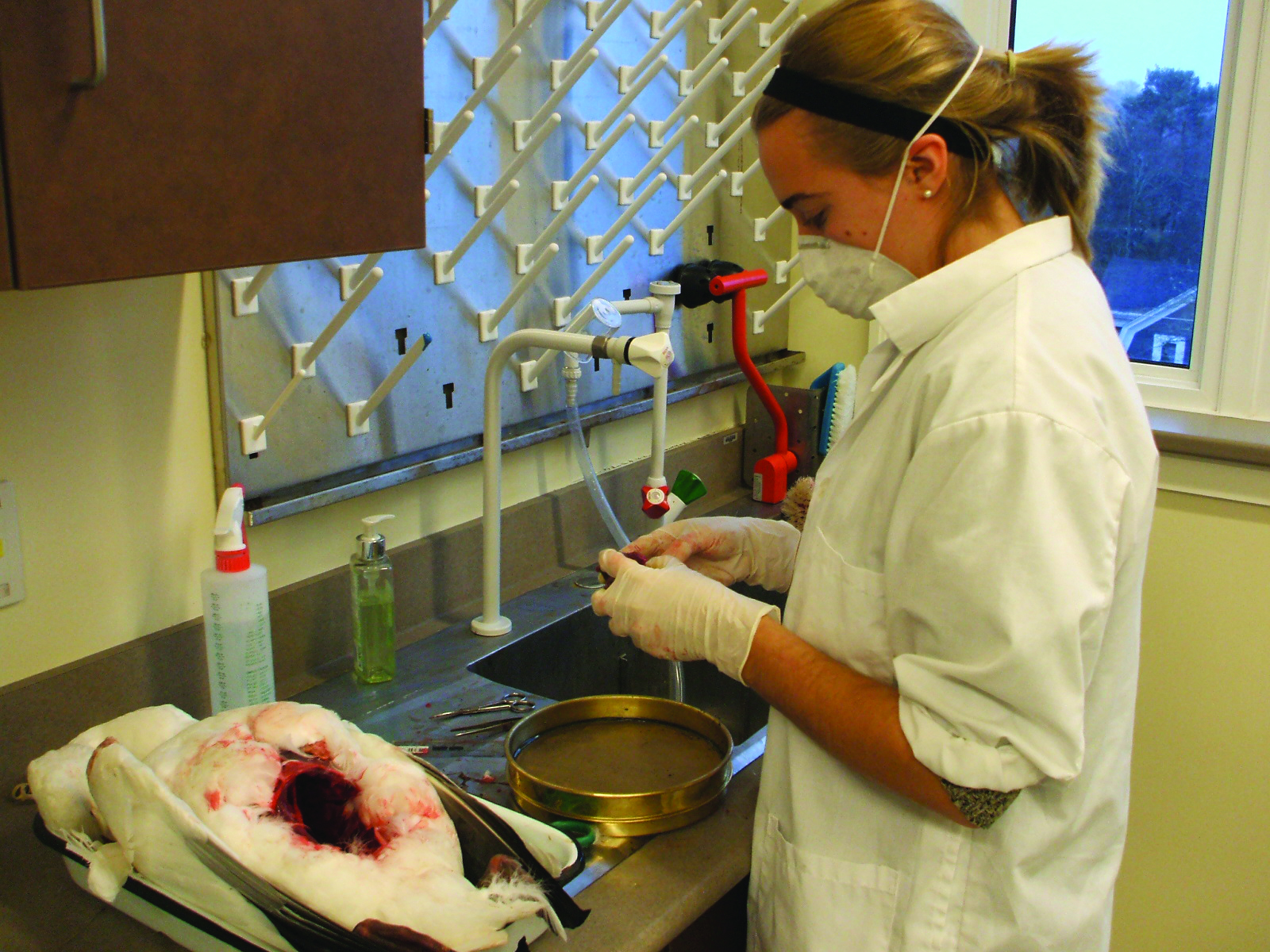
    I am conducting a dissection-based dietary analysis study on North American freshwater birds to determine anthropogenic (human) debris ingestion rates, and establish important baselines. Don’t panic! No birds are harmed specifically for my research. I am accepting previously killed birds from government agencies, hunters, and private individuals. Once I have received samples, I remove the gizzard (the avian equivalent of our stomach) and flush the contents out into a 0.5-millimeter sieve prior to analysis under a dissection scope. I am looking for any traces of anthropogenic debris, with a focus on plastics.

    Of specific interest to my project are plastic microbeads. Microbeads (polyethylene plastic microspheres widely used in cosmetics as exfoliating agents) have a diameter of less than 1 millimeter, meaning many wastewater treatment plants cannot remove them. This is problematic because the per capita consumption of microbeads for the U.S. is approximately 2.4 milligrams per person each day, leading to the U.S. alone releasing 263 tons per year.
    To date, relatively little research has been conducted on microbeads; however, public outcry has meant that some major companies have banned, or are planning to ban them. The Canadian government is proposing to add microbeads to the Canadian Environmental Protection Act’s list of toxic substances, following the 2015 signing of the Microbead Free Waters Act by President Obama. This act bans manufacturing rinse-off cosmetics that contain plastic microbeads, beginning in July of 2017. The Dutch parliament is also pushing for a European ban on microbeads as early as 2016. Although legislation is being put into place to ban microbeads, their continued release into waterways could be harming birds, fish, invertebrates, and other organisms. If you want to reduce your microbead usage, look for key words such as “exfoliating microbeads,” “polyethylene,” or “polypropylene” in the ingredients list or packaging of your personal care items, including your cosmetics, face and body scrubs, body washes, and toothpaste.
    I am currently accepting digestive tract submissions from across North America. If you are interested in contributing to this important research please contact me at [email protected] for further information. With increased awareness we can all make a difference for aquatic organisms before it’s game over.

  • How do we Process Speech?: Recognizing and Processing the Spoken Word

    How do we Process Speech?: Recognizing and Processing the Spoken Word

    How do we process speech, taking small features of the sounds emitted from one person and somehow finding meaning in them? Psycholinguistics seeks to illuminate how this process occurs by producing models that break down its steps and elements.

    Recognizing spoken words is different than reading because the auditory input reaches the ear over time, and is not processed as a whole. The Cohort model suggests that when we hear the first part of a word, our minds make a list of candidates that start with that sound, called “cohorts.” As we hear more of the word, these candidates are ruled out one by one until only the correct word (the target) is left. In the TRACE model, however, sounds that are consistent with a candidate give it “activation” and when a candidate has been activated enough, we correctly identify it as the word we are hearing. No candidate is ever ruled out entirely, only activated or deactivated based on how consistent it is with the incoming speech sounds.

    One way to determine which model is better is to look for rhyme effects. Since the Cohort model (representing the category of feed-forward models) rules out any possible candidates that don’t sound the same as the perceived word at the beginning (words that aren’t cohorts), words that rhyme shouldn’t ever be considered. In TRACE (representing the category of continuous-mapping models), because words that rhyme with the correct word share the same word-end, they should become activated once the end of the word has been heard, and thus briefly considered as candidates. Rhyme effects refer to just that: these candidates (called rhyme competitors) being considered in the processing of spoken words.

    Past studies using behavioural methods such as priming and reaction time have failed to find rhyme effects, which is evidence in favour of the Cohort model. But recently, researchers have started using electroencephalogram (EEG; recording the electrical activity on the scalp) and eye tracking methodologies to look at the issue. They have been able to show that people react differently to rhyme competitors than they do competitors that don’t sound at all like the target word, which supports the idea of rhyme effects, and thus the TRACE model.

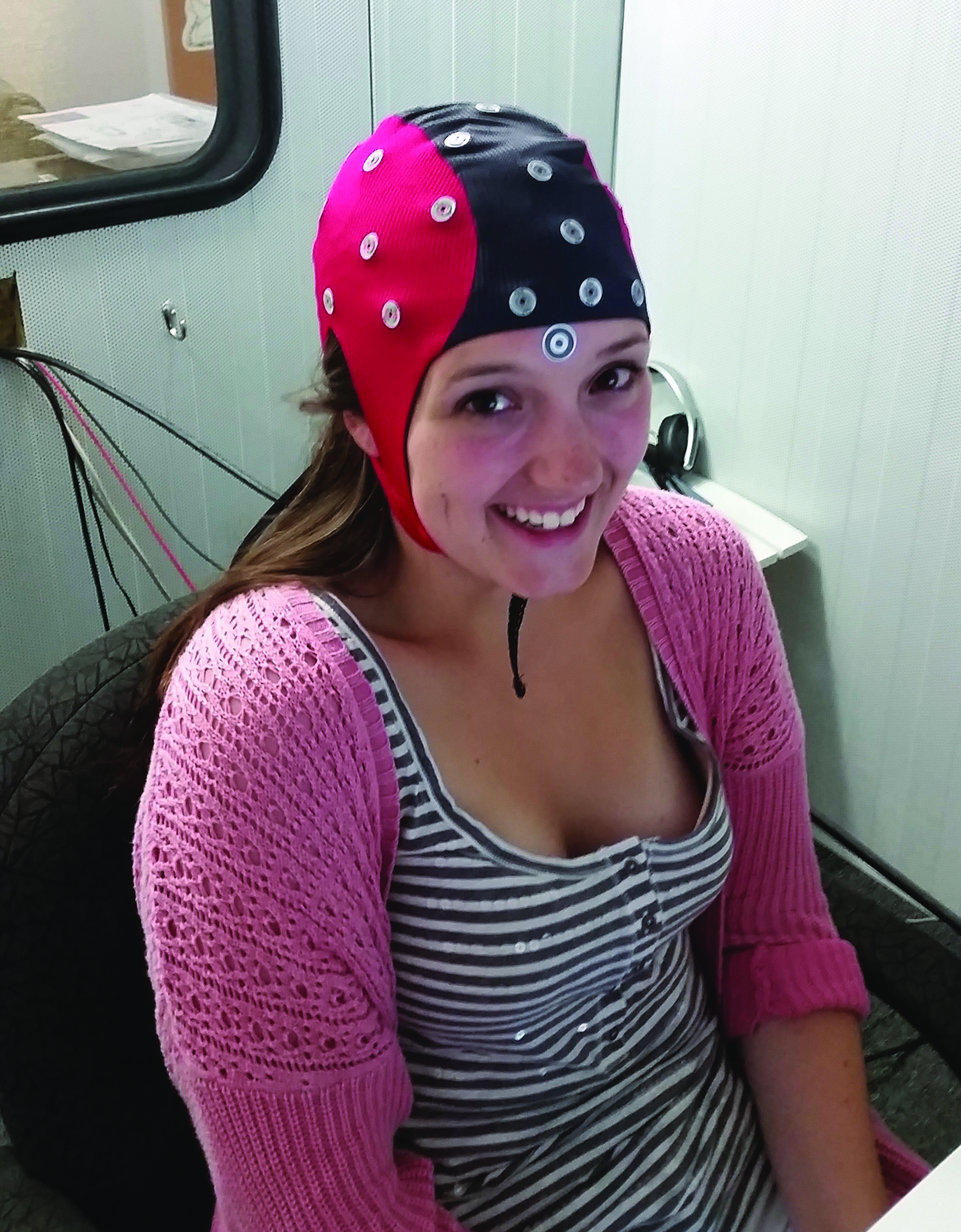
    Neither EEG nor eye tracking are perfect, but research in other areas of psychology has been able to use them simultaneously to cover some of their limitations. In order to provide better evidence for rhyme effects, my research recorded scalp activity and eye movements at the same time, so that the scalp activity that occurs directly after a person’s eyes fixate on a picture representing different types of competitors (target word, cohort, rhyme, unrelated) can be analysed. In an audiometric (soundproof) chamber at the Cognitive Neuroscience Laboratory of Acadia University, participants were set up with an EEG cap and calibrated for the eye tracking camera. They were shown sets of four pictures and were instructed to click on the one that matched a spoken word they heard played. Each set of pictures always included a target (e.g. cone) and an unrelated competitor (e.g. fox), and depending on the trial, it might include cohort (e.g. comb) and/or rhyme (e.g. bone) competitors.

    The EEG results were inconclusive. Although the overall analysis indicated that there were significant differences between scalp activity following fixations to different competitors, the statistical power was not great enough to fully distinguish between them. However, analysis using more liberal statistical tests did find an indication that fixations to the competitors that started with the same sounds as the spoken word (target and cohort) were different from the competitors that started differently (rhyme and unrelated). The eye tracking results were more definitive, finding that people were significantly more likely to fixate on the rhyme competitor than the unrelated competitor after they heard the last portion of the spoken word. Additionally, people were slower to fixate on the target when a rhyme competitor was present in the picture set, indicating that they were distracted by the rhyming word. Both of these results provide support for rhyme effects.

    The combined eye tracking/EEG methodology has a great deal of potential to explore topics in cognition as a whole, not just in psycholinguistics. My current study failed to find the anticipated rhyme effects in the fixation-related EEG signals but it did validate the method by finding alternate effects and identified several limitations and suggestions for future studies using the same technique to take into account. As for the models, evidence is mounting that we process language in a continuous fashion, taking into account all aspects of the word. Models like TRACE are more complicated than alternatives such as Cohort, but they are flexible and can better explain the results seen in the current study and the rest of the literature.

  • Birds are Cool: The Curious Case of the American Black Duck in Atlantic Canada

    Birds are Cool: The Curious Case of the American Black Duck in Atlantic Canada

    Ducks are in the very fortunate position that they are worth lots money, so a lot of people care about them. Waterfowl hunting and associate ecotourism is a multi-billion dollar industry in North America, and a large portion of the money generated from this industry is poured in to waterfowl research. The Canadian and United States federal government came together in 1986 to form the North American Waterfowl Management Plan (NAWMP), which has since contributed over $4 billion in to waterfowl research. Many other life forms are not economically valuable and lack the cultural value of waterfowl, which makes it difficult to acquire funding for their research. Waterfowl, on the other hand, are likely the most-studied group of vertebrates on the planet.

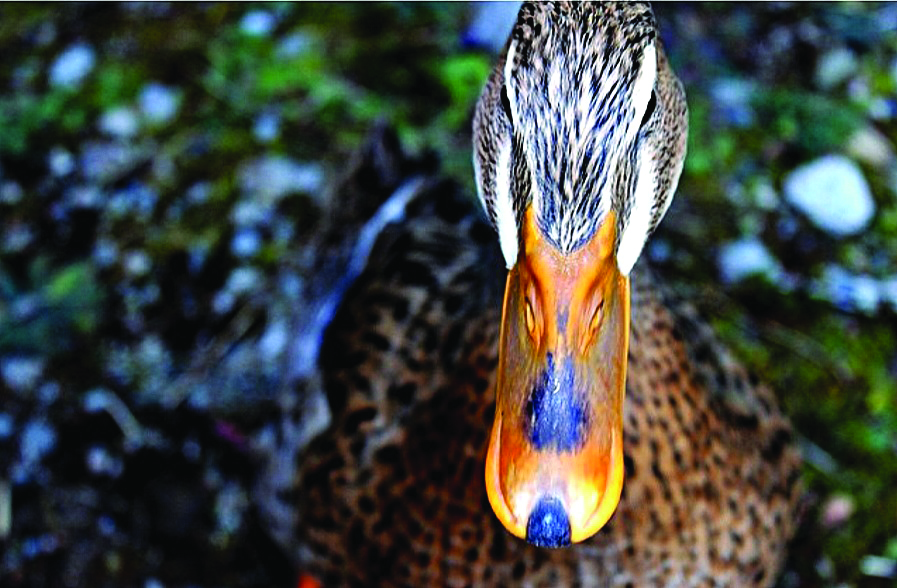
    Despite all the money invested in waterfowl research and conservation, many questions and challenges still exist with North America’s waterfowl. The American Black Duck (Anas rubripes, Brewster 1902) used to be the most common species of waterfowl on the east coast of North America, but excessive hunting of this species caused black duck numbers to decline by about 50% from the 1950s to the 1980s. 1982 was a pivotal year in black duck conservation, when the Humane Society of the United States took the United States Fish and Wildlife Service (USFWS) to court, arguing that the federal government was completely miss-managing this species, and calling for a ban on black duck hunting in the USA. This court case was widely covered and black duck conservation became a controversial issue in North America in the early 80s. Scathing reviews were being published criticizing the federal government on its incompetence to conserve the nation’s waterfowl species, and there was a massive amount of pressure on the both the Canadian and American federal governments to address the issue of black duck loss. Ultimately, the court ruled in favour of the USFWS; the black duck season remained open, however, restrictive hunting measures were implemented in 1983 to reduce the amount of black ducks killed each year.

    The restrictive hunting measures resulted largely in a stabilization of black duck numbers in North America. Black ducks are still well-below historical levels on our continent, and the NAWMP developed the Black Duck Joint Venture (BDJV) in 1989 to specifically address and direct research on black duck management. Loss of critical breeding and non-breeding habitat, along with current hunting pressures are likely the two factors preventing the recovery of black ducks, and declines are still being observed throughout their range.

    Black ducks spend the winter mostly in the south-eastern portion of the United States, but exceptionally brave birds do choose to spend the winters in Atlantic Canada, and this is as far north as you’ll find a black duck in the winter. Why they choose to endure the harsh winters of Atlantic Canada rather than travelling to the Carolinas for the winter is unknown, and strangely enough, the amount of black ducks wintering in Atlantic Canada appears to be increasing. This poses us an interesting management question because we lack a lot of basic ecological knowledge on this species at the northern limit of their wintering range. Filling this knowledge gap and ultimately developing an estimate of the amount of black ducks that Atlantic Canada can support through the winter has been identified as a research priority by the BDJV, and this is where I come in.

    A large collaborative effort has since been undertaken to develop an estimate on Atlantic Canada’s black duck winter carrying capacity, and Acadia University is playing a major role in this conservation effort. My research focuses on gathering crucial ecological data on wintering black ducks, specifically answering the questions of “What are black ducks eating up here in the winter?”, and “How healthy are these ducks up here through the winter?” I was able to examine ducks from an urban area (St. John’s, NL), ducks shot locally in rural habitats, and ducks from an agricultural site.

    From dissecting many black ducks and examining their gut contents, I’ve been able to see that black ducks wintering in rural and urban habitats have completely different diets. Rural ducks feed mostly on molluscs and seeds, while agricultural and urban ducks are surviving off corn and human food that is tossed to them when people visit the park. Black duck health was assessed using a scaled-mass index (much like our body-mass index that you get when you go for a check-up with your family doctor), and despite having distinct diets, the black ducks wintering in rural areas are just as healthy as those wintering in urban habitats.

    Agricultural and urban habitats may be a key part of the puzzle explaining why black duck numbers are increasing through the winter in Atlantic Canada, and why our birds appear to be doing so well through the winters up here. These habitats provide refuges from hunting, and provide the ducks with an essentially endless food supply which requires little to no foraging effort. Yes, black ducks are still wintering in classic rural habitats in Atlantic Canada and are also doing quite well, but this hypothesis of urban habitats facilitating black duck survival at the northern limit of their wintering range merits a thorough research effort. Feeding the ducks in parks is good! Just stop giving them your stale old bread – corn is a better substitute.

  • Fuck Tha’ Police’ and Despicable Females: NWA’s Rap as Protest Music

    Fuck Tha’ Police’ and Despicable Females: NWA’s Rap as Protest Music

    My honours thesis is focusing on the ways in which rap group NWA’s lyrics have affected Black American women. NWA’s music functioned as protest music against violent white supremacy in the form of police brutality, while simultaneously reinforcing dangerous stereotypes of African American women, stereotypes which were created during slavery. While their lyrics depicting women are most certainly misogynistic, the lyrics are not born of an innate sexism and hatred of women, but of the institutional oppression, discrimination, and violence that those rappers and all Black American men were subject to. The thesis is divided into four chapters, of which I’ll give a brief overview.

    Chapter One, “No Justice, No Peace,” examines the social, political, economic, and cultural climate from which NWA emerged in South Central Los Angeles in the mid-late 1980’s. Much of this chapter is dedicated to the effects of police brutality, drawing from first-hand accounts of African-American residents who lived in South Central (mostly the communities of Watts and Compton). I focus on the song “Fuck Tha’ Police” and its usage as a protest song against the extreme oppression and discrimination that extremely high rates of African American teenagers, young men, and men were subjected to.

    Chapter Two, “Multidimensional Oppression,” explains the concept of intersectional feminism (coined by race and feminist scholar Kimberle Crenshaw) and why it is necessary when analyzing rap music lyrics. I then explain various stereotypes and controlling images that were created during slavery as a means of oppressing African American women and reinforcing white supremacy, capitalism, and patriarchy. These controlling images include the Mammy, the Sapphire, the Jezebel, the Angry Black Women, the Black Matriarch, and the Welfare Mother/Welfare Queen (I draw largely from Patricia Hill Collins research in this section). I explain how society has reinforced, and continues to reinforce, these controlling images through various mediums of popular culture; I also explain the very real, lived effects of these images, such as higher rates of domestic violence towards Black American women.

    Chapter Three, “Despicable Females,” provides an analysis of seven NWA songs that utilize the controlling images of Black American women that were presented in Chapter Two. Based off of MC Ren’s description of the women they rap about as “despicable females” (in a 2015 Rolling Stone magazine interview), I coin the concept of the “despicable female trope,” an umbrella term for any and all stereotypes of Black American women. The despicable female trope is utilized in NWA’s music to excuse, justify, and even warrant sexualized violence, assault, and murder of Black women by Black men in NWA’s lyrics. For example, when the lyrics describe the central woman of the song as a “ho” or a “bitch” (directly drawing from stereotypes of Black American women), that woman is consistently violently punished through assault, rape, or murder. I conclude in this chapter that, while the usage of the despicable female trope is most certainly misogynistic and has the potential to have real-life damaging effects on the lives of Black women, these songs still function as a form of protest music against oppression. The rappers, as Black men, faced extreme levels of violence in their daily lives; through the medium of rap music, they were able to reclaim both false and real control of their lives by subjugating a group of people who had even less power than them.

    The fourth chapter, “Musical Hardness and Masculinity,” examines how the “hardness” of the musical content is both created and reinforced by Black masculinity. I draw from popular music musicologist Adam Krims’ work explaining the concept of musical hardness (layering and sampling techniques, distorted bass lines, quality of voice, etc.) in various songs which center around topics of gun violence, fights among gang members, and other themes that tend towards masculinity. (I have yet to finish this chapter which is why the explanation of it isn’t as lengthy!)

    What I’ve learned throughout the process of writing this thesis is to really understand my own privilege and how that inevitably affects the way in which I write this thesis. As a white, educated woman, I cannot speak to the struggles of Black American men or women. Bell Hooks writes that in order to work towards unity, understanding, and compassion, we must employ the mindset not of speaking for those who are oppressed, but with those who are oppressed. In a current social climate which necessitates movements such as #BlackLivesMatter, this guidance has extremely relevant meaning. Moving towards understanding why NWA rapped about Black American women the way that they did can help us understand how to dismantle those social and cultural institutions which maintain the subjugation of historically oppressed groups.

  • Water Protection in Canada: Examining the Reactive Nature of Environmental Protection Legislation

    My thesis is on the reactive nature of environmental protection legislation in Canada. Specifically examining how water protection only occurs after a human health tragedy.

    There are only a handful of topics that most Canadians can agree on. These topics give Canada recognition around the world, as well as connect Canadians across the country. One of these topics is a love of the outdoors. Canadians dominate winter sport, relish the warm summers and take time to get out and stay outside. The environment is home to the sports, activities and wildlife that make people proud to be Canadian. After all it is the second largest country in the world and is credited for having a disproportionate amount of the world’s fresh water resources. If the Canadian public loves the environment so much why is there so little legislation protecting it?

    Canadians are lucky in regards to freshwater, as there is an abundance of fresh easily accessible water – or is there? Canada is frequently cited as the country with the largest volume of fresh water in the world, yet it actually only has approximately 6% of the global annual supply of renewable water (Bakker, 2006). Despite this, Canadians themselves believe that they are water rich. As such, Canadians are one of the biggest water consumers per capita worldwide (Bakker, 2006).
    Since Canadians use so much water in their daily lives, they care about protecting this resource. In 2004, 97% of Canadians agreed that a national water strategy is needed and that water is a basic human right (Bakker, 2006). Although this is something Canadian citizens feel passionate about, this is not reflected in Canadian legislation. Canada does not have a national drinking water strategy. At a federal level, there is a Canadian Drinking Water Quality Guideline outlining the acceptable drinking water practices, but it is non-binding and therefore not enforceable.

    The 2014-15 Report on Plans and Priorities gives detail to the budget and human resources of many of the different programs operated under the Ministry of the Environment. This plan outlines the cuts to twenty positions and a reduction in budget from $91 196 857 to $88 013 012 over two years in water specific programs alone (Environment and Climate Change Canada, 2014). On a federal level, Canada as a whole does not have comprehensive protection of water and water resources. With a reduced human and financial capacity this will likely get worse as water programs at the federal level cannot continue to operate at the same ability nor can they expand.
    Water protection can be achieved through provincial legislation but that means only a fraction of water in Canada gets protected. Water knows no boundaries, meaning that water has the ability to flow without discrimination. If the Northwest Territories had the best, most effective and enforced water legislation, they still would not control the condition of the water that flows into their territorial jurisdiction from Alberta, British Columbia and Saskatchewan.

    If the public has demonstrated their want for increased water protection but nothing has been done, what is the motivation for creating environmental protection legislation specifically in regards to water? The answer is a human health tragedy. When a human health tragedy occurs and drinking water is the source of ill health, policy is created to prevent repetition of human health problems. The two case studies I have selected and explained in chapters three and four illustrate this very phenomenon. After human health was put in jeopardy and public drinking water was found to be contaminated, an array of environmental legislation was created to ensure the safety of drinking water and the health of the consumers.

    My second chapter gives background information on the Canadian federal system and the divisions of power with regards to the environment. It also talks about the disconnect between human health and the environment, how they are valued, treated, and protected. This chapter also explains exactly who is responsible for providing safe drinking water.

    Chapter three zooms in on the first case study, Walkerton Ontario. It looks at what happened in 2000 and why. As a result of the drinking water contamination, Justice O’Connor preformed an inquiry where recommendations were made to improve the condition of drinking water in Walkerton and throughout the province.

    Chapter four is the second case study, focusing on North Battleford Saskatchewan. Again an inquiry was launched and Justice Laing made recommendations for the improvement of water quality in North Battleford and Saskatchewan as a whole.

    Recommendations in both cases will be further explored to understand what changes have actually been made to improve drinking water quality in Walkerton, North Battleford and their respective provinces.

    Finally the conclusion will look at what all of this means. It will analyse the data presented in the previous chapters and bring it all together. Answering what do these case studies demonstrate, what is the point of the research, what happens next, and what steps Canada needs to take to improve its drinking water quality.

  • Examining the Success of Led Zeppelin

    Examining the Success of Led Zeppelin

    As a musicology student in the School of Music, I’m writing a thesis on Led Zeppelin and their music. I decided to research this band after seeing just how successful they were:

    • They rank second to the Beatles in terms of overall record sales.
    • Their fourth album is one of the highest selling albums in history.
    • Just five years into their career, their 1973 tour shattered records across the United States for concert attendance and gross earnings.
    • At one concert during this tour, the band played to a crowd of almost 60,000 fans (which surpassed the Beatles’ record for the largest audience) and earned approximately $310,000 (one of the largest sums at that point in rock history).

    Yet, while this massive commercial success was happening, the band often received poor reviews from music journalists and critics. Upon further research, I discovered the loyalty and intensity of Led Zeppelin’s fans. There are many online forums and discussion boards where fans, both old and new, continue to discuss their connection to the band as well as the band members, album artwork, their favourite albums and concerts, etc. While reading responses from these fans, it’s clear that Led Zeppelin and their music had a huge effect on many. They use words like “spiritual,” “epic,” and “magical” to describe the band, the music, and live shows.

    The commercial success, the poor critical reviews, and fans’ deep connection painted an interesting yet contradictory image of the band. These conflicting realities sparked an interest for me. Considering the reviews were so poor, why were so many fans purchasing these albums and what was drawing thousands of people to their concerts? And what led these fans to develop such a profound connection to the band?

    My thesis is aiming to provide some answers to these questions. First, I examined Led Zeppelin’s artistic persona. In other words, what were the main identifiable characteristics of the band? By analyzing some of their “epic” tracks (“Stairway to Heaven” and “Achilles Last Stand”), I determined that their persona has three main qualities: transformative, powerful, and mysterious. The transformative quality reveals itself through the music. As you listen to these songs, the music consistently changes and morphs into something new; the musical components of these tracks continuously undergo development, variation, and transformation. The mysterious and powerful elements of Led Zeppelin’s persona are identified by the band’s use of intertextual figures. Led Zeppelin references a variety of symbols both musically and lyrically, including elements of Western art music and symbols and characters of ancient Greece. What is important about these symbols is their present significance; all are perceived as powerful and mysterious in the modern world. Therefore, in referencing and repurposing these symbols, Led Zeppelin becomes powerful and mysterious by associating and identifying themselves with these symbols.
    After determining the transformative, powerful, and mysterious aspects of their persona, I then looked into how Led Zeppelin presented this persona. By examining their albums and live concerts, it becomes clear that ritual is inherent in these experiences. Elements of transformational improvisation, power and prestige, and mysterious imagery appear ritualistically in both the live shows, like Jimmy Page’s “bow solo,” and in their recorded albums (Led Zeppelin IV for instance). Considering the qualities of Led Zeppelin’s persona and the ritualistic elements of their concerts and albums, I discussed the experience created by these presentations of their music and how they could be interpreted as spiritual. Many fans express a profound connection to the band that are similar to the resulting sentiments of a spiritual experience. Therefore, the elements of their persona and the band’s participation in ritual allow for Led Zeppelin to create powerful, mystical, and transformative experiences.

  • Agriculture and Computer Science

    Agriculture and Computer Science

    Computer Science Honours student Yonghong Chen developed an app that can be used to predict the amount of crop yield that an agricultural field will produce using only a picture. This startlingly accurate system is inexpensive and meets a huge demand within the farm industry. Since farmers often have to wait to measure their crops after they have been harvested, this technology will help them make important decisions sooner. A key component of the app is that it allows a user to take a picture of a section of produce, and gives the user the number of crops in the section based on that picture. The development is known as the “Estimage” system. Interestingly, it was developed by first placing coins on a table and asking the app to count the number of coins. This system was also used to count the number of logs stacked in a pile. Eventually it was able to count the number of blueberries on a bush, as well as other agricultural applications. The system is very effective and saves a lot of time and money in the amount of effort it takes to count objects. This clever app combines counting and agriculture in a new and ground breaking way. The surprisingly simple, yet previously underdeveloped idea, has many other features as well. The Estimage system consists of an Android client app for interacting with users, a PHP server app for handling requests, and an Octave program for image normalization. It also consists of an open-source ML software package ilastik that is used to apply a predictive model to an – -image. The Estimage system is very good at detecting shape, color, and size, and is also good at distinguishing between backgrounds and objects, provided that the background is similar to that which was used to train the model.

  • The Vagina Dialogues: Conversations Around Female Bodies

    The Vagina Dialogues: Conversations Around Female Bodies

    As my 4th year at Acadia comes to a close, the one thing that stands between my degree and myself is my honours thesis. I have been lucky and still enjoy my topic as much as I did when I started last spring, and despite grumbling and groaning over different aspects of the process, it has been very rewarding and generally enjoyable. I chose to focus my research on female genitalia and the stigmatization and mystification of the female body through language and education. My research is situated in relation to the historical patriarchal dominance of the field of medicine, and the construction of genital taboos in the Victorian era. Further, the changes that occurred in the Sexual Revolution in the 1970s were examined (particularly the women’s self-help movement) as a period of enlightenment and a historical marker to compare current understandings of female genitalia. In the fall of 2015, I implemented a survey and received over 300 responses from Acadia students regarding their early childhood education about female genitalia, the terms they were taught, their comfort discussing female genitalia, and use of slang or anatomical language when discussing female genitalia.

    The phenomenon that academics call the “conflation of the vagina and vulva,” in which the term vagina comes to stand for all of the female genital organs, was reflected in my results, particularly when participants were asked to label a diagram of external female genitalia. Only 30% of respondents correctly identified the vulva, and a higher proportion of male respondents got it correct compared to females. The most common incorrect response was vagina, supporting previous research. The conflation of vagina and vulva was evident within the first terms that participants were taught for female genitalia. Over 60% of respondents were taught that the female genitalia were solely the vagina, and only three respondents were initially taught that there were various female genital organs (vulva, vagina, labia, etc.). Some of the factors that impacted respondents’ ability to correctly label female genital organs were place of residence, comfort and major of study. There was a statistically significant relationship between place of residence and correct identification of the vulva; Atlantic Canadian residents were 60% less likely to label vulva correctly, and those from rural areas of Canada were 49% less likely to label it correctly. Those who were more comfortable talking about female genitalia were more likely to label the vulva correctly. Though there was not a statistically significant relationship between major and ability to label vulva correctly, it was found that Biology and Psychology students were more likely to be able to identify the vulva and Sociology majors had more difficulty. In terms of comfort, it was found that respondents were more comfortable talking about female genitalia with people who identified as the same gender as they did, and that university had made people comfortable talking about female genitalia overall.

    The importance of talking about the vulva and female genitalia may not be obvious at first, but I argue that without a concise and clear language to describe the female body, there is a lack of communication, and understanding of the female body. This can lead to challenges communicating with doctors, partners, and even having a full awareness of one’s own body. I critique the current education system and sexual education curriculums, highlighting that clear education early in childhood is of the utmost importance. Claims that genital terminology is too complex for young children is absurd when they can name 40 kinds of dinosaurs.

    Thanks are due to the Sociology department and Dr. Zelda Abramson for supporting this research and getting me through this process.

Betzillo positions itself as a versatile gaming hub where structured bonuses and adaptive gameplay mechanics support both short sessions and extended play.

Built with a focus on innovation, Spinbit integrates modern casino architecture with rapid transactions, appealing to players who value speed and digital efficiency.

Ripper Casino emphasizes bold entertainment through high-impact slot titles and competitive promotions crafted for risk-oriented players.

A friendly interface and stable performance define Ricky Casino, offering a casual yet reliable environment for a wide spectrum of gaming preferences.

King Billy Casino channels classic casino spirit into a modern platform, delivering recognizable themes supported by contemporary reward systems.

Immersive visuals and layered slot mechanics are at the core of Dragonslots, creating a narrative-driven casino experience.

Lukki Casino appeals to players seeking direct access and minimal friction, focusing on fast loading times and intuitive controls.

Casinonic provides a structured and dependable gaming framework, blending modern slots with transparent operational standards.