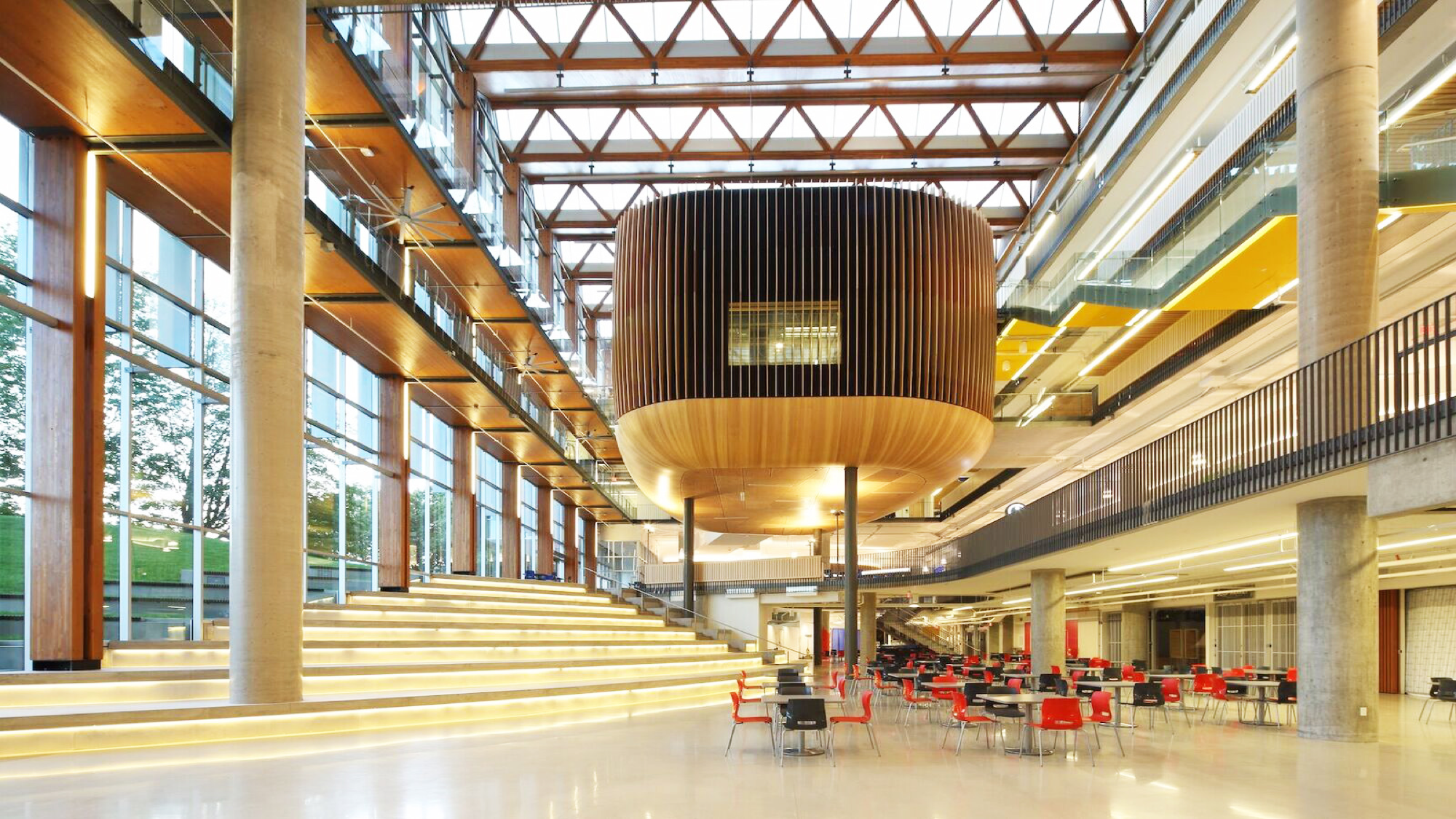
Arriving as an exchange student at Acadia was a bit like landing in a place with an entirely new language. Gone was the knowledge I thought I had gained from the campus maps; directions were given in code, places and classrooms hidden in strange, unfamiliar acronyms. With this guide, however, you too will be able to become a fluent member of this community:
10. The Library
Normally the staple in any academic institution, the library is a place where you might find a student, head buried in a book or Facebook, and quite probably stressing out around exam time. Here in Wolfville, however, The Library can mean even more. For one, the Vaughan Memorial Library, situated in the BAC, and for two, the Library Pub, where there’s more booze than there are books.
9. The BAC.
Is that a body part? Nope. The BAC is an acronym standing for the Beveridge Arts Centre. At the BAC, other than a variety of classes, you will also find the library, an art gallery, and a café.
8. KCIC
Are you noticing a theme yet? Another acronym here at Acadia is the KCIC. Alternatively, if you’re looking for a mouthful, feel free to call it the K.C. Irving Environmental Science Centre.
7. The SUB
There’s a submarine on campus? Nope, just the SUB, or the Student’s Union Building. Situated near the BAC, this building houses many of the services provided by the ASU – including, but not limited to, the Peer Support Centre, the Women’s Centre, Safety & Security, and Cajun’s Clothing.
6. ASU
The Acadia Student’s Union, or the ASU, is a student governed organisation dedicated to supporting the students at Acadia. The ASU can be found in the SUB.
5. Rojo
Here at Acadia, rojo doesn’t mean red. In fact, Rojo is a nickname for one of the residences on campus. Rojo, or Roy Jodrey is just the first accommodation on this list to go by two names.
4. Tully
Like Rojo, Tully is another Acadia residence. Whilst the official name is Whitman House, this residence is known on campus as being the only all-female residence at Acadia today.
3. Barrax
The final residence to be mentioned on this list, Barrax, is the alternative name for ‘War Memorial House’. The official name honours the Acadia students and alumni who served and died in the Second World War.
2. Cheaton
Not a typo for adultery, the term Cheaton refers to two residences – Chipman House and Eaton House – and their shared rivalry. Now you need not be confused when the Cheaton Cup starts popping up in conversation.
1. Axemen and Axewomen
Finally, you might have heard or seen these phrases plastered around the athletics complex, and even leaking onto the campus itself. These are the male and female mascots of Acadia.
In its heyday it was the central non-academic social space on campus. It brought together students from all residences, programs, and years. It had a games room, a TV lounge, an art gallery, and services used by all. The first form of the Wolfville Children’s Centre made its home in the New SUB.
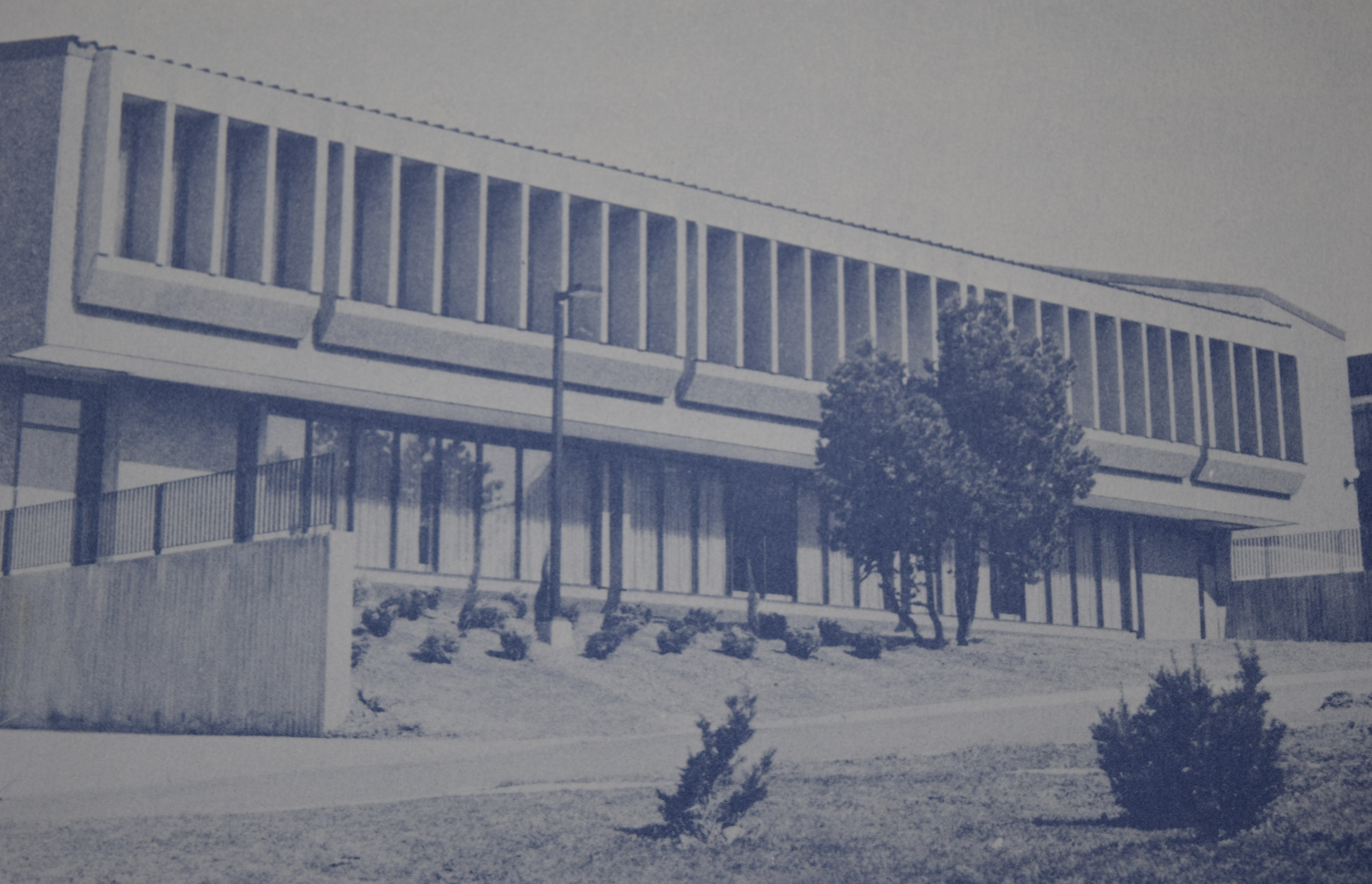
The Old and New SUB, opened in 1949 and 1972 respectively, were the product of student activism. It was students who banded together and demanded a dedicated space on campus. In 1939, an editorial in The Athenaeum wrote of the possibilities of a co-educational student space. A week later the idea of a student union building was pitched.
The original Old SUB was opened in 1949, after the Board of Governors and Students’ Union approved the $40,000 plan. Harrison McCain, of McCain frozen food glory, was the chair of the building committee when it opened on November 10th, 1949. Services like an older version of the Student Resource Centre and Residence Life made it their home soon after.
The building was expanded in 1962 following an increase in postwar Acadia students. This cost approximately $100,000 funded by a referendum, with an increase from a $5 yearly fee to $10. Adjusted for inflation it would be $85.23 in 2017. This was based on a plebiscite where 529 of 711 eligible voters (74.5%) cast their ballots and voted in favour of a larger SUB. A committee was then formed to determine exactly what was needed, with their final recommendation becoming the floorplan for the expansion of the Old SUB.
Originally the Old SUB was to be torn down after the New SUB was finished, but money ran out before the entirety of the plan was realized. Funding for the project operated on “10 cent dollars”- for every 10 cents put forward by students, 90 would be put forward by the university and government. The New SUB as we know it opened in 1972, promising a new age for Acadia students.
46 years later things have changed. Our SUB no longer serves our needs. It’s too hot or too cold. Vital services like Safety and Security or Pregnancy Support are inaccessible. Few students know where our student government meets weekly. Concerts are difficult to host. We spend incredible amounts of money each year on paying for wasted heat and deferred maintenance. Our campus no longer has a spot where students from all walks of life can converge and relax away from the constant furor of academic work.
Our SUB has failed us.
It’s time to build a new one.
As the Student Board of Governors Representative and an elected member on the Students’ Representative Council, I believe that we should make the lives of our students better. That means those past and present who will make Acadia a great place long after we’ve graduated. We owe it not just to ourselves, but to our peers, to think big. We owe it to them to think of the future.
Weeks ago, I introduced a motion in the ASU Students’ Representative Council to create a SUB Renewal Committee. I’ve based the process off a similar one conducted at UBC when they transformed their old student union building into the brand new AMS Nest. We are not UBC, nor do we aspire to be, but we are dreamers. We are visionaries. We are, above all else, Acadia students.
This is a monumental task that will undoubtedly spur hundreds of questions. What do we do with this space? What works in the building? Can we pay off The Axe? What’s the future of The Ath? Axe Radio? How would we design a building? Who would design the building? Do we even want a building? What would the building be for?
Thinking about these questions is the first step. To move boldly into the future of our student union we must start thinking about our needs as students in the 21st century. The days are gone where brutalist pragmatism was aesthetically pleasing. The days of sustainability, accessibility, and equity are upon us.
This will not be cheap. Expanding, renovating, or rebuilding the SUB will costs tens of millions of dollars and take many years. This will suck, but it will be necessary. Either we invest now and reap the rewards or wait until it’s too late and pay the consequences.
Our future must have room for all of us.
Redesigning our home must be democratic. Every student must have a say. This SUB Renewal Committee would be held in the hands of students, with our elected representatives deciding how we go forward. There will be representatives from the Board of Governors, faculty, and Town Council on the committee, but only students must have a vote. We must write the future of our home together.
Reimagining our home must be sustainable. Each member of the Acadia community has a part to play in this grand exercise of collective action. By working together to explore environmentally and financially sustainable solutions we can create something great.
Rebuilding our home must be visionary. We need to create a SUB that lasts the next 100 years. We must create a building that centralizes our services, from the clinic to the print shop, and reinforces the values of our student union. Integrity, excellence, respect, fun, community spirit, and tradition have a place in determining our collective future.
Let this be a call to arms for all students. It’s time to come together and demand better. Demand better from the university and from the ASU. Each of you must put pressure on your elected representatives, like me, to start building our future. Show up to SRC meetings, send emails, make your voices heard. Each of these may seem inconsequential, but starting the process now will be invaluable.
Students have the power to make change. Together we can build a new SUB and build a new future.
I believe in Acadia students.
You should too.
Colin Mitchell is a 3rd year Politics (Honours) student from Vancouver, BC. He is also the News Editor of The Athenaeum and the ASU Student Board of Governors Representative.
Students have been Acadia’s raison d’être. Since 1838, students have been the driving force of change, be it social, economic, or physical, here in Wolfville. Acadia students have found their identity as a collective, and with it the need for a truly student centred space.
The Acadia Students’ Centre (known by students as the SUB) is currently composed of two parts: Old SUB and New SUB. The need for a dedicated student space was discussed for many years. In 1939, an article in The Athenaeum suggested that a rec room where men and women could study and play games under moderate supervision was published. A week later the editor pitched the idea of a dedicated student union building.
The original Old SUB was opened in 1949, after the Board of Governors and Students’ Union approved the $40,000 plan. Harrison McCain, of McCain frozen food glory, was the chair of the building committee when it opened on November 10th, 1949. Services like an older version of the Student Resource Centre and Residence Life made it their home soon after.
The building was expanded in 1962 following an increase in postwar Acadia students. This cost approximately $100,000 funded by a referendum, with an increase from a $5 yearly fee to $10. Adjusted for inflation it would be $85.23 in 2017 currency. This was based on a plebiscite where 529 of 711 eligible voters (74.5%) cast their ballots and voted in favour of a larger SUB. A committee was then formed to determine exactly what was needed, with their final recommendation becoming the floorplan for the expansion of the Old SUB.
From The Athenaeum circa December 1959
The need for the New SUB evolved naturally, as a larger space space centred around students was needed. In the late 1960s the university was expanding, and across the country governments were investing heavily in post-secondary education. The need for a new students’ centre was reflective of the government’s desire to engage with youth at the height of the counterculture era.
Originally the Old SUB was to be torn down after the New SUB was finished, but money ran out before the entirety of the plan was realized. Funding for the project operated on “10 cent dollars”- for every 10 cents put forward by students, 90 would be put forward by the university and government.
Fowler Bauld & Mitchell (FBM) was selected as the architectural firm to design the New SUB. Their vision for the space was one that won an architectural award back in its heyday. The design at the time was open, evolving gradually as the needs and priorities of students changed. At one point, both mezzanines where Safety & Security and The Athenaeum resided were completely open. Since the New SUB FBM has had several large projects to their name, including the Halifax Central Library, Cabot Links in Inverness, and the Mona Campbell Building at Dalhousie University.
The area outside Cajun’s used to be the dining & refreshment area
Today the New SUB is the subject of architectural criticism. Its fiercest opponents say its ugly, brutalist, out of place, and grey. Interestingly enough that was the intention of students at the time. With the counterculture of the 1960-70s in full swing, students wanted a space that was the antithesis of University Hall and other buildings on campus, characterized by their neocolonial architecture. The university approved of the design and let students stand out, breaking from tradition.
The Mackeen Room
Funding has been a contentious issue. The Old SUB Project took a long time because of the lack of available funds and manpower due to the outbreak of World War II. Government was a strong supporter of campus infrastructure in the 1960s and 70s, with buildings like the New SUB, Huggins, Denton, BAC, and Wheelock Dining Hall constructed within a 20-year period. For projects sponsored by the ASU, students contributed financially to cementing their legacy at Acadia.
The former games room is now the Axe Bar & Grill
Class gifts were instrumental in shaping different aspects of the SUB. Initially the entrances to the New SUB were found in each of its four corners, with its main westward facing entrance only completed in 2004, with class gifts contributing to its development. A commemorative plaque describes the process of how the construction occurred.
The Michener Lounge and Class of 1961 Art Gallery
The New SUB has changed with each generation of students. The original info desk, now located in the Union Market, was once in the current mail room. The Athenaeum, The Axe Yearbook, and Axe Radio were once located where Safety & Security is, only to switch locations. A TV lounge used to occupy the current Student Conference Centre. The Swinging Axe Restaurant was located where Perkins now stands, before it moved into the games room and became the Swinging Axe Lounge in 1974, and then the Axe Lounge. The Wolfville’s Children’s Centre, which celebrated its 45-year anniversary this year, was founded and housed in the New SUB.
The publications mezzanine resided where Safety & Security now is
Art was a focus of the student union. The Class of 1961 Boardroom used to be the Class of 1961 Art Gallery, with a singular piece from its collection now found in the Beveridge Forum. The status of the rest of the art is unknown.
The tables and chairs from this photograph are still in use
Maintaining the complex has proved difficult. Nova Scotian winters are brutal, and they have taken their toll on the building. Since its construction there have been few exterior developments on the SUB, the most notable being the 2014 addition of a main entrance and addition of student washrooms at The Axe Lounge. Concerns about the envelope of the complex, which leaks heat and is criticized for wasting money, resulted in the walls of the Old SUB being replaced at a quarter of a million dollars. Today the building is still not as energy efficient as it can be.
The former info desk is now the mail room
The interior of the building has been continually renovated. In 1991 The Axe Lounge was renovated, and the mid 1990s saw a renovation of the downstairs portion of the Old SUB. On Exec Row, outside the current VP Student Life’s office, there used to be a staircase that led to the bottom level of the Old SUB. The idea behind this was to create a “Merchant’s Row” of student businesses, resulting in The Athenaeum, Cajun’s and the former office of the Chaplain moving to the New SUB.
The current Student Conference Centre used to be the TV lounge
The future presents new challenges for the student union building. Accessibility has been an issue identified by many as a source of contention in the coming years. New provincial legislation mandates that all buildings must be physically accessible by 2030 and much of the current complex is currently not accessible, including the Beveridge Forum, Mackeen Room, and mail room. Accessibility is not just physical, but social and mental, with today’s government putting an increasing focus on safe, responsive, and social spaces.
The newly renovated Axe Bar & Grill
Lack of physical accessibility creates problems not just for people, but for things. Moving chairs, desks, food, beer, or construction equipment becomes difficult with narrow corridors and low ceilings. This is a result of the age of the building, and the lack of a guiding vision. In the 1940s and 70s there was not the same focus on providing for future generations that there is now, evident in the lack of contingency funds set aside during construction.
Sustainability initiatives have changed the building’s character since its creation. Acadia University has standards to conserve energy, with most lighting fixtures changed to LED. Water conservation has been an important focus in the past few decades, and experiments in renewable energy are still visible: engineering students planted solar panels and a windmill, both of which are still visible on the roof of the New SUB, in 2005.
Air quality continues to be an issue throughout the complex. In addition to the excessively loud fans, the stuffiness of the building has been the subject of much discussion, provided one can hear over their roar. Spaces like the Michener Lounge, boardrooms, and even the Main Level have very low levels of air circulation, making the building stuffy and uncomfortably warm.
Though students have changed the building endures. The Acadia Students’ Union continues to support, advocate, and represent students to the best of their ability. As time goes on and the character of our campus changes, priorities will undoubtedly shift. The SUB has taken on a multifaceted character: a middle finger to the university, a statement of progress, and now the centre of student life on campus. Its age has begun to show and its critics will only grow rise in their opposition. Perhaps it’s time to throw out the playbook and write a new one.
Betzillo positions itself as a versatile gaming hub where structured bonuses and adaptive gameplay mechanics support both short sessions and extended play.
Built with a focus on innovation, Spinbit integrates modern casino architecture with rapid transactions, appealing to players who value speed and digital efficiency.
Ripper Casino emphasizes bold entertainment through high-impact slot titles and competitive promotions crafted for risk-oriented players.
A friendly interface and stable performance define Ricky Casino, offering a casual yet reliable environment for a wide spectrum of gaming preferences.
King Billy Casino channels classic casino spirit into a modern platform, delivering recognizable themes supported by contemporary reward systems.
Immersive visuals and layered slot mechanics are at the core of Dragonslots, creating a narrative-driven casino experience.
Lukki Casino appeals to players seeking direct access and minimal friction, focusing on fast loading times and intuitive controls.
Casinonic provides a structured and dependable gaming framework, blending modern slots with transparent operational standards.