
Author: Samantha Teichman

  • Family Roles & Sympathy Casseroles

    Family Roles & Sympathy Casseroles

    In the event of a death, there is a Western tradition to visit the family to give condolences; this visit is commonly paired with comfort food like casseroles, soups and sweets. However, the casseroles do not last forever, ultimately leaving the family to reorganize family roles in an attempt to regain functionality. My research specifically explored the functions of family dynamics after the death of parent. This research question originated from my first-hand experience of growing up through grief. At the young age of sixteen, I lost my mother suddenly to a heart attack and this altered the function of my family. The loss of my mother not only left a huge hole in my heart, it also left huge gaps in the everyday functions of my home: things like washing laundry, organizing my sister’s and my sport schedules and daily cleaning of the house were all tasks left unspoken for.

    Anyone who has suffered a tremendous loss knows one of the hardest things about grieving is that life continues; knowing this, my family and I had no choice but to pick up her responsibilities and adjust to this new everyday life. Not only did I watch roles in the family change, but I observed transformations in my own relationships and even formed new ones within the family. Having lived this far-from-normal adolescence, I could not help but wonder how other families with similar experiences compared. Specifically, my thesis study focused on the loss of a parental family member and how that absence changes the function of the home and family. I argue that parental loss disrupts the function of the family, creating a gendered division of labour through the shifting of roles in terms of food labour, domestic labour and emotional labour. To explore this, I relied on a qualitative methods approach, beginning with a qualitative questionnaire to recruit participants then following this up with semi-structured interviews. The sample consisted of six students: two males and four females between the ages of 18 and 23 who attend Acadia University and have lost a parent. The findings highlighted the association between the ease of transitioning roles depending on whether the death was anticipated or sudden, as well as that even in times of grief, the division of labour in the home remained gendered as women of the family were more likely to step in to maintain functionality.

    This research also demonstrated how Western traditions related to death can negatively impact the grieving process. In times of grief and bereavement, individuals typically experience feelings of emptiness, therefore our society’s reaction is to fix an empty heart with a full tummy. The data alleges that since the grieving process is so individualized, society’s “one size fits all” response to death, while intended to be a kind gesture, is ultimately problematic. When these ‘sympathy casseroles’ stop, it is society’s way of dictating to the family that it is time to start ‘moving on’. Most of those who comfort the family are blind to the ways their actions dictate a timeline for grief. As per the data, most interviewees stated that these visitations last for roughly a week while the food lasted for weeks up to even a month. This societal response wrongly suggests that the structure of the family will have regrouped and regained function within this timeline. This widespread ignorance to the emotional weight of losing a loved one depicts a bigger issue at hand: what the data illustrates is a clear lack of societal understanding of the grieving process.

    This research has contributed greatly to the understanding of grief and family from the societal, familial and individual level. While this research has been both insightful and therapeutic for me and the interviewees, its greatest benefit will be to individuals and families deeply entrenched in grief. To those who are grieving and struggling to find words, I hope this research gives you a voice.

  • Research Feature: Katie Campeau

    Research Feature: Katie Campeau

    In my undergraduate research, I created and distributed a survey for my honours thesis in Acadia’s sociology program. In it, I questioned how students felt about Acadia’s student counselling services. More specifically, I sought to understand whether students felt this service provided adequate treatment. My findings concluded that the counselling services were created for students with minor to moderate mental health issues. In my open-ended question, students with eating disorders, Obsessive Compulsive Disorder (OCD), Bipolar Disorder, Post-Traumatic Stress Disorder (PTSD) and psychotic disorders wrote that the counselling services were not designed to treat their severe mental illnesses. As a result, many of these students either spent a considerable amount of money to seek treatment off campus or received no treatment at all.

    I’m not suggesting that this service wasn’t successful in meeting other students’ needs—the service is designed for students who face minor to moderate mental health problems; stress from a large academic workload, relationship issues, and adjusting to new responsibilities associated with being a university student. In fact, I was informed by the head of the counselling services that their treatment is designed to meet the needs of the majority of students, and that the majority of students do not have severe mental illnesses. While this is true, I still couldn’t help but feel affronted by this statement. I am an individual with a severe mental illness. I am a part of the minority that the services exclude. Am I not important? Are the opinions and work of individuals with severe mental illnesses not a valuable contribution?

    This line of questioning led me to question how we, as a society, conceptualize severe mental illness. More importantly, I questioned how individuals in power define severe mental illness, and what these definitions mean for individuals living with them. This focus on power and definitions led to my interest in mental health policy, and more specifically how severe mental illness fits into various levels of government policies. My research questions are: How do Nova Scotia policy makers define severe mental illness? How do definitions of severe mental illness influence the creation and implementation of mental health policies? I am particularly interested in how the provincial government includes, or fails to include, the needs of individuals whose mental health issues are severe and debilitating in their day-to-day life. Furthermore, I want to understand how the provincial government defines severe mental illness when compared to minor and moderate mental health issues, and how this impacts their policies. I intend to explore these questions using qualitative methods, which include conducting an Intersectionality-Based Policy Analysis (IBPA) of Nova Scotia’s three most current mental health strategies, and a section of legislation entitled Bill 109—the Mental Health Act. I will also interview fifteen individuals who work as policy makers, mental health professionals, and members of mental health Non-Profit Organizations (NGOs). Once all of my data is collected and analyzed, my goal is to define my thesis in April of 2020.

    As a graduate student in sociology, I have had to defend my sociological study of severe mental illness. I often get asked why I didn’t pursue a degree in psychology. Here is my answer to curious readers: mental health and illness is a sociological issue. I am not interested in studying mental health and illness through pathology and neuroscience. I want to understand how severe mental illness is socially constructed and understood across society. Individuals with severe mental illness were perceived as “deviant” and “crazy” in the 1950’s, during the age of the “asylum”. Today, on the other hand, we openly discuss mental health and illness as a universal issue during events like Bell Let’s Talk. I am interested in how our society’s conception of mental health and mental illness is shifting, and how this shift is reflected in health policy. This research is important because individuals with severe mental illness are a vulnerable population and are at times overlooked due to their small numbers. It is important to ensure that their needs are being met.


  • Research Feature: Jill Northcott

    Research Feature: Jill Northcott

    Memories of Coming Out: Parents and Adult-Children Recall the Coming Out Experience

    Coming out, or revealing oneself to be lesbian, gay, bisexual, transgender/transsexual, queer, etc. (LGBTQ+) can be incredibly stressful, largely due to fear of parental disapproval or rejection. It has been shown that parental approval and/or disapproval is tied to the identity formation, mental well-being, and physical health of LGBTQ+ youth and adults. While previous research on the coming out experience has assessed the experience from the adult child’s perspective, and occasionally the parent’s perspective, no studies have looked at both perspectives simultaneously. This undergraduate honours thesis, as a part of a larger study being conducted by Dr. Diane Holmberg at Acadia University, and Dr. Karen Blair at St. Francis Xavier University, addresses this issue and aims to fill the gap in the existing literature. This study examines the reported recollections of coming out by the LGBTQ+ adult individual and one of their parental figures, additionally, it explores how the potential discrepancies between the recollections predict the well-being of the LGBTQ+ individual. The larger study examines many variables including physical health, sexual behaviour, and perceived closeness of relationship to the parent, but for the purpose of the honours program, only the mental health and internalized homophobia of the LGBTQ+ participants was analyzed. The objective of this research project was to determine firstly, if there were any patterns of discrepancy between the adult children and parents’ recollections, and secondly which direction of memory discrepancy predicted better mental health and a more positive sexual identity (or less internalized homophobia) for the adult child.

    It was predicted that more negative recollections of coming out by the adult child would predict poorer mental health and higher internalized homophobia. It was also predicted that agreement between parents’ and children’s memories, especially when positive, would predict better mental health and lower internalized homophobia than when there were discrepancies between memories. If there was a discrepancy between recollections, it was predicted that the adult child would have better mental health and lower internalized homophobia when the adult child had a more positive recollection compared to the parents’. Polynomial regression with response surface analysis, created by Shanock, Baran, Gentry, Pattison, and Heggestad (2010), was used to analyse both perspectives simultaneously as predictors of the LGBTQ+ adult child’s mental health and internalized homophobia. Though no significant results were found, there were interesting and unexpected trends found in the results that contradicted the hypotheses. These results will be further investigated as the larger study conducted by Dr. Holmberg and Dr. Blair is ongoing.

    By understanding this intricate relationship, it can be further understood how LGBTQ+ individuals’ mental health is related to parent-child relationships and parental approval/disapproval. Investigating both perspectives simultaneously allows for in-depth analysis of how mental health is affected by potential memory discrepancies, and whether it is more beneficial for adult children to have a more positive recollection of coming out that their parents do, or if the opposite is true. This research will also contribute to understanding the importance of child-parent relationships, especially for those who identify as LGBTQ+ as this community is just gaining acceptance and still faces prejudice and discrimination. It is important to understand how pivotal moments in the lives of LGBTQ+ individuals, such as coming out, affect their future mental health.

    Sound interesting? Please consider participating, in this study or in other current studies on other relationship topics (e.g., disapproval of relationships, affectionate touch in relationships)! Go to https://www.drkarenblair.com/ongoing ; you will find a link there to this study, as well as other ongoing studies.

  • Research Feature: Katie Winters

    Research Feature: Katie Winters

    My name is Katie Winters and I am a fourth-year Honours Sociology student. I have written my thesis as a content analysis of the multi-media project “Die Jim Crow”. I would like to thank my supervisor Dr. Tony Thomson for his intelligence and expertise. I have also been told at research conferences to thank my funders when presenting and discussing my topic. I have paid about $100 for my research out of my own pocket, so shout out to myself.

    To set the stage for the project itself and its relevance, I believe it is imperative to first describe the scope of mass-incarceration in the United States. The land of the “free” is the land that incarcerates the highest rate of citizens per capita than any other country in the world. As of 2018, “the American criminal justice system holds almost 2.3 million people in 1,719 state prisons, 102 federal prisons, 1,852 juvenile correctional facilities, 3,163 local jails, and 80 Indian Country jails as well as in military prisons, immigration detention facilities, civil commitment centers, state psychiatric hospitals, and prisons in the U.S. territories” (Prisonpolicy.org, 2018). This epidemic of mass-incarceration targets specific groups, especially Black Americans. Although Black Americans account for approximately 12% of the United States’ general population, they account for approximately 38% of the United States’ prison population (Federal Bureau of Prisons, 2018).  This is not because they commit more crime, but because they are more likely to be arrested, tried, and handed heavier sentences than their White peers. Depending on the state, a Black person is three to ten times more likely to be arrested than a White person for possession of marijuana (ACLU, 2017). Now that I have laid down the statistics so that people cannot come at me with the “facts don’t care about your feelings” garbage, I will explain what I found in my analysis of the very impressive multi-media project, “Die Jim Crow”.

    To begin, I want to preface that I myself have never been incarcerate nor am I Black. I do not claim to understand these experiences or wish to exploit them, but I wish to use the privilege that has been afforded to me by my race and education to communicate the art and lived experiences from the talented, determined, and inspirational contributors of “Die Jim Crow”.

    “Die Jim Crow” is a multi-media project that consists of six songs, one music video, and various examples of visual art compiled into a 200-page book. According to the website, the project is about the Black American experience in the era of mass-incarceration and it is the first ever album recorded in multiple United States’ prisons. The project and its title suggest that mass-incarceration is new form of Jim Crow segregation laws. Titles of the songs include: “My Name Be Jim Crow”, “A215-162”, “Tired and Weary”, “Plastic Bag”, “First Impressions”, and “Headed to the Streets”. I began by coding the lyrics of the songs for frequent themes. I compiled these themes into a word-cloud that included themes like: poverty, humiliation, racism, dehumanization, PTSD, and reintegration. These themes are clearly present in both the lyrics and in the literature that I reviewed. An example of powerful lyrics from “Headed to the Streets” that represents a variety of these themes reads as follows: “Another day another hope for a dolla/ I hit the pavement/ Been filling out 20 applications/ A day since I got out”, as well as the lines: “Society don’t trust you- they couldn’t get any leerier/ I’m tired from my struggle- I couldn’t get any wearier”. These lines are loaded with representations of themes like trouble with reintegration, poverty, stereotyping, and mental health struggles.

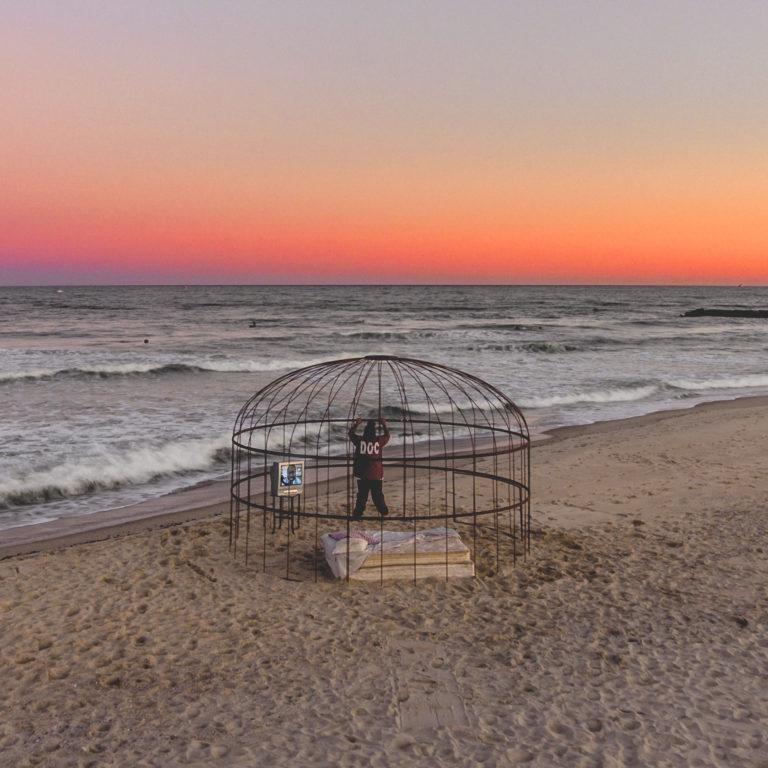
    I was fortunate enough to have the opportunity to interview project founder Fury Young and lyricist and performer B.L. Shirelle. I asked Shirelle what her favourite imagery from the music video was and she mentioned the scene on the beach (pictured below).

    She explained why this was her favourite imagery: “It just explains so much like how you feel when you’re not able to properly able to reintegrate. It’s like I’m out here, I’m free, I’m breathing the air. But it’s still like I’m locked the fuck up”. She explained what she meant by stating the following: “When I was locked up at least my mind was free. I could think, I could wonder, like do shit. Out here, I don’t even got that”.

    In summary, this article does not even begin to scrape the surface of the complexities of mass-incarceration and the symbolism that lies within “Die Jim Crow”. I urge everyone reading to Google the project and see for yourself the talent and thought that goes into the project. My full thesis will be available for reading in the spring/summer months are The Vaughn Memorial Library, but please do not hesitate to ask me any questions before then.

  • Research Feature: Victoria Taylor

    Research Feature: Victoria Taylor

    Marine ecosystems are difficult areas to investigate due to their vast ranges, but as a result of technological advancements, our understanding of ocean life including understudied marine microbial diversity is constantly improving. Marine fungi contribute to nutrient cycling as they are major decomposers of organic matter in coastal and marine environments. They reproduce and grow on woody and herbaceous substrates containing chemically recalcitrant lignin and cellulose. Lignicolous marine fungi produce enzymes such as cellulases, laccases, xylanases and peroxidases which decompose woody material.

    Some species possessing these enzymes can also degrade complex hydrocarbons, making them of interest for bioremediation of environmental contaminants. Considering 40% of the world’s oil travels by water during the production process, exposing marine and coastal environments to accidental spills, marine fungi have been of particular interest in recent years for their potential use in the bioremediation of crude oil spills in marine ecosystems.

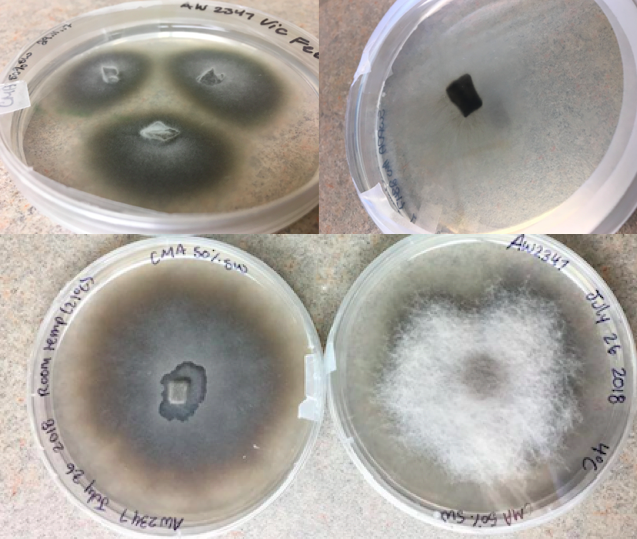
    In 2017, the Walker lab at Acadia University isolated a new species of Lulworthia, an obligate marine ascomycete fungus, from recently exposed intertidal wood from Apple River, Nova Scotia. There are currently 13 accepted species of fungi in the genus Lulworthia worldwide. Seemingly the largest genus of the marine ascomycetes, these fungi are often recorded as “Lulworthia sp.” as they frequently cannot be distinguished using long-established morphological techniques. Lulworthia atlantica, a closely related species isolated from submerged wood on the North coast of Portugal, was described in 2017. Using the same methodology, I genetically characterized a new species from the Bay of Fundy using rDNA as well as macro- and micromorphology. Phylogenetic trees were constructed for 3 rDNA gene regions, providing genetic evidence that it is a new species of marine fungus, provisionally named Lulworthia fundyense. The fungus grew faster at warmer temperatures, but sexual spores were not observed in culture, nor in wood block incubations at 4°C or 21°C. Asexual spores were observed and measured after 7-8 months, and I am currently describing this new species. Obligate marine fungi are understudied organisms and many do not sporulate in laboratory settings or only after prolonged incubation periods.

    This lack of knowledge on conditions that induce ascomata (fruiting body) production has greatly hindered experimental studies. Previous studies have shown that perithecia formation in Lulworthia sp. generally occurs after 100 to 200 days on submerged wood in environments where water temperatures are below 5°C. As sexual reproduction of L. nom. prov. fundyense was not observed after more than 300 days in our study, this fungus was either not grown in adequate sporulation conditions, or it is slower growing than previously discovered marine species.

    To acquire further knowledge on marine fungi, the development of new culturing techniques is required to induce sporulation to better understand novel species. This new fungus is now being tested for its ability to degrade crude oil. If L. fundyense is able to eliminate crude oil residues in the ocean, and we can optimize its growth, this could be an important environmental advancement in oil spill remediation and oceanic health.

    The issue of hydrocarbon contamination is significant as an estimated 3.5 million tonnes of petroleum hydrocarbons are introduced into marine ecosystems each year, negatively affecting the invertebrates, birds, mammals, and plants that inhabit these areas. This project emphasized the ecological importance of fungi and the need for further research on these organisms within each of Nova Scotia’s coasts, to identify biotechnological potential and develop new strategies to reduce marine pollution.

  • Research Feature: Micheal Light

    Research Feature: Micheal Light

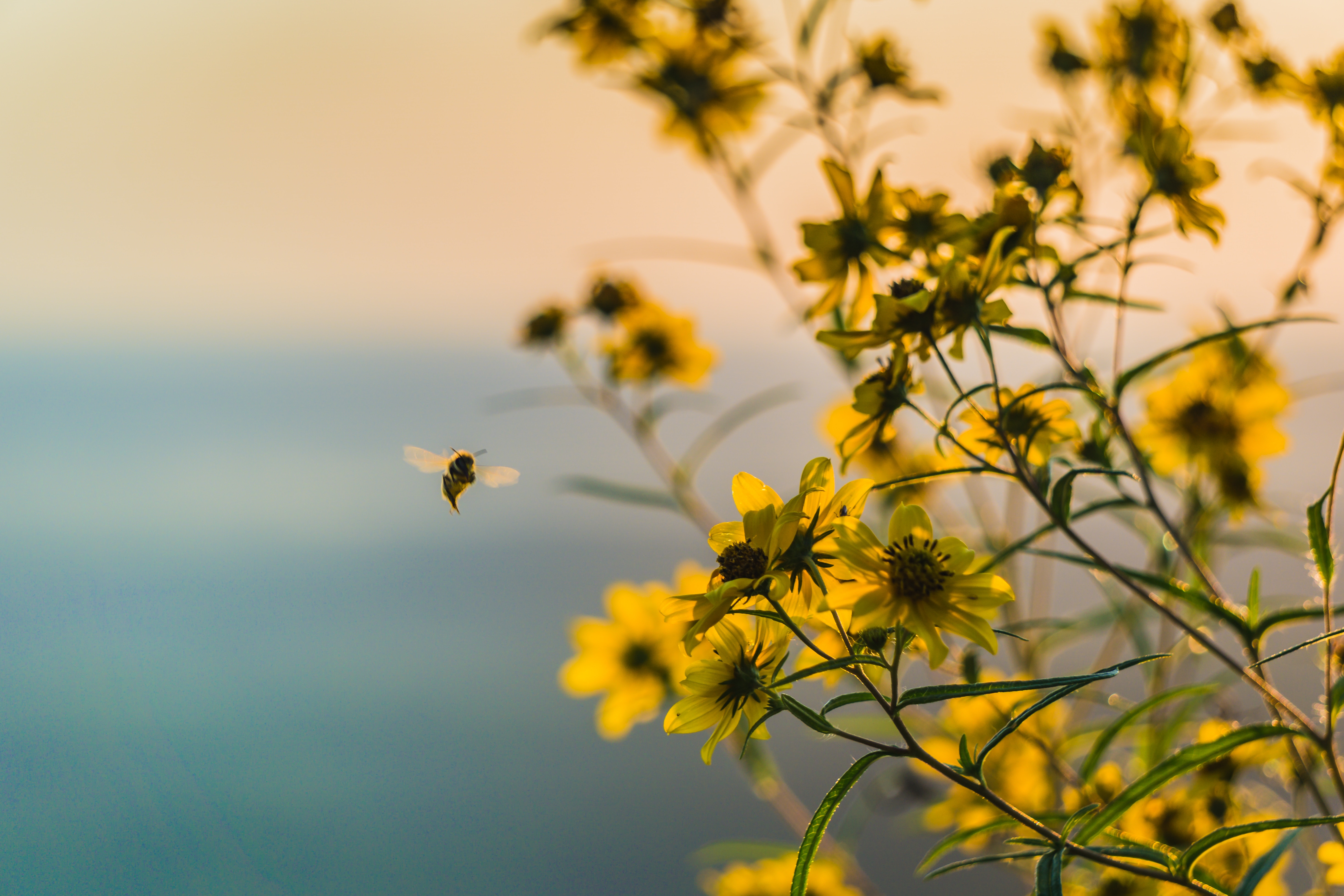
    Honey bees (Apis mellifera L.) are the most agriculturally beneficial eusocial insects for crop pollination. Chemical communication is critical in maintaining colony structure and activity, which may be exploited by some parasites. Varroa destructor (Anderson and Trueman) (hereafter Varroa) is regarded as one of the biggest threats to apiculture, blamed for annual colony mortalities of over 30%. My research tests whether previously identified odourants affect Varroa behaviour and investigating those that elicit minimal response in honey bees. Volatile collection involving in- and ex-situ techniques is being used to identify individual compounds and sensitivity of live Varroa through gas chromatography-mass spectrometry and gas chromatography-electrotarsal detection, respectively. Furthermore, volatile components confirmed as Varroa-active will be investigated for behavioral valence through behavioural assays and electro-tarsograms. In addition, this study will compare methods for in-situ capture of hive odours. Results from this research can then be applied to colony-wide testing of active odourants in developing effective alternative methods for Varroa control as well as developing methods for future research exploring chemical ecology of social insects.

  • Official Lichen of Nova Scotia Announced

    Official Lichen of Nova Scotia Announced

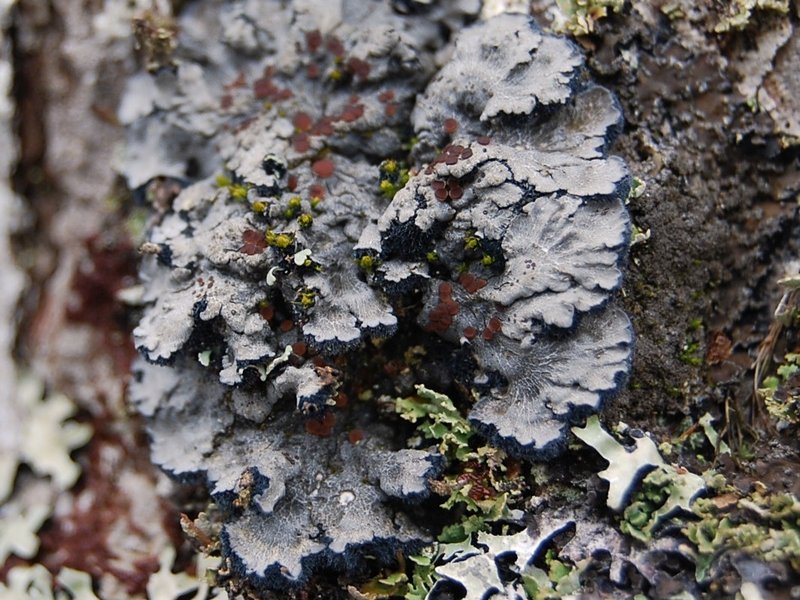
    As of January 30th 2019, the Blue Felt Lichen (Pectina Plumba) has been declared the official provincial lichen of Nova Scotia! A poll was held by LichenNS that was met with 565 responses, resulting in a win for the Blue Felt Lichen.

    Lichen is a symbiosis of alga or cyanobacteria (blue-green algae), called a photobiont, and a fungus, or mycobiont, that results in a structure that appears to be a single organism. Although lichen is not a well-known organism, it is extremely abundant in Nova Scotia. It is estimated that there are approximately 1000 species of lichen in the province, which is more than all species of mammals, fish, amphibians and reptiles of Nova Scotia combined.

    The Blue Felt Lichen is the only species of its genus present in North America, and most of the population is found in Nova Scotia with over 425 recorded sites containing the lichen. If you want to try and find some Blue Felt Lichen, it would be best to find a humid low-lying area with mature red maples, swamps, fresh waterways, or in upland hardwood stands close to the coastline. The lichen is commonly found on trees such as mature sugar maples, ash, yellow birch, poplar or eastern cedar.

    Each province will be choosing their official provincial lichen and submit their choices to the Museum of Nature in Ottawa. The ultimate goal of this project is to combine research about each types of lichen into one paper, which will be published.


    Sources:

    https://www.anbg.gov.au/lichen/what-is-lichen.html

    http://nsforestnotes.ca/2019/01/30/the-beautiful-blue-felt-lichen-pectenia-plumbea-is-nova-scotias-new-provincial-lichen/

    https://www.lichensns.com/


  • 8 jobs that aren’t being a doctor in case you disappoint your mom and don’t make it into medical school

    8 jobs that aren’t being a doctor in case you disappoint your mom and don’t make it into medical school

    As the last semester of university approaches for our graduating class of 2019, so does the anxiety about what’s beyond the horizon. For many, disappointment is eminent; however, there is still hope for those who get rejected. Maybe you forgot that Acadia doesn’t actually offer a premed degree and got angry about having to learn about plants and animals and all that lame stuff, but guess what? That stupid education you paid for is more than just a stepping stone to medical school! You can actually apply that knowledge to in fields beyond medicine! If you feel more lost than Nemo about what to do past graduation other than drink and cry a lot, check out these cool career ideas.

    1. Pharmacist

    This is the go-to for those interested in medicine who are not into the part where you actually have to touch people. Even if you hate the job, you’ve got access to all the antidepressants you could ever need to console yourself from the fact that you feel like you never really met your full potential. Plus, you get the perk of calling yourself a ‘professional drug dealer’ for the rest of your life!

    2. Forensics

    If the blood, guts and gore is what attracted you to medicine in the first place, you should probably consider never going near a living person ever again. You should also feel free transfer to SMU. 1. Because if that’s your motivation to go into medicine, I want you far away from me, and 2. They have a forensics program, this isn’t even a joke I’m just giving you facts here. So, get on it and check out your local crime scene! (As long as you’re not the one who made it).

    3. Aquaculturist

    Sometimes the wide variety of niches within science can be overwhelming and finding a career can be like finding a significant other – there are many fish in the sea! But maybe you should just put them all in a huge tank and manage them that way, because frankly the sea is fucking huge, kinda polluted, and I don’t trust bottom-feeders.

    4. Botanist

    Ok look, if your MCAT score proves you should never be trusted with the life of another person in your hands, maybe we can settle for just keeping plants alive. This is a great job if you’re insufferable to be around too; because unlike all your former friends, plants can’t go anywhere even if they hate you. Basically, if your classmates all gave you 1/10 on your peer evaluations for group projects, plants might be the study organism for you! However, if you kill cacti, maybe read the rest of the list.

    5. Brewer

    So, we’ve ruled out humans, animals and plants. Maybe you’ll be able to keep some yeast alive? You managed to keep that biofilm in your sink alive for a solid month when you stopped doing the dishes, just do that except maybe less gross this time? Plus, if your parents have been controlling your life decisions up to this point and only wanted you to enter medicine so they could tell all the other moms at yoga about the fact that their kid is a doctor, you can distract them from your failure with fun jokes like “gotta get this bread (making organism to produce ethanol from glucose for the masses to consume in an attempt to drown out the reality that we are all slaves to a capitalistic hellscape where attaining a career with high prestige for the money is deemed as “more successful” than doing what you love even if it’s less glamourous)”.

    6. Forestry management

    Hear me out: you could be a modern-day lumberjack living in a cabin you built with your own two hands with ethically sourced wood. You take your small pack of dogs for a walk in the forest and feed the woodland birds along the way. Small mammals follow you around like you’re Snow White. You’re definitely high on mushrooms you found on the forest floor, and the government has been trying to track you down for years since you have yet to pay back your student loans. They haven’t found you yet. Life is good.

    7. Nurse

    One time I told an older man that I was studying biology, which is usually met with “oh so you’re going to be a doctor”! But this time he asked if I was going into nursing. Because clearly my feeble female mind cannot handle the stresses of being a REAL doctor. And now you can feel inferior too! By getting a whole other degree at a different school! Debt is just a number and not a prison! I swear!

    8. Clown

    Lets just admit it- you’re boo boo the fool who thought their 2.5 GPA would get them into med school, its ok! We all make mistakes, and it looks like you made yet another mistake on a lonely Thursday night. Lucky for you, all you need to do to enter your new career is roll out of your vil hookup’s bed from the night before, take a look in the mirror to make sure that morning-after makeup is on point, and go entertain some children with your unsound life decisions!


  • Research Feature: Chaiti Seth

    Research Feature: Chaiti Seth

    My research aims to identify key leverage points for shifting towards more healthy, just, and sustainable institutional food systems, using Acadia University as a case study, and examining findings in the broader provincial context. This research builds on my prior work and relationships at Acadia investigating food system issues and university food culture.

    Food is fundamental to all human life, and food systems – the ways that our food is produced, processed, distributed and consumed – have significant social, cultural, health, ecological and economic implications. The shift towards industrial food production has resulted in massive loss of knowledge and biodiversity, soil erosion, deforestation and habitat destruction, pollution, animal welfare concerns, waste production, as well as significant greenhouse gas emissions. The health crisis in relation to food is growing – societies are facing both over- and under-nutrition and diet-related diseases are prevalent amongst all populations. Most Canadians eat food that is neither healthy nor sustainably produced, and many face food insecurity or inequitable access to food.

    Just as current food systems have many detrimental impacts, their potential for improving quality of life is also immense.  Sustainable pasture and farmland management strategies can support biodiversity, conserve soil and water, and help sequester carbon. Combined with other lifestyle factors, nutritious food has enormous preventative and healing potential. The market for food represents a source of positive and sustainable economic activity and community-based food systems have the potential to contribute to local economic development and provide meaningful employment. Last, but not least, is the magic of food in bringing people together – for everyday gathering and special occasions, for nourishment and healing and celebration. Food is powerful, and the decisions we make about what we eat, and how we produce it, matter.

    Studies assessing individual behaviours identify the most effective food choices and habits for a shift to a healthy and sustainable food culture. At a societal level, national and regional organizations are currently advocating for a strong national food policy, and the federal government is engaging citizens in an ongoing consultation process. Bridging the space between individual and policy levels, institutions play a key role in food systems. They are large enough to have significant impact but do not typically have internal policies or a strong vision for food systems. In this gap, food services providers (FSPs) – multinational for-profit companies that typically run institutional food services – often unofficially dictate food policy. Due to the standardization and scale of institutional food systems, FSPs wield significant influence on food production, processing and consumption patterns. Research shows that institutions can strategically leverage their purchasing power to generate greater wealth and health in their communities. Despite a few individual success stories, there are significant barriers to broadly shifting institutional food practices.

    Universities can play an essential role in facilitating change in institutional food culture. They serve and can critically engage young adults as both eaters and future leaders in food systems, and invest in economic and community health through food procurement. There is a growing demand for healthy and sustainable food services at universities. Research shows a critical need for effective strategies that address systemic and cultural barriers to change.

    For this research, I use critical social science and transdisciplinary methodologies, incorporating mixed methods with four primary components: semi-structured stakeholder interviews, participant observation, document analysis of food services contracts, and numerical analysis of procurement data. I have conducted 14 interviews with internal stakeholders including students, faculty, staff and administration as well as external stakeholders such as change makers at other institutions, public policy-makers and non-profit advocates to gather rich data from a diversity of perspectives. I will integrate findings based on thematic coding and analysis of these interviews with information about strengths and gaps in existing contract language from other post-secondary institutions. Numerical analysis of procurement data will help determine relative impact and feasibility of specific interventions.

    My research aims to build knowledge for shifting towards healthy, sustainable and just university food systems and is intended to support institutions to find creative and innovative solutions that can contribute to building more sustainable and resilient local communities through food systems change.  

  • Reading Between the Wines: Studying the Impact of Caloric Values on Consumers’ Sensory Perceptions of Rosé Wines

    Reading Between the Wines: Studying the Impact of Caloric Values on Consumers’ Sensory Perceptions of Rosé Wines

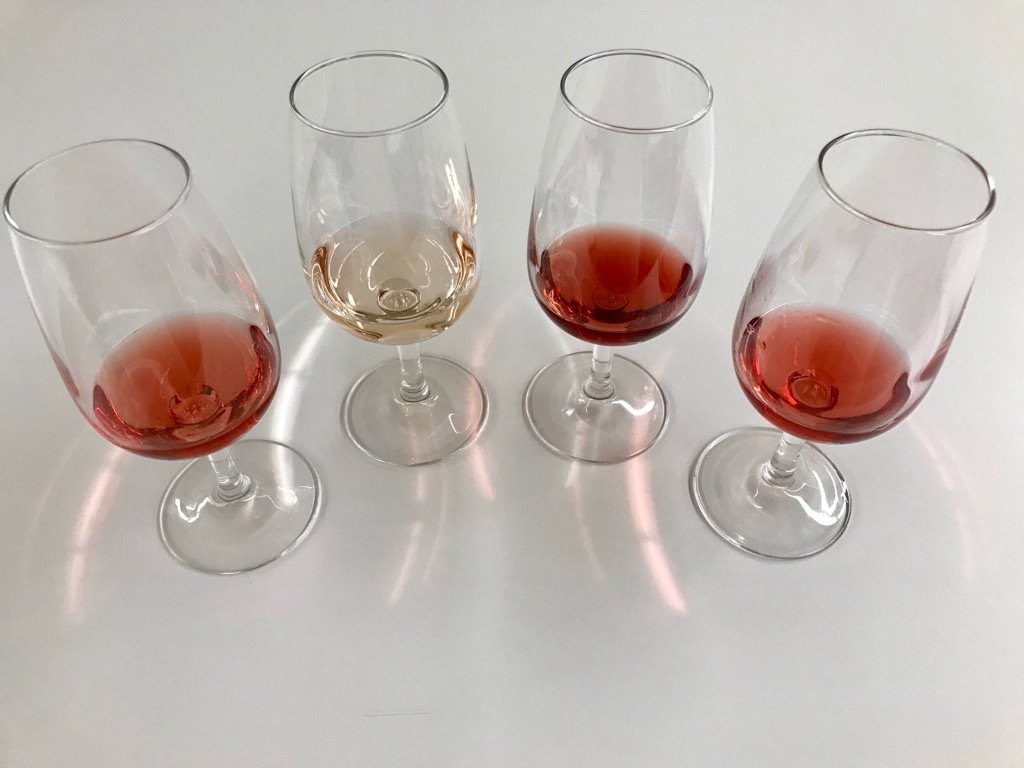
    With the production of local wine increasing in Nova Scotia, the government is investing a significant amount of money into wine research. As a recipient of funding from the Nova Scotia department of agriculture, Nutrition and Dietetics Honours student, Lydia Hayward, was able to investigate two areas of wine research that have yet to be studied. In an attempt to strengthen the growth of this industry, Hayward and supervisor, Dr. Matthew McSweeney, have begun research to develop a consumer lexicon to describe local wines in a way that resonates more effectively with consumers. This was the primary objective of the research, which used Projective Mapping and Ultra-Flash-Profiling to identify consumer descriptors. Participants also assessed their associated liking of these wines using a 9-point hedonic scale. This study is specific to rosé wines, as Hayward’s peers have already investigated reds and whites.

    Additionally, companies are hesitant to comply with the increased consumer demand for the disclosure of nutritional information. Although studies have shown that this disclosure will increase willingness to purchase, there is controversy surrounding how this will affect sales. Other studies show that consumers tend to prefer products with lower calories, a trend especially prevalent in women. However, these studies have not considered the influences of taste and pleasure on alcohol choices. This is why the secondary purpose of the study was to investigate the impacts of caloric values on the sensory perception and enjoyment of wine.

    In the first test, participants were asked to evaluate eight rosé wines and place them on a 2-dimensional plane on the computer screen, placing those more similar together and those differing apart. Also, they were asked to identify descriptors related to each wine.

    As for assessing the caloric values, this was done in two sessions. The first, without labels, acted as the baseline. Then, there was a session that implemented nutrition labels. In this second session, the four wines were assessed with four different nutrition labels; low, actual, high and highest in calories. They were asked to rate the wines on appearance, flavour, mouthfeel, and overall liking. Only four wines were assessed at a time, and the order was different for each participant.

    In both studies, consumer knowledge of wine was also assessed both subjectively and objectively, as they tend to differ.  The wine knowledge test, an objective evaluation of knowledge, found that the majority of participants, 90% were low to lowest in knowledge, accurately representing the consumer population.

    In the end, there were two clear categories found in the consumer descriptors, wines that had fruit flavours and those that lacked fruit flavours. It was also found that those attributes associated with fruit drove consumer liking of the rosé wines.

    The statistical analysis also demonstrated no significant difference in overall enjoyment of wines with varying caloric values. Although this contradicts the tendency to choose low calorie foods, prior studies have found pleasantness and taste to be the largest factors in wine choices. Thus, this supports that caloric transparency would have negligible effects on consumers wine choices.

    In order to more accurately predict the results of mandating nutrition labels in the future, labels must be similar to the label they plan to release and should be tested with a variety of alcoholic beverages, as opposed to wine alone.

    Pictured: Researcher Lydia Hayward

  • Robofest 2019

    Robofest 2019

    Robofest is a robotics programming and building event created by Lawrence Technological University. Acadia University is one of their many partners, and as such, we host a Robofest event every year here on campus. This year, it will be held on Saturday, February 16th. Robofest is aims to encourage high school students to take part in building and programming robots. Each year, there is a unique game for Robofest – this year, the game is called “Binary Blocks”. The objective is for each team’s robot to be able to construct a binary number using black and white tissue boxes to represent “0” and “1” respectively, then stack the remaining boxes vertically. This year, the world champions “Royal Robots” from Annapolis Royal, N.S. will be looking to defend their world champion title. The team placed 1st in the Unknown Mission Challenge and 2nd in the Robot Game, at the ROBOFEST World Festival in Michigan in May 2018.


    Robofest is important to the community as it provides a hands-on opportunity for high school students to learn skills they would otherwise not be exposed to in the classroom. Academically, it teaches engineering through the building of the robot itself, and computer science is used to program it. The event also teaches them to work together and cooperate as a team. Teams come from all over the Maritimes to Acadia University to compete, and they all come with innovative solutions for robot building and programming. The energy and ingenuity the students can bring to this event is unrivaled, and it will be amazing to see what they come up with to solve this year’s challenge. Acadia University and its surrounding community members/organizations supply over one hundred volunteers for this event. It is an exciting day that brings many people of all ages, backgrounds and fields of study together.


    For more information see : https://www.facebook.com/AcadiaRobotics/ or https://robots.acadiau.ca/id-2016-17-championships-information.html


  • Research Feature: Julia Koppernaes

    Research Feature: Julia Koppernaes

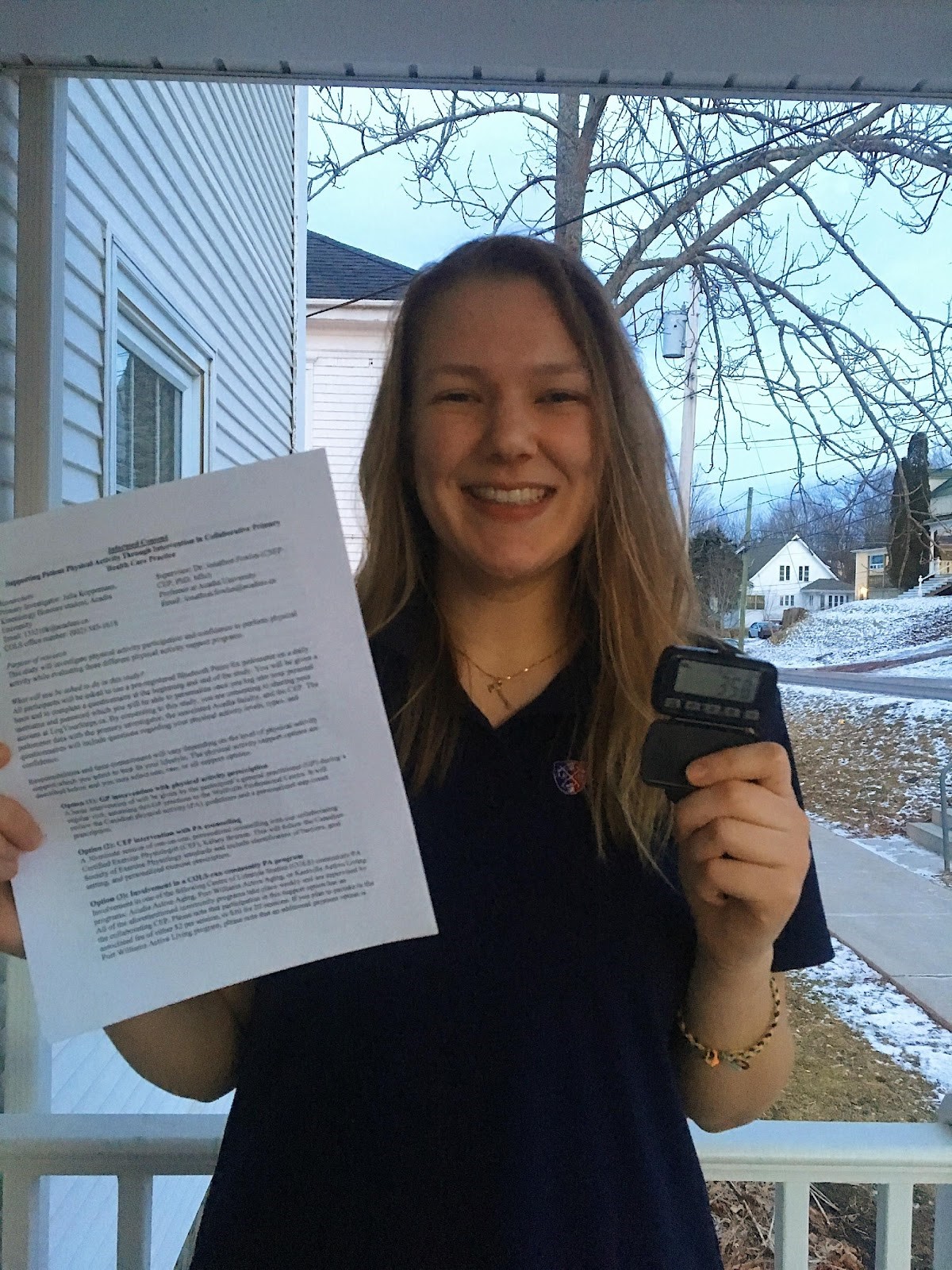
    Allied health networks that incorporate exercise professionals into primary care have been shown to be especially effective at improving physical activity levels in various populations. Nova Scotia is particularly inactive as compared to other regions of Canada, with few Nova Scotians meeting the daily physical activity guidelines. Access to physical activity supports such as tailored physical activity counselling and prescription, and physical activity monitoring devices (all shown to benefit physical activity levels and adherence) can be particularly challenging to access in Nova Scotia, where exercise participation is typically an out-of-pocket (i.e. outside of primary care) expense. To make these supports more readily accessible, and to develop practicable strategies, it is imperative that referral schemes be evaluated and explored in rural communities. My pilot study examined and described the physical activity referral programs of a collaborative health practice that incorporates a qualified exercise professional in the Annapolis Valley, Nova Scotia. Using accelerometers and questionnaires, physical activity and exercise levels were measured pre- and post- exercise/physical activity intervention. The effectiveness of physician-prescribed exercise was compared to exercise referral through an exercise physiologist and to participation in community exercise programs. In addition to physical activity levels pre- and post-, questionnaires assessed participants’ stage of change (readiness to change physical activity habits), task and regulatory self-efficacies (ability to execute and plan physical activity), and physical activity and exercise levels. Questionnaires also left room for open-ended responses to questions regarding which interventions were of most help to the individual in improving the aforementioned variables. By better understanding what people need in terms of support for increasing physical activity, better intervention can be provided in primary care. Ideally, this research will help to pave the way in solidifying the role of exercise professionals in an allied health care world. To incorporate exercise professionals as part of the standard in health care would be to take a step toward a more proactive and sustainable health care system.


    Doing my honours degree at Acadia has given me the opportunity to explore the research world, specifically in the field of kinesiology. Honours has challenged me in ways that I could not have expected, but has also pushed me to grow in my ability to think critically, organize, and prioritize. My little taste of research has provided me with a more wholesome appreciation for the scientific evidence that my degree is founded on. I am grateful to my supervisor, Dr. Jonathon Fowles, to the School of Kinesiology, and to Acadia University for granting me this experience; it truly has been an honour.


  • Research Feature: The Well Sibling Experience

    Research Feature: The Well Sibling Experience

    Siblings play a major role in our lives. For many people, they’re our first friends and our first enemies. They help to shape who we are as people for better or for worse, and often act as supporters during challenging times. However, when one of the siblings has a mental illness, the relationship between siblings can be drastically altered. Despite the impact that mental illness has on sibling relations and on other siblings in the household, there is little research or understanding of the unique experiences of these ‘well siblings’. It is for this reason that my honours research is focused on the narratives of the siblings of persons with mental illness.

    The research that does exist on the topic of ‘well siblings’ is rather limited and focused primarily on quantitative data. Although there is certainly value in knowing statistics around well siblings, they don’t quite capture the stories behind the numbers. So, to address this gap, this exploratory research was started, and data was gathered through a combination of one-on-one qualitative interviews and photo-narratives with five siblings of persons with mental illness. Through the stories shared by the siblings, it became clear that their experiences are incredibly unique and heavily influenced by their own lives, personalities, and circumstances. Therefore, telling their stories and building understanding is so vital.

    Nearly all of the participants expressed frustration and feelings of hurt because of the way their sibling interacts with them. This was challenging for them, as they had reported having a positive relationship with their sibling before the onset of their symptoms. When asked about their relationship, three of the siblings shared that they felt that they had, in a sense, lost their sibling because their current personality was so different from the person they knew before the onset of their symptoms. Despite any challenges the participants had with their siblings, they were still concerned about them and expressed fear for their well being.

    Although the participants do not currently identify as being a ‘well sibling’, their responses did indicate that they and their families tend to put them a well sibling role. For some, this meant having their mental health overlooked because they were perceived as being well in comparison to their sibling. For others, this meant trying to alleviate the challenges their parents were dealing with by withholding their own struggles and acting well or changing behavior to help accommodate their families’ needs.

    Although the research was not designed to focus on the challenges that the participants experienced, their hurt and frustration came out frequently in their responses. For the majority of the participants, anger and frustration played a significant role in their experience as a ‘well sibling’. In one participant’s case, this was anger directed towards the mental healthcare systems and the way that they had let her brother down. For most, the anger was directed towards the hurt their siblings had put them through and at their parents’ previous inattention to their emotional needs. Despite these challenges, each of the participants found various ways to cope with their experiences.

    Of course, the experiences of the siblings were not all negative. Every participant regularly showed empathy and understanding towards their sibling and towards others as well. They shared how they had learnt through their sibling not to judge others, in addition to strategies for helping to support those around them. Each of the participants noted various ways in which their mental health literacy had grown because of their experience and the value that this had brought them and others.

    While stories on their own are an incredibly valuable thing, it’s also important to consider what lessons can be learnt by centering these stories in research. By gaining better insight into the experiences of well siblings, those who work in the mental health field are better able to provide services that support the families of the person with mental illness, as well as the person themselves. These stories also highlight the importance of peer or family-based supports and the challenges that come with offering these types of informal supports. More importantly, research like this creates a space where the voices of siblings can be heard, something that is too uncommon in the mental health community.

    Sibling relationships are complicated at the best of times, and the experiences of well siblings are no exception. The stories heard through this research were ones of resilience, hope, fear, pain, and growth. They are stories that show the importance of siblings in shaping who we are and what we bring to those around us. With that, I would like to conclude by saying thank you to the participants of this study for sharing a part of yourselves with others.

  • Research Feature: Sarah Charnock

    Research Feature: Sarah Charnock

    Sarah Charnock is a 4th year kinesiology student from Newmarket, Ontario. She has spent her time at Acadia actively participating in various kinesiology programs as well as in the wider Acadia and Wolfville Community. She is a volunteer with the Cardiac Rehab and SMILE programs, the president of the Acadia Kinesiology Society, a varsity soccer athlete, and a Sport Injury Assessment and Management program (SIAM) student that works with the varsity volleyball and soccer teams. She is also a Fast and Female ambassador, a leader for Girls on Boards, and has volunteered time with Brigadoon Village and Camp Triumph, camps for children who suffer from or whose close family members suffer from chronic illness. A dean’s list scholar and 3x academic all-Canadian, Sarah was also named an All-Star this season and brought the AUS student athlete community service award home.

    As an avid multi-sport athlete growing up, Sarah has personally experienced various sport-related injuries and became interested in rehabilitation. She volunteered for four years at a spinal cord injury recovery center and has a particular interest in neurological rehab. With a growing interest in sport injury management and the newly enacted Rowan’s Law in Ontario, her interest was piqued, and she is now studying arguably one of the most complex injuries to manage in sport. She has had to manage many concussions and feels strongly that education around this injury has improved; however, there are still many in Nova Scotia who are unaware of how to identify a concussion, of the severity of this injury, and how they can be effectively managed. Upon graduation, Sarah plans to pursue the opportunity to continue to be an athlete abroad and hopes to one day become a physician.

    Sarah’s honours research focuses on uncovering barriers to effective (sports-related) concussion management in Nova Scotia. A significant number of concussions occur in sport at every level and awareness has begun to increase. That being said, many are still unsure what steps they should be taking while recovering from a concussion. The issues seem to range from lack of training in health care providers to various pressures faced by athletes that cause underreporting. This study will further explore what barriers athletes perceive in NS as well as the issues that health care providers see that might prevent athletes from having an ideal rehabilitation experience after a sport-related concussion. Sarah had numerous varsity and club level athletes complete her questionnaire and interviewed 10 athletes to find out more about their experiences with concussions. She wanted to look at this issue from multiple perspectives, so she also had various health care providers complete the questionnaire and did 10 more interviews with various therapists. Upon completion of the study, it is her hope to create a tool for health care providers to use to address the issues uncovered in the questionnaires and interviews. She has begun working on this project under the direction of Dr. Colin King and they will be recruiting the assistance of another undergraduate student, Erin Coughlan, as well as a marketing firm to create a tool that might make managing concussions simpler for those in this province.

  • A Guide to some Common late-season Nova Scotia Mushrooms

    A Guide to some Common late-season Nova Scotia Mushrooms

    Although known for containing some tasty edible species, the fascinating Kingdom Fungi also play crucial ecological roles in our environment. Most notable is their role as decomposers, as they can degrade wood much more efficiently than other organisms like bacteria. Fungal tissues are easier to digest than plant tissues, so fungi are critically important in making energy locked away in tough plant material like wood available to the rest of the food web. Fungi also play a very important role as predators of animals such as insects. Many insect-attacking species even seem to influence their targets’ minds, causing them to fly or crawl up to high branches and leaves, and sticking to their undersides so spores released by the fungi are more likely to be caught by winds. An example of a species that predates on other organisms is the oyster mushroom. Prized as an edible, this mushroom traps and consumes microscopic roundworms as a source of nitrogen! However, most mushroom species are not known to predate animals, and instead get most of their nutrients by decomposing plants.

    Winter is just around the corner, but a surprising number of mushroom species can still be found this late in the year. Identifying mushrooms can seem daunting, as there are hundreds of species in Nova Scotia, but if you know what traits to look for and have the right book in hand, it can be done! This guide will cover 11 commonly encountered seasonal mushroom species, describing the structural features that are important for identification should you come across them in the woods.

    Gilled mushrooms

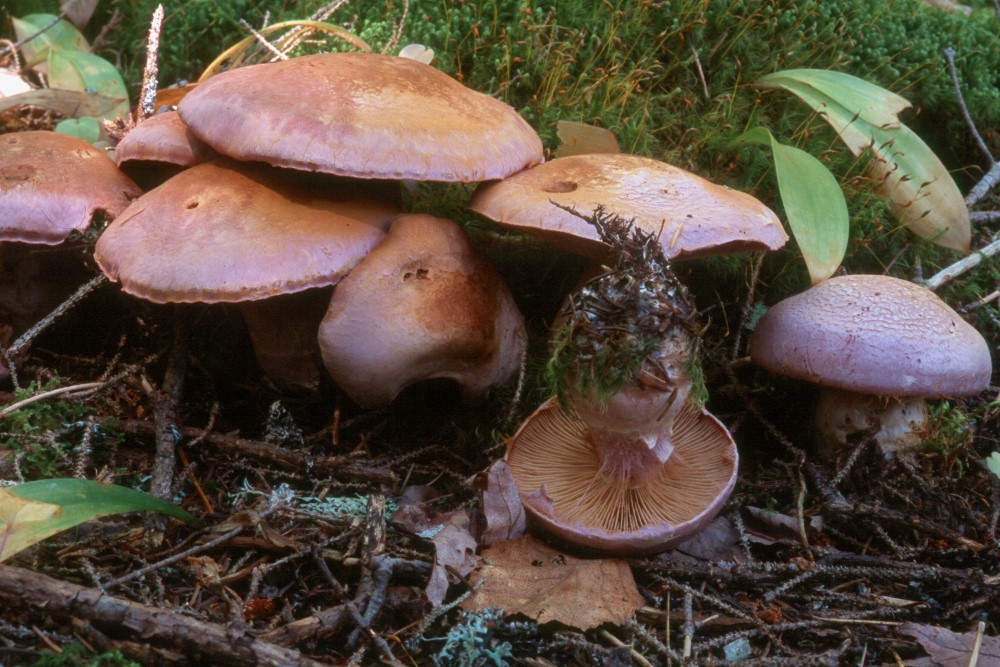
    Probably the most familiar type of mushrooms are those with gills underneath the cap, such as Cortinarius traganus:

    Cortinarius traganus

    This mushroom is very commonly found late in the season and is identified by its striking purplish hues and brown gills, as well as its thick stem which widens to a bulb at the base. Younger specimens may also have a webby mesh over the gills called a cortina, which is pictured in the image above. This species forms a mutually beneficial partnership with conifer trees referred to as a mycorrhiza, where the fungus provides nutrients to the plant in exchange for a portion of the sugars the plant derives from photosynthesis. In general, mushrooms are very good at obtaining nutrients from soil, where they produce very fine root-like structures called hyphae. These are much finer than plant roots and allow for more efficient nutrient uptake. Cortinarius traganus are not edible.


    Coprinus comatus 

    Coprinus comatus, also known as the shaggy mane, is a frequent sight in lawns and mulch. This species is often white when young, with a long, bell-shaped cap. As they get older, the mushrooms release enzymes that effectively digest the mushrooms themselves, resulting in what looks like black ink. Several species in this group show this liquifying behavior and are together known as inky caps. These are considered edible but contain a toxin which reacts with alcohol up to a week after consumption. This can cause unpleasant symptoms such as vomiting, so eating this type of mushroom is not recommended.

    Amanita bisporigera

    Another white mushroom commonly found this time of year is Amanita bisporigera, also known as the Destroying Angel. As the name suggests, they are deadly poisonous. They are identified by their tall stem with a bulbous base, a ring around the middle of the stem, and a round cap when young that expands to become flat with age. Like Cortinarius traganus mentioned above, this species is mycorrhizal with oak trees, so they will only be found in forests where this tree is present.


    Connopus acervatus

    Connopus acervatus can be found growing on rotting conifer wood. Unlike the other species covered so far, this species forms dense clusters of mushrooms with reddish-brown caps up to the size of a toonie that become lighter towards the edge. The stem is long and slender with slightly pinkish hues. This species is not known to be edible.


    Pored mushrooms

    Suillus cavipes

    Some mushrooms don’t have gills at all, and instead have pores underneath their caps, such as Suillus cavipes. The fuzzy reddish-purple to brown cap, and pale-yellow pore surface help distinguish this species from other pored mushrooms. It only grows with larch trees, and sometimes several meters away from the host tree. Because of this, it is easy to overlook its tree associate. This species is not known to be edible.


    Fomitopsis pinicola

    Fomitopsis pinicola, also known as the red banded polypore, is a very common sight in coniferous and mixed forests where it can be found decomposing dead trees. Mushrooms in this group are called polypores or bracket fungi, which form a sort of disk off the side of a piece of wood, allowing the spores produced on the underside to fall out and blow away with the wind. Unlike the other mushrooms covered so far, which may have shorter life spans, this type of mushroom grows and produces spores over the course of many years. This species has a woody texture and is thus only edible to the adventurous (not tasty!).

    Toothed mushrooms

    Hydnum repandum

    Hydnum repandum, or Hedgehog mushroom, gets its common name from the teeth underneath the cap. This mushroom is identified by its brown to orange cap and whitish stem. It forms a mycorrhizal relationship with conifer trees and likes to grow in wet seepage areas with dense moss cover. It is a prized edible with a mild taste.

    Jelly fungi

    Pseudohydnum gelatinosum


    Pseudohydnum gelatinosum looks superficially similar to the Hedgehog mushroom because of its teeth but is actually only very distantly related. It is one of the jelly fungi, a group whose name is unsurprisingly derived from their gelatinous texture. The teeth of this mushroom are generally grey to white and translucent, while the cap can range from pale grey to brown. This species can be found growing on rotting conifer wood on the forest floor. Jelly fungi are not valued as edibles.

    Dacrymyces chrysospermus

    Dacrymyces chrysospermus, also known as ‘Witches’ Butter’, is a very common sight throughout the year. This species does not form a cap and stem, but rather it looks like a mass of bright yellow or orange folds growing on the surface of dead and rotting wood.


    Puffballs

    Calvatia gigantea

    Another type of mushroom is the puffball, which is usually round, with the spores being produced on the inside. While many mushrooms often rely on wind to disperse their spores, puffballs need to be disturbed in some way, such as being squashed by animals, in order for their spores to shoot out in a cloud of smoke. A common late season puffball is Calvatia gigantea, which can grow in lawns to enormous sizes, often up to 50 cm or more in diameter, and contain trillions of spores when mature. This species is white on the outside and white on the inside when young, but the interior turns brown with maturity. They are edible while they are still white inside. A related species, Calvatia cyathiformis, looks similar when young, but

    is rougher and its outer surface turns brown with age.

    Sac fungi

    Leotia lubrica

    Leotia lubrica, also known as ‘Jelly Babies’, are a member of a group called sac fungi that are about as closely related to other mushrooms as humans are to earthworms. Species in this group are usually microscopic, but a few species have grown to a conspicuous size. Jelly babies are identified by their yellow stalks supporting a wrinkled, brown head that may take on greenish colours. They are not known to be toxic but supposedly have little flavour.

    To delve further into the world of mushrooms, a good field guide is critical. George Barron’s Mushrooms of Ontario and Eastern Canada is a great place to start, available in Wolfville at the Box of Delights bookstore on Main St. The website mushroomexpert.com is an invaluable free resource covering over 1000 North American mushroom species, but it is generally more technical than a field guide. Not only is collecting and identifying mushrooms a lot of fun, but there are likely many species that have yet to be discovered in Nova Scotia. The next time you go for a walk through the woods, you might just find something new!


    Thanks to Dr. David Malloch for giving his permission to use some of his photographs. To learn more about fungi, consider taking Dr Allison Walker’s BIOL3663 Mycology course at Acadia (follow her @FungalDreamTeam) and check out blomidonnaturalists.ca or nsmycologicalsociety.org for information on mushroom walks in the province.


    Bruce Malloch is completing is MSc. in Biology with Dr. Allison Walker researching the succession of decomposers in salt marshes. His project looks at  the idea that the decomposition of a plant species is a complex process involving many species that are functionally unique. Some may decompose leaves and shoots, others roots. Some may be decomposers of freshly killed grasses while others will decompose older material. His research is focused on determining which fungal species are present in the Wolfville marsh, and how these communities change over the course of a year.

Betzillo positions itself as a versatile gaming hub where structured bonuses and adaptive gameplay mechanics support both short sessions and extended play.

Built with a focus on innovation, Spinbit integrates modern casino architecture with rapid transactions, appealing to players who value speed and digital efficiency.

Ripper Casino emphasizes bold entertainment through high-impact slot titles and competitive promotions crafted for risk-oriented players.

A friendly interface and stable performance define Ricky Casino, offering a casual yet reliable environment for a wide spectrum of gaming preferences.

King Billy Casino channels classic casino spirit into a modern platform, delivering recognizable themes supported by contemporary reward systems.

Immersive visuals and layered slot mechanics are at the core of Dragonslots, creating a narrative-driven casino experience.

Lukki Casino appeals to players seeking direct access and minimal friction, focusing on fast loading times and intuitive controls.

Casinonic provides a structured and dependable gaming framework, blending modern slots with transparent operational standards.