
Tag: discussion

  • The Good, The Bad, and the Non-Compliant

    The Good, The Bad, and the Non-Compliant

    The Valley is filled with a bevy of restaurants from which Acadia students are privileged to choose. Picasso’s, Lib Pub, Sushi Fang, The Naked Crepe, and many more well-attended establishments. The wider Annapolis Valley area is without a doubt a fantastic place to eat. I’m sure that nearly everyone that attends Acadia has had at least a few delicious meals at one of the previously mentioned restaurants. Sitting in my living room, reminiscing with friends about Wheelock Dining Hall and our days in residence, we began to talk about how dirty some people claim meal hall is.  Instantly I was curious and began my standard Google-based investigation. I started by asking myself if I thought there were food safety or health code violations at Wheelock. If there were, how could they be verified? This led me to a larger issue. Are there health code compliance issues with the popular restaurants in town? Again, where would I be able to find this information? As always, Google had my back. Entering the phrase, “Nova Scotia Health Inspector” directed me to public health inspection records.

    The Province of Nova Scotia Health Inspector’s website provides a form from which you can instantly request the electronic inspection records for any establishment in the province for the last decade. All you have to do is input some basic information like the name of the establishment, the address, and the period for which you would like to see records. I decided to examine some of the most popular destinations for students both in Wolfville and in the surrounding area.

    They include:

    • Pronto Pizza
    • Picasso’s Pizza
    • Paddy’s Brew Pub
    • The Naked Crepe
    • Troy’s Mediterranean Restaurant
    • Library Pub
    • La Torta Woodfired Pizzeria
    • Sushi Fang
    • Wheelock Dining Hall (Operated by our friends at Chartwell’s)
    • Subway

    In order to get a better picture of historic compliance issues I examined the Nova Scotia Food Establishment Inspection Reports for these establishments from January 1, 2008 through April 5, 2018. Records are removed from the online database after more than three years so the records I have access to are no older than that. How do the various student-frequented establishments stack up when compared to one another? As is the case of a few of these establishments, I feel it is necessary to get specific with what health inspectors revealed during their unannounced examination of these eateries. All health code violations are up to the interpretation of health inspectors. Not all violations represent a serious risk to health, however, it is worth noting that based on the documents I have examined, all of the restaurants do have some violations. I should reiterate, not all violations are serious. The definition of a “Deficiency” under the provincial health codes according to the Nova Scotia Provincial government is “Requirement(s) of the Regulations or Code not being achieved by the food establishment. The word deficiency is often used interchangeably with the words violation, or infraction.” Let’s see what the restaurants of Wolfville have crawling in their back rooms.

    Pronto Pizza is one of Wolfville’s establishments frequented by weekend warriors and is also one of the most concerning establishments. On June 5, 2015, the inspection lists no deficiencies. On December 3rd, 2015, the remarks include a failure to store potentially hazardous foods properly, cleaning required of all shelving, rear wooden counter, milk fridge and some shelving and surfaces in 2 door commercial fridge, washroom toilet fixtures, under and behind equipment some wall areas and all floors. Further, inadequate sanitation systems were observed. However, most concerning of all reported deficiencies is listed as, “FAILURE TO OBTAIN A VALID PERMIT PRIOR TO OPERATING A FOOD ESTABLISHMENT.” More than one year later on September 26th, 2016, the same deficiencies as December 3rd, 2015 reappeared but the permit issue was remedied.

    Picasso’s Pizza makes a rad donair but during visits in October and December of 2017 the health inspector noted on both occasions that there was a “Failure to protect food from contamination” and the comments from the October inspection read, “Store chemicals separately from food & packaging. All food & packaging to be stored >6 in./15 cm. minimum off floor. Dry ingredients containers rusted and not acceptable for food contact.”

    Next, we move to Paddy’s ,The Naked Crepe, and Troy’s Mediterranean Restaurant. All three of these businesses seem relatively well in order based on their inspection reports. Both Paddy’s and The Naked Crepe received no infractions on their most recent inspections.  In the case of Paddy’s there were consistent infractions during four inspections over two years for “failure to store potentially hazardous food at a temperature of four degrees celsius or less.” The Naked Crepe had only minor infractions revealed in their September 2017 inspection. Troy’s received notices to comply over inadequate hand washing stations in their most recent inspection that took place in February of this year.

    Next we turn to the Lib Pub. There is nothing significant to report here other than excellent food and drink. It has been more than two years since their last inspection during which time some basic temperature monitoring devices were reported as not calibrated properly and a dishwasher that could use “Daily water temperature and chemical sanitizer concentration records.”

    La Torta Woodfired Pizzeria, I’ve never personally eaten here nor have I heard positive or negative reviews related to the pizza place. Their inspection on April 4, 2018 revealed only minor deficiencies that weren’t related to food safety.

    Unfortunately the previous records of relative excellence or acceptability end here. Sushi Fang is without a doubt the worst example of food safety I was able to find. There are some direct quotes from their report that are worth sharing. All inspections took place between July 2015 and February 2018. There were regular violations indicated that suggest Sushi Fang’s operator does not adequately train their staff in safe food handling. Some noteworthy observations from the February 2018 inspection, “Food handler certification of the owner has expired” and, “Raw foods must be kept separate and always stored below ready to eat foods (corrected). All utensils and work surfaces must be maintained in a clean and sanitary condition (corrected). Foods must be stored a minimum of 15 cm (6in.) off of the floor (corrected). Foods when returned to storage must be labelled and dated to ensure proper stock rotation. Fresh raw seafood intended to be consumed raw must be dated and ensure frozen >= 7 days at -20C to ensure parasite destruction.” Or, my personal favourite, “Vermin-proof /seal small opening in building.” This restaurant has some ridiculous violations that would indicate food safety is a serious problem there.

    Of course, we have to check out Wheelock Dining Hall operated by our friends at Chartwell’s. During their inspections between the February 24, 2016, and  December 18, 2017, there were eleven deficiencies noted with nine notices to comply issued. Some of the issues did have to do with food safety and “failure to protect food from contamination” the notes from the inspector indicate lack of sneeze guards and uncovered food being left out for long periods of time.

    Subway has some pretty decent sandwiches but their record is rough. Over seven inspections in the last three years there were nine total deficiencies with nine notices to comply issued. The comments “The operator has failed to ensure the food handlers have the necessary training” appears five times over two years.

    With all that being said, it seems these health codes are in some cases too specific. They capture issues that are not related to food safety. For example some of these establishments were issued deficiencies based on “lighting intensity” or the lack of a schedule to maintain their dishwashers. On the whole, the restaurants I’ve examined here are probably ok to eat at. The fact is, you should always use your best judgment when eating out. For example, eating sushi in the Annapolis Valley is probably already a risky activity.


    I would encourage my readers to verify the validity of this article by visiting: (https://novascotia.ca/agri/foodsafety/reports/Request.aspx).


    Disagree with me? Write for the Ath.


  • Things That Should Have Been Curbed in 2016

    Things That Should Have Been Curbed in 2016


    1) The notion that “White Privilege” is offensive and racist towards White People.

    Racism, cultural appropriation, and discrimination have been a hot-button issue throughout history. With the rise of social media platforms, along with the recent election of Donald Trump, there is a plethora of conversation online (and in print) about the hateful rhetoric that seems to be plaguing today’s society. Unfortunately, when people feel that their privilege is being threatened, they enter an automatic defense mode. It is often presented in such a manner where the defendant makes claims of innocence, justifying their feelings of discomfort by exclaiming that they are not guilty of racism, and that if their race is being questioned, that they are automatically being discriminated against. White privilege is not racist; it is not offensive in any way. It is a method of explaining the favorable treatment that white people often receive. There are no systems of oppression designed against white people. Thinking that reverse racism exists is what perpetuates the notion of white privilege further into the foundations of our society. It is a mechanism that is used to validate the comfortable position white people hold in society. Validating your own comfortable position by attacking a marginalized group (by saying white privilege is offensive, racist etc.) is a subtle way of invalidating and shutting down any group who’s LIVED EXPERIENCE has ever been one of systemic oppression. In extension, these feelings can often be described as “white fragility,” a state in which minimum amounts of racial stress becomes intolerable, triggering outward displays of emotion, such as anger, and behaviours such as argumentation. Yeah, this definitely could have been left behind in 2016.

    2) That any Indigenous culture should just “get over” colonization.

    Really? This one amazes me every time I hear it. Let us take a brief moment to recall Canadian History because we are not innocent in the ways or racism and cultural oppression. Residential schools were opened in conjunction with the Catholic and Protestant Churches and the government. Their aim was to remove any form of Indigenous culture from Indigenous children by forcefully removing them from their homes, placing them in schools where they would be taught Western values. As such, a cultural genocide was committed. Often, when hearing the word “genocide,” events such as the Holocaust, Bosnian, and Rwandan genocides. That is because Canada has attempted to repress its history. The horrors of the Residential schools did not end until 1996. Yes, most of us were living when the last school shut its doors. During their time in the Residential schools, Indigenous children were beaten, sexually assaulted, and mentally abused by their instructors. Often, these traumas were difficult to cope with. A stigma surrounds Indigenous peoples in Canada. Many people chose to believe that status cards, funding, government aid, and the Truth and Reconciliation Committee should all be abolished. They question why we should continue to apologize, and why we should continue to work towards mending our relationship with Indigenous peoples. What does it take to get over something like this? How could you possibly put a numerical value on an apology, how can you, a white person, get to dictate the appropriate measures for reconciliation after a cultural genocide has been committed? When you say these things, you act as though you assume the role of the oppressed, you may think you understand their oppression, but you simply do not. I know I do not understand, I never could. However, it is important to listen, to engage in conversation, and to be respectful of what you cannot understand. Please read the above statement about white privilege and then rethink your questions and sweeping generalizations about Indigenous peoples and Indigenous culture.

    3) “She was asking for it”- REALLY?

    For God sakes. How is this type of conversation STILL taking place? Did we not learn after Jian Ghomeshi and Brock Allen-Turner? I simply do not understand. The legal process further victimizes rape victims. Belittlement and slut-shaming occur in the courtroom in order to find loopholes in the victim’s statement. By asking her, “did you say no?” you are questioning her pain and her experience. By asking her, “how much did you drink?” you are assuming that all drunk women are ‘asking for it’, by asking her “what were you wearing” or “how many men have you slept with in the past”, you are slut-shaming her. Although there are false reports of rape, the treatment of victims in the courtroom is inexcusable. This is the reason that rape and sexual assault are so underreported. This process favours the accused, often bringing into play irrelevant aspects of his character, his achievements, and what he strives for in life. However, this does not take into account aspects of the victim’s character, her (or his) achievements in life, and how what she/he had strived for may feel as though it has become so out of reach. It’s simple, folks. If you can’t say no, you can’t say yes. There is no in-between; there is no grey area. There is yes, and there is no. Stop blaming the victim. Stop validating your need for supremacy. Stop questioning the pain of others, instead, start regarding it.

    4) Feelings of self-doubt, as brought on by Instagram and other forms of Social Media.

    I am guilty of this. Most people are guilty of this. It is so easy to feel self-doubt, and it is so easy to think that your value decreases based on the perceived notion of “perfection” in the others who you see on social media. In the last 10 years, we have “networking” apps explode. The original purpose of these apps was to stay in touch with your friends, to be able to connect with people you haven’t seen in a long time and to keep others updated on what is going on in your own life. However, it feels as though there has been a shift in the dynamic, a change in the way we behave on the Internet. Often, all we see is the picture. We believe that everybody’s lives are perfect and full of happiness based on how they display themselves on social media. Getting the “perfect picture” and pairing it with a “fire” caption that will get you over 300 likes is often a goal of most people. I know I am not innocent. There have been multiple occasions where I have found myself thinking, “if I went to the gym more maybe I would look like her and then I would be as happy as she appears.” I know this is wrong. After a conversation with one of my roommates, I found out that she was feeling the same way. She talked to me about how miserable looking at Instagram makes her. It caused her to question her own happiness by constantly comparing it to other girls’ social media pages. So, she slowly began to stop looking as much. As did I. I’ll leave this point here: everybody has their issues, but we have been conditioned to try and keep our problems to yourself. A picture is just that: a picture. You see what the poster wants you to see, just remember that your self-worth should not be determined by a like or how the world views your Instagram page.

    5) Islamophobia.

    Islam is a religion of peace. Often, people do not believe this when it is brought up in conversation. The first time I heard this was in my 11th grade world religion class. Our teacher told us that Islam was the closest religion to Christianity. She was right. It is not Islam you are afraid of, it is the “otherness.” The sense that you see something different, and that you are uncomfortable within a realm of your own privilege is what sets you off. This rhetoric gained prominence after 9/11. We were scared of them. They were scared of us. Although I am not an expert in Islamic studies, I know many men and women from the Arab world who identify as Muslims, and I can honestly say that they are much nicer than many other people I know. If we remove the concept of the “other,” perhaps we will all be able to see each other as we are: human.

  • Girls and Sex: An Overview of how Peggy Orenstein Navigates a Complicated Landscape

    Girls and Sex: An Overview of how Peggy Orenstein Navigates a Complicated Landscape

    Some of us grew up in semi-liberal or liberal households. Some of us grew up in conservative households. At one point or another, our parents would openly discuss the harms of drug and substance abuse, the negative consequences of consuming alcohol before 19 (or 18, in some cases), and why it is important to always follow the rules. As I continued to get older, I became more aware of the generation gap between my parents and I. This gap between mothers and daughters, and mothers and fathers has become even more evident as I see my parents’ friends struggling to make their way through the adolescent years of their teenage daughters. Even in the age of the “helicopter parent” there is a continued stigma and discomfort around the notion that their daughters have the potential to have a sex life. The same notion is not met with the same level of discomfort when their son’s sex lives are the topic of discussion.

    At this point, it is safe to say that blaming girls’ clothing for boys’ sexual drive is counterproductive. However, we must first look inward at the ways in which girls’ clothing is marketed in comparison to boys. Orenstein writes about the methods that are used to market girls’ clothing. It is evident that boys’ clothing isn’t centered on the idea that they should bare their bellies and wear short-shorts when they dress, so why is this marketing tactic targeting girls from a young age? If we dig deeper by using Orenstein’s study as a framework, we may be able to see a correlation of self-objectification. Orenstein offers a strong definition of self-objectification: the pressure on young women to reduce their worth to their bodies and to see those bodies as a collection of parts that exist for others’ pleasure; to continuously monitor their appearance; to perform rather than to feel sensually. Could the marketing tactics of young girls’ clothing be subconsciously objectifying them? Could it be leading them towards a road of lower self-esteem and doubt? Perhaps it is the lack of conversation surrounding female sexuality on behalf of the parents, who often perpetuate the stigma from a young age that it is okay to follow media and gender norms by going along with fashion trends that sexualize the female body, but having conversations about how to engage in sexual activity safely is out of the question.

    However, the stigma around young women’s dress is more likely to have damaging effects. It begins with the media normalizing how young girls are supposed to dress, what toys they are supposed to play with, and what shows they are supposed to be watching. By submitting to these cultural norms, their experience is shaped to fit a particular model. Parent’s discomfort with the teenage sex drive is actually more harmful for young girls’ self esteem, further creating a more difficult landscape for these girls to navigate.

    Orenstein conducted an interview with 71 young women. In this series of interviews, she asked questions about the girls views on sexual conduct, what they hoped to get out of their sexual encounters, and how the level of discomfort they felt when talking about these experiences with family or their peers. The results were alarming. The general consensus was that their friends became an audience to be sought after and maintained, that their engagement in the sexual experience was not for their own pleasure, but more so for the purpose of fulfilling their partner’s “needs” before their own, and so that they would have stories to share with their friends to not come off as “prudish.” Not only is this behavior harmful to girls’ self-worth, but it can also be related to mental health issues. Orenstein describes this phenomenon as “using your experience to create an image of yourself.” Essentially, the more experience you gain sexually (even if it is not for your own enjoyment), your social status will be higher.

    Let’s shift into a discussion about the negative consequences of social media. It is a game, and one that you need to play correctly in order to be “accepted” by your peers. Orenstein uses Sarah* as an example. She talks about a girl in her high school who continuously posted selfies. It was the general consensus that she either had no friends or was completely self-absorbed. It was never thought that, perhaps, this girl just enjoyed posting pictures of herself. The impacts of social media use have severe impacts on girls (and boys) well-being. Are selfies empowering or oppressive? Are they used to control girls and constrict them within a particular social norm, or are they a useful tool for expression and exclusion? When we are faced with these discussions there is rarely a strait and narrow path to follow, it perpetuates the ideology that there is a difficult landscape to navigate when it comes to teenage girls and sex.

    Why is it called a blow “job”? The expectations for women’s bodies just continue to perpetuate a pre-existing notion of the misogynistic roles they are expected to fill in society: subordinate. Just before the Bill Clinton scandal in the White House, a 1994 survey in America revealed that just over 50% of women had never performed fellatio on a partner. In 2014, these numbers have alarmingly increased. A story in the New York Times declared that sixth-graders were now more inclined to treat fellatio “like a handshake with the mouth.” Has this practice been normalized because of the ever-growing presence of social media? Or is this stemming from the need to form an image of oneself, one that favors the female’s role in sex because it is increasingly being viewed as “normal.”

    Sexually active teenage girls are often referred to as “sluts.” Sexually active teenage males are often referred to as “players.” It is extremely evident that this is a problem. Normalizing and gendering sexual behavior in teenagers is not only dangerous for their physical well-being, but also their mental well-being. Stigmatizing a normal practice (don’t turn your noses up, we are all human and puberty is a confusing, hormone-ridden, emotional roller coaster) to favor one gender over the other is not only wrong, but goes deeper to perpetuate gender roles in society as a whole. It targets women to be submissive, to be ashamed of their bodies and their desires, and calls them to question their characters for having a sex drive as a teenager. The media has sensationalized the idea of casual sex, yet targets and shames women who engage in this practice. The sexualized nature of the media not only encourages young women to call their self-worth to question, but it also perpetuates particular ideals about virginity, their role in the sexual landscape, and how they should go about the complex terrain of the “hookup culture.”

    I am not a mother. I have no experience with parenting and I do not know how to care for someone who is entirely dependent on me. I write this article as an opinion piece, based off of my own experiences and the study conducted by Peggy Orenstein. If I may suggest one thing, it is that we call to question preexisting norms about teenage girls. I suggest that we become more open to discussion with these young women, who will someday be the future. I call all parents to step outside of their comfort zones and talk openly about sex with their children, which is a conversation I never had with my own parents (comfortably). This is a difficult landscape to navigate, with a variety of different factors influencing behaviors, interactions, and personal decisions. Opening up the floor to a more inclusive, non-gendered conversation about sex is what we may need in order to help maintain teenage girls self-esteem, let them know their worth, and ensure that any decision they make regarding their bodies is just that, their own.

    For reference, please pick up a copy of Peggy Orenstein’s work.

    Peggy Orenstein, “Girls and Sex: Navigating a Complicated Landscape”, (New York: Harper-Collins, 2016): 1-236.

  • Academic Dismissal

    I promised myself a few years ago that I would write this article before I left Acadia, and now I’m finally in my last semester ever (hopefully!), so here it goes. Dear student body of friends and strangers, I present to you my biggest and most embarrassing secret. It’s something so deeply and personally disturbing that I’ve told very few people – not even my parents. Are you ready? I flunked out. I know I’m not the first nor the last person to ever fail university, but for me, receiving that letter of academic dismissal in the mail was a gut-wrenching conclusion to a particularly dismal string of events. I’m writing this article partially to relieve some of the weight of this secret I’ve been carrying around for three years now, but mostly as a precautionary tale for any readers who might find themselves in a similar situation.

    In the spring of 2009, I was eagerly anticipating my high school graduation and less eagerly anticipating the next big life hurtle ahead of me: post-secondary education. I actually enjoyed school. I was a good student with good grades, and I participated in a wide breadth of extra-curricular activities. When it came time to make some big decisions about what to do next, like many of my peers, seventeen-year-old me applied to a variety of universities. I didn’t particularly have an end goal in mind career-wise, I just knew that I was smart and capable given my academic success to that point, and so going off to university seemed non-negotiable. I assumed I would just launch myself into school and figure things out on the way, because what seventeen-year-old knows exactly what they want to do for the rest of their lives anyway? As I had achieved well-rounded grades in both arts and sciences, my high school counselor strongly urged me to apply for science programs “to open windows to the future,” and I knew I liked people, so I chose psychology. I was accepted to all of the schools I applied to, so I chose Acadia based on reputation. Sound familiar so far?

    The slow crash-and-burn began upon arrival. I was thrust into introductory biology, statistics, research and design, and all the other fun necessities of a science degree in psych. Possibly due to my lack of end goal and mostly due to my complete disinterest in any of these things, I was strong out of the gate but quickly fell far behind. It seemed that my plan to jump right in and swim until I reached the finish line was flawed. A pivotal moment that I can remember from my second year of school is laying on the floor of my friend’s room in Chipman with a group of people talking about their life aspirations beyond university, and suddenly realizing my own impending identity crisis. Who am I and what do I want to do?! I hardly recognized myself, failing courses and wondering what the point of any of it was. In high school I was just forced to take everything, my life had a regimented structure, and I identified myself by my extra-curriculars. I was a band kid and that somehow summed up the rest. Now I was nobody, and I was going nowhere.

    Obviously the news that I was failing school didn’t exactly fly with my parents when I came home for Christmas that year. To be precise, they called me a “disappointment”… that was pretty difficult to hear. After many hours of talking and sobbing profusely with my mom, we decided that maybe I should switch majors. In retrospect, taking a step back from university to figure my life out would have been a prime choice at this point in the story, but that’s not what I did. I returned to school as an English major and began fast-tracking my way through the English program, cramming every vital course I’d missed into a 3 year plan in order to graduate by 2014. Switching to English was a breath of fresh air. I still didn’t know what I was going to do with it, but I had always enjoyed reading and writing as a kid, and I found the course content much more in line with my interests. The department and the class sizes were also way smaller than anything I had seen thus far. I made friends incredibly quickly, got to know everyone in all of my classes, and all of my profs knew me by name. It was like night and day.

    From then on my marks improved and I was generally happy to be working on something I was both good at and enjoyed, but then in the spring of 2013 I got some unexpected news. My uncle had received a sudden diagnosis of terminal cancer. Following this news, my grandmother was also diagnosed with cancer. My family spent that summer in a state of somber anticipation. We spent four months saying goodbye. That somebody who had a family and a career and all the things they had ever dreamed of and worked towards could suddenly cease to exist in the midst of it all was nearly impossible for me to comprehend. It made everything seem pointless. In the fall of 2013, as I was beginning what should have been my graduating year of university, not only did my long-term relationship fall apart, but I lost two people to cancer in little over a month. Not wanting to burden my aching family with the profound impact this experience was having on my outlook on life, I kept it to myself. I stopped going to class, not because I wanted to but because I simply couldn’t seem to summon the strength or will power. I laid in bed and I watched the seasons change from fall to winter. I ignored my phone and my friends. I just stayed in bed. Christmas was extremely sad that year and further strengthened my resolve not to tell my parents I was sinking, because I could tell that they were barely coping as well.

    That spring I got my letter of academic dismissal, as expected, and I put it in a drawer. I didn’t even open it for a long time because I couldn’t look at it without feeling sick to my stomach. I told my parents (and anyone else who inquired) that I was burnt out and that I wanted to take some time away from school. I didn’t tell them I got kicked out. I couldn’t bear to admit that I had failed them after everything they had been through already. I spent two long years working a minimum wage job in food service, hating the monotony of my days and contemplating my next move. Finally, last spring, I reached a boiling point in my stagnant life and reapplied to Acadia to finish what I had started … and here I am.

    I wanted to write this article for anyone who might be feeling as unsure about their future as I did. In the leap from high school to university it seemed like everyone around you knew exactly where they’d head in life, and if you’re like me, you probably followed the masses hoping you would figure it out too. You probably didn’t let on that you were feeling a little lost and overwhelmed. I also wanted to write this article for anyone who feels like they’re carrying an impossible weight on their shoulders. I need you to know that you’re not alone, and that school isn’t everything, even if it feels like it is. I need you to recognize when you’re sinking and yelling for a lifeline, regardless of the size of the burden you’re trying to shoulder alone. I wish more than anything that somebody had reassured me that it was okay to take a step back and reevaluate my goals. I might have been more successful, for instance, if I’d taken some time after high school to really think about what I wanted to do before diving aimlessly into university because I felt like I had to. I pounded away at this degree for the sole purpose of having a degree. I did it because I thought it was what I had to do to validate my life, but at the risk of sounding cliché, I forgot that life is about finding happiness.

    We’re taught that successful people just bite the bullet and go to university, get a good job, and live happily ever after. I’m sure that’s true for many, many people, but sometimes life gets in the way. Sometimes you don’t know why you’re doing something, and you need to figure out what you want before you proceed. So this is for all the people facing academic penalties at the end of this year. Your story isn’t over, your worth isn’t based on your degree, and your life isn’t a total loss. You got here because you’re smart and capable, and you’ll figure out what makes you happy eventually. Maybe it involves university, but maybe it doesn’t. Either way, there is absolutely no shame in taking time away to figure it out. I am now twenty five years old and finishing my bachelors degree, eight years after I first started here. We’re not all on the same time line, and it’s not a race to the finish line, because there is no finish line. Most importantly, none of us know how much time we have on this planet, so whatever you do, do it for you.

  • Are Millennials Too Sensitive?

    There once was a boy who was told that everyone that should be nice to everyone and that if they were not kind, they were bad people. He then grew up to find that’s not how the world works.

    As a society adapts, the mindset of the people within it change. This is also true in the change of a generation. They have learnt from the mistakes and triumphs of previous generation and use this information to change and base their lives upon. The education around them adapts to these new changes and shapes children. With the increase in mental health warning and bullying campaigns, are they really being shaped to deal with the rest of the world, or is it that the world has not yet to accept the changes that the new generation is bring? I believe that the new generations are not taught to be prepared for what the world will throw at them. They are only told that people will change and that they should not have to face the problems that occur in the world.

    In my political science class, we were discussing our upcoming presentations for our research assignments. Our TA requested that if we are planning on showing any “graphic images” we get them checked prior to putting them into our visual for our assignment. This is a ridiculous sign of how sheltered this generation is: we know violent things are happening around the world but we play a blind eye to them. Not showing these images does not make them go away and does not solve the problems that they are causing them.

    Now bullying is a topic that has only been under scrutiny for the past 20 years. It is now viewed as a national epidemic instead of a common fact of life. The young generations are now beginning to expect that everyone in life will be nice to them and if they are not there are a bully. But that is not how it works in life. You will be put down by people for making a mistake at work or for bumping into someone on the street. People will talk about you behind your back. You cannot change that. If anything, you should be taught to how ignore these comment and fight back, compared to just reporting them to the principal. You can’t report your boss in the future for yelling at you, so learn how to take criticism.

    Previous generations have been built and thrived upon the “tough love” method. People would discipline their child to a certain extent, be that verbally or physically. But now, parents are actually being arrested for spanking their children with actual reasons. The school system does not tell the students the difference between abuse and discipline so they grow up with the belief that this is wrong and that their parents are not good people.

    It is a generation under the veil of ignorance – they all imagine the world to be perfect, where everything happens their way. If things are happening outside of their community to other people it doesn’t matter. All that matters is what happens to them and that they are happy. When things that they don’t like occur, they don’t know how to handle it. They have been so shelter from the sadness and violence of the world, they when they get a large dose of if, it leads people to believe they have a mental illness.

    Now the thing about mental illness is that it is something that is very real, many people are suffering from it. The statistics show that the rate of people who report suffering from depression have increased by 6% over just this year. Now I am not saying that these people’s claims are false, but the rate shows that the recent generation cannot handle the pressure that society has put upon them because they were not trained to handle stress. They were only told that the things that cause them stress are not right.

    When any topics concerning race, sexuality, politics, or gender come into play, they become extremely agitated. They are brought up to think about living in a world when everyone should think the same way. But that is not how the world works. People have different opinions and are entitled to have those opinions, why must people be put down for not conforming to what views their society has. These generations have been told they everything should go their way, so when it doesn’t of course they don’t do how to handle it. Is it true that millennials and Gen Zs are overly sensitive? Yes it is. But who can blame them when they grow up in an environment like this one.

  • Rihanna and JK Rowling “Clap Back”

    In recent months, politics has become a buzzword. Some people relish in discussing politics, while others are deeply opposed. From classrooms to coffee shops, it has become increasingly rare to stay away from the subject. Even celebrities, such as Rihanna and JK Rowling, are turning to social media sites such as Twitter, Instagram, and Facebook to express their views. It’s not too difficult to notice a pattern emerging in the comments section of these sites: while many people support their political commentary, there is also great and often antagonistic resistance to it.

    On January 28th, in response to President Trump’s executive order of the so-called Muslim ban, Rihanna exclaimed on Twitter: “Disgusted! The news is devastating! America is being ruined right before our eyes! What an immoral pig you have to be to implement such BS!!” Earning 150,000 retweets and nearly 400,000 likes, it was clear that she expressed an opinion that resonated with many. However, fellow singer Azealia Banks thought differently about Rihanna’s comment, responded (on what are now deleted posts): “As far as [R]ihanna (who isn’t a citizen, and can’t vote) and all the rest of the celebrities who are using their influence to stir the public, you lot really REALLY need to shut up and sit down…. Stop chastising the president. It’s stupid and pathetic to watch… Hoping the president fails is like getting on an airplane and hoping the pilot crashes.”

    In a similar way, JK Rowling was also told to “shut up and sit down.” Commenting on the Muslim ban and the experiences of those being detained at American airports, she posted on Twitter: “When I worked for Amnesty International in the 80s, these were the kind of stories told by political prisoners in dictatorships.” In response, an individual known as Mr. America on Twitter responded: “You’re a grown ass woman whose entire career is based on stories about a nerd who turns people into frogs. Stay out of politics.”

    “Shut up and sit down.” “Stay out of politics.” Do celebrities like Rihanna and JK Rowling warrant such responses because the realm of politics isn’t necessarily their expertise? If you’re a singer or an author, does that automatically make your political opinions and engagement moot? Isn’t Azealia Banks, a fellow singer, being hypocritical in her response due to it’s political nature? Telling people to “stop chastising the president” is political commentary. Should she practice what she preaches? What makes “Mr. America” qualified to tell a person to stay out of politics? What makes his opinion any more valid?

    Taking the high road, Rihanna posted an image on Instagram with the caption: “the face you make when you an immigrant. #stayawayfromourchickens”. Comments telling people to remain silent only promote ignorance and shallow discussion. Now, more than ever, individuals should engage in open discussion to hold those in power accountable and to understand different points of view. JK Rowling says it best: “In – Free – Countries – Anyone – Can – Talk – About – Politics.”

  • No Regrets: Why I Am Leaving University

    Most of our time is spent in school, and we have yet to make any real choices in life. During my second year at Acadia I began to doubt what it was that I wanted to get out of my education and had no idea what I wanted to do for a career, so I decided to take a year off for the 2015-2016 term. The year I spent working at home was interesting, and I guess you could call it a learning experience. I knew for sure that I didn’t want to work at a menial minimum-wage job forever, and it gave me initiative to come back this fall. But upon my return, I found that it was a challenge to fit back into student life. At first, I thought that it was Acadia and my friends that had changed and moved on without me. But then I realized it was me who had changed.

    One of my professors called university a bubble, and I absolutely agree with him. Many of us are bubbled off and separated from the real world here, especially while living in residence with no real knowledge of what it’s like to pay bills or to have true independence in general. I think that this realization is what has driven me to drop out after this semester. Don’t get me wrong, I’m not telling you to drop out and play video games at your parent’s house for the rest of your life. What I mean is this: university just isn’t meant for everyone. For most of us, our bachelor’s degree is the first step in attaining a career,. But what do you do when you can’t even get a job in your field after graduating? What do you do when you realize that you’ll need multiple degrees and specializations to have a decent enough career to be able to afford having a family later on? I applaud the people who strive to do this because their dream and their goal is to go into education, to have a Masters or PhD, but when it’s a necessity to be a successful human being, it becomes an overbearing weight on your shoulders.

    Education is absolutely important in our society, but there is a stigma around higher education and I think it’s time for it to go. If someone had asked me in twelfth grade if I was going to community college or university, I wouldn’t have hesitated in saying university. I was given the impression that if you’re smart, then you need to go to university. But that notion is complete bullshit. People learn in different ways, and from my time at Acadia I’ve learned a lot of great and interesting things. However, I haven’t learned anything that I feel will benefit me that greatly later in the work force. I don’t feel like I’ve been prepared for any job at all, and it’s been two and a half years. If nothing else, that was my sign that university just isn’t working for me. Also, from what I see around me, people in our generation who have gone to community college are more successful now than the ones who have graduated with their Bachelors; they all have jobs in their field while those that have gone to university are working at Starbucks. For me this just isn’t worth it, especially when the price for a semester at university is the price for a year at a college.

    Again, by asserting all of this I am not trying to say that university isn’t worth doing and graduating from. What I am suggesting is that it is not the only way to get a decent education. I am trying to give you insight from a position that is not commonly heard from for the students who are unsure of what they’re doing. For those of you who may be on the fence about whether it is the right place for you, or if you’re only doing it because it is what you feel you are expected to do, you should put the same effort in any decision about leaving school as you did to get into your program. To elaborate, don’t spontaneously decide to leave because you’re scared or homesick. It should be something that you weigh heavily upon. You should not take your education lightly. As Nelson Mandela said, “education is the most powerful weapon which you can use to change the world.”

  • #FlowersOfChange: Amber Amour Redefines Women’s Body Hair Through Social Media

    #FlowersOfChange: Amber Amour Redefines Women’s Body Hair Through Social Media

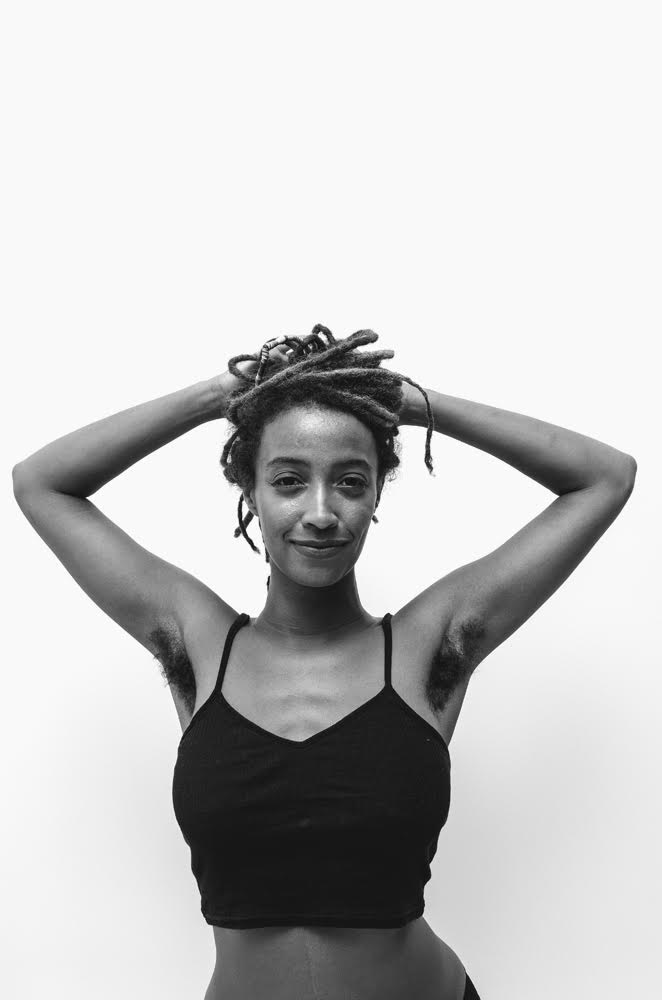
    Photo Credit: Aidan Tobias
    Photo Credit: Aidan Tobias

     A small but revolutionary movement is spreading on Instagram. #FlowersOfChange is a photo series that was started by Amber Amour, an activist and artist who, prior to Flowers of Change, began the artistic campaign Stop Rape, Educate. The #FlowersOfChange series was born in conjunction with #StopRapeEducate and has been gaining ground on social media among women who feel comfortable posting photos of themselves that show their body hair. They are explaining their choice to refrain from shaving and how their body hair “speaks” to them and to the world.

    Amour
    Photo Credit: Aidan Tobias

    Amour, in various Instagram posts where her body hair shows, describes her choice to shave or not to shave has absolutely nothing to do with anyone else’s perception of her body. She describes the choice as a form of self-love. “No one can take this sunshine away from me,” she wrote under one of these posts (instagram.com/ambertheactivist).

    Equating flowers with women’s body hair breaks down the perception that body hair is equated with masculinity. There is a common societal perception that men with more body hair are more masculine, and men with less or very little body hair are effeminate; women with body hair are perceived as masculine, butch, hippies, etc. Labels are inherently associated with the amount of body hair one has naturally or by choice.

    This is not to say that all women who shave are complicit in their own oppression in the context of patriarchal heteronormativity. Both women and men choose to remove their body hair for various reasons, including comfort, sport, athletic affiliation, personal or partner preference, aesthetic, and so on. Unfortunately, labels such as the examples given above are often implicitly associated with appearance.

    To gain deeper insight into #FlowersOfChange, I reached out to Amber Amour with a few questions about the photo series.

    RH: What inspired you to start the series #FlowersOfChange?

    AA: It’s an interesting story, actually. I started #FlowersOfChange after being sexually assaulted in Cape Town. When the story went viral, I got victim-blaming comments from men and women around the world. One girl commented on my picture saying something like, “You put yourself in that situation [to be sexually assaulted]. You should have known better. Life is not all flowers and armpit hair!” Despite her rudeness, that comment made me laugh and I found the concept of “flowers and armpit hair” terribly cute. I decided to kick-off the campaign by taking photos flaunting my body hair while posing next to flowers. I later renamed the movement Flowers of Change because if we all change what we think about body hair, we can change the world by revolutionizing the love we have for our bodies.

    RH: What societal implications/effects are present for women who choose not to shave?

    AA: Women who let [their hair] grow should be prepared to face staring and funny looks from strangers and rude comments from peers. It’s not all bad, though. Eventually that will roll off. Whoever decides to rock their body hair should do it for herself despite what anyone says. Women who let their body hair grow should know that not everyone is going to understand. Don’t let their ignorance dictate what you do or how you feel.

    Amour
    Photo Credit: Aidan Tobias

    RH: What is the response like on Instagram?

    AA: The response is mixed. For one, I noticed that my photos showing my body hair got more likes than any of my other pictures, which was a sign that people were paying attention to it, at least. Some of the comments can be harsh but I’ve learned to ignore them because I feel so grounded with myself and so complete with my body hair that nothing anyone can say would make me feel ashamed of it. You can’t make me feel bad about something I’m incredibly proud of.

    RH: In what ways does #FlowersOfChange relate to your campaign, #StopRapeEducate?

    AA: They relate to each other in the way that both movements allow women to grow, to love, and to express themselves freely without fear. When women feel supported, loved, and healed from within, the whole world prospers.

    RH: Do you feel social media is the most effective platform to inspire social change, or is social media part of a broader movement?

    AA: Social media is a part of a broader movement. It’s just one aspect of things. We can preach all day behind our screens but if action is never taken, the world never changes. We should use social media to speak our minds and educate people just as much we should take steps toward building the world we dream of outside of the virtual world.

  • My Real Life Nightmare

    My Real Life Nightmare

    TRIGGER WARNING Contains information about sexual assault and/or violence which may be triggering to survivors.

    Have you ever had a nightmare? One that you wake up from just glad to know that it was all just a bad dream and that you are safe in your own bed, so you could just go back to sleep peacefully? Okay… so what happens when it is the opposite? What happens when you wake up from your ideal dreamland into the nightmare you have feared the most? What then? It’s not like you can go back to peacefully sleeping. You are no longer safe in your own room. Your safe sanctuary has turned into hell and you can’t escape from it. You are trapped. But don’t worry; this generally doesn’t happen to most people… well, except for me.

    See, for me, my sense of security was taken away from me the night of my nineteenth birthday. Like a typical newly nineteen year old, I had a little too much fun with my alcohol and was put to bed early by my mother. She believed that given the state I was in, was going to be was the safest thing to do. Little did she know that putting me to bed would result in a loss of my safety. Please note, that I do not blame my mother or anyone for the circumstance of this night. It was just a series of unfortunate events.

    I remember dreaming the best dreams. I dreamt of a house, a husband, and a house so full of pets that it practically seemed like Noah’s arc. I never got to finish that dream. Sadly, it was interrupted. By a soft breath. By sweaty hands. By shaggy hair. By the sound of “oh baby” and “yeah, you feel so good.” I wish I could remember more. I wish I didn’t just wake up to it happening. I wish I could remember how it started. But mainly, I wish I knew why it happened… why I was raped. On my birthday. With my mom and my brothers downstairs and my dad asleep in the room next to me. By a friend of my brothers, who I had known for five years. Someone I used to share classes with. One of the worst things for me is that I will never know the extent of what happened. I will never know how far he got before I was able to stop it. However, what I do remember is enough to have a significant impact on my daily life.

    I apologize to anyone uncomfortable reading this. Believe me, I had a hard time writing it. But I wanted people to take the time to think about how much we take for granted. I used to think very little about going to bed at night. I would never give a second thought to someone coming into my room and violating me while I was sleeping, but now, it’s all I can think about. I can’t sleep with the lights off, or walk alone at night anymore. That stuff has been taken away from me.

    But I have taken some things away from this too. I learned how incredible having supportive people in your life can be, and how much we can underestimate our own strength and abilities. Whenever I get overwhelmed of memories of that night, I think of my brothers holding my hand until the ambulance got there and of my oldest brother letting go of the friendship he once had with one of his closest friends and holding the bastard until the cops showed up. My mom also reminds me of my own strength whenever it all seems like too much to handle. She reminds me that I fought him off when I was coherent enough to do so and that I never let the events of that night control my life: I came back to school. I didn’t let the trauma of that night ruin the relationship I have with my boyfriend (who, by the way, has been amazing through this whole thing). I kept living my life, because if I just gave up, then he wins and I refuse to ever let that happen. I will not let some sick excuse of a human be the reason my life come crumbling down. He already had enough negative influence on my life. I will not let him take any more from me than he already had.

    Don’t get me wrong; I have some bad days (or weeks for that matter) where I can’t get out of bed, or focus long enough on my studies before my mind wanders back to the events of that night. But that’s my reality now and I have to try to learn how to balance things. It’s not ideal, but its what my life is now and I just have to learn how to adjust to it.


  • Into The Trench

    Into The Trench

    All humans are human, and not one of us is more human than the other.”

    These words are spoken by Lt.-Gen. Roméo Dallaire, at his talk on October 21st at Horton High School. I am forced to look up from my half-scribbled notes and stare at the stage in dumfounded enthrallment. The now retired general is neatly dressed – he wears no crass colours, and keeps his hands in his pockets as he paces along the edge of the stage. The topic of the talk is the use of child soldiers in warfare. He recounts stories of Rwanda and his time there, and he mentions the moment he realized that the eyes of the orphaned child he was staring into, even after witnessing so much bloodshed, were the same eyes of his own child back in Canada, safe with his family. “We are all humans,” he says again – but what is it that makes us inflict such horror onto other humans? And what is it that makes us ignorant and reluctant to aid others in those situations?

    One of the tales that the general recounts is the story of a UN patrol travelling the country-side, eventually encountering a small village in Rwanda whose population had been massacred. In the town, there existed a massive rape site. A trench in the mud, full of women and children who had been corralled, raped, mutilated, and left for dead. The commander of the platoon was unsure if he should send his soldiers into the trench to comfort the dying women who remain alive, laying in the mud bleeding, or if he should continue without stopping. To jump in would mean to risk contracting HIV and wasting the limited food and water resources they had. But he didn’t even have time to decide. The soldiers had already unstrapped their packs and were entering the pit.

    It is part of the changing nature of warfare. A new era, where civilians are the prize, the targets, and the weapons. Where militants have resorted to using human beings as a means of attack, specifically children. A crime against humanity according to the UN that is being broken by several active groups in the world today – the Boko Haram, the LRA, and of course, ISIS. There is not one conflict on this planet that is not currently using child soldiers. It’s a brutal but effective tactic – if a soldier on the battlefield had a six year-old boy charging towards him in his crosshairs and pulled the trigger, how could he go home after his mission and hug his own kids? The kids are expendable. You can send them out on the mine fields to trigger IEDs. Moreover, children are generally easy to manipulate. The step from a simple political movement to a fully indoctrinated youth militia is a small one. However, the cost is too great – “We are mortgaging our future,” Dallaire says. He is right. But the issues we are talking about seem so far away, so distant, that it appears almost futile to do anything about it. So say the politicians.

    Just look at the refugee crisis in Europe, where thousands of displaced individuals are fleeing from their oppressive, brutish government in search of freedom and democracy. They are instead greeted with cold, if not outright hostile treatment. Donald Trump has pledged that if elected, he will send all Syrian immigrants back, claiming that we have to look out for ourselves first and foremost. Who does he mean by ourselves? Americans? Christians? European-descended folk? The truth was eloquently stated by John Green in a recent video of his. “Ourselves” includes all of humanity, sharing this one small planet together. The only alternative concept of “ourselves” is an artificial construct we have created. Biology has shown that there is no genetic difference between people of different races. We are all the same species.

    The general did not give any answers during his talk. He presented the crisis, and he urged for a more preventative approach to stopping the use of children in war, but no solid plan or concrete implementation was given. But maybe that wasn’t the point of the talk. We will not be able to directly impact the choices made in another country across the globe. Of course, we can join non-governmental volunteer organizations, or write to our Members of Parliament, but again, I believe that the point of the talk was to urge the audience to inform themselves on these issues. Our connections with the world extends so far today, that an excuse for ignorance no longer stands.

    As for the platoon that was patrolling the village in Rwanda that found the rape site: Only three out of twenty-six commanders would have made the command to help the dying women, according to Dallaire. These soldiers jumped in on their own accord – not because they were ordered to, but because they understood the horrors that had occurred, and they were not afraid to confront them. They acted out of compassion – the purest and most human traits, admirable when found in anyone. And as it was revealed, those soldiers were Canadian. They grew up in cities like you, and went to school just like you. They learned the same things you did. They worried about their unsteady futures, about their unsteady pasts. They did everything you are doing now. And when the time came, they were ready to act, and face the consequences, because they were aware of them otherwise. So I urge you: read up on Sudan, read up on Etritea. Read up on Syria and Turkey, on Armenia and Palestine. It will be depressing and sad, and you’ll never be able to solve all of the world’s problems. But maybe one day, when faced with an unspeakable horror, it will be you who selflessly jumps into the trench.

  • Sexual Assault: A Response

    In the definition of the law, assault is any action which has intent to apprehend and/or harm an individual unlawfully. Sexual assault, by this definition, is any action which has intent to apprehend and/or harm an individual in an unwarranted and unwanted sexual manner. On September 4th an Acadia University student named Phillip Shawn Herman, a Bermudan national and Musical Education student, was charged with sexual assault following an incident two days prior. The incident took place on the grounds of Acadia University’s campus and was responded to by the Royal Canadian Mounted Police at 1 o’clock in the morning, September 2nd. As a result of his charge and impending court date, Shawn Herman has been ordered to refrain from contacting the victim, and has been ordered to “keep the peace”, i.e. to refrain from further illegal activities. This is good, and this is just. The fact that this incident was reported and responded to promptly reflects greatly on the condition of our justice and legal system, and how quickly those who are tasked with defending us do so. It also shows the great bravery shown by the young women who did report and results of campaigns like the “Know/No More campaign” on our campus raising awareness and promoting education of gender inequity and sexual health and safety. What is unfortunate, however, is that the resources available to all of us are currently in the dark. Resource centers, hotlines, university faculty groups (such as the Acadia Student Resource Center, the Women’s, Pride, and Peer Resource Centers, etc.), and much, much more are all available at the tips of our fingers and are at times scarcely used. At the end of this article will be a list of valuable local and national resources.

    According to Statistics Canada 91% of sexual assaults are not reported to authorities, or are not reported in a timely manner. This leaves an overwhelming gap in the midst of the assault cases that are reported. This is a somber statistic, but it is a wrenchingly true one. Fear of further incidents, fear of social stigma, and a general lack of knowledge of the resources available all contribute to this rate of unreported assault.

    As part of an investigative piece done by CBC’s News series investigative statistics show that reports for sexual assaults on university campuses are startlingly low. On a nationwide scale Ryerson University holds the highest amount of reported sexual assault cases, with 57 cases reported over a five year period. When the statistics are adjusted to population Acadia University holds the highest, with 22 reported cases over the four and a half year span of the study. Although the reporting of these incidents is crucial in addressing them, the issue at hand is still the existence of the acts of assault and those who commit them.

    Last March the Know/No More campaign was launched by members of the Acadia University community as a means of raising awareness for the ordeals faced by those affected by sexual assault and discrimination. The base contingency plan of the campaign was to help eradicate the stigma that presents itself to those affected by these attacks and to raise awareness of a number of social justices. Although the Know More campaign focuses on more than just sexual assault and its victims, it is a great campaign that makes sense of the injustices of sexual assault.

    Although I have no sociological credentials and I am not overtly knowledgeable in the laws and procedures of crime and punishment, I believe that any act of attrition such as sexual assault is unacceptable in a society that is as stable and as just as ours. With ample time I hope the victim of this incident is able to get the help that they need, and that the perpetrator is tried before the courts in a true and confident way. As mentioned before, below is a non-exhaustive list of free, reliable, and confidential resources that can be contacted at any time.

    Look after each other, dear readers. The future is bright.

    Andrew Haskett

    Editor-in-Chief, the Athenaeum

    *Below is a list of dependable and professional resources that are available to anybody who needs them, free of charge.

    • Acadia University Peer, Pride, and Women’s Centres – 2nd floor of the Acadia SUB building, 2nd door down from the front entrance stairwell.
    • Acadia University Student Resource Center (online) <http://counsel.acadiau.ca/Sexual_Assault.html>
    • Residence Life -P: (902) 585-1417 | F: (902) 585-1093 | E: [email protected]
    • RCMP Detachments: 1-800-803-7267
    • Kids Help Phone, please call 1-800-668-6868, or visit KidsHelpPhone.ca <http://org.kidshelpphone.ca/en/contact/>.
    • To apply for an Emergency Protection Order, please call 1-866-816-6555
    • Nova Scotia Victim Service :Kentville Telephone: (902) 679-6201
      Fax: (902) 679-6192
      Crisis Line: (800) 565-1805
      gov.ns.ca/just/victim_services/default.asp
      http://www.gov.ns.ca/just/victim_Services/default.asp

    Contact us: Red Door Society
    We can be reached at (902) 679-1411 or [email protected]. You can drop-in
    or call/email to make an appointment. Remember, your personal information
    will be kept confidential!

Betzillo positions itself as a versatile gaming hub where structured bonuses and adaptive gameplay mechanics support both short sessions and extended play.

Built with a focus on innovation, Spinbit integrates modern casino architecture with rapid transactions, appealing to players who value speed and digital efficiency.

Ripper Casino emphasizes bold entertainment through high-impact slot titles and competitive promotions crafted for risk-oriented players.

A friendly interface and stable performance define Ricky Casino, offering a casual yet reliable environment for a wide spectrum of gaming preferences.

King Billy Casino channels classic casino spirit into a modern platform, delivering recognizable themes supported by contemporary reward systems.

Immersive visuals and layered slot mechanics are at the core of Dragonslots, creating a narrative-driven casino experience.

Lukki Casino appeals to players seeking direct access and minimal friction, focusing on fast loading times and intuitive controls.

Casinonic provides a structured and dependable gaming framework, blending modern slots with transparent operational standards.