Tag: Diversity

  • Psychology is weirder than you thought

    Psychology is weirder than you thought

    When many people think of psychology, there is an immediate mental image of a client on a couch and a therapist with a hovering speech bubble asking, “and how do you feel about that?” Numerous studies over the years, have examined misconceptions of psychology. One such misconception is that psychology is not a science. After all, as humans, we tend to gain confidence in our abilities to understand and predict the behaviour and mental states of others – simply based on our lived experience. And fair enough, but there must be more to it…where does the science come in?

    Whether you want to understand treatment effectiveness, why people develop certain fears, or simply why people persist in actions that cause themselves or others pain, there is an experiment, a study, or most likely an entire academic journal, providing insight based on, well, science.

    Most definitions of “science” will include the word systematic. That is, it is an ordered system under which researchers operate to formulate scientific laws and theories. Given that science requires evidence and critical exposure to scrutiny, it can be tempting to assume it is unbiased. It would be nice if that were true!

    In the case of psychology, some have argued that the discipline has inadvertently presented a skewed view of the human mind. A popular University of British Columbia paper asserted that although a significant portion of the discipline’s trusted research is drawn from Western, Industrialized, Educated, Rich, and Democratic (WEIRD) societies, this population represents a “thin, and rather unusual, slice of humanity.”

    That is, people who grew up in so-called “WEIRD” societies often act, think, and process quite differently than people who grew up in other areas of the world. If you step back from the science lens for a moment and think instead about your personal experience, this is an obvious point.  Whether by watching the news or by engaging with people from different backgrounds, it is apparent that despite our shared humanity, there is significant diversity in behaviour, thinking, and perception.

    In fact, some studies have demonstrated how “WEIRD” subjects tend to be outliers on domains such as visual perception, fairness, and cooperation when compared to subjects from other societies. For example, certain optical illusions that tend to fool people from industrialized contexts do not have the same effect on those who grew up in rural, nonindustrialized contexts.

    This is not to suggest that the aim should be to pit certain groups against one another. A pertinent word of caution, given a bleak history of some scientists seeking to bolster racist, xenophobic sentiments by positing differences between groups that were not backed by evidence. Rather, it is an assertion that research should account for nationality, class, gender, sexuality, race and other identities so that the bulk of psychological insight is not purely derived from a narrow dominant cultural lens.

    A 2018 study examined the geographical diversity of samples in research published in three 2017 issues of Psychological Science, a leading academic journal – and the results were staggering. Not a single study sampled people from Africa, the Middle East, or Latin America, and less than 7% sampled people from Asia, leaving the vast majority of those studied from “WEIRD” societies. So, almost 85% of the world’s population comprised less than 7% of the samples in this leading journal. Researchers tend to acknowledge the extent to which their research can be generalized, but the issue is that when the majority of research shares the same lack of generalizability, at some point, those findings when replicated enough, generally become accepted as the norm.

    The bottom line is that yes – despite misconceptions, Psychology is a science. But perhaps the greatest misconception of all, is one that is taken for granted, even among many at the top of the field. Psychology is the study of mind and behaviour, but until deliberate steps are taken by the field as a whole, the picture that the discipline paints of the human experience is limited at best and flawed at worst.

    Note: This article was produced for our Black and Indigenous print edition from March 2020. The edition was postponed due to COVID-19 and is just being released now.

  • Opinion: Wake up, Acadia

    Opinion: Wake up, Acadia

    Words cannot describe how exactly I’m feeling but I’ll try. It’s taken me long to write this because I’m disappointed. Disappointed in a school that preaches diversity but nothing about the school is diverse. Before coming to Acadia, the recruiting officers promised me that Acadia would be a home away from home, a place where I could comfortably be myself and a diverse school that is rich in culture, but I got here and nothing.

    At first, I thought that it was just because it was the first week of school, but those weeks turned to months, turned to semesters and now I’m about to graduate and Acadia is finally giving us black students some sort of voice. No matter how loud we voice our concerns, often it falls on deaf ears. Every year during elections for ASU president, most candidates promise to promote diversity and inclusivity but every year nothing changes. Honestly, I’m over it.

    You want to know why you rarely see a black student run for any executive positions? It’s because we don’t see anyone that represents us on that committee or organization. One would ask, “how do you expect to see representation if you don’t run?”. Well the answer is simple. It’s because no one will vote for us. Everyone knows that these elections are a popularity contest, argue with ya frying pan. Excuse my blackness but it’s the truth, whether you want to admit it or not and this past election just confirmed it for me.

    For the first time we had two black presidential candidates. Two! My melanin was shook. This was a big deal because again, you never see this happen here. For once I was excited for this year’s election.  Was this a dream? Was this real? To make things even better, we had a lot of black students vying for positions on various committees across campus but guess what? None of them got elected. Call me salty all you want but something didn’t sit right with me so yes, I am saltier than a bag of Lays. I mean everyone is all for inclusion and diversity until it’s actually time to implement it- then everyone’s silent.

    Angry black woman aside, Acadia, thanks for making the effort #BlackStudentAdvisor but honestly, it’s 2019. You need to catch up with the rest of the world. You have to realize that black students make up a huge percentage of the population on campus. Not to mention every year the black student population will continue to grow so you must be able to accommodate us, not merely say you’ll accommodate us, but actually accommodate us. Open your eyes, look around, y’all are sleeping on this black excellence.

    Sincerely,

    Your friendly neighbourhood black girl,

    Wam

    Wambaire Gichuki is an Environmental and Sustainability Studies student  

  • Black History and Diversity at Acadia

    Black History and Diversity at Acadia

    Now that Black History Month is officially upon us, it’s time that we hear conversations on the importance of diversity. It makes sense considering Black voices are at its loudest during this time of year. We take a lot of pride in our people, our history, and our communities all while engaging in conversations about how we still have lots of work to do.

    It’s a lot of Black people’s favourite time of year because it calls for action on diversity and inclusiveness. On top of that, people have no choice but to hear all our accomplishments we’ve done for the country because according to the public education system there is no room to fit them into the curriculum. This month makes many of us feel special, heard, and appreciated.

    These feelings are something that society only puts aside for this month. For the rest of the 337 days of the year (336 during leap year) we have to actively fight and justify our existence, why we deserve the same opportunities as our White peers, and overcome barriers that have been placed by institutions for generations. With all that said, Black History Month is the perfect opportunity to call for action on being more diverse. This begs the question: what does it mean to be diverse?

    Often times, when people hear the word “diversity” they often do not go beyond the surface. For them it’s the colour they see, the gender in front of them, the way people express themselves. For me, it goes beyond the surface. It’s the struggles people go through, the things they’ve overcome, the barriers that are in place, and the mindset that many have.

    For example, the “Black experience” is not the same for every single Black person. Some of us had opportunities to excel and were able to receive the supports needed to get us where we are today and others weren’t that fortunate. Unfortunately, this often prevents them from reaching their full potential. The same could be said for any ethnic group and minority group.

    What I am getting at that here is that diversity goes beyond the surface and it is important to recognize that. It means nothing to have a “Black face” on a poster to show diversity if we don’t acknowledge the experiences that comes with it. The issue with Acadia isn’t the lack of diversity on campus. We all knew what we were getting ourselves into after we decided to stay after our first year here. The issue with Acadia is not only to say we’re something we’re not (meaning diverse) but also, the lack of supports and understanding of people’s experiences based on the lack of diversity. This campus has so much potential to be an inclusive place regardless of the lack of visible diversity that’s on campus, but right now it’s lacking.

    I bet you’re wondering what can we do to make it more diverse. Well, we can start by acknowledging that we all experience things differently. To understand to go beyond the melanin (whatever physical feature that makes us different) and think to ourselves “what can we do to make everyone feel at home?” Each person has different needs based on their personal experiences. We can become better supports to one another and stop asking people to speak on behalf of their race or what they physically represent. White people never speak on behalf of their entire group so there is no reason why everyone else needs to speak on behalf of theirs.

    It is good and healthy to ask people their opinions on different matters and world events but remember that it is their opinion and their interpretation. So although their thoughts and opinions may be similar to others they still do not speak on behalf of everyone in said group. Lastly, remember that it is okay and healthy to disagree and debate with others but what is not okay is to dismiss others people’s experiences. For example, it is completely fine if you don’t believe that Acadia has a race issue on campus based on what YOU saw within campus but what is not okay is to dismiss people when they share their stories of race related issues they experienced on campus.

    In short, what I’m trying to say is that next time you look at an Acadia poster, or see something within the community that seems “diverse”, look beyond the photo. What do you see? What is this photo trying to represent? Remember that we represent something beyond our physical features. I am more than a biracial woman. I represent my Christian faith, my control I have over my depression, the obstacles of being from a low income family, and many more things all while being a biracial woman. If people were to see me in a poster I would hope they see more than the colour of my skin and my gender. I would hope they would see me and think “she has a story” because reality is that we all have a story and that we all represent so much more than our physical features because reality is that we are all diverse. So while representation truly does matter remember that it simply goes beyond what we can see with the naked eye.

  • Senator Donald Oliver ‘60: We Still Need a Black History Month

    Senator Donald Oliver ‘60: We Still Need a Black History Month

    Some valley thoughts on Black History month.

    Black History Month in Canada has had some recent powerful successes. There’s a growing, greater understanding and appreciation of the intrinsic value of Black contributions, in science, business, education, music, sports, and public policy throughout our nation.

    These advances in heightening the awareness in our country to the contributions of African Canadians is perhaps best understood by our secondary school children who, during Black History Month, are now reading, writing essays, and immersing themselves in research and history about our Black heroes. Interestingly, their parents are being educated and sensitized at the same time by osmosis. This new awakening and enlightenment stretches right across the country.

    But, happiness will be the day when we no longer need “Black History Month,” a period in the annual calendar, to highlight and celebrate the contributions of African Canadians to building this Nation.

    But, unhappily, we still need it in 2019 because in virtually every branch of the corridors of power in Canada, Blacks are expressly excluded and often completely absent. This is because some of our coveted principles of equality, fair play and inclusion have been supplanted by the white majority and often substituted by overt racism wherein the principle of the equal worth of human beings is sacrificed.

    The result is that the ugly sting of racism still keeps the driving forces of most Canadian enterprises virtually white. I invite you to look at the lack of Diversity and colour in the upper echelons and powerful ranks of institutions like our Armed Forces, our superior Courts, our largest financial institutions; our universities, (ie. Chancellors, Presidents, vice-Presidents, Deans), our senior bureaucracies in Ottawa and the provinces, etc.

    All of this denial of the mosaic of Canada in the face of thousands of eminently qualified African Canadians who have the advanced education, multiple language skills, managerial experience and training, and possess a strong desire to do the job. But, sadly, they cannot get through the glass ceiling. They can only dream and aspire to what they know they are capable of, and they must live with the knowledge that their contributions would make for a stronger and better Canada.

    So we still need a “Black History Month” in 2019, more than 186 years after the British Parliament abolished Slavery In the Empire.

    When I was summoned to and arrived at the Senate of Canada in Ottawa in 1990, I was astounded to learn that Diversity was like a foreign, unknown concept in parliamentary institutions such as the Senate, the House of Commons and the Library of Parliament. There was no inclusion, Diversity or fairness in the workplace. In the early 1980’s I had been an advisor to the President of the Treasury Board on the employment of visible minorities in the public service and there were other groups promoting employment justice for the other three groups, the Disabled, Aboriginals and Women.

    So, on arrival in Ottawa, I immediately set about meeting with the leaders of all the parliamentary institutions strongly encouraging them to adopt the business case for Diversity. That means inclusive workplaces that respect differences and value the diverse qualities that their employees bring to their work such as gender, religion, age, sex, language, ethnicity, social status, etc. These institutions and companies know this is good for successful business. My efforts had some modest success because in the annual report of 2008, the Clerk of the Senate, Paul Bélisle reported on the results of his efforts with the Senate Administration showing 11% representation of visible minorities. There was previously a period of four years where not one visible minority was either hired or promoted.

    And what about my home town, Wolfville, where Acadia University is king? Do we need Black History Month here? Sadly, yes. Acadia has changed since I enrolled in the Fall of 1956. Notwithstanding its strong Baptist traditions, students, faculty and friends in Wolfville have told me that Acadia University has not been spared the ignominy of racism that has existed in the past, and, unless checked immediately by the introduction of the Business Case for Diversity, it will spread throughout many departments.

    So now is the time to promote inclusion and advocate respect for difference, before the problem worsens.

    It works. It really works. Trust me.

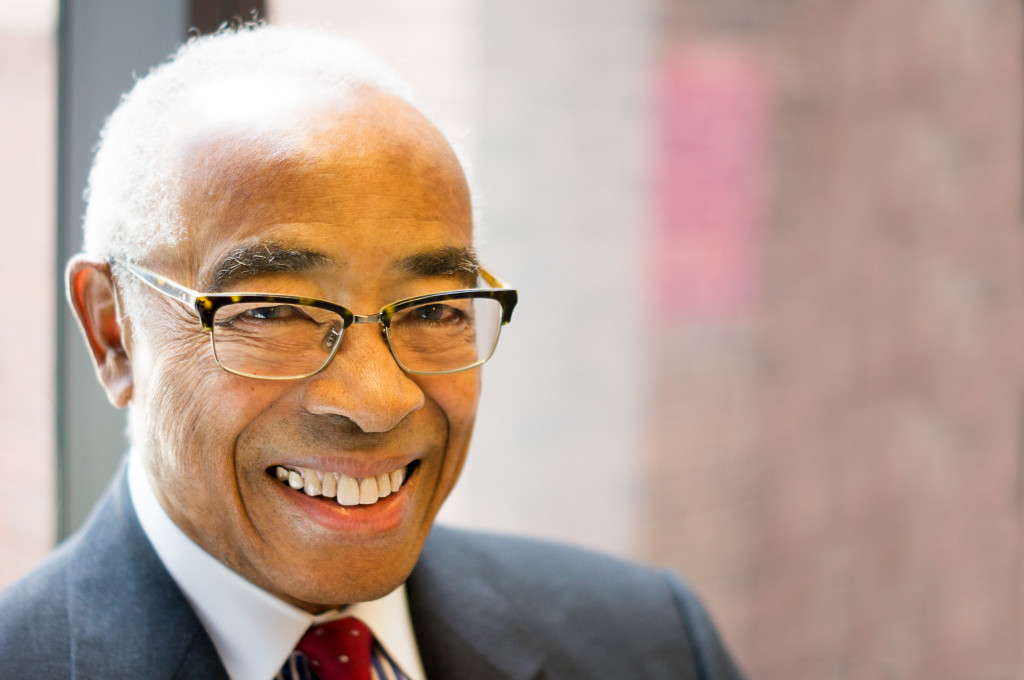
    By Honorable Dr. Donald H. Oliver QC, Acadia BA (Hons History) 1960, LLB, DCL.

  • BSA Public Service Announcement

    BSA Public Service Announcement

    The Black Student Association was created in 2017, with the goal of promoting diversity at Acadia. Many might question the truth of my previous statement because of the club’s name itself: “The Black Student Association.” But, contrary to what the name might imply, the BSA was created to cater to a range of cultures within the Acadia community, with black bodies at the forefront. BSA membership or participation is not restricted to individuals who identify as black.

    The BSA is open to everyone and anyone who is interested in diversifying (whether visibly or not) Acadia’s campus culture. The backbone of the BSA is multiplicity and we plan to promote this through our discussions and events. Please note that these activities are open to all, and all opinions are welcomed as long as they are presented respectfully. We encourage diverse thought perspectives and ask you not to shy away only because you believe your opinions are unpopular.

    Our discussions will serve as a learning space for everyone, so we ask that you come ready to speak on whatever perspective you have, but also with an open mind. The BSA is here to bridge Acadia’s pervasive cultural divide, so we encourage everyone irrespective of race, gender, orientation, or any other label that separates us from one another to join our club or participate in its activities.

    Nendelmwa Gofwan is President of The Black Student Association and a 3rd Year Politics and Sociology Major

  • Opinion: Diversity in the Workplace

    Opinion: Diversity in the Workplace

    I get it. There is injustice in the Canada, sure. Is it wrong? It definitely sucks and obviously we should try and curb it, however, what we are doing is not working. Kyle, what are you talking about we help thousands of people every day to escape famine, poverty, and inequality.

    Well, gone are the days of the hippy movement that advocated for peace and unity. Gone are the days where we tried to work together as a collective to make all citizens lives better. Black Lives Matter (BLM), Free speech advocates and feminist movements all represent noble causes seeking to promote meaningful change within North America. Before I dive into my argument I want to make it very clear that I acknowledge there exist inequality and discrimination and I by no means condone it. That being said, are we taking the correct approach when trying to eliminate inequality? In my opinion, absolutely not.

    The trend nowadays in politics is that of division. The left vs the right, those pro-abortion vs. pro-life, wage gap sympathizers vs economists, socialist’s vs capitalists and the list goes on. If you haven’t picked up on it already people can’t seem to get along when it comes to making decisions to fight issues of inequality, or topics that are subject to ethical dilemmas.

    To further explain my argument of why our current approach to solving inequality isn’t working I’m going to examine Canada’s response to issues regarding inequality of women, visible minorities, and first nations within the Canadian workforce. Governments have been scratching their heads trying to figure out how to encourage employers to hire a proportional amount of women and minorities within the workforce. I can certainly concede there exists a large disparity of representation within the Canadian workforce. While I won’t be discussing statistics on the matter I will be scrutinizing the approach taken by the government.  It seems like nowadays on every piece of paper you fill out at school, in the workplace, or for political surveys they all have this stupid little section that makes you more qualified than someone else of equal standing.

    No, I’m not talking about that stellar academic reference or your ten years of relevant work experience in the field. I’m talking about that entirely divisive section that asks you whether you’re a visible minority, female or you identify as xyz. While I understand the attempt here is to allow employers to hire a diverse workforce I think it’s actually counter-intuitive for promoting equality. Since many employers currently do consider ethnicity and gender for potential candidates to hire employers end up discriminating potential employees based on how they were born rather than how well suited they are for the position. Is this not the exact thing we are trying to prevent?

    All things considered equal while negating sex or ethnicity the person with the greatest qualifications should be the one to get the job, scholarship ect.. Why is it that we blatantly force employers, government officials and universities to consider things like race and gender?  Why are not making meaningful steps toward truly reaching for equality? In my opinion, this is not a solution and like I stated its just not working. There still exists inequality in the workforce.

    Well, Kyle, you’ve been telling me what’s wrong without providing any counter to how it should be done? It’s easy. Blind interviews, resumes with contact info but nothing stating race, or gender. Hiring laws that mandate only qualifications are what determine those who are hired, get the scholarship etc. Making meaningful steps towards a system that doesn’t discriminate in any sense of the word. But wait, Kyle, if there isn’t equality now how would this encourage equality?

    The answer to this question is quite simple; it would allow employers greater freedom from scrutiny and more transparency with their practices. It would force those applicants to further their skill sets so it’s undeniable they are the right person for the job. People will no longer be able to make claims of discrimination when applying for jobs since all things considered employers don’t care whether your name is Tommy or Tammy, or whether you complexion works better burgundy or teal. Why is it, that instead of working to create a system completely transparent, fair and competitive we consider those who are born in a certain body?

    It’s no surprise that lifestyles and jobs are often intermingled. Why are we not asking questions like, as a society is it expected that certain people don’t want to work certain jobs instead of simply looking at raw numbers and drawing unfounded conclusions based solely on discrimination? Look, I’m not saying that saying we don’t have a problem here. We do, it’s really terrible and frankly unfair to all citizens. Let’s stand together for true equality and not forced equality.

    Allow competition and merit to drive diversity instead of regulation mandating you need a banana, a fish and 3 soccer balls in your workforce.


  • ASU Calls for Diversity on Board of Governors

    ASU Calls for Diversity on Board of Governors

    The ASU is calling for increased diversity on the Board of Governors (BOG), Acadia’s non-academic governing body. The Students’ Representative Council (SRC) passed a motion in principle on Tuesday January 30th supporting the ASU President to present a proposal to the Board regarding diversity at their latest meeting on Friday February 2nd.

    President Grace H-B said in a statement to The Athenaeum that “Diversity among the Board of Governors structure is vital to serving students to the best of its ability. The Board makes decisions that affect all students around campus. Acadia is stronger for it’s diversity and the Board of Governors will be too. Diversity and equity needs to be reflected at the Board of Governors and in all governance structures at Acadia.”

    The statement noted how the BOG is composed of 37 voting members, only 21.6% of whom are women with votes despite the fact that the campus is 58% female. Ethnic diversity around the table is described as “almost non-existent”.

    Lack of diversity is not due to a lack of unqualified women or minorities, the statement reads, but is “due to selection processes and underlying systemic process to determine who sits on the Board”.

    The motion proposed that the Governance & Executive Committees of the BOG prepare a report and recommendation on increasing equity and diversity. The ASU asked five commitments, including:

    1. Adoption of a diversity management policy by April 6th 2018
    2. Land acknowledgement of Mi’kma’ki at the beginning of every Board meeting
    3. Amending the composition of the BOG to include two indigenous voting members
    4. Ensuring a minimum of 50% of Governors identify as female by 2020/2021
    5. Ensuring a minimum of 60% of Governors identify as female, people with disabilities, indigenous peoples, or visible minorities by 2024/2025

    President H-B noted that although the province isn’t known for its diversity, “Nova Scotia does have a history with many groups that are not being represented at the Board of Governors. It would be hard to say that we’re ever going to be absolutely perfect in fair representation, but that doesn’t mean shouldn’t work as hard as possible to try to do better.

    Working towards a diverse Board is going to take work but it’s work that is so important in ensuring that we’re doing the best we can for students.”

    The ASU is looking to increase diversity within its own ranks, as the composition of the Students’ Representative Council is “lacking in people with disabilities, aboriginal peoples and visible minorities” according to President H-B. The Union is looking to incorporate more students-at-large on committees, spurring students into action within the Union itself.

    EDIT: An earlier version of this article stated the number of students identifying on campus as female was 69%. The correct number is 58%.

    Colin Mitchell is a 3rd year Politics (Honours) student from Vancouver, BC. He is also the News Editor of The Athenaeum and the ASU Student Board of Governors Representative. 

  • Acadia Pride Hosts Ace Space Meeting

    On Thursday, March 2rd, Acadia Pride hosted it’s biweekly “Ace Space” meeting for anyone that identifies on the asexual or aromantic spectrum. An asexual person is someone that doesn’t experience sexual attraction or associations, but may have an interest in sex. An aromantic person is someone who doesn’t experience romantic attraction. The event was put on to allow people who identify on the asexual or aromantic spectrum to have an open space to discuss ace and aro issues without the worry of being shut down or de-legitimized. This sort of problem can occur both within and outside the LGBT+ community quite often. People dismiss asexuality or aromanticism as being prude or, “just waiting.” Acadia Pride is working hard to make it easier for asexual and aromantic people to find each other, and to have a cohesive network to socialize within. The meetings happen on the first and third Thursday of each month from 5:00-6:00 pm in the Peer Support Centre on the West Mezzanine of the ASU. To learn more, check out Acadia PRIDE on Facebook.

Betzillo positions itself as a versatile gaming hub where structured bonuses and adaptive gameplay mechanics support both short sessions and extended play.

Built with a focus on innovation, Spinbit integrates modern casino architecture with rapid transactions, appealing to players who value speed and digital efficiency.

Ripper Casino emphasizes bold entertainment through high-impact slot titles and competitive promotions crafted for risk-oriented players.

A friendly interface and stable performance define Ricky Casino, offering a casual yet reliable environment for a wide spectrum of gaming preferences.

King Billy Casino channels classic casino spirit into a modern platform, delivering recognizable themes supported by contemporary reward systems.

Immersive visuals and layered slot mechanics are at the core of Dragonslots, creating a narrative-driven casino experience.

Lukki Casino appeals to players seeking direct access and minimal friction, focusing on fast loading times and intuitive controls.

Casinonic provides a structured and dependable gaming framework, blending modern slots with transparent operational standards.