Tag: mental health

  • Riverswimmer

    Riverswimmer

    In the winter of my senior year, I would drive around for about an hour everyday after school. In the fall I had Cross Country, and so I thought I’d replace it with Chess club, and I did go for like a week, but everybody there was either a try-hard or they barely knew how to play. So I stopped going pretty quick, and instead I started driving around town until around 4:30, when I’d head home before Mom and Dad got back from work. You know, that sounds more boring than it is: one day I got all the way up to Hamilton. And there were times I’d go and visit places too, like the natural food store on Smoketown. I liked the way it smelled in there. They had a whole wall of fresh coffee beans in glass containers and it always smelled familiar (if that makes sense). They always thought I was a shop-lifter though, saying stuff like “Can I help you with anything?” and watching me walk around. People get really stressed out if you walk into a store and don’t buy anything. So I didn’t go in there too often.

    Anyways, it was during one of those drives that I ran into your old friends again. It was this really rainy day in April, and I saw them all, Lacy, Grace, Krissy, and Zeb, running down the sidewalk on Market without umbrellas. Lacy started waving and yelling for me to stop. There was a car behind me, but I can’t resist when people are all loud like that, so I did. Grace, Krissy, and Zeb opened the back-door on my side and started climbing in, and Lacy ran around the side and got shotgun as usual. They were drenched, and dripping water everywhere on the floor. I know you hated it when people got the seats all wet, but there was nothing I could do. They were crazy. Lacy was yelling “SPRING BREAK” when she climbed in and the rest of them were cracking up. I asked them where they wanted me to drop them off, but they weren’t listening. Zeb was drying his hair in the back by shaking his head and he was splashing Grace and Krissy, who were shouting and cackling about it. And Lacy was doing that thing where you act so excited about seeing someone that it sounds like you’re babying them. “Noah, it’s been so long! How are you?? Have you heard back from colleges yet???” 

    I said that I wasn’t sure, and they all thought that was a really funny answer. Zeb asked for aux and started playing Rex Orange County. I didn’t stop him. I asked them again where they wanted me to drop them off, but they didn’t care much, so I just turned when I felt like it. As we drove, they talked and laughed about all kinds of silly things, and I listened silently. Krissy had met some crazy people at college and was telling us about an old friend that had anger issues. Lacy was totally turned around in her seat to face the back, and she and Zeb were laughing along to Krissy’s story.  Grace pretended to be listening, but I could tell she wasn’t. I could see her in the rearview mirror, and she looked a little sad. But then she looked up and we made eye contact, so I stopped staring. 

    We were taking the winding road that leads from downtown to the riverfront, and we were just getting close to the river when Krissy ran out of things to say. Lacy saw the vast expanse of the river, risen high and mighty by the rainfall, and it fascinated her; she put her hand on my shoulder and told me I had to stop the car. I parked on the side of the road and she got out. Krissy and Zeb followed her, running down the grass to the bank of the water. They were getting soaked again, just after drying off and soaking the seat cushions of your car.

    Me and Grace hung back and stayed in the car for a minute. She leaned forward to talk to me, but didn’t say anything. I didn’t like the silence, so I asked her how her semester was. She said that it was fine, but that nothing really interesting happened to her like it had for Krissy. I said that was okay. There was a pause, and then she said “I’m here if you ever want to talk.” I said I was alright. “Are you sure?” I said yeah. I looked out through the side window and saw Lacy, Zeb, and Krissy taking off their shoes and socks. Grace looked out too and laughed: “They’re so stupid sometimes.” I told her that she should go out there, and she said she’d only go out if I did too, so we opened the car doors and walked out into the torrent.

    I had an umbrella in the trunk, but I didn’t bother fetching it. Me and Grace were already as soaked as the other three; we looked at each other and laughed. Lacy called out to us, cupping her hands: “SPRING BREAK!!!!” Grace yelled back “SPRING BREAK!” and everybody laughed. Lacy explained to us that we absolutely had to swim in the river right now because of the “spirit of spring break,” and Grace said it was stupid but agreed. She leaned down to untie her sneakers, while I stood in place awkwardly. Lacy and Zeb tried to convince me to take off my shoes but I said I didn’t want to. They didn’t push it on me or anything; I watched from dry(ish) land as they wildly ran into the water. 

    They laughed like maniacs as they swam in their sopping-wet clothes and splashed each other. I sat on the grass watching the crazy beauty of it all, until my legs got too cold and I walked back to the car. I opened the trunk and found an old white towel in the back, then I laid it out on the driver’s seat and sat down. From in the car, I couldn’t hear your friends anymore: I could only hear the sound of cars driving by and of pouring rain on the windshield. I turned on the car to listen to music, but my phone was dead, so I just listened to the Elliot Smith CD. It’s been in the car for years at this point. I remembered when you found it in dad’s old box of CDs from the 90s and how you got so excited to put it in your car. Then I thought about Zeb, and how he would always insist on using aux, so we’d only get to listen to the CD for the first couple minutes of the ride to school. I thought about how your friends never liked your music and how they still don’t. They’re not like us: they swim in rivers and never drown. They’ve never stared at the ceiling for hours, caught in the depths of their own uselessness. They laugh when things are funny and don’t worry too much when they aren’t. I thought about how they would get home fine even if I drove away, how they would cherish the memory of walking home together as some cinematic, youthful moment. And then I saw that it was almost 4:30, so I switched the car into drive and left.

  • Why Inappropriate Content Shouldn’t Be Our Parents’ Biggest Fear with Social Media

    Why Inappropriate Content Shouldn’t Be Our Parents’ Biggest Fear with Social Media

    If you haven’t already seen the 2020 film The Social Dilemma, stop reading this article, go watch it (yes, it’s on Netflix), and then come back.

    For those of you that don’t want to watch it, or just need a recap, the documentary outlines the thought processes behind creating most social media platforms, the techniques the creators use to keep users interested, and the effects those sites have on users (let me stop myself right here… As the movie points out, social media platforms and drug dealers are the only two industries that call their clients users. What does that say about social media? For the rest of this article, I’ll call them social media interactors, rather than users). When I first watched The Social Dilemma, I was horrified, but not surprised by the things it was telling me. I deleted my Facebook account and several other social media apps, encouraging all of my friends to do the same. Admittingly, I had Instagram and TikTok back on my phone within the week, but a break felt good all the same.

    The main reason I wasn’t surprised by what the documentary had to say was because I’d already seen social media affecting my friends’ and my own mental wellbeing in more ways than one. Having any information you want at your fingertips is a huge benefit of social media. And don’t get me wrong – I don’t think that social media platforms are inherently bad. But the documentary got me thinking… how beneficial or detrimental is the nonstop influx of photos and messages that we receive?

    One of the first issues with social media that I’ve noticed affecting my own life is unrealistic body and beauty standards. These impractical ideas are constantly pumped into people’s phones with the help of the right camera angles, editing tools, and the fact that people tend to only post the photos they look best in. I’m guilty of these habits just as much as the next person, but it causes the bar for beauty standards to be set higher than ever. This quickly leads to unrealistic expectations. Not only that, but when people have access to pictures of nearly anyone in the world so easily, subconscious comparisons become much more common.

    Comparison isn’t only an issue with beauty standards. Social media also makes interactors feel like they always need to be doing something. So often, we only see pictures and posts form people who are travelling, spending time with friends, learning new hobbies, spending money, going to the gym, go, go, go. This can lead social media interactors to feel guilty for taking a day to do nothing. Understandably, people have forgotten how to be still in the midst of such a busy, rapidly changing world. But when FOMO leads to being unable to slow down, higher stress and anxiety levels are provoked.

    I’m not going to be the person who tells you to get rid of your social media accounts. That would be extremely hypocritical of me. But I hope that you take something away from this. Whether that’s being more deliberate in spending down-time with yourself, researching different ways social media affects our brains, or choosing to spend less time on social media, I encourage you all to take a step back and think about how your social media interactions are affecting your mental wellbeing.

  • Indefinite Closure of the Acadia Indoor Swimming Pool Affects Students

    Indefinite Closure of the Acadia Indoor Swimming Pool Affects Students

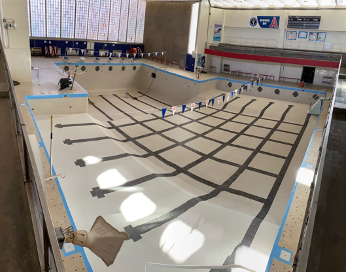
    Acadia University announced on October 1st, 2020 that the indoor swimming pool, located in the Acadia Athletics Complex, will be closed indefinitely. The closure of the pool was declared for two main reasons; the first is to ensure the safety of Acadia students as well as the safety and well-being of the community, and the second is to respond to financial needs. Not only has the current pandemic impacted the university, but the indoor swimming pool has been operating at an annual deficit for years, said Chris Callbeck, Vice President, Finance and Administration.

    Acadia University’s swimming pool was built in 1967, and since then it has been home to many organizations that not only include the student body but the residents of Wolfville and the Annapolis Valley region, who make up more than 85% of the facility’s users. Among them are the Acadia varsity swim team and Acadia’s S.M.I.L.E. Program. VP Chris Callbeck stated that the pool’s access and the changeroom design, make cross-over between Acadia students and members of the community inevitable. Although, it seems like a simple solution would be to compose a schedule that allows community members and students to use the pool separately, with time for cleaning and sanitizing in between.

    Not only has the closure of the swimming pool directly affected the students who are involved in the programs that use the pool frequently, but it has also affected students who do not regularly use the pool for many reasons.

    For example, mental health and physical health go hand in hand, people need to move their body so limiting options to do so will deplete not only the students’ motivation to exercise but how people exercise and how often. Secondly, a person’s mental health is also greatly impacted by social habits, and Acadia’s swimming pool is the heart of the athletic center and the main source of community, so shutting down the pool has slowed the constant flow of people in the center to a near standstill. This can cause anxiety and depression in students, while also bringing down the overall morale of the athletic center. Lastly, whether or not students use the pool, it is common knowledge that a fraction of tuition is dedicated to the maintenance of facilities for student use, so the closure of the swimming pool unfortunately raises the uncomfortable question of where exactly that money is going now. This can cause more confusion and mixed emotions amongst a student body which is already faced with adapting to a global pandemic, a full course load that is almost completely online, and an excess of other everyday stressors.

    The closure of the pool affects everyone in a negative way, while there are other options for exercise, the weight room can only allow a maximum of 20 people at 45-minute intervals, so the options for alternative activity are extremely limited.

    While Callbeck says that the university is continuing a dialogue with government partners in hopes of developing a solution, the Acadia University swimming pool remains closed, another consequence of these unprecedented times and an example of some of the limitations that students are facing due to COVID-19. Acadia students trust that our leaders are working diligently to find a solution and reopen the pool for the benefit of the students’ physical and mental health.

  • The Spookiest Thing About this Year’s Halloween: Covid’s Effects on the Holidays

    The Spookiest Thing About this Year’s Halloween: Covid’s Effects on the Holidays

    There’s no doubt that COVID-19 has had terrible global effects for so many people. But how much are all of the changes we’re facing really affecting our lives? The stress, anxiety, and fears associated with a global pandemic may be changing our lives much more than we know. The full effect of Covid on people’s mental health is still unknown, but the uncertainty alone which the virus brings is stressful at best. The loneliness, boredom, and sadness that quarantining brings for so many exemplifies how deeply the virus has affected most people.

    October – and fall in general – is an exciting time for so many. Changes in the weather and the colours of the leaves, spending time with family over Thanksgiving, PSLs, and trick-or-treating no matter your age, are only a few of the highlights of the month. However, big October events will undoubtedly look different this year due to the pandemic.

    Family gatherings for Thanksgiving will most likely go on, but some might be much smaller. In the Maritimes at least, gatherings are easier, but for larger provinces that have more active cases of Covid, families and friends might feel the lonely effects of the virus more than ever. For students in the Atlantic Bubble that won’t be able to safely get home for Thanksgiving, the holiday may do the exact opposite of what it does for those who are able to spend time laughing and eating with loved ones.

    Similarly, Halloween will be unique this year. Children incorporating masks into their costumes is perhaps the least significant difference. Still, it’s something novel which parents will have to consider. Many Halloween festivities, such as trick-or-treating and haunted houses are already being discouraged, leaving children with a drastically different experience. The stress and fears of Covid affect children all the same, especially when they see their lives changing so significantly for a reason they most likely do not completely understand. There is no doubt that this will lead to changes in children’s mental wellbeing, something else we’ll have to consider this holiday season.

    Whether we feel the direct impacts of the pandemic or not, our holidays will unquestionably be different this year. With limitations on gatherings and restrictions keeping some people from getting home, it might be easy to forget the things we have to be thankful for. Make sure to take the time to check in on both yourself and your loved ones this fall.

  • Mental Illness is not a White Man’s Disease

    Mental Illness is not a White Man’s Disease

    Contrary to the common belief, mental illness is not a White Man’s disease. Despite what the media attempts to tell us through the way their stories are told, what our parents might say when reacting to an episode or research that has been done through a Eurocentric lens, we all have mental health. This means that we all have a chance of having a mental illness at some point in our lives, and if we don’t, there will definitely be someone you know who does. Yes, that means Black people suffer too and not just Black Canadians but also, Black people from the Bahamas, from Nigeria, and everywhere in between. In lieu of it being Black History Month, I figured I would shed some light on some Black mental health facts. I want to continue seeing Black people prosper. I want them to have nothing but goodwill and good health. None of that can happen unless we take care of ourselves, especially our brains. Don’t play yourself and don’t let that melanin fool you, Black people can have mental illness too and I have the stats to prove it.

    Shocking fact: “mental illness has now morphed into a disease of pain and exclusion and is the most mis-constructed and ill-treated disease in the caribbean” according to Bahamas Local. The article provided a lot of facts that may go unnoticed due to the notion behind mental illness within the Caribbean community. However not talking about such issues has caused an increase of the population suffering from a mental illness. It was estimated that by 2020 people with “mental disorders” in the Caribbean would increase by MORE than 50%. To make matters even worse, 80% of those people will not have access to mental health services. It’s bad enough that 60% of mental health patients already are less likely to receive treatment or counselling.

    In Nigeria, 7 million people suffer from depression and 4.8 million people suffered from an anxiety disorder in 2015 according to the World Health organization. Those are high numbers and to make things even more concerning than they already are, according to the Health Guide there are only 136 psychiatrists in Nigeria. That’s right, Nigeria, the country that currently has a population of 190.9 million people is expecting 136 psychiatrists to tend to the millions of Nigerians who are dealing with mental illness.

    Aside from the stigma of those who are dealing with or diagnosed with a mental illness, there is another factor that plays into the perception of those with mental health and how people get diagnosed. We have a very Eurocentric view on mental illnesses to the point where it interferes with the way we diagnose people. Vice did an article on a recent study that found that the depression screen test did a great job at detecting depression in White adults but not Black youth living in public housing. Reason being, Black youth tend to show their depression symptoms through conflict with others and physical pain or discomfort. A lot of screening was based on studies of middle-class White women and therefore creates a difference in the expressions and experiences. From 1993-2012 suicide rates for Black youth in America have doubled, unlike White youth rates dropping.

    We need to start having more open conversations about Black people suffering in silence dealing with mental illnesses. We need to learn how to properly deal with things. We also need to stop basing symptoms on what’s typical and start checking in with each other. Mental illness is known as the silent killer and Lord knows we’re already dying at alarming rates.

    Note: This article was produced for our Black and Indigenous print edition from March 2020. The edition was postponed due to COVID-19 and is just being released now.

  • Research Feature: Katie Campeau

    Research Feature: Katie Campeau

    In my undergraduate research, I created and distributed a survey for my honours thesis in Acadia’s sociology program. In it, I questioned how students felt about Acadia’s student counselling services. More specifically, I sought to understand whether students felt this service provided adequate treatment. My findings concluded that the counselling services were created for students with minor to moderate mental health issues. In my open-ended question, students with eating disorders, Obsessive Compulsive Disorder (OCD), Bipolar Disorder, Post-Traumatic Stress Disorder (PTSD) and psychotic disorders wrote that the counselling services were not designed to treat their severe mental illnesses. As a result, many of these students either spent a considerable amount of money to seek treatment off campus or received no treatment at all.

    I’m not suggesting that this service wasn’t successful in meeting other students’ needs—the service is designed for students who face minor to moderate mental health problems; stress from a large academic workload, relationship issues, and adjusting to new responsibilities associated with being a university student. In fact, I was informed by the head of the counselling services that their treatment is designed to meet the needs of the majority of students, and that the majority of students do not have severe mental illnesses. While this is true, I still couldn’t help but feel affronted by this statement. I am an individual with a severe mental illness. I am a part of the minority that the services exclude. Am I not important? Are the opinions and work of individuals with severe mental illnesses not a valuable contribution?

    This line of questioning led me to question how we, as a society, conceptualize severe mental illness. More importantly, I questioned how individuals in power define severe mental illness, and what these definitions mean for individuals living with them. This focus on power and definitions led to my interest in mental health policy, and more specifically how severe mental illness fits into various levels of government policies. My research questions are: How do Nova Scotia policy makers define severe mental illness? How do definitions of severe mental illness influence the creation and implementation of mental health policies? I am particularly interested in how the provincial government includes, or fails to include, the needs of individuals whose mental health issues are severe and debilitating in their day-to-day life. Furthermore, I want to understand how the provincial government defines severe mental illness when compared to minor and moderate mental health issues, and how this impacts their policies. I intend to explore these questions using qualitative methods, which include conducting an Intersectionality-Based Policy Analysis (IBPA) of Nova Scotia’s three most current mental health strategies, and a section of legislation entitled Bill 109—the Mental Health Act. I will also interview fifteen individuals who work as policy makers, mental health professionals, and members of mental health Non-Profit Organizations (NGOs). Once all of my data is collected and analyzed, my goal is to define my thesis in April of 2020.

    As a graduate student in sociology, I have had to defend my sociological study of severe mental illness. I often get asked why I didn’t pursue a degree in psychology. Here is my answer to curious readers: mental health and illness is a sociological issue. I am not interested in studying mental health and illness through pathology and neuroscience. I want to understand how severe mental illness is socially constructed and understood across society. Individuals with severe mental illness were perceived as “deviant” and “crazy” in the 1950’s, during the age of the “asylum”. Today, on the other hand, we openly discuss mental health and illness as a universal issue during events like Bell Let’s Talk. I am interested in how our society’s conception of mental health and mental illness is shifting, and how this shift is reflected in health policy. This research is important because individuals with severe mental illness are a vulnerable population and are at times overlooked due to their small numbers. It is important to ensure that their needs are being met.


  • Research Feature: Jill Northcott

    Research Feature: Jill Northcott

    Memories of Coming Out: Parents and Adult-Children Recall the Coming Out Experience

    Coming out, or revealing oneself to be lesbian, gay, bisexual, transgender/transsexual, queer, etc. (LGBTQ+) can be incredibly stressful, largely due to fear of parental disapproval or rejection. It has been shown that parental approval and/or disapproval is tied to the identity formation, mental well-being, and physical health of LGBTQ+ youth and adults. While previous research on the coming out experience has assessed the experience from the adult child’s perspective, and occasionally the parent’s perspective, no studies have looked at both perspectives simultaneously. This undergraduate honours thesis, as a part of a larger study being conducted by Dr. Diane Holmberg at Acadia University, and Dr. Karen Blair at St. Francis Xavier University, addresses this issue and aims to fill the gap in the existing literature. This study examines the reported recollections of coming out by the LGBTQ+ adult individual and one of their parental figures, additionally, it explores how the potential discrepancies between the recollections predict the well-being of the LGBTQ+ individual. The larger study examines many variables including physical health, sexual behaviour, and perceived closeness of relationship to the parent, but for the purpose of the honours program, only the mental health and internalized homophobia of the LGBTQ+ participants was analyzed. The objective of this research project was to determine firstly, if there were any patterns of discrepancy between the adult children and parents’ recollections, and secondly which direction of memory discrepancy predicted better mental health and a more positive sexual identity (or less internalized homophobia) for the adult child.

    It was predicted that more negative recollections of coming out by the adult child would predict poorer mental health and higher internalized homophobia. It was also predicted that agreement between parents’ and children’s memories, especially when positive, would predict better mental health and lower internalized homophobia than when there were discrepancies between memories. If there was a discrepancy between recollections, it was predicted that the adult child would have better mental health and lower internalized homophobia when the adult child had a more positive recollection compared to the parents’. Polynomial regression with response surface analysis, created by Shanock, Baran, Gentry, Pattison, and Heggestad (2010), was used to analyse both perspectives simultaneously as predictors of the LGBTQ+ adult child’s mental health and internalized homophobia. Though no significant results were found, there were interesting and unexpected trends found in the results that contradicted the hypotheses. These results will be further investigated as the larger study conducted by Dr. Holmberg and Dr. Blair is ongoing.

    By understanding this intricate relationship, it can be further understood how LGBTQ+ individuals’ mental health is related to parent-child relationships and parental approval/disapproval. Investigating both perspectives simultaneously allows for in-depth analysis of how mental health is affected by potential memory discrepancies, and whether it is more beneficial for adult children to have a more positive recollection of coming out that their parents do, or if the opposite is true. This research will also contribute to understanding the importance of child-parent relationships, especially for those who identify as LGBTQ+ as this community is just gaining acceptance and still faces prejudice and discrimination. It is important to understand how pivotal moments in the lives of LGBTQ+ individuals, such as coming out, affect their future mental health.

    Sound interesting? Please consider participating, in this study or in other current studies on other relationship topics (e.g., disapproval of relationships, affectionate touch in relationships)! Go to https://www.drkarenblair.com/ongoing ; you will find a link there to this study, as well as other ongoing studies.

  • Counselling for Varsity teams and why #BellLetsTalk is Problematic

    Counselling for Varsity teams and why #BellLetsTalk is Problematic

    As a student-athlete on the women’s Varsity Cross Country Team, it’s often very challenging to keep up with not only academic pressure but also athletic pressure and expectations. Being part of a team means that there are conflicts, but I feel exceptionally proud to be part of a varsity team.

    Right now, mental health supports at Acadia are limited to the Peer Support Centre and counselling in the Old Students’ Union Building. I don’t believe that these supports are enough. Acadia University needs to hire counsellors specifically allocated to varsity teams that understand the pressures of academic responsibilities on top of athletic pressures. Training eight times a week takes its toll on the body and mind so these specific supports are essential.

    While Acadia University has many athletic therapists to provide attention to the physiological aspect of one’s well-being, the mental health of athletes is not addressed effectively. Hiring counsellors who understand academic pressures and athletic pressures is necessary. Counsellors would be just as much of a part of the staff just as athletic therapists.

    Varsity athletes are expected to be strong not only physically but mentally. Having mental health challenges doesn’t make you weak, it makes you human. Addressing these challenges within a team environment where student-athletes have support before and after practice and during competition days would be hugely beneficial. Varsity team counsellors should be just as much of a part of the team staff as athletic therapists. Mental health is just as important as physical health, if not more.

    While the #BellLetsTalk hashtag is aimed to support to ‘mental health initiatives’ across the country, we have to wonder what mental health initiatives are being supported. This vague umbrella statement leaves a lot of questions up in the air. One of mine questions is simple: where is the money is going and how much of it is going directly to ‘mental health initiatives’?

    One of the aims of #BellLetsTalk is to create an open discussion about mental health and mental illness, yet this requires that students talk about their own mental health challenges. Many people don’t feel comfortable doing so. The vulnerability of students should not be feeding a campaign that is based on a capitalist model.

    An alternative strategy would be for money raised from #BellLetsTalk to support different branches of therapy, through counselling, music therapy programs, art therapy programs and others based on student voices and a student need.

    I believe that there has to be a far more effective strategy to address mental health challenges within post-secondary institutions across Canada. The restructuring of this campaign may be effective if students knew where this money was going, what this money was being used for, and how much of the money is going to towards external costs.

    Being in my last semester at Acadia University, I hope that students who address mental health challenges in the future are heard so they have all the supports they need to thrive.

    Jennah Lay is a fourth year Sociology student and member of the Women’s Varsity Cross Country team

  • Mental Wellness: The Dream Board

    Mental Wellness: The Dream Board

    Everyone has dreams. From the earliest of ages we are asked, “what would you like to do when you grow up?” The answers you commonly hear from children are, “I wanna be a cop,” or, “I wanna be an astronaut.” While these answers may seem trivial in the moment, what if they didn’t have to be? What if there was a way to achieve these dreams? What if they were no longer dreams, but reality? I worked with someone this summer who told me about her ‘Dream Board’. Now I know what you’re thinking, is it not just a board with your goals on it; displayed in some elaborate, yet visible fashion? NO! It is far more than just your goals splattered on a piece of Bristol board. It is a real and genuine representation of where you want to take your life, and the path you will pave to get there.

    People say all the time that they have goals or mention that they would like to do this and that. But that’s often as far as they go. They have no plan to achieve their desires; only thoughts that come and go as often as the sun rises and falls, with no real hope of being achieved. We say we pursue these things because we don’t want others, or maybe even ourselves, to think that we have no purpose in life. We all want to think that we have the ability to achieve great things and become everything we aspire to be. However, there is a distinct difference between thinking and acting. Individuals do not judge each other based on our intents or thoughts; we judge each other based on actions we can see and feel.

    This is the essence of the ‘Dream Board’ – it allows for our thoughts and goals to become mobilized because we can see them, and they become real. We have to remember that the mind is very powerful. One of its most amazing features is that it is constantly working, even when we aren’t aware of it. The ‘Dream Board’ permeates our subconscious: having your goals, thoughts, and dreams displayed allows them to become part of you. Simply seeing those words and consistently having them placed in the forefront of your mind enables your subconscious to hold those ideas so they are always there and become a part of you. The more you see those thoughts, the more you see those goals, the closer you get to achieving them. Whether you are consciously working towards them or not, those ideas are with you all the time.

    This concept of having those thoughts, goals, and dreams front and center all the time is captured by the term “positive affirmations”. These positive affirmations describe a person’s ideal situation. They are so powerful because they reprogram the mind to think in a manner that is conducive to achieving this ideal state. The longer you ingrain those positive ideas, and the longer you surround yourself with those uplifting and inspirational messages, the greater the chance you achieve your dreams.

    The ‘Dream Board’ provides the opportunity to shape the life that YOU want. At the end of the day, if you are not happy, and not living the life you desire, how can you expect to enjoy anything that life has to offer? This is a pivotal part of our development as individuals; identifying our preferences, understanding the things we want from life, and then pursuing them with rigorous persistence.

    Once you reach those goals and feel the jubilation, you want that feeling back: the feeling of achievement is incomparable. The ‘Dream Board’ not only allows you to accomplish things you never thought possible; it perpetuates a continuous cycle for self-improvement. The quest to achieve never fades, it becomes part of who you are: a person who is in constant pursuit of excellence, and of fulfilling the sincerest form of complete happiness – for many, the ultimate goal.  

    Sebastian Farkas is a 3rd year Politics student and Sports and Wellness Editor for The Athenaeum

  • Silence in 40 Seconds

    Silence in 40 Seconds


    In 2014 the World Health Organization stated there are approximately 800,000 people who successfully commit suicide per year.
    If you do the math, this checks out to be roughly one person every 40 seconds.
    There are many reasons I tried to kill myself. I blamed myself for something I couldn’t control. I didn’t feel like I could talk to anyone about it. Others assured me all that awaited me in my depression was alcohol and drugs, with the desire to die remaining.

    ONE.

    You see, I mainly find it difficult to comprehend how I have survived on luck. If I had chosen a larger branch I wouldn’t be here right now.
    I’m scared that one of these days I won’t be able to respond to the question “how are you doing?” and instead just start listing names of the unlucky.
    John. Danielle. Michael. Jason. Dalton.
    Of that 800,000 one year, I was close with five of them.
    There are many days where I think about them and feel guilty. Why did I survive? Why didn’t they?

    TWO.

    The stigma seems to constantly drown those who are trying their hardest to be heard, and all I want is to have my voice come out louder and stronger before I sink.
    That’s all we want to do. Yes, seeking help is a cry for help, but there is no weakness in that. We must make noise if we want to be heard. There are too many who die in silence. Who have been taught it’s impolite to talk about depression.
    If I die, it’s probably best to do it in silence.
    We are constantly fighting with every fiber of our being. We have been beaten and bruised, and some have been told their battle scars are just temporary. That they’ll heal with time.

    THREE.

    “Suicide is a permanent solution to a temporary problem.”
    It is NOT a temporary problem. Despite what most people think, those who survive a suicide attempt often make another attempt within a year. The problem, depression, is a nightmare that follows you everywhere you go. When you wake up, you wish you could go back to sleep. You don’t want to get out of bed.
    You don’t want to be told you should just try to cheer up. As if those were the magic words needed to seal away the villain invading your mind.
    You don’t want to hide your truth behind a smile.
    And you absolutely don’t want your sister to see you like this.

    FOUR.

    It haunts you. Sometimes it leaves, but it comes back every so often to remind you of its existence.
    800,000 people die every year.
    In silence. Because of silence.
    And while you have been reading this, four people in the world have killed themselves.
    Does that make you uncomfortable?
    It does?
    Good. Then you should speak up about it.

    FIVE.

  • Student Supports at Acadia

    Student Supports at Acadia
    Jenna Purkis
    Acadia Counselling Services
    Phone 902-585- 1246

    Acadia Counselling Services
    Phone 902-585- 1246                                                                                                                                        Counselling Services are available to Acadia
    students seeking support for any problem
    impacting their mental health—no issue is ‘too
    big’ or ‘too small.’ Counselling offers both
    individual 50-minute sessions and group
    workshops. Book a 30-minute intake
    appointment to get started! More information
    about hours, booking, groups, and intake
    schedule: https://counsel.acadiau.ca. E-mail [email protected]
    Address Old SUB (Lower Level)
    30 Highland Avenue
    Wolfville, NS, B4P 2R6
    Hours Mon. to Fri., 8:30am-4:30pm

    Acadia Personal Support Line
    Phone 902-858- TALK (8255) The Acadia Personal Support Line is a
    warmline operated by Acadia student volunteers
    for students seeking support. Students may
    remain anonymous if they choose.Hours Thurs. to Sat., 7:00pm-1:00am
    Online: Facebook: “Acadia PSL”

    Peer Support Centre
    Address Students’ Union Building, rm. 503
    30 Highland Ave,
    Wolfville, NS, B4P 2R6                                                                                                                                                 The Peer Support Centre is a communal
    student space in the SUB where students can
    seek support and resources, pick up safe sex
    supplies, or just relax! Pride, Women’s Centre,
    and Acadia Mental Health Initiative offices are
    located here. Hours Anytime the SUB is open.

    Peer Support Organizations
    Three organizations operate out of the Peer Support Centre, all of which offer peer support and
    engage in advocacy in our campus community.
    Acadia Pride (SUB 504)
    Al Sweeting, Coordinator
    Email [email protected] Acadia Pride provides support and
    community for lesbian, gay, bisexual, trans-
    gendered, two-spirited, and queer (LGBT2IQ)
    individuals, as well as friends and allies.

    Hours Tues./Thurs. 11:30-12:30pm;
    Fri. 2:30-3:30pm
    Online Facebook: “Acadia Pride”
    Acadia Women’s Centre (SUB 505)
    Paige Krentz, Coordinator
    Email [email protected] The Acadia Women’s Centre offers support
    and community to women and people of all
    genders, particularly for issues and struggles of a
    gendered nature.

    Hours Mon. and Wed. 2:30-4pm
    Online Facebook: “Acadia Women’s
    Centre”
    Acadia Mental Health Initiative (504)
    Jenna Purkis, Coordinator
    Email [email protected] AMHI offers support to individual students
    struggling with their mental health, and
    promotes mental wellness on campus as a whole through programming and advocacy.

    Hours Mon. and Thurs., 3-4:30pm
    Online Facebook: “Acadia Mental Health Initiative”


  • Nothing Really Mattress

    Nothing Really Mattress

    Today,

    the morning said to me,

    “go back to sleep”

    then it kissed me on the cheek

    and the rain played through my window

    like my favourite song

    until i was safe in my dreams.

    my bed was empty

    when i awoke

    Morning had left me alone,

    and i wanted to wait

    for it to come back.

    the afternoon knocked

    on my door,

    asking me if i was going to eat soon

    then it told me

    “you should probably eat soon”

    but i crawled for a new pack

    of cigarettes instead

    then i laid, naked and empty,

    lost in my head

    on the floor of my kitchen,

    watching the smoke

    cloud my vision

    of Responsibility peeking

    through the window.

    Reality had already settled

    into the wrong places of my mind,

    snickering as it closed the blinds

    to the outside,

    reminding me

    how god damn easy

    it is to ignore

    the things i do not want

    to face anymore.

    i heard it whispering

    “come on, what’s one more?”

    but one more

    i was dizzy,

    and exploding with emotion,

    intensity.

    feeling in extremes

    is not easy.

    it is leaving the blinds

    closed even though

    i know i will have to open them

    tomorrow.

    i do not want to.

    it is ripping myself in half,

    knowing i will have

    to stitch all the shit

    back up again.

    i do not want to.

    it is reaching up from the kitchen floor

    to get the knife

    from the drawer

    and sliding it across my skin.

    it is the voice in my head still whispering

    “what’s one more”

    while my eyes shut

    and the walls are crashing,

    the blood falls.

    it is wondering

    if the Morning plans

    on coming back at all.

  • I’m Not Anal, I Have High Functioning Generalized Anxiety

    I am the person in your class who stays up until 4am studying for a midterm or writing a paper. I am the person who is constantly running around doing this and that. I am the friend that you jokingly call ‘the blur’. I am part of every society I can be, I join any club that seems active and engaging, and I take too many class and I have multiple jobs. I include mass amounts of socializing in my already jam-packed schedule and my day planner looks like the key to a lost city, complete with color coding and tiny writing. You joke that you don’t know how I do it and that you’d fall apart if you had as much going on as I do. Maybe that is true, and if so I respect you for knowing your limits.

    I live with high functioning generalized anxiety. This means that typically, my anxiety does not render me paralyzed in my bed or too anxious to leave the house. It means that for me, laying in bed watching Netflix on a Saturday morning can sound like one of the most terrifying things because it means I’m not doing anything. And if I’m not doing anything, what am I doing? My life has always been a juggling act of my many activities and plans, but I like it that way. Or rather, I need it to be that way. When I say that I like being busy and  having too much to do, I’m not just being an overachiever. Even if I am an overachiever – that is not why I stuff everything possible into my life.

    Often, I am called bossy or a perfectionist. This is because I tend to make decisions, over plan and get very agitated or anxious when things don’t go the way I had thought or planned for them to go. And while our plan to go for coffee on Sunday evening sounds casual, the ambiguity of “sometime in the evening” is not something I can handle. I will obsess, overthink and stew about what time we’re going, what time I should get ready, how long it takes me to walk there, how long it takes you to walk there and so much more. Making it nearly impossible for me to plan my day in the hour by hour fashion in which I usually operate.

    High functioning anxiety is unique and very often not discussed. The most common image of anxiety is the crushing anxiety which immobilizes you and does not allow for you to interact with the world the way you would like. The difference between anxiety and high functioning anxiety is that I would love to relax, take and break and spend time doing nothing. But I literally can’t.

    This is what makes high functioning anxiety as well as other high functioning mental illnesses unique.  While some people with anxiety are shaky, shy and regularly demonstrating their anxiety in a noticeable way, high function anxiety doesn’t work that way. I can meet someone 1000 times and they would never know I was an anxious person. They would never have a single clue that deep down inside it feels like the ground below me is moving and will surly give out anytime now. My anxiety comes out in my nail biting and in picking my scalp until it bleeds. These are not things I consciously decide to do nor would I want to do them.

    But this article is not meant to simply be me ranting about the awful things that high functioning anxiety causes. It’s not a hopeless diagnosis, there are ways to cope and make your life comfortable. I have become a huge fan of fidget rings and just rings in general. Simply being able to fiddle and pick at something when I’m anxious can be all I need at times (and it saves my nails). While my day planner still looks like the map to Atlantis, I have developed a system for dealing with my need to hyper organize and plan and my troubles being able to relax. In the last two years, I have discovered that if I write “Netflix” in one of the hour slots in my day planner, I can comfortably watch Netflix on a Sunday morning without panicking. This is because organization and planning keeps me calm, so if that means that I plan for relaxing then so be it.

    If you know someone with high functioning anxiety, be patient with that person. Give them details for plans if you know them, and if you don’t tell them a time that you will know (but remember they will ask). Don’t call that person anal, crazy, bossy (unless they are being rude…then hey say something, anxiety isn’t an excuse to be a jerk). But overall just remember that calm for you and calm for your friend with high functioning anxiety are different. At the end of the day we are all struggling with something, each and every one of us. This happens to be my struggle and you’re not alone in yours.

  • Fog Off

    Nolan: Hello Alex, thank you for joining me today. Would you mind telling us a little about yourself?

    Alex: Thank you for taking the time to talk to me. I am a third-year sociology honours student, and I am a Brand Ambassador for Fog Off Clothing Company. I am a proud Maritimer, and I find it hard to describe myself on the spot [laughs].

    Nolan: Good thing I know a thing or two about you. Can you tell us more about Fog Off?

    Alex: Fog Off is an Atlantic Canadian clothing brand that started in 2014. Fog Off donates ten percent of their sales to the Mental Health Association and/or Mental Health Foundation in each province. They are not just using their brand to create discussion and change surrounding mental health, but their goal is also to give back to the cause.

    Nolan: How long have you been a Brand Ambassador for Fog Off?

    Alex: I have been an Ambassador since February.

    Nolan: Good for you. Do you mind elaborating on the company’s mission statement?

    Alex: Sure. Fog Off is trying to send a message that everyone can relate to. We all have mental health, and we all struggle with our mental health at some point in our lives. Fog Off defines this as a ‘Mental Fog,’ which may include stress, depression, anxiety, bullying, sickness, addiction – you name it. If we are not struggling, we know someone who is. The goal is to spread the message that ‘no one has to walk along a foggy path alone, but also that fog eventually lifts’.

    Nolan: This sounds like a wonderful cause. How can we get involved or help contribute?

    Alex: Well, I believe that a major part that everyone can help with is creating discussion. I will say that overall, Acadia students are doing well in this respect. Sharing individual stories with each other is a major part of that discussion, and you can always share your experiences anonymously if you are uncomfortable speaking your mind. Fog Off Clothing donates ten percent of their sales to mental health initiatives, and I strongly suggest checking out their website to see their products online, or at their partner store Psudio.

    Nolan: That sounds wonderful. What is the website address, and what type of products are available for purchase?

    Alex: The website is www.fogoffclothing.com, and they have everything from anchor bracelets, to doggy bandanas, sweaters, t-shirts, car decals, toques, and lots of other awesome products. On their website, they also have a link to the story behind the brand, and the associations, foundations, and societies that they support. Also, if you make a purchase online, you can receive 10% off your purchase by using my promo code: Pulchny001.

    Nolan: Would you mind sharing your experiences with mental health and why you wanted to get involved with Fog Off?

    Alex: Sure, when I was younger I never understood the concept of mental health. I thought that you only had mental health if it was something that you struggled with. As I was growing up, I watched my sister go through some tough times with her mental health, and it made me weary of talking about my own. I was afraid that if I was open about it, I would be labelled and people would treat me as such. I still find labels hard to deal with which is why I got used to bottling up my emotions. Now that I understand the concept of mental health better, although it is still difficult to talk about my feelings, I can now discuss them with a handful of my peers. When I heard that Fog Off Clothing was in search of Brand Ambassadors, I jumped at the chance. Acting as a Brand Ambassador has provided me with a medium to discuss mental health and help end the stigma surrounding it. The opportunity also provides me with the chance to meet people who are open to discussing mental health and their experiences may be similar to my own. If they have different stories it broadens my perspective on the topic. The Ambassadors are all extremely supportive of each other, which makes it a great community.

    Nolan: Thank you for sharing that. I too used to have a misunderstanding, if you will, of the concept of mental health. I too realize now that mental health impacts us all, and that labels can be discouraging to some. What advice do you have for anyone who finds it difficult to discuss their mental health, and struggles with the concept of mental health labels?

    Alex: It is hard to give advice on mental health in a general sense, but I will say that it is important to find someone who you can be open with. It took me a long time to find somebody who I was able to discuss my struggles with. Labels are tricky because sometimes they help people find who they are and how to deal with a situation, and other times it may create a larger self-struggle. For myself, I know that I have anxiety, but I also know we all have differing levels of anxiety. To be physically labelled as having anxiety would make it more difficult to cope with it. It would be like introducing myself as ‘Hello, I am anxiety’. Take any label with a grain of salt because you are the only one who can implement your label. You are who you want to be. If someone puts a label on you, you can choose to say: ‘I am not that label, but thank you – I am human. I may experience the label, but I am not the label’.

    Nolan: Thank you for sharing. I have battled labels, and previously written an article discussing my opinion on the matter, and it is refreshing to have a perspective from the other side. I find labels empowering, and I am glad that the readers can hear someone else’s story on the matter. Is there anything more you would like to share?

    Alex: Just one more thing, on the topic of sharing your experiences and what you are going through: we have some great resources on campus including the Mental Health Society, counselling services, and the Acadia Women’s Center, and I am certain that although they may be strangers, they are here to listen and support you. Sometimes, it feels better to talk to a stranger.

    Nolan: Thank you again for sharing your story.

    Alex: It was great to have the opportunity to share my story and talk about an amazing clothing company.

  • Tips for a Successful Exam Season

    Tips for a Successful Exam Season

    Don’t freak out, but exam season is just around the corner. This is undoubtedly the most stressful time of year for students, with the last few classes feeling twice as long and the tantalizing promise of summer fun just out of reach. Be it arts, sciences, or anything in between, those exams are coming for you whether you like it or not. However, this does not mean you have to be unprepared. Here are a few tips for a successful (and hopefully stress free) exam season.


    1. This tip is a no brainer. Unless you have a photographic memory, studying is probably advisable. It’s a good idea to start studying a few weeks before your exam, or at the very least, begin to compile your notes so that you’re ready to go. Studying earlier will allow you to digest information much more easily, and in more manageable chunks. This is especially important for those of you who have exams in the first few days of exam week. Give yourself the time, and you’ll thank yourself later for not waiting last minute to session cram until the wee hours of the morn.
    2. The end of the semester is close, but you’re not done yet. You can party, binge watch Netflix, et cetera later. Getting enough sleep is important to reduce stress levels and keep your immune system strong. Memory lapses can occur when your brain doesn’t get enough rest, and that’s a big “no” when you’ve got a heap of things to remember for your exams. While some people need more hours of sleep, and others need less, the recommended average of sleep for an adult is roughly seven to eight hours. Start adjusting your sleep schedule now so that you’ll go into exam season fresh and invigorated.
    3. Find a study space. Be it a specific floor of the library, a coffee shop, or your desk at home, it’s highly recommended that you find a study space. Your study space should ideally be quiet, have little to no distractions, and make you feel comfortable. Having a study space will help you focus on what’s important and get the bulk of your work done.
    4. Your mental health is more important than your GPA. We all get stressed. Some people are better able to handle their stress than others, and that’s perfectly okay! If you’re working hard, you deserve to play hard, too. If you find yourself straining, taking a break is a perfectly viable option. Make yourself some tea, take a quick nap, go to the gym, take a walk, talk to a friend or your family. Do what makes you the happiest to relax. If you feel that you need additional help, there are several resources on campus that will give you access to professional assistance. Check out the Peer Support Centre in the ASU or speak with a counsellor at the SUB.


    1. Stay healthy. The weather has been weird lately. We’re into spring, but there’s still snow here and there. Be sure to keep warm and wash your hands. The last thing you want to be is sick during exam week, and you certainly don’t want to make your peers sick as well. Be sure to eat a balanced diet, drink plenty of water, and get some exercise in when you have time to spare. Sleep also plays into keeping your immune system strong, so it’s doubly important.


    1. Scout exam locations. This is especially important for first years. There’s no feeling worse than showing up in the wrong place at the wrong time for an exam. If you’re unsure where your exam is taking place, be sure to contact your professor before hand or check out your exam schedule as posted at Acadia Central. If your exam is being held in a building that you’ve never heard of or never have been to, it is highly recommended that you take the time to go there physically and find the specific room. There’s no such thing as being overprepared. Well, maybe. But it’s better than being underprepared.


    With these tips in mind, good luck with your exams!

Betzillo positions itself as a versatile gaming hub where structured bonuses and adaptive gameplay mechanics support both short sessions and extended play.

Built with a focus on innovation, Spinbit integrates modern casino architecture with rapid transactions, appealing to players who value speed and digital efficiency.

Ripper Casino emphasizes bold entertainment through high-impact slot titles and competitive promotions crafted for risk-oriented players.

A friendly interface and stable performance define Ricky Casino, offering a casual yet reliable environment for a wide spectrum of gaming preferences.

King Billy Casino channels classic casino spirit into a modern platform, delivering recognizable themes supported by contemporary reward systems.

Immersive visuals and layered slot mechanics are at the core of Dragonslots, creating a narrative-driven casino experience.

Lukki Casino appeals to players seeking direct access and minimal friction, focusing on fast loading times and intuitive controls.

Casinonic provides a structured and dependable gaming framework, blending modern slots with transparent operational standards.