
Tag: social

  • Let The Winter Semester Begin

    Let The Winter Semester Begin

    So, for most people, reality should have set in regarding the start of the semester. The Winter semester is in progress, in case some people were still in denial, and I don’t judge because I know that there are roughly about 38 days until the reading break… in case some of you were also wondering.

    With a new semester, comes the opportunity to socialize and create memories (hopefully good). Some well-known events, such as Cheaton and St. Patrick’s Day, are happening this semester. However, there is always something going on at Acadia in the name of Fun and Knowledge, so be open to new events and activities even if it was never something you thought you would participate in. You never know what you just might like.

    Just to name a few events I have heard of so far:

    • Beat the Winter Blues” Axe Night: Friday, January 11th
    • 28th Annual Acadia Art Exhibition Opening Night: Saturday, January 12th, 7pm
    • ASU Election Q&A: Wednesday, January 16th, 5 – 6pm
    • Boots and Scarves ft The Reklaws, Sunday 20th, 9pm
    • India’s Republic Day Potluck: Tuesday, January 26th, 7:30pm
    • Acadia Economics Society: Student Research Conference: Saturday, February 9th, 9am-2pm

    This is not an exhaustive list and I encourage students to be a little curious.

    Also keep an ear out for events hosted by these student run organizations and clubs if your looking to try something new:

    • Acadia International Society
    • Acadia Centre for Global Education
    • Black Student’s Association
    • Acadia Mental Health Initiative
    • Enactus Acadia
    • Paul Tom Debate Society

    Now let’s travel back in time to share a story from an alumnus regarding what they sometimes did for fun for fun at Acadia.

    Just a little one note from living in Barrax, War Memorial Residence (a male residence then).

    The male residents of Barracks were mostly Freshmen with a few saner upperclassmen mixed in.

     We on occasion in weaker, saner, and more sober moments would play night football in the space now occupied by the new Biology building.

    So, what is the big deal about playing night football?

    The answer is you really haven’t played night football ’til you play it in total darkness.

    Receptions were a rare but common occurrence, touchdowns unheard of and players collided but did not tackle (because it was touch football). It was not unusual for the intending receiver to be hit square on the side of his head as he ran with outstretched arms in front of him.

    Yeah there were no lights on the field and no street lights either. No one wore any protective gear and yet we considered playing varsity rugby crazy.

    Note Current University Chancellor was a Varsity quarterback at that time – he never played in our game – as a matter of fact no varsity football player ever played in those early night football games. They took football too seriously.

    -John Macfie

    Class of ’68 & ‘69

    Ruvimbo Z. Chipazi is a fourth year Psychology student and the Art & Culture Editor for The Athenaeum 

  • Making Your Way: Or How To Make The Most Of University And Life In General

    Making Your Way: Or How To Make The Most Of University And Life In General

    What does university mean to you? Is it just a series of classes you attend day after day, or the notes you take in your books, or the letter grades printed on your blue transcript? I don’t think it should be. Strictly speaking, you are not only paying for an education, you are also paying for much more. It’s not just the grades you get, or the career you want/are training for – it’s about your development as a scholar, a community member and a human being who exists on the planet Earth. University alone is not meant to simply be vocational training. It’s meant to be a place to experiment and to grow. I have learned since my first year not to derive my satisfaction solely from my grades, but from the people I spend time with and from the experiences I happen to throw myself into. Some people come to university having learned that lesson, others leave without learning anything at all. But some will learn it during their tenure at university, and the realisation will change them forever.

    I graduated from IB in high school. Although the program’s rigour gave me certain studying habits and traits that I will always appreciate, I feel like it robbed me of something important. Growing up in a middle class family and surrounded by friends who constantly pushed themselves to succeed, I developed a sense of inadequacy, one where I was trapped within my own doubts. I forced myself to work harder, because I thought it was the only way to be happy. I believed that I could only be the best I was if I committed to something and conquered it completely.

    When I came to university, this mindset persevered. I spent most of my first year in my room studying and finishing assignments. I rarely went out. I saw almost no benefit to spending time in things that were not school-related. It was a boring first year. Of course, as with most young adults in university, the shells that they lived in while they were in grade school slowly begin to crack and split open, at which point new ideas and aspirations pour in, and the old values and beliefs escape forever. My shell was on the brink of shattering completely. Hesitant to open up to new forms of change, it took a while. A lot of it depended on the development of self-confidence and acceptance. Putting myself in more positions of leadership helped with that quite a bit.

    It’s hard to look back at myself and understand what my motivations were in first year, and before that in high school. It’s almost like I’m thinking about another person. I think this condition is universal. Since then, I have immersed myself in several academic and community initiatives – these are the things that make my work more rewarding. Others have done more impressive things than I have. The bigger point that I am trying to illustrate is this: university experiences are molded much more poignantly by the surroundings in which find for yourself than by the courses you take. Every opportunity granted is an opportunity to learn and develop. It becomes a necessity for my well-being like painkillers for an addict.

    One final note: every holiday break, I try to watch one of my favourite Christmas movies: It’s a Wonderful Life, starring James Stewart. In the film, the protagonist George Bailey is constantly suffering from bouts of indecision: stay in his hometown of Bedford Falls and save it from financial and moral ruin by the ruthless Mr. Potter, or leave it behind and explore the world (a dream he holds in his youth that many students in university probably hold as well). He decides to stay, and it isn’t until the end of the movie that he realizes just how important he is to others. The lesson in the movie is a potent reminder of our place in the community, and how the smallest, most selfless actions can change a place or person for the better. It also teaches us that changing our perspective about ourselves as active members of a larger population can actually change us for the better. This is what happens to George, renewing his individual motivation and passion for protecting those he loves around him. With any luck, university will give you this change of perspective early. You might not gain the recognition or the respect you deserve, but devoting yourself to those around you will make you a far happier person than you knew you could become.

  • Letter to the Editor: How to Beautify Acadia

    Letter to the Editor: How to Beautify Acadia

    To the Editor,

    Public art.

    Two words that are thrown around but never really thought about. You may be asking what relevance this has. You’re not wrong in doing so. After all, this article is titled “How to Beautify Acadia”, and don’t we already have an incredible campus? Of course we do. However I’m concerned with the future. I want to make my future at Acadia better. And I see that future through the addition of public art.

    Let me explain. Our campus is stunning. There’s no denying it. Acadia is a brilliant school that succeeds at two of the big A’s: academics and athletics. But there’s a third A that’s missing: arts. What of the arts? Sure, we have dancers that show up at the Festival Theatre every so often, and speakers that discuss creative engagement, and they are incredible. But let’s look solely at our institution and what we create. In terms of artistic programs and incentives, we’re not brilliant.

    What I propose is simple: an annual investment in public art. In Quebec, the provincial government mandates that 1% of every school’s budget must be dedicated towards public art. If we were to adopt a similar doctrine here at Acadia, I see a campus in a beautiful town flourishing with creative spirit. And let’s be honest, can anybody think of a more clichéd hipster town in all of Canada than Wolfville?

    Every day I walk past a concrete wall and a metal fence holding a hill up. Both are bland, boring and useless at the moment, but let’s look at it from an artistic perspective. What could be done here? Potentially a graffiti mural on the blank concrete, or lovelocks chained to the fence. Think of the outside of Huggins 10. Why not a giant mural depicting the achievements that science has brought here in Canada? Or among the numerous grass patches: why not statues designed by students, alumni or local artists? Or outside the biology building and behind Patterson: why not a fountain? Not only would it create beautiful spaces to congregate, but it would draw people from near and far who want to see these pieces.

    Think of glorious summer and fall days where there’s a beautiful breeze and all you want to do is stay outside. How great would it be if you could lie in a hammock and just relax in the sun? Or on a swing suspended under one of the majestic trees in the Harriet Irving gardens. Those are cheap and easy options to engage with the environment around us in a sustainable and enjoyable way.
    The real kicker would be the BAC. I’m not alone in saying it’s not a pretty building. The outside is fine. The inside is a grotesque example of utilitarian 1970’s pragmatism in architecture. Picture this: covering the walls there could be paintings, photographs, poems spanning floor to ceiling. Paintings and photos that make you stop and stare in wonder, and poems that really make you not only stop and read, but question and feel. Wouldn’t that make for a better place to take a walk through? Better yet, wouldn’t that make you want to go to the BAC for another reason other than class? This would allow artists, students, alumni or those in the community at large to contribute to the character of the university and make it their own.
    It may seem like a dumb idea to some. Why throw money at things that look pretty when it could be spent on other things? Simple. By enhancing the character of our university through public art, it would attract a whole swath of people, from professors to prospective students, who might not have otherwise considered Acadia. This would ultimately result in money flowing back into the university as people enrolled in the school, stayed in the hotels, ate at the restaurants, came for lectures, etc. After all, Acadia has suffered the worst of Nova Scotia schools in terms of enrollment, down nearly 2% this year alone.
    To reinvigorate interest in Maritime schools like Acadia, we need to look to options that are hiding in plain sight. Art is the easiest answer. You’re beginning to get it. It’s not just about looking pretty. It’s about enhancing the character of an institution, beautifying it and providing an outlet for creative expression. An outlet that isn’t limited to the privileged few, but an outlet that can include the community at large.

    I know there will undoubtedly be people who wholeheartedly disagree with me. Yes, public art may not be the answer to all of our problems. But I’m thinking about where I live. I’m thinking about Acadia, and I love Acadia. I want to make this campus beautiful, and I think public art installations will do just that. We’ll engage students, alumni and members of the community to make our campus even more beautiful. We’ll attract students, professors and guests who may not have thought that Wolfville was where they wanted to be. The rate of return will be substantial in the long run. Before we know it, Acadia will be known nationally (if not internationally) for its academics, athletics, and arts.

  • First Year Forecast: The Awkwardness of Public Bathrooms

    First Year Forecast: The Awkwardness of Public Bathrooms

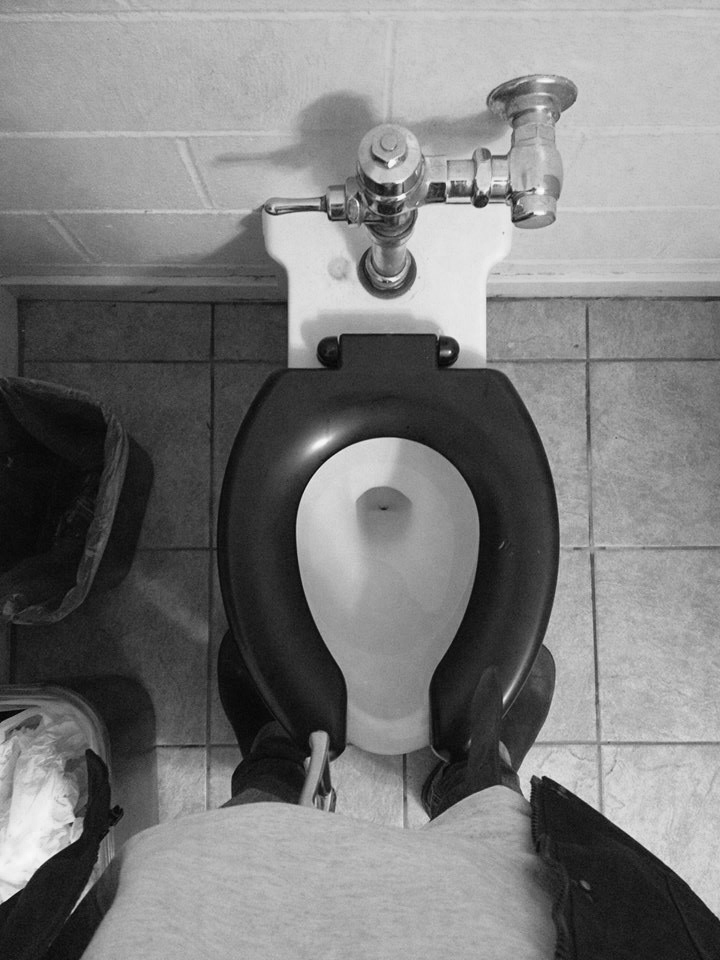
    The perils of public bathrooms are numerous. Germs, lack of privacy and a general consensus that these communal places aren’t intended for communication with others. This sort of mindset is what makes the transition from a private home restroom to a communal and neighbourly lavatory one of the most difficult transitions that first year students encounter. This lack of privacy is grounded in social boundaries that have been derived for hundreds and thousands of years. It is common for many first year university students to feel that using their residence bathroom causes stress. This social enigma tends to decrease as time passes, but is as prevalent as ever during the months of September and October.
    Such a problem is intriguing, as it asks us to question the role of public bathrooms in Western society. Privacy ideals that are taught to youth today are the reason for reluctance. Many individuals don’t feel comfortable knowing that someone else may gain knowledge of what they are doing. The commonplace opinion is that there is no need to give fellow students or strangers a sense of what takes place behind the scenes.

    This idea is developed through social changes that have caused people to become more aware of how they are presenting their “lavatory self.” The Ancient Romans used to bath themselves in a public bathing area. They also used to use communal toilets without walls to create privacy. To the Romans, the opportunity to use the public bathing area was considered mandatory for socialization. It was also seen as a way to make new acquaintances. Bathing was so important in Roman society that there were sometimes libraries, gardens, and exercise areas surrounding the area. Bathing was also seen as therapeutic because it would allow people to cleanse themselves of anything that covered them.
    During the 16th century, Europe started to make major changes to their lavatory structures. During the Black Plague, people started to change their opinion of bathing and cleanliness, however it would take many more years to realize the full extent of the relationship between hygiene and illness. King Henry VIII shut down public bathing houses in England once and for all in 1546. After people began to realize that bathing had a very direct relationship with sickness, the importance of having a place to clean oneself became more prominent.
    In the 19th century, people who were part of the working class often shared an outside bathroom with others. Decades later, having a toilet inside of your house became the norm. The need for bathrooms to be farther away from living areas was due to the lack of plumbing technology and drain systems. Early toilets did not have an easy way to transfer waste from one place to another without damaging the areas in between.

    During the 20th century, bathrooms were used as a place to do one’s hair and makeup (partially due to Hollywood movies and an increase in people who were in the middle class). People became more proud of showing off their bathroom, as they had been with their kitchen. Escapism was first introduced in relation to bathrooms. Bathrooms represented privacy and retreat during this time period, and would be a place that people could go to be alone with their thoughts (in a powder room, for example).
    With regards to Acadia students, the more you get to know your neighbours, the easier using public restrooms will get. There are historical and societal reasons why public restrooms cause stress amongst people of this century, but that doesn’t mean that this sort of stressor will persist with time. After taking a general sample of public opinions, the following is a compilation of remedies for beating the stress:
    – Turn the tap on
    – Go even if you’re scared
    – Discuss this with a friend you are close with. A huge percentage of first year students find that this is a stressful and tedious new problem. If you are open about the concept with your friends, you’ll feel less stressed and more empowered.

    Most importantly, the transition from high school and living at home, to living on campus, is a tough one. The things that really change our perception of bathrooms have more to do with what people say than why it’s wrong.

Betzillo positions itself as a versatile gaming hub where structured bonuses and adaptive gameplay mechanics support both short sessions and extended play.

Built with a focus on innovation, Spinbit integrates modern casino architecture with rapid transactions, appealing to players who value speed and digital efficiency.

Ripper Casino emphasizes bold entertainment through high-impact slot titles and competitive promotions crafted for risk-oriented players.

A friendly interface and stable performance define Ricky Casino, offering a casual yet reliable environment for a wide spectrum of gaming preferences.

King Billy Casino channels classic casino spirit into a modern platform, delivering recognizable themes supported by contemporary reward systems.

Immersive visuals and layered slot mechanics are at the core of Dragonslots, creating a narrative-driven casino experience.

Lukki Casino appeals to players seeking direct access and minimal friction, focusing on fast loading times and intuitive controls.

Casinonic provides a structured and dependable gaming framework, blending modern slots with transparent operational standards.