Tag: social issues

  • The Real Problem with The Dome

    The Real Problem with The Dome

    The Dirty Dome has a dirty little secret. No, it’s not some money laundering scheme or anything necessarily illegal. However, this little secret is scary, scuzzy, vile and downright wrong. You would think that bar staff would have the safety of their patrons in mind while on their premise. There are plenty of checks in place to ensure people who are entering the bar are not too drunk, too dangerous, or too unpleasant. One would think that as a business owner you would want people to feel safe while in your bar or at a minimum, that worst case scenario, those big burly guys that have thrown us all out at some point could step in and protect people in need. The worst part? You’re probably thinking that I’m talking about some bar fight resulting from a spilled drink and some slurred zingers. That’s not even close; I’m talking about downright sexual harassment and The Domes reaction to a girl seeking refuge from an assaulter. 

    My friends and I were out celebrating Keith’s birthday in Halifax. It was shaping up to be an amazing night, we arrived at The Dome at the perfect level to enjoy our time there – we all know what I’m talking about…  My friends and I wanted to go outside to get some air while a friend of ours (let’s call her Rachel) was talking to someone interested in buying her a drink. All seemed fine so we carried on our way out the door. Roughly 15 minutes later, I start getting frantic phone calls and messages from Rachel begging us to come find her. When we got back into The Dome she was visibly shook. She went on crying and explaining how this guy refused to accept no as an answer. To him, these drinks were a direct route to getting what he wanted. Now, some people say, “Well she shouldn’t have accepted the drinks in the first place” or “She was likely leading him on” but this was clearly unwanted and she made that known. This guy was grabbing at her, asking her to come home and insisting on buying her more drinks when she was visibly too drunk to start. All this said, my friends and I decided it was time to leave and that we’d take the night elsewhere. We thought surely this night could only get better. It did not. What happened in the next 30-40 minutes has forever destroyed my trust in the bouncers at The Dome and to an extent, the Halifax Regional Police.  

    As we were leaving the bar, a couple of bouncers saw Rachel, who was very drunk and crying, and motioned us to the door to take her home. As this was our intention anyway we reassured the bouncing staff that we were on our way home. We ended up leaving the bar through Cheers upstairs only to realize that the girls had forgotten their jackets down at coat-check in The Dome, so Rachel and I stood outside while my friends grabbed their jackets. Rachel, still distraught from the encounter and a victim of sexual harassment, stood outside with me sobbing about the experience. It was heart-wrenching to see a friend endure something like that and I was very concerned. All of the sudden, my friend tries hiding behind me. I didn’t’t see it right away, but the guy who was harassing her actually followed us all the way from downstairs at The Dome, to outside of Cheers. As soon as I recognized him I told him he needed to go away and that these advances were unwanted by my clearly distraught friend. She went on to tell him to leave her alone and that she just wanted to go home. He then continued to try and convince her to allow him to cab home with her and he would put her to bed. At this point, I was fuming and needed to do something. I should have just socked him in the face and taken the consequences of defending my friend from an unwelcomed advance. I could have lived with that. Sadly, instead, I reached out to a bouncer who was at least twice my size and had been watching the entire event unfold. I told him point blank the story of what this pervert did downstairs and how he wouldn’t leave my friend alone. I told him that she felt uncomfortable and trapped. I simply asked for him to get this guy away from my friend. His response to me trying to protect Rachel from sexual harassment? “Doesn’t look like an issue to me.” Strike one. How the hell as someone who is supposed to protect patrons can you respond to a direct complaint of sexual harassment that you are literally witnessing by essentially saying it’s a non-issue? Rachel was clearly distraught about this situation, her friend reached out to the establishment for help in the situation and was essentially told it’s a non-issue. This in itself would have had me fuming and forever angered at The Dome, however, this story get’s much, much worse. 

    After continued attempts to evade this guy, my friend finally approached the bouncer and tried to get his attention as she felt like she needed immediate help. What he does next leaves a sick taste in my mouth and a shattered perception of safety. Instead of assisting her and simply escorting her to a cab while keeping this guy away, he slams her into a wall and starts ranting to her about how she is going to the drunk tank and how she is way too drunk. The entire time my friends and I were telling the bouncer exactly what had happened and why she reached out. Regardless, he called the Halifax Regional Police and they cuffed her and threw her in the paddy wagon. At this point things were more or less out of our hands. As she was being detained, I asked to talk to the officers, as they didn’t know any of the previous stories from that night. While I understand that police officers must set an example, I shared this entire story and they still deemed it necessary to keep my friend, who had been sexually harassed, wrongfully detained and left completely alone to arrive at to the police station up the road.  

    If this is how unwanted sexual advances are treated by both the authorities and bouncers I’m terrified for my friends. This is a clear example of an establishment that not only see’s sexual harassment on a regular basis but also enabling it. This bouncer single handedly allowed a girl to continue to be sexually harassed right in front of him, with testimony from her friends on the situation, visible indicators of discomfort, and eventually a blatant call for help. Not only did he stand idly by and watch this happen, he punished someone who had been through a vile and disgusting experience to the point where he inflicted physical pain and had her arrested. Is this how we respond to sexual assaults and harassment? I certainly hope for the sake of all those who attend The Dome you never have to go through what my friend did. I can’t speak for everyone but I can certainly speak for myself when I say I will never trust that establishment to keep my friends or me safe. I have seen nothing to this point to prove me wrong and I urge discretion and caution when entering The Dome. It’s a dog-eat-dog world in there where you’re left defenseless and are punished for seeking help. Be careful. 

  • Things That Should Have Been Curbed in 2016

    Things That Should Have Been Curbed in 2016


    1) The notion that “White Privilege” is offensive and racist towards White People.

    Racism, cultural appropriation, and discrimination have been a hot-button issue throughout history. With the rise of social media platforms, along with the recent election of Donald Trump, there is a plethora of conversation online (and in print) about the hateful rhetoric that seems to be plaguing today’s society. Unfortunately, when people feel that their privilege is being threatened, they enter an automatic defense mode. It is often presented in such a manner where the defendant makes claims of innocence, justifying their feelings of discomfort by exclaiming that they are not guilty of racism, and that if their race is being questioned, that they are automatically being discriminated against. White privilege is not racist; it is not offensive in any way. It is a method of explaining the favorable treatment that white people often receive. There are no systems of oppression designed against white people. Thinking that reverse racism exists is what perpetuates the notion of white privilege further into the foundations of our society. It is a mechanism that is used to validate the comfortable position white people hold in society. Validating your own comfortable position by attacking a marginalized group (by saying white privilege is offensive, racist etc.) is a subtle way of invalidating and shutting down any group who’s LIVED EXPERIENCE has ever been one of systemic oppression. In extension, these feelings can often be described as “white fragility,” a state in which minimum amounts of racial stress becomes intolerable, triggering outward displays of emotion, such as anger, and behaviours such as argumentation. Yeah, this definitely could have been left behind in 2016.

    2) That any Indigenous culture should just “get over” colonization.

    Really? This one amazes me every time I hear it. Let us take a brief moment to recall Canadian History because we are not innocent in the ways or racism and cultural oppression. Residential schools were opened in conjunction with the Catholic and Protestant Churches and the government. Their aim was to remove any form of Indigenous culture from Indigenous children by forcefully removing them from their homes, placing them in schools where they would be taught Western values. As such, a cultural genocide was committed. Often, when hearing the word “genocide,” events such as the Holocaust, Bosnian, and Rwandan genocides. That is because Canada has attempted to repress its history. The horrors of the Residential schools did not end until 1996. Yes, most of us were living when the last school shut its doors. During their time in the Residential schools, Indigenous children were beaten, sexually assaulted, and mentally abused by their instructors. Often, these traumas were difficult to cope with. A stigma surrounds Indigenous peoples in Canada. Many people chose to believe that status cards, funding, government aid, and the Truth and Reconciliation Committee should all be abolished. They question why we should continue to apologize, and why we should continue to work towards mending our relationship with Indigenous peoples. What does it take to get over something like this? How could you possibly put a numerical value on an apology, how can you, a white person, get to dictate the appropriate measures for reconciliation after a cultural genocide has been committed? When you say these things, you act as though you assume the role of the oppressed, you may think you understand their oppression, but you simply do not. I know I do not understand, I never could. However, it is important to listen, to engage in conversation, and to be respectful of what you cannot understand. Please read the above statement about white privilege and then rethink your questions and sweeping generalizations about Indigenous peoples and Indigenous culture.

    3) “She was asking for it”- REALLY?

    For God sakes. How is this type of conversation STILL taking place? Did we not learn after Jian Ghomeshi and Brock Allen-Turner? I simply do not understand. The legal process further victimizes rape victims. Belittlement and slut-shaming occur in the courtroom in order to find loopholes in the victim’s statement. By asking her, “did you say no?” you are questioning her pain and her experience. By asking her, “how much did you drink?” you are assuming that all drunk women are ‘asking for it’, by asking her “what were you wearing” or “how many men have you slept with in the past”, you are slut-shaming her. Although there are false reports of rape, the treatment of victims in the courtroom is inexcusable. This is the reason that rape and sexual assault are so underreported. This process favours the accused, often bringing into play irrelevant aspects of his character, his achievements, and what he strives for in life. However, this does not take into account aspects of the victim’s character, her (or his) achievements in life, and how what she/he had strived for may feel as though it has become so out of reach. It’s simple, folks. If you can’t say no, you can’t say yes. There is no in-between; there is no grey area. There is yes, and there is no. Stop blaming the victim. Stop validating your need for supremacy. Stop questioning the pain of others, instead, start regarding it.

    4) Feelings of self-doubt, as brought on by Instagram and other forms of Social Media.

    I am guilty of this. Most people are guilty of this. It is so easy to feel self-doubt, and it is so easy to think that your value decreases based on the perceived notion of “perfection” in the others who you see on social media. In the last 10 years, we have “networking” apps explode. The original purpose of these apps was to stay in touch with your friends, to be able to connect with people you haven’t seen in a long time and to keep others updated on what is going on in your own life. However, it feels as though there has been a shift in the dynamic, a change in the way we behave on the Internet. Often, all we see is the picture. We believe that everybody’s lives are perfect and full of happiness based on how they display themselves on social media. Getting the “perfect picture” and pairing it with a “fire” caption that will get you over 300 likes is often a goal of most people. I know I am not innocent. There have been multiple occasions where I have found myself thinking, “if I went to the gym more maybe I would look like her and then I would be as happy as she appears.” I know this is wrong. After a conversation with one of my roommates, I found out that she was feeling the same way. She talked to me about how miserable looking at Instagram makes her. It caused her to question her own happiness by constantly comparing it to other girls’ social media pages. So, she slowly began to stop looking as much. As did I. I’ll leave this point here: everybody has their issues, but we have been conditioned to try and keep our problems to yourself. A picture is just that: a picture. You see what the poster wants you to see, just remember that your self-worth should not be determined by a like or how the world views your Instagram page.

    5) Islamophobia.

    Islam is a religion of peace. Often, people do not believe this when it is brought up in conversation. The first time I heard this was in my 11th grade world religion class. Our teacher told us that Islam was the closest religion to Christianity. She was right. It is not Islam you are afraid of, it is the “otherness.” The sense that you see something different, and that you are uncomfortable within a realm of your own privilege is what sets you off. This rhetoric gained prominence after 9/11. We were scared of them. They were scared of us. Although I am not an expert in Islamic studies, I know many men and women from the Arab world who identify as Muslims, and I can honestly say that they are much nicer than many other people I know. If we remove the concept of the “other,” perhaps we will all be able to see each other as we are: human.

  • Academic Dismissal

    I promised myself a few years ago that I would write this article before I left Acadia, and now I’m finally in my last semester ever (hopefully!), so here it goes. Dear student body of friends and strangers, I present to you my biggest and most embarrassing secret. It’s something so deeply and personally disturbing that I’ve told very few people – not even my parents. Are you ready? I flunked out. I know I’m not the first nor the last person to ever fail university, but for me, receiving that letter of academic dismissal in the mail was a gut-wrenching conclusion to a particularly dismal string of events. I’m writing this article partially to relieve some of the weight of this secret I’ve been carrying around for three years now, but mostly as a precautionary tale for any readers who might find themselves in a similar situation.

    In the spring of 2009, I was eagerly anticipating my high school graduation and less eagerly anticipating the next big life hurtle ahead of me: post-secondary education. I actually enjoyed school. I was a good student with good grades, and I participated in a wide breadth of extra-curricular activities. When it came time to make some big decisions about what to do next, like many of my peers, seventeen-year-old me applied to a variety of universities. I didn’t particularly have an end goal in mind career-wise, I just knew that I was smart and capable given my academic success to that point, and so going off to university seemed non-negotiable. I assumed I would just launch myself into school and figure things out on the way, because what seventeen-year-old knows exactly what they want to do for the rest of their lives anyway? As I had achieved well-rounded grades in both arts and sciences, my high school counselor strongly urged me to apply for science programs “to open windows to the future,” and I knew I liked people, so I chose psychology. I was accepted to all of the schools I applied to, so I chose Acadia based on reputation. Sound familiar so far?

    The slow crash-and-burn began upon arrival. I was thrust into introductory biology, statistics, research and design, and all the other fun necessities of a science degree in psych. Possibly due to my lack of end goal and mostly due to my complete disinterest in any of these things, I was strong out of the gate but quickly fell far behind. It seemed that my plan to jump right in and swim until I reached the finish line was flawed. A pivotal moment that I can remember from my second year of school is laying on the floor of my friend’s room in Chipman with a group of people talking about their life aspirations beyond university, and suddenly realizing my own impending identity crisis. Who am I and what do I want to do?! I hardly recognized myself, failing courses and wondering what the point of any of it was. In high school I was just forced to take everything, my life had a regimented structure, and I identified myself by my extra-curriculars. I was a band kid and that somehow summed up the rest. Now I was nobody, and I was going nowhere.

    Obviously the news that I was failing school didn’t exactly fly with my parents when I came home for Christmas that year. To be precise, they called me a “disappointment”… that was pretty difficult to hear. After many hours of talking and sobbing profusely with my mom, we decided that maybe I should switch majors. In retrospect, taking a step back from university to figure my life out would have been a prime choice at this point in the story, but that’s not what I did. I returned to school as an English major and began fast-tracking my way through the English program, cramming every vital course I’d missed into a 3 year plan in order to graduate by 2014. Switching to English was a breath of fresh air. I still didn’t know what I was going to do with it, but I had always enjoyed reading and writing as a kid, and I found the course content much more in line with my interests. The department and the class sizes were also way smaller than anything I had seen thus far. I made friends incredibly quickly, got to know everyone in all of my classes, and all of my profs knew me by name. It was like night and day.

    From then on my marks improved and I was generally happy to be working on something I was both good at and enjoyed, but then in the spring of 2013 I got some unexpected news. My uncle had received a sudden diagnosis of terminal cancer. Following this news, my grandmother was also diagnosed with cancer. My family spent that summer in a state of somber anticipation. We spent four months saying goodbye. That somebody who had a family and a career and all the things they had ever dreamed of and worked towards could suddenly cease to exist in the midst of it all was nearly impossible for me to comprehend. It made everything seem pointless. In the fall of 2013, as I was beginning what should have been my graduating year of university, not only did my long-term relationship fall apart, but I lost two people to cancer in little over a month. Not wanting to burden my aching family with the profound impact this experience was having on my outlook on life, I kept it to myself. I stopped going to class, not because I wanted to but because I simply couldn’t seem to summon the strength or will power. I laid in bed and I watched the seasons change from fall to winter. I ignored my phone and my friends. I just stayed in bed. Christmas was extremely sad that year and further strengthened my resolve not to tell my parents I was sinking, because I could tell that they were barely coping as well.

    That spring I got my letter of academic dismissal, as expected, and I put it in a drawer. I didn’t even open it for a long time because I couldn’t look at it without feeling sick to my stomach. I told my parents (and anyone else who inquired) that I was burnt out and that I wanted to take some time away from school. I didn’t tell them I got kicked out. I couldn’t bear to admit that I had failed them after everything they had been through already. I spent two long years working a minimum wage job in food service, hating the monotony of my days and contemplating my next move. Finally, last spring, I reached a boiling point in my stagnant life and reapplied to Acadia to finish what I had started … and here I am.

    I wanted to write this article for anyone who might be feeling as unsure about their future as I did. In the leap from high school to university it seemed like everyone around you knew exactly where they’d head in life, and if you’re like me, you probably followed the masses hoping you would figure it out too. You probably didn’t let on that you were feeling a little lost and overwhelmed. I also wanted to write this article for anyone who feels like they’re carrying an impossible weight on their shoulders. I need you to know that you’re not alone, and that school isn’t everything, even if it feels like it is. I need you to recognize when you’re sinking and yelling for a lifeline, regardless of the size of the burden you’re trying to shoulder alone. I wish more than anything that somebody had reassured me that it was okay to take a step back and reevaluate my goals. I might have been more successful, for instance, if I’d taken some time after high school to really think about what I wanted to do before diving aimlessly into university because I felt like I had to. I pounded away at this degree for the sole purpose of having a degree. I did it because I thought it was what I had to do to validate my life, but at the risk of sounding cliché, I forgot that life is about finding happiness.

    We’re taught that successful people just bite the bullet and go to university, get a good job, and live happily ever after. I’m sure that’s true for many, many people, but sometimes life gets in the way. Sometimes you don’t know why you’re doing something, and you need to figure out what you want before you proceed. So this is for all the people facing academic penalties at the end of this year. Your story isn’t over, your worth isn’t based on your degree, and your life isn’t a total loss. You got here because you’re smart and capable, and you’ll figure out what makes you happy eventually. Maybe it involves university, but maybe it doesn’t. Either way, there is absolutely no shame in taking time away to figure it out. I am now twenty five years old and finishing my bachelors degree, eight years after I first started here. We’re not all on the same time line, and it’s not a race to the finish line, because there is no finish line. Most importantly, none of us know how much time we have on this planet, so whatever you do, do it for you.

  • Are Millennials Too Sensitive?

    There once was a boy who was told that everyone that should be nice to everyone and that if they were not kind, they were bad people. He then grew up to find that’s not how the world works.

    As a society adapts, the mindset of the people within it change. This is also true in the change of a generation. They have learnt from the mistakes and triumphs of previous generation and use this information to change and base their lives upon. The education around them adapts to these new changes and shapes children. With the increase in mental health warning and bullying campaigns, are they really being shaped to deal with the rest of the world, or is it that the world has not yet to accept the changes that the new generation is bring? I believe that the new generations are not taught to be prepared for what the world will throw at them. They are only told that people will change and that they should not have to face the problems that occur in the world.

    In my political science class, we were discussing our upcoming presentations for our research assignments. Our TA requested that if we are planning on showing any “graphic images” we get them checked prior to putting them into our visual for our assignment. This is a ridiculous sign of how sheltered this generation is: we know violent things are happening around the world but we play a blind eye to them. Not showing these images does not make them go away and does not solve the problems that they are causing them.

    Now bullying is a topic that has only been under scrutiny for the past 20 years. It is now viewed as a national epidemic instead of a common fact of life. The young generations are now beginning to expect that everyone in life will be nice to them and if they are not there are a bully. But that is not how it works in life. You will be put down by people for making a mistake at work or for bumping into someone on the street. People will talk about you behind your back. You cannot change that. If anything, you should be taught to how ignore these comment and fight back, compared to just reporting them to the principal. You can’t report your boss in the future for yelling at you, so learn how to take criticism.

    Previous generations have been built and thrived upon the “tough love” method. People would discipline their child to a certain extent, be that verbally or physically. But now, parents are actually being arrested for spanking their children with actual reasons. The school system does not tell the students the difference between abuse and discipline so they grow up with the belief that this is wrong and that their parents are not good people.

    It is a generation under the veil of ignorance – they all imagine the world to be perfect, where everything happens their way. If things are happening outside of their community to other people it doesn’t matter. All that matters is what happens to them and that they are happy. When things that they don’t like occur, they don’t know how to handle it. They have been so shelter from the sadness and violence of the world, they when they get a large dose of if, it leads people to believe they have a mental illness.

    Now the thing about mental illness is that it is something that is very real, many people are suffering from it. The statistics show that the rate of people who report suffering from depression have increased by 6% over just this year. Now I am not saying that these people’s claims are false, but the rate shows that the recent generation cannot handle the pressure that society has put upon them because they were not trained to handle stress. They were only told that the things that cause them stress are not right.

    When any topics concerning race, sexuality, politics, or gender come into play, they become extremely agitated. They are brought up to think about living in a world when everyone should think the same way. But that is not how the world works. People have different opinions and are entitled to have those opinions, why must people be put down for not conforming to what views their society has. These generations have been told they everything should go their way, so when it doesn’t of course they don’t do how to handle it. Is it true that millennials and Gen Zs are overly sensitive? Yes it is. But who can blame them when they grow up in an environment like this one.

  • Have Hope for 2017

    Sitting down at the dinner table with my family I faced an awkward conversation. It started with griping about the state of the world: America, Europe, crisis after pandemic after crash. It was a depressing start to a conversation, to say the least. The picture that was painted was one resembling the worst of the first Mad Max film, or the beginnings of Roland Emmerich’s 2012: undesirable and unnecessary.

    After some thinking, I chimed into the conversation. Yes, I wasn’t going to lie, things did look bad. There were a lot of things that were beyond the scope of positivity. But after the dinner was over I stopped and asked my parents: why did they think things were so bad? Their answers were different in their wording but the general message was the same: things were changing and they were changing in a direction they didn’t like.

    It’s undeniable that the world is changing. Former reality TV star Donald Trump is now President of the United States, the UK is (trying to begin the process of) leaving the European Union, Syria is falling back under the control of Bashar Al-Assad, and the Islamic State is branching out around the world, with attacks occurring everywhere from Christmas markets in Berlin to bazaars in Turkey and malls in the United States. It’s a different world, and it’s one that doesn’t have the prettiest face. By a lot of metrics, the world is sliding back into a reality eerily reminiscent of the 1930s, with fascism, racism, and neo-Nazism on the rise and tensions erupting around the world. This all came to the boiling point in 2016, a year we’re all very glad is over.

    Denying that the world is facing a challenging new reality is arrogant and irresponsible. To say that everything is going to be fine and dandy is dangerously naïve. But it doesn’t warrant being pessimistic about the future.

    2016 will be a year that will be long analyzed by historians of the future. We lost countless stars, from David Bowie to Prince and Carrie Fisher, we saw the worst of humanity in Aleppo, and we saw hate take precedence over love through xenophobia and racism. Needless to say, it was a year that will live in infamy.

    But it doesn’t warrant despair. In the face of adversity, the worst thing one can do is curl up in a ball and refuse to believe that anything they do can change things. Even the littlest of things, from throwing your coffee cup in the recycling or telling somebody they look good today, makes a difference. It may be small and but it is not insignificant. Maya Angelou once said “people will forget what you did, but people will never forget how you made them feel”. In the face of an uncertain future it makes all the difference to be there for one another.

    As much as those around us may want to pessimistic about 2016, there were just as many reasons to be optimistic. The Colombian government signed an agreement with the FARC, ending a decades long conflict that had killed thousands. Tiger numbers around the world were on the rise for the first time in 100 years. A solar powered airplane flew across the Pacific Ocean. World hunger has reached its lowest point in 25 years. People pouring buckets of ice over their heads raised enough money to help isolate the gene that causes the disease. When you look back over the bigger events, last year wasn’t so bad.

    It’s impressive how far we’ve come in the past year. The Paris Agreement has been signed, and even though there are plenty of climate change skeptics and outright deniers in high office, the ball has begun rolling towards a greener future. We’ve seen compassion in Canada, with our own Prime Minister personally greeting refugees fleeing war and utter devastation. Love him or hate him, it takes someone with genuine character to take ownership of an issue and face the fruits of their labour head-on. Even here at Acadia, our first year population has grown by 25%. New blood and new minds are being welcomed into Wolfville, a stark contrast from the previous year’s intake.

    I have hope for 2017. There are elections coming up around the world where candidates are basing their campaigns on an ‘us vs. them’ message, fearmongering and hatemongering. But while there are those candidates, there are just as many promoting what makes democracy worth fighting for: peace, compassion, tolerance, justice, and love. The fight for a free and fair society isn’t an easy or bloodless one. Relationships are ruined, reputations are soured, and feelings are hurt. But if you truly believe in something worth fighting for, stand up for it.

    There will always be headlines that strike fear into our hearts. There will always be those who preach hate and practice malice. There will always be those who believe that the impossible is exactly that- impossible. And yet there will always be those tiny instances of human compassion that amount to something greater. There will always be those who preach love and practice tolerance. There will always be those who believe that the impossible is exactly the opposite- possible.

    Let’s not despair for 2017. Let’s go out and make it a good one.

  • Unpopular Opinion: Controversial Team Names Aren’t All That Controversial

    The controversy of team names has been a hot topic in the world of sports as of late, and all the attention being brought to the topic has me thinking: are these team names controversial, or are activists just bringing it up to create controversy? Before you gasp in disbelief and accuse me of supporting cultural appropriation, just hear me out.

    Think of other team names that aren’t considered controversial. The mascot of a team usually represents something fierce and unstoppable. Panthers, Eagles, Lions, and the list goes on. If a team isn’t named after an animal, it’s named after something that pays respect and homage to the team’s city, country, or background. This is where we get mascots such as the Maple Leafs or the Oilers. So, isn’t it possible that, like these team names, the “controversial” ones are also used to pay tribute to the Indigenous people? In my opinion, having teams such as the Cleveland Indians and the Kansas City Chiefs remind people of America’s roots. These names aren’t meant to be racist. These names are meant to pay tribute to the strength, excellence, and determination of the Native peoples.

    At the end of the day, people are offended by anything and everything. Environmentalists will take issues with the Edmonton Oilers, tall people might take issue with the San Francisco Giants, and perhaps people are offended with the Boston Celtics because of the Irish. If we are going to insist that sports teams change their names to be less controversial, then it should be consistent. Not just for the sports teams with Indigenous based names.

    Don’t get me wrong, I’m not stubborn in my opinion. I can understand why some people will take offense to these names. But I do not feel like the actions being taken are progressive in any way. It has been reported that many people have boycotted sporting events, reporters refuse to say the name of the teams on broadcast, and merchandise is being destroyed. So, my question is this: why is the team being punished for the name? They did not name themselves. These actions are directly effecting the players, and that isn’t right or fair. There must be a better way to voice your discontent.

    Alternatively, maybe those who are offended should see it from a different perspective and accept that team names honour their namesake. The logos and mascots themselves is an entirely different story, and I could see why that may be taken offensively. However, the team names and their mascots are different matters and should be treated as such. Keep this in mind the next time you decided to hop on the bandwagon and protest something you didn’t care about a year ago.

  • #FlowersOfChange: Amber Amour Redefines Women’s Body Hair Through Social Media

    #FlowersOfChange: Amber Amour Redefines Women’s Body Hair Through Social Media

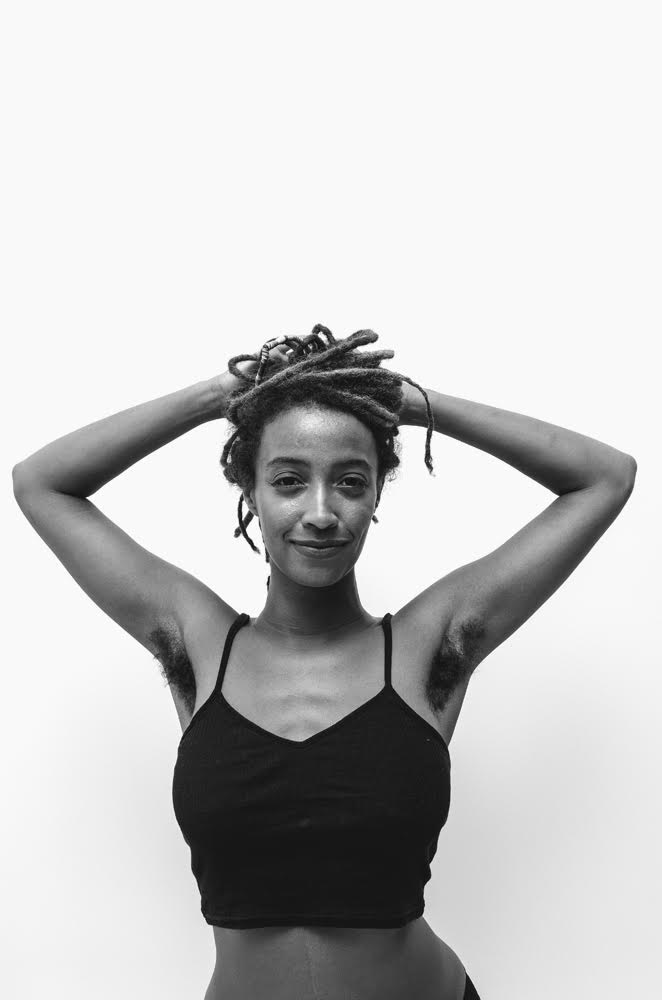
    Photo Credit: Aidan Tobias
    Photo Credit: Aidan Tobias

     A small but revolutionary movement is spreading on Instagram. #FlowersOfChange is a photo series that was started by Amber Amour, an activist and artist who, prior to Flowers of Change, began the artistic campaign Stop Rape, Educate. The #FlowersOfChange series was born in conjunction with #StopRapeEducate and has been gaining ground on social media among women who feel comfortable posting photos of themselves that show their body hair. They are explaining their choice to refrain from shaving and how their body hair “speaks” to them and to the world.

    Amour
    Photo Credit: Aidan Tobias

    Amour, in various Instagram posts where her body hair shows, describes her choice to shave or not to shave has absolutely nothing to do with anyone else’s perception of her body. She describes the choice as a form of self-love. “No one can take this sunshine away from me,” she wrote under one of these posts (instagram.com/ambertheactivist).

    Equating flowers with women’s body hair breaks down the perception that body hair is equated with masculinity. There is a common societal perception that men with more body hair are more masculine, and men with less or very little body hair are effeminate; women with body hair are perceived as masculine, butch, hippies, etc. Labels are inherently associated with the amount of body hair one has naturally or by choice.

    This is not to say that all women who shave are complicit in their own oppression in the context of patriarchal heteronormativity. Both women and men choose to remove their body hair for various reasons, including comfort, sport, athletic affiliation, personal or partner preference, aesthetic, and so on. Unfortunately, labels such as the examples given above are often implicitly associated with appearance.

    To gain deeper insight into #FlowersOfChange, I reached out to Amber Amour with a few questions about the photo series.

    RH: What inspired you to start the series #FlowersOfChange?

    AA: It’s an interesting story, actually. I started #FlowersOfChange after being sexually assaulted in Cape Town. When the story went viral, I got victim-blaming comments from men and women around the world. One girl commented on my picture saying something like, “You put yourself in that situation [to be sexually assaulted]. You should have known better. Life is not all flowers and armpit hair!” Despite her rudeness, that comment made me laugh and I found the concept of “flowers and armpit hair” terribly cute. I decided to kick-off the campaign by taking photos flaunting my body hair while posing next to flowers. I later renamed the movement Flowers of Change because if we all change what we think about body hair, we can change the world by revolutionizing the love we have for our bodies.

    RH: What societal implications/effects are present for women who choose not to shave?

    AA: Women who let [their hair] grow should be prepared to face staring and funny looks from strangers and rude comments from peers. It’s not all bad, though. Eventually that will roll off. Whoever decides to rock their body hair should do it for herself despite what anyone says. Women who let their body hair grow should know that not everyone is going to understand. Don’t let their ignorance dictate what you do or how you feel.

    Amour
    Photo Credit: Aidan Tobias

    RH: What is the response like on Instagram?

    AA: The response is mixed. For one, I noticed that my photos showing my body hair got more likes than any of my other pictures, which was a sign that people were paying attention to it, at least. Some of the comments can be harsh but I’ve learned to ignore them because I feel so grounded with myself and so complete with my body hair that nothing anyone can say would make me feel ashamed of it. You can’t make me feel bad about something I’m incredibly proud of.

    RH: In what ways does #FlowersOfChange relate to your campaign, #StopRapeEducate?

    AA: They relate to each other in the way that both movements allow women to grow, to love, and to express themselves freely without fear. When women feel supported, loved, and healed from within, the whole world prospers.

    RH: Do you feel social media is the most effective platform to inspire social change, or is social media part of a broader movement?

    AA: Social media is a part of a broader movement. It’s just one aspect of things. We can preach all day behind our screens but if action is never taken, the world never changes. We should use social media to speak our minds and educate people just as much we should take steps toward building the world we dream of outside of the virtual world.

  • A Pitch of A Problem

    “Party for Africa” was a fundraiser organized by the Acadia Rotaract club for the Kikima grannies, who support the Kikima village in Kenya, East Africa. The title of the event is what initially caught my attention and after reading the Facebook page, I felt an urgency to voice my opinion, as I found the marketing strategy of the event to be problematic. Although I can recognize the intent of the event, it doesn’t change the fact that the language used reified stereotypes associated with Africa, and was quite offensive.

    Africa is part of the global south, which carries with it a reputation of receiving humanitarian aid from developed countries whether solicited or not. However, the entire continent does not need this; not all parts of a country in Africa need humanitarian aid. Mainstream media continually perpetuates the portrayal of the African continent as an impoverished and distraught landscape, which has inherently been embedded in our psyche to view all parts of the continent as such. When you think of Africa, what comes to mind is safaris, extreme poverty, child soldiers, civil wars etc. This is not to say that this is mythological, but I think it is imperative to address these stereotypes and recognize both modern and traditional African communities for what they are today – innovative, resilient, and progressive.

    As a part of an academic institution, each of us share the responsibility to educate one another and to speak up against pigeonhole stereotypes and marginalizing comments within our immediate community. It is unfortunate that within a highly esteemed learning community, issues like this are still prevalent. However, incidents like “Party for Africa” provide a platform for critical dialogue like this to take place, where we can build on our knowledge of anti-racist strategies and further educate and encourage others to join the conversation. Necessary critical dialogue helps to identify productive ways of discussing race while developing respectful and inclusive spaces in which they can occur.

    Initially, when I confronted the organizers of the event, I was informed that the theme “African Safari” and its slogan, “from Africa for Africa,” was a strategic marketing approach to get a good turnout despite it being problematic. This urges me to pose the question: how do we as members of an academic institution negotiate marketing strategies within our community, where we have to take into consideration the ethics that govern us, and how do we compare them to commercialized marketing strategies to yield success? When is it ever acceptable that marketing takes precedence over stereotypical and racist remarks? I do not have the answers to these questions, however being aware of them and recognizing their impact in a community with about 400 international students, is a good place to start.

  • Identifying Pronouns

    Identifying Pronouns

    “I walked to meal hall with him today.”

    “I met her at the dance yesterday.”

    “Jerry? I saw them in first class.”

    Now, there’s a chance that the first two sentences look proper to you, but the third one doesn’t seem right. You might think that I’ve mixed up the amount of people that were being talked about. After all, Jerry is only one person, right?

    Welcome to the wide world of pronouns! People who identify outside of the gender binary, as a mix of genders, lacking gender, or just refuse gender altogether, have become more visible in Western society in recent decades. Of course, many of you have heard of Caitlyn Jenner, Laverne Cox, and Chaz Bono. You might even know some friends who are transgender.

    Transgender is actually an umbrella term. It covers anyone who feels their gender identity and the gender assigned to them at birth (commonly from examination of the baby’s genitals) are not necessarily the same on a consistent basis. Some people who have intersex conditions may also use a new pronoun that you may not have previously heard. With the greater mainstream acceptance of people transitioning from male to female or female to male has come a push to more broadly recognize other gender identities.

    Genderqueer, genderfluid, agender, neutrois/neutral/neuter, trigender, genderf*ck are more recently emerging identities asking for their bit of respect. With these identities comes new terms to be able to refer to people who don’t feel that the traditional “he” or “she” is correct.

    One of the most common pronouns in use is “they” as a singular. You’ll hear it argued quite frequently that “they” is not acceptable grammatically because it is plural so can’t be used to refer to a singular third person. Oxford English Dictionary does accept this use of “they”. English is an ever-evolving language and its purpose is to serve our need to communicate accurately to each other.

    In Sweden just July of last year, the Swedish Academy (the institute responsible for choosing the winner of the Nobel Prize in Literature each year) announced that they would be including a gender neutral pronoun in their official glossary. While Swedish style manuals still treat the gender neutral pronoun as a neologism, this means that the Swedish language has evolved and agreed to add a new personal pronoun by taking the “structure” of the established gendered pronouns (han which means “he” and hon which means “her”) and using the “middle” of gender neutral det and gender common den (both translated to the equivalent of English “it”) to come to the end result of hen, a term used to avoid identifying gender and for people who identify as transgender, a third gender, or rejecting the division of male/female gender roles.

    Other pronouns that are being used are ones such as xe/xem, ze/zir, per/per and ve/ver. With the new various pronouns coming in to use, it can be very confusing for people who haven’t had the need to think outside of the binary previously. We all grow up learning the use of she/her and he/him. It seemed incredibly easy as a child to pick up new words and their correct usage. That’s because it is. We’re optimized to learn language best at around age 5. Learning new words and their uses becomes much harder as an adult. No one expects you to be perfect, but the effort means a lot to those who use different pronouns. On that note, if you screw up and use the wrong pronoun, a quick “Oh, I’m sorry” followed by usage of the correct pronoun is the best way to go.

    The argument has been made before that these “new” genders are made up, that the people who espouse them just want to feel special. If you look outside of the Western sphere of influence (and even within it, but outside the white, European influence), there are several cultures that accept and name more than two identities. The Blackfoot Confederacy recognizes those assigned female at birth (also known as AFAB) who occupy a gender role different than male or female. The Dominican Republic has an intersex condition so common that they have differentiated a unique gender for them, the guevedoche. Pre-colonial Incas in Peru had the quariwarmi. The Bugis people of Indonesia recognize five unique genders.

    We could be missing out on the most amazing friendship or partnership we could ever find in our lives. Would you be willing to give that up over the frustration of learning a new set of pronouns for a person?

    Need a crash course on how to decline these new nouns for proper use? Here’s a few websites to try:

    https://lgbt.wisc.edu/documents/LGBTCC-Gender_pronoun_guide.pdf

    http://anagnori.tumblr.com/post/75752291700/a-non-binary-persons-guide-to-invented-pronouns

    https://en.wikipedia.org/wiki/Gender-specific_and_gender-neutral_pronouns#Pronouns_and_LGBT_persons

    It may take some time to get used to the idea, but introducing yourself with your name and pronouns such as “Hi, my name is Taylor. My pronouns are they or he. What are your name and pronouns?” is an easy, non-invasive way to introduce the idea that you are open to respecting your new friends.

  • The Missing Letters: Beyond LGBTQI+

    The Missing Letters: Beyond LGBTQI+

    By now, most people who will be reading this article will have heard of the acronym, “LGBT.” This stands for, “Lesbian, Gay, Bisexual and Transgender”. Sometimes, in combination with other letters, such as “LGBTQ” or “LGBTI”. However, this not an inclusive list of sexualities or gender identities by any means of the imagination. The longest list I have come across thus far is twelve letters long (LGBTQQI2SPAA), and is still not inclusive. This is part of the reason for the push towards new acronyms such as GSD or GS(O)M (Gender and Sexual Diversities or Gender and Sexual Orientation Minorities, respectively).

    But what do the other letters mean when you start to get into the longer acronym? Lesbian, gay, bisexual, transgender and….. What? This is a quick rundown of the acronym above, but is by no means an exhaustive list.

    “Lesbian” and “gay” as most people know them, indicate that a person is homosexual (which means that they are attracted to people of the same gender). Boys who like boys, girls who like girls. Fairly straight forward.

    The term, “bisexual” also has a few different definitions. It shows that a person is attracted to the same gender and also a different one, and can also be used to describe people who are attracted to two genders or more. This terms is sometimes used interchangeably with the term, “pansexual”.

    The term, “transgender”, is a large umbrella term. It includes anyone whose gender and sex assigned at birth (typically as being a male or female according to your genitals) do not necessarily match on a constant basis. This can include people who are male-to-female or female-to-male binary trans* people (though some reject the MtF and FtM labels as they have always been men/women), people who are gender fluid (experiencing different genders at different times), people who are agender (experiencing no gender), people who are androgynous (experiencing a mixture of male and female genders), and many others.

    The letter, “Q” is often added to the end of the acronym and can stand for either Queer or Questioning. Queer is a term becoming reclaimed by the sexuality and gender communities. Often used to denote “not straight” or “not cis” (gender and sex assigned at birth match). It’s not always a strictly defined term in relation to who one loves or is interested in. Questioning is used as a catch all for people, appropriately, questioning their gender identity or their sexuality. It is an invitation to a community you may not be sure you’re a part of yet, but it gives you a space of your own to figure out yourself and where you will fit.

    The letter, “I” is also becoming more common in the letter mix. Standing for Intersex, it often represents people who have, “ambiguous genitalia” where it is not clear if they have a clitoris or a penis just yet. This is also a term assigned to people who don’t fall clearly on the male or female side of several different measurements such as sex chromosomes, hormone production or male or female gonadal tissue (ovaries and testes). Some people do not find they are Intersex until later on in life because their Intersex condition is internal, such as Complete or Partial Androgen Insensitivity Syndrome in which the sex chromosomes say XY, but due to the body’s inability to acknowledge androgen, the physical outer form has developed with breasts and a vagina.

    The acronym, “2S” stands for the identity, “Two Spirited”. This expression is most commonly used amongst people of First Nations’ backgrounds. This term is used when someone feels their body manifests both a feminine and masculine spirit within it and is used for both gender identity and sexuality. Some tribes considered those who were two spirited to be particularly special in terms of spirituality. It is a term that can be considered culturally appropriated if used by someone not of First Nations’ descent.

    Pansexual, or Omnisexual, is a term often described as, “gender blind”. It is the ability and potential to fall in love with someone who identifies with any gender. Pansexual is often used interchangeably with bisexual for different reasons including the commonality of bisexual so one would not need to constantly explain their sexuality to someone in discussion.

    The first “A” in the acronym stands for, “Asexual”. This is an umbrella term for those who feel no sexual attraction, little sexual attraction or sexual attraction only in very particular situations. Asexuality has produced its own very deep community with many definitions and specific terms. A few common ones being asexual for no sexual interest period, grey asexual in which sexual interest is very uncommon and demisexual in which one needs to form a strong emotional bond before sexual interest will exist. For the most part, the sexualities previously mentioned refer not only to sexual interest, but potential romantic interest as well. With the lack of sexual interest in the asexual community, romantic definitions have developed as well to define their interest in being in a relationship with someone. They are commonly the same stem words such as pan-, hetero- and homo- attached to the term romantic, creating expressions such as panromantic (interested in a romantic relationship with any gender), heteroromantic (interested in a romantic relationship with a different gender) and homoromantic (interested in a romantic relationship with the same gender). It is important to remember that romantic relationships without sex are just as legitimate as ones with sex.

    The last “A” in the acronym stands for Ally. For some, it is inclusive of heterosexual, cisgender allies who help with the recognition of other gender and sexuality identities. It is also an invitation to those who know they belong within the GSM groups, but are not able to currently be open about that fact, whether that is endangering their own life, their living situation, or that they are not ready to say so. It is a space to allow them to be a part of the community they belong with in a safe way.

    Again, this is not an exhaustive list, but just a reminder of sexualities and gender identities that are often overlooked for the increasingly mainstream acceptance of the LGBT in particular (you know…. When they’ll actually admit a character is bisexual on TV).

Betzillo positions itself as a versatile gaming hub where structured bonuses and adaptive gameplay mechanics support both short sessions and extended play.

Built with a focus on innovation, Spinbit integrates modern casino architecture with rapid transactions, appealing to players who value speed and digital efficiency.

Ripper Casino emphasizes bold entertainment through high-impact slot titles and competitive promotions crafted for risk-oriented players.

A friendly interface and stable performance define Ricky Casino, offering a casual yet reliable environment for a wide spectrum of gaming preferences.

King Billy Casino channels classic casino spirit into a modern platform, delivering recognizable themes supported by contemporary reward systems.

Immersive visuals and layered slot mechanics are at the core of Dragonslots, creating a narrative-driven casino experience.

Lukki Casino appeals to players seeking direct access and minimal friction, focusing on fast loading times and intuitive controls.

Casinonic provides a structured and dependable gaming framework, blending modern slots with transparent operational standards.