
Author: athscience

  • Transition Q&A with Acadia PRIDE

    What comes to mind when someone talks about Hormone Replacement Therapy? For most people, they immediately think about a person they know that has gone through the process. Overall, people know about the fact that it helps a person appear as the gender that they identify as.

    What are some of the major risks of undergoing Hormone Replacement Therapy?

    “The major risks that I’m aware of socially involve that awkward middle ground of  “not quite passing”, especially in the case of trans feminine women. Violence and rape is a possibility for many, especially when trying to access gendered spaces. Of course, there’s also the risk of social isolation that could come if family or friends pull away from someone. Medically, all the usual issues associated with HRT and surgery. I think trans masculine people may have a higher risk of uterine/ovarian cancer, but not certain.”

    Can you elaborate on that?

    “Sometimes, the things you know that are going to happen go quicker than you expect, or not in the order you were anticipating. Like on average for trans masculine people, facial hair tends to start around 1 year-ish, but if it started sooner than you were expecting, it’d probably be a surprise. Plus the voice starts to crack and drop, just like cis boys in puberty, so that could be a surprise when it starts happening. Again, that’s really individual to the person as the HRT generally provides a lot of the same things to expect for people.”

    Is it easy to get access to medication?

    “No. I know people who’ve gotten it easily and some that haven’t. In general, the indications I’ve seen is that it’s generally a pain. Of course, that’s also dependent on where you live as some places will be more liberal than others.”

    What are some of the emotional changes that occur?

    “Generally, I wouldn’t talk about emotional changes as those aren’t consistent with everyone and are individualized. I have know a few women to feel more emotional, but that could also be connected to the actual social transition of suddenly being “acceptable” to cry because society tells men to shut up their feelings. To be fair, assuming people will have huge emotional shifts because of HRT is like assuming every cis women is emotional because of their period.”

    What are some ways that Acadia supports trans students?

    “Not dealing with a transition, I can’t per say. I can say that my legal name isn’t Taylor and I’ve been having a fight to get someone to even talk to me let alone do anything about using the forums on Acorn which is required for my class, but if I use them, I show everyone my legal name.”

    If a student at Acadia was interested in transitioning, where should they go for more resources?

    “I’m personally non-binary as a broad term. For resources, they could either come to the Women’s Centre or Pride on campus. I’m told there are also two very trans friendly doctor’s at the Mud Creek clinic, but I can’t remember their names.”

    Could you talk about what it’s like to be non-binary?

    “It’s a broad term, so my experience isn’t necessarily standard. I don’t feel at all like I’m a woman/girl/female the vast majority of the time, but I also don’t feel like I’m a man/boy/male though on the spectrum of one to the other, I definitely fall more strongly towards being masculine than feminine.”

    Can you elaborate some more on that?

    “If you consider the idea of being a guy or a girl on a 1-5 axis with 1 being a guy and 5 being a girl, I’d consider myself somewhere around the 1.5-2 range. I have occasional dysphoria (discomfort with my body because it doesn’t match the idea in my head of what it should be like). Sometimes I also just feel neutral like I’m smack dab at the 3.”

    Can you explain what this dysphoria feels like?

    “Mostly I’m not always comfortable with my breasts being touched. I had someone slide their hand up my chest once and I kind of felt almost confused that there was a “bump” instead of it being smooth. Luckily, I have a really small chest, so it’s not as bad as I’m sure it could be.”

    At what age do most individuals experience dysphoria for the first time?

    “There’s no standard. I mean, there can be a general feeling of something’s off, but plenty of people don’t realize what it is until they’re much older. Some people never have dysphoria in their lives. Not all transgender people have dysphoria and that’s important to remember as some are denied access because they aren’t “disturbed enough” with their bodies. For more information on gender dysphoria, check out: https://www.psychiatry.org/patients-families/gender-dysphoria/what-is-gender-dysphoria

    Is there anything else you’d like to add?

    “Transition is a very individual process. Some people never get medical procedures, even HRT. The discussion on transition should always include social as well and should focus on what the individual wants. All forms of transition are good transition. There is no “end point” that anyone needs to reach to be who they are.”

    Disclaimer: All of the medical transition information in this article is second-hand. For more information, speak to a doctor.


  • Whitney Wolfe Leaves Tinder to Start Bumble Following Sexual Harassment Claims

    In July of 2014, Tinder’s co-founder Whitney Wolfe sued the company for sexual harassment. Since then, Wolfe has settled a lawsuit against co-founder Justin Mateen and won a legal battle. Wolfe went on to found Bumble, a different type of dating app. Tinder is an app that’s based on location and mutual interest. It enables conversations between two users that match, and allows for different types of matches. It’s unique in that it’s one of the first apps where a user is required to make a swiping motion to choose between photos of potentially good matches. Swiping right for yes and swiping left for no. Bumble is also based on location, and allows users to talk to each other if both are interested. Within heterosexual matches, it only lets women start a chat with their male matches. However, within homosexual matches, either member can start the conversation first. After leaving Tinder, Wolfe settled for just over $1 million from Tinder. Other Tinder departees helped to create Bumble as well. Such departees included Chris Gulzcynski and Sarah Mick. Bumble is a proudly feminist company and encourages equality. It tries to tackle the heteronormative rules surrounding dating. Such a departure reminds users that sexism can be an issue in the Silicon Valley, and that the fight for equality is far from finished. A great way to support the cause is by choosing to use feminist friendly dating apps.

  • #BanTheBottle Advocating For Cleaner Water

    The first water bottle was installed in London, England, in 1859. A political and technical accomplishment, it introduced clean, free, and accessible drinking water to the public. Bottled water was considered low-class because it was only used by workers in buildings and factories that could not afford plumbing. The public perception of bottled and public water was about to change drastically. In 1977, European Perrier created a New York based marketing campaign, selling their product as chic, upscale and lifestyle-defining. Their success inspired domestic beverage producers to launch their own marketing campaigns. Domestic producers could not claim classy European roots, so they created doubt in the safety of local water. Calistoga Mountain Spring water explicitly asked: “how can you be sure your water is safe? … unfortunately you can’t.”

    Simultaneously, the pressure from environmental activists pushed the government to create the 1974 Safe Drinking Water Act. Public water was now safer than ever as limits to dumping and a standard of contamination were introduced. However, the public perception of the quality of local water decreased. Residents now had increased interactions with warnings and possible risks of drinking the local water because the act mandated immediate notification of contamination. Between 1973 and 1988, the share of Americans who said they were extremely concerned about tap-water pollution had more than doubled. Bottled water sales were on the rise. The global industry, valued at USD $100 billion in 2015, is a huge marketing accomplishment.

    Recent concern about BPA found in plastic water bottles corresponds with David Suzuki’s sentiment that the chemicals found in the plastic packaging may be more harmful than anything found in the tap. Aside from potential health risks from the packaging, you are really paying for the same water at up to 3,000 times what you pay for purification through your taxes. Coca Cola’s Dasani bottles water from municipal sources in Calgary and Brampton. Pepsi’s Aquafina gets its water from Vancouver and Mississauga.

    If tap water is not trusted there is also not trust in drinking fountains. Reducing the number of water fountains or their maintenance becomes a way for municipalities to lower their budgets without raising public concern. The disappearance of water fountains makes it harder for the public to access clean and free drinking-water.

    Bottled water is a manifestation of water privatization. It creates a system in which people are increasingly responsible for their ability to buy potable water. The industry’s main concern is not for the health of the town’s residents from which they co-op their supply of water. The industry is based on profit-seeking and not the fulfillment of human rights. In 2004, Nestlé’s Poland Spring continued to truck water out of Fryeburg Maine during a drought where residents had to boil water due to a pump water failure. As a reminder, Flint Michigan still does not have clean water. The national guard distributes cases of Nestlé’s Ice Mountain 100 percent natural spring water to the residents. Nestlé receives $13 million in tax breaks from the state as an incentive to locate their plant in Michigan. The company only pays a small permitting fee to the state and the lease of a private landowner to access the water. Flint residents are still paying some of the highest water bills in the country for their poisoned water while the Nestlé bottling plant takes water out of an underground aquifer 120 miles away. Pumping large quantities of water can deplete underground aquifers that supply water to local communities and aquatic wildlife habitats. Companies like Nestlé also take millions of litres a day from Ontario wells on which residents rely. At the same time, there is a growing threat of water scarcity in Canada. Twenty percent of municipalities have faced shortages in recent years.

    If we do not trust our water, our response should not be to rely on bottled water shipped half-way across the world or pumped from our back yards. We should demand that the federal government address concerns about drinking-water quality, as is their responsibility. At Acadia, there is a lack of filtered water fountains in residences, the Student Union Building, and some of the older academic and administrative buildings on campus. Water bottles are being sold on campus again after earlier opposition. It is a shame to pay for a resource to which we have a fundamental right to access in its most healthy and free form.


  • Atlantic Universities Physics & Astronomy Conference (AUPAC)

    On February 3rd 2017, members of the Acadia Physics Society departed Wolfville, Nova Scotia, to attend the Atlantic Universities Physics & Astronomy Conference (AUPAC). Every year AUPAC is hosted by a different Atlantic university, this year the conference took place at the University of Prince Edward Island from February 3rd to February 5th. The conference offers undergraduate students an opportunity to present their research in front of a panel of judges. Acadia University’s very own Dillon Burgess, Alejandra Fuentes, Miriam Hewlett, Ryan MacGibbon, and Thalia Magyar presented their research at the conference. This event also offered opportunities to meet with professors from universities across Canada, allowing students to make connections with potential supervisors for graduate school. Research conducted by professors from the Atlantic universities was also presented, providing insight to students interested in those fields.

  • Acadia Pride Hosts Ace Space Meeting

    On Thursday, March 2rd, Acadia Pride hosted it’s biweekly “Ace Space” meeting for anyone that identifies on the asexual or aromantic spectrum. An asexual person is someone that doesn’t experience sexual attraction or associations, but may have an interest in sex. An aromantic person is someone who doesn’t experience romantic attraction. The event was put on to allow people who identify on the asexual or aromantic spectrum to have an open space to discuss ace and aro issues without the worry of being shut down or de-legitimized. This sort of problem can occur both within and outside the LGBT+ community quite often. People dismiss asexuality or aromanticism as being prude or, “just waiting.” Acadia Pride is working hard to make it easier for asexual and aromantic people to find each other, and to have a cohesive network to socialize within. The meetings happen on the first and third Thursday of each month from 5:00-6:00 pm in the Peer Support Centre on the West Mezzanine of the ASU. To learn more, check out Acadia PRIDE on Facebook.

  • Nutrition and Dietetics’ Students Host Italian Food Night for the Wolfville Community

    On January 18th, Management in Dietetics’ Students hosted a night called, “Autentico! A Night in Italy” which highlighted many traditional Italian dishes. The event took place at 5:30 pm at the Acadia Café, which is located in Room 422 of Huggins Science Hall. The night featured sparkling apricot pineapple punch, butternut squash and apple soup, focaccia, chicken cacciatore with lemon orzo & peas, and dark chocolate cranberry biscotti served with coffee & tea. The cost of admission was $13.50 (taxes included), and guests could pay via cash or by cheque at the door. The event was by RSVP only and sold out quickly with a full house. Are you looking for a delicious, low costing and nutritious meal? The Management in Dietetics’ students plan and execute an appetizing meal twice a week. Every Wednesday and Friday from 5:30-7:30 pm there is a three course meal served that highlights a specific cuisine around the world! Past meals have highlighted countries such as Morocco, India and the Greece and that is just to name a few. If you are looking for an opportunity to try something new and meet members within the community, come and support your peers and enjoy a delicious tasting meal. Keep your eye out for future management meal advertisements!

  • Exercise is Medicine

    Exercise is Medicine

    Is it possible that there is a hugely under-recognized and under-utilized tool that could be key in the prevention and treatment of rising chronic disease in Canada? According to Acadia Kinesiology professor and National Chair of Exercise is Medicine Canada, Dr. Jonathon Fowles, there is, and it’s a relatively simple one: exercise.

    According to a Statistics Canada report using data from a 2012-2013 Canadian Health Measures Survey, physical activity has been shown to lower the risk for chronic conditions including cardiovascular disease, certain types of cancer, osteoporosis, diabetes, obesity, high blood pressure, dyslipidemia, depression, stress and anxiety. These conditions are so common that almost every Canadian knows someone affected. The report goes on to say that regular physical activity can have a hugely protective effect on these conditions, reducing the risk for some of them by as much as 50%. Many Canadians would probably admit they are not getting the physical activity they need and the statistics reflect this. According to a 2013 report by the Canadian Chief Public Health Officer, just two in ten adults and one in ten children and youth met the Canadian Physical Activity Guidelines for that year. These guidelines were relatively modest, recommending at least a weekly goal of 150 minutes of moderate to vigorous-intensity physical activity. According to Dr. Fowles, inactivity is a huge problem as humans are designed to move, meaning that all our body systems have evolved to support intense energy expenditure and movement. It’s also not just about the exercise you’re not doing but the sedentary activity you are doing as well. The Canadian Society of Exercise Physiology has updated their recommendations for children and youth to actually limit sitting time and recreational screen time due to the unhealthy consequences of physical inactivity which affects everything from cardiovascular health to mental health.

    Not only does physical inactivity cause a lot of problems at an individual level, but it can have huge economic and ecological burdens. In Canada, Dr. Fowles estimates that direct healthcare costs of physical inactivity amount to about seven billion a year plus about thirty billion a year in indirect costs (such as in reduced workplace productivity, the effects of poor mental health etc.). He estimates that if we were to increase the population’s physical activity by only 10%, we’d save Canada about two billion dollars a year. The ecological impact of inactivity refers in part to our complete reliance on cars. Many people agree that it would be better for their health to exercise more but simply don’t feel they have the time for it in their day to day life. A good way to reduce greenhouse gas emissions and increase physical activity could be to build infrastructure that allows for safe and reliable active transportation like cycling.

    Exercise is Medicine Canada aims to help Canadians increase their daily physical activity by encouraging healthcare professionals to do more to address the importance of physical activity to their patients. They want to encourage physicians to incorporate it as a key health indicator and as a “vital sign” of a patient’s health status. Also, they’d like to see certified exercise professionals have a more significant role as healthcare resources.

    Some of these goals are not far off from being attained. Currently, in Ontario, there are 184 Family Health Teams which are groups of health care professionals working together to provide a wide range of health services to their patients. These collaborative teams include family physicians, registered nurses, nurse practitioners, dieticians, mental health professionals, and pharmacists. About 20% have registered kinesiologists on staff already. Dr. Fowles says interest in this collaborative approach to healthcare is growing in Nova Scotia. At the Wolfville Professional Centre for example, patients can see family physicians, a psychologist or a nurse practitioner. They can also receive referrals to see a physiotherapist or kinesiologist. Across the country, physicians are even starting to prescribe exercise to their patients. This is most prolific in B.C. as it is subsidized so physicians get reimbursed for participating. In Alberta, the Prescription to Get Active program involves around 3000 physicians that refer their patients to over 90 fitness centres that in turn provide those patients with two weeks to a month of free membership to get started. This exciting model of care has recently been launched in Truro as well.

    The main goal of Exercise is Medicine Canada right now is to seek to work with physicians by fostering education and awareness through newsletters, workshops and presentations. Exercise is Medicine clubs are also appearing at university campuses all across Canada. Here at Acadia, the Exercise is Medicine club started in September 2015 and has been growing rapidly since. The club maintains strong ties with the community and has organized several fun runs with participants from seven to eighty-seven years old participating! They are also looking forward to organizing a Walk with the Docs event March 11th 2017 from 1-3 pm which will give the opportunity to Acadia students and members of the community to connect with local physicians and talk about the importance of physical activity. Acadia students who are interested in finding out more are encouraged to find the Facebook group or to email [email protected].


    Articles cited:

    http://www.statcan.gc.ca/pub/82-625-x/2015001/article/14135-eng.htm

    http://healthycanadians.gc.ca/publications/department-ministere/state-public-health-status-2016-etat-sante-publique-statut/page-13-eng.php

  • Acadia Computer Science Begins a Presidential Election Period

    On January 30th, 2017, the Acadia Computer Science Society opened a Presidential Election period for Computer Science students and society members. To vote, students were asked to email [email protected] with their selection for president. The deadline to vote was Feb. 3rd, 2017, leaving a week for presidential nominees to campaign for a spot as the society president. Below are profiles of the teams running.


    Colin Mackenzie and James Hally as Co-Presidents:

    Hello! We, Colin and James, are running for co-presidents of the ACSS next year. We would be a great choice as co-presidents because we are experienced leaders actively involved in our department and community. We have the privilege of being the two Junior Executives of this years Computer Science Society which gives us insight into the challenges of running the society. I (Colin) have had a lot of leadership experience: I was the president for my high school Interact team, worked very closely with Rotary and Rotary International, and participated in the internationally recognized leadership camp R.Y.L.A. It taught me a lot about specific and general ways to become an effective leader. I (James) have extensive experience in teams, participating actively in dozens throughout high school and my time here. I’ve learned a lot about working with others and encouraging involvement. We plan to build on the current success of the society with new ideas and fun events for next year.


    Hope Latta and Sid Kondapuram as Co-Presidents:

    Sid’s been involved in the community ever since high school. He’s volunteered at hospitals, and libraries. Since coming to Acadia, he’s been a columnist and subsequently the editor for the school newspaper. He’s dying for an opportunity to be part of a student executive team. Hope won the President of the Year Award last spring for her work with Musical Theatre. She’s also been a Section Editor for the school newspaper, a Comp Science Rep. at WISE Acadia, and Vice-President Internal at the Acadia Pre-Law and Legal Society. We both think Computer Science is really awesome and we have lots of fun ideas for next year!


    To learn more about the Computer Science society, check out the Acadia Computer Science Society on Facebook, or email [email protected].

  • Acadia Researcher Finding a Way to Make Nova Scotia Roads Safer for People and Animals Alike

    Those familiar with Nova Scotia’s seemingly endless stretches of highway are likely accustomed to the sight of roadkill. But now, Acadia Master’s candidate Stephanie White is researching a way to make our roads safer for both the animals that cross them and the drivers who want to avoid hitting them.

    Wildlife fencing and wildlife underpasses/overpasses are common sights in many European countries and along the West Coast of Canada and the United States, where the frequency of large mammal crossings make them a more pressing safety precaution than in other parts of the world. In Atlantic Canada, the vast majority of wildlife road crossing preventative technologies are found in New Brunswick due to the high number of moose and deer in the region.

    Nova Scotia, however, may also benefit from the addition of such safety measures, as to date, there are only two known underpasses in the entire province designed for wild animals to cross highways safely. There are other underpasses scattered throughout the province, but they see regular ATV usage which makes them not much more wildlife-friendly than the highways they intersect. The other two wildlife underpasses, which have a metal bar to prevent their use by ATVs, are located at the Cobequid Pass and in Antigonish. Before Stephanie White’s research, neither had been studied to determine what animals used them and whether it would be worthwhile for more to be built.

    The government-funded project started in May 2015 with thirty-four trail cameras set up around the Antigonish underpass, which was situated at a highway undergoing construction. This underpass contained both an aqueous and terrestrial component and was designed for small to medium sized animals. A total of 300 000 photos were taken and analyzed. Variables such as the addition of wildlife fencing around the underpass and the usefulness of an atrium to allow light into the underpass were measured. While the study is still ongoing and the huge quantities of trail camera pictures are still being analyzed, promising findings are emerging.

    These findings conclude that the terrestrial component is most often used by hares and porcupines, but since the addition of wildlife fencing on the side of the highway, an average of one black bear a week has been observed crossing the underpass. The aquatic component sees animals such as musk rats, wild minks, beavers and families of ducks crossing it. The findings of ducklings using the underpass have especially exciting implications for road accident prevention as many drivers are tempted to stop or swerve when they see a trail of ducklings following their mother across a highway.

    While this project is still ongoing, it indicates so far that investment in wildlife fencing and wildlife underpass construction could reduce the number of small and medium sized animals crossing Nova Scotia’s highways. This could significantly improve the safety of Nova Scotia’s animals and drivers along the many kilometers of highway running the length of the province.

  • Acadia Computer Science Presents a Text Editor Seminar Series

    On January 13th and January 20th, the Acadia Computer Science Society (ACSS) and Jodrey School of Computer Science (JSOCS) hosted a seminar on how to use text editors. This seminar was put together for students in Computer Science and for anyone who is interested in coding. The importance of learning how to use a good text editor could be compared to the importance of strength and endurance training for athletes. Competing in a game for the athlete is like coding for a computer scientist, the training part is learning to use the editor! In the same way that there are different programs that manipulate documents, such as Microsoft Word, PowerPoint, or Excel, there are different editors that exist to make coding easier. These programs include text editors such as Vim, Emacs, and Sublime Text. The seminar took place every Friday at 2:30pm. During the seminars, students learned how they could program efficiently, and about the advantages and disadvantages of different editors. During the first week, the society arranged a “Battle of the Editors” where the competitors: Jim Diamond, Duane Currie, and Samuel Coleman (and Edwin Kravčenka as a sub) each picked a different editor and tried to sell it to the group. It was a fun seminar, with a great turnout and lots of enthusiastic participants. The speakers attempted to time themselves when coding passages to show the difference in efficiency between editors. Samuel Coleman joined the room (in the K.C. Irving Centre) via Virtual Network Computing (VNC). During the second week, Jim Diamond and Duane Currie continued to teach Computer Science students about keyboard shortcuts at the Beveridge Arts Centre. Handouts were provided, as well as lots of additional information. This occasion was a fun experience for all, and was very useful. It was a great way to learn more about different educational tools in an enjoyable style. The Computer Science Society will be hosting a LAN party on February 3rd from 7:00pm-12:00am at Carnegie Hall for anyone that would like to learn more about the University’s Computer Science Society. To learn more, search for the “Acadia Computer Science Society” on Facebook.


  • Annual Physics Holiday Gathering

    On November 28th 2016, Acadia Physics students and faculty came together for the annual Physics Holiday Gathering at the University Club. The evening of holiday fun included a wonderful feast where the professors served the students. Prior to the gathering, every participant bought a gift under $15, wrapped the gift, and brought it to the supper. After the supper was finished, each ‘Yankee-Swap’ participant picked a number from a hat. This continued until all gifts had been unwrapped and/or traded. Gifts included fun things such as Acadia University apparel, candy, and a Schrodinger’s Cat thought experiment flask.

  • Acadia Computer Science Society Teaches Acadia Students HTML

    189087_137606902976995_5646164_n

    On November 3rd, the Acadia Computer Science Society presented an Introduction to Programming workshop for non-Computer Science majors. The workshop allowed people to explore HTML without the commitment of signing up for an introductory computer science class. The workshop took place on the second floor of Patterson Hall, and provided a warm and friendly environment. Acadia Computer Science Co-Presidents Hayly Thackeray and Mrugakshee Palwe led the event and encouraged everybody to discuss why they chose to come, and talk to the people around them. The program allowed students (and some faculty members) to explore programming in a nice environment. The event also provided catering which was kindly received by the participants.

    Participants learned how to code a website and learned how to change font, headings, and pictures. They also learned how to read basic HTML, what headings were, and how to transfer code into a website. The project allowed for lots of creativity and gave people a way to express their interests via a website. While some made autobiographical websites, others made websites based on their interests, such as music, theatre, and sports. The interactive nature of the learning environment contributed to a fast paced exploration that brought people together. The program also discussed ways that people learn, and allowed people to design what felt familiar for them. After the workshop, it was interesting to see all of the ways that people could approach the same task differently. It was also interesting to see how many people found the event exciting and inviting. There are lots of great ways to get into computer science without taking a course in the field. Using websites to learn how to code is a great way to start.

    HTML is especially fun, because it can show you a visual representation of what you have figured out to complement intuitive instructions. The event represented a combination of computer science and general learning aids, and enriched the Acadia campus. Such events promote inter-disciplinary education, allowing majors from sociology, English, and physics to come together to experience the same education. Such a simple workshop shows that it’s possible to combine lots of areas of study and that people can work together when it comes to computer science. The Computer Science Society is a great way for people to learn about what is happening in the scientific world, and for people to access education that could really help them in the future. Allowing people to gain hands on experience with coding opens doors for anybody that might want to pursue the field in later years.

    Getting into computer science can be hard, because there aren’t a lot of ways for people to learn about code through the current education system. Elementary schools and middle schools are working on implementing computer science studies, but it is a difficult process. Attending a pop-up workshop with a local computer science group is a great way to learn more about the process of creating a website, or a piece of code. It’s also a great way to meet like-minded people. The event was fantastic, and received great turnout.

    To learn more, email [email protected] or message the Society on Facebook (“Acadia Computer Science Society”).

  • Girls in Technology

    girls-in-technology-picture

    Hayly Thackeray watched the feature documentary with excitement. She sat in the audience at a girls-in-technology event in the Annapolis Valley. The room was full of excited viewers; however, Hayly noticed that she was the only female that was within the target age group (18-20). The luxurious film left Hayly wondering if there was a way she could change that. After watching the film, a spokesperson for the event asked her to answer some questions about the content of the film and eagerly waited for her response. With uncertainty and surprise, Hayly answered each question. In that moment, she realized that the lack other young women at the event provides her with a spotlight for discussing her experience.  The excitement of the film and the urgency of its content inspired Hayly to take action.

    Five years later, Hayly is working on an honours thesis at Acadia. Her work with Girls Get WISE and the Acadia Computer Science Department addresses the gender gap and works to change it. Given that the number of available Computer Science jobs will surpass the number of people expected to graduate with a Computer Science degree, Canada will be at a disadvantage. A country that isn’t utilizing half of its population is one that will be left behind. Studies show that girls and boys are equally good at math. Young women shouldn’t be left behind.

    During the summer, Hayly and a team of Acadia faculty members, put together a curriculum for young girls. “Girls already feel like they don’t belong in Computer Science, and so if you put a bunch of guys in the room, girls will try to use their gender as a way of making themselves unique. Instead of making something cool, like a dancing taco game (which we had), they create ‘pink games’. Everyone wants to be unique in their own way. You want to have something that makes you stand out. Women feel the need to make themselves stand out in a room full of men through gender. We want to avoid that [at the camp] and tell women that they are unique without just being a women,” says Hayly.

    This is what makes the summer program so special. It gives girls a way to both learn about coding and also explore their individuality. The best part? 75% of girls who attended said they would continue programming after the program. The current percentage of girls in Computer Science is 8% at Acadia. In most universities, it’s 20%. Acadia needs to recruit more women and has been doing so with organizations such as WISE (Women in Science and Engineering) and through projects like the summer program. With so many great resource on campus, we need to get more women excited about programming.

    While there are many things that need to change, being part of the Acadia community can lead to positive improvements in coming years. Keeping programs exclusive and starting kids young improves their ability to create unique games. Being cautious not to allow girls to use their gender as a starting block, and instead encouraging them to focus on other aspects of their personality, allows for positive progress. For more information on Computer Science events for women, check out the Acadia Computer Science Society and WISE (Women in Science and Engineering) Acadia.

  • Acadia Faculty and Students Attend Horton High School Academic Challenge

    horton-high-school-brain-wars-competition

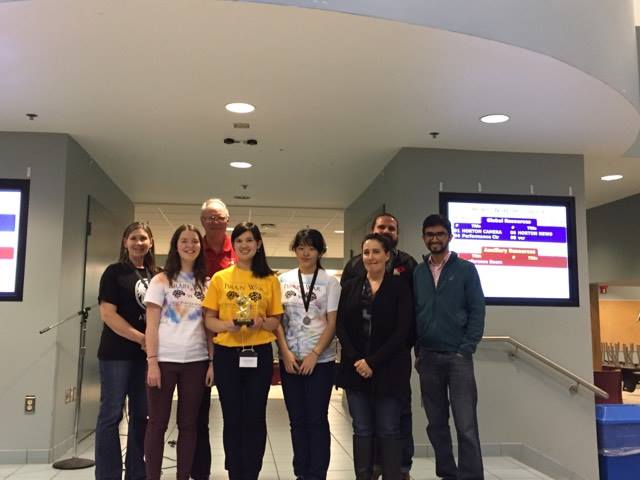
    On Saturday, November 5th, Horton High School hosted its second Brain Wars competition to engage students with creative problem solving tasks. The event took place in the Horton cafeteria and went from 11:00-5:00pm. Acadia Faculty members such as Dr. Russell Easy, Prof. Robert Seale, Dr. Danny Silver, and Michelle Coleman judged the teams that presented ideas. Dr. Craig Bennett and Dr. Jeff Hooper were present as Celebrity Brains. In addition, Acadia students Jamie Byrnes-MacDonald, Kaela Fraser, Connor Murdock, Teagan Kew, Jennifer Kerr, Nicole Jarmash, Alice Lacaze-Masmonteil, Miriam Hewlett, Corbin Russell, Margaret Buhariwalla, Kirsten Whiteway, Olivia Raiche-Tanner, Rachel Clarke, Dillon Burgess, Madeleine Kelly, and Omar Khattab volunteered at the event. Dr. John Wang and Dr. Haixin Xu also volunteered. Other volunteers came from St. Mary’s University and CBC Unlimited Engineering.

    Final Results:

    1st: Bridgetown Regional High School- Magnesium Bright

    2nd: Horton High School- Inflatable Pumpkin

    3rd: Northeast Kings Education Centre- Space Jam

    Best Team Nomenclature: Horton High School- 2 [Bee icon] or °2 [Bee icon]

    Prize for Ingenuity and Creative Thinking: Bridgetown Regional High School – Magnesium Bright


    The event incorporated aspects from the arts, science, engineering, math, and technology. Jessica Bennett, the student Director of Brain Wars at Horton, was inspired by a similar event at St. Mary’s. “I went when I was in 10th grade,… and was so inspired by their competition, I came back the next year and said, we should do that here, for high school students.” The turnout this year was twice as good as it was last year. For Bennett, one of the highlights was witnessing how many different ways people approached the tasks. This mentality was echoed by Tracy Webb, a Horton High School faculty member. “[There were some] really innovative ways that different groups tried to solve the tasks … some groups would try to go step by step, and others would concur and divide. It was interesting to see the huge variety of ways that people worked together as a group.” Some groups approached a greek alphabet and greek passage by trying to divide it word by word. Others went through it letter by letter.

    Bennett came up with each task and tested them before school started. At the beginning of the year, she captained the Horton team and trained them for these sorts of competitions. Such tasks included coming up with a possible use for a mystery tool, and answering trivia questions. The tool task was ranked based on creativity and how close their answer was to the actual tool. Trivia questions included things like: “What is the name of the physicist whose particle was confirmed in 2013 (the particle is named after him)?”; “If the probability of getting a red light is 40%, how likely is it that you will get a green light 3 times in a row?”; and “How many transistors are there in an average microprocessor?” The event also included artistic tasks, such as interpreting a STEAM (Science, Technology, Engineering, Arts, Mathematics) concept with a dance, and putting on a pirate costume as quickly as possible.

    Brain Wars hopes to encourage young people to get involved with STEAM and to pursue careers in the sciences. This type of event helps show students that there’s more than one way to solve a problem, and it’s not always the most obvious way. It helps them realize that there’s a huge connection between the sciences and the arts. If you want to be the best at solving problems, you need to bring in each element instead of isolating just one. This was seen primarily at the balloon animal station. Some groups tried to divide a long balloon into four segments and approached it in a logical manner. However, those groups realized that looking at it in a mathematical way wouldn’t leave enough materials for other components. Creating a design and looking at it from an artistic perspective allowed teams to come up with more diverse answers. In addition, the sand castle building challenge brought together scientific ideas, such has cohesiveness and the physics behind a draw bridge with creative designs.


  • WISE Acadia Celebrates Diversity in Computer Science

    On Tuesday, October 18th, WISE (Women in Science and Engineering) Acadia presented a collection of poster presentations bringing together a variety of researchers from across campus. Each poster represented a unique way to look at how technology can be applied to different fields. In addition, the event included a talk by Dr. Anne Condon titled, “It All Computes: Celebrating Diversity in Computing”.  The event took place in Fountain Commons, and brought together women from all scientific disciplines to address women in Computer Science. Each poster brought a good topic to the conversation, and the event overall encouraged female scientists to continue pursuing their degree of choice.

    Some of the projects featured in the event include:

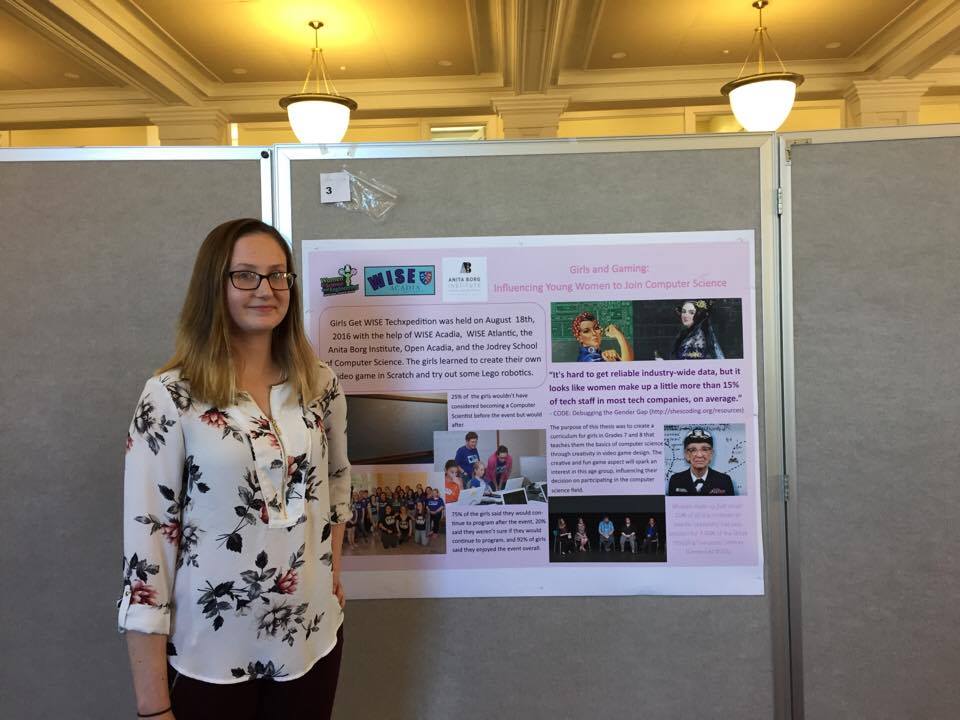
    Girls and Gaming: Influencing Young Women to Join Computer Science (Hayly Thackeray)

    The purpose of this thesis was to create a curriculum for girls in Grades 7 and 8 that teaches them the basics of Computer Science through creativity in video game design. The creative and fun game aspect will spark an interest in this age group, influencing their decision on participating in the Computer Science field. The Girls Get WISE Techxpedition was held on August 18th, 2016 with the help of WISE Acadia, WISE Atlantic, the Anita Borg Institute, Open Acadia, and the Jodrey School of Computer Science. The girls learned to create their own video game in Scratch and try out some Lego robotics. 25% of the girls that attended the program said they wouldn’t have considered becoming a Computer Scientist before the event, but are now. In addition, 75% of the girls said they would continue to program after the event, 20% said they weren’t sure if they would continue to program, and 92% of the girls said they enjoyed the event overall.

    New Radial (Jon Saklofske, Marc Muschler, Ian Brunton and the INKE Research Team)

    New Radial is a data visualization environment that offers an alternative digital workspace for visualizing images and text. It encourages users to contribute to ongoing academic dialogue via connections and operates as a middle ground between large datasets and a close reading environment. Radials are circular arrangements of related nodes that play a central role in a user’s exploration, collection, curation and connection of database objects for humanities-based scholarship. They allow users to work within a middle ground between large datasets and a close reading environment, providing an alternative scale of interpretation within a digitized framework.

    Monitoring Mammal Movement Through Terrestrial and Aquatic Passageways in Antigonish, Nova Scotia Using Remote Camera Sensing (Stephanie White, Randy Milton, Trevor Avery)

    Nova Scotia is gradually expanding its major 100-series highways in response to safety concerns. Highway twinning along a stretch of the Trans-Canada Highway intersects with an ecologically sensitive watershed, disconnecting wildlife movement in the area. To mitigate highway impact, wildlife terrestrial and aquatic passageways were installed along with 4 km of fencing and four one-way control gates. Passageways are >50 m long, and the terrestrial passageway has a central atrium. These passageways are the first to be studied in Nova Scotia, as well as the only to integrate both fencing and an atrium into the design. The highway is set to open late fall 2016, providing an opportunity to study wildlife movements before construction, during construction, and after installation. The scope of this 4-year project covers monitoring the movement of mammals through the passageways using remote camera sensing with a focus on medium-sized mammals (i.e. smaller than deer). Quantifying activity through images will be used to identify drivers of wildlife movement within the passageways. Factors under consideration include fencing, light intensity, moon phase, temperature and weather conditions. Select factors are manipulated to identify which may have a greater effect, including altering light levels by covering the atrium for extended periods connected to moon phases. Findings will be used as a baseline for future passageway design in Nova Scotia.

    Escaping Local Minima with Symbols (Ahmed Galila)

    This concept was inspired by how the brain processes sensory input. Inputs are propagated through the network one layer at a time. Each layer learns a certain representation of the input data. Each representation is more abstract than the layer below. This allows deep architectures to provide better generalization. The goal behind training deep architectures is to reduce the error in the model’s output as much as feasibly possible. Deep architectures have complex error functions with many local minima. Deep models tend to be trapped in these local minima.

    In addition, the event included topics such as: Rethinking Time Course Data: Growth Curve Analysis in Spoken Word Recognition Research (Alexander Sproul, Randy Lyn Newman), Data Mining and Machine Learning at the Acadia Institute for Data Analytics (Danny Silver), and Unsupervised Multi-modal Learning (Mohammed Shameer Iqbal)

    “I really liked the poster session because it gave people the chance to talk to people and ask questions, instead of going to a lecture.” – Acadia Computer Science major

    The poster session was followed by a talk given by Dr. Anne Condon (a professor of Computer Science at U British Colombia). Her enlightening portion of the event discussed the difference between male and female enrollment in the area of Computer Science, and suggested some ways to combat this problem. Her discussion pulled together the importance of having programs such as WISE, and made the event even more exciting.

    “If you get the chance, she’s [Dr. Condon] really nice to talk to, and she’s really smart. She really loves what she does, which I think is amazing because I’m struggling myself to figure out what I actually want to do with my Computer Science Degree… She has found her niche and she loves it. I went to her talk earlier, and it’s incredible how much she loves what she does. She’s really amazing, and I like that a lot.” – Hayly Thackeray


Betzillo positions itself as a versatile gaming hub where structured bonuses and adaptive gameplay mechanics support both short sessions and extended play.

Built with a focus on innovation, Spinbit integrates modern casino architecture with rapid transactions, appealing to players who value speed and digital efficiency.

Ripper Casino emphasizes bold entertainment through high-impact slot titles and competitive promotions crafted for risk-oriented players.

A friendly interface and stable performance define Ricky Casino, offering a casual yet reliable environment for a wide spectrum of gaming preferences.

King Billy Casino channels classic casino spirit into a modern platform, delivering recognizable themes supported by contemporary reward systems.

Immersive visuals and layered slot mechanics are at the core of Dragonslots, creating a narrative-driven casino experience.

Lukki Casino appeals to players seeking direct access and minimal friction, focusing on fast loading times and intuitive controls.

Casinonic provides a structured and dependable gaming framework, blending modern slots with transparent operational standards.