
Tag: Acadia Students Union

  • Tanvi Dabas

    Tanvi Dabas

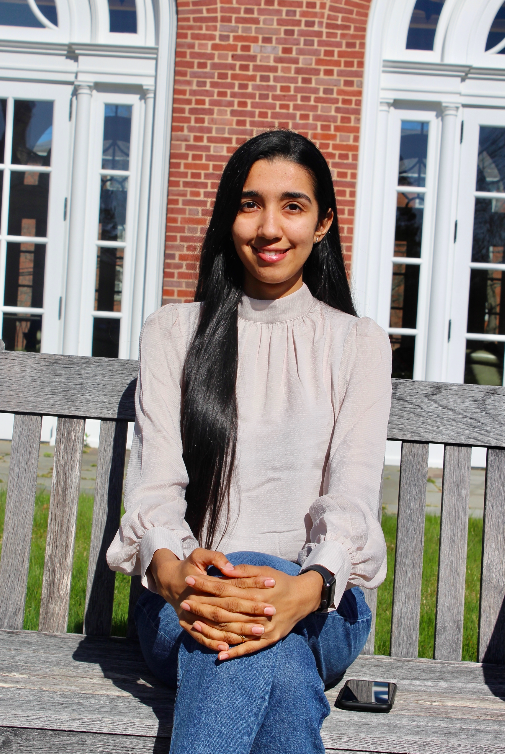
    Tanvi Dabas is from New Delhi, India, and she has recently completed her third year studying at Acadia University. Tanvi is pursuing her education at Acadia with a double major in nutrition and psychology with minors in chemistry and biology. Like many of us, Tanvi enjoys spending time outdoors and exploring new places. She also enjoys getting to know new people and says doing so teaches her a lot. Her favourite part about Acadia University is the community and the way it welcomes people from all walks of life. Tanvi has played a major role in bettering student life at Acadia University, including her many achievements and involvement in leadership positions at the school.

    First, Tanvi has been an International Student Ambassador for two consecutive years at Acadia, and her accomplishments do not stop there.

    A few weeks ago, Acadia launched general elections for the Acadia Students’ Union (ASU). Acadia Students’ Union is a student governed organization dedicated to serving its members through effective representation and communications. The Students’ Union offers innovative and quality services while providing a variety of opportunities that enhance the overall University experience of the students of Acadia. Acadia Students’ Union believes in and upholds the values of integrity, excellence, and respect while recognizing the importance of fun, community spirit, and the tradition upon which the Union was founded.

    Tanvi was elected for the role of VP of Events and Promotions and she is the first international woman to be in this position in the ASU! Acadia University is truly privileged to have Tanvi in yet another leadership role!

    Along with her new role representing Acadia, Tanvi was also one of the recipients of the student excellence awards in the psychology department for the 2020/21 year.

    Additionally, Tanvi was the coordinator for the Centre for Global Education (CGE) at ASU’s internal organization (IO). As CGE coordinator, Tanvi served international students at Acadia by creating and organizing events.

    Moreover, Tanvi was also a panellist at WISE’s event (an event that took place online due to Covid-19 regulations). WISE is an abbreviation for Women in Science and Engineering, and it is a campaign that encourages more people who identify as a woman to take up science and engineering and increase female participation in the fields. Essentially, Women in Science and Engineering (WISE) Acadia is a group of faculty, staff, and students dedicated to supporting and empowering girls and women who are interested or engaged in science or engineering-related careers.

    Amoung all of these contributions, Tanvi has maintained two jobs during her education at Acadia University. First, she serves the students at the Student Union Building (SUB) every morning at Perkin’s café. I am also honoured to work alongside Tanvi as section editor for the Athenaeum, Acadia University’s school newspaper. Tanvi is science section editor and has even further contributed to the Athenaeum with the implementation of her own column, “Science Fact of the Week”.

    I am pleased to write this article recognizing Tanvi Dabas as a leader and an overall asset to the Acadia community. Not only is she a dear friend of mine, but she is an honourable student, an ambitious and accomplished leader and an exceptional woman.  This is just the beginning for Tanvi, as I believe she will do many amazing things in her lifetime and, I, personally, along with the Acadia community, have been honoured to work and learn alongside Tanvi, as well as have her in leadership positions.

  • The Good, The Bad, and the Non-Compliant

    The Good, The Bad, and the Non-Compliant

    The Valley is filled with a bevy of restaurants from which Acadia students are privileged to choose. Picasso’s, Lib Pub, Sushi Fang, The Naked Crepe, and many more well-attended establishments. The wider Annapolis Valley area is without a doubt a fantastic place to eat. I’m sure that nearly everyone that attends Acadia has had at least a few delicious meals at one of the previously mentioned restaurants. Sitting in my living room, reminiscing with friends about Wheelock Dining Hall and our days in residence, we began to talk about how dirty some people claim meal hall is.  Instantly I was curious and began my standard Google-based investigation. I started by asking myself if I thought there were food safety or health code violations at Wheelock. If there were, how could they be verified? This led me to a larger issue. Are there health code compliance issues with the popular restaurants in town? Again, where would I be able to find this information? As always, Google had my back. Entering the phrase, “Nova Scotia Health Inspector” directed me to public health inspection records.

    The Province of Nova Scotia Health Inspector’s website provides a form from which you can instantly request the electronic inspection records for any establishment in the province for the last decade. All you have to do is input some basic information like the name of the establishment, the address, and the period for which you would like to see records. I decided to examine some of the most popular destinations for students both in Wolfville and in the surrounding area.

    They include:

    • Pronto Pizza
    • Picasso’s Pizza
    • Paddy’s Brew Pub
    • The Naked Crepe
    • Troy’s Mediterranean Restaurant
    • Library Pub
    • La Torta Woodfired Pizzeria
    • Sushi Fang
    • Wheelock Dining Hall (Operated by our friends at Chartwell’s)
    • Subway

    In order to get a better picture of historic compliance issues I examined the Nova Scotia Food Establishment Inspection Reports for these establishments from January 1, 2008 through April 5, 2018. Records are removed from the online database after more than three years so the records I have access to are no older than that. How do the various student-frequented establishments stack up when compared to one another? As is the case of a few of these establishments, I feel it is necessary to get specific with what health inspectors revealed during their unannounced examination of these eateries. All health code violations are up to the interpretation of health inspectors. Not all violations represent a serious risk to health, however, it is worth noting that based on the documents I have examined, all of the restaurants do have some violations. I should reiterate, not all violations are serious. The definition of a “Deficiency” under the provincial health codes according to the Nova Scotia Provincial government is “Requirement(s) of the Regulations or Code not being achieved by the food establishment. The word deficiency is often used interchangeably with the words violation, or infraction.” Let’s see what the restaurants of Wolfville have crawling in their back rooms.

    Pronto Pizza is one of Wolfville’s establishments frequented by weekend warriors and is also one of the most concerning establishments. On June 5, 2015, the inspection lists no deficiencies. On December 3rd, 2015, the remarks include a failure to store potentially hazardous foods properly, cleaning required of all shelving, rear wooden counter, milk fridge and some shelving and surfaces in 2 door commercial fridge, washroom toilet fixtures, under and behind equipment some wall areas and all floors. Further, inadequate sanitation systems were observed. However, most concerning of all reported deficiencies is listed as, “FAILURE TO OBTAIN A VALID PERMIT PRIOR TO OPERATING A FOOD ESTABLISHMENT.” More than one year later on September 26th, 2016, the same deficiencies as December 3rd, 2015 reappeared but the permit issue was remedied.

    Picasso’s Pizza makes a rad donair but during visits in October and December of 2017 the health inspector noted on both occasions that there was a “Failure to protect food from contamination” and the comments from the October inspection read, “Store chemicals separately from food & packaging. All food & packaging to be stored >6 in./15 cm. minimum off floor. Dry ingredients containers rusted and not acceptable for food contact.”

    Next, we move to Paddy’s ,The Naked Crepe, and Troy’s Mediterranean Restaurant. All three of these businesses seem relatively well in order based on their inspection reports. Both Paddy’s and The Naked Crepe received no infractions on their most recent inspections.  In the case of Paddy’s there were consistent infractions during four inspections over two years for “failure to store potentially hazardous food at a temperature of four degrees celsius or less.” The Naked Crepe had only minor infractions revealed in their September 2017 inspection. Troy’s received notices to comply over inadequate hand washing stations in their most recent inspection that took place in February of this year.

    Next we turn to the Lib Pub. There is nothing significant to report here other than excellent food and drink. It has been more than two years since their last inspection during which time some basic temperature monitoring devices were reported as not calibrated properly and a dishwasher that could use “Daily water temperature and chemical sanitizer concentration records.”

    La Torta Woodfired Pizzeria, I’ve never personally eaten here nor have I heard positive or negative reviews related to the pizza place. Their inspection on April 4, 2018 revealed only minor deficiencies that weren’t related to food safety.

    Unfortunately the previous records of relative excellence or acceptability end here. Sushi Fang is without a doubt the worst example of food safety I was able to find. There are some direct quotes from their report that are worth sharing. All inspections took place between July 2015 and February 2018. There were regular violations indicated that suggest Sushi Fang’s operator does not adequately train their staff in safe food handling. Some noteworthy observations from the February 2018 inspection, “Food handler certification of the owner has expired” and, “Raw foods must be kept separate and always stored below ready to eat foods (corrected). All utensils and work surfaces must be maintained in a clean and sanitary condition (corrected). Foods must be stored a minimum of 15 cm (6in.) off of the floor (corrected). Foods when returned to storage must be labelled and dated to ensure proper stock rotation. Fresh raw seafood intended to be consumed raw must be dated and ensure frozen >= 7 days at -20C to ensure parasite destruction.” Or, my personal favourite, “Vermin-proof /seal small opening in building.” This restaurant has some ridiculous violations that would indicate food safety is a serious problem there.

    Of course, we have to check out Wheelock Dining Hall operated by our friends at Chartwell’s. During their inspections between the February 24, 2016, and  December 18, 2017, there were eleven deficiencies noted with nine notices to comply issued. Some of the issues did have to do with food safety and “failure to protect food from contamination” the notes from the inspector indicate lack of sneeze guards and uncovered food being left out for long periods of time.

    Subway has some pretty decent sandwiches but their record is rough. Over seven inspections in the last three years there were nine total deficiencies with nine notices to comply issued. The comments “The operator has failed to ensure the food handlers have the necessary training” appears five times over two years.

    With all that being said, it seems these health codes are in some cases too specific. They capture issues that are not related to food safety. For example some of these establishments were issued deficiencies based on “lighting intensity” or the lack of a schedule to maintain their dishwashers. On the whole, the restaurants I’ve examined here are probably ok to eat at. The fact is, you should always use your best judgment when eating out. For example, eating sushi in the Annapolis Valley is probably already a risky activity.


    I would encourage my readers to verify the validity of this article by visiting: (https://novascotia.ca/agri/foodsafety/reports/Request.aspx).


    Disagree with me? Write for the Ath.


  • Why I Resigned: Former CRO Speaks Out

    Why I Resigned: Former CRO Speaks Out

    The Honest Truth Behind the 2018 ASU General Election

    We live in a world where election corruption and lying are a way of life in politics. But who would have ever thought that this same lying and the corruption would be seen within the ASU. I’m here to share the truth about how the ASU operates and how it actively destroys those who are truly committed to making it better.

    Let me first say who I am. My name is Harrison Paul and I am an Indigenous Person of Canada. I am a 4th year Politics student who is heavily engaged in politics from the local all the way to the international scale. I have worked on many provincial and federal campaigns. I was the Chief Returning Officer for the ASU. Basically, I know my election shit.

    The Chief Returning Officer is an appointed position for the Students’ Representative Council to make sure that Union Elections are running smoothly and effectively. They are hired to handle everything to do with elections. This also means that Council should not get involved in any form or way with Union Elections. This is explicitly described in By-Law Three (Union Elections Act).

    However, Council failed to maintain this separation in the 2018 ASU General Election, unlike every other Council in recent memory. Members of the current Council acted on their own to influence election officials and the electoral process, calling into question the validity of the election itself.

    The problem with the election started in October 2017 when the ASU Governance Committee began reviewing the Election By-law. They proposed  changes to make the By-Law more fair and equitable for candidates. They passed the changes and sent them to Council with 100% support of the committee membership, including the President of the ASU. The President sits on this Committee and was given a lengthy briefing on the proposed changes before the committee met, as she would be away. She asked a few questions and said that she was happy with the proposed changes when everything was clarified, stating that “everything looks great, I like it”. But this all changed when the proposed changes came to Council in November 2017.

    This is where things began to go south. There were teams that formed during the discussions. There was what I would call “Team Them”, which was comprised of the President, VP Academic and External, VP Events and Promotions, VP Student Life, Sustainability Officer and one Councillor. The other side, which I will call “Team Us”, was composed of the rest of the Governance Committee, the Student Board of Governors Representative, the Chairperson of Council, at least one regular student member and myself, both as Chief Returning Officer and a regular student.

    The Team Us versus Team Them began when the President completely flip-flopped on the proposed changes and claimed that she did not know about the changes and that she was not happy with what was being put in place. She basically caved to the loudest Members and turned against the committee itself. This caused an uproar at Council. Some Members around the table saw this as an attack on Council, acting as if to say we don’t trust them or that we don’t think that things are fair. Consideration of the proposed changes took almost three and a half Council meetings. Near the end of the first meeting, Council started attacking Team Us by saying that Governance Committee had no idea what they were doing, specifically targeting me.

    I thought that the Winter Break would allow for the tensions to die down. Things actually got worse when we returned in January 2018. Council was not asking any questions about the General Election until it was too late. The By-law cannot be changed once the campaign period began after the All Candidates Meeting. Once the campaign period began, Council started to talk about how I was making decisions that went against their ideas even though the rules that I was putting in place were in the spirit of fairness for all candidates.

    The VP Academic and External openly stated that my “Authority needs to be checked” referring to the idea that Council should look at taking away power from the CRO. This would prevent me from being able to ensure a free and fair election. Some Members of Council wanted to squash the very rules that made Union elections fair and equal for everyone, rather than just certain “preferred” candidates.

    Council started as a democratic group of bright-eyed student leaders full of optimism and enthusiasm. This quickly turned into an Executive Dictatorship, where the President and certain VPs acted as though their perspectives were far superior to those of everyone else and the student body at large.

    In the coming days, things got worse. We saw several members of the Executive and a couple of Non-Executive Members who actively sought to break the Constitution and its By-Laws. This brought in the ASU lawyer to explain the repercussions of their unconstitutional proposals. Unfortunately, this did not change their minds and they continued to advocate against the election rules and regulations.

    I saw candidates trying to impeach me because I was making them follow the rules. The then-Deputy Chief Returning Officer, who is now Acting CRO, was going against his obligation to be impartial and objective by telling candidates that they should and need to appeal all of my decisions. This is particularly striking as he had agreed with all of the decisions that I had made when candidates were found to have broken the established rules.

    Some Members of the then-Elections Sub-Committee of the Review Board and other Members of Council started to favour the Executive “Slate” that had formed, even though slates are not allowed. Some candidates felt I was being unfair, although the rules were all laid out and every candidate had access to the election rules and regulations. They were given to them by email and I was always open to questions for clarification.

    By this point, the Teams that I referred to had grown to include almost every Member of Council. Team Us started to include the candidates not being favoured as part of the “slate” by the then-Elections Sub-Committee of the Review Board, the Chairperson, a couple Members of Council and me.

    The end of January was the time I realized that I needed to resign.

    I had lost the ability to confidently serve as CRO. I knew that I could fairly enforce the election rules but I could not handle an ASU leadership that tried to disrupt and interfere with my work at every turn.

    Now we are in February 2018. I am no longer Chief Returning Officer and things have continued to descend into darkness. The Acting CRO has been making decisions that are going against the By-laws and the then-Elections Sub-Committee of the Review Board had begun to uphold all of the Acting CRO’s unconstitutional decisions. At a Special Meeting of Council on Tuesday, February 6th, 2018, Council created a new Elections Committee which sought to remove people who had a perceived bias from the committee. However, from what I have seen, Council has decided to retain the most biased member of the old committee: the President. Clear cut complaints are being deemed invalid by the Acting CRO and are going to the Elections Committee which has upheld these decisions.

    All I was trying to do as CRO was to make this election more accountable and fair for everyone. Several people, including both candidates and Members of Council (and those who are both), did not like this idea so they decided to go against the By-law. They even sought to remove me and the few other people who were the last remaining people trying to enforce the rules and ensure a fair and free election.  It got to the point where I could not handle doing this job anymore.

    I was losing my mind. I kept pushing myself harder when people were not satisfied with my work but it still wasn’t enough for them. I was being attacked constantly by Executive Members, Non-Executive Members and candidates at every corner. I had to do the right thing for me. I didn’t want to keep having my decisions overturned every time someone was unhappy with the fair enforcement of the rules, especially those on the “slate”. I didn’t want to have people going around talking about how I was being ‘unfair’.

    My role as CRO was to make sure that the election rules and regulations were fairly enforced and understood by candidates, Council and the regular student body. I believe that I did my job well until I could not handle it anymore. It’s a shame that the negativity and personal attacks that were directed at me while I was CRO have now altered into downright corrupt decision-making body that may indeed call the very result of this election into question.

  • SRC Decoded: What You Missed February 27th

    SRC Decoded: What You Missed February 27th

    Every week, your elected student government meets on a Tuesday night to talk about issues concerning the ASU. Agenda items can seem long, mysterious and confusing without the proper background, making it difficult to see how these issues affect students. Here’s what happened at the last meeting on February 27th:

    SUB Renewal Proposal

    Student Board of Governors Representative Colin Mitchell put forward the proposal to renew the Student Union Building (SUB) earlier this year, at the Council meeting on January 16th. Tonight, the proposal was approved with the condition that it becomes a permanent standing committee pending a review of ASU committees. Colin says that he’s “excited that this committee has come to fruition. It will be a long process, but starting now will bring Acadia students into the future by investing in our infrastructure and the students that support it.”

    Government Grant for Accessibility

    Acadia has received a grant from the government to improve accessibility in the SUB. President Grace HB announced that the ASU will be receiving $50,000 from the Federal Government, $57,000 from Acadia, and ~$32,000 from the Wellness Fund. It will allow for a ramp to be built to the Beveridge Forum, where Council meets, to allow those with accessibility needs to run for Council. This will also assist in as improving the front ramp into the SUB.

    Hiring Committee

    Discussion on the Hiring Committee for Chairperson, Deputy Chairperson, and VP Finance & Operations proved inconclusive, as President Grace HB is unable to attend. 

    Madison Hathaway is the Student Politics Correspondent for The Athenaeum and a third year Honours student in Politics & French

  • Our Commitment

    Thank you! Thank you to all students who voted, and particularly to those students who put themselves forward as candidates – we are grateful for your advocacy, hard work and participation in student democracy. From the Executive team (excluding the VP Finance and Operations whom has yet to be hired), we look forward to the year ahead and to continuing on the great work of the current ASU President, Executive Team, and Council.

    Speaking on behalf of the elected 2018/2019 ASU Executive team I say, we are here for you – we are here to listen, we are here to learn, and we are here to make sure that the ASU and Acadia provides you with the academic, social, and extracurricular supports that promote all students’ wellbeing, now and beyond all of our experiences at Acadia. We are here for you – whether you have an issue with the Axe lineups, the need for microwaves in the BAC, the lack of supports for Inuit, Metis, and First Nations students across Canada, or any other matter – we are here to listen to and work with you to make Acadia more accessible, affordable, and supportive.

    Now, the work begins. My commitment is to enhance the services that all of us as students depend on – to ensure the academic, social, and personal success of the student body. My focus throughout the year ahead will be on you – improving the social and medical supports that we depend on, promoting the environmental sustainability of the ASU and university, enhancing the food security of the student body, and ensuring that the Executive team is listening and responding to you.

    Acadia means so much to all of us, there are few universities across Canada that provide the amazing personalized and unique undergraduate experience quite like Acadia. We are blessed with an engaged student body and this election has been a test to that, with a nearly 35% voter turnout, we succeeded again in achieving one of the highest voter turnouts of any student union in the nation. I am proud of this institution, I am proud of us as a student body, and I beyond excited to work with you to build a more inclusive, diverse, and supportive campus community. From the incoming elected executive team, all the best to everyone for an amazing reading week and many thanks for your participation in the democratic process.

    Cheers and thanks for voting,

    George & the 2018/19 ASU Executive

  • George Philp wins race for ASU President

    George Philp wins race for ASU President

    George Philp has won the race for ASU President.

    He won with 67% of the ballot for a total of 934 votes. In a statement provided to The Athenaeum, George noted that his major commitments are to “enhance the services that all of us as students depend on – to ensure the academic, social, and personal success of the student body. My focus throughout the year ahead will be on you – improving the social and medical supports that we depend on, promoting the environmental sustainability of the ASU and university, enhancing the food security of the student body, and ensuring that the Executive team is listening and responding to you.”

    Voter turnout was approximately 35%, with approximately 1400 students voting online.

    George will start his term on May 1.

  • ASU Calls for Diversity on Board of Governors

    ASU Calls for Diversity on Board of Governors

    The ASU is calling for increased diversity on the Board of Governors (BOG), Acadia’s non-academic governing body. The Students’ Representative Council (SRC) passed a motion in principle on Tuesday January 30th supporting the ASU President to present a proposal to the Board regarding diversity at their latest meeting on Friday February 2nd.

    President Grace H-B said in a statement to The Athenaeum that “Diversity among the Board of Governors structure is vital to serving students to the best of its ability. The Board makes decisions that affect all students around campus. Acadia is stronger for it’s diversity and the Board of Governors will be too. Diversity and equity needs to be reflected at the Board of Governors and in all governance structures at Acadia.”

    The statement noted how the BOG is composed of 37 voting members, only 21.6% of whom are women with votes despite the fact that the campus is 58% female. Ethnic diversity around the table is described as “almost non-existent”.

    Lack of diversity is not due to a lack of unqualified women or minorities, the statement reads, but is “due to selection processes and underlying systemic process to determine who sits on the Board”.

    The motion proposed that the Governance & Executive Committees of the BOG prepare a report and recommendation on increasing equity and diversity. The ASU asked five commitments, including:

    1. Adoption of a diversity management policy by April 6th 2018
    2. Land acknowledgement of Mi’kma’ki at the beginning of every Board meeting
    3. Amending the composition of the BOG to include two indigenous voting members
    4. Ensuring a minimum of 50% of Governors identify as female by 2020/2021
    5. Ensuring a minimum of 60% of Governors identify as female, people with disabilities, indigenous peoples, or visible minorities by 2024/2025

    President H-B noted that although the province isn’t known for its diversity, “Nova Scotia does have a history with many groups that are not being represented at the Board of Governors. It would be hard to say that we’re ever going to be absolutely perfect in fair representation, but that doesn’t mean shouldn’t work as hard as possible to try to do better.

    Working towards a diverse Board is going to take work but it’s work that is so important in ensuring that we’re doing the best we can for students.”

    The ASU is looking to increase diversity within its own ranks, as the composition of the Students’ Representative Council is “lacking in people with disabilities, aboriginal peoples and visible minorities” according to President H-B. The Union is looking to incorporate more students-at-large on committees, spurring students into action within the Union itself.

    EDIT: An earlier version of this article stated the number of students identifying on campus as female was 69%. The correct number is 58%.

    Colin Mitchell is a 3rd year Politics (Honours) student from Vancouver, BC. He is also the News Editor of The Athenaeum and the ASU Student Board of Governors Representative. 

  • ASU Chief Returning Officer Resigns

    ASU Chief Returning Officer Resigns

    ASU Chief Returning Officer Harrison Paul has resigned effective 7:53PM on February 1st, 2018.

    His duties as Chief Returning Officer, in charge of the 2018 General Election, will pass to the Deputy Chair and Deputy Chief Returning Officer Aodhan Murphy. He will take his place as Acting Chief Returning Officer.

    In a statement from ASU President Grace H-B, she noted how the “Acadia Students’ Union accepts the Chief Returning Officer’s resignation. We appreciate his work for the Union and wish him luck.

    We have confidence in the Acting Chief Returning Officer, Aodhan Murphy, to conduct the elections and are grateful to him for stepping into this position.”


  • ASU General Election: What You Need to Know

    ASU General Election: What You Need to Know

    The 2018 ASU General Election has begun, promising two weeks of exciting campaigning. The entire Students’ Representative Council is up for election for the 2018-19 academic year, with changes in the dynamic of our student government expected.

    What is the Students’ Representative Council? 

    The Students’ Representative Council (SRC) is the governing body of the Acadia Students’ Union, responsible for representing students across campus. All students are automatically members of the Union by virtue of paying student fees. SRC is responsible for determining major policy initiatives, such as referenda, the appointment of certain officials like the VP Finance & Operations, hosting programs, and sending recommendations to larger forums like the University Senate or the Board of Governors.

    Which positions are up for election? 

    The Executive Board, consisting of:

    • President
    • Vice President Student Life
    • Vice President Events & Promotions
    • Vice President Academic & External

    The VP Finance & Operations position is not elected but appointed by the ASU Hiring Board. 

    Non-executive positions include:

    • Student Board of Governors Representative
    • Community Relations Officer
    • Sustainability Officer
    • Equity Officer
    • Arts Senator
    • Science Senator
    • Professional Studies Senator
    • Councillor x4

    First Year Officer is elected in a by-election in the fall, along with any other unfilled positions. 

    Are there debates? 

    Executive candidates will debate on the Main Level of the SUB at 5:30 on Monday February 5th. Non-executive candidates will debate at 5:30 on Tuesday February 6th. The Athenaeum and Axe Radio are co-sponsoring a debate held on Axe Radio on Friday February 9th from 5:30-8:30. The schedule is as follows:

    • 5:30-6:15 VP Student Life
    • 6:15-7:00 VP Events & Promotions
    • 7:00-7:45 VP Academic & External
    • 7:45-8:30 President

    When can I vote? 

    Every student will receive an email on the morning of February 13th. Voting will commence at 8AM and continue until 4PM on February 14th, with the official results announced at 4:30PM by the Chief Returning Officer.

  • Co-op Students: The Forgotten Party in the ASU Election

    Co-op Students: The Forgotten Party in the ASU Election

    Since I arrived at Acadia in the fall of 2014, I have had the privilege of voting in the Acadia Student’s Union General Election. I have always been a proud supporter of the ASU, and all that they provide to Acadia students. When election time rolls around, I read the candidates platforms, attend the candidates’ debate, and eventually cast my vote for who I feel will best represent me for the following academic year.

    This year was no different, despite being on a Co-op work term in Saint John, New Brunswick. I was ecstatic when the ASU live streamed the candidates debate, as I thought it was such an amazing way to give those who could not attend, including students currently on exchange or in co-op, a chance to be present at the debate. Throughout the month of January, I spoke with many of my friends who are running for positions in the ASU, read their platforms on their Facebook pages, and became educated on the issues that they care about. When the day came to log onto Acadia Central and cast my vote, I felt that I was well educated on many of the issues brought up, and I knew who was receiving my vote. When I went to log on, I was greeted with a message under “ASU General Election: “there are no questions for you to answer.”

    I was confused by this post, so I reached out to many of my other friends to see if they too were having this technical glitch. My friend who is also on a co-op term reached out to me to say that the message I was getting wasn’t a mistake, Co-op students are not eligible to vote in the ASU election. I was incredibly confused. I didn’t understand why I wasn’t eligible to vote, as I was always told that I was still considered an Acadia student while on a Co-op work term. After all, I pay $800 in Co-op fees for the semester, and am working towards a university credit. I decided to reach out to the Chief Returning Officer of the ASU to discuss the issue, and voice my concern over not being allowed to vote.

    Shortly after, I received a reply. I was told that because Co-op students don’t pay winter fees to the Student’s Union, they are ineligible to vote. A brief apology was given, and I was told to reach out the Student Representative Council when I returned to Acadia in September. I was slightly baffled, so I went onto the ASU constitution to understand what she meant.

    The ASU Constitution states that only Ordinary and Associate members are eligible to vote in the ASU General Election. An Associate member is defined as:

    Associate members, who shall be all students who are registered at Acadia University as part-time students and have paid the prevailing membership fee for part-time student. Associate members defined: Any student registered in fewer than 3 courses.

    So to clarify, if you are taking fewer than three Acadia courses, you are considered a part-time student, and as long as you pay your ASU membership fee, you are eligible to vote in the election. I then went on to see what the ASU fee for part-time students is. Financial services states that part-time students are required to pay $10.30 per 3H course taken at Acadia as a membership fee. With this conclusion, the $86.45 that I had paid in the fall semester to be part of the Students Union makes me less eligible to vote in an ASU election than the minimum $10.30 paid by part time students, because I had paid that due in a semester where the general election had not taken place.

    One of the things about the Co-op program at Acadia that I am most thankful for is how it allows you to leave and develop as a professional in a working environment, while still holding close ties with the Acadia community and the wonderful resources that come with it. Co-op students are so tightly connected with Acadia while away, with many even taking additional courses through the university. By neglecting to include Co-op students as eligible members able to vote in the ASU election, they are seriously forgetting an important part of our small but close-knit community. Co-op students represent nearly every faculty at Acadia, and bring an important voice to the ASU. In addition, if a Co-op student is on a winter work term, more than likely they are currently third year students. They know the candidates well, and have experienced Acadia alongside them for many years. Most importantly, moving into their graduating year, they are directly affected by all of the decisions made by the ASU. By not allowing them to vote, they are taking away the opportunity for them to have their voices heard, and have a say in what really matters.

    Every student, whether part time, full time, Co-op, or on exchange, deserves to have their voice heard in the ASU election. I love Acadia, and I truly care about the student body chosen to govern over it. I look forward to bringing this issue forward to the SRC in the 2017/2018 school year, and working to have this issue resolved.

Betzillo positions itself as a versatile gaming hub where structured bonuses and adaptive gameplay mechanics support both short sessions and extended play.

Built with a focus on innovation, Spinbit integrates modern casino architecture with rapid transactions, appealing to players who value speed and digital efficiency.

Ripper Casino emphasizes bold entertainment through high-impact slot titles and competitive promotions crafted for risk-oriented players.

A friendly interface and stable performance define Ricky Casino, offering a casual yet reliable environment for a wide spectrum of gaming preferences.

King Billy Casino channels classic casino spirit into a modern platform, delivering recognizable themes supported by contemporary reward systems.

Immersive visuals and layered slot mechanics are at the core of Dragonslots, creating a narrative-driven casino experience.

Lukki Casino appeals to players seeking direct access and minimal friction, focusing on fast loading times and intuitive controls.

Casinonic provides a structured and dependable gaming framework, blending modern slots with transparent operational standards.