
Tag: ASU

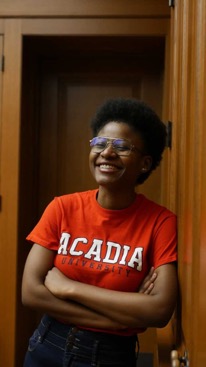
  • Vice President Events & Promotions: Gabrielle Bailey

    Vice President Events & Promotions: Gabrielle Bailey

    After an incredible year with the ASU, I have decided to seek re-election for Vice President Events & Promotions! It has been an incredible growth opportunity and provided me with a platform to advocate for students and give them the experiences and information that they need to be successful, whatever their definition of success is. VPEP is a role that gives you the ability to execute the things that Acadia students will remember for the rest of their lives. The experiences, the memories, the friends you make, the jobs you get, the things you see, the annoying emails you receive.

    Moving forward, I know that effective communication, networking, and collaboration among all groups and parties within the Acadia community is key to growth and success. Taking that concept and applying it with creativity, enthusiasm, and adapting based on experience and the ever-changing environment, will be at the forefront of my term in office. The Acadia community is both strong and spirited, thriving in tradition and innovation, making it versatile and steadfast. At Acadia, we have many brilliant minds, cultures, skills, niches, and ideas. We must continually expand upon this, evolve as things change around us, and always keep the Acadia feeling alive not just within us, but the students to come.

    CHEERS

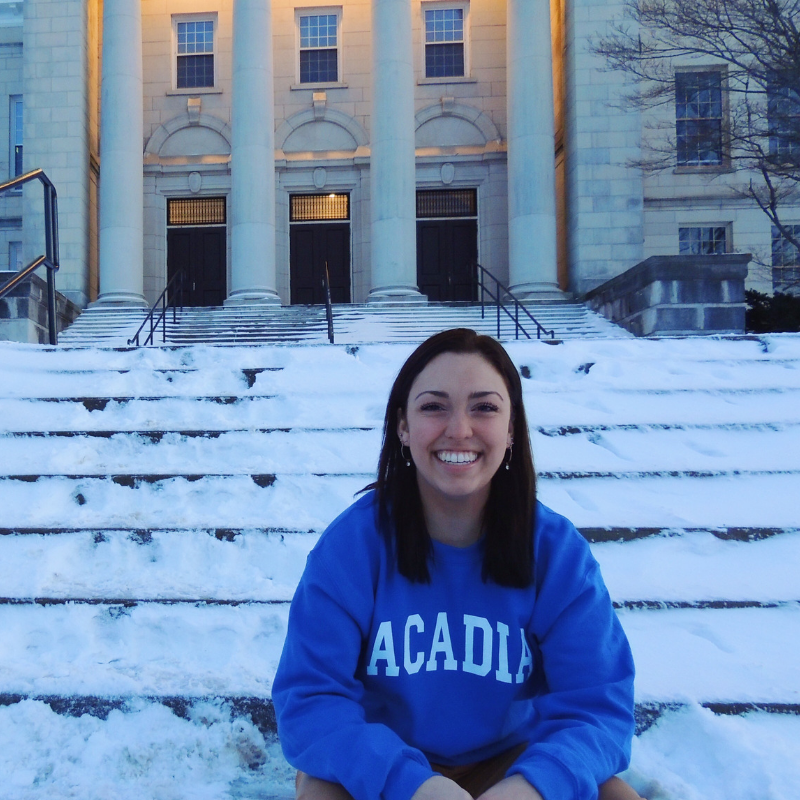
  • Science Senator: Nicole Kirkpatrick

    Science Senator: Nicole Kirkpatrick

    Hello!

    My name is Nicole Kirkpatrick and I am in my third year of my Bachelor of Science degree with a major in Environmental Science. I am currently on a co-op work term at the Kentville Research Station, doing research on Landscape Ecology and saving the bees! I am pleased to announce that I am running for the position of the Science Senator in the Students Representative Council (SRC) for the 2019/2020 academic year. I am actively involved in the Acadia community as a TA in the Geology Department, as a Leader in the Adult S.M.I.L.E. Program, and as a member of Community Outreach Acadia (COA). I would love to represent the Faculty of Science next year and be a part of the ASU Council because I have a passion for Acadia, and for making a difference on campus. If you have any questions or concerns for me about my ideas for next year, please email me: [email protected].

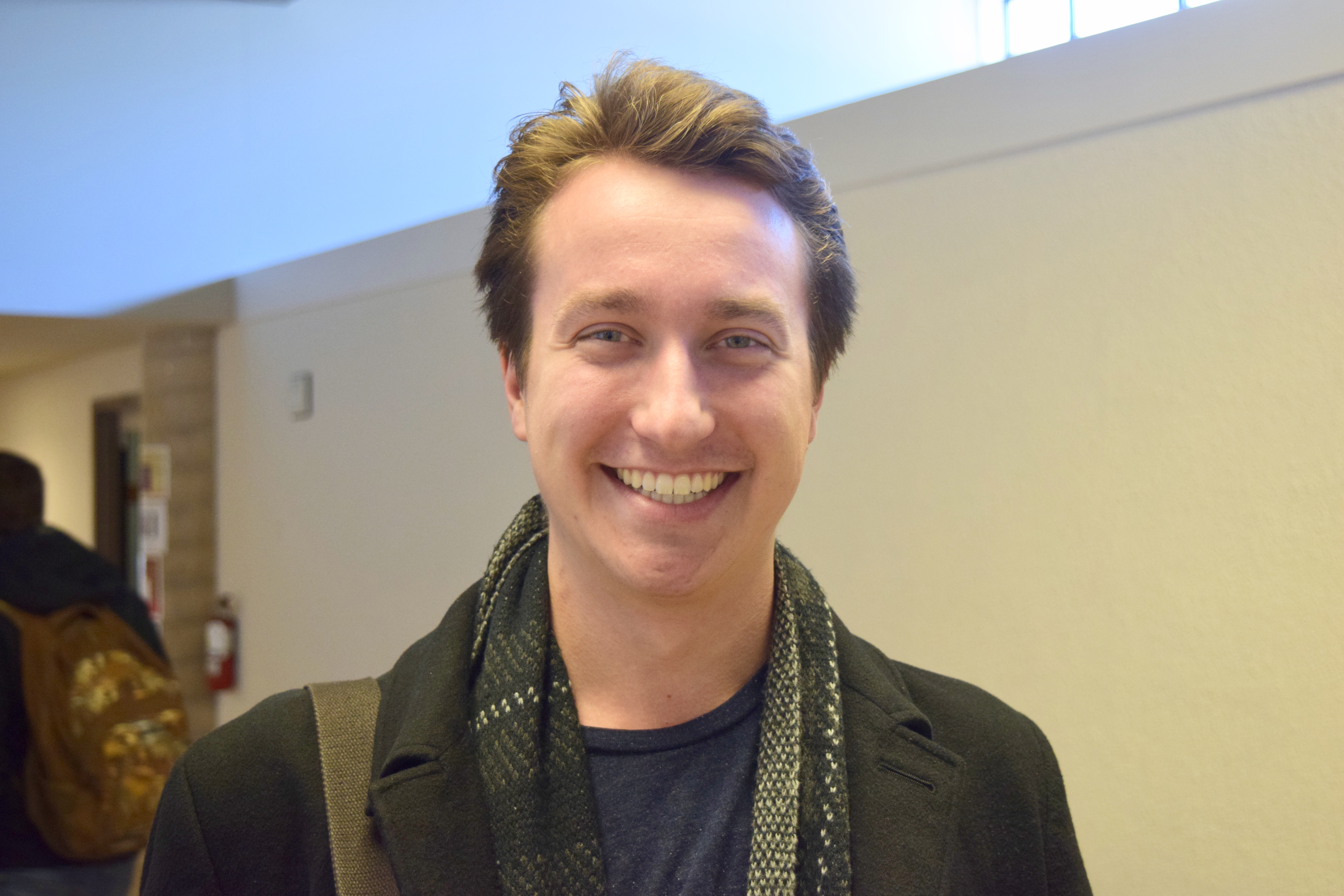
  • Councillor: Jonah van Driesum

    Councillor: Jonah van Driesum

    Three years ago, I took a leap of faith and moved from British Columbia to attend Acadia. It was the best decision of my life. The Acadia community is supportive, ambitious, and generous. I love life at Acadia, but it is not perfect. Students have been forced to deal with the stress of university alongside increasing costs. To address these issues my top priorities as your Councillor will be reducing waste in our budget, creating an affordable transit option, bringing in new accountability structures, and reforming our electoral system. I am here to work for you, so I promise to listen and bring your priorities and needs to council. If you have any questions, feel free to reach out to me.

    Thank you,

    Jonah

  • Vice President Academic & External: Mackenzie Jarvin

    Vice President Academic & External: Mackenzie Jarvin

    My name is Mackenzie Jarvin, I am a third-year Environmental Sciences student and I am running to be your Vice President Academic and External. During the 2017-2018 academic year, I had the privilege of holding the position of Councillor, and I am the current Science Senator on Students’ Representative Council. I have had the opportunity to sit on University Senate as well, and a few of its committees. Being Councillor and Science Senator has provided me experience working for the ASU and has prepared me to take on this role. I have created and collaborated on numerous programs, with a specific focus on emotional support. Now, it is my goal if I were elected as VP Academic & External to achieve the following –
    Academic-related:
    * Encourage the “W” date to be further delayed to near the end of semester
    * Ensure the VP Academic & External position is advertised to students, and what assistance can be provided
    Externally:
    * Work alongside the Canadian Alliance of Student Associations (CASA) on their “Get out the Vote” campaign, to urge students to exercise their right to vote in the upcoming federal election
    * Assist StudentsNS in advocating for MSI coverage for international students upon their arrival
    It would be an honour to continue representing student needs and concerns. For the students, vote Mackenzie Jarvin for Vice President Academic and External. If you have any questions, comments, or concerns, please feel free to contact me at [email protected]. Thank you, Acadia!

  • Vice President Academic & External: Madeline Johnson

    Vice President Academic & External: Madeline Johnson

    My name is Madeline Johnson and I am in my second year of my undergrad as a Psychology major. Throughout my life I have been heavily involved in various student councils and in leadership roles. Most recently, I have been in the role of Vice President Events on the Chase Court House Council Executive. As students of Acadia, you work hard to be here, and I want to help make your academic experience as successful and fulfilling as possible. I hope to continue working with other external institutions across Nova Scotia as well as the country to keep reaching to new heights in improving mental health resources on campus. I also hope to provide students with resources so they can efficiently plan their courses for future semesters, giving high school students more information about courses as well as creating more reservable study spaces on campus in buildings other than the library. Facilitating a transparent and thorough conversation between both students and external institutions is also very important to me. Education gives you options and I want to help you get the results and the most out of your academic years at Acadia.

  • President: Ruvimbo Chipazi

    President: Ruvimbo Chipazi

    You Talk. I Listen. We Act. 

    My name is Ruvimbo Z. Chipazi and I am a 4th year Psychology student. I am running to be your next ASU president. I am a lover of stories and an artist. I have had a lot of opportunities to talk with many students and student service staff, I now want to work together with you to bring about a Student Union that truly reflects the richness of this campus. 

    I believe that the ASU needs diversity in ideas, perspectives and values in order to engage more students and foster a more inclusive environment.   

    I want to aid in developing better formats for consistent and transparent communication between the University, the Student Union and the student body at large because knowledge truly is power.  

    A step in the right direction. A student union representative of student ideas. No voice left unheard. Change ignited by the students, for the students. These are but a few of the principles I hold dear and true. The only way to sustain such values is to continuously work together and strive to make an impact that resonates with the students of Acadia on a personal level. All voices must be heard and respected. Vote Ruvimbo Chipazi for President because I want to be your voice.

  • President: Kyle Vandertoorn

    President: Kyle Vandertoorn

    Hey Acadia! My name is Kyle Vandertoorn and I am beyond excited to be running to be your President in the upcoming 2019-2020 year! I am a third year Biology student, an advocate for student wellness, and a dedicated student representative as the current ASU Vice President Student Life. The community that we share at Acadia U is unlike any other and I am committed to furthering this community, the spirit, and opportunity that our school builds. I am more than ready to continue working for students in this role as I am a heavily involved and engaged student leader within the ASU who is dedicated to initiating positive change for students. If elected, my plan for student success includes advocating for increased medical, mental health, and sexual violence supports on our campus through student-focused, accountable University spending and engaging our student body. My platform is built on supporting a more diverse and involved ASU, a transparent and openly communicative Students’ Representative Council, and collaborating with the University and Career Services to provide post-graduate connection opportunities to students. I am committed to holding out of office hours to better communicate the ASU’s work and to engage the most important component of Acadia: the students. My experience as a student leader, my passion for this school, and my dedication to students will serve me well in serving you! Vote from February 10th to 14th for a Students’ Union that puts your experience first. If you want to chat about my platform, send me a message or email ([email protected]), or if you see me around campus come say hi! Thank you for all of the support and don’t forget to get out and vote!

  • ASU General Election 2019: What You Need to Know

    ASU General Election 2019: What You Need to Know

    The 2019 ASU General Election has begun, promising two weeks of exciting campaigning. The entire Students’ Representative Council is up for election for the 2019-20 academic year, with changes in the dynamic of our student government expected.

    What is the Students’ Representative Council? 

    The Students’ Representative Council (SRC) is the governing body of the Acadia Students’ Union, responsible for representing students across campus. All students are automatically members of the Union by virtue of paying student fees. SRC is responsible for determining major policy initiatives, such as referenda, the appointment of certain officials like the Diversity & Inclusion Representative, hosting programs, and sending recommendations to larger forums like the University Senate or the Board of Governors.

    Which positions are up for election? 

    The Executive Board, consisting of:

    • President
    • Vice President Student Life
    • Vice President Events & Promotions
    • Vice President Academic & External
    • Vice President Finance & Operations, now an elected position

    Non-executive positions include:

    • Community Relations Officer
    • Sustainability Officer
    • Arts Senator
    • Science Senator
    • Professional Studies Senator
    • Graduate Studies Senator
    • Councillor x2

    First Year Officer is elected in a by-election in the fall, along with any other unfilled positions. Diversity & Inclusion Representative is hired by the ASU Hiring Committee. Theology Senator is appointed separately within the Acadia Divinity College. 

    Are there debates? 

    Executive and non-executive candidates will debate on the Main Level of the SUB at 7:00 on Wednesday February 6th.  The Athenaeum is sponsoring a debate held on Facebook Live on Friday February 8th from 5:30-8:30. The schedule is as follows:

    • 5:30-6:15 VP Student Life
    • 6:15-7:00 VP Events & Promotions
    • 7:00-7:45 VP Academic & External
    • 7:45-8:30 President

    When can I vote? 

    Every student will receive an email on the morning of February 10th. Voting will commence at 8:30AM on the 10th and continue until 4:30PM on February 14th, with the official results announced by the Chief Returning Officer prior to 7PM.

    Where can I vote? 

    You can vote online at Acadia Central or at any of the six locations prescribed in the new bylaws, including the BAC, Huggins Science Hall, the Athletics Complex, Patterson Hall, SUB, and Wheelock Dining Hall.

  • Councillor Vanderburgh Discontent with Ad-hoc Bylaw Committee

    Councillor Vanderburgh Discontent with Ad-hoc Bylaw Committee

    After the $10,000 bylaw review took place last semester, the Ad-hoc Bylaw Committee was formed as a result of contentious changes that were passed in this latest bylaw review. Christopher Vanderburgh, Councillor on the Students’ Representative Council (SRC), sat down with The Athenaeum on February 1st, 2019 in order to understand his frustration and discontent with the lack of progress regarding the Ad-hoc Bylaw Committee.

    Vanderburgh explained that he has been very vocal to the SRC and believes the majority of the bylaw changes are good. However, his problem lies with the changes to Bylaw 3 which covered students’ ability to initiate a referendum and to impeach elected officials. Under the old bylaws, a student would be able to gain 10% of the student body’s signatures in order to have the matter reach a referendum or impeachment- the new changes to Bylaw 3 eliminate students’ ability to do so. Vanderburgh believes that the ability to petition for referenda or impeachment is a vital right that students should possess. Vanderburgh states than when he reached out to the Council’s lawyer asking the simple question “Have student’s rights been taken away?” their lawyer answered “Yes.”

    “This is a massive abuse and affront to student democracy on campus and it will be in effect for years to come,” Vanderburgh declared. “In the five years I’ve been a student on this campus studying politics I do not have the words to describe how bad this actually is.”

    Vanderburgh is one of the Council members chosen to sit on the Ad-hoc Bylaw Committee established in early December. The committee is supposed to review problems with the bylaws and recommend to the ASU how to fix them. Vanderburgh was told the committee would meet as soon as possible, as there are many things that need to be done before the committee can actually discuss the bylaw issues. As of February 1st, the committee has yet to meet.

    As a vocal Council member, Vanderburgh reached out to Molly Anderson, Chairperson of the SRC and bylaw committee, on January 15th simply asking about the committee. Anderson replied stating that there was no information on the committee to report on yet. On January 21st Vanderburgh asked again, this time adding George Philp, President, to the email. He received a reply from only Anderson, a week later on January 28th, who stated that “work is being done” but noted that she is on an approved leave of absence.

    Later that same day at the SRC meeting Vanderburgh asked the Council whose problem the committee actually is. Evan Shergold, acting Chair for Council and the committee told Vanderburgh it was his problem and he would be in contact. On January 30th, Vanderburgh contacted Shergold to hopefully finally start on the committee, to which Shergold responded, “I will send out an email shortly.” As of February 1st, there still have not been any plans made to start this committee.

    “It seems to me as if students are having one pulled over on them in a big way,” Vanderburgh stated. The ASU had announced in November that the bylaws would align with their promise for integrity and respect. Vanderburgh noted that he doesn’t feel “as if students are being respected by this process. I shouldn’t have to send four emails to multiple higher ups and still have nothing to show for it.”

    When asked what Vanderburgh was proposing he answered by saying “What I’m proposing is that the ASU have enough respect for students to at least discuss the problem at hand and stop avoiding it.”

    In addition, Vanderburgh made it clear that he is appalled by the extraction of these student rights, and believes that this is a problem worth fighting.

    “I’m not going to go away,” he said.

    It is important to note that since this interview took place, both Shergold and Philp have sent emails regarding the Ad-hoc Bylaw Committee by filling three open student positions on the committee before the committee work can commence.

    “The ASU Executive felt strongly at the time the Ad-hoc Committee on Student Initiated Petitions was struck that this committee should operate independently of the ASU Executive” Philp announced, responding to Vanderburgh’s opinions on the matter. “The committee still has ample time to provide an interim report to council by the first council meeting in March (March 12th) in accordance with the committee’s terms of reference. The ASU Executive looks forward to hearing the committee’s recommendations. Our Executive has been and will remain focused on improving student wellness and success and is always available to meet with students should they have any questions about the ASU, ideas for improving campus life, or are looking to get involved at Acadia.”

    This article has been updated to reflected comment from the ASU.

    Rylie Moscato is a first year English student and Columnist for The Athenaeum

  • ASU President: Identity Policy, GPA Scale, Fall Break Updated

    ASU President: Identity Policy, GPA Scale, Fall Break Updated

    Good morning,

    I hope everyone is enjoying a smooth start to the Winter Semester, but don’t worry Reading Week will be here before you know it!

    The ASU feels it is important to communicate significant changes to all students. We are pleased to inform you of the following updates that are a result of the ASU’s strong advocacy efforts.

    1. Acadia University Identity Policy

    A person’s identity is at the core of their personal experience. That is why the ASU has successfully advocated to the University to develop an Identity Policy that is being implemented that allows students to request an identity change to their student record at Acadia. All aspects of this policy should be in place for the middle of February.

    This policy allows students to use their chosen identity for internal University communication and documentation by changing their chosen name on Acadia Central. This change would be reflected on:

    Microsoft Office 365MS Office, including Outlook Email, OneDrive, SharePoint and other collaboration tools.
    Acadia CentralStudent self-service portal for registration and other academic information.
    AcornThe Moodle learning management system.
    Axcess Identification CardStudent identification card issued by the Department of Safety and Security
    EverBridgeEmergency notification system
    The Hub Service PortalService management system used by Technology Services, Registrar’s Office, Student Accounts and the Business Office to track service requests
    StarRezWeb application used by Residence Life
    OrbisWeb application used by the Cooperative Education Office
    NovanetVaughan Memorial Library integrated catalogue and library management system
    PractimaxElectronic Medical Record system used by the Health Centre

    This policy also allows students to alter their preferred name on official University documentation by consulting the Office of the Registrar ([email protected]). This change would be reflected on your:

    TranscriptsPrinted Official Transcript and Electronic Unofficial Transcript.
    Diploma or CertificateThe Diploma or Certificate issued by Acadia.
    Verification LettersVerification of Enrolment and Verification of Graduation letters.
    Tax FormsT2202As, T4s and T4As

    The ASU is proud of this exciting new initiative that further demonstrates our commitment to equity, inclusion, and diversity and to an accessible and supportive learning environment for all students. If you have any questions about this new policy please contact the Office of the Registrar.

    1. Updated GPA Scale
      1. a) The University Senate approved a new Grade Point Average (GPA) scale. The new scale, which comes into effect September, 2019 will be on a 4.33 scale, opposed to the present 4.0 scale (an ‘A+’ will now equate to a 4.33 and an ‘A’ will remain a 4.0 on university transcripts). This change will bring Acadia’s GPA scale in line with most other Canadian institutions, and will allow Acadia students to benefit from the full extent of earned grades at the highest level of assessment. Please note that this change is not retroactive and all grades earned before September, 2019 will be graded on Acadia’s existing 4.0 scale. The new grading scheme will simply be blended into a student’s record from September forward. The back of each official transcript will reflect the date of the change and corresponding grading schemes for ease of interpretation.
      2. b) Also, effective September, 2019 Acadia will be shifting to a true letter grading system. Presently grades submitted by professors, or via external transfer, are often submitted numerically and translated into letter grades. While students have been aware of their letter grades, their potentially submitted numerical grades did not appear on their transcript. These numerical grades were used to determine scholarships, bursaries, and awards and academic eligibility for Varsity Athletic teams. This change increases transparency and allows students complete information regarding their Academic standing.

    The ASU is proud of these changes that will benefit students. Should you have any questions regarding these updates please contact the Office of the Registrar ([email protected]).

    1. Scheduling of Fall Break

    The ASU has heard that students support a full week study break in the Fall Semester. At the same time, we have also heard concerns regarding the scheduling of the break. The ASU, compiled and distributed a survey via the Senate Timetable, Instruction and Examination Committee regarding the Fall Semester Study Break. The results of this survey, which was completed by 591 students and 122 faculty members, clearly supported a study break scheduled earlier than the second week of November. With the support of the ASU’s student Senators, the University approved a principle that will have a 5 day reading break during the last week of October/first week of November. Please consult the Acadia University 2019-2020 Calendar Dates for more information once they become available.

    All the best for a great week.

    Cheers,

    George Philp

  • A Union for Whom?

    A Union for Whom?

    Growing up, I learned that trust and respect are both earned; that those in positions of authority worked to be elected and they possess knowledge from education and experience. In turn, they will take the voices and opinions of those they represent to make decisions on their behalf.

    In the two years I’ve been here none of that has occurred with the ASU.

    Through my time at Acadia I’ve grown familiar with the ASU and how it functions (or attempts to). From the get-go, I’ve witnessed a dumpster fire that can’t seem to keep its own executives from running in the opposite direction, clinging to whatever is left of their reputation on campus and careful to avoid the lingering fumes emitted from an undemocratic “union” that lacks the input of the very people it’s meant to represent. This has occurred while failing to demonstrate equitable and diverse leadership, furthering the divide from student body and the union itself.

    In November, a video was posted on the ASU Council’s Facebook page outlining the proposed changes to promote inclusion, accountability, election window extensions, and ‘other’ proposed changes. When did ‘public’ consultation sessions happen? Who did they ask? Where is the post outreach report? Where are the qualitative and quantitative reports of their findings to be made public? How can a consultation space be considered accessible when there are very few non-executives present and the session is held in a largely unknown, secluded room filled by a council who are all close friends?

    If you can’t tell by my pointed tone, I’m pissed. I have people that I didn’t vote for making decisions concerning the structure of my school, my education, my student events, and making bad choices on where my money goes and what I owe at the start of every semester. Let’s look back at what our tuition money has funded, shall we?

    • The UPass issue this year;
    • The Chief Returning Officer resigning last year, following massive backlash concerning ASU operations and electoral processes;
    • Acadia Pregnancy Support operating down the hall from the ASU offices in the SUB pushing pro-life and shaming abortions for four years. Four. Years.
    • The Wellness Fund debacle of last year;
    • Undemocratic bylaw revisions that were only renamed and saw very little change. Not only that, but non-executive positions were canned, and student petition motions were removed.

    These are only some of the issues plaguing recent ASU history and I don’t want us to deal with more as a student body. Going to Acadia is getting more and more expensive and we as a student body should not have to take even more when we aren’t even being properly consulted.

    Just last week at Independent on Main Street, I watched a student’s debit card decline. With their groceries bagged and people staring, I saw panic and humiliation. As paper towel, butter, and milk were taken off the transaction their card was approved. The student ran out of the store nearly in tears, leaving behind daily necessities and other concerned shoppers who felt deep sympathy for someone just trying to get through their day. Maybe the money that student paid in fees towards a yearbook, or the proposed UPass could have allowed them home essentials.

    To ASU President George Philip and the ASU, I’m not going to complain about issues without proposing solutions to said problems. Here are the following:

    • Hold Council meetings in a more public space than the back room of the Michener Lounge. It’s not accessible going into a room full of like-minded friends while carrying concerns for their decisions;
    • Make all findings public from all student engagements, then detail what amendments will be proposed using the data from the engagements;
    • Meet with and invite different student committees and clubs to have their unique concerns and problems heard. This way a broader student voice can be heard;
    • Open further dialogue from students to administration;
    • Allow a “Yes/No” option on ballots for positions being run for unopposed;
    • Audit the actions and events of student associations.

    Though there has been some progress in certain areas of concern the ASU lacks accountability and transparency. There are people on council who are kind, hard-working, and warm hearted. I just want leadership from those who truly care and who aren’t in their position just to pad their résumés. I want no bullshit and I want clear and concise decision making that considers those who will be impacted by the result. At the end of the day, the changes imposed by ASU Executives impact what does and doesn’t get left behind at the grocery. If it’s not a union for you and me, whose union is it?

  • SRC Decoded: What You missed January 29th

    SRC Decoded: What You missed January 29th

    The Students’ Representative Council (SRC) is a council composed of a body of students elected by their peers, who are in charge of running the Acadia Students’ Union. The Council meets bi-weekly on Tuesdays at 5:15 PM in the Beveridge Forum which is located off of the Michener Lounge in the old Students’ Union Building (SUB). Every meeting is open to the public and students are encouraged to attend the meetings to learn more about the decisions being made on their behalf.

    On January 29th, Council primarily met to discuss the proposed Kings Transit UPass, presented by ASU general member and Councillor for the Municipality of Kings, Meg Hodges. In addition, two projects were proposed in the meeting, one presented by Councillor Sebastian Farkas and the other presented by Theology Senator, Zach Goldsmith. The meeting ended with a short announcement from George Philp, ASU President.

    Kings Transit University Bus Pass

    Council spent the majority of the meeting listening to and discussing the Kings Transit University Bus Pass (UPass). Meg Hodges, an elected Councillor for the Municipality of Kings and Board Chair for King’s Transit Authority, presented the UPass to Council with hopes that the pass will move forward to a referendum. The proposed UPass is a bus pass that allows students to ride transit between September 1st – April 30th for a small fee that will be added to yearly student fees, saving a regular transit rider a significant amount yearly. The UPass will increase access to various activities in neighbouring communities as well as increasing the potential for students access jobs outside of Wolfville. Hodges managed to get an impressive 10% of the population’s signatures within two days and is asking that the UPass petition moves forward to a referendum and that a vote for the UPass be issued on the general election ballot scheduled for February 10th – February 14th.

    Responding to Hodges proposal, George Philp, ASU President, announced that the ASU needs to deeply consider all proposals that will require student fees. In accordance with the consultation agreement between Acadia University and the ASU any requested fees must be brought to the attention of the University before December 31st of the previous fiscal year to be placed into effect for the next one. Due to the fact, the UPass requires student fees, it is too late for the UPass to come into effect for the 2019-20 fiscal year. Although Philp stressed the importance of nailing down the specifics regarding the UPass before it moves to a referendum, he assured Councillor Hodges that there will be a fall by-election and it is likely the UPass petition will move to a referendum with enough time for the UPass to be placed on the fall by-election ballot.

    The UPass will be taken over by the incoming executive team for the 2019-20 fiscal year. If things go according to Hodge’s plan and the UPass is approved in a referendum and by the majority of the students, then the UPass will be in effect for the 2020-21 fiscal year.

    Project Proposals

    Councillor Sebastian Farkas proposed a guest lecture by Dr. Victor Muniz-Fraticelli, associate professor of law at McGill University, titled “What is freedom of religion? A pluralist view”. This event will be co-hosted by the ASU and Acadia Pre-law Society in conjunction with the Institute for Liberal Studies. The event will take place in the KCIC Auditorium 6:00 March 21st. The Council accepted the proposal unanimously.

    Theology Senator Zachary Goldsmith proposed an organized panel discussion, that talks about the perceived conflict of Science and God. Goldsmith believes it will benefit students by providing an academic perspective on a public point of conflict. It will be moderated by three professors within the science and theology departments and there will be snacks provided at the discussion. The panel will be held on Wednesday, February 27th at 6:00pm in the Fountain Commons. The Council accepted the proposal unanimously.

    Announcements

    George Philp made one short announcement before the closed session, Zach Goldsmith has been appointed to continue to serve as Theology Senator. Goldsmith is the first official member of the 2019-20 Students’ Representative Council.

    Rylie Moscato is a first year English student and Columnist for The Athenaeum

  • Kings Municipal Councillor Raises Concerns about UPass

    Kings Municipal Councillor Raises Concerns about UPass

    Meg Hodges, Municipal Councillor for the County of Kings and first year Politics student, sent out a mass email on Sunday, January 27th stating her concerns with the revised ASU bylaws.

    Hodges had collected support on a petition to put the proposed Acadia UPass on the ballot for the February 2019 election. Hodges had gone through the bylaw process, which required the petition to gain signatures from 10% of the student population. The question would then be put on the ballot by the Chairperson of the ASU, Molly Anderson.

    A week after Hodges submitted the petition to the ASU, the new election bylaw came into force, effectively removing the ability for student-initiated petitions to be considered. Hodges noted in her mass email that the conduct of the ASU was not undemocratic but instead “becoming an authoritative dictatorship by threatening students with punishment for participating in healthy debate or questioning elected officials.”

    Hodges alleged in her email that ASU General Manager Ian Morrison told Anderson not to put the question on the ballot until a memorandum of understanding (MOU) was signed between Kings Transit and the ASU. Hodges noted that the ASU “has no right or agency to demand a signed MOU from Kings Transit without the permission that would enter a referendum result of yes from the students.”

    Hodges stated that Kings Transit has been cooperative, meeting all the requirements for the petition to make it onto the ballot as a referendum question.

    “The students’ council needs to understand that democracy on our campus is dysfunctional and unhealthy – at best,” she wrote. “It is their obligation to uphold our bylaws and allow the UPass to go to a vote.”

    In addition to her duties as a Councillor, Hodges also serves as Chair of the Board of Directors for Kings Transit.

    For further information the next Students’ Representative Council meeting will be on Tuesday, January 29th at 5:00 pm.

    Josée Léger is a third year Politics student and News Editor of The Athenaeum

  • Opinion: Do or Die for Cheaton Cup?

    Opinion: Do or Die for Cheaton Cup?

    Cheaton Cup, an event originally started as both a charitable event and as a way to settle inter-residence rivalries on the ice has been moved to the Wednesday of March 27th instead of its traditional Saturday. This should not be considered a major change, and while I’m not privy to the specifics, I’m quite sure that the powers that be did this for a good reason. After all, Cheaton Cup is known through out Nova Scotia as being a fantastic hockey game.

    Unfortunately, (or fortunately, depending on your perspective), it’s also known for its parties. Regrettably, the parties and alcohol fueled revelry have resulted in not a charitable boon but an effective net loss. The cost in security services and damages is higher than ticket profits. A small minority of Acadia’s students are passionate about that element and in their drunkenness wrack up costs through damages, fights, and hospital fees.

    From what I’ve gathered, the change of dates was a calculated attempt to mitigate damage and costs. In theory, with more students in class on a school day, they would be less encouraged to drink.

    I have no doubt these were noble intentions. However, I still fear that the change will result in students drinking on either the weekend prior to the Wednesday or on the weekend after- whichever has the bulk of the parties and festivities. In a worst case scenario, they party on both weekends. While I have confidence in the more experienced students, I fear the younger students might drink the day of the event and after. This would typically result in hungover students on the Monday, although with the date change this would leave them on the Friday.

    I fear that any students who miss their Wednesday or Thursday classes will actively skip their Friday classes and make their own independent reading break. Students doing this unsponsored and unofficial reading break will likely be joined by people from outside the valley, who are attracted by the parties. I believe that changing the date is not enough of a deterrent, if it even acts as one in the first place.

    “All well and good, that’s their choice,” I hear you say. “I don’t drink, so it’s not my problem”.

    Not necessarily.

    The option of leaving campus for the weekend has always been present. Those students are constricted by their class schedules unless they’re relieved of their classes for the day. While not only being uncomfortable or potentially triggering for students, some of those students will be Safety and Security personnel and RAs who also have to attend classes. This would dilute the already small, trained pool of personnel who would normally take measures to ensure that their residents are enjoying Cheaton safely.

    Like it or not, it’s an open secret that one of the duties of an RA is to attend to heavily inebriated individuals, at the very least ensuring they end up in the recovery position. I fear this change, by reducing the trained cadre of advisors, will ensure that the costs of this event will impact student health.

    Those inebriated masses are forced into either staying in class and disrupting other students, rather than recuperating in their beds as they would on the weekend. Nobody wins here. Students will decide to pre-drink and attend class which will more than likely affect students and faculty at a minimum. What concerns me from a health perspective is that having Cheaton on a school day where may cause people to feel pressured into catching up with their pre-drinking comrades. The difference being that the time frame is measured in minutes and not hours.

    My biggest concern is that with the date change people who wouldn’t normally be around or on campus are now present and causing problems. The date change means that students who attend Wolfville Elementary School right next to campus will be walking with parents to attend their classes while Acadia students are drinking. The last thing anyone involved needs is a drunken Acadia student harassing or harming an elementary school student.

    The parties, whenever and wherever they occur, will go late. I have full confidence that there will be noise violations and involvement from the RCMP long into the night. While this has always occurred regardless of the date, it becomes an issue as on a Wednesday a higher number of people will have to attend school and work the following day.

    Between Green Jesus and Red Death damage is expected and will be accommodated for. I think this change will have, at least for the short term, dire consequences in both student health and cost of damages for this year’s cup. Traditionally the damage has been limited to the weekend but I fear it will stretch out for more than a week. I fear this will be the more damaging outcome not only on Acadia’s reputation, but on student health. This will prove costlier simply by having to pay security to monitor the student body for the week.

    All transitions are difficult, but I think this choice will (in the long run) cut down on damages and save costs as campus adjusts to the new date. In the short term, I fear that everything discussed above will make this years Cheaton Cup more difficult and costlier.

    Until Cheaton Cup 2019 is done we won’t be able to assess if this change was as poor of a choice as I believe it is. To be honest, I hope I’m wrong and everyone has a fantastic time. However, there’s no right answer that leaves everyone happy. Sometimes, all you can do is prepare and mitigate the damage.

    Sean A. Schofield is a fourth year History major

  • ASU Hosts Information Session Ahead of General Election

    ASU Hosts Information Session Ahead of General Election

    On January 16th, the Acadia Students’ Union (ASU) Executive Board held an information session to promote the work of the organization and opportunities for students in the face of the upcoming General Election. The event was livestreamed on the ASU Facebook page, and took the form of a Q&A panel, with Chief Returning Officer Sacha Russo serving as moderator.

    The Q&A focused on the five Executive Board positions. Questions consisted of topics such as the mandates of their positions, what motivated each member to run or apply for their respective positions, what a typical day in their life looks like, and what they most enjoy about their jobs, as well as advice for anyone considering running for their positions. All members encouraged any student who is interested in running for a position on SRC to come speak with them. The livestream can be viewed in its entirety here.

    The 2019 ASU General Election will be the first to operate under the newly passed Election Bylaw, also known as Bylaw 3 (Bylaws 1 and 2, the Composition and Committee Bylaws, do not come into force until May 1st of this year). Nominations will open on January 22nd and close on February 1st. Campaigning will begin on February 5th, with voting opening on February 10th at 8:30am and closing on February 14th at 4:30pm.

    Mallory Kroll is a fifth year Economics student and Managing Editor of The Athenaeum

Betzillo positions itself as a versatile gaming hub where structured bonuses and adaptive gameplay mechanics support both short sessions and extended play.

Built with a focus on innovation, Spinbit integrates modern casino architecture with rapid transactions, appealing to players who value speed and digital efficiency.

Ripper Casino emphasizes bold entertainment through high-impact slot titles and competitive promotions crafted for risk-oriented players.

A friendly interface and stable performance define Ricky Casino, offering a casual yet reliable environment for a wide spectrum of gaming preferences.

King Billy Casino channels classic casino spirit into a modern platform, delivering recognizable themes supported by contemporary reward systems.

Immersive visuals and layered slot mechanics are at the core of Dragonslots, creating a narrative-driven casino experience.

Lukki Casino appeals to players seeking direct access and minimal friction, focusing on fast loading times and intuitive controls.

Casinonic provides a structured and dependable gaming framework, blending modern slots with transparent operational standards.