
Day: September 28, 2018

  • Is Tiger Woods Back?

    Is Tiger Woods Back?

    Whether you’re a casual sports fan, an avid sports fan, or no sports fan at all, the name Tiger Woods is known throughout the world. Woods has arguably been one of the most dominant athletes of all time. Big Cat, as he is known among his peers, has collected 79 PGA Tour Victories and 14 Major Championships. Between 2000 and 2001 he won four consecutive majors, which many have dubbed the “Tiger Slam” as he won the 2000 US Open, the 2000 British Open, the 2000 PGA Championship, and the 2001 Masters Championship in the span of 10 months. A career that one could only dream of.

    However, while Woods has enjoyed many legendary achievements, he has had numerous legendary mishaps as well. His fall from dominance began in 2006 when his late father, Earl Woods, succumbed to his battle with prostate cancer. This was devastating for Tiger. Earl Woods was a former infantry officer who served two tours of duty in Vietnam and brought this military attitude to his parenting. Earl made it apparent to Tiger at a very early age that Tiger was not any ordinary child.

    Tiger was special; and part of being special meant following a strict set of rules and guidelines that would allow for his unique potential to come to fruition. Part of this meant following a robust regiment outlining exactly what Tiger would do, how he would do it, and how long he had to do it. Everything from what time he had to wake up in the morning, to how long he would have to hit balls on the range; even how long he had to study. Everything was laid out for him by his father because this was the way his father believed he would reach his “GOAT” (greatest of all time) potential. This extremely discipline served Tiger very well for a long period of time. But, after his father passed it almost seemed like Tiger’s discipline had passed too.

    Despite his father’s death, Tiger was able to win the 2006 British Open at Royal Liverpool in Hoylake, UK. This was by far the most emotional anyone had ever seen Tiger on the course. It was evident that this championship was not for him, but for his late father. Tiger seemed to be keeping himself together amidst the horrific events that had occurred in his personal life. However, that was all about to change.

    Following his infamous triumph at the 2008 US Open at Torrey Pines, Tiger began his slide to the bottom. In November of 2009 it was reported that Tiger had been seen with another woman. Pictures had been leaked that supported the idea of a polygamous relationship. The story was portrayed on every news outlet you could think of, and on November 27th it was reported that Tiger had crashed his SUV into a fire hydrant just outside his Florida home. That wasn’t even the worst of it, as more and more women started coming forward about the relationships they had with Tiger while he was married. He had no choice but to issue an apology on December 11th explaining the mistakes he had made, and that he was admitting himself into a rehabilitation centre for sexual addiction.

    Tiger took a six-month hiatus from the game and returned to compete in the 2010 Masters. However, since 2009 when his personal life blew up, the icon has never returned to the success he once had.

    So why am I telling you this? I am telling you because Tiger is in the midst of another comeback. Tiger returned to professional play in November of 2017, after coming off his fourth back surgery and a DUI arrest earlier in the year. It was later determined that Tiger had reacted unexpectedly to some prescribed medication, causing him to be impaired.

    Nevertheless, Tiger has overcome his recent shortcomings and put together a solid season, with six top-10s, two runner-ups, and a spot on the Ryder Cup Team as a captain’s pick for the US as they look to defeat Europe in Paris next week. This is not to mention a solo second place finish at this year’s PGA Championship at Bellerive Country Club, Missouri, in which he had tremendous final round score of 64.

    Well, is Tiger back? That answer depends on what you define as back. If ‘back’ is playing well, and competing in tournaments; then yes, I do believe Tiger is back. However, if ‘back’ is winning tournaments, competing every time you tee it up, and being the favourite when you enter majors; then no, Tiger is not quite there yet.

    That all being said, I do believe this year will be very exciting and possibly historic, as there are definitely signs that Tiger could be on his way to the top once again.

    Sebastian Farkas is a 3rd year Politics student and Sports and Wellness Editor for The Athenaeum

  • Erik Nissen Signs First Professional Contract in Spain

    Erik Nissen Signs First Professional Contract in Spain

    Slan Sports Management is pleased to announce that Erik Nissen has signed a one-year contract (with a second-year option), with CB Clavijo Logrono in the Spanish LEB Silver League for the 2018-2019 season. 

    Nissen, a 6’9” power forward/center, recently completed an all-star senior season with Acadia University in the Atlantic University Sports Conference (AUS) of USports. Nissen averaged 18.3 points, while leading the AUS in both rebounding and blocks, averaging 10.4 rebounds and 3.0 blocks per game. Nissen ranked second nationally in blocks per game and third in rebounds per game. He was named the AUS Defensive Player of the Year and earned a spot on the All-AUS First Team. Nissen led Acadia to the 2018 USports National Championship Tournament and was selected to represent Canada at the 2018 Commonwealth Games in Australia.

    A Quispamsis, New Brunswick native, Nissen attended Kennebecasis Valley High School, where he was a three-sport star, also competing in volleyball and rowing. Nissen then began his collegiate career in 2013 with the University of Maine in the NCAA. In his two seasons at Maine, Nissen provided scoring and rebounding off the bench in a depth role, averaging 3.0 points and 1.8 rebounds per game in his freshman year. Nissen then made the move closer to home and joined Acadia University for his final three seasons of eligibility. In 2015-2016, Nissen had a strong debut campaign for Acadia, averaging 14.8 points, and 8.4 rebounds per game. He continued to elevate his play the following year, averaging 18.1 points, 9.7 rebounds, and a league leading 2.0 blocks per game. His play earned him a spot on the All-AUS Second Team along with a selection to Team Canada for the 2017 FISU Games.

    Nissen is eager to begin his professional career and believes he will have an immediate opportunity to contribute with Clavijo.

    “I couldn’t be more excited to start my pro career with Clavijo,” said Nissen. “I’m looking forward to working with world class talent and coaching, while getting to know Logroño.”

    For more information and individual box scores for Erik throughout the season, visit http://slansportsmanagement.com/erik-nissen.

    About Slan Sports Management

    Slan Sports Management Limited (SSM) is a dynamic NBPA, FIBA and WNBA licensed firm dedicated to building and managing the careers of elite basketball players. SSM has negotiated contracts for its clients in over twenty countries around the world and continues to be a leader in the basketball representation business. To learn more, visit: http://slansportsmanagement.com.

    Please contact:  

    Matt Slan

    President, Slan Sports Management

    Phone: 416.219.4946

    Email: [email protected]

  • Mental Wellness: The Dream Board

    Mental Wellness: The Dream Board

    Everyone has dreams. From the earliest of ages we are asked, “what would you like to do when you grow up?” The answers you commonly hear from children are, “I wanna be a cop,” or, “I wanna be an astronaut.” While these answers may seem trivial in the moment, what if they didn’t have to be? What if there was a way to achieve these dreams? What if they were no longer dreams, but reality? I worked with someone this summer who told me about her ‘Dream Board’. Now I know what you’re thinking, is it not just a board with your goals on it; displayed in some elaborate, yet visible fashion? NO! It is far more than just your goals splattered on a piece of Bristol board. It is a real and genuine representation of where you want to take your life, and the path you will pave to get there.

    People say all the time that they have goals or mention that they would like to do this and that. But that’s often as far as they go. They have no plan to achieve their desires; only thoughts that come and go as often as the sun rises and falls, with no real hope of being achieved. We say we pursue these things because we don’t want others, or maybe even ourselves, to think that we have no purpose in life. We all want to think that we have the ability to achieve great things and become everything we aspire to be. However, there is a distinct difference between thinking and acting. Individuals do not judge each other based on our intents or thoughts; we judge each other based on actions we can see and feel.

    This is the essence of the ‘Dream Board’ – it allows for our thoughts and goals to become mobilized because we can see them, and they become real. We have to remember that the mind is very powerful. One of its most amazing features is that it is constantly working, even when we aren’t aware of it. The ‘Dream Board’ permeates our subconscious: having your goals, thoughts, and dreams displayed allows them to become part of you. Simply seeing those words and consistently having them placed in the forefront of your mind enables your subconscious to hold those ideas so they are always there and become a part of you. The more you see those thoughts, the more you see those goals, the closer you get to achieving them. Whether you are consciously working towards them or not, those ideas are with you all the time.

    This concept of having those thoughts, goals, and dreams front and center all the time is captured by the term “positive affirmations”. These positive affirmations describe a person’s ideal situation. They are so powerful because they reprogram the mind to think in a manner that is conducive to achieving this ideal state. The longer you ingrain those positive ideas, and the longer you surround yourself with those uplifting and inspirational messages, the greater the chance you achieve your dreams.

    The ‘Dream Board’ provides the opportunity to shape the life that YOU want. At the end of the day, if you are not happy, and not living the life you desire, how can you expect to enjoy anything that life has to offer? This is a pivotal part of our development as individuals; identifying our preferences, understanding the things we want from life, and then pursuing them with rigorous persistence.

    Once you reach those goals and feel the jubilation, you want that feeling back: the feeling of achievement is incomparable. The ‘Dream Board’ not only allows you to accomplish things you never thought possible; it perpetuates a continuous cycle for self-improvement. The quest to achieve never fades, it becomes part of who you are: a person who is in constant pursuit of excellence, and of fulfilling the sincerest form of complete happiness – for many, the ultimate goal.  

    Sebastian Farkas is a 3rd year Politics student and Sports and Wellness Editor for The Athenaeum

  • We’re Going to Need a Bigger Boat: My Summer Co-Op

    We’re Going to Need a Bigger Boat: My Summer Co-Op

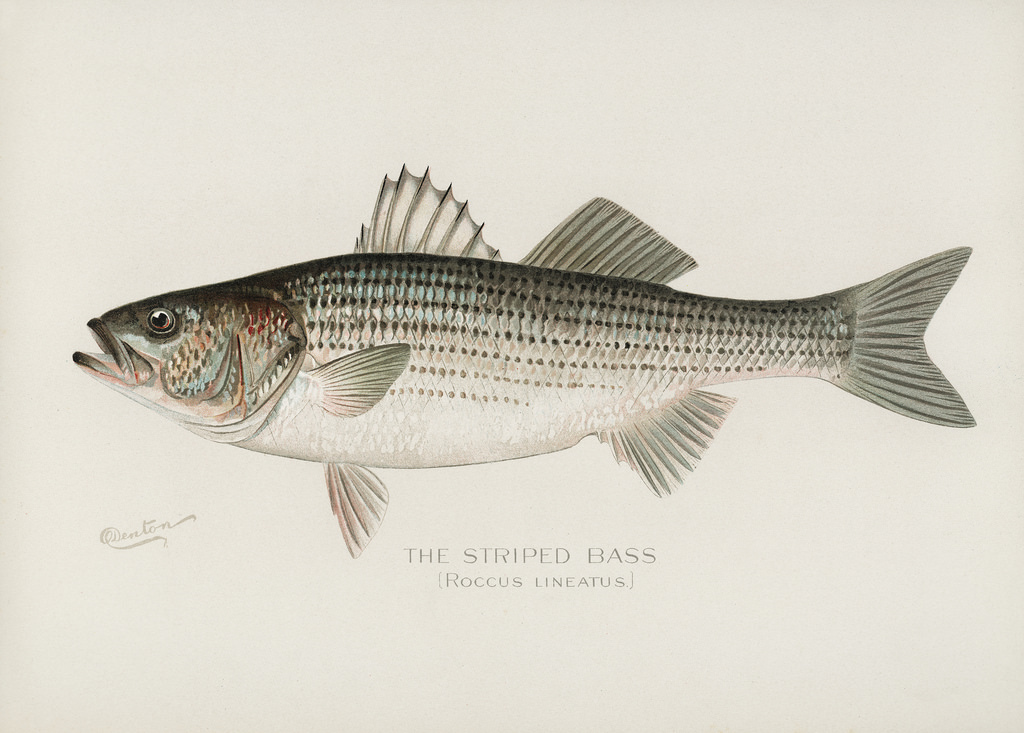
    For my co-op work term this summer I worked under biology professor Dr. Trevor Avery, helping his honours and graduate students with their theses and taking part in public outreach events for the Striped Bass Research Team. My week would generally start with field days in a boat with a local fisherman on both sides of the Windsor Causeway Tidal Barrier, which is bordered by the Avon River on one side, and Pisiquid Lake on the other. The Barrier is a gate that is manually operated, and as such it opens and closes on schedule with the tides until June. After the month of June, the gate remains closed unless flooding is expected in Pisiquid Lake, but fish movement is possible due to tennis ball-sized holes in the gate.

    Some believe that the gate does not allow for fish movement, which would prevent fish from reaching food sources and spawning grounds. As a result, one of the projects I assisted with was focused on American Eel and White Perch movement across the barrier after June (when the gates remained closed). While in the field we also tagged Striped Bass, a large fish native to the Avon River.  We caught them using gill and smelt nets and tagged them using a Dart tag, a long and yellow piece of plastic with a hook on the end to secure into the fish. If the bass was large enough to catch (over 50cm), we kept it for dissections. Our largest catch was over a metre in length.

    The dissections we conducted in the lab were part of a graduate student’s project. His focus is on mercury accumulation, reproductive organ development throughout the year, and diet in Striped Bass.  We collected tissue and liver samples for the mercury analysis and either preserved the Bass stomachs in alcohol or conducted a traditional stomach content analysis (cutting the stomach open and searching for physical evidence – and yes, it was gross).  

    Apart from those organs we collected scale samples and otoliths (calcium carbonate structures that allow the fish to remain upright while swimming) for ageing the fish.  Some of the bass that were dissected were donated from local fishermen, and as a lab we were often invited out with the fishermen to fish with them. This was hugely beneficial because we collected valuable tips and learned where the hot spots were for bass fishing. Though I’m not one to brag, I can officially say that I caught my first fish this summer: a 95cm bass.

    As a part of the Striped Bass Research Team I also attended fishing derbies over the summer.  One of them was the Miramichi Striper Cup- the most competitive event I’ve ever seen. Over 200 teams registered this year and approximately 600 bass were caught, with the grand prize being a new boat worth several thousand dollars.  Despite the intense competition, the competitors really cared about keeping the fish alive. There were only 9 fatalities throughout the event, which I believe was an all-time low. The community once had a diminishing population of bass, so the fact that over 600 bass were caught and so few fish lost their lives was a huge deal.

    I came into the summer knowing little to nothing about the Windsor Causeway and the history behind it. I knew even less about the variety of fish species that are found in Nova Scotia. Though my co-op term is up and school is back in session, the importance of the work I did still resonates with me. I hope future work terms are just as much fun as I had this summer, but as a little blue fish once said, “just keep swimming”.

    Kelsey Crouse is a 3rd year Environmental Science student and former Student Research Assistant for the Striped Bass Research Team

  • Blomidon Naturalists Society Seeks New Members, Contributions to Newsletter

    Blomidon Naturalists Society Seeks New Members, Contributions to Newsletter

    The Blomidon Naturalists Society is a field naturalists club based in Wolfville, but its interests and activities span most of the eastern Annapolis Valley. Active since 1974, the club meets monthly at the Beveridge Arts Centre at Acadia. Every meeting features a speaker – our speakers have included research scientists, Acadia students, local naturalists, and artists with topics ranging from wildlife photography, to tidal power, to botanical illustration to Sable Island horses. The club also has the occasional field trip, which could mean a hike to Cape Split, mushroom walks in the Kentville Ravine, annual seasonal bird counts, and last year a wind farm tour.

    The Blomidon Naturalists Society is deeply connected to Acadia – many current and former professors and university staff are members, as are many alumni (present company included). The Society supports Acadia students in the natural sciences through an annual scholarship award.

    We publish a quarterly newsletter which accepts submissions from members and the public. Non-fiction articles on topics of interest to naturalists, poetry, photographs, and drawings are accepted.

    The Society has also published several books (which are regularly offered for sale at local bookstores and from the Society itself) on local natural history, including Within the View of Blomidon by the late Acadia Biology professor, Dr. Merritt Gibson; A Natural History of Kings County; and Birds of Kings County. The Society also produces an annual natural history calendar which includes daily tide times, current and past historical events, and beautiful photographs taken by local photographers. Photographic submissions to the calendar are welcome.

    The Society always welcomes new members, and membership is open to any interested person. All of our events/field trips, most of which are free, and meetings are open to the public.

    For more information about meeting and event schedules, please see blomidonnaturalists.ca or check our Facebook page, To submit an article, photograph, etc. for the newsletter or calendar, please contact Shelley Porter (newsletter editor) at [email protected]

    Shelley Porter is an Acadia alumnus (BScHon. ‘87, MSc. ‘97) and current editor of the Blomidon Naturalists Society newsletter

  • Figure it Out Frosh

    Figure it Out Frosh

    I would like to begin this article by welcoming all of our incoming students to Acadia and Wolfville. Whether or not you’re planning on being here for four years (or more), your life as you know it will not be the same by the time you leave us. After spending nearly five years at this institution, I’ve rounded up some tips to share so that you incoming students can avoid some major gaffes while you’re here. I could say that this article is going to set you up for academic success or an unforgettable university experience, but it won’t. The beauty of Acadia is that from your first class to your very last exam, it’s your job to make university what you want it to be. But, whoever you are and wherever you’re from, there are some things that are helpful to know as you embark on this journey. I won’t say one point is more important than another, but as always, we should start with why you’re here: your education.

    Depending on the requirements of your degree, some of these suggestions will be more difficult to implement than others. In general, try to avoid classes beginning at 8:30 in the morning or ending at 10 at night. It seems that the rates of absences increase in these time slots. In other words, you probably won’t go, and if you do it will be an irregular occurrence. Your schedule will be occasionally hectic, especially if you have back to back lectures in different buildings. If I could recommend a classroom to avoid it would be Huggins 10 in the fall semester. It has a famous oven-like quality in early September, something those of you in introductory psychology have likely already experienced. Other than that, you’re safe to take a class in whatever time slot you like best. If you get particularly lucky, you may even wind up with a schedule that gives you a few days off.

    Another important aspect of your time here will be assigned readings, which can come in a number of formats, but none costlier than your textbooks. Much of this will again depend on your program, but you can be sure that you’ll spend a minimum of three hundred dollars on textbooks per semester if you buy them all from the bookstore. However, there are ways to avoid spending so much on books. It often helps to ask your professor if you’ll be using the assigned textbooks a lot. If the answer is anything but “yes,” it’s probably safe to say you can simply borrow it from someone else in your class or take it out at the library if its available. Buying used textbooks is a great way to save money as well – you can save anywhere from twenty to seventy percent if you buy them from a buy and sell group on Facebook and buying them on Amazon is sometimes cheaper as well. In select cases there may even be a free online PDF – you’ll have to search hard for free versions, but when you consider that some textbooks can cost hundreds it is definitely worth your precious time to find as many free versions as you can.

    When it comes to classes, you should also maintain a good relationship with your professors. They will dictate both your grade and your experience in their classroom, so ask upper year students which professors they recommend and which they avoid. I can tell you that after four years here you’ll know each one of your professors and their quirks. Speak with your professors during their office hours as often as you think is reasonable: seeing my professors in their offices has saved me hours of work and has usually resulted in improved grades. Acadia is particularly unique for the access that our students have to professors and you would be wise to use it often.

    After you finish all your course work, you will have to write one or more exam per semester, and the recipe for success on these finals is very simple. Start studying two weeks before your first exam, sleep, eat, study, write, repeat. Your health during exam season should be your first priority.

    I would love studying if it weren’t so tedious and time consuming, but it has to be done. The Ath has published articles in the recent past detailing how best to study and where the best study spots on campus are, but my advice would be to find out what works for you. Study in the library, study in Just Us! cafe, study in the KCIC, study wherever you find yourself most comfortable. Study when it’s convenient, and study often.

    Everything I can tell you about your classes, exams, professors and everything else about academics will never save you from the mandatory eight-thirty lecture or the three-hundred-dollar biology textbook, but it might make life a little easier. If you can manage to show up to class on time, take half decent notes, and perform well on your finals you’re most of the way there. But, with all that Acadia has to offer, it would be the greatest mistake of your life to come here to spend four years with your nose in the books.

    University is what could be categorized as a “challenge by choice” environment. This means that you as an incoming student are in a very unique position. If you want to take it easy over four years and do the bare minimum, more power to you – but I can’t imagine that’s the case. There are endless opportunities to challenge and enrich yourself through Acadia’s many clubs, societies, and other extracurricular happenings. If you like writing, there is a club for that; if you like debate, there is a club for that. There is a club for everything, and an exhaustive list of Acadia’s clubs can be found here (Link http://theasu.ca/campus-life/clubs/), but if you can’t find a club that you think fits with your interests, start one! There are also a number of excellent volunteer groups, for example S.M.I.L.E., which does incredible work for our community, or the Acadia Food Cupboard which opened just last year. Whatever it is that you like to do, you should seek out a club that you like. Two personal favourites of mine are the Acadia Model United Nations Association and the Acadia Rugby Football Club. Both are very good examples of clubs and communities that can open interesting doors for you.

    This article would be distinctly lacking if I didn’t mention the social aspect of your time here. Weekends are always fun at Acadia. Go out with your friends, whether it’s to a house party or the Vil – all work and no play makes Jack a dull boy. I should also remind you to “keep it social,” but that mantra is unlikely to save you from violent alcohol induced illness or the “Irish flu” that is likely to follow. I would say that I’ve been successful at moderating my intake but like any student there are mornings when I’ve worn sunglasses in class. The best practice for these moments is black coffee and Tylenol. Have responsible fun and enjoy the nightlife.

    Regardless of how closely you follow the above suggestions, there are two things that will take you far here. First, jump into all university has to offer with both feet. By that I mean you should do things all the way. Get as involved as you can. Run for a position on the Acadia Student’s Union, write for the Ath, start a club, go to as many sports events as you can, go out with friends, talk with your professors about things that aren’t class related. I can’t guarantee you that you’ll succeed in everything you do here, but I can guarantee you that if you jump into life you’ll never be unhappy, and you’ll certainly never be bored.

    My last piece of advice is that you should do your best to be kind to one another. Take ten seconds out of your day and ask that person from your class how they’re doing. Hold the door for your professors, they’re people too. Do a favour for someone without expecting anything in return. The challenge that you’ve undertaken by coming to university is significant, and the journey that you’ll be on over the next four years will be difficult. You will have moments when you wonder why you came here, you will have times when you’ve gone without sleep, you will miss deadlines or get grades that aren’t as high as you wanted them to be but if you walk into this place with kindness, you can’t lose. You can be sure that a small act of kindness will make somebody’s day.

    To conclude, congratulations on choosing this extraordinary place. You do belong here. You will get your degree. You will figure it out.

    Christopher Vanderburgh is a fifth-year (Honours) Politics student and Features Editor of The Athenaeum

  • BSA Public Service Announcement

    BSA Public Service Announcement

    The Black Student Association was created in 2017, with the goal of promoting diversity at Acadia. Many might question the truth of my previous statement because of the club’s name itself: “The Black Student Association.” But, contrary to what the name might imply, the BSA was created to cater to a range of cultures within the Acadia community, with black bodies at the forefront. BSA membership or participation is not restricted to individuals who identify as black.

    The BSA is open to everyone and anyone who is interested in diversifying (whether visibly or not) Acadia’s campus culture. The backbone of the BSA is multiplicity and we plan to promote this through our discussions and events. Please note that these activities are open to all, and all opinions are welcomed as long as they are presented respectfully. We encourage diverse thought perspectives and ask you not to shy away only because you believe your opinions are unpopular.

    Our discussions will serve as a learning space for everyone, so we ask that you come ready to speak on whatever perspective you have, but also with an open mind. The BSA is here to bridge Acadia’s pervasive cultural divide, so we encourage everyone irrespective of race, gender, orientation, or any other label that separates us from one another to join our club or participate in its activities.

    Nendelmwa Gofwan is President of The Black Student Association and a 3rd Year Politics and Sociology Major

  • ASU Election Results Released

    ASU Election Results Released

    At 4:32 PM today, ASU President George Philp sent out an all-student email announcing that the following candidates had been elected to the ASU Students’ Representative Council in the 2018 Fall By-Election.

    First Year Officer – Blake Steeves

    Equity Officer – Kate Hamre

    The Students’ Representative Council is the body of student who are elected each year to run the Acadia Students’ Union. More information on what they do and how you can get involved is available at www.theasu.ca. 

  • Drop the Gloves

    In most institutions that affect our daily lives, there are rules that guide us. These rules ensure accountability, decency, and integrity. The problem is that the people who often get ahead in life are those who circumnavigate those rules. It is time for those of us who try to live by the rules, by the ideas of common human decency and kindness, to drop the pretence, get into the muck and drag those who want to harm our common standard of respect under the spotlight.

    Surprisingly, politics is the easy problem to fix. It only requires those of us with the right to vote to use it, frequently and intelligently. We usually vote based on emotion, asking questions such as, “Who will cut my taxes?”, “Who will keep me safe?” or even as primal as, “Who do I hate less?”. Instead we need to vote upon “Who has the qualifications, who has a reasonable plan and what is that candidate’s record”? Instead of putting power into the hands of someone we like, we need to put into the hands of someone who is decent and knowledgeable, even if we don’t like them all that much.

    Our justice system is based upon the idea that everyone, no matter who they are or what they did or did not do, gets the opportunity to tell their side of things. It is messy, complicated, and at least one person always leaves unhappy, but it is the fairest and most practical way of judging our fellow members of society. The problem is individuals who have felt denied by the justice system and see that it has its limitations have soothed their disappointments by social media vigilante justice, instead of using the court system, where there are rules around evidence and testimony and where everything said and shown is cross-examined. Those who go outside of the justice system, make it nearly impossible for those whom they accuse to have an unbiased hearing, while potentially undermining the police work being done in such a case and other victim who have already come forward or may yet come forward. In many trials, whether it is a class action lawsuit, a mob prosecution, or in rape and murder trials, the prosecution has to do rigorous preparation as even a shadow of reasonable doubt can end a case. When someone goes outside of the justice system for their own satisfaction, any trial held will immediately be filled with reasonable doubt. This new wave of social media vigilantism undermines both defence and prosecution, tainting the principle of justice.

    Students, parents, and the rest of our society are dependent upon the principle that everyone has the opportunity to become educated, and therefore become highly employable. Education is the silver bullet for nearly all of the problems in our world that stem from a form of inequality. But that bullet is malformed when those who should receive the most benefit by education are instead crushed by the systems restrictions and its unprincipled managers, making the system more about profit margins for the institution than future opportunities. With rampant price gouging of students through high tuition, unaffordable living costs, low housing affordability, and a lack of job availability, those managing the system fail to respect and support those with whose futures they are entrusted.

    The major corporations of the world have shirked their responsibilities as community leaders. Average people make the success of these corporations possible by putting in a hard day’s works. It is more than fair for people to then expect to be compensated fairly by their employer. Instead, businesses have continually worked to undercut wages, move jobs away from the communities that relied upon those wages, and have done so while gambling with the global financial market and the health of the environment. People used to be able to place at least some faith in their employer, but now it is hard to trust them to even write a fair paycheque.

    Finally, the media. I don’t think the media puts out fake news, to be quite frank, I generally agree with what I read in the news, and therein lies the problem. Newscasters were given the airwaves for free upon the condition they provide a public service, bringing information to the masses. Now, unless people actively seek out differing opinions in media and the world, they find themselves within their own political echo chamber, where everyone and everything agrees with their view of the world. Media outlets, whether on social media, T.V., radio or in a newspaper have shirked their responsibility to make people uncomfortable so that we can make our fellow citizens see a variety of opinions and life stories. By demanding a variety within our information input, we become more informed and more active citizens.

    People have a responsibility to one another. In everyday life, most of us are able to live up to those responsibilities. It is time that those entrusted with the most important of those responsibilities live up to their end of the bargain.

    Jonah Van Driesum is a 3rd year Politics student

  • As Philip DeFranco would say, “Don’t be stupid, stupid.”

    As Philip DeFranco would say, “Don’t be stupid, stupid.”

    Welcome to Acadia University. Whether you’re here for the first time, or have been here for way too long, I think I speak for most students when I say it’s pretty awesome being back. I’ll be this year’s opinions editor, which basically means I’d like you to send me all the rants that keep you up at night, or debating for hours on end (note: this is me making fun of our former Editor-in-Chief; he knows who he is and I hope he is reading this).

    Instead of sullying my name outright at the beginning of the semester, I’ll save the hard-hitting stuff for later on. However, I figure I’ll throw out some common-sense stuff every student should do when getting back to school.

    1. Call your damn parents. Seriously, you’re lucky to be here. They’re pumped that you’re here and they’ll be happy to know you’ve settled in. And let’s be honest, most of us will be in need of something after a few weeks anyway…
    2. Get organized right away. This is sick because it’s not like you have anything else to do besides buying books that actually prepares you for school.
    3. Food: go nuts, student loans only last so long. Trust me, it doesn’t matter how much money you think you have, it always runs out.
    4. Download Grammarly. Seriously, anyone who does academic writing needs this (ie, all my BA students/future barista brothers and sisters). It’s not flawless, but it’s a decent last line of defense before you hand in an assignment.
    5. Record all your due dates somewhere you’ll see them all the time. Any Mac users out there can put reminders in your calendar and have them sent to your phone. If you’re old fashioned, you can always use an Android…
    6. Frosh, get out of your room, keep your door open and go to rez events. I still live with the guys who were my best buds in Chip.
    7. Don’t be stupid, stupid. We all drink from time to time, but a $450 fine from the RCMP is no fun, and neither is the additional $450 you’ll get if you’re caught drinking underage. If you’re going to a party, go with someone who’s taking a bookbag.
    8. Get involved in anything. Write for The Ath, join Axe Radio, attend Model United Nations, stay up ludicrously late to play intramural sports. Hell, go to the party your rez or buds are throwing. School hits pretty hard near the end of September so enjoy your time while you can.

    Well, there you go. A totally generic opinion piece on how not to be stupid when you get back to school. But seriously, write for the Athenaeum, If you have an opinion and want it heard, hit me up at [email protected].

    Kyle Thompson-Clement is a 5th year Politics student and Opinions Editor of The Athenaeum

  • An Economist’s Look at Brexit

    An Economist’s Look at Brexit

    If you don’t know what Brexit is at this point I really don’t know what to tell you, but I’ll explain anyway. On June 23rd, 2016, the British government held a referendum to decide the future of the country’s European Union (EU) membership. With a turnout of roughly 65%, citizens of the UK voted 51.9% in favour of withdrawing from the EU. The government has no legal obligation to act on the results, but Theresa May’s Conservatives have ruled out any chance of backing out now, as has Jeremy Corbyn, Leader of the Opposition. On March 29th, 2017, the British government triggered Article 50 of the Treaty of Lisbon, the mechanism by which states can officially declare their intent to leave the EU. The two-year negotiating period began then, leaving the UK and EU roughly eight months to figure out where to go from here.

    That’s all old news now, though. Since the Brexiteers have gotten what they want, they shouldn’t have a problem with a small voice like mine throwing stones at their faulty logic. Below, I’ll outline some common arguments made in support of leaving the EU, followed by an explanation of why they’re dead wrong.

    (Please note: there is a massive difference between the most popular arguments for leaving the EU, and the arguments with actual merit. I believe the two are almost mutually exclusive among British people, and will be writing from that perspective.)

    #1. Immigrants are stealing our jobs!!!!

    “I have a feeling in a few years people are going to be doing what they always do when the economy tanks. They will be blaming immigrants and poor people.” – The Big Short, 2015 (dir. Adam McKay).

    Such was the lament of Steve Carell’s character at the end of The Big Short, a movie chronicling the financial crisis of the mid-2000’s. The respective climates of post-recession America and pre-referendum Britain are very different, and the logic applies in different ways. However, it is the same xenophobic nationalism driving the belief that two of the most marginalized groups in nearly any modern Western economy could possibly be responsible for economic stagnation.

    The background to this argument is as follows: as a member of the EU, the UK is a part of the European Single Market. This guarantees the free movement of goods, services, capital, and labour (the “four freedoms”) between all member states. Thus, a citizen of any EU member state is free to reside and work in any other EU member state and does not need a visa to do so.

    British people claim that such a policy is causing a shortage of jobs available for British citizens, in favour of giving them to incoming migrants from EU countries. In reality, EU nationals, particularly those from Poland and Romania, take jobs that British people have decided they’re too good for, and face extensive discrimination for doing so. In fact, many British industries, such as hospitality, customer service, and health care would face massive staffing crises if Brexit legislation requires that EU nationals leave the country after the UK is no longer a member of the EU.

    If British people truly believe immigrants are hurting their employment prospects, I hope they’re ready to take on the jobs left behind by EU migrants and drop the nationalist vitriol constantly hurled at Polish window cleaners and Bulgarian baristas. Pick your poison Britain, you literally cannot have both.

    #2. The European Court of Human Rights is encroaching on the jurisdiction of British courts!!!!

    This one could almost sound like an intelligent argument to someone who doesn’t know much about the differences between the European Court of Human Rights (ECtHR) and the European Court of Justice (ECJ). The ECJ is the judicial body that ensures that EU law is applied equally across all member states. It is hard to say how much influence the court actually has on British law; the percentage of British laws that come from the ECJ depends on what you count as a law, and many simply codify already-existing British law at a European level. However, it is generally accepted that when it comes to the legislation that most impacts life on the ground for British people – public order, crime, health care, defense, etc. – the ECJ has very little sway.

    The ECtHR, on the other hand, has a very narrow mandate. It has jurisdiction to rule on complaints brought by individuals or states concerning violations of the European Convention on Human Rights (ECHR) by signatories to the Convention. ECtHR verdicts have angered British politicians in the past, particularly in 2014 with a controversial ruling declaring that the UK could not deport someone suspected of involvement with radical Islamic groups.

    But wait, what does any of that have to do with the EU?

    That’s exactly my point. The biggest difference between the two is that the ECtHR is completely separate from all EU bodies. No connection whatsoever. At face value, Brexit has absolutely no implications for the relationship between the UK and the ECtHR; the UK would have to withdraw from the ECHR for that to be possible. Furthermore, the EU’s Brexit negotiating team has stipulated a clause that would immediately end any security and information-sharing deal if the UK were to withdraw from the ECHR upon leaving the EU. If the UK is stuck within the jurisdiction of the ECtHR either way, they might as well get the benefits of EU membership while they’re at it.

    (Disclaimer: I am not trying to offer an opinion on whether the ECtHR made the right call in that specific case or others; nor am I endorsing the EU’s negotiating tactics. I am simply pointing out that the belief that the ECtHR will no longer have jurisdiction in the UK after Brexit is fundamentally incorrect.)

    #3. Brexit will be good for the British economy!!!

    I’d love to break this one down further, but I genuinely have no clue what the basis of this argument is. While the immediate aftermath of the referendum was not as catastrophic as originally expected, “not catastrophic” is not a synonym for “positive.” There is a pretty broad consensus among economists that in the long term, British GDP per capita will fall, and goods will become more expensive. Lower growth and higher prices creates a situation economists call “stagflation.” Without getting too technical, I’ll tell you that the last time Canada experienced real stagflation, Alberta practically threatened to secede when the government tried to respond (for those of you who remember the NEP, you know that this is only a slight exaggeration). There’s already enough regional disunity in Britain without the threat of economic instability exacerbating it.  

    To conclude, none of this should read as me telling you that the EU is beyond criticism. In fact, you’d have a hard time convincing me that any level of criticism and scrutiny is too high for the political institutions that govern our lives. Many believe the EU to be unaccountable, undemocratic, and overly bureaucratic. However, almost none of these criticisms seem to have had much influence in Brexit voting. As we have sadly seen happen in other countries, particularly the United States, populism, nationalism, protectionism, and flat-out hatred have taken hold in certain demographics. These -isms seem to stem from fear: fear of what is different from us, fear of change, fear of losing one’s place in society. Perhaps when Leave-voters realize that the average EU migrant wants the same thing as they do – to do the best they can for themselves and their families – some common ground will be found, and the UK will think about reversing its decision and preserving a system that provides far more benefits than drawbacks. To that point, I’ll leave you with this slightly less nuanced but probably more astute (and undeniably British) commentary:

    “In vs. out, it’s all very complicated. The other day, my flatmate was making me a cup of tea, and he asked me if I wanted the bag left in, or taken out. If you leave the bag in, the cup of tea as a whole will get stronger; it might appear like the bag is getting weaker, but it’s all part of a stronger cup of tea. Whereas, if you take the bag out, the tea is now quite weak, and the bag itself goes directly in the bin.”

    Mallory Kroll is a fifth year Economics student and the Managing Editor of The Athenaeum.

  • Annapolis Cider Company’s “Something Different” Review: Muscat Mojito

    Annapolis Cider Company’s “Something Different” Review: Muscat Mojito

    The Muscat Mojito edition of the Annapolis Cider Company’s “Something Different” is a tart and unique ride. On the nose, it’s similar to sweet vermouth with notes of blackcurrant and strawberry. Upon tasting it, the Muscat grapes are front and centre showing off their tart, berry-like kick. Soon after, the lime emerges with a zesty freshness balancing out the flavour of the grape. The alcohol in this drink is slightly more prevalent than in most ciders that I have had. It is by no means unpleasant but, as the name would suggest, its something different. After swallowing, the slightly sour lime remains on the palate as well as new subtle mint flavour. I was personally expecting more mint from this drink, but it was nonetheless very enjoyable and even sophisticated. 3.5/5

    Adrian Filice is a 3rd year Philosophy major 

Betzillo positions itself as a versatile gaming hub where structured bonuses and adaptive gameplay mechanics support both short sessions and extended play.

Built with a focus on innovation, Spinbit integrates modern casino architecture with rapid transactions, appealing to players who value speed and digital efficiency.

Ripper Casino emphasizes bold entertainment through high-impact slot titles and competitive promotions crafted for risk-oriented players.

A friendly interface and stable performance define Ricky Casino, offering a casual yet reliable environment for a wide spectrum of gaming preferences.

King Billy Casino channels classic casino spirit into a modern platform, delivering recognizable themes supported by contemporary reward systems.

Immersive visuals and layered slot mechanics are at the core of Dragonslots, creating a narrative-driven casino experience.

Lukki Casino appeals to players seeking direct access and minimal friction, focusing on fast loading times and intuitive controls.

Casinonic provides a structured and dependable gaming framework, blending modern slots with transparent operational standards.