
Author: Jenna Bouwman

  • Required Negative COVID-19 Test to Cross Land Borders with the U.S.

    Required Negative COVID-19 Test to Cross Land Borders with the U.S.

    The Canadian-U.S. border has been closed to all non-essential travel since March 2020. Following mandatory testing that was put in place for air travel in January, all land borders with the United States will now require proof of a negative COVID-19 test result within a 72-hour window before entering Canada. The new measure will begin Tuesday, February 15th, 2021. Prime Minister, Justin Trudeau, announced the policy change on Tuesday, February 9th, 2021. However, although the Canadian government is diligently taking the extra precaution to protect Canadians from COVID-19, anyone lacking proof of a negative test result won’t necessarily be turned away at the border. For example, Canadian residents who are trying to re-enter Canada so that they can come home, are not allowed to be refused entry at the land border. As a result of this law, any Canadian citizen who is coming into Canada and fails to provide a negative COVID-19 test taken within 72-hours will be fined $3,000 upon entry, followed by a period of monitoring by health officials throughout their 14-day self-isolation. 

    Furthermore, the negative test provided upon arrival into Canada must be a Polymerase Chain Reaction (PCR) test specifically. 

    The only airports accepting travellers from international flights include Vancouver International, Calgary International, Toronto Pearson International and Montreal-Trudeau International airports. Although the start date is not released, all travellers arriving on a plane are required to receive COVID-19 testing upon arrival in Canada. This means that after getting tested, travellers must self-isolate while they await their results. Trudeau announced that it is estimated that a three-day self-isolation in a hotel will cost $2,000. Travellers are expected to cover their own expenses for the mandatory hotel quarantine.

    Foreign Canadians may only enter Canada for essential reasons or to reunite with their family, and travel restrictions from last year that are meant to expire on February 21st, 2021, will most likely be renewed amidst the continuing of the COVID-19 pandemic. 

    These new measures are in addition to the mandatory 14-day quarantine upon arriving in Canada. 

    Travel has been significantly reduced in Canada, limited to only essential travel, resulting in an 88% decrease in land border crossings and a 92% decrease in air border crossings compared to last year, according to Canadian Border Services Agency travel statistics. Prime Minister Trudeau, adds that this is the reason why international travel and flights have only been responsible for only 2% of Covid-19 cases in the country, says CIC News.


  • British Columbia Couple Flies to Yukon for COVID-19 Vaccine

    British Columbia Couple Flies to Yukon for COVID-19 Vaccine

    Canadians put faith in the healthcare system to be fair, and as the Canadian government continues to decide where the COVID-19 vaccine should go first – to the most vulnerable people – a few entitled people may mistakenly believe that they are an exception to the policy. White River Nation, located in Beaver Creek, Yukon, was granted some of the first doses of the COVID-19 vaccine to administer to its high population of Indigenous elders. However, the CEO (at the time) of Great Canadian Gaming, Rod Baker, and his wife, Ekaterina, flew into Beaver Creek so they would not have to wait to receive their dose. The couple filed a form vowing to self-isolate for the standard 14 days for people arriving out of province, which they said they would do in a motel in Whitehorse. Two days later, they flew to Beaver Creek, Yukon. 

    The Bakers were seen at the community center where the Moderna vaccine was being administered, and many people just assumed that they were Canadian Border Services (CBSA) workers. The couple received their first dose of the COVID-19 vaccine. 

    However, once the couple asked someone at the center for a ride to a local airport that is rarely used, people caught on to what was happening. Officials contacted the motel that the Bakers were allegedly isolating at and discovered the Bakers had checked out. Rod Baker and Ekaterina were later located in Whitehorse waiting for a flight back to Vancouver. 

    The Vancouver couple will have to wait for their eligibility group to receive the second dose of the vaccine, health authorities assured the public. A person is not fully vaccinated against COVID-19 until both doses are administered. 

    The First Nation were alerted of the incident of the day after it happened. This angered many members of the community because the Chief was not informed, nor was the local COVID team contacted. Furthermore, White River First Nation (WFRN) said the fine that the Bakers received for failing to isolate after entering a different province, would be meaningless to such wealthy people, arguing that the purpose of such a penalty is to seriously discourage any similar future behaviour. 

    Rod and Ekaterina did not only put White River at risk but the entire community, when failing to self-isolate, as well as lying to health care professionals in order to “skip the line” and put themselves over vulnerable elders.


  • SRC Decoded: What you missed January 29th, 2021

    SRC Decoded: What you missed January 29th, 2021

    The Students’ Representative Council (SRC) is a council composed of a body of students elected by their peers, who are tasked with running the Acadia Students’ Union (ASU). The SRC meets every Wednesday at 5:30 PM in the Beveridge Forum located off the Michener Lounge in the Students’ Union Building (SUB). Each meeting is open to the public and students are welcome to attend meetings to learn more about the decisions being made on their behalf.

    After some general grounds-keeping conversations and new introductions, the Student Representatives Council started their meeting!

    This meeting centred mostly on the goals each council member had for the rest of the term.

    Lara Hartman began with her plans, highlighting her desire to ensure she is supporting arts students as best she can (as the arts senator).

    There was a short change of topic, while Lydia Houk discussed the possible re-emergence of a program wherein the Town of Wolfville councillors are paired with members of the SRC as part of a mentorship program. Lydia thought this would be an especially valuable opportunity for the new members. Brendan MacNeil then briefly touched on an opportunity for council members to collaborate with the Sustainability councillor for the Town of Wolfville before turning it over to Sadie McAlear, the new Community Relations Councillor.

    Sadie emphasized that she’d like to have a better understanding of the SRC, make stronger connections within the community, and also some projects that she would like to undertake. Lydia followed mentioning goals surrounding getting feedback from a diverse population of students and also having more collaboration between the students and the faculty. Robbie Holmes proceeded, sharing his aim of helping ensure a smooth transition within position roles, as he has much familiarity with the council. Brendan Keeler said he had plans to make information more readily available and straight-forward for future VP Finances as well as creating a full volunteer program for the Finance office.

    Alex Surette spoke about his goals to bring more students into the sustainability initiative as well as a sustainability project focused on reusing clothing. Blake Steeves went next and described his goal to run a successful social media campaign for the general election and to ensure Cheaton happens! Jodi Chaffer said he would like to continue growing and establishing his initiative from last semester researching campus and also to increase MCAT and LSAT studying support for students. Zach Goldsmith strives to be a good bridge between the Theology Department and the ASU and to hold the event which he organized last semester. Menat Tahoun put an emphasis on her desire to communicate well with the incoming professional studies senator and make a smooth transition. Molly Anderson said she would like to make decisions and discussion within the SRC as accessible and comprehensible as possible to students, and also properly storing and archiving outstanding documents. Finally, Brendan MacNeil shared his goals. He would like to increase the employability of students as Acadia and to equip them with as many tools as possible throughout their education so that they are prepared to enter the workforce. Additionally, like many others, Brendan aims to ensure the transitions of roles happen smoothly and effectively.

    The council wrapped-up with a few small conversations and the meeting was adorned!

  • SRC Decoded: What you missed January 22nd

    SRC Decoded: What you missed January 22nd

    After a very long holiday break, the SRC resumed their weekly meetings at the end of January, as the new term commenced. Here is what you missed:

    The meeting was held to discuss the ASU’s upcoming general election. Danish, who leads the elections, announced the proposed election dates and explained his plan to use social media as an engagement tool for student involvement. He asked that members of the council help support the functioning of the election by running different events throughout the electoral process and that each member makes a brief video summarizing their position’s role, so potential candidates have a better understanding. Lydia went on to reinforce the importance of promoting the election, especially through the members of the council. The council discussed the importance of ensuring there are no barriers for students who are not on-campus to participate in the election, especially regarding signatures required to run.

    The council subsequently adjourned their meeting and plan on discussing more items regarding the rest of the term next week.

  • House the Homeless

    House the Homeless

    Shelters for homeless people have begun popping up on municipal property in January 2021. In response to the shelters, Halifax Regional Municipality (HRM) has recently announced that the removal of occupied shelters appearing in Dartmouth and surrounding areas will not occur, and made clear that removal will take place only if a shelter is vacant. However, there is a great deal of controversy surrounding the arrival of the huts, because some argue that there is no license to allow people to build without permission on municipal property. On the other hand, HRM spokesperson, Maggie-Jane Spray stated, “the municipality takes an empathy-based human rights approach to homeless encampments that recognizes the human dignity of people experiencing homelessness,” in an interview with CBC, which was published on January 25th. While it is ethical to not take action in removing huts that are some people’s only form of shelter, the issue has raised concerns about the housing situation in Halifax and shines a light on a much larger social problem, not only in Nova Scotia but across Canada. 

    Recent news has delivered the devastating story of Raphaël André, 51, who died on Sunday, January 17th, just feet away from Open Door shelter in Montreal which was forced to close by health officials due to a Covid-19 outbreak. Advocates for the homeless claim André froze to death in a portable toilet next to a center he had stayed at just the night before. The traumatic event has impacted the entire country, each province riddled with its own population of homeless people. Therefore, shelters appearing in the HRM area have been photographed accompanied by the trending hashtag “House the Homeless,” addressing a dangerous problem in Canada that needs urgent attention from the government. 

    The huts have consisted mostly of a steel roof and house wrap, providing some protection from the rain and the harsh winter weather. The huts provide a safer place for people who are homeless to store their belongings and take shelter, especially during the colder winter months. It has been determined that the huts are being built by a group referred to as Halifax Mutual Aid, and their anonymity makes it nearly impossible for HRM to reach out to them regarding the controversy surrounding the issue. 

    While building small makeshift shelters may offer a temporary “solution”, homelessness in Canada is far from being resolved. Amid the controversy and debate concerning the prohibition of the building of unauthorized structures on municipal land, many have responded that it is the best place to build because the city should be held responsible for housing the homeless. While HRM has a no-eviction policy if someone is living in the space, it also does not have the authority to provide housing – that is the duty of the province. Sam Austin, Councillor for Dartmouth center, where some of the shelters have popped up, says that the province of Nova Scotia should build more supportive housing to get people off the streets, and in the meantime, provide help for those suffering from addictions and mental health issues.

    While the municipality reiterates that they will not evict residents of the shelters until their needs are met, it seems to have become clear that the need for housing should be prioritized, especially in the coldest months of the year and during a global pandemic. Shelters are not the answer. House the Homeless.

    Housing Nova Scotia (Head Office) – 

    Maritime Centre – 1505 Barrington Street
    14th Fl. (North)
    Halifax, NS B3J 3K5


    Housing Nova Scotia (Western Region) –

    101 Magee Drive
    Box 1000, Middleton, NS B0S 1P0


    Housing Nova Scotia (Central Region) – 

    3770 Kempt Road
    Halifax, NS B3J 3E4
    P.O. Box 2462

  • Acadia Exceeds Fundraising Goal

    Acadia Exceeds Fundraising Goal

    Launched in October of 2018, Acadia University’s Campaign for Acadia campaign has calculated an ambitious 75-million-dollar goal to “sustain the Acadia of today and build the Acadia of the future.” The budget includes 30 million dollars going towards creating extraordinary student experiences by fostering access and success so that all deserving students can experience a transformative education. Another 12.5 million dollars is dedicated to inspiring exceptional teaching and engagement by attracting and retaining outstanding faculty who are committed to exceptional teaching across all disciplines. The same amount would go toward innovative teaching and research to promote discovery and innovation through support for our student and faculty research. The final 20 million dollars will be invested in building and enhancing the physical and financial infrastructure to benefit Acadia’s students, faculty, and the community. 

    On Acadia University’s 182nd birthday, the campaign announced that their goal of $75 million had been exceeded, and all thanks go to enthusiastic alumni and friends whose generous contributions will support key programs and resources at the university. Dr. Ricketts, President and Vice-Chancellor of Campaign for Acadia, shared his gratitude to everybody who contributed, “Each gift is invaluable and will have a meaningful impact on our students, faculty, staff, researchers, and the ongoing development of our campus infrastructure,” he stated. He continued on to say that “Acadia’s milieu has been extremely strengthened by the generous gifts of campaign partners, friends and alumni who have all played a tremendous role in benefiting the students at the university”. 

    The donations have allowed Acadia to accomplish things beyond the usual. Some of these things are visible; such as the renovation of the science facilities and the transformations of Patterson Hall into the Manning School of Business. Others are not as visible but are equally as significant; millions invested into restricted endowments for student awards, teaching, research and other academic programs. All of these things collectively enhance the student experience at Acadia University. 

    Campaign for Acadia will continue to gratefully accept donations until the end of 2020. For further donation details, the campaign’s many success stories, instructions on how to give, you can visit campaign.acadiau.ca.

  • Ableism and Accessibility at Acadia

    Ableism and Accessibility at Acadia

    One definition of ableism is the discrimination of those with disabilities in favour of able-bodied people. However, Hailey Davis, a fourth-year music therapy major at Acadia says that this applies to all disabilities and is really something in need of discussing. A preferred definition of ableism, for Hailey, according to Access Living is: 

    “Ableism is the discrimination of and social prejudice against people with disabilities based on the belief that typical abilities are superior. At its heart, ableism is rooted in the assumption that disabled people require ‘fixing’ and defines people by their disability.” (Olson, Emma. “Ableism 101 – What is Ableism? What Does it Look Like?” Access Living, 23 July 2020.)

    Hailey considers herself to be a disabled woman, as she was diagnosed with Attention Deficit Hyperactive Disorder (ADHD) at the age of eight. However, she shares that she does not agree with the name of her disability because it is not just that she has an attention deficit; it encompasses so much more than just attention. Hailey is an anti-ableism activist, sharing the importance of proper terminology and accessibility to students at Acadia, offering presentations and Q&A sessions in an effort to educate people on ableism. 

    When it comes to proper terminology, when speaking to and about the disabled community, Davis emphasizes the importance of respecting how people would like to be addressed, as it may vary. “Just ask people what they prefer. The best way to be anti-ableist is to just listen to disabled people.”, says Hailey. On the other hand, she says, sometimes it may not be possible to ask a person what they prefer, and in that case, Hailey believes that it is best to assume an “Identity-first” approach. Addressing a person using the “identity-first” method means to put their pronouns ahead of their disability. She explains that compared to the “person-first” approach, “identity-first” does not suggest that an individual’s disability is a burden, illness or something to “fix”. For example, Davis said that when speaking about someone with cancer, the majority of people would say, “a person with cancer” (person-first), and not, “cancer(ous) person”. She says that the former suggests a negative tone and that she does not believe it is appropriate to use it when referring to disabilities, as she is not ashamed of her disability, it is not something that needs to be fixed and it is, indeed, something that she feels is part of who she is. Therefore, she prefers the “identity-first” approach and says that most people will, as well, if they do not specify. Regardless of whether or not a person prefers “identity-first” or “person-first” language, Hailey says, “Ask. Do it imperfectly. It is better to do it and feel like you messed up than to not try to learn it at all. I appreciate it.” 

    When it comes to accessibility at Acadia University, there is much room for improvement. One of Acadia’s students who are in need of the university’s accessibility services is disappointed with the way that the school is approaching the matter. “As far as I know, it is run entirely by people who are not disabled, themselves, and do not have qualifications or degrees in education or disability educational services”, the student said. Understandably, it would be difficult to try to receive aid and understanding from somebody who may not fully be able to relate to what disabled students are facing. Furthermore, a student had shared that they had to “fight hard to have accommodations”, and in some cases, they were even denied their accommodations (such as being provided with a computer for writing essays) without being told by the university. 

    According to the World Health Organization, fifteen percent of the world’s population lives with a disability. However, although Acadia says that campus is accessible to all people, a student mentions that Acadia’s buildings may be “technically accessible” but do not have wheel-chair accessible washrooms. Some buildings do not have elevators or accessible elevators, and in some buildings, such as Denton, one with a physical disability would have to exit the building, go around the outside and re-enter through a separate door. 

    Additionally, a drama student left Acadia University because they were unable to access certain buildings for their classes. On top of that, a student said that there is zero to no training to professors on proper terminology, communicating and supporting disabled students, and sometimes it shows.

    Lastly, referring to the university’s accessibility services, a student said, “everything we do is filtered through an ableist perspective, and I can imagine it is difficult to understand disabled people when you are not disabled.” It is imperative that students as well as faculty continue to practice anti-ableism and thoroughly work to improve accessibility on campus, ensuring that every student feels welcome at Acadia. Let us all remember to continue progressing as a community, and to “do it imperfectly”.


    Hailey shared some social media influencers who she thinks will help students understand disabilities of all kind, and inspire people to spread anti-ableism:

    Instagram: @the.chronic.couple

    Twitter: @NeuroRebel

    Tik Tok: @crutches_and_spice

    Facebook: @disabilityonthemighty


  • SRC Decoded: What you missed October 28th, 2020

    SRC Decoded: What you missed October 28th, 2020

    The Students’ Representative Council (SRC) is a council composed of a body of students elected by their peers, who are tasked with running the Acadia Students’ Union (ASU). The SRC meets every Wednesday at 5:30 PM in the Beveridge Forum located off the Michener Lounge in the Students’ Union Building (SUB). Each meeting is open to the public and students are welcome to attend meetings to learn more about the decisions being made on their behalf.

    This week’s meeting started as usual with a land acknowledgment and the acknowledgment of the ASU’s statement of autonomy. Missing from this meeting was the Arts Senator, VP Student Life, and the Sustainability Officer. After rolls were called, the agenda was passed, and the meeting began.


    ELECTION UPDATE


    Chairperson, Molly Anderson, explained that the By-Election received no student interest and therefore the Council has the option of opting not to run an election with no candidates for the sole sake of the referendum question. The other option, she explained, would be for the council to run the election again. She opened this up to the floor. Lydia Houck, VP Academic, shared her thoughts, explaining that they could run the election again with much more success if they changed their strategy. Blake Stevees, VP Events and Promotions quickly agreed. VP Finance and Operations, Brendan Keeler, also agreed, adding that he felt the council as a whole fell through with the promotion of this election and that in the future each member should make sure they talk to those around them about these opportunities. Following this discussion, Anderson concurred that a second by-election would be logistically possible if better organization happens prior.


    Discussion: Diversity, Equity and Inclusion at Acadia


    President Brendan MacNeil let the next topic regarding the presentation by Polly, the Diversity, Equity and Inclusion officer for the university that would be held the following week. On Polly’s behalf, he asked whether any member of the council had suggestions for topics to be covered. Houck spoke up to clarify what type of training they would receive (I.e. a bigger, open presentation or more specific training) and MacNeil answered that he thought it would be a bit of both, with some specific advice on how to operate responsibly and respectfully in certain situations. Anderson added that after reviewing the presentation that Polly gave the RA’s, named “Anti-Oppression 101”, she felt the presentation would be fairly general. MacNeil went on to stress the importance of bringing up topics to be discussed as there are “a lot of structural issues, systematic racism, and other things at Acadia that we should be addressing as leaders.”


    To “get the ball rolling” MacNeil started by explaining that one of the topics they will be discussing will be diversity in the hiring process of the Union; this would extend from language used during the hiring process to intentional outreach to student from all populations, to creating an inclusive and supportive work environment. Mary, the Graduate Students’ Senator, expressed that when she is among her fellow graduate students, she does not so much feel the effects of racism; she reasons this is because many graduate students are also international students and therefore understand each other.  However, she went on to say that when she is on campus, she definitely experiences racism. It presents itself in the more implicit forms, like people not wanting to talk to her or sit next to her in meal hall. Mary thinks this may be a result of a lack of education and that Wong International Center needs to do a better job educating people and allowing international students to express their diverse cultures and languages, as well as educating international students about culture in Canada to make their transition smoother.  Jodi Chaffer, Pure and Applied Sciences Senator, added with frustration that he believes Acadia’s International Society has been promoting itself for a while now but that at events when students are given opportunities, like Mary mentioned, to explore each other’s cultures, the turnout is almost exclusively international students. He thinks the focus needs to be on creating curiosity in domestic students to learn about how diverse Canada is inside and especially outside of the Atlantic. Many members agreed that one of the biggest issues was the fact that events tended to be promoted distinctly as events for international students or events for Acadia students in general, and that this distinction created a divide in the student body that reproduces itself.


    Council discussed possible solutions such as more inclusive advertising of such events and creating events that promoted the integration of international and domestic students. Moreover, Mary brought up the point that many domestic students see the Wong International Center as a place that is off-limits to them, even though events held there are advertised as open to all students. Members also agreed that the ASU becoming more involved with the Wong International Centre could be a significant help. To end this discussion, Bauffer suggested the ideas of working across clubs to promote inclusion and diversity, with examples like bringing Acadia International Society and Biology Society together to do a workshop about the importance of diversity in the sciences. At this point, Molly Anderson suggested this conversation be continued with Polly at the presentation as her input may prove to be helpful.


    SRC and Student Engagement


    Leading council into the next topic, Anderson expressed her concern regarding the lack of student engagement with the SRC. She said that it was “a really bad path to be heading down because . . . it can stop us from being able to move forward as an organization”. She went on to explain that as of right now, the Governance Committee does not have enough members to function. Along similar lines, the Review Board cannot either because it must be filled after the by-election, which couldn’t run because there were no candidates. Anderson worries in the past 12 months the SRC student engagement has declined so much that students don’t know who the SRC is or what they do. She continued that if this decline continues, the Union could be in a position in a few years times where no one runs for President or Members of the Executive and the resulting structure of the organization could jeopardize the legitimacy of student representation. Anderson suggested that rather than discussing this issue formally as a council, that they instead break off into smaller groups and discuss informally, as this could be more productive.


    ANNOUNCEMENTS

    To end the meeting, MacNeil shared that the Axe Student Bar and Lounge has reopened!

  • SRC Decoded: What You Missed October 21st, 2020

    SRC Decoded: What You Missed October 21st, 2020

    The Students’ Representative Council (SRC) is the independent organizational body that represents the students of Acadia. More than 50 years old, the SRC provides representation and communication for students at Acadia and manages the ASU. There are many positions involved in the SRC, even some that need feeling! Attendance at the meeting this week was the executive, made up of the President, VP Academic and External, VP Finance, VP Events and Promotions and VP Student Life (Robbie Holmes). Also in attendance were the Faculty Senators, the Diversity and Inclusion Representative, and Chairperson, who ran the meeting

    This week’s meeting started with a land acknowledgment of the Mi’kmaq land that Acadia University occupies, as well as reading the SRC’s statement of autonomy. All members of the SRC were in attendance, aside from the Diversity and Inclusion rep (absence not explained). The agenda and minutes of the meeting were passed, and the meeting began. Covered in today’s meeting was the Career Services Center report (as discussed in last week’s meeting) as well as a small update on the By-Election and an important discussion in the SRC’s role in the Fishery conflict happening in Nova Scotia.


    Career Services Center Research Presentation    

    The presentation, led by Matthew Rios, Vice President of the Acadia Alumni Association, and Quincy Cochrane, a third-year business student at Acadia, discussed their findings after a summer research project looking into the effectiveness of Acadia’s current (non-existent) Career Services Center. Interestingly, Rios is a 2014 Acadia graduate and served on the SRC for 5 years, spending his last two years as President. Rios explained how the Alumni Association had identified a need to support students in a very important transitionary period; life after Acadia. They want to enhance the career services offices university offers. In his research, Cochrane interviewed people from many universities in both the Maritimes and other places in Canada. He identified the key components of career services – things such as skill development, employers, staffing, etc. Rios went on to explain that, “for a career service to operate, there needs to be work done in all of these buckets. If all of us were to think right now of the work being done in any of these buckets, the answer would be nothing”. The duo gave three steps they would like to see Acadia’s career services move toward catching up, competitive advantage, and then cutting edge. Rios explained that he is excited about the prospect of Acadia students graduating with not only a degree but also “competencies” that will make students attractive to employers. This includes skills such as the ability to highlight one’s strengths, communicate effectively or speak articulately. The Alumni Association, as Rios explained, is considering supporting this project with an annual contribution of 50, 000 dollars. He went on to explain that the University claimed it is not currently in a position to make significant monetary contributions but said it could commit to funding the full-time employment that this service will create, as well as providing program funding and promotional support. During the following discussion period, Robbie Holmes, VP Student Life, stressed that “even though we are putting student dollars into this program, the fact of the matter is that students are going to get a lot of money out of it”. After the speakers left, the council had a short discussion about their plans moving forward and agreed to continue the conversation on with the project.


    Election Update

    Chairperson Molly Anderson explained with disappointment that most positions on council are still open and have not been applied for. Holmes suggested that perhaps, this is because deadlines for applications were not posted to students. Nevertheless, these positions remain open, and additional information on council positions and directions on how to apply can be found on the ASU’s Instagram page @acadiastudents.


    Fisheries Conflict 

    Regarding the conflict in the fisheries in Nova Scotia, the SRC is thinking about giving students resources to take action in support of Indigenous peoples. Vice President Holmes agreed that addressing this injustice is important as they are a council with a platform and an influence. He strongly believes that the council should release a statement condemning the unnecessary violence and discrimination that is happening in Digby while also offering ways to support Indigenous communities, lists of politicians to speak to and general support for Indigenous peoples here at Acadia. Other members agreed and added that the focus should be fighting the violence and racism and supporting those affected at Acadia while staying away from the “political aspect”. Lara Hartman, Faculty of Arts Senator, who is a First Nation’s person from British Columbia, shared her view. She, unlike other members of the council who spoke previously, felt it was important to “pick a side” rather than to remain impartial, as remaining impartial was, in her perspective, “picking a side”. She also mentioned that Zabrina Whitman, Indigenous Affairs Advisor of the University should be consulted before the council decides how to proceed with the matter. Hartman said that she knows herself, and likely others, are definitely feeling the impacts of this crisis. This motion to release a statement was passed and will be directed by the executive.


    Announcements

    President Brendan MacNeil finished the meeting by summarizing his meeting with the Board of Governors explaining that he left the board with three main priorities: university affordability, Open Educational Resources (things like online textbooks that make getting course material more affordable), and health services accessibility on campus.


  • Student Life Impacting Community of Wolfville

    Student Life Impacting Community of Wolfville

    As Acadia students continue to settle into the “new normal” at university, so do the residents of Wolfville as the students return to school… and to parties. The usual back-to-school parties this year are affecting residents of Wolfville, perhaps more than any previous years, due to new COVID-19 regulations, which are drawing students to gatherings off-campus. However, this raises more concerns than that of noise complaints. 

    In recent weeks, multiple students have been charged with liquor act tickets and parking tickets along with the noise bylaw tickets. However, the most concerning threat to the community is the large parties that are taking place during this global pandemic. Students hosting large parties are being fined under the Emergency Management Act, because they are not respecting the COVID-19 regulations that state that when social distancing is possible, people can gather in groups up to 50, and where it is not, in groups up to 10. 

    On the other hand, the majority of the Acadia students are taking the virus seriously and responsibly. A handful of students acting out should not affect the general opinion of students, of which the majority are active volunteers in the community and respectful neighbours. Brendan MacNeil, president of the Acadia Students Union, said in an interview with CBC that he, “thinks it’s unfair to the degree that students have been ubiquitously convicted of all being, you know, disrespectful and unconcerned and apathetic community members. I believe that there are only a very small minority of students that that would apply to”. However, everyone must be responsible for holding others accountable for their actions and the effects they have on not only the residents of Wolfville but the overall reputation of the student body and Acadia University as a whole. 

    In an effort to further educate students on the severity of the virus, the current mayor of Wolfville, Jeff Cantwell, addressed the matter in a very personable way during the month of September. He approached off-campus students by going door-to-door and having a reverent as well as dutiful conversation with them at their doorstep. While reactions varied, most students were impressed with the way that the mayor addressed the matter, Cantwell says in an interview with CBC. 

    Cantwell is approaching the end of his term, and the election for a new mayor is amongst us. Unfortunately, information has silently surfaced which suggests a dialogue about a disturbing way to end student partying antics. A very credible source, who wishes to remain anonymous for privacy reasons, has agreed to share a partial quote from a citizen of Wolfville who openly supports Wendy Donovan, a candidate for mayor in the election.

    “Perhaps, we could plant borders of barberry bushes along the borders of residential properties that students use as thoroughfares”, said the supporter. 

    Barberry plants (scientific name: Berberis or Berberis vulgaris) are not only an invasive species, but they also have a significant tick presence, may cause diarrhea and vomiting if ingested, as well as having spiky thorns that can irritate skin and cause inflammation (Schmidt, Richard J. Ph.D., Botanical Dermatology Database.). Barberry plants are toxic to humans and invasive, yet one of Wendy Donovan’s supporters has suggested planting bundles of them in Wolfville, fully aware that students will more than likely be walking through them. 

    While it is incredibly important for students to be respectful neighbours and be aware of their parties and choices they make that affect the community, students trust that their leaders will also be protecting them. Cantwell succeeded in this when he had respectful and open conversations face to face with students about the impact of their party. The majority of students are responsible for parties, social-distancing, noise and property, however, there is still improvement needed among the few students who occasionally take it too far. This can be accomplished with the help of residents, the town, and Acadia staff and students – not by planting poisonous plants around Wolfville.


  • Indefinite Closure of the Acadia Indoor Swimming Pool Affects Students

    Indefinite Closure of the Acadia Indoor Swimming Pool Affects Students

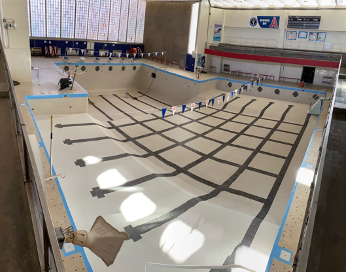
    Acadia University announced on October 1st, 2020 that the indoor swimming pool, located in the Acadia Athletics Complex, will be closed indefinitely. The closure of the pool was declared for two main reasons; the first is to ensure the safety of Acadia students as well as the safety and well-being of the community, and the second is to respond to financial needs. Not only has the current pandemic impacted the university, but the indoor swimming pool has been operating at an annual deficit for years, said Chris Callbeck, Vice President, Finance and Administration.

    Acadia University’s swimming pool was built in 1967, and since then it has been home to many organizations that not only include the student body but the residents of Wolfville and the Annapolis Valley region, who make up more than 85% of the facility’s users. Among them are the Acadia varsity swim team and Acadia’s S.M.I.L.E. Program. VP Chris Callbeck stated that the pool’s access and the changeroom design, make cross-over between Acadia students and members of the community inevitable. Although, it seems like a simple solution would be to compose a schedule that allows community members and students to use the pool separately, with time for cleaning and sanitizing in between.

    Not only has the closure of the swimming pool directly affected the students who are involved in the programs that use the pool frequently, but it has also affected students who do not regularly use the pool for many reasons.

    For example, mental health and physical health go hand in hand, people need to move their body so limiting options to do so will deplete not only the students’ motivation to exercise but how people exercise and how often. Secondly, a person’s mental health is also greatly impacted by social habits, and Acadia’s swimming pool is the heart of the athletic center and the main source of community, so shutting down the pool has slowed the constant flow of people in the center to a near standstill. This can cause anxiety and depression in students, while also bringing down the overall morale of the athletic center. Lastly, whether or not students use the pool, it is common knowledge that a fraction of tuition is dedicated to the maintenance of facilities for student use, so the closure of the swimming pool unfortunately raises the uncomfortable question of where exactly that money is going now. This can cause more confusion and mixed emotions amongst a student body which is already faced with adapting to a global pandemic, a full course load that is almost completely online, and an excess of other everyday stressors.

    The closure of the pool affects everyone in a negative way, while there are other options for exercise, the weight room can only allow a maximum of 20 people at 45-minute intervals, so the options for alternative activity are extremely limited.

    While Callbeck says that the university is continuing a dialogue with government partners in hopes of developing a solution, the Acadia University swimming pool remains closed, another consequence of these unprecedented times and an example of some of the limitations that students are facing due to COVID-19. Acadia students trust that our leaders are working diligently to find a solution and reopen the pool for the benefit of the students’ physical and mental health.

Betzillo positions itself as a versatile gaming hub where structured bonuses and adaptive gameplay mechanics support both short sessions and extended play.

Built with a focus on innovation, Spinbit integrates modern casino architecture with rapid transactions, appealing to players who value speed and digital efficiency.

Ripper Casino emphasizes bold entertainment through high-impact slot titles and competitive promotions crafted for risk-oriented players.

A friendly interface and stable performance define Ricky Casino, offering a casual yet reliable environment for a wide spectrum of gaming preferences.

King Billy Casino channels classic casino spirit into a modern platform, delivering recognizable themes supported by contemporary reward systems.

Immersive visuals and layered slot mechanics are at the core of Dragonslots, creating a narrative-driven casino experience.

Lukki Casino appeals to players seeking direct access and minimal friction, focusing on fast loading times and intuitive controls.

Casinonic provides a structured and dependable gaming framework, blending modern slots with transparent operational standards.