
Category: Science

  • Your Resolution: The Psychology of Habit Formation

    “New Year, new me,” or so the expression goes. You’ve made a resolution and this time you’ve sworn to see it through. But as the new semester starts and the assignments start rolling in, that today’s the day mentality starts to turn into I’ll start tomorrow. There’s no shame in not achieving your New Year’s resolution. In fact, you’re probably not alone. A recent public survey found that only an approximate 40% of adults complete their New Year’s resolutions. But what if I told you that there was an easier way to achieve your goals and make that resolution of yours a reality? With a little help and understanding of the psychology of habit formation, this could very well be.

    Like many motivated individuals, you’ve probably decided to go all out in the pursuit of achieving your New Year’s resolution. I want to quit smoking, so I’ll go cold turkey. I want to lose weight, so I’ll go to the gym seven days a week. I want to eat healthier, so I’m going vegetarian this year. Your resolve is certainly admirable, but not necessarily set up for success. Drastic changes in behaviour are not sustainable for long-term objectives because of lacking foundational habits. Quitting smoking is difficult if you’re used to smoking several times a day. Going to the gym seven days a week is difficult if you’re simply starting out of the blue. Eating a primarily vegetarian diet can be difficult if you haven’t done your research on what nutrients you need and haven’t planned out meals that are filling. If it is not a regular behaviour, you are more likely to return to your old habits.

    Habits are defined as a settled tendency or practices in response to environmental cues. Habit formation is the process of replacing these certain behaviours with new ones. As many of us may know, developing new habits can be rather difficult. As the adage goes, you can’t teach old dogs new tricks … unless you have the patience for it. One of the first steps of habit formation is to be aware of the habit you are trying to replace. If you are a repeat offender of biting your nails, the first step is to realize when you are biting them. These bad habits occur often mindlessly, so to recognize and acknowledge these actions will be the first steps to habit formation.

    “But it’s hard!” may be a complaint that you have. Changing habits has a tendency to be so. This is where step two comes in. Initiate reminders to help motivate you to stick with your new habit. If you want to go to the gym first thing in the morning, set an alarm. If you’re prone to snoozing, set multiple alarms. Pack your gym bag the night before and place it directly across from you so that in the morning it’s the first thing you see. Set your coffee maker to automatic and start your day with a good old Cup o’ Joe. Put your sneakers directly by the door. Develop your environment so that it is a constant reminder of your goal and leave yourself no excuse to break the habit.

    This being said, it’s important to do this in stages. There is a difference between training yourself into go into the gym more frequently and forcing yourself to go seven days a week. This is the easiest way to burn yourself out, and the fastest way to disturb habit formation. Going all out for the first week will most likely see you relapse into your old ways because you have failed to establish a habit. You are going to the gym with a feeling of reluctance, not because you have trained yourself to want to go. If you develop a habit over time, the likelihood that you will relapse to old habits is significantly less and will help you achieve your goal in the long run. It is better to teach yourself to go to the gym twice a week for an entire year than it is to go everyday for the first two weeks of January.

    The last step is to actually have a goal. Many of us start the New Year by saying that want to lose weight. But how much weight, and by when? You want to quit smoking, but by when? Having an actual goal in mind will help with your overall levels of motivation over the year. By setting small goals to achieve over a longer period of time, you will feel rewarded each time a smaller goal is met. A resolution is a marathon, not a sprint.

    With these things in mind, good luck in the New Year!


  • Annual Physics Holiday Gathering

    On November 28th 2016, Acadia Physics students and faculty came together for the annual Physics Holiday Gathering at the University Club. The evening of holiday fun included a wonderful feast where the professors served the students. Prior to the gathering, every participant bought a gift under $15, wrapped the gift, and brought it to the supper. After the supper was finished, each ‘Yankee-Swap’ participant picked a number from a hat. This continued until all gifts had been unwrapped and/or traded. Gifts included fun things such as Acadia University apparel, candy, and a Schrodinger’s Cat thought experiment flask.

  • Acadia Computer Science Society Teaches Acadia Students HTML

    189087_137606902976995_5646164_n

    On November 3rd, the Acadia Computer Science Society presented an Introduction to Programming workshop for non-Computer Science majors. The workshop allowed people to explore HTML without the commitment of signing up for an introductory computer science class. The workshop took place on the second floor of Patterson Hall, and provided a warm and friendly environment. Acadia Computer Science Co-Presidents Hayly Thackeray and Mrugakshee Palwe led the event and encouraged everybody to discuss why they chose to come, and talk to the people around them. The program allowed students (and some faculty members) to explore programming in a nice environment. The event also provided catering which was kindly received by the participants.

    Participants learned how to code a website and learned how to change font, headings, and pictures. They also learned how to read basic HTML, what headings were, and how to transfer code into a website. The project allowed for lots of creativity and gave people a way to express their interests via a website. While some made autobiographical websites, others made websites based on their interests, such as music, theatre, and sports. The interactive nature of the learning environment contributed to a fast paced exploration that brought people together. The program also discussed ways that people learn, and allowed people to design what felt familiar for them. After the workshop, it was interesting to see all of the ways that people could approach the same task differently. It was also interesting to see how many people found the event exciting and inviting. There are lots of great ways to get into computer science without taking a course in the field. Using websites to learn how to code is a great way to start.

    HTML is especially fun, because it can show you a visual representation of what you have figured out to complement intuitive instructions. The event represented a combination of computer science and general learning aids, and enriched the Acadia campus. Such events promote inter-disciplinary education, allowing majors from sociology, English, and physics to come together to experience the same education. Such a simple workshop shows that it’s possible to combine lots of areas of study and that people can work together when it comes to computer science. The Computer Science Society is a great way for people to learn about what is happening in the scientific world, and for people to access education that could really help them in the future. Allowing people to gain hands on experience with coding opens doors for anybody that might want to pursue the field in later years.

    Getting into computer science can be hard, because there aren’t a lot of ways for people to learn about code through the current education system. Elementary schools and middle schools are working on implementing computer science studies, but it is a difficult process. Attending a pop-up workshop with a local computer science group is a great way to learn more about the process of creating a website, or a piece of code. It’s also a great way to meet like-minded people. The event was fantastic, and received great turnout.

    To learn more, email [email protected] or message the Society on Facebook (“Acadia Computer Science Society”).

  • Recap: Mental Health Fair at Acadia

    On Friday November 25th, the Acadia Players Association hosted a Mental Health Fair in Fountain Commons. Through the funds that were donated the previous year from the Athlete Auction held at the Axe Lounge, the committee organized an afternoon of guest speakers and visitors, who collectively helped to raise awareness towards Mental Health on Acadia’s Campus. This event was meant to bring together all students at Acadia so that they could unwind for an afternoon whether that meant making Christmas ornaments with the Clayground, learning drumming techniques, meditating, or even play with Timbit, a dog from the St. John’s Therapeutic Dog program.

    To start off the event, our Athletic Director Kevin Dickie started off the speaker portion, but not only reflecting on what the day would look like, but what the purpose of this day was. In an intimate setting, speaking to around 60 people, all of our speakers were able to emphasize the importance of mental health awareness.

    We were fortunate enough to have a guest speaker from Bell Aliant who works with Bell Let’s Talk. Jessie Bower is an individual who is living with a mental illness. Her inspirational speech left everyone in silence as she reflected on her personal story, growing up and being diagnosed as having a mental illness. It was amazing to see not only how intently people listened to her story, but also how many people took the opportunity to speak to her one on one, either asking about their own lives or asking on behalf of a friend.

    To end the speaker portion of the event, Erica McGill from the Acadia Support Center on campus, came to talk to the students about the prevalence of Mental Health on campus, as well as the resources that are available.  She also spent some time in the down time portion of the afternoon, speaking to students one on one.It was extremely rewarding walking around seeing students learn about the facilities on campus, cuddle Timbit the dog, make posters about what mental health means to them and so much more. It was incredible to see how students really came together to listen about the issue, learn about how together we can work through it, and just in general have a fun afternoon. I myself participated in the meditation classes and played with Timbit!  The reality of mental health is that in some way or another, every single person is impacted by it. Whether it is with someone personally, a friend, or a family member. By recognizing how prevalent mental illness is, it is important to recognize that it’s not a negative identifier. It should not have this negative stigmatization, as it is not an uncommon trait. Something interesting that was established during the speaker portion of the event was that today, we focus so much on our physical health, ensuring that our bodies are healthy and properly functioning. Why is it that we don’t place the same emphasis on our mental health? Through personal experience, I have learned that if I am not placing enough importance on my mental health, physically I am unable to be my best. Its okay to not be okay, what is not okay is being too scared or embarrassed to try and find a solution. This was the first time this event was held at Acadia, and the hope is it will carry on for years to come.

    It was extremely rewarding walking around seeing students learn about the facilities on campus, cuddle Timbit the dog, make posters about what mental health means to them and so much more. It was incredible to see how students really came together to listen about the issue, learn about how together we can work through it, and just in general have a fun afternoon. I myself participated in the meditation classes and played with Timbit!  The reality of mental health is that in some way or another, every single person is impacted by it. Whether it is with someone personally, a friend, or a family member. By recognizing how prevalent mental illness is, it is important to recognize that it’s not a negative identifier. It should not have this negative stigmatization, as it is not an uncommon trait. Something interesting that was established during the speaker portion of the event was that today, we focus so much on our physical health, ensuring that our bodies are healthy and properly functioning. Why is it that we don’t place the same emphasis on our mental health? Through personal experience, I have learned that if I am not placing enough importance on my mental health, physically I am unable to be my best. Its okay to not be okay, what is not okay is being too scared or embarrassed to try and find a solution. This was the first time this event was held at Acadia, and the hope is it will carry on for years to come.

  • Acadia Faculty and Students Attend Horton High School Academic Challenge

    horton-high-school-brain-wars-competition

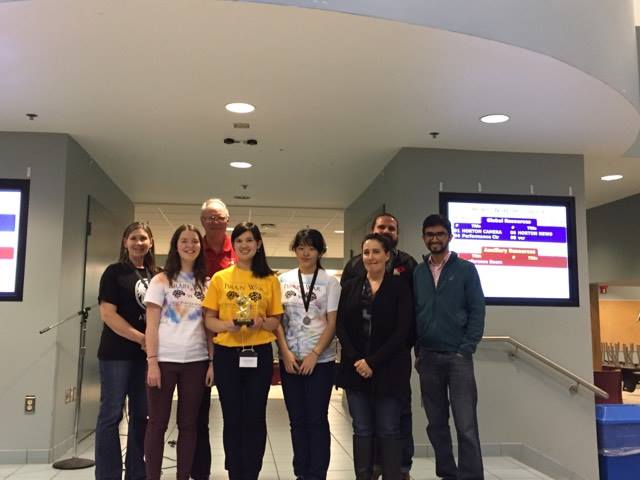
    On Saturday, November 5th, Horton High School hosted its second Brain Wars competition to engage students with creative problem solving tasks. The event took place in the Horton cafeteria and went from 11:00-5:00pm. Acadia Faculty members such as Dr. Russell Easy, Prof. Robert Seale, Dr. Danny Silver, and Michelle Coleman judged the teams that presented ideas. Dr. Craig Bennett and Dr. Jeff Hooper were present as Celebrity Brains. In addition, Acadia students Jamie Byrnes-MacDonald, Kaela Fraser, Connor Murdock, Teagan Kew, Jennifer Kerr, Nicole Jarmash, Alice Lacaze-Masmonteil, Miriam Hewlett, Corbin Russell, Margaret Buhariwalla, Kirsten Whiteway, Olivia Raiche-Tanner, Rachel Clarke, Dillon Burgess, Madeleine Kelly, and Omar Khattab volunteered at the event. Dr. John Wang and Dr. Haixin Xu also volunteered. Other volunteers came from St. Mary’s University and CBC Unlimited Engineering.

    Final Results:

    1st: Bridgetown Regional High School- Magnesium Bright

    2nd: Horton High School- Inflatable Pumpkin

    3rd: Northeast Kings Education Centre- Space Jam

    Best Team Nomenclature: Horton High School- 2 [Bee icon] or °2 [Bee icon]

    Prize for Ingenuity and Creative Thinking: Bridgetown Regional High School – Magnesium Bright


    The event incorporated aspects from the arts, science, engineering, math, and technology. Jessica Bennett, the student Director of Brain Wars at Horton, was inspired by a similar event at St. Mary’s. “I went when I was in 10th grade,… and was so inspired by their competition, I came back the next year and said, we should do that here, for high school students.” The turnout this year was twice as good as it was last year. For Bennett, one of the highlights was witnessing how many different ways people approached the tasks. This mentality was echoed by Tracy Webb, a Horton High School faculty member. “[There were some] really innovative ways that different groups tried to solve the tasks … some groups would try to go step by step, and others would concur and divide. It was interesting to see the huge variety of ways that people worked together as a group.” Some groups approached a greek alphabet and greek passage by trying to divide it word by word. Others went through it letter by letter.

    Bennett came up with each task and tested them before school started. At the beginning of the year, she captained the Horton team and trained them for these sorts of competitions. Such tasks included coming up with a possible use for a mystery tool, and answering trivia questions. The tool task was ranked based on creativity and how close their answer was to the actual tool. Trivia questions included things like: “What is the name of the physicist whose particle was confirmed in 2013 (the particle is named after him)?”; “If the probability of getting a red light is 40%, how likely is it that you will get a green light 3 times in a row?”; and “How many transistors are there in an average microprocessor?” The event also included artistic tasks, such as interpreting a STEAM (Science, Technology, Engineering, Arts, Mathematics) concept with a dance, and putting on a pirate costume as quickly as possible.

    Brain Wars hopes to encourage young people to get involved with STEAM and to pursue careers in the sciences. This type of event helps show students that there’s more than one way to solve a problem, and it’s not always the most obvious way. It helps them realize that there’s a huge connection between the sciences and the arts. If you want to be the best at solving problems, you need to bring in each element instead of isolating just one. This was seen primarily at the balloon animal station. Some groups tried to divide a long balloon into four segments and approached it in a logical manner. However, those groups realized that looking at it in a mathematical way wouldn’t leave enough materials for other components. Creating a design and looking at it from an artistic perspective allowed teams to come up with more diverse answers. In addition, the sand castle building challenge brought together scientific ideas, such has cohesiveness and the physics behind a draw bridge with creative designs.


  • Flu Season is Back: Remember to Bundle Up!

    The leaves are changing colour and there’s a chill in the air, both signs of fall being in full-swing and the dreadful arrival of everybody’s favourite time of year – flu season.

    It goes without saying that if you have a cold, cover your mouth by coughing or sneezing into your elbow. This will help to prevent the spread of germs to those in your immediate vicinity. Wash your hands before you eat and after you’ve used the restroom. Take note of the numerous hand sanitizing stations located around the campus, and take the opportunity to kill as many harmful germs on your hands as possible. Most importantly, if you’re feeling ill, just stay home and get as much rest as possible. This is a good idea for two reasons: you will feel better much faster, and you will not spread your germs to your classmates. You can always ask a classmate to send you the notes if you’re that concerned about missing class!

    If you’re prone to feeling under the weather, hopefully you had the chance to drop by the main level of the ASU’s Students Center to get your flu shot. If you were unable to visit the flu clinic, there are still plenty of options available to you to ensure that you stay healthy this upcoming winter season. You can book an appointment at the Acadia Student Health Clinic online, over the phone, or in person. There are also several off-campus options such as the Mudd Creek Medical Co-op located on Elm Avenue and the Eastern Kings Memorial Community Health Centre located on Earnscliffe Avenue.

    The Acadia Student Health Clinic is open Monday through Friday at 9:00am, their entrance located on the west side of Dennis House. The clinic also offers appointments with nurses who can address a wide variety of concerns such as morning after pills, sexual healthy questions, pregnancy tests, STI testing, travel vaccine injections, and other injections such as B12 and Gardasil. The clinic is available to any Acadia student who wishes to take the necessary precautions to be healthy and happy. For any other questions, the clinic can be contacted at: (902) 585-1238.

  • Denying global warming is beyond dangerously blind ignorance

    The internet allows anyone, even those who don’t know the first thing about what they are writing, to advocate their pet hypotheses. Sadly, erroneous ideas are too easily repeated as though facts by others to perpetuate misinformation; the more repetitions, the more easily one finds wrong ideas when surfing. This is why many academics, self included, do not allow their students to use sources other than the primary literature: the web is replete with dangerous misinformation. Such misinformation is the fodder for Holocaust deniers and all other manner of obscenity; a Lethbridge professor is currently using the argument that the internet is factual as support anti-Semitic rants. The internet is not factual evidence; it is an un-policed repository for whatever anyone want to put there. As another illustration of the danger of the internet, check the credentials of deniers of global warming. You will almost certainly find someone who has done a bit of surfing, and even more likely has not bothered with consulting the scientific literature.

    Skepticism is a healthy expectation in science and other academic disciplines. And we should not abandon skepticism, but we should also not emphasize skepticism over overwhelming consensus, because costs to us now (i.e., more severe weather such as recently in Sydney, etc.) from global warming (NASA 2016) are already mounting faster than we are exposing the folly of deniers of global warming. By overwhelming consensus, I mean that 97.1% of climate scientists (i.e., only people with credibility on the topic) agreed that global warming is a fact (Cook et al. 2016; and for fun, check out this video). You will rarely find this degree of agreement in any field of science! Perhaps you don’t trust scientists or NASA; if so, you probably are also skeptical about us having put people on the moon, or probes in the farthest reaches of our solar system. I will trust NASA long before I trust an untrained denier of global warming. In any case, skepticism about global warming has taken the most distant back burner; this is why virtually every government in the world is actively and aggressively working to address the problem. They know it is the right approach.

    Is CO2 partly responsible? According to climate scientists, it is. Does it matter that CO2 makes up <0.04% of the atmosphere was CO2? Think about this; how much botulism toxin do you need to consume before you die? The answer is 0.000000013 g will kill you. In other words, it’s not the absolute amount that’s important, it’s the magnitude of the effect of each bit.

    A bit of history. What happens when controversial ideas are first presented? Ever heard about how Copernicus suggested that the Sun didn’t revolve around Earth? Famously, even Galileo had to recant his support for this. Have you met any credible folks that suggest that the sun revolves around the earth? Have you met any credible folks that believe that the earth is flat? Skeptics also proclaimed that humans would never be able to build a machine that could fly. The pattern repeated, ad nauseum, is that no one believes an idea initially, then a few do, then many, then all the credible individuals do, and eventually nobody cares about the doubters. If an idea is correct and stands up to rigorous scrutiny, as have ideas about global warming (which incidentally dates back to 1896!), credible skeptics fall away, and the history of examples above show that poorly informed hoax advocates will eventually fade into obscurity. We’re at the latter phase for global warming.

    Let’s take solace in the history of deniers. As George Santayana (1863) said “Those who cannot remember the past are condemned to repeat it.”

    References

    Cook, J., Oreskes, N., Doran, P.T., Anderegg, W.R., Verheggen, B., Maibach, E.W., Carlton, J.S., Lewandowsky, S., Skuce, A.G., Green, S.A. and Nuccitelli, D. 2016. Consensus on consensus: a synthesis of consensus estimates on human-caused global warming. Environmental Research Letters 11(4): p.048002.

    NASA 2016. http://climate.nasa.gov/scientific-consensus/

  • WISE Acadia Celebrates Diversity in Computer Science

    On Tuesday, October 18th, WISE (Women in Science and Engineering) Acadia presented a collection of poster presentations bringing together a variety of researchers from across campus. Each poster represented a unique way to look at how technology can be applied to different fields. In addition, the event included a talk by Dr. Anne Condon titled, “It All Computes: Celebrating Diversity in Computing”.  The event took place in Fountain Commons, and brought together women from all scientific disciplines to address women in Computer Science. Each poster brought a good topic to the conversation, and the event overall encouraged female scientists to continue pursuing their degree of choice.

    Some of the projects featured in the event include:

    Girls and Gaming: Influencing Young Women to Join Computer Science (Hayly Thackeray)

    The purpose of this thesis was to create a curriculum for girls in Grades 7 and 8 that teaches them the basics of Computer Science through creativity in video game design. The creative and fun game aspect will spark an interest in this age group, influencing their decision on participating in the Computer Science field. The Girls Get WISE Techxpedition was held on August 18th, 2016 with the help of WISE Acadia, WISE Atlantic, the Anita Borg Institute, Open Acadia, and the Jodrey School of Computer Science. The girls learned to create their own video game in Scratch and try out some Lego robotics. 25% of the girls that attended the program said they wouldn’t have considered becoming a Computer Scientist before the event, but are now. In addition, 75% of the girls said they would continue to program after the event, 20% said they weren’t sure if they would continue to program, and 92% of the girls said they enjoyed the event overall.

    New Radial (Jon Saklofske, Marc Muschler, Ian Brunton and the INKE Research Team)

    New Radial is a data visualization environment that offers an alternative digital workspace for visualizing images and text. It encourages users to contribute to ongoing academic dialogue via connections and operates as a middle ground between large datasets and a close reading environment. Radials are circular arrangements of related nodes that play a central role in a user’s exploration, collection, curation and connection of database objects for humanities-based scholarship. They allow users to work within a middle ground between large datasets and a close reading environment, providing an alternative scale of interpretation within a digitized framework.

    Monitoring Mammal Movement Through Terrestrial and Aquatic Passageways in Antigonish, Nova Scotia Using Remote Camera Sensing (Stephanie White, Randy Milton, Trevor Avery)

    Nova Scotia is gradually expanding its major 100-series highways in response to safety concerns. Highway twinning along a stretch of the Trans-Canada Highway intersects with an ecologically sensitive watershed, disconnecting wildlife movement in the area. To mitigate highway impact, wildlife terrestrial and aquatic passageways were installed along with 4 km of fencing and four one-way control gates. Passageways are >50 m long, and the terrestrial passageway has a central atrium. These passageways are the first to be studied in Nova Scotia, as well as the only to integrate both fencing and an atrium into the design. The highway is set to open late fall 2016, providing an opportunity to study wildlife movements before construction, during construction, and after installation. The scope of this 4-year project covers monitoring the movement of mammals through the passageways using remote camera sensing with a focus on medium-sized mammals (i.e. smaller than deer). Quantifying activity through images will be used to identify drivers of wildlife movement within the passageways. Factors under consideration include fencing, light intensity, moon phase, temperature and weather conditions. Select factors are manipulated to identify which may have a greater effect, including altering light levels by covering the atrium for extended periods connected to moon phases. Findings will be used as a baseline for future passageway design in Nova Scotia.

    Escaping Local Minima with Symbols (Ahmed Galila)

    This concept was inspired by how the brain processes sensory input. Inputs are propagated through the network one layer at a time. Each layer learns a certain representation of the input data. Each representation is more abstract than the layer below. This allows deep architectures to provide better generalization. The goal behind training deep architectures is to reduce the error in the model’s output as much as feasibly possible. Deep architectures have complex error functions with many local minima. Deep models tend to be trapped in these local minima.

    In addition, the event included topics such as: Rethinking Time Course Data: Growth Curve Analysis in Spoken Word Recognition Research (Alexander Sproul, Randy Lyn Newman), Data Mining and Machine Learning at the Acadia Institute for Data Analytics (Danny Silver), and Unsupervised Multi-modal Learning (Mohammed Shameer Iqbal)

    “I really liked the poster session because it gave people the chance to talk to people and ask questions, instead of going to a lecture.” – Acadia Computer Science major

    The poster session was followed by a talk given by Dr. Anne Condon (a professor of Computer Science at U British Colombia). Her enlightening portion of the event discussed the difference between male and female enrollment in the area of Computer Science, and suggested some ways to combat this problem. Her discussion pulled together the importance of having programs such as WISE, and made the event even more exciting.

    “If you get the chance, she’s [Dr. Condon] really nice to talk to, and she’s really smart. She really loves what she does, which I think is amazing because I’m struggling myself to figure out what I actually want to do with my Computer Science Degree… She has found her niche and she loves it. I went to her talk earlier, and it’s incredible how much she loves what she does. She’s really amazing, and I like that a lot.” – Hayly Thackeray


  • Will the Moon Belong to China?


    American and Soviet forces have dominated space activity for the last couple of decades, and China will soon join them. The solar system represents a political and economic source of power. The nations that have successfully explored the moon are honored on earth with more prowess. Space exploration is seen as a symbol of success and a reflection of scientific development.

    To truly understand the beginning of Chinese rocketry, it is important to understand Qian Xuesen. Xuesen attended MIT in America after finishing at Shanghai Jiaotong University. He moved to Caltech to finish his PhD in the 1940’s. He helped to study jet propulsion when the U.S. went to war, and produced technology to counter German rockets. He also co-founded Caltech’s jet propulsion lab. After being accused of being a Communist sympathizer (he firmly denied political involvement) he was denied an application for U.S. citizenship. He was detained from America, and lost his U.S. security clearance. His trip back to China was the beginning of China’s assent into spatial power. Unfortunately, it was also the beginning of China’s opportunity to surpass the United States.

    In the current age, China is doing many things to increase their solar power. In the next 10 years, China is planning to reach the dark side of the moon, something that both American and Soviet space agencies have failed to do. The Chang’e 4 lunar mission is taking shape rapidly and will be a highlight of solar exploration in coming years. The mission team is currently deciding on a landing location as well as an instrument package. Human objects have not gone that far to date, and this will catapult China’s stance on a global level. This mission will hopefully lead to a ‘South Pole-Aitkin Basin’ sample return. The Chang’e 4 will focus more on Physics than Geochemistry, which was the primary focus of the Chang’e 3. When the Shenzhou 5 went into space for 21 hours, China began its rein.

    While NASA’s space budget is roughly 19.3 billion and widely outshines China, China had 19 successful space launches in the last year, which was the second highest in the world. Russia pulled ahead with 26, and America fell behind with 18. It is a very realistic possibility that China will surpass NASA in a couple of decades. James Lewis, a director at the Center for Strategic and International Studies, says that he, “… doesn’t worry about China suddenly leapfrogging [America] I worry about us being distracted and waking up to realize that they have a much more powerful position in space.” The QUESS satellite will likely be in orbit by the time this article is published. Standing for ‘Quantum Experiments at Space Scale’, QUESS marks a first in quantum encrypted information successfully passing between an orbiting satellite and the earth. By encrypting information in quantum states of particles like photons, all security threats are immediately visible to both the sender and receiver. Quantum encryption is academically unbreakable.  During a time of immense global surveillance, the sort of attack that this network could withstand would be immensely strong. It would allow the Chinese military to keep an eye on spies and to swap information. Since China is the only nation using quantum communications in the atmosphere, it puts them ahead by a lot.

    China’s rising spatial capabilities have lead to a conflict between Beijing and Washington. China’s space program is repeatedly cited in U.S. security reports as a growing source of trouble. China might have people walking around on the moon sooner than the U.S. China has also been interested in aligning with nations that aren’t as directly tied to Washington. Nigeria, Venezuela, and Pakistan have all used China’s military satellite navigation system, and this may lead to China aligning with these nations further in the future. Since NASA is unable to cooperate with China due to a congressional ban, it’s unlikely that the U.S. will benefit from these strides. However, many current partners of the U.S. may realign with China if it continues invite other countries to take part in its projects. In addition, if the expiring International Space Station closes in 2024, China will be the only nation up there. It is possible that these activities could be a catalyst for international peace. Since the solar system is becoming increasingly crowded, new decisions will need to be made to navigate a common frontier.

  • The Importance of a Field Course

    The Importance of a Field Course

    In my mind, I am the type of biology major who knows they are going to medical school. I am the type of biology major who has this deep, profound interest in microbiology rather than macrobiology. I am the type of biology major who is inclined to focus upon the complex and intricate world of tiny things as opposed to the way that multicellular organisms relate to one another. I am the type to pride oneself in the ability to distinguish between the convoluted biological processes of cellular communication as compared to the somewhat indeterminate science of how organisms relate to one another. Or so, I thought.

    Try as I might to ignore it, we exist in the world as it is, living, breathing, and decomposing. Though we cannot exist without our microscopic determinants – the large field is where we gain our credibility and therefore our existence. One tends to forget this, as we are focused in the academic pursuit of science and knowledge. As budding scientists, we have a tendency to focus more on smaller and smaller particles. However, science exists at all stages of complexity, whether it be the smallest stages of life, or the large, multicellular organisms that constitute the study of biology as we know it today. While it is important to understand our origins, we exist in a larger ecological picture, and we affect said environment as we move through our world each and every day.

    I was first drawn toward the Bon Portage field course at the persuasion of a close friend.  As BIOL 3013 counted as a full three hour a week class, an additional fall credit, and as it was apart of the biology core as a biodiversity course, what more could I ask for? All that was required of me was two weeks sacrifice of my summer, and the course enrollment fee.  What I drew from the course was more than I had bargained for.

    Bon Portage renewed my passion in biology, the passion that had me signing up to dedicate 100+ hours to the course load. When you are removed from the real world experience, one tends to forget the real world applications of a biologist’s actions  When thinking from a purely scientific approach, it is easy to remove yourself from the natural world. However when immersed in the field, one can visibly see the interactions between our objective understandings and the living, breathing ecological world. The Bon Portage field course reminded me of the reasons why I fell in love with the scientific study of life in the first place.

    Bon Portage gave me hands on experience to view biological processes that I would have only had the privilege of learning the theory of in class. Before, the idea of waking up before the sun to tag birds trapped in towering nets among the forest’s understory would have unsettled me. I could not have pictured myself stomping through worn down mossy trails hunting mycorrhizal fungi fruiting bodies and actually enjoying myself.  Never would I have seen myself reaching into a dark, damp, mysterious burrow in search of a fluffy petrel chick and measuring its physical properties for population estimates. Bon Portage showed me how to be comfortable sleeping in the confines of arachnids despite my initial unrest. The island taught me how to live without taking a shower for fourteen days and still remain completely at-ease in a worn out baseball cap and a sweater that I had not changed for three days on end.

    I expected myself to finish the Bon Portage field course with an additional credit to my diploma and extra time on my fall course load agenda. Instead, the Bon Portage field course taught me how to remain immersed in the field as compared to comfortable in the realm of theory. For all Acadia Biology majors looking to extend their realm of understanding, I implore you to enroll. Bon Portage not only left me with a newfound understanding of my own environment, but with a renewed context of myself in relation to my environment.

  • Habit Formation


    “A man who can’t bear to share his habits is a man who needs to quit them.” 

    Stephen King, The Dark Tower


    Personally, I am a creature of habit, as are most people to some degree or another. This is generally considered to be a good thing by our culture, as it implies reliability, if not anal retentiveness. What does this mean, however, if your most common habit is to procrastinate? I can attest to this (as I am furiously typing this article far too near the deadline), and so am writing this article to not only potentially help a few of my fellow students perhaps pick up a few good habits, but also to help acquire some of my own (Mostly the latter).

    habitformation


    The habit cycle
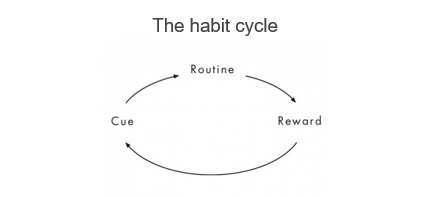
    Above is the ‘habit cycle’ as shown in Charles Duhiggs book ‘The Power of Habit’. Duhiggs states that habits are formed as a result of a three part process:Cue – Routine – Reward. Firstly is the ‘Cue’ stage in which some external stimulus prompts the routine in question. Secondly, there is the is the actual habit itself, or the ‘Routine’. And thirdly, and most importantly, is the ‘Reward’ which is why those immediately gratifying ‘bad’ habits stick so easily, yet and habits where the benefits are not immediately apparent do not stick as readily.


    So what can one do with this information? Firstly, let’s look into forming new, positive habits. One would obviously begin by determining the habit to be adopted. Next comes the need to need to determine the Cue and Reward portions, which can be a touch more tricky. The Cue could be anything from a reminder set on a cell phone, to a physical sensation such as fatigue or stress. Then one should determine an appropriate reward, in some cases the activity itself can be viewed as the reward, but in others outside motivation may be necessary. An example could be as follows:


    Cue: Waking up

    Routine: Reviewing one’s course materials for the day

    Reward: Coffee

    As you can see the Cue is simple and regular, the routine is attainable and the reward is reasonable and something the person was going to do anyway. The following is a bad example:

    Cue: Whenever I feel like it

    Routine: Run 1km

    Reward: McDonalds


    In this example the cue is unclear, if existent at all, and the reward itself negates the positive effects of the routine being adopted.


    However, eliminating an old habit is far harder than not forming the habit in the first place. Habits are formed in the brain as a way of, in overly simplified terms, freeing up space in your head so you can occupy yourself with other more novel things. Therefore one should not seek to eliminate old habits, but to modify them into positive ones. So you could look at a (completely hypothetical, of course) negative habit loop like this:


    Cue: Notice an assignment is due soon

    Routine: Look at the assignment after ‘a couple’ of episodes of garbage television

    Reward: Watching television until 3 in the morning


    And adjust it to something like this:


    Cue: Notice an assignment is due soon

    Routine: Do the assignment

    Reward: Watch slightly less garbage television


    All this being said, this process is far easier said than done, that I can personally attest to.


    Sources/Further reading


    [1]http://www.npr.org/2012/03/05/147192599/habits-how-they-form-and-how-to-break-them

    [2]http://charlesduhigg.com/how-habits-work/

  • Sex Trafficking and Data Mining

    Harvard Computer Science graduate Chris White has recently applied data mining tools to make huge leaps in eradicating sex trafficking. In September 2010, Dr. White travelled to Afghanistan to bust an online financial system and confront al-Qaida. While at Harvard, White had studied the intersection between big data, statistics and machine learning.


    Defense Advanced Research Projects Agency

    A mentor introduced Dr. White to DARPA, the Pentagon’s scientific development agency. DARPA stands for the “Defense Advanced Research Projects Agency”. This agency focuses on making huge investments to technology that advances U.S. security. The very first project DARPA completed was the launch of Sputnik in 1957, with the goal being to increase the national security of the United States. Most of their workers are part of the government, but they also employ students who are new to the field. They created not only advanced military technology, such as precision weapons and stealth utilities, but also created a lot of the technology that civilians use today. Such technology includes the Internet, voice recognition, and the Global Positioning System, also known as the GPS. They also created night vision, Agent Orange, and weather satellites. DARPA currently employs about 220 government officials, and nearly 100 managers. It currently has 250 research programs. DARPA aims to help the US stay at the top of the technological game, and releases huge advancements in tech every five to ten years for the rest of the world to enjoy.


    The Birth of Memex

    Attending a DARPA conference taught White about the world and the wars that are taking place. He learned top-level information on the brutality of the tactics used for killing, terrorizing, and defensive mechanisms. This was White’s first introduction to the idea that big data could be used to combat dark problems. While working for DARPA, White learned that the U.S. had too much information on things that were happening in Afghanistan, and that they had a problem with sorting through all of the data they had collected. This problem lead to the development of tools that could help with sorting through huge amounts of information. After leaving DARPA, White decided to take on making these tools easier to use. He called his project Memex, combining the words Memory and Index. The project took three years and around $50 million dollars. The search-engine tool box contained units coded by both industry and university professionals.  The purpose of the project was to mine through data that couldn’t be easily reached on a platform such as Google, Firefox, or Safari. This tool would become helpful in making associations between different ideas and facts, therefore making huge amounts of data visual. The tool would start by going into the dark side of the web.

    The Onion Router

    There are a lot of things that regular internet users don’t know. Only about 5-20% of the internet is open to the public. For example, there are pieces of data that are protected by passwords via social media. However, the lesser known area of the internet isn’t an untraveled place. Most of this lesser known area is accessed through something called The Onion Router (or the “TOR”).  TOR is a free software that allows people to communicate with each other in an anonymous way. It is capable of concealing a location and keeps people from being discovered through traffic analysis. The software is intended to help protect people’s privacy, and also to encourage confidential communication. It was originally developed by DARPA to protect U.S. intelligence communications. However, it has also become popular for people who wish to hide their activity from the government. There are about 2.5 million daily visitors, including ISIS planners and hacktivists. Sex trafficking is unique, as buyers must be able to find their products. This is the exact reason why human traffickers don’t use regular search engines.

    Memex Applications

    Memex is able to search the Onion Router and present hidden sites in a simple list. This sort of accomplishment created huge waves in the possibilities of data mining. Usually, detectives and private investigators would normally spend two weeks working twelve hour shifts every day to search through the same amount of data that Memex is able to search through in moments. These detectives would need to search page by page on Google and write down new information to search (such as an email address), thus losing other pages that came up on the same search page. A tool called Datawake in Memex represents search results as a series of circles. It organizes information in a way that is easy to follow, and allows detectives to look at all of the results all at once without neglecting certain areas first. Old cases lead to new cases, the pattern continues. With these revolutionary changes in the ability to mine huge amounts of data, detectives are making huge breakthroughs on crime stopping technology.


    The power of the internet is only three clicks away.


    For further reading:

    https://www.devex.com/news/how-technology-is-taking-down-human-trafficking-87658

    http://www.popsci.com/man-who-lit-dark-web

    http://www.darpa.mil/about-us/about-darpa

    http://www.memex.ca/

    https://www.torproject.org/


  • Beer and Science

    It’s safe to assume that many of us enjoy drinking beer. However, what we may not know is that beer and science go hand in hand. Humans have been brewing beer for millennia, shaping society as we know today. Believe it or not, many scientific advancements were discovered whilst brewing beer. Another surprising fact is that beer was unknowingly keeping people alive and saving them from disease.

    The Tiny Friends and Enemies of Beer

    As you may or may not already know, yeast ferment the sugars in grains to give us the alcoholic component of beer. But how was beer made in ancient and medieval times if microorganisms were not known about until the 1800’s? In short, the answer is wild yeast. Most historians and scientists agree that beer was discovered by accident. It is hypothesized that grains left in pots would fill with rain water and begin to germinate producing fermentable sugars. Luckily, wild yeast then makes a home in the unfermented beer and converts the sugars into carbon dioxide and alcohol. A brave man or woman decided to consume this new liquid and obviously enjoyed it. Waiting for wild yeast to develop took a lot more time. Medieval brewers unknowingly cultured their yeast by taking the krausen (yeast suspension) and added it to future beers.   Today, much of what we know about microbiology is related closely to beer. In 1857 Louis Pasteur discovered that yeast was responsible for fermentation. Perhaps Louis Pasteur is best known for inventing pasteurization, the process that keeps milk from spoiling. But what you may not know is that Pasteur was originally studying why beer and wine spoiled. Pasteur discovered that tiny microorganisms lived in the beer; yeast and bacteria. Additionally he showed that it was the bacteria converting ethanol into acetic acid (vinegar) which caused the beer to spoil. Pasteur suggested that heating the beer after it was fermented to kill off any bacteria and eventually this process was adopted to help preserve milk. But more importantly from this experiment Pasteur devised germ theory, the theory that disease was caused by pathogens and not from supernatural forces and “bad air”. He concluded that if bacteria could cause disease in beer perhaps it could also cause disease in humans.

    Beer as Medicine?

    Many people would say that the first antibiotic used was in 1928, with the advent of penicillin. However, recent discoveries show that ancient Egyptians consumed beer that contained a natural antibiotic known as tetracycline. In 1980 traces of tetracycline were found in the bones of ancient Egyptians. Scientists were dumbfounded by this discovery as the antibiotic was not discovered until 1948. It was determined by researchers that grains used to make the Egyptian beer contained the soil bacterium Streptomyces, which naturally produces tetracycline. Furthermore, evidence showed that Egyptians knew about their beer’s healing properties because tetracycline was even found in the remains of children. Likely given to the child to cure them of his or her illness. In the middle ages clean drinking water was often hard to come by. Often time’s drinking water would give people diseases such as cholera. In order to prevent people from getting sick they often turned to beer for their water needs. During the brewing process the unfermented beer is boiled, killing off any bacteria living in the water. Additionally hops added for flavour contain alpha and beta acids. We now know today that these acids can inhibit the growth of certain gram-negative bacteria. This information was not known at the time, but people knew that if they drank beer using contaminated water that they would not get sick. We know today that drinking too much beer can make you sick and that chronic drinking can cause liver damage. But who would have thought that at some point in history drinking beer was like drinking medicine or clean water? It is important to note that beer at the time was sometimes as low as 2-3% ABV (Alcohol By Volume) so it could safely be consumed in larger amounts.

    So let us take a minute to appreciate beer and raise a glass for all its contributions. Cheers!

  • Understanding Climate Change: Fact Sheet

    Understanding Climate Change: Fact Sheet

    Climate change is a huge topic right now, as it should be, but all the information can be a little overwhelming and hard to understand. Let these facts and terms, compiled by Acadia Talks, help you navigate your way through understanding our future living with climate change.

    Climate Mitigation: efforts to reduce or prevent emission of greenhouse gases (new technologies, renewable energy, improving efficiency, or changing management practices or consumer behavior)

    *Climate Adaptation: adjustment in natural or human systems in response to actual or expected climatic effects

    *During the end Permian mass extinction event (252mya) there was a global temperature rise of 6°C. The environmental implications eradicated 90% of the species on Earth.

    -At COP16, countries promised a $100 billion/year Green Climate Fund for 2020 through 2025 to help developing countries to adapt to climate change (although specific contributions have not been established)

    -As temperatures increase, tropical diseases will spread to new areas as the range of carrier organisms expands (MosquitosàMalaria)

    -Rising seas means coastal infrastructure will need to adapt (Ex. Confederation bridge (NBàPEI) needs to be raised so ships can still fit)

    • This threatens roughly 1 billion people in coastal cities around the world (What could this mean for mass-relocations?)

    -Genetically Modified Crops are one possible solution to world hunger (drought resistant, pest resistant, higher yield) but potential unintended consequences on ecosystems cloud public opinion

    -One unconventional solution to desertification could be herding massive groups of livestock to simulate mass migration of grazers.

    -From 1980-2014, land fall tropical cyclones caused $545 billion in damages (avg. cost of $16 billion per event). Drought caused $213 billion, severe storms $156 billion and inland flooding $89 billion

    -Climate Change effects have been shown to lead to political instability and conflict

    Four IPCC Climate Scenarios to 2100

    RCP 2.6: Global annual GHG emissions (peak between 2010-2020, with emissions declining substantially thereafter (Avg. temp rise 0.3 – 0.9°C)

    RCP 4.5: Emissions assumed to peak around 2040, then decline (Avg. temp rise 1.1 – 2.9 °C)

    RCP 6: Emissions peak around 2080, then decline (Avg. temp rise 1.7 – 4.4°C)

    RCP 8.5: Emissions continue to rise throughout the 21st century (Avg. temp rise 2.0 – 5.4°C or more)


    Geoengineering/Climate Engineering: deliberate, large-scale intervention in the Earth’s climatic system with aim of limiting adverse climate change. (extent of effects still unknown, more research and $$$ needed)

    1. Solar radiation management – reduce sunlight absorbed by deflecting sunlight away from the Earth, or by increasing the reflectivity (albedo) of the atmosphere or the Earth’s surface. (Ex. marine cloud brightening, which would spray fine sea water to whiten clouds and thus increase cloud reflectivity, stratospheric sulfate aerosols, obstructing solar radiation with space-based mirrors, dust, etc.)
    • Would produce quick results and comparatively low implementation costs. (Note: does NOT reduce greenhouse gas concentrations in the atmosphere, and thus would NOT address problems such as the ocean acidification)
    1. Carbon Dioxide Removal – remove CO2 from the atmosphere via afforestation, using technology to remove carbon dioxide from ambient air, iron fertilization of oceans, use of biochar (which can improve water quality, increase soil fertility, raise agricultural productivity, and reduce pressure on forests), create artificial upwelling’s in oceans to stimulate surface productivity


    Discussion questions:

    Should we be taking steps now as a globe to research and implement global geo engineering techniques to alter the global climate and reduce heating?

    • What are the pros and cons and how should we do it? Is it ethical?

    Should developed (industrialized) countries feel an obligation to help poorer countries deal with climate change?

    What role do you see Climate Change playing in the stability of future international politics?

    What are some ways you think humanity will benefit from learning to tackle and live with Climate Change?

    Do you enjoy discussing world events? Then join Acadia Talks!!

    We are a club that meets every 2 weeks on Tuesday evenings to have an open, round-table discussion about important global issues.

    When/where? 6-8pm in the KCIC seminar room (More details posted on Facebook before each talk https://www.facebook.com/AcadiaTalks)

    Add us on Facebook or contact Luke at [email protected] for info

  • Agriculture and Computer Science

    Computer Science Honours student Yonghong Chen developed an app that can be used to predict the amount of crop yield that an agricultural field will produce using only a picture. This startlingly accurate system is inexpensive and meets a huge demand within the farm industry. Since farmers often have to wait to measure their crops after they have been harvested, this technology will help them make important decisions sooner. A key component of the app is that it allows a user to take a picture of a section of produce, and gives the user the number of crops in the section based on that picture. The development is known as the “Estimage” system. Interestingly, it was developed by first placing coins on a table and asking the app to count the number of coins. This system was also used to count the number of logs stacked in a pile. Eventually it was able to count the number of blueberries on a bush, as well as other agricultural applications. The system is very effective and saves a lot of time and money in the amount of effort it takes to count objects. This clever app combines counting and agriculture in a new and ground breaking way. The surprisingly simple, yet previously underdeveloped idea, has many other features as well. The Estimage system consists of an Android client app for interacting with users, a PHP server app for handling requests, and an Octave program for image normalization. It also consists of an open-source ML software package ilastik that is used to apply a predictive model to an image. The Estimage system is very good at detecting shape, color, and size, and is also good at distinguishing between backgrounds and objects, provided that the background is similar to that which was used to train the model.


Betzillo positions itself as a versatile gaming hub where structured bonuses and adaptive gameplay mechanics support both short sessions and extended play.

Built with a focus on innovation, Spinbit integrates modern casino architecture with rapid transactions, appealing to players who value speed and digital efficiency.

Ripper Casino emphasizes bold entertainment through high-impact slot titles and competitive promotions crafted for risk-oriented players.

A friendly interface and stable performance define Ricky Casino, offering a casual yet reliable environment for a wide spectrum of gaming preferences.

King Billy Casino channels classic casino spirit into a modern platform, delivering recognizable themes supported by contemporary reward systems.

Immersive visuals and layered slot mechanics are at the core of Dragonslots, creating a narrative-driven casino experience.

Lukki Casino appeals to players seeking direct access and minimal friction, focusing on fast loading times and intuitive controls.

Casinonic provides a structured and dependable gaming framework, blending modern slots with transparent operational standards.