
Tag: science

  • Poor Nutrition Creating Height Gap of up to 20cm Amongst Schoolchildren Globally 

    Poor Nutrition Creating Height Gap of up to 20cm Amongst Schoolchildren Globally 

    In a study conducted by Imperial College, London, a global analysis has been released indicating that height and weight are the major determinants of the quality of diets for school going kids and adolescents. In this analysis, it is determined that the quality varies significantly across the globe. In the study conducted, the researchers assessed the height and weight of 65 million school-aged children and teenagers across the world whose ages ranged from five to 19 years across 193 countries. There was a 20cm difference that stood out in the study results between the 19-year old’s in the tallest as well as the shortest nations, this represents an eight-year growth gap for girls and a six-year growth gap for boys. 

    To explain this, one instance from the study showed that the average height of the girls in Bangladesh and Guatemala, the nation with the World’s shortest girls, is the same height as an average eleven-year-old girl in the Netherlands, the nation with the tallest boys and girls. 

    The international team of researchers who conducted the study noted that the variable in this study was childhood nutrition. The lack of quality of food might lead to stunted growth, while in some cases increases in childhood obesity can also be observed as contributing factors which affected the children’s health and overall wellbeing over their lifetimes. 

    The study collected data from the year 1985 till 2019. It revealed the nations with the shortest 19-year olds in the year 2019 were mostly in South and Southeast Asia, Latin America, East Africa, Timor Leste, Papua New Guinea, Guatemala and Bangladesh. The study reported the tallest 19-year olds in the year 2019 were found in northwest and central Europe and included the Netherlands, Montenegro, Denmark and Iceland.

    In the span of 35 years, a large improvement was observed in the average height of children that belonged to nations such as; China, South Korea and many other Asian countries. This means, that 19-year old boys in China in 2019 were 8cm taller as compared to 1985 which changed their global height ranking from 150th in the year 1985 to 65th in the year 2019, while in the case of many sub-Saharan African nations, the height of boys has been quite stagnant over these years and in the UK, the graph shows a decline with the global height ranking falling from 28th in the year 1985 to 39th in the year 2019 in the case of boys and from 42nd to 49th in the case of girls. 

    The study also analyzed the BMI- Body Mass Index of the children which is a height to weight ratio indicating if a person is falling within a healthy range of body weight according to their height. The research showed that the Pacific Islands, the Middle East, the USA and New Zealand have the highest BMI of the 19-year olds while the lowest BMI was found in South Asian countries (such as Bangladesh). The mean difference between the highest (heaviest) and the lowest (lightest) BMI was about 9 units of BMI which when converted to kilograms is around 25kgs of weight.

    The research team revealed that the most significant reasons for these statistics is the lack of adequate and healthy nutritious diets and poor living environments since both heights as well as weight gains are closely linked to the quality of a child’s dietary pattern.

    Some of the patterns in the study showed that children in some countries grow in a healthy way for up to five years but later fall behind once they begin attending school. This reflects the presence of an imbalance between the investment in nutrition in pre-schoolers and in school-aged children. This issue becomes even more important during the COVID-19 pandemic since schools are shut down across the world and there are many poor families that are unable to meet the nutrition requirements of their children and in some cases unable to even meet the 3-meals a day standard.

    The improvement in heights and weights over the years in some nations serve as a positive reinforcement for improvement in the quality of nutrition in growing children as well as healthy lifestyles for their overall wellbeing. However, the declines in the graph in some nations do serve as an eye-opener that measures need to be taken immediately in order to make the upcoming generation of youth healthier. 


  • Moderna’s Covid-19 Vaccine trial Succeeds on a Large Scale

    Moderna’s Covid-19 Vaccine trial Succeeds on a Large Scale


    Another Covid-19 vaccine has been observed to have remarkably high effectiveness. This new vaccine is made by using the same previously unproven technology which was developed by Pfizer and BioNTech. An Independent Board has monitored Moderna’s 30,000 people vaccine trial who recently reported the high effectiveness rate of the newly developed vaccine. The statistics showed that only five people in the vaccinated group developed COVID-19. This shows the efficacy of 94.5% as per the company. Although there might be a discrepancy between the efficacy rate of the clinical trial and the actual effective rate considering the factor that the clinical conditions do not translate into similarly high level or real-world protection, the success rate surely indicates that if widely distributed, it has the potential to stop the pandemic as it is effective enough.

    There were two more brands that collaborated and were claiming a high rate of efficiency of their developed vaccine. The first, manufactured by Pfizer and BioNTech whose efficacy was about 90%, though they failed to include the number of COVID-19 cases in the vaccinated and placebo groups and they did not provide much information post-trial.

    Moderna on the other hand, filled the public in with the missing information about the mRNA vaccine which heightened optimism amongst public health experts, thus the US FDA (Food and Drug Administration) might soon authorize the widespread use of this COVID-19 vaccine. The brand offered compelling evidence that its candidate contributed in not just preventing symptomatic disease but also providing the main endpoint for both the trials. The statistics shared by the company reflected that 11 people in the trial’s placebo arm developed severe cases of COVID-19 while no one was reported to get COVID-19 in the vaccinated group. Another analysis suggests that the vaccine appeared to work equally well in all the populations studied which also included ethnic minority groups, elderly people, and people dealing with pre-existing conditions such as diabetes, breathing issues, etc. which makes them more vulnerable to the disease. 

    Officials are expecting to give out doses of one or both vaccines to people at the highest risk from the virus that causes COVID-19, SARS-CoV-2 by late next month if their current calculations are accurate. Despite the excellent results, the vaccine provides people with protection against the disease but that does not guarantee that an individual is immune from infection or is not susceptible to pass the virus on to other people around them. 

    There are multiple questions being raised about the vaccine such as the permanency of the vaccine’s protection, its safety, approval from FDA, and the biggest of all being the challenge of rapid production and distribution of billions of doses since the RNA can be degraded at warm temperature hence the vaccine must be kept frozen until days before its usage which requires a “cold chain” for its transport from manufacturing plants till pharmacies. 

    Moderna is one of the pioneers of mRNA technology worldwide and is hence attracting numerous investors to fulfill its needs of delivery of RNAs which make up the therapeutic proteins which elicit a protective immune response. There was an Operation Warp Speed in April where the U.S. government made an effort to develop a portfolio of COVID-19 vaccines and rapidly proceed to the next stage which was conducting efficacy trials. For this they invested $1 billion in Moderna’s COVID-19 vaccine R&D. Months later, Warp Speed committed another $1.5 billion to Moderna to purchase 100 million doses of its candidate and $1.9 billion to Pfizer for the same amount of its product, which was originally developed at BioNtech, a company that has focused on treating cancer with mRNA.

    Whereas the Pfizer/BioNTech vaccine uses 30 micrograms of mRNA, Moderna’s contains 100. Both vaccines require two doses separated by several weeks. A key difference is that the Pfizer/BioNTech candidate must be stored at –70°C, whereas Moderna’s can be kept at –20°C. Moderna revealed that once thawed, its vaccine can remain stable for 30 days at 2°C to 8°C, home refrigerator temperatures. In much of the world, maintaining a cold chain for a –70°C vaccine presents formidable challenges, and even –20°C presents obstacles (as stated in Moderna’s information release). Moderna Aims to produce 500 million to 1 billion doses in 2021.

    Now another hurdle in the process is the cost. Not many countries can afford the vaccine due to its extremely high cost. To help solve this issue, the company is discussing with COVID-19 Vaccines Global Access Facility which is a non-profit aimed to help resource-limited countries in purchasing the vaccine at a discounted price.

    Thanks to this development in science and technology there is still hope for a cure from this pandemic causing virus.

    Image source: Chronicle Herald

  • Existence – A somewhat pseudoscientific approach towards reality

    Existence – A somewhat pseudoscientific approach towards reality

    The concept of “Tomorrow” implies the event of sunrise and sunset.

    However, the sun doesn’t rise nor set, the earth rotates alternately and elliptically by its axis thus creating the illusions of these events, with seasons as a bonus depending on the amount of solar radiation received on specific areas at a specific time of the rotation with specific durations and conditions.

    Such events inspired the invention of day-night measuring devices. Such as the sundial, which draws from shadows casted by the sun’s powerful beams of protons, determining the approximate time. With light, we determined second and minute. A minute is “one Mississippi” times sixty. Another sixty folds for an hour then a twenty-four for a day. The result, a year equivalent to 365 days, is merely a rough approximation derived from trials and errors, which is constantly being improved upon, all from studying shadows and seasons.

    So, it is safe to say time was not invented, it was perceived, a unit, by mankind. From the sundial, on an elliptically orbiting planet, from the star, to the solar system as one singularity orbiting a supermassive blackhole at the center of the milky way. There to the local group of galaxies to the superclusters… A distance so unfathomably wide where all of a sudden, the speed of light becomes completely meaningless. Almost as though a dying old man is tediously limping his way through the Sahara Desert, on foot, WHILE DYING ON LIFE SUPPORT.

    Now zoom out a little more and we’re at the cosmic microwave background, the observable universe, the light from the big bang. Or was there even one? Best to say the energy from the infant universe expanding from its finest singular point. Fast forward that by 13.8 billion years. That’s:

    “one Mississippi” x 60 x 60 x 24 x 365 x 13,800,000,000 (and don’t even get me started with logarithms)

    If you’re wondering, that’s how many Mississippis the universe has spoken and still speaketh.

    (Honestly not sure how they came up with this answer)

    (Again, 365 days in a year was built upon approximation)

    A doppler shift just happened, it has been happening since the beginning of 1 divided by log x(∞) of one-Mississippi. Also, “1” is a unit perceived as one singularity. As though the universe is so perfectly shaped to allow such a unit to even exist. Zoom in on one* drop of water, does the tardigrade belong to the one* drop of so-called singularity or does it resemble a byproduct of a singularity? What about the billion microscopic entities with a small population of e-coli that gives us nasty diarrhea? All in one* single drop of water?

    Get it?

    1 + 0 is still = 1 because of a general account, with a bit of imagination. It is a testimony of how incapable we are at perceiving imperfections.

    Look, the tardigrade is leaving the tiny puddle

    I guess 1 + 0 is hardly one* at all. Yeah Math is weird, definitively, unreal.

    What is real? You? Me? That tardigrade? This text you’re reading on a 4k device with over 8 million pixels? Or your best friend who is literally a movable chain of proteins consisting of atoms and stardust? Don’t we just love this objective reality? What about the objective unreality? Dreams and imaginations? Visions painted with neurons firing at light speed. Well, metaphysically speaking, it’s there, it happened.

    We are obsessed with the objective reality to an extent: it has to be something we can hold onto that counts. To turn vision into concrete is like taking your finger and smudging air particulates onto a blank canvas, hoping to catch some charred particles along the way.

    Wait, there’s red. Looks like you smudged too hard and now you’re oozing blood, but at least you’re getting some colors. What do you mean it’s intended??

    Fucking loopholes

    Fucking definitive loopholes

    Fucking

    Fu…

    Oh fuck! A solid noun, verb, adjective. Let’s try this:

    “A fucking fuck fucking a fucking fuck”

    It literally makes no fucking sense but sensibly means:

    “An adjective noun verbing an adjective noun”

    Let’s dig deeper:

    We’re taking the actions of prolonging our existence as a joke we use to put shame on another individual.

    Like “Fuck you”, says a male individual to another male individual, without the intention to mate. Yet magically triggers a chain of events. Now, rather than throwing sex organs, throwing fists is almost guaranteed, physically, verbally, or metaphorically, both ideas almost eventually dart towards a certain resolve.

    Unless one got to the point of taking another’s life. Well, we’re all predators and prey, we kill for the sake of sport and food, we kill to gain, and we kill to cover up. Yet nobody wants to be killed. The one thing we all have and is a true novelty also happens to be objectively unreal, life itself.

    I mean, how else are you reading this text, you corpse-to-be? i.e. how much longer can you go before your heart feels like it’s given enough? That is, if you’re lucky enough to outlive the average 80% while the proteins and cells in you remain faithful and do the only job nature has for them, Ahem, for you.

    Wait, that’s confusing. Does your body even belong to you?

    To belong indicates possession; to possess implies absolute control. Why did great emperors and dictators fall? If they had all the powers one could ever conjure, yet still succumbed to the same, plain, boring eventuality of the peasants.

    Death, we fear it, we loathe it, some people yearn for it when life in that moment ceases to exist in their eyes. A metaphysical novelty that lets us hang on to our dear life, forcing us to think as a species, and not with our ego. It is the biggest research topic still on an open status quo. What’s in the hereafter? What comes when ego ceases to exist?

    The First Law of Thermodynamics tells us that energy can neither be created nor destroyed. So, this begs the questions. What keeps our chain of proteins and atoms together? Why can’t our brain comprehend itself, when it’s clearly ours to will? What are the gears and mechanics, the nuts and bolts behind consciousness? What’s the bridge between physicality and the unseen? Our ego? A name tag worn on the shirt the same way a Starbucks barista would.

    I wager once our proteins and atoms give out, we, petty insignificant beings, shall convert once more to the miniscule energy that has always belonged to the universe. The same energy from the big bang, is coursing through our veins. The light that cannot be seen, the energy, that fundamentally makes you, you.

    That said, we never died, and dictators never fell, because in a broad sense, we never really lived. This romance of living and dying is nothing but a codependent, semi-toxic relationship between construct and perception where one side is always in denial.

    Therefore, a universe born tomorrow is merely based on the construct of time perceived by mankind, their planet and the light from their parent star, as well as its luminosity, density, and size. This pure hogwash is inapplicable outside of the solar system, because time, life and death, are nothing but units

    In this ever so little, tiny blue dot.

    In an ever so massive, expanding universe.

    A doppler shift just happened, and the universe has grown bigger.

    Well, I’m gonna end here, or does the finale ever exist?

    Ad Finem.

    Ad infinitum.

  • Mystery of Black hole and Milky Way: Nobel Prize in Physics in 2020

    Mystery of Black hole and Milky Way: Nobel Prize in Physics in 2020

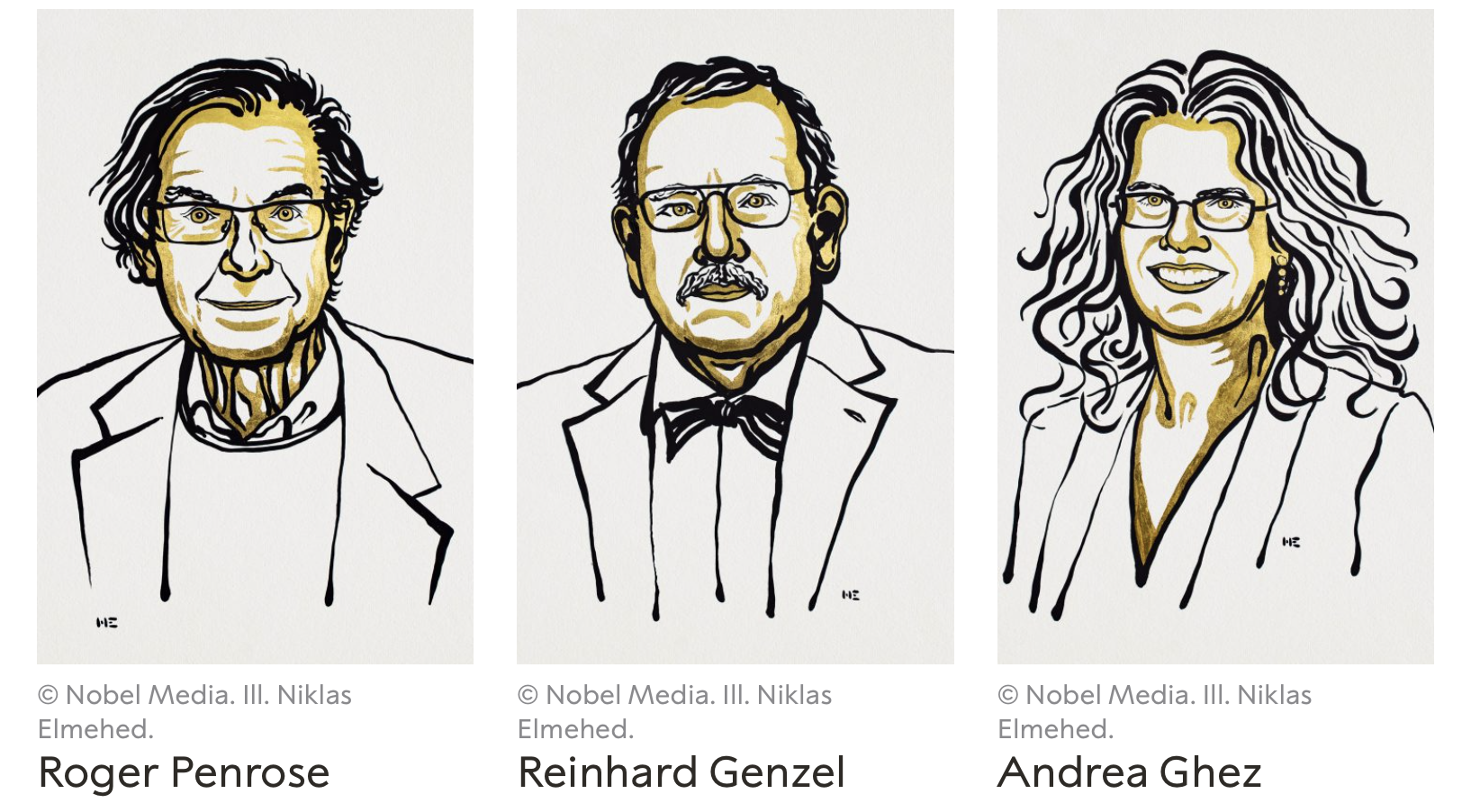
    The Nobel Prize in Physics this year was shared amongst three laureates for their discoveries concerning one of the most searched mysteries in the Universe, the black hole and the Milky Way. Roger Penrose, one of the three Nobel prize Winners proposed the general theory of relativity leads to the formation of black holes. The other two winners, Reinhard Genzel and Andrea Ghez found out that there is an invisible and extremely heavy object governing the orbits of stars right in the centre of our galaxy, The Milky Way. The only known explanation currently is that it is a black hole.

    Roger Penrose was born in 1931in Colchester, UK. He received his PhD. In 1957 from the University of Cambridge and is now a Professor at the University of Oxford.

    Reinhard Genzel was born in 1952 in Bad Homburg vor der Höhe, Germany. He got his Ph.D. in 1978 from the University of Bonn in Germany. Director at Max Planck Institute for Extraterrestrial Physics, in Garching, Germany, He is currently Professor at the University of California, Berkeley.

    Andrea Ghez was born in 1965 in the city of New York, USA. She received her PhD in 1992 from the California Institute of Technology, Pasadena, USA. She is currently a professor at the University of California, Los Angeles, USA.

    The total prize amount was 10 million out of which one half was given to Roger Penrose and the other half was subsequently split between Reinhard Genzel and Andrea Ghez.

    Roger Penrose proved that black holes are a direct consequence of Albert Einstein’s general theory of relativity using mathematical methods, which is pretty fascinating since Einstein himself did not believe in the existence of black holes. Black holes are thought to be heavyweight monstrosities that engulf everything which enters them, not even light can escape a black hole. Dr Penrose proved that black holes can form in reality and he described them in detail in his ground-breaking article which is considered as one of the most essential contributions to the theory of relativity, post-Einstein.

    Reinhard Genzel and Andrea Ghez each had a group of astronomers that they were leading since the early 1990s which focused on a region called Sagittarius A* at the centre of our galaxy. The orbits of the brightest stars which are closest to the middle of the milky way were mapped with increased precision. Both the group’s measurements match in terms of findings, both of the groups found an extremely heavy, invisible object that pulls on the jumble of stars which causes them to run around at dizzy speeds. There are around four million solar masses which are packed together in a region which is as big as our Solar System.

    Using the World’s largest Telescopes, Reinhard and Andrea came up with methods to see through the huge clouds made of interstellar gases and dust which come between the centre of the milky way and hinder our vision of it. The refined new techniques to compensate for distortions caused by the Earth’s atmosphere. They built unique instruments to carry out this process which has given the world one of the most convincing evidence of a supermassive black hole at the centre of the Milky Way.

    This year’s discoveries have decidedly broken new ground in the field of compact and supermassive objects. These new discoveries have created more questions to be answered and have generated the future potential for further research. It is very impressive to see how Laureates have pushed the concept forward and how they have gotten closer to deciphering of one the greatest scientific mysteries of all time.

  • Psychology is weirder than you thought

    Psychology is weirder than you thought

    When many people think of psychology, there is an immediate mental image of a client on a couch and a therapist with a hovering speech bubble asking, “and how do you feel about that?” Numerous studies over the years, have examined misconceptions of psychology. One such misconception is that psychology is not a science. After all, as humans, we tend to gain confidence in our abilities to understand and predict the behaviour and mental states of others – simply based on our lived experience. And fair enough, but there must be more to it…where does the science come in?

    Whether you want to understand treatment effectiveness, why people develop certain fears, or simply why people persist in actions that cause themselves or others pain, there is an experiment, a study, or most likely an entire academic journal, providing insight based on, well, science.

    Most definitions of “science” will include the word systematic. That is, it is an ordered system under which researchers operate to formulate scientific laws and theories. Given that science requires evidence and critical exposure to scrutiny, it can be tempting to assume it is unbiased. It would be nice if that were true!

    In the case of psychology, some have argued that the discipline has inadvertently presented a skewed view of the human mind. A popular University of British Columbia paper asserted that although a significant portion of the discipline’s trusted research is drawn from Western, Industrialized, Educated, Rich, and Democratic (WEIRD) societies, this population represents a “thin, and rather unusual, slice of humanity.”

    That is, people who grew up in so-called “WEIRD” societies often act, think, and process quite differently than people who grew up in other areas of the world. If you step back from the science lens for a moment and think instead about your personal experience, this is an obvious point.  Whether by watching the news or by engaging with people from different backgrounds, it is apparent that despite our shared humanity, there is significant diversity in behaviour, thinking, and perception.

    In fact, some studies have demonstrated how “WEIRD” subjects tend to be outliers on domains such as visual perception, fairness, and cooperation when compared to subjects from other societies. For example, certain optical illusions that tend to fool people from industrialized contexts do not have the same effect on those who grew up in rural, nonindustrialized contexts.

    This is not to suggest that the aim should be to pit certain groups against one another. A pertinent word of caution, given a bleak history of some scientists seeking to bolster racist, xenophobic sentiments by positing differences between groups that were not backed by evidence. Rather, it is an assertion that research should account for nationality, class, gender, sexuality, race and other identities so that the bulk of psychological insight is not purely derived from a narrow dominant cultural lens.

    A 2018 study examined the geographical diversity of samples in research published in three 2017 issues of Psychological Science, a leading academic journal – and the results were staggering. Not a single study sampled people from Africa, the Middle East, or Latin America, and less than 7% sampled people from Asia, leaving the vast majority of those studied from “WEIRD” societies. So, almost 85% of the world’s population comprised less than 7% of the samples in this leading journal. Researchers tend to acknowledge the extent to which their research can be generalized, but the issue is that when the majority of research shares the same lack of generalizability, at some point, those findings when replicated enough, generally become accepted as the norm.

    The bottom line is that yes – despite misconceptions, Psychology is a science. But perhaps the greatest misconception of all, is one that is taken for granted, even among many at the top of the field. Psychology is the study of mind and behaviour, but until deliberate steps are taken by the field as a whole, the picture that the discipline paints of the human experience is limited at best and flawed at worst.

    Note: This article was produced for our Black and Indigenous print edition from March 2020. The edition was postponed due to COVID-19 and is just being released now.

  • Coronavirus 101

    Coronavirus 101

    *Terminology explanations found at the bottom of this page

    Coronaviruses are viruses that infect the upper respiratory system and invade epithelial cells, causing disease. Coronaviruses are named for the structure that resembles a crown, or corona in latin, on individual virions under microscopy. This virus was first found in from samples collected from the noses of patients suffering from the common cold, but it has recently drawn media attention from the recent outbreak of 2019-nCoV strain of coronavirus, suspected to have originated from illegally traded wildlife in Wuhan, China. 

    Viral Infection: The Basics

    Viruses are biological agents that consist of protein coats that are sometimes encapsulated in a membrane that contains DNA or RNA depending on the type of virus. Coronaviruses have single-stranded RNA. This genetic code is inserted into a host cell ( the cells of the individual infected) and the cell’s machinery is hijacked by the virus to produce the genetic code of the virus instead of the cell’s genetic code. Viruses cannot replicate outside of the host cell, so they need a host in order to reproduce. Coding begins, and the cell is now producing new virions that will burst out of the cell, killing the host cell in the process. The newly released virions will find more cells to infect and repeat the cycle. How does this cause disease? Viruses reproduce at a rapid rate, which means exponential numbers of host cells will be destroyed in the process of replication. Cell death = tissue damage. When tissues are damaged, the immune system responds by recruiting a number of immune cells to the infected area. These immune cells have a range of mechanisms to eliminate the pathogen, and they are usually the reason you suffer from symptoms. A fever is the immune system trying to essentially burn up the pathogen, inflammation is caused by damaged tissues releasing chemicals that recruit immune cells to come try and help get rid of the pathogen, and even coughing is the body attempting to get the pathogen physically out of the infected respiratory system. Most drugs cannot get rid of viruses (most pathogens like bacteria are killed directly by drugs, but viruses are not a living agent, so antiviral drugs prevent replication so tissue damage can be reduced) so they need to be eliminated from the body by the immune system in order for the infected individual to recover. This is why viruses pose such a serious threat to immunocompromised individuals, who cannot mount a response strong enough to eliminate the pathogen.

    Why is an outbreak so concerning?

    The human coronavirus strain SARS-CoV was the causative agent for the 2003 severe acute respiratory syndrome (SARS) outbreak that infected 8000 people and killed 774 during the 2003 outbreak. Another coronavirus caused an outbreak of Middle East Respiratory Syndrome (MERS) that infected 2500 people with 861 fatalities.  The coronavirus that caused the SARS epidemic caused extremely severe disease by extending its infection into the lower respiratory tract, something that has not been observed with the 2019-nCoV. While the current outbreak is not either of these strains, there is concern for the virulence potential of 2019-nCoV as it is considered a new, novel strain.

    Who is at risk?

    Just like the annual flu season, viral epidemics are are typically more high risk for people who are considered immunocompromised, meaning their immune system is suppressed in some way, the elderly, pregnant women, and those with medical conditions that directly affect immune cells are part of this group. However, some viruses can take out perfectly healthy people. When healthy people are infected with some viruses, the immune system can sometimes mount and attack on the pathogen so powerfully that it causes a cytokine-storm, where cytokines (substances made by immune cells) are produced en masse and end up damaging the body in their attempt to damage the virus. Basically, the collateral damage caused by the immune system trying to eliminate the pathogen can be so severe, it is worse than the disease itself. As of now, most lethal infections of 2019-nCoV have been in people who were already considered high-risk, and not part of the healthy population. 

    How do we treat and prevent this virus?

    Development of vaccines and treatments can be extremely difficult for this type of virus as coronaviruses are difficult to grow in laboratory conditions. Viruses are a particularly tricky pathogen to deal with. You’ve probably known someone who came home from the doctor frustrated that they didn’t receive any sort of prescription for their flu or stomach virus, claiming the doctor dismissed or ignored them, but all you can really do with viral infections is manage symptoms and treat secondary infections. Anti-viral treatment like valcyclovir is rarely prescribed for typical viral infections unless it is a severe infection, or for chronic management such as managing sore outbreaks in herpes patients, or for HIV patients reducing their viral load. Since targeting the virus is so difficult and mutations are rapid, we focus on managing symptoms with drugs to reduce fevers, reduce inflammation that causes coughing or pain, while monitoring for symptoms of secondary infection; like bacteria that may have taken the opportunity to colonize the lungs and cause pneumonia while the immune system was suppressed (known as an opportunistic pathogen). Diagnosis is not simple, and requires throat cultures and blood work to confirm a case of coronavirus as the symptoms are so similar to other diseases.

    Some key facts to know:

    1. The current coronavirus is not SARS, but it is in the same family. Like how pilot whales and killer whales are within the same family; but there are clear distinctions between the two. 
    2. Symptoms consist of a fever and respiratory issues like coughing, sore throat, or runny nose
    3. Prevention parameters have been outlined by Acadia: -Wash your hands frequently with soap and water, or use alcohol-based hand rub when hands are not visibly soiled.

      · Cough or sneeze into your elbow or a tissue. If using a tissue, immediately place it in the waste disposal and wash hands.

      If possible, stay at home when ill with acute respiratory symptoms. If this is not possible, limit close contact with others, avoid placing your hands on high-touch surfaces such as handrails, counters, and doorknobs

    4. The source of the virus is not definite, and there is no need to make racist remarks about the cultural practices of Chinese people in finding someone to blame for the outbreak. Zoonotic disease can result from any interaction between humans and animals. If you get salmonellosis from eating raw cookie dough, thats the same type of zoonotic transmission as someone getting a coronavirus from eating a wildlife product.
    5. The outbreak is considered under control as of now, with lessons learned from the SARS outbreak being put into practice. This outbreak is still very new, and the specifics about the virus are still mostly unknown, and information is changing constantly.
    6. Influenza, a disease that can be prevented by a simple vaccination, kills 3500 Canadians each year. The Coronavirus is new and unpredictable, and there is no prevention currently available, but you can always protect yourself from the viral enemies we do know with an annual flu shot.


    *Understanding epidemiology/pathology 101:

    Pathogen: A microorganism capable of causing disease such as virus, bacterium, fungi or protozoa

    Strain: a viral strain is a genetically distinct type of pathogen. A common example is flu viruses with different subtypes, or strain.

    Virion: A single viral particle that replicates to cause disease and pass the virus to others

    Outbreak: sudden start of a disease appearing in a population

    Epidemic: spread of an infectious disease quickly that affects more people than what is typical in a given area

    Pandemic: a worldwide epidemic

    Immunocompromised: an individual with an impaired immune system

    Antiviral: a drug made to eliminate a virus from the body or reduce the viral load on an individual

    Viral load: the number of copies of a virus in body of an individual

    Virulence: ability of a pathogen to cause disease 

    Zoonotic: a pathogen that can be transmitted from animals to humans


  • Connecting Climate Change to Australia’s Devastating Bushfires

    Connecting Climate Change to Australia’s Devastating Bushfires

    While the idea of experiencing raging fires in extreme heats is difficult to grasp here in Canada when cold winds are whipping our faces and ice makes the sidewalks slick, it is a horrific reality for Australians right now. Summer has just begun down under, where a bushfire season amplified in intensity by climate change has wreaked havoc on the continent. 

    In order to understand what is happening in Australia, we need to know the basics of fire ecology. While terrifying and devastating, bushfires are a natural process that shape the environmental landscape, with some native plants having adaptations to fire disturbances, such as Australian native Eucalypts. These resilient plants have dormant buds that remain just below the soil known as lignotubers, which will provide the plant with essential nutrients to promote regrowth after the fire has burned off the vegetation above ground. These adaptations are necessary for survival in a fire-prone environment found in Australia, and humans must also learn to adapt to it as best we can. The strategy for human adaptation to these events is extensive research aiming to predict and control the bushfires. 

    Controlling bushfires once they have started poses a challenge, but there are 3 ways to put out a fire: 1. Remove oxygen, 2. Remove heat, and 3. Remove fuel. Removing oxygen to control a bushfire is not a viable option, and climate change significantly affects control measures as the summers in Australia become increasingly hot and the number of days where the heat poses an extreme fire danger increases as well, the last element, fuel, is the easiest part to manage. The fuel available to a fire can be limited by creating “fuel breaks” which involves raking twigs/branches/etc away from the fire so it cannot spread as easily. When a fire is approaching an area with a lot of fuel that would facilitate the spread of the fire, it can be deliberately burned before the larger bushfire spreads to that area, leaving it with no fuel to continue burning. Water bombing is a well-known fire control strategy, but the mechanism behind it is often misunderstood. Although it may look like the aim of water bombing is to put out the fire by extinguishing it out with water, but the most effective mechanism behind water-bombing is the change of state of the water from liquid to gas. The water vapor produced will increase the humidity in the air, making it harder for the fire to continue burning.  Recently rain has given some relief to those fighting the fires, but it is hardly the end of fire season on the continent. 

    Now that we understand the essential elements of fire and how bushfires are part of the natural cycling of the environment in Australia, we can better identify the role of climate change in the exacerbation of the fires. In Australia, the major impact of climate change is extremely hot and dry conditions. The heat in Australia is already extreme, but Australia’s average temperature has increased by more than one degree over the past century. The extreme heat and dryness create highly flammable fuel by killing flora through droughts, leaving completely desiccated plant material in its wake, which makes excellent kindling to start any forest fire. With parts of southern Australia facing declines in precipitation due to the shift in direction of the Southern Annular Mode towards Antarctica, bypassing Australia entirely (This shift is attributed to climate change). With little to no rainfall since 2017, there is no natural force to counteract the dryness and/or control fires naturally when they start, and the extremely dry brush facilitates rapidly spreading flames that quickly rage out of control, no matter how the original fire started.  

    While climate change deniers will dismiss the underlying causes of these particularly vicious fires and point the blame to an “arson epidemic”, this is not the case. Arsonists did not somehow create a three  year long drought, extremely high temperatures, and the excessive dryness of the environment, but also, the reports of inflated numbers of arson-related arrests are inaccurate. Any source of ignition would have run the risk of resulting in a massive bushfire, arsonists rampant or not. The environmental conditions have been described as “the perfect storm” for bushfires, and we have unfortunately been hit hard by said storm. 

    The environmental devastation of the bushfires has been horrendous, with an estimated one billion animals dead, a massive biodiversity loss from many ecosystems entirely. While the Koala is the face of Australian wildlife, there are plenty of unique species that lost acres and acres of habitat and faced high mortality rates. While some ecosystems have natural burn cycles and have adapted to survive occasional inferno, some like the subtropical Gondwana rainforests of Queensland-New South Wales border, have not. These areas have also been engulfed by the flames, however no record of these habitats burning has ever been made, so rebounding from such a devastating event will at the very least be a huge challenge, if not impossible.

    While at times like this where we are bundled up facing the cold we can feel detached and slightly helpless to the fires, we can always provide some sort of assistance. There is always hope for recovery, with options to donate to relief efforts available here : https://www.canadahelps.org/en/australian-fires/

  • Some Superb Science Clubs to Join in 2020

    Some Superb Science Clubs to Join in 2020

    Missed out on the club extravaganza? Need to find some extra circulars to keep yourself busy? Trying to expand your social life beyond the classroom? Look no further! If you need some more information on some great science clubs to join this semester, look no further, some great options are listed just below:

    Biology Society

    Hey Biologists! The Acadia Biology Society serves to enrich the academic and social experience of Acadia’s Biology students (although to be honest, there is not much room for improvement)! Whether you need assistance with your Bio courses, or want to network with professors and fellow students, our events will help you succeed as a Biologist. For 1st and 2nd year students, our weekly Bio Help Centre consists of advisory sessions for studying, scientific writing, and reviewing lecture material. If group sessions aren’t your thing, then the Biology Student Mentorship Program provides a one-on-one approach! For upper-year students, we offer our Research and Course Gong Shows, to give a baseline to students pursuing Honours, Co-Op, and/or Research Topics. One of our newest, the Annual De-Stress event, is open for everyone to discuss the physiology of stress, mental health awareness, and give feedback to our faculty (The 2nd annual destress event, “All in with Adrenaline” will take place THIS MONDAY, January 20th, beginning at 6:00PM at the KCIC Auditorium, and ending at 8:00PM with a reception (pizza and snacks provided) upstairs in the study area). A complete list of what we do would be too long, so if you are interested in our events, then please join your respective Biology Graduating Class Facebook page (below), follow our Instagram (@acadiabiologysociety), and pay attention to you emails!

    Class of 2023 – https://m.facebook.com/groups/1161850657338610/?ref=group_browse

    Class of 2022 – https://www.facebook.com/groups/246775996180772/

    Class of 2021 – https://www.facebook.com/groups/1025847100868277/

    Class of 2020 – https://www.facebook.com/groups/1025847100868277/

    WISE

    WISE (Women in Science and Engineering) Acadia is a group of female faculty, staff and students who gather together to promote full participation by women in STEAM fields.

    Centred initially around women in academia, the group has supported learning opportunities and identified opportunities for Acadia women faculty members, staff, and students. Following a gathering held in October 2014 additional WISE Acadia priorities were identified related to mentoring, science camps for young women, and a course offering for undergraduates in Women and Science. WISE Acadia is currently developing and delivering programs and holding events to address these priorities.

    WISE has been supported in these endeavours by members of Women’s and Gender Studies. The mission of WGS is to foster a vibrant, dynamic campus community that critically engages with issues of gender, sexuality, race, class and ability. Working together with WISE Acadia students, staff, and faculty, WGS strives to address inequities and draw attention to opportunities facing all women.

    WISE Facebook page – https://www.facebook.com/WISEacadia/

    WISE Students Private group – https://www.facebook.com/groups/383949648953526/

    Acadia University Psychology Association

    The Acadia University Psychology Association (AUPA) is a group of students who aim to create a community for psychology majors and students from other departments. The AUPA hosts social events and educational workshops throughout the year so undergraduate and graduate students can interact with each other and make connections with their professors.

    AUPA facebook –https://www.facebook.com/AcadiaUniversityPsychologyAssociation/


    Climate Action Club

    Acadia’s newest science club is the climate action club, who successfully rallied for climate justice this Fall. Information on their work and how to join can be found here: https://theath.ca/science/rally-for-climate-action-this-friday/ 

  • The Kingston Sand Barrens Need Your Help: A Letter from the students of ESST 3003

    The Kingston Sand Barrens Need Your Help: A Letter from the students of ESST 3003

    Dear Readers,

    We are a group of students from Acadia university currently conducting research on the Kingston Sand Barrens, the intent of this article is to hopefully raise awareness for the sand barrens.  Specifically, we aim to stress the multiple benefits of the barrens, and the ways in which they are currently being endangered. 

    The Kingston Sand Barrens is an endangered ecosystem. Sand barrens are often perceived to have little to no intrinsic value, and as a result they are often destroyed for more “productive” uses including building airports, sand mining, construction of houses, establishing graveyards, and more. It’s estimated that roughly 97% of the original sand barrens have been lost due to fire suppression, agricultural development, sand quarrying, and invasion of non-native species. Also, due to human activities such as ATV driving, the remaining ecosystems are being disrupted, plant cover is getting damaged, and there is a reduction of biodiversity. This leaves the barrens susceptible to sand erosion, as the sand is no longer bound in place by vegetation. The blowing sand not only becomes a nuisance to drivers on the adjacent highways, but it also causes damage to the agricultural sector and home gardeners alike. The traveling sand (when blowing onto fields and home gardens) makes the soil less productive and subsequently increases the need for fertilizers. This further exacerbates the issue that the soil in the historically sand barren areas is not very fertile to begin with, as it is mostly composed of sand. This increases the need for chemical fertilizers even further, which leads to issues like chemical run-offs, eutrophication , and water pollution. By protecting the sand barrens, we can also preserve the whole ecosystem. One of the main services it provides is a natural water filter which purifies the water and minimizes the risk of water pollution. 


    If you’re interested in learning more about the sand barrens make sure to visit our website: www.sandbarrensns.ca. Here you’ll find more information on the species found in the barrens, ways in which they’re being endangered, and ways that you can help.

  • New Kid on Campus: Hydroponics

    New Kid on Campus: Hydroponics

    You may have heard about the new hydroponic unit that’s been established on campus up by meal hall, but maybe you’ve wondered: what is a hydroponic system? 

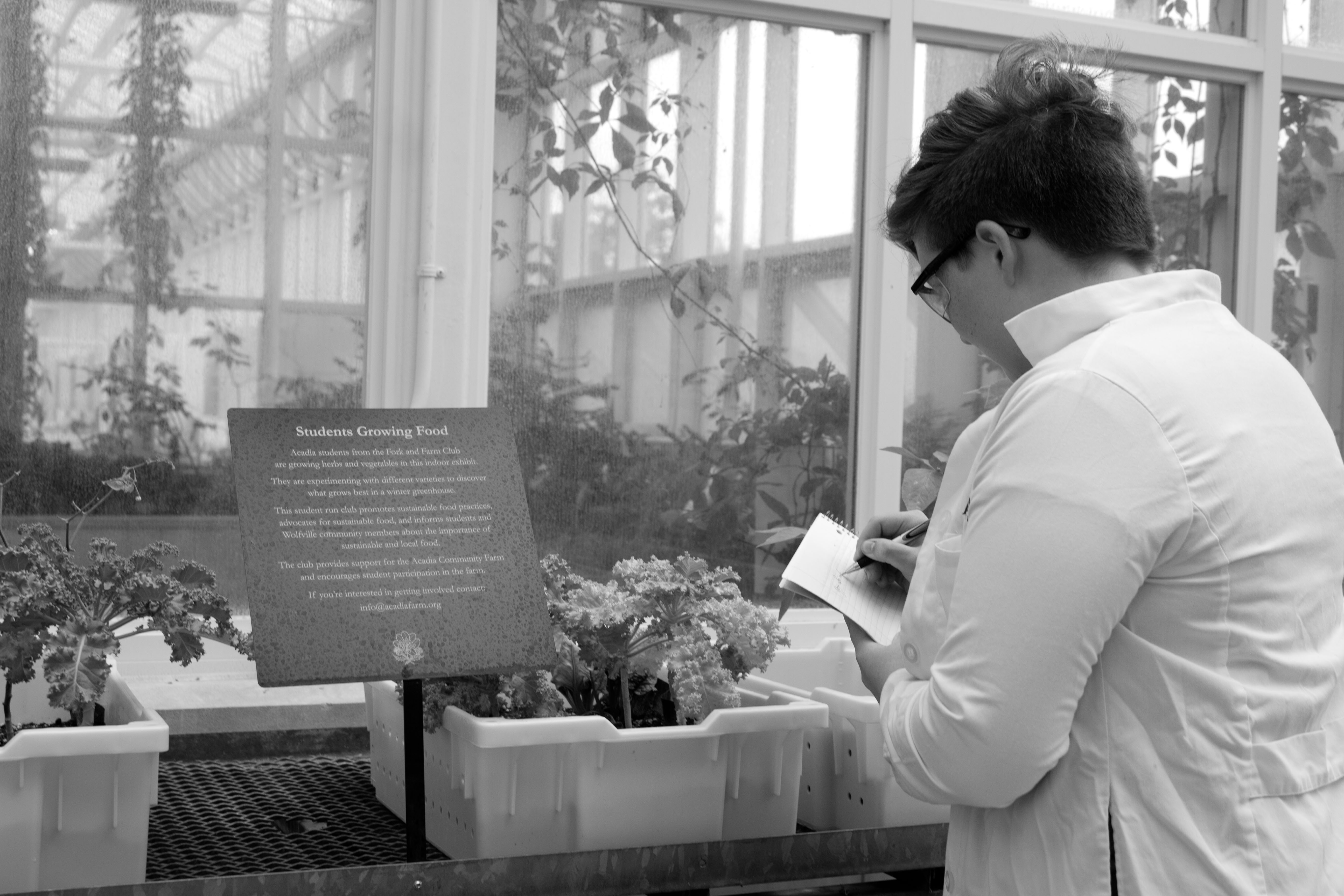
    Hydroponic systems use water, light, aeration and nutrients to grow plants in a controlled environment. Chemical nutrient solutions must be properly balanced, and ideally be customized to the crop being grown for optimal growth. These systems can overcome the obstacles of pest and soil management that plague traditional farming and can make land that would be otherwise unproductive into abundant agricultural zones. Hydroponics is not a new innovation, but recent technological developments have made managing lighting, monitoring oxygen and customizing fertilizers in hydroponic systems easier to execute successfully.

    A similar system we could be using is an Aquaponics. Aquaponic systems grow both plants and fish simultaneously in one integrated system, combining hydroponics with aquaculture. Aquaculture is the practice of raising fish or other aquatic organisms, so the waste produced by the fish in the system provides nutrients to the plants, while the plants provide a natural water filter for the fish, in turn providing them with a clean environment. This mutually beneficial relationship efficiently produces both a quality protein source and fresh, healthy plants with minimal interference needed for crop/animal management. This system is currently being implemented in Liverpool, NS, in the Aqualitas cannabis growing operation. Aqualitas grows Koi fish alongside their cannabis crop, a method they claim uses 90% less water and 50% less power than traditional production.  

    While here in NS we can source our produce from local farmers when crops are in season, and then use our hydroponics system to have fresh greens during the winter, hydroponics can help communities where that is not an option. Hydroponic systems like Acadia’s Growcer are currently bringing fresh produce to Canada’s Arctic where food insecurity is a major issue. Hydroponic systems allow these communities to supplement their diets with locally produced healthy food that comes at a much lower cost and carbon footprint than produce that must be shipped in. 

    The utility of these systems in extreme environments such as deserts and tundra may seem impressive, but the implementation of hydroponic systems has even been suggested to have potential use in space exploration to supply astronauts with additional food supplies, other than the rations they bring aboard. 


    To learn more about the specific hydroponic unit being used at Acadia, information can be found here: https://www.thegrowcer.ca/growing-systems

  • Science Snapshots

    Science Snapshots

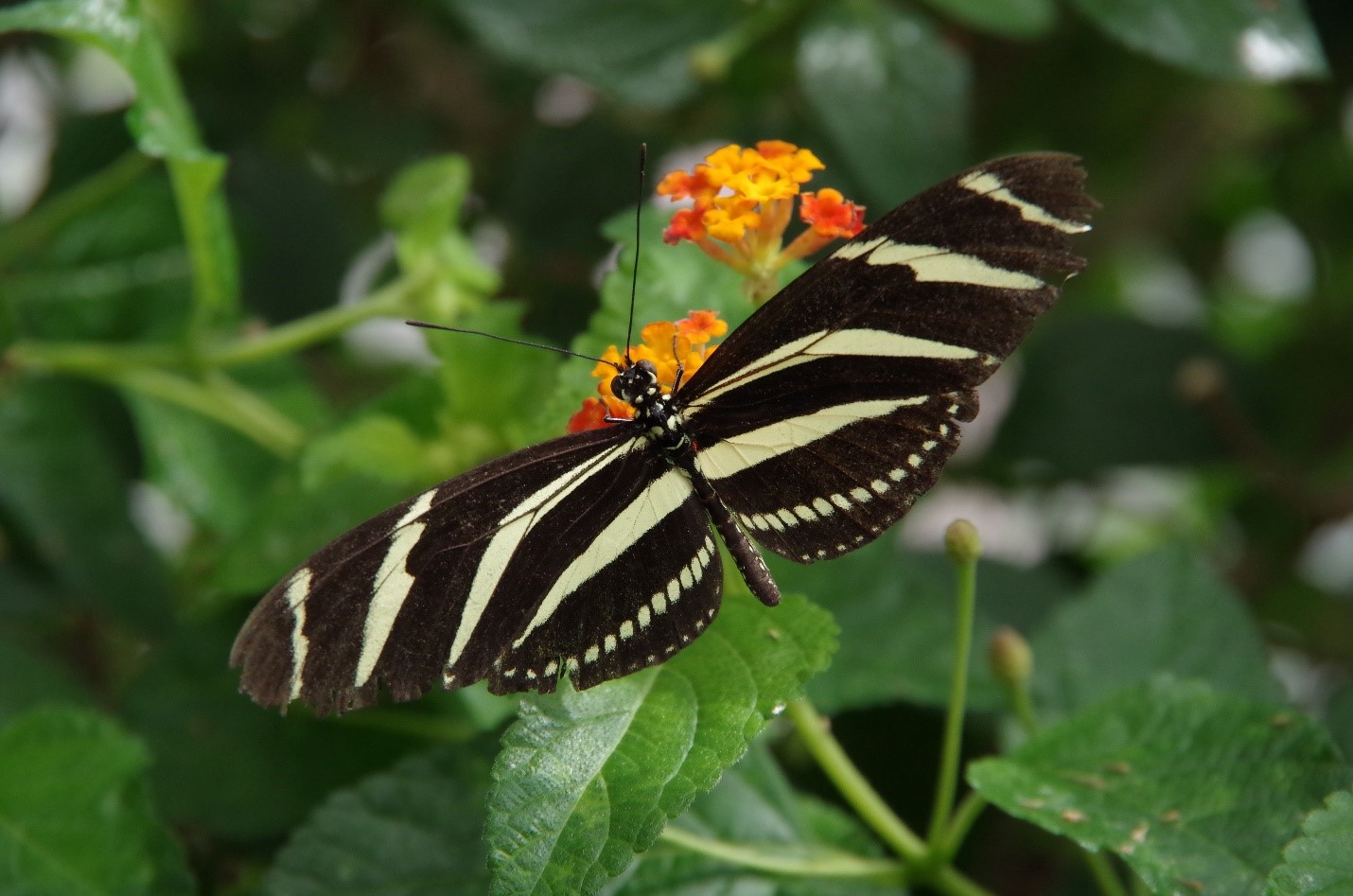
    Featured: A Zebra Longwing (Heliconius charitonia) at the Canadian Museum of Nature’s Butterfly exhibit. (Source: Laura Porter-Muntz)

    • Zebra Longwing butterflies are uniquely shaped butterflies with long narrow wings. This species’ range extends from Central America to the southern United States.


    • Zebra longwings are considered long-lived butterflies compared to other species that typically live for a few weeks, while these butterflies are able to live and lay their eggs for several months.


    • Like most butterflies, Zebra longwings consume nectar, pollinating flowers while they feed. However, this species is unique in its ability to also eat pollen. The saliva of these butterflies dissolves pollen, a very protein-rich food source compared to the simple sugars found in nectar, allowing them to obtain more nutrients than other species.


    • Butterflies in the Heliconius genus are well-known for being highly intelligent insects. These butterflies have established social orders while roosting, and demonstrate socially aware behaviors such as nudging each other early in the morning to get the roost on the move.

     Fact source: https://www.fs.fed.us/wildflowers/pollinators/pollinator-of-the-month/zebra_longwing.shtml

    To submit a science snapshot please email [email protected] or [email protected] with a photo and brief description

  • God and Science?

    God and Science?

    According to the most recent Statistics Canada census taken in 2011, 76.1% of Canadians reported having an affiliation with a religion. This number includes those who are only nominally involved and has likely declined since then. Regardless, the reality is that millions of Canadians believe in some sort of supernatural reality.

    With any sort of belief or conviction, there are bound to be perspectives of it held by others that are stereotypical, and at times, do not accurately represent the belief.

    One such perspective I want to address is the notion that one cannot believe in both God and Science.

    THE HISTORY OF THE “CONFLICT”

    Historians of Science call the idea that science and religion are incompatible the “conflict thesis.” The origins of this thesis can be traced back to the late 19th century, to two men in particular, Andrew Dixon White and John William Draper. These men have something in common: they each wrote their own book about the history of the “conflict” or “warfare” between science and religion.

    The reasons White and Draper wrote these books were not rooted in a love for history at all. White was the first president of Cornell University and wrote in reaction against denominational Christian criticism on the founding of Cornell as a non-denominational institution. Draper, an amateur historian and first president of the American Chemical Society, wanted to indict the Catholic Church for abuses of power.

    When you dig beneath the surface of these two books, you discover that they are motivated more by politics than truth. Dr. Lawrence Principe, History of Science and Technology professor at Johns Hopkins University, states that “The problem with the books is that they’re terrible history. The historical facts … are cherry-picked or contorted, taken out of context in order to promote that authors’ main ideas about this perpetual warfare between science and religion.” Historian Dr. Edward B. Davis adds, “The idea that science and religion have been always involved in this inevitable conflict is not true.”

    Although the historical “conflict” is, in reality, a 150-year-old political tool built upon falsities, this has not prevented modern media from continuing to treat it as legitimate history. I believe this is why so many people still think that there actually is a conflict between science and religion today – it is assumed to be the case and not something to be questioned.

    DON’T THE TEACHINGS OF RELIGION CONFLICT WITH SCIENCE?

    Recently, a friend of mine told me about their experience at a bar. A stranger noticed his necklace with a cross on it and asked my friend if he was a Christian. When my friend said “yes,” the stranger countered, “so you don’t believe in evolution then?” My friend clarified that he did, and that he affirms the modern scientific consensus on human origins.

    While I cannot speak for every religion, drawing from my specific experience studying the Bible and Christian Theology, I can say quite assuredly that science does not conflict with the Christian worldview. Yes, there are some that deny evolution and believe that the Earth is only thousands of years old, but those convictions are based on an interpretation of the Bible that is rejected by many Christian scholars today, and this understanding is not at all central to the Christian faith. Dr. John Walton, an eminent Old Testament Scholar, writes that “if neither exegesis nor theology intractably demands those conclusions that argue against the modern scientific consensus … we have no compelling reason to contest the science.”

    CONCLUDING THOUGHTS AND AN INVITATION

    Whether or not a person believes in God or some other supernatural reality is entirely up to them. What I would like to do is invite people to think not only about what they believe but also why they believe it. I invite the skeptics of the supernatural to consider the idea that affirming the endeavor of science does not require an atheistic worldview. I also invite people who might disregard science due to religious beliefs to explore that as well.

    I’m proud be a part of a university that fosters such a positive community of students. When we seek to understand the foundations of our own perspectives, as well as the views and beliefs of others, we make this community even better.

    I also want to invite you to a panel discussion with three Acadia Scientists on this very topic!

    “God & Science? A Panel Discussion With Scientists Who Believe” brings together geologist Dr. Robert Raeside, physicist Dr. Michael Robertson, chemist Dr. John Murimboh, as well as theologian Dr. Anna Robbins for a discussion about whether or not you can believe in both God and Science.

    When? – Wednesday, February 27th, 6:00 PM

    Where? – Fountain Commons at Acadia University

    Facebook Event: https://www.facebook.com/events/770242426690173/?ti=cl

    Zachary Goldsmith is a second-year Theology student and the Theology Senator for the Acadia Students’ Union

  • A Guide to some Common late-season Nova Scotia Mushrooms

    A Guide to some Common late-season Nova Scotia Mushrooms

    Although known for containing some tasty edible species, the fascinating Kingdom Fungi also play crucial ecological roles in our environment. Most notable is their role as decomposers, as they can degrade wood much more efficiently than other organisms like bacteria. Fungal tissues are easier to digest than plant tissues, so fungi are critically important in making energy locked away in tough plant material like wood available to the rest of the food web. Fungi also play a very important role as predators of animals such as insects. Many insect-attacking species even seem to influence their targets’ minds, causing them to fly or crawl up to high branches and leaves, and sticking to their undersides so spores released by the fungi are more likely to be caught by winds. An example of a species that predates on other organisms is the oyster mushroom. Prized as an edible, this mushroom traps and consumes microscopic roundworms as a source of nitrogen! However, most mushroom species are not known to predate animals, and instead get most of their nutrients by decomposing plants.

    Winter is just around the corner, but a surprising number of mushroom species can still be found this late in the year. Identifying mushrooms can seem daunting, as there are hundreds of species in Nova Scotia, but if you know what traits to look for and have the right book in hand, it can be done! This guide will cover 11 commonly encountered seasonal mushroom species, describing the structural features that are important for identification should you come across them in the woods.

    Gilled mushrooms

    Probably the most familiar type of mushrooms are those with gills underneath the cap, such as Cortinarius traganus:

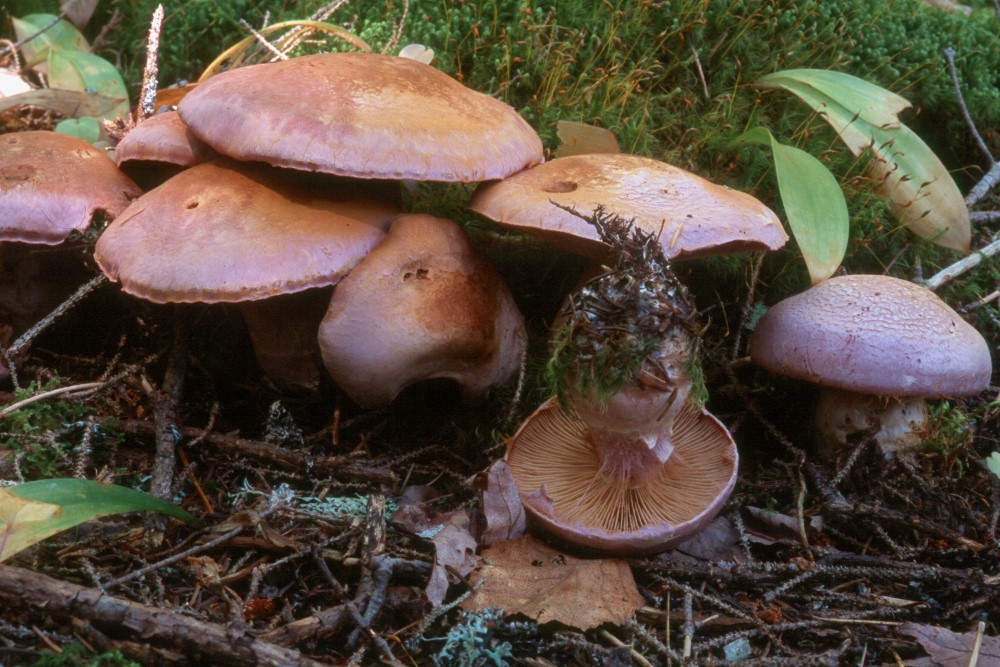
    Cortinarius traganus

    This mushroom is very commonly found late in the season and is identified by its striking purplish hues and brown gills, as well as its thick stem which widens to a bulb at the base. Younger specimens may also have a webby mesh over the gills called a cortina, which is pictured in the image above. This species forms a mutually beneficial partnership with conifer trees referred to as a mycorrhiza, where the fungus provides nutrients to the plant in exchange for a portion of the sugars the plant derives from photosynthesis. In general, mushrooms are very good at obtaining nutrients from soil, where they produce very fine root-like structures called hyphae. These are much finer than plant roots and allow for more efficient nutrient uptake. Cortinarius traganus are not edible.


    Coprinus comatus 

    Coprinus comatus, also known as the shaggy mane, is a frequent sight in lawns and mulch. This species is often white when young, with a long, bell-shaped cap. As they get older, the mushrooms release enzymes that effectively digest the mushrooms themselves, resulting in what looks like black ink. Several species in this group show this liquifying behavior and are together known as inky caps. These are considered edible but contain a toxin which reacts with alcohol up to a week after consumption. This can cause unpleasant symptoms such as vomiting, so eating this type of mushroom is not recommended.

    Amanita bisporigera

    Another white mushroom commonly found this time of year is Amanita bisporigera, also known as the Destroying Angel. As the name suggests, they are deadly poisonous. They are identified by their tall stem with a bulbous base, a ring around the middle of the stem, and a round cap when young that expands to become flat with age. Like Cortinarius traganus mentioned above, this species is mycorrhizal with oak trees, so they will only be found in forests where this tree is present.


    Connopus acervatus

    Connopus acervatus can be found growing on rotting conifer wood. Unlike the other species covered so far, this species forms dense clusters of mushrooms with reddish-brown caps up to the size of a toonie that become lighter towards the edge. The stem is long and slender with slightly pinkish hues. This species is not known to be edible.


    Pored mushrooms

    Suillus cavipes

    Some mushrooms don’t have gills at all, and instead have pores underneath their caps, such as Suillus cavipes. The fuzzy reddish-purple to brown cap, and pale-yellow pore surface help distinguish this species from other pored mushrooms. It only grows with larch trees, and sometimes several meters away from the host tree. Because of this, it is easy to overlook its tree associate. This species is not known to be edible.


    Fomitopsis pinicola

    Fomitopsis pinicola, also known as the red banded polypore, is a very common sight in coniferous and mixed forests where it can be found decomposing dead trees. Mushrooms in this group are called polypores or bracket fungi, which form a sort of disk off the side of a piece of wood, allowing the spores produced on the underside to fall out and blow away with the wind. Unlike the other mushrooms covered so far, which may have shorter life spans, this type of mushroom grows and produces spores over the course of many years. This species has a woody texture and is thus only edible to the adventurous (not tasty!).

    Toothed mushrooms

    Hydnum repandum

    Hydnum repandum, or Hedgehog mushroom, gets its common name from the teeth underneath the cap. This mushroom is identified by its brown to orange cap and whitish stem. It forms a mycorrhizal relationship with conifer trees and likes to grow in wet seepage areas with dense moss cover. It is a prized edible with a mild taste.

    Jelly fungi

    Pseudohydnum gelatinosum


    Pseudohydnum gelatinosum looks superficially similar to the Hedgehog mushroom because of its teeth but is actually only very distantly related. It is one of the jelly fungi, a group whose name is unsurprisingly derived from their gelatinous texture. The teeth of this mushroom are generally grey to white and translucent, while the cap can range from pale grey to brown. This species can be found growing on rotting conifer wood on the forest floor. Jelly fungi are not valued as edibles.

    Dacrymyces chrysospermus

    Dacrymyces chrysospermus, also known as ‘Witches’ Butter’, is a very common sight throughout the year. This species does not form a cap and stem, but rather it looks like a mass of bright yellow or orange folds growing on the surface of dead and rotting wood.


    Puffballs

    Calvatia gigantea

    Another type of mushroom is the puffball, which is usually round, with the spores being produced on the inside. While many mushrooms often rely on wind to disperse their spores, puffballs need to be disturbed in some way, such as being squashed by animals, in order for their spores to shoot out in a cloud of smoke. A common late season puffball is Calvatia gigantea, which can grow in lawns to enormous sizes, often up to 50 cm or more in diameter, and contain trillions of spores when mature. This species is white on the outside and white on the inside when young, but the interior turns brown with maturity. They are edible while they are still white inside. A related species, Calvatia cyathiformis, looks similar when young, but

    is rougher and its outer surface turns brown with age.

    Sac fungi

    Leotia lubrica

    Leotia lubrica, also known as ‘Jelly Babies’, are a member of a group called sac fungi that are about as closely related to other mushrooms as humans are to earthworms. Species in this group are usually microscopic, but a few species have grown to a conspicuous size. Jelly babies are identified by their yellow stalks supporting a wrinkled, brown head that may take on greenish colours. They are not known to be toxic but supposedly have little flavour.

    To delve further into the world of mushrooms, a good field guide is critical. George Barron’s Mushrooms of Ontario and Eastern Canada is a great place to start, available in Wolfville at the Box of Delights bookstore on Main St. The website mushroomexpert.com is an invaluable free resource covering over 1000 North American mushroom species, but it is generally more technical than a field guide. Not only is collecting and identifying mushrooms a lot of fun, but there are likely many species that have yet to be discovered in Nova Scotia. The next time you go for a walk through the woods, you might just find something new!


    Thanks to Dr. David Malloch for giving his permission to use some of his photographs. To learn more about fungi, consider taking Dr Allison Walker’s BIOL3663 Mycology course at Acadia (follow her @FungalDreamTeam) and check out blomidonnaturalists.ca or nsmycologicalsociety.org for information on mushroom walks in the province.


    Bruce Malloch is completing is MSc. in Biology with Dr. Allison Walker researching the succession of decomposers in salt marshes. His project looks at  the idea that the decomposition of a plant species is a complex process involving many species that are functionally unique. Some may decompose leaves and shoots, others roots. Some may be decomposers of freshly killed grasses while others will decompose older material. His research is focused on determining which fungal species are present in the Wolfville marsh, and how these communities change over the course of a year.

  • Biology Teaching Gong Show: A Recap

    Biology Teaching Gong Show: A Recap

    Acadia’s Biology Research Gong Show recently took place on October 23rd, where professors gave short PowerPoint presentations outlining their current research projects. Research gong shows are a great way for students to learn about the research being conducted within their department, and opportunities to get involved in. If the presenter goes over the 3-minute time limit, they are interrupted with the ring of a gong (or the hammering of wooden spoons against a frying pan). Biology and non-biology students alike may be interested in the wide variety of research projects underway at Acadia:

    1. Dr. Todd Smith started off the show by introducing his research on parasites. His work is currently focused on studying the relationship between malaria parasites and their hosts. His lab investigates the co-evolution of parasites that target mosquitoes, frogs, and snakes, with a specific interest in host immune responses. Dr. Smith is currently teaching BIOL 2053 (Microbial Biodiversity), BIOL 3123 (Parasitology) and BIOL 3583 (Eukaryotic Microbiology).
    2. Next up was Dr. Glenys Gibson, whose research revolves around evolutionary development. Her lab is focused on marine invertebrates and the influence of environmental factors on their development. Her work includes analyzing the effects of microplastics on tissue growth – research that is undeniably pertinent, as we observe an increase in the amount of plastic present in the natural environment. Dr. Gibson is currently teaching BIOL 3153 (Principles of Development), BIOL 3163 (Comparative Embryology), and BIOL 3423 (Histology 1).
    3.  If you’re a biology student at Acadia, you’re likely already familiar with Dr. Allison Walker’s passion for fungi. She and Acadia’s Fungal Dream Team are currently looking at marine fungi, with many projects on the go, including the restoration of native species in salt marshes, the role of endophytes (organisms that live between plant cells) in algae and seagrass, and the potential uses of fungi, such as the suppression of pathogens. Dr. Walker is currently teaching BIOL 1123 (Organisms & Their Environment II),
      BIOL 3663 (Introductory Mycology) and BIOL 2043 (Biodiversity of Plants and Algae).
    4. We’re all too familiar with stress, but Dr. Russell Easy’s research delves deeper into stress and how it affects animals. His lab uses technology like Polymerase Chain Reaction to investigate DNA and proteins, with the goal of identifying biomarkers of stress. The Easy lab looks at a variety of animals, including fish, deer, frogs, and sea stars. Dr. Easy is also the coordinator of the Biology Honours program, and teaches BIOL 2013 (Cell & Molecular Biology), BIOL 3613 (Principles of Genetics), BIOL 3623 (Molecular Genetics & Genomics) and well as the Natural History Field Course on Bon Portage Island, which is an immersive field course offered during the summer.
    5. If beetles and moths fascinate you, Dr. Kirk Hiller’s research will too! Dr. Hillier’s lab investigates olfactory neuroscience in insects, such as the evolution of pheromone communication between moths. Other projects revolve around conservation and agriculture, including the development of sustainable chemicals for pest management. Dr. Hillier currently teaches BIOL 3883 (Chemical Ecology) and BIOL 4443 (Comparative Animal Physiology)
    6. Those interested in a career in immunology or medicine will want to know about Dr. Melanie Coombs’ research. Dr. Coombs is currently working to demonstrate that some natural products may actually kill metastatic cancer cells. Her lab is currently investigating PZ-DHA, a compound that has been shown to kill breast cancer cells, and looking whether it also has the ability to kill other cancers, such as colon cancer. Dr. Coombs currently teaches BIOL 2053 (Microbial Biodiversity), BIOL 3553 (Immunology), BIOL 3573 (Applied and Environmental Microbiology), and BIOL 4353 (Pathogenic Microbiology).
    7. Marine biology is the domain of Dr. Trevor Avery’s lab, with focus on animal residency and biodiversity. Research in his lab involves finding and tagging fish, frogs, and squid; then examining their population dynamics and demographics. The human dimension is also explored in his lab, as his team often conducts social surveys and collaborates with the community. Dr. Avery teaches BIOL 2563 (Marine Biology),
      BIOL 4113 (Fish Biology & Fisheries Science), and BIOL 4253 (Applied Statistical Modeling). Dr. Avery is also a fan of statistics and teaches a course for the Math department: MATH 2223/2243 (Statistics for Life Sciences).

    Several professors are on sabbatical and were unable to attend the show, but their Honours students stepped up and gave the 3-minute presentations in their place:

    1. Evolutionary biologist Dr. Don Stewart uses DNA sequencing to explore the molecular evolution of organisms. His team studies the genetics and habitats of animals such as black bears, while also investigating the interesting phenomenon of doubly uniparental inheritance: most animals inherit their mitochondrial genes only from their mother, but some bivalves (like mussels) can get them from their father too.
    2. Dr. Dave Shutler’s team studies the birds and the bees (and the coyotes). A lot of field work is involved, as his lab observes the parental investment and predation of birds, the diseases of bees, and the ecology of coyotes.
    3. Dr. Brian Wilson researches neuroendocrinology, and supervises projects on physiological properties of strokes, while studying the hormone relaxin and its ability to reduce resulting tissue damage. Another project looks at the endocannibinoid system, through which THC affects the brain, a research area that is certain to grow with the recent legalization marijuana.
    4. Plant biologist Dr. Rodger Evans studies floral evolutionary characteristics, as well as plant relationships. One of his current lab projects involves examining the influence of moths on plant development.

    As demonstrated by the gong show, Acadia’s biology department is home to many significant research projects. The research outlined here is only a portion of all that is being conducted at the school, so students are likely to find a topic they’ll want to get involved with.

  • “That which has long been known”: The Role of Indigenous Communities in Science

    “That which has long been known”: The Role of Indigenous Communities in Science

    When you travel, people often use the phrase “be like one of the locals” as advice to fully immerse yourself in a culture. This concept is the easiest way to understand the importance of consulting indigenous people when conducting research in an environment that has been inhabited by a community for generations. To put it into perspective: imagine you’ve been sent into foreign territory to research an unfamiliar species. You need to find and explore their habitat, observe their diet and feeding habits and determine their population size. Now imagine you find a community living in this ‘new’ land who hunt, fish, and gather wild plants for sustenance. Wouldn’t it be common sense to ask the locals if they know anything about the species you’re trying to find?

    Although this may seem like a simple concept, First Nations communities have been overlooked for far too long by scientists as a resource for information when collecting scientific data for wildlife biology, ecology, environmental planning, etc. Indigenous peoples have been living off the land for generations, a lifestyle that requires an immense amount of knowledge regarding the location of specific species during each season to survive in a climate that gives us extreme weather such as our unforgiving Canadian winters. For generations this information was often passed on through oral tradition, such as storytelling, which is a major contrast to the countless written records that were kept by Western civilizations. However, a lack of physical records does not mean there is less validity in oral tradition. Oral tradition often focuses on the relationship between people and the environment, so although there may be some mythology occasionally mixed into information passed on, the moral of each story has its roots in someone’s real experience and/or observation.

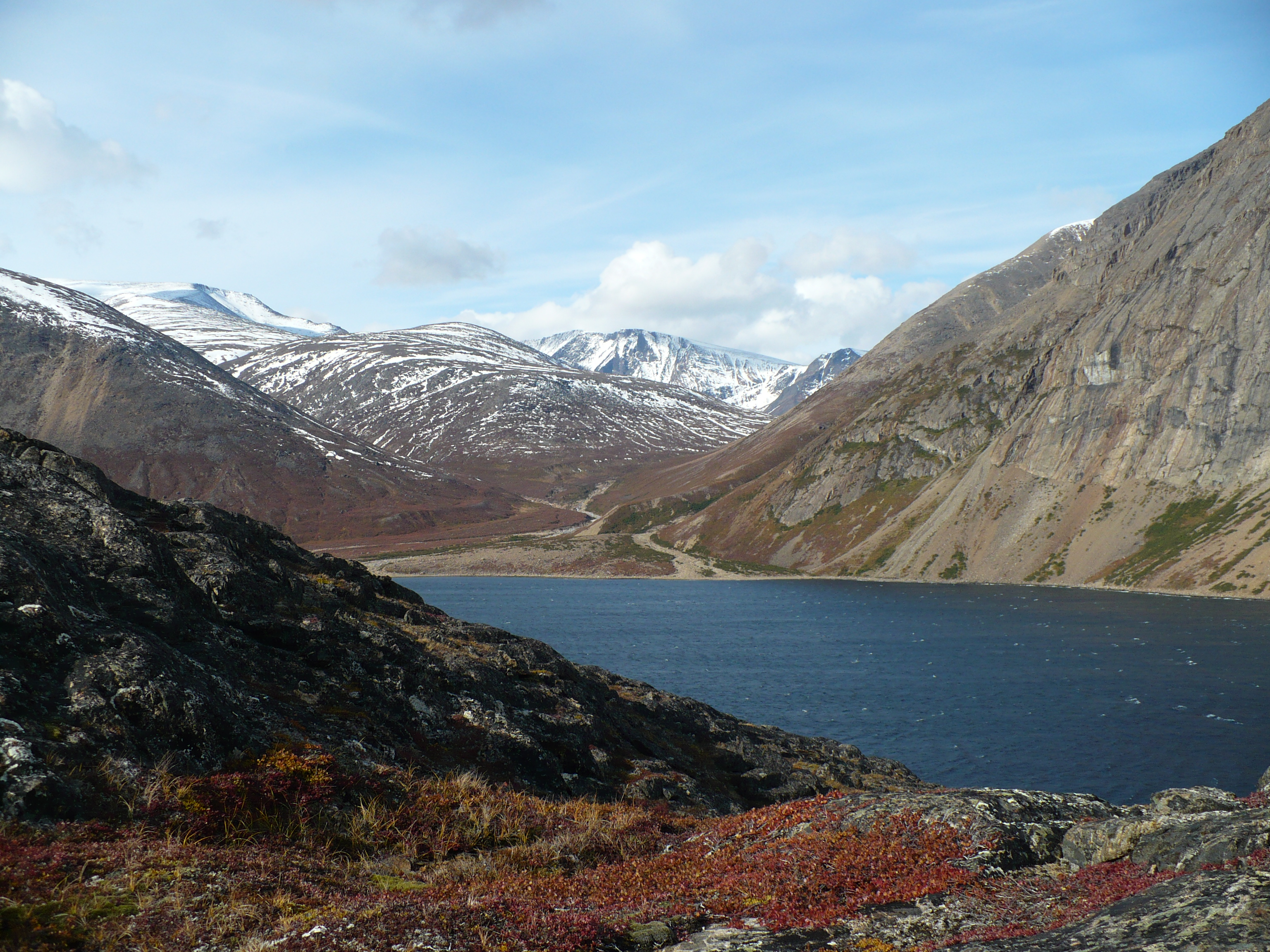
    When studying the Arctic landscape, consulting indigenous communities is crucial, and often essential, for survival. With no other inhabitants in the area, and a climate that will not spare a wandering scientist hoping to find their species of interest in the vast open arctic, the best choice is to swallow your pride and ask for directions. The Inuit people traditionally have heavily relied on hunting wildlife populations for their survival due to a lack of vegetation for most of the year; therefore, it would be essential to observe trends such as population size, migration patterns and feeding habits. Inuit traditional knowledge is called IQ, which stands for Inuit Qaujimanituqangit, or “that which has long been known by Inuit”. This term shows how undervalued traditional knowledge is, as we rarely consider that this is just basic knowledge to the Inuit. We often put data presented by scientists up on a pedestal, when in reality a group of researchers could make a number of records and observations over a two-year period, and use plenty of complex scientific jargon in their mile long paper; but it could be a completely inaccurate representation of a population compared to observations made by Inuit over decades that has simply been passed on by word of mouth.

    A more local example of the integration of indigenous communities into scientific projects is the Unama’ki Institute of Natural Resources (UINR) located in Cape Breton, Nova Scotia. UINR serves as the voice of the Mi’kmaq people of Cape Breton in discussions regarding natural resource management and environmental stewardship of natural environments such as the Bras d’Or Lakes. Institutes such as this promote education and employment in STEM within the Mi’kmaq community, as well as the preservation of traditions that involve the natural environment such as hunting. One program undertaken by UINR is the Moose Management Initiative. This initiative partners with the Nova Scotia Department of Natural Resources and Parks Canada to control the moose population in the Cape Breton Highlands National Park. Mi’kmaq hunters were given exclusive access to hunt moose in the national park to reduce an abundant population that would have overwhelmed the natural environment. Although this was considered controversial among non-Mi’kmaq hunters in the area, and highly criticized for being “unfair”, the harvest was successful, and traditional feast was prepared with excess meat being donated to food banks.

    This brings on difficulties that come with working with indigenous communities. In cases such as the moose hunt, it is often seen as unfair to non-Mi’kmaq people that opportunities are being exclusively offered to First Nations people, particularly in areas of already-high unemployment such as Cape Breton. The acknowledgement that First Nations people are a marginalized community and deserve these opportunities is a difficult one to make when you’re struggling to make ends meet. On the other side, First Nations elders can be wary in participating in programs with non-indigenous people, with very real, and valid concerns about being exploited or treated unfairly. Coming together and removing any prejudices about either group is of the utmost importance for having a successful collaboration in any situation, but it is particularly important when dealing with indigenous communities.

    The First Nations people of Canada knew the landscape long before the arrival of Western science, but their wealth of knowledge was rarely or never used to its full potential to provide us with information regarding the ecology of North America. With more efforts being put towards including First Nations communities in processes such as environmental planning and wildlife management, the relationship between scientists and indigenous communities continues to improve. Overall, the collaboration of scientists with indigenous communities fosters a sense of cohesion between the tradition and science rather than one of animosity, encourages education and employment opportunities for First Nations people, provides insight and information to scientists, and can create economic stimulus through industry, resulting in a beneficial situation for all parties.

    Laura Porter-Muntz is a fourth year Biology (Co-op) student and Science Editor of The Athenaeum

Betzillo positions itself as a versatile gaming hub where structured bonuses and adaptive gameplay mechanics support both short sessions and extended play.

Built with a focus on innovation, Spinbit integrates modern casino architecture with rapid transactions, appealing to players who value speed and digital efficiency.

Ripper Casino emphasizes bold entertainment through high-impact slot titles and competitive promotions crafted for risk-oriented players.

A friendly interface and stable performance define Ricky Casino, offering a casual yet reliable environment for a wide spectrum of gaming preferences.

King Billy Casino channels classic casino spirit into a modern platform, delivering recognizable themes supported by contemporary reward systems.

Immersive visuals and layered slot mechanics are at the core of Dragonslots, creating a narrative-driven casino experience.

Lukki Casino appeals to players seeking direct access and minimal friction, focusing on fast loading times and intuitive controls.

Casinonic provides a structured and dependable gaming framework, blending modern slots with transparent operational standards.