Month: October 2019

  • In Defense of The Campus Crows

    In Defense of The Campus Crows

    Every Spring you get that email:

    Once again we have received reports of crows acting aggressively towards persons on campus…”

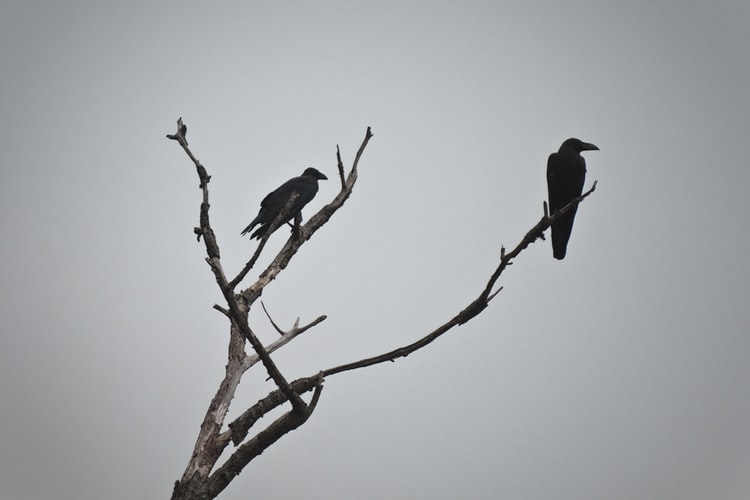
    Crows are often the symbol of death, disease and bad omens, as well as considered a pest by farmers and by those who have their trash scavenged by the birds. While, the campus crows have become infamous for harassing students, they deserve a better reputation than they have gained.

    Crows are classified as part of the Corvidae family along with ravens, magpies, and jays. Corvids are a family well known for the numerous observations of the birds displaying remarkably intelligent behavior. Although sometimes being exceptionally smart means they may also be incredibly weird, and occasionally a little aggressive

    Using tools is a hallmark behavior that scientists look for when assessing the intelligence in different organisms, and corvids have a well-documented history of using the assistance of objects to obtain food in the wild and in captivity. While swooping in and snatching a muffin from an unsuspecting student is much easier, crows will use sticks or other tools to help them access food. Crows have even been shown to choose tools best suited to the task at hand when presented with multiple tools in a laboratory environment; choosing longer sticks when the first short stick they chose could not reach their target. Crows have been shown to understand basic concepts such as water displacement in experimental trials where they needed to use various tools to obtain a piece of water floating in a container that needed to have a certain number of stones added to it in order for the food to be close enough to the top of the container for the crow to reach it (video of the experiment here: https://www.youtube.com/watch?v=ZerUbHmuY04)


    Corvids have also been recorded engaging what we recognize as play, with viral videos featuring crows playing in the snow popping up every winter (this one where the crow uses a makeshift sled in the snow is very cute, fyi:  https://www.youtube.com/watch?v=tUBMSnHH7hc). Like humans, crow brains release endorphins, or ‘feel good’ hormones, when they engage in play. Playing also gives crows an opportunity to develop skills and sometimes establish dominance. 


    While mocking your sibling is a form of “play” in humans, crows, ravens and jays are all capable of mimicking, where they can copy and repeat a noise they have heard. This behavior is another display that often gets recorded by observers and goes viral online, with some crows completing phrases like the one featured in this video: https://www.youtube.com/watch?v=RB3ruxchwaY. Their vocal abilities are extensive, with numerous different calls (yes, they do make other noises other than the infamous caw), and even regional dialects. These dialects account for territorial differences and communicate to those of a different region to find another place to roost.


    Now, with all that praise for the intellect of crows and their brethren, I understand why Corvids have such a bad reputation. Alfred Hitchcock’s movie The Birds made the mobbing behavior crows often engage in when they feel threatened infamous. This co-operative behavior keeps crows safe from larger birds of prey and other predators, but for an unsuspecting pedestrian accidentally entering crow territory, this defensive reaction is nothing less than terrifying. However, this behavior attests to the extremely social nature of the birds. In fact, they are so social they may even mourn the death of members of their flock. “Crow funerals” are a phenomenon that has piqued the curiosity of animal behavior scientists for a while. Crows will leave “gifts” to crow corpses, with observations of crows mobbing the scene of the death, leaving candy wrappers, sticks and other tokens for their fallen comrades. The weird side of crows is brought out during these “funerals”, because occasionally crows will engage in coitus with deceased crows (translation: crows will sometimes fuck other dead crows).


    As part of their social side, corvids are noted for their capacity to recognize individuals, including themselves, with magpies being among the few species proven to be able to recognize themselves in the mirror. If you have been a victim of a campus crow, I may have some bad news for you: crows are also able to recognize human faces. A study was executed with a researcher testing the theory of facial recognition in crows using masks. Researchers wore one mask to capture crows- making this mask “dangerous”. Another mask was worn while researchers did not bother the crows- to make this mask “neutral”. Crows would harass researchers wearing the “dangerous” mask walking on campus, while leaving the “neutral” mask-wearing researchers alone. So, if you were harassed by campus crows and reacted violently, they may recognize you as a violent person and avoid you, or they may hold a grudge. Watch out. 


    Although the fascinating nature of crows makes them a very easy defense case, any species should be respected. Crows are a species that can largely attribute its success to their proximity to humans and the interactions that occur between us. We as students must understand that urban wildlife is a part of our environment, and we share our space with them. This understanding is key to avoiding humans clashing and conflicting with other species. Personally, I’ve never had any negative encounters with campus crows, but I also avoid doing the following:

    1. Carrying food on campus
    2. Harassing the crows
    3. Entering an area, I know the crows frequent

    Co-existing with urban wildlife can be filled with conflict, but the onus is on us to keep our distance and let nature take its course; even if sometimes that means an occasionally muffin-carrier accidentally discovers where a crow has decided to claim stake. Stay safe, and maybe do some crow watching some time.

  • Profile on Liberal Candidate Kody Blois

    Profile on Liberal Candidate Kody Blois

    Earlier this year, Josée Léger did a short profile for The Athenaeum on Kings-Hants Liberal candidate Kody Blois when it was announced he was running in the federal election. After reaching out to him several weeks ago, Blois agreed to do a follow-up interview so the student body could get a more in-depth idea of who he is, what his party stands for and why Blois believes you should vote for him. On September 20th, 2019 I sat down with Blois for him to answer some questions voters in his riding may have.

    A brief summary of the platform that Blois is running on during this election:

    As a representative of the Liberal Party, Blois expressed that it is his responsibility to articulate the views of the party. At the time of the interview, the Liberals had outlined some of their key priorities such as Canada’s Pension Plan (CPP) and support for seniors, however, they had yet to unveil their major platform which Blois indicated that he “will be a catalyst supporting that as a Liberal Party member.”

    Blois shared that he had the ability to be on almost 10,000 doorsteps in the area so far and intends to come up with local priorities that are based on concerns shared from the individuals in Kings-Hants that he has talked to.

    “Agriculture is the backbone of the economy here in Kings-Hants, so I will be an advocate for agriculture,” he noted. Blois then went on to discuss how he will be outspoken and a proponent for the agriculture industry within Nova Scotia if elected.

    Supporting sport and recreation is a place of importance for Blois as he believes it has tremendous benefits for our community. Additionally, Blois touched on the arts and the level of significance culture has in communities.

    Regarding the Liberal Party Blois said, “On the doorstep, some of the big things I hear are about the environment being a top priority, healthcare and the federal government’s role, rural broadband internet, cost of living, affordability” While Blois notes that there is a plethora of different issues, the ones he mentioned are just some of the big ones that the Liberal Party wants to deal with if re-elected.

    The most important Public Policy issue within Nova Scotia?

     Every candidate, as well as every citizen, all have different priorities and values regarding politics and political change. It is vital for candidates to express what they believe needs to be focused on within their jurisdiction.

    Blois admitted that he didn’t know if he could narrow down the most important Public Policy issue to just one, as there are so many issues that need to be tackled. Instead, Blois offered his biggest three: “They would be the importance of agriculture, sustainability, and supporting the people who need the support the most within a community.”

    Touching on these issues, Blois said that there is already a good local movement to supporting local agriculture in the area, however, he would want to enhance this support in whatever way he can.

    How has Blois’s past experiences prepared him for this election?

     Prior to becoming immersed within the political world, Blois played competitive hockey at Brock University. During the interview, Blois remarked on how competitive sports teach goal setting and working hard in order to achieve the goals you have set out. Most significantly his time in hockey has prepared Blois because “they say politics is a team sport and that you need to work collaboratively with others around you.”

    “The ultimate thing for me is my background growing up in a working-class family,” Blois noted.

    He went on to discuss that affordability is a big issue and on many of the doorsteps, he sees people struggling. Blois emphasized that when you see people struggling, you have to be able to relate to it.

    “My father was a truck driver and my mom’s an administrative assistant. While sport is a piece of it, my upbringing in a working-class family is what has been important to me so I can relate to working folks in my riding.”

    What will help Blois secure the student vote?

     Here in Kings-Hants particularly, students are arguably one of the most important groups within Blois’s electoral district. When discussing what he has that will result in students voting for him, Blois discussed how he is a young candidate at only 28 years old. He understands the cost of education and the burden that cost can be for students wanting to gain an education. He notes that this is something that his opposing candidates may not be able to relate to.

    “For young people, the environment is important. I will be an advocate for that,” Blois announced when discussing how the climate crisis primarily weighs heavy on the minds of students right now.

    Touching on the Climate Crisis:

     The day of our interview was the first day of Global Climate Change Week. Prior to conducting the interview, Blois took me to the Clock Park to hear him speak to Lily-Beth, a young student plagued by the Climate Crisis.

    Blois told Lily-Beth that he can see the Climate Crisis is real, he can see it heavily in the agriculture from talking to farmers in the surrounding area. For Blois, there is no convincing him that climate change is something that needs to be invested in to make a proper change. He wants to be an advocate if elected in investing time and money to help fix this crisis.

    While Blois explained some of the challenges of fixing climate change to Lily-Beth, he also explained solutions governments could implement such as the single-use plastics ban or solar power. Blois then asked her for suggestions on what she believes to be the solutions to climate change.

    Throughout their interaction, Blois never attempted Lily-Beth to hurry up, regardless of his busy schedule for the day, and instead indulged her and asked her to share and speak more. Later on, Blois noted that although Lily-Beth is ten years old, it doesn’t discredit her ideas and he takes what they discussed seriously and to heart.

    “It is the time to adapt,” Blois stated. Although it is difficult to adjust to a greener future, Blois stressed the necessity for Canada to make the effort to do so.

    Trudeau’s ‘Brown-face’ picture and why you should keep faith:

    In the few weeks prior to our interview, some detrimental information has come out regarding the leaders of both leading parties: Justin Trudeau’s ‘Brown-face’ picture and Andrew Scheer’s same-sex comments. I felt that it was important, if he was able to, to hear Blois’s response to Trudeau’s photo and what he has to say to his party supporters that may encourage them to keep their faith with his party and Trudeau moving forward?

    Blois discussed that Trudeau out-right apologized right away and has taken responsibility for the photo instead of making excuses for it.

    “As it relates to the question of why to continue supporting the party, I would look back to the past four years.” Blois then went on to discuss how 92% of the promises made in the 2015 election have been met or are in the process of being met.

    He went on to say that the party has done some really good things and his worry is that if Canada ends up under a Conservative government, that there will be major backtracking on many of the amazing social programs, climate initiatives and support systems that have happened in the past four years.

    “We take a step backwards on the environment. We take a step backwards on women’s reproductive rights and many issues that Acadia students hold dear,” Blois stated.

    Blois will be hoping for your vote.

    For more information on the Liberal Party as well as others, you can read this article. Additionally, the resources available to students and why your vote matters.

  • SRC Decoded: What You Missed October 16th

    SRC Decoded: What You Missed October 16th

    The Students’ Representative Council (SRC) is a council composed of a body of students elected by their peers, who are in charge of running the Acadia Students’ Union. The Council meets weekly on Wednesdays at 5:00 PM in the Beveridge Forum which is located off of the Michener Lounge in the old Students’ Union Building (SUB). Every meeting is open to the public and students are encouraged to attend the meetings to learn more about the decisions being made on their behalf.

    This week the council held the first meeting after receiving the results from the recent by-election and welcomed new members warmly. During the meeting, council went over various topics of new business on their agenda such as a proposed moratorium, the filling of committee positions and the tragic Indigenous Society incident. Closing the meeting multiple announcements were made by council members.

    New Members 

    By-election results were sent out to the student body by ASU President Kyle Vandertoorn Tuesday evening announcing the individuals elected to fill several positions on the council. Five positions needed to be filled and three positions were: Brendan MacNeil was elected into the VP Finance & Operations with a vote of 61.6% in his favour, Cassidy Churchill was approved by the student body to fill the role of Professional Studies Senator and Lynn Verheul was approved as the Community Relations Representative.

    There was no First-Year Representative nominated Vandertoorn explained and the Councillor nominated withdrew before the all-candidates meeting. This election had a higher than average voter turn out although Vandertoorn does note that the referendum was likely the cause behind that.

    Both MacNeil and Churchill attended their first SRC meeting this week and were sworn in to their respective positions.

    Chairperson Sulaman Qureshi went over Robert’s Rules of Order for the new members. He explained that Robert’s Rules of Order are used as a way of conducting SRC meetings in order to provide everybody with ample opportunities to contribute, develop a level of governance and is found as an effective way to conduct meetings. Quereshi then went over the formality of meetings, roles of other council members, how by-laws and motions worked and any additional information that is a necessity to understanding and participating in the weekly meetings.

    Moratorium on UPass Referendums 

    Kyle Vandertoorn, President, brought up that the University Bus Pass (UPass) proposed to the student body got turned down in the by-election by 71% of the student population. The SRC had been proposed this UPass a few years back and spent a lot of time working on the UPass last year. Vandertoorn said that the UPass put a lot of stress on the SRC last year and over 1000 students ended up turning it down.

    Vandertoorn proposed to council, as a notice of motion, an immediate moratorium on UPass referendums unless there is an outstanding amount of evidence that if the UPass goes to referendum it will for sure be passed. She suggested the moratorium will be in place for a period of about 10 years unless it is repealed by a future council.

    Since 2012 there have been two referendums (2012 & 2019) held on a universal bus pass concept and a third attempt to hold a referendum in 2017. Vandertoorn went on to explain that in both referenda’s students were given the chance to vote and the UPass was turned down by an overwhelming majority. In each case, the Executive and the SRC were not promoting the concept of the pass as something beneficial to students.  Due to these reasons, including the amount of time the SRC has worked on the UPass, a moratorium on the UPass is being proposed by Vandertoorn.

    Vandertoorn stated that the ASU, as an organization, have spent a considerable amount of time, energy, and resources to develop and construct a program that has no prospect of being accepted by the student body. If a referendum is to be held, then it must have a reasonable prospect of success, otherwise the initiative is a waste of time for the ASU and the student body -time that can be better invested. Therefore: Be It Resolved That Acadia Students’ Union and the Students’ Representative Council implement an immediate moratorium on research and discussion of a universal bus pass program. This moratorium will remain in place for a period of ten years from its acceptance or until this Motion is repealed, whichever may come first.

    Members of the council asked a few questions regarding the moratorium leading to Vandertoorn motioning to send this proposal to the Governance Committee to discuss the specifics such as the time frame it will be in place for. This motion was passed by council.

    Indigenous Society Incident 

    Each Year October is designated as Mi’kmaq History Month, providing students with the opportunity to become more in touch with the history of the Mi’kmaq people. Every year in honour of Mi’kmaq History Month the Indigenous Students’ Society of Acadia (ISSA) puts up a tipi on the lawn between Seminary house and University Hall. During the first week of the tipi being put up, it was badly vandalized and is now unable to be used.

    Soyini Edwards, Diversity & Inclusion Representative, brought this matter to council during this meeting. President Vandertoorn announced she would reach out to James Sanford, Executive Director of Student Services, to inquire about what the University is doing about the situation. Doing so will allow the ASU to take the appropriate course of action regarding the recognition of this incident and if the University is already planning on doing something to recognize it, the ASU may potentially partner with them.

    Homecoming

     Gabrielle Bailey, VP Events & Promotions, went over Homecoming events that were taking place on campus this weekend:

    • Welcome Home: Hoco Kick-off will be on Friday, October 18th at the Axe Bar & Grill starting at 9pm. This event is $5 for students and is 19+.
    • Backyard Bash 2019 is an event held on the Cutten House Lawn from 10am – 2pm on Saturday, October 19th. This event will have free food, a DJ, bouncy castles, photo booths and so much more!
    • Sydstock 2019 ft. Big Fish will take place at the Axe Bar & Grill on Saturday, October 19th starting at 9pm. This event will cost $8 for students with all proceeds going towards the Sydney Taylor ‘13 Memorial Fund and the ASU Food Cupboard. 19+.
    • Hoco Sunday Brunch will be the closing Homecoming event at the Axe Bar & Grill on Sunday, October 20th from 10am all the way to 5pm.

    Committees

     A few committees had been postponed by council until after the by-election due to there being not enough members at the time. The Academic Affairs Committee required one non-exec member of council to join and Sustainability Officer Max Abu-Laban volunteered himself for the position. The Occupational Health and Safety Committee required one member to join and VP Finance & Operations Brendan MacNeil decided to join.

    Announcements

     There were a few announcements made towards the end of the meeting regarding events that council members are currently working on and will be announced shortly.

    Mackenzie Jarvin, VP Academic & External, reminded council that the Get Out the Vote Campaign is still happening. She is encouraging students to vote in the Federal Election and reminding those who have voted to pledge their vote on the website in order for Acadia to have the most pledges.

    Sustainability Officer, Max Abu-Laban announced that Acadia Dining Services will be opening the Acadia Growcer soon. This Growcer is a farm in a box – it requires 99.7% less land than a regular farm and 95% less water. Abu-Laban said to stay tuned for the grand opening and watch for the Growcer’s products to be featured at the salad bar in the Wheellock Dining Hall.


  • Devastating Canning Fire

    Devastating Canning Fire

    On Sunday, October 6th Canning, a neighbouring community to Wolfville, suffered a horrific fire on Main Street. 75 firefighters were called in to help put out the fire which took around 4 hours to fully extinguish.

    The fire started at around 3 am, originating in a two-storey residential building located beside the local grocery store. The Canning fire chief, Jeffery Skaling noted to the press after the fire that the buildings in the area were quite old and the chance of a fire happening was always something that worried the firefighters.

    Luckily no serious injuries resulted from the fire.

    The following morning Police said in a news release that while they were currently unsure of the originating cause of the fire, they did believe there to be suspicious activity. They urged people to come forward if anybody had any tips regarding the fire.

    On Wednesday morning, the RCMP issued a news release announcing that Canning citizen Noah Norman is facing charges of arson relating to the Sunday fire.

    “On October 8, the RCMP searched his home and arrested him without incident.”

    Norman appeared in court the next day facing charges with four accounts of Arson along with one charge of Breaking, Entering and Committing an Indictable Offense. He was released from court with conditions and is scheduled to return on November 5th, 2019.

    The investigation is currently on-going but for the time being, it is causing concern for the local town members.

    In a discussion with an elderly town member who wishes to remain unnamed, she stated “Arson is not a joke and it is heartbreaking one of our own would stoop to that level.”

    She then went on to comment on the effects this fire will have on Canning’s economy and its citizens as the town slowly recovers.

  • Reverse Redlining: How Banks Bankrupt American Dreams

    Reverse Redlining: How Banks Bankrupt American Dreams

    I’ve grown up often hearing about the mythic power of our financial system to pull the downtrodden out of poverty and its unwavering dedication to eradicating the economic inequities of the world. I’ve been led to believe (too many) times that recessions are necessary and unhappy interludes in the service of her larger goals. 

    Unfortunately, these are appearances meticulously held up by bankers. There are contradictions in the system that adversely and disproportionately affect minorities. Specifically, a little known practice that commercial banks engaged in during the build up to the Great Recession: reverse redlining.

    Redlining was a financial practice that systematically ‘color-coded’ neighbourhoods based on race, with the justification that minority communities were more likely to default on their mortgages and loans. While this isn’t an ideal illustration of the extent to which banking practices broke down the ability to accumulate capital in minority communities, it leads me to reverse redlining, a practice apropos of this initiative. In the quest to alleviate whatever lethargy bankers felt that the housing market was enduring, capital flowed to color coded neighborhood packaged in toxic loans with high interest rates that made repayment nigh impossible.

    Black would be homeowners in Detroit were 70% more likely to receive subprime mortgages from (now defunct) New Century Financial Corporation. Banking titan Wells Fargo had to pay out a $175 million dollar settlement fee to over a thousand residents in Baltimore because they “steered minorities into subprime loans, gave them less favorable rates than white borrowers and foreclosed on hundreds of Baltimore homes, creating blight and higher public safety costs”. It is important to unpack the sheer perfidiousness of banks; American citizens, solely due to the color of the skin, were driven to subprime mortgages.

    Generally, black and hispanic communities were offered subprime mortgages at nearly twice the rate of white families. In the aftermath of the great recession, through the rosy vagaries of ‘the expansionary phase of the business cycle’, the ills of reverse redlining still linger. Foreclosure rates for minority families are inordinately higher than those of white families

    Barriers like these for home ownership is one of the key reasons why the racial wealth gap exists. It is one of the best ways to secure intergenerational wealth for minority families. Yet they are systematically deprived of this. Only 3% of mortgage applicants are black households and 25% of black households are denied mortgages

    Our disillusionment of the financial system should lie in the irony of these duplicitous practices. Capital never flows to minority communities when they needed the opportunity to build intergenerational wealth. When it did, it came packaged in toxic loans. This capital was supposed to bridge the lacuna that was the racial wealth gap; to be unificatory. Instead, it systematically dismantled minority communities. Communities that had so long yearned to reach the American Dream. It must always have felt so close.

  • No. 5 Axewomen remain undefeated with 2-1 win over host UNB

    No. 5 Axewomen remain undefeated with 2-1 win over host UNB

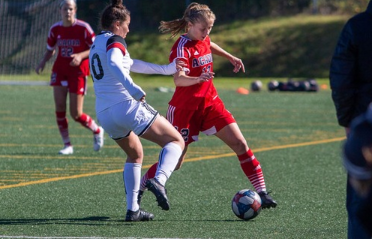
    FREDERICTON, NB – The U SPORTS No. 5 Acadia Axewomen got a pair of goals from fifth-year striker Jenna Boudreau (Halifax, NS) to beat the UNB Reds 2-1 on Saturday afternoon. 

    Boudreau scored in the 34th and 54th minutes. 

    “We knew coming in that UNB was a really tough team,” said Boudreau. “They’re really strong offensively and they did well defensively, they were disciplined and gave us a really good game.” 

    The Reds took an early 1-0 lead when Sylvie Fecteau (Moncton, NB) converted a penalty kick in the 17th minute. 

    The penalty came after Abby Sullivan (Orleans, Mass.) was taken down in the 18-yard box by Axewomen keeper Sarah Charnock (Newmarket, ON). Charnock was given a yellow card on the play as well. 

    Boudreau brought the visitors even when she was left alone in front of the UNB net and tapped a crossing pass by Reds keeper Brynn Nash (Saskatoon, SK). 

    The two teams went into the half tied 1-1. 

    “That was the first time we’d been down all season,” said Boudreau. ” I think it was good for us, in a way, to feel like that.” 

    Boudreau scored her second just after half-time, tapping a loose ball past a sprawling Nash. 

    The Reds pressed late but couldn’t find the equalizer. 

    “It comes from the team,” said Boudreau, of her two-goal effort. “It comes from our midfielders, it comes from our defenders playing it through to our midfielders. I can’t take all the credit. They are team efforts and I was just there to put them in.” 

    “I’m disappointed with the loss, for sure,” said Reds head coach Jon Crossland. “Much like most of our losses this season, I’m not overly disappointed with the effort. I thought we performed fairly well, especially the first 25 minutes of the game, I thought we took it to them and they had to answer some questions.” 

    The Axewomen are now 7-0-1 and see their next action on Wednesday when they visit Dalhousie. 

    The Reds, now 3-4-1 are in Charlottetown on Sunday to face the UPEI Panthers. Game time is 3:00 pm. 

    RECAP BY: Andy Campbell/UNB Athletics 

    PHOTOS BY: James West/for UNB Athletics 

  • The Need For A Tenant’s Union in Wolfville

    The Need For A Tenant’s Union in Wolfville

    In my second year, I like many students moved off campus. It was a decision motivated by an irrational need for independence despite not knowing what that would entail, and a very rational need not to shell out thousands of dollars on a meal plan. I don’t regret that decision despite all the unfair actions that have been taken against me, my roommates, and nearly all of my peers at this university by the landlords who primarily rent to students.

    My apartment in second year had many units haphazardly stuck together on a small lot. Multiple walls were patched with plywood. Previous tenants left drawings on the ceiling (we lost our security deposit for this). The maintenance guys hired by our landlord were creepy, frightening women who lived in the complex on multiple occasions. By the end of the year we had a wall collapse from flooding, and my parents wondered how the rest of the building didn’t go with it.

    My third year apartment was supposed to be nicer. It had heat pumps and a furnace for secondary heat. Unfortunately for us the landlords locked out the thermostat. In the winter I would measure temperatures as low as 2 degrees Celsius in my bedroom. No amount of begging would have the landlords fix the heat problem. To rent that apartment this year would cost you $575 per month per person plus wifi. I know landlords who have refused to repair windows despite the tenants only signing the lease on the condition it would be replaced by fall. It wasn’t fixed until hey moved out the next May.

    You may say that there are remedies in the law. That the Residential Tenancies Act has answers. If I could organize to meet with a lawyer during exam period, or if people late on rent could afford their fees then I may have been able to find out if you were right. However that wasn’t what happened because the tools to solve problems are not readily in the hands of those who need them, that’s what a tenant’s union could do.

    Beyond providing information and resources to the renting class, tenants unions in Vancouver, in Kingston, in LA, the UK have prevented unreasonable rent increases, increases in quality of rentals, and protections for the most vulnerable members of our community. I don’t want to hear another landlord gleefully talk about how they prefer to rent to students rather than a struggling single mom who was late on rent. I don’t want to hear about how my friends are being charged and/or suffering from landlord’s negligence. I want a tenant’s union.

    The path to that goal begins with you, with sharing your stories of excessive amounts being taken from your security deposit, broken appliances, and landlords barging in for a showing in the middle of your studying. If you have experienced these mistreatments or any others at the hands of local landlords, please get in touch with Josée Léger (Opinions Editor) @ [email protected] . Every measure to respect your privacy will be taken.

  • Why Do Stars Become Supernova?

    Why Do Stars Become Supernova?

    Why do stars become supernova?
    Do they do so because they tire?
    The eons of burning weighing them down.

    Or is it their love that causes them to swell.
    To shine brighter
    Up there, in the firmament.

    Out, out.
    The spears of red
    Of orange
    And yellow.

    Arrows of blue
    Of indigo
    Violet

    The light it goes out.
    Bleeding, bursting through the void.
    Pushing back
    The dull, featureless black.

    And then they burst.
    A cloud of flame.
    A cloud of dust.
    The seeds sown, for you and me.

    So mayhap, that is why they grow and swell.
    Out there in the depths of space.
    To share their light and spread their love
    Gifts only granted

    By stars.

  • Acadia Competes in Inaugural Nova Scotia University/College Golf Championships

    Acadia Competes in Inaugural Nova Scotia University/College Golf Championships

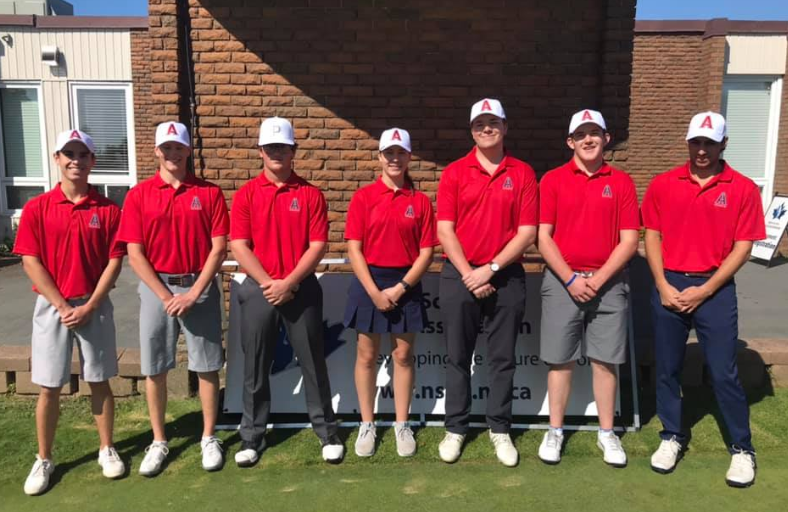
    Dartmouth, N.S. – On Saturday, September. 28th Acadia University competed in the inaugural Nova Scotia Golf Association University/College Golf Championships at Brightwood Golf & Country Club, in Dartmouth, Nova Scotia. The event format was 18 holes of stroke-play with the top four of five scores counting on each team. There was a total of 38 competitors in the event, with teams from Cape Breton University, Dalhousie University, Saint Francis Xavier University, and Saint Mary’s University all competing for the chance to be crowned champions.

    Acadia’s Men’s Team consisted of 5 players: Sebastian Farkas, Andrew Mackinnon, Zach Moore, Sam Quackenbush, and Cameron Waugh. In addition, Nathan Comeau was also representing Acadia as an individual participant. The women’s team consisted of one member, Courtney Cruikshank, who was the lucky competitor to hit the inaugural tee-shot in the event.

    It was a windy day that Saturday, but Acadia played well despite the conditions. On the men’s side, Sam Quackenbush was the low competitor for Acadia as he fired a solid round of 75 (+7) and finished in a tie for 6th place. Cameron Waugh was the second lowest player as he shot 76 (+8), and Andrew Mackinnon rounded out the top three as he posted a 78 (+10). Sebastian Farkas, Zach Moore, and individual contestant Nathan Comeau struggled to find their games on the Donald Ross layout. On the women’s side, Courtney Cruikshank represented Acadia admirably as she was only one of two women to compete in the event.

    As the sun set and the final putt was holed on the 18th green, Cape Breton University took home the Championship as they posted a collective score of +33 to defeat Saint Mary’s University by three strokes. Dalhousie University finished in third, followed by STFX University placing fourth, and Acadia settling for fifth. Individually, Cape Breton University’s Kevin George claimed the Men’s individual crown as he posted an excellent round of 70 (+2) to finish two clear of second. Sydney Erb of Dalhousie University won the Women’s title as she posted a solid round of 86 (+18).

    As mentioned, this was the first ever University/College golf event to take place in Nova Scotia and was a big step in getting national recognition for the sport in the province. There are many talented men and women golfers in post-secondary in this province and it was excellent to see them show of their skills throughout the competition.

    Acadia has never had a competitive golf program in its entire history, and by competing in this event Acadia will look to build its program for those interested in developing their games.

  • Science Snapshots

    Science Snapshots

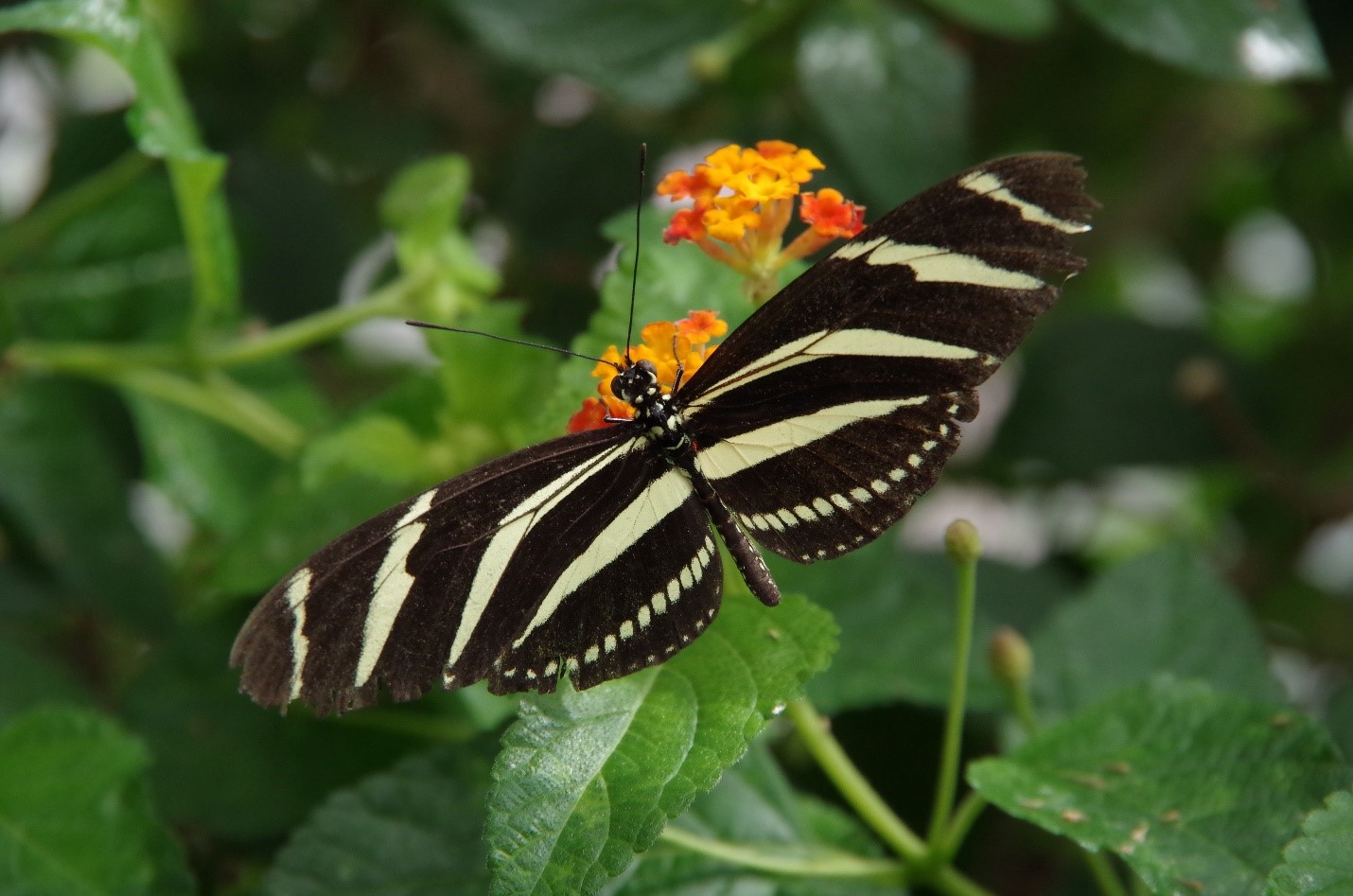
    Featured: A Zebra Longwing (Heliconius charitonia) at the Canadian Museum of Nature’s Butterfly exhibit. (Source: Laura Porter-Muntz)

    • Zebra Longwing butterflies are uniquely shaped butterflies with long narrow wings. This species’ range extends from Central America to the southern United States.


    • Zebra longwings are considered long-lived butterflies compared to other species that typically live for a few weeks, while these butterflies are able to live and lay their eggs for several months.


    • Like most butterflies, Zebra longwings consume nectar, pollinating flowers while they feed. However, this species is unique in its ability to also eat pollen. The saliva of these butterflies dissolves pollen, a very protein-rich food source compared to the simple sugars found in nectar, allowing them to obtain more nutrients than other species.


    • Butterflies in the Heliconius genus are well-known for being highly intelligent insects. These butterflies have established social orders while roosting, and demonstrate socially aware behaviors such as nudging each other early in the morning to get the roost on the move.

     Fact source: https://www.fs.fed.us/wildflowers/pollinators/pollinator-of-the-month/zebra_longwing.shtml

    To submit a science snapshot please email [email protected] or [email protected] with a photo and brief description

  • Monday Motivation

    Monday Motivation

    Progress is Progress is Progress. 

     No matter how long it takes you.

    No matter how hard it was to get there.

    No matter how much you doubt yourself.

    No matter how easy it was for others around you.

    No matter how many times you quit on your way here.  

    No matter how many drafts you had to throw out, how many games you had to sit out, how many moves you messed up. No matter how many failed tests, bad grades or mental battles you had to get through to get here.

     Your struggle is building you up piece by piece. Honor your struggle.

  • Community Relations Representative: Lynn Verheul

    Community Relations Representative: Lynn Verheul

    Lynn Verheul grew up in rural Nova Scotia loving the outdoors. Most of her time was spent appreciating the delights of being on a farm. After high school she attained a BA in Political Science and began traveling throughout Southeast Asia. Looking for a new adventure, she did her STCW95 training and worked two seasons on yachts. After cruising around the Caribbean and eastern seaboard of the US, she returned home again to work in administrative positions. Later she decided to return to academia and pursue a career in law.  Currently a history major at Acadia, she is excited to be involved in an energetic university and community.

  • Professional Studies Senator: Cassidy Churchill

    Professional Studies Senator: Cassidy Churchill

    Hey, Acadia Students! My name is Cassidy Churchill. I’m a third-year Business student majoring in Accounting and I’m running to represent YOU on the ASU as the Professional Studies Senator for the 2019/2020 school year. I was born and raised in small town Yarmouth, N.S and I decided to come to Acadia for its vibrant student life, academics, and overall reputation. If elected I will be dedicated to representing and supporting the Professional Studies Students, helping ensure your voice is heard and your needs are met. Remember to VOTE CASSIDY from October 6th-10th 2019!

  • VP Finance and Operations: Brendan MacNeil

    VP Finance and Operations: Brendan MacNeil

    My name is Brendan MacNeil. I am a fourth year finance student, and one of the founding executives of the Acadia Investment Club. I have worked for three years in the investment industry, and am passionate about technology and startups, and the role we as students play in that. As president of the Axechange (business school) podcast I have investigated many of the business leaders and entrepreneurs building the next generation in Atlantic Canada, and I am determined to bring these opportunities to Acadia.

  • VP Finance and Operations: Joseph Creagh

    VP Finance and Operations: Joseph Creagh

    I am running for the position of VP Finance and Operations because of my passion for Acadia and the accounting field. I strive to take what I have learned in the classroom and apply it to the real world. Acadia University and more specifically, the Acadia Business program has taught me a lot. I hope that I would be able to pay back Acadia with fiscal responsibility and responsible spending.

    When I was younger, I never wanted to be an astronaut or a race car driver. I always wanted to be an accountant. This passion for accounting continues to this day. This enthusiasm would aid me in the position; it’s also an excellent opportunity to apply my financial aptitudes and interest in student benefits.

    Acadia is a great place, and if I can contribute in any way to making this next year as enjoyable as my other years, I will be delighted to do so.

Betzillo positions itself as a versatile gaming hub where structured bonuses and adaptive gameplay mechanics support both short sessions and extended play.

Built with a focus on innovation, Spinbit integrates modern casino architecture with rapid transactions, appealing to players who value speed and digital efficiency.

Ripper Casino emphasizes bold entertainment through high-impact slot titles and competitive promotions crafted for risk-oriented players.

A friendly interface and stable performance define Ricky Casino, offering a casual yet reliable environment for a wide spectrum of gaming preferences.

King Billy Casino channels classic casino spirit into a modern platform, delivering recognizable themes supported by contemporary reward systems.

Immersive visuals and layered slot mechanics are at the core of Dragonslots, creating a narrative-driven casino experience.

Lukki Casino appeals to players seeking direct access and minimal friction, focusing on fast loading times and intuitive controls.

Casinonic provides a structured and dependable gaming framework, blending modern slots with transparent operational standards.