
Blog

  • Why I Hate Meal Hall

    Why I Hate Meal Hall

    When walking into meal hall a year ago for my first campus tour, I was amazed by the large, open space, the abundance of food, and the concept of “My Pantry.” The description of fresh, full salad bars, healthy sandwich stations and the idea that I could cook my own food was one of the main attractions of Acadia.

    After spending my first night on campus, I was looking forward to waking up to a fresh, healthy, simple breakfast of plain yogurt and muesli, maybe some fruit and a glass of pure orange juice. To my horror I was faced with Mystery Meat, French toasted waffles, potatoes, sausages, rubber eggs, yogurt with more sugar than Ben and Jerry’s, and orange juice that came out as a bright, orange substance immersed in water. And as I searched for muesli, I instead discovered Lucky Charms and Cheerio’s; not a healthy oat in sight. Horrified, I went into town to buy breakfast supplies for my room and have not been back for breakfast since.

    Dinner was much of the same, with dry old carrot sticks, dying celery and creamy fat and sugar-rich salad dressings. Pizza, fries, burgers, perogies, ice cream, cookies and brownies were plentiful. Settling for lettuce, cucumbers, and chickpeas, I ate my disappointing dinner with looks of disdain and confusion from other students, who were relishing the opportunity to stuff their bodies with fat and sugar.

    Meal hall isn’t a completely rotten institution – it employs the lovely idea of sourcing local foods and supporting local farms, and provides ample vegetarian options. It does its best to please a very large population of students, which is hard considering the diversity this beautiful campus provides. Reducing myself to the lowest meal plan available, (only 5 days a week), I am still paying $4000 just to eat chickpeas and lettuce since students cannot cancel their meal hall subscription while living on campus. This waste of money means I am unable to buy myself the healthy, fresh food I want unless I move off campus in my first term.

    There are many simple things that could significantly improve meal hall. A station of just “plain food” with the same set-up as a salad bar is one option. Providing plain oven roasted chicken breast with no flavourings, plain brown rice, plain roasted vegetables at night, and plain yogurt. Include some real juices, muesli and seeded breads such as rye, with low fat spreads in the morning. Simply providing real meats daily, not the heavily processed meats found in the sandwich bar and simpler, plain foods year-round would improve meal hall significantly. Then, students could at least have the choice of making their own meals without consuming the additional fat and sugar.

    So good-bye, Wheelock. The risk of never becoming a meal hall crush is one I’m willing to take if it means I can avoid the next mac and cheese day.

  • Brew Review: Boxing Rock Crafty Jack English Ale

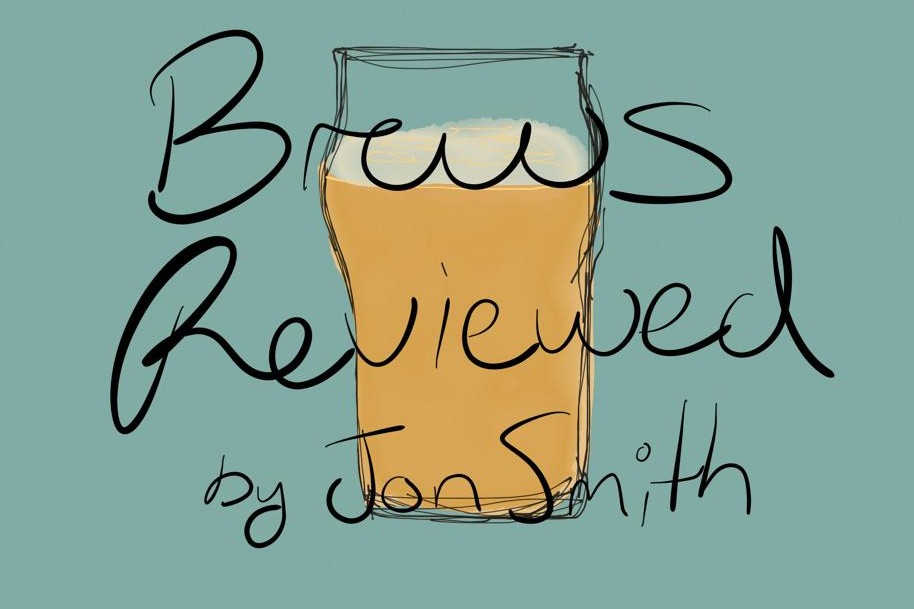
    Brew Review: Boxing Rock Crafty Jack English Ale

    Last issue, I ended up writing a review for a beer from BC. I figured I had to throw all you Vancouverinos (Vancouverites? Vancouverians? Whatever.) a bone or two. However, today I’m bringing it back home and reviewing a beer from our beautiful have-not province, Nova Scotia. The beer for today is Boxing Rock’s Crafty Jack English Ale, which is brewed in Shelburne, a place that I assume has plenty of nice old people and good seafood. Boxing Rock just started selling its product in liquor stores a couple years ago and it’s already killing the local beer game. Their pale ale is one of my favorite beers of all time, but I figured I’d give one of their more unique ales a shot. 

    The beer pours with a one and a half finger light brown head and has a dark brown/amber colour to it. The scent has a strong malt component, with a hint of coffee and chocolate. Anything that smells like chocolate gets an A-grade in my books, and that includes people. The mouthfeel is pleasant, with little offensive alcohol taste and a lot of roasty-toasty malts giving the beer a smokey feeling. The body on the beer is medium-heavy, but it goes down smooth like a stout. Crafty Jack doesn’t have the bitterness that might be found in other English ales, making it a much easier drink. The aftertaste is deliciously complex, a phrase I sometimes wish people would use to describe me. It combines sweetness with chocolate/coffee flavours and a small hint of roasted nuts. It’s like a beer trail mix. 

    Boxing Rock’s Crafty Jack English Ale is a solid drink. It’s a tad expensive, sitting at about five bucks a bottle, but it’s worth it to pair with a meal or to start off a night of getting crunk. Warning to those trying to get crunk: Crafty Jack is only 4.2% alcohol so it’s a bit of a lighter fare, but I’d still gladly drink three or four of them. I’d also recommend checking out the rest of Boxing Rock’s repertoire if you can – at the risk of sounding like a granola, local stuff is pretty alright. Stay fresh, folks. 
     
    Summary: roasty-toasty with the mosty. 
     

  • A Heart of Soul

    A Heart of Soul

    Imagine you’re as free as you possibly could be – feeling as much rapturous emotion as you could ever feel – while simultaneously making others feel that way too… September 9th marked what would’ve been Otis Redding’s 74th birthday. He was a man who could make people feel those things just by stepping into a room. The entity of soul music is Otis. No one else can quite embody soul the way he did. His presence on a stage is even thrilling to see now, captured and played back on TV or a computer screen. His emotional delivery makes every last one of your bones tremble with delight from his achy ballads, and his voice is an absolute pleasure for ears with a sound one can ever forget.

    Born in Dawson, Georgia and raised in Macon, Redding – also known as “The Big O” – grew up listening to the works of Little Richard and Sam Cooke. He was the son of a minister and thus ended up singing in the choir at his father’s church. At age fifteen, Redding dropped out of school to take care of his family’s financial needs. His father had fallen ill with tuberculosis. He first worked as a well digger and then an attendant at a gas station. Soon, he started working for The Upsetters (Little Richard’s band) which kick-started his realization that music was what he loved.

    Mr. Redding’s first recorded song was “These Arms of Mine” in 1962. He was one of the first soul artists with a large Caucasian audience, which was pretty groundbreaking at the time. His big hit “Sittin’ On the Dock of the Bay” was the first ever #1 hit single released posthumously in the United States. It was recorded just three days before Redding tragically died on December 10th, 1967 in Madison, WI. He died in a plane crash that killed him and all but one of his
    band members.

    Redding had a memorable career. He changed the way people look at music and how deeply it can affect them. Although his music wasn’t overtly about racial discrimination, he firmly believed that changes were going to come at a time when changes were desperately needed. But to connect to all audiences, he knew he had to sing about something more relatable; something that individuals could interpret however they wished: love and relationships. Redding sang soul music the way a seed sprouts into a tree – naturally, and that is why he captured the attention of a large audience.

    Redding got his big break at Stax Records, a recording studio that was friendly to those who were black and those who were white. It was the one place where everyone was considered a person and was treated like one. There, people could create music together in the otherwise bitterly divided south. Stax knew that they had hit a gold mine when Redding casually strolled in and politely asked to sing a song. He blew them away.

    Jim Stewart (founder of Stax Records) immediately wanted Redding to record. No one could get enough of him. Redding was spreading through Memphis like an illness – impossible to contain – and although he was at first just playing in the small clubs and bars of Memphis, to him it was the real deal. Something was different about Redding and his performances. His audience was more than just one ethnic group. He was well loved, and without even really knowing it he was slowly bringing together two worlds that were once so fiercely isolated from each other. He was bringing people together like opposite ends of a magnet.

    The genre of southern soul came about in the 1960s, and I believe Otis Redding was a mainly responsible for its creation. Of course, Blues, Rock and Roll, and Gospel genres all existed long before Redding, but soul was still a fresh concept when he began his career. Redding changed allowed the genre to flourish by letting his soul escape him and wander amongst the ears of eager listeners waiting to hear his emotions, feel his words, and understand that love can equally mend all wounds and tear you apart.

    I absolutely love Otis Redding. As soon as I came across his voice I knew I had found someone sincerely beautiful, and it’s not often that something really feels that way anymore. We live in a world where new artists are singing new songs on the radio each day. They are without passion or purpose, just hoping to make a buck. When reading through articles and interviews with those who knew Redding, one can see a trend in how people viewed him; a gentle and happy man, who gave it his all every time he stepped out onto a stage. He truly was the King of Soul. You don’t call someone The King of anything if they haven’t practically created that something. Without Otis Redding would there be soul? Maybe. But it would have never been as satisfying or alluring.

    Art is the quality, production, expression, or realm according to aesthetic principles of what is beautiful, appealing, or of more than ordinary significance. That is Otis.

  • The REDress Project

    The REDress Project

    Did you know that Acadia University has an Art Gallery in the Beveridge Arts Center (BAC)? If you have not yet heard of the gallery or if you have not been there, I fully encourage you to visit and take advantage of its exhibitions and programming.

    Currently on display is The REDress Project by First Nations Artist Jaime Black. This captivating exhibit is aimed at bringing awareness to the issue of missing and murdered Aboriginal women in Canada. Jaime Black started this exhibit in Winnipeg and has since travelled throughout West and Central Canada, making appearances at a number of universities. This is, however, the first time REDress Project has made its way out east, now on display at the Acadia University Art Gallery until November 29th.

    As artist Jaime Black describes, “Through my ongoing installation, The REDress Project, I have placed the absence of the body as central to the work. This work involves empty red dresses installed ‘floating’ in public space as a spectral reminder of the hundreds of murdered or disappeared Aboriginal women across Canada. This installation piece attempts to situate the Indigenous female body as a contested entity and the specific target of colonial violence while reclaiming space for Indigenous female bodies.”

    Not only are red dresses hung in the gallery space, but there are also dresses located outside the BAC, hanging in the trees. Many students and visitors who have walked passed the Art Gallery are pulled in by the eeriness and emptiness that the dresses convey, while others are drawn simply by curiosity of the dresses themselves. One visitor described her experience in the exhibit as “a sad dance” as she walked around the dresses. The REDress Project can be overwhelming, as it deals with a very difficult topic, but it allows the viewer to contemplate the issue in an encouraging environment.

    Though many visitors have commented on the effectiveness of the red dresses that hang outside the BAC on the trees, it seems that a few others did not feel the same. Within only a few days of the exhibit being up, two dresses have been stolen from the trees and another was torn apart. This has been very sad, not just because of the destruction of the work, but the fact that the dresses symbolize missing/murdered women’s bodies. We encourage anyone who knows anything about the disappearance to bring information to the Acadia University Art Gallery. If you are in possession of one of these dresses, we ask that you bring it to the Gallery (no questions asked). These dresses were collected by the artist Jaime Black to help the public explore the issue of missing and murdered Aboriginal women, and as students of Acadia University we must do our best to make sure this issue/exhibit is respected.

    I would personally like to thank the anonymous donation of three new red dresses, which hung on the trees outside the BAC. This act of kindness was greatly appreciated, as it lifted both the spirits of those working in the Art Gallery and those involved in this exhibition.

    If you have not taken a look at the exhibit The REDress Project yet, I encourage you to come and enjoy! The Acadia University Art Gallery is open from Tuesday – Sunday 12-4pm (till 7pm on Thursdays).

  • The Missing Page

    The Missing Page

    I sat at the kitchen table while the storm raged outside like wild wolves, biting and tearing at the plains. Through the scalding steam of my tea I could see Christoph staring out the window of the den. He smoothed his white beard and puffed on his pipe in disconnected thought. The aroma of cinnamon tobacco drifted across the flitting flames of the fireplace behind him. Morality. Immorality. Resolution. Indecision.

    Erratic self-contemptuous reflections crawled their way through the corrugated folds of the pulsing mound of pregnable flesh lodged within his skull. His health was failing beyond measurable means, and as of late he had taken to referring to me simply as: “The American.” He had forgotten my name entirely, but there were some things that he could never forget. I knew more of him than he believed he knew of himself; I watched him always, like a hawk to a snake. He was reading that damned book again: ‘The Premature Burial of Dr. Matteucci’ or something along those lines. I had seen the book many times; the cover was tattered and the edges badly worn. Mould crept along the inside crease: a blue vein.

    Christoph pondered through few pages with his mind wandering from the yellowing paper to the scorching lashes of lightning, and he learned of a young physician of Naples who found misfortune and death. As the story goes, he and his partner were accused of medical malpractice that resulted in the death of a well-to-do fiancé of a prominent lawyer. Matteucci disappeared, but he was found hiding in an abandoned barn. His location was presumably given for the lawyer’s money.

    Before trial a band of besotted peasants tossed Matteucci into a coffin and buried him alive. The second doctor fled as well, but like a wraith, disappearing amidst the city’s mortar. Christoph believed that he may have encountered the text before, but when he sought to discover the result of the man’s fate he realized that the final page was absent. It was erased like a memory conceived in the darkness of sin. Christoph looked behind the laden bookshelf and under his chair. He crawled along the floor like a benighted infant, but he could not spot the page. It was missing.

    He approached the front door in a stupor, his hand clutching his jewelled cane. He weakly yelled for the American, but I was naturally there. I must admit, his behaviour was mildly alarming. He had never acted as such even in his most profound delusions. He professed the urgency to apprehend Phillip, his confidant, who was travelling to Linz to deliver a medical analysis for Mr. Flint’s practice. His worry was that Phillip would become stranded in the storm, but I had reason to believe that he had reached his destination many hours before his master’s coaxed concern. Nonetheless, I had no choice but to oblige, and without a moment’s hesitation two horses and a cart were prepared. The aging man drove himself down the cobbled path of the estate through the shrieking wind.

    Upon later questioning, he claimed he hadn’t travelled two miles before he saw Philipp trying to push his cart out of the mud. One of his horses veered off the road out of fright and the cart became stuck just inside a thicket of foliage. Philipp’s hair hung in his eyes and his tunic was stuck to his cold, wet skin. He gave a hesitant wave to the arrival of Christoph as his heart beat quickly with the fear of reprimand.

    Christoph tipped his hat and beckoned with a large hand for the page to come forward. “Gather the supplies from the cart and come with me. Someone will be along for the horses,” he said.

    Philipp grabbed some quilts from the cart and draped them over the backs of the hulking beasts. They breathed reams of hot air from their noses and nodded in approval as Philipp retrieved an armload of hay and placed it under the cart so that it wouldn’t get wet but they could still reach it. The horses wouldn’t be alone for long and he didn’t want to leave them, but Christoph waited impatiently with nothing more than a pipe and its fumes to keep him company in the cold. His impatience was accelerated by his belief in his good hospitality.

    The duo reached the estate shortly after midnight. I observed Christoph’s hulking gait from the upstairs bathroom window; I knew where he had been. Phillip was not with him. Phillip had arrived in Linz long ago. Christoph’s delusions of grandeur allowed him a façade of heroism and a fabricated narrative of rescue. The thinning rain revealed a burlap sack carried in two shaking arms made frail with age and regret.

    The loud cracks of thunder were softening with distance. The night grew still blacker, making the foreign land comforting to me in its universal darkness. I had finished drawing a hot bath upstairs when I heard the door open. It was a slow creak, a hesitant entrance. I slowly descended to the lobby, the overhead chandelier casting a soft glow in the otherwise dim house. In the den I could hear Christoph conversing.

    “Will you be having drinks?” I inquired in the doorway.

    “Dark rum will be fine,” Christoph muttered without looking in my eyes.

    Sitting in the chair opposite he was the corpse of the missing accomplice, albeit not the one that had travelled to Linz. Matteucci stared slack-jawed into the dripping eyes of his companion, his mutilated arms draped neatly on each side of the leather chair. Christoph fingered his muddied shovel nervously, sweat and rain mingling affectionately in the crevices of his forehead.

    I went to gather drinks. On the kitchen table next to my cold tea there sat a single page with ripped edges, long ago removed from its text by the man who traded friendship for bounty.

  • Let’s Think About Ink

    Let’s Think About Ink

    A tattoo on your hand, a place you could never hide it, used to be one of the most provocative forms of self-expression imaginable. Now the hands have become the arms, and the face is the hands. More and more people display their artwork proudly, without fear of judgement. Working professionals carry ink on their hands and fingers, and the bravest of us cover our necks and faces in vivid imagery that may represent something incredibly personal, or may have been thrown on there for shits n’ gigs.

    The point is that we don’t need to be afraid of accumulating a healthy collection of ink. Some of us have grand portraits, some have small infinity signs with cute lettering, and some of us have something that looks kind of like a skull and was done with a sewing needle. No matter the size or quality of a tattoo, each one can carry a unique story. The tattoo could represent a meaningful time in your life, or the story could be how you acquired that jailbird style ink. Maybe you want to share your story with the world, and maybe you don’t. That’s your choice, but if anyone ever asks about your ink there’s always one good answer: it’s badass.

    My favourite tattoo is also my shittiest tattoo. It’s a small design on my leg that I drew up one night in my dorm room with my best friend. I proceeded to break out my personal kit to make it a lasting memory. We burnt the sewing needle with a lighter, dipped it in ink we got from Wal-Mart, and went to work on it. I guarantee it looks like shit, and I may have spilt ink all over my bedding during the process, but it’ll be one hell of a story to tell my kids. I don’t regret the tattoo, and even though it looks pretty rough I don’t think I would ever change it. My friend and I really bonded over our willingness to experiment and express ourselves in a permanent form of art. I’ve spent over a thousand dollars on professional tattoos, with flawless lines and bright colours, but my favourite one will always be my shittiest one.

    Ink demands attention. Refute the pressure to hide yourself away. Companies sell tattoo cover-up, basically concealer, so you can “look professional,” but all it does is perpetuate the idea that tattoos are shameful and irresponsible. Ink on someone’s skin does not have any effect on someone’s character. We are the politicians, the doctors, the teachers, and, in some cases, the dropouts of the future. We don’t need to abide by an old time version of professionalism. If you care that much, tattoo a tie on your chest. If you’re hiding your art, what was the point of getting it in the first place?

    For those of you who are thinking about getting inked up, here are some tips: (1) Don’t over think it. A tattoo doesn’t have to show your life story for it to be meaningful. Getting a tattoo is a journey, and well worth the pain. Bring a friend with you and make some memories. If anything, they’ll be there to laugh at you while you squirm in pain. (2) Shop for an artist you’re comfortable with. If you don’t trust your artist, they’ll be able to tell and the art will suffer. (3) Don’t use Google. If I can find your exact tattoo in a mass search, it probably isn’t that creative. (4) Finally, put it on your arm. Don’t hide it underneath layers of clothing, because you should be proud of your art. Also, the arm is a great starting spot, because it’s not that painful and it’s easy to tattoo. Always be proud of your ink, and quite literally wear it on your sleeve.

  • The Adjustment Not Only to Acadia but to the Hill

    The Adjustment Not Only to Acadia but to the Hill

    The personal adjustment to university and what we should expect from it has been pounded into our grade twelve brains again and again. We’ve all come to experience this new chapter of our lives from different variations of small towns and big cities, but none of us has known anything like Wolfville, or further, like Acadia University.

    Not long after you’ve moved in, the exploration of your new home with your new housemates begins. Main Street has so much to offer for not being very long in distance. There is everything you could ever need literally between the Clayground paint-your-own pottery and the Library Pub.

    On your way back to campus, it is impossible to ignore the charm of the home you’ve chosen for yourself for the next few years. Your senses are overwhelmed by the beauty of the lush, green grass stretching far ahead toward the carefully crafted stonework of University Hall. The huge, strong trees stand tall with the university. They look as though they’ve been there the entire 175 years; if only they could tell of the things they’ve seen.

    Taking those first few uphill steps back to residence seem harmless. Light, excited babble bounce around you and your fellow innocent first-year friends. Suddenly, seemingly out of nowhere, that Annapolis Valley sun feels ten times stronger than it just was. Heat mirages rise up from the pavement. You start sweating, quickly swiping at your beading hairline, hoping your friends don’t notice – but the secret is, they’re all feeling the struggle too. Your calves start burning in a way you didn’t imagine was possible this far away from a treadmill. It doesn’t take too long before that excited babble falls to a hush because now you’re all struggling to get air stealthily into your lungs without doing that embarrassing gasp.

    Remember how beautiful campus was from Main Street? Well, every Acadia student can testify that the campus is a first-hand experience of beauty disguised as evil.

    The top of the hill is so close now, and you can’t ignore the silence between the laboured breath of you and your friends alike. You don’t want to be the first one to admit this hill just might be the death of you. Inside though, you’re all thinking the same thing, I promise: How the hell am I going to manage to make my way up and down this thing for the next four years?!

    I hate to be the one to break it, but we think this hill is monstrous now? Wait until new elements are added to the equation. Winter is coming Axemen and Axewomen, and with it is coming layers of ice.

    When you and your buddies finally get to the top of the hill it’s all you can do not to double over and pant like a racing greyhound. Just when you’re wondering if you’re going to be the one to admit that you almost lost your life in that uphill battle, one of your friends nonchalantly pipes, “That’s a bit of a trek, eh?”

  • Making A Case For Yeezy

    Making A Case For Yeezy

    When talk of oft-hated mythical figures arises, people either think about the Loch Ness Monster or Kanye West. West receives undue hate from puritanical elitists as they dismiss him as irrelevant, painting him as an untalented peasant – an outsider violating the sanctity of a sterling industry. Why do these elitists despise him with such self-righteous fervor? What has he done that offends the general public? Well, at the risk of sounding condescending, let me repudiate the same old ranting tirade I hear about his lack of talent every time he is brought up in a discussion:

    He’s not a musically untalented peasant. The guy’s actually a very talented producer who has made highly innovative music. His sonic metamorphosis has been one of unrelenting undulation. Kanye started it off with a sound marked by Soul and R&B inspired beats, drizzled with a lush and silky string accompaniment i.e. his first two albums: The College Dropout (2004) and Late Registration (2005).

    The sound subsequently rocketed to the other end of the spectrum – ending up somewhere between pop superstar and chauvinist rapper. His next album, Graduation (2007) – the sonic equivalent of him coming to terms with the newfound fame, was characterized by an increased amount of electronic and synthesizer influenced backing.

    Perhaps his most introspective album came next. 808s and Heartbreak (2008) was an attempt to reconcile his musical career with the death of his mother. The sound was something ineffable – not quite pop, not quite melancholia, and not quite rap. It was an experiment, and it worked. It bares soul; it has a unique depressive stripped down aesthetic marked by a heavy use of auto-tune to convey unusually solemn lyrical content.

    We arrive then at his magnum opus, My Beautiful Dark Twisted Fantasy (2010). The album is a castle built on foundations of musical maximalism and hip-hop. It’s a constant outcry against modern day capitalistic culture, while at the same time it celebrates it. The dichotomy is at first is hard to understand, but Kanye has always had a polarizing relationship with late-stage capitalism. He sees the worth in the ability of the every-man to achieve something great, while hating the ability of the system to mold you into something that you despise. In a nutshell, it’s an album about capitalism saving him and killing him at the same time. It was critically acclaimed by nearly every musical publication, and also lauded to be one of the best albums of the decade.

    His most recent release was perhaps his most abrasive, reductionist, and minimalist work. The album Yeezus (2013) favored a grungier, acid house, and industrial influenced tonality. I see it as the natural succession of 808s and Heartbreak, but this time, Kanye is happy. He has a beautiful girlfriend, a burgeoning musical career, and boatloads of money. The lyrical content focuses around this, and also eschewing modern day racism (he sees it as a byproduct of the capitalist structure, still having a salient presence in his life). The album is probably his happiest album since Graduation, and yet it sounds corrosive. But it did win its due accolades, placing itself on many “Best of The Year” lists.

    If by this point the sonic experimentation fails to impress you, then you should know that he’s garnered over 350 nominations for different musical awards shows, won twenty-one Grammies, and every one of his album’s has been critically lauded in various different publications spanning every platform possible. Blind luck for six albums in a row spanning over eleven years? If people have to resort to such paradoxical conspiracies to defend the vestigial view that he is an untalented imbecile, then we might just have to admit that his music does hold merit and relevance.

  • Amy

    Amy

    A few years back, I had never heard of Amy Winehouse before. Yet I distinctly remember the day of her death, as if I had been a fan my whole life. Although I didn’t feel the sadness or importance of her passing at the time, I can honestly say that I now understand completely the devastation around the world that came with that tragic day.

    This year, from the award winning team behind last year’s hit documentary Senna, comes the critically acclaimed documentary detailing the life of Amy Winehouse told through her eyes. Directed by Asif Kapadia, Amy is not a typical bio-documentary; instead of the typical mirage of interview footage with various family members, friends, and record producers, the focus is on Winehouse herself. A massive amount of research went into finding archive footage, homemade videos, unseen concert footage, and even recordings of previously unheard/unreleased tracks. In this way, Kapadia has produced a unique experience in that we get an unparalleled glimpse into the raw emotions and hardships of Winehouse’s life.

    The documentary is an emotional rollercoaster of joy and grief, an exploration of pop-culture, fame, and drug abuse. One might even argue that the media and her rise to fame killed her. As tragic a point of view as that is, Winehouse is shown saying she does not want to be famous many times, almost too many. For her, obscurity would keep her sane, as she would go crazy from fame. Consumers didn’t listen, and the result may have been her death.

    In addition to the powerful story of media frenzy surrounding her rise to fame, and the emotional story of her romantic relationships, there is the drug and alcohol narrative. In some ways, one could say this documentary is an anti-drug film. Alcohol and drug abuse played a monumental part in Winehouse’s life, and this is not lightly skimmed over by Kapadia. A juvenile detention centre in Thailand has recently taken to showing Amy as an anti-drug film to inmates in the hopes that it might dissuade them from a life of addiction (The Guardian, 2015).

    Kapadia’s film, which became the second-biggest documentary ever in UK cinemas this past summer, has been critically acclaimed around the world after its screening at the prestigious 2015 Cannes Film Festival. Surprisingly, negative comments from Amy Winehouse’s father Mitch Winehouse came forth after the release. There was tension between him and the crew during production due to disputes over his negative portrayal in the film. According to the director, who was dedicated to a truthful telling of the jazz legend’s life, nobody did anything about Amy’s addictions and problems which ultimately resulted in her untimely death.

    Asif Kapadia’s Amy is unique in the documentary genre for its intimate and unusual style of editing. No interview footage is ever shown; interviews are instead heard as background to home video shot either by Winehouse or her friends and family. In terms of music, this documentary is almost a musical. Through the clever placement of songs (previously released, and new), a deeper understanding of the story behind each song is possible, and therefore a must deeper and emotional connection to the subject is established. By the end of the roughly two-hour film, I cannot help feel deeply moved and saddened by this masterpiece of filmmaking and music. This is the story of an incredibly talented woman who was vulnerable and humble. Her talent gave her the attention she never desired, and as a result of the fame and ensuing media frenzy she took to alcohol and drugs (with heavy influence from romantic partners).

    As a recent fan of Amy Winehouse, this film has shed light on her life and her incredible talent for me that I had no knowledge of, and gave me a newfound reverence for her and her music. Asif Kapadia has created a film and music story that is passionate, intimate, and honest. It is a beautiful and heartbreaking tribute to the great Amy Winehouse.


    Director: Asif Kapadia

    Starring: Amy Winehouse, Yasiin Bey, Mark Ronson, Tony Bennett, Mitch Winehouse

    Runtime: 128 minutes

    Release Date: July 3, 2015

    MPAA Rating: R (for language and drug material)

    My rating: 4.5/5 stars

  • Tidal Series: An Interview with Dr. Paul Stephenson

    Tidal Series: An Interview with Dr. Paul Stephenson

    Dr. Paul Stephenson is a professor in the department of Mathematics and Statistics at Acadia University and the president of the Striped Bass Association. He is in his second year as president, having served on the executive for around five years. As an angler, he has fished striped bass recreationally all over the province, from the Bay of Fundy to Cape Breton. Recently, the Striped Bass Association has released a document to the press highlighting their concerns and opinions on the development of tidal energy in the Bay of Fundy, published in response to the planned installation of the two 2-MW turbines in the Minas Passage by Cape Sharp Tidal. Dr. Stephenson encourages anyone who is interested or would like to voice their concerns to visit the Striped Bass Association’s website, where they can join as a member completely free of charge. The press release can also be found at the organization’s website: http://stripedbassassociation.ca/home.html.

    Kody Crowell: So starting off, you would say that tidal energy and angling are issues you care very much about?

    Paul Stephenson: Yes, very much so, and I think that it’s an issue that crosses international boundaries. Right now, there are about seven thousand striped bass anglers in Nova Scotia, and it’s about a nine million dollar industry in terms of gear, bait and so on. This number pales to the North-Eastern United States where there’s about four million fishermen, all contributing to a multi-billion dollar industry. Trust me, right now this isn’t an issue with our American neighbours, but it will be if it ever went commercial and put hundreds of turbines out there.

    KC: Why do you think others, including students in Nova Scotia should care about this as well?

    PS: Well, there are a lot of students I have seen out there, and I have even given some of them bait when they ran out of their own [laughs]. I think there is a whole generation of students who come out here and fish for striped bass, and I think that it’s certainly of interest to local students from Nova Scotia and New Brunswick. I was actually talking to a student the other day who has come here to specifically study striped bass because he does striped bass fishing in his home in New Brunswick. So as the fishing has caught on, it’s become a lot more popular, and that’s why this issue is so important. And not just for striped bass enthusiasts. I mean, from a conservation standpoint, it would be a shame to lose any of these fish. To trade that resource for another resource would be a real shame.

    KC: So the press release. It’s quite detailed. How many people worked on it?

    PS: Eleven. It was the Striped Bass Executive that actually put it together, and we went through many iterations trying to figure out what exactly we wanted to stress and things like that. The individuals range from academics like myself, and Dr. Trevor Avery [an ichthyologist of Acadia’s Bio Dept], of course. A number of masters students at Acadia who do striped bass research, and some commercial and recreational fisherman are on our executive as well, some of which are self-employed. We wanted to cover a lot of bases. There have been a lot of press releases and statements on tidal energy, and we wanted to highlight the shortcomings of those reports, in particular, the threats posed to striped bass.

    KC: Do you think the press release captures the message you were trying to get across?

    PS: I think so, yes. The message here being that more research has to be done on striped bass before we could possibly think of commercial development of tidal energy. It would have to be proven to be safe. We would have to be comfortable with the monitoring at the site and know that these results were reliable, and that we could be confident that striped bass wouldn’t be at risk from this development.

    KC: Speaking of monitoring, your report mentions that you believe that F.A.S.T., the Fundy Advanced Sensory Technology, to be inadequate.

    PS: Yeah, it’s completely untested. If you recall the previous time one of these devices was installed it lasted for a very short period of time. The monitoring equipment failed almost immediately. So what we would have preferred was that this equipment was tested much earlier – years even – before the turbines were deployed, so that we could be confident that the monitoring devices could stand up to the punishment they get out there. In particular in the winter, where it’s just been proven by research from Dr. Anna Redden and her group from Acadia that striped bass are out there all year round.

    KC: Yes, you mentioned that you would like to see more winter monitoring.

    PS: In the winter when the water is close to freezing, it’s been shown that the fish are going to be in a reduced metabolic state and are probably passively moving with the tides. So models that are being proposed where striped bass are able to detect and avoid – we just simply don’t buy that. What we’re really worried about is that those fish will, in fact, not be able to avoid the turbines and will just be passively passing through them without monitoring. I mean before, nobody even knew that the striped bass were out there in the winter. The thought was that they didn’t have those anti-freeze proteins that other fish have that allow them to stay in the Bay for the whole year and that they had to move into fresh water to avoid freezing to death. Well now, it turns out that there’s a resident population that is out there all year round. We also have a problem with the monitoring in that it’s the developers themselves doing all the near-field monitoring.

    KC: So do you think that in some ways the project is being rushed?

    PS: Well, I think we would definitely like more consultation with citizens and groups like our own. A lot of commercial and other types of fishermen are very skeptical of the whole consultation process in general, and believe that their interests are not really being heard. Under no circumstances do they see the Fundy Ocean Research Centre for Energy or Nova Scotia Power ever pulling the turbines out of there if it was working and producing power. There doesn’t seem to be any regulations in place to limit deployment or pull the turbines out if, say, the monitoring fails.

    KC: In some ways, the only way to test the turbines is to actually put them in the water.

    PS: True. And in an ideal scenario, we would want the monitoring equipment to be proven first by sitting out there for a few years, and only then deploy the turbines. Right now, striped bass are actually assessed as endangered by COSEWIC (Committee on the Status of Endangered Wildlife in Canada). Why they are endangered is a result of spawning habitat loss. Currently, there is only one river system where they spawn – the Shubenacadie river system. The reason that they have been reduced to one spawning river is because they can no longer spawn at the Annapolis River, which became the case following the construction of the causeway and the turbine down there. So currently, there has not been any detectable spawning going on. What has certainly been going on down there, and is well-documented by Acadia researchers, are instances of fish mortality, in particular but certainly not limited to striped bass. There is no question that the turbine there kills striped bass, and this is part of the problem we have. Striped bass are endangered primarily because of the development of tidal energy in Nova Scotia. This is why tidal energy has such a bad reputation with the angling community – that was a world class fishing destination on the Annapolis river, and now it no longer exists. What we would like to see is that thing removed, so that the river could be restored to its natural state.

    KC: So if a turbine is placed down in the Minas Passage or wherever, I suppose in some ways there would have to be a compromise. I mean, if one turbine is placed down there and one or two fish are killed a year as a result, compared to if ten were put down there….

    PS: Exactly. You could scale it up as high as you want in terms of fish mortality. I don’t think there’s any biologist who thinks that putting hundreds of these things out there isn’t going to affect the ecosystem in a drastic way as far as fish are concerned. I mean, we don’t even know what the population actually is. So how can we know whether we’re doing any harm to the population? What we would really like, and we understand that this is a difficult problem, is some way of determining whether or not a turbine-fish interaction resulted in mortality. I just received a message moments ago about an open house they are holding on the turbines. The very first line mentions the word “safe” and “reliable.” Safety has not been demonstrated, neither has reliability. The last one of these things, which was smaller, lasted only a matter of days. How can you categorize that as reliable? I think that there’s a lot of propoganda around this, on both sides of the issue, and personally, I don’t know if I would ever support the project, but I think that I would be less adamant about it as I am now.

    KC: So you would say that you do not support tidal energy?

    PS: Until such time that it is proven to be effective and safe, and that they can prove that fish can detect and avoid the turbines. I have a friend who is a commercial fisherman who seriously doubts the argument claiming these fish would avoid the turbines. I mean, fish don’t do a very good job of avoiding weirs or nets. I once had it described to me that the striped bass would ride around the turbines much like some insect caught in the wind passing over your vehicle. Well, maybe, but there’s still an awful lot of them that hit your windshield.


  • Tidal Series: Welcome

    Tidal Series: Welcome

    “Tide goes in, tide goes out.” Thus spoke the brilliant Bill O’Reilly on an interview segment of his show in January, 2011 on Fox TV. Although the original context was surrounding the existence of God, the quote aptly describes one of the many allures of tidal energy – the constancy, the certainty. We can predict the motion of the tides tomorrow, and we can predict them for the next 100 years (assuming humanity doesn’t blow up the moon before then). Why, then, has it not been accomplished yet? The answer to this question rests on several factors. The effects on fish and other marine life in the Bay of Fundy are of particular interest, as are the economic and social outcomes. There is also the question of efficiency and reliability, not to mention any unforeseen consequences we may encounter.

    The problems surrounding tidal energy are numerous, and it is the purpose of this tidal series to illuminate some of those problems. Faculty members across campus have pledged to share their opinions on Nova Scotia’s role in harnessing the tides. These opinions will be featured each issue, and will be backed by their knowledge and/or any research they have accomplished with the goal of answering the basic question: should Nova Scotia pursue tidal energy? Again, this is not a trivial question. It is the hope of this editor that by the end of the year, the students of Acadia University will be able to come to a rounded decision, by means of their own assessment, using the evidence provided within these pages. I urge you to read on and educate yourself on this topic, balancing the benefits and drawbacks with a fair, critical, and honest mind.

  • #kNOwMore

    #kNOwMore

    The recent reports of sexual assault on our campus are a topic that cannot be swept under the rug. The #kNOwMore campaign would like to make themselves a visible entity on campus that promotes discussion and awareness in regards to these issues. We would like to acknowledge and support those who have spoken out about their sexual assaults and stand in solidarity with those who have been made to feel as though they cannot come forward.

    An email that was recently circulated by administration claimed the university is committed to a zero tolerance when it comes to sexual assault. Yet, there is no written zero tolerance policy on sexual assault. Words need to be translated into action. In addition to this, Acadia’s policy against harassment and discrimination has not been updated since 2007. Zero tolerance should be a commitment and a practice, not just reactionary emails sent to the student body only when the media has become involved. This is not an adequate response to the problem of rape culture on campus. There is a need for ongoing conversation that involves students, faculty, and administration.

    We plan on hosting a group discussion that will be open to all who wish to help build a safe climate on campus. As students we encourage everyone in the Acadia community to speak out against sexual violence and be proactive in addressing these issues. Please stay posted for the date of our open dialogue.

    Sincerely,

    The Faculty of #kNOwMore;

    ————-

    Nora Allen

    Vicki Archer

    Kira Awrey

    Stephanie Bethune

    Kate Dalrymple

    Christine Moreau

    Reed Power-Grimm

    Marianne Warren

  • Stay Gold at the Axe Lounge

    Stay Gold at the Axe Lounge

    WHO: Pony Girl (Ottawa) – www.ponygirl.bandcamp.com
    Old Cabin (Yukon) – www.oldcabin.bandcamp.com
    Keith Stratton (Wolfville) – www.keithstratton.bandcamp.com
    DUANE!!! (Wolfville) – www.duane111.bandcamp.com
    WHEN: Thursday, September 17th, doors at 8pm, show at 8:30
    WHERE: The Axe Lounge in the SUB

    HOW MUCH: $7.00

    Come out to the Axe for a fun night of hip music with two bands from afar and two from just down the road! Music genres range from indie folk, to classical-infused dream-pop, to drone music. It is sure to be a unique experience that you won’t want to miss.
    If you would rather sit down in a nice building, or happen to fall in love with singer from Pony Girl or Old Cabin at the Axe, don’t worry, there will be a more intimate afternoon acoustic concert on the Sunday following this show. It takes place at the Manning Memorial Chapel, on Sunday, September 20th at 2pm. Suggested donation is $10, and the accompanying act will be local heartthrob Pat Lepoidevin (www.patlepoidevin.bandcamp.com).

    PGTOUR2015-WOLFVILLE17

    Here’s a word from Pony Girl about their new album:

    We’re Pony Girl. Because of our six members’ various musical backgrounds, our music is somewhat difficult to pin down to one genre. To give you an idea, some of us have classical degrees, some have played in big band jazz ensembles, and others simply have the love for folk story-telling. All of this combined together creates something I’m proud to call quite unique.
    We’ve just finished the production of our sophomore record “Foreign Life” which comes out on November 7th. Our sound and approach to song-writing has definitely evolved since our previous record. We took from all our favorite styles and combined them in a digestible way. We were going for the “Radiohead effect,” where the songs are catchy enough to enjoy in the first listen, but have a second level to them that keeps them interesting in repeated listens.
    We’re starting an Ontario-Quebec-Maritimes tour this Saturday, 12th of September. We will be playing almost exclusively material from the new record and will incorporate its imagery and visual themes on stage around us. I’m very excited to start the tour, it’s a passion for me to be both traveling and sharing my art with as many people as possible. Our tour dates as well as our newly released music video for our song “Candy” can be found in this article: http://exclaim.ca/music/article/pony_girl-candy_video

  • Welcome/Hello/How Are Ya?

    Welcome/Hello/How Are Ya?

    Good morning, good evening, and goodnight. My name is Andrew Haskett and I am the residing Editor-in-Chief of the Athenaeum, Acadia University’s student news publication. Throughout the proud 140 year history (whoa) of the Athenaeum some absolutely outstanding work has been crafted, and I fully intend to continue this trend. I am incredibly passionate about the Athenaeum, student journalism, people, and the world at large and I plan on involving all of my passions, and yours, into the pages and archives of the Athenaeum for future generations. The Athenaeum prides itself on it’s rich history and in it’s confident, transparent ethics. And, just like you, we are students. So stop on by our offices sometime, pitch a story, give us the scoop. We’d love to hear what you have to say.
    If you have a story, an idea, a piqued interest, or really anything to offer I implore you (yes you!) to get in touch with any member of our fine staff. We look forward to working with you in the 2015/2016 academic-publication year.

    Later days.
    Andrew Haskett
    Editor-in-Chief, The Athenaeum
    [email protected]

  • The Morning After

    The Morning After

    The man awoke at dawn from the profound slumber which could be born only of complete satisfaction. He stared up at the stucco ceiling for a moment to get his bearings, then turned his head slightly to the right. She was facing away from him, but he could see the tangle of long, blonde hair. He smiled.

    He silently slipped from the bed, barely disturbing the light cotton sheet as it lay across the pale curve of her shoulder. It was a large sleigh bed, conspicuously out of place in what was otherwise a modestly furnished apartment. He suspected it had been the gift of a family member, perhaps an aunt or grandmother. Otherwise, the apartment perfectly met the dichotomy of whimsical and serious which was effortlessly achieved by a young grad student. He walked over to a shelf on the bedroom wall: a teddy bear; a picture with friends, possibly rock climbing; a picture of Freud smoking a cigar. From there he walked to the window. The curtains were soft, a light cream with a pastel flower print. He gently pulled them tighter to shut out the morning sun which was already beginning to fall across her face, except where his dark form cast a shadow.

    He reveled in the early morning and preferred the solitude of his own mind. Coffee would be good, but it could wait a while. Aimlessly, he wandered over to her desk – a small, pale IKEA item in keeping with the general tone of the place, far more so than the elegant bed. There was a laptop open on the surface, together with scattered papers and an open textbook, its pages decorated with yellow and pink highlighter. He lifted the edge of the book to see its title. Abnormal Psychology. His gaze lingered on some of the highlighted passages. He smiled again. The innocent striving to understand the monsters of the world.

    He peered into the main room of the apartment; again, it was sparsely furnished, yet cheerful and pleasant. The modest kitchen included a full-sized refrigerator, covered with photos, mementos, and other evidence of a life enjoyed. Rather than a couch there were a futon and a couple of mismatched chairs, all in subtle, spring-like tones and all working well together, in spite of their basic differences. There was a small television in the corner, but it was clearly not the focus of the room. Magazines on the coffee table pointed once again to the complex nature of the apartment’s resident. Scholarly reading was mixed with sports and fashion. She was clearly intelligent; he could attest that she was athletic, and yet, at heart, she was a young woman in search of her identity.

    He made his way to the small washroom, neat and tidy except for the cornucopia of chemicals and products on the counter by the sink. He thought of her sparkling blue eyes, the slightly crooked yet radiant smile, the soft skin. She didn’t need all of these beauty products, he decided. She would be stunning even without them. He felt truly enriched to have met her, a fortuitous chance encounter he would treasure.

    He looked into the mirror and stretched, then smiled widely once more. It had been too long since he had allowed himself such complete release. A night of passion and magic, after which the dawn had come all too soon.

    “I wonder what her name was,” he pondered, absently, as he began to wash the blood from his hands.

Betzillo positions itself as a versatile gaming hub where structured bonuses and adaptive gameplay mechanics support both short sessions and extended play.

Built with a focus on innovation, Spinbit integrates modern casino architecture with rapid transactions, appealing to players who value speed and digital efficiency.

Ripper Casino emphasizes bold entertainment through high-impact slot titles and competitive promotions crafted for risk-oriented players.

A friendly interface and stable performance define Ricky Casino, offering a casual yet reliable environment for a wide spectrum of gaming preferences.

King Billy Casino channels classic casino spirit into a modern platform, delivering recognizable themes supported by contemporary reward systems.

Immersive visuals and layered slot mechanics are at the core of Dragonslots, creating a narrative-driven casino experience.

Lukki Casino appeals to players seeking direct access and minimal friction, focusing on fast loading times and intuitive controls.

Casinonic provides a structured and dependable gaming framework, blending modern slots with transparent operational standards.