Tag: creative

  • Riverswimmer

    Riverswimmer

    In the winter of my senior year, I would drive around for about an hour everyday after school. In the fall I had Cross Country, and so I thought I’d replace it with Chess club, and I did go for like a week, but everybody there was either a try-hard or they barely knew how to play. So I stopped going pretty quick, and instead I started driving around town until around 4:30, when I’d head home before Mom and Dad got back from work. You know, that sounds more boring than it is: one day I got all the way up to Hamilton. And there were times I’d go and visit places too, like the natural food store on Smoketown. I liked the way it smelled in there. They had a whole wall of fresh coffee beans in glass containers and it always smelled familiar (if that makes sense). They always thought I was a shop-lifter though, saying stuff like “Can I help you with anything?” and watching me walk around. People get really stressed out if you walk into a store and don’t buy anything. So I didn’t go in there too often.

    Anyways, it was during one of those drives that I ran into your old friends again. It was this really rainy day in April, and I saw them all, Lacy, Grace, Krissy, and Zeb, running down the sidewalk on Market without umbrellas. Lacy started waving and yelling for me to stop. There was a car behind me, but I can’t resist when people are all loud like that, so I did. Grace, Krissy, and Zeb opened the back-door on my side and started climbing in, and Lacy ran around the side and got shotgun as usual. They were drenched, and dripping water everywhere on the floor. I know you hated it when people got the seats all wet, but there was nothing I could do. They were crazy. Lacy was yelling “SPRING BREAK” when she climbed in and the rest of them were cracking up. I asked them where they wanted me to drop them off, but they weren’t listening. Zeb was drying his hair in the back by shaking his head and he was splashing Grace and Krissy, who were shouting and cackling about it. And Lacy was doing that thing where you act so excited about seeing someone that it sounds like you’re babying them. “Noah, it’s been so long! How are you?? Have you heard back from colleges yet???” 

    I said that I wasn’t sure, and they all thought that was a really funny answer. Zeb asked for aux and started playing Rex Orange County. I didn’t stop him. I asked them again where they wanted me to drop them off, but they didn’t care much, so I just turned when I felt like it. As we drove, they talked and laughed about all kinds of silly things, and I listened silently. Krissy had met some crazy people at college and was telling us about an old friend that had anger issues. Lacy was totally turned around in her seat to face the back, and she and Zeb were laughing along to Krissy’s story.  Grace pretended to be listening, but I could tell she wasn’t. I could see her in the rearview mirror, and she looked a little sad. But then she looked up and we made eye contact, so I stopped staring. 

    We were taking the winding road that leads from downtown to the riverfront, and we were just getting close to the river when Krissy ran out of things to say. Lacy saw the vast expanse of the river, risen high and mighty by the rainfall, and it fascinated her; she put her hand on my shoulder and told me I had to stop the car. I parked on the side of the road and she got out. Krissy and Zeb followed her, running down the grass to the bank of the water. They were getting soaked again, just after drying off and soaking the seat cushions of your car.

    Me and Grace hung back and stayed in the car for a minute. She leaned forward to talk to me, but didn’t say anything. I didn’t like the silence, so I asked her how her semester was. She said that it was fine, but that nothing really interesting happened to her like it had for Krissy. I said that was okay. There was a pause, and then she said “I’m here if you ever want to talk.” I said I was alright. “Are you sure?” I said yeah. I looked out through the side window and saw Lacy, Zeb, and Krissy taking off their shoes and socks. Grace looked out too and laughed: “They’re so stupid sometimes.” I told her that she should go out there, and she said she’d only go out if I did too, so we opened the car doors and walked out into the torrent.

    I had an umbrella in the trunk, but I didn’t bother fetching it. Me and Grace were already as soaked as the other three; we looked at each other and laughed. Lacy called out to us, cupping her hands: “SPRING BREAK!!!!” Grace yelled back “SPRING BREAK!” and everybody laughed. Lacy explained to us that we absolutely had to swim in the river right now because of the “spirit of spring break,” and Grace said it was stupid but agreed. She leaned down to untie her sneakers, while I stood in place awkwardly. Lacy and Zeb tried to convince me to take off my shoes but I said I didn’t want to. They didn’t push it on me or anything; I watched from dry(ish) land as they wildly ran into the water. 

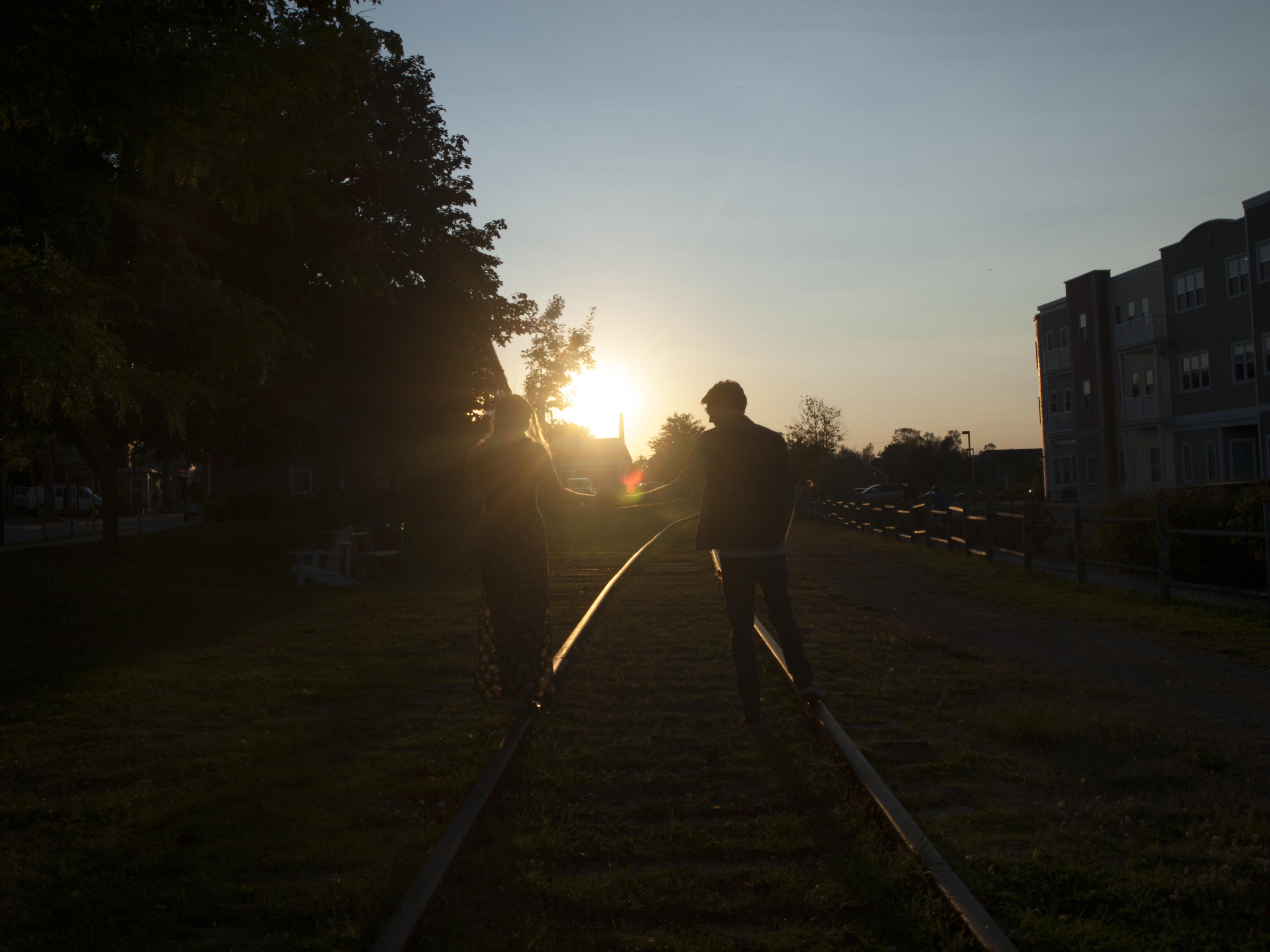
    They laughed like maniacs as they swam in their sopping-wet clothes and splashed each other. I sat on the grass watching the crazy beauty of it all, until my legs got too cold and I walked back to the car. I opened the trunk and found an old white towel in the back, then I laid it out on the driver’s seat and sat down. From in the car, I couldn’t hear your friends anymore: I could only hear the sound of cars driving by and of pouring rain on the windshield. I turned on the car to listen to music, but my phone was dead, so I just listened to the Elliot Smith CD. It’s been in the car for years at this point. I remembered when you found it in dad’s old box of CDs from the 90s and how you got so excited to put it in your car. Then I thought about Zeb, and how he would always insist on using aux, so we’d only get to listen to the CD for the first couple minutes of the ride to school. I thought about how your friends never liked your music and how they still don’t. They’re not like us: they swim in rivers and never drown. They’ve never stared at the ceiling for hours, caught in the depths of their own uselessness. They laugh when things are funny and don’t worry too much when they aren’t. I thought about how they would get home fine even if I drove away, how they would cherish the memory of walking home together as some cinematic, youthful moment. And then I saw that it was almost 4:30, so I switched the car into drive and left.

  • Now That You’re Gone

    Now That You’re Gone

    I cannot smell -
    for all aromas have ceased
    without your smoke and cinnamon scent.
    
    I cannot taste -
    for the food turns to ashes on my tongue
    in solidarity with what we had.
    
    I cannot hear -
    for when I listen to the wind
    I am deafened by the absence of your voice.
    
    I cannot see -
    for when I wake my sight blurs
    with tears and visions of your eyes.
    
    I cannot feel -
    for everything inside me is dead
    without your touch to bring it to life.
    
    Like an oracle stripped of prophecy -
    I am lost and senseless without you.

  • Daddy

    Daddy

    Traveling salesman with a heart of gold
    after a decade his love grew cold
    He said -
    "I'm leaving on a jet plane"
    I wondered -
    "when will you be back again?"
    
    A birthday, for Christmas -
    it's cash and a call.
    For year after year -
    it was barely at all.
    A marriage, a job, a home, a wife -
    barely a thought for his former life.
    
    Well -
    I've been turning to bad men -
    mad men -
    scheme weavers, mind reelers, time stealers -
    trying to sell love like a drug dealer.
    
    But I've come to realize -
    I want you to know -
    even though you're seldom there -
    I know that in your way you still care.
    
    I want you to know -
    I'll love you forever wherever you go.

  • What is Love?

    What is Love?

    Is it a sin to fall too soon?
    when that person made you swoon
    Is it a sin to fall too hard?
    When those hormones catch you off guard?

    Is love a narcotic?
    To merely drive you a craze
    To slowly set your heart ablaze
    And showers you with cold-hard rain?

    Is lust a temptation?
    To make you chase the wind
    To make you break the sails
    Cuz all you wanted was to go all in

    From the three words spoken
    To the two birds in the open
    Out of their eyes and innocence
    The two hands ribbon in entanglements

    Timeless, in a stream
    Many months passed, a lifetime it seemed
    In beautiful dress and gloss
    The groom awaits by the cross
    Where they pledge their undying will
    But naive were they, still

    Paris and honeymoon
    As stellar as one could see
    They soon realize,
    they were never really meant to be…

    From fine wine and dinner
    How they wish they were cuffed in winter
    Alas spring shed its tears, as the masquerades fall
    The skeletal truth reveals, to which they both abhor
    Years passed, from the first kiss to the quarrels
    To debts, calls, family and struggles

    Till she finally gives her way
    and the other goes astray
    The two birds greet a lawyer
    who presents a pen and paper
    Those eyes that have seen love and heaven
    Bloodshot, now see hell and vengeance

    The two birds depart
    left with memories and broken hearts
    They seek for the wise and ponder above,
    To the oceans of stars, they wonder,

    “What is love?”

  • Existence – A somewhat pseudoscientific approach towards reality

    Existence – A somewhat pseudoscientific approach towards reality

    The concept of “Tomorrow” implies the event of sunrise and sunset.

    However, the sun doesn’t rise nor set, the earth rotates alternately and elliptically by its axis thus creating the illusions of these events, with seasons as a bonus depending on the amount of solar radiation received on specific areas at a specific time of the rotation with specific durations and conditions.

    Such events inspired the invention of day-night measuring devices. Such as the sundial, which draws from shadows casted by the sun’s powerful beams of protons, determining the approximate time. With light, we determined second and minute. A minute is “one Mississippi” times sixty. Another sixty folds for an hour then a twenty-four for a day. The result, a year equivalent to 365 days, is merely a rough approximation derived from trials and errors, which is constantly being improved upon, all from studying shadows and seasons.

    So, it is safe to say time was not invented, it was perceived, a unit, by mankind. From the sundial, on an elliptically orbiting planet, from the star, to the solar system as one singularity orbiting a supermassive blackhole at the center of the milky way. There to the local group of galaxies to the superclusters… A distance so unfathomably wide where all of a sudden, the speed of light becomes completely meaningless. Almost as though a dying old man is tediously limping his way through the Sahara Desert, on foot, WHILE DYING ON LIFE SUPPORT.

    Now zoom out a little more and we’re at the cosmic microwave background, the observable universe, the light from the big bang. Or was there even one? Best to say the energy from the infant universe expanding from its finest singular point. Fast forward that by 13.8 billion years. That’s:

    “one Mississippi” x 60 x 60 x 24 x 365 x 13,800,000,000 (and don’t even get me started with logarithms)

    If you’re wondering, that’s how many Mississippis the universe has spoken and still speaketh.

    (Honestly not sure how they came up with this answer)

    (Again, 365 days in a year was built upon approximation)

    A doppler shift just happened, it has been happening since the beginning of 1 divided by log x(∞) of one-Mississippi. Also, “1” is a unit perceived as one singularity. As though the universe is so perfectly shaped to allow such a unit to even exist. Zoom in on one* drop of water, does the tardigrade belong to the one* drop of so-called singularity or does it resemble a byproduct of a singularity? What about the billion microscopic entities with a small population of e-coli that gives us nasty diarrhea? All in one* single drop of water?

    Get it?

    1 + 0 is still = 1 because of a general account, with a bit of imagination. It is a testimony of how incapable we are at perceiving imperfections.

    Look, the tardigrade is leaving the tiny puddle

    I guess 1 + 0 is hardly one* at all. Yeah Math is weird, definitively, unreal.

    What is real? You? Me? That tardigrade? This text you’re reading on a 4k device with over 8 million pixels? Or your best friend who is literally a movable chain of proteins consisting of atoms and stardust? Don’t we just love this objective reality? What about the objective unreality? Dreams and imaginations? Visions painted with neurons firing at light speed. Well, metaphysically speaking, it’s there, it happened.

    We are obsessed with the objective reality to an extent: it has to be something we can hold onto that counts. To turn vision into concrete is like taking your finger and smudging air particulates onto a blank canvas, hoping to catch some charred particles along the way.

    Wait, there’s red. Looks like you smudged too hard and now you’re oozing blood, but at least you’re getting some colors. What do you mean it’s intended??

    Fucking loopholes

    Fucking definitive loopholes

    Fucking

    Fu…

    Oh fuck! A solid noun, verb, adjective. Let’s try this:

    “A fucking fuck fucking a fucking fuck”

    It literally makes no fucking sense but sensibly means:

    “An adjective noun verbing an adjective noun”

    Let’s dig deeper:

    We’re taking the actions of prolonging our existence as a joke we use to put shame on another individual.

    Like “Fuck you”, says a male individual to another male individual, without the intention to mate. Yet magically triggers a chain of events. Now, rather than throwing sex organs, throwing fists is almost guaranteed, physically, verbally, or metaphorically, both ideas almost eventually dart towards a certain resolve.

    Unless one got to the point of taking another’s life. Well, we’re all predators and prey, we kill for the sake of sport and food, we kill to gain, and we kill to cover up. Yet nobody wants to be killed. The one thing we all have and is a true novelty also happens to be objectively unreal, life itself.

    I mean, how else are you reading this text, you corpse-to-be? i.e. how much longer can you go before your heart feels like it’s given enough? That is, if you’re lucky enough to outlive the average 80% while the proteins and cells in you remain faithful and do the only job nature has for them, Ahem, for you.

    Wait, that’s confusing. Does your body even belong to you?

    To belong indicates possession; to possess implies absolute control. Why did great emperors and dictators fall? If they had all the powers one could ever conjure, yet still succumbed to the same, plain, boring eventuality of the peasants.

    Death, we fear it, we loathe it, some people yearn for it when life in that moment ceases to exist in their eyes. A metaphysical novelty that lets us hang on to our dear life, forcing us to think as a species, and not with our ego. It is the biggest research topic still on an open status quo. What’s in the hereafter? What comes when ego ceases to exist?

    The First Law of Thermodynamics tells us that energy can neither be created nor destroyed. So, this begs the questions. What keeps our chain of proteins and atoms together? Why can’t our brain comprehend itself, when it’s clearly ours to will? What are the gears and mechanics, the nuts and bolts behind consciousness? What’s the bridge between physicality and the unseen? Our ego? A name tag worn on the shirt the same way a Starbucks barista would.

    I wager once our proteins and atoms give out, we, petty insignificant beings, shall convert once more to the miniscule energy that has always belonged to the universe. The same energy from the big bang, is coursing through our veins. The light that cannot be seen, the energy, that fundamentally makes you, you.

    That said, we never died, and dictators never fell, because in a broad sense, we never really lived. This romance of living and dying is nothing but a codependent, semi-toxic relationship between construct and perception where one side is always in denial.

    Therefore, a universe born tomorrow is merely based on the construct of time perceived by mankind, their planet and the light from their parent star, as well as its luminosity, density, and size. This pure hogwash is inapplicable outside of the solar system, because time, life and death, are nothing but units

    In this ever so little, tiny blue dot.

    In an ever so massive, expanding universe.

    A doppler shift just happened, and the universe has grown bigger.

    Well, I’m gonna end here, or does the finale ever exist?

    Ad Finem.

    Ad infinitum.

  • God said cigarettes.

    God said cigarettes.

    I’ve never seen God, but my brother did once. In 2007, hopelessly lost on a hiking trail in northern France, he stumbled across a field of matted grass. A train was passing through the field. He watched the windows of the train fly past, all so similar to one another. None were open but one. Towards the end of the train’s meandering body, a man in robes was sticking out his head into the wind; his mane of brown hair sent in every direction. To this day, my brother swears this man was God. He was not the spitting image of paintings or stained-glass windows. His skin was wrinkled and olive-coloured and He smoked a Gitanes cigarette. Upon seeing my brother in the field, He said just one word. Josh has never told me what this word was (and I have long suspected that he never even heard what it was), but he has suggested to me once or twice that it was three syllables long. The train was gone just as Josh realized what he had seen. When He saw Josh running after him, God vaguely waved and disappeared into the green of the horizon.

    Several minutes later, Josh’s hiking friends caught up with him, running and panting “Where were you?” He didn’t explain it to them. There were bigger worries, like how to get back to the trailhead. After some argument, the young men followed the train-tracks back into town. Josh bade his hiking friends farewell to walk back in time for dinner. He was halfway through the final week of his stay with our parents’ friends, the Mansouris. We visited the Mansouris once as kids and speaking truly, we barely knew them, but Josh was cutting any expenses he could in his trip across Europe. Josh says they were gracious hosts and that their cooking was exquisite.

    He remembers it quite clearly: for dinner there was roasted salmon and green beans and yogurt and strawberries. Like most meals he ate there, it passed in near-perfect silence. They ate their food and the sun set from behind the kitchen windows and every few minutes, Elodie would look at Josh. Her parents didn’t notice, or maybe they pretended not to. Following a fast ten minutes, Josh asked to be excused in some very tacky French and walked down to the harbour. It was a few minutes down a narrow street; the clouds were almost purple from being so grey and so dark. 

    It was called a harbour. Nowadays, the water there is too shallow for the exchange of merchandise, and the only vessel was a hardly-necessary bright orange life raft, barely visible in the dusk. Josh got out his pack of American cigarettes and sat down, his legs dangling over the wall moss that grows down to the water. He tells me that this was his first real chance to think over what he had seen. There was no good reason to assume that the man on the train was God, other than his exquisitely long beard, but Josh couldn’t get the thought of his head. He thought about calling his friend Kristjan, and he thought about calling me, but he was convinced we would laugh at him. We wouldn’t understand how His eyes looked through Josh, like a blind man who knows exactly what he is seeing. We couldn’t ever know the mythical awe that Josh felt, staring up at the open window. Nobody else I’ve ever talked to has even claimed to have seen God. Only Josh. This was one way he would always be alone. 

    When Elodie cleared her throat, Josh says he nearly jumped down into the river with fright. She apologized and sat next to him. Josh has never told me this, but I suspect he offered her a cigarette at that moment. Back then, Josh offered everyone cigarettes. They sat there in silence, listening to waves lap against bricks, either smoking or not smoking. Elodie broke the silence. “Your suitcase is packed.”

    Josh nodded and laughed in the way that he does. “Yes it is.” 

    “I’m going to Spain with you.”

    “Ellie, please.”

    “I’m all packed tooーI’ll leave a note. Mom will be angry with me, but she’ll get over it! I’m 18 years old, I’m an adult.”

    Josh sighed and focused extra hard on the darkness of trees across the water. He tries not to be insensitive. “We’ve had a good few weeks, ok. I’m sorry. I shouldn’t have ever…I’m sorry about this.” 

    “You’re leaving tonight. You used me.”

    Josh threw his cigarette down to the life raft. He missed, and watched it bounce into the void. It made a fizzling noise. “Kind of, yeah I did. You used me too.”

    “How?” 

    When Josh didn’t answer, Elodie left. Josh stayed at the harbour, trying to perfectly recall what His face looked like. He had a birthmark on His left cheek, but perhaps it was a scar. Which one was it? Two hours passed. Josh walked back to the house. He was careful to be quiet walking upstairs. The wood was loud, and the Mansouris were light sleepers. His suitcase and his backpack were laid out on the bare mattress. There was a note with ripped edges balancing on the suitcase: Elodie’s e-mail written in pen. Josh folded the note into his back pocket, picked up his stuff, and left. That night, he slept at the train station. God wasn’t waiting for him. 

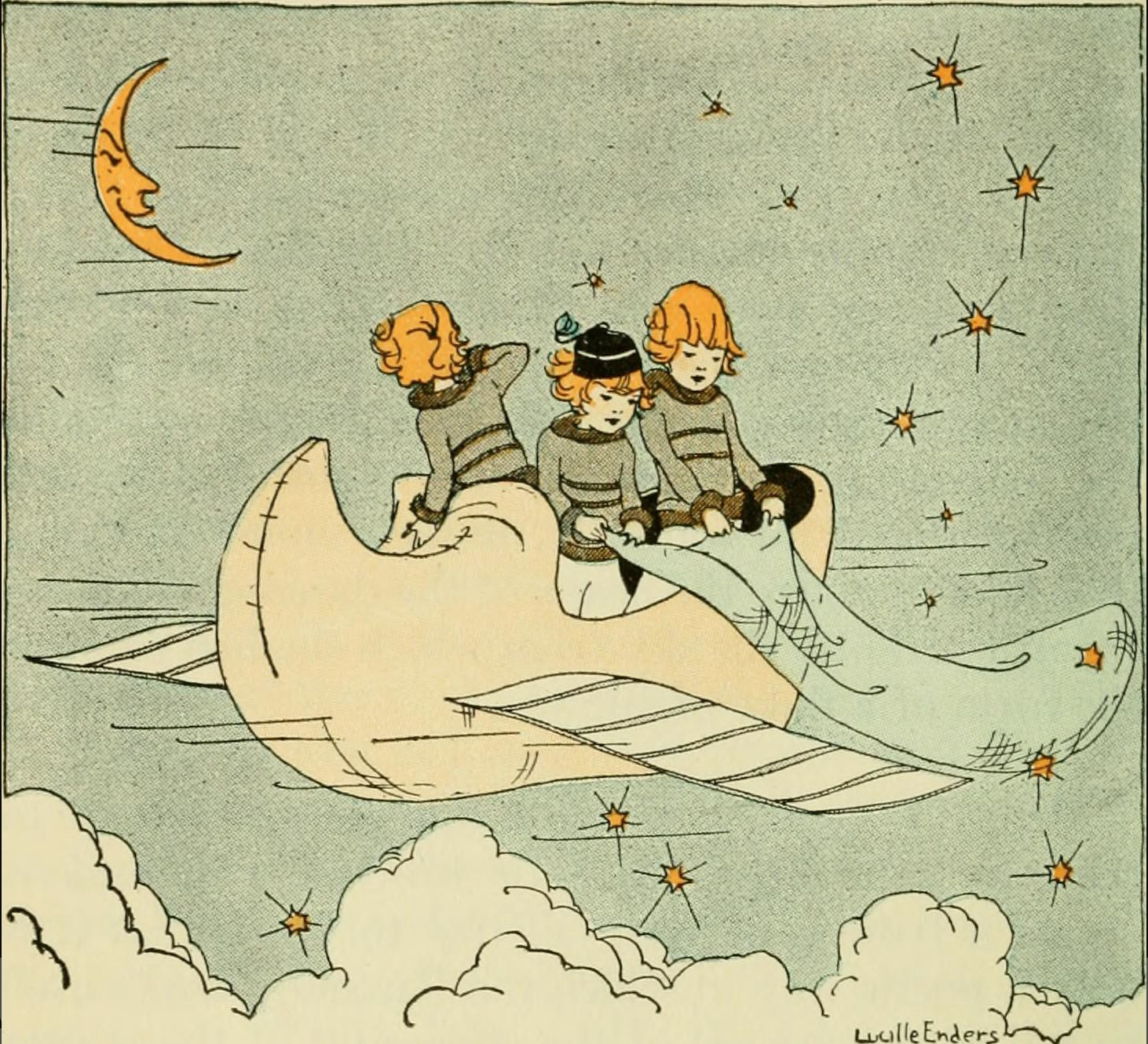
  • In the hour of moonboats.

    In the hour of moonboats.

    There was once a boy named Cliffton, who was the littlest among four siblings but the biggest among the neighborhood kids. Cliff loved his little friends, but he hardly ever saw them; his curfew was sundown, even on the dreamiest and warmest nights of the summer. Little Cliff often had nothing to do in the night but sit in his bedroom and look out at the moon and listen through his floorboards. Many nights there was absolute silence downstairs and he got very bored. On nights like these, he could expect to be checked on at least 3 times before falling asleep: twice by his mother and once by his father. 

    However, there was another kind of night. 

    On these very special nights, Cliff would hear through his floorboards the sound of adults ruthlessly shouting at each other. Cliffton called these nights “yelling nights,” and he eagerly awaited them, because a yelling night meant only one room visit. Just one late night visit from mom. That gave him plenty of time to climb down the drainage pipe and run off to the golf course, where he knew his friends would be waiting.

    There was once a clear and warm summer night that also happened to be a yelling night. Cliff, understanding how special this moment was, told his second-oldest sister where he was headed, hastily climbed out of his window, and snuck into the garage. He rooted around the clutter until he found a pile of wooden oars and life jackets. He picked up as many oars in his right hand as could fit and as many life jackets in his left, and wasting no time at all, he sprinted, under the streetlamps and into the evening.

    In the day, you couldn’t hang out on the golf course; there was a good chance that men in polo shirts would yell at you. In the night, however, those rolling hills of trimmed grass were roamed by children, who would sit around in a gossiping circle or play breathless games of tag. When Cliff ran over the crest of the hill called Dead Man’s Hill, he saw a half-dozen kids sitting around a sand trap and hollered madly for their attention, waving an oar through the air. When they saw him, they shouted back like a pack of wild animals and ran up to meet him.

    “Hurry! Hurry! Take these!” Cliff indiscriminately hoisted the life jackets and the oars upon anyone who could carry them. Seeing the confusion on their faces, he explained between rounds of excited panting: “Tonight [gasp] is the [gasp] night when the ships fly across the [gasp] sky.”

    “What kind of thips? Thips go on the othean, not the thky.” This was the lispy voice of Sam (a.k.a Tham), who was considered to be the smartest one among the group. Several among the ranks nodded in approval. 

    “Do you see the moon up there? It’s full tonight. Last time it was a full moon, I saw a bunch of ships cross the sky, remember?”

    “We all agreed that wath a meteor thower.” 

    “I thought, what if we offered to sail one of the ships? I think they could use some help up there, because I saw one of the ships was empty!” 

    The younger kids looked up at Cliff with wild enthusiasm, but Tham didn’t believe it and shook his head. Despite his skepticism, however, Tham fastened the straps of his life jacket and took an oar in his hand. As Cliff beckoned for everyone to run up to the peak of Dead Man’s Hill, he pointed at people and assigned positions. “Lily, you’re the navigator. Pip, you’re on starboard. Sam, you’re on port.”

    “Where is starboard?”

    Pip’s question disappeared into the air as the first ship appeared from behind a wispy cloud. Pip and Lily and Cliff and Tham and Kiara and Jess craned their necks and stared as the fleet took shape and subsumed the constellations. The ships were thin, bright, and made of wood that trembled with the breeze. They flew no flags, held no passengers. They simply floated through the sky, propelled by invisible rowers and steered by invisible captains. Their lunar shadows dangled over backyards and parking lots. 

    The kids screamed out to the ships like they had never screamed before, and they only got louder when they weren’t heard. They waved their arms and shined up flashlights; nothing worked. Agonizing minutes passed, and all the ships sailed on, with a graceful ignorance for the earth below. All except one: towards the rear of the flock there was a smaller boat that jerked around throughout the sky. There was no beauty or logic in its movements; it was a bird with a broken wing. The runt of the litter. And just as Cliff was starting to lose hope and Tham was forming the words “I told you tho” on his lips, this little boat descended upon the hill.

    Cliff was the first to jump onto the ghostly deck, and he outstretched his hand for the others, who looked around at the mothballs and dust that had consumed its floors. “Are you thure about this?” Tham shouted against the wind, but before he could jump back to the safety of the grass, the boat lurched up into the sky and Lily began to shout out orders. “We need to turn right, people! Get moving!”

    The decrepit old boat was falling behind the fleet, which had almost disappeared into the horizon by the time Cliff’s crew had assumed their positions. Pip, Tham, and Kiara plunged their oars into the night’s chasmic void and miraculously felt the boat ascend amongst the stars. From up here, they could only see the sketched suggestions of streets and porch-lights and cars. Much more clear was the deep-set light of the constellations and the immediate twinkle of the fireflies that courageously flew along the hull. The howling wind whipped glorious and cool upon bare ankles. The air was soft and endless: such is the grand tradition of midsummer nights. 

    Soon, they were flying at the very apex of the flock, gazing down upon dozens and dozens of puppeted ships. Having finally reached this great height, the crew could relax. Tham pointed out the North Star and the cloud of the Milky Way to anyone who would listen; Lily speechlessly watched the green of the trees, which reminded her vaguely of broccoli from this height; Kiara assured her little sister Jess that there was nothing to be afraid of; and Cliff simply stood at the frontmost edge of the boat and smiled. 

    There was no longer a window between him and the galaxy. On this night and at this hour, there were no parents, no floorboards, no wasted feelings. There was only laughter and wonder and the sky. Cliff thought about how short hours really are, and about how the future is really only the present in disguise. And no matter what teary-eyed mothers and fathers awaited him upon his return home, Cliff knew that there would always be a summer on the other side. From up here, he could almost see himself next summer, running through the woods below. 

    “Captain, thir, when are we planning to head back home?”

    Cliff awoke from his thoughts and turned to face Tham. He put his hand on Tham’s shoulder like he had once seen in a cartoon about sailors and said: “Sam, we’ll know when we know.”

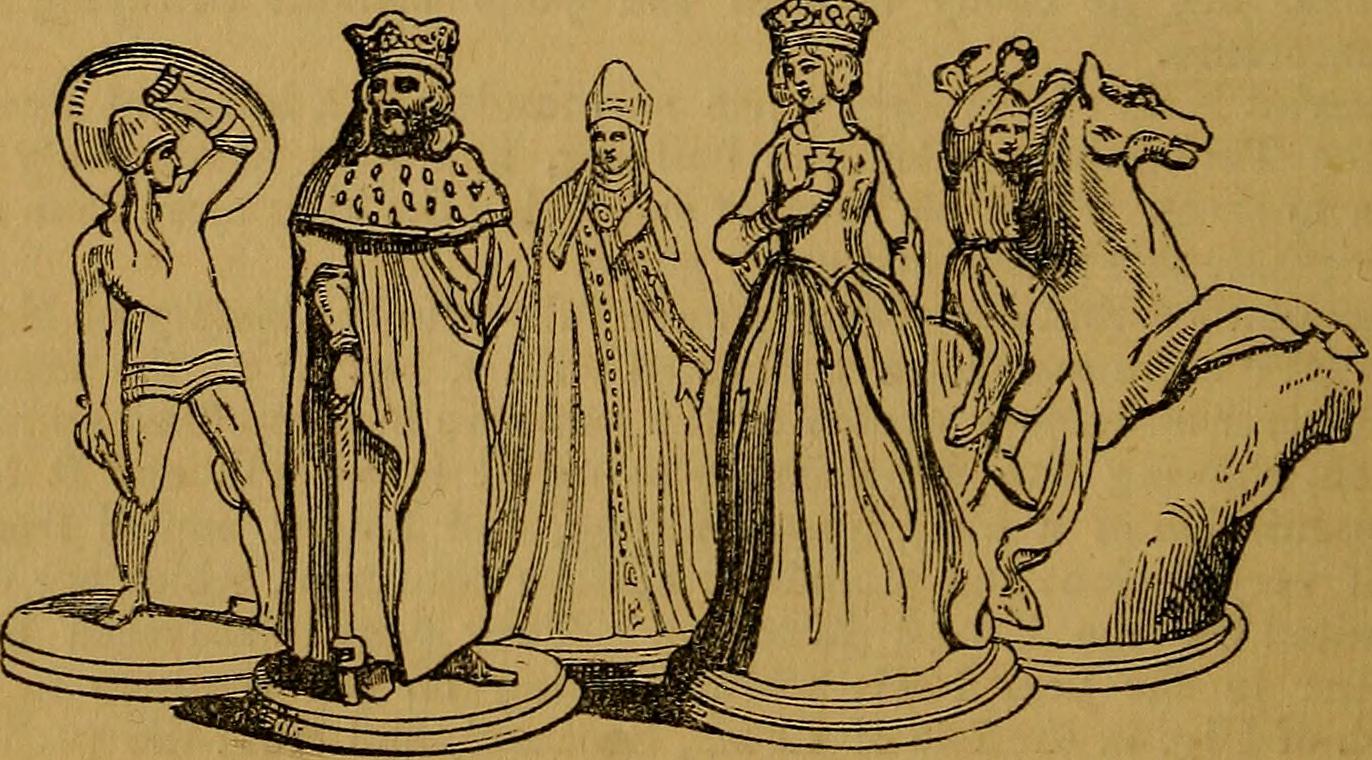
  • Chess Pieces

    Chess Pieces

    Chess pieces in play                                                                                                                                                                                                      We moved slow,                                                                                                                                                                                                              Carefully predicting how it would go 

    Yet, each game granted you a prize.                                                                                                                                                                       You saw all of me before your eyes.

    Games passed by,                                                                                                                                                                                                      And you stopped playing fair.                                                                                                                                                                            Rules were broken,                                                                                                                                                                                                        But you didn’t care.

    The first player I loved was nice and kind.                                                                                                                                                              Yet you turned into Jekyll and Hyde.

    One way with me,                                                                                                                                                                                                      One way with friends.                                                                                                                                                                                                      How did I know what was real?                                                                                                                                                                              Or pretend?

    When the game came to an end,                                                                                                                                                                                And no-one had won,                                                                                                                                                                                                      We both realized,                                                                                                                                                                                                        Our love was done.

    We’re better off,                                                                                                                                                                                                       Living separate lives.                                                                                                                                                                                                      No more games,                                                                                                                                                                                                            No more prize.

  • Monkey On My Back

    Monkey On My Back

    I am not sure when, why or how

    But it all feels real now

    This girl is so indescribably mysterious

    And to describe it through fallacy, she’s got me delirious


    I will take this chance to remind you that

    There is a cliche

    Of saying that you really can get lost in someone’s eyes

    Or lost in someone’s laughs,

    as you’re kissing on their thighs


    And you don’t believe in perfection

    But you’ll adore this affection

    That goes with proving you’re my very own perfect

    And I don’t have any clue how,

    But I will eventually teach you to learn it


    And despite you never seeing through my eyes

    I’ll stay lost in yours

    So as you point me to your thighs

    I’ll make you squeal

    Just to remind myself every day

    That holy fuck this is how love feels


    And this all goes with the study

    Of your flawless perfect body

    I’m sure they will all just call me crazy

    And they’ll all think I’m a joke

    But you can’t help but smile at all the cigarettes

    that we don’t even smoke


    With all the stories we’ve shared

    And all the lessons I’ve took

    I like to think of you as a million pages on an unwritten book

    The hardest part is accepting I will never figure you out

    Even though I promise I could fill a one million page book

    And easily have you be all it talked about


    I knew I loved you when your eyes distracted me from the stars

    And you can see this girl is beauty be it on her face or written in her scars

    She’s got me wrapped up like yarn and I’m tied to her fingers

    As it has been a couple days but the smell of sex still lingers


    It’s weird to miss our future

    Because I loved to watch it start

    And some won’t see the picture

    But to me we’re making art


    And since you’ve been gone

    I have learned to smile when I look back

    Because even though you aren’t there

    There’s still this monkey on my back

  • Seasons Change

    Seasons Change

    I used to write about October, 

    about watching the leaves change colours 

    and falling in love 

    with the way the world would 

    slowly 

    and surely fall apart 

    in the most beautiful way. 


    I used to write about December, 

    about feeling the long nights 

    settle the sadness that always 

    comes creeping in, 

    the sadness that keeps me safe 

    through the storm, 

    the comfort 

    I found in darkness, 

    in the cold, 

    until it consumed me 


    so consumed, 

    that I could not think 

    to write about May 

    at all, because I was so lost, 

    so high on the adrenaline 

    that comes from being 

    the perfect storm. 


    I ran away,  

    destructive in my attempts 

    to avoid change,  

    I ripped out the roots 

    of the flowers that tried to bloom 

    and buried them in empty pages. 


    Now, I write about August, 

    about how the sun starts to look tired 

    by the time afternoon comes around 

    but refuses to go to sleep 

    until it absolutely has to, 

    and is still to rise early, 

    eager for a breath of the morning,  

    the light I managed to keep around 

    and hold onto 

    so that when October,  

    and December  

    return once again  

    to take my soul  

    as their own 


    I will be strong enough  

    to make it to May, 

    I will not run away  

    from the words that  

    try to grow 


    I will lay amongst the flowers, 

    and I will be even better 

    than before.  

  • Things That Should Have Been Curbed in 2016

    Things That Should Have Been Curbed in 2016


    1) The notion that “White Privilege” is offensive and racist towards White People.

    Racism, cultural appropriation, and discrimination have been a hot-button issue throughout history. With the rise of social media platforms, along with the recent election of Donald Trump, there is a plethora of conversation online (and in print) about the hateful rhetoric that seems to be plaguing today’s society. Unfortunately, when people feel that their privilege is being threatened, they enter an automatic defense mode. It is often presented in such a manner where the defendant makes claims of innocence, justifying their feelings of discomfort by exclaiming that they are not guilty of racism, and that if their race is being questioned, that they are automatically being discriminated against. White privilege is not racist; it is not offensive in any way. It is a method of explaining the favorable treatment that white people often receive. There are no systems of oppression designed against white people. Thinking that reverse racism exists is what perpetuates the notion of white privilege further into the foundations of our society. It is a mechanism that is used to validate the comfortable position white people hold in society. Validating your own comfortable position by attacking a marginalized group (by saying white privilege is offensive, racist etc.) is a subtle way of invalidating and shutting down any group who’s LIVED EXPERIENCE has ever been one of systemic oppression. In extension, these feelings can often be described as “white fragility,” a state in which minimum amounts of racial stress becomes intolerable, triggering outward displays of emotion, such as anger, and behaviours such as argumentation. Yeah, this definitely could have been left behind in 2016.

    2) That any Indigenous culture should just “get over” colonization.

    Really? This one amazes me every time I hear it. Let us take a brief moment to recall Canadian History because we are not innocent in the ways or racism and cultural oppression. Residential schools were opened in conjunction with the Catholic and Protestant Churches and the government. Their aim was to remove any form of Indigenous culture from Indigenous children by forcefully removing them from their homes, placing them in schools where they would be taught Western values. As such, a cultural genocide was committed. Often, when hearing the word “genocide,” events such as the Holocaust, Bosnian, and Rwandan genocides. That is because Canada has attempted to repress its history. The horrors of the Residential schools did not end until 1996. Yes, most of us were living when the last school shut its doors. During their time in the Residential schools, Indigenous children were beaten, sexually assaulted, and mentally abused by their instructors. Often, these traumas were difficult to cope with. A stigma surrounds Indigenous peoples in Canada. Many people chose to believe that status cards, funding, government aid, and the Truth and Reconciliation Committee should all be abolished. They question why we should continue to apologize, and why we should continue to work towards mending our relationship with Indigenous peoples. What does it take to get over something like this? How could you possibly put a numerical value on an apology, how can you, a white person, get to dictate the appropriate measures for reconciliation after a cultural genocide has been committed? When you say these things, you act as though you assume the role of the oppressed, you may think you understand their oppression, but you simply do not. I know I do not understand, I never could. However, it is important to listen, to engage in conversation, and to be respectful of what you cannot understand. Please read the above statement about white privilege and then rethink your questions and sweeping generalizations about Indigenous peoples and Indigenous culture.

    3) “She was asking for it”- REALLY?

    For God sakes. How is this type of conversation STILL taking place? Did we not learn after Jian Ghomeshi and Brock Allen-Turner? I simply do not understand. The legal process further victimizes rape victims. Belittlement and slut-shaming occur in the courtroom in order to find loopholes in the victim’s statement. By asking her, “did you say no?” you are questioning her pain and her experience. By asking her, “how much did you drink?” you are assuming that all drunk women are ‘asking for it’, by asking her “what were you wearing” or “how many men have you slept with in the past”, you are slut-shaming her. Although there are false reports of rape, the treatment of victims in the courtroom is inexcusable. This is the reason that rape and sexual assault are so underreported. This process favours the accused, often bringing into play irrelevant aspects of his character, his achievements, and what he strives for in life. However, this does not take into account aspects of the victim’s character, her (or his) achievements in life, and how what she/he had strived for may feel as though it has become so out of reach. It’s simple, folks. If you can’t say no, you can’t say yes. There is no in-between; there is no grey area. There is yes, and there is no. Stop blaming the victim. Stop validating your need for supremacy. Stop questioning the pain of others, instead, start regarding it.

    4) Feelings of self-doubt, as brought on by Instagram and other forms of Social Media.

    I am guilty of this. Most people are guilty of this. It is so easy to feel self-doubt, and it is so easy to think that your value decreases based on the perceived notion of “perfection” in the others who you see on social media. In the last 10 years, we have “networking” apps explode. The original purpose of these apps was to stay in touch with your friends, to be able to connect with people you haven’t seen in a long time and to keep others updated on what is going on in your own life. However, it feels as though there has been a shift in the dynamic, a change in the way we behave on the Internet. Often, all we see is the picture. We believe that everybody’s lives are perfect and full of happiness based on how they display themselves on social media. Getting the “perfect picture” and pairing it with a “fire” caption that will get you over 300 likes is often a goal of most people. I know I am not innocent. There have been multiple occasions where I have found myself thinking, “if I went to the gym more maybe I would look like her and then I would be as happy as she appears.” I know this is wrong. After a conversation with one of my roommates, I found out that she was feeling the same way. She talked to me about how miserable looking at Instagram makes her. It caused her to question her own happiness by constantly comparing it to other girls’ social media pages. So, she slowly began to stop looking as much. As did I. I’ll leave this point here: everybody has their issues, but we have been conditioned to try and keep our problems to yourself. A picture is just that: a picture. You see what the poster wants you to see, just remember that your self-worth should not be determined by a like or how the world views your Instagram page.

    5) Islamophobia.

    Islam is a religion of peace. Often, people do not believe this when it is brought up in conversation. The first time I heard this was in my 11th grade world religion class. Our teacher told us that Islam was the closest religion to Christianity. She was right. It is not Islam you are afraid of, it is the “otherness.” The sense that you see something different, and that you are uncomfortable within a realm of your own privilege is what sets you off. This rhetoric gained prominence after 9/11. We were scared of them. They were scared of us. Although I am not an expert in Islamic studies, I know many men and women from the Arab world who identify as Muslims, and I can honestly say that they are much nicer than many other people I know. If we remove the concept of the “other,” perhaps we will all be able to see each other as we are: human.

  • Girls and Sex: An Overview of how Peggy Orenstein Navigates a Complicated Landscape

    Girls and Sex: An Overview of how Peggy Orenstein Navigates a Complicated Landscape

    Some of us grew up in semi-liberal or liberal households. Some of us grew up in conservative households. At one point or another, our parents would openly discuss the harms of drug and substance abuse, the negative consequences of consuming alcohol before 19 (or 18, in some cases), and why it is important to always follow the rules. As I continued to get older, I became more aware of the generation gap between my parents and I. This gap between mothers and daughters, and mothers and fathers has become even more evident as I see my parents’ friends struggling to make their way through the adolescent years of their teenage daughters. Even in the age of the “helicopter parent” there is a continued stigma and discomfort around the notion that their daughters have the potential to have a sex life. The same notion is not met with the same level of discomfort when their son’s sex lives are the topic of discussion.

    At this point, it is safe to say that blaming girls’ clothing for boys’ sexual drive is counterproductive. However, we must first look inward at the ways in which girls’ clothing is marketed in comparison to boys. Orenstein writes about the methods that are used to market girls’ clothing. It is evident that boys’ clothing isn’t centered on the idea that they should bare their bellies and wear short-shorts when they dress, so why is this marketing tactic targeting girls from a young age? If we dig deeper by using Orenstein’s study as a framework, we may be able to see a correlation of self-objectification. Orenstein offers a strong definition of self-objectification: the pressure on young women to reduce their worth to their bodies and to see those bodies as a collection of parts that exist for others’ pleasure; to continuously monitor their appearance; to perform rather than to feel sensually. Could the marketing tactics of young girls’ clothing be subconsciously objectifying them? Could it be leading them towards a road of lower self-esteem and doubt? Perhaps it is the lack of conversation surrounding female sexuality on behalf of the parents, who often perpetuate the stigma from a young age that it is okay to follow media and gender norms by going along with fashion trends that sexualize the female body, but having conversations about how to engage in sexual activity safely is out of the question.

    However, the stigma around young women’s dress is more likely to have damaging effects. It begins with the media normalizing how young girls are supposed to dress, what toys they are supposed to play with, and what shows they are supposed to be watching. By submitting to these cultural norms, their experience is shaped to fit a particular model. Parent’s discomfort with the teenage sex drive is actually more harmful for young girls’ self esteem, further creating a more difficult landscape for these girls to navigate.

    Orenstein conducted an interview with 71 young women. In this series of interviews, she asked questions about the girls views on sexual conduct, what they hoped to get out of their sexual encounters, and how the level of discomfort they felt when talking about these experiences with family or their peers. The results were alarming. The general consensus was that their friends became an audience to be sought after and maintained, that their engagement in the sexual experience was not for their own pleasure, but more so for the purpose of fulfilling their partner’s “needs” before their own, and so that they would have stories to share with their friends to not come off as “prudish.” Not only is this behavior harmful to girls’ self-worth, but it can also be related to mental health issues. Orenstein describes this phenomenon as “using your experience to create an image of yourself.” Essentially, the more experience you gain sexually (even if it is not for your own enjoyment), your social status will be higher.

    Let’s shift into a discussion about the negative consequences of social media. It is a game, and one that you need to play correctly in order to be “accepted” by your peers. Orenstein uses Sarah* as an example. She talks about a girl in her high school who continuously posted selfies. It was the general consensus that she either had no friends or was completely self-absorbed. It was never thought that, perhaps, this girl just enjoyed posting pictures of herself. The impacts of social media use have severe impacts on girls (and boys) well-being. Are selfies empowering or oppressive? Are they used to control girls and constrict them within a particular social norm, or are they a useful tool for expression and exclusion? When we are faced with these discussions there is rarely a strait and narrow path to follow, it perpetuates the ideology that there is a difficult landscape to navigate when it comes to teenage girls and sex.

    Why is it called a blow “job”? The expectations for women’s bodies just continue to perpetuate a pre-existing notion of the misogynistic roles they are expected to fill in society: subordinate. Just before the Bill Clinton scandal in the White House, a 1994 survey in America revealed that just over 50% of women had never performed fellatio on a partner. In 2014, these numbers have alarmingly increased. A story in the New York Times declared that sixth-graders were now more inclined to treat fellatio “like a handshake with the mouth.” Has this practice been normalized because of the ever-growing presence of social media? Or is this stemming from the need to form an image of oneself, one that favors the female’s role in sex because it is increasingly being viewed as “normal.”

    Sexually active teenage girls are often referred to as “sluts.” Sexually active teenage males are often referred to as “players.” It is extremely evident that this is a problem. Normalizing and gendering sexual behavior in teenagers is not only dangerous for their physical well-being, but also their mental well-being. Stigmatizing a normal practice (don’t turn your noses up, we are all human and puberty is a confusing, hormone-ridden, emotional roller coaster) to favor one gender over the other is not only wrong, but goes deeper to perpetuate gender roles in society as a whole. It targets women to be submissive, to be ashamed of their bodies and their desires, and calls them to question their characters for having a sex drive as a teenager. The media has sensationalized the idea of casual sex, yet targets and shames women who engage in this practice. The sexualized nature of the media not only encourages young women to call their self-worth to question, but it also perpetuates particular ideals about virginity, their role in the sexual landscape, and how they should go about the complex terrain of the “hookup culture.”

    I am not a mother. I have no experience with parenting and I do not know how to care for someone who is entirely dependent on me. I write this article as an opinion piece, based off of my own experiences and the study conducted by Peggy Orenstein. If I may suggest one thing, it is that we call to question preexisting norms about teenage girls. I suggest that we become more open to discussion with these young women, who will someday be the future. I call all parents to step outside of their comfort zones and talk openly about sex with their children, which is a conversation I never had with my own parents (comfortably). This is a difficult landscape to navigate, with a variety of different factors influencing behaviors, interactions, and personal decisions. Opening up the floor to a more inclusive, non-gendered conversation about sex is what we may need in order to help maintain teenage girls self-esteem, let them know their worth, and ensure that any decision they make regarding their bodies is just that, their own.

    For reference, please pick up a copy of Peggy Orenstein’s work.

    Peggy Orenstein, “Girls and Sex: Navigating a Complicated Landscape”, (New York: Harper-Collins, 2016): 1-236.

  • Are Millennials Too Sensitive?

    There once was a boy who was told that everyone that should be nice to everyone and that if they were not kind, they were bad people. He then grew up to find that’s not how the world works.

    As a society adapts, the mindset of the people within it change. This is also true in the change of a generation. They have learnt from the mistakes and triumphs of previous generation and use this information to change and base their lives upon. The education around them adapts to these new changes and shapes children. With the increase in mental health warning and bullying campaigns, are they really being shaped to deal with the rest of the world, or is it that the world has not yet to accept the changes that the new generation is bring? I believe that the new generations are not taught to be prepared for what the world will throw at them. They are only told that people will change and that they should not have to face the problems that occur in the world.

    In my political science class, we were discussing our upcoming presentations for our research assignments. Our TA requested that if we are planning on showing any “graphic images” we get them checked prior to putting them into our visual for our assignment. This is a ridiculous sign of how sheltered this generation is: we know violent things are happening around the world but we play a blind eye to them. Not showing these images does not make them go away and does not solve the problems that they are causing them.

    Now bullying is a topic that has only been under scrutiny for the past 20 years. It is now viewed as a national epidemic instead of a common fact of life. The young generations are now beginning to expect that everyone in life will be nice to them and if they are not there are a bully. But that is not how it works in life. You will be put down by people for making a mistake at work or for bumping into someone on the street. People will talk about you behind your back. You cannot change that. If anything, you should be taught to how ignore these comment and fight back, compared to just reporting them to the principal. You can’t report your boss in the future for yelling at you, so learn how to take criticism.

    Previous generations have been built and thrived upon the “tough love” method. People would discipline their child to a certain extent, be that verbally or physically. But now, parents are actually being arrested for spanking their children with actual reasons. The school system does not tell the students the difference between abuse and discipline so they grow up with the belief that this is wrong and that their parents are not good people.

    It is a generation under the veil of ignorance – they all imagine the world to be perfect, where everything happens their way. If things are happening outside of their community to other people it doesn’t matter. All that matters is what happens to them and that they are happy. When things that they don’t like occur, they don’t know how to handle it. They have been so shelter from the sadness and violence of the world, they when they get a large dose of if, it leads people to believe they have a mental illness.

    Now the thing about mental illness is that it is something that is very real, many people are suffering from it. The statistics show that the rate of people who report suffering from depression have increased by 6% over just this year. Now I am not saying that these people’s claims are false, but the rate shows that the recent generation cannot handle the pressure that society has put upon them because they were not trained to handle stress. They were only told that the things that cause them stress are not right.

    When any topics concerning race, sexuality, politics, or gender come into play, they become extremely agitated. They are brought up to think about living in a world when everyone should think the same way. But that is not how the world works. People have different opinions and are entitled to have those opinions, why must people be put down for not conforming to what views their society has. These generations have been told they everything should go their way, so when it doesn’t of course they don’t do how to handle it. Is it true that millennials and Gen Zs are overly sensitive? Yes it is. But who can blame them when they grow up in an environment like this one.

  • Girl Trouble

    When asked about my interest in writing this opinion, the first thing I thought was “I am walking into a minefield.” I am, along with most men I know, afraid to talk about women’s issues. Part of that comes from the fact that I am a tall, privileged, white man but the other part is that I’m afraid of being attacked for either saying or doing the wrong thing. All my life I have been surrounded by strong women and have always believed that someone’s actions are what should define their success in life, not their gender. I felt compelled by their example to speak my mind on this topic, even though it might be uncomfortable at times.

    For most of human history, women got sidelined in what rights and opportunities society afforded to them. Thanks to the feminist movement there has been real progress towards equality. Sadly, alongside these advances, there has been a swing away from the equal opportunity of women to “man bashing’, by a small but loud segment of the feminist movement. This group disallows men to claim any suffering or mistreatment as they believe their gender precludes them from understanding the experience of women. When these individuals are called out for their comments, they often fire back with accusations of sexism even if untrue. These unjustified assaults have made potential allies cautious and emboldened those who do wish to stop the spread of equality through society.

    I was the only boy in the school choir through most of middle school. In high school, I continued to be part of the vocal music groups including an all-male choir. The choir included straight, gay and transgendered young men. Throughout those years of school, the choir guys often were targeted as “the faggots.” When I have discussed this treatment with people, the most common reaction is that these actions were just “boys being boys.” I have often a time seen the surprised look on someone’s faced when I revealed that this bullying was predominantly lead by women in the schools I attended. I was treated as less of a human being because I enjoyed singing and dancing on stage because I embraced my so-called “feminine side” (a description I abhor). This kind of double standard continues beyond areas of life where men choose to express themselves in creative or sensitive ways.

    Like many people here at Acadia and across the world I was the target of bullying through the entirety of my time in school. My mother still talks about when I would come home with bruises on my back from when someone had shoved me into a wall or onto the ground. Not only did I have to deal with the physical injuries inflicted on me, but also the ones that left me questioning my worth a person. I am unashamed of the fact that I have and continue to see a counselor to deal with these issues. I have also never tried to hide the facts about what I have endured and I that have sought help to deal with many of the issues with which I have had to grapple. When we talk about feminism, it is often a topic of strength. The strength to fight back, the power to express yourself and to overcome the stupid notion that women are weaker than men. But sensitivity and creativity when displayed by men are still viewed as weakness by society. For a man to admit that he has suffered abused means, he will be perceived as weak if he seeks help to reclaim that basic sense of dignity and purpose of which he feels stripped.

    As I have worked my way through creating this article I have tried to think of ways I could suggest to help bridge the gap we face as I did not want just to critic but build. I am not an expert on gender equality issues, nor will I claim to be so I reached out to others so I could look past my point of view. While there were more than a few differing opinions and thoughtful suggestions on how we can all better ourselves as individuals what I always heard was it is important to have a dialogue. I am aware that many, if not most of you reading this will disagree with what I have had to say. I hope you find a way to express what is on your mind as every person can add something to this dialogue. I would consider myself to be an open-minded person, so I am sure I could learn a thing or two.

    Over the last century, there have many strides forward in gender equality. In our nation, women have moved from being treated as second class citizens in almost every situation and are now viewed as equals. While we certainly have much further to go, I do not believe any reasonable person can look at what has changed and say it is not getting better. As we continue to push forward, we must not allow ourselves to become blind and only shift our biases from gender-based to those of one’s character

  • Social Etiquette and the “Dating Dilemma”


    Here is an awkward social situation that I’ve personally encountered multiple times in the course of my adult dating career here at Acadia. I call this the ‘Dating Dilemma.’


    This is the scenario: A nice boy from class approaches me somewhere on campus, and asks me if I would like to “hang out sometime,” or maybe more specifically to “grab coffee,” and then requests a phone number exchange. This act seems innocent enough; even courageous if we consider the ease with which technology has virtually eliminated the inherent social pressure of such interactions – and yet this person has opted to kick it ‘old school’ and risk the possible face-to-face rejection: a bold move indeed, good sir. That is, assuming this is a dating proposition.


    Let’s say I am in fact a heterosexual female. Let’s say I’m currently committed to a monogamous relationship. Let’s also say that the year is 2017 and remarkably, despite being a cisgender female, I have somehow managed to amass an impressive array of platonic friendships with humans from every degree of the gender spectrum, cisgender males included.


    While I hesitate to admit that antiquated social convention would dictate that yes: this interaction is obviously a dating proposition, I also happen to be what my Victorian foremothers termed, a “New Woman.” I drink, I flirt, I wear blue jeans, I carve out my own career path through higher education in the hopes of one day becoming a financially independent adult, and most importantly, I keep company with multiple single adult men with whom I share absolutely no expectation of sex. It’s all very scandalous, I know.


    This is the dilemma: While I beg you pardon my sarcasm, the point that I’m trying to get across here is that I don’t want to assume he’s asking me out if all he implied is that we’re “grabbing coffee” or “hanging out.” I want to assume that if he had intended to proposition me for a potential relationship, he would have made that clear in his opening statement. So this is the awkward part; the ball is in now in my court, and I have two real life examples for the possible directions in which this conversation could go, based solely on assumption.


    Example #1: I assume his intentions are purely plutonic, and while the thought briefly crosses my mind that I should probably mention my boyfriend somewhere in this conversation, the New Woman in me says “No, I refuse to believe that the only possible scenario in which a man would ask me to hang out is because he finds me sexually appealing. To assume such a thing would be vain and also a little depressing, if I’m being honest here. Therefore I will proceed under the assumption that this male person simply wants to connect minds, not bodies, and establish a meaningful friendship.” With that, I fork over my number, and we make plans to “hang out.” Long story short, somewhere down the line, he sheepishly admits that these ‘hangouts’ have been ‘dates’ all along, and tries to advance the relationship into that territory. Suddenly, I’m the bad guy here for having failed in my obligation to announce my relationship status to every stranger I encounter in the run of a day. This person now believes that some dark magic has taken place in which I’ve purposely concealed such information for my own malicious purposes. They are hurt, they feel betrayed, and they may even resort to some ego-saving tactic such as calling me a slut for leading them on.


    Example #2: I begrudgingly follow that antiquated social convention I mentioned earlier, and immediately announce the existence of my boyfriend. I do this because nice boy from class is male, and I am female, and therefore it is my civic responsibility is to assume that by “hang out” he actually meant “make out,” and by “grab coffee” he actually meant “grab each other’s butts,” because that’s obviously the only context in which I could possibly spend time with a member of the opposite sex. This action on my part is guaranteed to yield a variety of awkward results depending on his initial intentions (which are still unbeknownst to me; I merely took a guess and went for it.) If he actually was asking me out, he may now feel embarrassed and attempt to save face by pretending he was just asking for friendship all along – making me feel presumptive and vain – and as part of this he may even still take my number but will likely never use it. On the flip side, perhaps he really was just asking for friendship, but now believes I’m enslaved to some control-freak “Jabba the Hutt” boyfriend who doesn’t allow me to hang out with other males, and decides to steer clear lest he be identified as competition and subsequently targeted. At best, he simply accepts this information with dignity and tells me to have a nice life.


    The solution to this ‘dating dilemma’ is simple, virtually pain-free, and guaranteed to save everyone involved from having to assume the position of ‘the bad guy’ at any point during the interaction. This applies to all gender and sexual orientations; and I’ll be the first to admit, I’ve been guilty of this myself on occasion. All it takes is a little social etiquette. Here it is: clarify your communication. When asking someone out on a date, don’t hide behind vague statements like “hang out” or “watch Netflix.” You’ve come this far, so dare to sprinkle a little honesty into your question to avoid confusion. For example, slip the term ‘date’ in there so they understand your intentions and can respond more accurately. This will not only aid you in achieving desired results (and/or avoiding disastrous ones,) but it’s also simply a polite thing to do – you’re not leaving any implications hanging in the air, and therefore you’re not putting the other party in an awkward situation in which they have to make a judgment call on how best to respond. To clarify my point, here’s how these two situations would play out in a perfect world, free of those dreaded antiquated (and frankly, sexist) social conventions:


    Example #1: A nice boy from class approaches me somewhere on campus and asks me if I would like to “hang out sometime,” and then requests a phone number exchange. Since “hanging out” is understood to be a platonic activity, I am free to agree or disagree regardless of my relationship status – or either of our gender identities – because both of those pieces of information are irrelevant in this social situation. We make plans to “hang out,” and have a great time in which nobody’s feelings get stepped on, because we’ve both understood the context of this relationship from the beginning. Hey, maybe I’ll even introduce him to my boyfriend and then we can all be friends.


    Example #2: A nice boy from class approaches me somewhere on campus and asks me if I would like to “go on a date sometime,” and then requests a phone number exchange. I am either single, in which case I am free to agree or disagree at my leisure, or I’m not single, but I understand the context of this proposition and am therefore free to disagree with or without explanation. At no point during the conversation am I obligated to awkwardly insert my relationship status ‘incase it’s relevant,’ because it’s not.


    In summary, the awkward ‘Dating Dilemma’ is easily avoided with a little social etiquette in which intentions are clear, nobody is put on the spot, romances blossom (once you find someone who agrees to go on that hot date with you, that is) and the magic of friendship prevails without any unforeseen expectations based on age-old assumptions about gender roles. Hallelujah!

Betzillo positions itself as a versatile gaming hub where structured bonuses and adaptive gameplay mechanics support both short sessions and extended play.

Built with a focus on innovation, Spinbit integrates modern casino architecture with rapid transactions, appealing to players who value speed and digital efficiency.

Ripper Casino emphasizes bold entertainment through high-impact slot titles and competitive promotions crafted for risk-oriented players.

A friendly interface and stable performance define Ricky Casino, offering a casual yet reliable environment for a wide spectrum of gaming preferences.

King Billy Casino channels classic casino spirit into a modern platform, delivering recognizable themes supported by contemporary reward systems.

Immersive visuals and layered slot mechanics are at the core of Dragonslots, creating a narrative-driven casino experience.

Lukki Casino appeals to players seeking direct access and minimal friction, focusing on fast loading times and intuitive controls.

Casinonic provides a structured and dependable gaming framework, blending modern slots with transparent operational standards.