Author: Ray Melanson

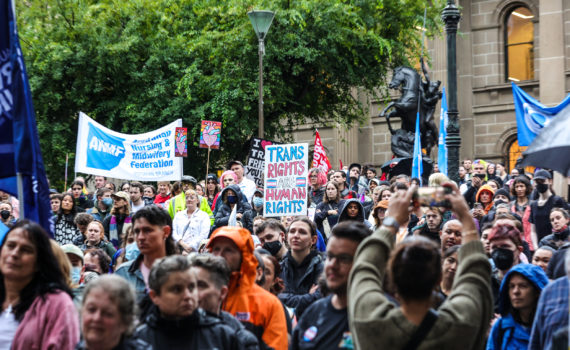
  • The Rise in Anti-Trans Rhetoric Should Worry Everyone.

    The world is becoming a scary place for the 2SLGBTQ+ community. The community has seen a rise in anti-queer rhetoric which is dehumanizing and treats the queer community as different. This rhetoric spread by prominent right-wing commentators has sparked a movement questioning the democratic rights won with the 2015 Supreme Court ruling declaring same-sex couples have the right to be married and preventing that right would be discrimination. Recent bills such as Florida Governor Ron DeSantis’ Don’t Say Gay bill have stripped the ability to talk about 2SLGBTQ+ issues inside the classrooms with rainbow flags being ripped down in classrooms across the state. This bill has prevented students who are members of the 2SLGBTQ+ community from expressing themselves with fears of retaliation from homophobes who have been empowered by the passing of this bill and related legislation.

    Anti-trans rhetoric has exploded as a consequence of the shooting at a Nashville Elementary School which left six people dead. There have been more than 130 mass shootings in the United States this year alone. The response from right-wing commentators has not been one of horror at the amount of gun violence which is prevalent across the United States. Instead, there was an effort to link transgender people with the rise of violence in the country. This is even though trans people are rarely ever the perpetrators of mass shootings. Former President Donald Trump claimed that the trans movement is radicalizing activists into terrorists. Another right-winger commentator Tucker Carlson claimed that trans people are targeting Christians and called for gun control. This coverage is sensationalizing the events and muddles real facts surrounding the shooting. Although the shooter did identify with he/him pronouns and their actions are not only abhorrent but horrifying. This should not give a license to hate against the 2SLGBT+ community. Especially since in the over 300 mass shootings carried out since 2009 under one percent have identified as non binary or trans. Using the Gun Violence Project which counts shootings with 4 or more casualties we can estimate that there have been 2692 shootings since 2018. Trans people should make up at least 16 cases to account for the fact that 0.6 of the population is trans. Instead only three possible cases can be found. This ignores the fact that 2SLGBTQ+ people are far more likely to be victims of a targeted mass violence attack than the perpetrators of one. 

    The rise of right-wing populism through politicians like Trump has resulted in a precarious time for minority rights in America. In 2019 Trump openly banned trans service members and instituted a don’t ask, don’t tell policy which silenced trans people just three years after President Obama confirmed transgender individuals have the equal right to serve their country as cis individuals have. As queer people watch their rights being crawled back they also witness their community being the victims of extreme violence. Just last year 25 people were injured and 5 died when a mass shooter purposefully targeted an LGBTQ nightclub in Colorado Springs. Instead of focusing on much-needed gun control to prevent further shootings, right-wingers across the country are rolling back gun regulations in response to the latest shooting. In Kentucky, Ohio, Nebraska, Texas, and Virginia lawmakers are working to eliminate background checks, roll back red flags laws, and reduce the amount of gun-free areas in those states. In 25 states there is no permit needed to openly carry a handgun.

    The Canadian trans community has similarly faced a number of hardships over the past few years. The trans community experiences a major gap in accessing healthcare. Our public healthcare system is set up for cis individuals and often there is no education to understand how to accommodate trans folks. Latest Canadian numbers estimate Canada is home to over 100 000 trans and non binary people. Canada’s large and vibrant 2SLGBTQ+ community deserves to be supported by their government, there is a serious lack of gender-affirming care across Canada which needs to be addressed. In 2020 nearly half of Trans people stated they have unmet health needs and over the last five years 68 percent of the trans community experienced verbal harassment. As well 269 hate crimes against trans people were reported to the police in 2020 alone. This situation has led several trans individuals to feel unsafe in their daily life. This is especially when news articles specifically mention the fact the shooter was trans repeatedly despite it having little to do with the actual shooting as the motive is still unknown. This has not stopped right-wing commentators from stating that this was an example of a trans attack against Christians. There is no evidence supporting that narrative, It is based on a large amount of ignorance the general public has concerning trans issues. This can be seen as deeply in healthcare as in Canada many healthcare officials who prescribe medication for trans individuals know little about the community. Some healthcare officials have even adopted conversion practices which attempt to convince someone they aren’t who they believe themselves to be. In this unsupportive environment, 21 percent of trans people reported having attempted suicide. 

    The rise in anti-trans rhetoric has pushed first narratives that trans people are pedophiles and now attempts to push the grand narrative that trans people are violent criminals. 2SLGBTQ+ people simply want to live their life as the person they accept themselves as. Despite this, Trans Exclusive Radical Feminists or TERF’s claim that the acceptance of transgender individuals somehow tramples on their rights. This hate has been so widespread that government-funded agencies have expressed anti-trans views. In Quebec ,PDF Quebec described a trans actress who starred in an ad for International Women’s Day as a violent man. The actress Johnstone describes mountains of hate messages that they received. This hate was directly a result of organizations like PDF Quebec negatively highlighting queer individuals and then sending endless anonymous Twitter trolls to harass them. Popular authors such as the author of the Harry Potter series, J.K. Rolling has expressed anti-trans views. The changing of traditional gender norms does not discredit the real lived experiences of women. Both women and queer individuals are discriminated against in a system that prefers cis white males. How can a self-identifying feminist claim they are fighting for equality which degrades and dehumanizes a section of the population? 

    The large-scale highlighting of the shooter’s identity ignores the number of shootings that have become regular in the United States. These shootings happen every day and highlight a large issue. The targeted discrimination against the trans community makes it more likely people will commit crimes against them. As a society we need to view each other as equally human, all entitled to mother nature’s resources and all entitled to live. This dehumanizing is an attempt to make the trans community seem as other to the west’s hegemony. These efforts make it easier to discriminate against groups. Similar trends can be seen at the end of the First World War as Jewish people were blamed for a large number of issues happening in Europe. Specifically, Jewish people were linked to the spread of Communism, and after the Russian Revolution racists warned of the rise of Jewish Bolshevism which is as useless of a phrase as Jordan Peterson’s Cultural Marxism. The attempt was to make a connection between Jewish people and society’s problems in order to dehumanize the Jewish population so that the public could easily swallow discriminatory legislation.  Jewish people in Europe prior to the Second World War made up 1.7 percent of Europe’s population similar to the 0.6 percent trans people make up. Jewish people were dehumanized over several years which made it easier for the general population to discriminate against them. I caution commentators to not allow the same conditions which allowed for the dehumanizing and eventual violent suppression of Jewish people to be applied to the queer community. Every citizen of every country on the Earth is simply a human being. All equal, all filled with wants, needs, passions, and dreams. Every person deserves the chance to become their full self. The aftermath of this horrific shooting has not only showcased the broken state of gun legislation across the United States but also showcased how easily hate and discrimination against minority groups can spread.

  • What Does the Willow Project Mean for the Future of the Climate Crisis Fight?

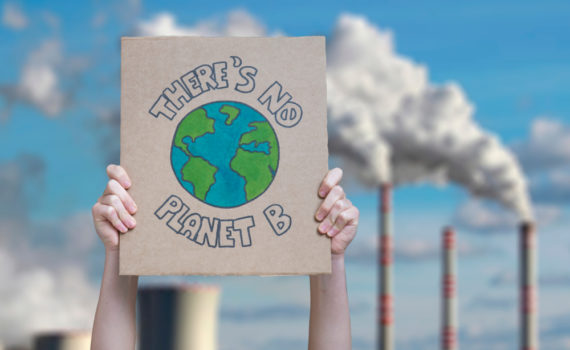
    The Biden administration has approved a massive new oil project named the Willow project. This is an oil project aimed to tap 600 million barrels of oil which resides in the petroleum-rich North Slope of Alaska. This comes as a disappointment to many of Biden’s supporters as well as climate activists. This project will allow the United States government to drill and possibly destroy some of the last pristine areas of the United States as well as add the equivalent of 2 million gas cars as emissions to the carbon output of the US.


    The company behind the Willow Project ConocoPhillips frequently states the economic impact of the project while ignoring the steep environmental cost. The company states the project would create 180 000 barrels of oil a day. In a world ever increasingly moving to electric projectiles this would hinder the United states’ transition to a clean economy as it would be still heavily reliant on oil. 


    Along with environmental groups, the local community of Nuiqsut has been outspoken in their opposition. Mayor Rosemary Hungarian has been raising concerns over the impact on the local wildlife. The equivalent of 70 coal-fired power plants will surely not only affect the wildlife, and the people, but also the environment as that amount of pollution will degrade the pristine lands which reside currently. The compensation by the Biden administration to protect Arctic waters from new oil and gas leasing is not enough in comparison to the large amount of ecological damage that will surely be to the environment as a consequence of this project. Also key to note, constantly touted as a positive is the number of revenue which Willow will produce. $8-17 Billion is a staggering amount however how will that be distributed? The wealth distribution gap in the United States currently stands larger than it was at the onset of the French revolution. Why fund a project which puts more money in the hands of ultra-rich oil tycoons? 


    The Willow Project itself claims to be a sustainability project despite releasing emissions into the atmosphere and disrupting local Indigenous communities. This raises questions about the larger trend of greenwashing which has been ever-present in advertising since the realization of climate change. Companies have been desperate to prove that they don’t exploit to get on the good side of consumers. Companies use misinformation to trick consumers who care highly about sustainable practices to buy their product regardless of if that product is environmentally friendly or not. One of the biggest examples of this came with the Volkswagen diesel Emissions Scandal. In 2014 the California Air Resources Board discovered that Toyota had been installing devices meant to offset emissions trackers and provide false data to make their cars look better for the environment. Greenwashing is extremely preventable in the industry especially as the urgency of the climate crisis continues to increase. 


    The backlash against the Biden Administration and The Willow Project has been sizable. Activists took to TikTok to spread the #stopwillow hashtag which has gained over 150 million views. This activism is increasing the knowledge about the unsustainable practices used by oil companies to trade in our natural resources for profit. In a related move, activists have also started a change.org petition which has gained 3.3 million signatures and is growing rapidly. Millions of young people are stepping up in the face of an attempt to lock the United States in decades of fossil fuel development. It’s unnecessary and will undoubtedly hinder the transition to clean reliable energy sources such as solar, wind, and nuclear. 


    The climate crisis poses an incredible threat to Canada. Rising sea levels would result in major destruction in coastal communities across the country. Cities as big as Vancouver to communities as small as Digby will be heavily affected. In 2022 the Insurance Bureau of Canada revealed that it had experienced $3.1 billion in insured damages paired with the fact that last year was 1.5 degrees Fahrenheit warmer than averages in the 20th century. This makes it the sixth hottest year recorded showcasing the effects of the climate crisis in real-time.


    In recent months there has been a spur of climate-based protests. At the start of March, thousands took the street across much of New Zealand’s biggest cities to demand climate action. This came after major flooding displaced over 10 000 people with fifteen people dying. These climate-related deaths will continue and get worse. The water vapor in the atmosphere is caused by warming temperatures spurred on by humanity’s industrial production. In Germany, protesters held a rally in Berlin to demand tough action on the climate crisis. Meanwhile, the United Kingdom is placing restrictions on nonviolent climate protests. This is causing a roadblock in the City of London. I wonder if the government is handing out punishments as harsh as that to those who exploit our land. Until governments decide to make meaningful action to protect the climate it is on civilians to continue to raise awareness and make sure the climate is not left behind.


  • Tosmos: The Student Centered Marketplace.

    ** The Following Is a Paid Article **

    The cost of living in Canada is skyrocketing and one of the most prominent groups affected is students. Attending university is incredibly expensive, and course materials, textbooks, and housing are all rising in price as inflation occurs. Another commanding issue for many students is the climate crisis. Buying new textbooks is both expensive and wasteful for our environment. Tosmos is a site that aims to help the student community with this issue. It provides a secure marketplace for students to buy and sell materials they need online. In order to sell items on Tosmos, a member has to have a valid university email proving they are a part of the university community.

    I was excited to use this site as I personally have had countless issues with third-party sites such as Kijji or Facebook Marketplace when trying to buy important textbook materials. Sites like those frankly do not do enough to fight against spam and scammers. Tomsos provides a secure verification system that is aimed at protecting the buyer first. When you purchase an item through the site, it holds the money until both the buyer and seller confirm that the buyer has received the item. Users are encouraged within the app to use safety and common sense when picking up an item, and doing so during the daytime and preferably on campus or around lots of people. 

    Using Tosmos is incredibly simple and straightforward. When logging onto the site, users can choose from a multitude of categories and see recommended textbooks. Students can make money selling pretty much anything on campus. There are separate categories for textbooks, electronics, and even furniture that provide an easy and clear way to recycle and reuse products in order to reduce overall waste. Furniture in particular is extremely expensive to buy new and myself and my partner will definitely be using this site as it grows to purchase some items for our apartment.

    It is quickly becoming a necessity in schools to have a laptop or Chromebook with you during your lessons. Buying technology, however, is extremely hard for most students, being either extremely expensive if buying new or risky if from a private seller. Students already have so much on their plate that they deserve a safe and secure marketplace made by students, for students who have their back.

    Selling is quick and easy. The site provides no fees, with funds being transferred directly into your bank account after dual confirmation. The site also prevents spam emails at the source by never publicly displaying your name or contact information. The platform has now rolled out to a number of universities across Canada, including Acadia University and other institutions in the Maritimes such as Mount Allison and Saint Mary’s University. 

    Housing has been a gigantic issue for students, especially in cities like Halifax. Between 2021 and 2022, rent for an average 2-bedroom apartment skyrocketed 9.3 percent. This has undoubtedly affected the student housing market as low-cost housing, which is usually the only thing that students can afford, has been fully taken advantage of. Halifax is also particularly problematic for people of color. Statistics Canada ranked Halifax as the worst in the country for adequate housing for people of color, notably placing it behind major cities such as Toronto and Vancouver. Tosmos sees this issue and aims to help students with this, as they are opening a housing section on their site allowing students to have a marketplace of their own to look for and rent out housing. This is a new feature that is being tested for Acadia University, allowing students in the Annapolis Valley to have a secure and fair marketplace for housing.

    Tosmos’s user-friendly platform is a great aid to the student community, allowing students to access the products they need without any risk of spam or scam. For more information check out Tosmos.ca. 

  • The Looming Threat of Climate Change

    The modern world faces an ever-approaching enemy. The climate crisis gets closer as humanity continues to ignore the danger posed by continuing to pollute our ecosystems. Science agrees that climate change is not only factual, but permanent damage is already inevitable. Climate change is no longer a prediction but a real crisis kicking down our door. Climate change is caused by a number of factors but one of the biggest contributors is the amount of greenhouse gasses polluting Earth’s atmosphere. The amount of greenhouse gasses we have produced since the start of the 1800s has skyrocketed. The Industrial Revolution was a gigantic factor in this, as gigantic factories were built inside of urban cities, polluting densely populated areas. Importantly, this pollution affects the water and surrounding land, effectively poisoning it with harsh chemicals. 

    The proof that Earth’s surface is warming can be tasted by comparing modern weather readings which are showcasing extreme weather patterns. There are also temperature measurements taken on ships and later at weather stations dating back to the mid-1800s. There has already been an increase of 2.2 degrees Fahrenheit or 1.2 degrees Celsius. This has led to drastic effects which only threaten to become worse. The greatest warming happened in the late 20th century. The region warmed the most has been the Arctic with more than 4 degrees Fahrenheit. This marks the hottest climate in 1000 years. The ocean has been a major absorber of greenhouse gasses causing it to increase in temperature. Between 1997 and 2015, the ocean absorbed more heat than in the previous 130 years. The effects of this lie in extreme weather events. These include floods, droughts, wildfires, and more frequent storms. A rapid increase in industry has spurred these catastrophic events. Science agrees that climate change is real, with over 97% of publishing climate scientists agreeing and also adding that humanity has caused it. 

    The effects of the climate crisis are irreversible, The international agreements such as The Paris Climate Conference have proven to be ineffective. The consequences for that failure could not be more dire. Within the next two decades, temperatures will most likely rise more than 1.5C above pre-industrial levels. The current Secretary General of the United Nations, Antonio Guterres, signaled code red and stated that humanity needed to stop its reliance on fossil fuels for any chance of avoiding major catastrophe. The burning of fossil fuels is putting billions in immediate risk. The rising sea levels risk drastic flooding, especially in the maritime provinces. Coastal towns and cities are at major risk. This can be seen currently in Venice. Many of the buildings across the city are sinking and the city will most likely be consumed by the sea by 2100. The Arctic has shrunk 40% since 1979, and this devastation is not limited to far-away lands. In Canada, climate change directly affects agriculture; the warmer climate increases the chance of drought as well as increased flooding in cities close to water. In the Atlantic, it will lead to extended hot temperatures, reduced moisture in soil, and more which will make agriculture significantly more challenging in the province. 

    By 2050, the effects in Canada will irreparably change the province. In Toronto, there will be 51 days of the year above 30 degrees which is much more extreme then the current average of 16. There will be an increased chance of freezing rain events and wildfires, and the pollution from that smoke will infect communities across the globe.

    Important to note is the impact of environmental racism. Regularly, BIPOC communities are left behind in climate initiatives and are unevenly affected by environmental devastation. In Chemical Valley, Ontario, the Anishinabe people have been particularly affected by this as the pollution has led to destruction of their land and air. There are serious health risks involved with breathing in pollution for such a long period. In Nova Scotia, an example can be seen in the community of Africville, which used to be a major African Nova Scotian community made up largely of the descendants of enslaved peoples. The government would regularly use this community as a dumping ground before bulldozing and ripping people away from their home to be relocated. 

    With such a large mountain of challenges it can be daunting, however necessary, to ask what can be done to address climate change. What essentially must be done is to stop humanity’s reliance on fossil fuels, especially coal and oil. In order to make this transition we should embrace cleaner energy such as solar energy and wind energy. Public transportation should also be more commonly used, as individual cars are major polluters. In order to do this, Canada and Nova Scotia should increase their funding for public transportation. In particular, having electric buses would reduce a large amount of the population’s reliance on oil. Currently, with electric cars hidden behind large prices, electric buses would allow the public to choose electric transportation without spending tens of thousands of dollars. A high speed electric rail system across canada would drastically speed up travel times, and lower the need for planes, which are also major polluters. 

    The biggest polluters are businesses and corporations. Fight back against consumerism by only buying things you need or truely want. Unnecessary purchases are future landfill stuffing. In this transition to a cleaner economy and environment, Indigenous voices are essential. The ecological wisdom developed by Indigenous groups is incredibly valuable and can help to make the world a better, cleaner, and more sustainable place.

  • How much longer do we have to wait for a Meningitis B Vaccine?

    Meningitis B has been on the mind of many Nova Scotians recently. There have been several outbreaks in universities across the province, which have led to the unfortunate fatalities of three different students: 19-year-old Kai Matthews at Acadia, 18-year-old Maria Gaynor at Dalhousie, and a confirmed case at Saint Mary’s University which led to death, but there has been no confirmation of that student’s identity. Despite these tragedies, meningitis B is still not covered by Nova Scotia’s public vaccination program. Why is meningitis B not considered a problem by Nova Scotia Public Health? Vaccines are available, but their price is $300, which is too much for most students already struggling with the cost-of-living crisis.

    The vaccinations that public school students receive in grade 7 cover multiple forms of meningitis, but not meningitis B. What makes university students especially at risk is the fact that a lot of students live very close to each other in dorms. In cities like Halifax, students have been priced out of the housing market, forcing them onto dorm spaces. These students’ needs should not be ignored, especially after the incredible sacrifices students have made during the COVID-19 pandemic. Our health needs deserve attention, especially when members of our community are dying. This crisis needs to be addressed by the Nova Scotia government. Meningitis B acts quickly; Kai Matthew passed away only 30 hours after first contracting a fever. It is also preventable with a vaccine. Why does Public Health still refuse to allow students full access to that vaccination? This crisis is urgent and they should not deny or downplay its severity.

    After the death of Maria Gaynor, Nova Scotia Public Health failed to notify students living, sleeping, and eating nearby of the dangerous illness. The school not only failed to promptly notify students of Maria’s death, but they also completely failed to notify students of a meningitis case being investigated on the third floor of their dorm. This put even more students at risk. If Maria and her friends had known about the case, Maria’s sudden illness would have been a major red flag. Maria could have possibly gotten help if Nova Scotia Public Health had notified the Dalhousie public that meningitis was inside the dorm and had taken appropriate steps to look after those affected.

    To Nova Scotia Public Health, please stop offering condolences and include meningitis B on the list of publicly funded vaccines. For more information concerning meningitis B in Nova Scotia, visit https://bforkai.com/

  • What You Can Do From Home to Support Ukraine

    What You Can Do From Home to Support Ukraine

    On February 24th, Putin made the decision to launch a full-scale invasion in Ukraine. This war has shaken the world, especially since it has been considered to be the biggest war in Europe since WWII. The impact that has been made has been shown all over social media on platforms like Instagram, Facebook, and even Tik Tok. By showing the devastation of the ongoing war, it also allows for ways in which people from home can help and contribute towards the ongoing, intense, and highly devastating situation. 

    One of the ways that people can help from home if they are able is to donate money in support to Ukraine and Ukrainians. Since the war started, different charities and organizations have been posted on social media for people to see on platforms like Instagram. These organizations include Nova Ukraine, Ukrainian Red Cross, Canada-Ukraine Foundation, UNICEF Ukraine and so many more who will take whatever a person can contribute. 

    The second way a person could contribute to the support of Ukraine is to leave home and publicly show support for them. People from all over the world have been publicly voicing their opinions by taking it to the streets in peaceful protests and marches where everyone can come together. For students and community members in Wolfville, there are usually people in Clock Park downtown who stand in support with the colours of the Ukraine and with signs that show they care.  

    The last way that someone can contribute to raise support for Ukrainians is by simply posting it and raising awareness about what is going on at the moment. Social media has proven to be a place where everyone shares everything and the war on Ukraine has been posted everywhere, allowing people to become more educated on what can be done to help them, but also what is happening and why.


    Source: https://www.aljazeera.com/news/2022/3/23/timeline-a-month-of-war-in-ukraine


  • Acadia Receives $22 Million in Funding

    Acadia Receives $22 Million in Funding


    On March 28th, 2022, the Nova Scotia Government announced that they would award some rural universities with $105 million to improve campuses, with Acadia University included among those, receiving a one-time investment of $22 million. This money that has been allocated to these universities, including Acadia will be used to help with overdue maintenance needs such as accessibility, upgrades, and replacements. 

    In the announcement made by President Dr. Peter Ricketts, he explained that some of the storied buildings on Acadia’s campus required serious upkeep that will successfully serve all of the desires of living and learning for students of the campus community. In his statement, he said that this will help push plans which will improve the accessibility and efficiency of Acadia’s campus. With the current funds that Acadia University has received for infrastructure, Acadia is able to push plans such as making the classrooms more modern, allowing more room for accessibility on campus, and especially improving the use of energy and how Acadia can reduce its carbon footprint. 

  • Rising Prices of Gas Impact University and College Students

    Rising Prices of Gas Impact University and College Students

    In Nova Scotia and other maritime provinces, the price of gas has hit an all-time high at almost two dollars. The skyrocketed cost has shocked and concerned people in the province, raising worries about how it could complicate affordability and necessary travel.

    Among others, this especially concerns university and college students who have to commute to school, who have to make extra time to work on top of their studies, and the students who also have to afford their rent, bills, and other utilities, as well as groceries. For students who drive, the increased gas costs are a new source of stress. 

    Alicia, a student attending Acadia talks about the travel between university and home, and how while she does not live far away, the rising cost has still made an impact on her day-to-day life: “As a student who lives off campus and has to travel to and from classes, the cost of gas being so incredibly high is making a huge impact on me financially.” She said, “As a part-time student that also works part-time I have to budget my money strategically. The intense spike in gas prices gives me little to no money left in my wallet for basic necessities or spending money to go out and do things with friends and family.” This seems to be common among students: for some students the amount of money they have to spend to fill up their vehicle takes from other costs that they have in their lives.   

    Kegan, another student, one who lives in Wolfville, but attends Nova Scotia Community College in Kentville has to drive to school. While the distance isn’t too far, the drive there and back can empty the gas tank quickly, and because the cost of gas is higher than it used to be, twenty dollars doesn’t fill the tank like it used to: “It impacts my commute to school, by having to balance my budget just to be able to drive to school.” While he knows gas is an essential for his everyday life, he can’t help but be stressed like a lot of students about the costs of living, “I mean regardless I’m going to have to get gas, but it stresses me out knowing that the extra money I now have to spend on gas is coming out of my budget for something else. I put forty dollars in my tank this morning and it only gave me half. A full tank at least used to cost fifty to sixty dollars, but now it’s around eighty to one hundred”. 

    At the price of 175.3 in the Wolfville area and similar in other places, students and other community members are worried that eventually it’ll reach past two dollars, and at that point  would be the highest gas price Nova Scotia has ever seen. Even if there are predictions of drops in the price for the next little while, people all around think that it won’t last. This causes high stress due to the already high cost of living in Nova Scotia.


  • Strike at Acadia Ends: An Update

    Strike at Acadia Ends: An Update

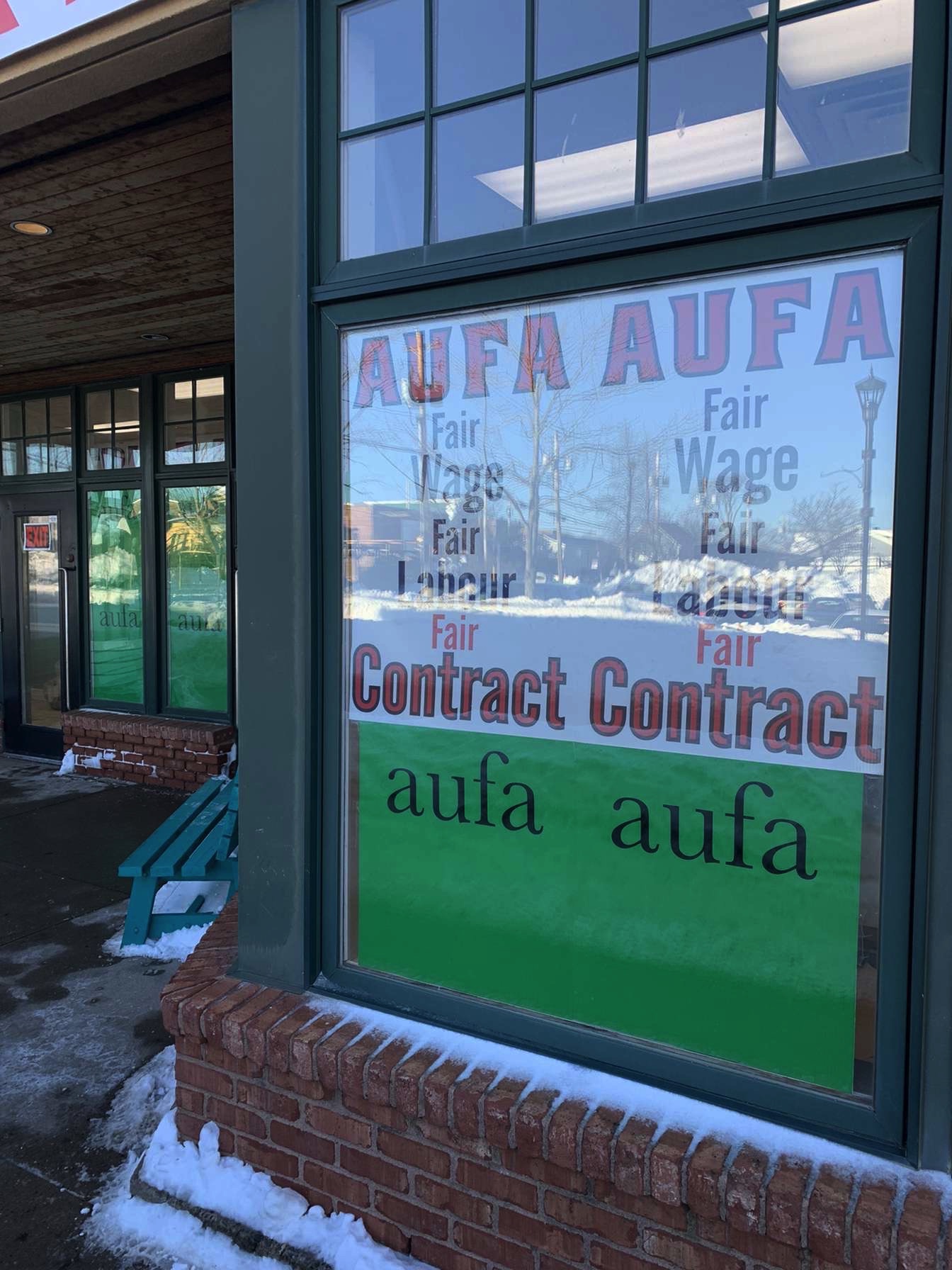
    On March 1st, through an email sent out to students at Acadia, the decision was made for the strike to end and for all students to be able to return to classes the same week. While the strike may have ended, there still hasn’t been successful negotiations from Acadia University and the Acadia University Faculty Association. Because there are still some issues that need to be addressed, both Acadia and the AUFA have determined to send the rest of the problems to arbitration where the decision will be made final and a new collective agreement will be created. The Senate at Acadia also worked to determine what the remainder of the term would look like for students. In an email that was put out on March 2nd, the academic calendar has been modified and now the end of the term will be April 13th, with exams following from April 16th to the 25th. In the March newsletter sent out by Acadia’s president, he reassured students that Acadia will determine the appropriate financial compensation for the amount of time that students missed due to the strike. 

  • Racism in Wolfville

    Racism in Wolfville

    Racism is prevalent, especially in university towns such as Wolfville, and while it is a known issue, it often remains ignored and unaddressed. Recently on Instagram, an article spread around about a racist experience that Sara Micheal, experienced from one of her former roommates that left her with scars on her neck after being assaulted. Besides the article, Sara also took to social media about the discrimination and dismissal she received from the police officer, with the last name Munro, when she reported it, as well as Wendy Donavan, the Mayor of Wolfville. This was not Sara’s first time as a victim from racism, and she said that this also isn’t the first time that she’s seen racism be dismissed in Wolfville. Because of the public attention that has been brought toward this story, I was able to have a conversation with Sara about what happened to her and how racism is prevalent in places like Wolfville and Acadia University.  


    So I just wanted to start off by asking you how it felt to receive that dismissal from the town. 

    “Yeah, so… I wasn’t really surprised at the town’s reaction, that’s kind of why I didn’t immediately go to the police, and that is why I initially got this girl’s picture and name and got my side of the story out first – because I knew that the police were not going to go out of their way to fix it. I mean they watched the Confederate flag fly for months and months right in the middle of town. 


    So basically what happened to me is that this girl tried to assault me. I defended myself and she left these scars. She went to the police, but she didn’t mention the fact that she tried to assault me. I think she didn’t realize that when she tried to grab me by the neck, she left scratch marks. Maybe she was too drunk to realize that, but she did. She didn’t mention the fact that she grabbed me first or the racist comments. A lot of information was out of context. I knew she was going to go to the police and say that I randomly attacked her. 


    It all started because I asked her to please keep it a little more quiet since it was 2:00AM on a Saturday. This girl, was going off on me, saying she could do whatever she wanted and that if I didn’t like it that I could move out. She was kind of just talking to me like I wasn’t even a person. But her friend didn’t step in until I retaliated. So to me, it seems very odd that that was the time that the roommate decided to step in. The roommate tried to make excuses for her, saying that I shouldn’t have pushed her. And she said, which sounds like a joke and has nothing to do with the situation at hand, “But I’ve been with three black guys before” and I responded with “What does that have to do with anything here?” Like your friend is racist and the roommate said she usually doesn’t say things like this which again is most probably a lie because there’s a reason for why she feels so comfortable saying things like that.


    It’s just been very exhausting because not only did my friend and I have to deal with that cop, but I had to do my own investigation because the detective was concentrating on getting interviews from her and her friends who are the other roommates in the house. They obviously took her side. I had to find out where her old roommate was since I heard that this is not the first time she put her hands on someone, and I had to go look for them. I found them and apparently, I’m the fourth person for this to happen to. 


    They immediately took her side. Immediately. Didn’t even bother to run a check on her or like trying to even validate if what I was saying was true even though I have scars from her trying to grab me. All that stood out to them was the fact that I had the audacity as a black person to defend myself. 


    The police officer was immediately dismissive. He said that I was just playing the victim, and he was talking to me and my friend as if being African and Black meant that we didn’t understand the law. He was trying to make it seem as if I had no right to defend myself. He was just talking to us like we were too stupid to understand basic laws. At one point I turned to my friend and I said, “I’m so sick of this town”, and he said that if we didn’t like how we run things here than you’re welcome to leave and to me that’s sort of funny – like a dog whistle for us to just get out of town, like we are not wanted here. 


    When I told him that this town was racist, he turned to me and said “we are not racist”. He asked…not even asked, but demanded that we take it back, like an order. He was just yelling at us. At one point he claimed he had a black daughter, which I don’t think he even has, and just wanted to use that as a way to justify this.


    The mayor consistently tried to gaslight me into thinking that he was not a real police officer. I called her and her argument was that because it was a Sunday, there was no way that the police station could be open and that it didn’t make any sense for anyone to even be opening the door. And I replied with, “yeah I know”, but there was a police officer there and we decided to give it a shot anyways. I told her that Wolfville is racist and inhospitable,  not only in my experience but also in my friends and others’. She wrote back to me that it was unfair of me to smear an innocent organization. 


    Sara says that in situations like this, she wants to point out that this is a reality for black people, and that this is unfortunately normal. Sara and I talked about the white privilege that was evident in Wolfville and how this applies to what happened to her: “I don’t have any criminal past, no criminal charges, I have never stolen anything from a store and none of that matters. All that matters for this girl is that she is a white girl of upper class. Like I mentioned, she had the police called on her before and I am not the only person that has complained about her and there still hasn’t been anything done. To describe the amount of privilege to have as a white person – you can be a white woman and seen as innocent and pure and you can get away with a lot of horrible things. This idea has been pushed through centuries of colonization, centuries of us having to watch movies and the media, and having to watch white people being put on a pedestal.”


    Sara also addresses how this situation will close many doors for her, unlike her attacker. “Here’s this white woman who has put her hands on me and is comfortable with saying racist slurs, but having a history of this with multiple other people hasn’t done anything to her. But being in the media already so far with this, it’s going to close so many doors for me in the future. It protects me and perhaps it allows me to be in an environment in the future where I’m going to be respected as a human being, but at the same time it definitely will close doors for me.”


    When it comes to Acadia University, Sara believes that Acadia isn’t advertising in an honest way when it comes to their progressiveness in recruiting students, “Acadia and Wolfville have been working actively at creating this false image of equality and progressiveness when it comes to Wolfville as a way to attract a lot of international students”. She focuses on how this can create a less safe environment for people of color, especially when the racism in Wolfville isn’t addressed: “[Acadia] looks at places like Bermuda and the Bahamas which are places that have a lot of people of color, have a lot of black people, and they actively advertise this image of safety and progressiveness when it’s not safe. And I’m not the only black person who has gone through this aggression”.


    Another concern Sara has is for future international students who are of color that may choose Acadia, “International students are treated differently. People of color in general are treated in a completely different way. Like I’m treated like a second class citizen every day. But it’s very dangerous to have all these like international students come here as kids, as minors”. She says. “They’re away from a home that can help them and they’re leaving those support systems. They trust an image of Acadia that is fabricated, which is a very predatory and cruel thing to do.”


    What other experiences have you had in Wolfville?

    “I’ve had multiple jobs where people would question if I could speak English or where people would question if I could read, write, and speak English. Or people would talk down to me and make comments when it came to me being African. Something I’ve noticed in schools too is dealing with the professors, questioning if I actually wrote my own essay or if I cheated or plagiarized. Just things like having friends being told by their professors to simply go back home if things are too hard here, and just very inappropriate comments without really a shred of concern.


     Before I came here I did some research on the school and found that there were no articles or social media posts about anything bad about Acadia. I figured that it’s such a small town, like what bad things can happen here? It’s because Wolfville actively works at hiding these things and silencing these people. It looks like they put effort in when they act like they care by posting things about black history or native history or native issues, or racism against people of color in general. 


    Another problem is that Wolfville insists on committing to performative acts of solidarity, which a lot of people of color have been complaining about for years. They post about Black History Month, but fail to address any of the ways the town has failed black people.”


    After what you have said, do you feel like that if you didn’t say something, that it would’ve been swept under the rug? Do you think it would’ve been dismissed completely?

    “Yeah, I think they would’ve completely dismissed it. I think they just would have gone ahead and acted like it wasn’t a problem. I think they would’ve just dismissed it because it hurts Acadia’s pocket, it hurts Wolfville’s pockets. If they have this reputation for being racist, they’re not going to have as many international students come in. Personally, if I read what I said in that article, I would never have come here.” 


    In your latest Instagram post, you said that you wanted to do sort of like a documentary in collaboration with other people of color and their experiences as well. What does that mean to you and for those other people who want to be really honest about Acadia and Wolfville?

    “I want people of color to have an informed choice. I think it’s a good start to be responding to racism ingrained into this town. It’s a good start to be putting out information and giving the choice to students of color or professionals of color. I wish I had this sort of informed choice. I wish I would have known what it was like here. I honestly think it should be illegal for universities and places like Wolfville to do things like this, I think it’s dangerously predatory and will lead to even more violent situations like this. 


    That’s all we want to do. We want to give people what our experience was here: how disrespectful, how hostile… Acadia puts out these happy advertisements which aren’t like mine or a lot of other people of color’s experiences.”  


    Do you think there’s any solutions that Wolfville can take from people of color to help them? Not just in support of them, but to also help amplify their voice and create a safer and more inclusive environment?

    “Acadia should start actually providing support and take complaints seriously instead of just dismissing them. Acadia should actually have consequences for people’s actions.” 


    You briefly mentioned it before, but how does it sort of impact your life? Or what does it mean to you with how normal racial slurs are? Especially in a college town like this?

    “I think it creates a situation like my situation. I mean because when it’s normalized to be screaming out these words and it emboldens people to be more comfortable with this behavior. It’s like a safe space is created for them to be racist and do even worse things.” 


    Do you think that there should be more action when it comes to the police to create a safer environment for people of color to be able to report situations like this without fear? Like do you feel like this is a big issue right now where people of color don’t feel comfortable going to the police?

    “I definitely think so. We don’t really feel like there’s much more support from police. We don’t really feel comfortable with a system that was created for white people. I don’t really see the point of me going to the police for any help because I know that I’m not going to get any. “


    I just have one last question: how do you think that students at Acadia or the people in Wolfville can help amplify your voice or other people of color’s voice who go through these racist experiences?

    “I think that doing things like sharing our posts helps, but it doesn’t have to be through just social media. Continuing the conversation and sharing the discussion, for me that really helped. I think doing things like showing up by offering support and like actually engaging when you see racist things happening. I find it disturbing when there are people who scream racial slurs out in public and no one stops it. 


    I think that by sitting there and not saying anything, or even worse, justifying things like my experience are making it much worse. It’s about acknowledging these problems. It’s not going to stop until these things are at least discussed.”

    Racism is still an ongoing issue, especially in university towns such as Wolfville where it’s been normalized and has allowed white people to engage in racist behavior.


  • Update on AUFA Strike

    Update on AUFA Strike


    Today, February 1st, the members of the Acadia University Faculty Association (AUFA) are now in a legal strike position that started at 12:01 as of this morning. This comes as a result of the AUFA and the Administration’s unsuccess in reaching a new collective agreement despite joint efforts from both sides and with the help of a provincial conciliator. These negotiations have been taking place since July, along with a strike authorization vote that took place in November with most of the members voting in favour of a strike. On January 14th, the provincial conciliator declared an impasse with a fourteen day “cooling off” period that followed. In a letter on the AUFA’s strike website called “FAQ for Acadia Students,” the AUFA and the Board of Governor’s wants are listed for what they hope to acquire out of these negotiations. Some of the proposals from the AUFA include a cluster hire of Indigenous scholars, a fair salary for faculty that keeps up with the cost of living and improved working conditions, to name a few. On the other side, a list of proposals that come from the Board of Governors declares that they want to freeze the salaries for the next two years with a 1% increase for the following two years, also included is excluding faculty from being able to vote on matters that have to do with departmental hiring processes and changes to the faculty’s health and benefits plans. To read more on both sides proposals, you can read them on the AUFA’s strike website: https://www.acadiafaculty.ca/wp-content/uploads/2022/01/FAQ-for-students-re-Collective-Bargaining.pdf. At the end of the day, both the AUFA and the administration at Acadia wants what is best for the students and their education. Because of the ongoing strike, classes and labs for students will be suspended until further notice.

  • Students Demand for Flexibility in Courses this Winter Term

    Students Demand for Flexibility in Courses this Winter Term

    On Monday, January 24th, students returned in person for classes, which came as a surprise to some due to the massive outbreak of the Omicron variant that left Nova Scotia with record-breaking numbers. The decision made by Acadia University to return in person left students with mixed reactions, raising concerns for health and safety.

    Before January 24th when it was just confirmed that the students and faculty would be back in the classroom, a few professors were quick to accommodate and help students with their concerns, continuing their courses in a hybrid approach to allow students the chance to choose if they wanted to return in person or not depending on their comfort. While these accommodations have been made in some courses, the vast majority have not received the same consideration. 

    Jill, a student at Acadia University, says she feels stressed about sitting in a classroom with a lot of people, especially while being someone with underlying health conditions: “I just feel that Acadia didn’t really think of how people with accessibility needs or compromised immune systems will deal with classes. I also find it hard to focus because I have so much health anxiety on top of it.” Like Jill, there are many other students who are uncomfortable with the sudden return to in person classes, with similar concerns that increase the need for more flexibility. Jill, along with many other students, has not received the requested flexibility and has had no choice but to return to class in person. “I don’t think it’s taken as seriously as it should be.”

    The Acadia Student Union (ASU) sent out an email before the return to classes that gave students a chance to fill out a poll to address any of the concerns they had about the decision. In an Instagram post made by the ASU, they confirmed they had received over 2000 responses in a 72-hour period at that point in time, which resulted in a majority of 71% of students who expressed they were more comfortable with online classes. In that same post, the ASU stated that “the survey results show there is a clear need for increased flexibility and accommodation in the chosen mode of course delivery for the winter term.”

    The ASU has openly said that they are in full support of students who want more flexibility and choice when it comes to how the rest of the winter semester will be delivered.


  • The Cutten Chronicles

    The Cutten Chronicles

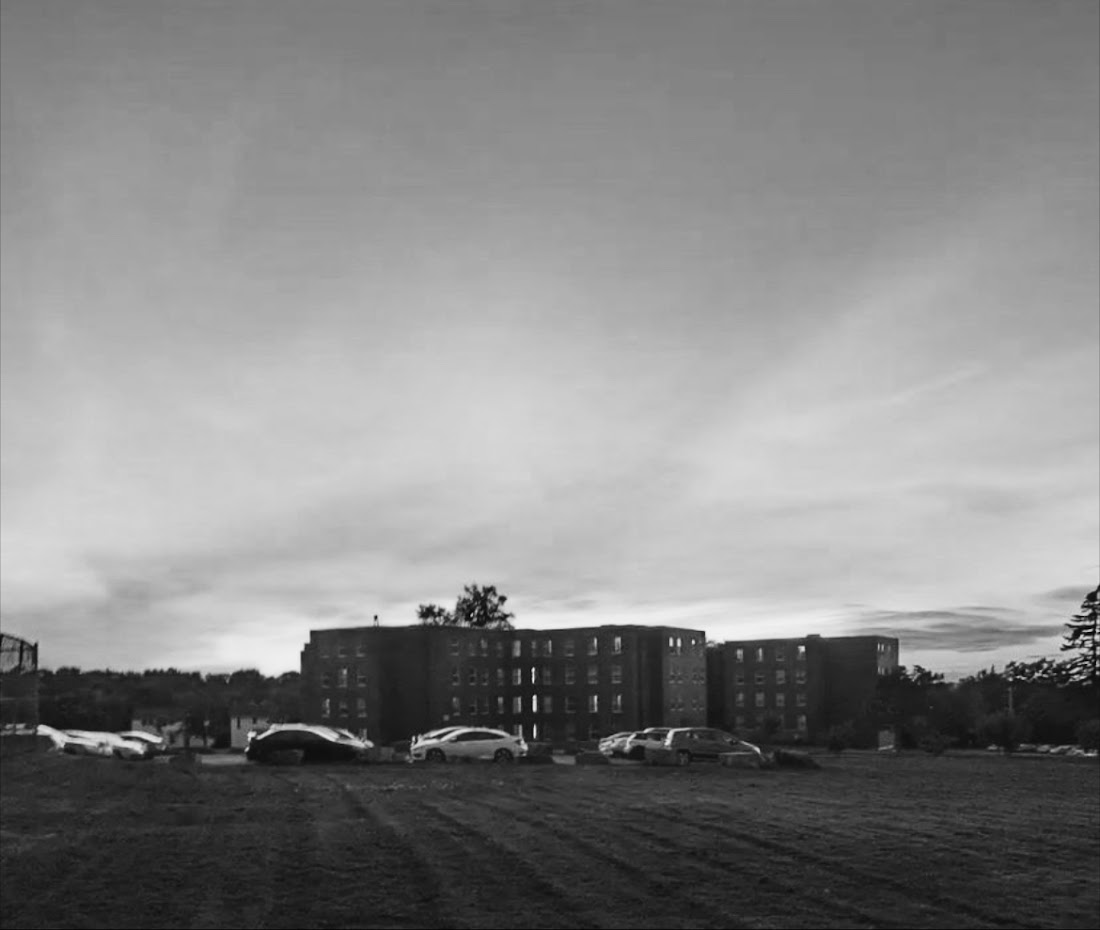
    While every residence on the Acadia campus has its own personality and quirks, Cutten House has a reputation for some of the strangest funny stories that have occurred within its walls. I interviewed a couple residents of the infamous residence to get some of their most wild and interesting tales that have happened in the first couple months of this school year, along with pictures taken by residents of some photograph-worthy instances.

    “One day I woke up on, like, a Friday morning, and the night before seemed pretty tame. My roommate was out so I literally just watched Netflix all night and did whatever. I went out of my room and looked down the hall and the door was covered  in some….substance that I didn’t want to investigate. After a bit it was still there so I went to the door and checked it out…it was tomato sauce. Like…someone threw meatballs at the door and the sauce stuck. The girl whose room it was had to clean it but it’s still on the ceiling.”


    “One time my friend and I were in my room and we heard this loud commotion in the hall. We looked outside and there were about five people just throwing cake at each other and crushing it all into the carpet. A guy had to come and clean it up but I swear there’s still cake stains on the floor.”


    “This takes place during homecoming, which is probably one of the many fun stories from that weekend. Around 8 or 9 pm we realized that our microwave from our section had gone missing, along with I think every other microwave in the building. No one could find them for quite a while, until someone finally used the elevator and found them all stacked on each other. There had to have been about 10 in there, but the best part about it was that it was basically a free-for- all to get a better-working microwave.”


    “I think the funniest thing to me about Cutten is the elevator being under maintenance because of all of the suspicious liquids and contents spilled in it. Every time you enter the elevator there’s always a new unpleasant smell that is introduced to your senses. I’m always impressed by just how putrid the smell is on a Monday morning, and the sticky contents of the elevator floor are enough to make your imagination wonder but still not bad enough to make me take the stairs.”


    “After the first week of school passed and we got to know our neighbors, we realized that our next door neighbor “Christian” never moved in. It became a running joke between all of us, we even developed our own lore about who and where he is. We created a shrine for him on his door that people would come and see or leave funny notes of their own on. I’ll never forget you, Christian.”


    If you have any pictures, videos, or stories of things going on around your residence, let us know and you could be featured! You can send them to our news editor at [email protected]

  • The Tragedy of Astroworld and How You Can Be Safe

    The Tragedy of Astroworld and How You Can Be Safe


    “I saw terror in every eye that I met, even the ones that told me to breathe and stay calm. We knew there was a big chance that some of us would not make it out alive.”

                                                                Seanna Faith 


    On Friday,  November 5th, the first day of the Astroworld Music Festival (named after the 2018 album), hosted by rapper Travis Scott, took place in Huston, Texas. The two day event was meant to be a revival for the festival, as it had previously occurred from 2018-2019, but had to be cancelled in 2020. 

    The over 50,000 people attending arrived with the excitement of seeing some of their favorite musicians live, and some of the current biggest names in the music industry would be performing, including the likes of SZA and Roddy Ricch. Unbeknownst to them, what would soon ensue would be their worst nightmare.


    As early as 5 pm, the Huston PD had reported dangerous crowd conditions, with hundreds of injuries having been reported, totaling up to more than 260 people hurt and treated before Scott had even taken the stage. Once he did, complete chaos followed.


    As explained on her Instagram, Seanna Faith, an audience member and witness to the many horrors, stated: “Within the first 30 seconds of the first song, people began to drown – in other people,” she continues, “Once one fell, a hole opened in the ground. It was like a Jenga tower topple. Person after person were sucked down. You could not guess from which direction the shove of hundreds of people would come next. You were at the mercy of the wave.”


    Surrounded by chest-high metal gate barriers, audience members were being crushed against each other, with most being completely unable to breathe. As hundreds of audience members screamed with the little oxygen still remaining in their compressed lungs, security guards in the walkways paid no mind.  As the ‘human sinkholes’ began to pop up throughout the crowd, Faith found herself nearing the edge of one, and what she saw horrified her. 

    “There was a floor of bodies, of men and women, below two layers of fallen people above them.”

    After managing to reach the edge of the crowd with the help of fellow audience members, Faith managed to climb up the ladder leading to a raised platform overlooking the entire 50,000-person crowd. She began screaming to the camera man filming on the platform, begging him to get help for the hundreds of people that were near-death. 


    This confrontation was caught on camera by a member of the crowd, and shows Faith arguing with the camera man, before ultimately situating herself in front of his camera, where she continued to attempt to get help for the many sufferers. She was eventually kicked off of the platform by a security guard, as they continued to ignore her pleas. After a lengthy and ridiculous  amount of time, medics were finally dispatched into the crowd. As of November 16th, there are now 10 confirmed deaths, with ages ranging from 9 -27. 


    Since we will soon be getting back into the concert and festival season, we need to all stick together and try to keep each other safe. Below are some safety tips so that you and your friends can have a fun, and more importantly safe, experience.


    • Try to stay near the outer edges of crowds in order to reduce your chances of being trapped in the result of a crush
    • Try to avoid being intoxicated to the point of losing awareness of your surroundings
    • Stay hydrated and take regular breaks
    • Keep an eye your drinks and keep them covered
    • Have a buddy system with your friends, never let one person be by themselves, or schedule regular meet-ups and check-ins


  • “Environmentalist” Billionaires and What They Want You To Think

    “Environmentalist” Billionaires and What They Want You To Think

    On Wednesday, October 27th, billionaire Bill Gates celebrated his 66th birthday on a multi-million-dollar yacht in a closed bay in Turkey alongside 50 other guests, including founder and former CEO of Amazon, Jeff Bezos.  


    Gates and Bezos claim to be fighting against climate change, with Gates having authored a book titled “How to Avoid a Climate Disaster: The Solutions We Have and the Breakthroughs We Need, published in February of 2021. Bezos has pledged 2 billion (0.009% of his total wealth) to “restoring nature and transforming food systems” that have been affected by climate change and its ramifications.  


    Remember the multi-million-dollar yacht mentioned at the beginning? Named “Lana”, it is a 107-meter superyacht that Gates is renting for approximately 2 million a week. It has been proven that the about 300 superyachts around the world that are in operation use over thirty-two million gallons of oil and produce 627 million pounds of carbon dioxide emissions a year.  


    Not only this, but after attending Gates’ obviously very eco-friendly birthday bash, Bezos returned to his own yacht (The Flying Fox) on a private helicopter, which travelled a 120-mile round-trip. This helicopter ride resulted in the emission of about 215 pounds of CO2 into the atmosphere.  


    For a couple of “climate activists”, these humble billionaires are contributing quite a lot to the issue that they claim to care about preventing. We see this time and time again, where large public figures put themselves on a pedestal for funding organizations and movements that are fighting against urgent real-world environmental issues, while simultaneously being the biggest perpetrators and creators of the things that are destroying our planet and the lives that live on it. 


    It needs to be brought further into the spotlight how little these figures care about the planet that we live on, and how desperately they want us to think they care about the effect that their actions have on the planet, while blaming the general population for the problems that they themselves are causing. 

Betzillo positions itself as a versatile gaming hub where structured bonuses and adaptive gameplay mechanics support both short sessions and extended play.

Built with a focus on innovation, Spinbit integrates modern casino architecture with rapid transactions, appealing to players who value speed and digital efficiency.

Ripper Casino emphasizes bold entertainment through high-impact slot titles and competitive promotions crafted for risk-oriented players.

A friendly interface and stable performance define Ricky Casino, offering a casual yet reliable environment for a wide spectrum of gaming preferences.

King Billy Casino channels classic casino spirit into a modern platform, delivering recognizable themes supported by contemporary reward systems.

Immersive visuals and layered slot mechanics are at the core of Dragonslots, creating a narrative-driven casino experience.

Lukki Casino appeals to players seeking direct access and minimal friction, focusing on fast loading times and intuitive controls.

Casinonic provides a structured and dependable gaming framework, blending modern slots with transparent operational standards.