Tag: review

  • Why Everyone Should Watch This Is Us

    Why Everyone Should Watch This Is Us

    This Is Us, a popular TV drama, is one of my favorite shows of all time. There are so many reasons for this, but I’ve only listed a few. I hope it inspires you to start watching it, too.


    1. It teaches life lessons

    Without spoiling too much, there are many examples throughout the show of characters who struggle with such real issues that viewers can’t help but learn and grow alongside them. One of the times I felt myself most invested in the characters’ lives was when a young girl tells her parents she’s gay. I had never truly understood the difficulties that come with this. Although I’ve still never personally experienced it, and therefore can’t fully comprehend what it’s like to go through, the show’s depiction of one person’s experience allowed me to get a glimpse at how hard that can be. I now have a much deeper appreciation for the pain people go through just to be themselves.

    We also see topics such as alcoholism, adoption, racism, toxic relationships, mental health, and so many others being explored so openly. The show has allowed me to think about these things more profoundly and to learn from the characters’ experiences. Through the characters’ struggles, the show tells us that it’s okay, and that it’s normal, to experience the things they do.


    1. You feel like you’re a part of the characters’ lives

    The producers are extremely talented in making you invested in the storylines of the characters by creating the feeling that you know them personally. Since they are so vulnerable, viewers feel like they are there with them, learning, helping, and growing. One of the characters in the show experiences panic attacks and anxiety. By depicting this so openly, it’s easy to feel like you’re experiencing those moments with him. This may make you reflect on similar situations from your own life, which connects you to the show that much more.


    1. There is so much love

    Since the show follows the main characters from birth to adulthood, viewers experience different types of love throughout their entire lives. We see supportive and healthy relationships, as well as toxic examples of love. Familial love is the base of the entire show as it’s represented through arguments, sacrifices, and hardships. Romance is another huge part of the series, with passionate love stories, divorce, and love in the LGBTQ+ community all being explored. There is also a focus on the characters’ adoration for friends, pets, music, and other passions in life. All of this love makes the show so much more appealing.


    1. You’ll feel every emotion

    If you ask anyone else who’s seen the series, they’ll either tell you that it’s the most amazing show they’ve ever seen, or that it’s the most amazing show they’ve ever seen but they can’t watch it anymore because it makes them cry every time they watch it. The vulnerability of the characters gives everyone something to relate to, which is often a cause for tears. The show is also hilarious. With the close bond the siblings have comes humour that families can relate to. The fact that the characters’ stories can make viewers cry and laugh simultaneously is rare.

  • Why Inappropriate Content Shouldn’t Be Our Parents’ Biggest Fear with Social Media

    Why Inappropriate Content Shouldn’t Be Our Parents’ Biggest Fear with Social Media

    If you haven’t already seen the 2020 film The Social Dilemma, stop reading this article, go watch it (yes, it’s on Netflix), and then come back.

    For those of you that don’t want to watch it, or just need a recap, the documentary outlines the thought processes behind creating most social media platforms, the techniques the creators use to keep users interested, and the effects those sites have on users (let me stop myself right here… As the movie points out, social media platforms and drug dealers are the only two industries that call their clients users. What does that say about social media? For the rest of this article, I’ll call them social media interactors, rather than users). When I first watched The Social Dilemma, I was horrified, but not surprised by the things it was telling me. I deleted my Facebook account and several other social media apps, encouraging all of my friends to do the same. Admittingly, I had Instagram and TikTok back on my phone within the week, but a break felt good all the same.

    The main reason I wasn’t surprised by what the documentary had to say was because I’d already seen social media affecting my friends’ and my own mental wellbeing in more ways than one. Having any information you want at your fingertips is a huge benefit of social media. And don’t get me wrong – I don’t think that social media platforms are inherently bad. But the documentary got me thinking… how beneficial or detrimental is the nonstop influx of photos and messages that we receive?

    One of the first issues with social media that I’ve noticed affecting my own life is unrealistic body and beauty standards. These impractical ideas are constantly pumped into people’s phones with the help of the right camera angles, editing tools, and the fact that people tend to only post the photos they look best in. I’m guilty of these habits just as much as the next person, but it causes the bar for beauty standards to be set higher than ever. This quickly leads to unrealistic expectations. Not only that, but when people have access to pictures of nearly anyone in the world so easily, subconscious comparisons become much more common.

    Comparison isn’t only an issue with beauty standards. Social media also makes interactors feel like they always need to be doing something. So often, we only see pictures and posts form people who are travelling, spending time with friends, learning new hobbies, spending money, going to the gym, go, go, go. This can lead social media interactors to feel guilty for taking a day to do nothing. Understandably, people have forgotten how to be still in the midst of such a busy, rapidly changing world. But when FOMO leads to being unable to slow down, higher stress and anxiety levels are provoked.

    I’m not going to be the person who tells you to get rid of your social media accounts. That would be extremely hypocritical of me. But I hope that you take something away from this. Whether that’s being more deliberate in spending down-time with yourself, researching different ways social media affects our brains, or choosing to spend less time on social media, I encourage you all to take a step back and think about how your social media interactions are affecting your mental wellbeing.

  • Fact Checking the ASU Bylaw Review

    Fact Checking the ASU Bylaw Review

    Today, the Acadia Students’ Union (ASU) issued a media release and video to explain some of the proposed by-law changes that will be coming forward for adoption on December 4th, 2018, in response to recent public criticism from students. The release and video are available on the ASU website here.

    The Athenaeum strives to provide accurate and timely information on current events that matter to students. As such, with the bylaw review coming to a close, this article will outline the key messages shared in the video, what they mean for students and what their implications will be moving forward.

    Overall, it appears that most of the claims in the video are factually accurate, but many are misleading to students who do not have a solid understanding of how the ASU operates and how governance documents are used in everyday business.

    Key Message No. 1

    The By-Law Review works to “ensure that our organization’s practices align with its values of integrity, respect and inclusion” (0:15).

    Fact Check Rating: Mostly True but Misleading

    The By-Law Review is a comprehensive review of all governing documents and was launched in March 2018 with two main ideas: increase diversity on Council and eliminate vagueness, redundancy and contradictory language.

    In terms of integrity, the draft by-laws present a strong foundation for increasing the accountability of student representatives to Council, with new regulation around Council meeting attendance, and Committee and Executive reporting at Council meetings. However, the draft by-laws also remove the ability for regular students to impeach their Members of Council in the future. The impeachment provisions currently provide for the ability of students to submit a petition signed by 35% of the constituents of the Member of Council which would trigger a General Meeting where 25% of the student body must be present. The removal of this provision means that Members of Council can only be removed if other Members of Council move to impeach them. This provision has been used in the past with Vice Presidents being impeached in the early 2000s.

    In terms of respect, the draft by-laws establish vague yet promising election rules and regulations that promote respect amongst candidates (Rules of Fair Play and Community Standards); however, these rules can be interpreted in different ways depending on the opinions of the Elections Committee.

    Finally, in terms of inclusion, there does not appear to be any significant progress towards making the Acadia Students’ Union any more inclusive of marginalized people and groups on campus. The Diversity and Inclusion Representative (currently the Equity Officer) will be hired, rather than elected; however, it is not clear how this would increase the overall diversity of Council. One claim made by the media release that the Diversity and Inclusion Representative would be hired by a committee with “at least two of its members to identify with one or more of the four groups identified in the (Canadian Employment Equity) Act” is not reflected in the raft by-laws. Section 12 of Bylaw 2 (Committees) which discusses the composition of the Hiring Committee does not include this requirement.

    Key Message No. 2

    The Bylaw Review will allow the Students’ Representative Council to “function effectively and address important student issues” (0:22).

    Fact Check Rating: Neutral

    While it has been proven in numerous studies that organizations can be more effective with fewer Board members, it remains to be explained why reducing the number of student representatives would be better for the student body. Over the past fifty years, the Students’ Representative Council has functioned effectively and addressed issues that are important to students with both large and small numbers of voting members. While this claim is in theory true, it is unclear how this would affect regular students.

    Key Message No. 3

    The By-Law Review will “establish a more diverse and inclusive Council and a Diversity and Inclusion Committee to ensure that the voices of all students are heard” (0:30).

    Fact Check Rating: Mostly False

    On the first element of this key message, the By-Law Review fails to establish clear measures that would increase diversity on Council, other than mandating that the hired Diversity and Inclusion Representative self-identify as female, a visual minority, Indigenous, and/or a person with disabilities. There have been no discussions or consultations that have been widely attended by individuals who fall into these groups nor do the proposed changes encourage persons from marginalized groups to run for the remaining fifteen (15) Members of Council.

    On the second element of this key message, the By-Law Review does rename the existing Campus Representation Committee to be the proposed Diversity and Inclusion Committee and adds the ASU President and the Coordinator of the Acadia Mental Health Initiative (AMHI) as members of the committee. However, the existing committee (Campus Representation Committee) has been one of the least effective ASU committees over the last couple of years and it has been widely regarded as having failed in achieving its mandate. The committee has typically met between two (2) and five (5) times per academic year (September to April) and most discussions include upcoming events being planned by the Internal Organizations that sit on the committee. There have been no appointments of additional individuals onto this committee in recent years and there has been minimal outreach to marginalized populations. This committee has not been effective at ensuring that all student voices are heard in the past and it is unlikely that a name change and the addition of new members will change that fact in the long-term.

    Key Message No. 4

    The By-Law Review would create “new guidelines and meeting attendance requirements for Members of Council to hold your elected representatives accountable” (0:36).

    Fact Check Rating: True

    The By-Law Review does create clear expectations for Members of Council to attend Council meetings. However, these guidelines have existed informally in the past. They are not new, but the key change is that the ability to excuse a Member of Council is made by Council, rather than the Chairperson who could do so historically.

    However, this directly contradicts the impeachment provisions which still state that a Member of Council may be impeached, at Council’s discretion, for missing two (2) consecutive meetings or a cumulative total of four (4) meetings throughout the year “without providing written notification to the Chairperson twenty-four (24) hours in advance”.

    Key Message No. 5

    The By-Law Review would increase” the number of voting days in the ASU (General) election from two (2) to five (5) to maximize voter turnout” (0:43).

    Fact Check Rating: Mostly True

    The draft by-laws do extend the number of voting days to five (5) consecutive days; however, the entire campaign period is shortened to ten (10) days total, including voting days. Therefore, students will have ten (10) days to learn about their candidates, attend meetings and events surrounding the election and to decide whom they will support. Additionally, the draft by-laws remove any reference to what happens in the case of a “snow day” (campus closure) and it is presumed that the election would follow its original schedule. In the 2017 General Election, there were two full-day campus closures due to inclement weather and voting was extended accordingly. This change may increase voter turnout but this is not conclusive.

    Key Message No. 6

    The By-Law Review would add “more areas for candidates to campaign to better facilitate student engagement in ASU Elections” (0:47)

    Fact Check Rating: True

    The draft by-laws seek to allow more campaigning in areas where campaigning is currently prohibited. These areas include the Axe Bar and Grill (formerly the Axe Lounge), the first floor of the Library, at ASU, Club, Internal Organization or House Council events (with permission of the host).

    Key Message No. 7

    “We’ve already been consulting with students” (1:08) and “In fact, never has our union spent so much time listening and building governing documents that are truly reflective of the organizations mission statement” (ASU Release)

    Fact Check Rating: True but Misleading

    The Acadia Students’ Union committed to holding student consultations in March 2018 that would tackle the major issues of diversity on Council and the Council composition. In total, three consultations were held – two in April 2018 and one in November 2018 – with a handful of students attending. The first two consultations meetings were largely attended by Members of Council (outgoing and incoming). Since then, these documents were developed by the Executive Team and Members of Council before being released a few hours before the final student consultation. At this last consultation, six (6) regular students and several Members of Council were present to hear about the proposed changes and to provide feedback on the proposal. Only feedback that the presenter agreed with was recorded. The final consultation appeared to be more of an information session to those regular students in attendance as their ideas and suggestions were not taken seriously by the presenters.

    Oliver Jacob is a third year History and Politics student and News Editor of The Athenaeum and former Chairperson of SRC

  • Annapolis Cider Company’s “Something Different” Review: Spiced Plum

    Annapolis Cider Company’s “Something Different” Review: Spiced Plum

    This month, the Annapolis Cider Company released their Spiced Plum cider to fill the ‘Something Different’ slot. It is, of course, the epitome of fall flavours wrapped up into one golden liquid. The aroma is chalk full of cardamom, allspice, and cinnamon. When taking your first sip, these fall spices are immediately present with the addition of nutmeg and even a little ginger, creating a sort of pumpkin pie in your mouth. Following this, a wave of sweet apple and pear washes over the mouth without losing its immediate spiced flavour. After swallowing the drink, the tart plum flavour does an excellent job of wrapping things up leaving you craving another sip. This is an excellent fall beverage for you, your friends, your friends’ friends, and even your parents.  4/5

    Adrian Filice is a third year Philosophy student

  • Maniac: Something Unique

    Maniac: Something Unique

    The new Netflix original series Maniac is something quite unique. First off, Emma Stone and Jonah Hill as cast makes this series worth the watch. Every episode offers such a contrast of reality and fiction, modern or dated, and laissez-faire or chilling. Honestly, it has a little bit for everyone. If you’re a Quentin Tarantino fan this series offers the grit and gore offered in Tarantino’s movies like Django Unchained (2012), or Inglourious Basterds (2009).

    Whether it’s a single episode or the entire series, the story is compelling and unique. In fact, it offers a both an original sub-plot for every episode, yet, still retains overall continuity for the central plot for all of season 1. I’m not kidding here, seriously, within the first two episodes they manage to set the parameters for what can happen for certain characters. From there, they both simultaneously gained the ability to tell two stories at the same time all the while having endless creative freedom episode to episode.

    This show offers Emma Stone and Jonah Hill in so many different settings, moods, and looks. Being able to see two high profile actors perform such an repertoire of acting skills was frankly impressive at worst. This series should also engage well with millennials as they grew up as the two stars came to fame, and plot elements from Mr. Robot (2015) and Bates Motel (2013) are generally more couth with the millennial generation. Actually, I would say that this is probably the best first season of a series I’ve ever watched. It beats Season 1 of House of Cards, it’s that good, seriously. This is why… EVERY SINGLE EPISODE offers character development relative to the individual episode and the overall series as a whole.

    Kyle Thompson-Clement is a fifth year Politics student and the Opinions Editor of The Athenaeum

  • This Is Us: A Mixed Review

    It is not often that my opinion of a show switches from scene to scene, but This Is Us manages to make me rethink everything I thought I knew about the characters and their situations on an episode to episode basis. This, although sometimes confusing, is ultimately a positive attribute to the show. The characters are continuously evolving, reverting, and evolving again which is exactly how character development is supposed to happen. Characters are not meant to be stagnant. People are not meant to be stagnant. This is what sets This Is Us apart from most shows. It is unapologetically cynical while simultaneously remaining light-hearted and reflects the sincerity of the human condition. It’s incredibly refreshing to see on television in comparison to the unrealistic and often overly dramatic plots of shows such as Grey’s Anatomy and Shameless. Both these shows are entertaining, yes. But the popularity of these shows often comes from the shock value of the ridiculous situations the characters find themselves in. For what it is, it works. With that being said, I often find myself watching these shows thinking “how many things can go wrong so drastically in one episode?”, and it ultimately takes away from the entertainment. Moreover, there comes a point when the shock value ceases to be shocking. There are only so many times I can see a surgeon from the same hospital die in a horrific accident before I grow tired of the idea. Likewise, there are only so many times I can watch a character screw up their lives in the same exact way repeatedly without becoming bored and irritated (ahem, Fiona). Not only are the characters stagnant, so is the overall plot.

    For Dan Fogelman’s This Is Us, the relatively normal situations that the characters find themselves in are often relatable and just shocking enough to keep the audience interested without being overly repetitive and cheesy. There is also a large amount of representation. That is, not all the characters are thin, white, and heterosexual. The show has tackled issues of race, sexuality, obesity, drug addiction, alcoholism, and severe illness. So, you know, normal things that most people deal with. The representation that This Is Us provides is not only welcome, but necessary. Representation matters, and it is fantastic to see so many kinds of inclusion in the show. However, although these issues and representations are being addressed, This Is Us writers are erring on the side of caution. The ways in which the characters and their issues are being addressed is far too passive and comfortable. Just when it seems like the show is about to accurately address an incredibly important social issue with gut wrenching honesty, the audience breathes a collective sigh of relief as the characters sidestep the issue.

    For example, one of the most prevalent subplots involve Randall’s identity struggles due to him being the only black person in a family of white people. Understandably, finding his birth father later in life is an emotionally filled journey. We then learn that Rebecca (Randall’s adoptive mom) had always known about her son’s birth father and made the decision to keep him away from her son even though she knew Randall was struggling immensely with his identity because she was afraid that she would lose her son to his biological parent. In my opinion, the reasoning she gives seems far too convenient. Is there a racial component to Rebecca’s decision? The subtext indicates so, but the way in which the show is written makes it so Rebecca couldn’t possibly think this way because she is oh so maternal and was just doing her best. The argument that she just loves her son too much to risk losing him is fair, and it is believable. But, again, it is far too convenient. Now Rebecca can remain pure in the minds of the audience without thinking what the subtext suggests: a white woman afraid to expose her child to a recently sober black man living in poor conditions. This too would have been realistic, and this too would have been accepted by the audience. So why was this not addressed? Perhaps to avoid the uncomfortability of directly involving racism to a situation where race is indeed a factor. This way the shows can remain inclusive and lightly progressive while still pandering to the comforts of the audience. It’s fine, but it isn’t good enough. Not anymore.

    This issue side-stepping extends to other social issues in the show as well including Kate’s obvious body image issues and eating disorder. Her character has so much potential that is not being met. Instead, the body defines her. While the show has done a decent job in addressing the psychological issues that come from body image and eating disorders, the show has yet to progress from there. We get it, now do something with it. In the few brief moments where Kate’s character has been genuine and free from the restraints of her eating disorder, she has been my favourite character. Contrary to popular belief, obese people do have lives outside of food. They have jobs, interests, passions, and hobbies. They even have relationships! Granted, there is a cute subplot between Kate and her boyfriend. However, the relationship that they have is also built around food. Every fight they have, almost every conversation they have, is about food. They even met in an overweight support group. I am not downplaying the significance that food has in her life, nor am I discrediting the amount of control food has in the lives of those with eating disorders. What I am saying is that out of all the characters on the show, Kate seems to be the most stagnant. As I discussed before, I hate stagnant television.

    The series This Is Us has checked most of the boxes when it comes to compelling television, and indeed has checked most of the boxes pertaining to inclusion. People of colour? Check. LGBTQ+? Check. Differing body types? Check. A variety of economic status? Check. It’s a good start, even a noble attempt, but just checking the boxes isn’t good enough. The show has been raw, real, and places the audience on a roller coaster of emotions. But what it has not done yet is challenge the status quo in a way that offers thought provoking discussion. It’s too comfortable, and the time has come for audiences to be uncomfortable with the reality that these characters are living in, as well as the realities that we as the audience are living in.

  • Things That Should Have Been Curbed in 2016

    Things That Should Have Been Curbed in 2016


    1) The notion that “White Privilege” is offensive and racist towards White People.

    Racism, cultural appropriation, and discrimination have been a hot-button issue throughout history. With the rise of social media platforms, along with the recent election of Donald Trump, there is a plethora of conversation online (and in print) about the hateful rhetoric that seems to be plaguing today’s society. Unfortunately, when people feel that their privilege is being threatened, they enter an automatic defense mode. It is often presented in such a manner where the defendant makes claims of innocence, justifying their feelings of discomfort by exclaiming that they are not guilty of racism, and that if their race is being questioned, that they are automatically being discriminated against. White privilege is not racist; it is not offensive in any way. It is a method of explaining the favorable treatment that white people often receive. There are no systems of oppression designed against white people. Thinking that reverse racism exists is what perpetuates the notion of white privilege further into the foundations of our society. It is a mechanism that is used to validate the comfortable position white people hold in society. Validating your own comfortable position by attacking a marginalized group (by saying white privilege is offensive, racist etc.) is a subtle way of invalidating and shutting down any group who’s LIVED EXPERIENCE has ever been one of systemic oppression. In extension, these feelings can often be described as “white fragility,” a state in which minimum amounts of racial stress becomes intolerable, triggering outward displays of emotion, such as anger, and behaviours such as argumentation. Yeah, this definitely could have been left behind in 2016.

    2) That any Indigenous culture should just “get over” colonization.

    Really? This one amazes me every time I hear it. Let us take a brief moment to recall Canadian History because we are not innocent in the ways or racism and cultural oppression. Residential schools were opened in conjunction with the Catholic and Protestant Churches and the government. Their aim was to remove any form of Indigenous culture from Indigenous children by forcefully removing them from their homes, placing them in schools where they would be taught Western values. As such, a cultural genocide was committed. Often, when hearing the word “genocide,” events such as the Holocaust, Bosnian, and Rwandan genocides. That is because Canada has attempted to repress its history. The horrors of the Residential schools did not end until 1996. Yes, most of us were living when the last school shut its doors. During their time in the Residential schools, Indigenous children were beaten, sexually assaulted, and mentally abused by their instructors. Often, these traumas were difficult to cope with. A stigma surrounds Indigenous peoples in Canada. Many people chose to believe that status cards, funding, government aid, and the Truth and Reconciliation Committee should all be abolished. They question why we should continue to apologize, and why we should continue to work towards mending our relationship with Indigenous peoples. What does it take to get over something like this? How could you possibly put a numerical value on an apology, how can you, a white person, get to dictate the appropriate measures for reconciliation after a cultural genocide has been committed? When you say these things, you act as though you assume the role of the oppressed, you may think you understand their oppression, but you simply do not. I know I do not understand, I never could. However, it is important to listen, to engage in conversation, and to be respectful of what you cannot understand. Please read the above statement about white privilege and then rethink your questions and sweeping generalizations about Indigenous peoples and Indigenous culture.

    3) “She was asking for it”- REALLY?

    For God sakes. How is this type of conversation STILL taking place? Did we not learn after Jian Ghomeshi and Brock Allen-Turner? I simply do not understand. The legal process further victimizes rape victims. Belittlement and slut-shaming occur in the courtroom in order to find loopholes in the victim’s statement. By asking her, “did you say no?” you are questioning her pain and her experience. By asking her, “how much did you drink?” you are assuming that all drunk women are ‘asking for it’, by asking her “what were you wearing” or “how many men have you slept with in the past”, you are slut-shaming her. Although there are false reports of rape, the treatment of victims in the courtroom is inexcusable. This is the reason that rape and sexual assault are so underreported. This process favours the accused, often bringing into play irrelevant aspects of his character, his achievements, and what he strives for in life. However, this does not take into account aspects of the victim’s character, her (or his) achievements in life, and how what she/he had strived for may feel as though it has become so out of reach. It’s simple, folks. If you can’t say no, you can’t say yes. There is no in-between; there is no grey area. There is yes, and there is no. Stop blaming the victim. Stop validating your need for supremacy. Stop questioning the pain of others, instead, start regarding it.

    4) Feelings of self-doubt, as brought on by Instagram and other forms of Social Media.

    I am guilty of this. Most people are guilty of this. It is so easy to feel self-doubt, and it is so easy to think that your value decreases based on the perceived notion of “perfection” in the others who you see on social media. In the last 10 years, we have “networking” apps explode. The original purpose of these apps was to stay in touch with your friends, to be able to connect with people you haven’t seen in a long time and to keep others updated on what is going on in your own life. However, it feels as though there has been a shift in the dynamic, a change in the way we behave on the Internet. Often, all we see is the picture. We believe that everybody’s lives are perfect and full of happiness based on how they display themselves on social media. Getting the “perfect picture” and pairing it with a “fire” caption that will get you over 300 likes is often a goal of most people. I know I am not innocent. There have been multiple occasions where I have found myself thinking, “if I went to the gym more maybe I would look like her and then I would be as happy as she appears.” I know this is wrong. After a conversation with one of my roommates, I found out that she was feeling the same way. She talked to me about how miserable looking at Instagram makes her. It caused her to question her own happiness by constantly comparing it to other girls’ social media pages. So, she slowly began to stop looking as much. As did I. I’ll leave this point here: everybody has their issues, but we have been conditioned to try and keep our problems to yourself. A picture is just that: a picture. You see what the poster wants you to see, just remember that your self-worth should not be determined by a like or how the world views your Instagram page.

    5) Islamophobia.

    Islam is a religion of peace. Often, people do not believe this when it is brought up in conversation. The first time I heard this was in my 11th grade world religion class. Our teacher told us that Islam was the closest religion to Christianity. She was right. It is not Islam you are afraid of, it is the “otherness.” The sense that you see something different, and that you are uncomfortable within a realm of your own privilege is what sets you off. This rhetoric gained prominence after 9/11. We were scared of them. They were scared of us. Although I am not an expert in Islamic studies, I know many men and women from the Arab world who identify as Muslims, and I can honestly say that they are much nicer than many other people I know. If we remove the concept of the “other,” perhaps we will all be able to see each other as we are: human.

  • Sha… Really?

    This article should come with a trigger warning. Beheadings, stoning, lashings, and everything else that comes with living in a Muslim majority country, where do these things come from? Under Islam and Sharia law countless people suffer at the hands of hard-line Islamist regimes. These things promoted by Islam are wrong. I am not saying that I hold the belief that Islam is wrong, but many do, and I thought it was about time somebody started talking about it. Those who practice Islam constitute the second largest religion in the world with most Muslims living in North Africa and the Middle East.

    There are an estimated 1.6 billion Muslims world wide. The problem with Islam seems not to be that the religion itself is violent it is Sharia law, a law system based on the Quran, that is most harmful. Under Sharia law smoking, drinking, pre-marital sex, extra-marital sex, renouncing Islam, theft, accusations of crime with out witnesses, homosexuality and murder are illegal. The punishments for committing these “crimes” under Sharia law include but are not limited to: Beheading, crucifixion, stoning, amputation of the hands or feet, and flogging. What is perhaps most surprising is how easy it is to commit an offence that would result in beheading, almost any of the crimes under Sharia could carry with them a sentence of beheading. And perhaps my least favourite aspect of Sharia is that these punishments are to be carried out in public. You may be asking yourself how much support the Sharia legal system has amongst Muslims. The answer is a lot. Forty-two percent of Russian Muslims think that Sharia should be the law in Russia. Malaysia, Thailand and, Indonesia have support that ranges from seventy-two to eighty-six percent.

    Some may say that the opinions in these countries are extreme however forty-five percent of American Muslims think that homosexuality should be discouraged by society. In Muslim majority countries, the state itself has often adopted the principles of Hudud, which are the punishments for transgressions against Sharia. Countries in which Sharia law is the predominant legal system are widespread, ranging from Saudi Arabia to Mauritania. It has been said that most countries prefer other forms of punishment rather than those prescribed by Sharia however, on December 12th of this year, Global News published an article that described the punishment for a Saudi woman who posted a picture of herself wearing a dress on Instagram for her crimes she was sentenced to imprisonment and lashings. What is most disturbing about the article is that many men tweeted that the punishment should be much worse and that she “would be lucky if all she got was a beheading”.

    Beheadings as a method of executions are quite common in the kingdom of Saudi Arabia with one hundred fifty-seven people having been beheaded in the country in 2015 this is the highest number of beheadings in nearly two decades. sixty-three of those beheadings were for non-lethal offences. In Afghanistan that number is at more than four hundred individuals that are currently under sentence of death. This is compared to 28 people who were put to death by lethal injection in the United States in 2015. Before you judge my writing too harshly I would ask you to consider the ramifications of Sharia law on life here in Wolfville. Let’s use the average Saturday night out as an example. You’re getting ready to head to the Vil and you decide to stop by your friends for a couple drinks before the bar, you head out and end up taking some fine young man or woman home with you. You wake up the next morning expecting to nurse your hangover, when instead there is an angry mob outside your home enraged that you were intoxicated and had pre-marital sex.

    These people are prepared to behead you, and the person you took home. You are then dragged to the steps of University Hall where your head is then removed, likely hacked off at the neck, from your body as hundreds of on-lookers relishes in your final moments on this planet because you had a couple drinks. This is the reality for many in Muslim majority countries. It seems to me that there is a great deal of fear in academia and in western news agencies to blame this barbarity on Islam. This should not be the case at all. These types of situations and punishments are a direct result of Islam and the legal system that it carries with it. I would challenge anyone to name a religion that sees these things as crimes and would suggest the same punishments for it. Or perhaps another religion that issues fatwas which are spontaneous religious decrees. Christianity? No. Judaism? No. Catholicism? No. I understand that marriage, divorce, exchange of property and many other legal actions are the result of thousands of years of evolution of the Judeo-Christian system. Christianity does generally frown upon homosexuality however no large sect of Christianity is suggesting that we kill anyone over it. Catholicism has historically been the poster child for intolerance in modern day religion however under Pope Francis the Catholic church has become far more progressive than anyone ever thought possible. Pope Francis was quick to come to the defence of the Islamic faith saying that to associate it with violence is wrong and that many religious groups have sects of violent people.

    While this is true it seems as though the principles and decrees of Sharia under Islam directly result in backwards thinking and violence against women. Let me be perfectly clear about this, I do not blame Muslims or the entire religion of Islam for the suffering experienced under Sharia. Rather, I would blame hard-line Muslim extremists in Muslim majority countries. Does the religion of Islam promote Sharia law? Absolutely it does. Can we as a society say that there are parts of many religions that do not belong in mainstream society? Certainly we can. But there is no sect of any religion that I know of that treats women, members of the LGBTQ community, and many others in the way that Islam does. You may call me wrong but the numbers on this issue don’t lie. Sharia has no place in modern society.

    http://www.pewresearch.org/fact-tank/2016/07/22/muslims-and-islam-key-findings-in-the-u-sand-around-the-world/

    https://www.deathpenaltyworldwide.org/country-search-post.cfm?country=Afghanistan

    http://www.deathpenaltyinfo.org/crimes-punishable-death-penalty


  • Review: Laugh, Inspire, Talk Event

    Review: Laugh, Inspire, Talk Event

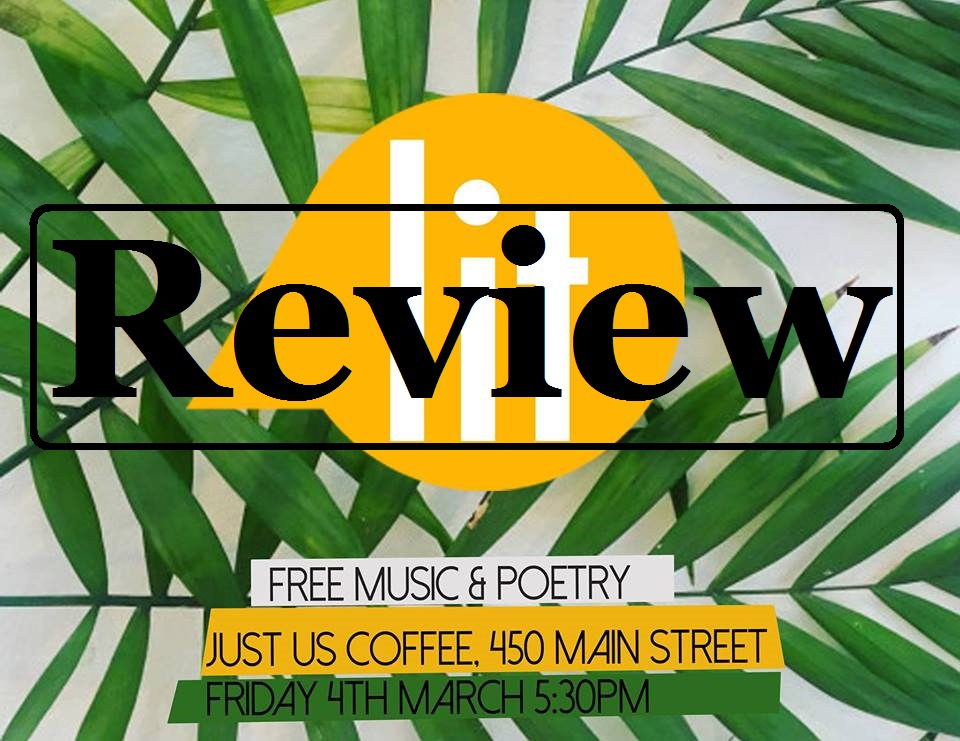
    I have to get this off my chest – LIT (Laugh, Inspire, Talk) was amazing. This singing and spoken word event intended to brighten our lives during winter time happened last Friday. It was hosted by the very talented Cazna Hinds. Hinds is an amazing singer, but LIT showed some of her other talents as well. The exciting and festive event was Hinds’ enterprise project for both her ECON 3883 and MUSI 2903 classes. I think that her teachers should give her an A on the project for effectively hosting an event full of talented singers, rappers, and poets.

    With an unbiased opinion (mind you – I performed at the event), I recall some of the best performances and some of the most interesting performances. It’s hard to say who was the best performer, but I got to give it to my girl, Cazna Hinds. She planned on performing two songs, but because the crowd loved her so much she pulled it together and performed the last song of the night, “Listen.” This was a song recorded by Beyoncé, and as we all know it takes a lot of talent to master Beyoncé. Hinds had the talent! However, let’s not get carried away and think this entire event was about her. There were other performers as well.

    The most memorable performance from LIT was when Budaprince performed. What started out as a poetic retelling of spiritual enlightenment quickly turned into a prayer like hymn. Honestly, it was an experience. At one point I really felt that I was experiencing enlightenment. Budaprince was a singer, a rapper, and a poet that night. I give him the trophy for most memorable performance because I will never forget his act.

    There were so many performances. Sen-Ken performed a sexy duet of Britney Spears’ “Toxic,” while Wambaire sang a Swahili version of Adele’s “Hello.” Chase the Rapper performed an original rap, while Colin Bullard attempted to sing “Living on a Prayer.” There were so many other talented performers. During the intermission period, our MC Khadijah Cooper played an interactive game with the audience. The game was engaging, but it also exposed a lot of truths about the audience. Audience members were asked questions like “would you rather,” or a “what would you do.” No lie, it got very personal very quickly.

    Overall, LIT was a great experience. I had a lot of fun listening to a lot of very talented students singing, rapping, and reciting poetry. Well done Cazna.

  • Apple Scruffs: The Best of the Beatles’ solo years

    The Beatles seem to be as popular as ever. While I am not about to call any part of their catalogue underrated, I believe that under the weight of the group’s output, the solo releases of Lennon, McCartney, Harrison and Starr tend to be overlooked. After the 1960s were over, each of these musicians continued to explore new sonic avenues on their own, free of the others’ judgement. This resulted in a wild variety of music, from the fantastic to the terrible. In the early 1970s, all four Beatles had carte blanche to release whatever kind of records they felt like. So they did. Here are the best ones.


    1. Imagine by John Lennon, 1971

    The title track is so overplayed, it’s easy to go into this album expecting a lot of socially conscious balladeering. However it’s one of Lennon’s most comfortably diverse solo records, and the production is phenomenal. Producer Phil Spector adds some surprisingly delicate touches to make each song sparkle in its own unique way. The soft songs (“How?”, “Oh My Love”, and the title track) are lush and intimate, while the rock tunes (“It’s So Hard”, “How Do You Sleep?”) hit hard with the help of brass and strings. Every song on this album is charming and unique. “Oh Yoko!” is a bouncy pop tune that feels almost pastoral with its quaint acoustic guitars and piano. “Gimme Some Truth”, an off-kilter political rant, explodes with classic satirical Lennon fury. Some killer guitar work here, and the best vocal performance on the album. And then there’s my two favourite tracks on the album: “I Don’t Wanna Be A Soldier” and “Jealous Guy”. “I Don’t Wanna…” absolutely drips with reverb, with piano and drums bouncing around what sounds like a cathedral. The unpredictable syncopation of Lennon’s voice adds a lot to this ferocious groove. To me this track sounds like Spiritualized or even Primal Scream, predicting a 90s alternative sound by a few decades. “Jealous Guy” is one of my favourite Lennon songs of all time, and from the opening notes, the airy piano and strings take me to another place. The lyrics are confessional without getting too preachy, and are just as universally resonant as the title track. If you want to hear Lennon exercise his songwriting abilities in a variety of styles, check this album out.

    Listen to “Jealous Guy” and “I Don’t Wanna Be a Soldier”

    If you like this, try: Nilsson Schmilsson by Harry Nilsson, 1971; Goon by Tobias Jesso Jr., 2015.


    1. Ram by Paul and Linda McCartney, 1971

                 Paul took the Beatles’ breakup very hard, but he had the excitement of a new wife and family to fall back on. His debut album McCartney was more of a sequence of loose ideas, probably recorded just to prove to himself that he could defy his own perfectionism. With Ram, the feel is still very loose and domestic, but Abbey Road-esque ambitions start to sneak into play, particularly on the closing track “The Back Seat of My Car” and the mini-opus hit “Uncle Albert/Admiral Halsey”. Similar to Imagine, this album boasts excellence in multiple styles. Mischievously silly rock tunes with nonsensical lyrics (“3 Legs”, “Monkberry Moon Delight”, “Smile Away”, “Eat at Home”) capture McCartney’s musicianship at its most relaxed and intuitive. Then there are more carefully constructed tracks which propel you through musical worlds and atmospheres (all of them whimsical of course). “Heart of the Country” and “Too Many People” are pop standouts, as well as the lush “Dear Boy” and haunting “Ram On”, which bookends the album as a cohesive whole. This album faced harsh criticism in its day for its domestic whimsy (primarily Beatles fans being intolerant of Linda’s presence), but Ram has been thankfully reconsidered in the last decade. Many modern critics hail it as a forerunner of indie rock, and I couldn’t agree more. While many Beatles records take the listener away on a fantasy voyage, Ram celebrates the beauty of staying at home with your loved ones and not giving a damn.

    Listen to “Uncle Albert/Admiral Halsey” and “Dear Boy”

    If you like this, try: Yankee Hotel Foxtrot by Wilco, 2002; The Soft Bulletin by The Flaming Lips, 1999.


    1. All Things Must Pass by George Harrison, 1970

                 George Harrison was a late bloomer as a singer-songwriter. Also there’s the fact that he was still very young when the Beatles took off and he had Lennon-McCartney to contend with. By the time of Abbey Road‘s release in 1969, he was fully emerging as his own artist, and had outgrown the Beatles’ dynamic. All Things Must Pass is the culmination of years of Harrison material spilling out in one go – and it’s all good. This album dives into genres such as country and gospel, and has a lot of highly religious lyrics – all characteristics that I don’t usually go for, but in this context they work perfectly. This album is well known for producer Phil Spector’s ‘wall-of-sound’, but the tracks on here are actually very diverse. Firstly we have the radio hits, “My Sweet Lord” and “What is Life”. “My Sweet Lord” is such a simple idea, but its careful pacing and colourful production make it uplifting and exciting. Then we have what I like to call the “big church songs”: “Isn’t It a Pity”, “Beware of Darkness”, “Hear Me Lord”, and the title track. These tunes are all incredibly dense with instruments, laidback, and anthemic – traits that could easily render a song too bombastic or pretentious. Yet in this case they all sounds beautiful and sincere – these are excellent songs at their core. My personal favourites on All Things Must Pass are actually the smaller, quirkier tunes that I find really fun and hooky. The album opener “I’d Have You Anytime” is so cool and mysterious with changing time signatures and unusual chords, but manages to sound very accessible, thanks to that trademark slide guitar. “Run of the Mill” and “Apple Scruffs” are little chugging acoustic tunes that totally steal my heart away. “Wah-Wah” is an absolute monster of a song (and quite a feat of engineering) that you have to hear to believe. This album is long and heavy, but is paced beautifully that it’s impossible to get tired listening. All Things Must Pass stands huge and mysterious like an ancient temple, holding sounds and feelings that many artists are still chasing.

    Listen to “Run of the Mill” and “Isn’t it a Pity”

    If you like this, try: Fleet Foxes by Fleet Foxes, 2008; Music from Big Pink by The Band, 1968; Blood on the Tracks by Bob Dylan, 1975.


    1. Band on the Run by Paul McCartney and Wings, 1973

                 Band on the Run is Paul McCartney’s attempt at creating a Beatles album all by himself. And does he ever come close. This album has everything you can find on Sgt. Pepper or Abbey Road – adventure, humour, edginess, accessibility, unpredictability, high concepts, and an epic climax. Personally I like to think of this as Abbey Road part 2, except without the other Beatles of course. I feel like McCartney uses so much of that album’s formula to create what he sees as the ‘perfect album’. And by his standards, it is perfect. If you like any of his music, you’ll like all of this album.

     The title track and “Jet” are twin pinnacles of 70s pop glory, simply put. The former is a mini-suite that becomes as natural of a singalong as anything McCartney wrote for the Beatles, while the latter is driving glam rocker with a hint of reggae. “Bluebird” and “Mamunia” are acoustic pieces with unbelievable McCartney melodies. “Let Me Roll It”, “Mrs. Vandebilt, “No Words” and “Helen Wheels” are a collection of rockers one step up from those on Ram, still a lot of fun but much more refined and fleshed out. My favourites on the album are the two last tracks, “Picasso’s Last Words” and “1985”. In “Picasso”, McCartney takes his time with an elegant song and then throws in little reprises of previous tunes – which would have sounded corny if they all weren’t such great songs. Finally with “1985” he delivers perhaps the most remarkable song, and vocal performance, of his career. The climax of this piece is genuinely terrifying, with a clarinet and synthesizer swooping around in front of a rock band and orchestra. Apart from his work with the Beatles, Band on the Run is McCartney’s defining statement as an artist.

    Also – his vocal work on this album is mind-blowing. Check it out.

    Listen to “Bluebird”and “1985”

    If you like this, try: What’s Going On by Marvin Gaye, 1971; Sheet Music by 10CC, 1974.


    1. John Lennon/Plastic Ono Band by John Lennon, 1970

                 Unlike McCartney’s attempts at recreating the Beatles’ sound on his own, Lennon’s first several solo records set out to defy his ex-band’s legacy. This album’s production is as stripped down as possible, with only a few close friends playing as his band: Klaus Voormann (who had designed the Revolver cover) and Ringo Starr. Lennon had been undergoing primal scream therapy at the time, and was on a quest of self-analysis and introspection. Because of this, all of the songs concern his life and the problems therein. The tracks on this album can be mostly put into one of two categories: soft-edged and thoughtful (“Hold On”, “Working Class Hero”, “Love”, “Look At Me”, “God”, “My Mummy’s Dead”) or hard-edged and aggressive (“Mother”, “I Found Out”, “Remember”, “Well Well Well”). Only the track “Isolation” bridges these two sides in one track. My interpretation of these two categories is that they represent the dual nature of Lennon’s personality as he explores the full range of his emotions. As you’d expect, all of this makes for a very intense and jarring listening experience – but also captivating and incredibly human.

    The album’s pacing works as a chronological tale of Lennon’s life as well, with him singing about his parents in the opening “Mother” and then culminating in his maturing and denouncing everything around him but himself in the epic “God”. The album then comes full circle with the brief closer “My Mummy’s Dead”, reinforcing just who is the most important figure in Lennon’s life and art. Few pop/rock albums have provided this dramatic of a personal study as John Lennon/Plastic Ono Band. On a lighter note, the music is great. My favourites are two of the smallest tunes, “Hold On” and “Look At Me”, both of which feel as though Lennon had just stepped into a room and casually started picking away at a guitar. For anyone who is interested in his music, this album is essential listening.

    Listen to “Isolation” and “I Found Out”

    If you like this, try: After the Gold Rush by Neil Young, 1970; Nevermind by Nirvana, 1991; In the Aeroplane over the Sea by Neutral Milk Hotel, 1998.

  • So Help Me God / Swish / Waves / Untitled: The West Side Story

    There often comes an awakening during the damned humdrummery of human existence that jolts us out of this precondition (at least for a little while). For me it will be when Kanye West’s new album — tentatively titled “Waves” — drops. I’ve written an article in the past in defense of Kanye West, and I would like to add another notch to the proverbial bedpost. West has been teasing this album for a few months now, dropping non CDQ clips, live performances, and even music videos of songs that had a slight possibility of being in the album. I was enthralled by two in particular: “Real Friends” and “No More Parties In L.A.”

    Real Friends

    There’s something very Kafka-esque about this song. Perhaps it’s about the inability to escape the vicissitudes of fame and its ability to engulf everyone around you, turning them into adversaries. The song is eerily reminiscent of the painting “A Bigger Splash” by David Hockney. It’s a looking glass into Kanye’s past. Seemingly static, yet tinted with murky undertones. However, the song still manages to be “present.” There’s a vivid phantasm that Kanye manages to construct with the beat. One of a late-capitalist nouveau riche L.A love story; parties littered with drugs, humidity enveloping every inch of a body lying by the pool, and a drive down the city as the tires skid weightlessly. All these — I feel — are tenuously held together by a transient string. This song is the string.

    No More Parties In L.A.

    The song starts off sounding like a mix of Gospel music and Funk. Not all of it is eschewed as Kendrick Lamar steps up to the microphone (although a darker, funk driven beat is favored). Lamar spits an extraordinary verse as per usual, but surprisingly Kanye manages to outshine him. Lyrically, Kanye delves into the polarity between poverty and wealth, exhibiting a more lucid flow than the Kanye we’re used to. As those of you who’ve taken the time to listen to his past work probably know, he’s pretty mediocre in terms of lyricism and technical ability. But in this song, he holds up a veneer of impressive technical prowess.

    Time will tell whether this album turns out to be one of Kanye West’s best works or sub-par overtly iconoclastic preachy trite. I say this only because Kanye is at a point in his life he’s never been before: he’s happy. In the waning paradisal years of his life, he has managed to find the woman of his dreams and has had two children that he (probably) loves as much as he loves himself. It’s the archetypal success story, and at this point the curtains drop and the credits roll. Although I would like to say with temerity that this album will be another phenomenal description of the intricacies of fame and capitalism — I have to waiver on the slight possibility that contentment may have led to complacency.

  • The Sylvia Platters: Make Glad The Day

    The Sylvia Platters: Make Glad The Day

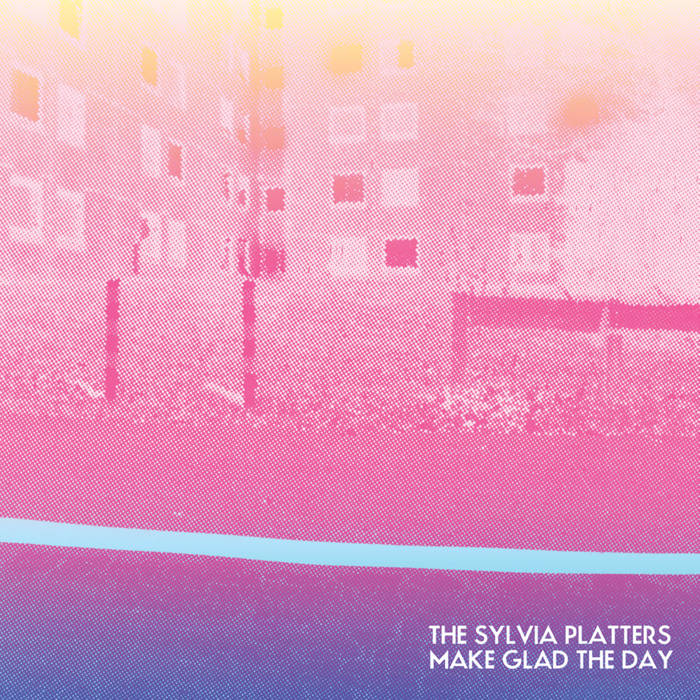
    The Sylvia Platters are a power pop trio from Vancouver, British Columbia. Self-described as a “a power pop band inspired by the brevity of Guided by Voices, the loud-quiet dynamics of Mikal Cronin, and the punk playfulness of The Replacements,” they have recently released an album titled Make Glad The Day, and before I start off with the review, I would like to apologize for my lack of knowledge of the nuances and intricacies of power pop.

    The press manifesto describes the album as a way “to turn life’s string of ephemeral moments, jobs, ideas, and relationships into something meaningful.” I really do get what they are going for here. There’s an offsetting – yet endearing – je ne sais quoi. Amalgamating – so beautifully – the jarring disconnect of an urban life, and life’s inanity. In essence, it’s a love letter: a letter so abrasive and standoffish, that it becomes so blatantly apparent that it is merely a theodicy for a city. This is where I really get the album: it is equal parts meaningless drudgery, and equal parts a chokehold on vacuous happiness that is slowly coming loose. Because no matter how tightly it is held onto, it manages to become a completely different entity. All of this is packaged into a compact, half-hour runtime spanning fourteen tracks. Sonically, it hits like a wall of sound, incorporating elements of punk, shoegaze, and glam rock. The medium is concerted with the message. Do not mistake the rhythmic power pop sound as an undercut of the true message of the album. It bobs on vicious vitriolic vindication.

    My praise is not to say that it doesn’t have its imperfections. Sometimes the songs meld into one. While I can hear the influences of Cronin and the Replacements in the songs (especially in drum heavy sections), the variance between the songs tends to be low. While the songs do hit like a wall of sound, it is difficult to differentiate between the walls. They’re all painted the same way. In a way it becomes referential to itself, a triptych of the same salient walls of sound. It’s influences crack around the edge. Leaving the album desperately clamoring to find a voice of it’s own – an entirely new one that effectively communicates a melancholic topic without leaving it a lumbering mess of heyday referentialism. The Sylvia Platters have yet to hit that spot, but it is excusable for their debut.

    Prima facie, this album was a wholly enjoyable ride. It’s laden with some eerily relatable emotions, and the lyrical content is of a caliber that is extremely deserving of the 21st century schizoid man. A pigeon lost between granite graveyards, and bills, and work. Yet the album strives to not be bleak; it’s fun, and it’s fast. I do have some problems with differentiating between the band and their influences. But in due time I do expect them to find incredible footing, and a unique voice that laments with apparent glee.

    My Rating: 7.5/10

    Listen to Make Glad The Day

  • 5 mins Into Netflix And Chill and He Gives You His Mixtape

    5 mins Into Netflix And Chill and He Gives You His Mixtape

    The summer came and passed, akin to a crop burning. Did you pay too much attention to Drake and Meek Mill? Probably. Catch up with this list of music that is good. Moving forward, listen to Hotline Bling and the newest track by Partner from Sackville, NS (on You’ve Changed Records).

    Mauno – Rough Master

    maunoHere comes Mauno bopping along, bonny and blessed. A wee bit of sound, growing undeniable, emitting from a babby (like a baby, but possessing many more of the better qualities of an infant) carriage, snaps to a point and crashes only to be rebuilt into a tower of babel. The mastery in craft is not lost on those who build for joy, not for monotony. And like a phoenix rising from the ashes, they make a Rough Master and people really like it so they make more and that is cool too.

    Top Track – Champs

    Listen to Rough Master

    Tasseomancy – Palm Wine Revisitedtasspalmwine

    Holding candles and praying to the god that holds in its hands a lipid pool of purple lust. Induces a trance, flipping back white hoods to reveal a face swirling with suggestions born of the hallucinations of night. More synth than person they waltz suggestively, Tasseomancy, born tasseomancers, cast forward to the future calling on the soon-to-be-consumed jugs of wine to be now consumed. Shoulders sway, hips gyrate, standing in a circle as the drums are hit close to home. The Palm Wine Revisited, the trance forever.

    Top Tracks – Apophenia, Braid. Wind is Coming

    Listen to Palm Wine Revisited

    Klarka Weinwurm – Huddle

    huddle

    Two lovers grasp hands for the first time and feel the bliss of conjoinment. Klarka Weinwurm holds the voice, conjoining with the guitar, becomes an embrace of love. There is some heat here, some nervous sweat, and a lot of joy. Get a little bit closer for warmth, a little Huddle if you will. Sway and hum to a tune in your head. Think about where you are going and where you have been. Be at peace and grasp with the intention of love.

    Top Track – Deathrow Tull

    Listen to Huddle

    i hate sex – Circle Thinkingcirclethinking

    Through static, erected by our own sense of comfort, i hate sex screams. We get lost in a mire, bogged down by feelings, doubts, and sadness trying to swim to a surface. But up is not the only way out and Circle Thinking proves that. Swinging through we hit stone walls that turn to dust at our touch, say some things that we should have said a long time ago, and feel some static replaced by contentment.

    Top Tracks – One by Metallica, I Fucking Hate Sports

    Listen to Circle Thinking

    Harley Alexander & The Universal Lovers – Gold Shirt

    goldshirt


    A little breeze tickles your fancy, rustling through the laundry hanging on the line. The air manifests, a swaying, swinging breeze person. The boogie is here to stay, never go away, never let these nights end. A love song to Halifax sung by Harley Alexander, supported by The Universal Lovers, and do they ever make love. Hips, lips, and tips, all over the Gold Shirt. It dances with the wind all night long, laying to rest in a bed of clouds.

    Top Tracks – Trust, Runnin Thangz

    Listen to Gold Shirt

    Crosss – Lolo

    A court jester, poison in the ear of the king, whispers in riffs as heavy as the weight of duty. Crosss holds scepters and passes judgement in a voice long and droning, stiffened by history and cemented in melody. The weight of Lo is immense like a nail forced through a barren mountain, driven by a hammer of godly might. It fails to tug at the heart strings but instead ties weights and spreads the most catastrophically serene aural defilement.

    Top Track – Interlocutor

    Listen to Lo

    Scott Nicks – String of Dreamsscotnicks

    Like a crooner in an undersea lounge, Scott Nicks warbles and floats between the safety of air and the dangers of drowning. It is damp, and Nicks bobs and weaves, both a navigator and instigator. String of Dreams is a remnant of sleep, it is peering outside of a window at the rise of the sun and remembering it all. All the joy, bliss, and confusion. A perfect marriage of pop-rock sensibilities and melodies with the vast space of psychedelia.

    Top Track – Mumble

    Listen to String of Dreams

  • Amy

    Amy

    A few years back, I had never heard of Amy Winehouse before. Yet I distinctly remember the day of her death, as if I had been a fan my whole life. Although I didn’t feel the sadness or importance of her passing at the time, I can honestly say that I now understand completely the devastation around the world that came with that tragic day.

    This year, from the award winning team behind last year’s hit documentary Senna, comes the critically acclaimed documentary detailing the life of Amy Winehouse told through her eyes. Directed by Asif Kapadia, Amy is not a typical bio-documentary; instead of the typical mirage of interview footage with various family members, friends, and record producers, the focus is on Winehouse herself. A massive amount of research went into finding archive footage, homemade videos, unseen concert footage, and even recordings of previously unheard/unreleased tracks. In this way, Kapadia has produced a unique experience in that we get an unparalleled glimpse into the raw emotions and hardships of Winehouse’s life.

    The documentary is an emotional rollercoaster of joy and grief, an exploration of pop-culture, fame, and drug abuse. One might even argue that the media and her rise to fame killed her. As tragic a point of view as that is, Winehouse is shown saying she does not want to be famous many times, almost too many. For her, obscurity would keep her sane, as she would go crazy from fame. Consumers didn’t listen, and the result may have been her death.

    In addition to the powerful story of media frenzy surrounding her rise to fame, and the emotional story of her romantic relationships, there is the drug and alcohol narrative. In some ways, one could say this documentary is an anti-drug film. Alcohol and drug abuse played a monumental part in Winehouse’s life, and this is not lightly skimmed over by Kapadia. A juvenile detention centre in Thailand has recently taken to showing Amy as an anti-drug film to inmates in the hopes that it might dissuade them from a life of addiction (The Guardian, 2015).

    Kapadia’s film, which became the second-biggest documentary ever in UK cinemas this past summer, has been critically acclaimed around the world after its screening at the prestigious 2015 Cannes Film Festival. Surprisingly, negative comments from Amy Winehouse’s father Mitch Winehouse came forth after the release. There was tension between him and the crew during production due to disputes over his negative portrayal in the film. According to the director, who was dedicated to a truthful telling of the jazz legend’s life, nobody did anything about Amy’s addictions and problems which ultimately resulted in her untimely death.

    Asif Kapadia’s Amy is unique in the documentary genre for its intimate and unusual style of editing. No interview footage is ever shown; interviews are instead heard as background to home video shot either by Winehouse or her friends and family. In terms of music, this documentary is almost a musical. Through the clever placement of songs (previously released, and new), a deeper understanding of the story behind each song is possible, and therefore a must deeper and emotional connection to the subject is established. By the end of the roughly two-hour film, I cannot help feel deeply moved and saddened by this masterpiece of filmmaking and music. This is the story of an incredibly talented woman who was vulnerable and humble. Her talent gave her the attention she never desired, and as a result of the fame and ensuing media frenzy she took to alcohol and drugs (with heavy influence from romantic partners).

    As a recent fan of Amy Winehouse, this film has shed light on her life and her incredible talent for me that I had no knowledge of, and gave me a newfound reverence for her and her music. Asif Kapadia has created a film and music story that is passionate, intimate, and honest. It is a beautiful and heartbreaking tribute to the great Amy Winehouse.


    Director: Asif Kapadia

    Starring: Amy Winehouse, Yasiin Bey, Mark Ronson, Tony Bennett, Mitch Winehouse

    Runtime: 128 minutes

    Release Date: July 3, 2015

    MPAA Rating: R (for language and drug material)

    My rating: 4.5/5 stars

  • Oh Wonder: Album Review

    Oh Wonder: Album Review

    London based duo Oh Wonder released their self-titled debut album on September 4th. And in short: it is exquisite. From the stripped down tonal approach to the sound production, the lush allure of Josephine Vander Gucht’s voice, and the hazy dream-pop feel that accompanies most of its content. It’s the type of music you listen to as you hold someone and dance lazily as the night wanes into day. Oh Wonder adopts the mien of someone very idealistically and unequivocally in love – rhythmic poetry in motion whilst ruminating on the failures of romance. An apt example would be in the song Dazzle: “Golden grill of sadness / smell like wasting youth / Always end up like this / Always gonna lose,” they talk about love as if it were a casino game – a deceit of youth, and it’s willful inability to accept the shortcomings of the fantasy that is love. It is this reality that the album tries to strike a chord with; idealism and reality – the duality of romance. And it does so quite successfully.

    That is not to say that it is not bogged down by a strict adherence to this idea. The songs tend to stay rigidly formulaic within the domain of this duality, foregoing the exploration of facets that also accompany the tumultuous modern day relationship. Ironically: they try to create something highly eclectic while producing their music, and yet it is the same formulaic quasi-eclecticism that prohibits them from achieving something truly exceptional. The duo (Josephine and Anthony) have the formula for a luscious synth-pop album locked down, but they do not vary it. They derive too much of their music from their own music. The only variance we get is the change of the duality, from something ethereal to something discarded in the gutter. The discord between the way the band feels: they are either wholly in love or and an engaging in idealistic drudgery about love (in songs like Livewire, Shark, or Body Gold), or cynical iconoclasts swimming against the fervent tide of idealism that they created.

    I do applaud them on the inventive method they used to release the album (and it may also act as a justification for the jagged flux of the songs), as they released a song every month for the preceding year as a build-up to this album. Out of the fifteen songs in this album, thirteen of them had been released over the preceding year. This could be the pivotal reason the album does not meld together into a beautiful flow.

    In summation, Oh Wonder’s debut is an apt musical description of love: marred with melancholia and lifted with glee. It is an eclectic work of art, although at times it tends to borrow heavily from itself and remain rigidly formulaic. But in the end, its peaks exalt this album, and this is enough to overcome the nadirs. I would highly recommend giving this album a listen. Rejoice in the idealism, and wallow in the cynicism.

Betzillo positions itself as a versatile gaming hub where structured bonuses and adaptive gameplay mechanics support both short sessions and extended play.

Built with a focus on innovation, Spinbit integrates modern casino architecture with rapid transactions, appealing to players who value speed and digital efficiency.

Ripper Casino emphasizes bold entertainment through high-impact slot titles and competitive promotions crafted for risk-oriented players.

A friendly interface and stable performance define Ricky Casino, offering a casual yet reliable environment for a wide spectrum of gaming preferences.

King Billy Casino channels classic casino spirit into a modern platform, delivering recognizable themes supported by contemporary reward systems.

Immersive visuals and layered slot mechanics are at the core of Dragonslots, creating a narrative-driven casino experience.

Lukki Casino appeals to players seeking direct access and minimal friction, focusing on fast loading times and intuitive controls.

Casinonic provides a structured and dependable gaming framework, blending modern slots with transparent operational standards.