Year: 2023

  • My Dear

    My Dear

    Photo by Benjamin Davies via Unsplash

    My Dear, what has happened to us 

    The blistering dawn begins without you

    velvet curtains that held are now torn down

    My life can finally begin anew 

    Now your hat from its hook, out of this town

    You were once someone who brought great solace 

    your arms held me, weathering many storms

    the mask broke, leaving lawless bruises

    your anger growing, taking many forms 

    My house became not a home anymore 

    with your sour breath, in the bed, on my back

    your face became something I now abhor

    now under the floorboards lay my rust-sack

     Running away was my new fantasy

    Reality, a maggoty body


  • Meta’s Attack on Journalism is Strangling News Creators in Canada

    Meta’s Attack on Journalism is Strangling News Creators in Canada

    Photo by Marek Pospisil via Unsplash

    Receiving news in Canada has gotten considerably harder in the past few months. Meta, the company with ownership in Facebook and Instagram, is blocking Canadians from viewing news stories on their platforms. 

    The news ban, which started on Tuesday, August 10th, means that Canadians can no longer view, share, or click on links to news stories. 

    The ban is universal and will affect almost every Canadian on Meta’s social media platforms. Meta has stated that their interpretation of what qualifies is based on definitions provided in the legislation, which is a response to a bill that the Canadian Government passed, defined as the “Online News Act.” 

    This bill forces major social media companies such as Facebook and Instagram to compensate news organizations featured on their respective platforms. Meta hopes that by restricting the Canadian people and limiting access to news content it will pressure the Government of Canada to change its official position in respect to the ban.

    Small and independent publications are being hit the hardest by the news ban, especially Canadian student lead newspapers. The Athenaeum, Acadia University’s student-run newspaper, for instance, has been greatly affected by this ban. Our team, and many others across Canada, have lost the ability to use our original Instagram as a repercussion of the ban, which has disconnected us, and many other papers from their readers. 

    Posting to Instagram allows news creators to keep a communication center with the general public, which can go further for reaching their audience than going to their website. Social media for news creators not only allows reporters to connect with the public more easily but also to make sure the public receives the information most important to them, which could include essential community information.

    The disruption in news for Canadians’ feeds will result in fewer opportunities to be informed by accurate news stories. If news is not spread on social media, what is being spread in its place? 

    Misinformation is already common on social media. While taking a voice away from journalists and news organizations, the ban could allow misinformation to spread like wildfire. Not only that, but the resurgence of hate against marginalized groups is heavily affecting our communities. If social media companies do not take appropriate action, and place a ban upon the professionals who try to, one must wonder why Meta does not want news on its platforms.

    Meta itself only acts in a very limited manner when responding to misinformation. 

    Often, people go to social media to discuss news events, and it has become a public forum where citizens can share their voices, connect, and organize with their fellow citizens. With the loss of these news organizations on social media, misinformation will take over platforms.

    During the pandemic, Meta platforms were a hotbed for COVID-19 conspiracy theories. Meta’s own Oversight Board has warned Facebook about the impact of Facebook’s recommendation algorithm amplifying dangerous health-related information. Meta has stated that the bill “Misrepresents the value news outlets receive when choosing to use our platform.” The company claims news organizations voluntarily share their content to grow their audience. 

    Google has also dug in its heels with the legislation. Kent Walker, the Global Affairs president of Google claims the Online News Act is “unworkable.” The company claims the bill opens Google up to uncapped financial liability even though Google made almost $60 billion in net profits in 2022. 

    In California, the government considered a similar bill entitled the California Journalism Preservation Act. However, in response to early pressure from the social media company, the California government has put off the legislation until 2024. 

    The Canadian Government has made comments on Meta’s action but as of so far no concrete action has been taken. The Minister of Canadian Heritage Pascale St-Onge has responded to Meta’s actions, calling them “irresponsible,” and that Meta’s policy would “Block their users from accessing good quality and local news instead of paying their fair share to news organizations.”

    The leader of the opposition, Pierre Pollievre, stated in response to Meta’s actions: “Who would ever have imagined in Canada the federal government would pass laws banning people from effectively seeing the news?” 

    Despite this, the federal government’s bill would not ban news in Canada. It would ensure fair revenue sharing between platforms and news organizations, and provide a framework for news organizations and platforms to reach an agreement.

    Canada is in good company in its troubles with Meta. The social media company set its sights on Australia in 2021. The Australian government had passed similar legislation to Canada which required corporations to pay news creators. Although an agreement was reached after a week, corporations could get around paying independent news creators if they signed enough separate deals with media companies themselves. These deals reportedly reached $200 million in value and included over 30 commercial agreements. 

    This solution may not be possible in the Canadian context. Unlike in Australia, the Canadian Government’s legislation has already passed and will take effect by the end of the year. Meta is especially frustrated with the section which stipulates that they would have to pay creators directly when someone gets to a story through their social media platform. Less and less money is being poured into the news. Online ads can only do so much, and physical editions are not what they used to be. This money is needed to keep the news alive and healthy, which these corporations have the money to pay for.

    Overall, the government’s main goal of the bill is to strengthen the news ecosystem in Canada. The bill comes at a time when news in Canada continues to shrink. One of Canada’s biggest papers, the Toronto Star was almost bought by Postmedia. 

    Postmedia owns multiple newspapers in Canada, such as National Post, Financial Post, Calgary Herald, and the Vancouver Sun amongst others, which all lean politically right in their news coverage. Readers of the Star were worried that one of Canada’s only remaining leading center-left publications would have its editorial compromised by post-media acquisition. 

    There has also been notable pressure on CBC as of late. The public institution provides national coverage through every medium including online, television, and radio. Meanwhile, the Star provides essential coverage to communities across the country. CBC is incredibly important for keeping journalism alive and well in Canada, especially in rural areas. 

    Bell Canada Enterprises Inc. owns both CTV and Noovo in Quebec. These companies have united with other private companies such as Rogers (CityTV) and Quebecor (TVA) to pressure the competition bureau to review CBC/Radio-Canada over competition which it claims is hurting their networks. This is to dispute the reality of the billions in profits each of these companies have made. CBC, in comparison, does not operate for profit, instead, it aims to provide news and content for Canadians to enjoy and be informed by. 

    Corus Entertainment (Global News) has responded by a halt in advertising with Meta. It encourages meaningful discussion around the law. 

    A democracy needs a free press to function. Without it, the public can never properly criticize their government. A government that does not rule by the wishes of the people is not responsible. In order for voters to make informed decisions involved in casting their ballot, they must be educated and have kept up to date with information about it. 

    The press has the incredibly important responsibility of holding power accountable. It does this by highlighting the truth. Individual Nova Scotians do not have the time and resources to investigate every meaningful thing that happens in this province. Instead, they need a set of trusted and responsible journalists who will keep the public informed. 

    This harassment of the Canadian press system threatens the structure of Canadian democracy. It risks playing games with voters’ knowledge, which could have disastrous effects next election time. 


  • The Biden Campaign takes new steps to court voters ahead of the Democratic Primary

    The Biden Campaign takes new steps to court voters ahead of the Democratic Primary

    Photo by Jon Tyson via Unsplash

    The 2024 presidential election has kicked off to an energetic start. The Biden campaign has taken the past few weeks to court voters ahead of the Democratic primary.

    On September 20 2023 The Biden Administration announced the creation of the Climate Corp program. 

    The White House states these as the Climate Corp’s current goals:
    “American Climate Corps will put a new generation of Americans to work conserving our lands and waters, bolstering community resilience, advancing environmental justice, deploying clean energy, implementing energy-efficient technologies, and tackling climate change. American Climate Corps members will gain the skills necessary to access good-paying jobs that are aligned with high-quality employment opportunities after they complete their paid training or service program.”
    The decision was made due to the public’s heightened concerns on the impact of the climate crisis; With Summer 2023 being the hottest in human history. 

    The temperature has been increasingly ticking upwards within the past eight years and has quickly become the warmest eight on record.
    Extreme weather events such as floods, wildfires, droughts, etc. are more common due to the global climate crisis. Which are causing increasing amounts of damage to infrastructure, and forests. 

    This past summer, Canada experienced a series of devastating wildfires sweeping across the country. Nova Scotia saw the largest wildfire in its history with over 200 structures destroyed. 

    Various communities are still recovering from both the Shelburne Country and Tantallon wildfires, and over 16,000 people were evacuated from their homes for several days until the wildfires were brought under control.
    Floods were also an ever-present force in the Summer of 2023. Halifax would receive three months’ worth of rain in a single day on July 21st, and up to 600 people were forced to evacuate, as well as 80,000 cut off from power. Three Haligonians lost their lives while fleeing their homes during the traumatic rainstorm: 6-year-old Natalie Harnish, 6-year-old Colton Sisco, and 51-year-old Nicholas Holland.
    The White House states that the end goal of the program will be to train 20,000 young people in clean energy and skills involved in climate resilience. 

    The administration aimed to include the Climate Corp in its earlier proposed Build Back Better Act, which never made it out of Congress. Instead, congress settled on the Reduced Inflation Reduction Act, and the Biden administration now through executive order is enacting the policy.

    The Climate Corps is inspired by the Civilian Conservation Corps (CCC), a policy established by President Roosevelt’s administration. The CCC focused on providing income to unemployed, unmarried men from the ages of 17-28.
    The CCC was a major part of Roosevelt’s New Deal program aimed at curbing the Great Depression. 

    Although direct cash payments were made to families under the previous administration, the Roosevelt administration decided to create jobs to fill. 

    The creation of the CCC was more costly than direct cash payments; however, its psychological benefits were massive. The overall goal of the program was to help poorly educated individuals find a purpose in life. 

    Young men would be provided housing, meals, workwear, and medical care in exchange for their work in national forests and other government properties. 

    The American public would sign up for the CCC in large numbers making it the most popular of the New Deal programs. The public’s increasing outdoor awareness and knowledge of the country’s natural resources would prove to be a major success of the program. Participants’ morale and overall physical condition improved drastically. 

    The New Deal programs, however, are somewhat tainted by the racist history associated with Democratic politics at the time. Due to the majority of the Democratic party deriving from the conservative southern states they demanded the programs to be racially segregated. African-American communities notably received fewer benefits than white communities in the New Deal programs. The director of the program refused to appoint African Americans to leadership positions.
    As Biden tries to court young voters into his base, the issues aforementioned are increasingly becoming aware among the public. In 2020, youth voters were essential to Biden’s victory, with  65% of individuals aged 18 to 24 having voted for Biden in the election. having played a critical role in victories in battleground states such as Georgia, and Pennsylvania. 

    Young people have been growing increasingly disenfranchised from politics. Politico finds that voters under 30 are currently less likely to Democrats as compared to 2019;

    Instead, young people are more often identifying as independent and few see politics as a way to make meaningful change.
    Young voters have been extremely concerned with issues on climate, abortion rights, and the rights of LGBTQIA2S++ people. 

    Many young individuals have been worried about supporting the incumbent President because the rights of Queer people have been often trampled on by state governments as well as the Biden administration’s approval of the controversial Willow project.
    It will have to be seen if the Climate Corp can launch the first step into a Green New Deal which has been championed by progressives. 


    This is not the only action the Biden administration has made to court voters in recent weeks.

    Last Tuesday afternoon President Joe Biden joined striking workers on the U.A.W picket lines. Biden becomes the first sitting president to join a picket line, Biden greeted workers at the Belleville Michigan General Motors Redistribution Center.


    Biden signaled record profits achieved by the Big Three U.S. Automakethroughing through a bullhorn “The auto industry is doing incredibly well, You should be doing incredibly well, too”


    UAW has been on strike since Sept 15 and involves involved 18 300 workers. This is 12.5% of UAW member’s labour contracts that expired on September 14th. 

    The White House originally sent two senior officials to Detroit however late last week the President asked to join the picket line. 

    Biden’s support for the strike backs up his claim that he is the most pro-union President in history. 

    Former President Donald Trump has also visited Michigan in response.

    The two will most likely battle for the Midwest in the 2024 Presidential election.

    In the past two elections the Midwest has been an incredibly important gateway to victory with Trump taking it in 2016, and Biden in 2020.
    Trump comes despite union leaders warning him to stay away, Trump claims to be pro-workers however as President he implemented policies that directly worked against union members.
    Trump’s remarks will be given at a non-union shop.


    Biden has painted himself to be the champion of young people, and the working class. Time will tell if he can fulfill these promises.


    Previously Presidents have been involved in union activity. Franklin Roosevelt’s Labor Secretary Frances Perkins worked with strikes. 

    She served as the United States Secretary of Labor from 1933 to 1945 and emphasized labor issues in the Roosevelt administration.

    The Labour Department would mediate strikers via the United States Consultation Service.

    Previous to Franklin, Teddy Roosevelt would invite union and business leaders to the White House in 1902 to arbitrate a deal.


    All eyes are on the candidates to figure out what is next for the 2024 Presidential Election.


  • National Day for Truth and Reconciliation

    National Day for Truth and Reconciliation

    Today, September 30th, 2023 marks Canada’s Third National Day for Truth and Reconciliation.

    The Athenaeum wishes to call attention to Indigenous voices on this day and ask its readers to engage in a process of reflection surrounding reconciliation.

    The June 2021 declaration of the holiday came after the discovery of unmarked burial sites on the grounds of residential schools. 

    These schools existed to assimilate and erase Indigenous culture and must be seen as cultural genocide. More than 150 000 children were stolen from their families. It is estimated that more than 6000 children died.

    Conditions in these schools were both physically and sexually abusive with thousands of children never returning home. Across Canada, there were 139 residential schools in use, in which the last closed in 1998. 

    National Truth and Reconciliation Day provides an opportunity for Canadians to reflect upon their history and culture. Reconciliation must be done together as a community and it must involve every citizen. Only through respect and meaningful action can we strive for a more equitable society. 


    The Truth and Reconciliation Commission outlined 94 calls for action that governments, businesses, and people can take they include but are not limited to:

    Child Welfare

    We call upon the federal, provincial, territorial, and Aboriginal governments to commit to reducing the number of Aboriginal children in care by:

    •  Monitoring and assessing neglect investigations. 
    •  Providing adequate resources to enable Aboriginal communities and child-welfare organizations to keep Aboriginal families together where it is safe to do so and to keep children in culturally appropriate environments, regardless of where they reside.

    Education

    • We call upon the Government of Canada to repeal Section 43 of the Criminal Code of Canada. 
    • We call upon the federal government to develop with Aboriginal groups a joint strategy to eliminate educational and employment gaps between Aboriginal and non-Aboriginal Canadians.

    Language and Culture

    • We call upon the federal government to acknowledge that Aboriginal rights include Aboriginal language rights.
    • We call upon the federal government to enact an Aboriginal Languages Act that incorporates the following principles.
    • Aboriginal languages are a fundamental and valued element of Canadian culture and society. There is an urgency to protect them.
    • Aboriginal rights are reinforced by Treaties.
    • The federal government has a responsibility to provide sufficient funds for Aboriginal language revitalization and preservation.

    Health

    •  We call upon the federal, provincial, territorial, and Aboriginal governments to acknowledge that the current state of Aboriginal health in Canada is a direct result of previous Canadian government policies, including residential schools, and to recognize and implement the health-care rights of Aboriginal people as identified in international law, constitutional law, and under the Treaties. 
    • We call upon the federal government, in consultation with Aboriginal peoples, to establish measurable goals to identify and close the gaps in health outcomes between Aboriginal and non-Aboriginal communities publish annual progress reports, and assess long-term trends. Such efforts would focus on indicators such as infant mortality, maternal health, suicide, mental health, addictions, life expectancy, birth rates, infant and child health issues, chronic diseases, illness and injury incidence, and the availability of appropriate health services.

    Justice

    •  We call upon the federal, provincial, and territorial governments to recognize as a high priority the need to address and prevent Fetal Alcohol Spectrum Disorder (FASD), and to develop, in collaboration with Aboriginal people, FASD prevention programs that can be delivered in a culturally appropriate manner. 
    •  We call upon the governments of Canada, the provinces, and territories to undertake reforms to the criminal justice system to better address the needs of offenders with Fetal Alcohol Spectrum Disorder (FASD), including: 
    • Providing increased community resources and powers for courts to ensure that FASD is properly diagnosed and that appropriate community supports are in place for those with FASD. 
    • Enacting statutory exemptions from mandatory minimum sentences of imprisonment for offenders affected by FASD. 
    • Providing community, correctional, and parole resources to maximize the ability of people with FASD to live in the community. 
    • Adopting appropriate evaluation mechanisms to measure the effectiveness of such programs and ensure community safety. 
    • We call upon the federal government to eliminate barriers to the creation of additional Aboriginal healing lodges within the federal correctional system.

    Reconciliation 

    •  We call upon federal, provincial, territorial, and municipal governments to fully adopt and implement the United Nations Declaration on the Rights of Indigenous Peoples as the framework for reconciliation. 
    •  We call upon the Government of Canada to develop a national action plan, strategies, and other concrete measures to achieve the goals of the United Nations Declaration on the Rights of Indigenous Peoples. Royal Proclamation and Covenant of Reconciliation 
    •  We call upon the Government of Canada, on behalf of all Canadians, to jointly develop with Aboriginal peoples a Royal Proclamation of Reconciliation to be issued by the Crown. The proclamation would build on the Royal Proclamation of 1763 and the Treaty of Niagara of 1764, and reaffirm the nation-to-nation relationship between Aboriginal peoples and the Crown. The proclamation would include, but not be limited to, the following commitments:
    • Repudiate concepts used to justify European sovereignty over Indigenous lands and peoples such as the Doctrine of Discovery and terra nullius. 
    •  Adopt and implement the United Nations Declaration on the Rights of Indigenous Peoples as the framework for reconciliation. 
    •  Renew or establish Treaty relationships based on principles of mutual recognition, mutual respect, and shared responsibility for maintaining those relationships into the future.

    Equity for Aboriginal People in the Legal System 

    •  In keeping with the United Nations Declaration on the Rights of Indigenous Peoples, we call upon the federal government, in collaboration with Aboriginal organizations, to fund the establishment of Indigenous law institutes for the development, use, and understanding of Indigenous laws and access to justice in accordance with the unique cultures of Aboriginal peoples in Canada.

    We encourage readers to read the full document which can be found here: https://www2.gov.bc.ca/assets/gov/british-columbians-our-governments/indigenous-people/aboriginal-peoples-documents/calls_to_action_english2.pdf


    Today Canadians wear an orange shirt in a show of solidarity. 

    The Orange Shirt Day is a movement started by Phyllis Webstad from Stswecem’c Xgat’tem First Nation. Forty years ago she arrived on her first day of school wearing a new orange shirt. It was bought by her grandmother for her. It would be stripped from her and confiscated by school staff.

    The movement highlights the idea that Every Child Matters and aims to honor those who had their freedom, and culture unjustly ripped from them.

    We applaud the efforts of students in the Shubenacadie region. 4 schools in the area created a heart by using hundreds of orange flags. This act offers a healing symbol and raises awareness of what happened at the school. The community approach of learning together and taking meaningful action is a positive step in the right direction.

    Although Canada has made progress in the last few years there is still much to do. Treaties have to be honored and respected. The truth of residential schools must never be forgotten. We must empower survivors, Continue to search areas, and we must not stop until every child has been found and honored. Indigenous peoples’ contribution to this country and history must be taught and honored.

    We encourage readers to search out Indigenous-made content today and every day. 

    See the list of links below for further information on Truth and Reconciliation.


    Websites:

    The National Center for Truth and Reconciliation is a place of learning and dialogue that highlights the truths of Residential School Survivors.

    https://nctr.ca/

    The Government of Canada’s webpage on the Truth and Reconciliation Commission of Canada. 

    https://www.rcaanc-cirnac.gc.ca/eng/1450124405592/1529106060525

    The Indigenous Peoples Atlas of Canada is a collection of Indigenous knowledge from the statements of residential school survivors.

    https://indigenouspeoplesatlasofcanada.ca/section/truth-and-reconciliation/

    The Assembly of First Nations is an advocacy organization that is mandated by resolutions passed by an Assembly of First Nations people.

    https://afn.ca/community-services/education/

    Statistics on First Nations youth expenses and outcomes in secondary and postsecondary learning. 

    https://www150.statcan.gc.ca/n1/pub/81-599-x/81-599-x2023001-eng.htm


    Books:

    We Were Not the Savages by Daniel N. Paul

    Braiding Sweetgrass by Robin Wall Kimmerer

    NDN Coping Mechanisms by Billy-Ray Belcourt

    A Mind Spread Out On The Ground by Alicia Elliot

    Hope Matters by Lee Maracle

    21 Things You May Not Know About the Indian Act: Helping Canadians Make Reconciliation with Indigenous Peoples a Reality. By Bob Joseph


  • A Little Package from Home

    A Little Package from Home

    Photo by Benjamin Disinger vis Unsplash 


    The hole at the bottom,

    end of the road, a fiery kilm.

    Chip near the tail,

    pilgrimages in tattered UPS boxes.

    Every US State in a beige rundown van,

    trying to settle

    a three-stair bungalow, shag carpet,

    decades-old clutter

    to

    smooth, newly built, modern

    and a decorative art pale blue vase.

    Making bedsides look like something out of

    MOMA.

    Dust still travels,

    from place to place

    scrubbing it down,

    no way to wet wipe the past.


    It was a joke

    over your head,

    the made in america stamp at the bottom.

    Hidden from view,

    sitting on its origins,

    stars and stripes,

    missing something critical.


    Three key events

    in the making of the sculpture,

    explain the reason for its creation,

    why the joke goes over your head.

    What makes it critical:


    One: Creation.

    Muddy brown,

    seen on the cuffs

    ordinary green uniforms,

    and staining the soles

    of black issued boots.

    Rains create the muddy brown,

    rarity in California,

    like squirrels in Joshua tree.

    Devised from the cracked earth

    and biblical rain,

    black eyes, little bits of silver,

    like bullet casings,

    or dog tags.


    Two: Ownership

    hands clutching it,

    Covered by tan dust.

    Hard little sculpture

    sold in a gift shop,

    passed around, and around

    in a parking lot.

    Squirrels are Sociable,

    traveling from a home to a van,

    bed to bed,

    grease finger prints,

    pink marker smudges on the tail.

    ceramic squirrels chip when to amicable,

    when too many hands reach,

    when they were meant for one.

    Almost shattering at kitchen tables,

    from a lack of care.


    Three: Unearthed

    a little package,

    plastic peanuts and bubble wrap.

    Peel back the layers until we found

    the earthen object.

    Determined to make it north,

    a past of Joshuas and cracked earth,

    clutter and bungalows,

    dollar bills and

    prayer beads,

    a brokedown van in Tennessee.

    A little bit closer.

    to home.

  • Parker V. Parker

  • An Interview with Acadia’s President Jeff Hennessy

    An Interview with Acadia’s President Jeff Hennessy

    Photo by Daniel St. Louis

    In July of 2023, Acadia University announced the appointment of its next President: Dr. Jeff Hennessy.


    This will begin a six-year term which will see him become Acadia’s 17th President. He will follow Dr. Peter Ricketts, who was Acadia’s President from 2017-2023, and Mr. Ray Ivany, who served as the interim President until August 31, 2023.


    Hennessy served as the Dean of Arts at Acadia between 2014-2019, and previous to that the Director of the School of Music from 2007-2013. During his tenure, he spearheaded innovations in music curriculum. This successfully enlarged enrollment sizes by 30 percent. During his time as Dean of Arts, he led Acadia’s response to the Truth and Reconciliation Commission’s Call to Action. This would be key for developing Acadia’s decolonization strategies.


    Dr. Hennesy comes from Mount Allison University, where he served as the interim President and Vice-Chancellor. During this time he would also chair the Maple League of Universities.

    Dr. Hennessy has emerged as a champion of 21st-century liberal education, focusing on developing critical thinkers and leaders. A key part of his education philosophy is working together in harmony and collaboration.


    Dr. Hennessy holds several academic accolades, including a Doctor of Philosophy from the University of Toronto, a Master of Arts from the University Of British Columbia, a Bachelor of Music from Acadia University, and a Bachelor of Science from Trent University.


    The following is an interview with Dr. Jeff Hennesy.


    MacIntyre: 

    Good afternoon. The first thing I would like to do is welcome you to Acadia. We are very excited for the future of our university. The first thing I would like to ask is what is your immediate message for the university?


    Hennessy:

    I am very excited to be back. Previously, I was at Acadia as the Music Director. I am looking at making the university experience as good as it can be for all of our students. I am looking forward to leading us into the future so that can be the case.


    MacIntyre:

    Love to hear that. Previous to Acadia, you served at Mount Allison as their Interim President and Vice-Chancellor. Something very interesting I saw about that university was their THRIVE program. THRIVE is a foundational year program that aims to set first-year students on the right path. I am wondering if there are any plans to set up a similar program at Acadia.


    Hennessy:

    Well, I think that would be a great thing to talk about. At Mount A. I was a part of setting that up with some funding from the government to help the university fund it. We worked with some terrific faculty members on developing it. A part of my job is to listen to what students and faculty want to do and then try to find ways to enable us to do that. If that is something that faculty and students are interested in here then I would certainly love to be part of that conversion.


    MacIntyre:

    Wonderful, I am from the Saint Margaret’s Bay region and I was extremely happy to see Acadia offer housing to residents being evacuated from Shelburne and Lockeport areas due to the June wildfires. Will Acadia continue to provide community support in a similar crisis? 


    Hennesy: 

    I can feel the weight of that impact. I think part of what Acadia is about is being good stewards and good contributors to our community. This includes responding to needs within the community. Our primary job is to educate students and do research. What goes along with that is being a public institution and an institution embedded into this community. We want to be good community partners and when crises occur we want to be there to pitch in with support. 


    MacIntyre:

    Wonderful. Last question: for the future, what’s your message or vision going forward for Acadia?


    Hennesy:

    I am very interested in building up a community and a sense of direction. Championing the things that we do, ultimately, I would like to see us be the premier place to go to for liberal education that has a combination of traditional liberal arts programs and professional applied programs like we have. We can have small class sizes and high engagement in a beautiful setting. We can be the place to go in this country for that type of education. I think this is the best way to do undergraduate education programs. My job is to make sure we can thrive while doing this and that people know about it. Hopefully, we can make Acadia the place for students to come for this type of education. 


    This interview was recorded on Friday, September 8th, 2023.


  • Running from the Past

    Running from the Past

    Photo by Natalya Letunova via Unsplash

    I look to the horizon, your face, sweet and lovely, hangs with the willows. Dipping deep, deep into the bank. Ruddy marshes and colorful birds unfurl, reaching for where you rest… Darling, gone with the rolling clouds, the gentle southern breeze, leaving behind a legacy, a duty to settle down… 


    To the north you go… flying like the migrating birds of black and gray, opposing their paths as you turn your back to the equator. We the birds spurned, fly away from us now, from your past, your blood soaked roots. Away from Legacy… bodies in the backyard, confederate skeletons you hide in your closet. Who are you now, Montreal claimed you without knowing what you are… 


    Does the snow stick to your monogrammed mahogany bow, does it weigh down your teased hair, or does it drown your sensibilities…? Do you even remember the secret you learned from your Momma, how to make a county winning apple pie…? Does the word “Momma” stick to your mouth, foreign and forgotten? 


    Do you wake up… middle of the night, with another week having passed you by. Do you answer on the first ring, and make up a pastor-sounding name…? Do you wake up, suffocating, from the blood on your ancestors hands…? Can you see it now, while on your knees, hoping that the weight of ancestral sin doesn’t crush you… 


    You find forgiveness in the unmarked tombstones, can’t find delusion in the frilly bows… All that was left for you was a packed suitcase.

  • To the Days

    To the Days

    To the days when summer seemed to never end

    And sunbeams danced across the sky,

    Aligned in perfect dimension 

    To the night breeze,

    And morning heat

    The soul dance of hearts,

    Swooning to meet

    And then disappear 

    Because love and sun

    Burn fast in summer air

  • Doctor and the Painter’s Anatomy lesson

    Doctor and the Painter’s Anatomy lesson

    Photo by Ioana Cristiana vis Unsplash

    The arm is cut open 

    held out by two thin oil stripes. 

    O Doctor a scene familiar enough,

    so how did you Rijn stumble upon 

    a scene so well detailed. 

    Did you go year after year 

    yearning to satisfy the Doctor, 

    the viewer, 

    or yourself Rijn?

    Wishing to peak beyond the veil.


    Friends or foe 

    gather near the body, 

    white uneathry pearl oil 

    contrasting O Doctor. 

    A brush stroke creates an imitation 

    cald in a striking black,

    outfit centuries out of date. 

    But who do you wish to be Rijn?

    Doctor or painter,

    Master at the body 

    Or master of the brush,

    Living beyond today.


    Does the collar 

    stark white, 

    contrast to the dark hues

    closer to a moral life, 

    Enticing life, 

    One you could not have?

    A doctor painted, 

    morality upstanding in the dried white  

    Rijn, black as O Doctor brushstroke hat 

    hidden behind 

    your debts and wives.  


    What could you smell? 

    The linesseed oil, 

    or the rotting flesh? 

    As those peering closer, eyes mear smudges of oil 

    must reel at the decay. 

    But we, 

    behind the velvet rope 

    smell only linessed and chemicals from the polished tiles.


    Morals, 

    live in men that peer inside the dead, 

    to satisfy curiosity. 

    No morals, 

    Exist in those 

    who paint the cadaver 

    as a means to procure a legacy. 

    But Rijn, The Anatomy Lesson of Dr. Nicolaes Tulp 

    does not live in grand halls 

    of Doctors,

    rather behind

     velvet rope,

    snotty kids,

    and Foot traffic. 

  • The Great Cape Breton Labour Revolt

    The Great Cape Breton Labour Revolt

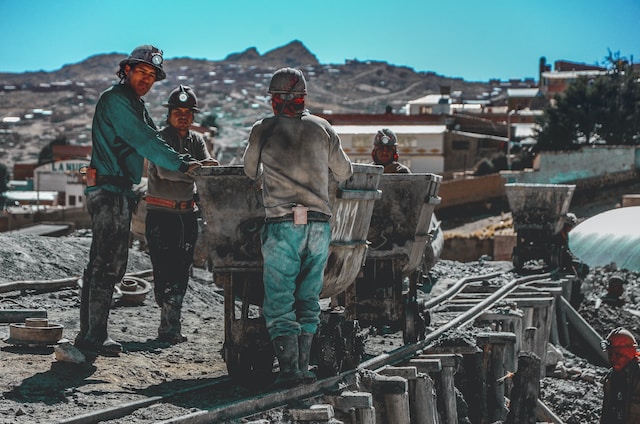
    Photo by Pedro Henrique Santos via Unsplash

    It is often said that rights are not gifted, they are fought for. 


    The coal mining industry is expansive in Canada as it is home to 0.6 percent of the world’s coal resources.

    The coal industry was especially entrenched in Cape Breton where it operated multiple Coal and Steel mills in the area as well as company towns.

    The Canadian Labour Revolt empowered citizens to stand up for their rights in a set of loosely connected strikes, riots, and labour conflicts.The conflict between the Dominion of Canada and Coal Workers established important labour rights and norms in Canada and increased the role of labour in Canadian politics.The Revolt would be inspired by the ghastly conditions coal and steel miners worked in as well as the expansion of corporations into ventures such as company towns.

    Coal has been mined in Canada since 1639. The first mine to be opened in Canada was a small mine at Grand Lake, New Brunswick. The purpose of the mine was to supply the nearby Fortress at Louisbourg.

    In the first years of coal mining the resources extracted from the mines were used locally. Eventually, Canada’s place in the British Empire would open up Canada to exporting to the global market. Cape Breton’s mines notability supplied Boston and some other American ports. 

    Commercial coal mining commenced in New Brunswick in the 1830s.

    Coal mining then expanded rapidly. By 1880, the industrial output of Nova Scotian coal increased to just over one million tonnes. This ballooned further to become seven million tonnes in 1913. A major motivating factor behind the expansion of the coal mining industry was the requirements of the Industrial Revolution which has recently exploded in Britain. 

    The growing domestic market demanded steel for Canada’s railways and fuel for the factories popping up in Ontario and Quebec. When the First World War broke out, three-quarters of all coal burned in Canada would come from Cape Breton.


    Working in these mines would be incredibly dangerous, and mine disasters left a lasting scar on communities. In Nova Scotia, the Springhill mining disasters have never been forgotten. In 1891, a fire caused by accumulated coal dust swept through the shafts, causing an explosion that took the lives of 125 miners. Some of them were child laborers no older than 13. The scale of the disaster was unprecedented in Nova Scotia’s history.

    There were several more disasters at Springhill. In 1956, an explosion killed 39 miners, and in 1958, an underground seismic event killed 75 miners. 

    When the media crowded the remaining miners of the 1958 event as they left the shaft, Douglas Jewkes would reply that the thing he wanted most was a 7-Up. 

    After that, several miners would make appearances on The Ed Sullivan Show, which increased the public knowledge of the incident. 

    The following year, Maurice Ruddick was chosen as Canada’s Citizen of the Year. Ruddick was a coal miner born in Joggins, NS. When he was trapped underground in the 1958 Springhill disaster, he led his colleagues in song and prayer to keep their spirits up. Ruddick was an active musical artist and would sing regularly in the shafts including the songs “Don’t Be Cruel” and “Bye Bye Love.” When the Governor of the State of Georgia, Marvin Griffin, took advantage of the media spotlight to offer the survivors free vacations to Jekyll Island, he was ignorant of the fact that Ruddick was a member of the African Nova Scotian community and responded with hate. He exploded and demanded Ruddick be segregated from his comrades, as Jekyll Island was in the Deep South and was dominated by racist Jim Crow laws. Ruddick’s legacy was forever captured in a Canadian Heritage Minute, as well as in the song “The Springhill Mine Disaster Song” by his daughter, Val MacDonald. 


    Mining rights in Nova Scotia were once by the Monopoly General Mining Association. This monopoly would only last from 1826 until 1858 as American-financed mining companies began development. The expansion of American-financed companies would particularly happen in Glace Bay, New Waterford, and Sydney Mines, and would start to shape the region which would eventually become known as Industrial Cape Breton.

     A key part of coal mines was the existence of company towns. These are places where all stores, housing, and property are owned by one employer. An employee will get paid his wage from his employer and then pay that money back to him through paying for necessities such as food. These towns are incredibly profitable and viciously exploitative. New Waterford, for example, stands out as a company town that was developed specifically for the coal mining industry. 

    By 1873 eight coal companies were operating in Cape Breton. Miners would only be paid between 80 cents to $1.50 per day and underage child laborers were paid 65 cents. 

    The first major mine was the Hub shaft of Glace Bay. Following this more mines were opened in the Glace Bay and the Sydney Mines region. The industry in Glace Bay would grow to include 12 coal mines.

    In 1894, full control of mining rights was granted to an American syndicate called the Dominion Coal Company. By 1903, the Dominion Coal Company would be producing 3 250 000 tonnes per year. Its production would count for 40% of Canada’s total coal output. The British Empire became extremely dependent on Cape Breton coal to fuel its industrial production. 

    Matthius “Tius” Tutty first started working in the Glace Bay coal mines when he was 14. He would drive horses and haul boxes of coal along the underground tracks of the coal shafts. He describes working 12-hour shifts. The workers were cursed at by their boss from morning to night. Once the children were old enough to swing a pickaxe they would be expected to. 

    Dominion Coal was a dominating force over these men’s lives, owning the stores they shopped at, the houses they lived in, and even any place they purchased food to feed themselves. The pay was dismal but many miners had little education, no opportunities, and little choice.


    These conditions led to one of the most prolonged and bitterest strikes in Canadian history. There were two main groups of workers.One group was the Provincial Workmen’s Association (PWA). This union was the only substantial labour organization in Canada at the time and it operated in Nova Scotia. The union organized an unsuccessful strike in 1904 which lost them several members as they failed to gain employment, or were fired. Dominion Steel and Coal planned on this, as their objective was to starve the PWA of funds and resources until it eventually would shrivel up and die. Dominion’s quest for economic dominance in Cape Breton was threatened by an organized labor movement. 

    Another union, the United Mine Workers of America (UMW), would attempt to raid the PWA’s ranks. 

    This union had three hundred thousand American members and was the biggest union in the United States.The PWA and UMW would go to war over union membership while Dominion planned ways to break those unions and continue their exploitation of the workers and their communities.

    The PWA insisted on the firing of men who joined the UMW. As a result of Dominion controlling housing in company towns, many of these families were evicted from their homes. 

    During the brutal paralyzing cold winter of 1909-10, families were forced to camp in tents on the hills overlooking Sydney and Glace Bay. They were joined by members of Canada’s small militia. Families were forced to survive under the surveillance of the cold barrel of the men’s rifles. 

    Dominion exclaimed that its fight with the UMW was one of patriotism. This was despite Dominion itself creating the conditions that rose to competing unions. When the UMW announced its defeat after spending a million dollars on the fight, the support for the union went underground.

    By 1917, supporters of the UMW captured miners’ leadership under the context of creating an entirely new organization. By the next year eleven thousand Cape Breton miners would be defacto members of the United Mine Workers. 

    The war years were incredibly traumatic for Canadian Labour. Labourers were needed on the front lines which led to a serious labour shortage in 1916. Union membership increased heavily during the war from 166,163 to 378,047. 

    When the war ended workers understood they had sacrificed everything they had for the victory. They needed to know that Canadian society would now change to accommodate them.Canadian labour groups went into the war enthusiastically, similar to their fellow countrymen. 

    The economic depression which would follow in the years 1914 to 1916 significantly racked the country. However, the increasing industrial output would be key to ending the economic depression. 


    Women entering the workforce in the First World War were met with incredible amounts of hatred, and misogyny. An estimate for women munition workers ranges from 10,000 to 35,000. Workers were crucial to the war effort which allowed labour to gain some influence. 

    Strikes occurred for higher wages, job security, and safer working conditions. The start of this popular revolt is estimated to be between the dying days of 1916 and the election of the Union government in 1917. Conscription would greatly curb the civil liberties of labour and trade union members. At the start of the war, in 1915, union membership in Canada was 140,000, but by the end of the war in 1919, it had reached 378,000 workers. 

    1919 was a defining year for labor in Canada, as the number of overall strikes rose to 427. 

    The November Revolution in Russia resulted in the Borden government introducing reactionary laws that limited organized labour, which included the legal banning of multiple socialist and union groups. The Borden government stated explicitly that there would be an additional ban on “Any Association, Organization, society or corporation, one of those purposes or professed purposes is to bring about any government, political, social, individual, or economic change within Canada.”

    Literature was also banned. Any material breaking that law would be subject to government seizure without a warrant. Censorship laws introduced with the War Measures Act were expanded.


    The culmination of the Canadian government’s mistreatment of labor was the Winnipeg General Strike of 1919. On May 15th the Winnipeg Trades and Labour Council called a general strike after talks broke down. 30,000 men and women left their jobs, mostly employees of the city’s privately owned factories, shops, and trains.Public employees would join them in solidarity, including police, firemen, postal workers, telephone, and telegraph operators, and utilities workers. The strike was controlled by the Central Strike Committee, and every union involved was able to elect members of the committee to bargain on behalf of the workers. 

    Helen Armstrong was among the members of the committee. She established the Labour cafeteria. This would provide women strikers with three meals a day and proved to be an essential service for those who lost wages due to the strike. 

    The government’s response to the strike was intense. A citizens committee formed by some of Winnipeg’s most successful and influential business leaders and politicians pressured the government to act. They incorrectly claimed the strike was an attempt to start a revolution. Xenophobia was common among this group as they described the strikers as “alien scum” due to the presence of Eastern European Canadians who had immigrated to the Western provinces in the early 1900s.

    The federal government then stepped in. They met with the citizen’s committee, not the democratically elected central strike committee. Their first action was a threat to fire workers unless they immediately returned to work. The immigration act was changed so any British-born immigrants could be swiftly deported.


    The government arrested 10 leaders of the strike. Strikers held a silent parade four days later in solidarity with their comrades. When a crowd started to vandalize a streetcar the Royal North-West Northern Police responded brutally. Protestors were beaten with clubs and fired upon. 30 were injured and two killed in an event forever known as Bloody Saturday. By day’s end, federal troops occupied the streets of Winnipeg.

    Amherst responded to this with their general strike on 19 May 1919. The Sydney Record declared that the strike was similar in size to the Winnipeg strike. Frank Burke was a champion of the idea of One Big Union (OBU). This is a concept developed in the early 19th and 20th centuries which aimed to unite the interests of workers. 

    One Big Union champions the idea that workers should be organized into one big union and was developed by the Industrial Workers of the World (IWW).

    The IWW promoted solidarity through the concept that “an injury to one is an injury to all.” This asks workers to be concerned about the working conditions of their colleagues and fellow workers. One Big Union has the immediate goals of better pay, shorter hours, and better surroundings.

    Striking workers in Amherst successfully closed down the city’s eight largest industries and local merchants and civil workers had decided to join the strike as well. One Big Union button became common on the streets of Amherst. Daily union meetings were held to inform the public. Leaders at The Winnipeg General Strike had officially created the One Big Union syndicalist union which was inspired by the IWW’s ideals. The OBU focused predominately on what was categorized as unskilled labour primarily organized by industry instead of trade. By late 1919 OBU membership was up to 70,000.

    Amherst, at the start of the war, was a busy town with hundreds of maritime workers and their families relocating to the new manufacturing town. After the war manufacturing companies merged with Montreal corporations which would funnel much of the investment to Montreal-based operations. The local plant would see a crash in employment numbers, and the munitions production industry could not be relied on as a permanent supplier of jobs. The working men and women of Amherst started to become worried about their economic future. 


    The Amherst Federation of Labour (AFL) was organized in the fall of 1918. All members fought to participate in AFL deliberations and to vote. The strike was supported by the local Socialist Party of Canada branch. The general strike lasted three weeks. Due to the economic crisis which the city found itself in, the AFL held a general meeting to discuss the future of the strike. The AFL recommended strikers accept the conditions of a 9-hour work day and no decrease in wages. This would prove to only be a temporary cease-fire between labour and the province.

    Nova Scotia miners living in desperate conditions among company towns continued to fight for the right to collective bargain for coal operations. In 1919, the British Empire Steel Corporation promised a $500 million merger of DOMCO and DISCO which would create the British Empire Steel Corporation, controlling all the steel mills and most coal mines in the province. The corporation promised investors the profitability of the operation which it greatly overestimated. This resulted in BESCO seeking to reduce the wages of miners and limit their ability to disrupt production through striking. The ultimate goal would be to break up the United Mine Workers of America.


    The Coal War started when the company in 1922 introduced a one-third reduction in miners’ wages. BESCO  used inhumane tactics to achieve its goals, including the firing and blacklisting of miners and their families from their homes.The President of UMWA disrespected and ignored his own union members’ demands.

    Lewis condemned the actions and mocked local leader Dan Livingstone with all the unearned confidence that a Washington D.C. desk provides. He threatened to revoke the charter of District 26. Coal miners attempted to ignore Lewis’ abuse of office.


    Union leader Dan Livingstone further insisted on the independence of District 26, stating full autonomy and annoyance with Washington dictating operations in Cape Breton without providing any type of support. Eventually, Livingstone and fellow union leader J.B. McLachlan were arrested on charges of seditious libel.


    BESCO increased its attempts to destroy the organized coal mining activity by cutting off credit at company stores, and further wage reductions. The community of Cape Breton responded by throwing its resources behind the miners.


    The coal war came to an end in June 1925 with the bloody battle at Waterford Lake. 

    William Davis was a miner in New Waterford. His father, Thomas, was also a miner. His 14-year-old brother had died in a mining explosion, and Davis himself worked at Nos.1, 6, 12, and 16 collieries of the Dominion Coal Company Limited in Cape Breton. He worked his way up to become a pumpman and a roadmaker. Davis had his own family the year of the final round of strikes in 1925.


    The latest contract expired on 15 January 1925, BESCO further cut off credit at company stores targeting especially the ones in communities with large union presence. BESCO forced thousands of Cape Bretoners to the point of starvation, refusing arbitration. 12,000 Miners would go on strike. When the corporation planned to resume operations without any settlement, a group of miners marched on the local power plant that served the mines in the New Waterford district. Although this created some inconvenience for the local population, coal miners devised a solution. They drew on local wells and set up a volunteer delivery service to take water to the hospital.


    BESCO responded in direct force with a squad of company police tasked with escorting 30 men to restart the power station. The group went on a patrol around New Waterford on the morning of June 10, calling the miners to a public meeting. Police charged the group almost imminently upon their arrival. Neither the police nor the horses they rode on were trained. Police opened fire on the workers, and despite being fired upon workers rushed the police, forcing their retreat. In total, the police fired over 300 rounds. William Davis was shot and killed by one of those bullets. Policemen needlessly shot deliberately at the thirty-eight-year-old father, hitting him in the heart. 


    Coal Miners rushed to New Waterford, broke into company towns, and distributed the supplies inside. In response, the 2000 Canadian Army soldiers were deployed with the sole purpose of dispensing striking workers. They would successfully restore BESCO’s control of coal and steel in Cape Breton.


    A Royal Commission the next year in 1926 demanded BESCO recognize both the existence of the coal miners union and negotiate collective bargaining with the United Mine Workers of America.

    Davis’s Funeral was held on June 14 and had 5000 in attendance, making it the largest for a funeral in New Waterford. June 11 became known as Davis Day. Although many Cape Bretoners refused to work on this day it did not become a paid holiday until 1969.


    The fierce struggle for the basic human and labour rights of Coal Miners is a stark reminder that rights must be fought for and defended. The labour revolt would be an important building block in Canadian labour history. Many leaders would become prominent leaders in the Canadian socialist movement of the 1920-1930 period, such as George Armstrong, who would be elected to the Manitoba House of Commons. Several other striker leaders such as Roger Ernest Bray went on to be founding members of the Co-Operative Commonwealth Federation, the predecessor to today’s NDP.


    In 2008, a private members bill was passed by the Nova Scotia House of Assembly to designate June 11th as William Davis Memorial Day. The fight for decent working conditions still goes on, Nova Scotia should never forget those who have fought for and died for the privilege of living with dignity. 

  • Time Capsule

    Time Capsule


    In the moment there is little we see

    Our nearly closed eyes capture the stark white room,

    We cry and scream.

    There are strange noises, voices.

    And the day is forgotten.

    It’s one of the flaws of humanity:

    We cannot remember everything.


    But now that we are older, 

    We learn to bury our memories in a chest. 

    Because what the mind seems to forget

    The heart remembers,

    Vividly 

    Knitting imagines together 

    Mending heartstrings with heartstrings

    The end of every moment we seal away as a memory,

    Til we acquire an album of snapshots to tell our story.

  • The Rise in Anti-Trans Rhetoric Should Worry Everyone.

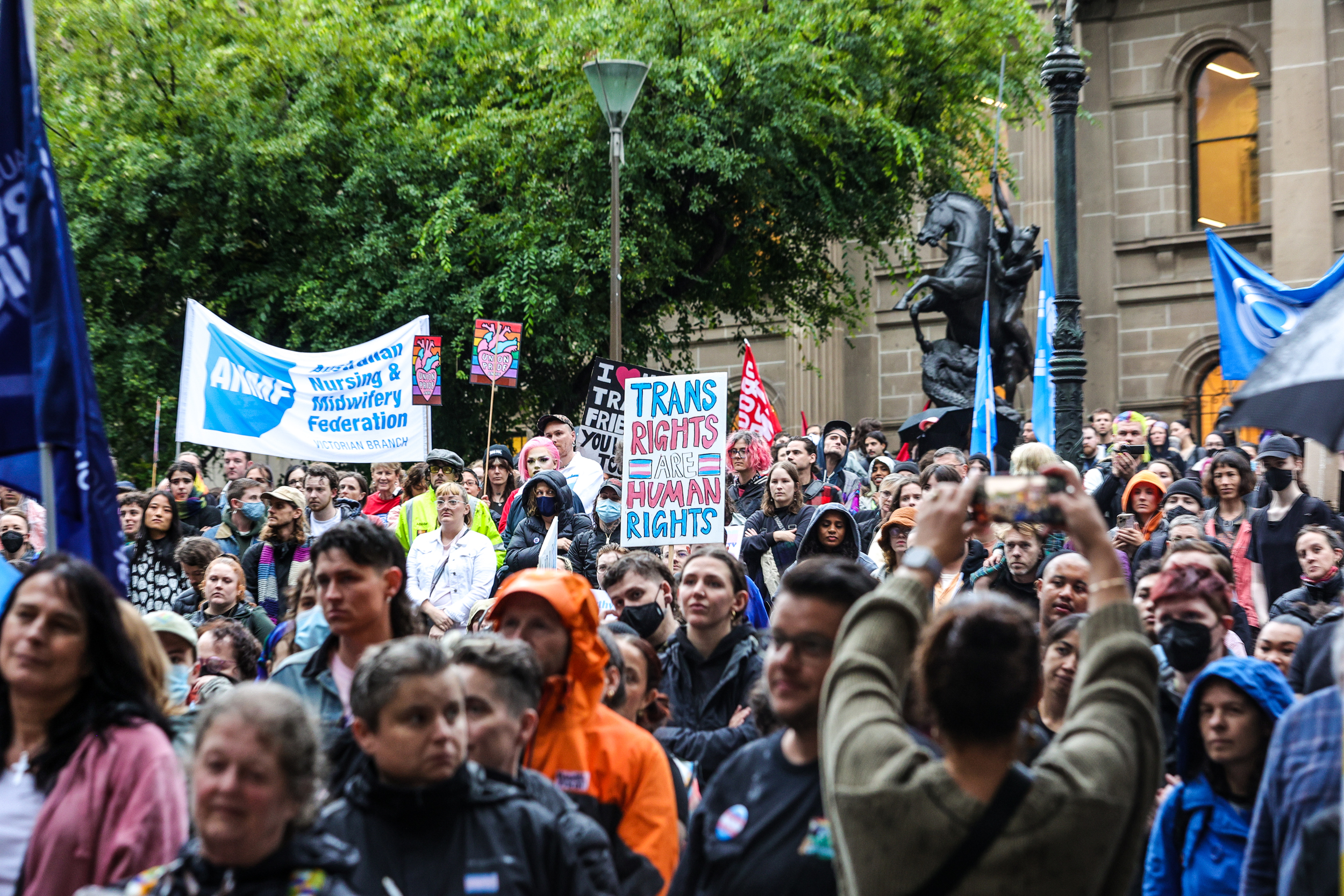
    The world is becoming a scary place for the 2SLGBTQ+ community. The community has seen a rise in anti-queer rhetoric which is dehumanizing and treats the queer community as different. This rhetoric spread by prominent right-wing commentators has sparked a movement questioning the democratic rights won with the 2015 Supreme Court ruling declaring same-sex couples have the right to be married and preventing that right would be discrimination. Recent bills such as Florida Governor Ron DeSantis’ Don’t Say Gay bill have stripped the ability to talk about 2SLGBTQ+ issues inside the classrooms with rainbow flags being ripped down in classrooms across the state. This bill has prevented students who are members of the 2SLGBTQ+ community from expressing themselves with fears of retaliation from homophobes who have been empowered by the passing of this bill and related legislation.

    Anti-trans rhetoric has exploded as a consequence of the shooting at a Nashville Elementary School which left six people dead. There have been more than 130 mass shootings in the United States this year alone. The response from right-wing commentators has not been one of horror at the amount of gun violence which is prevalent across the United States. Instead, there was an effort to link transgender people with the rise of violence in the country. This is even though trans people are rarely ever the perpetrators of mass shootings. Former President Donald Trump claimed that the trans movement is radicalizing activists into terrorists. Another right-winger commentator Tucker Carlson claimed that trans people are targeting Christians and called for gun control. This coverage is sensationalizing the events and muddles real facts surrounding the shooting. Although the shooter did identify with he/him pronouns and their actions are not only abhorrent but horrifying. This should not give a license to hate against the 2SLGBT+ community. Especially since in the over 300 mass shootings carried out since 2009 under one percent have identified as non binary or trans. Using the Gun Violence Project which counts shootings with 4 or more casualties we can estimate that there have been 2692 shootings since 2018. Trans people should make up at least 16 cases to account for the fact that 0.6 of the population is trans. Instead only three possible cases can be found. This ignores the fact that 2SLGBTQ+ people are far more likely to be victims of a targeted mass violence attack than the perpetrators of one. 

    The rise of right-wing populism through politicians like Trump has resulted in a precarious time for minority rights in America. In 2019 Trump openly banned trans service members and instituted a don’t ask, don’t tell policy which silenced trans people just three years after President Obama confirmed transgender individuals have the equal right to serve their country as cis individuals have. As queer people watch their rights being crawled back they also witness their community being the victims of extreme violence. Just last year 25 people were injured and 5 died when a mass shooter purposefully targeted an LGBTQ nightclub in Colorado Springs. Instead of focusing on much-needed gun control to prevent further shootings, right-wingers across the country are rolling back gun regulations in response to the latest shooting. In Kentucky, Ohio, Nebraska, Texas, and Virginia lawmakers are working to eliminate background checks, roll back red flags laws, and reduce the amount of gun-free areas in those states. In 25 states there is no permit needed to openly carry a handgun.

    The Canadian trans community has similarly faced a number of hardships over the past few years. The trans community experiences a major gap in accessing healthcare. Our public healthcare system is set up for cis individuals and often there is no education to understand how to accommodate trans folks. Latest Canadian numbers estimate Canada is home to over 100 000 trans and non binary people. Canada’s large and vibrant 2SLGBTQ+ community deserves to be supported by their government, there is a serious lack of gender-affirming care across Canada which needs to be addressed. In 2020 nearly half of Trans people stated they have unmet health needs and over the last five years 68 percent of the trans community experienced verbal harassment. As well 269 hate crimes against trans people were reported to the police in 2020 alone. This situation has led several trans individuals to feel unsafe in their daily life. This is especially when news articles specifically mention the fact the shooter was trans repeatedly despite it having little to do with the actual shooting as the motive is still unknown. This has not stopped right-wing commentators from stating that this was an example of a trans attack against Christians. There is no evidence supporting that narrative, It is based on a large amount of ignorance the general public has concerning trans issues. This can be seen as deeply in healthcare as in Canada many healthcare officials who prescribe medication for trans individuals know little about the community. Some healthcare officials have even adopted conversion practices which attempt to convince someone they aren’t who they believe themselves to be. In this unsupportive environment, 21 percent of trans people reported having attempted suicide. 

    The rise in anti-trans rhetoric has pushed first narratives that trans people are pedophiles and now attempts to push the grand narrative that trans people are violent criminals. 2SLGBTQ+ people simply want to live their life as the person they accept themselves as. Despite this, Trans Exclusive Radical Feminists or TERF’s claim that the acceptance of transgender individuals somehow tramples on their rights. This hate has been so widespread that government-funded agencies have expressed anti-trans views. In Quebec ,PDF Quebec described a trans actress who starred in an ad for International Women’s Day as a violent man. The actress Johnstone describes mountains of hate messages that they received. This hate was directly a result of organizations like PDF Quebec negatively highlighting queer individuals and then sending endless anonymous Twitter trolls to harass them. Popular authors such as the author of the Harry Potter series, J.K. Rolling has expressed anti-trans views. The changing of traditional gender norms does not discredit the real lived experiences of women. Both women and queer individuals are discriminated against in a system that prefers cis white males. How can a self-identifying feminist claim they are fighting for equality which degrades and dehumanizes a section of the population? 

    The large-scale highlighting of the shooter’s identity ignores the number of shootings that have become regular in the United States. These shootings happen every day and highlight a large issue. The targeted discrimination against the trans community makes it more likely people will commit crimes against them. As a society we need to view each other as equally human, all entitled to mother nature’s resources and all entitled to live. This dehumanizing is an attempt to make the trans community seem as other to the west’s hegemony. These efforts make it easier to discriminate against groups. Similar trends can be seen at the end of the First World War as Jewish people were blamed for a large number of issues happening in Europe. Specifically, Jewish people were linked to the spread of Communism, and after the Russian Revolution racists warned of the rise of Jewish Bolshevism which is as useless of a phrase as Jordan Peterson’s Cultural Marxism. The attempt was to make a connection between Jewish people and society’s problems in order to dehumanize the Jewish population so that the public could easily swallow discriminatory legislation.  Jewish people in Europe prior to the Second World War made up 1.7 percent of Europe’s population similar to the 0.6 percent trans people make up. Jewish people were dehumanized over several years which made it easier for the general population to discriminate against them. I caution commentators to not allow the same conditions which allowed for the dehumanizing and eventual violent suppression of Jewish people to be applied to the queer community. Every citizen of every country on the Earth is simply a human being. All equal, all filled with wants, needs, passions, and dreams. Every person deserves the chance to become their full self. The aftermath of this horrific shooting has not only showcased the broken state of gun legislation across the United States but also showcased how easily hate and discrimination against minority groups can spread.

  • Legally binding victims to silence: A call to action for Acadia University to pledge to end the use of NDAs.

    Legally binding victims to silence: A call to action for Acadia University to pledge to end the use of NDAs.

    Many students would describe their university experience as joining a community, figuring out who they are, where they fit in, or a journey of growth. This is the case for lots of lucky students, but not for all, especially those who are forced to stay silent and suppress their experience. As a society, we watch the rise of accountability in modern politics and watch movements like #MeToo come to life and fight back against centuries of systemic oppression. We watch strong female political figures like Jody Wilson-Raybould take a stand against being silenced. We hear about new cases in the media every month like Harvey Weinstein’s serial sexual abuse, or even closer to home, Hockey Canada’s sexual misconduct.  The question at hand is, how are perpetrators still getting away with this? Although there is no simple answer to that question, we can look at the legal factors that are continuing to harm and silence victims in Canada, starting with higher education institutions.  

    One primary way that sexual violence perpetrators continue to silence their victims is through the use of non-disclosure agreements, also referred to as an NDA. Former Boston College Law Review Editor in Chief, Prasad explains, “If a contract is a legally enforceable promise, a contract of silence is an enforceable promise to keep quiet about something.”[1] NDAs were created in the 1980s, with the main purpose being the prevention of employees taking trade secrets between businesses but ultimately, they are now being used in the vast majority of civil settlement cases.[2] However, researchers, Besley et al. explain, “many women and some men (mostly it is women who have been subject to sexual harassment and assault) have been compelled to sign confidentiality or non-disclosure agreements (NDAs) as legally enforceable contracts that bind both parties or they may be sued for breaches.”[3] NDAs create a culture of silence that discourages survivors from coming forward and seeking help, which further reinforces the stigmas surrounding sexual violence and further contributes to the trauma many victims experience. Harvey Weinstein is an example of one of the most notoriously heinous uses of NDAs to silence his victims, including his former assistant Zelda Perkins, who was the first of many women to break her NDA.[4] Perkins became an admirable advocate against sexual violence and partnered with Canadian law professor, Julie McFarlane. They have collectively begun the ‘Can’t Buy My Silence’ movement and campaign in the UK, US, and Canada. They are fighting against the public policy surrounding NDAs and trying to give victims a chance to fight back against their NDAs.  

    The work that Perkins and McFarlane have been doing in Canada has already had huge impacts which can be seen through changes in legislation. PEI became the first Canadian province to pass the model bill in November 2022. When a Bill such as the NDA model Bill is introduced in Canada, it requires three readings before being passed. Manitoba passed its second reading in November 2022. Following PEI and Manitoba, Nova Scotia is shortly behind, but progress falters. As students, our voice is key in changing the standards of NDA use and acknowledging the harmful implications they carry. Not only have NDAs been heavily used by corporations and government employees, but also by post-secondary institutions.  It is easy to doubt the impacts of NDAs, when the topic is seen as taboo or insignificant to us as individuals. However, the impacts of NDAs are prevalent today and can be felt just four hours away from Acadia University at our sister university, the University of Prince Edward Island. Provincial Affairs Reporter, Kerry Campbell reported that multiple sources confirmed the non-disclosure agreements used to silence harassment allegations at UPEI including former students, faculty, and staff. The impacts of the use of NDAs carry a heavy weight. One victim of harassment at UPEI describes the impacts to campus culture, “People are afraid to speak out and the university is using public and student money to do this.” [5] 

     Acadia University has demonstrated its willingness to listen to our student body to create change through actions such as the addition of the Sexual Health Resource Centre, as well as the addition of the Sexualized Violence Response and Education Coordinator position. As students, we should consider how important it is to use our voice and ask for accountability from our university. This can be done by urging Acadia to sign the NDA university pledge through the ‘Can’t Buy My Silence Campaign.’ If you want to see Acadia University pledge to “never use a non-disclosure agreement (NDA) in a case involving sexual harassment, discrimination, other forms of misconduct and/or bullying”[6] you can show your support by signing the online student-led petition linked at the end of this article. As students in Nova Scotia, there is also more we can do to support the model bill including calling on our MLAs for change, putting pressure on our government to carry this bill through the second reading by using the contact information detailed below. Let’s follow in the footsteps of PEI to hold perpetrators accountable.  

    Important Resources: 

    Sign Student-Led Petition: https://www.change.org/NDAPLEDGEACADIA 

    MLA Contact Information: https://nslegislature.ca/members/profiles/contact 

    Bill No.144 Non-disclosure Agreements Act: https://nslegislature.ca/legc/bills/64th_1st/1st_read/b144.htm 

    Can’t Buy My Silence University Pledge: https://www.cantbuymysilence.com/uni-pledge 

    Additional Information on NDAs: https://www.cantbuymysilence.com/nda-info 

    Guide to engaging with your MLA and writing an effective advocacy letter:  https://www.legalinfo.org/wehavepower 

    References are available upon request. 

  • Why You Should Care About the Willow Project

    Why You Should Care About the Willow Project

    On March 13, 2023, the Biden Administration would approve of ConocoPhilips’ Willow Project, the largest oil and gas drilling venture in all of America. After years of protest (the Willow Project was originally proposed and accepted in 2020) and well over 5 million signatures against it, the project was approved anyway, planning on mining 600 million barrels of oil from an Alaskan reserve over the span of three decades. The proposed drill site is currently home to many indigenous communities, as well as many threatened or endangered species such as polar bears and beluga whales. To make matters worse, the area of the proposed drilling is already warming four times faster than the rest of the world. 


    If it were to go through, the Willow Project would emit over 260 million metric tons of greenhouse gasses over the next 30 years. To put this into perspective, each year rockets which use RP-1 collectively expel 1000 metric tons. This is around 78x more per year. The Willow Project will produce similar carbon emissions as 2 million passenger cars over its lifetime. Not only will this contribute to the warming climate and pollution, but will also alter migration patterns in animals such as migratory birds and caribou, and damage or destroy the habitats for many native species, and the indigenous communities which rely on these species for survival. 


    Not only was the approval of the project unethical in terms of the climate crisis, but the Willow Project having the support of the Biden Administration goes against a promise President Biden made in his campaign; vowing to end the drilling of new oil and gas on public lands, and put more funding towards clean, renewable energy. He had also pledged to cut greenhouse gas emissions in half by 2030, and to have a net zero emissions economy by 2050. However, if the Willow Project were to come to fruition, this will never be a possibility.


    Although the project has been approved, all hope is not yet lost. Construction can only happen during the winter seasons which is likely to end around April, delaying the construction by another year while nonprofit organizations such as Earthjustice work on a legal case against the project. 


    On March 15, 2023, Earthjustice filed a lawsuit against the Biden Administration to put an end to the Willow Project on behalf of the Center for Biological Diversity, Defenders of Wildlife, Friends of the Earth, and Greenpeace USA. There is still time to stop this project from developing, and prevent this climate catastrophe. 


Betzillo positions itself as a versatile gaming hub where structured bonuses and adaptive gameplay mechanics support both short sessions and extended play.

Built with a focus on innovation, Spinbit integrates modern casino architecture with rapid transactions, appealing to players who value speed and digital efficiency.

Ripper Casino emphasizes bold entertainment through high-impact slot titles and competitive promotions crafted for risk-oriented players.

A friendly interface and stable performance define Ricky Casino, offering a casual yet reliable environment for a wide spectrum of gaming preferences.

King Billy Casino channels classic casino spirit into a modern platform, delivering recognizable themes supported by contemporary reward systems.

Immersive visuals and layered slot mechanics are at the core of Dragonslots, creating a narrative-driven casino experience.

Lukki Casino appeals to players seeking direct access and minimal friction, focusing on fast loading times and intuitive controls.

Casinonic provides a structured and dependable gaming framework, blending modern slots with transparent operational standards.