Tag: Alcohol

  • Apples to Apples: Annapolis Cider Company Comes to Town

    Apples to Apples: Annapolis Cider Company Comes to Town

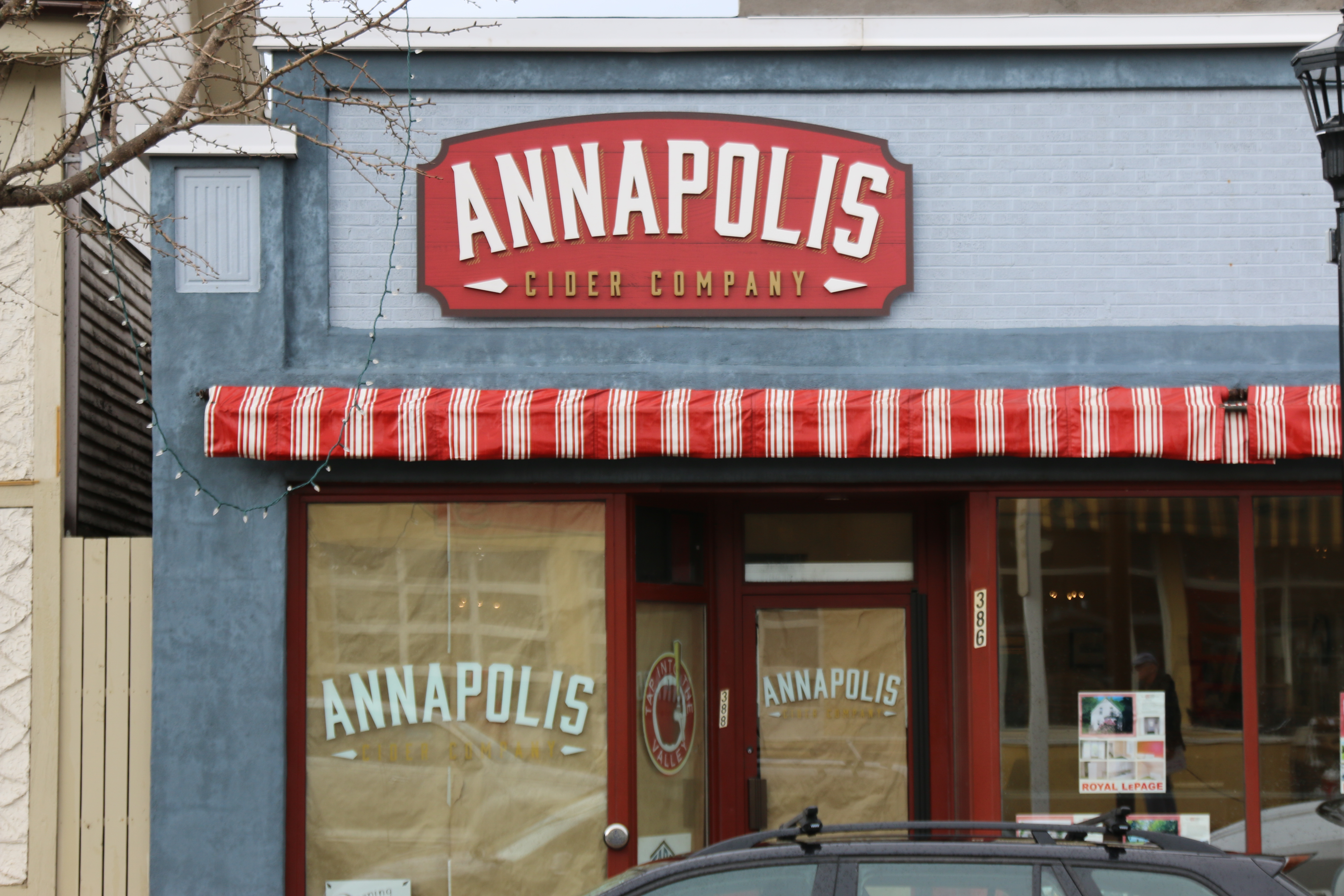
    Good news for cider lovers – you will soon be able to enjoy locally sourced, freshly pressed, and most importantly delicious apple cider (of the alcohol variety) courtesy of Annapolis Cider Company. The cider company, opening its doors at the end of this month, is located on Main Street and will offer tastings, cider for purchase, as well as a tours of the facility to learn about the cider-making process.


    I met with three of the four individuals behind the business last Wednesday, to learn more about the exciting new venture. The 4000 square foot building, painted bright red, decorated with apple-orchard paraphernalia features a tasting bar and a balcony that overlooks a fermentation tank and a peek of the on-site processing facility.


    Husband and wife Sean Myles and Gina Haverstock combined their passion for local enterprise and individual expertise to get the business up and running. Working alongside the couple are manager Katie Barbour and cider-maker Melanie Fledman. Myles, a Dalhousie University apple-researcher, and Haverstock, a sommelier and wine-maker at Gaspereau vineyards, said that they drew their inspiration from local wineries and microbreweries in designing their venture.


    Myles emphasized their passion and commitment to supporting local. The cider is locally-sourced, made from 100% Annapolis Valley apples, pressed down the street at Stirling Fruit Farms, and fermented in house. Fresh is an understatement, as the first time the cider hits air is when it comes out of the tap at the tasting bar.


    There are two types of ciders that will be available year-round: “Juicy and Sweet” (5.6% alc.) is made from dry fermented cider and combined with sweet apple juice, and “Crisp and Dry” (7.7% alc.) that contains only a hint of the sweet apple juice. Alongside these two staple products, there will be a third batch, “Something Different,” that will vary from batch to batch, presenting a unique and exciting flavour with each batch.


    Myles described the design of the cider company as “taste-buy-leave… and refill”. For 5$, you get to sample each of the ciders at the tasting bar. The product will be available for purchase primarily in 750 ml refillable glass bottles. Similar to other microbreweries (think Growlers at Paddy’s), there is a 6$ initial fee for the reusable glass bottle, but after that it is yours to keep and refill as you wish. There will later be a bottling service that will sell pre-filled recyclable 650 ml (non-refillable!).


    Although construction officially began in November, when asked how long the plan has been in the works, Myles replied “it’s been planned since birth.” It is clear that these first-time business owners and entrepreneurs are passionate about their product and the community they plan to serve. The two live in Wolfville, and want to focus on keeping things in the town they know and love. There is talk of outsourcing product to NSLC in the future, as well as hopeful plans to partner with existing local restaurants to serve the cider on tap.


    The Annapolis Cider Company’s opening is already highly anticipated by students and community members alike. Wolfville is a town conducive to supporting and keeping it local, and also, who doesn’t love trying a new (alcoholic) treat? Although no official opening date has been released, I was told to keep my eyes peeled on social media as the official opening dates will be released there first.

  • Girls’ Night Outcry: Misrepresentation and Sensationalism in CBC’s “Girls’ Night Out”

    Girls’ Night Outcry: Misrepresentation and Sensationalism in CBC’s “Girls’ Night Out”

    Girls’ Night Out is a crisis of conscience and representation. Directed by independent filmmakers Phyllis Ellis and Donald Brittain, Girls Night Out is a sensationalist 44 minute misdirection in ethical and just reporting. Although not explicitly named, the documentary takes place at an unknown regional Nova Scotian university during what is known as “homecoming”, a celebration of returning students and alumni from past graduating years, and where there is an explicit feeling of merriment and university pride.

    Published and produced as a CBC Firsthand report, the documentary goes to great lengths to create a climate of epidemic where drinking amongst female youth has reached a level wherein sexual violence, crime, and bodily destruction is a common result. The basic premise of the documentary has merit. Binge-drinking and a drinking culture that normalizes getting black-out drunk is something worth assessing, but it is not the female-centered catastrphe it is presented to be.

    Alcohol consumption is certainly an issue amongst individuals from a variety of backgrounds, regardless of sex, creed, nationality, or any other identifiable social situation. That being said, one of the most glaring oversights in the documentary is the absence of the discussion of males. Leah McLaren, in her article “CBC’s “Girls Night Out” Is a Patronizing, Fact-adverse Travesty” says that “Heavy drinking in Canada is marginally up, but young women are certainly not the culprits … It’s the middle-aged moms and dads, sitting in their renovated kitchens cracking a second bottle of wine … who are truly cause for concern.” The documentary may intend to have a focus on girls and young women, but it fails to acknowledge the instances of male binge drinking and other contributions of males to the university drinking culture depicted. By presenting this as a female-only issue, the documentary not only reinforces rigid gender binaries, but also the idea that young women are to blame for university binge drinking cultures.

    The documentary also examines the experiences of a select group of women who have had traumatic and negative experiences with the alcohol, but does so in a way of almost hyper-trivializing their experiences to a standard that is normative of a regular Western drinking culture. In the eyes of the producers, these women are the norm: young women drink and are therefore at the risk of death and bodily danger. The film does an exceptional job of sensationalizing but also invalidating the claims of these women, some of whom are victims of serious substance abuse issues and have made extended efforts to move past them.

    Another major error in the documentary is the generalising way in which women are portrayed. This presentation assumes all women to have the same experiences, opinions, feelings and values. Sweeping claims are made that blatantly support damaging female stereotypes. There is mention of how girls who supposedly dress up do so just to look good for males, all while competing and comparing with other girls. According to another source, girls skip meals and make themselves puke after the bar, not from overindulgence, but because girls are always worrying about their weight. Although the young women do voice these views, one can’t help but wonder why the film-makers asked them questions about this in the first place. How does the discussion of supposed inter-female competition relate to what the film is supposed to speak to? By including this, the documentary is aiding to perpetuate misogynistic thinking and gender role stereotypes that negatively impact females. Not to mention that the filmmakers sought out personal anecdotes only to demonize the students who offered their own experiences, opinions, and struggles with alcohol in a way that was likely not anticipated.

    Another instance of essentializing is that of the ‘typical’ experience of university students in relation to drinking and partying habits. Statements about binge drinking like “it’s what everyone’s doing every weekend” and “I drink just to get drunk, and I think that’s what most people do” is presenting the experience of only some students at university. The documentary takes personal and anecdotal evidence, presents it as universalizing fact, and then accompanies such shots with inapplicable statistics.

    Furthermore, the documentary focuses heavily on a relationship between alcohol and sexual assault. Flashing across the screen is bold text stating “Alcohol is involved in 9/10 rape cases on college campuses”. Not only is this an American statistic, but it is misleading viewers to come to the conclusion that rape is a consequence of alcohol, and not because of rapists. A mere 20 seconds is dedicated to discussing rape culture and the wider societal and systemic issues that lead to sexual assault. One important claim is made that rape prevention should include teaching boys not to rape as opposed to teaching girls to not get raped. This is far from the tone of the rest of the documentary which seems to carry a tone of victim-blaming. One of the women featured discusses waking up in jail after having her drink drugged at a bar. The issue of the person who drugged her drink was glazed over, and instead the woman fights back tears as she talks about the cop who told her she had only herself to blame because of where and with whom she spent her time drinking.

    A question posed by a prominent source asks: “Why do women not listen when we tell them that drinking is bad for them?” A better question would be, why do we feel the need to police and blame individual women for the harm inflicted upon them while drinking instead of criticizing and attempting to change the wider attitude towards alcohol and the drinking culture in North America?

Betzillo positions itself as a versatile gaming hub where structured bonuses and adaptive gameplay mechanics support both short sessions and extended play.

Built with a focus on innovation, Spinbit integrates modern casino architecture with rapid transactions, appealing to players who value speed and digital efficiency.

Ripper Casino emphasizes bold entertainment through high-impact slot titles and competitive promotions crafted for risk-oriented players.

A friendly interface and stable performance define Ricky Casino, offering a casual yet reliable environment for a wide spectrum of gaming preferences.

King Billy Casino channels classic casino spirit into a modern platform, delivering recognizable themes supported by contemporary reward systems.

Immersive visuals and layered slot mechanics are at the core of Dragonslots, creating a narrative-driven casino experience.

Lukki Casino appeals to players seeking direct access and minimal friction, focusing on fast loading times and intuitive controls.

Casinonic provides a structured and dependable gaming framework, blending modern slots with transparent operational standards.