Tag: Chemistry

  • Genetic Scissors, The Tool That Will Serve to Rewrite the Code of Life: Nobel Prize in Chemistry 2020

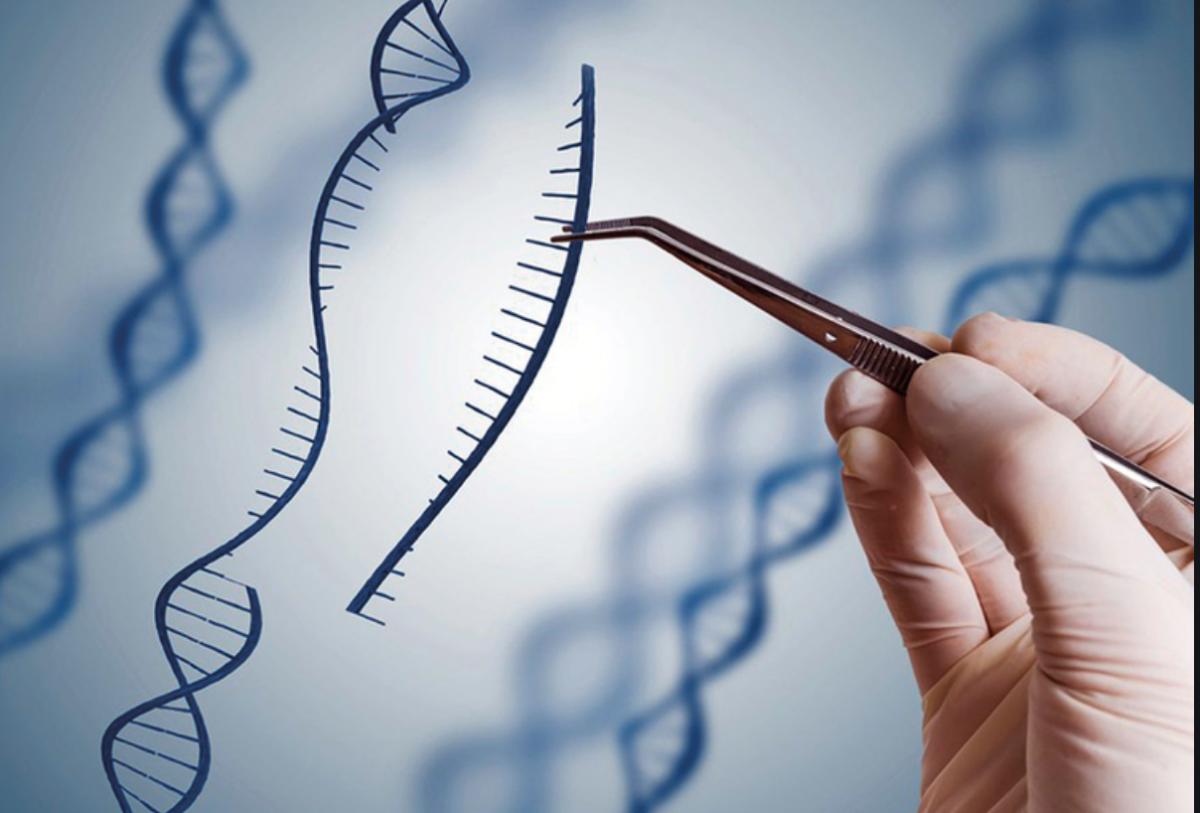
    Genetic Scissors, The Tool That Will Serve to Rewrite the Code of Life: Nobel Prize in Chemistry 2020

    This year, our scientists did not fail to amaze us with yet another fascinating discovery. Emmanuelle Charpentier and Jennifer A. Doudna received Nobel Prize in Chemistry 2020 for the discovery of one of the gene world’s essential and sharpest tools; The CRISPR/ Cas9 genetic scissors. Science has come a long way by developing these scissors which no one ever imagined could be made. These scissors would contribute to enhancing the quality of life not only for humans but also for animals, plants, and microorganisms.

    Researchers and Scientists modify the gene cells in order to find out how life functions. This process, however, used to be really difficult as well as being time-consuming and in some cases, impossible. Thanks to the new era of science, we have such modern tools as the CRISPR Scissors which would not only make these tasks possible but also quicker. Genetics itself is a very commanding department of the sciences and now with the discovery of their sharpest tool, the scientific specialty has gained enormous power which affects everyone as it not only alters human and animal genomes, but also those of plants. Thus, it is not only the medical sciences who benefitted from this discovery which has also broken ground for the possibility of new and innovative crops.

    Emmanuelle Charpentier was born in 1968 in Juvisy-Sur-Orge in France and got her Ph.D. in the year 1995. She is currently serving as the Director of the Max Planck Unit for the Science of Pathogens in Berlin, Germany.

    Jennifer A. Doudna was born in the year 1964 in Washington D.C. in the USA and received her Ph.D. in the year 1989 from Harvard Medical School. She is currently a professor at the University of California in the USA and is also an investigator at the Howard Hughes Medical Institute.

    During Emmanuelle Charpentier’s studies of the bacteria that is widely regarded as the one which causes the most harm to humanity, called Streptococcus pyogenes, she discovered a previously unknown tracrRNA. She concluded that tracrRNA is a part of this bacteria’s ancient immune system wherein CRISPR/Cas disarms the viruses by creating a cleavage in their DNA.

    She published her finding in the year 2011 which was the same year she started her collaboration with Jennifer Doudna who had a vast knowledge in the field of RNA. Together as a team, they recreated the bacteria’s genetic scissors in a test tube and later simplified the scissor’s molecular components to make it easier to use.

    They reprogrammed the scissors in the momentous experiment. In the natural form, the scissors recognize the DNA apart from the virus. The two laureates proved that they could control this factor in order to cut any DNA molecule at any predetermined site. Once the DNA is cut, it is easier to rewrite the code sequence.

    Using these scissors, researchers can not only change the DNA of animals, plants, and microorganisms with high precision but also help in contributing towards curing some deadly illnesses in humans that have been incurable to date. This discovery has proven to have a revolutionary impact on the life sciences which would also be contributing to new cancer therapies, a possible dream come true for the patients suffering from this deadly disease. The discovery of these genetic scissors has brought great benefits to humankind.
  • Water traced on Moon: Another Achievement by NASA

    Water traced on Moon: Another Achievement by NASA

    For a long time, the moon has been thought of as waterless, though recently, numerous researchers have discovered water in some parts of the moon. New observations by the SOFIA telescope and Lunar Reconnaissance Orbiter by NASA reveal traces of water in some small dark craters as well as sun-baked lunar soil. Earlier large shadowed craters were thought to be a significant source of water storage.

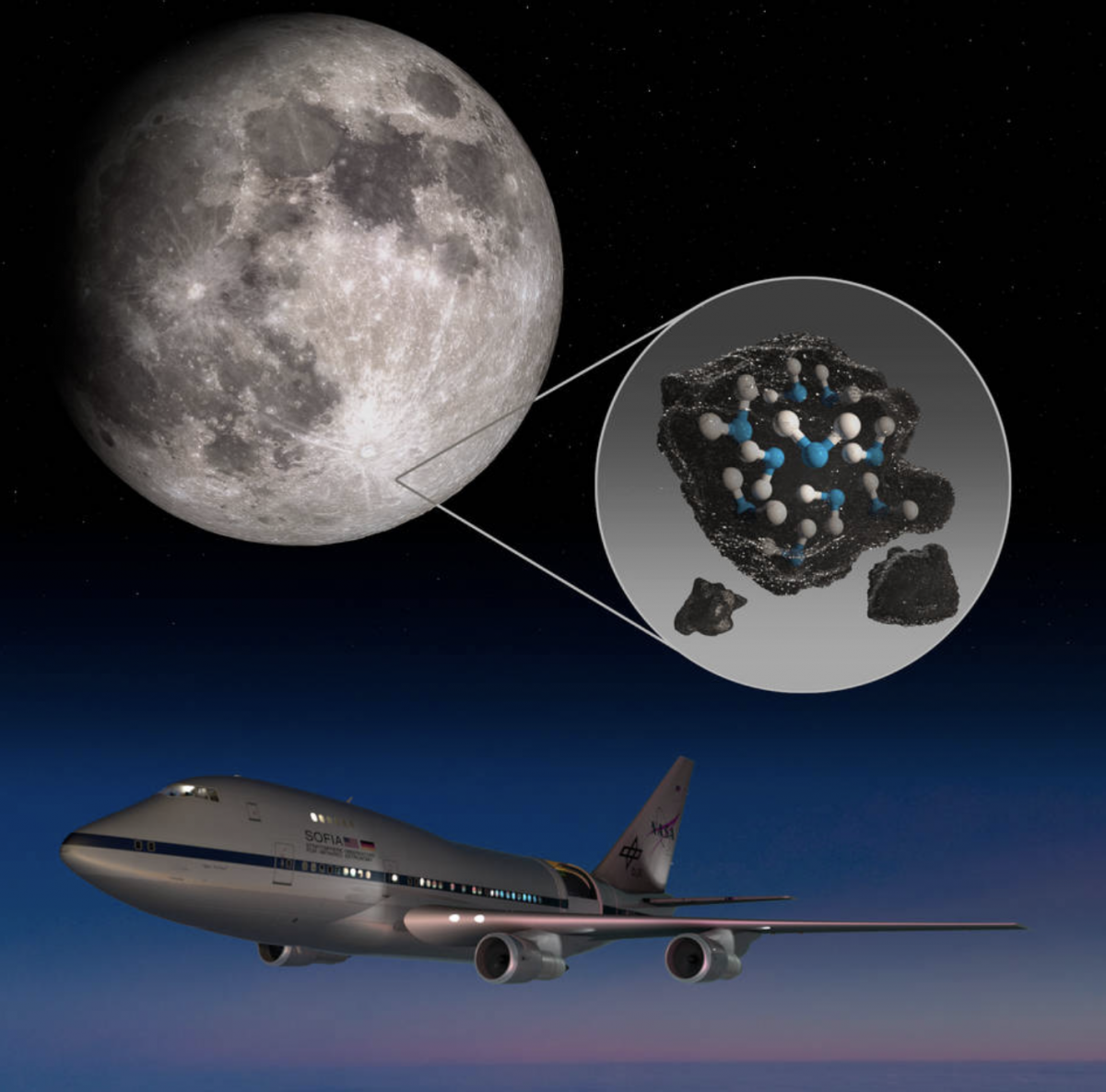
     This discovery has proved itself to be a milestone in the mission to discover possible life on the Moon. SOFIA is a very innovative and unique approach by NASA in the field of lunar science. SOFIA- Stratospheric Observatory for Infrared Astronomy, is a modified Boeing 747SP jet which gives its telescope, which is 2.7 meter, a view above 99% of the atmosphere’s obstructive water vapor which helps in more precise observations.
    NASA’s SOFIA confirmed the presence of water on the sunlit surface of the Moon.
    Water molecules were detected on the Clavius Crater located on the southern hemisphere of the Moon, which is one of the largest craters visible from the Earth. Previous research and missions towards the Moon have revealed hydrogen molecules but some were not able to spot the difference between water (H 2 O) and hydroxyl (OH) since hydroxyl is a close chemical relative of water. The data from the location (Clavius Crater) has revealed the presence of a water concentration equivalent to 12-ounces of water trapped in a cubic meter of lunar soil which is
    spread throughout the lunar surface.

    The observations on the 10-minute span focused merely on the region in the southern hemisphere of the moon since it is the largest crater (Clavius) which revealed a very strong emission of infrared rays with a wavelength of six microns. The area warmed by the Sun was reemitting the absorbed radiation exactly how water (H 2 O) would.

    The researchers who led the project at NASA, also said that they aren’t familiar with any other material on the Moon that can emit single feature rays at 6 microns other than water. It is thought that the water might be stored in either the naturally occurring volcanic glass or is that it is between microscopic grains of rock dusk, in which case it suggests that it is getting shielded from the extreme conditions on the Moon’s surface, that is, high temperature and vacuum conditions. This would allow water to persistently exist, though there are no further answers to how water came to be there in the first place. The assumption is that water could have formed by the free oxygen and hydrogen which are liberated from the lunar rocks by the impact of the micrometeorites.
    Earlier in 1969, observations by astronomers G.R. Hunt and J.W. Salisbury, show how much they focused on the characterization of minerals on the lunar surface instead of water, despite noticing the spectral emission, not realizing their huge discovery.

    Now the Astronomers and scientists are planning to map the vast lunar surface in order to get some answers to questions concerning the characterization of the behavior of water, a variation of water behavior across the lunar surface in accordance with specific days, latitude, etc., source of water, etc. There are also some doubts within this discovery that this might also be just weak bonding of solar wind hydrogen with oxygen at the surface of grains of silicate glasses and minerals in the regolith as per Jack Schmitt who is a geologist and member of Apollo 17’s crew
    who are the last astronauts to have walked on the moon.

Betzillo positions itself as a versatile gaming hub where structured bonuses and adaptive gameplay mechanics support both short sessions and extended play.

Built with a focus on innovation, Spinbit integrates modern casino architecture with rapid transactions, appealing to players who value speed and digital efficiency.

Ripper Casino emphasizes bold entertainment through high-impact slot titles and competitive promotions crafted for risk-oriented players.

A friendly interface and stable performance define Ricky Casino, offering a casual yet reliable environment for a wide spectrum of gaming preferences.

King Billy Casino channels classic casino spirit into a modern platform, delivering recognizable themes supported by contemporary reward systems.

Immersive visuals and layered slot mechanics are at the core of Dragonslots, creating a narrative-driven casino experience.

Lukki Casino appeals to players seeking direct access and minimal friction, focusing on fast loading times and intuitive controls.

Casinonic provides a structured and dependable gaming framework, blending modern slots with transparent operational standards.