Tag: climate change

  • What Does the Willow Project Mean for the Future of the Climate Crisis Fight?

    The Biden administration has approved a massive new oil project named the Willow project. This is an oil project aimed to tap 600 million barrels of oil which resides in the petroleum-rich North Slope of Alaska. This comes as a disappointment to many of Biden’s supporters as well as climate activists. This project will allow the United States government to drill and possibly destroy some of the last pristine areas of the United States as well as add the equivalent of 2 million gas cars as emissions to the carbon output of the US.


    The company behind the Willow Project ConocoPhillips frequently states the economic impact of the project while ignoring the steep environmental cost. The company states the project would create 180 000 barrels of oil a day. In a world ever increasingly moving to electric projectiles this would hinder the United states’ transition to a clean economy as it would be still heavily reliant on oil. 


    Along with environmental groups, the local community of Nuiqsut has been outspoken in their opposition. Mayor Rosemary Hungarian has been raising concerns over the impact on the local wildlife. The equivalent of 70 coal-fired power plants will surely not only affect the wildlife, and the people, but also the environment as that amount of pollution will degrade the pristine lands which reside currently. The compensation by the Biden administration to protect Arctic waters from new oil and gas leasing is not enough in comparison to the large amount of ecological damage that will surely be to the environment as a consequence of this project. Also key to note, constantly touted as a positive is the number of revenue which Willow will produce. $8-17 Billion is a staggering amount however how will that be distributed? The wealth distribution gap in the United States currently stands larger than it was at the onset of the French revolution. Why fund a project which puts more money in the hands of ultra-rich oil tycoons? 


    The Willow Project itself claims to be a sustainability project despite releasing emissions into the atmosphere and disrupting local Indigenous communities. This raises questions about the larger trend of greenwashing which has been ever-present in advertising since the realization of climate change. Companies have been desperate to prove that they don’t exploit to get on the good side of consumers. Companies use misinformation to trick consumers who care highly about sustainable practices to buy their product regardless of if that product is environmentally friendly or not. One of the biggest examples of this came with the Volkswagen diesel Emissions Scandal. In 2014 the California Air Resources Board discovered that Toyota had been installing devices meant to offset emissions trackers and provide false data to make their cars look better for the environment. Greenwashing is extremely preventable in the industry especially as the urgency of the climate crisis continues to increase. 


    The backlash against the Biden Administration and The Willow Project has been sizable. Activists took to TikTok to spread the #stopwillow hashtag which has gained over 150 million views. This activism is increasing the knowledge about the unsustainable practices used by oil companies to trade in our natural resources for profit. In a related move, activists have also started a change.org petition which has gained 3.3 million signatures and is growing rapidly. Millions of young people are stepping up in the face of an attempt to lock the United States in decades of fossil fuel development. It’s unnecessary and will undoubtedly hinder the transition to clean reliable energy sources such as solar, wind, and nuclear. 


    The climate crisis poses an incredible threat to Canada. Rising sea levels would result in major destruction in coastal communities across the country. Cities as big as Vancouver to communities as small as Digby will be heavily affected. In 2022 the Insurance Bureau of Canada revealed that it had experienced $3.1 billion in insured damages paired with the fact that last year was 1.5 degrees Fahrenheit warmer than averages in the 20th century. This makes it the sixth hottest year recorded showcasing the effects of the climate crisis in real-time.


    In recent months there has been a spur of climate-based protests. At the start of March, thousands took the street across much of New Zealand’s biggest cities to demand climate action. This came after major flooding displaced over 10 000 people with fifteen people dying. These climate-related deaths will continue and get worse. The water vapor in the atmosphere is caused by warming temperatures spurred on by humanity’s industrial production. In Germany, protesters held a rally in Berlin to demand tough action on the climate crisis. Meanwhile, the United Kingdom is placing restrictions on nonviolent climate protests. This is causing a roadblock in the City of London. I wonder if the government is handing out punishments as harsh as that to those who exploit our land. Until governments decide to make meaningful action to protect the climate it is on civilians to continue to raise awareness and make sure the climate is not left behind.


  • The Looming Threat of Climate Change

    The modern world faces an ever-approaching enemy. The climate crisis gets closer as humanity continues to ignore the danger posed by continuing to pollute our ecosystems. Science agrees that climate change is not only factual, but permanent damage is already inevitable. Climate change is no longer a prediction but a real crisis kicking down our door. Climate change is caused by a number of factors but one of the biggest contributors is the amount of greenhouse gasses polluting Earth’s atmosphere. The amount of greenhouse gasses we have produced since the start of the 1800s has skyrocketed. The Industrial Revolution was a gigantic factor in this, as gigantic factories were built inside of urban cities, polluting densely populated areas. Importantly, this pollution affects the water and surrounding land, effectively poisoning it with harsh chemicals. 

    The proof that Earth’s surface is warming can be tasted by comparing modern weather readings which are showcasing extreme weather patterns. There are also temperature measurements taken on ships and later at weather stations dating back to the mid-1800s. There has already been an increase of 2.2 degrees Fahrenheit or 1.2 degrees Celsius. This has led to drastic effects which only threaten to become worse. The greatest warming happened in the late 20th century. The region warmed the most has been the Arctic with more than 4 degrees Fahrenheit. This marks the hottest climate in 1000 years. The ocean has been a major absorber of greenhouse gasses causing it to increase in temperature. Between 1997 and 2015, the ocean absorbed more heat than in the previous 130 years. The effects of this lie in extreme weather events. These include floods, droughts, wildfires, and more frequent storms. A rapid increase in industry has spurred these catastrophic events. Science agrees that climate change is real, with over 97% of publishing climate scientists agreeing and also adding that humanity has caused it. 

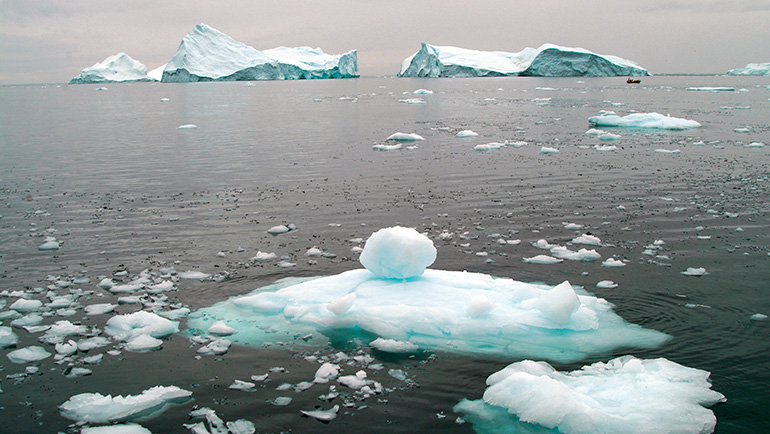
    The effects of the climate crisis are irreversible, The international agreements such as The Paris Climate Conference have proven to be ineffective. The consequences for that failure could not be more dire. Within the next two decades, temperatures will most likely rise more than 1.5C above pre-industrial levels. The current Secretary General of the United Nations, Antonio Guterres, signaled code red and stated that humanity needed to stop its reliance on fossil fuels for any chance of avoiding major catastrophe. The burning of fossil fuels is putting billions in immediate risk. The rising sea levels risk drastic flooding, especially in the maritime provinces. Coastal towns and cities are at major risk. This can be seen currently in Venice. Many of the buildings across the city are sinking and the city will most likely be consumed by the sea by 2100. The Arctic has shrunk 40% since 1979, and this devastation is not limited to far-away lands. In Canada, climate change directly affects agriculture; the warmer climate increases the chance of drought as well as increased flooding in cities close to water. In the Atlantic, it will lead to extended hot temperatures, reduced moisture in soil, and more which will make agriculture significantly more challenging in the province. 

    By 2050, the effects in Canada will irreparably change the province. In Toronto, there will be 51 days of the year above 30 degrees which is much more extreme then the current average of 16. There will be an increased chance of freezing rain events and wildfires, and the pollution from that smoke will infect communities across the globe.

    Important to note is the impact of environmental racism. Regularly, BIPOC communities are left behind in climate initiatives and are unevenly affected by environmental devastation. In Chemical Valley, Ontario, the Anishinabe people have been particularly affected by this as the pollution has led to destruction of their land and air. There are serious health risks involved with breathing in pollution for such a long period. In Nova Scotia, an example can be seen in the community of Africville, which used to be a major African Nova Scotian community made up largely of the descendants of enslaved peoples. The government would regularly use this community as a dumping ground before bulldozing and ripping people away from their home to be relocated. 

    With such a large mountain of challenges it can be daunting, however necessary, to ask what can be done to address climate change. What essentially must be done is to stop humanity’s reliance on fossil fuels, especially coal and oil. In order to make this transition we should embrace cleaner energy such as solar energy and wind energy. Public transportation should also be more commonly used, as individual cars are major polluters. In order to do this, Canada and Nova Scotia should increase their funding for public transportation. In particular, having electric buses would reduce a large amount of the population’s reliance on oil. Currently, with electric cars hidden behind large prices, electric buses would allow the public to choose electric transportation without spending tens of thousands of dollars. A high speed electric rail system across canada would drastically speed up travel times, and lower the need for planes, which are also major polluters. 

    The biggest polluters are businesses and corporations. Fight back against consumerism by only buying things you need or truely want. Unnecessary purchases are future landfill stuffing. In this transition to a cleaner economy and environment, Indigenous voices are essential. The ecological wisdom developed by Indigenous groups is incredibly valuable and can help to make the world a better, cleaner, and more sustainable place.

  • Reduce Your Meat Consumption – Our Planet Will Thank You!

    Reduce Your Meat Consumption – Our Planet Will Thank You!

    While vegetarianism, veganism, pescatarianism, and other meatless diets have always existed, there seems to have been an increasing amount of people choosing to leave meat or meat substitutes out of their diets within the last couple of decades. Between the mid 90s and today, the number of restaurants that identify as vegetarian has risen from around 50 to over 950. This shift towards lower levels of meat consumption seems to be emerging for many different reasons, including religious choices, environmental reasons, health benefits, preference in taste, animal safety and protection, and many other reasons. Despite the wide range of motives for eating less meat, it’s impossible to say whether or not the popularity of the choice will be a lasting one.

    However, whatever someone’s choice for not eating meat, the environmental benefits of removing meat from your diet are undeniable. To be clear, the environmental impacts of eating less meat overall are also indisputable. The water required to produce a single pound of beef is equivalent to taking over 100 showers. That means that reducing your beef intake could substantially impact the environment, saving a multitude of water. Further, the land required to raise animals for consumption has quickly led to issues for our planet, including deforestation due to the space requirements, climate change through high levels of carbon emissions, and the harmful effects on other wildlife through pesticides required for production. There’s no doubt that eating a meatless diet isn’t possible for everyone. And by no means is it recommended that everyone go vegan tomorrow. But even an attempt at reducing the amount of meat you eat can make a huge difference on the environment, your wallet, and your health.


    Some easy ways to reduce your meat consumption include the following:

    • Find out what meat substitutes you like

    Tofu, eggs, legumes, and other protein substitutes can be great ways to remain healthy and fuel your body even while avoiding meat. There are so many recipes and cookbooks that can provide ideas for meatless snacks or meals while still making delicious and healthy food.

    • Remove one type of meat from your diet at a time

    If you don’t feel prepared to completely say goodbye to meat, maybe try eating less fish, or less chicken, or less red meat in general. If you can go a while without eating it, remove another. Another option if you’re struggling for ideas for meatless meals is to only order foods at restaurants that don’t have meat in them, since they’re coming up with the ideas for you!

    • Try meatless Mondays

    Avoiding meat for one day per week is a great place to start reducing your meat consumption. Try taking an entire day to make vegetarian (or vegan) meals only. And who knows, you may even discover some new recipes that you love, or start looking forward to your Mondays!

    • Buy less meat

    This one might sound simple, but without the temptation of meat sitting in your fridge or freezer, you’ll naturally eat less meat. Around 20% of meat ends up being thrown out or wasted anyway, so buying less meat will not only make an impact on the planet, but will also save you some cash and reduce food waste.

    • Don’t be afraid to try ‘fake’ meat

    Trying to make a big dietary change and cook everything yourself can be extremely overwhelming. Learning to rely on pre-cooked substitutes for your favourite meals that include meat can be really helpful. Veggie burgers, veggie sausages, veggie dogs, and plenty of other mock meats are easily accessible and prepared, while tasting very similar to their real meat counterparts.


    For some people, even these options are not plausible and saying goodbye to meat seems impossible. If you still choose to include meat in your diet, perhaps you’re making eco-friendly decisions in other areas of your life, and there is no doubt that every little difference counts. But even if everyone chose to eat one less meat-including meal per month, the impacts would be astronomical. So whether you want to try ordering a veggie burger the next time you go to a restaurant, or you completely remove meat and meat substitutes from your diet, or don’t make any changes to your diet at all, I urge you to be more conscious of the effects of your food choices.

  • SRC Decoded: What You Missed February 26th

    SRC Decoded: What You Missed February 26th

    The Students’ Representative Council (SRC) is a council composed of a body of students elected by their peers, who are tasked with running the Acadia Students’ Union (ASU). The SRC meets every Wednesday at 5:30 PM in the Beveridge Forum located off the Michener Lounge in the Students’ Union Building (SUB). Each meeting is open to the public and students are welcome to attend meetings to learn more about the decisions being made on their behalf.

    This week, council met to discuss further the details of the ASU Investment Policy, reflect on climate change events being held on campus and recent progress with the federal government, as well as talk about support surrounding Indigenous students and the protests and the blockades happening in British Columbia.

    Divesting for the Future

    Brendan MacNeil, Vice President Finance and Operations, has been working alongside Sustainability Officer Max Abu-Laban to ensure the ASU Investment Policy is renewed to a standard that reflects Acadia University’s values.

    Currently, one of Acadia’s mission statements is: “True to its institutional mission and vision, Acadia University will become one of Canada’s most environmentally and sustainability-focused universities”; however, MacNeil pointed out that most scholarships paid to students are currently funded by the oil and gas industry. MacNeil questioned whether this will be Acadia’s legacy in the future.

    In order to give further context, MacNeil informed council of a statement that was made by NASA which says: “Humans have increased atmospheric CO2 concentration by more than 30% since the industrial revolution began. This is the most important long-lived forcing of climate change.”

    MacNeil then added that 27% of carbon dioxide emissions come from oil and gasoline. While MacNeil fully recognizes the pushback that may be received from relocating funds from oil and gas companies. Currently, the biggest argument against divestment is the worry that if Acadia takes their investments out of the oil and gas industry it will increase the risk of our portfolio and decrease our returns; however, if you look at the annualized volatility of oil prices it’s actually 36%. To put this number into context MacNeil shared that the annual volatility of banks through two recessions (2001 and 2008) is only 28% which means that oil prices are 50% higher than that of banks through two recessions.

    Councillor Jonah van Driesum applauds MacNeil and Abu-Laban for the work they are doing to make the university more environmentally friendly but asks if funds will also be taken out of mineral companies. Brendan MacNeil replied stating that the University would still have shares in Canadian Natural Resources. Additionally, Councillor van Driesum adds his worry about whether or not divestment will prevent the school from investing short term in individual companies [who’s programs could benefit us] that are working to become greener. MacNeil responded honestly stating, “The answer to that is yes. As long as the [company’s] main matter is oil and gas. However, all funds will be reinvested into renewable resources companies.”

    Abu-Laban delicately raised the controversial matter of investing in military supply companies, sharing that divestment of oil and gas companies provides the opportunity to invest in these military supply companies. Abu-Laban asked council if they could see Acadia University in ammunitions. Councillor van Driesum commented in response, that he personally would not want his own company investing in selling arms, and as the SRC is advocates for morality, he cannot agree with Abu-Laban’s point. Gabrielle Bailey, VP Events and Promotions, diffused the conversation by suggesting the council take one thing at a time and the divestment plan will be brought to a vote next meeting.

    MacNeil closed the presentation by asking council, “Do we want to be able to say Acadia University was one of the first Atlantic Canadian universities to divest from fossil fuels? That our scholarships are fossil fuel free? That we were a leader in environmentally sustainability endowment funds?”.

    Let’s Talk About Climate Change

    Sustainability Officer Max Abu-Laban reflected on the Let’s Talk About Climate Change event which he organized with the help of the town of Wolfville that took place on February 4th. Abu-Laban shared that the quality of the conversation was uplifting and inspiring and added that he appreciated the SRC council members who were able to show their support at the event. Around 25 people showed up to the event and they discussed in groups the different actions that can be taken as a community to limit climate change, any barriers that may prevent us from doing so and ways around them. Abu-Laban continued discussing that the discussion also talked about next steps and where else the community can direct all this fantastic energy surrounding climate change. After reflection, Abu-Laban concludes that the event was a success and the movement is always looking for continuous support from interested students and members of the community.

    Viewing of The Office

    First-Year Representative Menat Tahoun excitedly announced a stress-relieving activity happening on March 6th. She proposed a viewing of selected episodes of the TV show The Office for all students, noting that the event is not exclusive to first-year students. The event will take place in the KCIC auditorium from 7:00PM to 9:00PM. Tahoun informs council that snacks will be available, and students will be able to come and go as they please.

    Additionally, there will be a button making activity to fit the theme of The Office with all materials and craft supplies provided.

    Indigenous Student Society of Acadia (ISSA) Letter

    Soyini Edwards, Diversity and Inclusion Representative, voiced the concerns of the Indigenous students at Acadia regarding releasing a statement surrounding the blockade protests. The letter provided from the ISSA, which was addressed to ASU President Kyle Vandertoorn, discussed that a few other universities across Canada, such as Dalhousie University, University of Victoria and UNBC have sent out statements to say they stand with indigenous students, and the ISSA is asking the SRC to do the same. Edwards gave ISSA support by stating that Acadia does start every meeting and every event on campus with the acknowledgement that Acadia University is located in Mi’kma’ki, the unceded ancestral territory of the Mi’kmaq nation.

    Edwards stressed, “It is necessary to stand in solidarity with people whose land is being taken away.”

    President Vandertoorn informed the council that she has been in contact with the Coordinator of Indigenous Affairs, Sabrina Whitman, who has advised that since the Chiefs in the valley have not released a statement taking a position yet, so it may be a good idea to remain neutral and find out what other universities are doing within the province first. The President adds that a meeting with the Chiefs will be held next week to conduct further conversations about what the appropriate actions are to take. Vandertoorn continued sharing that the SRC will always support the indigenous students at Acadia, and are taking Sabrina’s advice on what she would do in our position very seriously.

    Councillor Jonah van Driesum encouraged council to not take a position yet for fear of complicating the relationship with the Chiefs of the valley. The majority of people he has talked to on campus about the protests do not support the blockades and van Driesum sees it as unwise to be putting out a view that disagrees with the view of the students. Van Driesum stressed that he is not dismissing the importance of the event, he is simply split on the issue and thinks a lot of people are as well. In response, Vandertoorn stressed that when taking an action such as this, it is wise to do as much research as possible and reiterated that a decision will only be made after the meeting with the Chiefs next week.

    Sustainability officer Max Abu-Laban rebutted van Driesums stance respectfully stating, “There is an expression, ‘We are all treated people’. We come here as settlers and it is our duty as settlers to stand in solidarity […] and I don’t know how many of you know what is going on in BC, but it is quite bad and there’s people being forcibly removed by the RCMP.”

    Abu-Laban continued offering examples of student support at DAL and other major institutions that are hosting sit-ins and teach-ins in an effort to stand in solidarity with their fellow students. Finally, Abu-Laban shared that he understands there’s a lot of other complex things happening and we don’t necessarily want to implicate the Students Union, but the issue is something that we should all be thinking about as Canadian students.

    Advocacy Asks for Parliament

    Last week, President Kyle Vandertoorn travelled to Ottawa with CASA, an organization that represents students in post-secondary education. This was the fourth conference at Parliament Hill that Acadia has attended, and they were able to bring forward 6 advocacy asks. Vandertoorn shares exciting news with council that not even 24 hours after the last meeting, the inclusion council member of parliament live-streamed the participants, promising them that 3 of their advocacy asks are already being invested in on behalf of the Federal Government. These asks include:

    • Increasing the Canadian student grant by 40%
    • Resigning a loan repayment grace period post-grad from 6 months to 24 months.
    • Implementing a pause on loaner payment for new parent grads with existing student debt until their children reach the age of 5.

    Vandertoorn shared with council that it was a really great opportunity for everyone involved. She is extremely grateful that the Federal Government is considering some of the asks. Vandertoorn also stated that this is a really big accomplishment as this rarely happens, and she encourages the council to share the details on social media or any way they can because it is important for Acadia students to know that the ASU played a major role.

    Announcements

    The Axe will be hosting a lip-sync battle next Thursday, March 5th at 8:00PM. Historically, it has been a very fun event and students can buy tickets in advance or pay at the door. Any students who wish to participate should contact VP Events and Promotions Gabrielle Bailey right away as there are only 3 or 4 spots left.

    Leadership awards are being held on April 1st. Nominations are open now! A list of descriptions for each award was sent out to every students’ Acadia email. Get your nominations in as soon as possible to Gabrielle Bailey.

    Lastly, Max Abu-Laban will be leading a student walk-out on March 4th from 10:45AM to 11:45AM with the Acadia Climate Action Club.


  • Upcoming Climate Discussion: “Talk to Me About Climate Change”

    Upcoming Climate Discussion: “Talk to Me About Climate Change”

    As many students know, climate change has been a rising concern in the past few years, becoming a major topic in the 2019 Federal Election. During the past two seasons, the Town of Wolfville has been sending representatives door to door in order to receive input from community members on the hot topic of climate change. 

    Gill Cormier, a town representative, stated that the Town of Wolfville asked community members these four questions:

    • How concerned are you about climate change?
    • What specifically worries you about climate change?
    • What are you doing to lower your impact on the environment?
    • What is holding you back from lowering your impact?

    After gathering the information and teaming up with Acadia’s Sustainability Officer Max Abu-Laban, there will be an event entitled “Talk to Me About Climate Change” on February 4th at 7pm in the Students’ Union Building (SUB).

    Cormier explained that there will be a short presentation at the beginning of the meeting to lay some basic foundation for a lively conversation about climate change. The event will discuss cover many different areas including how we as a community can lower our impact, the barriers we face and the concern for our environment worldwide.

    In the recent Students’ Representative Council (SRC) meeting Abu-Laban shared that there will be popcorn and catering at the event sponsored by the Town of Wolfville.

    “We want to hear from the population of Wolfville, and that includes Acadia students!” Cormier stated.

    Any students who are passionate about the environment or are worried about our planet’s future are encouraged to attend, even just to listen if they do not feel comfortable contributing to the main discussion!

  • Dorian was a climate catastrophe waiting to happen

    Dorian was a climate catastrophe waiting to happen

    It was Friday, Aug. 30, and we went to work as expected and left with enough time to prepare for what we’d been warned about. Though I live in Nassau, the capital of the Bahamas, which was not in hurricane Dorian’s direct trajectory, I, like many other people, took all the necessary precautions.

    Bahamians are very interesting people. As a Christian nation, most Bahamians are often taught to believe a God in the sky sent the storm as punishment for the nation’s sins. At the time of writing, however, many Bahamians find themselves caught between two opinions: that Dorian came to hasten us toward repentance, and that it was a manifestation of climate change.

    At the mention of the word hurricane, the country’s citizens scatter like little ants, trying to stock up on all their necessary items. There were grocery stores with lines out the back door, gas stations that had sold out of gas and lumber yards with not a sheet of plywood left — all because people took the precautions, they thought were necessary to survive.

    My family in Grand Bahama and Abaco, the two affected islands, moved inland, away from the shorelines and toward higher ground. They hunkered down and prayed the waves and winds still knew His name, but nothing at all could prepare them, or us, for the devastation to come.

    As the winds picked up speed in Nassau and the rain started pouring down, we knew Dorian had made an appearance in Abaco and that the capital was getting the outer bands of the storm, with wind gusts more than 320 km/h and disastrous storm surges.

    Hours later, the horrifying videos started coming in, showing cars turned upside down, roofs demolished, houses flattened, trees uprooted and families dancing with death as king tides inundated communities with water, forcing locals to find shelter elsewhere. Greta, a storm survivor in Abaco, recalled to MSNBC that during the height of the storm, 10 people swam to her front door seeking shelter, including five children, among whom were a five-month-old and a six-month-old with cerebral palsy.

    On the island, when evening came, we breathed a sigh of relief as Dorian left, but we became even more afraid when we learned this monster gained speed and strength and steadied its course toward Grand Bahama. To describe Dorian as a category 5 hurricane would be an injustice done to the locals and a discredit to what they have experienced. This storm catastrophically demolished Abaco and Grand Bahama. While people prepared and prepared, while they evacuated, no one imagined Dorian would create such a cataclysmic event in the history of the Bahamas.

    It has been a week since Dorian departed the Bahamas, taking more than 30 lives. Now, mothers and fathers mourn the loss of their children, husbands the loss of their wives, people left behind are still awaiting an update from family members, Grand Bahamians and Abaconians are left to pick up what may be left of their lives and start over and a nation is left to rebuild in the aftermath.

    While many in the Bahamas would want to connect Dorian to some supernatural cause, it is a matter of urgency that we acknowledge the warming of the world, caused by humans, was responsible. Dorian was a climate catastrophe waiting to happen.

    As other countries worry about saving money, those of us surrounded by water must be steadfastly focused on saving lives, as our communities are at a higher risk of extreme rainfalls and severe floods. We can no longer sit idly by and accept money from larger countries that have failed to do their share to reduce carbon emissions.

    The Bahamas has made the commitment to ban single-use plastics and Styrofoam by 2020. But these commitments are insignificant when measured against a larger global community that refuses to take immediate action.

    How many more lives must be lost and how many more economies must be pushed to the brink of destruction before the global community realizes storms like hurricanes Dorian and Matthew (2016) and tropical storm Kirk (2018) are becoming the reality for countries like the Bahamas and Barbados? How long until another historic tragedy?

    Will it take the fire next time?

    This article was first published in Canada’s National Observer

    https://www.nationalobserver.com/2019/09/10/opinion/dorian-was-climate-catastrophe-waiting-happen

  • IPCC’s Global Warming Report and its Influence in Canada

    IPCC’s Global Warming Report and its Influence in Canada

    This week the Intergovernmental Panel on Climate Change (IPCC) released a special report regarding the potential impact that a temperature increase of 1.5 °C, caused by global warming, could have on the world as we know it. The goal of reducing greenhouse gas emissions was set during the 2015 Paris climate change agreement, with a target temperature increase of less than 2 °C, the ideal goal being the reduction of this temperature increase to 1.5 °C by the end of the century.

    The risks associated with an increase over 1.5°C include increased incidence of droughts, floods, extreme heat, and, by extension, poverty. Therefore, this goal is about more than avoiding a temperature increase: it represents saving millions of lives by preventing the increased incidence of natural disasters and extreme weather such as heatwaves, and avoiding the economic disruption caused by the associated costs for reparation and rescue efforts that follow extreme weather.

    Despite the public acting to reduce individual pollution by lobbying for change through consumer action, such as refusing plastic straws in restaurants and bring-your-own-bags programs; plastic pollution is still a major issue. Even with consumers aiming to minimize their plastic usage, it’s a nearly impossible task to achieve when retailers sell products in unrecyclable packaging.

    William D. Nordhaus, the 2018 Nobel Memorial Prize in economic sciences recipient, has stated recently that carbon taxes are a viable solution to reducing greenhouse gases, as industries should have the incentive to use more environmentally-friendly alternatives such as renewable energy to avoid paying the extra tax. This could potentially change investment trends, which might in turn discourage the six Canadian financial companies currently investing in new coal plants from doing so, as coal is considered one of the dirtiest power sources.

    Along with the potential for more frequent and more devastating natural disasters, a 1.5°C global temperature increase would result in an average sea level rise of 48cm, based on the analysis of 70 peer-reviewed climate studies completed by Carbon Brief, a UK based climate science and policy website. With our lovely Wolfville residing on the coastline, we are at risk of facing major issues associated with climate change, some of which we are already noticing. Climate change had a local effect just this year, with Annapolis Valley farmers taking a major hit this spring as a result of a severe late frost event, which damaged a variety of crops, from berries to apples to wine grapes.

    Along with abnormal temperature patterns such as this frost event; Eastern Canada is expected to experience 26% more extreme rainfalls with this 1.5°C increase. Canada’s current environmental action plans include nationally pricing carbon, eliminating coal-fired power plants, renovating homes and businesses to be more energy efficient, and investing in cleaner technology and renewable energy. While Canadians and Canadian industries should be implementing plans to contribute to the reduction of emissions, the general consensus was that the 1.5°C goal may not be attainable.

    The next step when prevention is not possible is preparation, meaning homes and businesses must be prepared for the consequences of this global temperature rise, such as more frequent flooding, forest fires, and storms. An example of what this might entail could be avoiding building in areas directly adjacent to the coast, a fairly common practice for the construction of vacation homes and cottages in Nova Scotia, as these will likely succumb to rising sea levels or storm surges.

    Regardless of one’s position as to the legitimacy of climate change, action plans to prevent global warming objectively improve the quality of life of the population. Famine is often caused by weather events which damage crops, and many health problems can be attributed to a lack of poor air quality caused by pollution, in conjunction with a lack of access to clean water. Almost all aspects of human health are influenced by the environment, which is in turn affected by climate change. Therefore, tackling the issues we are undeniably observing, whether their cause be climate change or otherwise, is a task for everyone and must be addressed accordingly by international organizations.

    Laura Porter-Muntz is a fourth-year Biology (Co-op) student and the Science Editor of The Athenaeum

  • Why the Environmental Movement Has Been Hijacked

    Why the Environmental Movement Has Been Hijacked

    Editor’s note: the views expressed in this article are solely the views of the individual. The Athenaeum is in complete support of the consensus of the scientific community that climate change is unequivocally driven by man made emissions.

    There are many carcinogenic toxins coming from burning fossil fuels like car exhaust, which we breath in daily while waiting for the bus, or crossing a street, or sitting in a side walk café enjoying our fair trade organic coffee, but carbon dioxide (or CO2) is not one of them. When Barack Obama blames his daughter’s asthma on CO2 emissions, he is wrong. In fact, carbon dioxide is a life-giving gas. It is an essential plant food, as important as oxygen and water in sustaining life on the planet. Carbon dioxide is essential in the process of photosynthesis in plants and in the production of life, giving oxygen, without which humankind could not survive. As part of the photosynthesis, plants take in carbon dioxide and release oxygen. Humans breathe in oxygen and release carbon dioxide which the plants then use to produce oxygen. Hence, carbon dioxide is an important link in a beautifully interconnected system that sustains life on the planet for plants and humans alike.

    While carbon dioxide helps to support life, the following substances, which also come out of the car exhaust or the burning of fossil fuels, do not. In fact, they are so toxic that they are well placed within the group of deadly gases or highly toxic carcinogens. They are: carbon monoxide, nitrogen dioxide, sulfur dioxide, particulate matter, benzene, formaldehyde, and polycyclic hydrocarbons. These are the ailments they can cause: pulmonary and respiratory distress, cancer, cardio-vascular diseases or right-out death (carbon monoxide). Therefore, it is no question that as long as these harmful toxic substances are being released by the burning of fossil fuels, those toxins must be eliminated through green energy and alternative technology. But it must be clearly stated that carbon dioxide is not one of these toxic substances.

    Freeman Dyson, a mathematical physicist and scientist at Princeton University, started studying the effects of Carbon Dioxide on vegetation 37 years ago, and his work has shown how the increase in CO2 has been overall very beneficial to the Earth. His research shows that the effect of CO2 is highly favorable for the increase in agricultural yields, forests and all kinds of growth in the biological world. This makes sense, because CO2 is nourishing plant food and therefore has a positive effect on plants and therefore our food production, and consequently, is not a pollutant.

    The supposed danger of CO2 does not stem from any toxicity but from the fact that it acts as a greenhouse gas by trapping the earth’s heat and causing global warming. We must then ask how much CO2 is emitted and trapped into the Earth’s atmosphere before sounding the alarm bells. CO2 constitutes 38/1000th of 1 percent of atmospheric gases. Ivar Giaever, Nobel Laureate in Physics, explains the following:

    Consider a very large room (20 square feet x 10 feet height). Imagine you wanted to create in this room the same CO2 emissions that all the cars in the world belch into the atmosphere during the whole year. How many matches would you need to burn daily, weekly or in total over the whole year to inflict on this room what all the world’s cars do to our atmosphere in a year?

    THE ANSWER: One single match lit in the room is the equivalent to 20 years of car driving by all the cars in the world.”

    This is why scientists like Dr. Don Easterbrook, Professor Emeritus of Geology at Western Washington University, asserts that with such minute amount in the total atmosphere, CO2 is incapable of acting as a greenhouse gas. And even if the amount of CO2 in the atmosphere would double, it still would only come to 76/1000th of one percent. He further explains that the highest temperature records in the last century were set in the 1930’s, before the rise of CO2 and that since 1998, according to ground and satellite measurements, a global cooling is presently in effect also called “The Pause”. This is affirmed by the former White House national policy advisor and NASA headquarters consultant, John Casey, who investigates solar activity and concluded that we are now in a phase of global cooling for the next 30 years to come because of a reduction of solar output from the sun also referred to as solar hibernation.

    What is it then with the data showing dangerously global warming? The data confirming dangerous trends in global warming due to CO2 are derived from computer generated CLIMATE MODELS rather than MEASURABLE DATA. This is how it works: assumed data is fed into the computer on which a climate model is produced and then published as scientifically proven with “scientific consensus”. If we were dealing with facts, we would not need a consensus since facts speak for themselves. Indeed, true scientific method is never based on any consensus but on empirical data, which are absent with the climate models. The problem with these models is that if the primary data on which models are based are false, then the end result will be false as well. And so in order to make the facts fit the models, the cart is put before the horse, and the data is adjusted to fit the model of global warming predictions. When Professor Friedrich-Karl Ewert, a retired geologist and data expert from the University of Paderborn in Germany, said that when he examined publicly available archived temperature records from 1,153 weather stations around the globe going back to 1881, he found evidence of “massive” tampering by the Goddard Institute for Space Studies between 2010 and 2012 to create the illusion of dangerous global warming.

    In 1989, the United Nations predicted global warming would destroy entire Nations by the year 2000 due to rising sea levels. Now we are in 2016 and these apocalyptic climate predictions have not proven to be true. No islands, like the Maldives, are under water as predicted, nor entire nations, no polar bears are going extinct. In fact, they are thriving, and no polar caps have disappeared, as predicted would be the case by 2012 by Al Gore. In fact, the Antarctica’s ice grew in 2015 according to NASA. Dr. David Evan’s research, main modeler of carbon dioxide from 1999 – 2005 in the Australia’s atmosphere shows that empirical data from ENVISAT (European Satellites) reveal how the sea level is rising 0.33 mm per year (3.3 cm per century), far below the modeled predictions of the IPCC (International Panel of Climate Change led by the United Nations) of 26-59 cm per century or the Al Gore’s fear-mongering predictions of 20 feet per century.

    And just when the empirical data was catching up with the climate models and proved them to be exaggerated or outright wrong, the term “global warming” was quickly replaced with the term “climate change”. The term climate change is conveniently more generic so that even global cooling can now serve as proof how CO2 is disrupting the climate even though the original narrative was that CO2 is heating up the planet. The term climate change encompasses now every little variation in weather. The problem is that weather and climate are two completely different things. Variations in weather do not necessarily entail that the entire climate is changing. In fact, you need 30 years or more to determine climate as defined by the World Meteorological Organization. For instance, the hottest decade with the longest and severest droughts in the US happened in the 1930’s long before cars were on the streets and fossil fuel were burned like today. The fact is that droughts and floods have always happened in the past and will occur in the future. The 1930’s drought was no evidence that the entire climate was changing. But in the light of today’s climate change narrative, every little variation in weather is proof of climate change due to CO2 emissions. When people started to catch on that earth’s climate is changing and has always been, and is in fact presently cooling (remember that ice ages have come and gone, and that there are climate-optimum periods when the earth’s climate was warming to the great benefit and advancement for people and civilizations (i.e. Renaissance period)), the term “climate change” was replaced by “climate disruption”. Therefore, we have gone from “Global warming” to “Climate change” to “Climate disruption.” One has to ask oneself: why this constant change of narrative? It is to make the facts fit the theory, or in other words, to make the facts fit the computer generated climate models. To what end?

    There is no question that there are serious environmental problems that need to be addressed urgently, but a carbon tax is not one that will do anything else other than fill once again the coffers of the politicians. Al Gore’s cap-and-trade system is outright fraudulent. One would have thought the first thing that would be addressed in order to reduce the burning of fossil fuel is to address consumer behaviour. What happened to the “One Tonne Challenge” campaign? Or the Atlantic Superstore’s initiative to stop providing plastic bags free of charge, so as to encourage consumers to bring their own reusable bags? No Green Party was to be seen or heard to encourage this initiative to stop the use of fossil fuel produced plastic bags. No word from the otherwise so eloquent Elizabeth May. Instead, the Atlantic Superstores lost business when people stopped going there because they wanted their plastic bags. The end result is that plastic bags are still mindlessly being used and thrown away each time an item is bought. And if we are so concerned about the burning of fossil fuels, why is there no initiative to produce consumer items of high quality that might at first be more expensive but last a lifetime? Consumer items are being produced with an built-in short lifespan, after which they are dumped into the landfill sites to pollute the soil, air and ground water like the energy efficient light bulbs that were forced upon us with their highly toxic mercury.

    If in the end it is not about changing consumer behaviour, what then is it then about? The answer might be found in the following quote from Al Gore: “We are running out of time, we must have a planetary solution to a planetary crisis”. The logical consequence to a planetary crisis is “Global Governance”. This is underlined by a quote from the “Club of Rome”, an international think tank for international political issues, with the following statement:

    “In searching for a new enemy to unite us, we came up with the idea that pollution, the threat of global warming, water shortages, famine and the like would fit the bill….All these dangers are caused by human intervention….and thus the real enemy, then, is humanity itself… It does not matter if this common enemy is a real one or….one invented for the purpose.”

    And so the voices like the one of Travis Rieder, a philosopher with the Berman Institute for Bioethics at the John Hopkins University, get louder and louder by proclaiming that we could protect our kids (from a bad environment) by not having them. This goes hand in hand with a proposed depopulation childbirth tax to save the environment by discouraging people from having children. Rieder proclaims that by reducing childbirth rates worldwide by half a child per woman, carbon emissions could be reduced to save our climate. According to the Sierra Club: “Childbearing [should be] a punishable crime against society, unless the parents hold a government license.” But this is not all. Out of the CO2 emission frenzy has also sprung the “Voluntary Human Extinction Movement” which proclaims that humans should commit “species suicide” to save the environment. And so the gloves are off, and we need to understand that the issue is not climate change at all; the real agenda is a New World Order where you and I and our children and childrens’ children are no longer allowed to exist. The CO2 apocalypse serves the United Nation’s Agenda 21 (Agenda for Sustainable Development) which has now been coined Agenda 2030. It is “ an action plan to be implemented worldwide to inventory and control all land, all water, all minerals, all plants, all animals, all construction, all means of production, all energy, all education, all information, and all human beings in the world”, and all this in the name to protect the environment. Under this United Nation’s action plan, private property, single family homes, and private vehicles among others are considered unsustainable and must be stopped. Visit www.democratsagainstunagenda21.com for more information. If there is man-made global warming, it is caused by one thing: geoengineering, the elephant in the room.
  • Understanding Climate Change: Fact Sheet

    Understanding Climate Change: Fact Sheet

    Climate change is a huge topic right now, as it should be, but all the information can be a little overwhelming and hard to understand. Let these facts and terms, compiled by Acadia Talks, help you navigate your way through understanding our future living with climate change.

    Climate Mitigation: efforts to reduce or prevent emission of greenhouse gases (new technologies, renewable energy, improving efficiency, or changing management practices or consumer behavior)

    *Climate Adaptation: adjustment in natural or human systems in response to actual or expected climatic effects

    *During the end Permian mass extinction event (252mya) there was a global temperature rise of 6°C. The environmental implications eradicated 90% of the species on Earth.

    -At COP16, countries promised a $100 billion/year Green Climate Fund for 2020 through 2025 to help developing countries to adapt to climate change (although specific contributions have not been established)

    -As temperatures increase, tropical diseases will spread to new areas as the range of carrier organisms expands (MosquitosàMalaria)

    -Rising seas means coastal infrastructure will need to adapt (Ex. Confederation bridge (NBàPEI) needs to be raised so ships can still fit)

    • This threatens roughly 1 billion people in coastal cities around the world (What could this mean for mass-relocations?)

    -Genetically Modified Crops are one possible solution to world hunger (drought resistant, pest resistant, higher yield) but potential unintended consequences on ecosystems cloud public opinion

    -One unconventional solution to desertification could be herding massive groups of livestock to simulate mass migration of grazers.

    -From 1980-2014, land fall tropical cyclones caused $545 billion in damages (avg. cost of $16 billion per event). Drought caused $213 billion, severe storms $156 billion and inland flooding $89 billion

    -Climate Change effects have been shown to lead to political instability and conflict

    Four IPCC Climate Scenarios to 2100

    RCP 2.6: Global annual GHG emissions (peak between 2010-2020, with emissions declining substantially thereafter (Avg. temp rise 0.3 – 0.9°C)

    RCP 4.5: Emissions assumed to peak around 2040, then decline (Avg. temp rise 1.1 – 2.9 °C)

    RCP 6: Emissions peak around 2080, then decline (Avg. temp rise 1.7 – 4.4°C)

    RCP 8.5: Emissions continue to rise throughout the 21st century (Avg. temp rise 2.0 – 5.4°C or more)


    Geoengineering/Climate Engineering: deliberate, large-scale intervention in the Earth’s climatic system with aim of limiting adverse climate change. (extent of effects still unknown, more research and $$$ needed)

    1. Solar radiation management – reduce sunlight absorbed by deflecting sunlight away from the Earth, or by increasing the reflectivity (albedo) of the atmosphere or the Earth’s surface. (Ex. marine cloud brightening, which would spray fine sea water to whiten clouds and thus increase cloud reflectivity, stratospheric sulfate aerosols, obstructing solar radiation with space-based mirrors, dust, etc.)
    • Would produce quick results and comparatively low implementation costs. (Note: does NOT reduce greenhouse gas concentrations in the atmosphere, and thus would NOT address problems such as the ocean acidification)
    1. Carbon Dioxide Removal – remove CO2 from the atmosphere via afforestation, using technology to remove carbon dioxide from ambient air, iron fertilization of oceans, use of biochar (which can improve water quality, increase soil fertility, raise agricultural productivity, and reduce pressure on forests), create artificial upwelling’s in oceans to stimulate surface productivity


    Discussion questions:

    Should we be taking steps now as a globe to research and implement global geo engineering techniques to alter the global climate and reduce heating?

    • What are the pros and cons and how should we do it? Is it ethical?

    Should developed (industrialized) countries feel an obligation to help poorer countries deal with climate change?

    What role do you see Climate Change playing in the stability of future international politics?

    What are some ways you think humanity will benefit from learning to tackle and live with Climate Change?

    Do you enjoy discussing world events? Then join Acadia Talks!!

    We are a club that meets every 2 weeks on Tuesday evenings to have an open, round-table discussion about important global issues.

    When/where? 6-8pm in the KCIC seminar room (More details posted on Facebook before each talk https://www.facebook.com/AcadiaTalks)

    Add us on Facebook or contact Luke at [email protected] for info

Betzillo positions itself as a versatile gaming hub where structured bonuses and adaptive gameplay mechanics support both short sessions and extended play.

Built with a focus on innovation, Spinbit integrates modern casino architecture with rapid transactions, appealing to players who value speed and digital efficiency.

Ripper Casino emphasizes bold entertainment through high-impact slot titles and competitive promotions crafted for risk-oriented players.

A friendly interface and stable performance define Ricky Casino, offering a casual yet reliable environment for a wide spectrum of gaming preferences.

King Billy Casino channels classic casino spirit into a modern platform, delivering recognizable themes supported by contemporary reward systems.

Immersive visuals and layered slot mechanics are at the core of Dragonslots, creating a narrative-driven casino experience.

Lukki Casino appeals to players seeking direct access and minimal friction, focusing on fast loading times and intuitive controls.

Casinonic provides a structured and dependable gaming framework, blending modern slots with transparent operational standards.