Tag: clothing

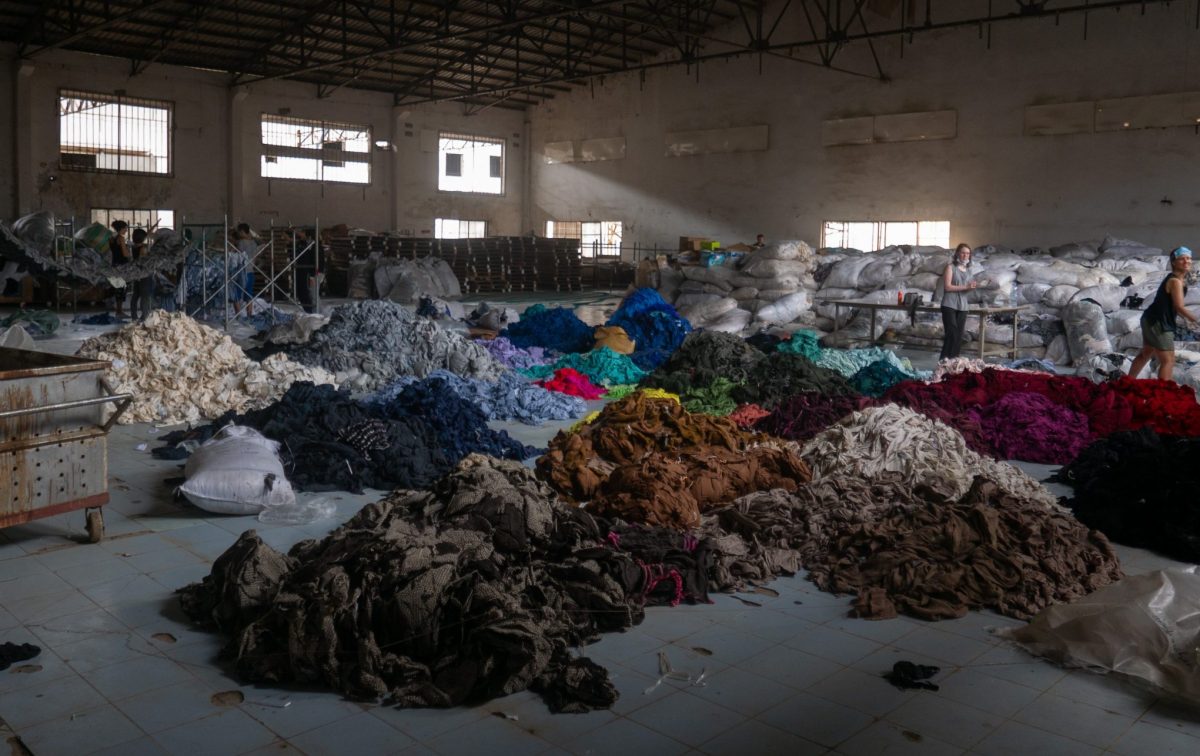
  • Clothing Companies are Destroying and Trashing Unsold Merchandise

    Clothing Companies are Destroying and Trashing Unsold Merchandise

    Imagine a system where you destroy leftover goods instead of distributing them to those in need. Now, open your eyes and look around you; look at all your favourite stores, and probably the shoes on your feet right now. The majority of these companies contribute to wasteful and neglectful practices. 

    In August 2020, the Canadian Alliance to End Homelessness (CAEH) conducted a survey suggesting that 5 percent of Canadians have been homeless themselves, while another 31 percent know someone who has been homeless. Moreover, one in seven Canadians say they live in a place that does not meet their needs but cannot afford to move elsewhere. Additionally, one in six Canadians cannot afford to buy new clothes and good-quality groceries. 

    Canadians across the country are experiencing deprivation due to lack of funds, and while this is an entirely different social issue on its own, we cannot be destroying perfectly good quality clothing that would tremendously help those who are struggling financially. However, the problem continues, usually hidden by corporations and avoided by people who are unwilling to address the problem. 

    Unfortunately, burning or cutting unsold clothing is fashion’s best kept secret, and although luxury brands like British Burberry admitted to destroying $36.8 million worth of its own merchandise, many other brands participate. Even Canadian favourites, like Winners and Marshalls, refused to comment in an interview with Global News when asked if the company destroys their products before throwing them away. Louis Vuitton and Nike are also major contributors to the issue, and H&M burned 60 tons worth of new and unsold clothes between 2013 and 2018. Also, whistleblowers have addressed that these practices also take place at Urban Outfitters, Walmart, Eddie Bauer, Michael Kors and Victoria Secret. 

    In the same article from Global News, a former employee of Carter’s Inc. was interviewed about her horrifying discoveries as a retail manager in the clothing industry. Patricia said, “You have to make sure and it’s part of the policy to ensure the product cannot be used if someone were to find it in the garbage.” 

    If someone is looking in the garbage, they could probably benefit from clothing, and the cruelest part of this policy is that, in theory, if a person finds needed clothing in the garbage or in the streets, it is damaged beyond the point of use. The policies do not just apply to specific clothing items, they apply to all merchandise … including shoes and winter coats.

    The World Resources Institute says that it takes 2,700 liters of water to make one cotton shirt. 2,700 liters of water is approximately how much water one person will drink in the span of two and a half years. On the other hand, while polyester clothing uses less water, the HuffPost says polyester production released 1.5 trillion pounds of greenhouse gases in 2015. 

    If withholding new clothing from those in need isn’t enough, the fashion industry is one of the world’s worst polluters, so all this pollution is for nothing if a significant amount of the products being made are just being shredded, burned or ripped beyond repair. 

    Furthermore, forcing employees, most of them making minimum wage, to cut up and throw away perfectly good clothes, shoes and coats is cruel, especially when you consider the dismal statistics indicating that one in six Canadians struggle to afford new clothes and good-quality groceries. 

    While many companies in the last year or two have begun to develop more environmentally friendly ways of making their clothing and recycling their fabrics, the fashion industry was still one of the top contributors to pollution in 2020 and continues to be in 2021. While there are some companies who have changed their policy and stopped destroying unsold items, it was an action only sparked by customers boycotting and the threat of bankruptcy. Also, many companies have hidden these practices from the public for decades, so don’t be so quick to applaud businesses like H&M for advertising their updated policies.

    Note: This article is part of our Winter 2021 Print Edition that focuses on both issues and the good in the current state of the world. Look across campus for a paper copy of this edition!


  • Consumption Culture & Why It’s an Issue

    Consumption Culture & Why It’s an Issue

    Recently, a lot of businesses and organizations have received backlash for not being ethically conscious with their products. Issues within clothing companies especially are being brought to consumers’ attention, since clothing stores so often manufacture unethically sourced products. This impacts the people who are making those products, the environment, and our wallets through fast fashion. People are left feeling as though there is no right answer, since sustainable brands are often extremely expensive, whereas shopping second-hand sometimes feels greedy since items in those stores are all that some people can afford.

    With quarantine came people spending a lot more time at home, which led to higher levels of online shopping. The environmental impacts of online shopping are higher than in-person, due to the carbon dioxide emissions caused by flying the products, the large amount of packaging that shipping products requires, and the fact that more online purchases means more first-time consumption, rather than reusing old products or clothing. Other times when online shopping is at its peak are Black Friday and the Christmas season. It’s important to be aware not only of the environmental impacts of your shopping habits, but also where those products are coming from. Fast fashion – clothing that is made cheaply and for short-term use – is often produced by underpaid workers in poor working conditions. This allows the clothing to be cheaper for us to purchase, making it difficult to boycott, especially if we are left unaware of its source.

    If the facts that consumption culture is bad for the environment and so often produced unethically weren’t enough to convince you that there is an issue within the fashion industry, fast fashion is also bad for the wallet. We’re constantly seeing messages saying “Buy me!”, making us think that we need the newest iPhone, winter coat, or beauty product. This culture of being perceived as outdated when your possessions are outdated is difficult to reject, but incredibly wasteful and costly.

    So, what is the right answer?

    One solution that’s been suggested to help ourselves and our world – since both the planet and our bank accounts take a hit when we overspend – is buying clothes or products second-hand. This also has an enormous impact on unethically sourced products, since less demand means less workers producing them in poor conditions. Buying second-hand might look different for everyone, but some examples include thrift shopping, trading with friends, or purchasing from any kind of second-hand store. These options give you a variety of things to buy at a discounted price – clothes, shoes, jewelry, furniture, home décor, books, knick-knacks and toys, and pretty much anything else you can think of to trade.

    Some experts have suggested that a possible answer to these issues is having government mandated regulations about the sourcing of clothes and other products. Similar to the food industry, businesses would have to explicitly state where and how their products were made. If it’s within your budget, buying clothes or products from brands that you appreciate as sustainable companies is also a great idea. It’s important to do your own research, but there are many ethical brands out there. Some popular choices include Patagonia, Levi’s, TenTree, and many others.

    In all honesty, I’m not sure if there is one right answer. I do think, though, that every little difference counts. So, whether you occasionally shop at your local thrift store for new sweaters trade books with your neighbour, or make an Instagram account to sell old clothes, find a way to help stop consumption culture and fast fashion. You might just find you like the products better, and that you and your bank account are happier, too!

  • ESST Clothing Swap

    ESST Clothing Swap

    For our fourth-year project, the Environmental and Sustainability Studies department is hosting a clothing swap. In a recent study, it was found that a family in the western world throws away an average of 30 kg of clothing each year. Of this, only 15% is recycled or donated, and the rest goes directly to landfills or is incinerated. The production of clothing results in a significant depletion of resources due to the continuous consumption of water, minerals, and fossil fuels. Furthermore, clothes are something we all need and want, but sustainable purchasing can be expensive. Our goal is to offer a low-cost alternative to this dilemma while keeping clothes out of landfills and giving them at least one more life. So, to take a step in the right direction, we invite Acadia students and faculty to join us in a clothing swap. We will be collecting clothes Monday, November 5th, 2018 from 11:30am-12:30pm outside of the Vaughan Memorial Library in the BAC. For every one item donated you get a token to “purchase” an item at the clothing swap in the Michener Lounge on November 6th from 3pm to 6pm. We hope to see you all there!  

    Caroline O’Connor is a fourth-year Environmental and Sustainability Studies student at Acadia University

  • Fashion Forward: Mental Health Message Behind Clothes

    It all began with a hand stitched shirt that reads “keep me high, love.” Now, there are seven products to choose from all bearing the message that it is okay to put yourself first. What makes this company stand out from the rest? The founders use their platform to open engaging, encouraging, and supportive messages about mental health through their products.

    Me Before You Clothing Co. is new to the fashion scene of Nova Scotia, but co-founders Vanessa Hamkens (Dalhousie) and Rhiann MacDonald (Acadia) have big plans for their forward-thinking company. Their goal is to “raise awareness about mental health by spreading positivity and curbing the stigma around it,” as said on the Me Before You website. Themes of self-care and self-love are central to the clothing designs, but Hamkens and MacDonald are aiming even higher. The duo is giving back to the community, contributing a portion of sales to local charity initiatives.

    An embroidered yin-yang symbol hovers above the word “balance” on one of the products, a black crew neck sweatshirt. This product is a part of one of the commitments that Me Before You Clothing Co. has taken on with a portion of each sale going towards Feed Nova Scotia, an organization that strives to reduce the food insecurity that many Nova Scotians experience. According to Feed NS, food insecurity has resulted in a dramatic increase of food bank users all across Canada. Specifically, in Nova Scotia, the 2016 statistics show a surge of approximately 20% compared to the previous year. Compared to 2008, Nova Scotian food bank usage increase by upwards of 40%. While Feed NS isn’t a mental health initiative, it is certainly related.

    Most recently, Me Before You Clothing Co. made a special release on Bell Let’s Talk Day with a specific person in mind. Sold at the Halifax Forum during the Saint Mary’s versus Dalhousie Bell Let’s Talk hockey game, the limited-edition shirts sported a fox on the front and words that read “Fox 12” on the back. A portion of the sales were put towards the Cayley Fox Memorial Award of Saint Mary’s University, an award established to commemorate the SMU student and rugby player who struggled with mental health issues. After shirts were sold out, $1000 of the proceeds were raised for the award. Upon announcing this on their Facebook page, Me Before You encouraged to “keep the conversation going although Bell Let’s Talk has ended. Share stories of Cayley and others who are struggling even if they are smiling”.

    So, what is next for the new entrepreneurs? “Right now we currently only have the Feed NS and Cayley Fox Memorial Award donations happening and that’s where our focus is for the next few months,” Me Before You commented. But the future holds even more opportunities for the clothing line. “Moving forward we are planning on creating new clothing items to partner with a donation to specific organizations or funds that align with our goals.”

    Using creative outlets to combat mental health stigma has recently been more prominent in Canadian universities. An art project titled “Ventilation Movement” from Erin Chapman of the University of Ottawa made headlines in 2016 for the innovative way in which the project allows for people to vent about their struggles. Another Maritime clothing line, Wear Your Label, created by two UNB students sends the message that it isn’t selfish to practice self-care. Hamkens and MacDonald hope to contribute to this important discussion with their own clothing line by, as stated in their mission statement, “starting a conversation about self care and self love, with our name ‘Me Before You Clothing Co.’ prompting you to put yourself first and take care of your own needs.” Me Before You Clothing Co. is open to new ideas of community outreach, and encourage those with interest to contact them.


  • Minimalist Thinking

    Minimalist Thinking

     The Acadia campus has seen an uprising of rain boots as a replacement for snow boots. This new trend is interesting for many reasons. It highlights a minimalist attitude towards fashion that is making a comeback not only in the entertainment industry, but also with things such as office supplies,electronics, and many other conceptual designs. According to becomingminimalist.com, minimalism is seen as the intentional promotion of things we value, and the taking away of anything else that does not fit that description. It encourages people to own fewer things and to try to find more than one use for everything they have. Winter fashion isn’t the only thing that represents minimalist thinking, but the fact that people are interested in a minimalist approach is interesting. The approach is almost a statement of the peace that people find in having less.
    What is it about fashion that makes minimalist thinking so appealing? Companies such as Apple and Google have applied minimalist thinking in the way that they structure their websites. If you were to look at an iPhone or look at the homepage of Google, you would find very few things to look at. This approach has become popular in recent years, and is expected to continue growing in strength. In terms of the fashion industry, minimalist thinking highlights an uncluttered life and a confidence in knowing that there is more to everything than what you think.The electronic industry has been simplifying an average office desk for the last 40 years. Before,employees would have a calendar, address book, telephone, file folders, speakers, CDs and DVDs and other stationary items. With the rise in computer usage, people have started to rely on one device to do a multitude of things. There is much speculation that the origin of minimalist thinking comes from electronic developments that have taken place. So what does this mean in relation to fashion? Perhaps the minimalist approach that has happened with regard to computers is also happening with fashion.Perhaps people have internalized a new way of thinking. Suddenly having a computer that can do multiple things at once is seen as having something that is more valuable. This may be where the link between minimalism and value has originated.The rain boot phenomena may suggest that people have internalized a connection between minimalist orientation and wealth. The less you own, the more expensive your belongings appear. Value has returned to the common rain boot. Such a design would allow for many different functions, as most people only associate rain boots with rain. The use of the rain boot with snow has achieved the same effect as a computer that can both tell time and classify folders. Wealth has been associated with a less is more attitude. Perhaps people have become affected by computers more than they initially thought possible.

Betzillo positions itself as a versatile gaming hub where structured bonuses and adaptive gameplay mechanics support both short sessions and extended play.

Built with a focus on innovation, Spinbit integrates modern casino architecture with rapid transactions, appealing to players who value speed and digital efficiency.

Ripper Casino emphasizes bold entertainment through high-impact slot titles and competitive promotions crafted for risk-oriented players.

A friendly interface and stable performance define Ricky Casino, offering a casual yet reliable environment for a wide spectrum of gaming preferences.

King Billy Casino channels classic casino spirit into a modern platform, delivering recognizable themes supported by contemporary reward systems.

Immersive visuals and layered slot mechanics are at the core of Dragonslots, creating a narrative-driven casino experience.

Lukki Casino appeals to players seeking direct access and minimal friction, focusing on fast loading times and intuitive controls.

Casinonic provides a structured and dependable gaming framework, blending modern slots with transparent operational standards.