Tag: #dance

  • Dance Like Nobody Is Watching: Overcoming Dance Culture

    Dance Like Nobody Is Watching: Overcoming Dance Culture

    There are a few common things that almost every dancer will experience. The first is that achieving the perfect ballet bun means experiencing the most excruciating amount of pain one could possibly imagine and then solidifying your fate under more hairspray than Walmart keeps in stock. The second is the art of the quick change. There is no bigger test of ability than when you have to go from your jazz shoes and half-up hair, to a full bun, tutu and point shoes in under a minute; when your dance career depends on making every second count. The third one is “dance-bag smell.” If you don’t know what I’m talking about, trust me. There is no more distinct smell to a dancer then an Adidas sports bag that is home to those canvas ballet shoes you refuse to replace despite the holes because they are your lucky pair. Not to mention the three pairs of extra tights, leotards, toe spacers, and who knows what else that all comes together to form that smell. 

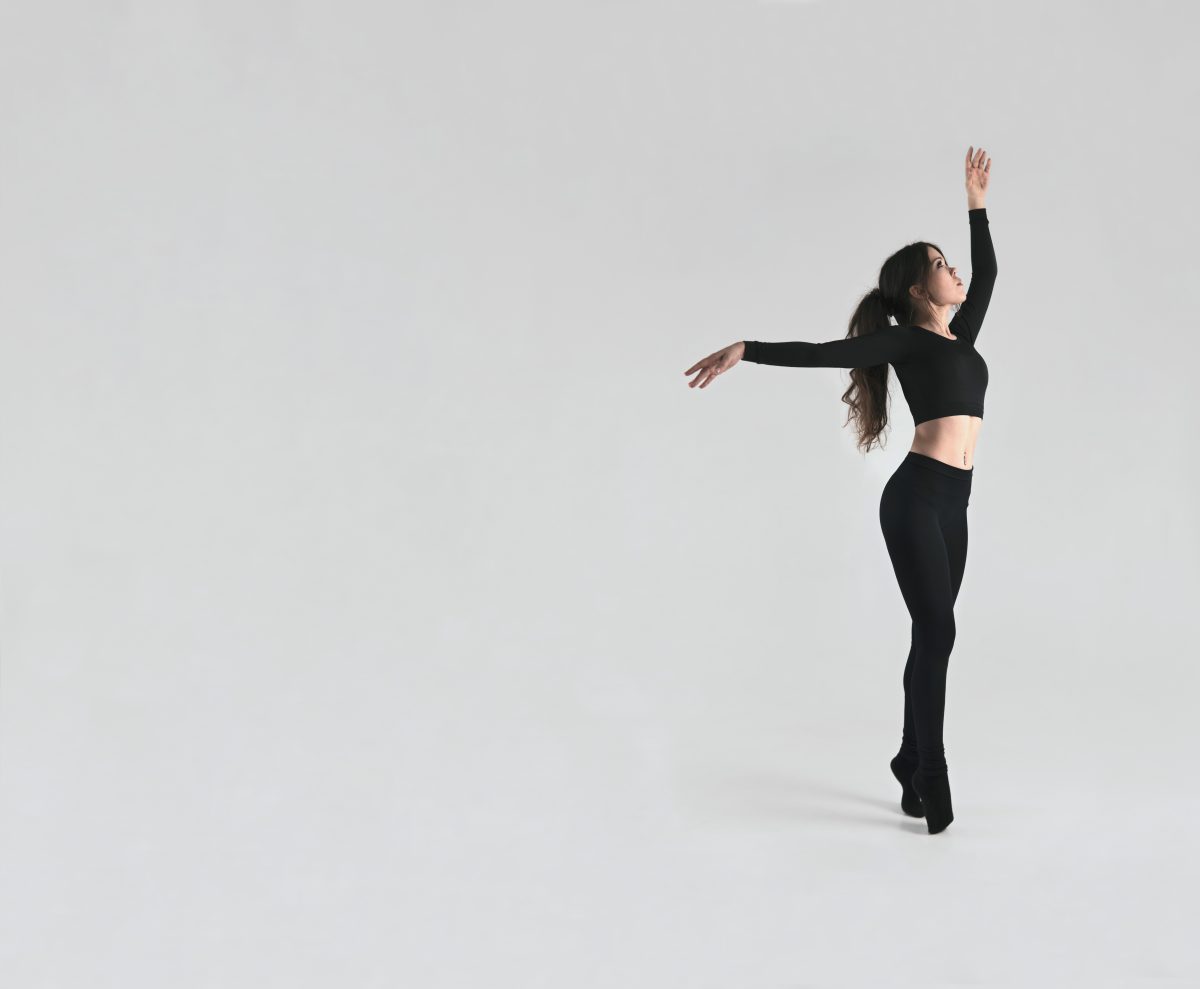
    There is no question that the life of a dancer comes with distinct characteristics; experiences that draw us all together. Having been a dancer myself since the age of 10, I was drawn in by the creativity, the stage, and for reasons I am unable to explain, even that God awful dance-bag smell. As it is for all athletes, dance often demands that you push your body to the absolute limit. You can always jump higher, you can always plié a little lower, and your feet can always point a little harder. There is no question that as a sport, dance demands a lot from you and that pressure can be a lot to live up to, but we keep going back to the studio because we want to step up to the plate. We keep going back because every day we see ourselves getting closer to our goals that previously seemed impossible. Dancers are also unique in that not only are we athletes, but we are artists at the same time. Rather than painting on a canvas, we create an image through movement. Our bodies become the paint brush we use to express the stories and emotions within us on the stage that is our canvas. This balance between the goal-seeking athlete and the passionate artist is what always kept me going back to the studio. 

    This is when I feel that I must address the elephant in the room. It should be no surprise that the goals we seek to achieve can lead to an enormous amount of pressure. It is no secret among the dance community – albeit the topic is often not addressed directly – that the culture of dance can lead to a pretty significant toll on your mental health. When the narrow standards of dance mean there is more or less one way to be right and a thousand ways to be wrong, developing a dangerously high level of perfectionism becomes a natural symptom. Dancers can be overly critical of others, and twice as critical of themselves. As a girl who was naturally gifted with curves, there was no room for my hips in a culture that celebrates girls whose bodies are small, dainty, and often lacking natural curves. This is something I was reminded of daily; not only by my own thoughts when I looked in the mirror and saw what I know now to be a very distorted image, but by the other girls in my studio. While I tried to make up for this with my drive and my passion for the art, the love I had did not change the natural limitations of my body. I was not the only one who was subject to the criticism of themselves and their peers. I’ll never forget the day that one of the kindest and most hardworking girls in my class had just finished a combo while the rest of us sat down and watched. “Like a deer on ice” one of the other girls scoffed, as the rest of them laughed at one of their own friends under their breaths. It became my everyday norm to walk into the studio where girls would be observing the other classes and pointing out the problems with other dancers; judging both their abilities and their bodies. In fact, it was so normal that it took me a few years being away from my studio to realize how twisted this daily ritual was. It was an activity that even I regretfully took part in just to try and fit in.

    When re-telling the stories of my experience as a dancer, this is often when I’m asked the big question. Why did you stay in dance when all of this was happening? I would love to have some deep answer for you here, but the truth is simply that I loved it. While the culture came with considerable weight, the dance itself is what lifted that weight off of my shoulders again and again. The other girls could say what they wanted about me and so could my mind, but I know how I feel every single time I dance, and the feeling is indescribable. The biggest challenge for me was separating the art from the problematic culture that surrounds it; a daunting task, and one I only truly got the hang of during my time at Acadia. Joining the Acadia Dance Collective in my first year was terrifying. Fear of the judgement and criticism came rushing back. However, it did not take me long to realize that this program was different. The girls I was dancing with were all here because they loved to dance. We were all just taking class to have fun. Dance no longer had to be a competition between dancers on who was the best, but a celebration of a common passion we all shared. As I got more involved with the Executive team, and took over as the club President in 2019, these are the core values I seek to promote to each participant in our program, especially as I realize that my experiences are far from isolated. While, sadly, the Acadia Dance Collective has had to cancel our fall program due to COVID-19 restrictions, I hope that with time we will be back in order to allow more students to take part in the shared experience of a safe space to explore our passions once again.

    Note: This article is part of our Fall 2020 Print Edition that focuses on Women Health and Sexuality. Look across campus for a paper copy of this edition!
  • Uniting Community through Dance

    Uniting Community through Dance

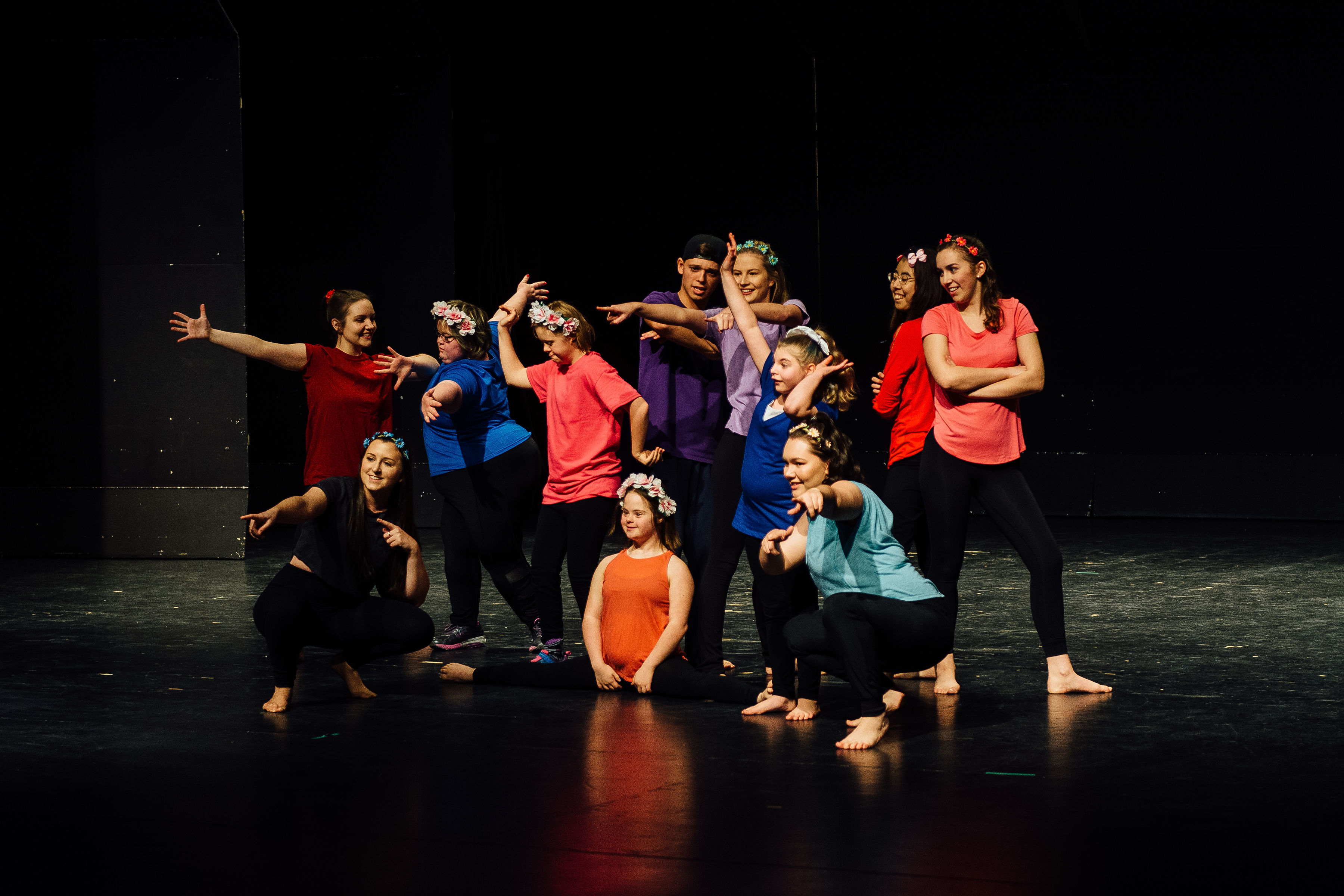
    Dance is an outlet that many use to express themselves. It is a beautiful art form where individuals perform choreography to produce profound messages. These messages evoke great emotions in the audience, and in the dancers themselves. Olivia Dobson is a third-year psychology student who has been passionate about the art of dance since she was young. Olivia wanted to share her love for dance with Acadia and the greater Wolfville community. In particular, Olivia witnessed the great success of Acadia’s SMILE program, but noticed there wasn’t an accessible dance class that was widely available within the Annapolis Valley. Upon this discovery, Olivia began organizing a dance class to fill this gap in the Valley. Then, came the creation of Dancepiration. Dancepiration is a dance program that is designed to be accessible for individuals, primarily children and youth, of all abilities. Olivia’s dance class began in September of 2018 and has grown from eight dancers, to over twenty dancers since. The program offers an interactive dance class every week, where dancers move their bodies to express themselves in a way that many participants have never experienced before. 

    I sat down with Olivia to learn more about the tremendous initiative she created, and to see where Dancepiration will progress in the future.

    1) Why do you believe dance is such a powerful form of art?

    First off, dance is a multi-layered discipline, sport, and art form. I say that because I believe it involves four foundational elements:

    • Social Interaction (Communication): Dancing often involves cooperation and team work. Since our class practices as a group, each class is a social experience. The dancers work with one another by encouraging each other to do their best. Our dance class is a judgement free place where participants work with instructors to learn new dance moves, supporting each other along the way. I see our dancers learning from each other and even picking up on new dance moves by observing their fellow dancers.
    • Creativity: Dance is an opportunity for individuals to express themselves without the use of language. We teach our dancers structured dance moves, as well as guiding “expressive dance” sessions where we encourage our dancers to move their bodies in whatever form they desire. I am always in awe of how creative the dancers are with their movements. It brings me great joy to see our dancers move so passionately to the beat of music.
    • Physical Activity: Dance is a low-impact form of exercise that provides an immediate opportunity to work one’s mobility, balance, endurance, coordination, flexibility, etc. Since all of our dancers enjoy movement and music, dancing is a great way to enjoy physical activity! We try to stay moving as much as possible during our dance sessions; as well as improving participants’ flexibility at the same time.
    • Cognitive Skills: Dance requires concentration, attentiveness and memory, along with many other cognitive skills to execute dance routines. We often learn various dance choreographies, and I am always impressed with how quickly the dancers are able to perform the moves taught. Sometimes the dancers show up to class remembering the dance moves they learned previously, and perform them by heart; and sometimes, they remember dance moves even better than I do!

    2) There has been new research conducted in the field of dance therapy, can you speak to some of the research that has been done? Moreover, how does this research relate to your class?  

    An increasing amount of research is being published regarding the benefits of dance for individuals who have a disability. Dancing is an innovative form of therapy that has been shown to have positive benefits for all people, and especially for those who have a disability. The University of Montana is currently conducting research on creating accessible dance programs, as they “envision dance for all students.” Dance has been described as a “rich experience of exploring and creating, with the added benefits of lively movements that promote overall well-being.” Dancepiration aims to instill this creativity and well-being in our dancers. Our dancers naturally share a collective passion for dance, music, movement and the social experience that comes with the class.

    3) Can you describe to us the types activities you engage in during a dance session?

    In this dance class we engage in many different creative activities such as: attempting to make our bodies portray a snowflake falling gently to the ground, or a tree as the wind blows through its leaves, and other similar activities. In addition, we play dance-related games like “freeze dance”, “wax museum”, and “head-shoulders-knees and toes.” We frequently use the entire studio to perform our dances, while working on stretching and balancing our bodies as we do so. Each week we learn “mini” dances and practice them the following week to build on muscle memory skills; currently, dancers love to imagine being dogs as they dance to the song “who let the dogs out.” Last semester we learned a full dance routine and performed it on-stage for a live audience. Seeing the dancers perform for their loved ones was a highlight for me since starting this program. This semester, we are learning a full dance routine for a show in April.

    4) This is obviously a great initiative that many individuals are benefiting from. Where would you like to see this program going forward in the future?

    Honestly, I just want this program to become more well-known around campus and the community. I am so grateful to have met the dancers and their families, who currently participate in the class. The dancers who have participated so far are so talented and bring such a light to my life. I hope that Dancepiration can continue offering dance classes for anyone who is interested. A specific goal moving forward is to divide the dance program into separate dance classes for participants of varying ages. I also want to build a website that will allow individuals and their families to sign up easily, and to share information about the class more widely. Having volunteers from the Acadia Dance Collective at each class has been amazing because the dancers bond with instructors, and can receive one-on-one attention.

    Upon graduating in 2020, I hope this program will be established enough so that my successor can continue growing the program to reach more interested individuals. Having the opportunity to speak with you will hopefully introduce many more interested participants. 

    I want to thank Olivia for taking the time to sit down with me and inform us about the tremendous program that she has started, and the remarkable things the program has already achieved in its short existence. It is passion like this that makes Acadia such a special place, as Olivia exemplifies how just one idea can turn into something extremely meaningful for so many. As said by a dancer’s parent to Olivia, “You are touching the hearts of so many people. Not only the participants, but as a parent seeing your child dance, smile and interact with others, it makes me so happy.” I look forward to seeing Olivia develop this program further, as it will surely bring happiness to so many going forward.

    If you wish to learn more information about participating or volunteering with this program, please email: [email protected]

    Sebastian Farkas is a third year Politics student and Sports and Wellness Editor of The Athenaeum.

Betzillo positions itself as a versatile gaming hub where structured bonuses and adaptive gameplay mechanics support both short sessions and extended play.

Built with a focus on innovation, Spinbit integrates modern casino architecture with rapid transactions, appealing to players who value speed and digital efficiency.

Ripper Casino emphasizes bold entertainment through high-impact slot titles and competitive promotions crafted for risk-oriented players.

A friendly interface and stable performance define Ricky Casino, offering a casual yet reliable environment for a wide spectrum of gaming preferences.

King Billy Casino channels classic casino spirit into a modern platform, delivering recognizable themes supported by contemporary reward systems.

Immersive visuals and layered slot mechanics are at the core of Dragonslots, creating a narrative-driven casino experience.

Lukki Casino appeals to players seeking direct access and minimal friction, focusing on fast loading times and intuitive controls.

Casinonic provides a structured and dependable gaming framework, blending modern slots with transparent operational standards.