Tag: fundy

  • Witnessing the Transformation of the Mi’kmaq Living Resources: The Colonization of the Minas Basin

    Witnessing the Transformation of the Mi’kmaq Living Resources: The Colonization of the Minas Basin

    This essay is a summary of the presentation held by local Fisherman and Ecosystem Holder, Darren Porter, who was invited in January by the Acadia Department of Sociology to give a public presentation under the same title.

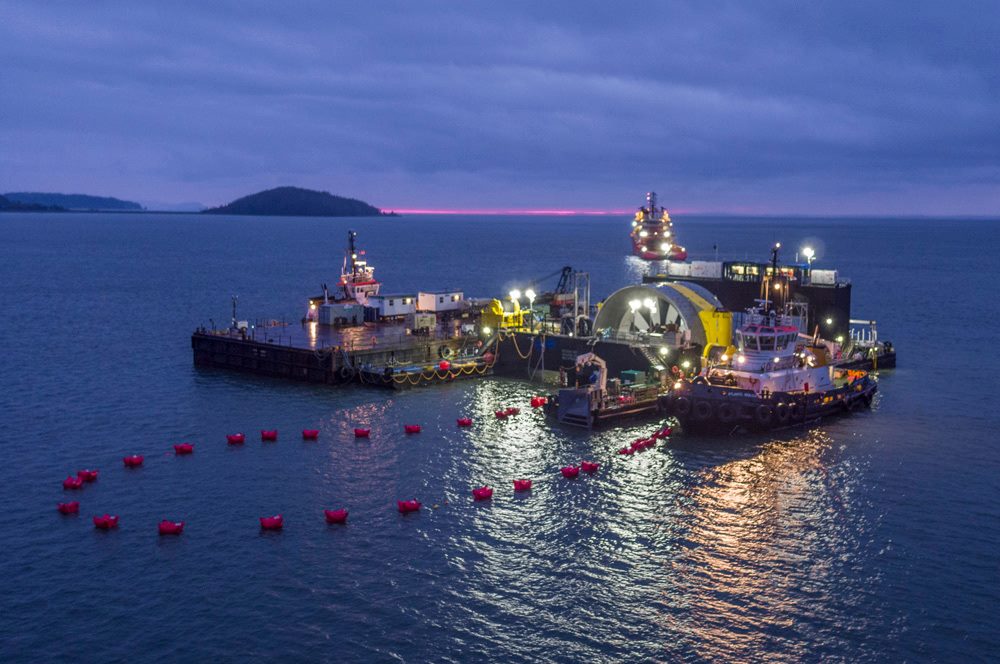
    We all remember when Stephen Harper, on behalf of the Canadian people, apologized in parliament to the indigenous people of Canada for the actions and control exercised over First Nation people which lead to the destruction of indigenous life, culture and families. Harper further apologized on behalf of all Canadians for the assumption that aboriginal cultures and spiritual beliefs were inferior and unequal. I remember how good and redeemed we all felt when those words were pronounced right in the parliamentary chamber and were televised across Canada. But now that the healing ceremony is over and the dues are done with an official apology, business can go on as usual. This business being nothing less than 1000 square meters of in-stream tidal power turbines in the Minas Basin Passage. If you really care about apologies for having assumed that aboriginal cultures and beliefs are inferior, then you must question this colossal project being placed right into the heart of Mi’kmaq sacred lands.

    The Bay of Fundy (Minas Basin) is not only a significant location for Glooscap, the central figure in the Mi’kmaq creation story but also the site of many other important Mi’kmaq sacred legends like the creation of Glooscap’s Beaver Dam. In other words, the Bay of Fundy including the Minas Basin and Blomidon are the most sacred sites with regard to Mi’kmaq faith and heritage. The sinking of in-stream tidal turbines which will eventually span over 1000 square meters in the Minas Basin Passage would be equivalent to the conversion of Mount Tabor by Nazareth (a revered Christian holy site known as the Holy Mount of Transfiguration) into a green wind farm with 50-meter-tall wind turbines spinning all day and night to produce electricity for export. The Bay of Fundy Glooscap creation legends are to the Mi’kmaq equal to what the testaments in the Bible are to Christians. Preserved from as far back as 3500 years of oral tradition, the Glooscap Beaver Dam creation legend, for example, has been scientifically confirmed and is accurate in location and geological events just as the legend describes. Yet, while no one would ever dream of turning Mount Tabor into a “green” wind turbine farm because the wind blows there, the Minas Basin Passage in the Bay of Fundy is not subject to the same protection because it happens not to be a Christian holy site but only a sacred site for the Mi’kmaq. But it does not end here.

    Grinding Nemo

    We already have one example of a ‘green energy’ tidal project that was to “save the planet” but instead killed off a whole strain of a fish species and diminished others to the point of no return in the Annapolis River. The Annapolis River Striped Bass is now extinct due to the Annapolis Tidal Power Project and there is no other way to say this but the Annapolis River Striped Bass was destroyed in the name of “green” energy production using tidal power. The extinction of this fish was not foreseen by any government experts and scientists who pushed the project ahead. What is even more concerning is that no lesson has been learned from it either. The Annapolis Tidal Power station should have been shut down and dismantled immediately when it was clear that it would cause fish extinction, but instead an entire genetic strain of fish was sacrificed on the altar of “green” energy.

    In the light of these facts, it is time to redefine what “green” really means. Now another one of those “green” energy tidal project is going ahead in the Minas Basin Passage in the very same fashion as was done in the Annapolis River which once was teeming with fish but no more. But this time, not only fish species in the Bay of Fundy could be affected, but the entire livelihood of the Mi’kmaq and local fishermen. Should it happen again that fish are going extinct and/or disoriented by the churning of the turbine blades as with the Annapolis River Tidal Power project, the results would be catastrophic. This is why local fishermen and the Mi’kmaq are asking for input and a voice in this matter.

    The main argument voiced in favor of this project is that the Minas Basin Passage is so large that even a square kilometer of turbines will not affect any fish or marine life. This argument is like saying there will be no collisions on the roads since there is so much space all around them and no cars can collide. The fact is that fish follow or let themselves be carried by underwater currents, especially in the Minas Basin Passage where the currents are very strong. This means that fish are moving along corridors created by underwater flows just like people follow roads instead of driving across fields just because the space is there. The fish in the Minas Basin follow such underwater corridors created by currents when they move from the Bay of Fundy into the Basin via the Minas Basin Passage. The problem is that in order to gain maximum efficiency, instream turbines are stationed right there where the currents are the strongest and, hence, end up in the pathway where fish travels. There can be no question that the fish will be battered around by the blades of the turbines which are actually designed to speed up the water currents around them by pulling everything towards them and along with it everything that happens to be in the water.

    The fishermen know the routes the fish take but the tidal power experts and bureaucrats do not. They also do not know that you cannot conduct research on lobster in the Minas Basin in the middle of February as it was seriously proposed because there is hardly any lobster there at that time of the year. This is like doing research on the growth of blueberries in February which would undoubtedly lead to the expert conclusion that blueberries are not present and cannot be affected by any human activity. This outcome could then be published in a government report with glossy colored paper to highlight the results. It would be funny if it were not so perilous because those glossy government reports have the power to destroy lives.

    All the Minas Basin fishermen want is that honest and unbiased research be conducted on the effects on marine life in the presence of in-stream turbines before they are stationed for good and on a massive scale. All they want is transparency in the process and that their concerns are being considered. All they want is a proper system to monitor marine life and fish kill in and around the turbines. Ecosystems are so fragile and good intentions on the part of those who wish to develop “green”’ energy will not compensate for lost and destroyed species, as we have seen with the Annapolis River Striped Bass. Good intentions will not compensate for the disastrous effect on the livelihood of the Mi’kmaq and fishermen should it all go wrong. The stakes are too high to gamble in the name of a “green” project. Nova Scotia does not need the turbines, but it needs a healthy fishery.

    On the topic of green energy: just because energy production does not use fossil fuels or reduces the use of fossil fuels does not make it automatically “green” or environmentally friendly. The best example are those energy efficient lightbulbs that use less energy to give off the same amount of light but contain the highly toxic mercury to the extent that poison control must be called in to decontaminate the premises should the lightbulb break and the toxic mercury be released. These “green” lightbulbs can also not go into the “green” recycling bin but must be decontaminated first which in the end turns out not to be so energy efficient after all. But they are sold to the unsuspecting public as “green” or environmentally friendly because they use fewer fossil fuels.

    In other words, just because energy production uses less fossil fuel or renewable energy does not automatically mean there are not dire consequences to the environment. However, we are seemingly willing to march blindly forward under the banner of “green” renewable in-stream tidal energy production without ever having established a baseline to monitor fish kill or other hazardous effects to the Minas Basin ecosystem due to the spinning turbine blades that can hack up fish like machetes, due to pressure changes in the water that can make fish heads explode, due to electromagnetic fields and noise pollution that can cause disorientation in fish. Supreme Court Justice Jamie Campbell made the following statement regarding the installation of the tidal turbines: “when dealing with the environment of the Bay of Fundy, there is no room for error.” If there is no room for error, why then is there no monitoring done regarding the effects on marine life due to the tidal turbines in the Minas Basin Passage? How can we protect the environment without any safeguards to make sure marine life and the ecosystem in the Bay of Fundy are not destroyed due to the in-stream tidal turbines? It seems that all is needed to exempt any environmental monitoring for the protection of ecosystems is to add the label “renewable” and or “green” and everything goes and with that maybe the entire fishery in the Bay of Fundy.

    Find more information at: redsky-blacksea.com

  • Tidal Series: Tidal Energy – Where Are We Going?

    Tidal Series: Tidal Energy – Where Are We Going?

    I first came to Acadia as a Biology professor in 1973. When I arrived, my initial research interests were in the ecology of freshwater lakes and rivers, but a resurgence of interest in Fundy tidal power in 1976 created a great need to organise research to answer the inevitable questions about the effects of tidal power on the Bay of Fundy. This has remained my major research focus ever since.

    As one of the earlier articles in this series mentioned, we have been considering generating electricity from the Fundy tides for more than a hundred years. In fact, I would argue that most of what we know about the Bay of Fundy as an ecosystem has come about because of studies generated by tidal power proposals — many of those studies have been conducted by Acadia students. Most of the time, the engineering concept was to construct a dam (or barrage) across the mouth of a tidal river or across a bay such as Minas Basin, allow this to fill with water during the flood tide, and then force all of that water out through turbines when the tide is ebbing. This is called tidal range generation, and it causes huge environmental problems, many of which are associated with the dam, not the turbines. If the dam cuts across an estuary that fish move through to get to their spawning grounds, they will probably have to pass through the turbines when they head out to sea again. That is the situation with the Annapolis tidal generating station, even though there are two fishways built into the dam. The fact is that not enough fish seem to be able to find them.

    Annapolis Tidal Generating Station. Photo by G. Daborn.
    Annapolis Tidal Generating Station. Photo by G. Daborn.

    One of the problems that arises in relation to tidal power (and with other environmental activities like fracking) is the spread of misinformation. A previous article in this series seemed to leave the impression that the turbine was responsible for the disappearance of the striped bass population in the Annapolis River. That is not the case. We showed in 1975 (well before the turbine was installed in 1984) that almost all of the suitable spawning ground in the lower Annapolis River had been eliminated by the building of the Annapolis Causeway in 1960. There were a few striped bass able to spawn each year in the Annapolis, but the vast majority of the fish that sustained the sports fishery in the area were migrants from other rivers, many from the Hudson River in the USA. The Annapolis tidal station has been a useful study case for Acadia faculty and students. Because the dam was constructed more than 20 years before the turbine was installed, it is possible to identify the different effects of the dam and of the turbine. That would not be the case for a dam built directly for the purpose of housing turbines.

    Nonetheless, the tidal turbine at Annapolis remains a significant challenge for fish populations: many of the fish, both adults and juveniles, which end up going through the turbine suffer fatal damage. Although none of the species that spawn in the Annapolis River have been eliminated, their populations have changed significantly. That will always be a serious concern for tidal power development in the Bay of Fundy, and is one of the major reasons for the low level of enthusiasm for energy development based on tidal range.

    As outlined in previous articles, the present approach is aimed at evaluating the potential and effects of tidal stream devices, which work on the flow of water rather than the water stored behind a dam. Many of the concerns about tidal power in the past also apply to this approach. What are the effects on fish, mammals, birds, water flows and sediments, etc.? Even though these turbines are spaced apart without the support of a dam and there is potentially enough room for fish to go around each turbine, we must understand the risk to fish. We do not know whether they will be able to sense the presence of a working turbine and avoid it. As more turbines are deployed, the alternative space for them to move upstream and downstream becomes less, and so a large number of turbines in a narrow passage could begin to act much like a dam. The risk to fish and mammals is the focus of much of our research at the present time. We need to know how animals respond to a turbine, and what their response will be. That can only be done when we have turbines placed in the water for trials. A few observations of fish and mammals in the vicinity of turbines tested in Britain and the USA have shown no evidence of any being directly impacted by the spinning blades, but absence of evidence is not evidence of absence! It is not enough knowledge on which to base an assessment of risk. The effects on fish and mammals are likely to vary according to location, turbine technology, and species. Obviously we have to complete that research before any decision is made to deploy large numbers of turbines.

    Several other environmental issues raised when the tidal stream studies were initiated some eight years ago have been examined, and some of them were found not to be of major concern. For example, it was thought that some of the big ice blocks that form in winter could be drawn down to damage a turbine or monitoring equipment placed on the bottom. That turns out to be very unlikely.

    One of the major challenges results from the extremely dynamic flows of water through passages that are potentially suitable for tidal stream turbines. Recent research in the Bay of Fundy has led to a number of new technologies for monitoring environmental effects, such as fish and mammal behaviour, and of mooring equipment in these very high water flows. These represent innovations that will have value when applied elsewhere.

    The saga of Fundy tidal power will continue for some time yet. Nova Scotia has the dubious distinction of being the province with the largest per capita contribution to greenhouse gas emissions in Canada. Recently, changes in policy have triggered a major shift toward renewable energy to replace our heavy dependence on coal and oil. In 2015, about 27% of our electricity came from renewable sources, which is a significant improvement over the 12% of a decade ago. Most of that has come from wind power, but there is probably little potential for much greater use of wind energy because it is so variable and unpredictable. Given the enormous and predictable tidal resource that is adjacent to our shores, it is natural that we would look to tidal power to displace more fossil fuels. In addition, there are many other places around the globe that have potential for tidal power development. The accumulated experience gained by Nova Scotians on environmental, technical and social issues over the last century could be of great value to such global developments, and be an economic asset to the province. Many of the Acadia students who have worked on this topic in the past are pursuing careers as university faculty (including some at Acadia) and as research scientists with government agencies.

    It may be that in the end tidal stream approaches to electricity generation will prove too costly, or too technically difficult to pursue on a large scale. Most of the earlier proposals for tidal power development in the Bay of Fundy were in fact not abandoned because of environmental concerns: they were not built primarily because it proved uneconomic in comparison with cheap oil. Given the present state of oil supply in the world, that could very well be the case even now.

    But regardless of the economic evaluation of tidal energy, Nova Scotia needs to look for ways to get away from its dependence on fossil fuels if it is be a responsible member of the world community. The truth is that we will be less directly impacted by global climate change resulting from greenhouse gas emissions than most of the rest of the world because of the buffering effects of the sea around us. Deciding to continue burning coal and contributing to that global problem simply because a viable alternative is a little more expensive is a morally reprehensible position. We need to look at this resource, evaluate its effects, and learn how to benefit from it safely without compromising other benefits that we have from the Bay of Fundy. If we are successful, we not only get off fossil fuels, but can build an industry that would yield great benefit in the future. I am quite confident that we will find a way to capitalise on this clean, predictable resource, and that Acadia faculty and students will be major contributors to the knowledge that is needed, as they have been over the last 100 years.

Betzillo positions itself as a versatile gaming hub where structured bonuses and adaptive gameplay mechanics support both short sessions and extended play.

Built with a focus on innovation, Spinbit integrates modern casino architecture with rapid transactions, appealing to players who value speed and digital efficiency.

Ripper Casino emphasizes bold entertainment through high-impact slot titles and competitive promotions crafted for risk-oriented players.

A friendly interface and stable performance define Ricky Casino, offering a casual yet reliable environment for a wide spectrum of gaming preferences.

King Billy Casino channels classic casino spirit into a modern platform, delivering recognizable themes supported by contemporary reward systems.

Immersive visuals and layered slot mechanics are at the core of Dragonslots, creating a narrative-driven casino experience.

Lukki Casino appeals to players seeking direct access and minimal friction, focusing on fast loading times and intuitive controls.

Casinonic provides a structured and dependable gaming framework, blending modern slots with transparent operational standards.