Tag: Global

  • Global Climate Change Week: What Is It and How Can You Show Support?

    Global Climate Change Week: What Is It and How Can You Show Support?

    In the late ’70s and early ’80s, CO² emissions were standing around 330ppm nearing the critical 350ppm which marks the point where the CO² in the atmosphere is no longer at a safe level. Since then global emissions have been on a steady rise and don’t look as if they will be slowing down anytime soon. As of this week, CO² emissions were found to be sitting at 408.59ppm.

    That number is significantly higher than what it was in the late ‘70s and has caused people around the world to recognize Climate Change as a crisis. However, even after this recognition, many people still do not realize climate change as the crisis it is and for those who do realize, they are stuck, frustrated, trying to figure out how they can solve this problem at hand.

    Last Friday, September 20th marked the beginning of Global Climate Change Week which will last until this upcoming Friday. Primarily, this is a week dedicated to looking at the Climate Change Crisis and discussing what ‘we’ as individuals around the globe can do to help this crisis from getting worse. Across the world, during this week, there are various events being held to discuss solutions and evoke change from our nations.

    On Monday the United Nations held the ‘2019 UN Climate Action Summit’ and UN Secretary-General António Guterres requested that leaders come prepared with realistic ideas: “I want to hear about how we are going to stop the increase in emissions by 2020, and dramatically reduce emissions to reach net-zero emissions by mid-century”.

    Similarly the Saturday before the summit took place, the UN hosted a ‘Climate Action Youth Summit’. This event is geared towards considering what ideas and solutions young leaders may have that could serve to help the crisis at hand. The youth are often looked over when it comes to ideas about decision making and this event is designed to give youth that voice they often don’t have.

    Now, how can we as university students show support for Global Climate Change Week?

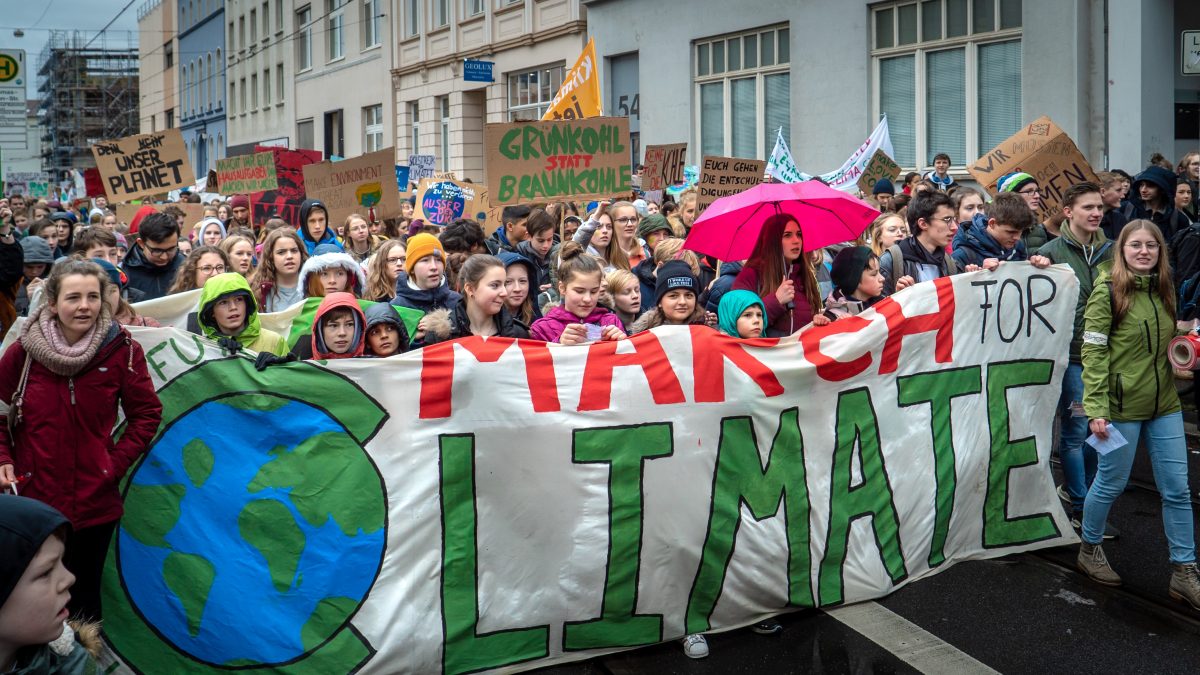
    Last year 16-year-old Greta Thunberg was fed up with the lack of action regarding climate change decided to strike by skipping school on Fridays and protesting outside of Sweden’s Parliament. Since then Thunberg has inspired students around the world to join with more than 2,300 school strikes in just over 130 countries joining in on the May 24, 2019 climate strike.

    Kickstarting Global Climate Change Week off is the Global Climate Strike led by Thunberg. This strike took place on September 20th and was predicted to draw participation from over 150 countries, making that strike the largest one yet. There will also be an equally impactfull and crowd-drawing strike closing out the week this upcoming Friday as well. There will be events held in Halifax on the strike days as well as all week that students can attend to promote Global Climate Change Week.

    In our own town of Wolfville, a young child by the name of Lily-Beth was plagued with climate change and was able to see its negative impacts on the world. She decided to skip school on Friday for the Global Climate Strike and stood in the Clock Park on Main Street with the hope strikers from the nearby schools would join her in the protest for climate change. To her delight, Lily-Beth was greeted throughout her time on Main Street by many citizens and students supporting this cause.

    Aside from striking, there are other opportunities for students to get involved in our own Annapolis Valley:

    • Wednesday, September 25th: Stitch-In In Support of Global Action for Climate Justice from 4-6pm at the Clock Park on Main Street
    • Friday, September 27th: A $20 bus taking people from the valley to Halifax for the closing strike

    Additionally, students can support the movement on social media or can reach out to Acadia’s Climate Club in hopes of joining or finding information on any events they might have!

  • “Real” Problems

    When Brazil was awarded the Summer Olympics in 2009, there was little reason for cynicism. The South American nation was growing at an annualized rate of 5%, and The Economist called Brazil a “vast and bountiful land”. Winning the 2016 Olympics and 2014 World Cup contributed to the hubris felt by many Brazilians, and numerous economists were convinced that Brazil would become one of the world’s largest and fastest growing economies.

    The turning point was the 2014 oil crisis. Global oil prices dropped substantially and plunged Brazil into a dark abyss. Compounded with the Petrobras scandal that forced former President Dilma Rousseff out of office and cost the country nearly $5.3 billion, the Brazilian public was weary of the cost of the Olympics. Although nowhere near Vladimir Putin’s $50 billion spectacle in Sochi, the cost of the Rio Olympics was nearly $12 billion. This kind of spending at a time when Brazilian police couldn’t afford gas for their cars or ink for their printers was sure to raise tension within those most affected by the economic crisis.

    One looking to understand Brazil’s economy would have to examine their history. After military dictatorships in the 1980s, Brazil was able to stabilize inflation and control public spending by the 1990s. Numerous state industries were privatized and foreign investment was heavily encouraged, which signaled Brazil’s entrance to global markets. By December 2009, the Brazilian Real had gained 50% to the American Dollar, which made imports substantially cheaper and boosted living standards.

    This growth and prosperity was not meant to last.  The price of many exports fell due to falling demand, crippling Brazil. Petrobras lost 60% of its value between September 2014 and February 2015, and by 2016 Brazil’s GDP shrank 3.5%. This sparked a protracted recession at the worst possible time. Unemployment soared and President Rousseff’s approval ratings went as low as 10%. The situation became so bad in the state of Rio that the acting governor had to declare a state of financial emergency and ask for $900 million in federal funding. Coupled with the outbreak of the Zika virus in northern Brazil, there were many questions regarding the stability of Brazil and their ability to host the Olympics.

    Apart from minor hiccups, the Olympics appeared to have gone smoothly and were viewed in a generally positive light. The question now becomes what happens after. Nearly 77,000 residents were forcibly evicted from favelas near Olympic venues. Although the Rio Olympics were supposed to be a model for sustainability, they have demonstrated that they were the polar opposite. Horrendous congestion, filthy water, and the building of a golf course on a nature preserve demonstrated the lack of planning and rushed nature of the games.

    Nevertheless, there is reason to be hopeful. Venues like the handball arena will be taken apart and used to build four schools across the city. The aquatics centre will become two community swimming pools, and the land on which the Barra Olympic Park sits will be handed over for private development and public parks.

    These games haven’t come without costs. Public faith in government is currently at an all-time low. Brazil’s recovery won’t be an easy one, especially considering trade only accounts for 24% of Brazil’s GDP, the lowest ratio of any major economy in the Western Hemisphere. Protectionist policies and “local content” rules will make solutions more difficult, but Brazil has weathered the worst of the storm. Recovery will not be easy nor straightforward, but there’s only way to go. It’s up.

Betzillo positions itself as a versatile gaming hub where structured bonuses and adaptive gameplay mechanics support both short sessions and extended play.

Built with a focus on innovation, Spinbit integrates modern casino architecture with rapid transactions, appealing to players who value speed and digital efficiency.

Ripper Casino emphasizes bold entertainment through high-impact slot titles and competitive promotions crafted for risk-oriented players.

A friendly interface and stable performance define Ricky Casino, offering a casual yet reliable environment for a wide spectrum of gaming preferences.

King Billy Casino channels classic casino spirit into a modern platform, delivering recognizable themes supported by contemporary reward systems.

Immersive visuals and layered slot mechanics are at the core of Dragonslots, creating a narrative-driven casino experience.

Lukki Casino appeals to players seeking direct access and minimal friction, focusing on fast loading times and intuitive controls.

Casinonic provides a structured and dependable gaming framework, blending modern slots with transparent operational standards.