Tag: men

  • Acadia Competes in Inaugural Nova Scotia University/College Golf Championships

    Acadia Competes in Inaugural Nova Scotia University/College Golf Championships

    Dartmouth, N.S. – On Saturday, September. 28th Acadia University competed in the inaugural Nova Scotia Golf Association University/College Golf Championships at Brightwood Golf & Country Club, in Dartmouth, Nova Scotia. The event format was 18 holes of stroke-play with the top four of five scores counting on each team. There was a total of 38 competitors in the event, with teams from Cape Breton University, Dalhousie University, Saint Francis Xavier University, and Saint Mary’s University all competing for the chance to be crowned champions.

    Acadia’s Men’s Team consisted of 5 players: Sebastian Farkas, Andrew Mackinnon, Zach Moore, Sam Quackenbush, and Cameron Waugh. In addition, Nathan Comeau was also representing Acadia as an individual participant. The women’s team consisted of one member, Courtney Cruikshank, who was the lucky competitor to hit the inaugural tee-shot in the event.

    It was a windy day that Saturday, but Acadia played well despite the conditions. On the men’s side, Sam Quackenbush was the low competitor for Acadia as he fired a solid round of 75 (+7) and finished in a tie for 6th place. Cameron Waugh was the second lowest player as he shot 76 (+8), and Andrew Mackinnon rounded out the top three as he posted a 78 (+10). Sebastian Farkas, Zach Moore, and individual contestant Nathan Comeau struggled to find their games on the Donald Ross layout. On the women’s side, Courtney Cruikshank represented Acadia admirably as she was only one of two women to compete in the event.

    As the sun set and the final putt was holed on the 18th green, Cape Breton University took home the Championship as they posted a collective score of +33 to defeat Saint Mary’s University by three strokes. Dalhousie University finished in third, followed by STFX University placing fourth, and Acadia settling for fifth. Individually, Cape Breton University’s Kevin George claimed the Men’s individual crown as he posted an excellent round of 70 (+2) to finish two clear of second. Sydney Erb of Dalhousie University won the Women’s title as she posted a solid round of 86 (+18).

    As mentioned, this was the first ever University/College golf event to take place in Nova Scotia and was a big step in getting national recognition for the sport in the province. There are many talented men and women golfers in post-secondary in this province and it was excellent to see them show of their skills throughout the competition.

    Acadia has never had a competitive golf program in its entire history, and by competing in this event Acadia will look to build its program for those interested in developing their games.
  • A New Era for Men’s Rugby: ARFC Dominates at X

    A New Era for Men’s Rugby: ARFC Dominates at X

    Acadia Men’s Rugby was on the road to Antigonish for another double header against rivals Saint Francis Xavier in both the first and second division this past weekend. With a bitter taste still in the club’s mouth after losing last year’s Nova Scotia final to the X-Men, the sense of commitment was evident from the moment the bus left Wolfville, and this commitment carried the club to victory at Memorial Field this past Sunday.

    The first division kicked off first and kept their foot on the gas for the entire match. In a dominant performance by the forwards, in both the set piece and open play, Acadia’s seemingly endless offensive threats proved too much for the ever-strong defending team. Of particular note were Captain Mark O’Riley’s leadership and four try contributions to the ultimate 66-7 result.

    The second division game was a battle for the full 80 minutes. St. FX worked well through their phases and consistently made it over the gain line. However, individual efforts from first-year Acadia players in the backfield would lead to big points, which kept Acadia in the win column for a second time that day.

    With obvious new energy within the club, it is quickly becoming clear that this will be quite a season for Men’s Rugby at Acadia. Both the first and second divisions are at home for their next games, with the second division hosting King’s College this Sunday, and the first division battling Dal on homecoming Saturday. We hope to see you there to support the lads on the road to the Maritime Championship.

    Eamonn Sullivan is a fifth-year Psychology major at Acadia University and a scrum-half for ARFC

  • Instrument Gender Bias

    Instrument Gender Bias

    Why are certain instruments associated with certain genders? Why do women tend to play instruments that are higher in range, softer in dynamic, and more elegant to hold? Why are most rock drummers male?

    The intersection of music and sexuality is evident throughout much of Western history. Western cultures have historically assigned certain musical roles to a specific gender. These historical specifications play themselves out in all genres of music today.

    Prior to the 20th century, the space of public performance was limited to men. Women, in the 19th century, were permitted to perform publicly only as vocalists; even then, this was deemed suspect because of 19th-century connotations that women who sang in public were essentially prostitutes.

    Throughout the 19th and early 20th century, women learned to play specific instruments in primarily the domestic sphere. Learning an instrument gave a woman a commodity value for marriage; it was seen to increase her desirability. Ironically, this desirable quality could be performed only at home and rarely in public. Acceptable instruments for women were typically of the plucked string variety: lute, harp, guitar, and keyboard. These instruments did not distort the body in “unfeminine” ways, as scholars of that time were happy to point out. They also did not require an accompanist; the instruments could be played in isolation. Women were viewed as ornamental and decorative; playing an instrument (in the home and before marriage only) enhanced this ornamental quality.

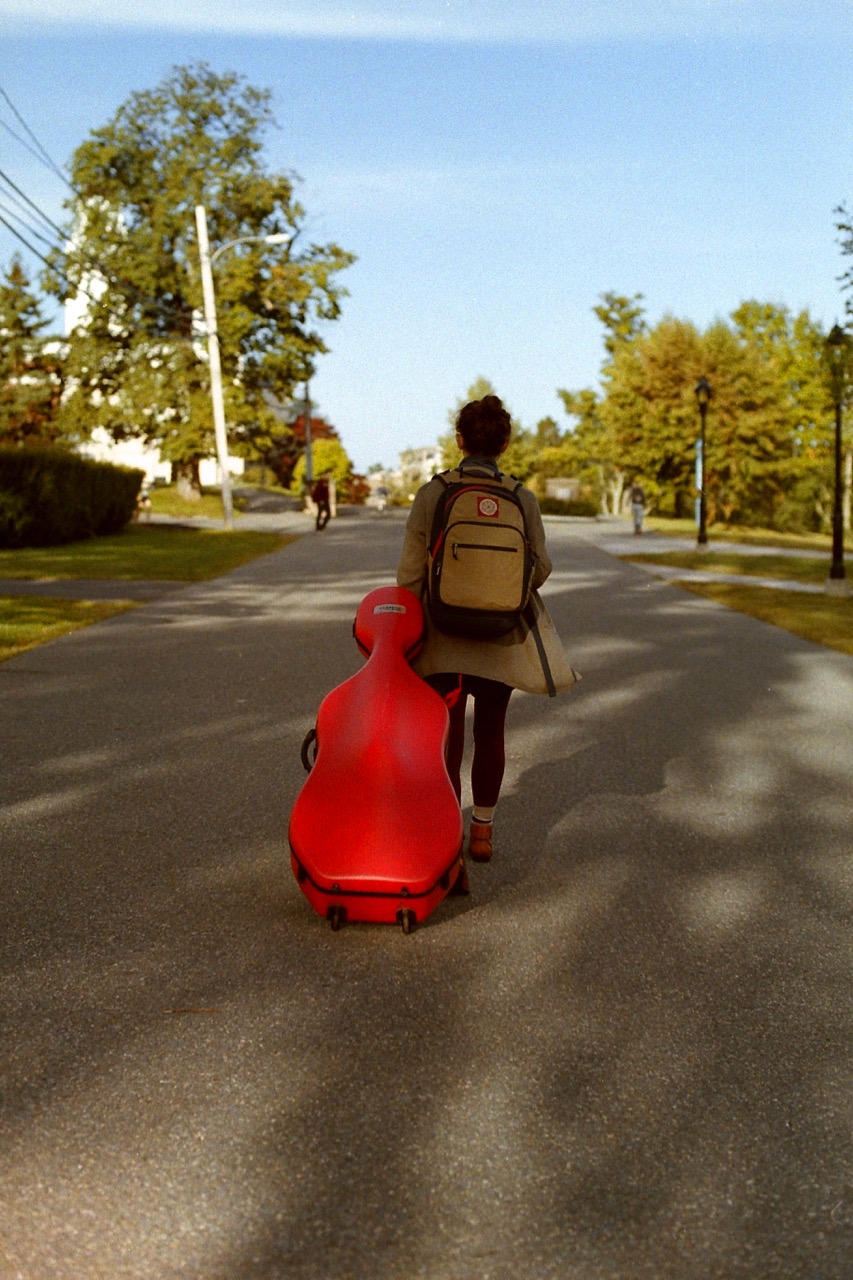
    Though these instruments were the standard for women, some female instrumentalists began breaking ground as cellists when it was first introduced. As in fashion at the time, they had to play side-saddle (both legs on one side of the instrument) to avoid any sexual connotations. Male cellists, however, were not required to play side-saddle.

    Women began playing violin even though it was deemed the instrument of the devil. It was believed that the “weaker sex” would not naturally be strong enough to deal with “stronger” instruments like the violin; women were not meant to be aggressive or strong. Instruments that require aggression and strength (a misconception, but hey it’s the 19th century we’re dealing with) were appropriate only for men: timpani, upright bass, and brass.

    These women who broke ground by performing instruments societally deemed for men paved the way for a generation of women to continue performing on these instruments. A new normal was effectively created, but the instruments women most typically played have become solidified. When looking at major Canadian orchestras, there are disproportionate gaps in specific instrument categories: brass, winds, percussion, keyboard, and bass. Approximately 85% of professional orchestral brass players in Canadian orchestras are male. Over 80% of flute players are female. 75% of upright bass players are male. 95% of percussionists and timpanists are male. Over 80% of harp and keyboard players are female.

    Gendered instrument bias crosses over into popular music, as well. Though I didn’t gather similar data for popular music, one only has to listen to and watch videos of popular musicians and bands to see similarities between the two and their treatment of gender and instruments.

    School band programs are not exempt from gender socialization. In a study conducted between 1978 and 2007, children consistently chose instruments that coincided with traditional instrument gender bias. Girls chose instruments like flute, clarinet, and violin. Boys chose instruments like drums, trombone, and trumpet. The results are unsurprising. Of course there will be and definitely are anomalies; this article is stating the averages and the generalizations.

    The tragedy of instrument gender bias is summarized perfectly by Leopold Stokowski: “Sacrificing accomplishment to tradition.” Not only is this tragedy applicable to women, but to men. The limitations imposed by gender bias restrict opportunities and reinforce social expectations for everyone; in the field of music, both men and women find themselves falling into predefined roles that have existed for centuries.

    *Information presented in this article was gathered by a major research project conducted by the author of the article.

  • Equality: One Size Fits All

    Equality: One Size Fits All

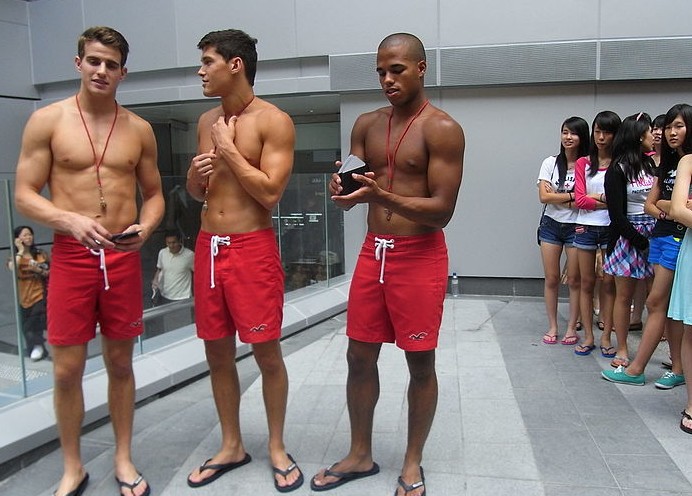
    “I’m not an object for the viewing pleasure of men.” This is a phrase that has been uttered repeatedly by women everywhere, and it is a true statement – a statement said out of aggravation with the objectification of the female body. However, there exists a double standard! This is the societal norm that shames the objectification of women but allows the objectification of men. People get all in a huff when men address the body of women as if it were a product for purchase. While objectification of women has been occurring for centuries, men are being displayed as merchandise and objects in the modern world as well. Why is it okay to sexually objectify the bodies of men but not okay to do the same to women? If we wish to have gender equality, then there truly needs to be equality – meaning no objectifying anyone for any reason.

    I recently asked a male friend of mine how he felt about the objectification of men, to which he replied, “When men objectify women it is sexist, but when women objectify men it’s liberating.” This statement threw me for a loop. Is treating men in the same negative way women have been treated for years really liberating? Women have been thrown into media campaigns using their bodies as the selling tools for as long as media has been running. While this is wrong and should be monitored closely, are men afforded the same thing? For example, Kraft recently put out a series of ads for salad dressing in which they used scantily clad men laying in blatantly sexual positions holding salad dressing bottles. How is this any different than companies using women or their sexuality as a way to make a profit? The answer is that there is no difference. The media is not the only bad guy in this situation, women are causing this issue as well. I have personally heard many conversations among women of all ages where men are spoken about as if they are pieces of meat and only good for one thing. However, these same women would later become enraged when men speak about women in the exact same way. Men are sexualized just as much as women, and no one has taken the time to think about the way this effects the everyday man. Women are constantly being told that they do not need to look like the women in the magazines because the women in the magazines don’t even look like that. But who’s telling guys that they don’t need to look like the super model in the sports wear ad, or the basically naked man in the Kraft commercial? No one. The sexualisation of men is just as sexist and demeaning as the sexualisation of women. It is not liberating and should stop just as much as sexualizing women should stop.

    Let’s take an example that hits more close to home. Canadians have just elected a new prime minister; a man who I will admit is very attractive. However, media has begun to use this fact in a sexual, and in my opinion, inappropriate way. While Trudeau has not made a statement saying that these memes, tweets, and posts are affecting him in any way, I would argue that it is highly inappropriate. If we had elected a female prime minster and similar posts were being made about her the country would be in an uproar; women would be rioting in the streets. Men would be blamed for slanderous statements and human rights called to question. Yet, few have taken a negative stand on the sexualisation of our current prime minister. This points blatantly to the fact that our society is completely accepting of the sexualisation of men, or so they seem to be. No one is an object for the viewing pleasure of anyone, not a single person on this earth is here to be seen as an object. Gender equality means equality, which means that all of us are seen as equal. Equal people, not objects.

Betzillo positions itself as a versatile gaming hub where structured bonuses and adaptive gameplay mechanics support both short sessions and extended play.

Built with a focus on innovation, Spinbit integrates modern casino architecture with rapid transactions, appealing to players who value speed and digital efficiency.

Ripper Casino emphasizes bold entertainment through high-impact slot titles and competitive promotions crafted for risk-oriented players.

A friendly interface and stable performance define Ricky Casino, offering a casual yet reliable environment for a wide spectrum of gaming preferences.

King Billy Casino channels classic casino spirit into a modern platform, delivering recognizable themes supported by contemporary reward systems.

Immersive visuals and layered slot mechanics are at the core of Dragonslots, creating a narrative-driven casino experience.

Lukki Casino appeals to players seeking direct access and minimal friction, focusing on fast loading times and intuitive controls.

Casinonic provides a structured and dependable gaming framework, blending modern slots with transparent operational standards.