
Tag: opinions

  • Ask Ellen

    Does cock size matter?

    I could tell you my preference but I think that would be too personal and wouldn’t answer your question. I do, however, think most women would agree that the size of the cock does not matter.  It is more a matter of whether or not you know how to use it and the way in which it performs. Don’t judge a book by its cover is what I always say. That being said, it depends on the woman. Some women like the feeling of a larger cock, some don’t and would prefer it not hurt every time. It all comes down to the woman and what she’s looking for, talk to her and find out what she likes with regards to sex and try to make that happen for her.

    Loneliness and isolation is the most common issue amongst the student body. I feel like the small number of friends I do have here really don’t understand me the way that my friends did back at home. How can I find friends here at Acadia that I click with?

    I have had a hard time with this myself. It’s difficult when you leave somewhere so familiar with such familiar people you have known for quite a long time, to come to a foreign place where you need to start over. If you wish to find more friends and branch out, I would recommend joining something you like to do. Enjoying what you’re doing is half the battle, because if you’re having a good time chances are the people around you will too. I used to hate when people told me to join clubs and groups at Acadia because I thought it wasn’t my thing and sounded a bit dorky but look at me now, writing advice in the school newspaper. I am new to the scene but have already met some people I never would have if I didn’t join the team and I am clicking with them already. Though lonely, try going out more, not necessarily to the Vil but there’s fun trivia nights at the Axe and Main Street has some amazing little shops and coffee joints. Your people are out there and I know you will find them. There are always new and more people to meet.

    What happens when I pull the anal beads out too fast?

    I do not know from experience, and this is not a one hundred percent guarantee, but I would say you poop. This would not be a good idea to try, might hurt quite a bit, but if that’s what you’re into then by all means, pull the shit out of those anal beads. Pun intended.

    I just came here for the second question. Who the fuck is Ellen?

    I’m a student by day, and whoever you want to be at night.

    Or

    I am your daughter.

    After ending a long-term relationship year, I started seeing someone new. He’s a great guy, but over the past few weeks I’ve realized that I still have feelings for my ex. To me, this suggests that I have to work through my feelings a little more and take some time for myself to figure out what I want. How do I end things with the new guy in a respectful manner? Should I tell him the truth about why I want to break up?

    I am a very honest person and I always believe honesty is the best policy; therefore, with this, I would definitely tell this new guy about the reason you want to break up. The worst thing to do is hold it in. This isn’t your fault, there was absolutely nothing you could do to prevent this or bring it on. Feelings are feelings and unfortunately that is the way things go. With regards to how to end things in a respectful manner: if you really like this guy and there could be a chance that you will start seeing him again down the line I would let him know that, that way at least he isn’t fully losing you. Just tell him it was too soon and your emotions hadn’t really sunk in until recently about your ex, there’s only so much a human body can handle and you need time for yourself. Time is the most important thing, you have to feel good about yourself before sharing yourself with anyone else. If this guy is really a great guy like you say then he should understand, might be hurt, but will understand. If he reacts in a way that hurts you more or makes you feel worse or causes anger, he isn’t the guy you thought he was and is not worth your time. Good luck.

    Am I addicted to sex?

    When you are addicted to something it interferes with your day to day activities and life. For example, if sex is getting in the way of going to class, walking your dog, getting assignments done on time, family, friends, sleep, you may be addicted to it. I would recommend that you see a therapist if you are seriously debating whether you are addicted to sex or anything for that matter. I am not an expert and therefore cannot give you a definite answer.

    Me and this girl like each other but I like her more than she does me. She says she can’t promise me that we will date but I want to. Should I keep trying or move on?

    Simply put, this happens a lot. If she is worth it (and I mean really worth it to you) keep trying. If she has clearly given you clues that she is not into you then move on. But if she likes you and says she can’t promise that you will date that could be for a number of reasons. They might be valid reasons OR it might be because she doesn’t know how to tell you she isn’t into you. You have to listen to the signs. To whoever this is about, stop sucking and either give the guy or girl a valid reason as to why you won’t promise a relationship or date them. To the writer of this question, you should be able to tell from her whether or not she is interested enough to keep pursuing things.

    How do you politely tell someone to shut their face hole or at least lower their voice when they tell extremely personal stories in the lib? Usually, they want you to respond with your juicy deets and I always feel uncomfortable telling secrets in the lib because we all know you can hear each other. K thanks, biiiiii.

    If this is a friend of yours, no need to be polite, just tell them to shut up and do their work cause you’re trying to do yours. If they want you to tell them some juicy deets back, just change the subject and discuss the work you’re doing in front of you. Oh yeah that sucks, but you know what else sucks, having to write a paper on the issues in American politics. I could write shit for days but I’m not actually able to write anything right now because you’re using the hole in your face to make noise and distract me with stuff I don’t give a fuck about. Or something like that. If this is about people who are sitting next to you but you don’t know them, tell them to keep it down or move the conversation elsewhere. Or if you are a shy person then get up and move to the upper levels where there is no talking. Honestly, I usually just put my headphones in because people bug me no matter what they’re talking about. K you’re welcome, biiiiii.

    How to stay positive in hard times

    This is a question I could write an entire paper on. There is no simple answer or one answer to this question. I can say that everyone goes through hard times, that is a fact, some more than others but find comfort in knowing you are not alone with this. Depending on what kind of person you are and what makes you feel better, talking about the hard times is a way to find closure and confide in others in order to get perspective and advice. Friends and family are a huge factor in how to stay positive. They can be the reason you are going through hard times but they can also be the reason to bring you out of feeling down about them. Though it will be almost impossible to get up and do things during hard times, force yourself to at least do one thing a day that will make you smile and laugh. Do things and surround yourself with things you like to do. Surround yourself with love. Dogs help me, so does Ellen DeGeneres, she makes me feel hopeful during hard times, would 150% recommend. Hang in there, though it might not seem like it will ever end, trust me I can relate, it will definitely become more positive.

    What do you think the general protocol is for liking a cute person’s instagrams? Should it be consistent to show interest? Or on and off – hard to play hard to get/cold shoulder approach? Originally, they didn’t like my posts, then recently they consistently liked lots of them, THEN skipped on a few lately. I am leaning towards just liking their posts more than not because YOLO and I’m good for the like sooooo yeah. I also feel like I am looking WAY too much into this. Help.

    Very interesting question anon. I feel as though this is a very relevant question in our technological day and age, so thank you for this. I would have to say, why the subtlety at all? Don’t hold back, if he or she is cute then they deserve those likes. Be the bro that gives someone another like, bitches love likes and that goes for guys too. Only give likes to the deserving pictures though, if they start posting some awful shit no need to chuck them a like but if that is deserving shit then reward them. Make a move dude, slide into those DM’s if you think they’re that cute that you want to see where things go. I do however think you are thinking too much into this because your answer is simple: giv’er.

    If you are struggling with anything and need some advice from an expert or professional, please seek help. There are many ways to find this, some found on campus are at the Student Health Centre.

    Keep sending in funny, serious, dire questions about sex, relationships, school, family, life etc.

    Be kind to one another,

    Ellen

  • Is Gender Abstract?

    Is Gender Abstract?

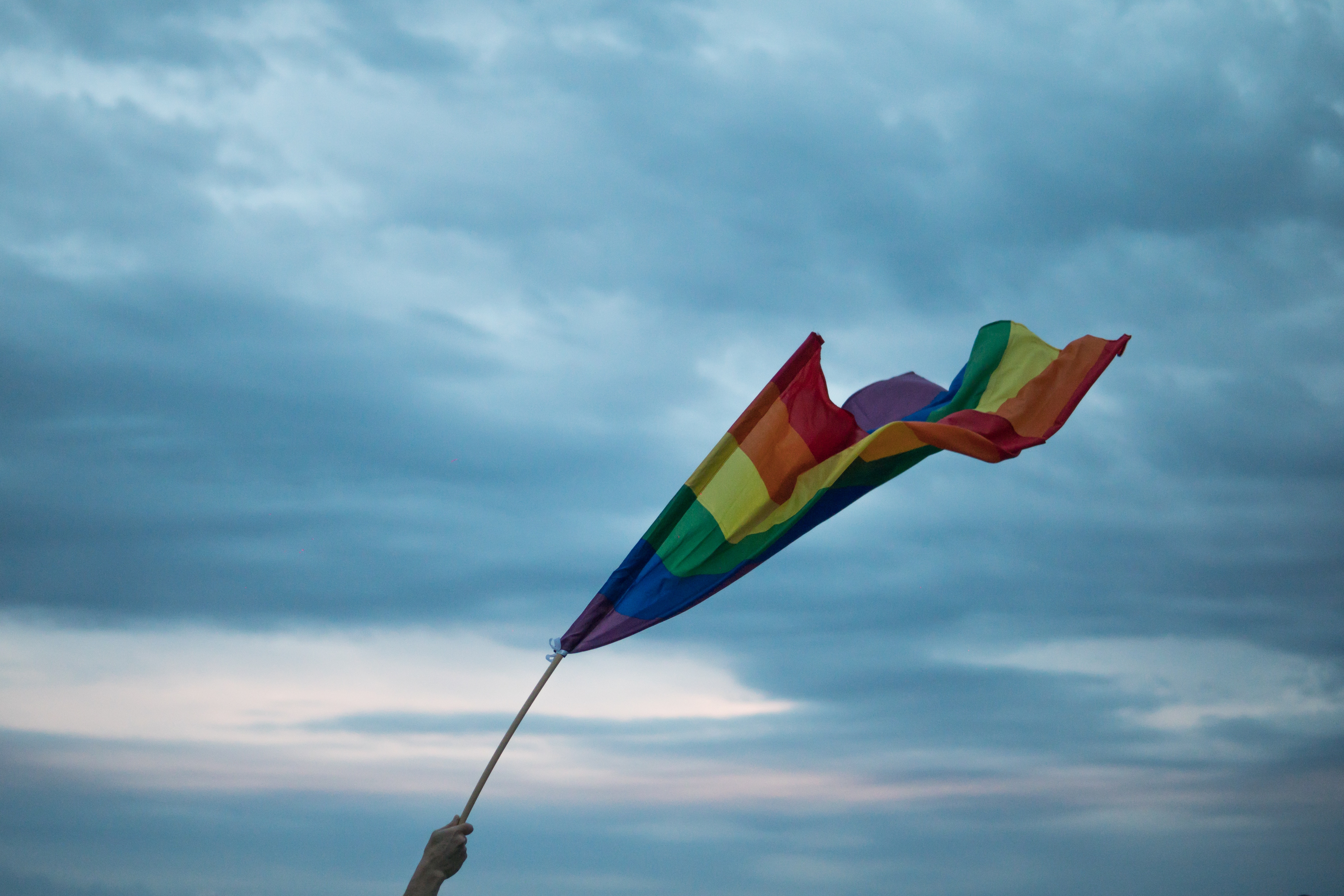
            Coming to the closing months of 2017, the topic of gender has become one discussed regularly. Singers, writers, actors, and anyone with a blog or Twitter have been allowing the gender spectrum to finally be allowed to step into the lime light. What exactly is gender? Does it even really exist? Or is this a concept that has expired? These questions have recently begun to nibble on the minds of more and more people. Even though gender has been discussed, written about, or heard in music, there is still very little education on this topic.

           To begin, there is a question that is still being ignored. A question as simple as “what are your pronouns?”.  As humans, we have conscious and subconscious thoughts. When meeting someone new or passing anyone on the street we consciously notice that they are tall or wearing green. Subconsciously we rack our brains and scan the person for signs of what gender we want to apply to them. Usually the only two genders we think of are male and female. The subconscious takes the conscious thoughts and tries its hardest to fit those “signs” into a gender puzzle. Playing the gender game is risky as there is little talked about the gender spectrum. There are many more gender identities than boy and girl. In fact, there is a wide wonderful range of identities and expression, this is why asking for someone’s pronouns is very important. Slowly but surely, the act of asking for pronouns when introducing yourself is becoming an everyday question, going hand in hand with asking for someone’s name.

            Somehow, asking “what are your pronouns” slipped into the category of an awkward conversation, but honestly, there’s absolutely nothing abnormal about it. For older generations, it may come as a shock and I’ve even come across people who didn’t know what a pronoun was. Immediately after a quick explanation the realization flooded their faces. Pronouns are something we are taught in school during English classes but are never really applied to real life. Through education and spreading awareness about the importance of asking for someone’s pronouns I believe the sentiment will become learned and automatic, at least there is hope.

           The greatest danger of not asking for pronouns is that it could cause someone to feel incredibly uncomfortable or upset. By assuming gender and using the pronouns he or she for someone who “looks like” a male or female can create major dysphoria (a feeling of unease or unhappiness pertaining to someone’s body, voice, and other factors that make them uncomfortable with their body), anger, and sadness. As well, there are many more pronouns then just he/him or she/her. The use of the singular they/them, and others such as ze, sie, hir, ey and so many more are used by countless people identifying under the transgender and non-binary umbrellas. All of these terms are loose and may be unknown, though the Internet is in your favour for research on these topics.

             With all of the information that is now provided and the activism that is happening all over the world, awareness is slowly being brought to the forefront regarding the LGBT+ community, especially around gender, and things are starting to change. “Millennials may be called the “gender-fluid generation” (Sophie Saint Thomas, Refinery 29). A larger percentage of the population identifies as transgender or non-binary than ever before.

             Labels and definitions aren’t usually something that people go actively seeking but as for the definitions of what is being discussed, the Webster definition of gender fluid is; “…: of, relating to, or being a person whose gender identity is not fixed…”. The debate over the difference of transgender vs. non-binary is ongoing. In many cases, people believe there is really no difference as they are both umbrella terms which cover the entire spectrum. Others believe that being non-binary means “genderless” or simply out of the gender binary and transgender is when you do not identify with the gender associated around your birth sex. People like Prince, David Bowie, Steven Tyler and more current celebrities such as Ruby Rose, and Amandla Stenberg have always, and are, demonstrating androgyny and gender-fluidity in pop culture. Even with these celebrities pushing the gender spectrum into the open, the education that is given to people needs an extreme improvement.

        Education of the LGBT+ community in schools is basically non-existent, that is why young people turn to the internet for answers. Clubs like Gay Straight Alliances, Genders and Sexualities Alliance or Pride Clubs exist in some middle and high schools but usually do not receive the same amount of interest as other clubs. These GSAs try their best to educate their peers and teachers with assemblies or celebrating things like “Coming Out Day” or “Day of Silence” where they promote the actions that must be taken to end the violence and inequality for the LGBT+ community. Health talks should be openly discussing not only sexuality but also gender identity and expression. English classes should be reading novels with gender non-conforming characters or politics classes focusing on these minorities in society and the politics that surround them. By beginning to hand out this information to teenagers and young adults, we hope that our generation will be able to continue the change that is being made with larger numbers of not only people identifying with the community, but with allies too. To be an ally you do not have to be any letter of LGBT, you only have to support the community full-heartedly. Spreading education, going to pride parades, or voting for the people in power who will actually help with the issues facing the LGBT community are all examples of what you can do to help.

           Simple, everyday things you can do to start change are things like asking someone’s pronouns and giving your own when meeting someone, or correcting people if they misgender someone who goes by another pronoun. Ask questions respectfully and offer answers to those willing to listen. So, to answer the question of what gender is, it’s completely up to you. You choose who you are and what you like to wear or present as. Your identity is your own and anything is possible, there are no rules to gender. We can all make change and take strides towards equality and awareness to this loving community by simply being ourselves and taking pride in who we are.

  • White Privilege Strikes Again!!

    White Privilege Strikes Again!!

    I was furious after reading the article on President Dr. George Barton Cutten, but not for the reasons outlined in the Athenaeum.  Before I unleash my pent-up fury, I will start by congratulating the Athenaeum staff and writers for an interesting, well-researched and provocative article. Rather than dispute the facts presented, I want to highlight what I feel are the intentions behind why this article was written.

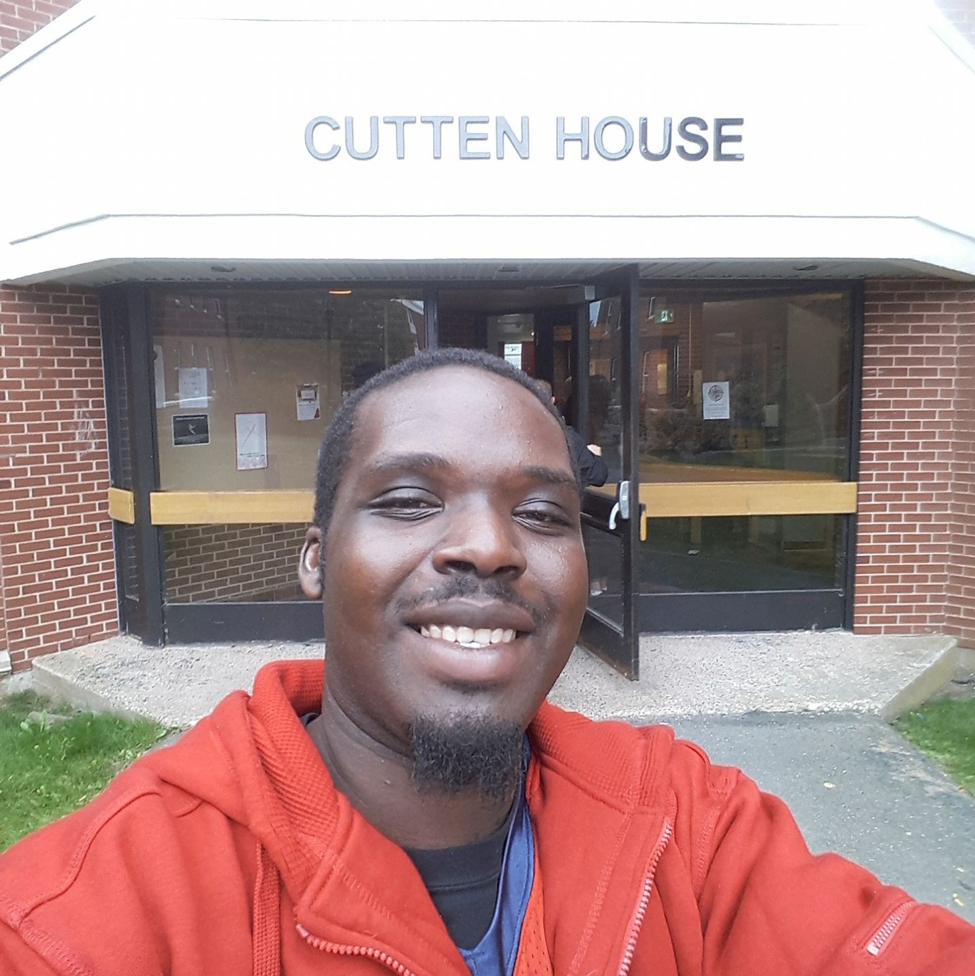
    When I think of Acadia University, I associate the name Cutten with Cutten House, and the (now discontinued) epic Slutten Cutten parties.  Cutten House is the community/residence where I was first exposed to Canadian culture as a foreigner, and the place where I essentially entered manhood. Attending Homecoming 2017 was particularly amazing; since it was the first time I got to see the old girl since the residence closed Spring 2008. You can imagine the fury then when I read this article’s calls to have the building’s name changed!!

    Dr. Cutten’s achievements and shortcomings are clearly listed in the article, but his legacy is not why I have a beef. The article itself was written, in my opinion, as a basic expository piece. It was clearly evident that the writers did not have a personal stake in or a passionate reaction to the statements quoted from Dr. Cutten’s speech. It is not my place to speak for everyone, but as a person of colour and an Acadia Alumnus from the Bahamas, I am both mature enough to accept that ignorance exists in the world and grateful enough that times have changed enough to allow me to attend such a great institution. In fact, when I posted the ink to this article on my Facebook wall, several of my fellow POC Acadia Alumni found it ironic that Cutten House is where most of the international students end up.

    The question remains, then, ‘Why was this article written?’. Keeping my biases in mind, I viewed it as non-persons of colour hijacking a social justice issue from over 50 years ago, in order to test the extent of their influence. This critique may seem harsh, but with all of the research and attention to detail associated with this article, it seems like a glaring oversight not to include the opinions of actual Cutten House residents, or black and the international community on campus as a whole. No mention was made of any previous outrage to his statements or challenge. Was this article just written to get attention?

    I say leave Cutten House alone. The name is a part of the legacy of the building, even if we do not want to celebrate every part of his legacy as a man. The article is gaining traction as an interesting talking point both online and on campus, mission accomplished.  But if you actually want to know the opinion of this black, foreign ex-Cutten resident, I personally don’t care. When I think of Cutten, I think of elevator Twister, lobby talent shows, and courtyard shenanigans. Not some dead guy whose words and opinions died with him. Just my opinion!!

    Axemen Pride Has No Equal

    Elgarnet Rahming II, B.Sc.

    Acadia Class of 2011

  • Social Inertia and Why Masuma Khan Did Nothing Wrong

    Social Inertia and Why Masuma Khan Did Nothing Wrong

    “… I must confess that over the past few years I have been gravely disappointed by the white moderate I have almost reached the regrettable conclusion that the Negro’s great stumbling block in his stride toward freedom is not the White Citizen’s Counciler or the Ku Klux Klanner, but the white moderate, who is more devoted to ‘order’ than to justice; who prefers a negative peace which is the absence of tension to a positive peace which is the presence of justice…”

    These were the words of Martin Luther King Jr., speaking from Birmingham jail in 1963. He addressed the existence of an important obstacle to social progress: the moderates of the cultural majority that wish to slow change to a comfortable pace; it is to impose order at the cost of justice. Whenever one attempts to defy or challenge unjust convention, one is met with the powerful inertia of the institutions and actors whose interests are served by maintaining the status quo – or who simply fear change.

    The Dalhousie student leader Masuma Khan encountered the white moderate this year, in her attempt to do her part in promoting racial justice. As a Dalhousie Student Union (DSU) executive, Khan introduced a motion committing to boycott Canada Day celebrations on campus. The motion passed, but the Nova Scotia Young Progressive Conservatives (NSYPC) complained about the motion on Facebook. Khan responded in a very inflammatory manner, for which Dalhousie unconstitutionally attempted to discipline her, based on a formal complaint filed by a fellow student, Michael Smith. Recently, Dal. decided not to go through with the disciplinary process, instead opting for a campus dialogue on freedom of expression.

    There are many complex and nebulous issues involving everything from race to freedom of expression which need to be examined. I do not arrive at clear answers that will satisfy most of you, but what is clear is this: the worst Masuma Khan has done is caused damaged feelings in her remarks; though, the necessary march towards a more equitable society that directly confronts deep-seated racial issues is a small price to pay. As I attempt to show, the NSYPC, Smith, and Dalhousie have essentially served as the white moderates Khan has had to fight. You may disagree with much of what I write, but I encourage you to voice that disagreement. Honest discourse among people of different political backgrounds is the only way to ensure only the best ideas come to fruition, furthering our march towards the Ideal Society – whatever that may be.

    To begin, it is important to delineate the position that the DSU has endorsed, namely Canada being a country born of colonialism, should not be celebrated every year as that would be an affirmation of the colonialism it was founded on, which involved (and still involves to a certain extent) the theft of land, disenfranchisement and cultural genocide of indigenous peoples. Dalhousie and Acadia University are in unceded Mi’kmaq territory. We have a long way to go, so Canada’s birthday is not a time to celebrate.

    But perhaps Canada Day does not celebrate Canada, per se, with all its dark history and current problems of accommodating indigenous minorities, from whose ancestors Europeans stole. Perhaps Canada Day celebrates the good parts of Canada, like the Charter of Rights and Freedoms. Thus, Canada Day is not a celebration of racism and oppression. But one cannot celebrate something by selective memory and consideration only of the positive properties something possesses. That is absurd. It’s like the Americans with southern heritage who celebrate the Confederacy. “But it’s not about racism; it’s about celebrating my heritage!” But your heritage involves racism – slavery, in fact — and you cannot escape that. So instead of celebrating, you should learn from the mistakes and evil of your ancestors and be a better person. This is painful and uncomfortable, but the world is a dark place; humans have done terrible things, and we should not forget that if we are to avoid these things in the future. If Canada Day is to be a celebration of only the good parts, make that explicit, and don’t call it “Canada Day”. Call it “What Canada Does Right Day”.

    The political and philosophical issues of Canada Day aside, many people are still upset when Canada Day is boycotted. Canada Day celebrates part of their identity, the nation they’re citizens of, or at least the nation they’ve chosen to work or study in.  Therefore, boycotting it feels to them like a condemnation of themselves. In a way, it actually is. Canada cannot do anything wrong without Canadians allowing it. We have the ultimate authority over our elected representatives, who make the decisions and have the power to ameliorate the situation minorities are presented with. We are thus collectively responsible for what our government does. The government does not have power over every aspect of everyone’s lives in our country, but for everything else, our society has some impact, which is mediated by our personal decisions. Canadians are responsible for all the good and bad, the freedom and oppression. Thus, it does indeed make sense for Canadians to be upset when people criticize our nation, but the proper response is not to simply whine about the criticism.

    On June 30, that is what the NSYPC did with a Facebook post, saying that Khan’s Canada Day motion was “disappointing.” We need to improve our nation, and universities especially should be providing critique, not “… instilling pride in our country” and avoid “attacking Canada”, as this political organization has suggested. That is preposterous and antithetical to the academic freedom and diversity of opinion that I am sure they would advocate for where conservative issues at stake, which explains some of the frustration in Masuma Khan’s response on Facebook.

    Though her post has since been deleted and I was unable to reach her for comment, she did write “At this point, fuck you all […] white fragility can kiss my ass. Your white tears aren’t sacred, this land is.” She concluded with the following poignant hashtags: “#unlearn150, #whitefragilitycankissmyass and #yourwhitetearsarentsacredthislandis” The profanity seems excessive, but not when you have the full context of the situation. Khan had reason to be extremely upset. She faced such strong opposition to anti-oppressive gesture. Though, as a white person myself, I can see why white students like Michael Smith, who submitted a formal complaint against Khan, could interpret these statements as racist and offensive. They are indeed prima facie racist. If one replaced “white” with “black”, it would be easy to see how black students would be offended. Of course, the statements would then be totally incoherent. White tears refer to frivolous complaints, whereas black tears refer to legitimate grievances. White fragility is a sociological phenomenon, but black fragility is not. White fragility is the condition of being excessively sensitive to racial tension, owing to a privileged status as a cultural majority, insulated from issues of race. White fragility is something minorities often have to confront whenever they discuss racial justice issues that implicate whites. To Khan, the NSYPC’s response to her Canada Day motion was an instance of white fragility.

    In a supreme bit of irony, Michael Smith wrote an op-ed for the National Post, published on July 10th, decrying Khan’s Facebook post and her Canada Day motion. Not only did he feel the need to ensure she was disciplined for her public views on race relations, but he also needed to complain about it in a newspaper. If this is not an instance of white fragility, I don’t know what is. Does he at least bring up good points in his piece? Is he charitable to her point of view? Not really.

    To him, Canada is a great country. “Canada is a welcoming country. We are blessed to be one of the most tolerant and multicultural nations in the world, where all individuals are free to pursue their dreams, regardless of their backgrounds.” Thus, “Canada Day is not oppressive, and those who celebrate it are not oppressors—Canada Day celebrates Canadians’ freedom from oppression.”

    This is a view I have addressed above. Pointing to her position as a student representative, he argues “… she has a responsibility to represent and respect all students, even those who hold views that differ from her own.” This seems reasonable, until you realize it means she cannot hold any public position on any issue, nor introduce any motion, for fear of not representing or respecting the view of some particular student, like Smith. This is a terribly high standard that no one could possibly meet without becoming totally ineffectual.

    Smith does not address white fragility, instead fixating on the notion of unlearning the narrative of Canada 150, presumably because it’s easier to attack. To him, this is concept of unlearning is “Orwellian”. Universities are for learning, not unlearning! In point of fact, unlearning is often an important part of learning. Growing up, we are constantly taught falsehoods that university professors need to help us overwrite, whether it be historical narratives or how human memory functions or even the metaphysics of free will. Smith does not seem to understand this, but he brings up another, actually interesting point in his piece. The DSU censored certain opposing views of their Canada Day motion on their Facebook page, referring to “racist and triggering” comments. This is unfortunate and perhaps wrong, but it is difficult to seriously consider Smith’s complaint, given the fact that he subjected Khan to possible disciplinary action for her own speech, and there are many dissenting views still openly expressed on the DSU’s page, such as: “DSU, your [sic] reaching cringe levels of SJWness” and “Dalhousie Student Union You ‘people’ are a fucking joke.” Smith also criticizes Khan for allegedly “laughing” and “smirking” at a dissenting councilmember during the meeting in which the Canada Day motion was introduced. This is proof that Khan is human, but not exactly an indictable offence that cannot be dismissed off-hand.

    Finally, in a shocking display of either intellectual laziness or dishonesty by a graduate student of history at Dalhousie, Smith uses his interpretation of what the Native Council of Nova Scotia (NCNS) stands for as a shield. He points to their call for unity and working together to eliminate disadvantage. He says “DSU’s divisive actions and rhetoric are diametrically opposed to such reconciliatory efforts.” In other words, natives need to fight for their rights without offending white people, otherwise we can’t work together. But that’s ludicrous and an unjust, impossible ideal. On the NCNS website, there are plenty of claims that Smith, I’m sure, would find “divisive.” On their page “Our Plight,” the NCNS says “The attempt to ‘put the Indian in his place’ forced relocation and dispossession from traditional ancestral homelands, and the attempt to ‘wean the Indian from his lands and resources’ remain the guiding theme of Indian Policy in Canada to this very day.”

    “These Government actions, schemes with singular purpose, carry forward and still remain the cornerstone of Canadian Indian Policy and Indian Administrative Measures codified in Canadian legislation as the Indian Act. This policy of a by-gone era remains the greatest source of human rights violations, shame, calamity and ongoing concern both within and outside of Canada. This policy is now drawing international notice, and forms a basis for United Nations fact finding missions to Canada and countless Court challenges by Aboriginal peoples.”

    Smith surely would have been upset about these statements, had he bothered to do more research as to the NCNS’s full position on native affairs. But I do not think he actually cares to, given his view that “Canada is a welcoming country. We are blessed to be one of the most tolerant and multicultural nations in the world, where all individuals are free to pursue their dreams, regardless of their backgrounds.” If Khan did anything wrong at all, it was to incur the wrath of individuals like Smith.

    But of course, while Smith had the ability to get an op-ep published, his formal complaint would have meant nothing, were it not for Dalhousie. According to Khan, it addressed the complaint by offering an informal resolution process, asking her to write a reflexive essay and undergo counselling, implying her position was obviously untenable and worthy of mental health treatment.

    This is obviously absurd, unhelpful, counterproductive, as it treats Khan like a child, not an adult-aged political actor. She obviously refused to comply, leading to a formal process. Fortunately, this ultimately incurred the ire of Dalhousie senators and law professors, unhappy with the de facto suppression of free speech. The lawyer Nasha Nijhawan also chose to represent Khan pro bono in challenging the disciplinary action. On October 25th, the university finally decided to back down, opting for a campus dialogue on freedom of expression instead, thus far excluding Khan. In the end, Dalhousie and Smith failed to silence her, only amplifying her voice. And it is safe to say the NSYPC has had little impact. Perhaps sometimes the inertia of the status quo unintentionally serves as the impetus for activism.

    Nevertheless, there is a sociopolitical force faced by activists who wish to bring about some change, a force propounded by people and institutions who are either conservative in some fashion and believe any change must not offend them or who have simply subscribed to the doctrine of gradualism. This doctrine asserts that the status quo is generally great; people who disagree are largely aberrations or idealistic children. Things aren’t perfect right now, but we cannot change too quickly. Allowing people to endure injustice is somehow better than the risk of some chaos. Presumably, conservatives like Smith and the NSYPC do believe in improving the lot of natives, but they apparently believe it has to be done without offending their sensibilities.

    As an activist politician, Khan is inconvenient to the gradualists and de facto conservatives. Reflexively, they attempted to silence her in their own ways. This backfired and started a national discussion of the issues, which I have humbly attempted to partake in. Writing from the traditional land of the Mi’kmaq Nation, I say this: Masuma Khan did nothing wrong, aside from causing discomfort. But discomfort is not inherently bad. In fact, it is often good. Very little social progress is ever made while people are perfectly comfortable. Had Khan not made her comment, we would not be having this discussion, and important issues would have gone largely ignored. Despite the three forces of the status quo I have discussed, Khan persists.

    To her, I say white fragility can kiss my ass too.

    Michael Smith’s op-ed: http://nationalpost.com/opinion/michael-smith-dalhousie-student-unions-ban-on-canada-day-celebrations-was-shameful

    The Nova Scotia Young Progressive Conservatives Facebook post: https://www.facebook.com/permalink.php?story_fbid=1933216870290439&id=1637758323169630

    Dalhousie Student Union “Unlearn 150” Facebook Post: https://www.facebook.com/dalstudentunion/photos/pb.40582581617.-2207520000.1499364126./10154335655046618/?type=3&theater

  • Subjective and Objective Marking: A Cross-Faculty Perspective

    For thousands of years now, people have debated about the concept of what it means to be objectively “right” or “wrong”. Despite this unsettled issue, much of the life of a university student is reliant on whether whoever is marking your work thinks you’re right or not. For certain faculties, deciding what is right and wrong in terms of marking can be easily decided based on information given in lectures or written in textbooks- if the student can remember the processes or information given and can apply that during an assessment, the student will receive a mark reflective of that. Simply put- if you are right, you get the marks, and if you are wrong, you do not. The information that you are expected to know or apply is usually outlined and discussed during class time or through homework and is typically year level appropriate. This makes sense. In certain other faculties, the marking is more or less based on the preferences of whoever is marking your work.

    I won’t go so far as to say that if your professor dislikes you that you will receive a bad mark on every assignment, but I will go so far as to say that if the professor doesn’t like your writing style, you very well might get a bad mark on every assignment. The way that assessments are marked is widely subjective and varies between professors, adding a level of difficulty as an art student who strives for “good” marks. While there is no clear “right” or “wrong” in a paper – aside from obvious structural necessities like a well-devised thesis statement and proper formatting – professors and TAs have plenty of works to compare a student’s writing to. While objective faculties such as Sciences and Business are typically marked based on the retaining of level-appropriate information, it is my experience that papers and assignments submitted by university level Arts students are graded in comparison to professional authors or to the marking professor’s writing ability. Not to say that this is the professor’s fault- it is a natural default in the critique of writing at any level to expect a piece of writing to meet certain expectations based on your personal preference of what you decide is “good” writing. While a student who is generally considered a “good” writer will often receive a “good” mark, it is usually a small mystery as to where the actual numerical value of a mark for a paper comes from.

    Another issue related to this subjectivity is the question of what a “good” is mark in terms of a paper- while most students in the Arts faculty would agree that anywhere between 80% and 85% on a paper is a success, I’m sure most would also agree that receiving a mark any higher than an 85% is effectively impossible from most professors. If a Biology student remembers all of the information necessary for a test, they will receive full marks- if an English student writes a level appropriate paper following all of the guidelines given by their specific professor, it is almost certain that they would not receive a 100% on that paper. As a student studying both English and Biology with close friends in Business and Kinesiology, it is easy for me to compare marking methods between faculties- so I guess I’ll leave you with this: is a Science student’s 100% equivalent to an Arts student’s 85%?

  • The Emancipation of the NARP

    Yes, you have read that correctly. It’s something you may have said aloud, but never read in text –nevertheless it is a part of campus culture. Or maybe this is your introduction to the topic. NARP, non-athletic-regular-person. A term often applied to those who do not participate on a varsity or club team at Acadia, a concept which I am sure is prevalent on other campuses. Full disclosure: I am considered to be a NARP.

    This is a term that I would like to take back! Turn it into one of those, “I-can-call-me-that-but-you-can’t-call-me-that” situations. Sort of in the same vein of, I can make fun of my family, but don’t even think about talking bad about my mama. This term holds a negative connotation, of course, because who wants to be called a “regular person” (unless you are very odd like myself, and “normal” would in fact be a promotion in society)? But, I would like to argue that there is a silver lining for those who feel they are on the fringes of adoration due to the lack of their hand-eye coordination.

    To all of you non-athletic angsty almost-adults – take this as an opportunity for indulging your ironic side. If that isn’t hipster bait, I don’t know what is. Stick it to the man, man. Imagine all the buttons you could wear on your retro jacket: “I peaked in high school”, “Badminton MVP 2014”, “Ur Fav NARP”, “Benchwarmer”, “Intermural CHAMP” or “Not a Scrub, But Got Scratched” and “I’ll come to all of your games”. By acknowledging the difference, instead of wallowing in it, I think there is a great opportunity for some counterculture and self-deprecation in the healthiest sense. Instead of succumbing and contributing to the dichotomy between the two groups, remember that both groups are made up of strong individuals. Therefore, I believe there may be a small need for people to get over themselves, and add just a dose of reflection perhaps.

    No, you may not have the abs of a god, but are you healthy? Do you exercise regularly? I’m sure you enjoy sports in some regard. Then, who says you are not athletic or deserve self-worth? So, you don’t have an institution that recognizes your athletic ability, but you should be thankful for any good health that you may possess. Yes, you may be intimidated by the awesome swag that athletes possess (jackets, shirts, etc.), but haven’t they earned it? I don’t have to balance an insane schedule, which is upheld only so that I can physically exert myself. Ew, no thank you, blah. So, don’t fall completely to the folly of material possessions (such as varsity swag) and their status.

    But, if you desire to play the status game why not make your own NARP uniform? Glasses that fall apart, your slept in department sweater, and… YOUR NEW BUTTONS! It is all just a question of confidence in your self-identity. So why not express yourself in an organization which already exists, or create your own? Or, you just do you. Whatever that means, and don’t worry so about your perceived value.  Don’t sweat it, leave the sweating to the athletes.

    At Acadia, we have the first overall rate per capita of Academic All-Canadian Athletes in the country. WOAH! The accomplishment of student athletes is the accomplishment of all Acadia students, one for all Axemen and Axewomen. It’s all about school pride, right? So, find an outlet which you can take pride in, ya NARP. Don’t let the athlete and NARP relationship become a rigid binary, and remember that both groups are made up of great people. Complex people that are multidimensional.  Combat this and become a part of a team of your own, whatever that may be: photography, social change, clubs, or write for the paper (please)! Forge your own identity.

    P.S. I do somewhat foster a theory deep down that the Kinesiology Department could possibly be the secret police of Acadia. Kinesiology… Kine…K.I.N.E = Knowledge In NARP Extinction. I don’t know, I am just putting it out there, in case you never hear from me again.

  • Small Pond Syndrome

    Small Pond Syndrome

    Why did you come to Acadia? I’m sure for multiple little reasons: the beautiful campus, the regional reputation, athletics, location, scholarships, or you’re just a big fan of mud sliding. Whatever you’re into man.

    But it’s just that, it’s the little reason. I argue that being a small institution is one of our greatest assets not just inside the classroom but outside as well. Outside the classroom, meaning socially playing nice with the other kids on the playground, fosters an awareness for mutual respect.

    My interactions outside of the classroom have led me to collect this extremely sophisticated and completely scientifically based analysis of our small school population before attending Acadia. Broadly speaking students usually fit around three points on the continuum on the confidence scale regarding making friends going into this university.

    The first being you were a big deal in high school, came here with your buddies, and felt like you need to add one or two more people to the roster of your sick childhood squad. Acadia can offer you this convenient reality. Or, you may know people from playing local sports, or attended the same high school, but you are by no means close with anyone and are eager to meet lots of new faces. Finally, of course there is a population of students who don’t know a soul and making friends seems like a massive undertaking. This may be because you’re an international student, out of province, or you just like to keep to yourself.

    Whatever your perspective is, Acadia can be a fresh start for you, and can act as an equalizer. The first few weeks of your first year can be very hard and this shouldn’t be glossed over yet, you will find it’s much harder to isolate yourself then you may think. I am getting acquainted with new friends already this year and I am going into the second month of my third year. Due to the small size, students can become more intimate with more people because you are frequently being put into situations with the same population of people. It’s a wonderful attribute of Acadia no matter where you began on the social continuum.

    My roommate once chatted with someone at Shopper’s Drugmart standing in front of the chip aisle because she felt familiar enough with him. She always saw him at the library in the past and this was enough of a reason to critique chips together. They were both very perplexed at which chips make the best storm chips, which is the best PC brand chip flavor, and the classic conundrum of regular versus wavy cut chips etc. Classic chip struggles.  Just seeing the chip guy enough before said chip-run created a basis for a friendly conversation. I truly believe that Acadia/Wolfville are on the short-list of university towns where that is socially acceptable.

    What we should remember is that although a friendly place, Acadia is a small pond. No no.  More like one of those fancy infinity pools that look off onto the ocean that really only exist on MTV’s “Cribs”, Oprah’s house, and affordable resorts. It has this small, rigidly defined population. Yet, it has a full vista view which alludes to opportunity commonly known as “the real world” and referred to as “adulthood”.

    What about all the people I have successfully or unsuccessfully hit on? How often will I see them at this friendly, small school? You will see them what seems like everywhere (especially when you stink of Subway in the lib in between classes).

    Here is a fun and simple equation you can do in your head: think of all the people you have either professed your love to, made out with, danced with at the vil and/or axe, stared too long at the library at, directed their naked butt to your bathroom, had full blown your-mum-and-dad-know-what-I-look-like-in-real-life relationships with, gone to coffee with, had a deep heart to heart after class with, or had an inexplicable crush on. Whatever experience you have or have not had. Then divide that by 6.46 km2. After you divide those awkward times by space (the square kilometers of Wolfville) you have your very own unique and customized answer! You are now a certified love physicist! Congrats.

    Now, what do you do with that number? Be nice to each and everyone one of them no matter what the result of the situation is. You could be coworkers, neighbors, have all the same classes, or just like eating breakfast at the same time every day if you eat at Wheelock.

    Laugh at their jokes, always say hi, and give them that follow back on insta. I can’t say that I always live by my own advice but I try my best. Shit, right when I was writing this I just avoided eye contact with someone while sitting in the BAC café I KID YOU NOT. Do what I say not what I do! You never know what may come of the situation. Inclusion is always the answer.  This of course also includes other acquaintances or individuals who you have not made a fool yourself of on a romantic level with.  It means be nice and remember everyone’s name that you have learned.

    It may seem as though this town may seem suffocating at times. But what is really happening when you run into people is that you are reminded that each of them have feelings which you should respect.  No man is an island and everyone loves to be remembered. The small population is truly a good exercise in pushing yourself to treat others with respect. This lesson learned outside of class is one that is invaluable for the future and is served on a warm platter to us from yours truly, Acadia University. Right, so remember when you are heading to the swim-up bar in the infinity pool at Oprah’s house, give a polite hello and nod to all that are in there with you over these four+ years.

  • Girl Trouble

    When asked about my interest in writing this opinion, the first thing I thought was “I am walking into a minefield.” I am, along with most men I know, afraid to talk about women’s issues. Part of that comes from the fact that I am a tall, privileged, white man but the other part is that I’m afraid of being attacked for either saying or doing the wrong thing. All my life I have been surrounded by strong women and have always believed that someone’s actions are what should define their success in life, not their gender. I felt compelled by their example to speak my mind on this topic, even though it might be uncomfortable at times.

    For most of human history, women got sidelined in what rights and opportunities society afforded to them. Thanks to the feminist movement there has been real progress towards equality. Sadly, alongside these advances, there has been a swing away from the equal opportunity of women to “man bashing’, by a small but loud segment of the feminist movement. This group disallows men to claim any suffering or mistreatment as they believe their gender precludes them from understanding the experience of women. When these individuals are called out for their comments, they often fire back with accusations of sexism even if untrue. These unjustified assaults have made potential allies cautious and emboldened those who do wish to stop the spread of equality through society.

    I was the only boy in the school choir through most of middle school. In high school, I continued to be part of the vocal music groups including an all-male choir. The choir included straight, gay and transgendered young men. Throughout those years of school, the choir guys often were targeted as “the faggots.” When I have discussed this treatment with people, the most common reaction is that these actions were just “boys being boys.” I have often a time seen the surprised look on someone’s faced when I revealed that this bullying was predominantly lead by women in the schools I attended. I was treated as less of a human being because I enjoyed singing and dancing on stage because I embraced my so-called “feminine side” (a description I abhor). This kind of double standard continues beyond areas of life where men choose to express themselves in creative or sensitive ways.

    Like many people here at Acadia and across the world I was the target of bullying through the entirety of my time in school. My mother still talks about when I would come home with bruises on my back from when someone had shoved me into a wall or onto the ground. Not only did I have to deal with the physical injuries inflicted on me, but also the ones that left me questioning my worth a person. I am unashamed of the fact that I have and continue to see a counselor to deal with these issues. I have also never tried to hide the facts about what I have endured and I that have sought help to deal with many of the issues with which I have had to grapple. When we talk about feminism, it is often a topic of strength. The strength to fight back, the power to express yourself and to overcome the stupid notion that women are weaker than men. But sensitivity and creativity when displayed by men are still viewed as weakness by society. For a man to admit that he has suffered abused means, he will be perceived as weak if he seeks help to reclaim that basic sense of dignity and purpose of which he feels stripped.

    As I have worked my way through creating this article I have tried to think of ways I could suggest to help bridge the gap we face as I did not want just to critic but build. I am not an expert on gender equality issues, nor will I claim to be so I reached out to others so I could look past my point of view. While there were more than a few differing opinions and thoughtful suggestions on how we can all better ourselves as individuals what I always heard was it is important to have a dialogue. I am aware that many, if not most of you reading this will disagree with what I have had to say. I hope you find a way to express what is on your mind as every person can add something to this dialogue. I would consider myself to be an open-minded person, so I am sure I could learn a thing or two.

    Over the last century, there have many strides forward in gender equality. In our nation, women have moved from being treated as second class citizens in almost every situation and are now viewed as equals. While we certainly have much further to go, I do not believe any reasonable person can look at what has changed and say it is not getting better. As we continue to push forward, we must not allow ourselves to become blind and only shift our biases from gender-based to those of one’s character

  • Social Etiquette and the “Dating Dilemma”


    Here is an awkward social situation that I’ve personally encountered multiple times in the course of my adult dating career here at Acadia. I call this the ‘Dating Dilemma.’


    This is the scenario: A nice boy from class approaches me somewhere on campus, and asks me if I would like to “hang out sometime,” or maybe more specifically to “grab coffee,” and then requests a phone number exchange. This act seems innocent enough; even courageous if we consider the ease with which technology has virtually eliminated the inherent social pressure of such interactions – and yet this person has opted to kick it ‘old school’ and risk the possible face-to-face rejection: a bold move indeed, good sir. That is, assuming this is a dating proposition.


    Let’s say I am in fact a heterosexual female. Let’s say I’m currently committed to a monogamous relationship. Let’s also say that the year is 2017 and remarkably, despite being a cisgender female, I have somehow managed to amass an impressive array of platonic friendships with humans from every degree of the gender spectrum, cisgender males included.


    While I hesitate to admit that antiquated social convention would dictate that yes: this interaction is obviously a dating proposition, I also happen to be what my Victorian foremothers termed, a “New Woman.” I drink, I flirt, I wear blue jeans, I carve out my own career path through higher education in the hopes of one day becoming a financially independent adult, and most importantly, I keep company with multiple single adult men with whom I share absolutely no expectation of sex. It’s all very scandalous, I know.


    This is the dilemma: While I beg you pardon my sarcasm, the point that I’m trying to get across here is that I don’t want to assume he’s asking me out if all he implied is that we’re “grabbing coffee” or “hanging out.” I want to assume that if he had intended to proposition me for a potential relationship, he would have made that clear in his opening statement. So this is the awkward part; the ball is in now in my court, and I have two real life examples for the possible directions in which this conversation could go, based solely on assumption.


    Example #1: I assume his intentions are purely plutonic, and while the thought briefly crosses my mind that I should probably mention my boyfriend somewhere in this conversation, the New Woman in me says “No, I refuse to believe that the only possible scenario in which a man would ask me to hang out is because he finds me sexually appealing. To assume such a thing would be vain and also a little depressing, if I’m being honest here. Therefore I will proceed under the assumption that this male person simply wants to connect minds, not bodies, and establish a meaningful friendship.” With that, I fork over my number, and we make plans to “hang out.” Long story short, somewhere down the line, he sheepishly admits that these ‘hangouts’ have been ‘dates’ all along, and tries to advance the relationship into that territory. Suddenly, I’m the bad guy here for having failed in my obligation to announce my relationship status to every stranger I encounter in the run of a day. This person now believes that some dark magic has taken place in which I’ve purposely concealed such information for my own malicious purposes. They are hurt, they feel betrayed, and they may even resort to some ego-saving tactic such as calling me a slut for leading them on.


    Example #2: I begrudgingly follow that antiquated social convention I mentioned earlier, and immediately announce the existence of my boyfriend. I do this because nice boy from class is male, and I am female, and therefore it is my civic responsibility is to assume that by “hang out” he actually meant “make out,” and by “grab coffee” he actually meant “grab each other’s butts,” because that’s obviously the only context in which I could possibly spend time with a member of the opposite sex. This action on my part is guaranteed to yield a variety of awkward results depending on his initial intentions (which are still unbeknownst to me; I merely took a guess and went for it.) If he actually was asking me out, he may now feel embarrassed and attempt to save face by pretending he was just asking for friendship all along – making me feel presumptive and vain – and as part of this he may even still take my number but will likely never use it. On the flip side, perhaps he really was just asking for friendship, but now believes I’m enslaved to some control-freak “Jabba the Hutt” boyfriend who doesn’t allow me to hang out with other males, and decides to steer clear lest he be identified as competition and subsequently targeted. At best, he simply accepts this information with dignity and tells me to have a nice life.


    The solution to this ‘dating dilemma’ is simple, virtually pain-free, and guaranteed to save everyone involved from having to assume the position of ‘the bad guy’ at any point during the interaction. This applies to all gender and sexual orientations; and I’ll be the first to admit, I’ve been guilty of this myself on occasion. All it takes is a little social etiquette. Here it is: clarify your communication. When asking someone out on a date, don’t hide behind vague statements like “hang out” or “watch Netflix.” You’ve come this far, so dare to sprinkle a little honesty into your question to avoid confusion. For example, slip the term ‘date’ in there so they understand your intentions and can respond more accurately. This will not only aid you in achieving desired results (and/or avoiding disastrous ones,) but it’s also simply a polite thing to do – you’re not leaving any implications hanging in the air, and therefore you’re not putting the other party in an awkward situation in which they have to make a judgment call on how best to respond. To clarify my point, here’s how these two situations would play out in a perfect world, free of those dreaded antiquated (and frankly, sexist) social conventions:


    Example #1: A nice boy from class approaches me somewhere on campus and asks me if I would like to “hang out sometime,” and then requests a phone number exchange. Since “hanging out” is understood to be a platonic activity, I am free to agree or disagree regardless of my relationship status – or either of our gender identities – because both of those pieces of information are irrelevant in this social situation. We make plans to “hang out,” and have a great time in which nobody’s feelings get stepped on, because we’ve both understood the context of this relationship from the beginning. Hey, maybe I’ll even introduce him to my boyfriend and then we can all be friends.


    Example #2: A nice boy from class approaches me somewhere on campus and asks me if I would like to “go on a date sometime,” and then requests a phone number exchange. I am either single, in which case I am free to agree or disagree at my leisure, or I’m not single, but I understand the context of this proposition and am therefore free to disagree with or without explanation. At no point during the conversation am I obligated to awkwardly insert my relationship status ‘incase it’s relevant,’ because it’s not.


    In summary, the awkward ‘Dating Dilemma’ is easily avoided with a little social etiquette in which intentions are clear, nobody is put on the spot, romances blossom (once you find someone who agrees to go on that hot date with you, that is) and the magic of friendship prevails without any unforeseen expectations based on age-old assumptions about gender roles. Hallelujah!

  • The Acadia Aesthetic: An Age of Mass Generalizations and Subjugations

    The Acadia Aesthetic: An Age of Mass Generalizations and Subjugations

    Before I proceed, I will begin by stating that I am not, and never will be, a varsity athlete. I will never be a mathematician, I will never be a concert pianist, I will never be a surgeon. I will never be a lot of things; however, I will be an academic. The last four years at Acadia have coerced me into a new way of understanding the world. In the words of a very influential and intelligent professor from the Politics department, “our aim is to teach you to you to think about the way you think.” So here I am, thinking about the way I think, and thinking about the way others think. I will proceed without any biases, and it is my hope that by the end of this article, students at Acadia will understand the importance of the phrase, “never judge a book by its cover”.

    As I was just recently told by a second year student from Chipman House, the first thing the majority of people notice when they meet you is how “hot” you are. “Hot” is an interesting mark of a person. What, aesthetically, constitutes being “hot”? I was walking to the BAC the other day with five layers on, and I was on fire. Unfortunately, I do not believe that was the definition he was aiming for. After having a discussion with this student, who will remain nameless, I began to understand how he could resonate with this sentiment. We are all part of a generation who reduces and subjugates one another down to singular stereotypes based on our physical appearances. It is rather easy to meet someone for the first time and decide what type of character they possess based on the way that they physically present themselves. However, after the thrills of binge-drinking and acting like a degenerate started to wear away for me, I began to ask myself: what constitutes being more than the sum of your parts? Was it your physical appearance, or would it be the fullness of your heart and the content of your brain? I had decided upon the latter.

    When I began my degree in 2013, I was majoring in Kinesiology. Those of you who know me personally may laugh at the thought of me in any kind of “Kine” class; however, from that experience I had learned that I was not in the right place, and that it is more than okay to go against the grain for the sake of fulfilling yourself academically. In my Foundations of Kinesiology class, I found myself looking around the room and wondering what each person sitting in Huggins 010 was like and, more specifically, if they were more than the sum of their parts. It would have been extremely easy for me to see a plethora of football players at the front of the class and think, “no substance”. I could have assumed all of the soccer players were kissing ass because some of their coaches were involved in the Kinesiology department. It would have been easy for me to look at the hockey players and develop cynicism towards them on the preconceived notion that they are favored above everyone. As I said before, it is extremely easy to form opinions on other people based on their outward appearance, what they do, and what classification they fall under, an example of the Acadia Aesthetic. However, I had made a very great attempt to keep my thought processes from falling under this jurisdiction. As difficult as it was to not judge, maintaining peace of mind and letting each individual form their own opinion of themselves for me has proved to be rather useful in situations such as this one.

    During my short yet sweet time in Kinesiology, I made friendships that I value greatly, ones that I still have to this day. A lot of the friendships that I had made were with varsity athletes. In the Athenaeum edition 79.1, an article titled “Non-Varsity Blues” was published under the Sports & Wellness section. This article was presented in a very generalized manner, and although the intention to generate discussion was present, it was deemed by some as highly inarticulate. In short, the article discussed the anonymous author’s, issues with varsity athletes and their relations towards the rest of the university campus. Some of the major issues Anonymous had with varsity athletes included, but were not limited to: their personal locker rooms, free team clothing, free tutors, financial assistance, and blatant favoritism. Normally, I would have turned a blind eye to such an article, as it would have just been an opinion generated by somebody who was angry because they assumed weren’t getting their fair share of the university pie. However, I am unable to hold my tongue in regards to the comments made relating to the blatant favoritism of athletes based on their physical attributes.

    Although the value people place on physical attributes is extremely high in contemporary society, it is very difficult to accept that type of favoritism in university. Varsity athletes, more often than not, are very fit. From the information I have gathered from neighbors, friends, and classmates who have been a part of a varsity sport, they spend an average of 2-4 hours per day either on their respective playing field or in the gym practicing their sport of choice. Typically, their physical appearance is not a natural characteristic, but rather the product of hard work and dedication. To achieve this attribute requires time, dedication, and patience. Although Anonymous carefully constructed a generalization about varsity athletes, he failed to recognize that in doing so, he was discrediting athletes who are heavily involved in extracurriculars that enrich campus life and the community. Programs such as S.M.I.L.E. and KinderSkills bring in a wide range of athletes. Each varsity team has different focuses on issues that they bring light to; some of these include Bell Lets Talk, Get Real, and Alzheimer’s awareness. Their involvement and ability to participate in these programs is not predicated on the foundations of their physical appearances.

    Our generation is faced with the task of navigating a complicated landscape. Our values are generated from outward images that we see on the Internet, and more often than not, we have a very difficult time explicitly stating our opinions out of fear that they will go against the grain. This aim of this article was not to attack Anonymous, but to shed light on the crisis our generation is faced with. We must begin looking at humans as just that: human. By looking at a person as more than the sum of their parts, we are able to make deeper intellectual connections, ones that are built upon the content of a person’s heart or the intellect they present. The mark of a person’s character in university, and the real world, should not be decided based on their outward appearance. It is important for us to remember that looks do not last forever, and that there really is true value in not judging a book by it’s cover (or in this case, an athlete).

  • A Call for rEVOLUTION

    A Call for rEVOLUTION

    Human beings (Homo sapiens) are a relatively young species compared to others on the planet. Some species of crocodiles and sharks have been around for millions of years remaining relatively unchanged from an evolutionary perspective, while primitive Homo sapiens appeared in Africa only 195,000 years ago just to provide some context of scale. However in the short time humans have been walking the Earth we have accomplished many wonders and made huge leaps towards advancing ourselves as a species. We have harnessed the power of fire, domesticated plants and animals, built complex machines such as the printing press and the automobile, discovered electricity, landed on the moon, created an instantaneous global communication and information system (or more commonly known as the internet), and we have even unlocked the secrets of molecular science including mapping our own genome. We are studying objects out in space that have never been seen before but we can measure and calculate them. We have come quite a long way from that original primitive ape who dared to leave the safety of the trees in order to find scarce food on the African plains so long ago. Indeed it seems we sprang into action as a species and ushered in a new age of global human dominance. We invented better and faster ways to benefit ourselves and support our growing population, but in doing so we lost touch with the ancient knowledge our ancestors possessed about living in harmony with the land. The knowledge that if we do not respect the environment in which we live and do not preserve and protect it, then it will degrade and resources will become scarcer due to our actions. However, for our African ancestors and essentially every generation that has followed, until the last few hundred years, this was not as big of a problem because it was always an option to simply pick up their things and move to a new pristine location to start over again. The problem for us that has arisen within the last few hundred years is that we have become a global species and are beginning to fill more and more remote locations of the Earth, the result of this being that we are running out of places to move to start over again in a new untouched location. So would it not make more sense for us humans to live in balance with the land we rely on to survive?  From a survival perspective this behaviour seems necessary for any global species, or else they will soon find themselves extinct. Sadly, sustainable practices are still seen as something that can be debated, or factored into an equation instead of a consistent truth by which we all must live by. To some this idea of sustainability seems evident but for others some convincing is needed. Perhaps by understanding what challenges and difficulties future generations will encounter, this will help to paint a clearer image of what must be done and why a revolution of the human spirit is needed now more than ever.

    The millennial generation, the next generation to inherit the responsibility of taking care of the planet, faces the greatest challenges ever encountered by humankind. The collective advancement of humanity since our species arrival has led to our current predicament. Modern environmental destruction, biodiversity loss, social and political unrest, and wealth inequality are all issues that have been building up and unfolding for generations but now seem to plague our everyday lives. It is the responsibility of a generation to recognize the faults of their elders and correct them for the present, and to do so in a way that does not compromise future generations to come. That is the basis of a sustainable generation.

    In recent history the advancement of the human race has been exponentially increasing towards a future that is not only unstable environmentally, but socially and politically as well. Our air, water and soils are more polluted than ever, species all around the globe are disappearing, the wealth gap between the poor and the rich is getting larger and larger, prisons and war are considered business opportunities, and democratic political systems are more of a bidding war for the mega-rich than a platform for the people to elect the best suited leader with new and innovative ideas.  It is only recently that the idea has been suggested that this trend may not be in our best interest. But as the signs become clearer and clearer about how constant growth is affecting the natural world and the balance between nations, many people are realizing the drastic harms a society based on limitless growth can have on their host which is finite.

    I truly believe that in the not so distant future the human race will be in one of two scenarios. In the first I see that we continue to indulge upon our desires and lead with ignorance and impulsiveness. I see that we fail to recognize the significance of our effects and stop them from getting worse, and because of this, parents would need to explain to their children that it was partially due to their inaction that led to the current state of the planet. We would need to apologize to them for the failure of our generation and ourselves to preserve a world fit for them to live and thrive in. Now I must ask the question, can you imagine having the same conversation with your children? Telling them that they cannot go fishing because there are no fish to catch, that they cannot go for a walk in the woods because they are all cut down, that they must wear a mask to breathe or that they cannot drink from a mountain stream because it is polluted. It seems unthinkable for most, yet billions of people may have to have this conversation as this becomes their reality.

    The second alternative for humanity is a much more positive one, and that is having the privilege to explain to younger generations that it was in part due to your actions that the world was saved from a dangerous and uncertain future. You could explain how you were a part of one of the most exciting moments in human history and that it was because of one revolution that the outlook for the future of the entire human race and even the planet shifted. This seems to be a time that will test the true resilience of humanity and see if we can manage to put our differences aside and unite as a planet and as the human race.

    The time has come to no longer overlook the effects our actions have on the planet but rather to embrace this knowledge and make informed decisions about what kind of changes we need to consider and what kind of future we want for ourselves and generations to come. This needs to be a serious discussion in today’s mainstream society. As of right now we do not currently possess the ability or option to leave planet Earth and inhabit another planet so Earth is all we have to call home. Therefore, contentment with ignorance in the face of knowledge is never justified, no matter what your allegiance. Where ignorance over-looks, knowledge sees all, where ignorance denies, knowledge accepts, and where ignorance forgets, knowledge remembers. Knowledge is a double edged sword that has the power to do great evils, but also to free anyone who embraces its power with reason and responsibility.

    Ahead of us we have the greatest opportunity any person could ever hope to be living through. We are currently witnessing one of the greatest moments in human history and don’t even realize it! Generations from now will talk about these years being the turning point in our existence, the generation that saved us.  An example of human triumph on a scale never seen before, our indomitable spirit that always finds the correct course even amidst the darkest times. The climax of global unity, dawning a new age to a promising and prosperous future, leaving our past behind us as history but never forgetting the lessons learned. We must take responsibility for our actions and take the necessary steps to correct them, a sure sign of maturity for us as a species. A billion whispers are easy to ignore, but one unanimous cry for change can never be over-looked. Now is the time to decide what kind of world we will pass on to future generations, now is the time for change, now is the time for revolution.

Betzillo positions itself as a versatile gaming hub where structured bonuses and adaptive gameplay mechanics support both short sessions and extended play.

Built with a focus on innovation, Spinbit integrates modern casino architecture with rapid transactions, appealing to players who value speed and digital efficiency.

Ripper Casino emphasizes bold entertainment through high-impact slot titles and competitive promotions crafted for risk-oriented players.

A friendly interface and stable performance define Ricky Casino, offering a casual yet reliable environment for a wide spectrum of gaming preferences.

King Billy Casino channels classic casino spirit into a modern platform, delivering recognizable themes supported by contemporary reward systems.

Immersive visuals and layered slot mechanics are at the core of Dragonslots, creating a narrative-driven casino experience.

Lukki Casino appeals to players seeking direct access and minimal friction, focusing on fast loading times and intuitive controls.

Casinonic provides a structured and dependable gaming framework, blending modern slots with transparent operational standards.