Tag: science

  • Luck

    Luck, is it more a part of a phrase or something that people actually believe in? Whether you avoid black cats and walking under ladders or break a mirror and don’t give it a second thought, you or someone you know probably harbors a pretty strong belief in luck. Bad luck, “that’s lucky”, good luck, or “it’s just my luck”, phrases like these are heard quite commonly. Individuals that believe in the concept of luck and those that say things like “I make my own luck” are usually separated by whether or not they avoid things that are universally considered to be unlucky. Luck is defined as “success or failure apparently brought by chance rather than through one’s own actions” so it’s pretty clear what it means to be lucky and what it means to be unlucky.


    Luck and superstition go hand in hand, there are certain things one can do, or should not do, that apparently increase the likelihood that you may experience “luck” or that could result in some form of “unluckiness”. So I suppose when someone asks you if you believe in luck they’re also asking if you’re superstitious. Athletes with a pre or post game ritual, people who cross their fingers before they look at their transcript, or people who don’t open umbrellas indoors, everyone has their own small practice that for one reason or another seems to be rooted in luck. If you’re looking for a comprehensive list of things that are lucky or unlucky I would suggest you avoid that because you’ll drive yourself crazy. There are clearly a very large number of people across many societies that believe in luck in one form or another. What is the validity in the idea of luck? As is often the case, science has the answer.


    The science of luck has not as much to do with probability as it does with psychology. Those who are more open-minded and apt to try new things are also better suited to dealing with failure. Richard Wiseman, a psychologist from the University of Hertfordshire, found that those who call themselves lucky score higher on the personality factor of extraversion. There are a number of other studies that would suggest that those who consider themselves lucky are extroverted and otherwise bring a certain confidence into the everyday lives. There are actually studies that would suggest “luck” or the general concepts of superstitious people are a result of a section of the brain that attempts to find regularities in an otherwise uncertain world.


    Lucky people, according to psychological research, seem to be people who spot and seize opportunity. They see the world in such a way that serendipity has little to do with their success, but rather it has to do with their open-mindedness and their ability to shrug off poor experiences or “bad luck” and continue on. As someone who is a relatively rational person I still definitely believe in some form of luck, it is something that seems to exist and that I cannot operate or attempt to change. It’s the reason I got a parking ticket this morning that was issued three minutes before I got to my car and it’s also why I spilled my coffee on myself as I removed the ticket from my windshield. Is there a science to luck? The simple answer is both yes and no.


    We can often become preoccupied with the idea of the things that are not within our control. We shouldn’t let the things we can’t control take our focus away from the things we can. The science is clear on this subject, extroversion results in a person perceiving that they are somehow “luckier”. Don’t let the idea of your luck consume you, manufacture scenarios for yourself where you can maximize your luck. Try something new, or dangerous, or exciting. You’ll certainly never be bored, and you might just find some luck.


  • Opening Letter from the Science Editor

    Welcome to new and returning Acadia students! The school year is already in full swing and as your semesters get busy, we hope that you will look out for online and print issues of The Athenaeum as your student-run source of news about what is happening on campus and in the greater Wolfville community. It is bound to be an especially exciting year for the sciences at Acadia as the $22.25 million investment in renovations for Huggins Science Hall and Elliot Hall comes to fruition. This funding, provided by the Government of Canada, Province of Nova Scotia and private donors, will serve to modernize our science facilities for research and teaching use alike while improving their environmental sustainability. 

    Despite the construction in some of our science buildings, research at Acadia is still going strong as Acadia researchers begin the year with $1.8 million in NSERC (Natural Sciences and Engineering Research Council of Canada) funding. This funding will go towards research in the Physics, Mathematics and Statistics, Earth and Environmental Science, Computer Science, Biology and Geology departments. Of particular interest, will be the development of the Acadia Quarantine Behavioural Bioassay Facility to expand Dr. Kirk Hillier’s work on insect responses to odorants. 

    This year, we are hoping to have wide-ranging articles from all of the scientific departments at Acadia, particularly showcasing the research that happens right here on our campus. We hope to have articles about the work Acadia scientific clubs and societies, graduate students and professors do to enrich our campus and greater scientific community. We also hope to have contributions from students about their own experiences doing research abroad, through co-op or other external opportunities so as to help other students gain perspective about the opportunities they may wish to pursue. New submissions and ideas are always welcomed and can be emailed to [email protected]. We hope to hear from you and to be your source of news about the vibrant scientific community here at Acadia! 

    Sources:  

    http://www2.acadiau.ca/home/news-reader-page/canada-and-nova-scotia-invest-in-infrastructure-at-acadia-university-5806.html 

    https://www2.acadiau.ca/home/news-reader-page/acadia-researchers-receive-1-8-million-in-nserc-funding.html 

    https://www2.acadiau.ca/home/news-reader-page/acadia-researchers-receive-cfis-john-r-evans-leader-funds.html 

  • Acadia Researcher Finding a Way to Make Nova Scotia Roads Safer for People and Animals Alike

    Those familiar with Nova Scotia’s seemingly endless stretches of highway are likely accustomed to the sight of roadkill. But now, Acadia Master’s candidate Stephanie White is researching a way to make our roads safer for both the animals that cross them and the drivers who want to avoid hitting them.

    Wildlife fencing and wildlife underpasses/overpasses are common sights in many European countries and along the West Coast of Canada and the United States, where the frequency of large mammal crossings make them a more pressing safety precaution than in other parts of the world. In Atlantic Canada, the vast majority of wildlife road crossing preventative technologies are found in New Brunswick due to the high number of moose and deer in the region.

    Nova Scotia, however, may also benefit from the addition of such safety measures, as to date, there are only two known underpasses in the entire province designed for wild animals to cross highways safely. There are other underpasses scattered throughout the province, but they see regular ATV usage which makes them not much more wildlife-friendly than the highways they intersect. The other two wildlife underpasses, which have a metal bar to prevent their use by ATVs, are located at the Cobequid Pass and in Antigonish. Before Stephanie White’s research, neither had been studied to determine what animals used them and whether it would be worthwhile for more to be built.

    The government-funded project started in May 2015 with thirty-four trail cameras set up around the Antigonish underpass, which was situated at a highway undergoing construction. This underpass contained both an aqueous and terrestrial component and was designed for small to medium sized animals. A total of 300 000 photos were taken and analyzed. Variables such as the addition of wildlife fencing around the underpass and the usefulness of an atrium to allow light into the underpass were measured. While the study is still ongoing and the huge quantities of trail camera pictures are still being analyzed, promising findings are emerging.

    These findings conclude that the terrestrial component is most often used by hares and porcupines, but since the addition of wildlife fencing on the side of the highway, an average of one black bear a week has been observed crossing the underpass. The aquatic component sees animals such as musk rats, wild minks, beavers and families of ducks crossing it. The findings of ducklings using the underpass have especially exciting implications for road accident prevention as many drivers are tempted to stop or swerve when they see a trail of ducklings following their mother across a highway.

    While this project is still ongoing, it indicates so far that investment in wildlife fencing and wildlife underpass construction could reduce the number of small and medium sized animals crossing Nova Scotia’s highways. This could significantly improve the safety of Nova Scotia’s animals and drivers along the many kilometers of highway running the length of the province.

  • Annual Physics Holiday Gathering

    On November 28th 2016, Acadia Physics students and faculty came together for the annual Physics Holiday Gathering at the University Club. The evening of holiday fun included a wonderful feast where the professors served the students. Prior to the gathering, every participant bought a gift under $15, wrapped the gift, and brought it to the supper. After the supper was finished, each ‘Yankee-Swap’ participant picked a number from a hat. This continued until all gifts had been unwrapped and/or traded. Gifts included fun things such as Acadia University apparel, candy, and a Schrodinger’s Cat thought experiment flask.

  • Girls in Technology

    girls-in-technology-picture

    Hayly Thackeray watched the feature documentary with excitement. She sat in the audience at a girls-in-technology event in the Annapolis Valley. The room was full of excited viewers; however, Hayly noticed that she was the only female that was within the target age group (18-20). The luxurious film left Hayly wondering if there was a way she could change that. After watching the film, a spokesperson for the event asked her to answer some questions about the content of the film and eagerly waited for her response. With uncertainty and surprise, Hayly answered each question. In that moment, she realized that the lack other young women at the event provides her with a spotlight for discussing her experience.  The excitement of the film and the urgency of its content inspired Hayly to take action.

    Five years later, Hayly is working on an honours thesis at Acadia. Her work with Girls Get WISE and the Acadia Computer Science Department addresses the gender gap and works to change it. Given that the number of available Computer Science jobs will surpass the number of people expected to graduate with a Computer Science degree, Canada will be at a disadvantage. A country that isn’t utilizing half of its population is one that will be left behind. Studies show that girls and boys are equally good at math. Young women shouldn’t be left behind.

    During the summer, Hayly and a team of Acadia faculty members, put together a curriculum for young girls. “Girls already feel like they don’t belong in Computer Science, and so if you put a bunch of guys in the room, girls will try to use their gender as a way of making themselves unique. Instead of making something cool, like a dancing taco game (which we had), they create ‘pink games’. Everyone wants to be unique in their own way. You want to have something that makes you stand out. Women feel the need to make themselves stand out in a room full of men through gender. We want to avoid that [at the camp] and tell women that they are unique without just being a women,” says Hayly.

    This is what makes the summer program so special. It gives girls a way to both learn about coding and also explore their individuality. The best part? 75% of girls who attended said they would continue programming after the program. The current percentage of girls in Computer Science is 8% at Acadia. In most universities, it’s 20%. Acadia needs to recruit more women and has been doing so with organizations such as WISE (Women in Science and Engineering) and through projects like the summer program. With so many great resource on campus, we need to get more women excited about programming.

    While there are many things that need to change, being part of the Acadia community can lead to positive improvements in coming years. Keeping programs exclusive and starting kids young improves their ability to create unique games. Being cautious not to allow girls to use their gender as a starting block, and instead encouraging them to focus on other aspects of their personality, allows for positive progress. For more information on Computer Science events for women, check out the Acadia Computer Science Society and WISE (Women in Science and Engineering) Acadia.

  • Acadia Faculty and Students Attend Horton High School Academic Challenge

    horton-high-school-brain-wars-competition

    On Saturday, November 5th, Horton High School hosted its second Brain Wars competition to engage students with creative problem solving tasks. The event took place in the Horton cafeteria and went from 11:00-5:00pm. Acadia Faculty members such as Dr. Russell Easy, Prof. Robert Seale, Dr. Danny Silver, and Michelle Coleman judged the teams that presented ideas. Dr. Craig Bennett and Dr. Jeff Hooper were present as Celebrity Brains. In addition, Acadia students Jamie Byrnes-MacDonald, Kaela Fraser, Connor Murdock, Teagan Kew, Jennifer Kerr, Nicole Jarmash, Alice Lacaze-Masmonteil, Miriam Hewlett, Corbin Russell, Margaret Buhariwalla, Kirsten Whiteway, Olivia Raiche-Tanner, Rachel Clarke, Dillon Burgess, Madeleine Kelly, and Omar Khattab volunteered at the event. Dr. John Wang and Dr. Haixin Xu also volunteered. Other volunteers came from St. Mary’s University and CBC Unlimited Engineering.

    Final Results:

    1st: Bridgetown Regional High School- Magnesium Bright

    2nd: Horton High School- Inflatable Pumpkin

    3rd: Northeast Kings Education Centre- Space Jam

    Best Team Nomenclature: Horton High School- 2 [Bee icon] or °2 [Bee icon]

    Prize for Ingenuity and Creative Thinking: Bridgetown Regional High School – Magnesium Bright


    The event incorporated aspects from the arts, science, engineering, math, and technology. Jessica Bennett, the student Director of Brain Wars at Horton, was inspired by a similar event at St. Mary’s. “I went when I was in 10th grade,… and was so inspired by their competition, I came back the next year and said, we should do that here, for high school students.” The turnout this year was twice as good as it was last year. For Bennett, one of the highlights was witnessing how many different ways people approached the tasks. This mentality was echoed by Tracy Webb, a Horton High School faculty member. “[There were some] really innovative ways that different groups tried to solve the tasks … some groups would try to go step by step, and others would concur and divide. It was interesting to see the huge variety of ways that people worked together as a group.” Some groups approached a greek alphabet and greek passage by trying to divide it word by word. Others went through it letter by letter.

    Bennett came up with each task and tested them before school started. At the beginning of the year, she captained the Horton team and trained them for these sorts of competitions. Such tasks included coming up with a possible use for a mystery tool, and answering trivia questions. The tool task was ranked based on creativity and how close their answer was to the actual tool. Trivia questions included things like: “What is the name of the physicist whose particle was confirmed in 2013 (the particle is named after him)?”; “If the probability of getting a red light is 40%, how likely is it that you will get a green light 3 times in a row?”; and “How many transistors are there in an average microprocessor?” The event also included artistic tasks, such as interpreting a STEAM (Science, Technology, Engineering, Arts, Mathematics) concept with a dance, and putting on a pirate costume as quickly as possible.

    Brain Wars hopes to encourage young people to get involved with STEAM and to pursue careers in the sciences. This type of event helps show students that there’s more than one way to solve a problem, and it’s not always the most obvious way. It helps them realize that there’s a huge connection between the sciences and the arts. If you want to be the best at solving problems, you need to bring in each element instead of isolating just one. This was seen primarily at the balloon animal station. Some groups tried to divide a long balloon into four segments and approached it in a logical manner. However, those groups realized that looking at it in a mathematical way wouldn’t leave enough materials for other components. Creating a design and looking at it from an artistic perspective allowed teams to come up with more diverse answers. In addition, the sand castle building challenge brought together scientific ideas, such has cohesiveness and the physics behind a draw bridge with creative designs.


  • The Importance of a Field Course

    The Importance of a Field Course

    In my mind, I am the type of biology major who knows they are going to medical school. I am the type of biology major who has this deep, profound interest in microbiology rather than macrobiology. I am the type of biology major who is inclined to focus upon the complex and intricate world of tiny things as opposed to the way that multicellular organisms relate to one another. I am the type to pride oneself in the ability to distinguish between the convoluted biological processes of cellular communication as compared to the somewhat indeterminate science of how organisms relate to one another. Or so, I thought.

    Try as I might to ignore it, we exist in the world as it is, living, breathing, and decomposing. Though we cannot exist without our microscopic determinants – the large field is where we gain our credibility and therefore our existence. One tends to forget this, as we are focused in the academic pursuit of science and knowledge. As budding scientists, we have a tendency to focus more on smaller and smaller particles. However, science exists at all stages of complexity, whether it be the smallest stages of life, or the large, multicellular organisms that constitute the study of biology as we know it today. While it is important to understand our origins, we exist in a larger ecological picture, and we affect said environment as we move through our world each and every day.

    I was first drawn toward the Bon Portage field course at the persuasion of a close friend.  As BIOL 3013 counted as a full three hour a week class, an additional fall credit, and as it was apart of the biology core as a biodiversity course, what more could I ask for? All that was required of me was two weeks sacrifice of my summer, and the course enrollment fee.  What I drew from the course was more than I had bargained for.

    Bon Portage renewed my passion in biology, the passion that had me signing up to dedicate 100+ hours to the course load. When you are removed from the real world experience, one tends to forget the real world applications of a biologist’s actions  When thinking from a purely scientific approach, it is easy to remove yourself from the natural world. However when immersed in the field, one can visibly see the interactions between our objective understandings and the living, breathing ecological world. The Bon Portage field course reminded me of the reasons why I fell in love with the scientific study of life in the first place.

    Bon Portage gave me hands on experience to view biological processes that I would have only had the privilege of learning the theory of in class. Before, the idea of waking up before the sun to tag birds trapped in towering nets among the forest’s understory would have unsettled me. I could not have pictured myself stomping through worn down mossy trails hunting mycorrhizal fungi fruiting bodies and actually enjoying myself.  Never would I have seen myself reaching into a dark, damp, mysterious burrow in search of a fluffy petrel chick and measuring its physical properties for population estimates. Bon Portage showed me how to be comfortable sleeping in the confines of arachnids despite my initial unrest. The island taught me how to live without taking a shower for fourteen days and still remain completely at-ease in a worn out baseball cap and a sweater that I had not changed for three days on end.

    I expected myself to finish the Bon Portage field course with an additional credit to my diploma and extra time on my fall course load agenda. Instead, the Bon Portage field course taught me how to remain immersed in the field as compared to comfortable in the realm of theory. For all Acadia Biology majors looking to extend their realm of understanding, I implore you to enroll. Bon Portage not only left me with a newfound understanding of my own environment, but with a renewed context of myself in relation to my environment.

  • Likeable Lichens!: Focusing on Mercury in Nova Scotia Lichens

    Likeable Lichens!: Focusing on Mercury in Nova Scotia Lichens

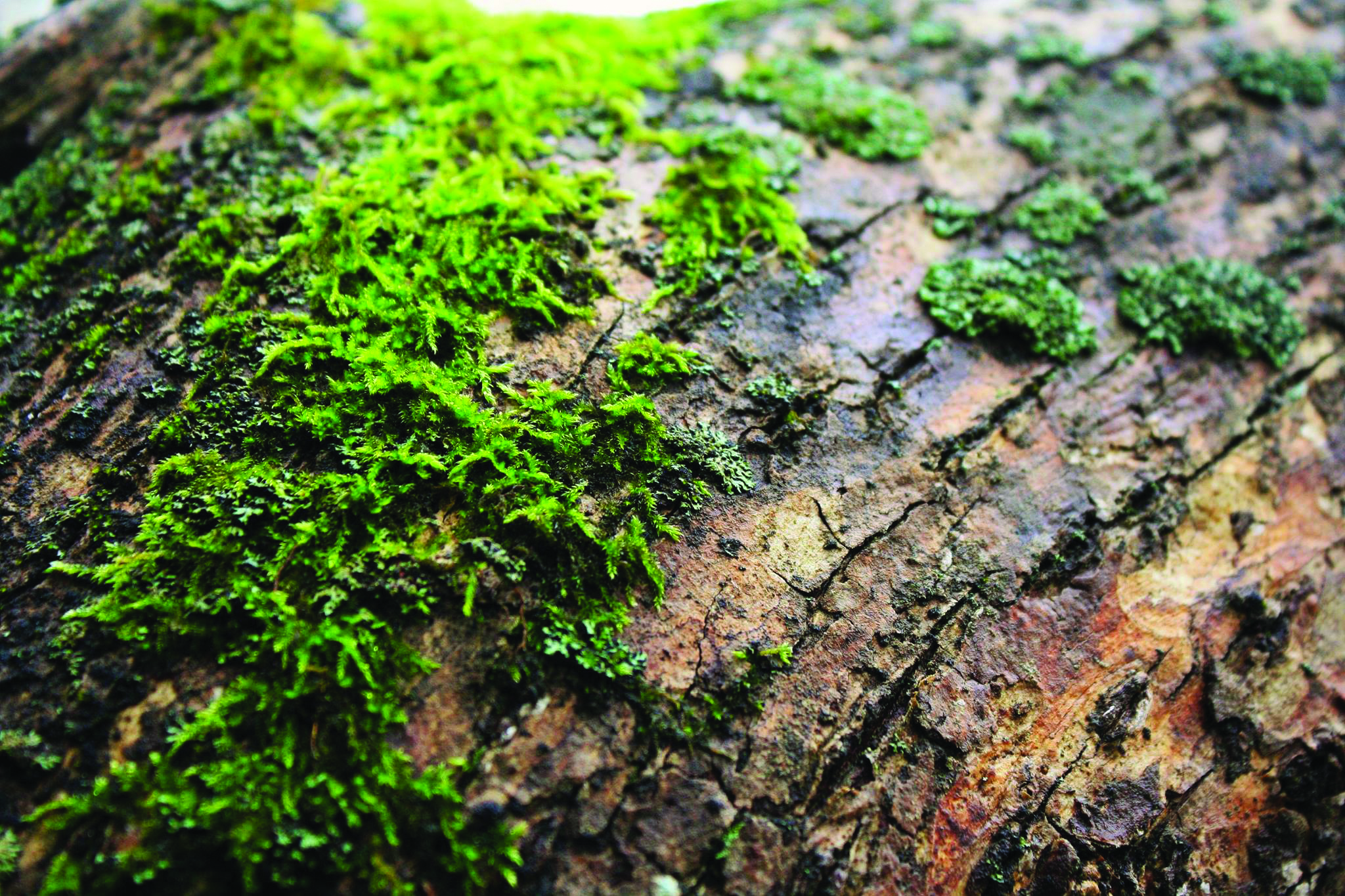
    The next time you’re outside, take a close look at a few different trees. You will likely see several varieties of small structures on the bark that don’t seem to be part of the tree itself. Odds are, these are lichens. Lichens grow on more substrates than just trees. Some grow directly on soil, and others grow on bare rock. Lichens are often-overlooked organisms that are something special. Although they were thought for centuries to be plants, they are not. They are in fact a relationship between a fungus and a green alga or a cyanobacterium. Lichens are comprised of a fungal thallus (body), with algal cells (primitive, microscopic plants) interspersed within it. This kind of interaction involving different kinds of organisms living together is called symbiosis.

    Why would these two organisms live together when they are so different? Being plants, the algal cells photosynthesize. The fungus can use some of the algae’s products for its own growth, and in return, the algal cells have a safe place in which to live, as they would rapidly dry out and die without their fungal partner. As both organisms here benefit from the presence of the other, it is called a mutualistic symbiosis.
    Now that you know a bit about lichens, why would a biologist be so interested in them? Partly because they are awesome, but mostly because they have more uses that meet the eye.

    Lichens are epiphytes, growing on other organisms and substrates without harming or damaging them. As such, they must get all their nutriment from the air around them, by absorbing airborne chemicals and water into their body. This is key to my research. Since they absorb substances from the surrounding air, and are fairly indiscriminate about what they absorb, they can inadvertently bioaccumulate things that they do not need. Thus, lichens can sequester all sorts of things, including toxic heavy metals like lead, cadmium, and mercury, to name a few. While heavy metals are present naturally in minute concentrations in the environment, human activity can cause these concentrations to reach dangerous levels.

    My research, funded by the Trustees of the Arthur Irving Academy of the Environment, focuses on mercury in Nova Scotia lichens. Mercury is highly toxic and capable of transitioning into methylmercury, a dangerous chemical known to cause damage to the mammalian immune system, and to alter genetic and enzymatic systems. This is important, as mercury can consequently have negative effects on humans and other organisms in food webs. One way of measuring the concentrations of this dangerous contaminant in the environment is through mercury analysis of lichens. My research aims to establish base-line data and to visualize mercury “hot spots” that may need remediation in the province.

    To measure the mercury content of lichens, the first thing to do is to collect lichen samples and their GPS coordinates. Lichens do not have an especially complex internal structure, lacking even a vascular system, so removing a part of them usually does no harm to the whole organism.

    Once the lichen sample is acquired, it needs to be reduced to a fine powder for analysis. For this we use a technique known as cryo-grinding. You could just grind the lichen as-is, at room temperature (21°C) but due to the lichen being flexible and tough, it would take too much time, and the results would be non-uniform. However, if you make the sample very cold, by pouring liquid nitrogen (-196°C) on it, the lichen becomes as brittle as glass, and shatters instantly when you grind it. For some context, the coldest temperature ever recorded on Earth was a comparatively balmy -94.7°C in Antarctica in 2010.
    Once the samples are in powdered form, they can be analyzed for mercury content. This requires a complex machine called a Mercury Analyzer that does exactly what the name suggests. Long story short, it incinerates the powdered sample at a very high temperature, passes the resultant gases of combustion through chemical solutions, and eventually through a special device that can detect exactly how much mercury the sample contained. By knowing the amount of sample analyzed, we can extrapolate the percent concentration of mercury.

    As of the end of February, the first round of lichen samples have been reduced to powder, and will be put through the Mercury Analyzer in early March. Further sample collecting will start in May, and continue throughout the summer.

    Lichens are a natural, viable alternative to deployable electronic mercury monitoring devices, which are cumbersome and expensive. Lichens grow slowly over decades, making for long-term monitoring solutions that can be re-visited over many years, costing nothing to maintain or install. It’s no wonder we lichenologists are lichen’ it!

  • Birds are Cool: The Curious Case of the American Black Duck in Atlantic Canada

    Birds are Cool: The Curious Case of the American Black Duck in Atlantic Canada

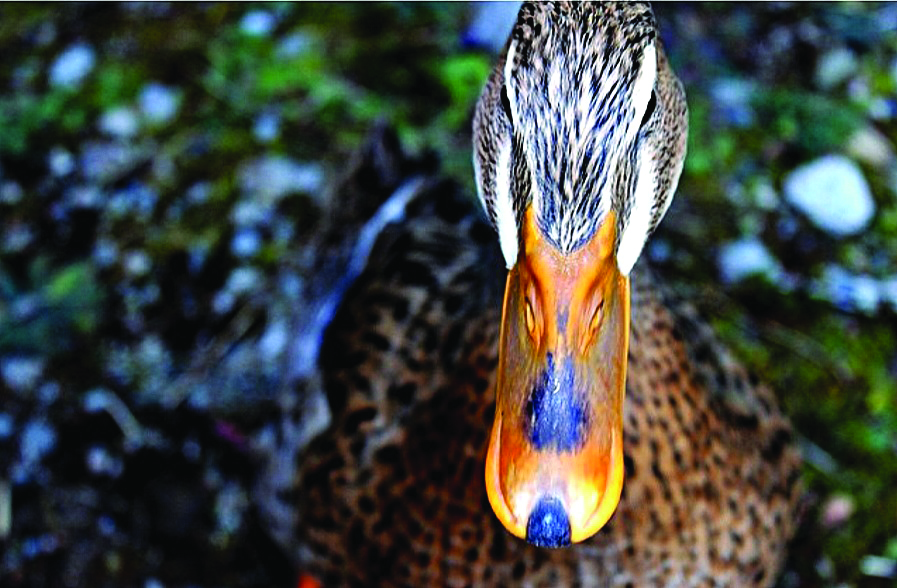
    Ducks are in the very fortunate position that they are worth lots money, so a lot of people care about them. Waterfowl hunting and associate ecotourism is a multi-billion dollar industry in North America, and a large portion of the money generated from this industry is poured in to waterfowl research. The Canadian and United States federal government came together in 1986 to form the North American Waterfowl Management Plan (NAWMP), which has since contributed over $4 billion in to waterfowl research. Many other life forms are not economically valuable and lack the cultural value of waterfowl, which makes it difficult to acquire funding for their research. Waterfowl, on the other hand, are likely the most-studied group of vertebrates on the planet.

    Despite all the money invested in waterfowl research and conservation, many questions and challenges still exist with North America’s waterfowl. The American Black Duck (Anas rubripes, Brewster 1902) used to be the most common species of waterfowl on the east coast of North America, but excessive hunting of this species caused black duck numbers to decline by about 50% from the 1950s to the 1980s. 1982 was a pivotal year in black duck conservation, when the Humane Society of the United States took the United States Fish and Wildlife Service (USFWS) to court, arguing that the federal government was completely miss-managing this species, and calling for a ban on black duck hunting in the USA. This court case was widely covered and black duck conservation became a controversial issue in North America in the early 80s. Scathing reviews were being published criticizing the federal government on its incompetence to conserve the nation’s waterfowl species, and there was a massive amount of pressure on the both the Canadian and American federal governments to address the issue of black duck loss. Ultimately, the court ruled in favour of the USFWS; the black duck season remained open, however, restrictive hunting measures were implemented in 1983 to reduce the amount of black ducks killed each year.

    The restrictive hunting measures resulted largely in a stabilization of black duck numbers in North America. Black ducks are still well-below historical levels on our continent, and the NAWMP developed the Black Duck Joint Venture (BDJV) in 1989 to specifically address and direct research on black duck management. Loss of critical breeding and non-breeding habitat, along with current hunting pressures are likely the two factors preventing the recovery of black ducks, and declines are still being observed throughout their range.

    Black ducks spend the winter mostly in the south-eastern portion of the United States, but exceptionally brave birds do choose to spend the winters in Atlantic Canada, and this is as far north as you’ll find a black duck in the winter. Why they choose to endure the harsh winters of Atlantic Canada rather than travelling to the Carolinas for the winter is unknown, and strangely enough, the amount of black ducks wintering in Atlantic Canada appears to be increasing. This poses us an interesting management question because we lack a lot of basic ecological knowledge on this species at the northern limit of their wintering range. Filling this knowledge gap and ultimately developing an estimate of the amount of black ducks that Atlantic Canada can support through the winter has been identified as a research priority by the BDJV, and this is where I come in.

    A large collaborative effort has since been undertaken to develop an estimate on Atlantic Canada’s black duck winter carrying capacity, and Acadia University is playing a major role in this conservation effort. My research focuses on gathering crucial ecological data on wintering black ducks, specifically answering the questions of “What are black ducks eating up here in the winter?”, and “How healthy are these ducks up here through the winter?” I was able to examine ducks from an urban area (St. John’s, NL), ducks shot locally in rural habitats, and ducks from an agricultural site.

    From dissecting many black ducks and examining their gut contents, I’ve been able to see that black ducks wintering in rural and urban habitats have completely different diets. Rural ducks feed mostly on molluscs and seeds, while agricultural and urban ducks are surviving off corn and human food that is tossed to them when people visit the park. Black duck health was assessed using a scaled-mass index (much like our body-mass index that you get when you go for a check-up with your family doctor), and despite having distinct diets, the black ducks wintering in rural areas are just as healthy as those wintering in urban habitats.

    Agricultural and urban habitats may be a key part of the puzzle explaining why black duck numbers are increasing through the winter in Atlantic Canada, and why our birds appear to be doing so well through the winters up here. These habitats provide refuges from hunting, and provide the ducks with an essentially endless food supply which requires little to no foraging effort. Yes, black ducks are still wintering in classic rural habitats in Atlantic Canada and are also doing quite well, but this hypothesis of urban habitats facilitating black duck survival at the northern limit of their wintering range merits a thorough research effort. Feeding the ducks in parks is good! Just stop giving them your stale old bread – corn is a better substitute.

  • Agriculture and Computer Science

    Agriculture and Computer Science

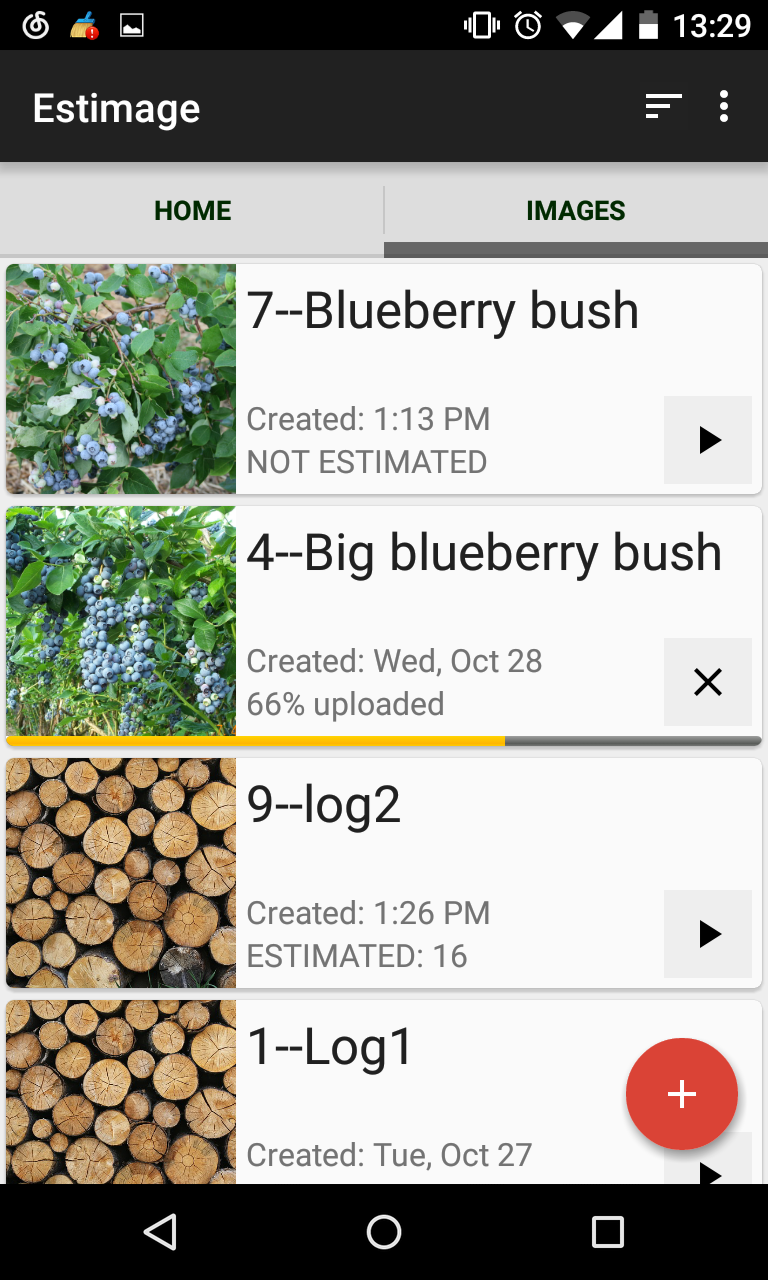
    Computer Science Honours student Yonghong Chen developed an app that can be used to predict the amount of crop yield that an agricultural field will produce using only a picture. This startlingly accurate system is inexpensive and meets a huge demand within the farm industry. Since farmers often have to wait to measure their crops after they have been harvested, this technology will help them make important decisions sooner. A key component of the app is that it allows a user to take a picture of a section of produce, and gives the user the number of crops in the section based on that picture. The development is known as the “Estimage” system. Interestingly, it was developed by first placing coins on a table and asking the app to count the number of coins. This system was also used to count the number of logs stacked in a pile. Eventually it was able to count the number of blueberries on a bush, as well as other agricultural applications. The system is very effective and saves a lot of time and money in the amount of effort it takes to count objects. This clever app combines counting and agriculture in a new and ground breaking way. The surprisingly simple, yet previously underdeveloped idea, has many other features as well. The Estimage system consists of an Android client app for interacting with users, a PHP server app for handling requests, and an Octave program for image normalization. It also consists of an open-source ML software package ilastik that is used to apply a predictive model to an – -image. The Estimage system is very good at detecting shape, color, and size, and is also good at distinguishing between backgrounds and objects, provided that the background is similar to that which was used to train the model.

  • Immortals

    Immortals

    Recently I was asked “Who are my heroes in life?” My answer was so anti-climatic that my friends just stared at me like I was crazy. Some of their heroes were Marie Curie, Malala Yousafzai, Mother Teresa, and Oprah Winfrey (I question if Oprah Winfrey is really a hero). Looking at it now, their list of heroes were entirely women (I was asking my “girl friends”). Their question loomed in my head all day. I should have said that my heroes are Wangari Maathai or Beyoncé, but all of my heroes were related to me. Don’t get me wrong, my list of heroes wasn’t just the usual answer of “my mom,” although she certainly is. What I meant is that some of my relatives fought for what they believed in, even when it went against cultural norms. My heroes are not only influential to me, but they were always present in my life. My heroes aren’t people that lived and died before I was born; they are still in my life. They help mold me into the woman I want to be.

    Here is a list of people that I consider to be my heroes. They may no longer be living, but their legacies are immortal.

    Scientists

    1. Nikola Tesla was a Serbian American inventor, electrical engineer, mechanical engineer, and physic. Although Tesla had many inventions and ideas, they were stolen from him. He knew about electrical currents before Edison published his findings. Tesla invented the radio, but Markoni received a noble prize for inventing it. X-rays and RADAR were both invented by Tesla, but Roentgen and Watson-Watt took credit for those discoveries.
    2. Albert Einstein, Portrait, Person, ScientistsAlbert Einstein was a German theoretical physicist. His greatest achievements were his theory of relativity, the mass-energy equivalence equation E=mc2, and the atomic bomb. He received a Nobel Prize in 1921 for his contributions to physics.
    3. Sir Isaac Newton was an English born scientist who is best known for devising the law of gravitation. His theory required more complex math than what currently exists, so he invented calculus. He was also famous for the invention of the reflecting telescope.

    Freedom Fighters

    1. Patriot, Old, Figure, Government, Symbol, Peace, IndiaMahatma Gandhi is one of the greatest freedom fighters because of his revolutionary fight to stop British Imperialism. Gandhi was a Hindi lawyer who used his words to empower the people in a nonviolent movement to end their oppression. Gandhi’s fight prompted the end of imperialism in Asia as well as Africa.Politician, Nelson Rolihlahla Mandela, South African
    2. Nelson Mandela followed in Gandhi’s footsteps to stop Britain Imperialism on South
      Africa. Although people think that South Africa was one of the first countries in Africa to gain independence, it was one of the last. Mandela advocated for a non-violent approach to independence. He spent 25 years in jail for speaking and acting against the apartheid.
    3. Martin Luther King Jr, I Have A DreamMartin Luther King Jr. also had a non-violent response to oppression. He fought for racial equality during the 1960s. Although the racial freedom fight was great and empowering, Martin Luther King Jr. was killed for his beliefs.


    Composers

    1. Johann Sebastian Bach was by far one of the greatest musicians in the world. Although Bach didn’t create a new style of music, he did perfect every single one of them. He wrote one of the greatest musical compositions, “Mass in B minor.” He spent most of his life using the skill of those before him to write some of the best known classical compositions.
    2. Wolfgang Amadeus Mozart was a very gifted child. In his lifetime he wrote 41 symphonies, 27 piano converti, a large number of chamber music compositions, 23 operas, 18 sonatas for piano, 36 compositions for violin and cello, 18 masses, 1 requiem, 4 horn voncerti, 20 string quartets, and he even wrote “Twinkle Twinkle, Little Star.”
    3. Ludwig van Beethoven is the father of romantic music. Many of us are familiar with his 5th Symphony. Beethoven was a deaf for the last 25 years of his life, but even with his disability still achieved greatness in classical music.


    References

    “Top 10 Greatest Scientists Who Changed The World.” Linkedin. Ed. Marko Jovanović. N.p., 09 Apr. 2015. Web. 29 Feb. 2016. <https://www.linkedin.com/pulse/top-10-greatest-scientists-who-changed-world-marko-jovanovi%C4%87-m-d->.

    “Top 10 Freedom Fighters of the World.” Best Top Ten Lists. 31 Aug. 2013. Web. 29 Feb. 2016. http://www.toptentop.com/misc/people/top-10-freedom-fighters-of-the-world/

    “Top 10 Freedom Fighters of the World.” Best Top Ten Lists. 31 Aug. 2013. Web. 29 Feb. 2016. http://listverse.com/2009/12/17/top-15-greatest-composers-of-all-time/

  • Have you heard of Elon Musk?

    Have you heard of Elon Musk?

    Have you? What about SpaceX? Tesla Motors, SolarCity? Or maybe PayPal? That last one has to be familiar. Elon Musk was key to its inception, and PayPal itself was a building block leading to the inception and success of the other three companies.
    In 1995, Elon Musk enrolled in a PhD program at Stanford University, studying high density capacitors as an energy storage solution potentially more efficient than batteries. Originally from South Africa, he saw Silicon Valley as the Promised Land and transferred to a US university after immigrating to Canada. How did he make the decision to enter such a program? Quite differently from most of us in university, as it turns out.
    Instead of determining what it was that would make you happy, or fulfill you, or even make you financially stable in the future, what if you narrowed down your goals based on what you thought would most affect the future of the human race? What about the potential reprogramming of the human genetic code, artificial intelligence, space exploration and settling, the internet, and sustainable energy?
    That was his list, and the last one had lead him to the PhD program. Two days in, he ditched it. It was 1995, after all, and with the internet blowing up the way it was, he couldn’t be left behind. He wasn’t.

    After starting Zip2 with his brother, an early company taking a shot at replacing the Yellow Pages, and selling it for $307 million, he took some of his share and tried to start an online bank. This was an insane notion in 1999, but their money transfer service was in demand. They teamed up with another money transfer company in the same building and formed PayPal. Despite turmoil within company management, he walked away with $180 million when it was sold to eBay in 2002.
    Even before the sale, he had been thinking about rockets. After it, he started SpaceX, with the intention of reducing the cost of space travel to the point where humans could become a multi-planetary species. Two years later he started Tesla, despite the fact that SpaceX had yet to successfully launch a rocket. Today these two projects are his major claim to fame, and his major contributions to humanity.
    Tesla is an electric car company, intending to accelerate our collective progression to a sustainable future. He personally funded both of these companies.
    He also eventually funded a start-up with his cousins, SolarCity, which aims to install solar panels on the homes of millions, reducing their draw from the mostly fossil-fuel powered grid, and ultimately increasing the adoption of sustainable energy.
    Things weren’t awesome right away, however. SpaceX had built three rockets by 2008, but they had all exploded prior to reaching orbit. They had the money for a fourth and final, with the entire company depending on its success.
    Slightly more than a month ago, SpaceX launched a rocket delivering 11 satellites into orbit, which then returned through Earth’s atmosphere to Cape Canaveral where it successfully landed – a historic first.
    Every launch since those first 3 has been successful, and this landing, doubly so. This is a major step towards making space travel affordable. Though the rockets can’t be directly reused, all of their components are returned to earth intact, and can be recycled for the next build. It is estimated to reduce the cost of space travel by a factor of 100.
    Alongside this, despite the predictions of failure by just about everyone following the stock market downturn, the Tesla Roadster was a resounding success, and received the highest ever safety rating from the NHSA- a 5.4/5.
    Tesla is currently building a lithium-ion battery factory in Nevada that should double the total annual GLOBAL production.
    SolarCity is the largest solar panel installer in the US.
    The Tesla Model 3 is slated to appear at the Geneva Motor Show in March this year.
    But despite his astounding successes in every venture he’s attempted, Elon Musk doesn’t like it when people talk about Elon Musk. His big concerns are the future of our planet and humanity, and he’s trying to encourage discussion of sustainable technologies and energy; as well as space travel and colonization.
    Have you ever heard of the Fermi Paradox? It’s a little bit terrifying if you sit back and contemplate it a few drinks in.
    On the clearest nights out on the dykes, when the lights of Wolfvegas are dim in the distance, you can look up and see just about 1% of our Milky Way galaxy, with your eyes unaided.
    Beyond what you can see, there are stars upon stars and galaxies upon galaxies. An unfathomable number. Somewhere between 1022 and 1024 stars. Are 5% sun-like, capable of supporting life similar to ours? And, maybe say, 22% of those are orbited by an earth-like planet? That leaves us with a potential 100 earth-like planets for each and every grain of sand on our Earth.
    The Fermi Paradox is this – where is everyone?
    If 1% of 1% of those planets develop life that evolves to our level of intelligence, we share the universe with 10 million billion intelligently inhabited planets. In the Milky Way, we should have 100 000 neighbors.
    The Search for Extra-Terrestrial Life (SETI) has yet to find any evidence of life beyond the blue dot we have inhabited for the past million years.
    So which is scarier – are we surrounded by life we cannot or have not detected, or we are absolutely alone in a universe that is absolutely unfathomably enormous?
    If life is that rare, then it is more precious than we have ever realized, and colonizing other planets is a necessity to ensure the continuation of our species. I bet that was never a daily worry of yours!
    The intention of SpaceX’s foray into affordable space travel is to lead to the colonization of Mars with a million people in the next 100 years. This rocket has been step one.

  • Don’t do it like the Discovery Channel

    Don’t do it like the Discovery Channel

    … I think it broke.

    This goes through the minds of more species than you may think, but not because they’ve been responsible and brought condoms. No, some animals have some fairly disturbing mating rituals by our standards. Take for instance, certain species of orb spiders. The male copulates with little leg-like structures near its mouth. The female has a knob outside her genitalia shaped kind of like a bicycle seat- this is for the male to grab with his mouth, and give him some purchase to do the deed. After scientists carefully froze some spiders mid-coitus with liquid nitrogen, they were able to examine them under a microscope and determine that males occasionally rip these knobs off, to prevent other males from being able to mate with that female.

    Everyone has a first time.

    And for some animals, the first time is the only time. Semelparous species die after one reproductive episode, which could be a mating season or a single event. Biologists are still trying to find out why. Take for example, the Australian antechinus. The males of this little marsupial mammal species have sex until they die- after fur loss, internal bleeding, and getting gangrene because their immune system gives up. Why all the fuss? Researchers now believe it may be due to a spike in their food source, insects, which occurs once yearly. The females need a regular food source while raising their babies in their pouches, and so all the mating must happen in a very short window prior to bug season. Other semelparous animals include octopuses, eels, squid, salmon and mayflies!

    Imma stay for cuddles.

    Said every male angler fish, ever. Deep-sea angler fish experience sexual dimorphism, where the two sexes differ significantly in size. In this case, the female is up to ten times larger than the male, which is born without a digestive system. Mating consists of the recently-born male latching onto the first female he can find with his mouth, and then slowly fusing on, losing all of its organs except the testes, which remain and pump sperm into the female’s system when necessary. Female angler fish can have up to six of these parasitic mates for life.

    My place?

    Some animals’ mating habits are fairly straightforward, but some are complicated rituals involving lots of work and planning- usually by the males. Some creatures build structures to attract a mate. Take the bower bird for example. It builds a bower, shaped like a small hut and built of twigs, and decorates it with flowers, stones, feathers and even plastic and glass fragments. If the female likes it, the male wins a mate!

    The red velvet mite builds a ‘love garden’ of sperm dispersed on twigs and leaves, with a silk trail leading to it. If a female finds it and likes what she sees, she’ll use the sperm. If a male finds it, he’ll wreak it to better his own chances.

  • Bloody Science

    Bloody Science

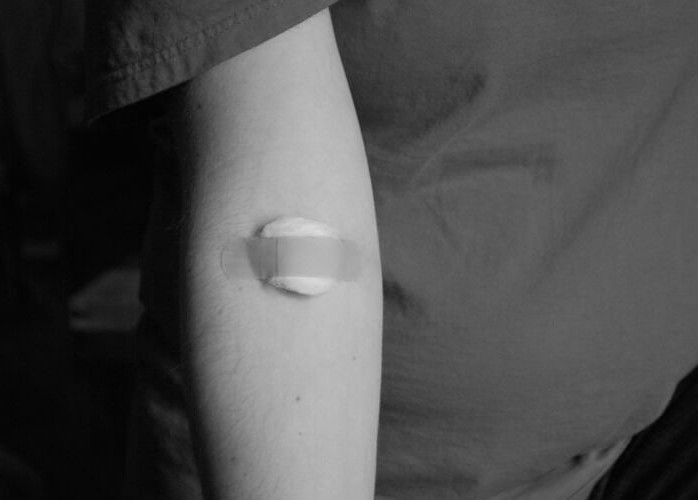
    It is not very often that someone is asked about their blood type. Many people don’t even know what their blood type is. Although it is not vital information for day-to-day life, a person’s blood type is very important in determining what donated blood they can receive. Many advertisements for blood collection by the Canadian Blood Services has contained a message directed at people of a specific blood type, O-, the universal donor. Through a simple test done by doctors and Canadian Blood Services personnel, your blood type can be determined. But what does your blood type mean? Why is it important? You may think that blood is blood, right? While all blood is composed of the same four basic constituents: plasma, red blood cells, white blood cells, and platelets, not all blood is alike. There are, in fact, eight different blood types. They’re differentiated by the presence or absence of antigens, substances that “trigger an immune response if they are foreign to the body” (American Red Cross, 2015). The four type categories, based on the presence or absence of these antigens on the surface of the red blood cell are:
    Group A – has the A antigen on the red blood cells with the B antibody in the plasma.
    Group B – has the B antigen on the red blood cells with the A antibody in the plasma.
    Group AB – has both A and B antigens on red blood cells, with neither A nor B antibodies in the plasma.
    Group O – has neither A nor B antigens on red cells with both A and B antibodies in the plasma.
    There is a third antigen, called the Rh factor, which also plays a role in determining your blood type. If the Rh antigen exists in your blood, your blood type is positive (i.e. B+), whereas if the Rh antigen was absent, you would be type negative (i.e. AB-). Some blood types are more common than others. Type O+ is the most common, accounting for around 38% of the American population, while type AB- accounts for only 1% of the American population (livescience.com, 2012). Blood type O is the universal donor blood type, meaning that type O blood can be administered to anyone, regardless of blood type. Someone with an AB blood typeis a universal plasma donor, because the plasma does not contain either A or B antibodies. Blood type is hereditary, just like eye colour, and is therefore determined by the blood types of your parents. If you are unsure of your parents’ blood types, or of your own, a simple test can be conducted by your family doctor or by the Canadian Blood Services to identify your specific blood type, and evaluate the current need for your type. If you are unsure of whether you are eligible to donate blood, Canadian Blood Services conducts a simple questionnaire either online or in person. Saving you the trouble of going to the clinic and finding out you are not eligible, the eligibility requirements will be outlined here. For further information, consult the Canadian Blood Services website, or go to the on campus clinic October 7th or 8th for a consultation. In general, if you are in good health, feeling well and able to perform your normal activities, you are older than 23, or are between 17 and 23 and meet the height and weight requirements, you can become a blood donor. A calculator can be found on the Canadian Blood Services website to determine whether or not you meet the height and weight requirements. However, you may still be ineligible for donation if ‘your own health or the safety of the blood supply would be at risk by having you do so,’ (Canadian Blood Services, 2015). Some common reasons why people are deemed in eligible for donation include recent body piercings, Chronic Fatigue Syndrome, possible exposure to HIV/AIDS, tattoos, and vaccinations.If you have gotten a body piercing or a tattoo done within the last 6 months, you are ineligible to donate blood because of the increased risk of Hepatitis C. Acupuncture and electrolysis fall under the piercing category. Donors with a medical history of Chronic Fatigue Syndrome (CFS) are ineligible – even if their condition is not active. If you have recently been vaccinated, depending on which vaccination you received, you may be temporarily deferred from giving blood. There is a full list of deferral periods for various vaccinations on the Canadian Blood Services website. If you have ever had a positive HIV test, or if you have done something that puts you at risk for becoming infected with HIV, you may be ineligible as well (Canadian Blood Services, 2015). For example, anyone who has taken money or drugs for sex since 1977 cannot give blood; nor can anyone who has ever used intravenous street drugs. In the past, gay men were restricted from donating blood, but for the first time in thirty years changes to the regulations have made it easier for gay men to donate blood. “Men who have had sex with another man more than 5 years ago, and who meet other screening criteria, now may be eligible to give blood,” (Canadian Blood Services, 2015). Numerous groups are rallying for the removal of this ban, deemed archaic and homophobic, but the Canadian Blood Services organization is still reeling from the aftershocks of a tainted blood scandal. As many as 800 people died, 20 000 are now living with Hepatitis C, 400 with HIV. Despite more accurate tests, a false negative to an HIV screening would still have devastating consequences, and so a group ban on sexually active gay men still stands.
    If you are interested in donating blood, or want more information, visit the Canadian Blood Services website. Alternatively, go to the blood donor clinic on the Acadia campus between October 7th and 8th, 2015.
  • Gluten-Free?

    Gluten-Free?

    Contrary to popular belief, gluten-free diets are not necessarily a healthier diet for people who are not gluten sensitive or who have not been diagnosed with Celiac disease. A study published in the American Journal of Clinical Nutrition in 2004 concluded that adverse effects of gluten in celiac patients can be resolved with a gluten-free diet, but, there are no health benefits to avoiding gluten as a regular, healthy individual (Murray, Watson, Clearman). The theory of a gluten-free diet being healthy relies heavily on the fact that bread is very high on the Glycemic Index- meaning it causes a high insulin response due to an increase in blood glucose (Jenkins, Wolever, Taylor, Barker, Fielden, Baldwin, Bowling, Newman, Jenkins, Goff, 1981, American Journal of Clinical Nutrition). A study done in the European Journal of Clinical Nutrition in 2009 showed that the insulin response, after consuming hydrolysate gluten, was no higher then the other tested proteins (Claessens, Calame, Siemensma, Baak, Saris). The consumption of bread does cause high insulin, but there is no concrete proof that the insulin response is due to gluten content. Instead, the starches in wheat are the most likely suspect. In addition to this, healthy grains such as rye and barley are low on the Glycemic Index, but still contain gluten. Rather than going gluten-free, a better choice for the health of the average person would be to avoid wheat, particularly processed wheat. The issue with the starches in wheat, such as amylopectin, is thought to be more of a concern because the of the modifications and choice breeding that occurred during the Green Revolution. In the 1960’s, many crops were manipulated to increase production in harsher conditions and smaller areas. This created what is referred to as Dwarf Wheat, which is less nutrient dense then its ancestors (Farmer, Green Revolution?, 1978). However, one positive outcome of this health fad is an increasing interest in alternative grains and legumes, such as quinoa and lentils, as a substitute for white bread and pastas. Unfortunately, a large percentage of people following the gluten-free diet forgo these healthier and protein-rich options for products marketed as ‘gluten-free’ versions of their regular food choices. As many individuals who have attempted to bake gluten-free products can attest, baked goods with identical recipes but a gluten-free flour replacement are often not appetizing in flavor or texture. For a more pleasing product, manufacturing companies often manipulate their recipes, creating a less healthy alternative containing higher concentrations of sugars and fats. A study done by the journal of Alimentary Pharmacology and Therapeutics has shown a correlation between gluten-free diets and a ‘high sugar intake, and low fiber and mineral intake’ in women. If done properly, a gluten-free diet and some experimentation can expand meal variety and increase in overall health. In making this diet decision without proper meal planning, or with a lack of background knowledge, however, could leave someone lacking vital nutrients and eating less healthy than they might expect.

Betzillo positions itself as a versatile gaming hub where structured bonuses and adaptive gameplay mechanics support both short sessions and extended play.

Built with a focus on innovation, Spinbit integrates modern casino architecture with rapid transactions, appealing to players who value speed and digital efficiency.

Ripper Casino emphasizes bold entertainment through high-impact slot titles and competitive promotions crafted for risk-oriented players.

A friendly interface and stable performance define Ricky Casino, offering a casual yet reliable environment for a wide spectrum of gaming preferences.

King Billy Casino channels classic casino spirit into a modern platform, delivering recognizable themes supported by contemporary reward systems.

Immersive visuals and layered slot mechanics are at the core of Dragonslots, creating a narrative-driven casino experience.

Lukki Casino appeals to players seeking direct access and minimal friction, focusing on fast loading times and intuitive controls.

Casinonic provides a structured and dependable gaming framework, blending modern slots with transparent operational standards.